Author: Mei Ling Tan

  • Honeywell unveils new Connected Freight solution

    Honeywell unveils new Connected Freight solution

    Honeywell has launched a new Connected Freight solution that gives shippers and logistics companies unprecedented ability to monitor shipments of high-value and perishable goods, helping prevent costly damage and loss.

    The new solution, developed in collaboration with Intel and third-party logistics companies, provides real-time information about the location and condition of critical freight while in transit. The solution was introduced during Honeywell Safety and Productivity Solutions’ launch event today.

    “Honeywell is developing a range of Connected Supply Chain solutions that leverage technology and data to make supply chains more efficient and better able to adapt to rapid change,” said Taylor Smith, president of Honeywell’s Workflow Solutions business. “For shippers, logistics providers, retailers and others faced with a host of costly freight challenges, such as theft, damage, spoilage and delays, this convenient cloud-based solution provides customers with detailed analytics in order to plan, anticipate and react immediately to incidents that occur during shipment.”

    Real-time shipment information is critical, for example, when shipping perishables and goods that require uninterrupted refrigeration, such as pharmaceuticals, or high-value equipment that is sensitive to vibration or shock.

    “After assessing our internal supply chain needs and the needs of the industry, we forged a unique collaboration with Honeywell. Together, we’ve customised Intel’s Connected Logistics Platform technology to deliver an IoT offering that solves real logistics problems,” said Chet Hullum, general manager for Industrial Solutions at Intel. “Thanks to data accessibility, shippers and carriers will be able to establish a more reliable supply chain network by having deeper visibility and information on shipments.”

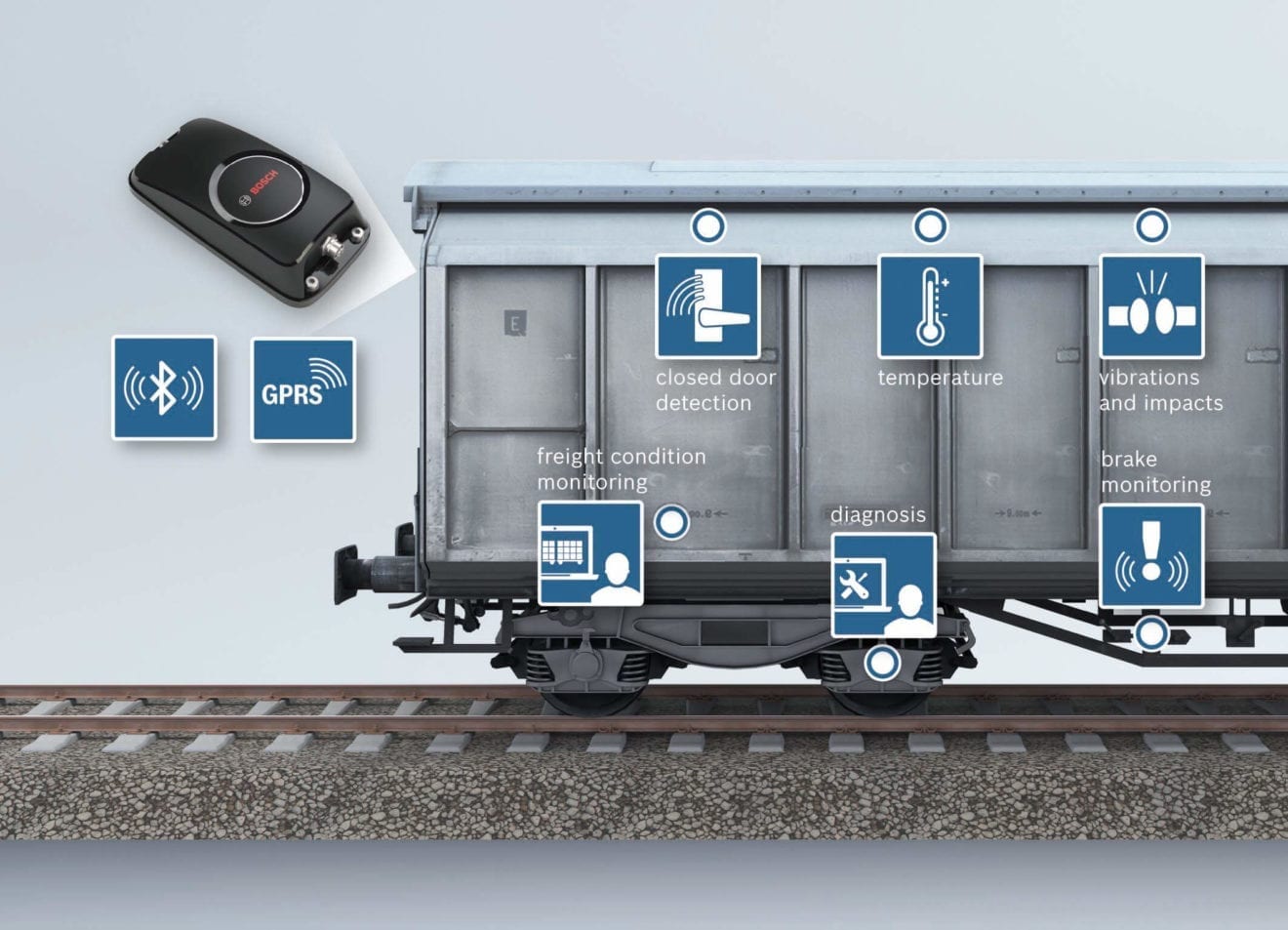
    Honeywell’s Connected Freight solution consists of cost-effective sensor tags that sense a range of environmental conditions, such as temperature or vibration. The tags can be affixed to pallets or individual packages. The sensor data is captured by a mobile gateway placed inside a truck or shipping container and then transmitted via cellular networks to a cloud-based command-and-control platform.

    Users can establish alerts based on temperature, shock, tilt, humidity, pressure and intrusion detection. The solution can alert manufacturers of high-value, highly sensitive technology if equipment has been damaged while being loaded or unloaded, or if it may have been stolen. The cloud can also store data for compliance and audit needs, and provide predictive and reactive analysis, such as which routes to avoid.


  • Japan-Based Gecom Expands Production

    Japan-Based Gecom Expands Production

    GECOM, a manufacturer of automotive door locking components, plans to expand its operations in Greensburg, Indiana. The company plans to create up to 30 new jobs by 2019.

    The company, which is a subsidiary of Japan-based Mitsui Kinzoku ACT, will invest $26.29 million into its only U.S. production facility, launching three new manufacturing lines at its 403,550-square-foot plant at 1025 Barachel Lane in Greensburg.

    “Greensburg, Indiana, was selected as a manufacturing location in 1987 based on the proximity to most of our customers. The point remains true today,” said Jeff Wright, vice president and chief compliance officer at GECOM. “Our customers appreciate seeing GECOM’s commitment to stay in Indiana and the benefits it provides them. Additionally, the local Hoosier workforce is dedicated to GECOM’s success and work hard to maintain our reputation of quality automotive products at a competitive price. We look forward to this new business opportunity as we continue to support our local community.”

    With construction currently underway, the company plans for the first of its new lines to be operational later this year, with the remaining two lines starting production in 2019. With its new capacity, the company will boost production of slide door locks for Honda and Chrysler and hood latches for Nissan, Toyota and Subaru.

    As an incentive, the Indiana Economic Development Corporation offered GECOM Corporation up to $280,000 in conditional tax credits based on the company’s job creation plans. These incentives are performance-based, meaning until Hoosiers are hired, the company is not eligible to claim incentives. The city of Greensburg approved additional incentives at the request of the Greensburg-Decatur County Economic Development Corporation.

    GECOM currently employs 900 associates in Greensburg as part of its global network of more than 6,300 employees. The company is currently hiring, and plans to add 10 new research and development positions and 20 new production positions as part of its growth.

    “With companies like Japan-based GECOM continuing to expand in our state, there’s a reason why Indiana is adding manufacturing jobs at the second-fastest rate in the nation,” said Jim Schellinger, Indiana Secretary of Commerce. “Indiana’s automotive suppliers are operating in the center of a global economy. We have companies choosing to come to Indiana from around the world, locating here because of our state’s business-friendly environment, low taxes and outstanding workforce.”

    “We are excited for GECOM in this expansion,” said Greensburg Mayor Dan Manus. “GECOM has been in Greensburg now for 30 years and to have a company continue to grow and expand after that amount of time is a very positive thing for our community. We truly appreciate our GECOM family and what they do for our community and we will continue to support them in this expansion and any future expansions.”

  • Malaysia’s online sales set to quintuple by 2025, fashion leads

    Malaysia’s online sales set to quintuple by 2025, fashion leads

    Online sales in Malaysia, which is currently just above 1 per cent of total retail market, is likely to quintuple by 2025, says a report. The rise is due to online outpacing store-based retail, especially fashion sales. The Malaysian government has launched a strategic roadmap for e-commerce and rolled out several initiatives in partnership with the private sector.

    According to the Malaysia B2C E-commerce Market 2017 report by yStats, more than 50 per cent of online shoppers in Malaysia are less than 29 years old. Meaning, the continued maturity and wealth growth of this demographic sits well for the increase of online sales, said yStats.

    Moreover, Malaysia’s internet penetration is one of the highest in the region with approximately one third of internet users make purchases online, said report authors. The product category with the largest share of e-commerce sales in 2016 was clothing and footwear.

    Complementing the government-backed e-commerce development projects, other factors encouraging the growth of online retail in Malaysia are the ready infrastructure and favourable demographics in the Asian nation, said the report.

    In March, Malaysian Prime Minister Najib Razak launched a digital free trade zone along with Jack Ma, founder and executive chairman of Alibaba. At the time, the Chinese e-commerce company said it would set up a logistics hub in Kuala Lumpur that will serve as a regional distribution hub.

    It will be part of a digital free trade zone set to be developed close to the Kuala Lumpur International Airport.

    The e-commerce competition landscape in Malaysia is led by online marketplaces. Lazada.com.my and 11street.my were the most visited e-commerce websites in Malaysia in February 2017, according to a ranking included in the report.

  • Myanmar cellcos cleared to use 1800 for 4G

    Myanmar cellcos cleared to use 1800 for 4G

    Myanmar’s Ministry of Communications and Information Technology (MCIT) has granted permission to the market’s mobile operators to launch 4G over the 1800-MHz spectrum assigned to them.

    Mynmar Posts and Telecommunications, Telenor Myanmar and Ooredoo Myanmar have been cleared to use 2x10MHz of 1800-MHz spectrum allocated under a 12 year license.

    Operators will be required to pay an $80 million usage fee, the ministry’s Posts and Telecommunications Department has revealed.

    State-owned MPT has announced that with the approval the operator will be expanding its network to 4G, starting with the cities of Nay Pyi Taw, Yangon, and Mandalay. The operator will offer customers the ability to swap their existing 2G and 3G SIMs to a 4G SIM free of charge.

    MPT has teamed up with KDDI and Sumitomo for its mobile operations as part of the liberalization of Myanmar’s telecoms sector.

    Telenor Myanmar and Ooredoo Myanmar will meanwhile be able to use the spectrum to expand their respective 4G operations to more cities and regions.

    Telenor Myanmar launched 4G services in July last year, and now offers 4G in 19 cities. Ooredoo Myanmar launched 4G in May  in Yangon, Mandalay, and Nay Pyi Taw, and has since expanded the network to the Magwe Region.

  • Los Angeles’ Dita opens second store in Tokyo

    Los Angeles’ Dita opens second store in Tokyo

    Los Angeles eyewear brand Dita has opened its latest Tokyo store this week, marking its second Japanese and global location.

    Located in the capital’s Minami Aoyama 5-chome, the Dita store covers 69 square metres andrepresents Dita’s latest retail concept, combining “the focus of a design showroom with the attentive service of an optical laboratory,” according to the company.

    Dita stores have been conceptualised by Mandi and Mehdi Rafaty of West Hollywood’s Tag Front. Italian stone mingles with plated aluminium, for a contemporary simplicity known to the America design dup. The Aoyama store also boasts a window on the south-facing facade extending from the floor to the ceiling.

    “We focused on materials and techniques that combine the warmth of turn-of-the-century design movements, like the Vienna Secession, rendered with contemporary technology and materials,” Dustin Edward Arnold, creative director of Dita Group, said in a statement.

    As well as Dita’s premium sunglasses, the store offers a range of technical services as part of its specialised ‘Dita Lab,’ including the provision of lens and frame prescriptions. Collections from Thom Browne Eyewear and Christian Roth, which Dita acquired last year, will also be on sale.

    Dita first entered the international retail space with a store opening in Daikanyama, Tokyo, in 2003.

  • Michael Kors to shut over 100 stores

    Michael Kors to shut over 100 stores

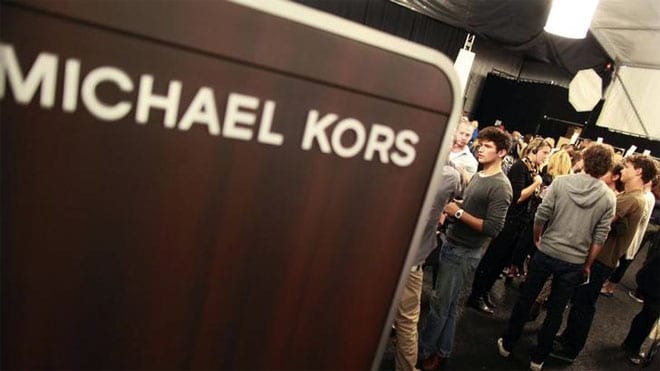
    Michael Kors, the once-popular retailer that has been trying to turn itself around, said it expected same-store sales to continue to fall in 2018, and that it would shut more than 100 full-price retail stores in the next two years.

    Shares of the company slumped nearly 11 percent to $32.38, their lowest in more than five years.

    Michael Kors Holdings Ltd, once the hottest name in affordable luxury, has been grappling with declining same-store sales for the past seven quarters as fewer people visit its stores, flocking instead to rival Coach Inc and shopping online.

    Kors said on Wednesday sales at stores established for more than a year fell 14.1 percent in the fourth-quarter ended April 1. Analysts had estimated a fall of 13.4 percent, according to research firm Consensus Metrix.

    To deal with the lull in sales, the retailer has been expanding into dresses and menswear, investing in its online business, and reducing supplies to department stores, which have been discounting heavily to bring back shoppers.

    These efforts, however, are yet to show the results that investors are looking for. Kors said it expected revenue of $4.25 billion for fiscal year 2018 and also forecast a high single-digit drop in same-store sales.

    Analysts on average had estimated revenue of $4.37 billion. “If you walk into a Michael Kors store, they basically have the same handbags over and over again,” said Gabriella Santaniello, founder at research firm A-Line Partners.

    “It is basically an entire wall of the Mercer handbags -small and large – and another wall of Hamilton bags,” she said, referring to Kors’ flagship handbag lines.
    The company said on Wednesday it would close 100-125 full-price stores over the next two years due to intense price competition from other retailers. It expects to take $100 million-$125 million in related one-time costs.

    For the fourth quarter ended April 1, total sales fell 11.2 percent to $1.06 billion. Analysts had expected $1.05 billion.

    Excluding certain items, Kors earned 73 cents per share, while analysts had expected 70 cents per share. Kors, whose shares have fallen nearly 16 percent this year, also said it would buy back $1 billion worth shares.

  • Virtual Reality: The Future of Retail in Asia Pacific?

    Virtual Reality: The Future of Retail in Asia Pacific?

    New research from Worldpay, a global leader in payments, has revealed that Virtual Reality (VR) and Augmented Reality (AR) technology are slowly gaining ground across Asia Pacific. Chinese consumers are leading the region – and the world – with 95% of survey respondents saying they’ve used VR or AR technology in the past three months. Other APAC markets are more cautious in their VR/AR uptake, yet remain confident that the technology may play an important role in the future of retail.

    Worldpay’s study queried more than 16,000 consumers across eight markets – including China, Japan and Australia in Asia Pacific – to get their viewpoints on VR/AR adoption; from current uptake and future potential, to the technology’s benefits and barriers. In Asia, the research revealed that although China is a leader in the virtual reality revolution, other markets are only at the start of their VR journey.

    In Australia, less than a quarter of survey respondents (22%) say they’ve used VR technology at some point, and a mere 14% describe themselves as early adopters. It’s a similar situation in Japan, where only 19% have tried VR technology – the least of any market surveyed by Worldpay. In contrast, nearly 100% of Chinese consumers surveyed say they’ve tried AR or VR technology at least once, and more than half use these technologies at least once per week.

    Phil Pomford, General Manager for Asia Pacific at Worldpay, said: “China is blazing a trail for VR/AR adoption and showing other Asia Pacific markets what the future could look like. At the moment, the technology isn’t driving a huge amount of uptake in markets like Australia and Japan – but as we’ve seen before, technology can go from zero to a hundred in a very short amount of time. Therefore, with China leading the way, Asian businesses should start investigating the future of VR/AR technology now, so that they’re ready to meet consumer demands as and when they arise.”

    Already, even cautious Asia Pacific markets are demonstrating interest in how VR/AR can improve retail experiences. Of Australian survey respondents, 61% think VR and AR could someday change the way we shop. Two thirds (66%) of Japanese consumers surveyed would like to see more physical stores using VR and AR, and a full 70% would like to see the technology used in retail apps. Unsurprisingly, Chinese consumers’ interest in VR/AR retail experiences is even more enthusiastic – 84% of respondents believe that VR/AR is the future of shopping, 92% say they’d like to see more retail apps make use of VR/AR, and only 1% say they’d never be comfortable making a purchase in a virtual environment.

    Pomford added: “Many merchants are already looking at how VR/AR technology might create new Omni-channel experiences, enhance mobile shopping, and drive the next generation of consumer-led retail innovations. A compelling, immersive and seamless VR experience can drive higher customer engagement and may even have the capability to increase sales. As more companies experiment with VR/AR, they need to consider if VR technology can support purchases as well. Whatever the sales channel, it’s vital to make the payment process both slick and secure for customers. ”

    In response to this, researchers at Worldpay are investigating how shoppers can pay using a credit or debit card while remaining immersed within a virtual environment. The global payments processor has created a proof of concept, which provides the same levels of convenience, and security that shoppers have in-store and online, without needing to leave the virtual world.

    The prototype design uses Host Card Emulation (HCE) to virtualise the purchasing process. The payment uses EMV* technology, and for purchases under £30 (RMB268.25), the prototype works in the same way a contactless payment does – with a tap of the (virtual) card across a (virtual) card machine. For higher value purchases, Worldpay has created a technology called AirPIN. This first of its kind system allows the consumer to see a range of numbers whilst immersed in the virtual world, and then collect the four numbers that make up their PIN, one by one, using their virtual controller.

  • ASEAN Sustainable Tourism Awards Launched

    ASEAN Sustainable Tourism Awards Launched

    Sustainable tourism operators in Southeast Asia can now enter the new ASEAN Sustainable Tourism Awards (ASTA), which have been launched as part of ASEAN’s Tourism Strategic Plan 2016-2025.

    Twenty sustainable tourism winners – two from each ASEAN member state – will receive a package of benefits that will raise their business profile substantially. Winners will be highlighted on their NTO’s website and will receive exposure as a national best practice operator during press conferences and trade shows such as ATF, TRAVEX, ITB and WTM.

    In addition, winners will be highlighted on ASEAN’s website www.aseantourism.travel. They will be invited on stage to receive a trophy and recognition during the sustainable tourism awards event, which will be part of the ASEAN Tourism Forum in Chiang Mai, January 2018.

    Some of the key objectives of the awards are to boost the profile and importance of sustainable tourism businesses in Southeast Asia, promote responsible tourism in all ASEAN countries, combat seasonality, and rebalance tourist flows towards best practice tourism experiences, said Mr Sounh Manivong, Director General of Tourism Marketing Department, Ministry of Information, Culture and Tourism, Lao PDR.

    “The diversity and quality of ASEAN’s sustainable tourism options are amazing,” said Mr Manivong.  “The aim of the awards is to prove it — and encourage green tourism practitioners to keep doing a great job.”

    Of the two winners in each country, one will be “rural”, one will be “urban”, to reaffirm that city operators can be sustainable as much as rural ones.

    The awards will take place every two years with a dedicated theme decided jointly by ASEAN NTOs. The inaugural awards 2017-18, which are now open, is themed “nature-based tourism.”

    Mr Manivong said such a theme also applies to urban tourism businesses as they may include experiences such as cycling, educational visits to urban parks, walking tours, or tree planting, to name a few examples.

    Applications will be assessed by NTOs in the applicant’s country.

    The deadline for submissions is 15 August 2017. Results will be announced in December and the award ceremony will take place during ATF 2018.

  • Longchamp and Burberry have set up store on WeChat, China’s top messenger app

    Longchamp and Burberry have set up store on WeChat, China’s top messenger app

    Longchamp and Burberry have arrange shops on WeChat, China’s prime messenger app. In addition to chatting with buddies and idly thumbing via their social feeds, now you can purchase luxurious baggage off China’s largest social app, WeChat.

    The nation’s hottest messenger app — which boasted almost 900 million day by day customers final year — is so ubiquitous that luxurious manufacturers like Longchamp and Burberry are leaping onboard.

    Massive manufacturers like Louis Vuitton, Givenchy and Dior are additionally testing demand via flash gross sales.


    Early adopter, Longchamp, has already launched two in-app shops. One permits individuals to create customised merchandise from the French maker, and the opposite permits individuals to put up their experiences with Longchamp’s bodily shops.

    The corporate discovered that WeChat pulled in a whole lot of gross sales, after earlier experiments with social media advertising and marketing in China. WeChat appeared simpler than different e-commerce platforms, Cassegrain added. “A technique or one other, WeChat will considerably contribute to our gross sales.”

    WeChat is taking on every little thing

    This validation for WeChat is a giant deal. The app began out as a messenger earlier than including a Fb-style timeline characteristic, permitting individuals to blast their lives to buddies.

    Right now, you’d discover WeChat’s in-app pockets generally used for transferring cash to buddies, in addition to paying retailers of all sizes, from roadside stalls to massive retail shops. This cost is commonly performed by scanning a easy QR code.

    However will that spending translate to massive ticket objects from luxurious manufacturers? That continues to be to be seen, say trade watchers.

    Pablo Mauron, managing director in China for Digital Luxurious Group, a high-end digital advertising and marketing agency, stated: “For the posh trade, it’s vital to not idiot ourselves.”

    “I’m nonetheless uncertain that somebody that doesn’t have a relationship with a model will purchase a $20,000 watch on WeChat.”

    Nonetheless, manufacturers organising WeChat shops creates a singular closed loop not seen in lots of different examples outdoors of China. This loop takes customers from the preliminary contact with the model, to the acquisition, and straight via to a personalised customer support channel.

  • Vietnam’s demand for cool air attracts Japanese investors

    Vietnam’s demand for cool air attracts Japanese investors

    Japanese air conditioner manufacturers are set to expand in Vietnam, touting their high-quality products and appeal to the country’s growing urban middle class.

    Leading Japanese electronics corporation Panasonic is ready to manufacture air conditioners in Vietnam, where it already has a consumer electronics factory. Panasonic’s plans to ramp up its air conditioner business in Southeast Asia, where rising incomes are fuelling demand.

    Panasonic Vietnam said in a statement that its investment scale and timing schedule are not finalised at the moment, but will be completed soon.

    Panasonic looks to earn $6 billion from global air conditioning sales by March 2019. The Japanese market will account for 40 per cent of this however.

    Vietnam is the second biggest market for air conditioners in Asia, after Indonesia.

    Another big name in air conditioning, Daikin, received an investment certificate last year for the $100 million project in Thang Long II Industrial Park.

    Ly Thi Phuong Trang, a representative from Daikin Air Conditioning Vietnam JSC, said the project is on track and expected to see operation in April 2018, with a capacity of 500,000 units per year.

    Japanese firms like Daikin and Mitsubishi chose Vietnam for their new plants because nearly all Daikin and Mitsubishi air conditioners in Vietnam are currently imported from Thailand, where their production facilities have been operating at full capacity.

    Vietnam’s infrastructure development coupled with increasing investment in the industrial and commercial sectors are responsible for the higher demand for air conditioners in the country. The development of major cities, growing construction activities in the hospitality and tourism sectors, and growing government investment are expected to propel demand for air conditioners in Vietnam to even greater heights.

    In residential areas, split system air conditioners are popular, as one unit can service multiple residences.

    A report released by the Japan Refrigeration and Air Conditioning Industry Association (JRAIA) on the demand for air conditioners in major countries around the world also said that the demand for both residential and commercial air conditioners is rising sharply in Vietnam.

    Some of the leading air conditioner manufacturers operating in Vietnam include LG Electronics, Gree, Samsung, Midea, Hitachi, Toshiba, Nagakawa, Mitsubishi, and Carrier.

    Last year, Samsung Vina Electronics Co., Ltd. said “Fifty percent of air conditioners sold globally are split system air conditioners. The total value of the segment is worth $74 billion. Vietnam is a very promising market for this segment, which has seen many advanced technological developments recently.”

    Seven years ago, Mitsubishi Electric Corporation established a Vietnamese company to co-ordinate sales of air conditioning systems, home appliances, and automated products.

    The Japanese company has primarily conducted sales in Vietnam indirectly through distributors, and has only recently shifted to direct sales.

    “Due to Vietnam’s remarkable growth prospects, Mitsubishi Electric is now classifying the country as a priority market, and has decided to establish a local company to co-ordinate sales,” the manufacturer said in its announcement.

    While competition for greater market share is stiff, some countries in the region are moving to tighten environmental regulations. Vietnam has also raised awareness of energy consumption standards for air conditioners. The move could be a boon for Japanese air conditioner manufactures who already have competitive energy-saving technologies on the shelves.

  • Volkswagen woos BMW, Mercedes buyers in new upmarket push

    Volkswagen woos BMW, Mercedes buyers in new upmarket push

    Volkswagen’s troubled mass-market brand is pushing upmarket again with a new flagship model a year after ceasing the flopped Phaeton luxury saloon in a bid to lift margins and revive its post-dieselgate image.

    Volkswagen (VW), traditionally known for its range of practical saloons, hatchbacks and sport-utility vehicles (SUVs), on Wednesday unveiled the new Arteon fastback to woo customers who like upscale cars like BMW’s 4-Series Gran Coupe or Mercedes-Benz’s CLS coupe but at lower prices.

    The four-door Arteon will go on sale in German showrooms next month starting at 34,800 euros ($39,111).

    The world’s largest automaker needs higher-margin models to help fund a strategic shift to electric and self-driving cars as it grapples with billions of euros in costs for its emissions scandal.

    The Arteon, featuring adaptive cruise control and enhanced emergency braking and steering functions, resembles VW luxury brand Audi’s A5 Sportback with its long wheelbase, extended hood and lowered roofline.

    “Cars like this have until now been the domain of premium carmakers,” VW brand chief executive Herbert Diess told reporters. “With the Arteon we are trying to gain a foothold in this business.”

    It’s not the first time the VW brand has pushed upmarket. In 2002, it launched the executive Phaeton saloon which was axed last March after never meeting VW’s original sales target of 20,000 cars per year.

    VW aims to sell up to 40,000 Arteons a year worldwide, Diess said, about the same as the predecessor CC saloon which ceased production last October.

    The Arteon is the latest example of a post-dieselgate product overhaul at the VW brand to revive profitability which has been lagging rivals such as PSA Peugeot Citroen and Toyota.

    VW will present redesigned versions of the Polo subcompact, one of its all-time bestsellers, in June and the flagship Touareg SUV in September, after it launched an overhauled Tiguan compact SUV last year.

    Research firm IHS Markit expects the German brand’s new top-of-the-line model to beat sales expectations easily.

    Deliveries of Arteons in core markets of Europe, China and North America may more than double to 81,172 cars by 2025 from 39,265 next year, IHS said.

    By comparison, IHS expects sales of BMW’s 4-Series Gran Coupe to plunge 16 percent to 40,562 models by 2025 while it sees sales of the Mercedes CLS jumping 10 percent to 23,856 cars.

    IHS says China will account for about half of global sales of the Arteon, which will be built in VW’s biggest market and at a factory in Emden, Germany.

  • Singtel to help heritage SMEs adopt digital tech

    Singtel to help heritage SMEs adopt digital tech

    Singtel is working with the Ngee Ann Polytechnic and Temasek Polytechnic universities to help small and medium enterprises (SMEs) with heritage brands adopt digital technology.

    The collaborations are part of the 99%SME initiative to help SMEs use digital tools to get online, reach out to a wider customer base, and develop e-commerce capabilities.

    An SME is considered to have a heritage brand if it has a compelling success story to share from a cultural or social perspective; the business should have been established for more than 30 years and passed down from the founding generation to the next.

    Singtel and Ngee Ann Polytechnic will focus on helping multi-generational family-owned SMEs, including those managed by the polytechnic’s alumni members, to digitalize their operations using business analytics solutions and improve their efficiency and competitiveness.

    In addition, Singtel and Temasek Polytechnic will engage SMEs in traditional businesses such as provision shops, watch shops, tailors and tea-leaf merchants to provide ideas to keep their heritage brands alive.

    By leveraging digital technology, students from the polytechnic’s School of Business will guide SMEs on using the 99%SME website (www.99sme.sg) to market themselves online without cost.

    “Many SMEs with a long and rich heritage do not have the resources to market themselves effectively online or connect with younger, digitally savvy customers,” Singtel managing director Group Enterprise Andrew Lim said.

    “Through this partnership between the private and educational sectors, we also provide digitally-savvy students the opportunity to gain business insights and entrepreneurship experience while they help in the digitalisation journey of the SMEs,” he added.

    Clarence Ti, Principal of Ngee Ann Polytechnic, said, “Ngee Ann Polytechnic is excited to collaborate with Singtel in helping second-generation family-owned SMEs digitalise their processes to gain competitive advantage and business efficiency. Leveraging our expertise, we hope to help the SMEs use business analytics to enhance their e-commerce capabilities and drive results.”

    Peter Lam, Temasek Polytechnic’s Principal and Chief Executive Officer, said, “Over the years, many SMEs have created brands of enduring success and significance. This initiative provides our students with valuable real-life learning experiences that allow them to deepen their knowledge and apply their skills.”

    As part of the 99%SME movement, Singtel’s partnerships with Ngee Ann Polytechnic and Temasek Polytechnic complement the partnerships forged with Nanyang Polytechnic and Singapore Polytechnic in March this year, to help SMEs in the retail and F&B sectors digitalise their business.

    Singtel, together with DBS and other partners, launched the nationwide 99%SME movement in 2015, to rally all in Singapore to use products and services offered by SMEs. The highlight of the SME campaign is the annual SME Week in October, where participating SMEs offer special promotions to walk-in and online customers.

  • Sofitel Foshan Brings Dream French Style Weddings to Life

    Sofitel Foshan Brings Dream French Style Weddings to Life

    Foshan’s newest and tallest hotel, Sofitel Foshan, offers bespoke French-style weddings for couples in love, setting a new benchmark for modern romance.

    As Sofitel Hotels & Resorts’ first design hotel in Mainland China, Sofitel Foshan boasts a perfect location, connected to the Louvre International Exhibition Center. The hotel features a stunning interior design concept by Cheng Chung Design (HK), that blends the best of Chinese and French styles with furniture and interior design that represents the Lingnan culture’s free spirit and confidence, honoring prestigious French monuments and icons.

    At 236 meters tall with 62 stories, the structure towers over Shunde and Sofitel Foshan is the tallest hotel in Foshan, an iconic skyscraper with 360 degree views of the city – a perfect backdrop for couples to spend a special moment together or even for surprise proposals.

    Lovebirds staying at Sofitel Foshan may choose from 325 elegant guest rooms with 4 different interior design themes: Modern, Post-Modern, Neo Chinese, and Signature French. The furniture and décor in every room and suite is available for purchase, as well, allowing couples to bring a piece of their wedding night home as a souvenir and reminder of the memories made at the hotel.

    For the ultimate dream wedding, the iconic Napoleon Grand Ballroom is sumptuously designed with Baroco style. Located on the 8th floor of the building, the design is inspired by Louis XIV and décor in Napoleon III apartments, and the ballroom boasts high ceilings and elegant decorative crown moulding, representing the best of 17th century French opulence and grandeur. Paintings on the ceiling depict marvelous French soirees and balls with rows of sparkling chandeliers and each element was chosen to exude luxury and refinement.

    Altogether 6 meeting rooms offer the latest A/V equipment. There is also an 8th floor outdoor garden Eden. The space features elegant white archways and lush green surroundings making it an ideal setting for a wedding ceremony or photo shoot. Sofitel Foshan’s events and meetings facilities feature state-of-the-art design and technology for couples to hold memorable weddings.

    Sofitel Foshan tailors each wedding and offers a vast array of options so couples may also choose from a variety of wedding packages according to their preferences and needs for endless possibilities and options – from more quiet, low-key settings to large, extravagant packages. The Magnifique Wedding specialists are also available to help guide couples through the sea of choices and crucial decisions they encounter when planning the big day.

    Whether it is a private intimate wedding ceremony or a grand wedding celebration, Sofitel Foshan has elaborately crafted a wide selection of wedding options for couples, to present guests a gourmet feast full of romance and affection from the RMB 3,888 Pearl Wedding Package to RMB 9,888 Emerald package. And a Diamond Wedding Package with the price of RMB 10,888 will be available for couples who would like to enjoy an ultimate wedding experience.

    Sofitel Foshan brings each dream wedding to life with inspiration from French and Cantonese “Art de Vivre” as well as the wealth of culture and history found in the neighborhood. Couples will enjoy a world-class venue to start the first day of the rest of their lives together in the modern luxury hotel.

  • Yonghui to build supply chain industrial park in Sichuan with CNY1 billion

    Yonghui to build supply chain industrial park in Sichuan with CNY1 billion

    Chinese supermarket chain retailer Yonghui Supermarket has decided to build a supply chain industrial park in Sichuan’s Pengzhou city, with a total investment of CNY1 billion.

    The company says the industrial park will better support its regional distribution and warehousing demands and food processing business development in Sichuan.

    Yonghui Supermarket will purchase an area of 300 mu for this project. The first phase of the project, which covers 93 mu, will be launched first; and the second phase, which covers 207 mu, is expected to be launched in 2019.

    With an investment of CNY100 million, Yonghui Supermarket will also set up a project company in the industrial park and this project company will be named “Sichuan Caishixian Supply Chain Development Company Limited”, which is subject to the approval of industry and commercial authorities.

    Meanwhile, Yonghui Supermarket will establish two “Caishixian” processing subsidiaries – one in Hefei, Anhui province and the other in Kunshan, Jiangsu province with CNY50 million investments in each.

  • 60% of IoT attacks originated from Asia in 2016

    60% of IoT attacks originated from Asia in 2016

    The number of DoS or DDoS cyberattacks doubled from 3% to 6% in 2016, due to the lack of sufficient security controls of IoT devices, according to Dimension Data and NTT Security.

    Of all IoT-based attacks, 60% originated from Asia, 21% from EMEA and another 19% from the Americas.

    Dimension Data’s executive’s guide to the NTT Security 2017 Global Threat Intelligence Report,  published earlier this month, finds that the most likely reason for the high volume of attacks from Asia is that technology sourced from the region has historically been susceptible, and compromised infrastructure tends to be reused to perpetrate additional nefarious activities.

    The report was compiled from data collected by NTT Security and other NTT operating companies including Dimension Data, from the networks of 10,000 clients across five continents, 3.5 trillion security logs, 6.2 billion attempted attacks, and global honeypots and sandboxes located in over 100 different countries.

    Global honeypot sensors monitored IoT cyberattacks and their targets over a six-month period. Based on the credentials used by threat actors, it was determined that 66% of attacks targeted specific IoT devices such as a particular model of video camera.

    These attacks appeared to be from compromised IoT devices attempting to find and compromise even more such devices. This would be consistent with an attacker acquiring a large number of devices to use in DDoS and other forms of attack.

    DDoS attacks using IoT devices can impact an organization in multiple ways can prevent customers, partners, and other stakeholders from accessing their organizations’ internet-facing resources, thereby impacting sales and other daily operations.

    They can also prevent employees and internal systems from accessing the internet, disrupting many facets of operations, and affect organizations providing services from the internet, which can cause supply chains to be broken.

    “There’s nothing about a DDoS attack which requires use of IoT devices only, so attackers may look for as many devices as possible regardless of type,” explained Mark Thomas, Dimension Data’s Cybersecurity strategist. He points out that while DDoS attacks are the most recognized threat, they’re not the only potential outcome of an organization’s IoT and operational technology (OT) devices being compromised.

    According to a February 2017 press release by research firm, Gartner Inc, 8.4 billion connected things will be in use worldwide in 2017- up 31% on 2016. This number will reach 20.4 billion by 2020. And total spend on endpoints and services will reach almost $2 trillion in 2017.