Author: Mei Ling Tan

  • Singtel gets conditional nod for NetLink Trust IPO

    Singtel gets conditional nod for NetLink Trust IPO

    Singtel has secured conditional approval to list its wholly-owned subsidiary NetLink Trust on the SGX as part of its obligations to the government under the state-owned Next Generation National Broadband Network (NG-NBN) project.

    NetLink trust builds and operates the passive infrastructure for the NG-NBN. As a condition of Singtel winning the NG-NBN tender, Singtel agreed not to have effective control in NetLink Trust. In February, the company announced it has committed to regulator IMDA to divest its ownership to less than 25% by April next year.

    The structural separation arrangements formed part of the IMDA’s open access requirements for the NG-NBN project.

    Singtel said Singapore Exchange Securities Trading Limited (SGX-ST) has issued a conditional eligibility-to-list letter for NetLink Trust.

    The listing will be contingent on market conditions, obtaining the required regulatory and other approvals as well as other prerequisites, Singtel said.

    Once up and running, market watchers expect the IPO to raise at least S$2 billion, making it one of the largest offerings in Singapore in years. Singtel has appointed DBS Bank, Morgan Stanley and UBS to advise on the IPO, which could be complete as early as July, according to recent reports.

  • Vietjet inks strategic aircraft financing agreement with Mitsubishi UFJ Financial Group

    Vietjet inks strategic aircraft financing agreement with Mitsubishi UFJ Financial Group

    Today in Tokyo, Vietjet and Mitsubishi UFJ Lease & Finance Company Limited (MUL), a member of Japan’s leading finance group Mitsubishi UFJ Financial Group (MUFG), signed a strategic agreement as witnessed by Vietnam’s Prime Minister Nguyen Xuan Phuc and high-ranking dignitaries from Vietnam and Japan. The agreement will pave the way for MUL to finance Vietjet’s acquisition of three brand new A321 aircraft, worth US$348 million, according to the manufacturer’s listed price.

    The three aircraft are part of the A320 family aircraft contract signed earlier between Vietjet and European aircraft manufacturer Airbus. Vietjet will receive the aircraft within this year to meet expansion plans for the airline’s domestic and international flight network. The airline has so far taken delivery of more than 20 brand new A321s and A320s.

    Under the terms of the agreement, Vietjet and MUL will also work together to share best practices for the operation and management of airlines.

    Last week, in the U.S., Vietjet also signed a series of deals worth a total of US$4.7 billion for engines and components maintenance support and its techical services, auxiliary power unit (APU) supply and APU technical maintenance and aircraft financing and/or purchasing.

  • Japan’s 7-Eleven set to clock in for Vietnam debut in June

    Japan’s 7-Eleven set to clock in for Vietnam debut in June

    The convenience store chain reportedly plans to open 100 stores in Vietnam in the next three years. Seven & i Holdings, which operates Japan’s biggest convenience store chain 7-Eleven, will open its first outlet in Ho Chi Minh City this month, according to information on the company’s official Facebook page.

    A recent post said the first 7-Eleven store in Vietnam could be opened in downtown District 1, District 3 or Binh Thanh. District 2, a popular neighborhood among foreigners and expats, is also a possible location, it said.

    The company has been hiring staff for its Vietnamese entry since early this year, around a year after its U.S. subsidiary signed a license agreement with Seven System Vietnam, a new firm founded by a Vietnamese restaurant chain.

    Seven & i Holdings plans to apply its home business model in Vietnam, and Japanese employees will be dispatched to help local staff develop products like ready meals, and to choose store locations and develop a distribution network.

    The company, which operates more than 61,500 7-Eleven outlets including more than half outside Japan, has opened stores in Indonesia, Malaysia, the Philippines, Singapore and Thailand.

    The chain’s expansion comes as its rival FamilyMart, Japan’s second largest convenience store chain, said last month that it plans to stay focused on the domestic market after reporting losses in Vietnam and other Southeast Asian markets, including Indonesia and Thailand.

    “We cannot continue to pour in more resources,” company president Koji Takayanagi told. FamilyMart first arrived in Vietnam in 2010 but was forced to withdraw before returning in July 2013. It had 150 stores at the end of last year.

    7-Eleven’s launch is expected to add heat to Vietnam’s retail market, which is listed in the top five in Southeast Asia and ranked 11th globally in terms of growth rate, according to the A.T. Kearny 2016 Global Retail Development Index.

    Vietnam’s trade ministry has projected the market to hit $179 billion by 2020, a jump of 52 percent from last year, with foreign convenience store operators already holding a 70-percent market share.

    The sector has a lot room to grow in Vietnam, where more than half of a population of nearly 92 million are young and the annual average income is expected to increase rapidly, the ministry said.

  • Toyota sells all shares in Tesla as their tie-up ends

    Toyota sells all shares in Tesla as their tie-up ends

    Toyota Motor Corp said on Saturday it had sold all shares in Tesla Inc by the end of 2016, having canceled its tie-up with the U.S. luxury automaker to jointly develop electric vehicles.

    Japan’s biggest automaker had bought around a 3 percent stake in the Palo Alto-based automaker for $50 million.

    Toyota spokesman Ryo Sakai said the company had sold all of its shares in Tesla as of the end of 2016, part of a regular, periodic review of its investments, after it had initially sold down a portion in 2014.

    “Our development partnership with Tesla ended a while ago, and since there has not been any new developments on that front, we decided it was time to sell the remaining stake,” he said.

    In November, the Japanese automaker appointed its president to lead their newly-formed electric car division, flagging its commitment to develop a technology that it has been slow to embrace.

    The department comprises a new in-house unit to plan Toyota’s strategy to develop and market electric cars as part of the company’s efforts to keep pace with tightening global emissions regulations.

  • Amazon launches direct air delivery from US to Zhengzhou

    Amazon launches direct air delivery from US to Zhengzhou

    Amazon has begun its direct air delivery service to Zhengzhou – the capital of central China’s Henan Province.

    Carrying close to one thousand different products each, the planes will embark to China from New York, Chicago and Los Angels – arriving at Zhengzhou Xinzheng International Airport.

    Employees of Amazon logistics services provider WherExpress, told Xinhua news agency that Zhengzhou Xinzheng International Airport offers efficient logistics services to cross-border e-commerce platforms including a swift customs clearance. From here, imports will now be distributed nationwide, reported the news source.

    The US online retail giant made the air delivery decision as more Chinese consumers are shopping online with Amazon, ordering thousands of items including food, clothes and household appliances.

    Talking about China, Amazon had said in March that it was “currently developing the air cargo service and will introduce it soon.”

    The airport in Zhengzhou posted 275,000 tonnes of throughput of imported cargo in 2016, which included imported fruit, aquatic products, meat and live Australian cattle.

    Amazon has been in China since 2004 when it bought the country’s biggest online bookseller Joyo.com for $75 million.

  • Chanel’s pop-up Coco Café is finally in Hong Kong

    Chanel’s pop-up Coco Café is finally in Hong Kong

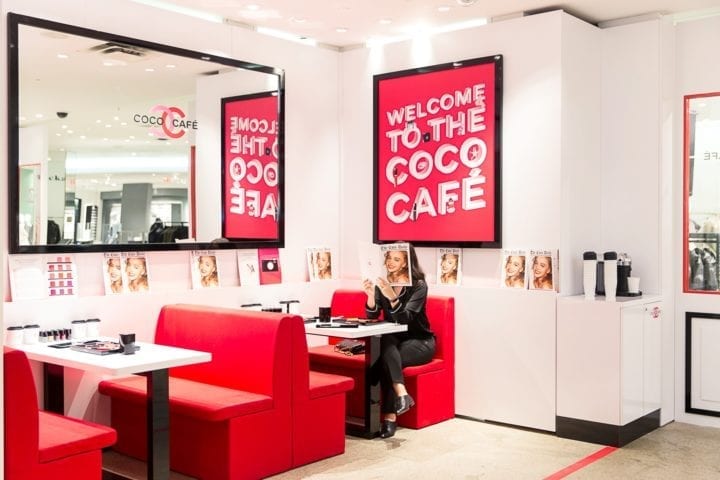
    Coco Café is finally landing in Hong Kong this week. After its eye-poppingly Instagrammable stops in Tokyo, Seoul, Singapore and Shanghai, Chanel’s pop-up café will be taking over the Causeway Bay (G/F 38 Yiu Wah Street, Causeway Bay) branch of Coffee Academics from June 10 to 25.

    The beauty brand has created its own chic little universe, where you can sit back with a neon pink cup of coffee and peruse a special edition of The Coco Daily (don’t forget to bring your shades to complete the Parisian café look).

    Of course, it is Chanel, so they’re not just going to serve lattes and cakes—you can also expect to see ‘beauty bubble tea’ and perfume-inspired juices on the menu, if they follow their recipes from Singapore.

    After that, head over to the beauty counters for a free mini makeover, and then get a quick change of your nail shades at the nail bar. Spruce up your look with some tattoo stickers, and spritz on some Chance fragrance for the final touch.

    Don’t forget to commemorate the occasion with a few snaps in the photo booth, which will have Chanel-themed digital stickers. We have our heads in a fluffy pink cloud just dreaming about it.

    As if that’s not enough, visitors will also be treated to a sneak preview of Chanel’s new lip product, Le Rouge Crayon de Couleur. The intense crayon lipstick, which comes in 11 shades, will be shown in Asia for the first time.

    Gorgeous makeup and delectable treats—what more could a girl ask for? Register online for a complimentary drink, door gift and priority entry. Time slots are filling up fast, so we suggest you get on it quickly.

  • Singapore Airlines swings in to Stockholm in Sweden

    Singapore Airlines swings in to Stockholm in Sweden

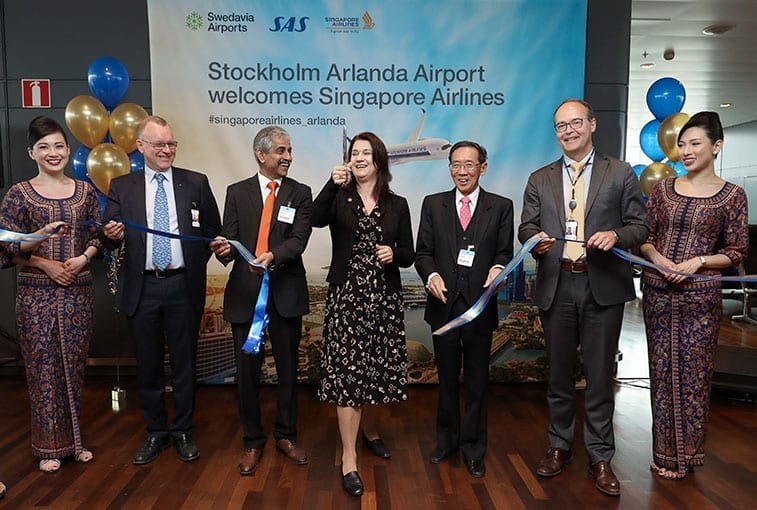
    Singapore Airlines has arrived in Sweden. On 30 May the Star Alliance carrier began five times weekly service from Singapore (SIN) to Stockholm Arlanda (ARN) via Moscow Domodedovo. The 9,651-kilometre route will be flown by the airline’s A350-900s. This is the first route to be served at the Swedish airport using this aircraft type. Jonas Abrahamsson, President and CEO of Swedavia, said: “The new route to Singapore is the result of several years of intense work, and it is a highly desired destination.

    The route is crucial in enabling business travellers to reach markets in Asia easily and also provides potential for greater cargo traffic between the two countries. It is a strategically important intercontinental route in Stockholm Arlanda’s development to be the leading airport in Scandinavia by 2020.” Singapore Airlines now serves 15 destinations in Europe across 11 countries.

  • Power consumption hits record high as Vietnam swelters under heat wave

    Power consumption hits record high as Vietnam swelters under heat wave

    Air conditioners and fans have been going at full blast as locals take cover. Vietnamese people have been draining the national power grid in an effort to keep cool over the past few days as temperatures climb to record highs, especially in the north.

    Nationwide power consumption was measured at 630 million kilowatt-hours (kWh) last Friday, up 11.8 percent over the previous week, according to the country’s power monopoly Vietnam Electricity (EVN).

    In the north, electricity output reached 290 million kWh that day, up 10 percent from last year.

    In Hanoi, the hottest part of the country since early June, local residents used up to 70 million kWh of electricity last Saturday, an increase of 8 million kWh from two days before.

    This is a 163-percent rise compared to the average level for May and a 127-percent rise against the same period last year.

    EVN has made preparations and there will be no power shortages, said Nguyen Duc Ninh, an EVN official.

    “This is just the first heat wave to hit this year, and EVN predicts higher power consumption as the temperature rises,” Ninh added.

    But he also calls on local residents to use electricity efficiently and economically to reduce the pressure on the power sector.

    On Saturday the Ministry of Industry and Trade said the government has no immediate plan to hike power prices.

    The demand for cooling devices has also been growing alongside the temperature over the past few days.

    Data from Google Trends revealed that key words for such devices, including air conditioners and steam cooling fans, surged over the weekend in Vietnam.

    “Sales of air conditioners rose 4-5 times to 120 units per day over the past week,” the owner of a store on Ha Dong District told.

    On Saturday afternoon, the temperature in Hanoi hit 41.5 degrees Celsius, the highest since 1971.

    On Monday morning, a 70-year-old woman fainted while driving a motorbike on Xa Dan Street in Hanoi and died just a few minutes later.

    Doctors at Bach Mai Hospital said the intense heat in the city may have been the cause of her sudden death.

    Meteorologists forecast that the heat wave in Hanoi will last until Tuesday.

  • It’s now easier than ever for Vietnamese to travel abroad

    It’s now easier than ever for Vietnamese to travel abroad

    Dao and her husband recently returned to Hanoi from Cambodia. “The way they (Cambodia) promote tourism is really professional, though the infrastructure and utilities are worse than Vietnam,” she said. “There are so many Vietnamese travelers in Cambodia. You can meet them everywhere.”

    Dao enjoyed the trip because she could make friends with other middle-aged women, who also love traveling. Soon after finishing the trip to Cambodia, they began thinking about the destination for next month.

    “We don’t like traveling domestically. The scenes in Vietnam are very beautiful, but the services are bad,” Dao said. Vietnam has seen the trend of traveling abroad rise in the last two to three years. A travel firm in Hanoi said 70 out of 100 clients of the firm book outbound tours.

    In high season, the firm often has to stop bookings sooner than planned because of the higher than expected number of travelers. The tours at VND10 million are especially attractive.

    The travel firm also finds it easier to design outbound tours because of stable and predictable fee services.

    According to Nguyen Cong Hoan, deputy director of Hanoi Redtours, Vietnamese want to visit developed countries and see new, different things not available in Vietnam. administrative procedures are no longer a problem for them now and tour fees are reasonable, while the services are good.

    Having realized the great potential of the Vietnamese market, Thailand, South Korea, Japan and Singapore have set up tourism promotion agencies in Vietnam, and airlines have opened new air routes to Vietnam.

    On the Vietnam-Thailand route, for example, five to six airlines now provide direct flights, while the return ticket is just $120-130, or VND3 million, which is even cheaper than the ticket for the Hanoi-Nha Trang flight.

    The high number of Vietnamese people traveling abroad, therefore, is not a surprise at all. South Korea received more than 250,000 Vietnamese travelers in 2016, an increase of 58 percent over 2015.

    From 2012 to 2016, the number of Vietnamese travelers to Japan increased by four times. With the participation of seven air carriers which provide 220 flights between Vietnam and Taiwan, 40,000 Vietnamese traveled to Taiwan in January 2017, an increase of 91 percent over the same period last year.

    Cambodia received 1 million Vietnamese travelers and Thailand 830,000 in 2016.

  • Singtel partners with DocuSign for digital signatures

    Singtel partners with DocuSign for digital signatures

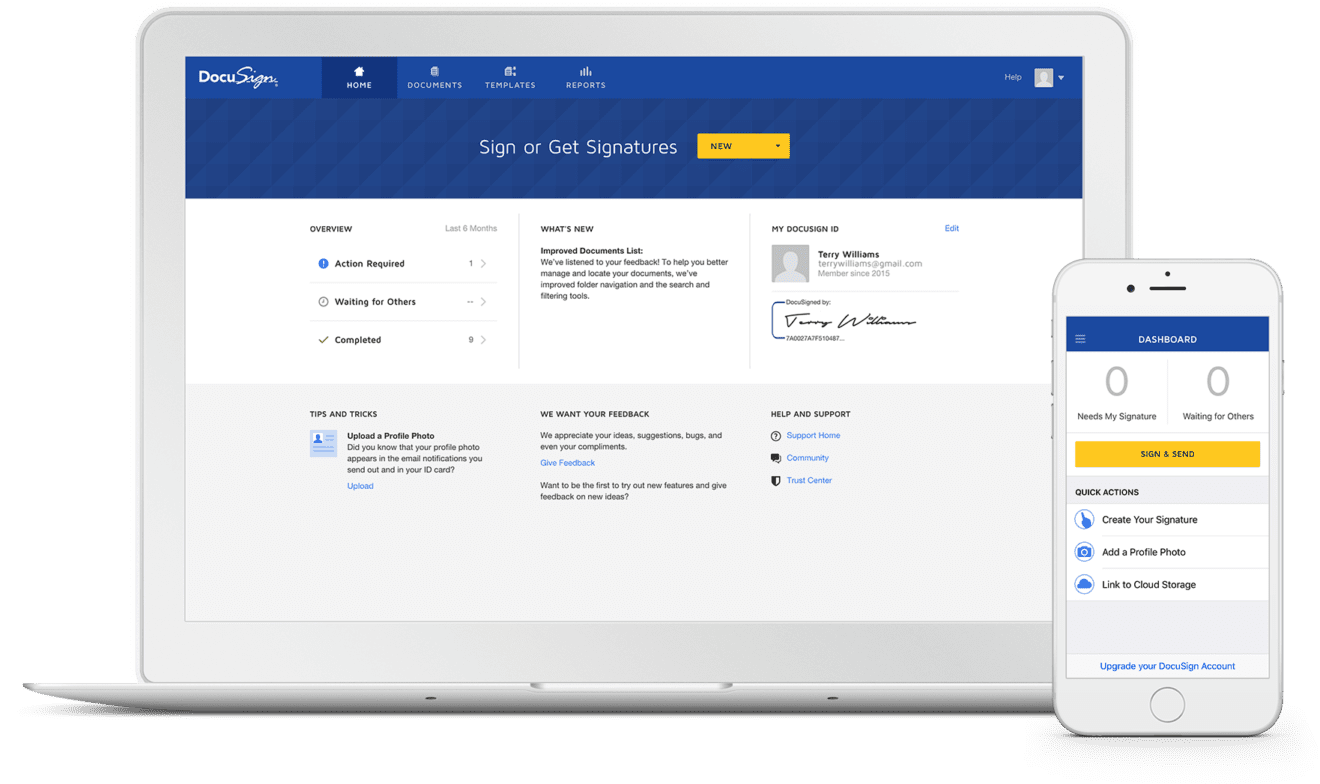
    Singtel and DocuSign have partnered to launch a cloud solution that allows for faster document authorization and more effective tracking through the use of electronic signatures.

    The solution is aimed at businesses undergoing digital transformation that need to upgrade their workflows and approval processes and keep digital records of them.

    The DocuSign solution will be available via Singtel’s SaaS portal. It aims to offer organizations the convenience of approving documents within minutes. Electronic documents and signatures can be electronically tracked from signatory to signatory, and protected against tampering.

    The solution also attaches to each document an electronic Certification of Completion seal that is admissible in court as it captures the audit trail of the signatories’ Internet Protocol addresses, time stamps and sequence of ownership.

    The passing of the Electronics Transaction Act 2010 in Singapore supports the adoption of e-documents and e-signatures.

    As the exclusive retailer reseller of DocuSign in Singapore, Singtel provides a single, dedicated local point of support to help organizations deploy the solution, with no software or hardware solution required.

    Small and medium-sized enterprises that deploy the DocuSign solution are eligible to receive tax deductions under the Government’s Productivity and Innovation Credit scheme.

    The United World College of South East Asia (UWCSEA), an international school in Singapore, has started using DocuSign to improve its staff hiring and student admission processes.

    Ben Morgan, UWCSEA’s IT Director, said, “UWCSEA is constantly exploring ways to deliver better value to families, and attracting the very best teachers from around the world. Shifting from paper-based to digital documents will reduce the time taken to complete some tasks by weeks, reduce the costs and environmental impact, as well as significantly reduce administrative workloads.”

    Industry analyst Statista estimated that the global digital transaction management market is expected to grow from $13.93 billion in 2017 to $30.66 billion in 2020.

  • Levi’s to start company owned stores, e-commerce platform in India

    Levi’s to start company owned stores, e-commerce platform in India

    Iconic apparel brand Levi’s is planning to open company owned stores and launch its e-commerce platform to reach deeper in India, president and CEO Chip Bergh said.

    “One of the company’s growth algorithms is to try and reach deeper into countries like India,” Bergh told the Times of India. “Our business could be twice the size of what it is now in the next five years. Investments in e-commerce and retail will help us do that.”

    When Bergh took over, the company had around 150 franchisee partners, who operated one or two stores each. Currently, it has 22 franchisee partners, each of whom operates a larger number of stores. This has helped channelise more investment into the brand.

    Currently, for one pair of jeans, Levi’s sells three tops globally and Bergh wants to reduce that number. In India, however, the ratio is 1:1 for the clothing company.

    While globally Levi’s has been reporting consecutive years of revenue and profit growth and slashed its debt by more than half, in India, it turned profitable in 2014 after nearly two decades of lull.

    It reported a net profit of around Rs 79 crore in 2015-16, up 64% over the previous year with sales growing at 18.5% to Rs 753 crore.

  • IOX Cable to build new Indian Ocean cable

    IOX Cable to build new Indian Ocean cable

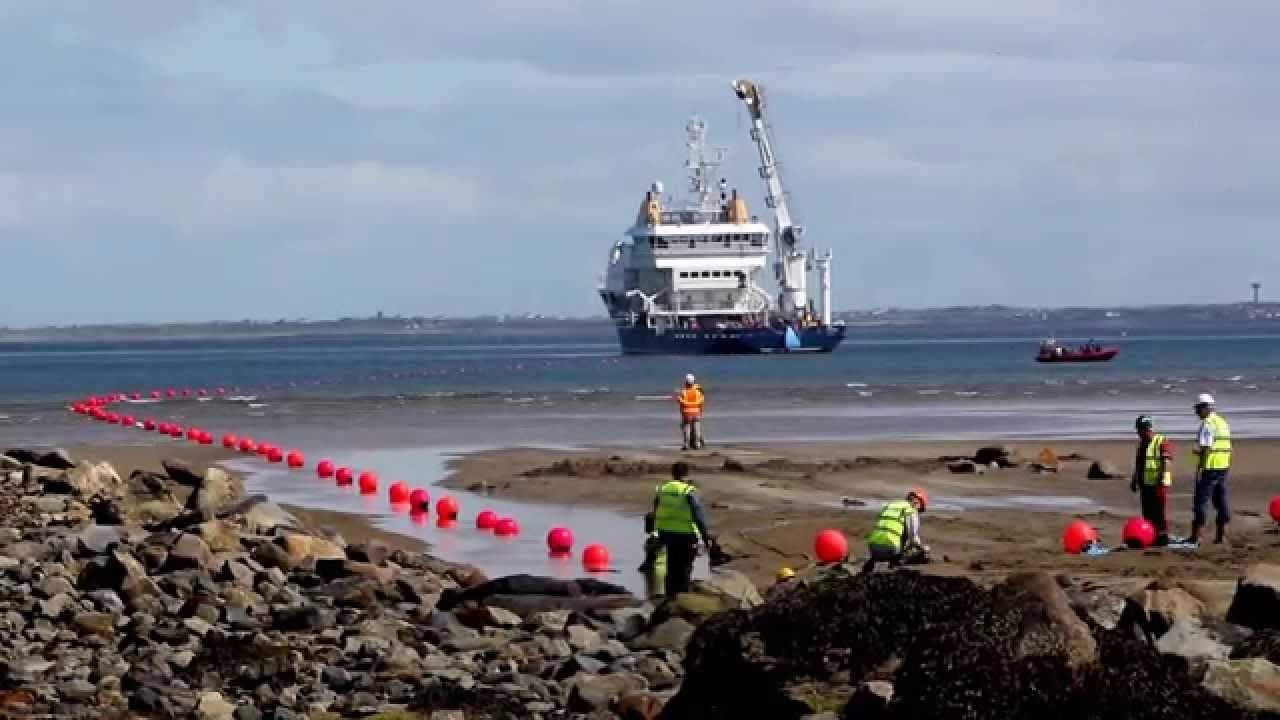
    IOX Cable Ltd and Nokia’s Alcatel Submarine Networks last week announced plans to build the IOX Cable System in the Indian Ocean.

    The new submarine cable will connect the eastern coast of South Africa with the eastern coast of India, hooking up the islands of Mauritius and Rodrigues along the way.

    It will span 8,850km and offer a planned total design capacity of 13Tbps per fiber pair via ASN’s 1620 SOFTNODE and ROADM gear.

    IOX is based in Mauritius, and clearly local access for the island and its neighbor to the east is a key driver for the plans. Rodrigues is new to me, and is apparently a part of the Republic of Mauritius as well. Its 42 square miles are home to just 42,000 or so people.

    But they also clearly hope to cut latency between South Africa and India, and thus bring in some traffic that otherwise would have to hug the coastline past the Middle East and East Africa.

  • SKT launches five-band CA, 4X4 MIMO

    SKT launches five-band CA, 4X4 MIMO

    SK Telecom has announced the launch of five-band carrier aggregation (CA) and 4X4 multiple input multiple output (MIMO) technologies as part of its ongoing evolution to 5G.

    The operator has made five-band CA LTE-A Pro available in the main areas of 53 cities across South Korea, supporting data rates of up to 700Mbps.

    The five-band CA service utilizes SK Telecom’s 10MHz of 800-MHz spectrum, 20MHz in the 1.8-GHz band, 10MHz in 2.1-GHZ as well as a 10MHz and 20MHz carrier in the 2.6-GHz bands.

    SK Telecom has meanwhile launched 900Mbps LTE-A Pro in the CBDs of six cities by combining existing three or four band carrier aggregation with 4×4 MIMO. The six cities are  Seoul, Busan, Daegu, Gwangju, Daejeon and Ulsan.

    Among SK Telecom’s handset line-up, currently only the Samsung Galaxy S8 supports these new services, and will require an over-the-air firmware upgrade to do so. But the operator said it anticipates that more upcoming premium smartphones will support the services.

    SK Telecom has set a target of having the two services combined cover more than 50% of the Korean population by the end of the year.

    The operator also plans to launch 1Gbps LTE-A Pro services in the first half of next year by combining five- or four-band CA with other technologies such as 4X4 MIMO.

    “SK Telecom’s LTE-A Pro services represent an early application of 5G technologies that support Gbps-level data speeds and massive network capacity,” SK Telecom SVP and head of infrastructure strategy Choi Seung-won said.

    ““SK Telecom will continue to offer differentiated mobile communications quality through LTE-A Pro service, while utilizing the network to gain a valuable edge in the 5G era.”

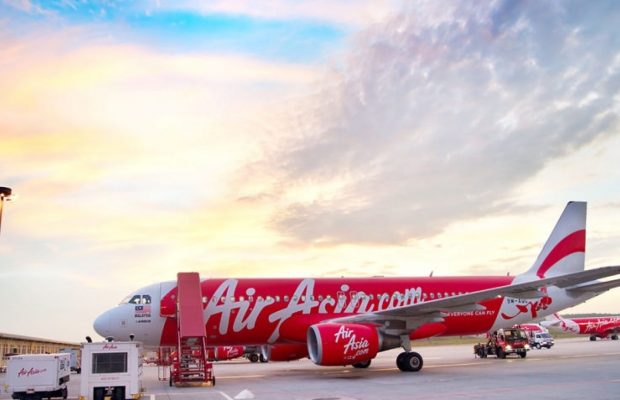
  • Double win for AirAsia at World Travel Awards

    Double win for AirAsia at World Travel Awards

    AirAsia has been voted Asia’s Leading Low-Cost Airline for the fifth year in a row at the 2017 World Travel Awards Asia and Australasia.

    It beat 10 other contenders – Air India Express, Firefly, GoAir, JetKonnect, JetStar Airways, Lucky Air, Nok Air, Scoot, SpiceJet and West Air.

    AirAsia also fended off nine other contenders to win the title of Asia’s Leading Low-Cost Airline Cabin Crew at the awards ceremony in Shanghai.

    The World Travel Awards are considered prestigious and much sought-after trophies in the global tourism industry, and are voted on by international travel and tourism professionals.

    AirAsia Group chief executive officer Tan Sri Tony Fernandes said the awards were a special win because it recognised the airline’s efforts to always do better.

    “This year, we are focusing on improving our check-in systems to make the whole process easier.

    “RoKKi (AirAsia’s onboard WiFi portal) is our big push to make the in-flight experience better, and our Santan in-flight food goes from strength to strength.

    “We are excited to bring our uniquely Asean products to the rest of Asia and the world,” he said in a statement.

    Fernandes also thanked his cabin crew, describing them as “simply the best – special, warm and real”.

    The airline’s North Asia president, Kathleen Tan, said it had listened to its passengers for the past 16 years and refined its vision of low-cost travel.

    “We have continuously ensured that we only deliver services that epitomise the best of Asean hospitality,” she said.

    “Thank you to those who voted to make us Asia’s No. 1 for five years in a row and for giving us our second cabin crew award.”

  • Luxury fashion brands start to sell on China’s WeChat messaging app

    Luxury fashion brands start to sell on China’s WeChat messaging app

    China’s Tencent Holdings Ltd. is using its vast social-media network to attract luxury-fashion brands to its WeChat app, potentially opening a new frontier in online retail.

    France’s Longchamp and the U.K.’s Burberry Group PLC have begun selling handbags and clothes on WeChat, China’s most popular messaging app. LVMH Moët Hennessy Louis Vuitton SE’s Givenchy and Dior brands are testing demand for their goods through flash sales on the platform.

    The move signals a challenge to Alibaba Group Holding Ltd., the dominant player in e-commerce in China, where online transactions are expected to reach 6 trillion yuan ($870 billion) this year, according to consulting firm Bain & Co. Alibaba’s sites processed more than $547 billion in transactions in fiscal 2017, which analysts say is more than eBay Inc. and Amazon.com Inc. combined.

    While luxury sales on WeChat are in their infancy, Tencent’s courting of high-end fashion brands is part of a widening battle between China’s internet companies. Alibaba, Tencent and search engine Baidu Inc. are venturing beyond their traditional business lines into payments, social media and e-commerce.

    Upscale brands are rethinking their digital strategies amid a tough environment for luxury sales. Global sales of personal luxury goods were flat in 2016, at EUR239 billion ($267 billion), while global spending on luxury by Chinese consumers fell for the first time last year, according to Bain. Even so, luxury brands are seeing a pickup in mainland China as brands lower prices there and Beijing encourages consumption at home.

    In the U.S., a small number of luxury labels have tested sales on social media including chat apps. But Tencent in China is making inroads with luxury brands by taking advantage of the massive online ecosystem it has built around WeChat, whose more than 900 million users book movie tickets, hail rides, order laundry pickup and pay for utilities without leaving the app.

    The online sales are also fueling WeChat’s mobile wallet, WeChat Pay, against market leader Alipay, launched by Alibaba’s Ant Financial in 2009. Only WeChat Pay can be used on Tencent’s platform. As recently as 2014, Alipay commanded nearly 80% of China’s mobile payments market, but its share slipped to 54% by the first quarter of this year. Tencent’s payment system, including WeChat Pay, had 40% in the first quarter, according to research firm Analysys.

    Last year, Alibaba joined with Mei.com — which received a $100 million investment from Alibaba in 2015. The e-commerce giant is also relying on big data to clean up counterfeit goods listed on its platform. Alibaba is the “world’s leading fighter on counterfeits,” founder Jack Ma said last year.

    In the past year, Alibaba has reduced the number of third-party product listings of goods made by the top 10 luxury fashion brands by an average of 73%, according to L2 Inc., a digital consulting firm. Still, an average of 49,000 total product listings remained as of April on Alibaba’s Taobao site, a bazaar-like platform of small businesses and sellers.

    Affordable brands such as watchmaker Tag Heuer, jeweler Pandora and cosmetics companies have opened on Tmall, Alibaba’s platform for mostly large brands. But most luxury fashion brands remain wary of open platforms such as Alibaba and rival JD.com because they fear losing their aura of exclusivity, according to Danielle Bailey, head of research in Asia Pacific for L2. Burberry is an exception, opening a store on Tmall in 2014.

    Mr. Cassegrain, Longchamp’s CEO, said, though, that WeChat’s appeal is that it isn’t an open platform where luxury goods can be sold along with everyday products. Users must follow Longchamp’s account or scan a QR code to be taken into the brand’s site.

    Burberry, along with watch and jewelry brands Cie. Financière Richemont SA’s Cartier and IWC Schaffhausen, are among the few that have opened full stores on WeChat.

    Cartier advertises on WeChat’s news feed and sells on the platform because “China is one of the most digitalized markets in the world today, and Cartier has to adapt to it,” said Renaud Litre, chief executive of Cartier China.