Author: Mei Ling Tan

  • Arvato scores two awards for its logistics solutions in China

    Arvato scores two awards for its logistics solutions in China

    Arvato SCM Solutions was honoured with “Best Partner” and “Service Award” by Oriflame – one of the world’s leading direct selling beauty companies. The awards recognise Arvato’s exceptional contributions in developing and executing an agile B2B and B2C domestic fulfillment system for Oriflame’s China business.

    “Oriflame’s vision has always been to be the top direct selling beauty company and China is a key growth market.” says Jason Dong, operations director at Oriflame China. “To support and further build upon our expanding network of consultants and customers, we rely on partners like Arvato that are able to innovate in its solutions and adapt swiftly to our needs.”

    Arvato was commended for the implementation of digital solutions that enhanced the efficiency and quality of its domestic fulfillment model. This includes automation of the order management process and utilisation of computerised tools such as the Pick-by-Light system; with all data integrated into one centralised IT back-end system. The result is end-to-end visibility, better accuracy and control that are critical for managing Oriflame’s wide portfolio of Swedish, nature-inspired beauty products.

    For Oriflame’s consultants and customers, the seamless flow of information allows them to track their orders in real-time via the Oriflame app, WeChat app, or Short Message Services (SMS). Because of the scalability and flexibility built into the system, Oriflame’s customers can be sure that they receive their orders timely even during extreme promotional peak periods such as during China’s annual 11.11 Global Shopping Festival. Their customer journey with Oriflame is further enhanced with an efficient returns management process through Arvato’s reverse logistics solution; and receipt of the most up-to-date promotional materials through Arvato’s value-added services.

    “The ‘Three-Year Service Award’ also marks a significant milestone in the partnership between Arvato and Oriflame,” says Li Zhang, head of the consumer products business unit at Arvato SCM Solutions China. “Over the span of three years, Arvato has expanded its services to three sites across China – Beijing, Shenzhen and Shanghai; in support of Oriflame’s rapidly growing business.”

    Arvato received both awards at Oriflame’s 2017 Summit for Service Providers.

  • Vietnamese students turn to Japan in hope of getting good jobs

    Vietnamese students turn to Japan in hope of getting good jobs

    It seems like a win-win situation for Japanese companies looking for skilled employees in Vietnam. The number of Vietnamese studying in Japan grew more than 12-fold from 2010-2016 to around 54,000.

    They now account for nearly a quarter of international students in Japan, behind only Chinese students, who make up 41 percent but whose numbers have leveled off in recent year, citing the Japan Student Services Organization (JASSO) as saying in a Thursday report.

    The growing presence of Japanese companies in Vietnam has students and their parents thinking about studying in Japan in the hope of landing a well-paid job with a Japanese company, Itsuro Tsutsumi, director at JASSO’s student-exchange department.

    “I chose Japan for my children because it costs less than other countries and has a good education system, instilling good discipline in students,” the newswire quoted Tran Thi Quynh My, an official at the State Bank of Vietnam, as saying.

    “After studying in Japan my children will have a better chance of finding a good job when they get back to work in Vietnam since there are more and more Japanese companies investing in our country,” she said.

    Vietnam’s economy expanded by more than 6 percent for a second consecutive year in 2016, making it one of the world’s fastest-growing economies. Japanese companies are increasingly looking to Southeast Asia where incomes and consumption are likely to keep growing for years, quoting Shinobu Kikuchi, senior economist at Mizuho Research Institute in Tokyo, as saying.

    Japan is aggressively recruiting students from the region in the hope they will help enhance economic ties with their home countries in the future.

  • DHL adds another China-Europe rail link

    DHL adds another China-Europe rail link

    DHL manages new route with supply chain partner China Brilliant, providing both LCL and FCL service to DHL customers.

    DHL Global Forwarding has launched the first regular service connecting Shenzhen to Minsk, Belarus via rail in less than 12 days. The new route covers new overland connections to several major cities along China’s “Belt and Road” and is the latest route in the DHL Asia-Europe-Asia multimodal network.

    DHL will manage the new route together with China Brilliant, an integrated service provider in global manufacturing and consumption with which DHL signed an MOU last year. Offering both Less-than-Container Load (LCL) and Full Container Load (FCL) services along the route, DHL gives businesses increased flexibility to meet rapidly growing and evolving market demands for electronics, industrial and automotive parts, and fresh food in both Eastern Europe and China.

    “Eastern Europe’s economies are growing faster than almost any others worldwide,¹ with significant export opportunities arising from the region’s rising wages and disposable income levels,² ” said Steve Huang, CEO, DHL Global Forwarding Greater China. “Minsk offers Chinese businesses an efficient gateway into the Baltic States and Nordic countries in addition to other major European destinations like Warsaw, Hamburg and Tilburg via Brest.”

    “With Shenzhen’s economy exceeding expectations to grow by 9% last year,³ the route also opens sizable opportunities for European exporters looking to sell to one of China’s most vibrant trade and business hubs, or use it as an important gateway to Southeast Asia and the rest of the Chinese consumer market. Our newest route further supports strategic infrastructure projects designed especially to support the Belt and Road, such as the Great Stone Industrial Park – the largest joint project between China and Belarus that will span decades;⁴ strengthens bilateral ties between the two countries; and also lays the groundwork for further rail connectivity to the Nordic and Middle Eastern states involved in the Belt and Road.”

  • China will continue to relax foreign investment rules for auto industry

    China will continue to relax foreign investment rules for auto industry

    China will continue to relax foreign investment rules for the country’s auto sector and other high end manufacturing, lifting restrictions in an orderly fashion, the commerce ministry said on Thursday.

    The government is preparing to further open up the new energy vehicle battery market to foreign investment, Ministry spokesman Sun Jiwen told a regular briefing in Beijing.

  • Young Li is Alibaba’s head of international business

    Young Li is Alibaba’s head of international business

    Alibaba’s Mobile Business Group on Thursday said Young Li has been elevated as the head of International Business Department, and in his new role he will be in charge of the overseas business of UCWeb.Young has previously headed the UC News where he spearheaded the product in markets such as India and Indonesia.
    ”Young and his team have been an integral driver of our strategy of moving ‘From Tool to Content’, addressing the key challenge faced by users and partners, that is, content discovery and navigation for users and content distribution by publishers and partners,” said Jack Huang, President, Alibaba Mobile Business Group, in a statement.

    Jack said the demand for diverse digital content is set to explore and UC News is at the forefront of that revolution, with an initial investment plan of Rs 2 billion and a monthly active user base of 100 million. “In his new role, Young will help us in consolidating all businesses of International Business Department, including our key overseas markets of India, Indonesia and Russia. He will also take lead in product strategy and business for our strategic products like UC News,” he added.

  • Sugar inventory hits record high

    Sugar inventory hits record high

    Sugar plants have reported their highest ever inventory level, nearing 750,000 tons, accounting for 50 percent of their processing output. Explaining reasons for the high inventory yesterday, chairman of Vietnam Sugar and Sugarcane Association (VSSA) Pham Quoc Doanh said that unusual weather has caused material shortage at the beginning of this year processing crop. Sugarcane harvest has concentrated at the end of the crop.

    Sugar import quotas, as per WTO commitments, left  from last year has contributed to the inventory this year.  Illicit sugar import has reached 400,000 tons now accounting for one third of the total processing output.

    Mr. Nguyen Hoang Ngoan, deputy director general of Can Tho Sugar Company, said that Thai sugar has illegally imported into the Mekong Delta, the central region and the Central Highlands and been sold at lower than domestic prices.

    A kilogram of domestic sugar is priced as low as VND16,000-16,500 a kilogram but it is still unsalable. The company alone has over 20,000 tons in stock.

    Stating at a conference seeking  sugar consumption solutions recently, deputy Minister of Agriculture and Rural Development Tran Thanh Nam said that the ministry had proposed the Ministry of Industry and Trade to lengthen sugar import under quotas to the third and fourth quarter.

    The Ministry of Industry and Trade and the Ministry of Finance should rectify long lasting sugar auction to prevent loopholes for invoice fraudulence.

    In long term, the ministry proposed to increase sugarcane productivity and commercial cane sugar (CCS), representing the sugar content of cane, and regulate sugar volume in production and consumption.

  • Chinese shoe brand What For, plans Europe retail rollout

    Chinese shoe brand What For, plans Europe retail rollout

    Having already launched a solid retail network in France, Chinese footwear brand What For plans to take on Europe’s neighbouring countries.

    Launching in 2008, the Stella International-owned Asian brand entered the French market in 2013, and consequently opened nine stores, with the latest boutique bowing in the Val d’Europe shopping centre in April.

    While the women’s brand grew considerably in France in 2016 with the opening of seven stores, “the goal right now is to concentrate on the brand’s international development, which boasts more than 800 multibrand points of sale across 25 countries,” said Yann Tobelaim, president of Stella Fashion Europe, the joint venture group formed by the Chinese firm in Europe.

    The new challenge for the brand, however, is finding potential store locations across metropolitan Europe. What For is targeting western Europe, including Germany, Italy and Belgium, and more specifically, cities with a strong fashion DNA such as Milan, Anvers and Berlin.

    At the same time, What For — the mid-to-high end shoe brand whose prices range between 130 and 200 euros — hopes to also continue its French expansion with the opening of a number of monobrand stores, particularly in the south and western France.

    Predominately a shoe seller, What For also sells a small line of leathergoods, which it started in 2016. Products are designed in Paris and manufactured in China.

  • Rule change in the battle against pirates

    Rule change in the battle against pirates

    The growth of high speed broadband in Asia has changed the nature of video piracy, with downloads giving way to streaming over IP and requiring a new “360 degree” response.

    That’s the view of Roger Harvey, regional sales director for security vendor Irdeto in Asia-Pacific, who has seen the proliferation of “IP boxes” which allow users to access thousands of global television channels illegally.

    Irdeto recently commissioned a global consumer online piracy survey and found that while 78% of APAC consumers are aware that sharing pirated video is illegal, 61% still choose to watch it. This is significantly higher than the US, where the latter figure is 32%, and Europe, 45%.

    Part of the reason that piracy is lower in the US is because subscription video on demand (SVOD) models are inexpensive and easy to use, while pirate sites are often infected with malware.

    While Asia’s broadband is getting faster, content providers in the SVOD space are not as advanced, meaning that people turn to pirates more often to find what they want to watch.

    “Broadband has created a massive shift in piracy and how you deal with it,” says Harvey.

    “Five years ago you had people trying to break encryption systems, but these systems are so much more advanced, but what you have now is the broadband speed which makes it easy to take the content in the clear and put it over the internet.”

    The shift to “linear” viewing to viewing on demand has also changed the technical infrastructure and the devices people are using to view content, and each of these devices has their own digital rights management (DRM) technology which needs to be understood by service providers.

    “These days you need some sort of watermarking on content so you can trace the source,” says Harvey.

    “And once you have that you can deploy 360 degree security. And that means scouring the web using our crawlers, finding the content and then taking it down at the source.”

    Irdeto was the first western vendor to have an agreement with Alibaba, where it has succeeded in shutting down thousands of online advertisements for pirate devices from dozens of suppliers on the Alibaba platform.

    The company also works with Google, and with many subscription television providers such as Australia’s Foxtel, where the 360 approach helps minimize revenue leakage.

  • Vietnam’s 2017/2018 coffee output to rise 10 pct on good weather, prices

    Vietnam’s 2017/2018 coffee output to rise 10 pct on good weather, prices

    Good news for exporters with the 2016/2017 crop likely to fall short of expectations. Vietnam, the world’s largest robusta producer, is forecast to harvest 28.6 million bags (1.72 million tons) of coffee from its next 2017/2018 crop, a rise of 10 percent from the current season, thanks to favorable weather conditions and higher domestic prices, a U.S. Department of Agriculture attache said.

    Higher output from Vietnam, which stands only behind Brazil in terms of global coffee production, supports an industry view which envisages stable global supply in the next crop year.

    “Adequate rains starting in January through March helped coffee trees trigger more branches and early flowering,” the USDA attache said in a May 17 report.

    High domestic prices have also helped farmers purchase sufficient fertilizer, triggering higher yields even though the total planting area remains unchanged, the report said.

    Vietnam’s coffee crop year lasts between October and September, starting with the harvest in the Central Highlands region that accounts for around 90 percent of the country’s output.

    While it is still too early to forecast the size of the next harvest, Vietnam’s coffee belt has seen favorable weather for production  in recent months, said Bach Thanh Tuan, head of the Community Development Center, a state-backed facility in Dak Lak Province. The center is tasked with ensuring sustainable production in the province as well as the entire region.

    “The supply outlook for 2017/18 seems increasingly positive,” the London-based International Coffee Organization said in its April report, adding that initial concerns about frost in Brazil and a shortage of rainfall in Vietnam have eased.

    Coffee prices on the domestic market rose to VND47,500 ($2.1) per kilogram on March 21, the highest since September 2011. The price hike coincided with the coffee watering period, during which Vietnamese growers feed fertilizer to their trees.

    Smaller 2016/2017 crop

    The USDA report has revised down its output forecast for the ongoing 2016/2017 crop year by 2.6 percent to 26 million bags, saying extended rain in October-November 2016 had damaged cherries and reduced the quality of beans.

    Vietnam’s coffee exports in the next 2017/2018 crop year are forecast to edge up 0.4 percent to 26.65 million bags, the report said. The export volume includes green beans, soluble and roasted coffee.

    Consumption of roasted, ground and soluble coffee in Vietnam in the next 2017/2018 season is projected to rise 2 percent to 2.93 million bags, the report said.

    It cited the continuing growth of coffee shops, saying domestic market competition remains fierce due to the arrival of foreign brands.

    Even though Vietnam’s coffee exports fell to 2.25 million bags last month, a five-month low, based on Vietnam Customs data, the shipments still helped extend Vietnam’s position as the world’s biggest coffee exporter, which the Southeast Asian nation seized from Brazil in March.

    Robusta beans account for most of Vietnam’s exports and are used mainly for making soluble coffee.

    Top producer Brazil shipped a combined 2.13 million bags of arabica, conillon (a variety of robusta), soluble coffee and roasted beans in April, down 13.5 percent from a year ago, the Brazilian Coffee Exporters Council said in a report released earlier this month.

  • Adidas’ slavery buster hopes technology can give workers a voice

    Adidas’ slavery buster hopes technology can give workers a voice

    As apparel and footwear industries rely heavily on outsourcing, sportswear companies have faced growing scrutiny. Adidas executive Aditi Wanchoo is on a mission – to wipe out any slavery in the German sportswear company’s supply chain, and she hopes giving workers the technology to speak out will help.

    With a background in corporate social responsibility at consultancy firm Accenture, Wanchoo was hired 18 months ago in a new position created by Adidas, one of the first companies to set up a role dedicated to fighting slavery.

    In recent years modern-day slavery has increasingly come under the spotlight, putting regulatory and consumer pressure on companies to ensure their supply chains are free of forced labour, child labor and other forms of slavery.

    As apparel and footwear industries rely heavily on outsourcing, sportswear companies have faced growing scrutiny.

    Wanchoo said Adidas had been actively working on this issue since it was revealed at the 1998 World Cup that footballs were produced by child laborers in India and companies realized they did not have control over their suppliers.

    Governments are now trying to tackle the problem with new legislation, such as the UK’s 2015 law requiring companies to disclose how they are ensuring supply chains are slavery free.

    “We have found that the UK Modern Slavery Act and recent legislative action in France and Australia have helped take the conversations to the boardroom,” Wanchoo told the Thomson Reuters Foundation in an interview this week in London.

    “My role was created to look at building relevant partnerships to continue our work on addressing potential modern slavery risks for our extended supply chain, i.e. our Tier 2 processing facilities and Tier 3 raw material sources.”

    Slavery has emerged as a major global problem with the Global Slavery Index by the Walk Free Foundation estimating there are nearly 46 million slaves in the world.

    The United Nations has a global goal to eradicate forced labor and slavery by 2030 and end all child labor by 2025.

    Wanchoo said she was tackling the issue in various ways such as collaborating with other companies, NGOs and governments, and training suppliers about the risks of bonded labor and the impact of recruitment fees on workers.

    Tech to give workers a voice

    She said Adidas was also on a major drive to encourage workers to speak up and use this information to eradicate slavery and improve workers’ conditions.

    The company already has “worker hotlines” giving 300,000 factory workers in China, Indonesia, Vietnam and Cambodia the opportunity to anonymously ask questions, make suggestions or express concerns via text messages and smart phone applications.

    But the company found this was not enough, and over the past year Adidas has run a pilot project in China with apps for workers to anonymously report issues – data that is collected and then analyzed.

    Wanchoo said the aim is to introduce such a system in all of the company’s 105 or so primary factories in the next five years and then look at cascading this down to second-tier suppliers.

    In Turkey these worker grievance systems had uncovered concerns about child labour and reports of illegal workers from Turkmenistan, while in Asia workers had complained about abuse by supervisors, wage issues and food, she said.

    She added that efforts to hear directly from workers was paying off. Last year campaign organisation KnowTheChain ranked Adidas top out of 20 firms, chosen because of their size, for its efforts to eliminate forced labor and human trafficking.

    “We want to make it as easy and anonymous as possible for workers,” said Hong Kong-based Wanchoo, whose official title is senior manager – development partnerships, social and environmental affairs at Adidas.

    She acknowledged this did not always go down well with suppliers who aim to keep costs as competitive as possible.

    “Sometimes there can be resistance from suppliers, but we work with them to demonstrate how this can help them in the long run by improving supply chain transparency, communication, productivity and worker retention,” she said.

  • Lotte Liquor launches Fitz, a lighter beer for summer

    Lotte Liquor launches Fitz, a lighter beer for summer

    Lotte Liquor will launch its second beer brand Fitz Super Clear on June 1, the company said. Fitz Super Clear is a lager containing a relatively low 4.5 percent alcohol content. The company said Fitz is designed to serve as a light but refreshing alcoholic drink for the summer.

    “Fitz was developed with a focus to resolve a reputation that Korean beer is tasteless and bland,” the company said. “We tried to eliminate the unnecessary taste that is generated when the temperature and ingredients aren’t kept stable during the brewing process.”

    The beer uses the same “original gravity” method as Kloud products, which don’t add water in the brewing process. It also used the self-developed Super Yeast and enhanced the fermentation rate to 90 percent for a cleaner taste.

    The company launched Kloud in 2014. Kloud has 5 percent alcohol content and has a flavour similar to imported beers from European countries. It’s sometimes criticised for not being suitable for Korea’s somaek drinking culture, which mixes soju with beer.

    Fitz’s target customers are in their 20s and 30s. Kloud is for those who enjoy drinking alcohol while Fitz is for general gatherings because it is lighter and contains less alcohol content.

    Lotte Liquor invested 700 billion won (US$622.6 million) for a second beer manufacturing plant, which is scheduled to open in July. Once it opens, it will be able to produce up to 200,000 kiloliters (55.8 million gallons) of Fitz per year.

    The company aims to generate 90 billion won in sales for Kloud and 70 billion won for Fitz this year.

    The beer costs 1,147 won for a 500-millileter bottle.

  • UPS and SF Holding To Establish a Joint Venture

    UPS and SF Holding To Establish a Joint Venture

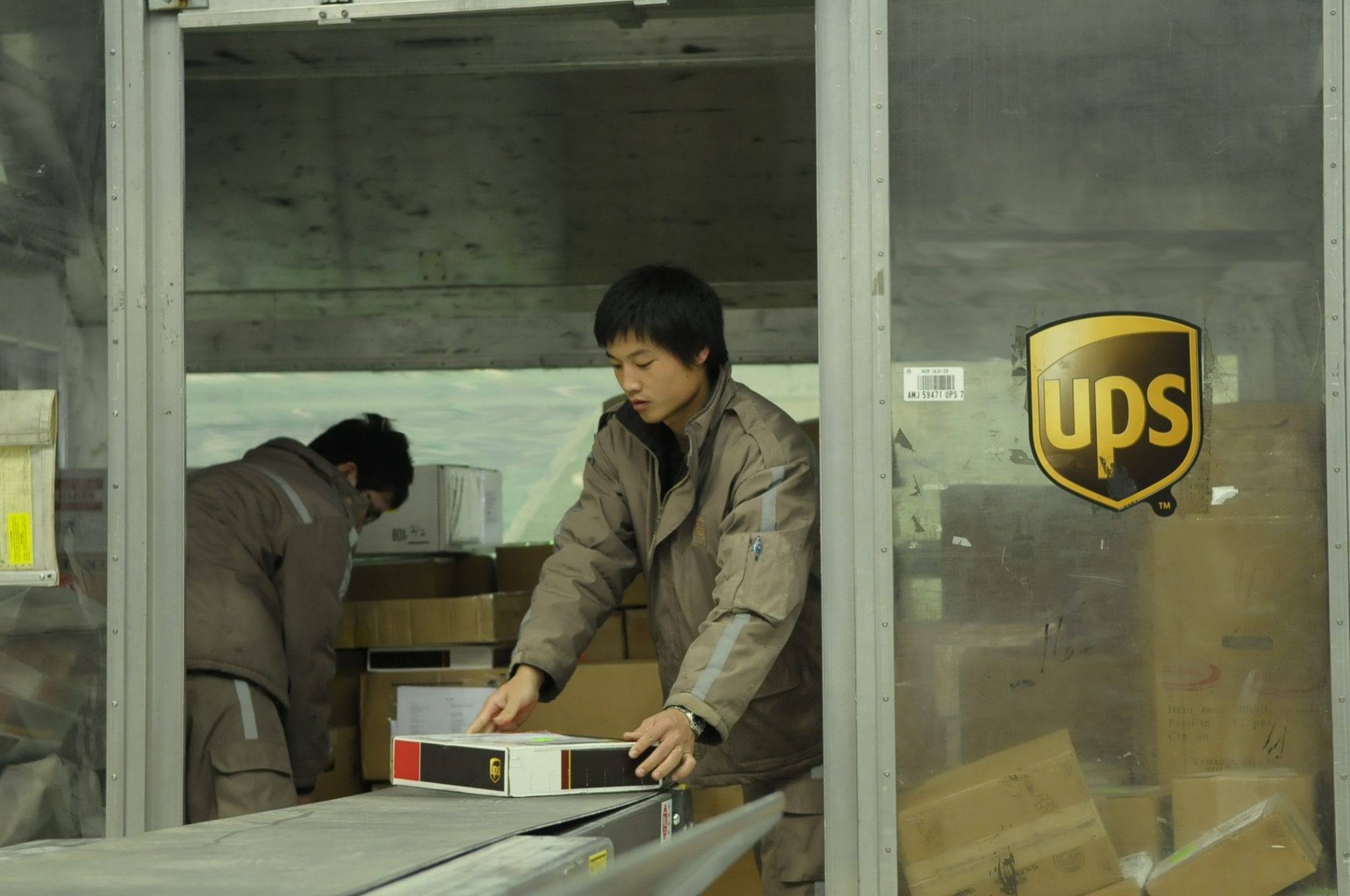
    UPS and SF Holding, the parent company of SF Express, today announced plans to establish a joint venture and collaborate to develop and provide international delivery services initially from China to the US, with expansion plans for other destinations. Through this agreement the parties will leverage their complementary networks, service portfolios, technologies and logistics expertise. The joint venture is subject to regulatory approval.

    UPS is the world’s largest express delivery company and a leading global supply chain integrator. SF is a market leader in express delivery in China, with extensive China-wide network coverage, comprehensive service capabilities, and the highest brand recognition in the Chinese small package market.

    “UPS is excited to form a joint venture with SF.  This joint venture will support products that provide competitive benefits to our Chinese customers who trade or seek to trade internationally,” said Ross McCullough, President of UPS Asia Pacific. “Our combined efforts will result in new logistics products and services to simplify and accelerate B2B and B2C customers’ cross-border trade.”

    The joint services offerings combine the strengths of SF’s extensive Chinese network, encompassing more than 13,000 service points in the world’s largest and fastest growing package delivery market, with UPS’s market leading globally integrated network with coverage between more than 220 countries.

    Alignment of the partners’ shipping networks will provide customers with greater coverage, additional routing options, increased capacity, and more choice in transit times and service options.  The joint venture will initially focus on supporting these highly competitive joint service offerings on the China-to-US lane, with planned expansion to markets in the rest of the world.

    “China is leading the world in terms of e-commerce market size, growth, penetration and mobile business usage[i]. Coupled with a rapidly growing and internet-savvy consumer base, it’s imperative thatSF and UPS collaborate to revolutionize the logistics sector.  Together, we aim to bring greater competitive advantages to our customers in China, to succeed globally,” said Alan Wong, Group Vice President of SF.

    The joint venture supports the creation of competitive synergies for UPS and SF through the combined scope and scale of both companies’ complementary networks.  Both companies will utilize their own assets to enhance operational effectiveness and efficiency while aligning business processes in order to provide seamless customer care for all parties shipping out of China.

  • Amazon launches entry-level celebrity-esque eyewear line

    Amazon launches entry-level celebrity-esque eyewear line

    Amazon‘s latest product launch through Amazon Exclusives is a Hollywood-backed affordable but luxury-like eyewear line Privé Revaux Eyewear.

    The line will include 100 styles of frames and polarized lenses. Each will retail for $29.95.

    The brand was founded by fashion entrepreneur David Schottenstein who comes from the same family that created DSW and American Eagle. Schottenstein has enlisted major Hollywood talent in actors Jamie Foxx, Hailee Steinfeld, Ashley Benson and Jeremy Piven. They will not only contribute to marketing but also to product development and the overall brand vision.

    Privé Revaux Eyewear is the latest brand diving in to disrupt the premium eyewear market. With heavy hitters Marchon and Luxottica holding virtually the entire market, it joins an energetic group of small brands attempting to change the landscape and make luxury eyewear more affordable. The brand’s advertising tagline is appropriately “Now everyone can be anyone.”

    “I wanted to get involved with a sunglasses company and create something that was fly and affordable for people” says Foxx.

    Privé Revaux Eyewear features styles designed to invoke iconic personas. Style names include The Supermodel and The Jetsetter. The brand’s digital campaign shows Foxx, Steinfeld, Benson and Piven asking “Who do I want to be today?” with answer being “reframe yourself”.

    In addition to digital, Privé Revaux Eyewear will release a full length video featuring the actors who will also appear in individual ads. A full catalog is available both on Amazon and on the company’s site.

    Privé Revaux Eyewear is available now through presale on the brand’s own website. It will officially launch globally through Amazon Exclusives on June 2, 2017.

  • Hong Kong retail market enters post-correction era

    Hong Kong retail market enters post-correction era

    Hong Kong’s retail sector is transitioning into a period of normality. After several years of correction, the retail market is showing genuine signs of stability and renewed tenant activity.

    The driver is, simply, cost. In the first half of 2017, rental costs of core shopping areas have finally come down to a level considered acceptable from a tenant perspective. Significantly, with this normalization, low-to-middle range retailers are now confident and less likely to succumb to outlandish rental costs and fierce competition with luxury jewelry stores for retail space. Higher up the value chain, landlords of shopping malls and street shops have become so nimble with their portfolio strategy that a more diversified market has brought in a new era of retail.

    The change is conspicuous. Major streets in Hong Kong are no longer dominated by jewelry shops, pharmacies or luxury brands.

    Outside forces are increasingly influencing this retail shift; Chinese tourists’ diminishing consumption have changed the consumer profile. And as a result, landlords have to cater to the needs of a more local clientele. To reflect the transition in the market, landlords are actively leasing to more trendy tenants such as affordable luxury brands, diversified fashion concepts, cosmetics stores and food & beverage establishments.

    The change is also occurring away from the street level. Most shopping malls have transformed or are about to transform their tenant mix by adding unique restaurants, niche fashion brands, international lifestyle stores or sports-related gadget shops. In addition to cinemas, landlords are signing boutique-style gyms as alternative tenant anchors. They are successfully attracting footfall, complemented with a sports brand added to the trade-mix.

    But retailers have still not fully regained their confidence and a meaningful recovery in Hong Kong will take time. Signs of a more measured rebound are more obvious with well-established brands who are still regrouping from their extensive expansion across Greater China. As such, newer brands are taking advantage of the situation and are actively acquiring.

    Innovative hybrid concepts, mingling entertainment with dining, have been imported from the overseas market into Hong Kong. As opposed to previous cycles, international operators of these new concepts have found space in revitalized industrial buildings. Some of these family-friendly restaurants, like Mr. Tree and Crazy Car Cafe in Lai Chi Kok, have become so sought-after that customers have to book one month in advance to secure a place for a child’s birthday party.

    Nonetheless, the current retail market is at its healthiest it has been in the last ten years. Hong Kong’s landlords are now adopting proactive and flexible strategies to attract tenants and foot traffic, paving the way for the long term development of the retail industry. Only time will tell.

  • Cebu Pacific to suspend operations in 3 Middle Eastern routes

    Cebu Pacific to suspend operations in 3 Middle Eastern routes

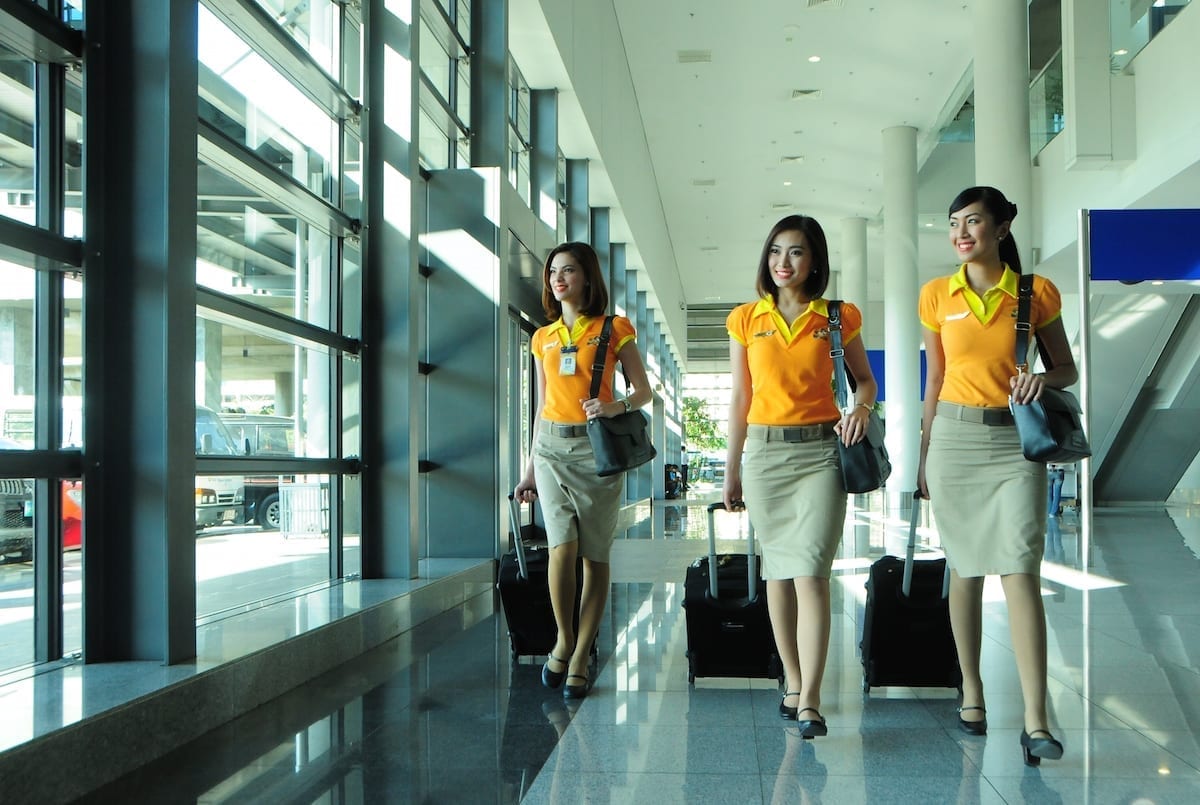
    CEBU Pacific Air announced Wednesday that it will halt flying to Riyadh in Saudi Arabia, Kuwait, and Doha in Qatar because the routes are not viable anymore. Lawyer JR Mantaring, CEB vice president for corporate affairs, said there were too many competitions already in the said routes. “The entry of Cebu Pacific into these markets benefited passengers with lower fares and more choices. Of late, other carriers have aggressively added more flights, which has resulted in substantial oversupply of seats and fares that are so low, hence making the routes unsustainable,” he said in a statement. He said it makes more sense for CEB to re-deploy the aircraft used for the Riyadh, Doha and Kuwait service to routes where they could further stimulate demand and sustain the low fare offers.

    “We have to continuously review our routes to ensure their viability,” he said. CEB will fly the last of its four-times-a-week service from Manila to Kuwait on June 13, and its Kuwait-Manila flight on June 14. The thrice-weekly Manila-Doha-Manila route will have its last flight on July 1; while CEB’s last flight from Manila to Riyadh, Saudi Arabia will depart on July 2, while the Riyadh-Manila flight will leave on July 3.

    CEB said it will retain its other long-haul services to and from Dubai, United Arab Emirates; and Sydney, Australia, with a view to increasing frequencies to these destinations in the future. The airline also flies to 24 other international destinations across Asia and the United States; as well as 37 domestic destinations. “Passengers affected by the suspension of CEB service in Doha, Riyadh and Kuwait are being contacted. Options are being provided to minimize the disruption, which include rebooking passengers on flights with other airlines or on earlier travel dates with CEB; a full refund; or placing the full value of the ticket in a travel fund for future use,” CEB said.