Author: Mei Ling Tan

  • Telstra lays out plans for Programmable Network

    Telstra lays out plans for Programmable Network

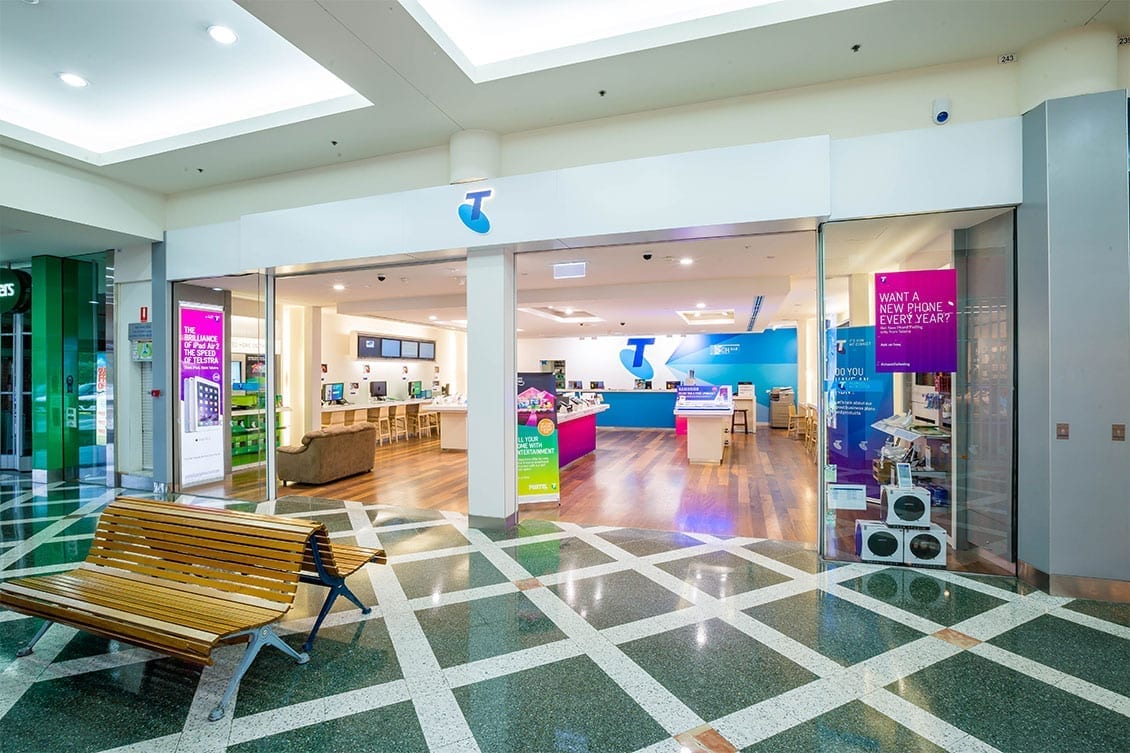
    Australian operator Telstra has outlined its plans to offer SDN and NFV, cloud platform and data centers as well as global and Australian networks in one integrated and intelligent platform.

    At the ITW Conference in Chicago, Telstra outlined its planned network-as-a-service called the Telstra Programmable Network.

    This new network will be programmable at its core and enable the automation and provisioning of services. It will be designed to help businesses quickly add new capabilities to deliver better experiences without significant infrastructure upgrades. It will also allow simple and secure access to multiple cloud services via a simple user interface.

    “The Telstra Programmable Network is designed to help our customers meet the rapidly growing global demand for data and the proliferation of applications, as well as embrace cloud computing by offering flexible and dynamic access to our high bandwidth, low latency and secure networks,” said Jim Fagan, Director Global Platforms.

    “Our vision for the Telstra Programmable Network is to help businesses optimize their IT by offering automated, on-demand and near real-time provisioning, consumption-based pricing and new data insights on network usage,” said Fagan.

    “The Telstra Programmable Network brings together all of our SDN technologies such as PEN, Telstra’s first globally connected on-demand networking platform, and continues their development under one vision, architecture and investment program.”

    International IP-VPN customers will also be able to access the Telstra Programmable Network’s capabilities from any of Telstra’s 2,000 points of presence worldwide after launch. This includes extending their network via Telstra’s portal or API to access the internet and a range of public cloud services including Amazon Web Services and IBM SoftLayer.

    To complement the rollout, Telstra will implement a significant capability upgrade of its core international IP network in the coming months.

    This will introduce increased bandwidth and flexibility, which the new service will demand. In addition, these enhancements are expected to increase Telstra’s peering capacity by up to 70% and provide enhanced security with traffic segregation capability to mitigate DDoS traffic.

    “These initial investments will establish the groundwork for the Telstra Programmable Network with future enhancements, such as orchestrated real-time SD-WAN and security, to be announced in the coming months,” said Fagan.

  • Puma Energy Asia Sun Aims to Distribute Petroleum in Myanmar

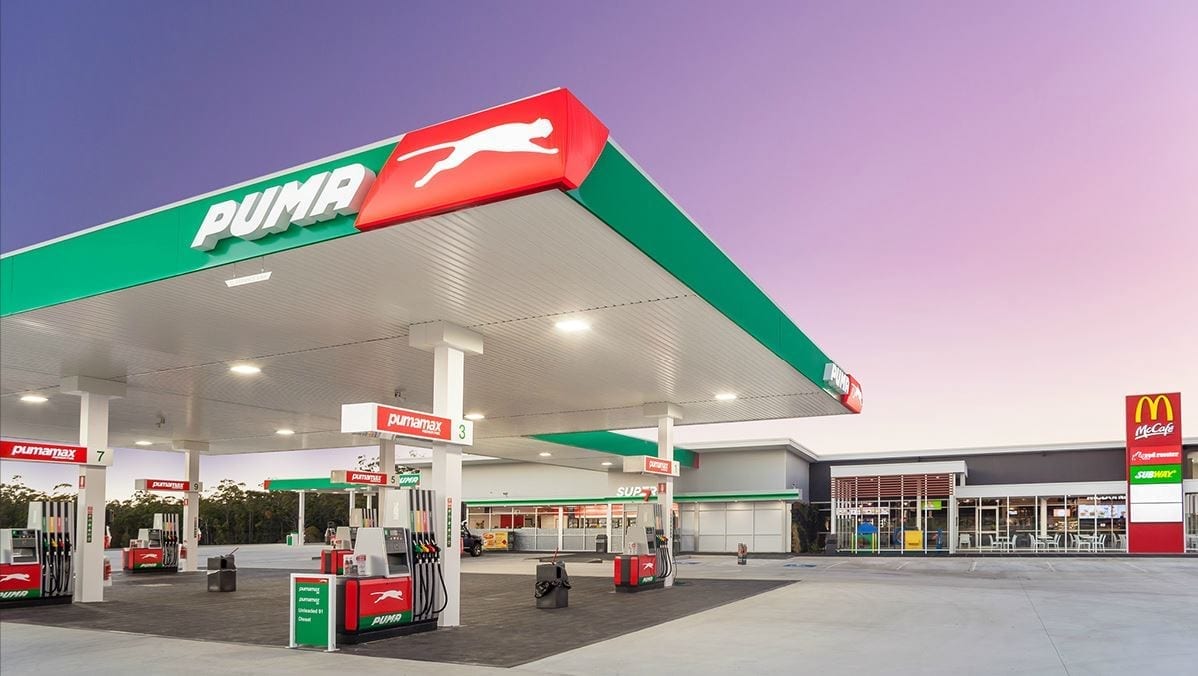
    Puma Energy Asia Sun Aims to Distribute Petroleum in Myanmar

    The terminal, which cost $92 million, is designed to hold mostly middle distillates, with 29,000 cubic meters of space for gasoil and 21,000 cubic meters for jet fuel.

    Another 17,000 cubic meters is dedicated to store gasoline and the remaining for bitumen and fuel oil.

    Puma Energy Asia Sun only provides storage services, but intends to apply for a license to distribute oil products, said David Holden, general manager of the firm, although it was unclear when that will be granted.

    “With the change in Myanmar’s investment law on April 1, Puma Energy Asia Sun is investigating eligibility to broaden its business scope to include all aspects of the supply chain,” he added.

    “We believe that Puma Energy is one of three foreign firms in the final round of bidding for the Myanmar Petroleum Products Enterprise (MPPE) network tender to run part of Myanmar’s petroleum downstream business.”

    Myanmar, which has three small refineries with a total capacity of below 80,000 bpd, last month reformed its rules governing foreign investments in order to attract more overseas capital.

    Under the MPPE tender, the winning company will take a minority stake in MPPE and contribute to upgrading the 28 terminals and depots it owns along with 13 retail sites, said Holden.

    Myanmar is projected to consume 93,000 barrels per day (bpd) of gasoline this year and 111,000 bpd next year, up 24 percent and 48 percent respectively when compared to 2016, said Nevyn Nah of consultants Energy Aspects.

    In comparison, gasoline consumption in Vietnam, Asia’s second-largest gasoline importer after Indonesia, is expected to reach 142,000 bpd in 2017 and 154,000 bpd in 2018, up 6.8 percent and 15.8 percent respectively versus 2016, said Nah.

    “Consumption is certainly higher in Vietnam but imports are more comparable (between the two countries),” added Nah.

    Puma Energy, owned by European commodity trader Trafigura and Angola’s state oil company Sonangol, operates in 47 countries and has more than 90 storage terminals globally with over 7 million cubic meters in combined capacity.

    It also owns a refinery and retail sites in Papua New Guinea.

  • Dairy Farm Singapore puts out unified POS terminals

    Dairy Farm Singapore puts out unified POS terminals

    Dairy Farm Singapore Group (DFSG) has confirmed it is deploying 2,000 new unified point of sales (POS) terminals across all Cold Storage, Market Place, Jasons, Giant, 7-Eleven and Guardian stores island-wide. Over 650 stores are expected to receive the new terminals in 2017.

    The new POS terminals will be deployed at its Cold Storage, Market Place, Jasons, Giant, 7-Eleven and Guardian Health and Beauty stores.

    While the company positions the investment as giving shoppers greater payment convenience, the project will net the group a reduction of 20%-30% (or 9-11 seconds) in the time required at checkout counters. It will also improve productivity with savings of 106 hours a day for all the stores.

    The collaboration between DFSG, NETS and UOB is in line with the Singapore Government’s Smart Nation initiative to leverage innovative technology in enabling the use of cashless payment in Singapore. It will accelerate the retail sector’s transition from using paper-based instruments to adopting electronic platforms that promote interoperability, efficiency and security, and offers a ubiquitous user experience that cuts across market segments and demographics. Implementing Unified POS solution is part of this vision as it is swift, simple, secure and accessible to all and accepted by all.

    In addition to credit and debit cards, the Unified POS system will support NETS, NETS FlashPay, Apple Pay, Android Pay, Samsung Pay, UOB Mighty Pay, and EZ-Link. DFSG’s co-brand card – the UOB Delight card – as well as its Tap For More loyalty programme via the PAssion card have also been integrated into the system.

    Dairy Farm Singapore finance director Tom van der Lee says “The implementation of the Unified POS system significantly simplifies and shortens the payment process for our customers.  It also has the added benefit of improving efficiency which means that cashiers now have more time to focus on what is truly important – serving our customers.”

  • Philippines likely to import more rice from Vietnam

    Philippines likely to import more rice from Vietnam

    The Philippines is likely to import an additional 250,000 tonnes of rice from Vietnam and Thailand. The Philippines government on Tuesday said the country would import more rice to boost its stocks ahead of the lean harvest season.

    The National Food Authority Council did not specify the quantity, but demand from the Philippines, one of the world’s largest rice importers, could underpin prices in Thailand and Vietnam — its main suppliers and major exporters.

    The National Food Authority had been seeking the council’s approval to import 250,000 tonnes under government-to-government schemes with Vietnam and Thailand. The committee that decides on the quantity to be imported will meet on Thursday.

    The NFA also announced it would shift from government-to-government importation to government-to-private importation to make the bidding more competitive, transparent and less corrupt.

    Rice inventory in the Philippines is running low, with government stockpiles shrinking to the least in more than three years in April, just enough to cover 10 days of the national requirement.

  • Korean fashion retailer Stylenanda opens a flagship store in Harajuku

    Korean fashion retailer Stylenanda opens a flagship store in Harajuku

    It is noticeable that online fashion shopping brands perform well in Japan, after China. Global women’s brand “Stylenanda” opened its first flagship store in Harajuku in the center of Japanese fashion. In the early morning of the opening day, a long line of Japanese customers were waiting  for the store to open.

    On May 11, day before the opening ceremony, various events were held for the press. Ruriko Kojima, the most popular Japanese entertainer, attended the event to celebrate the opening. The store also offered a catering service and allowed customers to take pictures with models, hence making the place popular.

    “Stylenanda” released a 3CE Tokyo Edition design and a limited  edition bag featuring unique graphics; both can be seen exclusively  in the Harajuku flagship store. Limited edition “Lucky Box” is also available for customers.

    Stylenanda, which already had success in Korea and China, is growing every year, such as it is now responsible for trendy fashion and beauty for women.

    Stylenanda is an online shopping women’s apparel brand launched in Korea in 2005. Based on its online popularity, it opened its first flagship store in Hongdae and entered the department store for the first time as an online shopping mall brand. Since it opened in Lotte Department Store in 2012, it has recorded annual sales of more than 800 million won, and was ranked No.1 in the Chinese consumer preference brand of Lotte Department Store in 2014.

    Thanks to its international success, the company is rapidly expanding by opening stores in China, Hong Kong and Singapore, thus strengthening its presence as a global brand.

    In the same way, a few companies have been recognized as ‘Korean fast fashion brands‘ and now grow quickly by reflecting fashion trends and only selling a small quantity of products in various designs.

    Already opening a first store in the Isetan Shinjuku Department Store last year, Stylenanda hopes that the Harajuku flagship store will seduce and catch attention.

  • ANZ plans to sell VN banking retail business

    ANZ plans to sell VN banking retail business

    The Australia and New Zealand Banking Group (ANZ) plans to sell its Việt Nam retail business, a source close to the matter has told the Saigon Times Online.

    According to the source, three foreign and two local banks are hoping to acquire ANZ’s retail business unit in Việt Nam.

    The Việt Nam retail business will not be sold to Singapore-based DBS Bank Ltd, the source said. DBS is not on the list of five potential buyers for the deal.

    In late October 2016, DBS purchased ANZ’s retail banking and wealth management units in five Asia markets for some S$110 million in book value, according to international media.

    The deals were based on business performance, profitability and strategy, and would limit ANZ’s activities in some segments for Asian clients. The bank would, instead, focus on its core businesses for the Asia region such as capital market, bond market, cash-flow management, corporate banking and investment banking.

    The value of retail banking business units transferred in the Asia region is small in comparison with ANZ’s total scale value.

    Việt Nam News tried to contact ANZ for more details, however, the Melbourne-based bank declined to comment.

    ANZ expanded strongly in Asia prior to 2013 and purchased stake in local commercial banks, including HCM City-based Sacombank. Since October 2015, ANZ has divested from its earlier small-scale investments and focused on its core businesses.

    Other Australian banks have also offloaded stake in investments and closed their representative branches outside the New Zealand and Australia markets. They have planned not to expand further in the Southeast Asia region after the Australian government made changes in its banking policies regarding class-one capital, lending and banking retail activities such as real estate trading.

  • Infor M3 integrates to GT Nexus supply chain network

    Infor M3 integrates to GT Nexus supply chain network

    Infor, a provider of business applications specialised by industry and built for the cloud, announced the availability of a standard Infor ION integration between Infor M3 and GT Nexus Order Collaboration. This integration will better support fashion and distribution companies in sourcing discrete products by providing more visibility and a single version of purchase order information with suppliers.

    Infor M3 is an enterprise resource planning (ERP) solution that offers ultimate flexibility in operations, technology, and scale. As a multi-site, multi-country, and multi-company solution, Infor M3 empowers organisations to adapt to changing business needs and provides flexibility in managing mixed-mode and complex environments, with the agility to make quick adjustments at any time. GT Nexus is a supply chain network platform that leading companies use to orchestrate their supply chains. GT Nexus connects companies to their supply chain partners (suppliers, manufacturers, 3PLs, carriers, etc.) to enable visibility, collaboration, and automated execution of supply chain processes.

    GT Nexus Order Collaboration is ideal for companies that operate globally or internationally, and are looking to better align with their suppliers. By integrating GT Nexus Order Collaboration with Infor M3, organisations can instantly connect with suppliers to share, confirm, and negotiate purchase orders. In addition, users can track the status of their suppliers’ negotiations and confirmations directly on the Infor M3 order screen. By electronically sharing, confirming, and negotiating purchase orders, companies have the tools to reduce time-to-market and the risk of errors.

  • Myer signs We Are Kindred to exclusive one-year deal

    Myer signs We Are Kindred to exclusive one-year deal

    Australian department stores giant Myer has signed growing local fashion label We Are Kindred to its roster. The three-year-old label has been signed up for an initial one-year deal with the retailer saying that two seasons are the minimum time it needs to judge a label’s appeal.

    Founded by Georgie Renkert, a fashion industry veteran, and her sister Lizzie, the latter said the We Are Kindred strategy was always to link-up with a major name retailer and they feel that the firm is ready for the increased scale this will mean in terms of logistics.

    She told the Sydney Morning Herald that Myer has “a good strategy in place for launching emerging brands like ours. We’re not a brand that they have.”

    The move comes as the Australian department store space gets increasingly competitive in terms of brands being signed to exclusive deals. Myer is also investing in its own Maticevski label and opening concessions for French brand The Kooples and Zadig & Voltaire. Meanwhile, in the past fortnight, major Myer rival David Jones has struck deals with well known labels Aje and By Johnny.

    Both Myer and David Jones are facing tough times and are positioning themselves to compete with a raft of international newcomers as well as with each other. More international fashion retail giants are opening in their market and the arrival of Amazon in Australia also means the stakes have been raised for online fashion and homewares retail there.

  • Alfamart operator to expand chain in Philippines

    Alfamart operator to expand chain in Philippines

    Sumber Alfaria Trijaya, operator of Alfamart convenience stores in Indonesia, plans to add up to 200 units in the Philippines this year that will nearly double its presence there.

    SAT began its Philippine business in 2014 with a 35% stake in a joint venture with SM Investments, the Philippine banking, retail and real estate conglomerate. In a press conference on Thursday, SAT President Hans Prawira said the company’s concept of “minimarkets,” which are smaller than traditional convenience stores and that sell staples, is untapped in the Philippines.

    “The characteristics of the Philippines market are similar to Indonesia,” Prawira said. “The difference is that there are not many minimarkets in the Philippines. So it’s like a blue ocean.”

    SAT said it had 210 stores in the Philippines at the end of last year, and that about 60 of the planned 200 new outlets were already added in the January-March quarter. The JV is still loss-making but can become profitable once it reaches 400 outlets, something it aims to achieve in two years.

    Indonesian companies are increasingly targeting the Philippines, which has a large population, young demography and a growing middle class. Nippon Indosari Corpindo, Indonesia’s largest bread maker, set up a joint venture in the country last year.

    For SAT, the overseas expansion could help offset a slowdown in consumer spending at home, where the company runs some 13,000 stores across the archipelago. Sales of fast-moving consumer goods, including food and home care products, increased by 3.9% year-on-year in the first quarter, a major slowdown from 11.3% a year ago, according to Nielsen data presented by SAT. The company also faces cutthroat competition with rival Indomaret, which is controlled by the Salim Group conglomerate and has about 14,000 stores.

    “We experienced so many price increases … maybe this time there is this kind of stagnant period,” Prawira said.

    SAT still managed to log a 12% increase in revenue for the first quarter at 13.76 trillion rupiah ($1.03 billion). Prawira said he expected spending to pick up during the Ramadan fasting period that begins later this month. The company plans to open more than 1,000 stores in Indonesia this year, similar to last year’s expansion rate.

  • E-commerce vs. traditional retailers: who’s winning and why?

    E-commerce vs. traditional retailers: who’s winning and why?

    Who’s winning the hearts of consumers online? Pure-play e-commerce businesses or e-tailers, traditional retailers who have entered the online area?

    This analysis is based on our market reports, where we analyze over 400 popular e-commerce websites in Asia.

    The traffic and engagement data you see here is sourced from a third-party, independent source called SimilarWeb. SimilarWeb uses sources such as local internet service providers, monitored devices, web crawlers, and direct measurement sources to estimate traffic data, time on site, bounce rate, and other metrics.

    In our analysis, we look at Asia Pacific traffic and engagement for the following companies:

    • E-tailers: Woolsworth, Coles Online, Tesco, Sephora, Watsons, Nguyen Kim, Harvey Norman, JIB, Adidas and Louis Vuitton
    • E-commerce: Sociolla, Althea, Hermo, Bhinneka, Orami, Berrybenka, Sales Stock, Zalora, My Sale and Reebon.

    We observe that e-commerce players tend to do better in the fashion and beauty verticals. These strengths reflect how many of these players source their goods.

    Many of the biggest e-commerce firms use marketplace models where they list and aggregate brands. Most e-tailers, on the other hand, use vertically integrated models where they produce their own products.

    This means that e-commerce firms tend to have more traction in verticals where they can easily collect and then sell a wider range of goods at lower prices than their e-tailer counterparts.

    Industries like home, food, and luxury are more difficult for them to do well in because the goods in these verticals are either difficult for third-parties to buy and store in large quantities and range (such as in food and home) or are highly limited in quantity (such as in luxury).

    E-commerce players who use marketplaces also tend to have thinner margins – because they aggregate products from third-party sellers, they make less from sales than they would have if they produced their own goods.

    How do engagement metrics compare across business models? 

    Observation 1: E-commerce businesses are noticeably better than e-tailers at getting visitors to spend time on their websites. However, pages per view and bounce rates are broadly consistent.

    This might be because e-commerce businesses, being purely focused on the online channel, invest more in making sure customers stay on their sites.

    Observation 2: E-commerce players have wider variance than e-tailers in engagement metrics.

    This might indicate that e-tailers have a brand and reputation that gives them solid ground for launching their online experience. Their established reputations usually guarantee them a certain level of success upon their online store’s launch.

    E-commerce companies, on the other hand, must build their brand value from scratch. Their success greatly depends on their ability to provide great online customer experiences.

    E-commerce businesses might also be more vulnerable to competition. These companies have had less time than e-tailers have had to build their brand and differentiate themselves from their competitors. This may mean that many of their customers are likely to switch or use their competitors platforms because they have yet to develop a strong brand attachment.

    How does each vertical draw web traffic? 

    Observation 1: E-commerce players are more effective than e-tailers at using mail and social media to drive traffic.

    In terms of mail traffic, for example, the average e-commerce firm’s share of mail traffic will be more than double the average e-tailer’s share of mail traffic. This suggests that e-commerce players are more proficient at online outreach methods.

    It is interesting to note also that the % share of email traffic in Asia Pacific is significantly lower than US counterparts who can attribute up to 10% of traffic from email.

    Observation 2: E-tailers receive most of their visitors from search.

    This can be attributed to retailers typically being established and trusted brands in their vertical. Customers know them and will instinctively search for them online.

    Observation 3: E-commerce firms receive most of their visitors from direct means.

    This suggests that customers know their online addresses much like they would know that a physical store exists in a certain mall.

    Visitors arriving at a site via direct means are more likely to be repeat visitors who have recognized the value of that site and are returning to access that particular value. E-commerce firms are more likely to receive this type of visitor because they typically advertise a specific form of value (niche products, lower prices etc.).

  • Million-dollar Sakura Park in Phu My Hung Midtown

    Million-dollar Sakura Park in Phu My Hung Midtown

    Sakura Park is part of the Phu My Hung Midtown complex, Phu My Hung’s first development in cooperation with leading Japanese real estate companies.

    Designed by Bangkok-based Land Sculptor Studio, Sakura Park is a perfect combination of Japanese and Vietnamese culture and architecture.

    The park introduces a wide range of community spaces suitable for all ages featuring kid’s corner with sand playground; fountain plaza; a quiet area for book lovers and picnic lawns for families. Paths running through the park will be ideal for jogging, while a multi-functional sports zone is perfect for those work-out enthusiasts.

    Sakura Park will retain the natural boundary of the waterfront with a garden of aquatic plants for environment preservation and youth education. A riverside path will also include a modern pavilion and stone steps for people to sit on and enjoy the beautiful scenery.


    There are two walking paths in Sakura Park with one running along the river displaying serene scenery of the waterfront. Another path under the beautiful Singapore sakura canopy is expected to be the best blossoms viewing place in town.

    Sakura Plaza, at the center of the park, is built in the shape of a flower blossom. The plaza features a fountain with beautiful jets dotted like flying petals. The outstanding part at the heart of the plaza is an eight-meter high Sakura statue that can swirl in the wind.

    Sakura Park is part of the Phu My Hung Midtown complex, Phu My Hung’s first development in cooperation with leading Japanese real estate companies Daiwa House Group, Nomura Real Estate Group and Sumitomo Forestry Group.


    This project is the South Saigon real estate giant’s biggest investment in the past three years. Construction materials were carefully selected and imported from Europe.

    After the success of the first phase, with 100 percent of apartments at The Grande sold out, at the end of May, Phu My Hung Midtown will launch its second residential project – The Symphony at the center of the complex and adjacent to Sakura Park.


    High-end facilities will be featured on the top floor to maximize views over the river and Sakura Park to give residents a truly amazing experience at Phu My Hung Midtown. The project is expected to be completed in 2019.
  • How China’s rich use mobile to boost their individualism

    How China’s rich use mobile to boost their individualism

    With 78 percent of affluent Chinese consumers purchasing high-end goods on mobile devices, luxury marketers must amplify their online efforts to further facilitate mobile conversions, according to a new report from Emerging Insider.

    Emerging Insider’s “The Purchasing Habits of China’s Affluent Population” report found that as consumers’ comfort with mobile commerce has grown, digital marketing has become influential in the path to purchase and is likely to gain momentum. Of the affluent Chinese surveyed, Emerging Insider found that 22 percent said seeing an advertisement led to making a purchase, while 36 percent saw an item of interest via a social media influencer.

    Emerging Insider surveyed 700 affluent Chinese consumers with a household income greater than 600,000 RMB, or about US$87,000 at current exchange, for its report.

    A matter of status
    Per the report, 65 percent of affluent consumers in China rarely make a purchase in-store without reviewing a product online before a physical visit. Mobile use in China has enabled this behavior.

    “A massive population with a high proportion of millennial and Gen Z inhabitants, coupled with a rise in the number of middle class households, drove the market to embrace mobile rapidly,” Weiner said. “As this was developing, the retail sector in China was at a weak point, which meant that mobile commerce opened doors to goods that could not be found in brick and mortar stores.

    “Rampant social media usage and early adoption of e-commerce/social platforms such as Baidu, Alibaba, and Tencent also played a role in shifting behaviors toward a mobile-first ecosystem.”

    The practice of conducting online research prior to visiting a retail location has been steadily growing for a number of years and has redefined the role of storefronts. This online research behavior has also lent itself to the Chinese consumers’ preference of traveling abroad to make high-end purchases.

    Though pricing and duty tax is a consideration, making a purchase abroad elevates personal status and many Chinese consumers feel that outward appearance and individual sense of style is a reflection of one’s station in life.

    Also, Emerging Insider’s survey found that although Chinese consumers feel “Made in China” clothing may fit better, those produced in France, Italy, or the United States look better. Seventy-six percent of respondents prefer foreign brands to those with a Made in China label and 36 percent felt that goods made elsewhere are a “matter of status” not applicable to local items.

    Choice is also a driver of affluent Chinese buying abroad, a quarter of respondents feel that there is a greater selection outside of China, and 20 percent believe those goods are of better quality.

    Advertising also comes into play in terms of Chinese consumers’ sense of style. Twenty percent of respondents have become privy to new trends via advertisements, but 24 percent and 26 percent were inspired by social media or peers, respectively.

    Increasingly, China has seen a rise of individualism with 61 percent of respondents preferring distinct goods from boutique labels instead of the wares of well-known brands. Making limited-edition products available in select markets is one tactic luxury brands can leverage to speak to Chinese consumers’ interest in buying high-end goods abroad and their growing preference of unique personal items.

  • Huawei signs MoU with Infosys to explore joint BSS solution

    Huawei signs MoU with Infosys to explore joint BSS solution

    Huawei has signed an Alliance Memorandum of Understanding with Infosys to explore joint solutions in the Business Support Systems (BSS) domain.

    The company has also announced to expand its Telco OS Partner Program to stimulate joint go-to-market approaches and solutions with Service (SI) partners.

    The Huawei Telco OS Partner Program is a communications industry-specific partner program designed to establish partner relationships which accelerate the digital transformation of communication service providers (CSPs) across their BSS, Operations Support System (OSS) and big data functional domains.

    The program was initially focused on Delivery Service Vendors (DSV) to augment project delivery, and Solution (ISV) partners to augment the productized solutions being delivered.

    To date over 1,000 engineers have been certified under the program, working across 57 different projects, in 39 countries around the world, leveraging over 30 ISV products.

    As part of the agreement, the parties will explore joint solution innovation and labs, and promote joint solutions to customers and business partners.

  • Singaporean banks bulk up in wealth management

    Singaporean banks bulk up in wealth management

    A pullback by global competitors is giving Singaporean banks opportunities to expand their wealth management operations in Asia. The latest case in point came on May 11, when Oversea-Chinese Banking said it is buying National Australia Bank’s retail banking operations in Singapore and Hong Kong.

    OCBC will acquire a mortgage portfolio worth $1.7 billion and a deposit portfolio of about $3.05 billion from NAB at around book value, the banks said. NAB’s retail business in Asia has centered on selling mortgages to wealthy individuals for overseas property investments. Australia’s largest bank, however, is selling off these businesses out of Singapore and Hong Kong, as it streamlines its Asian strategy to focus on corporate banking.

    When the transaction goes through, likely by the end of the year, OCBC’s mortgage portfolio will increase by 4%. But the real prize is the customer base of 11,000 affluent individuals — 7,000 in Singapore and the rest in Hong Kong. OCBC is keen to cross-sell its wealth management products, including asset management and insurance, to these people. Some of the customers may grow rich enough to be served by Bank of Singapore, its private bank subsidiary that looks after the superrich.

    OCBC has been aggressive about expanding its wealth management market share. The bank completed the acquisition of Barclays’ Asian private banking business in November 2016. The $227.5 million deal added $13 billion worth of Asian assets under management to Bank of Singapore’s portfolio. At the end of March, the unit’s assets under management came to $85 billion, more than 50% higher than the $55 billion at the end of 2015.

    DBS Group Holdings is showing similar aggressiveness. Last October, the state-linked bank announced it would buy the wealth and retail operations of Australia’s ANZ in five major markets in Asia. It agreed to pay a premium of 110 million Singapore dollars ($78 million) above book value. Upon completion, the transaction will boost DBS’ customer base by 1.3 million in Singapore, Hong Kong, China, Taiwan and Indonesia. Of those, 100,000 are wealth management clients, including 3,500 high net worth individuals.

    Seeking Scale

    Despite the growth of Asian wealth, banks face stiff competition for customers as well as talent. Globally, meanwhile, regulatory and compliance pressures are pushing up their operating costs. This is prompting a strategic rethink by some players. “Though NAB has grown a healthy private wealth business in Hong Kong and Singapore, without greater scale, its competitive position is not compelling,” said Peter Coad, the Australian bank’s executive general manager for international branches.

    “Without the scale, it is very hard to create a sustainable business” today, Tan Su Shan, head of consumer banking and wealth management at DBS Bank, said last year when the ANZ deal was announced. “You need to invest in digitalization, people, platforms and processes.”

    For Singaporean banks, though, expansion in wealth management enhances stability. “Income generation from wealth does provide earnings diversification for the banks, and the income is less volatile [than] trading income and deal-related income streams, like investment banking fees,” said Morningstar analyst Michael Wu.

    DBS was the No. 6 player on the region’s private banking scene in 2016, according to Asian Private Banker, followed by Bank of Singapore at No. 7. United Overseas Bank, the city-state’s third-largest bank, entered the top 20 in 14th place, having brought in more high net worth individuals via its corporate banking network.

    In the quarter through March, all three banks recorded profit increases despite sluggish interest income, thanks to stronger wealth management contributions.

    Asked if OCBC needs more acquisitions to achieve a bigger scale, CEO Samuel Tsien said he would continue looking at “opportunities that fit into our culture.”

  • Vietnam finishes third in Southeast Asia race for tourist dollars

    Vietnam finishes third in Southeast Asia race for tourist dollars

    Thailand is way ahead of the game, but Vietnam welcomed record tourism revenue in 2016. Tourists arrivals in Vietnam past the 10 million mark last year, and the $18 billion in revenue collected by the sector contributed around 7.5 percent to the country’s economy.

    According to tourism data, Vietnam fell far short of Southeast Asia’s most popular destination,Thailand, which received over 30 million international arrivals and bagged nearly $46 billion from tourists.

    The entire region, excluding Myanmar and Brunei, raked in an estimated $120 billion from tourism. However, the figure was just half that earned by the United States alone.

    On average, each visitor to the U.S. spent approximately $3,000, while in Asia, their spending was three times less.

    However, Vietnam made significant progress by rising eight places in a global tourism competitiveness index compiled by the World Economic Forum. It also said the country could take better advantage of this momentum by focusing more on sustainable environment policies.

    Tourists are mostly lured by Vietnam’s rich natural and cultural resources.

    By 2020, the sector is expected to contribute 10 percent to Vietnam’s gross domestic product and is set to welcome 17-20 million foreign visitors per year.

    By 2030, it is aiming to become the leading destination in Southeast Asia.