Author: Mei Ling Tan

  • China’s Yili to acquire American yogurt brand for US$850 million

    China’s Yili to acquire American yogurt brand for US$850 million

    Chinese dairy company Yili is bidding to buy Stonyfield, one of the top organic yogurt manufacturers in the U.S. and a holding subsidiary of the French dairy giant Danone.

    Stonyfield was founded in 1983 and Danone started purchasing Stonyfield shares from 2001 and gradually controlled the company. In 2016, Stonyfield’s turnover was about US$370 million and its net profit was US$50 million.

    On March 31, 2017, Danone said that to accelerate its acquisition of WhiteWave, an American dairy and organic food maker, the company would sell its American subsidiary Stonyfield. This is a part of the antitrust agreement reached between Danone and U.S. Department of Justice in order to complete the WhiteWave acquisition. On April 13, 2017, Danone announced the completion of the WhiteWave acquisition.

    Yili reportedly offered to buy Stonyfield for US$850 million. Yili’s competitors include American local dairy maker Dean Foods.

  • Big data spend on pace to $57b in 2017

    Big data spend on pace to $57b in 2017

    Global spending on big data technology is expected to surpass $57 billion by the end of 2017, according to a new report from SNS Research.

    Despite challenges relating to privacy concerns and organizational resistance, big data investments continue to gain momentum throughout the globe, the report said.

    SNS Research estimates that big data investments will account for over $57 billion in 2017 alone. These investments are further expected to grow at a CAGR of approximately 10% over the next three years.

    Originally used as a term to describe datasets whose size is beyond the ability of traditional databases, the scope of big data has significantly expanded over the years.

    Big data not only refers to the data itself but also a set of technologies that capture, store, manage and analyze large and variable collections of data, to solve complex problems.

    Amid the proliferation of real-time data from sources such as mobile devices, web, social media, sensors, log files and transactional applications, big data has found a host of vertical market applications, ranging from fraud detection to scientific R&D.

  • Samsung targets 33 pct sales growth in Vietnam as phone business thrives

    Samsung targets 33 pct sales growth in Vietnam as phone business thrives

    Samsung Electronics and three other units of the tech giant in Vietnam target combined sales of $60 billion this year. South Korean conglomerate Samsung expects that its strong smartphone business will boost sales in Vietnam by 33 percent this year.

    Four subsidiaries of the tech giant, Samsung Electronics, Samsung Display Co., Samsung Electro-Mechanics Co. and Samsung SDI Co. which is a battery producer, are targeting combined sales of $60 billion this year, up 33 percent from 2016.

    The units also aim to raise their export value by 25 percent to $50 billion, Samsung Vietnam General Director Han Myoung-sup told Vietnamese Prime Minister Nguyen Xuan Phuc at a Tuesday meeting.

    Samsung, the world’s largest cellphone maker, last month posted its biggest quarterly net profit in more than three years after shrugging off the debacle over exploding Galaxy Note 7 batteries. A company statement said its January-March net profit jumped 46 percent from a year ago to $6.7 billion.


    Its business in Vietnam has been driven by robust sales of its latest flagship phones Galaxy S8 and Galaxy S8 Plus, which sales have reached five million units worldwide in less than a month.

    Samsung Electronics operates two cellphone plants in the northern provinces of Bac Ninh and Thai Nguyen, which produce around half of all cellphones that Samsung supplies to the global market.

    Cellphones contribute to more than 80 percent of exports by the Samsung units in Vietnam, which accounted for 23 percent of Vietnam’s total overseas shipments last year, making it the dominant exporter from the Southeast Asian country.

  • AOT concession revenues up by 6.49% across Thai airports

    AOT concession revenues up by 6.49% across Thai airports

    Non-aeronautical revenues accounted for 43% of the total generated by Airports of Thailand (AOT) within its HY1 fiscal year period, at the country’s 38 airports (October 2016 to March 2017).

    These include the most significant civil aviation airports of Suvarnabhumi and Don Mueang in Bangkok, plus AOT’s four regional airports handling international traffic, including Chiang Mai, Phuket, Hat Yai and Mae Fah Luang-Chiang Rai.

    Over the six-month period the two main airports of Suvarnabhumi and Don Mueang respectively handled 29.9m passengers (+4.36%) and 18.5m (+7.47%).

    Concession revenues for the six months, including those from King Power International Group (KPIG), came in at Bht27,277.86m (+6.49%) as net profits over the same period were recorded at Bht11,496.13m (+14.26%). At the same time, EBITDA was reported at Bht17,066.87m (+6.37%).

    In a statement, Airports of Thailand said: “The overall aviation industry of Thailand during October 2016 to March 2017 improved compared to the same period last year.

    Chinese Tourist Numbers Increase

    “The number of Chinese tourists who visited Thailand has recovered after an extreme decline around the end of the year 2016 as a consequence from the repressive measures against illegal tours by the government.

    “The recovery of Chinese tourist numbers resulted from an adaption of the entrepreneurs. The entrepreneurs offered high quality tour packages which attracted potential tourists to Thailand.

  • Dialog Axiata consolidates billing with Netcracker platform

    Dialog Axiata consolidates billing with Netcracker platform

    Dialog Axiata has expanded its partnership with Netcracker by using Netcracker’s Customer Billing Management solution to consolidate billing across all lines of business into a single platform.

    This expansion will bring Dialog’s retail and enterprise fixed-line subscribers onto Netcracker’s BSS, which already bills for Dialog’s GSM, digital TV and Wi-Fi lines of business.

    The consolidation of all billing processes onto Netcracker’s solution will enable Dialog to open new revenue opportunities by offering converged services that span across several lines of business.

    The solution will also help Dialog deliver a better customer experience, bring new services to market faster and reduce opex due to the need to manage fewer systems.

    “Consistency across all lines of business and minimizing the number of systems required enables us to offer new digital services faster and provide innovative bundles that our customers expect,” said Anthony Rodrigo, group CIO at Dialog.

    Loh John Wu, SVP and GM of APAC at Netcracker, said the expanding market for digital services is encouraging service providers around the world to consolidate and streamline processes, systems and applications that may have been traditionally separated.

    “Our expansion with Dialog underscores this trend and validates our ability to enable the operational transformation required when becoming a digital service provider,” said Loh.

  • Jazz places sole bid in Pakistan 1800-MHz auction

    Jazz places sole bid in Pakistan 1800-MHz auction

    Pakistan’s Jazz has emerged as the sole bidder for a 10 MHz block of paired 1800-MHz spectrum conducted by regulator the Pakistan Telecommunication Authority. Jazz submitting the minimum bid of $295 million just before the deadline.

    The next generation mobile services auction drew limited interest from operators which mostly sat out of the auction, including Ufone – the only operator in the market without the capability to provide 4G services, which was expected to bid to rectify this.

    PTA now plans to evaluate Jazz’s bid, and if it is found to meet the required conditions the operator will be given two options for payment. Jazz will either be allowed to pay the whole price upfront, or pay a 50% first installment and five equal annual installment payments with interest.

    Jazz will also be required to pay a 10% tax on the auction. A PTA official stating that high reserve price – $85 million more than the equivalent asking price for the same spectrum in 2014 – and level of taxation may be to blame for the lack of interest in the auction.

    The report also cites an official at China Mobile’s Pakistani subsidiary Zong stating that the company has no need for additional bandwidth.

  • Cebu Pacific begins new routes from Clark, Cebu

    Cebu Pacific begins new routes from Clark, Cebu

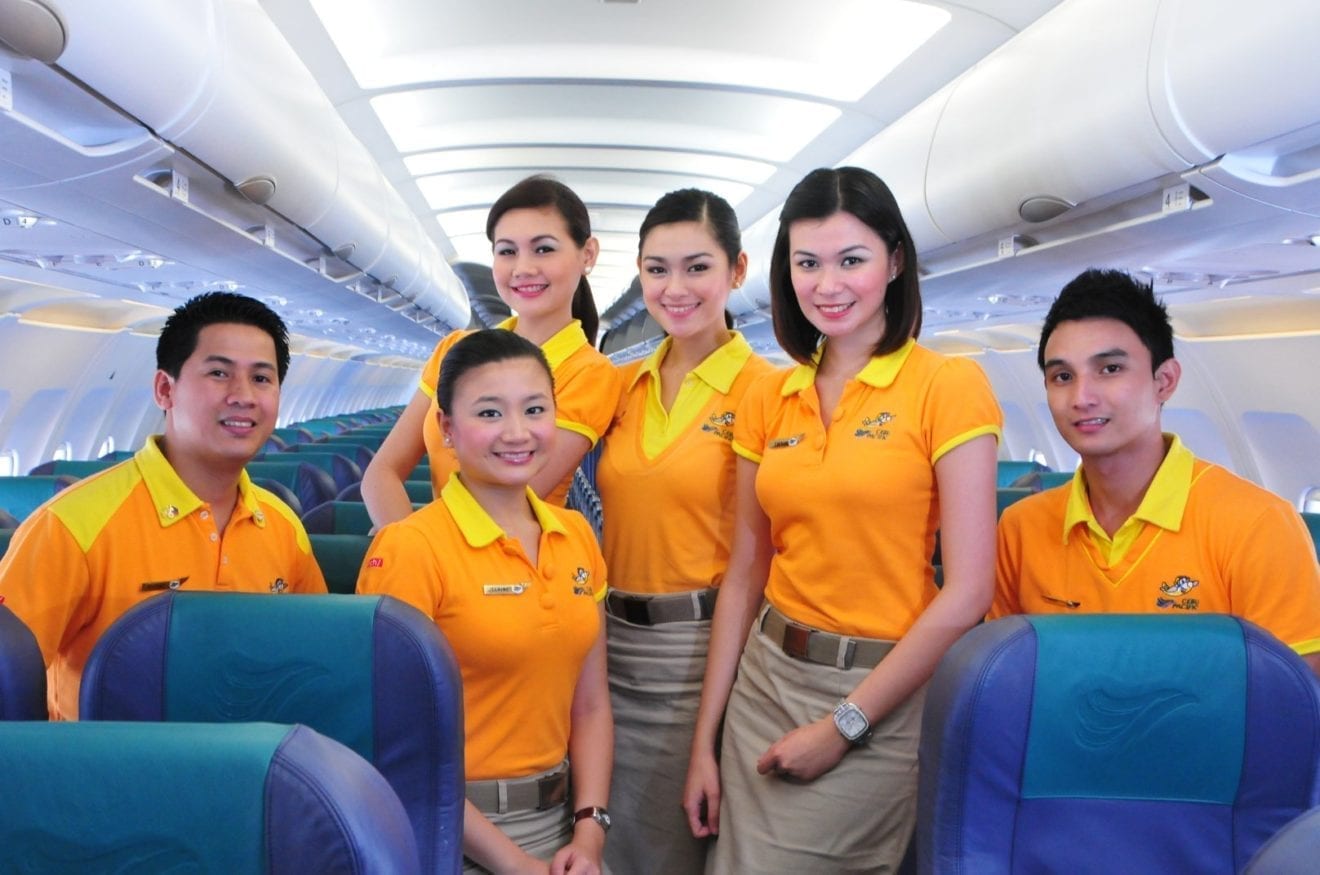
    Cebu Pacific expands its domestic network through its wholly-owned subsidiary, Cebgo, with the addition of four new routes from Clark and Cebu. On May 15, 2017, Cebgo started flying directly from its Clark hub to two of the world’ best islands, daily to and from Caticlan, Boracay, and three times weekly (Monday, Wednesday, and Friday) to and from Busuanga. Aside from these two routes, Cebgo will also be offering direct flights between Cebu and Busuanga thrice weekly (Monday, Wednesday, and Friday), and flights to and from the city of Cotabato four times weekly (Tuesday, Thursday, Saturday, and Sunday) starting tomorrow, May 16, 2017, The Cebu Pacific Air group expressed optimism that the additional domestic flights will benefit the people of Boracay, Palawan, and Cotabato in South as well as the residents outside Metro Manila.

    Cebu Pacific (CEB) officials stated earlier that traveling to such destinations will definitely be more convenient as the local carrier continue to link more islands in the archipelago. “CEB also believes that these new routes will be attracting both leisure and business travelers, boosting trade and tourism.” Along with this flight expansion, Cebu Pacific also extends the reach of its cargo services, further eliciting trade and investment in these destinations.

    CEB offers its lowest all-in one way year-round fare from Clark to Caticlan at P2,030, Clark to Busuanga at P2,306, Cebu to Busuanga at P2,778, and Cebu to Cotabato at P1,994. Aside from Cebu and Clark, CEB also operates flights out of four other strategically placed hubs in the Philippines — Manila, Davao, Kalibo, and Iloilo. The airline’s extensive network covers over 100 routes and 66 destinations, spanning Asia, Australia, the Middle East, and USA.

  • Walmart Is Crushing Amazon in China

    Walmart Is Crushing Amazon in China

    Shares of Walmart gained more than 3% on Thursday after the company posted better-than-expected earnings results. Despite a brutal industry landscape, America’s largest brick-and-mortar retailer is thriving thanks to its success in key segments.

    One of the biggest takeaways from Walmart’s latest report is the growth of its e-commerce unit. In an effort to catch up to internet behemoth Amazon.com, Walmart has been pouring money into e-commerce, and it seems to be working. The company said that its e-commerce business saw gross merchandise volume skyrocket 69% in the first quarter.

    Of course, Walmart can never hope to overtake Amazon as the e-commerce king. Amazon has had that crown for over a decade, and although Walmart’s recent online push has been a success, it was basically a do-or-die situation if the company wanted to maintain any legitimacy as a retail giant.

    However, there are still several key emerging markets for e-commerce, and Walmart may just be dominating Amazon in the biggest of them all: China.

    Sure, China isn’t really an emerging market anymore, and the country is no stranger to e-commerce. If anything, its domestic online retailers, such as Alibaba, present a threat to Walmart and Amazon as they move into Western markets.

    Nevertheless, China is a relatively fresh market for American online retailers, and Amazon is really just starting to get a foothold in the nation of nearly 1.4 billion. In fact, Amazon Prime debuted in the country only seven months ago. At launch, Prime members in China could expect to get there packages in about 5 to 9 days.

    And after Walmart’s earnings call earlier today, it looks like Amazon’s efforts in China might be futile.

    According to Walmart chief executive Doug McMillon, the company recently started offering one-hour delivery service from 80 stores in China. The service is an extension of Walmart’s existing partnership with JD.com —the two companies previously debuted a two-hour delivery service last year.

    “We can see the benefits of omni-channel retail even more clearly in China than any other country where we operate. Given the urban density and automobile traffic challenges, stores serve the triple purpose of in-store shopping, pickup and delivery most effectively,” said

    JD.com falls behind Alibaba in terms of size, making it the second-largest Chinese e-commerce company. The Walmart-JD partnership was announced last summer, and JD now controls all of Walmart’s e-commerce operations in the country.

    Interestingly enough, Walmart does not currently offer a one-hour delivery service anywhere in the U.S. Amazon does have a pretty well-established same-day delivery network, but it will be interesting to see if Walmart’s success in China inspires the company to make a similar play here on its home turf.


  • Singaporeans prefer electronic payments to cash

    Singaporeans prefer electronic payments to cash

    A Visa study has revealed that Singaporeans have the highest preference for electronic payments the in Southeast Asian region.

    According to the 2016 Visa Consumer Payment Attitudes survey, 87% of Singaporeans prefer making electronic payments to using cash, indicating the highest preference for electronic payments in the region.

    This figure could largely be attributed to an increased preference for using debit cards, with 62% of consumers saying they own and actively use debit cards, a 13% increase over the previous year.

    Nearly half (48%) of respondents stated they have more payment cards in their wallets now, compared to five years ago. The main reasons for not carrying large amounts of cash include an increased habit of using payment cards, mobile wallets and contactless cards. More than half (52%) of these respondents also said they believe card usage is safer than cash.

    In terms of payment habits and sentiments, 68% of respondents shared that they use electronic payment methods via mobile and wearable devices more often, resulting in a move away from cash. Sixty-six per cent also said they would like payments to be fully automated, doing away with the physical process of paying for a product or service. Sixty per cent of them also expressed being comfortable with the use of biometrics, such as fingerprinting and face recognition, for payment authentication.

    Awareness and usage of contactless payments in Singapore has also increased in the past year. Some 91% of Singaporeans said they are aware of contactless payments, compared to 87% in 2015. In addition, 71% of Singaporeans said they have used contactless payments, and the remaining 25% said they were keen to use it in the future.

    Ooi Huey Tyng, Visa Country Manager for Singapore and Brunei said, “Singapore is a developed market where more than 60% of all transactions are made electronically. However, this means that around 40% of payments in Singapore are still transacted using cash and cheques, presenting a significant opportunity for cash displacement. Certain segments in Singapore, such as hawker centres, food courts and wet markets, are heavily cash-based. Hence, it is important for the industry to work closely together to introduce new digital solutions to convert cash in these segments, so that Singapore can become truly cashless.”

  • Smart city development now a global phenomenon

    Smart city development now a global phenomenon

    There are more than 250 smart city projects underway across 178 cities around the world, according to a new report from market research firm Navigant Research.

    The report, Smart City Tracker 1Q17, finds that of the 252 smart city projects tracked, the majority of projects are smart government-led (40%), with smart energy coming a relatively close second (27%), while smart transportation (18%), smart buildings (11%), and smart water (4%) projects made up the rest.

    Geographically, the majority of projects tracked were in Europe, with Asia Pacific in second and North America third.

    “The development of smart cities is now a truly global phenomenon, with considerable activity and notable projects across all regions,” Navigant Research says.

    “Working in partnership with technology and service suppliers, city leaders and central governments are realizing the benefits smart city projects can provide to increase and improve economic opportunity, sustainability, and quality of life.”

    Thanks to the widespread interest in smart city programs, the global market for smart city solutions and services is expected to grow from $40.1 billion in 2017 to $97.9 billion in 2026, representing a compound annual growth rate (CAGR) of 10.4%.

    This includes investments in areas such as open data platforms, smart grids, networked LED street lights, urban mobility, energy-efficient buildings, water management, and government service applications.

    In addition, as sensor technology improves and costs decrease, smart city technologies are becoming more efficient, higher performing, and cheaper than ever before, the report adds.

  • New Balance opens Tokyo concept store

    New Balance opens Tokyo concept store

    Located in Roppongi in Tokyo’s Midtown area, the store is named after the area it is situated – Roppongi, and the year 1906, when New Balance was born. Written as ‘19: 06’, the motif is meant to look like a digital clock to express the American footwear firm’s 111-year history and how it has modernised.

    Inside, the store features warm wood panelling to create a ‘stadium’ atmosphere, and industrial concrete material construction to reflect the ‘coexistence of sports and lifestyle,’ according to the brand in a press release.

    The Roppongi 19:06 store will also offer state-of-the-art apparel and footwear, with a range of limited-edition and collaborative items.

    This includes 44 pairs of the limited edition 3D-printed MS066 shoes will be available to purchase for ¥38,000 JPY (US$335 USD). Dubbed the “Zante Generate”, the running shoes were sold ahead of the Boston marathon last year and boast a shoe upper made of a high-quality Japanese-manufactured knit, with a portion of the sole 3D-printed.

    A men’s and women’s Japanese Wholegarment apparel collection, made of an innovative seamless knit technology, will also be available at the store at a price range of ¥14,000 JPY to ¥20,000 JPY (US$123 to US$176).

    According to New Balance, the brand manufactures 4 million U.S.-made pairs of sneakers per year. Since it was founded in Boston in 1906, New Balance has made it a priority to make a certain portion of its sneakers in the U.S., giving it a point of difference of American rival Nike.

  • Equinix acquires 29 data centers from Verizon

    Equinix acquires 29 data centers from Verizon

    Equinix has completed its acquisition of 29 data centers in North and Latin America from Verizon Communications.

    The US $3.6 billion all cash deal includes over 1,000 customers, of which over 600 are net new, and approximately three million gross square feet of data center space.

    Equinix said the deal will accelerate its ability to help companies extend their IT operations to the digital edge, strengthens interconnection density on the Equinix global platform, accelerates business relationships in the government and energy sectors and supports its enterprise offering.

    Additionally, it adds three new markets (Bogotá, Culpeper and Houston) and provides additional capacity and the opportunity for expansion in markets where Equinix currently has a presence, including Atlanta, Denver, Miami, New York, São Paulo, Seattle and Silicon Valley.

    Spread across 15 cities in North and Latin America, the new assets bring Equinix’s total global footprint to over 175 International Business Exchange (IBX) data centers across 44 markets and approximately 17 million gross square feet.

    “As the technological shift to digital is transforming large sections of society and the global economy, companies are re-architecting their IT infrastructure to thrive in this new environment,”Equinix CEO Steve Smith said.

    “They are moving from traditional centralized infrastructure to a distributed model that keeps data closer to the customers, partners and employees using it. With this significant expansion of Equinix’s globally consistent footprint, our platform is even more valuable to companies that are leveraging this new model of interconnection at the digital edge.

  • Discover the best of Cebu with AirAsia

    Discover the best of Cebu with AirAsia

    Whether you are into mouthwatering dishes, breathtaking beaches or amazing historical sites, Cebu offers the best experience and AirAsia is making it easier and more affordable for you to fly now to the “Queen City of the South” from Davao with an all-in fare from as low as P499. AirAsia, voted the world’s best low cost carrier for eight consecutive years, flies twice daily to Cebu from Davao and five times daily from Manila. Cebu is the secondary hub for AirAsia after the airline launched in April several flights to/from Palawan and Boracay.

    International flights are also available from Cebu to Incheon/Seoul, Taipei, Singapore and Kuala Lumpur with fares now on sale at 50-percent off from May 17 until May 21, 2017, valid for travel from September 5, 2017 to February 8, 2018. AirAsia Philippines chief executive office Captain Dexter Comendador said, “We are a Filipino company but a regional and proudly Asean brand and part of the AirAsia Group delivering world-class service.

    As a Filipino low cost carrier, we feel strongly about supporting the growth and development of cities outside Metro Manila.” “Starting April 22, Cebuanos now have direct access to Boracay via Caticlan, Palawan, and Davao with our signature low fares.

    Foreign tourists arriving in Cebu can skip the crowded airport of Manila and fly straight to Cebu and to our country’s best island destinations. With our newest routes, AirAsia would like to provide the much-needed connections and tap into underserved market and grow it as there is definitely great tourism and business potential in Visayas and Mindanao.” Comendador added. AirAsia in the Philippines operates a fleet of 17 aircraft with domestic and international flights out of hubs in Manila, Cebu and Kalibo. The airline operates several flights to/from Manila, Davao, Cebu, Kalibo, Caticlan (Boracay), Tacloban, Tagbilaran (Bohol), Puerto Princesa (Palawan) and Clark in the Philippines with international flights to/from Shanghai, Taipei, Incheon (Seoul), Hong Kong, Macau, Kuala Lumpur, Kota Kinabalu, and Singapore (via Cebu only). AirAsia Philippines is part of the AirAsia Group that has been awarded by Skytrax as the World’s Best Low Cost Carrier for eight consecutive years since 2009.

  • Yusen Logistics taps into CargoSmart for ocean route planning

    Yusen Logistics taps into CargoSmart for ocean route planning

    CargoSmart Limited, a global shipment management software solutions provider that leverages big data for greater visibility and benchmarking, announced that Yusen Logistics Co., Ltd., a global supply chain logistics company, is using Route Master to gain insights to optimise its ocean route planning.

    Providing extensive information about 29 ocean carriers’ available services, Route Master helps Yusen Logistics discover the best routing options to prepare for carrier contract negotiations, make shipment plan recommendations to its customers, and establish routing guides for its internal teams based on the insights.

  • Inmarsat launches fourth Global Xpress satellite

    Inmarsat launches fourth Global Xpress satellite

    Inmarsat has launched the fourth high speed broadband satellite in its Global Xpress constellation, the Inmarsat-5 F4 (I-5 F4).

    The new satellite was launched by SpaceX on the Falcon 9 Rocket from NASA’s Kennedy Space Center in Florida in the US. It was manufactured by Boeing Network & Space Systems.

    Inmarsat’s Global Xpress worldwide broadband connectivity service has been operational since December 2015. The fourth satellite will allow the company to add further capacity to the network as well as in-orbit redundancy.

    “For Inmarsat, reliability and resilience are paramount. Delivering global commercial services over the GX network, which we achieved at the end of 2015, was only the start of our Global Xpress project,” Inmarsat CEO Rupert Pearce said.

    “I-5 F4 augments the capabilities of GX and, alongside our existing L-band constellations, enables Inmarsat to provide guaranteed global connectivity to industries and governments worldwide.”

    He said the Global Xpress service has established a strong footprint in established very small aperture terminal (VSAT) markets such as maritime and government, and is gaining ground in new market areas such as the in-flight broadband connectivity sector.