Author: Mei Ling Tan

  • CenturyLink launches ‘multi-cloud’ management strategy

    CenturyLink launches ‘multi-cloud’ management strategy

    CenturyLink has launched CenturyLink Cloud Application Manager, a new orchestration platform designed to simplify deployment of enterprise workloads, managed services, and third-party cloud resources.

    The tech firm said this cloud-agnostic management platform enables companies to better manage applications and workloads across hybrid hosting environments – in customer private clouds, colocation centers and public cloud environments.

    In a business climate where companies need to simplify management and governance of applications across multiple cloud infrastructures without sacrificing control or visibility, Cloud Application Manager delivers flexibility that enterprises need to quickly provision, deploy and migrate workloads to the environment that best matches business requirements, the company said.

    “Many of our customers and partners struggle with the business challenge of determining the best execution venue for their business applications. We designed Cloud Application Manager to give our customers a wide variety of infrastructure options across diverse public and private cloud environments,” David Shacochis, VP of hybrid IT product management at CenturyLink said.

    “Cloud Application Manager helps companies avoid vendor lock-in, automate application deployments, scale workloads across disparate hosting environments, and optimize their costs over time. These benefits are available in a self-service model, or one that is actively managed by CenturyLink team members,” the executive said.

    Users can consume Cloud Application Manager via the cloud version (SaaS) or the data center version (a virtual appliance that runs on-premises in their data center). This usage-based platform allows customers to consume the value-added services they need with a consolidated bill and a simplified, yet powerful, interface, the company further said.
  • DBS to launch mobile-only banking service in Indonesia

    DBS to launch mobile-only banking service in Indonesia

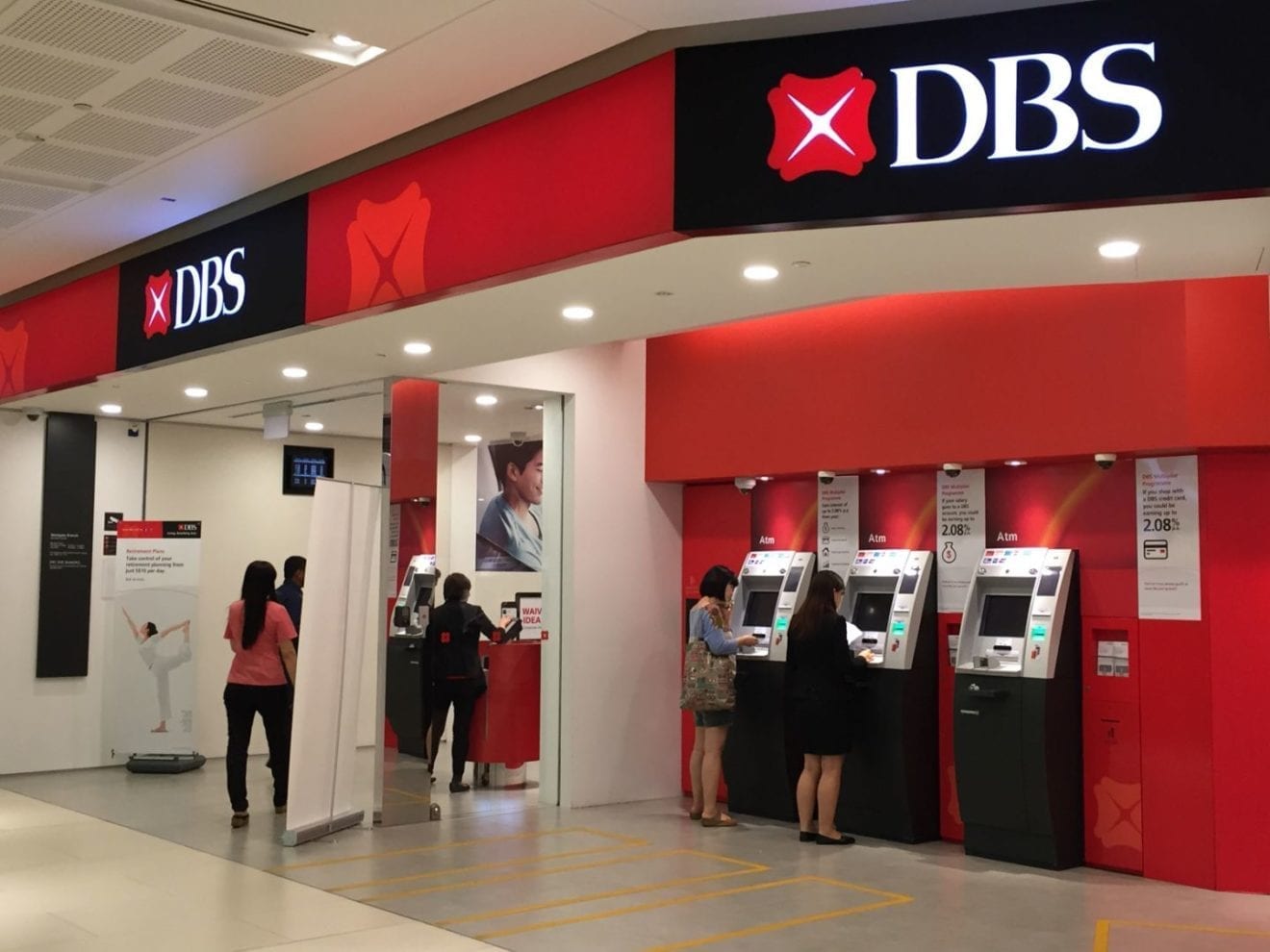
    The Development Bank of Singapore (DBS) plans to introduce a smartphone-based mobile banking option for the Indonesian market as a way to further digitalize the banks’ operations and utilize digital innovation to its advantage.

    Digital transformation is part of a larger agenda for DBS, seeing that the need for digitalization is no longer seen by the banking industry as a threat to its business but as a tool of cooperation to innovate services, said Bank DBS Indonesia’s head of digital banking, Leonardo Koesmanto.

    DBS will open a new mobile-only bank in Indonesia in the early part of the second quarter of 2017 to promote a more digital, branchless and signature-less experience for its customers in this market. The system will function through biometrics and will require the presence of an electronic ID (e-KTP) to register or use its operations.

    “We are taking the more scalable digital route because these days, bigger banks are shrinking their number of branches. With this investment we can serve more people more effectively,” Leonardo said on Wednesday.

    It is likely that DBS’s mobile-only banking option in Indonesia will be rolled out through a soft launch around next month, in order to assess the feasibility of the technology and root out teething faults. The idea has already been tried by DBS in India.

    DBS currently has around 30 physical branches in Indonesia. Leonardo commented that in order for banks to truly achieve growth in a market, they would need 300 to 400 branches.

  • AEON Launches “365 Days… Enjoy Shopping with AEON Credit Card”

    AEON Launches “365 Days… Enjoy Shopping with AEON Credit Card”

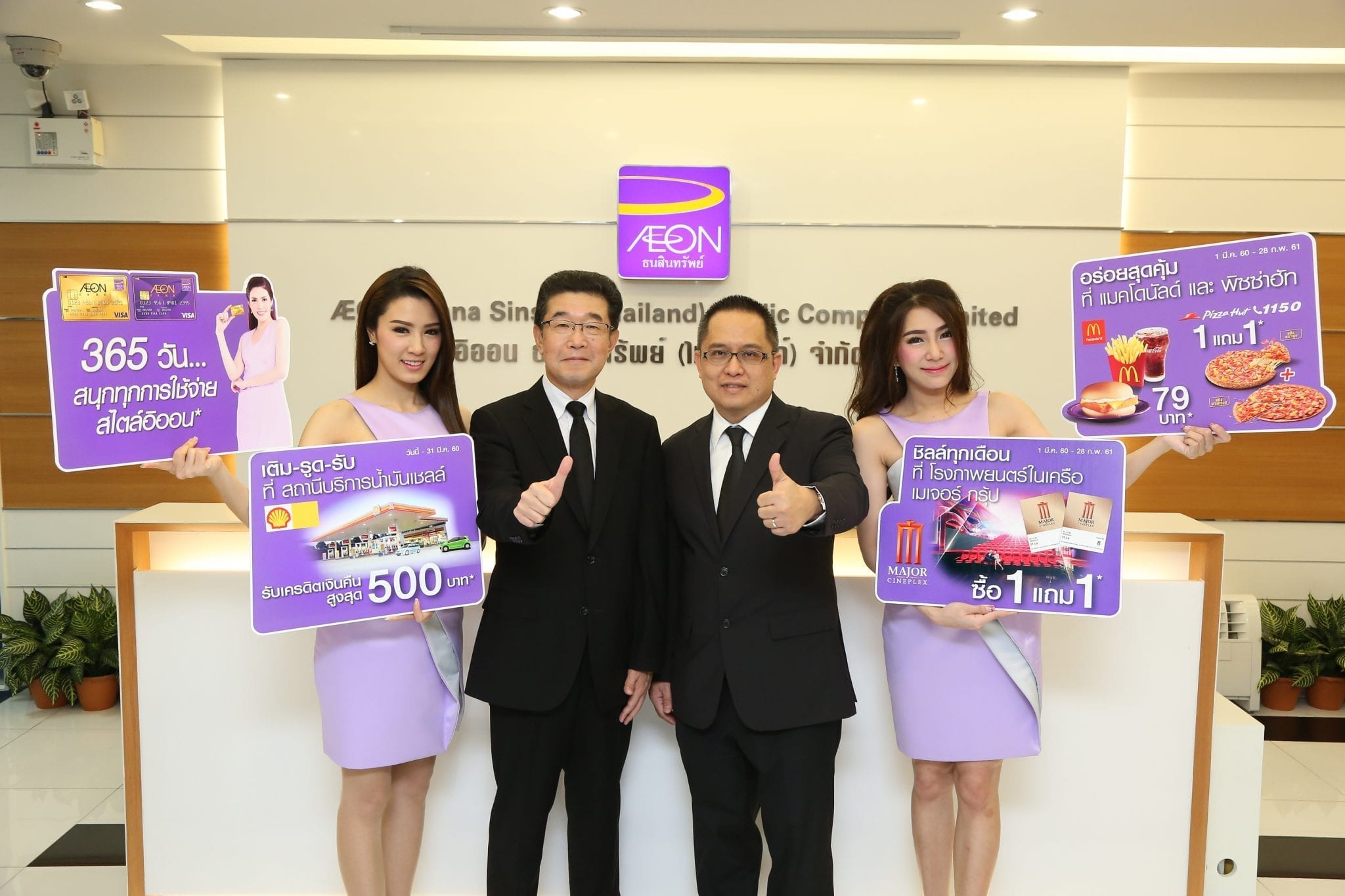
    Mr. Kiyoyasu Asanuma (left), Managing Director of AEON Thana Sinsap (Thailand) Public Company Limited, together with Mr. Nuntawat Chotvijit (right), Director of Marketing, AEON Thana Sinsap (Thailand) Public Company Limited, presided over the recent launch of “365 Days… Enjoy Shopping with AEON Credit Card” campaign. The campaign offers a range of special privileges to AEON Royal Orchid Plus Platinum cardholders, AEON Gold cardholders and AEON Classic cardholders throughout 2017. Cardholders will also be entitled to special promotions from AEON’s partners, including its newest partner, Pizza Hut.

    The first exclusive promotion available to all cardholders is a set of Extra Value Meals worth 79 baht from McDonald’s and a Buy One, Get One Free promotion from Pizza Hut when placing an order at the restaurant or using the delivery service. The second promotion entitles cardholders to a Buy One, Get One Free cinema ticket, or at a special price of 99 baht, when buying a cinema ticket at any Major Cineplex theatre.

    Moreover, for the third benefit, Get up to 500 baht cash back when spending an accumulated amount of 3,000 baht or over with AEON credit cards The fourth promotion entitles AEON credit cardholders to receive a 5% discount on items at MaxValu and MaxValu Tanjai every 1stand 15th of the month. The campaign runs from today until 28th February 2018.

  • Cebu Pacific acquires 59th aircraft

    Cebu Pacific acquires 59th aircraft

    The Philippines’ leading carrier, Cebu Pacific Air recently took delivery of its 59th aircraft, a brand new ATR 72-600 which is the fourth of the 16 firm orders CEB made last year.

    The new ATR 72-600 will be used to support the company’s expansion as CEB, through its wholly-owned subsidiary Cebgo, which is launching two new routes -Cagayan de Oro to Bacolod and Cagayan de Oro to Tagbilaran — this March 15. “We are eager to receive yet another addition to our ATR fleet, supporting our expansion plans in the archipelago.

    CEB remains committed to further increase inter-island connectivity within the Philippines, to serve not only our kababayans but also tourists who wish to explore the country’s beautiful islands and experience the world-renowned Filipino hospitality,” said Alexander Lao, President and CEO of Cebgo.

    “Rest assured, we will continue making more destinations accessible to everyJuan while consistently providing our trademark low fares, paired with our safe and fun service” added Lao. CEB currently offers flights to a total of 37 domestic and 29 international destinations, operating an extensive network across Asia, Australia, the Middle East, and USA. The airline’s 59-strong fleet is comprised of four Airbus A319, 36 Airbus A320, seven Airbus A330, eight ATR 72-500, and four ATR 72-600 aircraft. Between 2017 and 2021, CEB expects delivery of one more brand-new Airbus A330, 32 Airbus A321neo, and 12 ATR 72-600 aircraft.


  • 21b IoT devices to ship with embedded RTOS by 2022

    21b IoT devices to ship with embedded RTOS by 2022

    IoT faces new computing challenges, notably with deployment and scaling, and its future will rely in part on using embedded real-time operating systems (RTOS), according to ABI Research.

    The research firm has forecast that 21 billion IoT devices will ship with embedded RTOS by 2022.

    RTOS support many IoT application features, such as small size, constrained processing resources, low power consumption, limited maintenance, and real-time computing.

    “The tremendous expansion of the IoT revived the embedded RTOS market, with open source platforms springing up rapidly to jostle long-established proprietary players,” ABI Research research director Michela Menting said.

    “While industrial demand for RTOS has a decade-long history, the development of new IoT applications in other segments – such as consumer, digital home, connected car, and smart cities – jolted demand for embedded RTOS.”

    Supported by greater MCU capabilities and lowering price points, the embedded RTOS market is expanding rapidly.

    Some of the most high-profile and innovative RTOS on the market include µC/OS, FreeRTOS, Integrity RTOS, mbed OS, MEOS, MQX RTOS, Nucleus RTOS, PikeOS, QNX, RIOT OS, ThreadX, VxWorks, and Zephyr.

    Many open source operating systems popular with the IoT are increasingly adding real-time capabilities to compete in this lucrative market. Currently, the embedded RTOS market is highly fragmented, with hundreds of different platforms available.

    “RTOS shows immense promise in terms of flexibility and application for all kinds of new IoT markets,” concludes Menting. “Although, developers will need to tackle issues of interoperability and standardization to realize its full potential.”

  • SMEs to get more help in going digital

    SMEs to get more help in going digital

    The Government is committed to getting its hands dirty to help more small and medium enterprises (SMEs) transform digitally to stay in business amid disruptive technological innovations.

    The Info-communications Media Development Authority (IMDA), the government agency leading the charge, will play sector “chief information officer” to SMEs, providing customised help from funding and consultancy to approving tech products and participating in joint pilots.

    This will be available under a new scheme dubbed SMEs Go Digital, targeted at the 200,000 SMEs in Singapore.

    During the debate on his ministry’s budget yesterday, Minister for Communications and Information Yaacob Ibrahim said: “It will help raise SMEs’ overall level of digital readiness by giving them step-by-step advice on the technologies to use at each stage of their digital journey.”

    The kitty is $80 million over four years from April under this scheme which was first announced two weeks ago by Finance Minister Heng Swee Keat.

    SMEs Go Digital aims to defray up to 70 per cent of the cost of technology purchase, capped at $300,000 per SME.

    It will replace a seven-year-old iSprint scheme, which provided similar subsidies and basic tech advice, benefiting some 8,000 SMEs.

    SMEs Go Digital aims to be more comprehensive than iSprint by also helping SMEs with more advanced needs such as cybersecurity, data analytics and artificial intelligence through a new SME Digital Tech Hub to be set up by September.

    In reponse to Dr Yaacob’s announcement, nominated MP Thomas Chua, who is president of the Singapore Chinese Chamber of Commerce and Industry, voiced concern about the prospect of disparate technologies being implemented by different firms.

    Specifically, supply chains that connect buyers and sellers must be interoperable.

    COMMON LANGUAGE

    “Applying a standardised system for the industry is like learning a common language to facilitate communication… If not, the transfer of large masses of data could cause system errors,” said Mr Chua.

    To this, Dr Yaacob said IMDA will adopt a sectorial approach to ensure systems talk to one another and to accelerate the pace of transformation, especially for the deployment of more sophisticated systems.

    Specifically, IMDA will partner influential companies to pilot sector-specific solutions that have the potential to scale up.

    It will start with sectors such as retail, food services, logistics and cleaning.

    For instance, IMDA has partnered retail store Robinsons to integrate some 200 SME suppliers on a common e-procurement platform for better sales planning and inventory management.

    IMDA has also partnered StarHub to target 1,000 SMEs in the food and beverage business, offering them a comprehensive automation package including broadband services, retail analytics, digital ordering and payment systems. StarHub is working with the Tampines Merchant Association for this.

    While recognising that SMEs’ digital needs vary widely across and within sectors, Dr Yaacob noted that his ministry is open to feedback to fine-tune the new scheme.

  • 86% of APAC organizations to adopt IoT by 2019

    86% of APAC organizations to adopt IoT by 2019

    Nearly nine in 10 (86%) organizations in In Asia-Pacific will have some form of IoT in place by 2019, according to results of a survey from Hewlett Packard Enterprise’s Aruba.

    Organizations across the enterprise, industrial, healthcare, retail and municipality sectors globally are adopting IoT to leverage the business benefits of enhanced efficiency and innovation, the research shows.

    But Aruba’s study warns that connecting thousands of things to existing business networks will open up new security challenges.

    The research also found that although 97% of the 1,150 respondents from Asia-Pacific (Australia, China, India, Japan, Singapore, and South Korea) have an understanding of IoT, many are still unclear of the exact definition of IoT and what value it brings to their organizations.

    In his new eBook, ‘Making Sense of IoT’, commissioned by Aruba, technology visionary Kevin Ashton—who coined the term ‘Internet of Things’— presents the following definition: “The ‘Internet of Things’ means sensors connected to the internet and behaving in an internet-like way by making open, ad hoc connections, sharing data freely and allowing unexpected applications, so computers can understand the world around them and become humanity’s nervous system.”

    When examining the business benefits of IoT, Ashton discovered that actual gains from IoT exceeded initial expectations on all fronts. In Asia Pacific, this ‘expectations dividend’ is most evident in two key performance areas: profitability and business efficiency.

    For instance, 35% of business leaders cited significant profit increases after deploying IoT, a 20% increase from those who projected a large profit gain from their IoT investment (15%).

    Similarly, while 39% of executives expected their IoT strategies to yield huge business efficiency improvements, actual results show that more than half of those who implemented IoT (51%) has experienced great business efficiency gains.

    “With the business benefits of IoT surpassing expectations, it’s no surprise that the business world will move towards mass adoption by 2019,” said Chris Kozup, VP of marketing at Aruba. “But with many executives unsure of how to apply IoT to their business, those who succeed in implementing IoT are well positioned to gain a competitive advantage.”

  • Sale of cars down despite price drop

    Sale of cars down despite price drop

    Members of the Vietnam Automobile Manufacturers’ Association (VAMA) sold more than 17,600 cars in February, down 13 per cent from the previous month.

    The prices of many types of cars were adjusted in the market in recent months. This is the second month this year that the association has witnessed a drop in sales, although its members continuously reduced prices of their products.

    At the end of last month, prices of seven types of cars were adjusted, including imported and locally-assembled ones.

    Honda Vietnam decreased its price by VND80 million for Accord, which was imported from Thailand. Meanwhile, Toyota Motor Vietnam (TMV) announced new prices for Yaris models G and E, with a drop of VND47 million (US$2,057) and VND44 million, respectively. The imported Land Cruiser Prado TX-L and Land Cruiser VX also saw a revision in prices at nearly VND2.17 billion and VND3.65 billion, down VND264 million and VND70 million each.

    Honda Vietnam and TMV were followed by other automakers.

    Domestic automaker Thaco reduced the prices of Kia and Mazda models by between VND20 million and VND140 million each.

    A report from the People’s Committee in central Quang Nam Province showed that vehicles witnessed the highest inventory volume in the province, which was nearly 49 per cent higher than the previous month and almost triple compared with the same period last year.

    This was partly due to the increase in demand for vehicles before the Tet (Lunar New Year) holiday, which declined after the holiday. In addition, people were still waiting for prices to reduce further, especially once the import tax on vehicles from ASEAN countries dropped to zero per cent by January 1, 2018, according to the committee.

    While the consumption of locally-assembled cars was showing a declining trend, the volume of imported cars had sharply increased.

    According to the estimate of the General Statistics Office (GSO), Viet Nam imported some 9,000 complete built up units in February, worth $153 million, up 29 per cent in volume in comparison with the previous month but sticking to the same value.

    On average, each imported car in February was $17,000 — $4,850 lower than January – which meant almost all imported cars were less expensive.

    During the Government’s February meeting session, Prime Minister Nguyen Xuan Phuc reminded relevant ministries about the rapid increase of imported vehicles in the first two months of this year, which was due to the impact of the expected import tax decline in 2018.

    He said this was a warning to relevant ministries and sectors to strengthen management to create harmony between import and local auto manufacturing.

  • Visa QR payments coming to Indonesia, Pakistan, Vietnam

    Visa QR payments coming to Indonesia, Pakistan, Vietnam

    Visa will soon be expanding its QR-based mobile payment service to ten more markets, including Indonesia, Pakistan and Vietnam.

    The service, named mVisa, is now live in India, Kenya and Rwanda, and will soon be available to merchants and consumers in the three new APAC markets, as well as Egypt, Ghana, Kazakhstan, and Nigeria.

    mVisa, a mobile solution, aims to provide easy and secure digital commerce to financial institutions, merchants and consumers in emerging markets.

    The service is designed to help merchants overcome infrastructure issues by allowing consumers to use their mobile phones to make cashless purchases at merchant outlets, pay bills remotely and send money to friends and family members by securely linking their Visa debit, credit or prepaid account to the mVisa application.

    mVisa digitizes the underlying account and allows consumers to transfer funds from their account to the retailer’s account reliably and securely by scanning a QR code.

    Use cases of mVisa include the allowing subscribers of Tata Sky, a direct-to-home service provider in India, to recharge their account by using their mobile phones to scan the WR code directly from the TV screen or online. This function allows Tata Sky customers to order and pay for monthly or one-time services from home without having to visit a physical retail outlet.

    Mahanagar Gas Limited, a utility provider in Mumbai, also issues customer bills printed with the mVisa QR code. Customers scan the QR code on the bill, as they would at a merchant outlet, and complete their transaction at their leisure.

  • Amazon Languishing in China Online Retail Market after More than 10 Years

    Amazon Languishing in China Online Retail Market after More than 10 Years

    It has been more than decade since Amazon entered China but, despite being in the country for such a long time, Amazon has struggled to make its mark in one of the largest online retail markets in the world. According to e-marketer, China is expected to overtake United States as the world’s largest retail market, and the gap is expected to grow even wider in the next few years.

    But Amazon has not even made a dent in the Chinese market, which is completely dominated by the homegrown Amazon clone, Alibaba.

    To be fair to the Chinese e-commerce giant, Alibaba services the same online retail market, but follows a completely different model for its e-tail operations. Alibaba is more of a technology platform that facilitates transactions between buyers and sellers, and assumes the role of a supervisor when it comes logistics.

    Amazon is more of a hands-on retail player with strong buying and selling activities of its own. The result: Alibaba’s operating margin keeps crossing 30% every now and then, while Amazon hardly ever gets close to 5%.

    As you can see from the chart above, despite having the best e-commerce technology in the world, Amazon only has a 0.8% share of the Chinese market to show for it. Tmall, Alibaba’s B2C portal, controls more than half the market. Along with its competitor, JD.com, they control nearly 80% of the market, leaving very little for any other player.

    One big advantage of e-tail is that once you get the lead, it’s very hard to topple you from that place. And it becomes even harder if you are the kind of company that keeps pushing the boundaries. Alibaba may have copied a lot of Amazon’s moves, but it changed the model to fit its needs, and its platform has evolved nicely over the years.

    In the United States, despite big box retailers pouring billions of dollars every year into e-commerce initiatives, nobody is able to come close to Amazon. And one of the reasons for that is the huge lead that the e-commerce giant has over every other retailer. Since Amazon has the bulk of online shoppers, it’s natural that sellers gravitate to them, making Amazon even stronger in the process.

    The more the GMV (Gross Merchandise Volume) moves, the higher Amazon’s margins go. Amazon then reinvests even more into its business, transferring some of the benefits to its customers, who are more than happy to keep ordering. It’s a self-feeding cycle that keeps Amazon at the top of the e-tail industry in United States.

    Now, replace Amazon with Alibaba and the United States with China in this scenario, and add an extremely favorable government to the mix, and it’s easy to see why Alibaba sits at the top of the e-commerce pile in the People’s Republic – and why Amazon has to be satisfied with a sliver of market share.

    In the world of online retail, those who play catch-up will always play catch-up, or so it would seem.

  • UK Fintech firm eyes Vietnam’s banking sector

    UK Fintech firm eyes Vietnam’s banking sector

    Opportunity Network, a UK-based FinTech company that offers banks a digital business matchmaking platform, on Wednesday announced plans to engage Vietnamese commercial banks in joining its fast-growing global partner network.

    Brian Pallas – the founder of UK-based FinTech company, Opportunity Network. The company will offer Vietnamese corporate and private banks access to an innovative business-to-business digital platform designed to promote growth.

    Headquartered in London with offices across New York, Barcelona and Dubai, Opportunity Network is backed by the Boston Consulting Group and provides a collaboration platform that connects 13,500 companies in 128 countries.

    This three-year-old firm is currently valued at US$180 million and boasts a deal value in excess of $38 billion.

    The company will offer Vietnamese corporate and private banks access to an innovative business-to-business (B2B) digital platform designed to promote growth.

    Through this platform, local businesses can hunt for trustworthy partners to help them expand into new markets via international trade activities, such as selling privately held enterprises, executing cross-border mergers and acquisitions (M&A) and maximising global asset utilisation that has a deal value of $1 million and above.

    Opportunity Network uses a proprietary algorithm that is designed to smoothen global deal-making by matching users’ strategic preferences with current deals on the platform.

    Instead of on-boarding businesses directly, its main clients are banks who then invite their best customers to participate on the platform through a membership scheme, creating a pre-screened online community.

    The company has key partners such as Young Presidents’ Organisation, global network of young CEOs with 25,000 members in 130 countries, London Stock Exchange and major banks in Europe, and has recently partnered with Citizens Bank in the US. It has also announced a global expansion plan to establish local presence in 40 countries.

    “Opportunity Network is a bank-FinTech enabler and a digital Customer Relationship Management (CRM) platform. We help banks leverage financial technology to deliver more value and create better experiences for their corporate clients, especially the small and medium enterprises looking for trustworthy counterparties to expand both locally and internationally and gain market share while saving time, money and effort,” said Ly Nguyen, country managing director at Opportunity Network.

    “This is in line with the Vietnamese government’s policy to promote private sector growth, with strong focus on SMEs to double the number of firms by 2020 and facilitate trade, investment and M&A opportunities.”

    The financial services sector is going through a dramatic change in today’s highly connected digital environment.

    With higher customer expectations, ever-increasing customer touchpoints, and the advent of new technologies, banking institutions are forced to enhance their digital capabilities to stay relevant.

    “It’s the perfect time for us to work hand in hand with local banks and leverage the digital tool as a strategic enabler for banking transformation,” Nguyen said.

  • LuLu Financial Group expands Philippines footprint with remittance service

    LuLu Financial Group expands Philippines footprint with remittance service

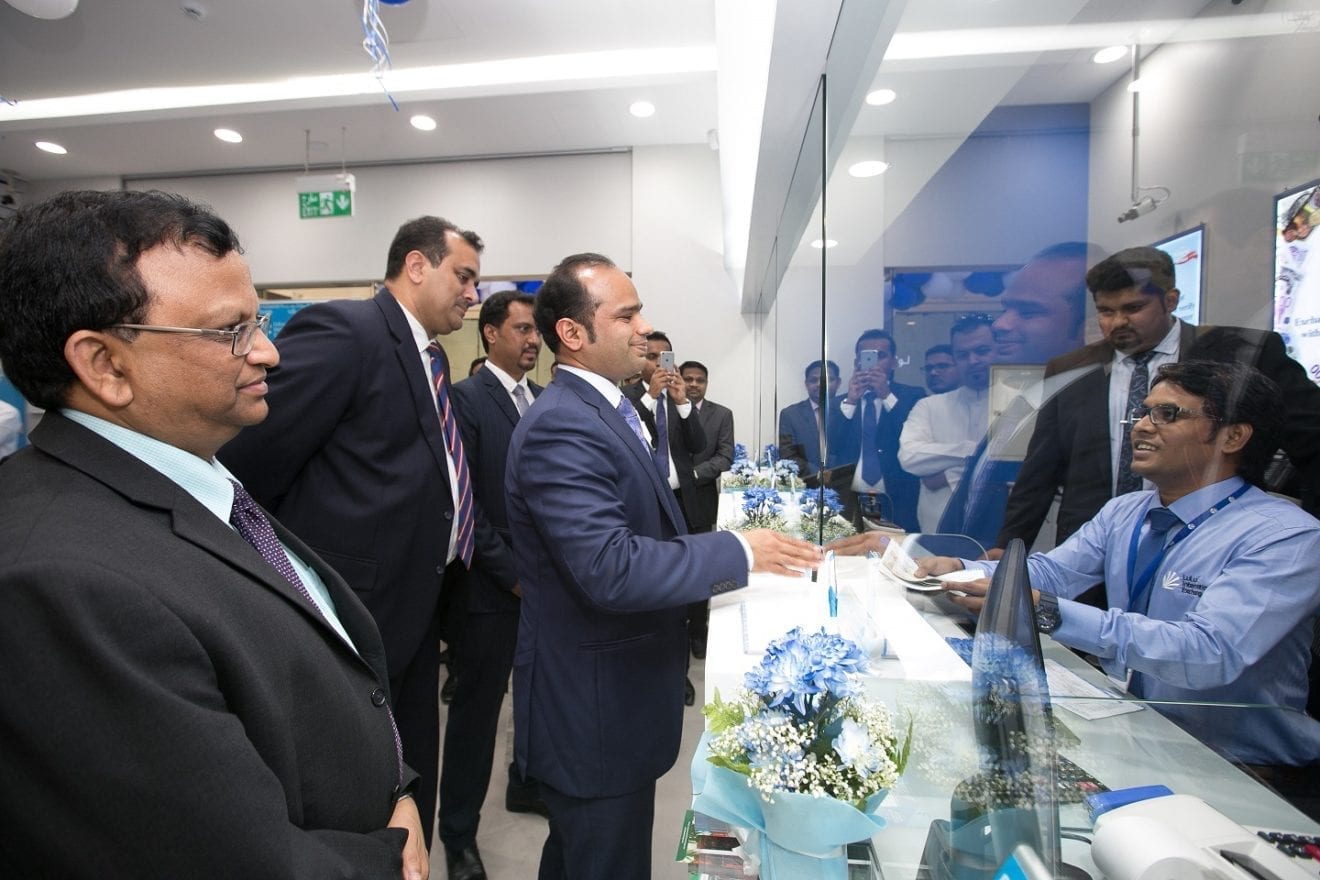
    Abu Dhabi-based LuLu Financial Group, one of the largest retail conglomerates in the UAE, is expanding its presence in the Philippine remittance and foreign exchange industry.

    The move aims at encashing the strong economic ties between Middle East and the Philippines and the increasing number of the deployment of overseas Filipino workers in the region.

    A significant chunk of the nearly $30 billion sent home each year by almost five million expatriate Filipinos can be channeled toward more productive sectors like helping finance the government’s infrastructure buildup program, reported Inquirer.

    “The economic bond between the Philippines and the nations of the GCC are strong and getting stronger, given the large number of Filipinos working there and sending money back home,” LuLu Financial managing director and CEO Adeeb Ahamed had reportedly said earlier.

    He was referring to the GCC region, which played host to an estimated 2.2 million Filipino contract workers. About one-fourth of the yearly dollar remittance tally that helps boost the Philippine economy comes from this region, the report said.

    Ahamed was quoted as saying that this huge potential encouraged LuLu Financial to open its third foreign exchange and remittance office in the Philippines to better serve Filipino clients in its home region.

    LuLu Financial is a non-banking financial organization. It deals in foreign exchange, global money transfer and salary and wage administration. It has 132 branches worldwide, staffed by over 1,500 employees.

    Ahamed reportedly said the group had the physical network to be able to serve GCC-based Filipinos’ remittance needs close to their workplaces.

    He said the remittance business in the Middle East might already be crowded, but LuLu Financial’s ties with its parent gave it the advantage of being closer to its clients.

    Ahamed said it would be a good idea for the Philippines to try to harness the financial muscle of remittances from overseas Filipinos, similar to what the India had done.

    He reportedly cited the case of a major international airport in India which was built with funds raised from overseas Indian workers through retail placements of equity shares.

    “This was built using the public-private partnership model,” he said.

    “Funds were raised, airport was completed and the retail shareholders saw the value of their stocks rise sharply. This is something the Philippines can also do.”

    For starters, Ahamed was quoted as saying by Inquirer, it would be a good idea for the government to forge ahead with its plan to create a bank dedicated to serve the OFW community.

  • China Unicom Global expands CUniq MVNO to US

    China Unicom Global expands CUniq MVNO to US

    China Unicom Global has extended its MVNO venture into the US, which will allow customers to keep Hong Kong, mainland China and US mobile numbers on a single account.

    The operator’s CUniq MVNO business has expanded to America after launching in Europe late last year. CUniq now allows data sharing across 47 countries and regions including Hong Kong, Europe and the US.

    Customers will be able to use data, voice and SMS services in the 47 countries. The service is supported by a 24/7 customer support service in Chinese, English and Cantonese.

    In the US, CUniq will have three plans, tailored to global businesspeople, American local users and tourists respectively. It will support electronic payment including WeChat Pay, Alipay, Visa, MasterCard and UnionPay.

    China Unicom Global president Shusen Meng said the company plans to continue expanding its CUniq business into more countries and regions in the future.

    CUniq is being developed in collaboration with multi-country cloud-based MVNE Plintron.

  • Vietnam’s super-rich population is growing faster than anywhere else

    Vietnam’s super-rich population is growing faster than anywhere else

    The country now has 200 people with investable assets of at least $30 million. Vietnam’s ultra-rich population is growing faster than any economy in the world, and is on track to continue leading the growth in the next decade, based on a new international research.

    The Wealth Report by the U.K.’s independent real estate consultancy Knight Frank found there are 200 ultra high net worth individuals (UHNWI) in Vietnam, who are defined as people with investable assets of at least $30 million, excluding personal assets and property such as a primary residence, collectibles and consumer durables.

    UHNWIs are the richest people in the world who control a disproportionate amount of global wealth.

    In Vietnam, this super rich group has grown by 320 percent between 2000 and 2016, the fastest in the world compared to India’s 290 percent and China’s 281 percent, the report said.

    The number is expected to continue rising to 540, or by 170 percent, in 2026, the highest growth rate in the world. Millionaires in Vietnam are expected to jump to 38,600 from 14,300 over the same period.

    vietnams-super-rich-population-is-growing-faster-than-anywhere-else

    The world’s top growth rates of ultra-wealthy people over the past decade, and forecasts for the next.

    Andrew Amoils, Head of Research at the global wealth intelligence and market research firm New World Wealth, highlighted Vietnam as the market whose “stellar” growth rate is set to reinforce “dramatic growth” of the super-rich population in Asia.

    “We expect Vietnam’s millionaire numbers to be boosted by strong growth in the local healthcare, manufacturing and financial services sectors,” Amoils was quoted in the report as saying.

    It also cited World Bank remarks as describing Vietnamese economy with “remarkable” transformation over the last 25 years, with economic and political reforms translating into higher incomes. The bank has projected Vietnam’s average GDP growth of around 6 percent annually until 2020.

    Knight Frank report reflects considerable variation between UHNWIs growth rates in different regions and countries, due to local factors that underpin wealth creation and the mobility of ultra-wealthy people.

    The number of ultra-wealthy people is predicted to climb by an average of 12 percent over the next decade in Europe, compared with a forecast 91 percent growth in Asia.

    The number of ultra-wealthy people worldwide, which has grown 42 percent over the past decade, is expected to grow another 43 percent to 275,740 in 2020.

  • China’s iVOOMi set to enter Indian smartphone market

    China’s iVOOMi set to enter Indian smartphone market

    Chinese electronic major iVoomi is all set to enter the Indian market with the launch of mid- to low-range of smartphones, the company said on Monday.

    To begin with, the company will unveil iV505 (priced at Rs 3,999) as its first smartphone in the country this month.

    “We are committed to establish iVOOMi in the Indian market with our innovative products loaded with highly valued SmartMe OS (Customised OS) and features at an affordable price,” said Bradley Yan, Global Business Head, iVoomi, in a statement.

    The smartphone comes with Jio-ready 4G-VoLTE SIM cards on both the slots, flash charge technology and Android Marshmallow 6.0.

    The brand has also planned to launch four smartphone models in India ranging from Rs 4,000 to Rs 10,000.

    The company has a broader plan for Indian market and intent to establish its research and development and manufacturing unit in India by 2019, the statement said.