Author: Mei Ling Tan

  • South Korea dominate Vietnam entertainment industry

    South Korea dominate Vietnam entertainment industry

    They include YG Entertainment, which manages many of Korea’s biggest stars like Big Bang, 2NE1, PSY, Epik High, Choi Ji Woo, Black Pink and Lee Jong Suk, its subsidiary YGKplus, the country’s leading modelling agency, and Naver.com, the country’s biggest search engine and online media and entertainment channel.

    The Korean companies are seeking to tie up with Multimedia JSC in entertainment and fashion.

    They will send their stars to participate in major entertainment events in Vietnam like the Vietnam International Fashion Week and also create opportunities for Vietnamese models in Korea.

    Besides YG Entertainment and Naver.com, many other Korean companies in movies, the media and entertainment also have plans to enter the Vietnamese entertainment market.

    The Vietnam Film Distribution Association said the market was dominated by foreign distributors, many of them Korean.

    Vietnam now has more than 50 cinema chains. Korean-owned CJ CGV Vietnam is the largest in the market with 30 cinemas in 10 major cities. Lotte Cinema, also owned by South Korea, has 16 cinemas.

    A CJ CGV executive said each year the company opened around 10 cinemas in Vietnam and expected to reach 60 by next year.

    Market observers said South Korean investors saw plenty of opportunities in the Vietnamese entertainment industry.

    They find that the Vietnamese entertainment market is still in a fledgling state while the demand for entertainment has skyrocketed in step with living standards, meaning the sky could be the limit for investors.

    The fact that Vietnam and Korea have many cultural similarities means Korean entertainment investors with their quality products can attract Vietnamese audiences easily.

    On the commercial side of things, there are several trade agreements Vietnam has signed which offer opportunities to foreign investors, including those in the entertainment industry.

    Analysts said all this meaned pressure on domestic entertainment companies, who could lose the market completely to the Koreans if they were slow to react.

    In 2005 CJ CGV and Vietnamese company VIFA established a joint venture called CJ-VIFA whose first project was the drama “Mui Ngo gai”.

    Then CJ CGV bought out Megastar, the largest chain of cinemas in Vietnam at that time. At the beginning of 2014, after closing the acquisition, Megastar was renamed CGV.

    CGV now accounts for over a half the Vietnamese cinema market.

    It also dominates the film import market, and by showing more movies than its rivals, including blockbusters, CGV has become popular among the public.

    CJ CGV’s strategy is a vital lesson for local entertainment companies.

  • AirAsia to introduce fourth daily flight to Trichy from Kuala Lumpur

    AirAsia to introduce fourth daily flight to Trichy from Kuala Lumpur

    Low-fare carrier AirAsia will introduce its fourth direct daily flight between Kuala Lumpur and Trichy from April 26th.

    This will make the Tamil Nadu town the receiver of the highest number of flights in India from the Malaysian capital.

    The Trichy-Kuala Lumpur-Trichy sector will now have 46 weekly flights–four daily by Air Asia and 18 weekly by Malindo Air.

  • Ant Financial invests in Globe Telecom’s Mynt

    Ant Financial invests in Globe Telecom’s Mynt

    Alibaba’s Ant Financial is making its first foray into the Philippines via partnership with Ayala and an investment into Globe Telecom’s Fintech business unit Mynt.

    The fresh capital infusion will help Mynt achieve its vision of becoming a world-class online and offline payment provider as well as scale up its mobile wallet services and quickly expand its digital financial services.

    Mynt is a wholly-owned subsidiary of Globe Capital Venture Holdings (GCVHI) under Globe Telecom. Upon closing of the transaction, Ant Financial will own a substantial minority interest in Mynt, while Ayala Corp will acquire a minority interest. GCVHI will hold the remaining equity interest.

    Ernest Cu, Globe President and Chief Executive Officer, Ernest Cu said the capital infusion from will help position Mynt to democratize financial services in the Philippines.

    Mynt is pioneering mobile and digital initiatives that provide financial services that previously were not available to most Filipinos. It is currently the biggest mobile money base in the Philippines with over 3 million registered customers and 1 billion pesos ($19.9 million) worth of transactions per week.

    Mynt claims to be the only company in the country that serves as a one-stop shop for Fintech services for consumers, merchants, and organizations through GCash and Fuse Lending.

    Mynt operates GCash and Fuse Lending. GCash is a micropayment service used to buy prepaid load, pay bills, send money, make donations, shop online, and purchase goods without the need for cash.

    Fuse Lending offers personal and business loans to unbanked and underserved Filipinos through the use of mobile technology, alternative data, as well as innovative credit scoring methods.

  • Mobile commerce in Singapore to pass $850m in 2017

    Mobile commerce in Singapore to pass $850m in 2017

    Despite a slower economic outlook, more than a third (38%) of online adults in Singapore interviewed in a 2016 study by PayPal say they will be spending more online this year, largely due to the convenience it brings.

    Notably, another 78% who predicated an increase in their online spend also cited convenience as the reason.

    Specifically, survey results showed that Singaporeans are turning their attention to spending on day-to-day items, with predicted growth for household goods (21%), groceries, food and beverage, and alcohol (15%), and baby and children’s supplies (12%) topping the list.

    Results indicate an increasing growth in mobile spend as Singaporeans spend more time on their mobile devices, with mobile shopping spend predicted to increase by 42% this year over 2016. This amounts to more than S$1.2 billion ($848 million), almost a third of the forested total online spend of S$3.5 billion in the country.

    The numbers explain the mobile first attitudes of firms in the region, and makes sense when one considers that the Asia Pacific is the leading region in terms of mobile connection penetration.

    In addition, two thirds (68%) of all cross-border shoppers interviewed in the region have made a cross-border purchase on a smartphone in the past 12 months, which is the highest net incidence out of all regions surveyed.

    “2017 looks to be a year of growth and opportunities for savvy businesses that are equipped to take their sales online, on mobile and in-app. This in turn provides endless choices and possibilities for the mobile-savvy generation as they live their lives on the go,” said Rahul Shinghal, general manager for PayPal Southeast Asia.

    PayPal’s study dovetails with another study late last year which concluded that the Asia Pacific region leads the world in mobile payment. Conducted by Kantar TNS, the study of over 70,000 consumers found that over half of connected users use their smartphones to pay for goods or services at point of sales via apps.

  • Crocs store is closing door

    Crocs store is closing door

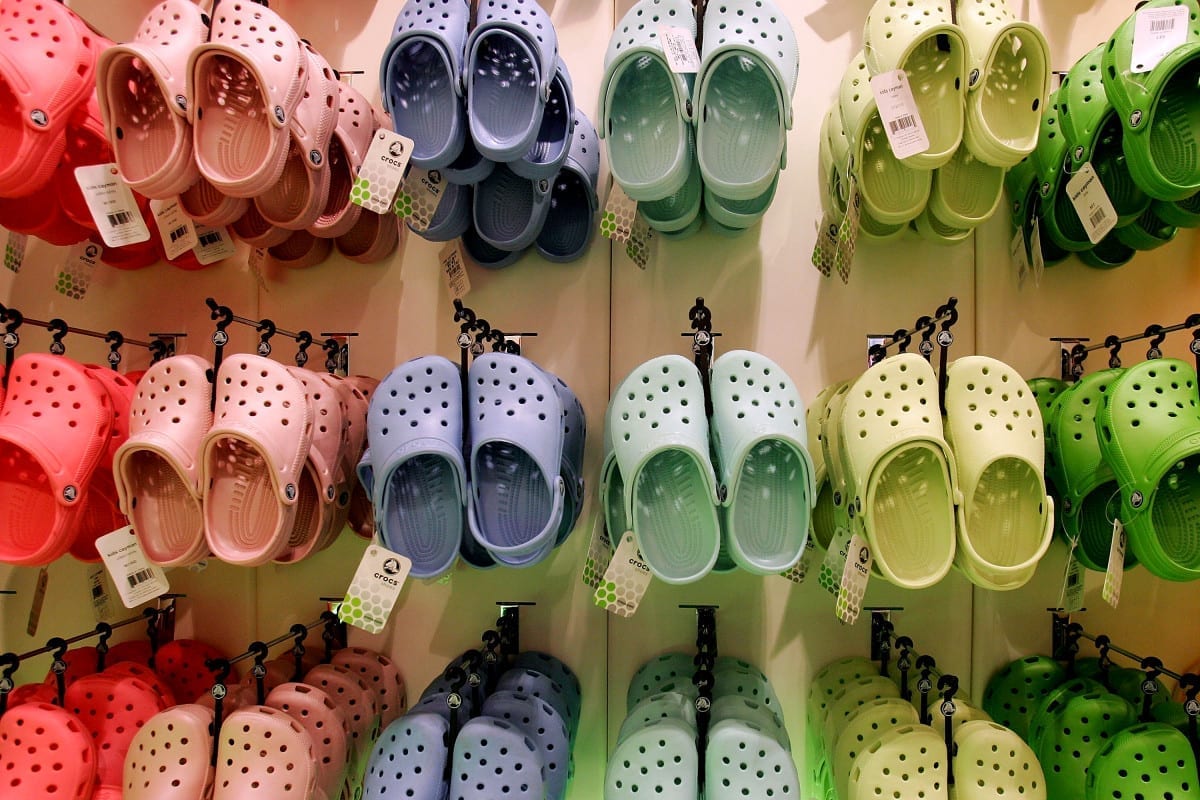
    One in four Crocs stores will be closed globally as the maker of the world’s ugliest shoes plots a survival plan.

    The store cull was announced along with another quarterly loss: the shoemaker finished its last three months US$44.4 million in the red, albeit a better performance than the same period a year earlier when it lost $73.9 million.

    Global sales were down 10.2 per cent to $187.4 million but in Asia the company says its retail sales declined by a whopping 16.6 per cent.

    Total Asian revenue was $68.8 million, down 9.8 per cent year-on-year, with wholesale revenues down 5.3 per cent (explained as a result of the sale of the South African business in April 2016). Retail sales in Asia declined 16.6 percent, despite the opening of nine stores since 2015. Online sales declined 7 per cent in Asia, which Crocs says was the result of weak sales in China on Singles’ Day.

    In Europe, revenue was down 14.2 per cent.

    As it restructures to ensure its survival, Crocs CEO Gregg Ribatt will step down on June 1, to be replaced by Andrew Rees who has for the past two years been president. The two roles will now be combined and Ribatt will remain on the company’s board.

    Rees told an analysts’ briefing that customers are responding favorably to new colors and prints added to the core Crocs molded product line.

    “We’ve also confirmed the importance of any newness to our iconic molded footwear through new color and graphic introductions, and through the expanded use of licensed characters,” he said.

    “Our spring/summer 2017 collection rolled out to warm-weather doors in November and early reads are encouraging. Going forward, our innovation and newness will be most heavily concentrated on core clogs and sandal, slips and slides where we see the greatest opportunity for growth.”

    Crocs is also banking on the endorsement of the product by celebrities Drew Barrymore, John Cena, Yoona Lim and Henry Lau who will feature in the brand’s latest Come As You Are marketing campaign launching in April.

    Full year figures

    Crocs’ full-year picture was nowhere near as bad as the last quarter’s. Total sales were $1.04 billion, down only a little from the $1.09 billion of a year earlier. On a constant currency basis, revenues declined 4.7 per cent.

    The company recorded a full-year net loss of $16.5 million, far better than the $83.2 million of 2015. Excluding non-recurring charges, the adjusted loss was $26.9 million.

    Rabat says Crocs has been reshaped into a company that :”functions more efficiently and effectively” and is in “a far better place now than two years ago”.

    “And while the operational work is critical, it is not yet, and I emphasise yet, translating into the financial gains we continue to believe are achievable.”

    Since 2014, Crocs has halved its SKU count, boosted the appeal of core sellers and added new collections.

    Once the store cull is complete in 2018, Crocs will operate about 400 outlets, adding $35 million to its bottom line in 2019. At the end of 2016 it had 558 stores.

    Carrie Teffner, Crocs EVP and CFO, says that given volatile market conditions, the company is not setting mid-term revenue and margin targets.

    “That said, we continue to believe that… longer term, the business can deliver EBIT margins in the 10 per cent range.”

  • Solid year for revitalised Dairy Farm International

    Solid year for revitalised Dairy Farm International

    Hong Kong-headquartered multi-format retailer Dairy Farm International has celebrated its 130th anniversary with a strong set of results, with food, home furnishings and restaurants delivering higher profits.

    Total sales, including those of associates and joint ventures, rose 14 per cent in US dollar terms and 17 per cent on a constant-currency basis to US$20.4 billion. Sales of wholly-owned subsidiaries rose 1 per cent to $11.2 billion.

    Underlying net profit rose by 7 per cent to $460 million, partly due to a 13 basis point net improvement in operating margins as well as increased contributions from Yonghui and Maxim’s. Operating profit rose 6 per cent.

    Supermarkets & hypermarkets solid

    Total food division sales, which include Wellcome and Giant, were flat in US dollar terms, although up 1 per cent on a constant currency basis.

    “In an environment of severe pressure on pricing, sales growth in Hong Kong supermarkets and in the convenience store businesses in Hong Kong, Mainland China and Singapore helped to offset declines in the group’s supermarkets and hypermarkets in Singapore and Indonesia and largely flat sales elsewhere,” explained CEO Graham Allan.

    “The closure of a number of unprofitable stores in Singapore and Indonesia also weighed on sales performance. However, specific actions, including strategic store closures, prudent management of costs and more targeted promotional activity, delivered improved operating margins.’

    Operating profit from the food division rose 13 per cent to $267 million, with the largest gains coming from Singapore and Indonesia.

    Sales of $6.2 billion from supermarkets and hypermarkets (excluding Yonghui) were in line with last year in constant currency while operating profit increased by 13 per cent to $194 million.

    Wellcome in Hong Kong drove higher sales through strengthening its fresh offer and an enhanced merchandise assortment. Operating profit was lower, principally due to a continued rise in rental costs and competitor promotional activities. In Macau, San Miu achieved sales and operating profit growth in its first full year in the group with range enhancement and increased fresh participation.

    In Taiwan, sales and operating profit were ahead of last year. A new ‘superstore’ concept was introduced for Wellcome with two net new stores opening during the year, while Jason’s continued its store expansion.

    “The retail landscape in Indonesia was challenging with limited recovery in consumer confidence and significant competition from the continued rollout of mini-market stores across the country, which impacted sales growth at supermarkets and hypermarkets,” said Allan.

    “Nevertheless, improved margins, from pricing and promotional activities, the closure of a number of underperforming stores and tighter cost control boosted profitability. Improving the fresh assortment and revitalising the upscale Hero brand remain key focus areas for the business.”

    In Malaysia, sales and operating profit were behind 2015 due to persistent low consumer confidence together with ongoing price controls following the introduction of GST, which continued to weigh on performance.

    The Philippines recorded a strong year with all banners reporting like-for-like sales growth and improved profitability. “A more appealing fresh assortment coupled with tactical pricing and successful marketing activities underpinned an encouraging increase in footfall,” said Allan.

    “Rustan’s benefited from increased sales of its imported and exclusive brands, while measures to improve cost efficiency were also implemented.”

    In Singapore, sales were down year-on-year due to poor consumer sentiment and the impact of store rationalisation. “Cold Storage achieved an encouraging operating profit increase, despite reduced sales following the closure of underperforming stores. Giant saw steady sales and positive profit growth, driven by increased margins and lower operating costs.

    “In the coming year, we aim to invest in the renewal of customer facing and back office technologies to improve our customer experience and internal efficiency whilst optimising ranges and supply chain productivity.”

    In Vietnam, Giant posted sound sales growth, from its single store, with increased customer traffic being the main driver and in Cambodia, the group saw “encouraging increases” in like-for-like sales and operating profit.

    Convenience sales reach $2 billion

    Convenience stores reported $2 billion in sales, an increase of 5 per cent year-on-year in constant-currency terms. Operating profit increased by 15 per cent to $73 million.

    In Hong Kong, 7-Eleven outpaced the competition and grew sales and operating profit despite soft consumer sentiment and difficult market conditions. Like-for-like sales strengthened during the year supported by promotions, range improvements and new products. A slight gross margin improvement led to a higher operating profit despite cost increases from labour and rent. In Macau, sales were flat and operating profit was lower due to slowing tourist numbers and a substantial cigarette tax increase in 2015.

    In Mainland China, 7-Eleven continued its solid growth and passed its 800th store milestone. During the year, sales and operating profit increased, with store network expansion and like- for-like sales growth. This was driven in part by an expanded ready-to-eat (RTE) product range.

    In Singapore, 7-Eleven achieved positive like-for-like sales growth arising from a store re-ranging project with a strong focus on RTE, including the successful introduction of new private label products sourced from 7-Eleven Japan.

    “Operating profit was significantly ahead of 2015 due to these initiatives and the rationalisation of loss-making stores,” said CEO Graham Allan. “The RTE range will be further expanded in 2017 and there will be increased focus on acquiring new profitable sites.”

    Health & beauty sales rise

    Dairy Farm’s health & beauty division achieved $2.6 billion in sales, up 4 per cent on a constant currency basis, however profit declined 5 per cent to $175 million due to margin pressure and higher rents in Hong Kong.

    “Gains in Hong Kong, Mainland China, Singapore, Indonesia and the Philippines, offset disappointing sales in Malaysia,” said Allan.

    In Hong Kong, Mannings’ sales increased in 2016 despite a smaller store network. “As mainland Chinese tourist arrivals continued to decline, promotional campaigns and loyalty programmes were launched throughout the year targeting local consumers,” said Allan. “Sales were flat in Macau as mainland Chinese tourist arrivals remained soft.

    On the mainland, Mannings “showed gradual improvement” with solid sales growth, particularly in baby care, beauty care and personal care, while the contribution from corporate brands increased.

    In Singapore, Guardian reported growth in sales, while operating profit also increased with higher gross margins and greater focus on cost and shrinkage management, partially offset by higher rental costs, but in Malaysia, Guardian experienced “a challenging year” with lower sales and operating profit due to subdued consumer sentiment, increased competition and weakness of the ringgit.

    In Indonesia, Guardian posted double-digit sales growth for the fifth year in a row, despite the net closure of 73 stores. Operating profit was higher than in 2015 with higher gross margins.

    In Vietnam, Guardian recorded another strong year of double-digit sales growth and improvement in gross margin. Corporate brand penetration increased significantly as brands such as Botaneco Garden proved popular with local consumers and in the new market of Cambodia, progress was made through range expansion and increased corporate brand penetration supporting strong like-for-like sales.

    In its second year in the group, Rose Pharmacy in the Philippines delivered performance improvement through sales growth, gross margin enhancement, better cost efficiency and the closure of a number of underperforming stores. Guardian brand products were launched with encouraging early signs of customer acceptance.

    Home furnishings solid

    Home Furnishings, essentially the Ikea business in Hong Kong, Taiwan and Indonesia, recorded a 12 per cent rise in operating profit to $71 million driven by increased sales of $597 million, 6 per cent ahead of 2015.

    “Sales and operating profit were higher than last year in all three markets. Like-for-like sales growth was particularly strong in Taiwan and Indonesia.”

    Hong Kong led the group in introducing new concepts to increase consumer access, launching online shopping in April 2016 and opening two pick-up points in Macau and on Hong Kong Island. Indonesia introduced online shopping in July. Taiwan opened a pick-up point in Hsinchu and launched online shopping in February 2017.

    “We continued to strengthen our low price image through ongoing price investment, and increased our focus on market specific products to enhance our local consumer appeal.

    “In the coming year, Home Furnishings plans both to continue its push in consumer accessibility and to drive forward its expansion plans, having identified a second Indonesia store location and opening a fourth store in Hong Kong in the second half of 2017,” said Allan.

    Solid growth for Starbucks, Maxim’s

    Sales in Dairy Farm International’s restaurants division rose 7 per cent year-on-year to $2 billion and profit rose 4 per cent.

    “The business delivered another year of record earnings in a difficult market environment while continuing to expand outside Hong Kong,” said Allan.

    The division expanded its reach by acquiring Cova, a premium chain of cake shops and restaurants, and by opening its first Treats food hall.

    In China, Maxim’s added 16 new stores across its brands, including the first Cheesecake Factory franchise at Shanghai Disney Town.

    The company now operates 20 Starbucks cafes in Vietnam and Cambodia and describes their performance as “encouraging”. The group launched its first Thai franchise in September – MX Cakes and Bakery, a joint venture with ThaiBev, which has opened three outlets in Bangkok.

    “Looking ahead, the group continues to see various exciting opportunities, including entry into the Beijing market with the opening of Jade Garden, Cafe Landmark and The Cheesecake Factory planned in 2017. Maxim’s will also continue to explore franchise and acquisition opportunities across the region.”

    Dairy Farm will “compete aggressively”

    Chairman Ben Keswick said Dairy Farm International is “transforming itself to compete aggressively in a changing retail landscape”.

    “Central to this are a strong focus on understanding changing consumer behaviour, growing market share, building digital engagement with customers and sharing know-how across the group. Investment is being sustained in supply chain, IT infrastructure and systems, and the skills and expertise of our people to support this transformation. Each business is committed to optimising the shopping experience of its customers and to serving their evolving needs as efficiently as possible.”

    Keswick said increasing convenience through expansion and enhancement of the store network remains a high priority, although when necessary, underperforming stores will be closed. Last year the entire group added a net 114 stores, despite a number of closures across its divisions.

    At December 31, Dairy Farm International had 6548 stores in operation in 11 countries and territories, including its interest in 487 Yonghui stores in Mainland China.

    “Despite the uncertain economic outlook for 2017, the group continues to strengthen its businesses,” said Keswick. “Investments are being made to enhance its competitive position, increase customer convenience and adapt to emerging consumer trends. These investments, coupled with the exposure of its market-leading retail brands to Asia’s growth markets, will support Dairy Farm’s long-term success.”


  • Skin Laundry to launch in Japan, Korea this year

    Skin Laundry to launch in Japan, Korea this year

    Laser clinic and skincare product retailer Skin Laundry plans to expand into Japan and Korea this year from its Hong Kong base.

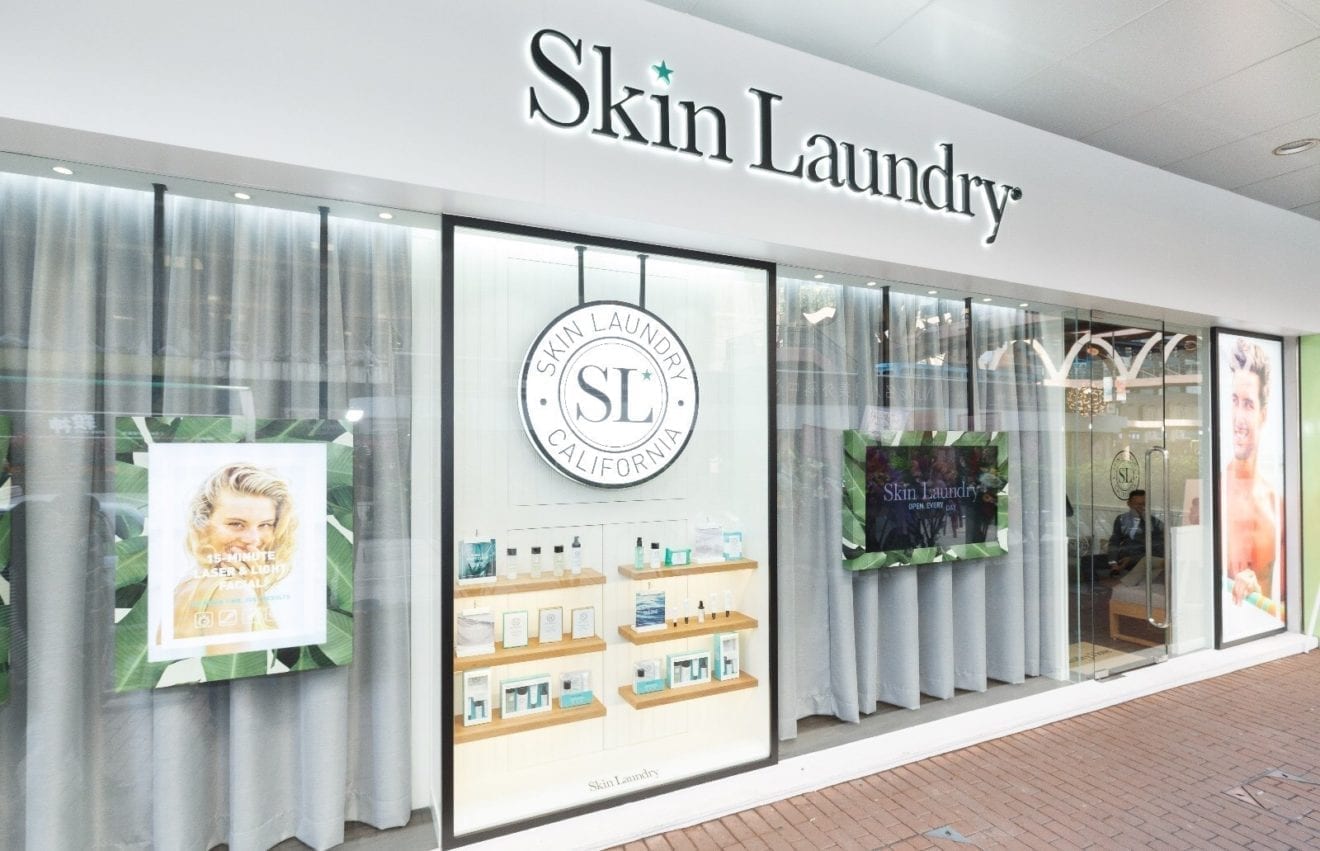
    Skin Laundry has just opened its fourth outlet in Hong Kong – at Causeway Bay. And founder Yen Reis said that at least two more will open in the city by the year’s end.

    Now four years old, Skin Laundry has 16 locations – 11 in the US, one in London’s iconic Liberty department store and now four in Hong Kong. The first two Hong Kong stores opened in Repulse Bay and Central in late 2015. A small concession with treatment room has opened in Lane Crawford at IFC Mall since. More concessions may open in other Lane Crawford stores soon.

    “We are expanding quite rapidly this year and next year. We are also looking at Japan and Korea in the third and fourth quarters of this year,” Reis said.

    Macau may follow, but it is not a focus right now given the opportunities in Hong Kong, Japan and Korea, she said.

    The smallest location is the Lane Crawford concession taking up about 215 sqft. But full size stores are typically 500 to 700 sqft with the largest around 1500 sqft.

    Reis said Skin Laundry is the first beauty brand in the world to make mild laser facials accessible and affordable to the mass market.

    “We’ve taken something usually very expensive and available only at a dermatologist’s or a laser clinic and made it available to everyone.”

    To many people, the mere mention of laser and clinic brings to mind tattoo or hair removal – services not on Skin Laundry’s menu. Its treatments are much milder.

    “Basically the idea of Skin Laundry is a beauty service. We’ve had to educate the market of the benefits of laser. Now we are hitting our four year anniversary we are starting to see traction.”

    In Asia, the whole concept is relatively new. “The idea of doing mild laser is new to the market. We believe using mild laser frequently is much better than doing something stronger once or twice a year. If you cut your hair on a regular basis, your hair looks healthier. It’s the same with mild lasers.”

    Skin Laundry Causeway Bay 1

    Skin Laundry charges US$60 on average for a treatment, substantially cheaper than traditional laser clinics or surgeries which charge up to $500.

    The brand has also developed a growing range of skincare products it retails through its stores and now through LVMH-owned Sephora online and in its US stores – products like cleansers for home use. At the moment, these products account for just 20 per cent of the turnover but with growing brand awareness, the stocking by Sephora and more stores opening, Reis believes they will account for about 40 per cent in the medium term.

    Inspired by LA’s healthy living lifestyle, Skin Laundry opened its flagship location in Santa Monica in 2013. Its clinics-come-retail-stores are designed like a California beach house, providing a contemporary and casual atmosphere for members and guests.

  • Learn 7 Steps To Increase The Accuracy Of Easier Physical Inventory Counts

    Learn 7 Steps To Increase The Accuracy Of Easier Physical Inventory Counts

    Easier physical inventory counts matter and can make a big difference to controlling and maintaining your business. Learn these seven steps in improve accuracy.

    1) Prioritize Inventory Accuracy Over Order Fulfilment:

    In terms of inventory accuracy, prioritizing accuracy over all other factors is the most essential yet challenging step. Quite a few inventory issues come up when someone feels like they need to push a transaction through whatever system is used while intending to return to the numbers to fix them later. Emergency rushing does often mean that people forget to come back and fix it later though. Missed production entries and negative inventory lines join a broad array of problems that result from this. Only when you put systems into place that keep employees from proceeding with a rushed transaction are you able to keep accurate and effective inventory records.

    One instance of success that can be learned from is a team that recently instituted an accounting change. It prevented any shipment from being processed if it claimed to have more inventory than the system actually knew was on hand. For instance, if the team was trying to ship 12 units of an item, but the system saw only 6 in stock, then an alert would show up, forcing the staff to fix the issue before they could move ahead. That change helped the team deal with issues prior to the product units going out. By forcing the team to deal on the spot with missed production entries prior to shipments going out, the newly altered system helped them avoid their biggest inventory issues. 

    2) Everything Gets A Marked Location:

    When the time comes that inventory must be counted, it’s necessary that everything has its own labelled home. Stray pallets and homeless loose boxes wind up haunting you when it’s time to reconcile things. Even new and temporarily locations for the duration of the inventory can make life a lot easier, so find a defined location for all items, mark it well, store it there, and then leave it.

    3) Reduce Your Inventory As Much As You Can:

    Do everything you can to wind up counting as little actual inventory as possible. That might mean stalling an in-bound shipment for a few days, or shipping extra units prior to doing the counting. When you have to count less, you have less opportunity for mistakes. You also want to avoid receiving or shipping any of your product during your count, since this will mean discrepancies.

    4) Count Overstock Items In Advance:

    Even before you start the official count, you can have individuals count the locations of overstock in advance. That reduces how much counting has to happen on the actual days where inventory is fully frozen. Make sure the spots are stocked fully and then wrap them, marking down the counts of the locations. Just be sure that counts are adjusted to reflect anything taken from overstock between the pre-count and the actual inventory. If you do a full inventory count it should be scheduled well ahead of time.

    5) Do Visual Count Tracking:

    Your inventory is probably going to take more than one person. That being said, knowing what has been counted and what is still waiting can get gruesomely complex. To keep things simple, make it very easy to know what was counted. Use large count tags that have bright colors as unmistakable signs of what has already been tagged. Go big and obvious, especially is you are going to use anyone not familiar with the environment. Have a second style of tag for anything that is not going to get counted at all.

    6) Give Every Team A Product Specialist:

    Something else that causes confusion is how items are packed. If an assortment of 12 items is packed as one, is it a dozen units or 1 case? Box markings give clues, but it’s better to have a member of each team be familiar with the product in question. You might need to bring in extra hands for a quick inventory, and they need to know who to turn to for questions in their group. If possible, partner experienced people with newer individuals.

    7) Immaterial Counts Should Happen Quickly:

    A number of smaller items just aren’t worth counting out individually. This can be things like gallons of chemicals, plastic hooks and bags, or tons of grains. In cases like these, physical measurements and counting, just aren’t worth it in establishing product value. Sensitive scales help out in copious quantities of small items, so weigh a sample and then do calculations on the larger supply. This works especially well for cheaper components. Larger quantities can be estimated and calculated through extrapolation, which is better than just doing guesswork.

  • ZhangMen Brewing opens Tsim Sha Tsui flagship

    ZhangMen Brewing opens Tsim Sha Tsui flagship

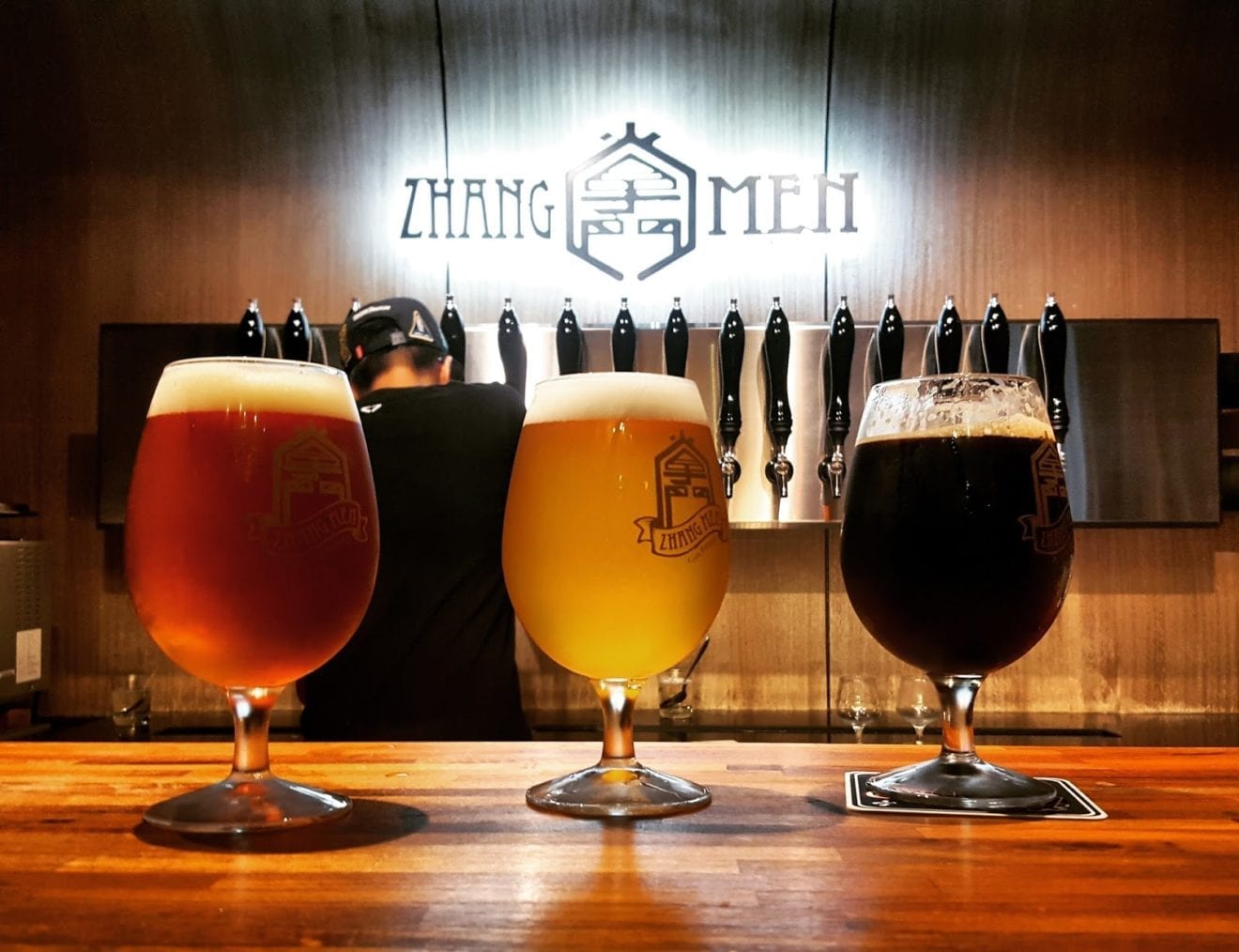
    Taiwan’s ZhangMen Brewing Company has chosen Hong Kong to set up its first international flagship pub.

    On Kimberley Road in Tsim Sha Tsui, the outlet offers 24 varieties of craft beer, shipped directly from its brewery, as well as providing Taiwanese snacks.

    ZhangMen Brewing - Tsim Sha Tsui HK 1

    ZhangMen Brewing Hong Kong GM Ajax Lo says Hong Kong has had a thriving craft-beer scene for years and is relatively close to Taiwan. “Hong Kong is also the region’s economic hub, which will help us promote our brand to other Asian markets more easily.”

    Invest Hong Kong helped the Taiwan company set up in Hong Kong, with its associate director-general of investment promotion Dr Jimmy Chiang saying it has helped several craft-beer brands settle in the city.

    As well as its own brewery, ZhangMen Brewing Company has a brewery farm and laboratory, and runs six outlets across Taiwan. The brand has won many accolades including champion and second runner-up in the Australian International Beer Awards plus second runner-up in the China Beer Awards last year.

  • Aldi China opening store on Tmall

    Aldi China opening store on Tmall

    Aldi China plans to open a flagship store on Tmall, Alibaba’s B2C marketplace platform, within the next few months.

    The German supermarket chain has just launched a corporate website in China to signal its upcoming entry into Asia. This features a market-specific logo and Chinese name 奥乐奇, with the slogan “Handpicked for you”.

    Aldi shares which product categories it will offer the Chinese market: breakfast, snacking, wine, organic and cooking. Some of these products will be directly imported from Aldi’s suppliers in Australia.

    It was initially thought Aldi would launch its own independent website, reports Retail Analysis. Other grocery retailers that sell through Tmall include Sainsbury’s and Waitrose from the UK. Waitrose sells through Royal Mail’s Tmall site.

    While China’s online market is competitive, Aldi’s approach will give it time to understand Chinese shoppers and adapt its offer if necessary. And though many products will come from Australia, Aldi has a strong focus on local sourcing in many of its other markets.

  • Abercrombie & Fitch ends year weak

    Abercrombie & Fitch ends year weak

    Abercrombie & Fitch ended the year in a tailspin, with sales down by almost 7 per cent and operating profit falling 49 per cent.

    The embryonic recovery seen at the start of this fiscal is now little more than a faded memory. Fortunately, the group has a fairly strong balance sheet and remains profitable, which provides some comfort that it has the time and financial firepower to try and turn things around.

    That said, it is now clear that fairly decisive and radical action is required to reconnect the brands with consumers. Especially so for Abercrombie which has, like last quarter, seen same-store sales deteriorate at a rapid pace. While factors like reduced tourist spend at flagship stores and negative mall traffic have pushed down sales, the main reason for the decline is that Abercrombie simply doesn’t resonate with customers like it once did. In essence it has lost its reason for existing.

    This is a serious issue and is one that needs an urgent remedy. Worryingly, A&F has already tried to shift perceptions and engineer a turnaround, but this is clearly not delivering. Part of this comes down to the fact that, to date, the company’s efforts have been rather patchy and piecemeal, and this has been insufficient to cut through with consumers.

    The recent marketing campaign, with the strapline of “people have a lot to say about us, they think they’ve got us figured out”, exemplifies this approach. Not only is the message confusing and opaque, but the promise of change that it suggests is not entirely delivered on by stores which look and feel the same as they have always done. To be fair, some developments – including making products more mature and stylish – have been substantial. However, when the package they are delivered in has not evolved it is difficult to communicate such efforts effectively.

    Fortunately, A&F is making an effort to change its stores – as the new format launch in Columbus, Ohio proves. This is a step forward and is more reflective of what the brand now wants to stand for. The integration of improved customer service elements – like better fitting rooms and the ability to place online orders from the store – are also helpful in making the environment more friendly, inclusive and welcoming.

    As good as the new format looks and feels, A&F will only roll out seven of them this year, so it is unlikely they will have a material impact on sales growth. However the cautious pace is sensible given the new concept has yet to be proven. In any case, it is likely that there will be existing stores in some locations where poor performance and declining traffic does not justify significant capital expenditure on refurbishments.

    A&F is clearly hoping that all of its changes will allow Abercrombie to shift into a higher gear – much as has been the case for Hollister, where positive same-store sales were achieved this quarter. But A&F still has much more work to do in building a new base of customers and this is a long-term effort that may not have a tangible impact on sales for many quarters.

    This noted, A&F is going in the right direction. As it has shown with Hollister, which is more advanced in its redevelopment program, the reinvention work will ultimately pay dividends. However, the company cannot turn on a dime and there will likely be a number of bumpy quarters ahead before recovery comes.

  • Closing shop on China’s e-commerce platforms

    Closing shop on China’s e-commerce platforms

    The closures of a number of retail and luxury brand giants on China’s e-commerce platforms indicate that retail competition is no less fierce online than offline.

    It is old news that the Chinese market is highly competitive and unlike any other market in the world. What may sell on the high street in London is not guaranteed to sell in China. The rainbow-lensed promises of e-commerce seem to be an easy way to access China’s 770.4 million working population, 0.2 per cent or over 1.5 million of which have an average income of US$500,000.

    Political concerns and falling sales: Lotte

    In 2015, Lotte Group Retail opened a Tmall store, hoping to widen its reach in China, where over 60 per cent of its overseas stores are located. The large South Korean multinational conglomerate has had a presence in China for over 20 years, with 115 supermarkets and five shopping malls.

    But on January 12 this year, Lotte closed its Tmall store – along with three brick-and-mortar stores in Beijing – after rising political tension between China and South Korea. In December, Lotte’s China headquarters admitted that the company was facing investigations for tax, fire control and safety issues. However, the closure of its Tmall store seems to have stemmed also from the fact that China is Lotte’s only international market where growth is stymying. Sales fell during the last three months of 2016, year-on-year.

    While Lotte remains in the market through its physical shopping malls and supermarkets, and on the JD.com website, the company has not announced whether it will be reopening its Tmall store at any future date.

    Heavy local competition: Asos

    Asos, the UK’s largest online fashion retailer, entered China in 2013 with high expectations. The company announced it was investing RMB 100 million (US$14.5 million) towards the market, importing British styles and developing a sales force. Its business model relied exclusively on e-commerce, with its own website, as well as a Tmall store.

    However, Asos failed to attract enough customers and was running a loss of GBP 4 million (US$5 million) by April of 2016, when it announced that it was shutting down its China operations.

    Asos faced a number of problems in the Chinese market, from operations to marketing. When it first started, the company encountered issues with shipping though China Post, with customers paying import taxes on clothes. Eventually, Asos obtained a local warehouse, but then it encountered complex clothing trade regulations in China, particularly in regards to correct labelling. As a result, Asos had to spend additional funds on restitching to comply with local code, contributing to higher than expected start-up costs.

    Effective marketing was also a major issue for Asos, with the company failing to distinguish itself from local, more affordable brands. While it may be a major player in the US and Europe, Asos was relatively unknown to Chinese millennials, its target consumer base.

    Tmall concerns for luxury brands: Coach

    Coach was one of the first US luxury handbag brands to launch a Tmall store, creating a pop-up store from December 2011 to January 2012, and then an official one in 2015. However, citing a shifting operational strategy, Coach announced that it was leaving the platform just one year later in September 2016.

    China is a critical market for luxury goods, as sales in the US and Europe steadily decline. Many brands see e-commerce as a way to directly access customers and receive greater exposure, which is why many have moved onto online platforms en masse. Despite this, online platforms have always been a concern for luxury brands, who fear appearing too mass market. Moreover, Alibaba has been criticised by brands for not doing enough to remove fake goods, despite a counterfeit removal program. In 2016, Gucci and Michael Kors quit the anti-counterfeit coalition as protest against the program’s inefficacy.

    Coach still remains in the Chinese market through its WeChat account, an avenue that is growing in popularity amongst luxury brands. Cartier, Longchamp, and Montblanc all have WeChat shops with WePay functions. Some companies believe that WeChat offers a more personalised shopping experience, as well as greater control over its brand.

    For many luxury brands, online platforms are more for marketing and building brand image, rather than sales. However, official Tmall flagship stores do not receive priority listing on searches. In fact, according to a 2016 study by L2, only 12 per cent of first page Tmall search results were through the official Coach shop. The only luxury brands that controlled more than 80 per cent of first page search results were Ports 1961, Burberry, Tommy Hilfiger, Calvin Klein, and Tumi.

    Key Takeaways

    E-commerce is a high-growth sector, with online retail sales totaling US$581.61 billion in 2015, and it is estimated to grow 20 per cent annually by 2020. China is now the biggest online retail market in the world, and Chinese consumers make up almost half of all online sales globally.

    Companies looking to take advantage of China’s market size and sell to Chinese consumers often mistakenly believe that e-commerce offers a shortcut to success. While a misconception, this idea is understandable. There are fewer licensing requirements to operate through e-commerce, and customs clearance is faster.

    However, as has been demonstrated through high-profile store closures in 2016, e-commerce requires extensive pre-entry knowledge of current regulations, a realistic logistics plan, and a local marketing strategy. Those who enter the market blindly do so at the risk of expensive learning curves and wasted efforts.

    • This article was first published on dezshira.com.  Since its establishment in 1992, Dezan Shira & Associates has been guiding foreign clients through Asia’s complex regulatory environment and assisting them with all aspects of legal, accounting, tax, internal control, HR, payroll, and audit matters. For inquiries, email [email protected].
  • Chinese ‘Taobao villages’ turning poor communities into huge online retail hubs

    Chinese ‘Taobao villages’ turning poor communities into huge online retail hubs

    Thanks to the rapid development of China’s e-commerce industry, over 1,000 “Taobao villages” across the country are turning poor communities into huge online retail hubs, creating more than 840,000 job opportunities.
    These villages are so-named because at least 10 per cent of the population living in these rural communities makes its living by selling products online-mostly on Taobao.com, the Alibaba-owned consumer-to-consumer marketplace. The e-commerce annual turnover of each village is no less than 10 million yuan.

    By selling crafts online from their hometown of Wantou Village, Boxing county in east China’s Shandong Province, villagers made online sales of over 300 million yuan ($43.5 million) last year.

    Similarly, villagers of the Shuanglongqiao Village in Nanchong, southwest China’s Sichuan province, have allured flocks of tourists, including foreigners, to stay and experience the star-level accommodation at their houses, via e-commerce platforms.

    These villages offer a glimpse into how e-commerce industry spurs the rural economic growth and the farmers’ benefits.

    Online retail sales of China’s farm produce are estimated at 220 billion yuan ($32 billion) in 2016, up over 46 per cent over the previous year, the Ministry of Agriculture said.

    The latest figures from Aliresearch showed that there were 1,311 Taobao villages across China, and over 840,000 jobs were created by the clusters.

    Experts said that popularity of Internet and improvement of rural infrastructure have to some extent removed the bottlenecks restraining their information communication and logistics. The market potential and demands of the central and western part of China, especially those remote areas, was leveraged as a result.

    They added that rural areas have been constrained by labour outflow, poor infrastructure, low incomes and lack of competitive advantages, while an e-commerce development will help optimise market environment, upgrade industrial structure and absorb more labours.

    The profitability of e-commerce has attracted a rising number of rural residents to return home, according to statistics. Thanks to the development of e-commerce, about 12 million people left for brighter futures have come back to build up the local economy.

    The development of e-commerce, as experts believe, can be attributed to favourable policies and the rising market demand.

    The recently-released first policy statement from the central authorities for 2017, usually an indicator of policy priorities, emphasised the importance of supply-side structural reform in the agricultural sector, urging the development of e-commerce industry in rural areas.

    At the same time, e-commerce and traditional businesses have cast their eyes to the rural areas. So far, Alilbaba has expanded its services to over 23,000 villages nationwide.

    Days earlier, a strategic cooperation agreement to boost rural e-commerce was inked by Sichuan province, Alibaba Group and Ant Financial Services Group, the mobile payment affiliate of Alibaba.

    Alibaba CEO Jack Ma said that his company hopes to offer a training on e-commerce and Taobao villages to those county officials of the province, explaining that their rising awareness to develop e-commerce will guarantee the business success of the province.

    Du Yifei

  • International coffee, tea and confectionery showcase draws a record number of visitors

    International coffee, tea and confectionery showcase draws a record number of visitors

    Café Asia 2017, International Coffee & Tea Expo (ICT Expo) 2017 and Sweets & Bakes Asia 2017 captivated some 11,000 visitors with a multi-sensorial showcase of ‘Firsts’. The concurrent shows were declared opened by Guest-of-Honour, Mr Lee Yi Shyan, Member of Parliament of East Coast GRC, on March 2, 2017 at Marina Bay Sands Expo & Convention Centre, Hall E. 

    The highly successful Café Asia and ICT Expo series first launched in 2013 and the Sweets & Bakes series which was introduced a year later, together present the largest showcase dedicated to the team coffee and bakery industries in Singapore and the region. This dynamic B2B platform is sought after by key decision makers as a sourcing destination for their café needs and to explore new collaborations and opportunities in a country where the number of specialty coffee drinkers has increased over the years. 

    Spanning 5,000 square metres this year, Café Asia 2017, ICT Expo 2017 and Sweets & Bakes Asia hosted 168 exhibitors from all around the world namely, Australia, Brazil, China, France, Germany, India, Indonesia, Italy, Japan, Korea, Malaysia, Myanmar, Netherlands, Philippines, Rwanda, Singapore, Switzerland, Taiwan, Thailand, Timor-Leste and Vietnam.

    The 3-day exhibition raised the bar for three industries with innovations that offered solutions for new recipes, better tasting products and productivity. It introduced some of the latest innovations, developments and technologies at exclusive workshops, classes and demonstrations and on the exhibition floor by industry experts, on everything coffee, tea and baked goods. Visitors discovered new sources and a wide array of supplies and innovative and cutting-edge equipment for cafes and bakeries, from coffee beans from traditional and non-traditional coffee producing countries, tea leaves, taste elevating baking ingredients, new exciting brews like Expresso Martini by Justin Metcalf and delectable gelato flavours.

    Keen Competiton at Seven National Competitions

    Top baristas, tea masters and bakers converged at the shows to contend for national titles and to represent Singapore in the world-level championships. New this year is the inaugural Tea Masters Cup Singapore 2017 where Singapore crowned its first-ever Tea Master to compete at the prestigious Tea Masters Cup International 2017. 

    The National Coffee Championships rolled-out a new competition format, the Singapore Coffee in Good Spirits Championships 2017. The championship celebrates barista’s creativity in celebrating the synergy between coffee and alcohol through innovative beverage recipes. Also returning this year are the Singapore National Barista Championship, Singapore Latte Art Championship, Singapore National Brewers Cup Championship and Singapore Cup Tasters Championship.

    The Singapore Bakery & Confectionery Championship 2017 welcomed top bakers and confectioners who showcased their skills to create the most delicious and delightful breads and pastries. The bakers from some of the best hotels and bakeries here in Singapore kneaded, baked and worked magic with their creations, making them into stunning displays of edible art.

    The winners are:

    Championship

    Winners

    Tea Masters Cup Singapore 2017 – Tea Preparation

    Dave Lim of Sun Ray Café

    Tea Masters Cup Singapore 2017 – Tea Pairing

    Dave Lim of Sun Ray Café

    Tea Masters Cup Singapore 2017 – Tea Tasting

    Darren Chang of Smitten Specialty Coffee & Tea

    Singapore Bakery & Confectionery Championship 2017 – Bread Category Champion

    Jacker Tok Siu Hong of Carlton Hotel

    Singapore Bakery & Confectionery Championship 2017 – Cake Category Champion

    Phua Wei Si and Maryann Tan Rui En of Temasek Polytechnic

    Singapore National Barista Championship

    Terence Tan of Santino Coffee Specialists

    Singapore Latte Art Championship

    Jervis Tan of Kinsmen Coffee

    Singapore National Brewers Cup Championship

    Rodman Chan of A.R.C.

    Singapore Cup Tasters Championship

    Rodman Chan of A.R.C.

    Singapore Coffee in Good Spirits Championship

    Natasha Shariff of Bettr Barista

    Café Asia 2017, ICT 2017 and Sweets and Bakes 2017 are organized by Conference and Exhibitions Management Services (CEMS). Café Asia 2017 and the International Coffee & Tea Expo 2017 are hosted by Singapore Coffee Association and Sweets & Bakes Asia 2017 is hosted by Singapore Bakery and Confectionery Trade Association.

  • DHL broadens logistics reach in Thailand

    DHL broadens logistics reach in Thailand

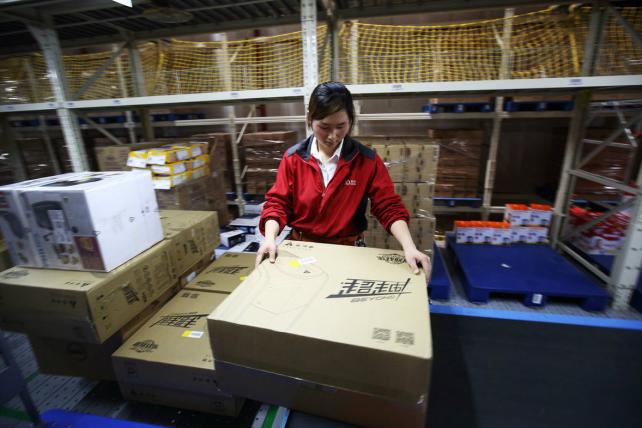
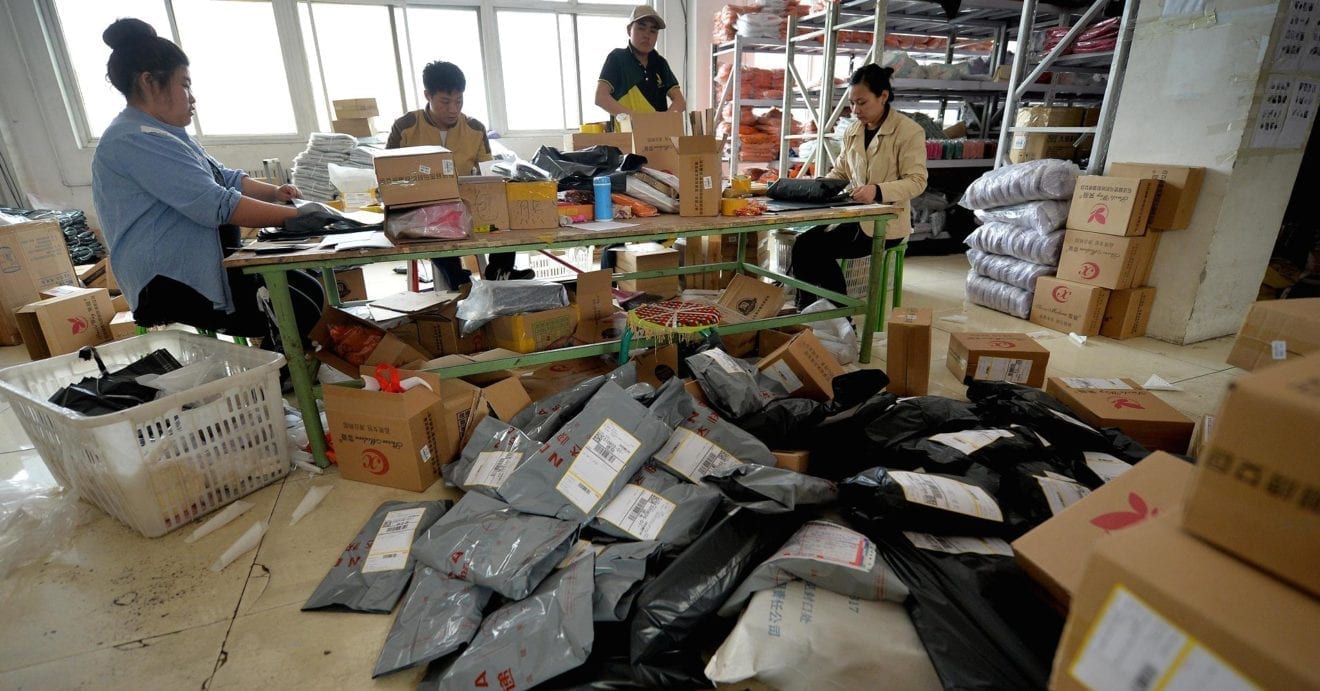
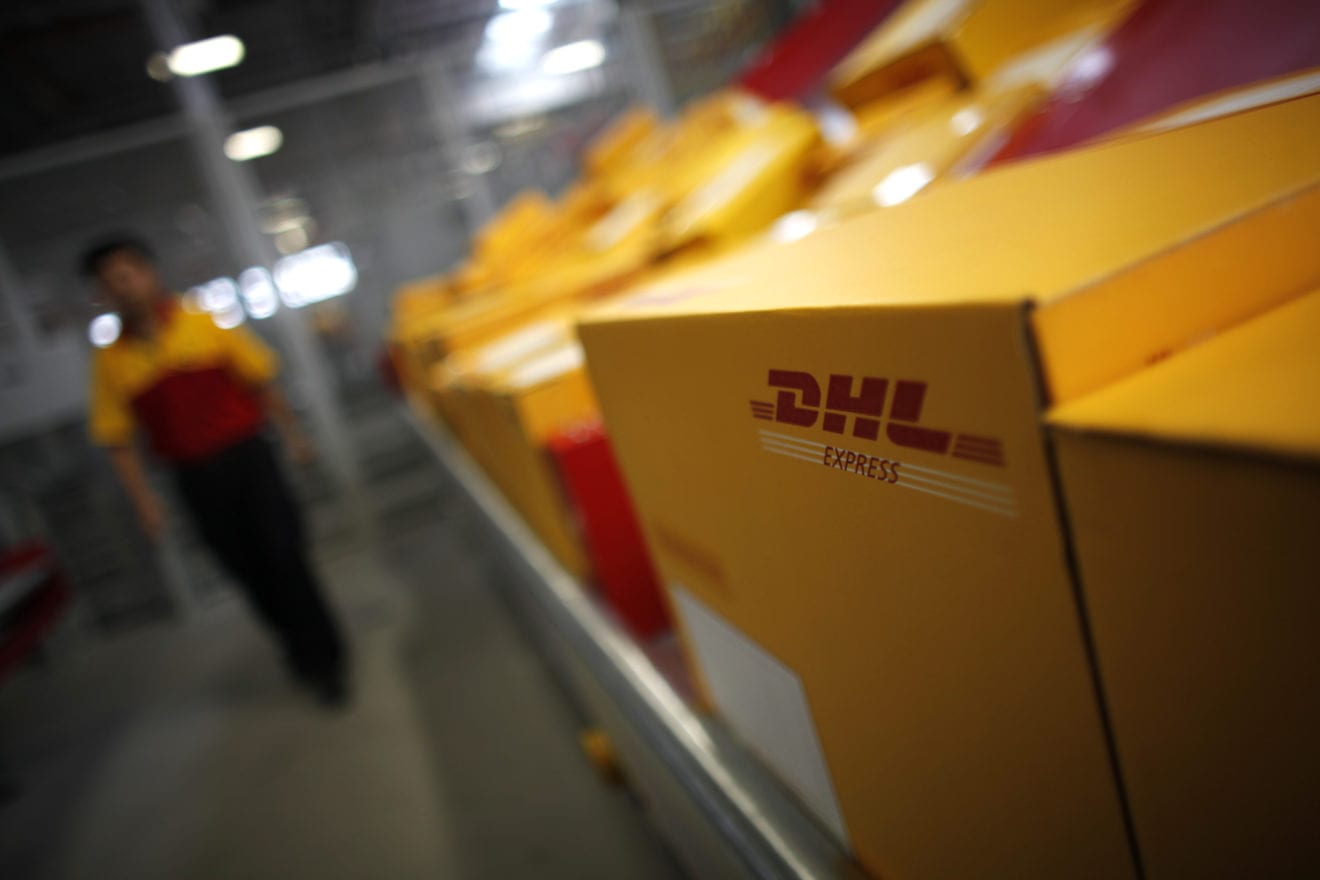
    DHL E-commerce, a unit of Deutsche Post DHL Group, has expanded its logistics service in the Thai market with nationwide coverage and price-competitive business-to-consumer (B2C) international shipping.

    There is also pick-up service for small e-commerce merchants and the 2.7 million small and medium-sized enterprises (SMEs) in Thailand where online sales are growing rapidly, according to top executives.

    Charles Brewer, CEO of DHL E-commerce, said Thailand has a huge growth potential for e-commerce because online sales currently account for only 2 per cent of total retail sales, compared with the global average of 9 per cent.

    Among Asean countries, Singapore’s online sales are the most developed, accounting for 4.5 per cent of total retail sales, compared with Indonesia’s 0.5 per cent of total retail sales.

    To support e-commerce growth, the Thai government needs to help develop the ecosystem for online transactions, e-payment as well as transport and other logistic services.

    Over the past year, DHL has branched into the so-called last mile service for e-commerce in Southeast Asia with a complete range of delivery, pick-up, warehousing and related services as high-volume e-commerce transactions boom in the region due to the high penetration rate of smartphones and other factors.

    Customer expectations on delivery time have also shifted towards the so-called “next day” delivery after placing their purchase orders online, prompting DHL to offer faster services in the Thai market.

    “The e-commerce market in Thailand is the second largest in Southeast Asia and expected to grow 22 per cent annually towards 2020. There are increasing demands for cost-effective and high quality logistic solutions to meet rising consumer needs,” said Kiattichai Pitpreecha, managing director of DHL E-commerce Thailand.

    For Thai SMEs, the expanded service will allow them to deliver products to customers with greater convenience and a faster process so that they spend less time travelling and waiting to drop off their goods.

    With a 3,222-square-metre e-commerce logistic centre in Bangkok, plus vehicles and other facilities, the firm is equipped to deliver 15 million shipments per year in Thailand.

    For merchants, DHL also offers a cash-on-delivery service with daily remittances plus access to a multilingual call centre and easy IT integration to handle online orders so that shippers can easily prepare orders for delivery into the DHL network.

    In addition, DHL offers cross-border services to help Thai customers expand into overseas markets at a competitive price based on a pay-per-use solution.

    Malcolm Monteiro, CEO of DHL E-commerce Asia Pacific, said the government’s recent initiative has boosted opportunities for businesses and industries, especially SMEs, to digitise their operations and services.

    With as many as 2.7 million SMEs, Thailand is seen as a high growth market where these firms will extend their business models into online marketplaces where DHL aims to enable their businesses to leverage the e-commerce potential both domestically and internationally.

    Besides the e-commerce service, DHL has long been a provider of international express delivery services which can help connect Thai SMEs to the global online market.

    At present, DHL has a network of fulfilment centres in the US, Mexico, Europe, Hong Kong, Australia and India, allowing merchandise to get to consumers in those regions faster.

    According to Brewer, the cross-border B2C, or retail e-commerce, is projected to grow to US$1 trillion in 2020 as the DHL operation in Thailand also witnesses a significant growth in this segment over the past year.