Author: Mei Ling Tan

  • Nokia adds 10Gbps PON to mobile transport solution

    Nokia adds 10Gbps PON to mobile transport solution

    Nokia has added 10Gbps PON and point-to-point fiber to its access portfolio to help meet demand for high-capacity mobile transport in the 5G era.

    The mobile transport solution is designed to allow operators to use existing PONs used in FTTH deployments to gain the capacity and coverage 5G requires.

    The portfolio is also being used as part of a Bell Labs proof-of-concept to demonstrate the flexibility of 10G symmetrical PON networks for low latency applications such as mobile fronthaul.

    By adding gateway functionality, Nokia is able to convert mobile fronthaul CPRI signals to Ethernet, the company said.

    “The biggest opportunity on the horizon for fixed networks is the arrival of 5G. It’s clear that 5G will require very high capacity and low delay, but what is less certain is just how much capacity will be required for backhaul and what latency will be sufficient,” Nokia president of fixed networks Federico Guillen said.

    “We take the guesswork out of the equation. Our solution allows operators to access existing PON networks that have virtually unlimited capacity to meet their needs today, with the added flexibility to add 10G PON evolutions gradually as demand for more bandwidth and services increases. The massive throughput and cell densification strategy of 5G make it a perfect match for existing FTTH deployments.”

    Meanwhile Calix announced it has worked with New Zealand’s Northpower Fibre to complete the first demonstration of 10Gbps NG-PON2 technology in a live network.

    Northpower Fibre plans to deploy NG-PON2 technology based on Calix’s AXOS software-defined access architecture to help differentiate in New Zealand’s growing Ultra-Fast Broadband (UFB) marketplace stimulated by the government’s second phase of the UFB program.

    “New Zealand is undergoing a major broadband vitalization effort, and we see the emergence of NG-PON2 technology as a major enabler going forward,” Northpower Fibre CEO Darren Mason said.

    “As attention in the second phase of UFB shifts from the cities to bring fiber broadband to more rural areas, Northpower Fibre will be leading the way having committed to connect 12 new towns to fiber within the next four years.”


  • Hanoi plans to put taxi-style roof signs on Uber, Grab cars

    Hanoi plans to put taxi-style roof signs on Uber, Grab cars

    Officials in the city are tightening rules on transport services. Popular ride-hailing services Uber and Grab may soon be asked to put signs on their cars as officials in Hanoi are tightening rules on transport companies.

    Officials said some private cars offering transport services are operating without signs or badges.

    Grab, a Malaysia-based company, is the only foreign-run transport service allowed to operate in five cities across Vietnam using registered private vehicles between 2016 and 2018.

    Uber, however, has been singled out for providing ride-hailing services without permission.

    The company has recently had its application to operate on a trial basis rejected for a second time in Vietnam, according to local transport authorities.

    It applied for a license after local regulators outlawed Uber’s smartphone app-based services in November 2015, due mainly to its failure to establish an independent legal entity in Vietnam.

  • Dialog Axiata lifts FY16 profit by 74%

    Dialog Axiata lifts FY16 profit by 74%

    Sri Lanka’s Dialog Axiata boosted its net profit for FY16 by 74% year-on-year to 9 billion rupees ($59.4 million), recording strong growth across all its business segments.

    The operator reported total revenue of 86.7 billion rupees, up 17% year-on-year, with revenue from its core business increasing 16% to 73 billion. Mobile customers increased to 11.8 million.

    Dialog Broadband Networks revenue grew 28% to 9.3 billion rupees, but the division’s net loss more than doubled to 385 million rupees due to higher depreciation and finance costs.

    Dialog Television revenue meanwhile grew 5% to 6.1 billion rupees, but its net loss also more than doubled to 644 million rupees.

    The group’s total capex for the year reached 23.2 billion rupees, representing a capex to revenue ratio of 27%. The bulk of spending went towards investments in high speed broadband infrastructure aimed at strengthening Dialog’s position in Sri Lanka’s broadband sector.

    For the fourth quarter, Dialog reported a 5% increase in revenue growth to 7.4 billion rupees. The company attributed the slower growth to the reintroduction of Sri Lanka’s value added tax at the start of November.

    Net profit for the quarter meanwhile declined 56% quarter-on-quarter to 1.3 billion rupees, due to lower pre-tax earnings, increased depreciation and higher non-cash forex losses.

  • Korean multiplex chain leads booming movie market in Vietnam

    Korean multiplex chain leads booming movie market in Vietnam

    CJ-CGV has quickly emerged as the dominant cinema chain with more than half of the market share. South Korean multiplex chain CJ-CGV, which currently has 38 cinemas and 247 screens in Vietnam, managed to triple its net profit last year to VND93.4 trillion ($4 million).

    The chain has aggressively expanded in Vietnam since 2011 when it spent $73.6 million to acquire an 80-percent stake in Megastar, one of the biggest local operators at the time.

    After the acquisition, CGV maintained an impressive growth rate with revenue hitting VND870 billion in 2012 and VND1.1 trillion in 2013, equivalent to year-on-year increases of 45 percent and 27 percent. The operator also reported substantial growth in net profit, generating on average VND120 billion per year; three times higher than the best achieved by Megastar.

    In the next two years, despite steady revenue growth, CGV recorded a significant decline in net profit due mainly to massive investments in new cinemas and foreign exchange fluctuations.

    Its 2014 revenue only matched 2013, and net profit tumbled by 40 percent to VND70 billion. In 2015, while revenue soared by 60 percent to VND1.76 trillion, net profit slumped by 55 percent to VND31.5 billion.

    CGV has established itself as the leading distributor in the country. It has won exclusive distribution rights to handle movie releases for giant film studios like Universal, Paramount, Disney and Warner Bros, and also topped the distribution rate for local movies.

  • Hong Kong’s Swire to double down on Chinese bakery investment

    Hong Kong’s Swire to double down on Chinese bakery investment

    Over the next three years, Swire Pacific will increase the number of its bakery shops in Chongqing, Chengdu and Guiyang to 1,000 through its wholly owned Swire Foods subsidiary.

    The conglomerate believes the benefits from stable, long-term growth from the food market outweigh the small scale of the business, compared with Swire’s aviation and property businesses.

    Last year, Swire Foods took full ownership of Qinyuan, a leading bakery chain, for HK$1.4bn (US$200m). Selling Chinese and Western-style pastries, it added over 500 retail outlets in Southwest China to Swire’s portfolio. The deal also included a 65,000 square-metre factory producing bakery goods in Chongqing.

    “Bakery is a very market fragmented market in China. We have not yet seen any player dominating the market [so] there a a big opportunity there,” said Max Lau, managing director of Swire Foods, told SCMP.

    He said that the demand was due to rise because Chinese per-capita consumption was currently low, with an average spend on bakery goods of around just 140 yuan (US$20) per person per year.

    This is half the amount spent in Singapore, while Hongkongers spend three times as much as the mainland, and Japanese spend close to seven times as much for their baked goods.

    “Food still serves a basic need for everyone despite the economic slowdown in China,” Lau added.

    “Moreover the retail business is being challenged by the rise of e-commerce in China these days, but food retail cannot be replaced by e-commerce just yet,” he said.

  • IBM extends Smarter Cities grant program

    IBM extends Smarter Cities grant program

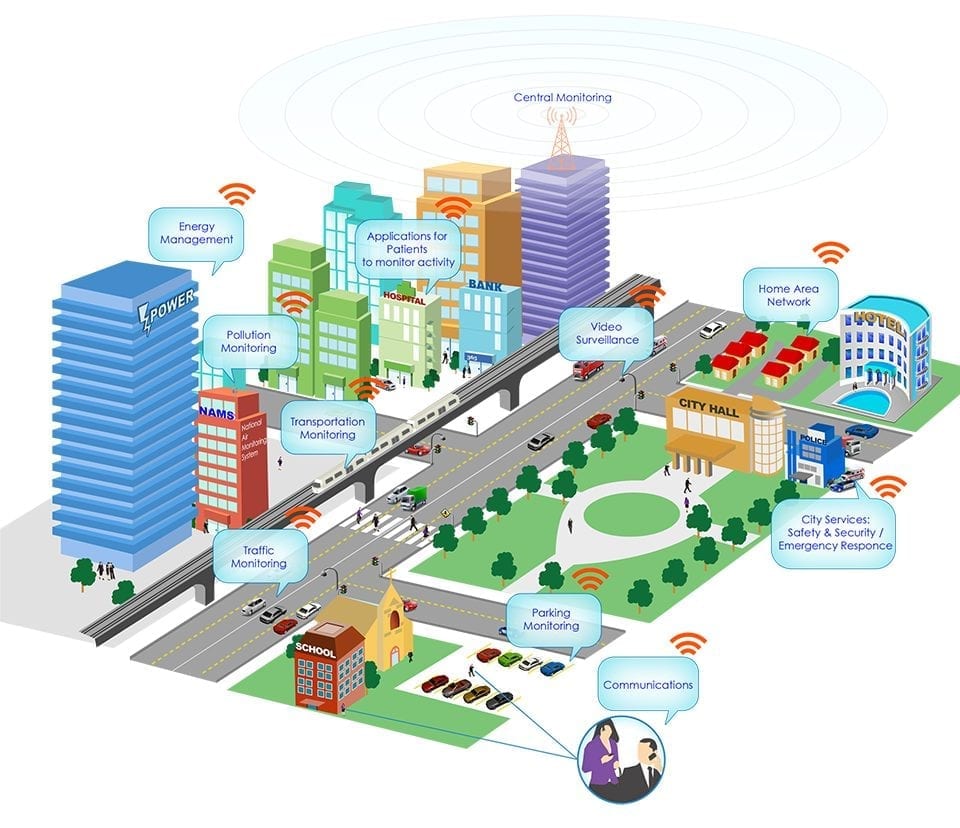
    IBM is extending its annual Smarter Cities Challenge, a worldwide grant program that provides pro bono consulting to assist cities in improving the critical services they provide to citizens.

    For this next round, the company is seeking proposals from city leaders that could benefit greatly from IBM’s technology such as data analytics, cloud computing, cognitive computing, and comprehensive weather data.

    Leaders of cities or regional governments must submit brief statements of interest to IBM by February 24. Ten grant recipients for pro bono consulting engagements will be announced in late spring.

    Smarter Cities Challenge grant recipients receive a team of five or six IBM employees who are deployed to the country for three weeks to work closely with local government and community leaders.

    They analyze the data they gathered and use its insights to offer support that can take the form of strategic recommendations, data-driven tools, implementation roadmaps and workshops, and staff training.

    IBM’s Smarter Cities Challenge has deployed 800 of IBM’s top employee talent to more than 130 cities worldwide in the past six years to improve inequities and disparities.

    “Cities around the world are under enormous, daily pressure to tackle growing challenges with ever more limited resources,” said Jennifer Crozier, IBM’s vice president of Global Citizenship Initiatives.

    “Often, they lack access to the most innovative technology solutions and insights that could be applied to solve those problems and improve services. We look forward to sharing IBM’s data and analytics and cognitive computing expertise to help make meaningful and lasting improvements.”

  • Vietnam vows to cut down the time for customs clearance

    Vietnam vows to cut down the time for customs clearance

    According to the World Bank, Viet Nam’s commercial transactions across borders index, a measurement of time and cost in import and export activities, has fallen for two consecutive years (2014-2015) due to inadequate management.

    A study conducted by the Viet Nam Chamber of Commerce and Industry and the General Department of Viet Nam Customs showed that the total time for customs clearance takes about 28 per cent of the time while the other 72 per cent is spent on other procedures and management including specialised checks on imports and exports.

    These are indications that specialised management for imports and exports has prolonged the time for customs clearance and increased costs for enterprises.

    In your opinion, what are the main causes then?

    The first thing I should mention is cumbersome legal documents on customs checks. In addition, many goods have no data provided on them for commercial transactions across borders index.

    Coupled with that is that most specialised checks are done by hand or the application of modern information technology to dossiers classification or information exchange between Vietnamese government agencies.

    What is the key reason for increasing the time for customs clearance for specialised checks in our country four times slower than that of other country?

    Before 2016, in our country about 30-35 per cent of goods had to go through specialised checks at customs while in other countries, the rate was just from 5-8 per cent. That is one of the reasons why Resolution 19/2016 has laid emphasis on improving the business environment and national competitive capacity.

    The government’s resolution sets specific targets for each year. For example by the end of last year (2016) only 15 per cent of specialised goods should have been checked and eight per cent by 2020.

    To achieve these targets, it is imperative for the customs sector to make a change in their management methods and in their specialised checks. To achieve these targets, the customs office must practice risk assessments and common international customs clearance procedures, including using IT in information sharing between concerned agencies and the customs office.

    To shorten the customs clearance time, many countries perform customs checking in factories. Can we do that in Viet Nam?

    Checking goods right at factories is common in many countries now.

    With this method, instead of checking the goods at the border gate, representatives of the importing countries go to exporting countries and check the goods in the factories. After finishing their checks on the goods quality, pattern, production chains and more, if they meet required standards, the goods will be certified to go through customs procedures.

    Of course, some international practice and norms will be applied, including risk assessment. However, for imported goods coming from countries with higher standards than ours like the US, EU, Japan or South Korea they will enjoy special treatment when they go through customs. Vice versa, for countries that have often encroached upon our laws, they will be subject to tight checks.

    The PM has set a target that by 2020, all import and export goods must not take more than five days to go through customs clearance. Is this feasible?

    If Government Resolution 19/2017 is implemented, by late 2017 customs clearance will take on average 160 hours. So to achieve the target set by the PM by 2020 for five days (120 hours) customs clearance will be a big challenge.

    To achieve this target, all concerned ministries and sectors have to review and revise 362 legal documents, of which 87 of them have to change in the next few months. Of course, the task is demanding. But we’ll try to do our best to meet the target.

  • Thailand’s first 5G demo achieved 5.7Gbps speeds

    Thailand’s first 5G demo achieved 5.7Gbps speeds

    The first live 5G end-to-end demonstration in Thailand using Ericsson’s 5G test bed and 5G-ready core achieved 5.7Gbps throughput and 3 milliseconds latency.

    The three-day showcase was held in late January, and Ericsson said the demonstration marks a step towards realizing the Thai government’s vision of a Digital Thailand.

    “We expect to have broadband connectivity everywhere in Thailand, both big cities and over 75,000 villages nationwide by 2018,” commented Takorn Tantasith, secretary general of regulator NBTC.

    “Along with the fixed internet deployment, we plan to release more spectrum bandwidth of 380 MHz by 2020, which will add to the existing 420 MHz already allocated to the telecommunications industry.”

    Nadine Allen, Head of Ericsson Thailand, disclosed that according to Ericsson’s Digital Thailand report, Thai consumers are ahead of, or on par with, global peers when it comes to embracing ICT and they are ready for the Internet of Things.

    She said the multi-gigabit speeds afforded by 5G will ensure that the technology is a viable and cost-effective alternative to residential fiber connections.

    Other technology innovations presented in the showcase include advancements in Radio Network Evolution, Industrialized Cloud, Connected Industries, and Digital Business Solutions.

  • Thai start-up sector tipped to double in value as support grows

    Thai start-up sector tipped to double in value as support grows

    The size of the Thai start-up sector is expected to double this year, with especially high growth potential seen in the areas of fintech (financial technology) and tech for the healthcare, logistics and retail industries.

    Meanwhile, US tech giant Cisco is investing more than US$100 million (Bt3.5 billion) to support start-ups in Asia-Pacific.

    The Thailand Tech Start-up Association (TTSA) has predicted that the overall value of the start-up market in the Kingdom will double to more than Bt20 billion, with over 600 start-ups by the year’s end.

    The main factors driving this growth are people’s increasing access to information technology, government support for innovation and start-ups, and a rise in venture capital and private-sector support.

    Oranuch Lerdsuwankij, chief executive officer of start-up website Techsauce, said the sector would expand strongly this year due to collaboration and support from the private sector and government bodies such as the Bank of Thailand (BOT).

    The central bank has issued a consultation paper on “FinTech Regulatory Sandbox Guidelines”, with the purpose of the regulatory sandbox being to allow business operators to test their financial products or services in a live but limited environment, without being fully subject to all the requirements that are normally applicable.

    Through the sandbox, the BOT aims to facilitate new financial innovation while still ensuring consumer protection and financial-system stability.

    The central bank’s regulatory sandbox can offer its fintech products or services to consumers within the limited scope as approved by the BOT under somewhat lenient rules, as specified by the bank on a case-by-case basis.

    Start-up contests and events will also play an important role in driving the growth of start-ups as a whole, Oranuch said.

    Moreover, the banking industry this year will provide much more direct investment or create limited partnerships in fintech start-ups, she said, adding that the arrival of Alibaba in Thailand is another important factor that will benefit small local fintech developers.

    Corporate businesses such as banks and other financial institutions will increasingly develop accelerate programmes to support start-ups, and work with fintech start-ups to seek ways to provide better financial services to support their customers’ lifestyles and behaviour, the CEO said.

    The TTSA will also ask the government to support start-ups in terms of a capital-gains tax exemption to drive the growing sector as a whole.

    Vatsun Thirapatarapong, managing director of Cisco Systems (Thailand), said Cisco was investing over $100 million in Asia-Pacific start-ups with good potential via a venture-capital operation named Monk’s Hill Ventures (MHV).

    Besides investing in countries such as China, Singapore and Malaysia, MHV has invested in two Thai start-ups, one in the field of logistics and the other in gaming.

    The company will utilise a start-up’s solution and product, as well as bundled start-up services, application and platform, with Cisco’s own products to expand the business both locally and on the international market, the MD explained, adding that Cisco had started to invest in Thai start-up businesses a couple of years ago.

    Acting as an enabler

    “We want to see start-ups that utilise information technology to support disruptive business, such as in the logistics area by developing an application to support logistics optimisation. We are an enabler to support start-ups in terms of training and consulting, and as a marketing arm,” Vatsun said.

    Wiwat Wongwarawipat, president of InStep group – a product development services firm – said there was high growth opportunity for start-ups in Thailand catering to the financial, healthcare and retail industries, since user behaviour was rapidly changing in terms of people accessing new technology to support and improve their quality of life.

    Wiwat has personally invested in four Thai start-ups in the fintech and health tech areas.

    Moreover, his company is planning to set up a venture-capital operation to support local start-ups in in high-potential areas, including fintech, health tech and innovative tech for the logistics and retail industries.

  • Sriwijaya Air Opens Direct Flight to Eastern Indonesia

    Sriwijaya Air Opens Direct Flight to Eastern Indonesia

    Sriwijaya Air this year expands its market share to eastern Indonesia by opening a direct flight from Surabaya to Jayapura in Papua. Sriwijaya Air commercial director Toto Nursatyo said that eastern regions of Indonesia have a huge potential even more so because the government has planned to step up development in the regions.

    He added that Sriwijaya also pointed to a trend in Indonesia’s aviation industry which has grown 15 percent in the past few years, way above other countries with less than 5 percent growth. The airline plans to serve 4 flights a week in Surabaya-Jayapura route with a load factor target of 85 percent. The ticket for a flight will cost starting from Rp1.4 million.

  • Thai airports feel impact of reduced ‘illegal’ Chinese tours

    Thai airports feel impact of reduced ‘illegal’ Chinese tours

    According to the Airports of Thailand (AOT) the country’s aviation industry performance only improved ‘slightly’ between October-December 2016 (Q1 FY2017), due to a reduced number of Chinese tourists visiting through ‘illegal tours’.

    During the period, concession revenue grew by just +2.68% year-on-year to Baht 3,302.71m (US$94m).

    “After the repressive measures against illegal tours by the cooperation between the Thai government and the Chinese government, Chinese tourists reduced consequently,” said the airports operator.

    “Therefore, tourism industry didn’t grow as fast this quarter because the Chinese are the largest group of foreign tourists visiting Thailand.”

    GROWTH OF MIDDLE-INCOME PASSENGERS

    However, ‘a more stable domestic political situation’, the government’s domestic and international tourism stimulus policies, and the rapid expansion of low cost airlines, increased new demand for air travel for middle-income groups, says AOT.


    The effects of the aforementioned ‘repressive measures’ were also compensated by increases in other foreign travellers, especially Russian and European passengers.

    “The consequence of the repressive measures against illegal tours by the government is expected to affect the volume of Chinese tourists for a short period of time,” adds AOT.

    The total number of passengers served by Thai airports reached 30.69m in the October-December 2016 period; a 6.11% increase compared to the same period last year. International traffic made up the majority of total traffic at 16.52m international passengers.

    Net profit for the three-month period ended 31 December, 2016 reached Baht 5,084.22m (US$145m), up +9.91% compared to the same period last year.

    INCREASE SALES OR SERVICES REVENUES

    Revenues from sales or services increased by Baht 798.77m or 6.76% as a result of an increase in aeronautical revenue of Baht 254.32m or 3.72% and non-aeronautical revenue of Baht 544.45m or 10.93% because of an increased number of flights and passengers.

    Non-aeronautical revenue of Baht 5,526.73m increased by Baht 544.45m or 10.93% comparing to the same period last year due to an increase in service revenues of 31.02% attributed to advance check in costs to passengers.

    “This was because AOT installed Advance Passenger Processing System (APPS)on 1 December, 2015.

  • BetaSmartz automated investment opens Hong Kong office

    BetaSmartz automated investment opens Hong Kong office

    BetaSmartz, the B2B automated investment platform for all sizes of investors, from institutional to retail, today announced it had opened offices in Hong Kong.

    BetaSmartz offers ‘hybrid ‘ digital investment or ‘robo’ advice that combines automated and face-to-face financial advice. Newly appointed Managing Director Asia, Zak Allom, said this model had been well received since its launch in 2015, with several clients now live including two in the U.S.“Robo has been a big buzzword, but for the most part the actual delivery hasn’t been different from the automated financial planning software we’ve been used to since the 90s,” he said. “BetaSmartz is much more than a sexy front end with limited, prescriptive ETF portfolios behind it. Every BetaSmartz investor’s plan is uniquely customised using artificial intelligence, deep data and machine learning. We work with individuals and their advisers, giving clients of every size access to advice and products that were previously only available to ultra-high net worth and institutions.”
    BetaSmartz will run sales and service from the Hong Kong office, complementing its headquarters in Singapore. The new office will help companies seeking sophisticated robo-advice solutions to launch or extend their businesses in Asia.

    “Asia is the most exciting market globally for us,” said BetaSmartz founder John James. “Accessing sound financial advice here can be challenging if you have less than a million US dollars. Our digital advice platform levels the playing field and enables banks and wealth managers to maintain their roles as the key relationship holder in delivering advice across their whole client base.”

    BetaSmartz technology, based on six decades of Nobel prize-winning research and industry expertise, utilises a product agnostic approach to create portfolios that equal the performance and sophistication of those in use at global fund managers. The open-architecture, cloud-based platform is flexible, scalable and efficient enough to suit institutions, adviser groups, pension funds and individual retail investors.

    Mr James said BetaSmartz aimed to be the global provider of choice for those looking for a white-labelled digital advice solution. “By applying institutional-grade techniques to a flexible technology platform, we’re democratising quality advice and opening access to top tier investment solutions to meet the demands of Asia’s growing middle class.

    “It’s a solution to the buy-vs-build conundrum for large institutions, and enables smaller ones to offer world-class technology to clients under their own brand,” he said. “It’s very well suited to banks, who can offer a much wider and more tailored range of portfolios to customers at a lower cost. Fund managers can provide their own model portfolio delivery and use BetaSmartz as an alternative distribution channel.”

  • Tourists give local businesses a big boost

    Tourists give local businesses a big boost

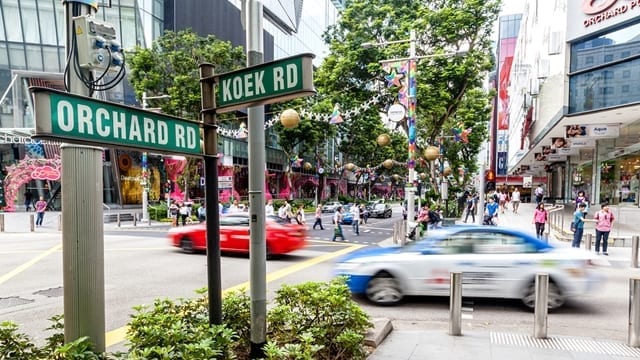
    Tourism spending was a silver lining for the struggling retail industry last year. Tourists spent $4.3 billion on shopping between January and September. That is nearly 50 per cent more than in the same period in 2015, according to figures released yesterday by the Singapore Tourism Board (STB).

    And local businesses are benefiting. These visitors are turning to “mass market” goods such as confectionery, gifts and souvenirs, and fashion and accessories, as opposed to globally available luxury items, STB said.

    One shop that has been pulling in the crowds is local souvenir shop Supermama.

    “Souvenir” brings to mind run- of-the mill keychains and magnets, but the shop, which opened in 2011, sells nothing of that sort.

    Instead, stocked at its four outlets are Singapore-themed porcelain items, with designs such as the HDB corridor and tembusu tree.

    Founder Lee Meiling said today’s savvier tourists avoid the “usually tacky souvenirs created to get a quick buck from the tourist”.

    “The visuals are designed by local Singapore designers telling very local aspects of the Singapore culture and lifestyle,”she said.

    Some items come with a write-up on the Singapore icons they feature. Tourist sales make up between 20 per cent and 35 per cent of sales, an increase from the 15 per cent two years ago, added Ms Lee.

    Explaining visitors’ interest in home-grown brands, deputy chief executive of STB Melissa Ow said during a press briefing yesterday: “People want to have some affinity with the destination, so something that is going to be intrinsic and unique, and speaks to the attributes of the destination will, I think, continue to have a lot of value among our visitors.”

    Another retail store, Megafash, which carries more than 600 independent local brands, has also gained traction among tourists, which comes as a bit of a surprise to the company, as it did not target this group.

    Items sold by the outfit include plates that are designed with recipes for local dishes such as nasi lemak, “rainbow agar agar” doorstops, and T-shirts with Singlish phrases.

    Several of its six stores are near tourist areas. The outlet in Tanjong Pagar shopping mall 100AM, for example, is next to a hotel.

    The Farm Store – which sells items such as chilli-crab aprons and supplies these items to other shops, including Megafash, Naiise and Tangs at Tangs Plaza – has seen a 30 per cent year-on-year increase in tourists looking for “uniquely Singapore” souvenirs.

    Head of retail and marketing at Singapore Polytechnic’s business school Amos Tan said such Singapore brands tend to do well because consumers are looking for novelty.

    “Consumers today, they have been there, done that, travelled all over, and seen the global brands elsewhere. So they look for something that is truly Singaporean, and these shops offer them.”

  • What do Vietnamese people love to buy online?

    What do Vietnamese people love to buy online?

    In contrast, fast-moving consumer goods including cosmetics, food and other household products have been slower to gain in popularity among internet shoppers. For these, Vietnamese people still prefer to go to stores and seek advice from shop assistants.

    With Vietnam becoming more “connected” and nearly half of the population with easy access to the internet, Vietnamese purchasing habits are changing.

    “The online retail ecosystem is fast evolving. The whole retail experience is changing. Today’s shoppers are incorporating digital touch points along the entire path to purchase,” said Roberto Butragueño, associate director at Nielsen Vietnam.

    According to the survey, customer loyalty is varied. More than half of respondents who had purchased travel services or books/music/stationery online admitted they would buy those more often online than in store. Event tickets, which attract only one-fourth of online customer, have become the favorite destination for second time purchasing.

    However, once an online shopper does not necessarily mean always an online shopper. The story is different for fashion, electronics and cosmetics.

    The survey’s findings are based on more than 200 respondents with online access in Vietnam. Survey responses are based on claimed behavior, rather than actual metered data.

  • China raises retail fuel prices

    China raises retail fuel prices

    China will raise the retail prices of gasoline and diesel for the second time this year as international oil prices increase, the country’s top economic planner said Tuesday.

    Both gasoline and diesel prices will rise by 50 yuan (7.3 U.S. dollars) per tonne from Wednesday, according to the National Development and Reform Commission (NDRC).

    Oil prices on international markets have risen since the Organization of the Petroleum Exporting Countries (OPEC) delivered more than 90 percent of the output cuts they agreed last year. However, higher output in the United States and other oil producers will lead to oversupply in the short term, according to the NDRC price monitoring center.

    International oil prices will continue to fluctuate between 50 and 60 U.S. dollars per barrel in the first quarter, the center predicted.

    Under the current pricing mechanism, if international crude prices change by more than 50 yuan per tonne and remain at that level for 10 working days, the prices of refined oil products such as gasoline and diesel in China will be adjusted accordingly.