Author: Mei Ling Tan

  • West Elm owner enters South Korean market with new franchise partner

    West Elm owner enters South Korean market with new franchise partner

    US-based Williams-Sonoma, the business behind furniture brand West Elm, has confirmed that it has agreed a new franchise partner with Hyundai Livart Furniture Co. Ltd, expanding its South Korean presence.

    Hyundai Livart, a Korean furniture manufacturer and distributor and an affiliate of Hyundai Department Store Group (HDG), will have exclusive rights to operate stores, shop-in-shops, and e-commerce for brands in the Williams-Sonoma, Inc. portfolio including Williams Sonoma, Pottery Barn, Pottery Barn Kids and West Elm.

    Over the next 10 years, Livart is expected to open more than 30 stores in South Korea across four Williams-Sonoma, Inc. brands, with the first scheduled to launch this spring, which include a West Elm outlet at the Hyundai City Mall Garden Five Mall and a Williams Sonoma store at the HDS Mokdong branch.

    Laura Alber, president and CEO of Williams-Sonoma, Inc, said: “We are pleased to announce our latest strategic global expansion with our new franchise partner, Livart. Livart’s market expertise and extensive retail footprint in South Korea will enable us to deliver the same high quality of service that we provide in the United States and around the world.”

    Hwa-Eung Kim, representative director and CEO of Hyundai Livart, added: “This franchise agreement will help strengthen our competitive advantage in the domestic premium home furnishings market by complementing existing Livart brands, and we plan to leverage our diverse distribution channels to expand strategically through Seoul and other major cities.”

  • Progress on bringing Apple Pay to South Korea ‘still in an early stage’

    Progress on bringing Apple Pay to South Korea ‘still in an early stage’

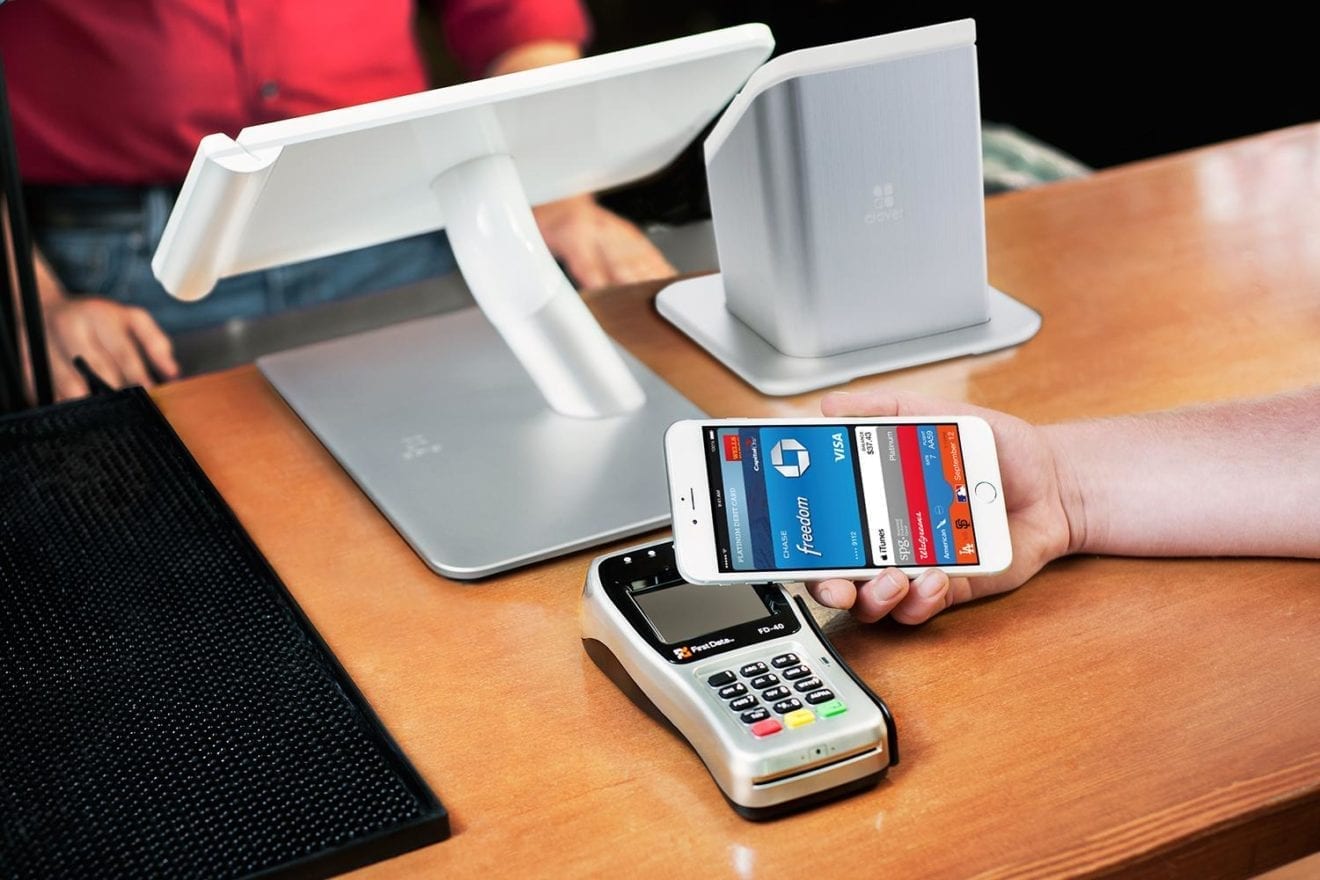
    Though Apple is working on launching Apple Pay in South Korea, the mobile payments system is still some ways out —and the company has yet to hold a critical meeting with the government, according to a local report.

    A legal director and a senior counselor from the company visited Korea in November to talk with the country’s financial officials. At the time however, Apple’s team is only said to have explained how Apple Pay works —including the tokenization of transactions, for security purposes —while promising to partner with local credit card firms.

    To actually launch in Korea, Apple will need to meet with authorities again to determine whether it should be registered as an electronic financial business operator. No such meeting is scheduled so far.

    On the private side, meanwhile, an official with one local card company told the publication that “work with Apple is still in an early stage.”

    This stands in contrast with Google, which is expected to launch Android Pay in Korea before Apple can get a foothold. The company is not only said to be planning a meeting on the electronic financial business operator issue, but working with card companies like KB Kookmin, Shinhan, Lotte, and Hyundai on online and NFC-based payments.

    It’s believed that Google will probably focus on online transactions first, as most Korean retail stores reportedly lack NFC-ready sales terminals. The situation has in fact given Samsung an edge, since Samsung Pay can be used at any terminal with a magnetic card reader. The firm isn’t registered as an electronic financial business operator, though, since it doesn’t actually generate money from transactions.

    Apple Pay is now accepted in a dozen countries. Apart from the U.S. this includes places like Australia, Canada, China, France, Russia, and Japan. Taiwan has been confirmed as an upcoming market, but hints of a German launch have yet to solidify.

  • Singapore retail sales up 0.4% in December

    Singapore retail sales up 0.4% in December

    Singapore’s retail sales rose 0.4 per cent in December 2016 compared to the same month in 2015, mainly due to higher sales of medical goods & toiletries.

    Stripping out sales of motor vehicles, retail sales went up by 0.3 per cent, the Department of Statistics said on Wednesday.

    Compared to November, the seasonally adjusted retail sales figure decreased by 1.9 per cent in December. Excluding motor vehicles, they rose 0.7 per cent.

    Notably, retailers of medical goods & toiletries reported 9.9 per cent increase in sales year on year. Surprisingly, motor vehicle sales rose only 0.9 per cent year on year.

    On a seasonally adjusted basis, motor vehicles sales recorded a dip of 11.9 per cent compared to November. Retail sales of computer & telecommunications equipment and department stores also fell 6.8 per cent and 2.2 per cent respectively over the same period.

  • AMD Ryzen processor box art revealed by Thai retailer

    AMD Ryzen processor box art revealed by Thai retailer

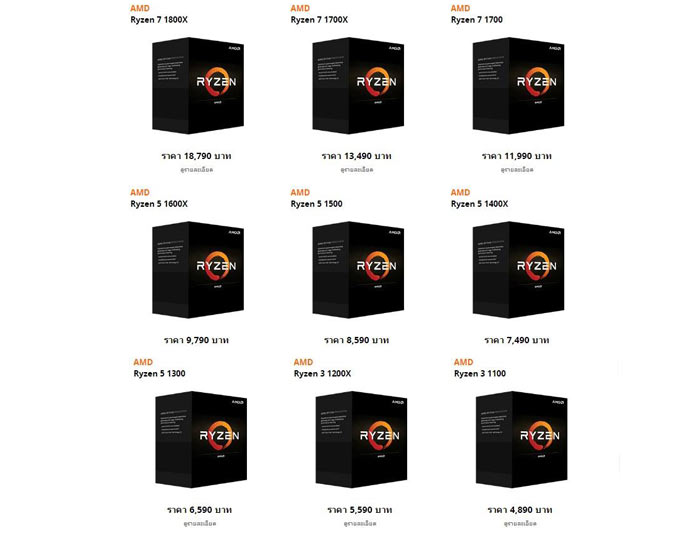
    Another day, another AMD Ryzen leak / rumour / news morsel… or two. Particularly interesting today we see what is claimed to be an AMD Ryzen box art matrix from Thailand. The web images don’t only show the products which will be soon on sale but the prices, in Thai Baht naturally. In a similar vein a Belgian online retailer has let slip its prices for the AMD Ryzen 7 range of CPUs.

    Looking at the single box art close-up we have available, above, via WCCFTech, the box design is rather simple and mainly black. Just because these have appeared on a Thai retailer site doesn’t mean they are representative of what AMD will ship either. It’s hard to know if the retailer images are overcompressed or just shoddily put together as placeholders, maybe by the retailer itself.

    Perhaps more important than the box images, if they are genuine, is another price indication at this time. Looking over the nine CPUs and prices in Thai Baht we see a price range from the Ryzen 7 1800X at 18,790 Baht (£430), down to the Ryzen 3 110 at 4,890 Baht (£112). Its possible to click through the above image matrix on the Thai retail site and get more details. You can find a full set of these pictures in the source article, one is included below for reference.

  • Krungsri gears up for return of investors from Japan

    Krungsri gears up for return of investors from Japan

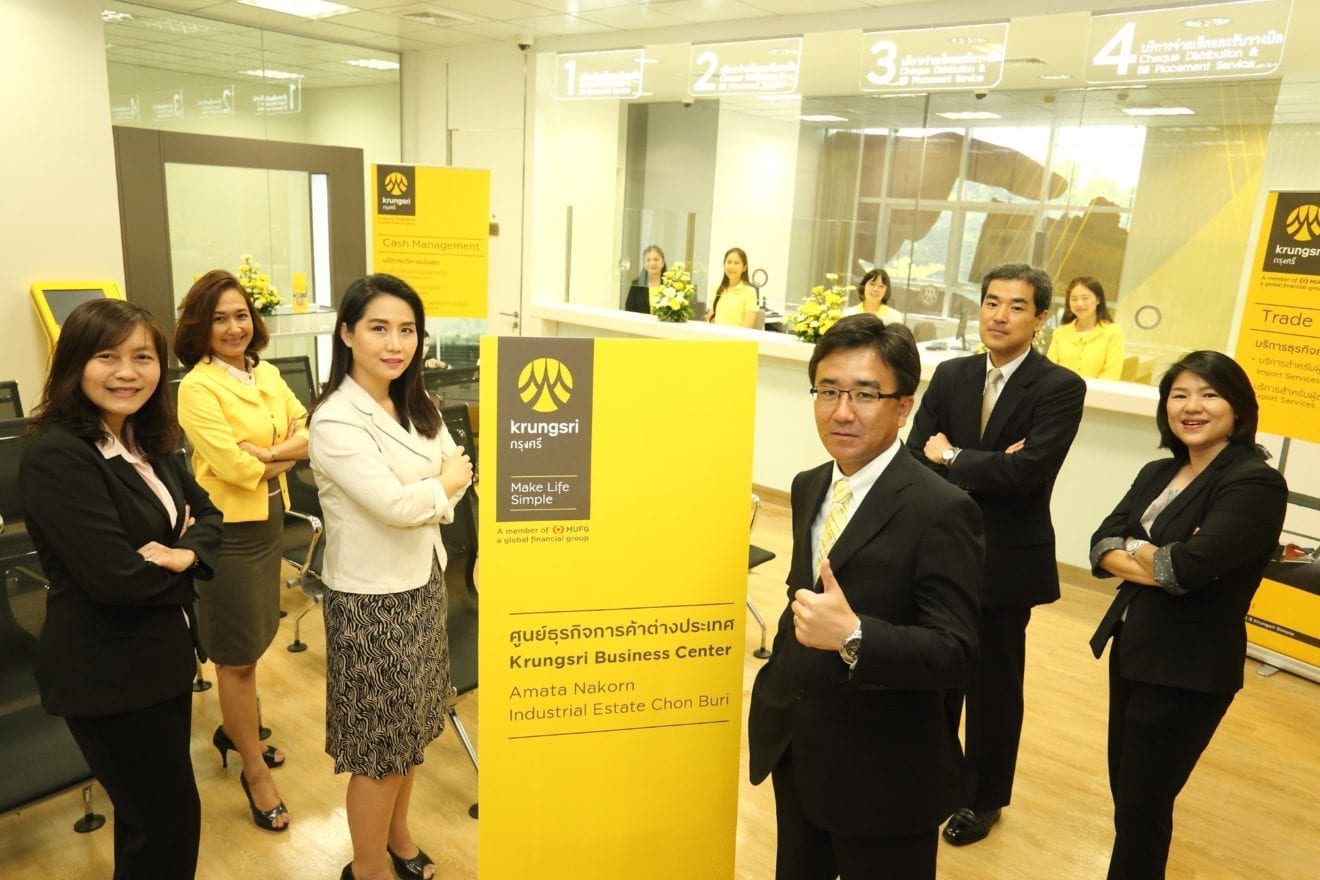
    Bank of Ayudhya, commonly known as Krungsri, is reinforcing its commercial banking after seeing a return by Japanese companies considering investment in the Kingdom in light of the government’s “Thailand 4.0” industrial goals.

    Pornsanong Tuchinda, head of commercial banking, said yesterday that healthcare and wellness and real estate were currently the priority focus of Japanese businesses looking to invest in Thailand again since the government announced the Thailand 4.0 industrial-development policy.

    The actual level of new Japanese investment will be seen when these companies have a clear picture of development plans under the policy, he added.

    Japanese companies invested in Thailand have been a crucial part of the customer base for Krungsri’s commercial-banking operations since 2015, reflecting the successful integration between the Thai bank and BTMU (Bank of Tokyo-Mitsubishi UFJ) Bangkok Branch, which is part of Japan’s MUFG (Mitsubishi UFJ Financial Group), he said.

    Pornsanong said Japanese investors were currently eyeing healthcare and wellness business in Thailand because of this country’s increasingly “greying” population.

    Japan has expertise in healthcare and wellness in light of its own ageing population, while real estate is another business that investors are keen on because of its being tourism-related.

    The bank will offer investors total financial solutions, catering to corporate customers that may not only require financing but also financial advice and business-matching services, he said, adding that Krungsri would therefore focus more on how to deliver a package of solutions to such clients.

    A number of medium-sized Thai hospitals also are interested in expanding their healthcare and wellness business, presenting a further opportunity for the bank’s commercial-banking arm, he said.

    Last year, the unit enjoyed loan growth of 11 per cent, with outstanding lending rising to Bt642 billion thanks to the financing of major deals involving Siam City Cement, which acquired a cement business in Sri Lanka; Central Group, which purchased a retail business in Vietnam; and Thai Union Group, which acquired a business in the European Union, Pornsanong said.

    Excluding those large deals, loan growth was 7-8 per cent.

    This year, while the bank’s commercial-banking arm targets 5-per-cent growth due to fewer big deals on the horizon, it should still outpace its peers thanks to the recovering Thai economy and Thailand 4.0-related business activity, he predicted.

    Moreover, with the unit’s customer base sufficiently large for the provision of improved total solutions, it wants to give more importance to the quality of customers and offer value-added solutions to its current clients, he explained.

    Commercial banking at Krungsri covers corporate customers with annual sales revenue of more than Bt1 billion, and small and medium-sized enterprises with annual revenue below that level.

    Based on the loan-growth target of 5 per cent, most lending this year will be contributed by medium-sized enterprises, a segment in which the bank has witnessed lending demand, he said.

    “These firms [mid-sized enterprises] are more confident in the Thai economy, and many of them are in retail, where there is purchasing power but consumer sentiment |has not yet returned. If sentiment improves, purchasing power will be released and SMEs will benefit.

    “On the other hand, most corporate customers are not requiring new lending at present, as they first want to see how the global trade situation settles,” the commercial-banking head said.

  • Aveda Malaysia launches in Kuala Lumpur

    Aveda Malaysia launches in Kuala Lumpur

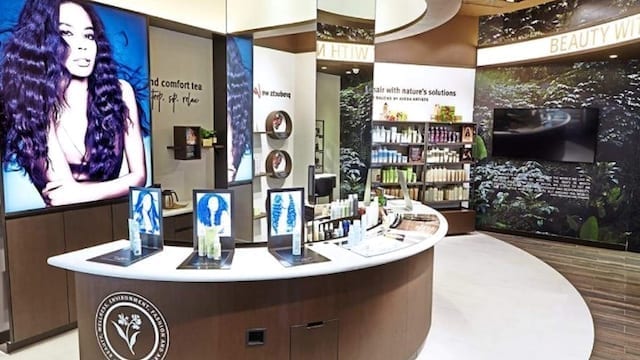
    Aveda Malaysia has opened a store in Kuala Lumpur, its second outlet in Asia Pacific.

    At Pavilion Kuala Lumpur, the store has a new retail concept and is described by the US beauty product company as an “experience centre”.

    Instead of run-on shelving and glass store front, the outlet features six “experience zones” where consumers can explore products such as hair care for either men and women, skincare and bodycare.

    Founded by Horst Rechelbacher in 1978, Aveda is now owned by Estee Lauder Companies with its headquarters in Minneapolis, Minnesota.

  • Double debut for ‘& Other Stories’

    Double debut for ‘& Other Stories’

    H&M brand & Other Stories will have a double debut in South Korea next month.

    It is opening its first two stores for Asia in Seoul – in Ajotei and Starfield Henan – following stablemate Cos and H&M itself into Korea.

    Founded in 2013, & Other Stories opened in seven cities in Europe, followed by North America.

    & Other Stories MD Samuel Fernström says he is happy to be able to advance the brand into Asia.

    The brand offers women’s shoes, bags, accessories, beauty and ready-to-wear.

  • Profits rises for Yum China Holdings

    Profits rises for Yum China Holdings

    Yum China’s full-year operating profit of US$640 million was up 31 per cent led by margin expansion and restaurant openings.

    Its CEO describes it as a “momentous” year for the group, licensee of Yum! Brands in Mainland China. It has exclusive rights on the mainland to KFC, Pizza Hut and Taco Bell, which opened its first restaurant in China at the end of the year. Yum China also owns the East Dawning and Little Sheep concepts outright.

    Total system sales for the year grew 5 per cent, including growth of 6 per cent at KFC and 3 per cent at Pizza Hut Casual Dining, excluding foreign currency translation (F/X).

    Same-store sales were flat, with an increase of 3 per cent at KFC offset by a decline of 7 per cent at Pizza Hut.

    Yum China opened 575 restaurants during the year, representing 5 per cent growth, taking its total to more than 7500 outlets.

    Currency impact

    While retail tax structure reform helped profit growth, this was negatively impacted to the tune of $36 million by foreign currency translation. Excluding F/X and special items, operating profit grew 37 per cent.

    For its fourth quarter, Yum China’s total system sales grew 4 per cent, including growth of 4 per cent at KFC and 6 per cent at Pizza Hut, excluding F/X.

    Same-store sales were flat, rising 1 per cent at KFC and offset by a 3 per cent decline at Pizza Hut.
    The group opened 302 restaurants during the quarter.

    Foreign currency translation negatively impacted operating profit by $5 million.

    CEO Micky Pant says Yum China became an independent, publicly traded company while simultaneously improving its business performance and investing for future growth.

    “We continue to focus on our long-term growth formula: new unit development, same-store sales growth, and continued restaurant margin improvement. Right now, our top priority is consistently delivering positive same-store sales growth.”

    Digital engagement

    There was a focus on product innovation during the year, as well as restaurant refurbishing and digital engagement with customers.
    Pant says it was a groundbreaking year in digital and delivery.

    “Our loyalty programs have more than 80 million members –  ranked number one in the restaurant industry worldwide in terms of number of members.

    “Total delivery sales reached about $700 million, and we were number one among restaurant operators in terms of online sales in China. Cashless payment accounted for about 30 per cent of our company sales.”
    Pant says this year marks the 30th anniversary of the launch of KFC in China, and he believes most the company’s restaurants in China are yet to be built.

    Members in the loyalty programs grew to more than 60 million for KFC and more than 20 million for Pizza Hut.

    Mobile payments reached about 17 per cent of company sales for the year, while cashless payment methods were used for more than $2 billion in company sales.

  • Indonesia to attend International Yoga Festival in India

    Indonesia to attend International Yoga Festival in India

    Through its Wonderful Indonesia brand, Indonesia will promote its vast tourism potential at the annual International Yoga Festival, due to be held in the Indian city of Rishikesh on March 1-7, 2017.

    To this end, the Indonesian Tourism Ministrys Deputy for International Marketing I Gde Pitana will be sent to head a delegation attending the event, the ministry noted in a press statement here on Tuesday.

    Pitana said promoting the archipelagos tourism sector in this “City of the Divine” of India is a strategic move, as Indonesia also has several interesting destinations for practicing the art of yoga, and India is a potential market, which has yet to be tapped optimally.

    At present, with its growing number of outbound tourists, India has become an important contributor of foreign visitors to Indonesia, he pointed out.

    Several factors that may have attracted them to visit Indonesia are related to the two nations cultural similarities and the archipelagos diverse tourist destinations. The increasing trend of Indian travelers visiting the archipelago is also driven by Garuda Indonesias Mumbai-Jakarta flight.

    With its diverse tourist destinations, Indonesia has plenty to offer to Indian travelers. Hence, it is necessary to implement various promotional strategies to attract more outbound tourists from the country, Pitana stated.

    “One of our efforts is promoting the Wonderful Indonesia brand in India,” he revealed.

    For the International Yoga Festival, Indonesia is sending a delegation, setting up a pavilion, as well as displaying and distributing the Wonderful Indonesia promotional materials, Pitana remarked.

    The Tourism Ministry is offering support to singer Ayu Laksmi from Balis Svara Semesta (Sound of the Universe) to perform at the worlds largest yoga festival in which yoga lovers from 110 countries are expected to participate.

    Laksmi and Semesta will perform at the opening and closing sessions of this annual event. During the festival, Indra Udayana, an artist and envoy of peace, and yoga instructor Anjasmara will also join the performers.

    “This event is expected to help boost the image of Indonesias tourism industry to offer greater exposure in India. This is indeed a good opportunity to attract more outbound tourists from India and other countries,” he noted.

    Meanwhile, the Tourism Ministrys Deputy Assistant of the Asia Pacific Market Development Vinsensius Jemadu stated that an awareness campaign package of the Wonderful Indonesia brand will be prepared for Indias electronic media.

    “We shall also dispatch a Wonderful Indonesia team and prepare attractive souvenirs for the visitors at the Indonesia Pavilion,” he noted.

    Bali will be highlighted at the event, as it is the main destination offered to Indians who have known the resort island as a popular place for yoga and spas.

    Promoting the Wonderful Indonesia brand in India is expected to strengthen the positive image of the archipelagos tourism sector and to attract more Indian travelers to visit Indonesia, Jemadu remarked.

    The Indonesian Tourism Ministry has noted that the biggest contributors of foreign tourists to Indonesia in 2015 were Singapore, with 1,571,982 visitors; Malaysia, with 1,247,270; China, with 1,141,330; Australia, with 1,051,141; Japan, with 528,465; South Korea, with 359,468; India, with 293,415; the UK, with 280,198; the US, with 263,429; and Taiwan, with 211,528.

    Referring to the countries of origin and number of foreign tourist arrivals during the period between January and October 2016, the five main contributors were Singapore, with 1,177,695 visitors; China, with 1,221,422; Australia, with 1,011,077; Malaysia, with 989,739; and Japan, with 434,352.

    As one of the largest economies of the G-20, India is regarded as a huge potential source of foreign tourists.

    The Ministry of Tourism is targeting 15 million international tourist arrivals in 2017.

  • Indonesia urges Facebook to open local office

    Indonesia urges Facebook to open local office

    The Communications and Information Ministry has urged Facebook to open a proper local office to enable it to adequately tackle complaints about fake news and negative content that spreads through the social media platform.

    Minister Rudiantara conveyed the request during a meeting with the Asia Pacific-based delegation led by Facebook’s head of global policy management, Monika Bickert, on Tuesday, saying that the existence of an official office in Indonesia would enable the firm to better respond to content complaints and improve communication with the government.

    Facebook, which has up to 96 million users in Indonesia, runs a small local representative office, while its regional office is located in Singapore.

    “The minister Rudiantara asked Facebook to step up its service agreement in Indonesia and suggested that a good way to ensure better quality service was to open up an official office here,” said the ministry’s director general for applied informatics, Semuel Abrijani Pangerapan.

    “This way, it will be able to familiarize itself with the Indonesian perspective and cultural context.”

    The Facebook logo is displayed on an iPad in Philadelphia. Facebook is taking new measures to curb the spread of fake news on its huge and influential social network, focusing on the “worst of the worst” offenders and partnering with outside fact-checkers to sort honest news reports from made-up stories that play to people’s passions and preconceived notions.(AP/Matt Rourke)

    Semuel added that while Facebook would be responsible for content management, the legal process in relation to the content itself would be carried out by the police and relevant institutions.

    Posts promoting terrorism, for example, will require consultation and assessment by the National Counterterrorism Agency (BNPT).

    Both the public and the ministry’s monitoring team are able to flag inappropriate content.

    Fake news, including those related to the racially charged Jakarta gubernatorial election, and overall air of discrimination exhibited by members of the public online, has been plaguing the Indonesian internet recently.

    In the past few months, the government has stepped up its battle against the distribution of false information. The police is committed to prosecuting any party behind the spread of the “cancer of democracy.”

    To address the fake news and negative content issues, the ministry is set to hold a meeting with Twitter on Feb. 20.

    The ministry’s spokesperson, Noor Iza, noted the importance of setting up an official local office, comparing how Twitter, which also has a sizeable number of users in Indonesia, and Facebook manage problems.

    “Twitter’s responses toward the complaints and the negative content management are a lot quicker than Facebook because they have an official office here. Therefore, it has an established understanding on what impacts the country negatively,” she said.

    The government views that the take down response time for hoax news is ideally less than 24 hours, but the quicker, the better.

    From late 2016 to the beginning of 2017, the ministry has received 1,572 complaints in relation to the negative content on social media, including hoax news on Facebook and Instagram, with 197 occurring in the first two months of this year.

    The ministry said it was only able to respond to around 60 percent of all complaints in that period.

    Complaints about Twitter’s content in the same period reached 3,252, with those related to pornography topping the list.

  • Vietnam set for IT hiring boom in 2017

    Vietnam set for IT hiring boom in 2017

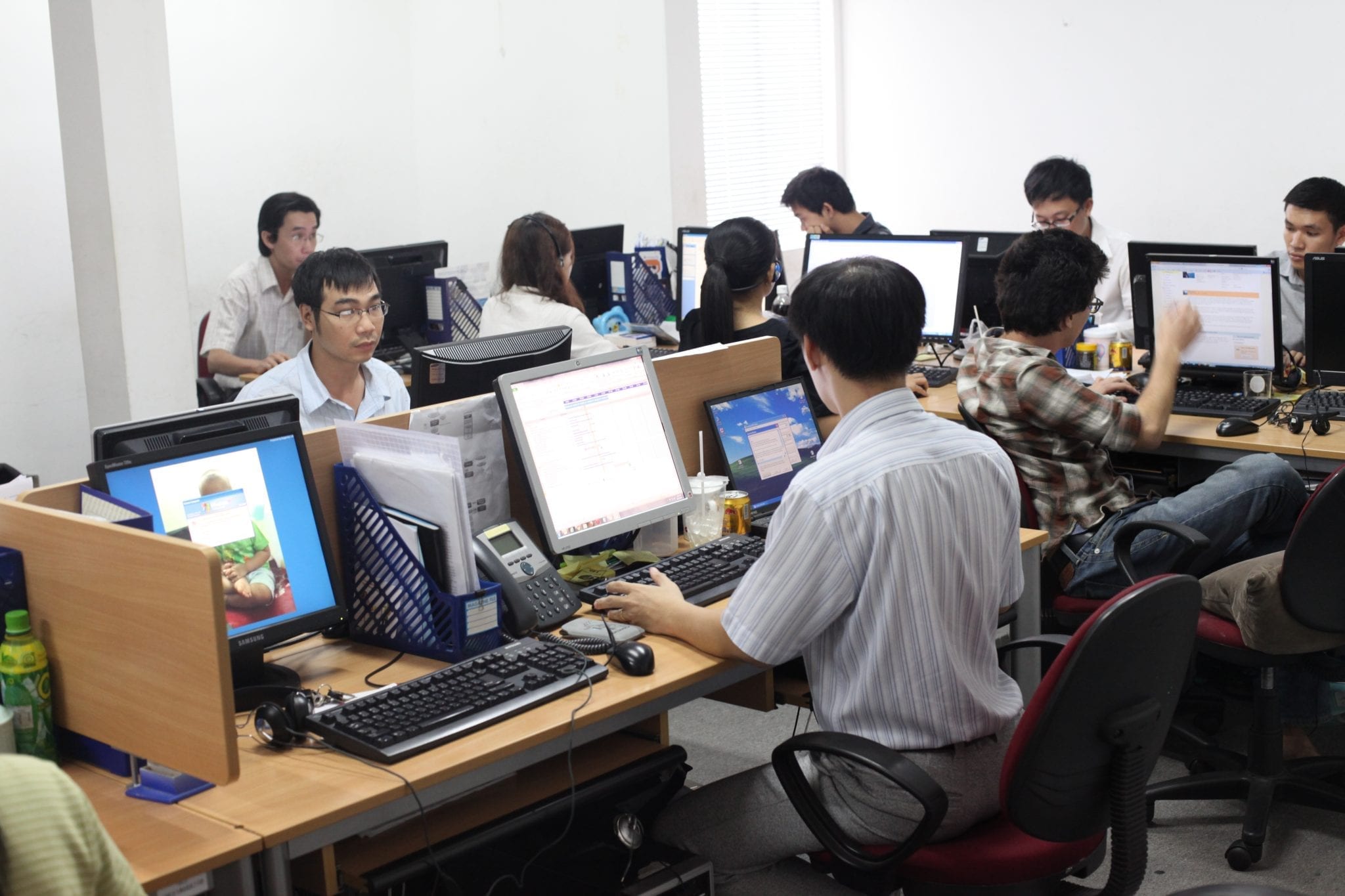
    Demand for IT workers has doubled over the past five years, according to the latest VietnamWorks report on salaries, benefits and skills in the sector.

    Another survey conducted by Hanoi Department of Labor, Invalids and Social Affairs in 2016 shows that, on average, each year Vietnam lacks approximately 78,000 IT workers.

    The VietnamWorks report said demand for skilled technical workers would leap from 250,000 in 2016 to 400,000 by 2018 giving employers just a year to nearly double their workforce.

    Eighty percent of the new positions would require at least two years experience, for which recruiters are willing to pay up to $1,160 per month.

    Last year, only one in 10 respondents reported satisfaction with their remuneration, but the vast majority of employers say they’re willing to offer raises to talented employees.

    Big data, cloud computing and cyber security will pave the way for talented Vietnamese developers. By September of 2016, around 330 start-ups had registered to offer web software development, according to data extracted from Geektime, one of the biggest tech blogs focusing on global innovation.

    The number of tech start-ups is expected to mushroom in the next few years, especially as Ho Chi Minh City is chasing its Silicon Valley dream.

    Vietnam has long been known as one of the world’s top software outsourcing hubs for giant tech companies like IBM, Microsoft and Intel. The country now aspires to become one of the top 10 global suppliers of software outsourcing and digital content by the end of the decade, Prime Minister Nguyen Xuan Phuc said during a recent seminar.

    The survey queried 2,400 developers and 73 recruiters regarding over 50,000 IT-related job posts on VietnamWorks within five years.

  • Bank Mandiri`s net profit falls by 32.1 percent

    Bank Mandiri`s net profit falls by 32.1 percent

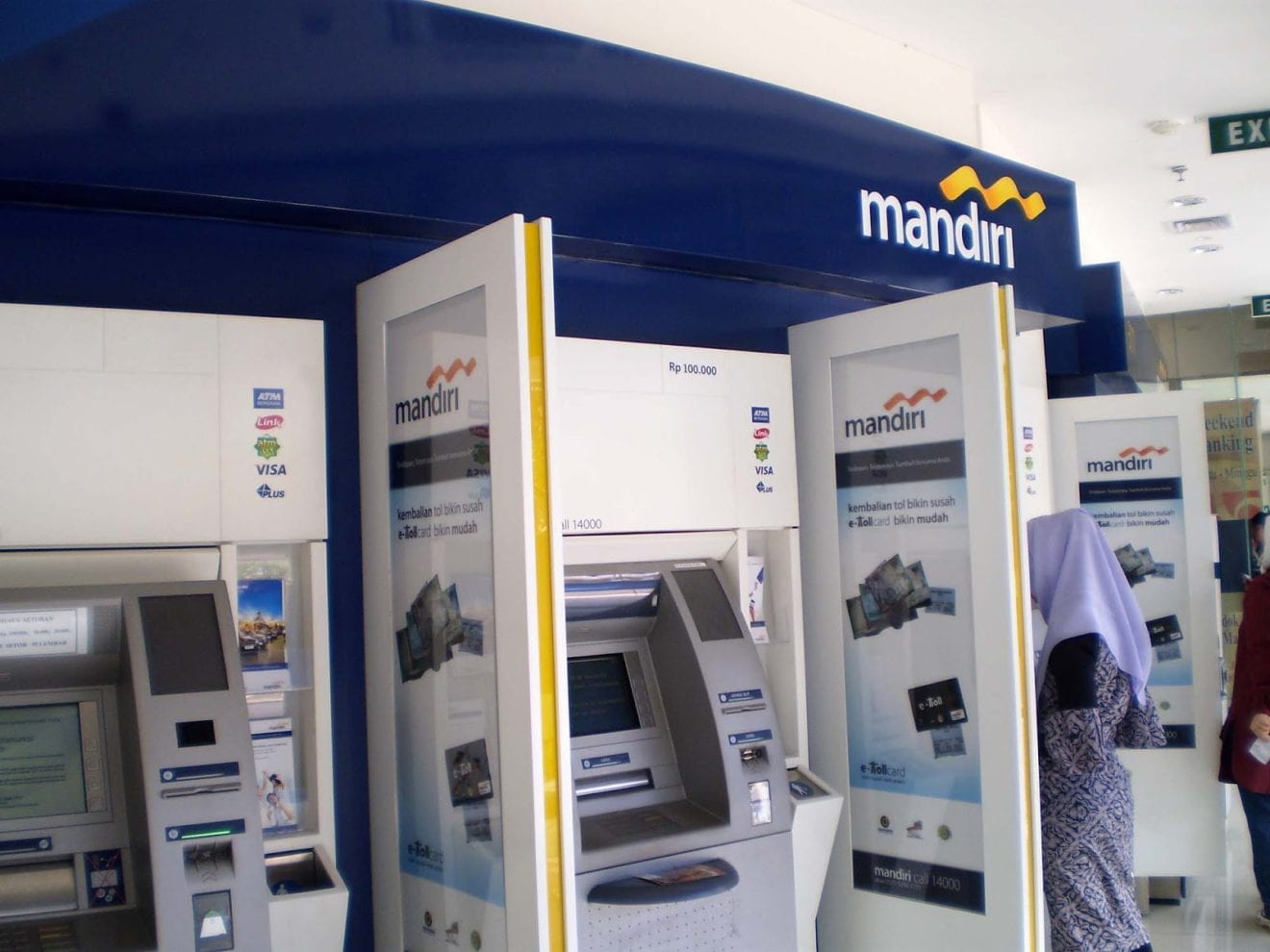
    State lender Bank Mandiri saw its net profit plunging by up to 32.1 percent to Rp13.8 trillion in 2016 from Rp20.3 trillion in 2015. The net profit fell, as the bank set aside its operating income to raise its provisions for loan loss coverage, following the rising ratio of non-performing loans (NPLs) to total gross loans, Bank Mandiri President Director Kartika Wirjoatmodjo said in a press briefing here on Tuesday.

    The provisions for loan loss coverage ratio against NPLs rose to 125 percent, as the ratio of NPLs to total gross loans increased by 1.4 percent to 4 percent in 2016 from 2.6 percent in 2015, he added.

    “We put much of the income into the provisions. Before we put it in the provisions, our pre-provision operational profit (PPOP) stood at Rp43.3 trillion,” he stated.

    With the NPLs rising 4 percent, Bank Mandiri has set aside Rp24.6 trillion of its funds for loan loss provisions, he noted.

    After all, the bank recorded positive growth for all of last year, he remarked.

    In 2016, the bank channeled credits worth Rp662 trillion, up 11.2 percent from a year earlier, while third-party fund placement in the bank reached Rp762.5 trillion, up 12.7 percent from the previous year.

  • Alibaba Cloud boosts capacity of Hong Kong data center

    Alibaba Cloud boosts capacity of Hong Kong data center

    Alibaba Cloud has more than doubled the capacity of its data center in Hong Kong to help the company meet glowing demand for cloud services in Asia-Pacific.

    The expanded Hong Kong data center will be used to meet enterprises’ demand for high availability and data recovery and provide greater access to services such as data storage and analytics, enterprise-level middleware and cloud security services.

    The expansion forms part of Alibaba Cloud’s efforts to expand its global network coverage, and follows recent data center openings in Australia, Japan, Germany and the UAE.

    Alibaba Cloud said Hong Kong was selected due to its status as the gateway to China’s economy for international businesses and its region-leading role in terms of cloud adoption – the city scored the highest in the Asia Cloud Computing Association’s Cloud Readiness Index 2016.

    “Since our entry into Hong Kong in 2014, Alibaba Cloud has become one of the largest public cloud providers in the market in less than two years. More companies have come to realize the importance of changing their traditional IT mind-set to embrace the new data technology,” Alibaba Cloud Global general manager Ethan Yu said.

    “We are confident that the expanded data center facility, together with our scalable and secure cloud offering, will better meet the needs of the digital transformation in key local sectors such as hospitality and financial services.”

    Alibaba Cloud’s Hong Kong operations has customers in sectors including financial services, retail, hospitality and media. The company also recently launched anti-DDoS security products together with PCCW Global.

  • VietJet Air seeks to proceed with $1.2 billion listing

    VietJet Air seeks to proceed with $1.2 billion listing

    Vietnam’s biggest private airline is expected to surpass flag carrier Vietnam Airlines this year as the nation’s top domestic carrier.

    Vietnamese budget airline VietJet Air is preparing to list on the Ho Chi Minh Stock Exchange at a starting price of VND90,000 ($3.97) per share, it said in a filing to the exchange on Thursday, valuing the company at $1.19 billion.

    VietJet, Vietnam’s biggest private airline, did not state a precise date for the listing but it had planned to join the exchange later this month. The company received a listing approval earlier this week from the Ho Chi Minh Stock Exchange.

    The airline had intended to list overseas by last year, but the plan was put on ice. Singapore sovereign wealth fund GIC and a Morgan Stanley investment fund are among 26 foreign investors which recently bought a stake in VietJet.

    Company CEO Nguyen Thi Phuong Thao, the nation’s first female billionaire, is the biggest shareholder.

    The CAPA Center for Aviation has said that VietJet, which currently commands 40 percent of Vietnam’s domestic market, will likely surpass flag carrier Vietnam Airlines this year as the nation’s top domestic carrier.

    VietJet currently operates about 60 routes both locally and internationally, and expects to have a fleet of 200 aircraft by 2023. It had ordered billions worth of jets from both Airbus and Boeing in recent years.

    VietJet will list 300 million shares on the stock exchange. The company also plans to issue an additional 22.4 million shares at VND84,600 per share in 2017, subject to approval by shareholders and the State Securities Commission, it said.

    Its 2016 net profit jumped 96 percent annually to VND2.29 trillion on rising revenue, the filing showed, while its CEO Thao told Reuters the bottom line is expected to climb 30 percent this year.

  • Vietnam banks to slam doors on home-based business owners

    Vietnam banks to slam doors on home-based business owners

    Home-based businesses will soon find it, not just increasingly difficult, but impossible to find a bank loan. The central bank has tightened lending criteria for household and other unregistered businesses, meaning they will not be eligible for bank loans.

    With the change coming into effect from March 15, a housewife who wants to earn some extra money by selling handmade soap will have to apply for a consumer loan rather than a commercial loan from the bank.

    A consumer loan is more expensive than a business loan, which will later reflect in the costs of operating her business, limiting revenue growth and profitability.

    Vietnam currently has 5 million unregistered home-based businesses, said Vu Tien Loc, chairman of the Vietnam Chamber of Commerce and Industry (VCCI). However, the country plans to relax the business environment so that by 2020 it will have one million private businesses, most of which will be home-based businesses that have converted to legal entities.

    Loc said because some regulatory requirements, mostly involving administrative procedures and tax policies, are expensive and time-consuming, the vast majority of local businesses choose to remain as home-based micro businesses.

    Also according to the VCCI, about 70 percent of small business owners, including home-based ones, that apply for a bank loan get rejected, even though they are critical to job creation in Vietnam, employing 52 percent of the private sector workforce.