Author: Mei Ling Tan

  • Alibaba boosts Q4 revenue by 54%

    Alibaba boosts Q4 revenue by 54%

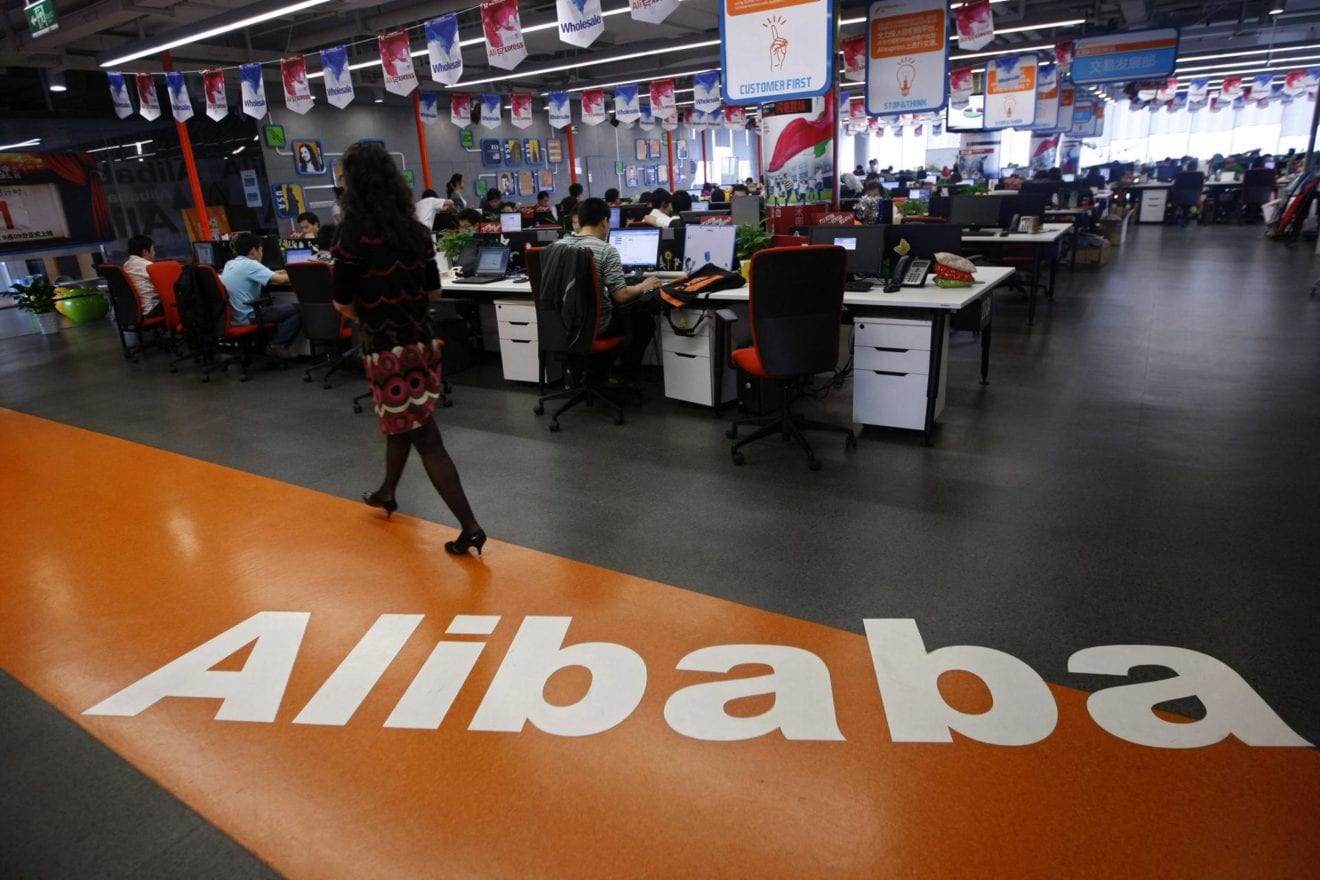
    Chinese e-commerce giant Alibaba Group reported a 54% increase in revenue for the quarter ended December 31.

    Revenue for the quarter reached 53.25 billion yuan ($7.66 billion). This was mainly attributed to the strong growth of its China e-commerce retail business and Alibaba Cloud division, as well as the consolidation of newly acquired businesses (mainly Youku Tudou and Lazada).

    “Our robust December quarter demonstrates the strength of the Chinese consumer and Alibaba’s ability to create value across our vast ecosystem,” said Daniel Zhang, Chief Executive Officer of Alibaba Group.

    The Alibaba chief said the 11.11 Shopping Festival showcased Alibaba’s expertise at integrating commerce, entertainment and social engagement.

    “We are driving the age of ‘New Retail,’ which leverages big data and innovation to provide a seamless online and offline experience for nearly half a billion mobile monthly active users. This retail transformation will make it even easier and more efficient for brands and retailers to engage with these consumers anywhere, anytime,” he said.

    For fiscal year 2017, Alibaba expects revenue to increase 53% year-over-year. “With three quarters of the year coming in ahead of expectations, we are adjusting up our 2017 fiscal year revenue guidance from 48% to 53% year-over-year growth,” said Maggie Wu, Chief Financial Officer of Alibaba Group.

    She disclosed that the company generated $4.9 billion in free cash flow on a non-GAAP basis during the quarter, which enabled it to continue investing in growth areas such as cloud computing (115% revenue increase year-over-year), digital media and entertainment (273% increase year-over-year), and other innovation initiatives (61% revenue increase year-over-year).

    Meanwhile, revenue from core commerce jumped 45% year-over-year to $6.71 billion.

    The Taobao marketplace added 43 million monthly active users (MAU) from September, with relevant content in the app reportedly continuing to drive mobile user growth. Small, on the hand, had another record breaking 11.11 sales with a record $17.4 billion in gross merchandise volume (GMV) settled through its own payment platform Alipay, 82% of which was generated from mobile.

    The company disclosed that its “New Retail” strategy will enable it to tap into the entire $4.8 trillion retail sector in China by eliminating the distinction between online and offline commerce. It also bared plans to partner with brick-and-mortar retailers in different verticals through equity investments and deeper operational integration.

  • Why the investment outlook for Singapore property markets may be grim

    Why the investment outlook for Singapore property markets may be grim

    “The weak external economy did not help. It continued to weigh down on the creation of new businesses here resulting in limited new demand,” Chua said. “Tenants are very price sensitive and in today’s tenant favourable market, landlords maintained a competitive strategy.”

    Another REIT, Suntec REIT, which owns both Singapore office and retail property, was also showing signs of pressure on yields in its latest results.

    “With the expected oversupply of the Singapore office market upon the completion of several new offices, Suntec

    REIT’s properties may face stiffer competition for its tenants as well as downward pressure on rents,” analysts at DBS said in a note on Thursday, noting Suntec REIT owns three office assets in the CBD.

    Retail Battle

    Suntec was also feeling the pressure on the city-state’s retail malls.

    “With Singapore consumers cutting back on discretionary spending and compared to the initial rents signed at Suntec Mall during more buoyant times, rents at Suntec Mall will likely continue to be under pressure,” DBS said, noting the rents were underperforming the manager’s initial target.

    Other analysts were also pointing to pressure on demand for retail space.

    “Amid stiffening competition from online retailing and regional markets, on top of operational challenges such as labour crunch, retailers are expected to continue with their strategy of consolidating and maintaining only profitable outlets,” Tay Huey Ying, head of research for Singapore at JLL, said in a note Thursday. “Expansion by retailers will likely remain confined to tried-and-tested established brand names while entrances of luxury goods, fashion and accessories are likely to remain limited.”

    She also noted that another 169,000 square meters of retail space was expected this year, with another 229,000 next year, which was likely to spur greater competition for tenants.

    There were other signs that yields from retail rents might face continued pressure.

    Aviva’s Coenraads noted he was closely watching the bidding for suburban mall Jurong Point, with the sellers reportedly seeking more than 2 billion Singapore dollars. The Business Times reported earlier this month that two of the three shortlisted bidders have separately offered around S$2.2 billion, which the report estimated would drive the net yield under 4 percent.

    Residential Cooling

    While it may get the lion’s share of the ink, Singapore’s residential sector is actually not nearly as large as its commercial property sector.

    Coenraads noted that the introduction of cooling measures, which he called a “very smart move,” had dampened residential demand. But he didn’t expect a turnaround soon.

    “The question is, at what sort of stage will they start letting go of some of the regulation, and I think basically, we need to see further decreases in prices,” he said. “I think it’s not reflecting yet where the government wants to see prices at this stage.”

  • TRYP by Wyndham headed for Yangon, Myanmar

    TRYP by Wyndham headed for Yangon, Myanmar

    TRYP by Wyndham has arrived on the shores of south-east Asia with the opening of a new-construction hotel in Yangon, Myanmar. The 60-room TRYP Yangon is Wyndham’s inaugural hotel to open in Myanmar.

    TRYP by Wyndham celebrates the spirit of the urban traveller by offering an insider’s look at a city.

    Hotels can be found in the heart of the world’s most exciting cities – the ones on every travel bucket list – like Abu Dhabi, Brisbane, Barcelona, New York City, Paris, and Sao Paulo.

    The brand’s urban flair energises travellers with an inimitable style and helps travellers find the best ways to tap directly into the pulse of the city.

    “Myanmar is quickly becoming a must-see destination for international travellers with nearly eight million arrivals in 2015 thanks to an influx of foreign investment and Yangon’s expanded international airport,” said Barry Robinson, president, Wyndham Hotel Group south-east Asia and Pacific Rim.

    “The country’s travel and tourism sector is primed to spike even higher as people seek out new business opportunities, setting the stage for increased hotel demand in Yangon.

    “TRYP by Wyndham’s unique urban flair will help visitors uncover the side of Yangon not in guidebooks, putting the city in a new light for visitors who want to experience it like a local.”

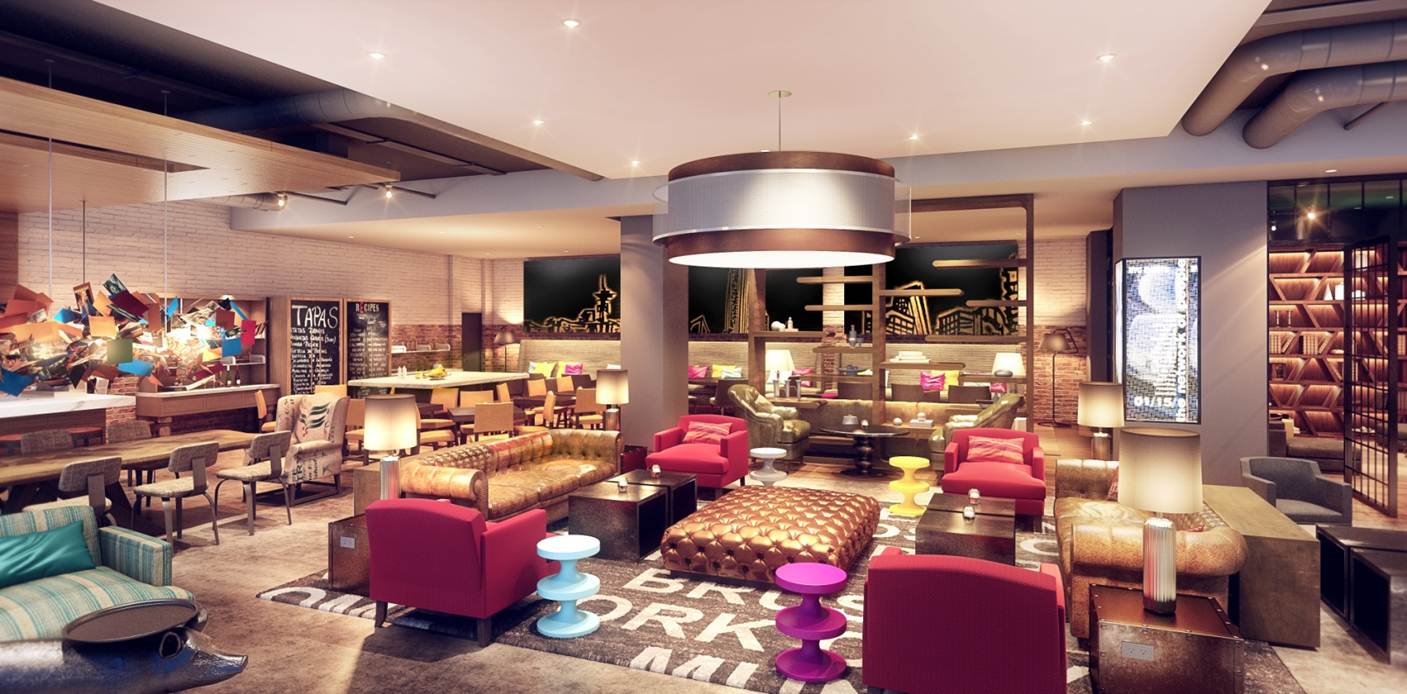
    Set in the heart of Yangon’s lively Mayangone Township, TRYP Yangon offers a restaurant and a lounge bar for evening cocktails in a dynamic social setting, as well as free Wi-Fi for guests to stay connected with friends and family.

    Sixty design-driven guest rooms feature a mix of patterns, textures and unexpected contrasts inspired by Myanmar’s longstanding culture and traditions.

    Art fixtures include kaleidoscopic landscapes of farmers toiling in farmlands and rice paddies, a nod to the country’s agrarian heritage.

    TRYP Yangon is located less than five minutes from Myanmar Plaza, which offers upscale retail and dining options, and is a short stroll from many of the city’s glittering golden temples, including the majestic 34-meter-high Kabar Aye Pagoda and the vast Inya Lake.

  • Profits fall again at South Korea’s LG Electronics

    Profits fall again at South Korea’s LG Electronics

    South Korea’s LG Electronics on Wednesday reported its second successive year of slumping net profits due partly to weak smartphone sales.

    Full-year net profit for 2016 was 126.3 billion won (Dh398 million, $109.3 million), the Seoul-based firm said, down by almost half on 2015 — when they had fallen by 50 per cent.

    The company produces a range of products, from mobile phones to televisions and home appliances including air conditioners, washers and refrigerators.

    It said in a statement it fell into losses in the fourth quarter, taking hits in its mobile telecommunications and vehicle components businesses.

    LG Electronics made a net loss of 258.8 billion won ($224 million) in the October-December period.

    Its home appliances and home entertainment units both turned in strong performances, but in mobile communications “profitability was hampered by weak sales of the G5 smartphone and higher marketing investments”.

    LG has struggled for years to increase its smartphone sales after a late entry into the market dominated by Samsung and Apple.

    It has since found itself hemmed in by emerging Chinese rivals such as Huawei or Xiaomi.

    Its vehicle components unit saw revenues jump by nearly two-thirds in the fourth quarter, but “R&D investments negatively affected profitability”, it said.

  • Marina Bay Sands’s Tod’s opens

    Marina Bay Sands’s Tod’s opens

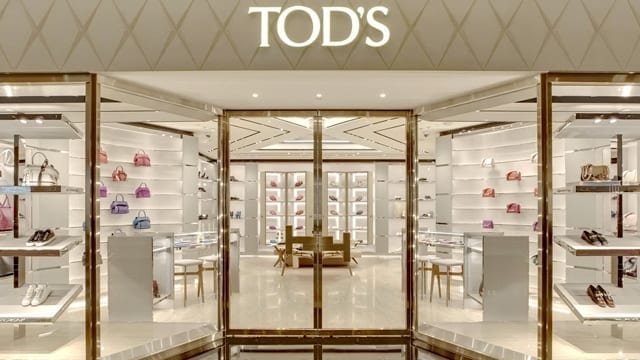
    Italian luxury leather brand Tod’s Singapore has opened its second outlet, at The Shoppes at Marina Bay Sands.

    Its new location features cool tones with silver and taupe leather-lined displays. It is the first store with the new concept in Asia, preceded only by a boutique in London.

    To mark the opening, the store features exclusive maroon editions of the Double T bag, Double T Gomminos and a men’s messenger bag, all marked discreetly with the location tag “Marina Bay Sands Singapore”.

    There is also a range of accessories including alphabet charms allowing for personalisation.

    The boutique is on the Galleria level.

  • Amusing concept in newest Gentle Monster flagship

    Amusing concept in newest Gentle Monster flagship

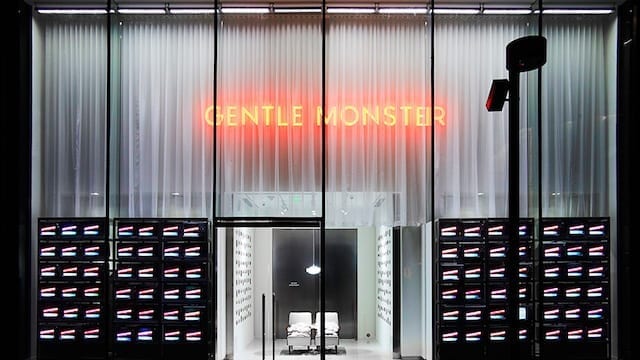
    Korean eyewear retailer Gentle Monster is creating jaw-dropping retail executions across Asia and beyond.

    The images accompanying this story are of the equally unique Beijing flagship store, located in the Sanlitun retail precinct.

    gentle-monster-beijing-flagship-9

    Each Gentle Monster flagship features a completely different design format, inspiration and execution – it is the utmost opposite to traditional retail chains’ cookie-cutter store design approach as is possible.

    gentle-monster-beijing-flagship-10

    “I wanted the products to look as if they were being exhibited,” explains Hankook Kim, founder and CEO of Gentle Monster. And so the in-store concepts have become something of a calling card for the brand.

    gentle-monster-beijing-flagship-7


    As Australian retail consultant Brian Walker observes in a column on disruptive retailing, every retail store in their ecosystem is completely different; from ‘Platform’ in Hong Kong; designed like a train carriage, to ‘L’Artisan’ in Shanghai and ‘Secret Apartment’ in Beijing.

    gentle-monster-beijing-flagship-5

    “Each store is a three-dimensional still life, with its own back-themed story.”

    Gentle Monster was founded in 2012 after a chance meeting between Kim and Korean serial entrepreneur Jae W Oh at an English summer camp in Seoul a year earlier. Oh took a liking to Kim and invited him to come up with a concept worthy of his cash.

    gentle-monster-beijing-flagship-3


    “When I first began looking into eyewear and researching the market, I found that it was a very union-controlled industry that was not explored as an artistic form,” Kim said in a recent interview with The Business of Fashion.

    gentle-monster-beijing-flagship-6

    And so a brand was born. Kim identified an opportunity to create oversize spectacles for Asian consumers, for whom having a small face is a compliment. “There were no competitors for oversize glasses, which make heads look smaller.” Asians also require eyewear with a low bridge. “Eyewear was all about the Western facial structure.”

    gentle-monster-beijing-flagship-4

    He found a factory in Daegu abandoned by Luxottica who shifted production to China, and another plant in China where he could produce acetate frames (illegal to manufacture in Korea).

    Gentle Monster’s rise has been swift. In 2014 the brand achieved revenues of US$40 million, predominantly in Korea and China. That figure grew four-fold to $160 million the following year, with figures for 2016 not yet revealed.

    gentle-monster-beijing-flagship-2

    The brand’s frames range in price from a little over $200 for an entry-level pair, to $500+ for something more exotic. Like its stores, its frame designs are often unusual – or even “strange” as The Business of Fashion observed.

    gentle-monster-beijing-flagship-1

    Flush with success of its eyewear range, Gentle Monster is now deciding which other categories to expand into.

    “Gentle Monster started out as an optical company, but the goal is to make it a creatively disruptive corporation,” says Kim. “Brand really is the genuine tool.”

  • Malaysia real estate market outlook for 2017

    Malaysia real estate market outlook for 2017

    2016 overview

    Fundamentally, you could say that the property industry runs alongside the economy of the country. As reported in CBRE / WTW’s report, domestic consumption rose, driven by spending in areas that include F&B, transportation and communication. Government consumption also grew (according to year-on-year basis) – with expenditure owing to infrastructure.

    Net exports saw mixed results – slower demand from China and reduced exports from the US but the weakening ringgit enticing and increasing Malaysian exports even further. The weak ringgit also opened opportunities for foreign investment.

    Other than the global rout in oil prices that has led to a significant number of layoffs in the oil and gas sector, the weakening business sentiment and slowdown in the overall trading is also expected to be more apparent, but in the short term.
    Looking positive was the growth rate of retail sales which remained buoyant despite softer consumer spending and the rising costs of living. According to the report, strong support was seen from tourists in retail spending from shopping. The weakening ringgit is expected to encourage tourists’ spending.

    2017 outlook

    In the Year of the Rooster, the country’s economic growth is expected to be slower due to the challenging global economic and financial landscape. Domestic demand is said to be the key driver of growth, sustained primarily by economic activity from the private sector. Due to the well diversified nature of our country’s exports, positive growth is projected into the year. However, inflation is expected to remain flat although pressured by increase of several price-administered items and the weak ringgit exchange rate.

    The impact of these cost factors on inflation is expected to be mitigated by continued low global energy prices, generally subdued global inflation and more moderate domestic demand. Supportive fiscal and monetary policies are also expected to help steady the ship for economic growth. GST will strengthen the government’s revenue source to accommodate its fiscal measures.

    With the overall weakening ringgit, low crude oil prices coupled with worldwide geo-political issues will continue to plague the economy in 2017. No doubt, the year will be a challenging one, but Malaysia’s economy is anticipated to remain stable with GDP growth estimated at 4.2%.

    Real estate market outlook in Malaysia

    As uncertainties and concerns over the large market supply remains unabated, loan growth is expected to slow further as the weak credit cycle continues.

    Apart from the stringent loan requirements from financial institutions that are said to have caused the drop in the number of property transactions, the increasing cost of living and economic uncertainties have led to an upswing in worries about job security, resulting in more cautious consumer spending. These and more will have led the market to consist of more genuine purchasers with speculative sentiments not as strong as during the boom period.

    As such, supply has remained resilient with greater activity in larger cities. The proposal to boost public servants’ housing loan eligibility proposed by the government, may stimulate some residential sales, apart from other plans to increase the number of units of low and medium cost, affordable housing. No doubt residential development will continue to be active beyond the KL fringe, especially supported by the rapid infrastructure development.

    Conclusion

    Looking at the real estate outlook in the Klang Valley for 2017 (refer boons and banes), key drivers to a positive year are expected to come from infrastructure – HSR, MRT and LRT additional lines and stations, new highways and expressways. While Johor and Seremban are expected to gain from the “spillover” effected from new infrastructure, residential hotspots to take note of include – Selangor Vision City, Nilai/Pajam, Semenyih/Kajang, Putrajaya/Cyberjaya, Rawang/Ijok/Kuang, Sungai Buloh and Kuala Selangor.

    Key drivers that will push these areas are scarcity of land in the city centre, high land costs in the city as well as the improved connectivity in view of new infrastructure.

    In his message at the launch of the 2016/2017 report, CBRE / WTW managing director Foo Gee Jen shared that on-ground consensus among practitioners throughout all its branches across Malaysia is that market conditions have become much more challenging in 2016 and that 2017 will not get any better.

    Transaction activity is down in many urban centres, especially in the residential sector, which Foo said is a common barometer to gauge the overall property market. However, although figures in CBRE /WTW’s outlook report are discouraging, there is still a glimmer of hope for the year to correct itself once the mass rapid transportation system in Kuala Lumpur and other similar transport systems are up and running.

    Bottomline

    Foo’s view on the whole: “Another flattish period pulled down by mostly low commodity prices, continued slow economic growth in most major countries, especially with political uncertainties like Brexit, Trump’s presidency and other referendums in Europe.”

    His advice: “Reduce portfolios of non-strategic assets to reduce loan gearing and be aware of liquidity needs if and when credit tightens. Investors and developers should focus on taking calculated risks where markets are strong, pursue developments in strong, supply-constrained markets and bid on strategic long-hold assets that are most likely able to withstand a downturn.”

    Information and charts/graphs were retrieved from the CBRE / WTW 2017 Malaysia Real Estate Market Outlook. Follow our column next week on interior design, followed by office space in KL and market direction across various regions in Malaysia.
  • AllSaints Mexico makes its debut in Mexico City

    AllSaints Mexico makes its debut in Mexico City

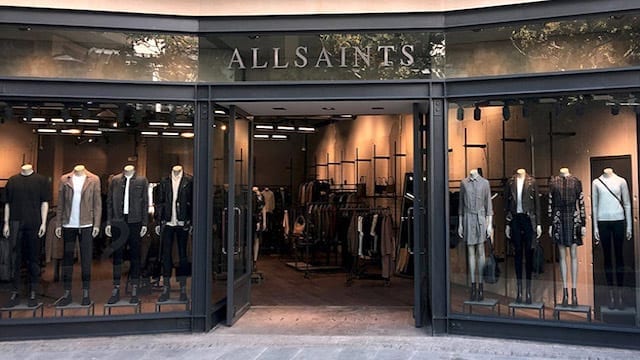
    UK fashion retailer AllSaints has opened its first store in Mexico as it begins a Latin American expansion.

    The 2368 sqft AllSaints Mexico store has opened in Mexico City’s Antara shopping centre.  It stocks menswear and womenswear collections and lines from the autumn/winter 2016 range and Capital Collection handbags.

    Like stores elsewhere in the world, the AllSaints Mexico store features distinctive tailor-made fixtures and handcrafted industrial display units, and wall-mounted vintage sewing machines set against an LED backdrop.

    AllSaints chose Grupo Sordo Madaleno as its local partner, a company which operates fashion, toy and cosmetics franchises across 25 Mexican retail locations.

    AllSaints CEO William Kim, said expansion in Latin America has always been an integral part of the retailer’s growth strategy.

    “With over 50 years expertise in the Mexican retail sector, Group Sordo Madaleno was an obvious partnership choice for us. Not only does it excel in its existing market, it shares our passion for exceptional customer experience and bringing AllSaints’ contemporary designs and premium quality collections to fashion lovers in Mexico.”

    Late last year, AllSaints opened stores in Peru and Chile. It now has 220 directly operated stores, franchises, concessions and outlets in 23 countries including the UK, Europe, North America, Asia and the Middle East.

  • Daphne International expects loss to balloon

    Daphne International expects loss to balloon

    Footwear products group Daphne International Holdings expects its net loss to balloon by more than half for the year ended December 31.

    Five main factors are listed for the projected loss by Daphne, which makes, distributes and retails its products and accessories…

    • A significant decrease in sales.
    • Negative same-store sales growth.
    • Lower gross profit margin resulting from aggressive clearance efforts and a higher
      weighting of aged products in the overall sales mix.
    • Operational charges related to inventory and store rationalisation.

    However, the group says its net cash position has improved and the inventory level lowered as a result of the liquidation of aged inventory.

    Also, the group’s eCommerce activities continued to achieve sales growth.
    Daphne says its announcement is based on a preliminary assessment, with its annual results expected to be published in late March.

  • Prada Philippines opens store in resort

    Prada Philippines opens store in resort

    Prada Philippines has opened its second store in Manila, in the Solaire Resort and Casino.

    Covering 105 sqm on a single level, the outlet houses women’s and men’s leather goods plus accessories.

    Its facade is defined by a backlit white canvas curtain in a crystal box framing the entrance, plus horizontal light boxes and display windows.

    The interior features the Italian fashion brand’s signature black-and-white marble checkered flooring reinterpreted through geometric-patterned carpeting. The walls are covered with fabric in shades of green and feature classic Prada display niches.

    Steel and glass countertops are used for displays, while the shop features Osvaldo Borsani’s green velvet chairs made exclusively for Prada.

  • Emerging Asian nations producing more international travellers

    Emerging Asian nations producing more international travellers

    Outbound travellers from emerging Asian nations outnumber those from developed countries in the region by one and a half times.

    Furthermore, this figure is poised to grow more than twice as fast over the next five years (7.6 per cent versus. 3.3 per cent), according to Mastercard’s report The Future of Outbound Travel in Asia Pacific (2016 to 2021).

    Collectively, Asia Pacific markets are expected to grow by 6 per cent annually during the period.

    China is expected to be the largest outbound travel market in 2021 with 103.4 million trips, constituting 40 per cent of all Asia Pacific outbound travel, nearly four times that of the second and third markets, South Korea (25.6 million) and India (21.5 million) respectively.

    As forecast by the report, international outbound trips from the top 10 Asia Pacific markets by 2021 are:

    1. China, 103.4 million
    2. South Korea, 25.6 million
    3. India, 21.5 million
    4. Japan, 19.4 million
    5. Taiwan, 16.3 million
    6. Malaysia , 14.2 million
    7. Australia, 11.8 million
    8. Singapore, 11.7 million
    9. Indonesia, 10.6 million
    10. Thailand, 9.1 million

    “The burgeoning middle class is driving the growth of outbound travel in Asia Pacific, along with other trends such as the emergence of the Asian millennial traveller and, on the other end of the spectrum, the senior traveller, as well as technology and infrastructure developments,” says Mastercard Advisors Asia Pacific senior VP Eric Schneider.

    “Asia Pacific travellers will continue to fuel global tourism growth in years to come, providing vast opportunities for businesses to benefit through the development of products and solutions that seek to improve their overall travel experiences.”

    Myanmar fastest growing

    Myanmar is projected to be the fastest-growing outbound travel market with a 10.6 per cent annual growth rate over the next five years, followed by Vietnam (9.5 per cent), Indonesia (8.6 per cent), China (8.5 per cent) and India (8.2 per cent). Among developed Asia Pacific markets, growing fastest are South Korea (3.8 per cent), followed by Singapore (3.5 per cent), Australia (3.5 per cent) and New Zealand (3.4 per cent).

    The report predicts the top 10 fastest-growing Asia Pacific markets by international outbound trips (compound annual growth rate from 2016 to 2021) will be:

    1. Myanmar, 10.6 per cent
    2. Vietnam, 9.5 per cent
    3. Indonesia, 8.6 per cent
    4. China, 8.5 per cent
    5. India, 8.2 per cent
    6. Sri Lanka, 6.1 per cent
    7. Thailand, 4.8 per cent
    8. Philippines, 4.4 per cent
    9. South Korea, 3.8 per cent
    10. Australia/Singapore/Malaysia, 3.5 per cent

    According to the study, outbound travel will grow faster than real GDP. Outbound travel growth tends to be higher than real GDP growth for emerging markets compared to developed markets, except for Japan, where outbound travel growth is much closer to its predicted real GDP growth.

    Emerging markets such as Myanmar (10.6 per cent vs. 7.7 per cent), Vietnam (9.5 per cent vs. 6.2 per cent), Indonesia (8.6 per cent vs. 5.7 per cent), Thailand (4.8 per cent vs. 3.1 per cent) and China (8.5 per cent vs. 6 per cent) are expected to grow faster than real GDP.

    By 2021, all developed markets in Asia Pacific, except Japan, will have a ratio of more than 100 per cent for outbound travel trips to total number of households. Households in Singapore (693.6 per cent), Hong Kong (248.9 per cent) and Taiwan (232 per cent) have the highest propensity to travel abroad.

    Among emerging markets, Malaysia is expected to record the highest ratio, 198.7 per cent, by 2021, whereas India (7.3 per cent), Bangladesh (7.4 per cent), Myanmar (14.6 per cent) and Indonesia (15.4 per cent) are among the lowest.

    While a ratio of 100 per cent means on average that each household has at least one person who makes a trip abroad each year, in practice it is more likely that a certain percentage of households make multiple trips overseas each year, implying there are households where nobody goes abroad at all.

  • Thai police seize counterfeit items

    Thai police seize counterfeit items

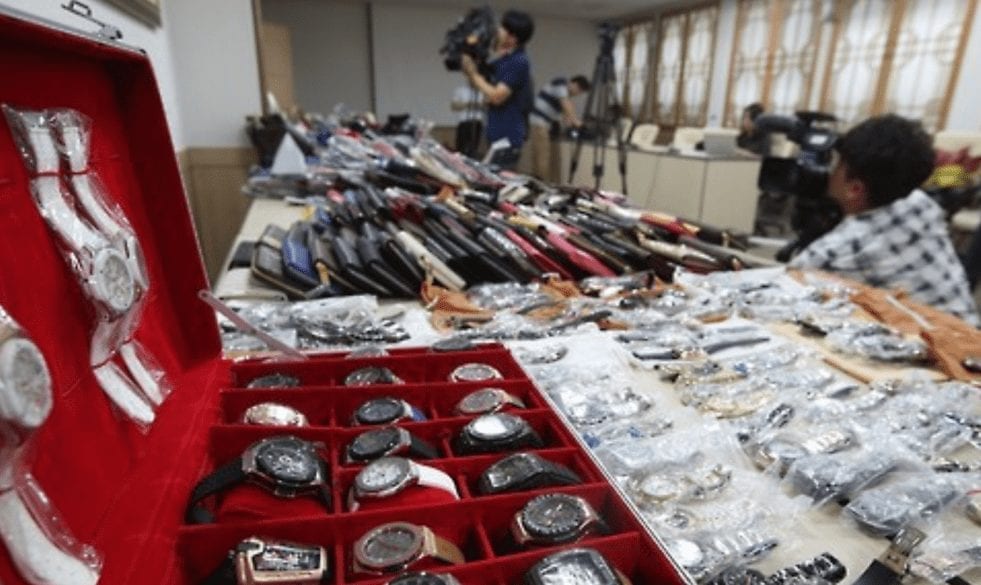
    Police in Bangkok have arrested two drivers who delivered nearly 7000 counterfeit items to Lumpini Park.

    Police chief Sanit Mahathavorn says the two drivers were taken into custody after a routine search of the parked bus.

    Hat Thongbu from Chainat and Niran Damthunghong, from Aranyaprathet, both 47, had hidden the goods in a bus they had driven from the Rong Kleua market in Aranyaprathet, near the border with Cambodia.

    The alleged fake designer goods included bags, watches, clothes, shoes and glasses carrying such labels as Adidas, Casio, Chanel, Chaps and Ekko.

    Mahathavorn says the drivers told officers they had been paid 10,000 baht (US$285) for the delivery and had done this kind of thing many times before over many years.

    Police say the goods were worth around 5 million baht and were set to be delivered to market traders in the capital.

    Some foreigners seemed bemused by the arrests, with one member of Thai Visa Forum saying: “Can’t let Cambodian-made pirated goods compete with Thai-made pirated goods. Excellent police work!”

  • Luxottica and DFS host worldwide exclusive launch of Prada Cinéma sunglasses

    Luxottica and DFS host worldwide exclusive launch of Prada Cinéma sunglasses

    Luxottica Global Channels, part of Luxottica Group, and DFS Group have joined forces in a worldwide exclusive launch of the new Prada Cinéma sunglasses collection. The limited edition range has been available exclusively at selected DFS airport and T Galleria by DFS stores since November 2016 (until February 2017), with support from a dynamic 360-degree omni-channel marketing campaign.

    Luxottica Global Channels and DFS Group have joined forces in a worldwide exclusive launch of the new Prada Cinéma sunglasses collection. The limited edition range has been available exclusively at selected DFS airport and T Galleria by DFS stores since November 2016, with support from a dynamic 360-degree omni-channel marketing campaign.

    The campaign utilises both online, including social media, and offline platforms to engage with customers before, during and after they shop, with further digital amplification provided on DFS’ website and email newsletter. The online reach is designed to drive traffic in-store, where shoppers are presented with a number of high-profile activations from Prada, including at DFS stores at Hong Kong International Airport and T Galleria in downtown Hong Kong. The launch is said to represent a pioneering step for the sunglasses category in travel retail.

    Shopper engagement is further enhanced through Prada-branded boxes of chocolate from Marchesi, a famous Milanese confectionery shop, which are offered as a gift-with-purchase.

    “Digital communication in travel retail is a hot topic, and offers undeniable and incremental opportunities to build brands and enhance retail performance,” comments Francis Gros, Head of Global Channels, Luxottica. “The ‘Prada Cinéma’ campaign showcases how a special new product can be strategically amplified to connect with travelling consumers, beyond the physical stores, on targeted platforms. DFS continues to deliver innovative ways to engage with customers and has been very supportive of the Sunglasses VISION 2020. We seek to make travel retail the expert channel for sunglasses, growing the category to be worth over 4% of total travel retail sales.

    The launch of the new Prada Cinéma sunglasses collection is said to represent a pioneering step for the sunglasses category in travel retail.

    Jason Blejwas, Director Merchandising Sunglasses, Fashion Watches and Jewellery, DFS Group, adds: “We are thrilled to extend our long-standing partnership with Luxottica to bring the ‘Prada Cinéma’ collection first to DFS stores, and to celebrate this exciting moment with our customers both in-store and online. We’re confident that both the product and experience will make for a memorable moment for travellers visiting DFS.”

    Hear more from Luxottica at the 26th Airport Commercial & Retail Conference & Exhibition, hosted by Aéroport Nice Côte d’Azur and taking place on 3-5 April 2017 at the Hyatt Regency Nice Palais de la Méditerranée. Francis Gros, Head of Global Channels, Luxottica, is participating in the First Working Session “Is there a big problem in the airport retail space? Are conversion rates and yields performing far below expectations?” His presentation is entitled “In order to maximise yield, airports should scientifically identify which categories are the clear stand-out, star performers and position them accordingly. What is the evidence that they actually do this?”


  • Vietnamese furniture makers hit by dwindling timber supplies

    Vietnamese furniture makers hit by dwindling timber supplies

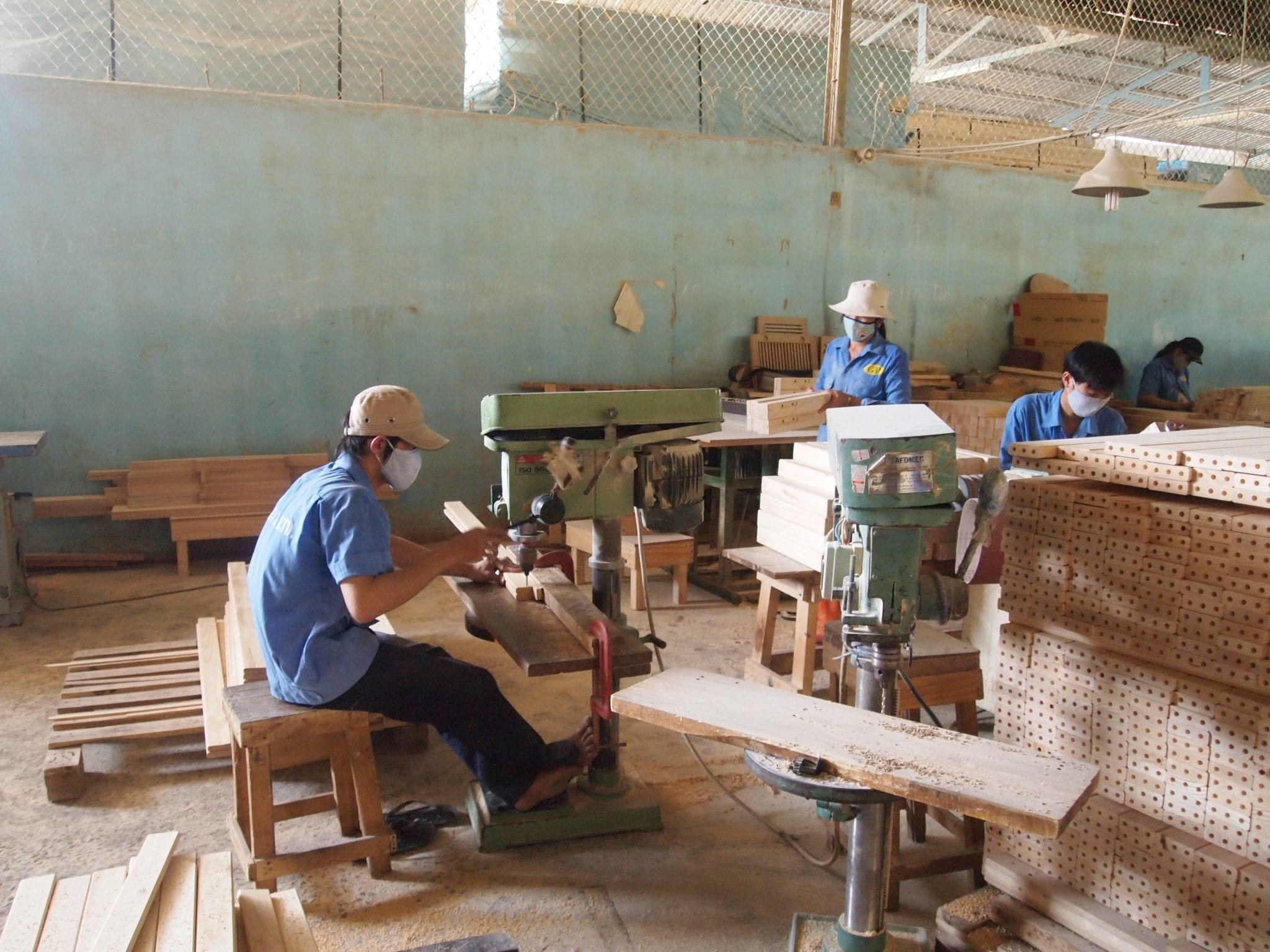
    Valuable wood that could be used by local carpenters is being shipped overseas. Many Vietnamese furniture makers are struggling to win large orders from global retailers due to a significant shortage of wood.

    It is estimated that local furniture firms use about 30 million cubic meters of solid wood and wood-based board materials each year, which translates as about 2.2 percent of all wood used commercially around the world.

    About 67 percent of wood used in Vietnamese products is domestically sourced, mainly from defunct rubber plantations, while the remaining 33 percent, translating into around 10 million cubic meters, must be sourced from overseas.

    In the meantime, data released by the Agriculture Ministry showed that last year Vietnam exported 8 million cubic meters of solid wood to neighboring China.

    This clearly presents a supply problem.

    Vietnam’s furniture exports have been growing steadily by 10-15 percent in recent years, said To Xuan Phuc, an industry expert from non-profit organization Forest Trends.

    “Last year, Vietnam exported more than $7 billion worth of wood products, while global demand was estimated at $400 billion. There is potential for more growth,” said Duong Phuong Thao, a senior official from the trade ministry.

    However, given the continuing high demand for timber, local furniture companies are faced with a significant shortage of materials.

    Vietnam currently has 4,000 furniture makers and exporters and 93 percent of them are small-and medium-sized companies. These companies have struggled to fulfill large orders from retailers in the United States, the European Union and Japan,” said Huynh Van Hanh, vice chairman of Ho Chi Minh City’s Association of Handicraft and Wood Businesses.

    Only 7 percent of Vietnamese furniture makers have managed to win large orders from global retailers, Hanh added.

    Local companies believe that the government should throw its considerable weight behind a plan to develop a sustainable forestry system that can be expanded as demand for wood continues to grow.

    Vietnam may hike tariffs on solid wood exports to 30–35 percent, the same level Cambodia and Thailand apply, to promote better forest management, end deforestation and help with timber supplies, said Huynh Kim Bau, assistant to the general manager of Saigon Furniture.

    The Agriculture Ministry plans to develop 200,000 hectares of certified sustainable forests this year, and it is forecast that Vietnam will have 500,000 hectares of certified forests by 2020.

    Dominance of Chinese furniture makers

    A shortage of solid wood and wood-based materials is not the only problem facing Vietnamese furniture exporters.

    Local firms mainly do outsourcing works for foreign furniture suppliers, most of which are Chinese, Hanh said.

    Official statistics show that a third of foreign-invested companies in Vietnam’s furniture industry are Chinese.

    In an attempt to dodge anti-dumping tariffs imposed by the U.S., Chinese furniture companies are flooding into Vietnam, relocating their manufacturing facilities and exporting to the U.S. from here.

    Since 2015 the U.S. has imposed import tariffs on Chinese-made furniture including beds, nightstands and other wooden wares in an attempt to protect its domestic manufacturers from Chinese “dumping”, or the export of goods at unfairly low prices.

    Ngo Sy Hoai, vice chairman of the Professional Association of Timber and Wood Products (Vifores), said the U.S. is currently imposing a tariff of between 55 and 120 percent on Chinese furniture, but there is no tariff on furniture imports from Vietnam.

    Local woodwork factories in Vietnam are concerned that their businesses will suffer if they act as a shield for Chinese furniture companies from U.S. anti-dumping actions.

    The fact that Vietnamese manufacturers may come under the radar of American anti-dumping investigators is obviously unwelcome as the U.S. has become Vietnam’s largest buyer. Vietnam’s furniture exports to the U.S. have reached more than $2 billion per year, equivalent to 30 percent of all exports.

  • China Mobile, Ericsson, Mobike trial IoT in Shanghai

    China Mobile, Ericsson, Mobike trial IoT in Shanghai

    China Mobile Shanghai  has teamed up with Ericsson and bike-sharing service startup Mobike to conduct a cellular IoT trial on the Chinese operator’s live network in Shanghai.

    During the trial, Ericsson’s latest cellular IoT technologies were used to more accurately locate the IoT-enabled bikes of Mobike, providing a more convenient and enhanced bike-sharing experience to Mobike’s users.

    Coverage areas were also extended to places that traditional mobile coverage can hardly reach, such as underground parking lots. The new technologies will also significantly reduce the time to unlock the bikes and users will enjoy “open upon scanning” without waiting.

    Mobike vice president Yang Zhongjie said latest cellular IoT technologies like CAT-M1 and NB-IoT will greatly enhance the user experience in the future and solve existing challenges encountered by Mobike such as coverage in difficult locations.

    “We also expect Chinese operators to complete the nationwide deployment of cellular IoT as early as possible,” Yang added.

    New cellular IoT technologies provide better coverage and faster response time with narrower bandwidth and fewer resources than mobile technology. They also bring energy-saving and deep-coverage features which enable five-to-seven-fold coverage improvements for operators in the same site environment. The battery life also extends to more than 10 years.

    The successful trial marks an important step forward in the large-scale commercial deployment of cellular IoT in China, Ericsson said in a statement.

    China Mobile and Ericsson recently signed an IoT agreement as part of China Mobile’s Big Connectivity strategy.