Author: Mei Ling Tan

  • Charles & Keith Japan stores close

    Charles & Keith Japan stores close

    Singapore-headquartered footwear brand Charles & Keith says it will close all its Japanese locations.

    According to a report published by Fashion Network, Charles & Keith Japan has already closed 13 stores in Tokyo, Osaka, Nagoya, and Hakata, with the flagship in Harajuku (pictured) scheduled to close on December 31.

    The company reportedly wants to focus on its eCommerce offer and other Asian markets closer to home.

    The Charles & Keith website is close for an overhaul on December 26 before being relaunched in Spring.

    The brainchild of brothers Keith and Charles Wong, the 20-year old brand specialises in quality footwear at affordable pricing. It currently sells in Asia, Africa and Europe.

  • Huawei releases X-Ethernet tech for 5G

    Huawei releases X-Ethernet tech for 5G

    Huawei has proposed a new X-Ethernet technology for 5G bearer networks at the ITU-T 2020 FG Workshop and Demo Day Wireline Technology Enablers for 5G conference in Swizerland.

    The company has also proposed X-Ethernet for integrated fronthaul and backhaul networks to introduce likely 5G requirements including deterministic low latency and end-to-end network slicing.

    Huawei’s Network 5.0 team has developed X-Ethernet to address the problems presented by the high bandwidth, determinacy, low-latency, hard isolation and low-cost requirements of 5G.

    The technology includes innovations including a Layer 1.5 switch based on the native Ethernet kernel and compatible with traditional Ethernet, as well as hybrid multiplex with TDM-like characteristics and a flexible hard pipe based on an SLA-based path optimization algorithm.

    Rival vendor Nokia Networks has meanwhile announced it teamed up with Vodafone to trial cloud-based radio access technology for macro networks as part of a project to evaluate methods to enable a smooth transition from 4G to 5G.

    The trial at Vodafone’s testing facility in Italy used the Nokia Cloud RAN platform to evaluate the performance of centralized 5G-ready architecture.

    “Working with Nokia on this trial we have seen how the application of Cloud RAN architecture can help the network react to changing demands quickly. It speeds up the delivery of services and will help with the transition to 5G,” Vodafone Group head of networks Santiago Tenorio said.

  • Hanon Systems Expands Engineering Capability in China

    Hanon Systems Expands Engineering Capability in China

    Hanon Systems, a leading global provider of automotive thermal solutions, is enhancing its ability to serve vehicle manufacturers in China by opening a new engineering center in Shanghai.

    Located in Shanghai’s Songjiang district, the new 3,612 square meter multi-story facility will serve as the engineering epicenter of technical collaboration for application engineering and system evaluation supporting Chinese automakers and global vehicle manufacturers operating in China.

    “Supporting customers is a top priority and China is an important market to Hanon Systems,” said In-Young Lee, president and chief executive officer of Hanon Systems. “We are pleased to open this new engineering center in Shanghai to provide automakers with local technical expertise and testing capability to better support the growing China market.”

    The engineering center also is equipped with state-of-the-art test equipment to provide in-house design verification, product validation and in-process testing. Specific test capability includes noise, vibration and harshness (NVH) evaluation; air handling performance and durability of heating, ventilation and air conditioning modules; and thermal system component testing for electric vehicles.

    “Hanon Systems is well-positioned to support the demand for new energy vehicles (NEV) in China with a suite of products that are proven with global vehicle manufacturers and designed specifically for NEV architectures,” said Dr. Kwangtaek Hong, chief technology officer of Hanon Systems. “This new engineering center is a testament to our commitment to support the China market and the NEV trend.”

    Hanon Systems is relocating its Shanghai technical staff from an existing site approximately 25 kilometers in distance to the new facility in the Songjiang district, which has the capacity to accommodate additional resources to support growth based on business and customer needs.

    The Shanghai center is one of 14 engineering locations supported by four global technical centers that are responsible for developing advanced technologies, core product development and global standardization of new technologies. Hanon Systems’ global technical centers are located Daejeon, Korea; Kerpen, Germany; Nový Jičín, Czech Republic; and Van Buren Township, Mich.

  • Fraudulent transactions hitch for e-commerce growth

    Fraudulent transactions hitch for e-commerce growth

    Interbank network provider Artajasa Pembayaran Elektronis says that the popularity of conventional payment methods in e-commerce has made the sector prone to fraudulent transactions, creating potential obstruction to the growth of e-commerce in Indonesia.

    Artajasa information technology (IT) and operation director Bayu Anantasena said in Jakarta on Wednesday that fraudulent transactions happened due to the lack of a payment authentication procedure in conventional payment methods, including bank transfers and cash-on-delivery (COD) payment.

    The company records that 75 percent of Indonesian e-commerce customers make payments through bank transfers, 20 percent through COD and the remaining 5 percent through credit cards and other methods.

    “Fraudulent transactions occur due to a lack of authentication between e-commerce merchants, issuing banks and customers. As e-commerce businesses grow in Indonesia, transaction security becomes more important for their development,” he said.

    The government expects that by 2020, that nation will record US$130 billion in e-commerce transactions, in line with the country’s anticipated digital boom in following years.

    As many as 87 issuing banks are currently using Artajasa’s ATM Bersama network, including Bank Mandiri, Bank Rakyat Indonesia (BRI) and Bank Tabungan Pensiunan Nasional (BTPN).

  • Australia plans controversial rural NBN levy

    Australia plans controversial rural NBN levy

    The Australian government is planning to impose a monthly levy on rival networks to the state-funded National Broadband Network (NBN) to help fund the roll out of the NBN to rural areas.

    Communications minister Mitch Fifield said the government will seek to pass legislation that would establish an A$40 million ($30 million) Regional Broadband Scheme.

    This scheme would be funded by a levy of A$7.30 per month for each fixed line connection provided by rival superfast broadband providers, increasing every year into 2022 when it reaches A$8 per month.

    The levy would not apply for small companies with under 2,000 customers. Australia’s largest operator Telstra and main rival Optus will also be exempt because they are transitioning their fixed line operations onto the NBN as part of separate deals with the government.

    But the government’s own advice indicates that such a levy will be passed on to consumers resulting in higher prices.

    High-speed providers have complained that the proposed levy could “cripple” their operations, destroying 30% of their revenue, the report adds. The proposal has also been slammed as extremely anti-competitive.

    The presence of competing fiber networks to the NBN has been a contentious issue since the project was first announced in 2007, with successive governments fearing that the rival services could “cherry pick” the network’s most lucrative customers in dense population centers without needing to invest large sums to reach sparse regional areas.

  • Angkasa Pura II Launches Airports App

    Angkasa Pura II Launches Airports App

    State-owned airport operator Angkasa Pura (AP) II president director Muhammad Awaluddin said that airports under AP II management are ready to serve passengers in this year’s holiday season. Awaluddin added that three airports have opened new terminals, namely Soekarno-Hatta International Airport in Jakarta, Husen Sastranegara Airport in Bandung, and Sultan Thaha Airport in Jambi.

    “We believed that the new terminals will improve our services for passengers, particularly in terms of capacity during peak seasons, such as this year end,” Awaluddin said on Monday, December 12, 2016, in Jakarta.

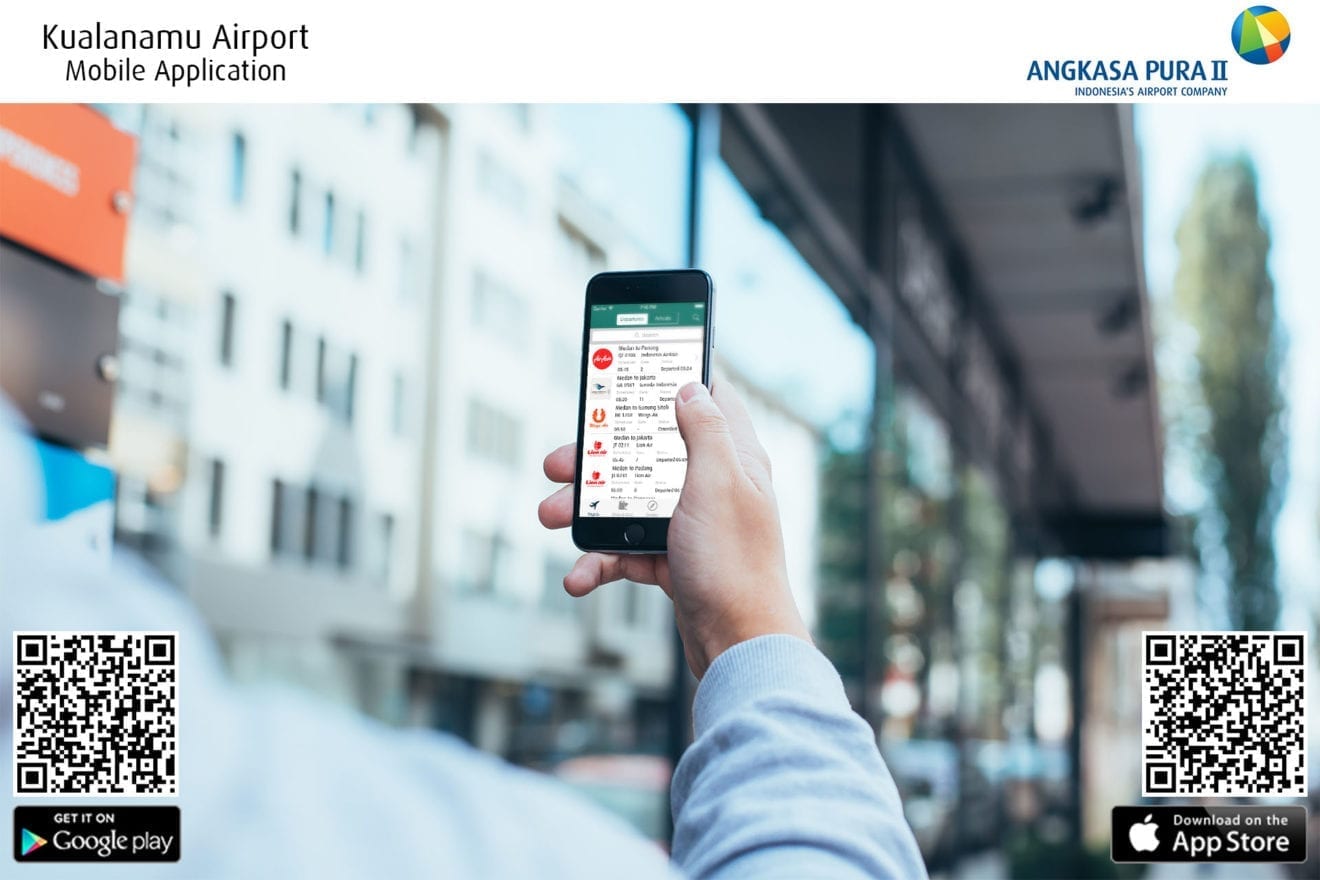
    Awaluddin revealed that passengers can now access information on flights, commercial tenants at terminals, and other important information related to airports operated by AP II via an app called Indonesia Airports.

    “The app is our new service, aimed at improving services, and a part of the smart airport campaign,” Awaluddin explained.

    Passengers at the Soekarno-Hatta International Airport can also enjoy superfast Wi Fi connection up to 50 Mbps.

    The number of passengers at 13 AP II airports during the year-end holiday season from December 22, 2016 to 4 January, 2017, is expected to reach 4.18 million, increasing by nine percent compared to that on regular days. Meanwhile, the number of flights is predicted to increase by 4.54 percent from 28,220 to 29,502.

    AP II will continue to intensify coordination with other stakeholders, such as airlines, the customs office, the immigration office, military and police to ensure smooth operation during the holiday season.

    The number of passengers is predicted to peak on December 23, 2016, while the counter-flow of passengers is expected to occur on January 1, 2016.

    AP II forecasted that the number of passengers at the 13 airports in 2016 would grow by 11 percent to 93 million passengers when compared to last year. The company expects that the number will exceed 100 million next year.

  • President Jokowi announces Garuda Indonesia`s direct flight to Mumbai

    President Jokowi announces Garuda Indonesia`s direct flight to Mumbai

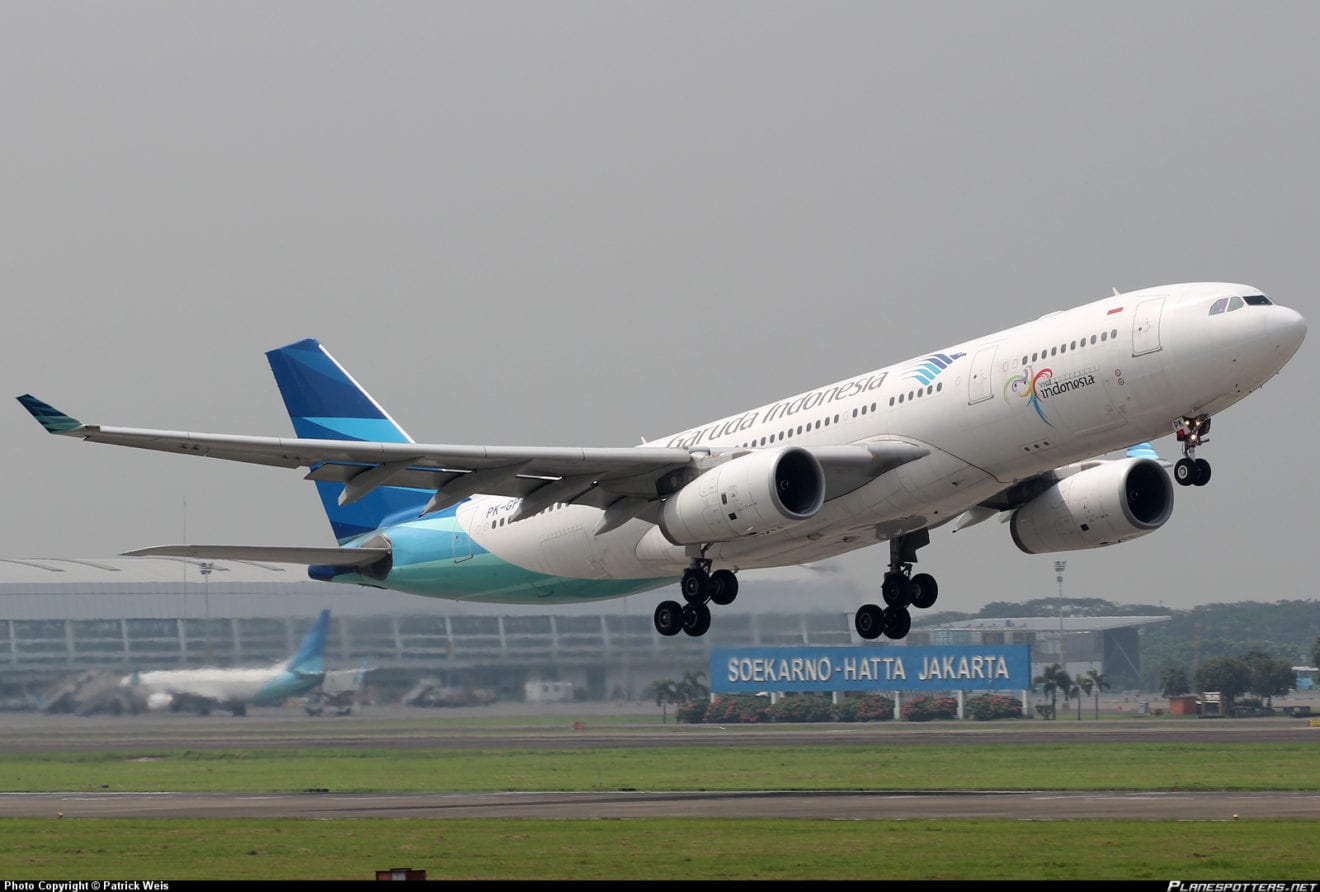
    National carrier Garuda Indonesia will operate a direct flight from Jakarta to Mumbai, India, President Joko Widodo (Jokowi) has announced.

    The announcement was made during a joint press conference by President Jokowi and Indian Prime Minister Narendra Modi at Hyderabad House here on Monday.

    “I am pleased to announce that Garuda Indonesia, beginning today, will fly directly to Mumbai from Jakarta,” he said.

    The direct flight connecting the two metropolitan cities will help strengthen bilateral cooperation between the two countries, and support economic cooperation as well as people-to-people contact, the president said.

    Garudas maiden Jakarta-Mumbai flight on Monday was a Boeing 737-800 NG with a seating capacity of 156, comprising 12 business class seats and 144 economic class seats.

    The direct flight service is aimed at supporting the Indonesian governments objective of attracting more Indian tourists to Indonesia and strengthening the cultural and historical relations between the two nations.

    Around 270 thousand Indian tourists visited Indonesia last year, and 350 thousand this year, President Director of Garuda Indonesia M Arif Wibowo said in a statement.

    “As the number of Indian tourists continues to increase annually, we are sure that Mumbai is a prospective market for us,” Wibowo stated.

    Indian tourists now have better access to fly to Indonesian tourist destinations such as Bali, Yogyakarta, Surabaya (East Java), and Medan (North Sumatra), from Jakarta, he remarked.

    Garuda Indonesias Jakarta-Mumbai flight GA 862 via Bangkok will operate thrice a week. It will depart Jakarta at 5:55 am local time and arrive in Bangkok at 9:25 am local time. It will depart Bangkok at 10:20 am local time and land in Mumbai at 3 pm local time.

    The Mumbai-Jakarta flight GA 861 will also fly three times a week. It will depart from Mumbai at 5:35 pm local time, and arrive in Bangkok at 9:55 pm local time. It will depart Bangkok at 11:35 pm local time and arrive in Jakarta at 3:05 am local time.

    Garuda operates direct flights from Jakarta to various Asian countries such as Singapore, Malaysia (Kuala Lumpur), Thailand (Bangkok), China (Beijing, Guangzhou, Shanghai), South Korea (Seoul), Japan (Tokyo, Osaka) and Saudi Arabia (Jidda and Madinah).

  • Toyota chief shifts gear, to boost electric vehicle division

    Toyota chief shifts gear, to boost electric vehicle division

    Toyota Motor Corp on Wednesday appointed its president to lead their newly formed electric car division, flagging its commitment to develop a technology that the automaker has been slow to embrace.

    The change comes as the United States, China and European countries are encouraging automakers to make more all-electric battery cars as they push alternative energy strategies.

    Akio Toyoda, grandson of the company’s founder Kiichiro Toyoda, has been at the helm of the world’s largest automaker since 2009. He will head the company’s electric vehicle (EV) planning department along with Executive Vice Presidents Mitsuhisa Kato and Shigeki Terashi.

    “By putting the president and vice presidents in charge of the department, we plan to speed up development of electric cars,” said Toyota spokeswoman Kayo Doi, following a personnel change announcement by the company.

    “The president will directly oversee the department’s operations to enable decisions to be made quickly and nimbly.”

    The department comprises a new in-house unit to plan Toyota’s strategy to develop and market electric cars as part of the company’s efforts to keep pace with the tightening global emissions regulations.

    Toyota is also shifting the chief engineer of its Prius petrol-hybrid to its EV efforts, appointing Koji Toyoshima to head the division’s engineering team. Toyoshima will also join the four-member EV strategy unit, which will include representatives from group suppliers – Denso Corp, Aisin Seiki Co, and Toyota Industries Corporation.

    Rivals such as Nissan Motor, Volkswagen and Tesla Motors have touted pure electric cars as the most viable zero-emission vehicles.

    However, Toyota until recently said it favored EVs for short-distance commuting given their limited driving range and lengthy charging time. It has been investing heavily in hydrogen fuel-cell vehicles (FCVs), which the company considers as the ultimate “green” car.

    Earlier this month, Toyota said it will develop cars with up to 15 percent greater range and battery life in the next few years.

  • Tag Heuer sales buck watch trend

    Tag Heuer sales buck watch trend

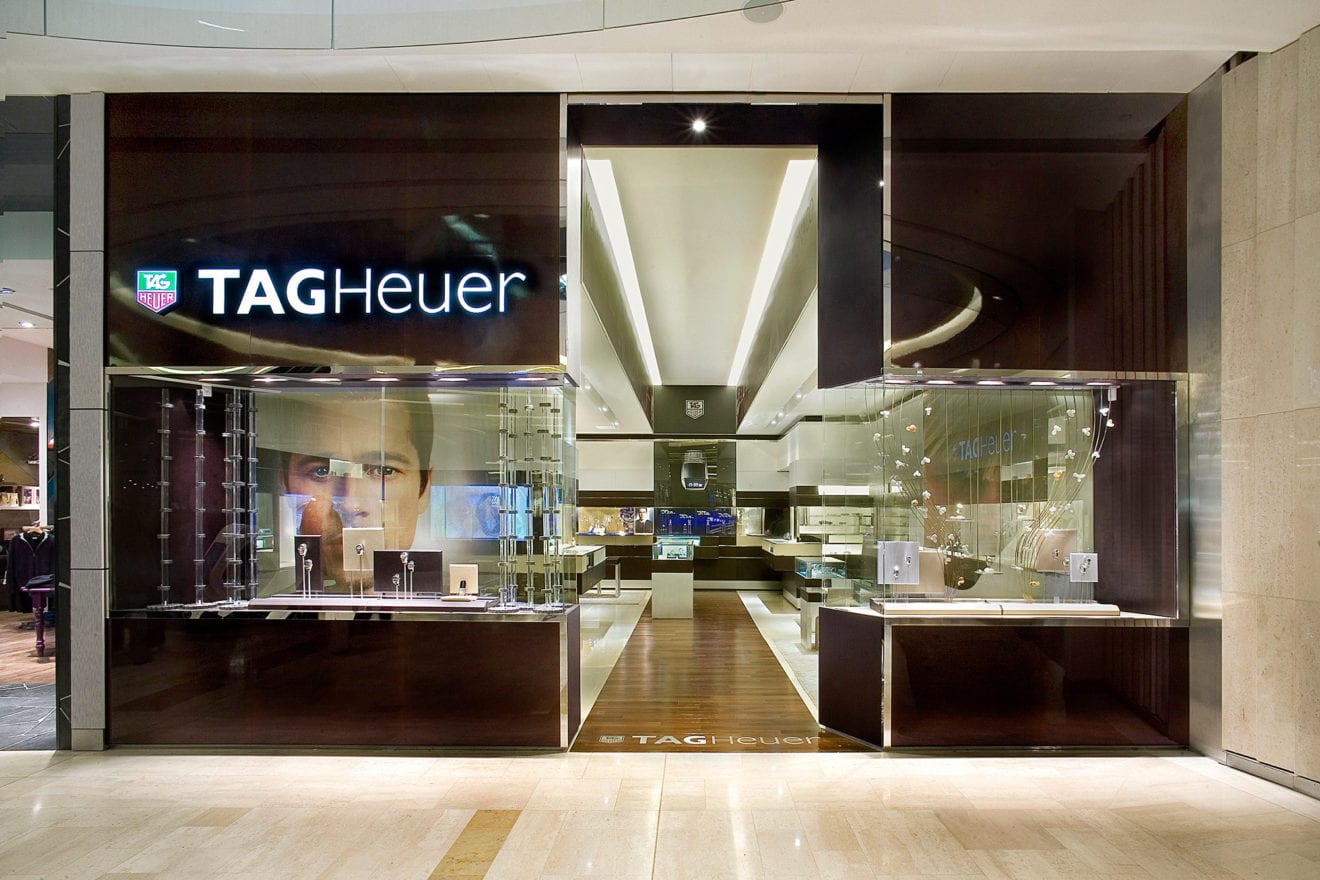
    Tag Heuer sales have soared as the LVMH-owned luxury watch brand defies the downturn in the Swiss watch industry.

    And now the company is eying a greater presence in China, undeterred by the routing of the luxury retail market in Hong Kong.  It has opened 60 new points-of-sale in Greater China this year.

    In an interview with Reuters, CEO Jean-Claude Biver said sales for the brand have risen more than 10 per cent so far this year – and is confident more growth is ahead. That contrasts with a 10 per cent sales plunge just two years ago.

    He cites new models and a smart watch for the improved fortunes, with the most growth in the company’s core US$1000 to $2000 price bracket.

    Tag Heuer’s remarkable growth has come as Swiss watch exports fell 11 per cent year-to-date.

    “For us, China is a country where historically we were not very present, so it is huge opportunity,” Biver told Reuters.

    “We are investing massively in China while the others are cutting their investments,” he said.

  • Rocket Internet sells Foodpanda business

    Rocket Internet sells Foodpanda business

    Rocket Internet has sold its mobile and online food ordering portal foodpanda to rival Delivery Hero for an undisclosed sum.

    Berlin-based Delivery Hero was founded in 2011 by Niklas Östberg. The company said in its announcement that the purchase would increase its stake in the global online food ordering and delivery business. With the acquisition, the combined group will now be processing over 20 million orders per month across 47 countries.

    Delivery Hero will also be able consolidate its market leadership position in the Middle East and will be adding 20 new countries in Eastern Europe, MENA, and Asia to its platform. Before the acquisition, foodpanda operated in 22 countries with market leading positions in 17 of them, according to Rocket.

    In exchange for all its shares in foodpanda, Rocket Internet received newly issued shares in Delivery Hero, which effectively increases its stake in the company to 37.7% (on a fully diluted basis).

    “The combination of foodpanda and Delivery Hero, one of our most important companies, further consolidates key markets resulting in significantly improved market positions. Delivery Hero is also acquiring new markets with leading market positions further broadening its geographic footprint,” said Oliver Samwer, Rocket Internet’s CEO, in a media statement.

    The transaction is subject to customary closing conditions and is expected to close prior to December 31.

    “We look forward to working with the team to continue creating unparalleled take away experiences for our customers around the world,” Östberg said.

    In the first half of the year, Delivery Hero reported more than 83 million processed orders globally, which is up 45% compared to the same period the previous year. It said revenues during the first half of 2016 also grew by 53%.

  • Cebu Pacific looking into Hawaii, Melbourne flights

    Cebu Pacific looking into Hawaii, Melbourne flights

    Cebu Pacific may offer additional flights to Australia and the United States as part of efforts to expand its international network, its chief executive officer said.

    The Gokongwei-led carrier earlier said it expects its long-haul business to post a profit, driven by new flight services and increased frequencies in its existing international routes.

    “We are still considering… looking at Hawaii and Melbourne,” Cebu Air, Inc. President and Chief Executive Officer Lance Y. Gokongwei told reporters at the sidelines of a recent event when asked for the low-cost airline’s next planned long-haul route after its maiden Guam flight last March.

    Mr. Gokongwei, however, noted that there are “no firm dates” yet for the said flights.

    Cebu Air currently operates across 36 local and 30 international destinations with a fleet of 58 aircraft. It operates from six hubs: Manila, Cebu, Clark, Kalibo, Iloilo, and Davao.

    Asked whether Cebu Pacific would also consider mounting flights to Europe, Mr. Gokongwei: “I think we would consider it, but right now, we don’t have any immediate plans at this point but it’s something we should be considering as we get additional long-haul aircraft into the system.”

    “Frankly, I don’t see it happening from a Cebu Pacific perspective for 2 or 3 years,” he added.

    Mr. Gokongwei said Cebu Pacific expects to ferry 19 million passengers this year, a record passenger volume, driven by the airline’s low-cost long-haul services and increased frequencies in key domestic markets from 18.4 million passengers in 2015 and also up from the 16.9 million passengers flown in 2014.

    As of the nine months ended September, Cebu Pacific said passenger traffic was up 6% to 14.48 million, as capacity inched up by 0.4%.

    Cebu Air, operator of budget airline Cebu Pacific Air, saw its profit double in the first nine months of the year to P7.1 billion from P3.56 billion a year ago, led by strong passenger volume, higher ticket prices and lower fuel costs during the period, it told the stock exchange in its quarterly report.

    Demand remained strong during the nine-month period as Cebu Air reported its total revenue hit P46.69 billion, up 10.5%. Passenger revenue rose 10.1% to P35.36 billion while ancillary revenue — from non-ticket revenues such as baggage fees and onboard meals — was up 14.9% to P8.79 billion.

    Shares in Cebu Air closed at P97.80 apiece on Friday down P3.90 or 3.83% from its previous finish of P101.70.

  • AIS, True must launch low-cost 4G SIMs for poor

    AIS, True must launch low-cost 4G SIMs for poor

    Thailand’s telecoms regulator NBTC has issued an order requiring AIS and True Move to provide low-cost 4G SIMs for disabled and low-income citizens.

    The order is based on the terms of the licenses for 1800-MHz and 900-MHz 4G spectrum won by the two operators in an auction last year.

    As per the order, low-cost 4G SIMs must provide tariffs at least 10% cheaper than the maximum cap on 4G voice and data tariffs imposed by the regulator.

    Caps in the 1800-MHz and 900-MHz bands have been set at 0.69 baht ($0.019) per minute for voice calls and 0.26 baht per megabyte for data services.

    The new low-cost SIMs will need to be available by March, and the operators will be required to design a process to meet this deadline.

    The NBTC is yet to set definitions of disabled and low-income for the purposes of determining eligibility for the discount plans, but has suggested that low-income may be defined as earning less than 10,000 baht ($281) per month.

    According to NBTC secretary-general Takorn Tantasith, last year’s 900-MHz and 1800-MHz auctions had the explicit purpose of bridging the digital divide, and all Thais must be able to benefit from national resources including spectrum.

  • Thailand signs up for eCommerce initiatives

    High-level witnesses attended the signing of a letter of intent in China that will see Thailand co-operate with Alibaba on eCommerce initiatives.

    Thailand’s deputy prime minister Somkid Jatusripitak was invited by the eCommerce giant to its headquarters in Hangzhou to witness the signing alongside Alibaba Group executive chairman Jack Ma.

    Initiatives covered by the agreement include training for SMEs and individuals, and exploring ways to enhance logistics capabilities to support digital economy strategies as well as the government’s new Thailand 4.0 economic model, aimed at steering the country toward a value-based economy.

    Other senior Thai government officials also attended the signing along with private-sector representatives. Thailand’s permanent secretary Wiboonlasana Ruamraksathe and Alibaba Group president Michael Evans signed the documents.

    “This visit to Alibaba represents a continuation of the bilateral talks between the prime minister and Jack Ma,” says Somkid Jatusripitak. “To strengthen the competitiveness of Thailand’s SMEs and help them succeed in an increasingly digital era, the prime minister earlier assigned responsibilities to a task force made up of government agencies and private enterprises to work with Alibaba in a joint effort to lift the export capabilities of Thai businesses, starting from the grassroots and community level and extending to mid-tier businesses.”

    “We are very honoured to have this opportunity to work with the Thai government,” Ma said at the signing ceremony, “and I would like to thank the Thai people for their trust, because trust is the basis of any successful partnership.”

    Long-term vision

    He said that since Alibaba was founded 17 years ago, its vision had always been about empowering small businesses and young people, particularly those in developing nations.

    “We want to partner with governments and organisations that share this vision and commitment. By working together and applying technology and innovative ideas, I believe we can make that vision a reality, and magic will happen.”

    Four key areas are covered by the Thailand agreement, the first involving eCommerce training for 30,000 Thai SMEs to help them access both domestic and international platforms. Alibaba and its majority-owned eCommerce platform in Southeast Asia, Lazada Group, will help provide the training.

    The group will also share its experience and expertise with the Thai government to help build the nation’s own national eCommerce platform.

    Secondly, Thailand and Alibaba will collaborate on creating a nationwide program to train around 10,000 individuals so they can be proficient in digital technology. The two sides will also work on nurturing software developers, who will be given access to the China market via Alibaba Cloud’s marketplace for the software apps they create.

    Training for officials

    Furthermore, senior government officials will receive training at the Thailand Digital Government Academy, initially on big data and AI technologies. Alibaba and Lazada will jointly run a train-the-trainer program to groom eCommerce business co-ordinators who will in turn help SMEs establish their own online export capabilities.

    Thirdly, Alibaba and Lazada will contribute to the development of the Thailand’s supply-chain and logistics systems by sharing their experience and expertise with Thailand Post in a bid to expand domestic delivery services to all provinces. Thailand Post will also study Alibaba’s inventory-management systems and international eCommerce fulfillment services to gain insight into the establishment of bonded warehouses and fulfillment centres.

    Finally, Alibaba and the Thai government will explore co-operation opportunities under the Eastern Economic Corridor Development (EECD) project with the aim of helping establish Thailand as a hub of digital technology and regional data centres in Southeast Asia.

    Various Thai agencies lead the taskforce in charge of building upon the bilateral talks, including the Ministry of Commerce, Ministry of Digital Economy and Society, Ministry of Science and Technology, the Office of Small and Medium Enterprises Promotion, the Small and Medium Enterprise Development Bank of Thailand, the Export-Import Bank of Thailand, the Electronic Government Agency (a public organisation), and Thailand Post.


  • Michael Jordan wins trademark dispute

    Michael Jordan wins trademark dispute

    Following a four-year legal battle over a trademark dispute, US basketballer Michael Jordan now owns his Chinese name.

    China’s highest court has decided in his favour against Chinese sportswear maker Qiaodan Sports. Its name, pronounced “Cheeow-dan”, is a transliteration of “Jordan” in Mandarin, and the company was selling its own shoes and sportswear with Qiaodan as its registered trademark.

    Jordan has been known by the Chinese characters for “Qiaodan” since he became popular in the 1980s, and previously argued unsuccessfully in Beijing courts that Qiaodan Sports had used his Chinese name, his old jersey number, 23, and basketball player logo to make it look like he was associated with its brand.

    Now, the Supreme People’s Court has overturned two rulings by Beijing courts against Jordan, from 2014 and 2015, that had found there was not sufficient evidence to support the athlete’s allegations over the use of his image, and that “Qiaodan” was the translation of a common family name as claimed by the Chinese company.

    It also ordered the trademark bureau to issue a new ruling on the use of the Chinese characters in the brand name “Qiaodan”, effectively awarding the trademark to Jordan. The company can continue to use the Romanised spelling of the name, however.

    Chief judge Tao Kaiyuan says there was an established link between Jordan and the Chinese characters for “Qiaodan”, which are commonly used by the public when referring to the former basketball player, meaning that Jordan was entitled to protection under the trademark law.

    Jordan says millions of Chinese fans and consumers have always known him by the name Qiaodan.

    “Chinese consumers deserve to know that Qiaodan Sports and its products have no connection to me. Nothing is more important than protecting your own name, and today’s decision shows the importance of that principle.”

    After the ruling, the company defended its actions but said it would respect the court’s decision.

    In a twist, Qiaodan Sports was able to counter-sue Jordan in 2013 for preventing it from pursuing a stock-market listing because of the trademark lawsuit.

  • Young Zalora CEO changes fashion retail

    Young Zalora CEO changes fashion retail

    A 32-year-old executive is driving the growth of electronic commerce in the Philippines, encouraging millennials to shop for fashion items through their smartphones.

    Paulo Campos III, the Princeton University-educated co-founder and managing director of Zalora Philippines, says his company is scaling up operations to keep up with the frenetic activities during the holiday season.

    “The market is accelerating this year compared to last year and even faster than the last time we talked. Christmas is drawing more and more customers to shop online,” Campos says in a news briefing.

    “Sales momentum started to pick-up as early as October, a few weeks earlier than last year. And the peaks and highs are even higher than last year. But I can tell you in December we’re averaging more than double the traffic last year, or more than 100 percent,” says Campos, while announcing Zalora’s biggest sales event—12.12 Online Fever—a four-day campaign that starts midnight of Dec. 12 across Southeast Asia.

    Zalora Philippines co-founder and managing director Paulo Campos III

    Zalora Philippines, which is supported by Germany’s Rocket Internet GmBh, is Asia’s leading online fashion retailer. Campos helped establish Zalora Philippines in January 2012 when he was 28, after working for The Boston Consulting Group in Singapore and Ayala Land Inc.

    Campos graduated magna cum laude with a Bachelor of Arts Degree from Princeton University in 2005.  He also has an MBA degree from Harvard Business School.

    Campos says this year’s cyber sales event offers exclusive deals on more than 200 fashion and beauty brands across six markets, including the Philippines, Singapore, Malaysia, Hong Kong, Taiwan and Indonesia.

    Campos says 12.12 Online Fever is a region-wide sales event that aims to drive the e-commerce industry across the region, bringing to consumers some of the best deals that encourage online purchases and convert traditional shoppers into e-consumers.

    He observes that buyers have been spending more time on the net, especially when the holiday season peaks.

    From browsing an average of 10 minutes in previous years, consumers are now spending 13 to 14 minutes per browse on the net “which maybe small from a consumer point of view but big for us already.”

    “The more they spend time visiting our site, the more they get engaged, the more they tend to make a purchase,” he says. “More engagement, I think, is because of more brands [and] better assortment [of products]. They are more coming to the website and the figure is doubling.” Globally, Zalora has seen an increase in new customers by 32 percent.   With most of the major brands now housed in Zalora, the company is focused on deepening engagements with brands and with customers.

    “We are always adding  more brands,  but at this rate we got almost the big ones. Now we’re going deeper as we are shifting our focus to deepening the engagement with customers. We will be doing other brands, as well. Those big names that haven’t signed up up with us, we intend to convince them more,” Campos says.

    “The thing about big brands is that they create incremental demand. In fashion, it’s all in the brand. Our progress this year, why we move from strength to strength, is because we’ve proven that our brand profile is one of the best in the online world,” says Campos.

    As sales grow brisk, operations are also expected to keep up with the volume. Zalora is beefing up its delivery system, hiring more riders on top of the current fleet of 400.

    Zalora is pro-active, he says, as it moves to determine fashion trends, globally and on the regional scale. It also helps consumers arrive at a decision via the shopper’s price comparison.

    Cyber shopping has changed the mindset of Filipino consumers, he says. In 2016, the Philippines reached the average global e-commerce penetration rate.

    A study by an independent research company in Singapore shows that about 46 percent of Filipinos now have access to the internet, while 29 percent of Filipinos have experienced online shopping.