Author: Mei Ling Tan

  • Avid Myanmar Travelers Can Now Pay with Mastercard and CB Bank Credit

    Avid Myanmar Travelers Can Now Pay with Mastercard and CB Bank Credit

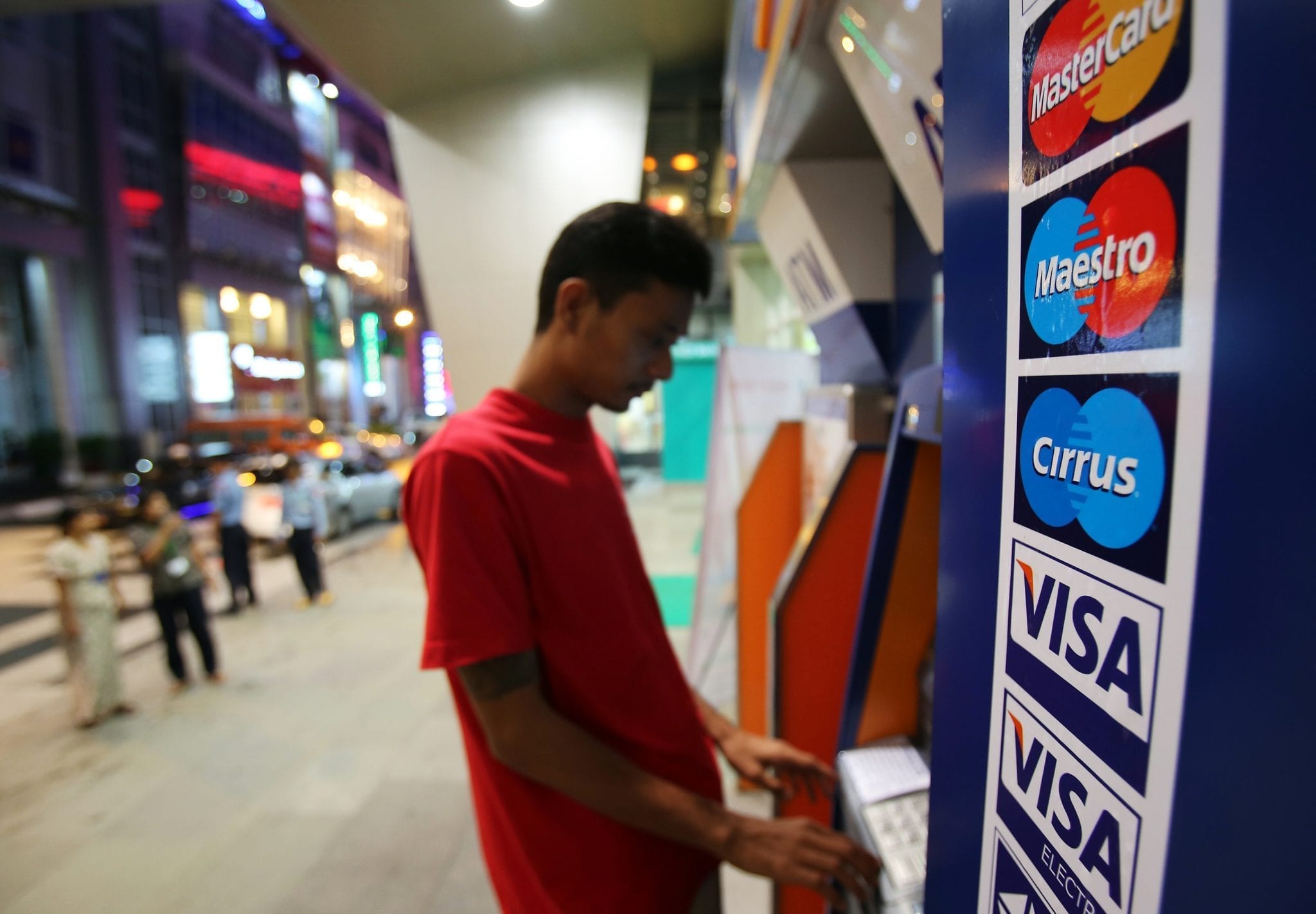
    As Myanmar continues to see positive economic growth projections[1], its people are increasingly seeking overseas destinations. The latest Mastercard research revealed that Myanmar is the fastest growing outbound travel market in Asia Pacific with a growth projection of 10.6% for the next five years.

    In light of this, Mastercard has once again partnered Co-operative Bank Ltd (CB Bank) to launch Classic, Gold and Platinum Mastercard cards, which will be made available to Myanmar residents and citizens when traveling abroad. 

    Mr. Kyaw Lynn, Executive Vice Chairman and CEO of CB Bank said: “As more Myanmar residents and citizens travel abroad, it is crucial to have convenient and secure access to their funds wherever they are. A cashless society is an important goal for CB Bank. Although still a work in progress, we are working hard with like-minded partners such as Mastercard to achieve that goal by expanding the payment options, increasing usage of ATMs, POS terminals and enhancing e-commerce capabilities. For starters, we are already seeing a great shift from cash to electronic payments. And on average, there are 9,000 transactions being made monthly via electronic payment at the point-of-sale.”

    Mr. Antonio Corro, country manager, Thailand and Myanmar, Mastercard, said: “For a country that had only opened its doors not too long ago, Myanmar’s economic and outbound travel projections are very encouraging. To meet the increasing demands for travel, we have deepened our partnership with CB Bank to launch our first credit card in the country. This signifies a big step towards the greater development of the electronic payments infrastructure and it also means that consumers are able to make more secure and convenient payments for their purchases when travelling abroad.” 

    Supporting Myanmar in Its Journey to Greater Inclusion

    Since entering the market in 2012, Mastercard has strived to assist Myanmar in its nascent journey towards financial inclusion. In October 2013, Mastercard and CB Bank had launched Myanmar’s first ever payment product, a prepaid travel card for locals called the CB Bank EASI Travel Prepaid Mastercard card, which has seen a healthy take-up rate. Approximately seventy new card applications on average are received every day, according to Mr. Kyaw Lynn. The latest of their efforts include the launch of Mastercard’s first contactless card in Myanmar. 

    With less than 10% of the population holding bank accounts, there is still so much that needs to be done to bring more citizens into the financial system and it is widely acknowledged that the journey to financial inclusion in Myanmar will not be a smooth one.

    In a report by The Fletcher School, Tufts University – conducted with the support of Mastercard and the Myanmar Development Resource Institute’s Center for Economic and Social Development (MDRI-CESD) – one of six key findings point to trust playing a key role in increasing adoption of financial services.

    This means there a stronger impetus and opportunity for Mastercard to assist in rebuilding the financial sector and bringing greater financial access to the population. 

    “Building consumer trust in electronic payments is crucial. In line with our financial inclusion strategy in Myanmar, we will continue to provide support in educating locals on the benefits of electronic payments and increasing access and acceptance to financial services and infrastructure,” Mr. Corro added. 

    The number of ATMs in Myanmar which accept Mastercard has been growing at an astounding rate, from over 140 ATMs in 2013 to almost 1,800 ATMs in just three years, marking a near 13-fold increase. The number of point-of-sale (POS) acceptance terminals grew from 72 to over 3,800 in the same period, which signify a strong adoption of cashless payments. At present, more than 3,200 restaurants, retail outlets and hotels in Myanmar accept payment cards.


  • DJI Launches Xmas Promotion

    DJI Launches Xmas Promotion

    DJI, the world leader in unmanned aerial technology, Monday launched its Xmas Promotion featuring price reductions, free accessories with purchases and special holiday gifts.

    Whether you are a content creator looking for the best stabilized handheld camera equipment to shoot your next online video or an experienced aerial photographer looking to take your skills to the next level, there is something for everyone to be excited about this holiday season. 

    DJI’s Xmas Promotion will commence December 12, 2016 and end at 4 pm HK time January 5, 2017. The Phantom discount and Osmo bundle promotion will be available on https://campaign.dji.com/xmas, at authorized DJI dealers and in the Shanghai, Shenzhen, Seoul and Hong Kong DJI Flagship Stores. 

    The DJI Xmas Promotion features:

    • Price reductions on select Phantom drone models as detailed in the chart below (excluding Japan and China).
    • Free High Capacity Intelligent Battery with the purchase of the Osmo+ handheld stabilizer or free Intelligent Battery and Osmo Base with the purchase of the Osmo Mobile.
    • All DJI Care service plans are discounted by 12%. For more info and applicable countries, please visit https://store.dji.com/category/service.
    • The first 400 customers who purchase the recently released Phantom 4 Pro or Inspire 2 at store.dji.com/ will receive a special holiday gift which includes a DJI scarf and 3D Christmas card.

    Pricing Details:

    Model


    AUD

    HKD

    TWD

    USD

    (SGP & MYS)

    Phantom 4

    Original Price

    2,099

    9,299

    53,000

    1,279

    Promotional Price

    1,699

    7,999

    37,400

    1,069

    Phantom 3 Professional

    Original Price

    1,699

    7,999

    36,800

    1,070

    Promotional Price

    1,399

    6,499

    30,000

    859

    Phantom 3 Standard

    Original Price

    859

    3,869

    18,300

    530

    Promotional Price

    689

    3,199

    15,000

    429

    Phantom 4 – Obstacle avoidance, intelligent tracking and computer vision, allowing you to experience a simplified flying experience

    The Phantom 4 expands on previous generations of DJI’s iconic Phantom line by adding new on-board intelligence that make piloting and shooting great shots simple through features like its Obstacle Sensing System, ActiveTrack and TapFly. It is the first consumer quadcopter to use highly advanced computer vision and sensing technology, which makes professional aerial imaging easier for everyone.

    For more info: https://www.dji.com/phantom-4 

    Phantom 3 Professional – Smart, responsive and stable, enabling you to unleash your creativity

    The Phantom 3 Professional makes flying remarkably easy so you can shoot like a pro. With GPS-assisted hover, Vision Positioning System, smart features such as Return-To-Home, Point of Interest, Follow Me and real-time flight data, capturing the perfect shot has never been easier. The Phantom 3 Professional is one of the most intelligent, ready-to-fly drone that allows you to unleash all sorts of creative possibilities.

    For more info: https://www.dji.com/phantom-3-pr 

    Phantom 3 Standard – Remarkably intuitive and easy to use, allowing you to enjoy the thrill of flight

    The Phantom 3 Standard makes flying fun and exciting with its powerful, responsive motors. Soar on the path you want, stop in place, speed up, or fly higher in an instant. From takeoff to landing, it’s completely under your control while its onboard intelligent features does all the work, making it the most affordable and easy to fly consumer drone.

    For more info: https://www.dji.com/phantom-3-standard 

    Osmo+ – Control your composition with zoom and capture smooth, cinematic videos

    The Osmo+ allows you to capture motion without blur, action shots without shake and create the perfect video even on the move. It is DJI’s first consumer handheld gimbal with an integrated zoom camera that empower users with a 7× zoom without sacrificing HD quality. This gives you more control over your composition than ever before, allowing you to frame the perfect shot.

    For more info: https://www.dji.com/osmo-plus

    Osmo Mobile – Turn your smartphone into a smart motion camera

    The Osmo Mobile allows you to capture memories and share life’s moments more easily than ever before by turning your smartphone into a motion camera. It can make every moment you shoot look smooth, professional and ready to share. With the DJI GO app, you can automatically track your subject, capture stunning motion timelapses or even stream your moment as it happens.

    For more info: https://www.dji.com/osmo-mobile

    Phantom 4 Pro – An intelligent, easy to use aerial platform for those who demand more from the camera

    The Phantom 4 Pro offers a powerful imaging system for those who demand excellence from the camera. The camera packs a 1-inch 20-megapixel sensor and almost 12 stops of dynamic range to bring out levels of detail even in low-light. Enhanced features include sensing systems on the four sides that help it avoid obstacles, Landing Protection function and newly added subject tracking capabilities.

    For more info: https://www.dji.com/phantom-4-pro

    Inspire 2 – A ready-to-fly platform for professional filmmakers and video creators

    The Inspire 2 takes everything that was good about the revolutionary Inspire 1 and improves it, with an upgraded camera system, dual intelligent battery, autonomous flight features and added sensors for better obstacle detection. An upgraded video transmission system is now capable of dual signal frequency and dual channel, streaming video from an onboard FPV camera and the main camera simultaneously, for better pilot and camera operator collaboration.

    For more info: https://www.dji.com/inspire-2

  • Philippines Senate plans major telco sector reform

    Philippines Senate plans major telco sector reform

    A Philippines Senate committee plans next year to draw up legislation that would reform the nation’s telecommunications industry.

    The Senate committee on economic affairs is considering reforms including granting more powers to regulator the National Telecommunications Commission (NTC), Rappler reported.

    Another proposed change involves removing the 40% owner restriction on overseas investments in telecommunications ventures to allow foreign players to more freely operate in the market.

    The committee is critical of the NTC’s recent decision to quickly review the planned sale of San Miguel Corporation’s telecoms assets, including its highly-prized allocation of 700-MHz spectrum, to the incumbent duopoly of Globe and PLDT.

    The committee aims to strengthen the NTC’s powers to protect consumers and promote healthy competition, while ensuring the regulator is independent.

    In terms of foreign investments, operators are currently classed as public utilities, limiting foreign investment to 40% and restraining the establishment of prospective joint ventures and the entry of new players.

    The committee is proposing to exclude telecommunications from the definition of a public utility, which would circumvent the need for a constitutional change to allow the liberalization of the nation’s telecoms sector.

    Even incumbents PLDT and Globe are supporting the proposal to open up telecoms to foreign players on the grounds that it would benefit both consumers and the industry.

  • JCB International and CIMB Bank Singapore with Wirecard

    JCB International and CIMB Bank Singapore with Wirecard

    JCB, the international operations subsidiary of JCB, CIMB Bank Singapore (“CIMB”), and Wirecard AG (“Wirecard”) are pleased to announce their signing of a License Agreement to begin JCB merchant acquiring services in Singapore. Through the partnership, JCB card acceptance facilities will be available at CIMB merchants.

    With its ASEAN footprint firmly in place, CIMB is a befitting partner with JCBI on both the local and regional front. Having established similar collaborations in Malaysia and Indonesia, this new License Agreement extends the collaboration into other parts of Southeast Asia and enhances cooperation in the region.

    Tourism is a key contributor to the Singapore economy and the country is a popular destination for regional JCB cardmembers. This new merchant acquisition partnership with CIMB will bolster the JCB card acceptance network in the market and promote new merchants to JCBI’s rapidly expanding cardmember base from Asia during their stay in Singapore.

    Vincent Ling, Managing Director of JCB International Asia Pacific Pte Ltd., commented, “As Singapore continues to be a key tourist destination for Asians including Japanese, Korean, and Chinese, a stronger JCB card acceptance will bring about enhanced convenience to JCB cardmembers. JCBI is pleased to collaborate with CIMB Bank Singapore and we look forward to working closely together to serve our cardmembers, merchants and business partners better.”

    Mak Lye Mun, CEO of CIMB Bank Singapore and Country Head of CIMB Group Singapore said, “As a leading bank in ASEAN, CIMB Bank is proud to expand our payment acceptance offering with JCBI in Singapore. This partnership unlocks opportunities for our merchant acquiring business and I’m confident it will benefit both merchants and JCB cardmembers through greater card acceptance and increased payment options.”

    CIMB Bank Singapore’s one-stop merchant solution is in partnership with Wirecard, a global leader in electronic payment and mPOS technology and infrastructure. Wirecard has been providing an integrated payment platform that supports eCommerce, mCommerce, mobile and traditional Point-of-Sale, to facilitate merchants’ real-time tracking of transactions across multiple sales channels as part of the partnership. Mr Jeffry Ho, Managing Director of Wirecard Singapore, Malaysia, Hong Kong and Australia A&I added, “We are delighted with another milestone of our partnership with CIMB Bank. We believe that the CIMB-JCB initiative will certainly provide a better payment experience for both merchants and JCB cardmembers in Singapore.”

  • Starbucks, Tencent debut social gifting on WeChat

    Starbucks, Tencent debut social gifting on WeChat

    Starbucks Coffee Company and Tencent Holdings have entered an alliance to co-create a new social gifting feature on WeChat.

    The new service, which will be rolled out early next year, will make it easy for Starbucks China customers to gift items to a friend or a family member.

    Customers will be able to select from Starbucks-branded gifts and products and add a personalized message. Recipients of these personal gifts and messages can save their gifts and memories on their WeChat accounts and redeem their gift at Starbucks stores across China.

    Users can use WeChat Pay to pay for their goods and services from their mobile devices at Starbucks retails stores. In China, more than 300 million users (as of March 2016) have linked their bank cards with WeChat or QQ, another flagship service of Tencent.

    “Just as Starbucks cards are among the most gifted around the globe, we aspire to also become the most gifted brand digitally in China,” said Belinda Wong, Starbucks China’s newly appointed CEO.

    The online social gifting platform is part of the company’s growing digital presence focused on connecting with customers through digital channels, including the Starbucks Mobile App, the My Starbucks Rewards program and social media.

    The announcement also builds on Starbucks rapidly expanding the portfolio of digital innovations in the country, which integrates the in-store experience with the digital “Fourth Place” experience.

    Earlier this year, Starbucks also launched a mobile payment system in China aimed at providing My Starbucks Rewards (MSR) members access to a fast, seamless and convenient way to pay for purchases, using their pre-loaded Starbucks Gift Card on their mobile devices.

    Wong, who was appointed from president to CEO of Starbucks China in October, has been instrumental in Starbucks unprecedented growth in country – from 400 stores in 2011 to over 2,300 stores today.

    The company said in a news release when her appointment was announced that she will oversee Starbucks plans to double its scale to operate 5,000 stores in China by 2021.

    Aside from focusing on the company’s overall long-term growth strategy, she will be responsible for key areas, including the vast digital and e-commerce opportunities across the market.

  • 3 in 4 Singaporean consumers want more personalized retail rewards

    3 in 4 Singaporean consumers want more personalized retail rewards

    Though many consumers are currently lukewarm about their relationships with brands and retailers, three in four consumers in Singapore will buy more from retailers if they are better rewarded for their loyalty, a study conducted by ICLP finds.

    Out of 750 consumers surveyed, only 3 percent consider themselves to be devoted to their preferred retail brands, expressing willingness and desire to forge enduring relationships with them. They also gave average to low scores in terms of passion (brand enthusiasm), commitment (loyalty), and intimacy (willingness to share information with a retailer).

    These findings come at a time when Singaporeans’ love affair with shopping and retail has been under strain. Even as retail sales show a modest year-on-year growth of 2 percent as of September 2016, there have been a slew of notable closures in the local retail landscape, most recently that of John Little, one of Singapore’s oldest department stores.

    These findings come at a time when Singaporeans’ love affair with shopping and retail has been under strain. Even as retail sales show a modest year-on-year growth of 2 percent as of September 2016, there have been a slew of notable closures in the local retail landscape, most recently that of John Little, one of Singapore’s oldest department stores.

    “What we are seeing from our research is that many Singaporean consumers still relate to brands and retailers at a transactional level, so when times are uncertain, they easily resort to the myriad of choices that are at their disposal, often literally at their fingertips now,” said Bruno Tay, Country Manager of the global loyalty marketing agency ICLP, which conducted the survey as part of an international study across nine markets.

    “It’s not too late to turn things around, though. In fact, retailers now have a chance to truly stand out if they appeal to the heart too — by approaching communication, reliability, consistency, reward and recognition from a human perspective,” he suggested.

    The study asked Singaporean consumers  to rate their retail experience with brands on seven core relationship criteria, namely recognition, rewards, reciprocity, reliability, respect, trust and communication. These were then mapped onto a model based on Sternberg’s Triangular Theory of Love, in partnership with an expert on relationship dynamics Professor Ron Rogge at the University of Rochester in the United States.

    Based on the three dimensions of a relationship — passion, commitment, and intimacy, the consumers’ experiences with brands and retailers are then further classified into six types. In increasing order of desirability, these range from empty, liking, casual, romantic, companionate to devoted.

    Devoted consumers — who currently form the marginal minority in Singapore — are those most willing to share personal information, opinions and desires with their favourite brands, and are least likely to stray to competitors. Notably, 92 percent of customers that fall into this group would recommend a brand they are devoted to. This is a significantly higher proportion than for consumers in the other types of relationships with their retail brands.

    Only 12 percent of customers in a ‘liking’ relationship would recommend a retailer to others, 27 percent in a ‘casual’ relationship, 56 percent in a ‘companionate’ relationship, and 69 percent in a ‘romantic’ relationship.

    “The rarity of devotion among Singaporean consumers underlines a sizeable gap and opportunity for local retailers and brands. Devoted consumers are keen to be advocates, so driving this pinnacle relationship can have tremendous effect on retailers’ business through word of mouth and social media sharing,” Tay said.

    The research findings suggest that Singaporeans do not just want traditional points-based reward programs, but also personalized rewards. Much like in a relationship with friends and loved ones, they would engage more when they receive genuine gestures that surprise and delight them.

    Around 67 percent of Singaporean consumers will buy more if retailers use their data in carefully considered, contextual ways to better understand their individual needs and preferences. This suggests the need for retailers to better leverage data technology and put in place more robust customer relationship management practices.

    Another 61 percent of consumers also place an emphasis on the importance of better communication, indicating that they will buy more if brands communicate with them better, in ways that express reciprocity and shared passion.

    Within the global context of the study, Singaporean consumers appear to parallel quite closely their counterparts in Hong Kong and Australia, where only 1 percent and 3 percent,respectively are in devoted relationships with brands.

    This is in stark contrast with the 21 percent of consumers in India who are devoted to their preferred brands. However, across the nine markets surveyed, including United Kingdom, United States, Brazil, United Arab Emirates, mainland China, Hong Kong, India, Singapore, and Australia, there is broad consensus that a well thought out loyalty programme can help deepen consumers’ connection with brands.

    “Thinking about our own personal relationships, we know that people fall in and out of love and friendships — lured by ‘greener pastures’,” Tay said. “Now we know that the same thinking can be applied to brand relationships that are dynamic and ever changing. Retailers looking to build and maintain devoted customer relationships should seek to truly understand the emotional factors that drive consumer loyalty.

  • Indonesia, Singapore cooperate in tourism

    Indonesia, Singapore cooperate in tourism

    Coordinating Minister for Maritime Affairs Luhut Binsar Panjaitan said Indonesia and Singapore have agreed to cooperate in a number of sectors such as tourism and energy.

    The fields of cooperation include tourism, development of liquefied natural gas (LNG), development of IT Park and sea waste processing into electricity energy.

    “We hope they will all be realized at the end of 2017. In the tourism sector, Singapore agreed to invest in the development of Lake Toba, the Buddhist Borobudur Temple and the Mandalaika,” the coordinating minister said in a written statement in Jakarta on Sunday.

    Indonesia has set itself the target of 20 million foreign tourist arrivals in 2019. The government is making all efforts to achieve the target by building a number of supporting facilities.

    Therefore, in its cooperation with Singapore, Indonesia is planning to build cruise terminals.

    According to the minister, the government is planning to develop the terminals in Tanjung Benoa, Palembang, Medan and Semarang. This is to attract some 300 cruise ships per annum.

    So far, the number of cruisers visiting Indonesia is still small, despite the fact that Indonesia is part of foreign destinations.

    Luhut has the target that in the coming two to three years, at least 150 cruisers will come to Indonesia.

    “On Wednesday, we will hold a meeting to discuss the plan to develop the cruise ship terminals,” he said adding that Singapore also agreed to provide tourist service training assistance.

    Regarding LNG, Luhut added that Singapore agreed to develop power generating plants in isolated islands in Indonesia.

    Singapore is viewed to have the technology for increasing the electrification in Indonesia.

    He also referred to the plan to develop IT parks in the form of data reading centers. On the plan, minister Luhut said he would communicate with the Ministry of Communications and Informatics.

  • Etihad moves 72 high-value racehorses from UK to Kuwait

    Etihad moves 72 high-value racehorses from UK to Kuwait

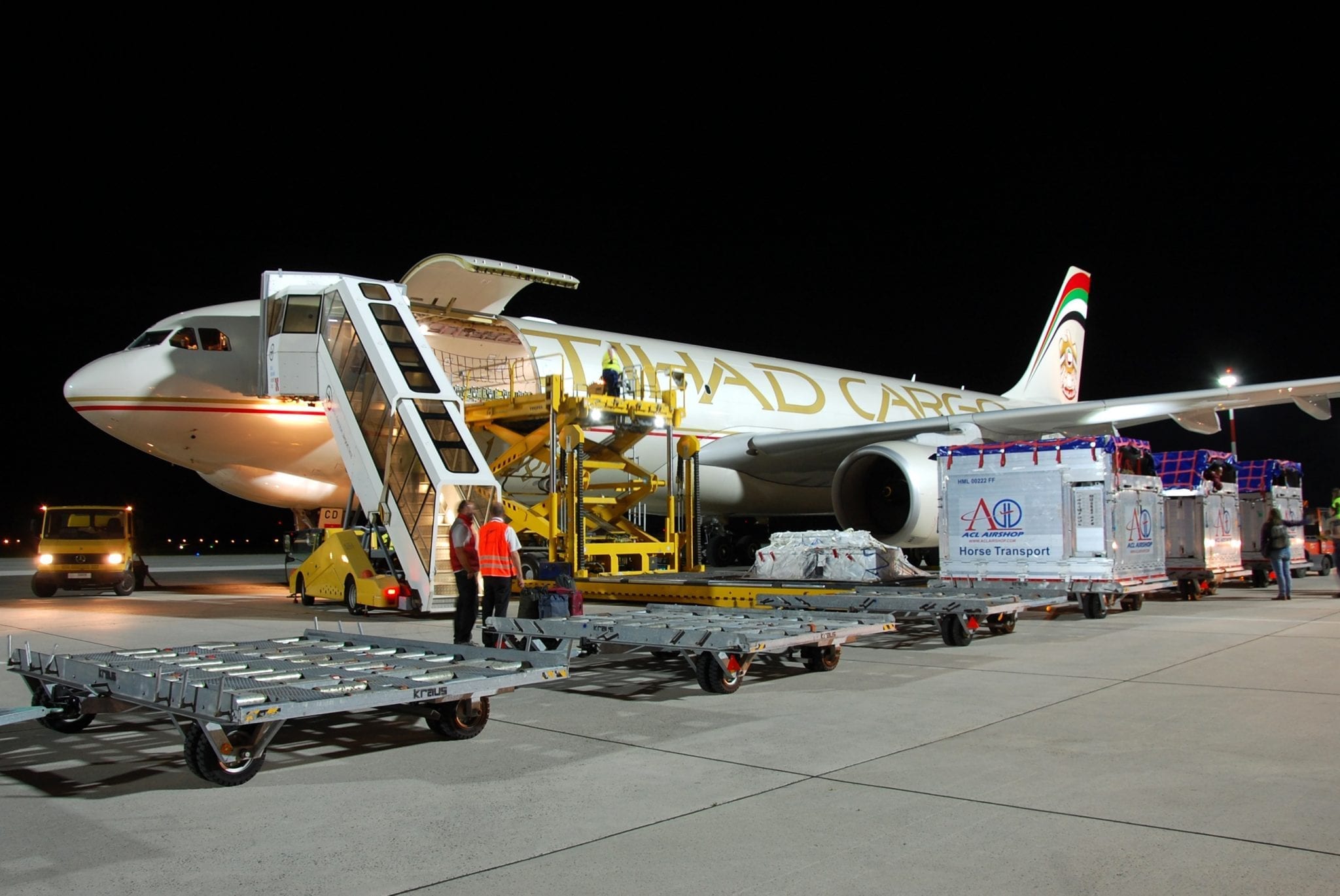
    Etihad Cargo has successfully shipped more than 70 elite racehorses from England to Kuwait after the European racing season. In all, 72 racehorses – worth a combined £36 million (US $45 million) – were transported from London Stansted Airport to Kuwait City, where they will spend the winter months training and racing in the temperate Middle Eastern climate. They were flown on one of the carrier’s state-of-the-art B777 freighters which are equipped with comfortable seating for up to nine grooms and can accommodate up to 75 horses at a time.

    David Kerr, senior VP of Etihad Cargo, said: “Safety is the most important thing for our equine customers, which is why it is imperative we offer a safe and reliable service on all of our shipments. The Middle East has strong ties to these magnificent creatures dating back thousands of years and, to this day, they are arguably the most precious cargo we carry. In 2016 alone Etihad Cargo has been entrusted to transport more than 1,200 horses, with several more large shipments scheduled before the end of the year.”

    A team of six professional grooms handled the horses during loading, while on board the flight – when they visit them in the cargo hold to ensure they are comfortable and calm – and on arrival in Kuwait.

     When the horses arrived at Stansted they were loaded by their grooms into jet stalls, specially designed with non-slip floors which hold three horses apiece. The IATA-approved stalls were then loaded onto the temperature controlled cargo hold of the aircraft in an operation which took more than six hours.

    Conan Busby, MAG’s head of cargo, owners of London Stansted Airport, said: “We are delighted that Etihad Airways chose Stansted to handle this delicate and valuable cargo. Stansted is the UK’s number one airport for horse travel and handles many specialist flights every year. Many of the horses taking part in this year’s Olympic Games and the Queen’s 90th Birthday celebrations passed through Stansted’s dedicated equine facility.”

    Etihad Cargo operates a fleet of nine wide-body freighters – five B777Fs and four A330Fs – which can be configured to carry 75 and 30 horses respectively.

  • DJI second China flagship store opens

    DJI second China flagship store opens

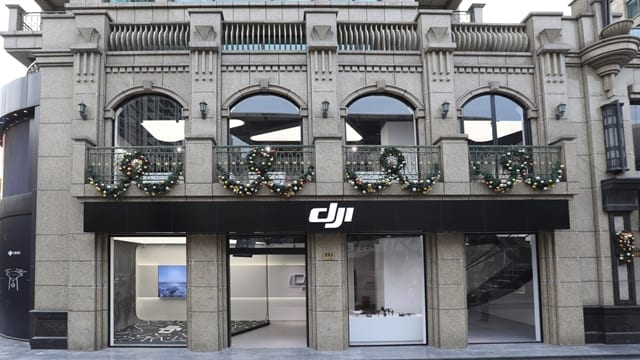
    Aerial vehicle technology retailer DJI will open its second China flagship store in Shanghai tomorrow.

    dji-first-floor-product-display

    The two-storey store is in the city’s shopping, dining and entertainment precinct Xintiandi.

    dji-first-floor-enterprise-products

    Covering 500 sqm, it offers the full range of DJI aerial platforms and camera products, offering hands-on experience of its products, including the foldable Mavic Pro personal drone and professional drones Inspire 2 and Phantom 4 Pro.

    dji-first-floor-full-image-2

    Combining Chinese and Western design concepts, the store is surrounded by outdoor cafes, art galleries and lifestyle boutiques. The first floor features a 20 sqm flight cage so drones can be seen in  flight, even by pedestrians passing by the store. There is also a technical support centre and the DJI Story Corner.

    dji-first-floor-accessories

    On the second floor, the SkyPixel Gallery showcases aerial images by international photographers, along with a space for customer workshops, photography seminars and special events.

    To celebrate the store’s opening, there will be activities and programs throughout the day.

    DJI’s first flagship store opened in Shenzhen last year.

  • Starbucks, Tencent to launch social gifting on WeChat in China

    Starbucks, Tencent to launch social gifting on WeChat in China

    Starbucks Coffee Company and Tencent Holdings Limited has partnered  to co-create a new social gifting feature on WeChat, China’s leading mobile social communications service.

    The new service, which will be rolled out early next year, will make it easy for Starbucks China customers to gift Starbucks to a friend or a family member.

    Customers will be able to select from Starbucks-branded gifts and products and add a personalized message. Recipients of these personal gifts and messages can save their gifts and memories on their WeChat accounts and redeem their gift at Starbucks stores across China.

    Users can use WeChat Pay to pay for their goods and services from their mobile devices at Starbucks retails stores. In China, more than 300 million users (as of March 2016) have linked their bank cards with WeChat or QQ, another flagship service of Tencent.

    “Just as Starbucks cards are among the most gifted around the globe, we aspire to also become the most gifted brand digitally in China,” said Belinda Wong, Starbucks China’s newly appointed CEO.

    The online social gifting platform is part of the company’s growing digital presence focused on connecting with customers through digital channels, including the Starbucks Mobile App, the My Starbucks Rewards program and social media.

    The announcement also builds on Starbucks rapidly expanding the portfolio of digital innovations in the country, which integrates the in-store experience with the digital “Fourth Place” experience.

    Earlier this year, Starbucks also launched a mobile payment system in China aimed at providing My Starbucks Rewards (MSR) members access to a fast, seamless and convenient way to pay for purchases, using their pre-loaded Starbucks Gift Card on their mobile devices.

    Wong, who was appointed from president to CEO of Starbucks China in October, has been instrumental in Starbucks unprecedented growth in country – from 400 stores in 2011 to over 2,300 stores today.

    The company said in a news release when her appointment was announced that she will oversee Starbucks plans to double its scale to operate 5,000 stores in China by 2021.

    Aside from  focusing on the company’s overall long-term growth strategy, she will be responsible for key areas, including the vast digital and e-commerce opportunities across the market.

  • Garuda the most loved airline in the world

    Garuda the most loved airline in the world

    The nations flag carrier Garuda Indonesia has received a citation of “The Worlds Most Loved Airline” from the Skytrax, the world airline rating agency.

    Garuda Indonesia President M Arif Wibowo said when receiving the citation here on Thursday that the airline topped other airlines with satisfaction rate of 85 percent.

    “Our greatest thanks for our customers and airline workers,” Arif said, attributing the high appreciation for the airline performance to cooperation of a team of thousands hands in creating the strong brand.

    He said he did not expect to receive the citation as he was not aware of the existence of that category.

    He said the citation would bring bout challenge and at the same time give the airline a motivation to create the highest standard of service.

    CEO of SkyTrax Edward Plaisted said the citation was given based on a survey involving respondents from 40 countries.

    Garuda competed with 420 other airlines included in the survey, Plaisted said.

    “Garuda deserves the citation for highest level of services and satisfaction,” he said.

    The airline provides good facility for both main, business and economic classes with five-star standard, he said.

    The airline has succeeded in taking a big leap forward after it was banned from flying to Europe several years earlier for poor service and performance including air accidents.

    It also began to chalk up operating profit only in the past several years after years of being in the red.

    Garuda also operated a budget subsidiary Citilink, which provided low-cost flights to multiple Indonesian destinations and was spun-off in 2012.

  • China November vehicle sales up 16.6 pct

    China November vehicle sales up 16.6 pct

    China auto sales in November rose 16.6 percent from a year earlier to 2.9 million vehicles, the sixth consecutive month of double-digit growth, the China Association of Automobile Manufacturers said on Monday.

    That compares with an 18.7 percent rise in October and a 26.1 percent rise in September.

    In the first 11 months of 2016, sales grew 14.1 percent compared with the previous year, the association said at a briefing in Beijing.

    In October, the association raised its forecast for full-year 2016 growth to 7 percent, from 6 percent previously.

  • China expansion plan for Nitori Holdings

    China expansion plan for Nitori Holdings

    Japanese furniture and home-accessory retailer Nitori Holdings is ramping up its presence in China to kick-start its global expansion.

    It plans to open add more than eight outlets in 2018 to its present 10.

    Nitori aims to have 2000 stores overseas as well as 1000 at home by 2032. It now has 41 stores abroad and 420 in Japan. Nitori opened its first overseas outlet in Taiwan in 2007, where it now has 26 stores. It also has five stores in the US.

    China is the main focus of its international expansion strategy, with plans for 1000 to 1500 outlets. It intends to initially concentrate in the cities of Shanghai and Wuhan to quickly boost its brand profile and establish dominance.

    Other options are also being explored in China, including online retailing and package offerings of home furniture.

    nitori-studio-1

    Monthly sales in China, where its first store was opened in Wuhan in 2014, have continued to exceed year-earlier levels by about 20 per cent for past several months. The Chinese outlets have prices similar to those in its Japanese stores as the company does not add tariffs to price tags and economises on logistics.

    In Taiwan its stores took six years to achieve profitability, while its business in the US is still in the red.

    Meanwhile, a new outlet in Tokyo’s Takashimaya Times Square commercial complex in Shinjuku is targeting overseas tourists, serving as “a starting point of our brand recognition” among overseas customers, says Nitori Holdings senior MD Fumihiro Sudo.

  • PTT Philippines rolls out P5-B 5-yr investment plan

    PTT Philippines rolls out P5-B 5-yr investment plan

    Thai firm local subsidiary PTT Philippines rolls out its five-year investment plan commanding capital outlay of P5.0 billion to bulk up on its retail network to 300 stations.

    PTT President Sukanya Seriyothin said “you can expect to see more PTT stations as we have allocated around P5.0 billion for the construction of more stations to reach our target of 300 stations by year 2021.”

    The company will already have 112 stations for its retail portfolio until the end of the year; and to hit its investment target, it will need to work on the 188 stations more in the coming years.

    The Thai firm is targeting to beef up its retail network beyond Luzon – that 20 percent of its planned 20 stations next year will likely be in Visayas. Mindanao is similarly part of the goal for new ventures, but company officials qualified this is still under serious study.

    “Our expansion in the Philippines, particularly our retail, is in full swing… we now have 105 service stations in Luzon and in Cebu in the Visayas. This month, seven more stations are scheduled to open, and therefore, our total service stations operating will be 112 by end of this year,” the PTT chief executive added.

    The investment proposition will be a combination of mega or large-scale and compact stations. For the second one, the pilot venture is already firmed up for  location in Urdaneta City in Pangasinan.

    A good bit of the company’s retail and branding reinforcement would be the integration of “Café Amazon” being a vital element of non-fuel service to patrons of their gasoline stations.

    “Part of the budget will also be allocated for new Café Amazon and we are targeting 60 branches by that time,” Seriyothin said.

    The “Café Amazon” is a key feature of major PTT stations in Thailand as well as in the company’s operations in Laos, Myanmar, Cambodia and Japan – and it is a retail business component that the Philippine subsidiary would want to re-introduce here. PTT has already integrated such at its softly opened station at the northbound of the Subic-Clark-Tarlac Expressway.

    Given the boom-and-bust cycle of the oil industry, Seriyothin noted that the non-fuel component of their business would definitely help boost profitability.

    “Our estimated sales volume by end of 2016 is expected to reach more than 1.0 billion liters, 6.0-percent higher than planned,” she said.

    Seriyothin further explained that “the increase in volume is primarily due to higher sales in aviation and retail segments.”

    The oil firm emphasized it is projecting an average annual growth rate of 11-percent in the next five years “with positive growth in all segments.”

    Tags: , , , , , ,

    Related Posts

  • Garuda to fly wide body airplanes to Jayapura

    Garuda to fly wide body airplanes to Jayapura

    National carrier Garuda Indonesia will begin operating wide body aircraft such as the Airbus 330 or the Boeing 777 to Jayapura, in the eastern province of Papua, next year.

    The operation of wide body airplanes to Jayapura was part of the airlines efforts to expand its business to the eastern region of the country, President Director of Garuda Indonesia M Arif Wibowo said here on Friday.

    Garuda Indonesia will begin operating the wide body airplanes to Jayapura in January or February next year, Wibowo said.

    The expansion is also aimed at bolstering the tourism sector by luring more international and domestic tourists.

    “We focus on international flights to boost inbound tourism,” Wibowo said, adding that the airline was trying to encourage tourists to visit the countrys eastern regions.

    Wibowo said that the airport at Jayapura was ready to handle wide body airplanes such as the Airbus 330.

    Using a wide body aircraft will increase the passenger load capacity to 222, from 160 at present in a smaller plane.