Author: Mei Ling Tan

  • HGC launches ibizCloud in Vietnam

    HGC launches ibizCloud in Vietnam

    Hutchison Global Communications (HGC) has launched its ibizCloud cloud infrastructure-as-a-service offering to Vietnam, in collaboration with the market’s fourth biggest operator CMC Telecom.

    Under the partnership, HGC is providing the cloud design and international network connectivity, while CMC Telecom is providing local connectivity and branding.

    The service has been customized to suit the Vietnamese market and to satisfy growing bandwidth demands from local corporations.

    Besides infrastructure-as-a-service, ibizCloud also offers bandwidth-as-a-service and on-demand virtual leased line services, as well as virtualized infrastructure including virtual machines, CPU cores, RAM and storage.

    “We are happy to extend ibizCloud service to Vietnam in collaboration with CMC Telecom. This offers a remarkable business opportunity to provide local and international corporate customers with a highly-secure global cloud service,” HGC president Andrew Kwok said.

    “Creation of a cloud site in Hanoi has further strengthened our position in the Greater Mekong Subregion. It is also another successful example of HGC’s niche market strategy.”

    CMC Telecom CEO Ngo Trong Hieua added that the launch marks an extension of the existing collaboration between the company and HGC, which also involves co-operation on international data and voice services.

    “We look forward to prosperous co-operation with HGC over coming years, as we seek to satisfy rapidly growing demand in the cloud market and affirm our position as one of Vietnam’s leading telecoms service providers,” he said.

  • HSBC enables Apple Pay for Singapore cardholders

    HSBC enables Apple Pay for Singapore cardholders

    Customers can enjoy $5 off every transaction as a kick off promo. HSBC Singapore is treating its HSBC Visa and MasterCard credit cardholders with Apple Pay.

    Customers using iPhone SE, iPhone 6 to higher versions, and Apple Watch can use Apple Pay in stores with Visa payWave or MasterCard contactless payment terminals in Singapore and overseas.

    As a kick off treat, HSBC customers will be given $5 off for every Apple Pay transaction with their HSBC credit cards, with a minimum spend of $10 per transaction. This promo will be on until January 15 next year.

    Commenting on the launch, HSBC Singapore head of retail banking and wealth management Anurag Mathur said going digital is part of the banks strategy as technology and mobility are changing how our customers do banking.

    “Our findings show that awareness of contactless mobile payment is high amongst Singapore consumers (about 89%) and over half indicated interest to try this new payment method. We believe the security, privacy and convenience Apple Pay brings will appeal to all our customers, especially those who are also active users of our digital banking services,” he said.

  • Singapore Airlines records low passenger numbers on Canberra flights

    Singapore Airlines records low passenger numbers on Canberra flights

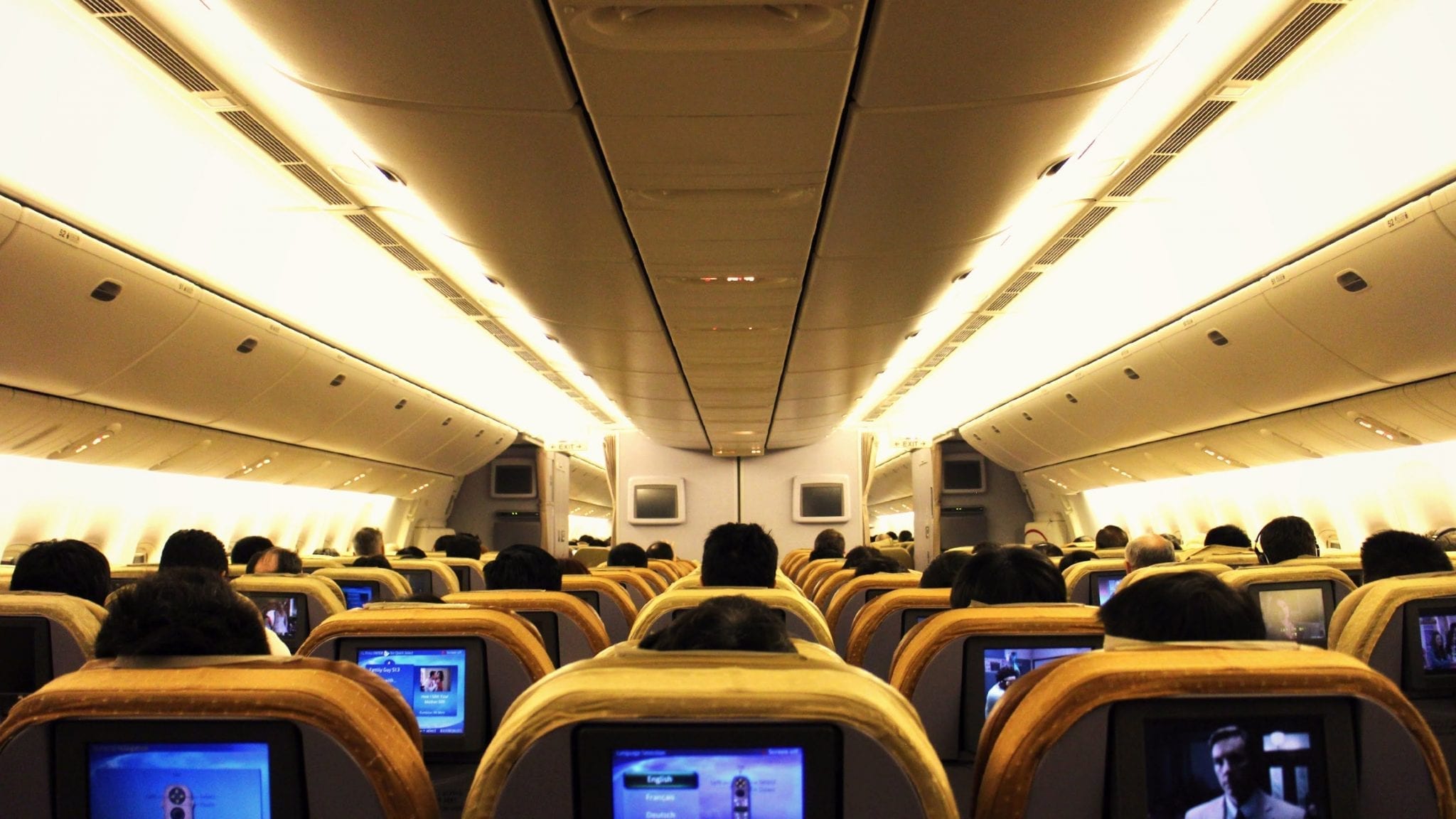
    Singapore Airlines struggled to fill its planes in the first week it flew between Canberra and Wellington in New Zealand, data has revealed.

    The International Airline Activity report by the Department of Infrastructure and Regional Development showed, on average, each of the six flights from Wellington to Canberra in September held just 94 passengers.

    The Boeing 777 has 266 seats, meaning there was an average passenger load factor of just 35 per cent.

    The Singapore to Canberra to Wellington rotation runs four times a week, with the first flight touching down in Canberra on September 21.

    According to the report, the carrier’s strongest performing route was a direct service between Canberra and Singapore which was 68 per cent full.

    In September, Singapore Airlines started the first direct international flights to the Australian capital in more than a decade.

    It followed a long-fought campaign by the ACT Government and the Canberra Airport to attract carriers to the city.

    The activity report shows Canberrans were more eager to leave the city than outsiders were to visit the capital.

    A total of 1,421 passengers flew into Canberra on the 12 flights from Singapore and Wellington in September while 1,784 people flew out to those destinations.

    On the 24 Singapore Airlines flights operating in the later part of September, only 13 tonnes of freight left Canberra, with no freight recorded entering the ACT.

    The September figures were released as Qatar Airways announced earlier this week plans to start flights to Doha, becoming the Canberra Airport’s second international carrier.

    Today FlyPelican also announced it would launch regional flights connecting Canberra and Dubbo 10 times a week from next month.

    The October figures for international flights have not yet been released.

  • SPH Reit keen on Seletar Mall

    SPH Reit keen on Seletar Mall

    Shareholders at the SPH Reit annual general meeting yesterday asked if the real estate investment trust sponsored by media group Singapore Press Holdings (SPH) would add Seletar Mall to its portfolio.

    The threat of online shopping was among other queries during the 90-minute meeting.

    In response, chairman Leong Horn Kee said the Reit is always on the lookout for accretive yield.

    He said the Reit, whose portfolio comprises Paragon and The Clementi Mall, is interested in Seletar Mall, which is now owned by SPH, but the question is when SPH wants to sell it and, more importantly, at what price.

    As for the rise of online shopping and e-commerce, 
Dr Leong said that while this trend is getting more prominent, brick-and-mortar stores are still relevant, given that consumers still prefer to feel and look at the actual product before purchase.

    In his opening remarks, 
Dr Leong also said that the retail environment remains challenging amid the economic slowdown in Singapore and the uncertainties of the global environment.

    “Consumers’ sentiment is muted. Retailers are also facing structural impediments such as labour constraints and competition from e-commerce,” said Dr Leong.

    He added that the Reit would continue to seek chances to create value and strengthen long-term sustainability of the properties.

    About 150 shareholders attended the meeting and all resolutions raised were passed.

  • Telstra shuts down 2G network

    Telstra shuts down 2G network

    A customer of Australia’s Telstra was given the honor of switching off Telstra’s 2G GSM network last week.

    The customer, Oly Gordon, became a viral sensation after posting to Telstra’s Facebook page that he was still operating a Nokia 3315 2G phone after 13 years.

    In response, Telstra last week invited him to flick the switch on its 2G network, and presented him with a brand new Google Pixel smartphone.

    Telstra announced in 2014 that it planned to decommission its obsolete 2G network by the end of this year.

    The operator has since been busy migrating the last of its 2G customers on to 3G or 4G networks, and has spent the last few months mailing replacement phones to the final few holdouts.

    Gordon’s viral post came just in time to coincide with Nokia’s announcement that it has closed the transactions required for HMD Global to produce new Nokia-branded smartphones, tablets and feature phones under an exclusive 10-year licensing deal.

  • 2C2P to Work with Diners Club International to Increase Acceptance

    2C2P to Work with Diners Club International to Increase Acceptance

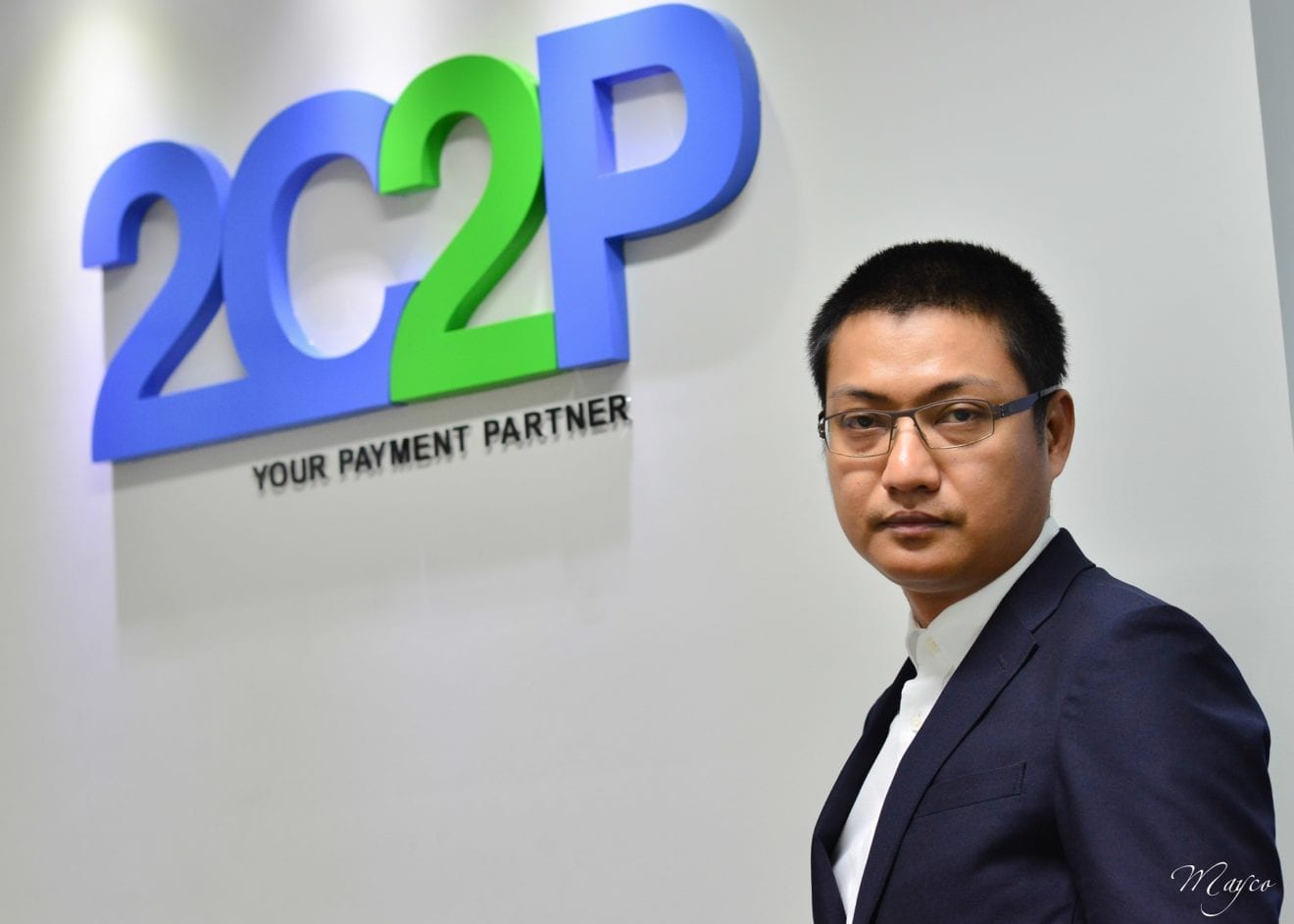
    2C2P, the leading Southeast Asian (SEA) payments services company, and Diners Club International, a subsidiary of Discover Financial Services and part of the Discover Global Network, announced that 2C2P is a global acquirer for all cards running on the Discover Global Network. 2C2P’s SEA merchants can now tap Diners Club International, Discover and other Discover Global Network cards as an additional payment method. 2C2P will increase acceptance in the SEA region allowing Discover Global Network cardholders to use their cards at an increased number of merchants in the region. 

    2C2P will provide its merchants with single-source electronic payment services for the acceptance of Discover Global Network, which includes Discover cards from the United States, Diners Club International as well as its affiliate cards such as BC Global Card from South Korea, Elo Card from Brazil and RuPay from India.

    Aung Kyaw Moe, founder and Group CEO of 2C2P, said: “With the rise in global online retail and tourism, this agreement opens up key international travel and entertainment markets such as Asia, Europe and the U.S. to our Southeast Asian merchants. Cardholders from Discover Global Network can now enjoy payments access to the region’s travel, transport, tourism, retail and e-commerce brands.”

    “Discover Global Network continues to increase our merchant acceptance footprint in Southeast Asia through working with companies such as 2C2P because this region has an increasing number of Discover Global Network cardholders as a result of our Diners Club and RuPay networks,” said Ricardo Leite, vice president, Discover Global Network. “2C2P specializes in e-commerce travel merchants, an important sector to our cardholders.”

    McKinsey estimates the annual revenue of the global payments market is expected to increase by six percent from 2015 to 2020, exceeding US$2 trillion by 2020. The Asia Pacific region, including China, accounts for approximately 55 percent of the industry’s revenue growth worldwide. 

    Discover Global Network is the third largest payments network in the world1. With over 39 million merchant acceptance locations and 1.9 million ATM and cash access locations across 185 countries and territories, Discover Global Network includes Discover, Diners Club International, PULSE and affiliated networks.

    “2C2P continues to look for market-leading partners around the world, to deploy its best-in-class online payments processing solutions and make it easier for consumers to transact with the payment instrument of their choice,” added Aung.

  • Fashion franchises are a popular trend in Vietnam

    Fashion franchises are a popular trend in Vietnam

    At a one-day event held last week at the japan External Trade Organisation (JETRO) Office in Ho Chi Minh City, a group of more than 10 Japanese fashion giants introduced their wares to potential Vietnamese partners. These firms include Isato Design Works; In Design Lab; M-Trading, Inc; Kobe Leather Cloth Co., Ltd.; T-Three Co., Ltd; and Sachiyo Hayashi Beauty Laboratory Co.; Ltd. They all aim to open franchise stores in Vietnam in the future.

    This event was the first of its kind held by JETRO Office in Ho Chi Minh City, targeting Vietnamese companies which have already organised franchising deals or are interested in such deals in the future. In total, 30 Vietnamese firms attended.

    Maison Fashion Group and Imex Pan Pacific (IPP Group) are the most prominent Vietnamese firms to form franchise deals with international brands, but more look to be on the way.

    In recent years, Japanese firms have invested in many service-related projects in Ho Chi Minh City. This market is expected to develop even more in the future. “In addition, Vietnam is home to specific regulations on foreign investment and trading habits, thus penetrating this market via co-operative agreements with local partners is an optimal choice”, said Teramoto Ukai, a JETRO official.

    Japanese electronic products and consumer goods have long been famous in Vietnam for their quality. And now, Japanese firms want to tap into the local fashion market, which is growing at an annual rate of 10%-15%.

    Miniso, a leading Japanese lifestyle brand, is one of the latest firms to connect with Vietnamese market. In April 2016, Miniso signed a franchise deal with le Bao Minh Group.

    “Vietnam has growing consumer demands, thanks to rising incomes and [interest in] global trends. In addition, Vietnam is considered to be one of the 10 Asian retail markets with the fastest growth. The important thing is how to select brands and partners to cash in on the potential”, said Le Thi Ngoc Hai, chairwoman of Le Bao Minh Group.

    Miniso, which has been franchised successfully in the Republic of Korea, Malaysia, China, the Philippines, and Thailand, opened its first three stores in Hanoi in August 2016. It plans to have 13 stores in-country by the end of 2016, between Hanoi, Ho Chi Minh City, Danang, Nghe An, Can Tho, and Haiphong, Hai added.

    This franchising path follows a greater franchising trend in Asia. Along with the food and beverage sector, healthcare, education, and retail, fashion in Vietnam has attracted many famous global brands.

    The UL’s Monsoon Accessorize entered the Vietnamese market in 2009 after signing a franchise deal with Maison, and has since opened three stores nationwide. Spain’s Mango, which also has Maison as its franchise partner, opened its first local Mango store in 2004 and now has 10 stores in Ho Chi Minh City and Hanoi.

    In 2011, the UK’s Karen Millen entered Vietnam in partnership with Maison, and now has stores in Hanoi and Ho Chi Minh City. That same year, France’s Christian Louboutin entered the local market, with one store in Ho Chi Minh City.

    Singapore’s Charles & Keith and the UK’s Topshop also appeared in Vietnam via franchise deals. Charles & Keith now has seven stores in Vietnam after six years in the local market, while Topshop has one store in Ho Chi Minh City. In another case, IPP Group, owned by Jonathan Hanh Nguyen, has also been a favoured franchise partner for international fashion groups, including Italy’s Bulgari S.p.A., the US’s GPS Strategic Alliances with Gap and Banana Republic, and the UK’s Warehouse. They each have opened three stores in Vietnam.

    Zara, a famous Spanish clothing and accessories retailer, officially opened its first store in Vietnam in early September 2016. The opening was wildly successful- on its opening day, it chocked up around VND5.5 billion (US$251,000) in revenue.

    According to a source from Zara, it plans to open a chain of seven stores in Vietnam in the future, including two in Hanoi in 2017.

  • Cebu Pacific passenger volume jumps 5% in January-October

    Cebu Pacific passenger volume jumps 5% in January-October

    Cebu Air and its wholly owned subsidiary Cebgo, Inc. flew 5.1% more passengers in the first ten months of the year, as the budget carrier increased its load factor and added new planes.As of end-October, however, the tally showed passenger volume of 1.519 million, lower by 3% against the 1.566 million last year, amid lesser seat capacity, load factor and number of flights during the period.

    The group ferried a total of 15.996 million passengers from January to October from the 15.218 million recorded during the same period in 2015, according to the latest operating statistics uploaded on its Web site.

    Seat load factor in the 10 months to October stood at 85.9% compared to the 81.8% seen during the comparable period last year.

    Cebu Pacific mounted 110,467 flights from 111,091. The airline currently operates across 36 local and 30 international destinations with a fleet of 58 aircraft.

    Cebu Air President and Chief Executive Officer Lance Y. Gokongwei had said the budget carrier is seen flying 19 million passengers this year, a record passenger volume, driven by the airline’s low-cost, long-haul services and increased frequencies in key domestic markets from 18.4 million passengers in 2015 and also up from the 16.9 million passengers flown in 2014.

    The airline is targeting to ferry 20 million passengers next year, as the company expect the delivery of 48 additional planes in the next five years to 2021.

    Cebu Air, operator of budget airline Cebu Pacific Air, saw its profit double in the first nine months of the year to P7.1 billion from P3.56 billion a year ago, led by strong passenger volume, higher ticket prices and lower fuel costs during the period, it told the stock exchange in its quarterly report.

  • Mastercard launches credit card in Myanmar

    Mastercard launches credit card in Myanmar

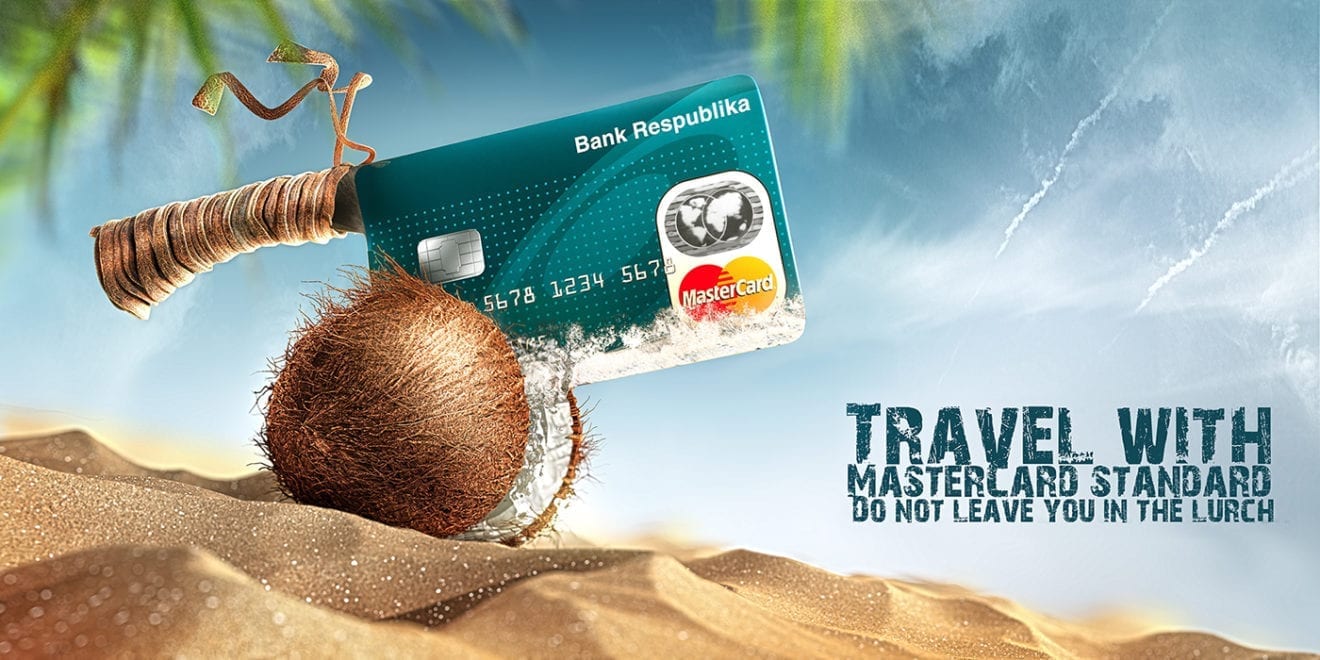
    MasterCard and CB Bank have announced their first payment product in the country – a prepaid travel card for locals called the CB Bank EASI Travel Prepaid MasterCard card.

    The reloadable prepaid card will be made available to Myanmar residents for when they travel outside of the country. It is the first such card product to be launched in Myanmar and is yet another stage in the evolution of the electronic payments ecosystem.

    MasterCard has been working very closely to enable CB Bank (which it licensed in September last year) to roll out its very first prepaid MasterCard card. CB Bank is already certified and has undergone full system testing as part of its efforts to be connected to the global payments network.

    Mr. Kyaw Lynn, Executive Vice Chairman and CEO of CB Bank said, “CB Bank continues to be first in the electronic payments sector in Myanmar and we are pleased to be able to collaborate with MasterCard to launch this travel prepaid card. Just as our country is opening up to the world, at the same time, the world is opening up to our countrymen and we’re seeing more and more locals travel abroad. We are so glad to introduce this travel prepaid MasterCard card to help make their travels safe and hassle-free without the worries of carrying large amounts of cash.”

    According to Matthew Driver, president, Southeast Asia, MasterCard, “Part of the allure of operating in such a frontier market is in seeing the vital steps of financial inclusion play out: a vast majority of people in Myanmar remain unbanked and don’t have access to financial services. But the payments infrastructure is rapidly developing – from the rollout of ATMs, point-of-sale terminals, and now the introduction of prepaid cards.”

    “This presents an alternative option for the growing number of locals who’ve had to carry wads of cash when they leave the country for business or leisure travel. It offers them a safe and secure payment method while abroad.”

    Overall consumer optimism is at an extreme high in Myanmar (96.0 Index points according to the latest MasterCard IndexTM of Consumer Confidence). According to the MasterCard survey of Consumer Purchasing Priorities, nearly two-thirds of people who have traveled abroad intend to do so again within the next 12 months, making the introduction of a prepaid travel card timely for the market.

    “Part of our financial inclusion strategy in Myanmar is to educate the local population about the value of electronic payments – we would like to help them understand the benefits of doing away with cash,” Driver added.

    The launch of a new prepaid card marks another vital step forward in the country’s reform of its banking and financial system. MasterCard was the first international payments network to issue a license to a Myanmar bank in September last year, paving the way international payment cards to be accepted in the country for the first time. In November, MasterCard and Co-operative Bank Ltd (CB Bank) teamed up to launch the first ATM transaction at one of the bank’s Yangon ATMs.

    It is expected that more than 500 restaurants, retail outlets and hotels in Myanmar will be accepting payment cards by the end of the year, following the rollout of Point-of-Sale (POS) terminals in March this year with CB Bank.

  • Money transfer firm WorldRemit eyes new markets, growth

    Money transfer firm WorldRemit eyes new markets, growth

    WorldRemit, an online service for overseas money transfers, is looking to expand into new markets and add services like direct payments for bills and school fees, its president said on Friday.

    The UK-based financial technology start-up, which has raised $192.7 million since its founding in 2010, also wants to grow in Canada and is open to taking the company public, Andrew Lee said in an interview.
    “We think about it, we think about other options as well,” he said. “It’s not on the radar at the moment. We’ve got plenty to do before we worry about that.”

    WorldRemit, which caters to migrants and people with no bank accounts, allows money transfers to over 100 countries. Growth is fastest in mobile transfers, though bank deposit and cash pick-up options are also available.
    Online payment service providers are shaking up the remittance industry and retail-based operations like Western Union Co by offering fast, secure service with lower fees, saving recipients travel time to pick up deposits.

    Over 2 billion people in the world do not use banks or are unlikely to have access to retail banking, said Lee, but the vast majority have mobile phones, allowing them to receive and store money, or pay bills.
    WorldRemit, which has partnerships with 34 mobile companies in 26 countries, also lets senders add air time to the prepaid phones of family members, for example.

    WorldRemit is seeking to add domestic transfers and primary banking, Lee said, and is applying for licenses in areas like Singapore, where foreign workers send a lot of money to their home countries.
    WorldRemit expects in the coming months to secure licenses for a few U.S. states that it does not already serve, Lee said. The United States is WorldRemit’s fastest growing market, and is soon expected to account for at least 10 percent of its revenue, he added.

    Canada, with 20 percent of its population born overseas, is WorldRemit’s third-largest market after Australia and Britain. That proportion is the highest among the Group of Eight industrialized countries, according to Statistics Canada.
    Canada has great growth potential, Richard Meseko, the company’s Canadian director, said in the joint interview. About 60,000 WorldRemit overseas transfers are made from Canada each month, but the 55,000 users over the last 12 months is a small number for the size of the immigrant population, he noted.

  • Some eateries charging more for meal deliveries

    Some eateries charging more for meal deliveries

    Ordering in for dinner? You could be paying more than you bargained for. Some restaurants are charging higher prices for menu items on delivery service platforms such as Deliveroo and Foodpanda, with increases varying from 20 cents to several dollars.

    A check of 50 restaurants found nine that had higher menu prices on these platforms compared to in-house menus.

    Among them are major chains Crystal Jade Kitchen, Crystal Jade La Mian Xiao Long Bao, Nando’s and NamNam Noodle Bar.

    Rochor Thai, NamNam Noodle Bar and Verve Pizza said the mark-ups were necessary to cover packaging and commissions paid to the delivery services, which are as high as 37 per cent per order.

    Rochor Thai, which is partnered with Deliveroo, Foodpanda and UberEats, charges an extra 20 cents for deliveries.

    NamNam’s four outlets on Deliveroo include mark-ups ranging from an average of $1.50 to $10.90 for one of its pho items.

    Verve Pizza, which has three outlets – in Clarke Quay, Bukit Merah and Marina Bay – switched from doing its own delivery to partnering with Deliveroo a month ago, said Ms Karen Coldman, director and owner of parent company Verve Holdings.

    While some of its thin-crust pizzas are costlier by up to $2 to cover extra costs, “entry-level pizzas” are kept low to attract new customers.

    “We are competitively priced, and one of the cheaper ones out there,” said Ms Coldman, 39.

    Crystal Jade and Nando’s declined to comment when queried on the price discrepancies.

    PS Cafe, which was one of the earliest to sign on with Deliveroo when it launched here last year, does not mark up prices for deliveries.

    Said the group’s director of operations, Mr Michael Di Palma: “Overheads are a lot less for deliveries compared with dine-in guests, and we’ve always done takeaway so that cost has been built in for a long time.”

    Its eight cafes and Chop Suey outlets fulfil about 1,000 orders a week through Deliveroo.

    Delivery service providers said that menu prices are not under their purview, and that the commissions they charge restaurants are necessary to cover costs.

    UberEats said restaurants retain the bulk of what they charge customers for their menu items.

    Said a spokesman for Deliveroo, which has over 2,000 restaurant partners in Singapore: “The overwhelming majority of our restaurant partners offer the same prices on Deliveroo as they do in their restaurants, and we strongly encourage them to do so.

    “In a few exceptional cases, some restaurants decide to marginally increase prices to make up for the customary service charge that is added to the bill for on-site consumption.”

    To avoid confusion for customers, Foodpanda said it is updating all prices on its platform to include GST and will absorb the GST for its deliveries.

    This will bring it in line with competitors Deliveroo and UberEats, which include GST charges in menu items and exclude the $3 delivery fee from GST.

    Singapore Polytechnic marketing and retail lecturer Amos Tan said that with the increasing popularity and accessibility of food delivery services, restaurants must be careful not to damage their brands with inconsistent pricing.

    “From a consumer’s point of view, whatever deal a restaurant has with a service provider is not relevant to me. If they are going to charge more, they’d better give me back in value, such as with vouchers.”

    While the issue does not appear to be widespread, “if it escalates, not only will brands suffer, but service providers may lose the trust of customers”, said Mr Tan.

    Art therapist Caitlyn Sarkar, who orders from Deliveroo and Foodpanda at least once a week, said she was surprised to learn of the price difference.

    “I don’t mind paying the delivery fee, but if restaurants want to pass on costs to customers, they should be upfront because consumers assume they’re paying the same price as in the restaurant,” said Ms Sarkar, 33.

    She said: “If it’s hidden, it’s kind of tricking customers.”

  • Daimler to build Actros heavy truck in China

    Daimler to build Actros heavy truck in China

    Germany’s Daimler plans to start building the Actros heavy truck in China by the end of the decade, citing the head of the truck division.

    Seeking to expand its role in the world’s largest truck market, Daimler is targeting a five-digit production number for the Actros, the newspaper quoted Daimler Trucks Chief Executive Wolfgang Bernhard as saying in an interview to be published on Tuesday.

    Western manufacturers are allowed to operate in China by forming joint ventures with Chinese partners. Stuttgart-based Daimler currently produces trucks with China’s Beiqi Foton Motor .

    The two companies are planning to invest a three-digit multi-million amount in local production of the Actros, and Daimler alone wants to set up 200 dealer and service stations.

  • McDonald’s sells Singapore, Malaysian franchise to Saudi group

    McDonald’s sells Singapore, Malaysian franchise to Saudi group

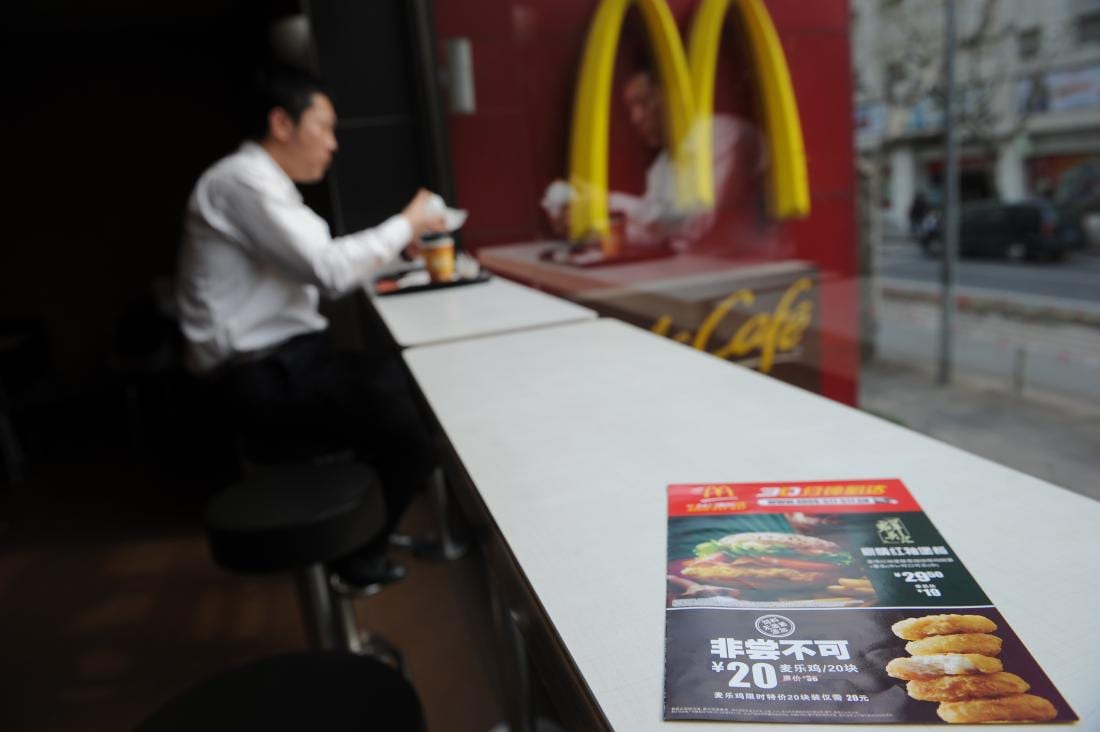
    McDonald’s said on Friday it had sold the franchise rights for its restaurants in Singapore and Malaysia to Saudi Arabia’s Lionhorn Pte Ltd as part of a plan to move away from direct ownership in Asia.

    The fast-food chain said it transferred its ownership interest in 390 restaurants, more than 80 per cent of which were company-owned, on Dec. 1 to Lionhorn.

    Lionhorn is led by Sheik Fahd and Abdulrahman Alireza, who are franchisees for nearly 100 McDonald’s restaurants in the western and southern regions of Saudi Arabia.

    McDonald’s did not disclose the financial terms of the deal.

    Reuters reported in October that McDonald’s was nearing a deal worth up to $400 million to franchise the outlets to Reza group, which also owns and operates McDonald’s outlets in the western and southern regions of Saudi Arabia.

    The Lionhorn deal is in line with McDonald’s plans to bring in partners in Asia as it switches to a less capital-intensive franchise model.

    The company said it has now franchised about 1,300 outlets as a part of its target to become 95 per cent franchised by the end of 2018.

  • Bata: Shoemaker to the world

    Bata: Shoemaker to the world

    IT’S inevitable that the world’s first family in footwear, Bata, would partner with the Philippines’s premier retail family, the Sys of the SM Group.

    “First of all, their whole philosophy is business, their heritage coming from footwear. It’s particularly strong. Also, we have a friendship with the SM Group and the Sy family going on for some time. All these make them great partners, and we never hesitated. They were the only partner we were interested to work with in the Philippines,” Thomas Archer Bata said at the launch of the first Bata store in the Philippines, which can be found at the third floor of SM Megamall Building B.

    Ambassador; Bubblegummers; and Valtina Prima Ballerina

    The Bata Shoe Co., which is the biggest in the world, originated in Zlin, in what is now the Czech Republic, on September 21, 1894. It was founded by Tomás Bat’a. His son, Thomas J., propelled the company to greater profitability after suffering losses in World War II. The grandson, Thomas George, is currently in the management board with his sisters Christine, Monica and Rosemarie. Thomas Archer (who will be referred to as Mr. Bata from hereon in the article), the chief marketing officer, belongs to the fourth generation of cousins who add vigor and vitality to the company.

    Bata has 5,000 retail outlets in 70 countries. In Senegal, Rhodesia and Zimbabwe, Bata became the local name for shoes when in the 1950s, the company conquered the African continent. “Opportunities abound, everyone barefoot,” came one cable from a salesman to headquarters.

    It has a strong presence in Asia, particularly India. It also opened a factory in Thailand in the 1970s. But Bata’s entry into the Philippines came only recently. “To be completely honest, it’s because of legal reasons and legal complications related to our trademark here,” Mr. Bata bared. “It took many, many years to resolve. Fortunately, with the help of SM, we managed to resolve it and we’re back.”

    Mr. Bata, who strikes me as a mix of actors Chris O’Dowd and Aidan Quinn, is quite optimistic about his family’s prospects in the country. “We think our model and our proposal is very interesting. We think it’s fairly unique in the market today. We’re going to tread cautiously. We’re opening [between eight and 15 Bata stores in SM malls in Metro Manila], communicate and try to build our consumer base, teach people about our products. From there, we’ll see where we’re going to go.”

    The Bata business of “responsible capitalism” is guided by a “Moral Testament” left behind by its founder: The company should not be treated as a source of private wealth but, rather, as a public trust, a means of improving living standards within the community and providing customers with good value for their money.

    Bata prices curiously end in the digit 9. “Back over a hundred years ago, it was partially a marketing tactic to make the prices look even more affordable. It has been in our heritage and our blood ever since we started, and it’s just to emphasize the value [of our product],” Mr. Bata explained.

    The company has an “insistence on focusing on the local market not only as a matter of structure and strategy but, rather, as an essential aspect of the Bata brand and philosophy. Shoes always followed culture and climate.” Thus, the Weinbrenner sandals will be a hit for their tropical, outdoorsy appeal, in tune with the penchant of Filipinos who love flip-flops.

    By some quirk, towns with the company’s factories have the Bata name: Batanagar in India, Bataville in France, Bata-Kolonie in Switzerland, Batadorp in the Netherlands, Batapur in Pakistan, Borovo-Bata in Croatia and Batawa in Canada, a play on the capital Ottawa. If a factory were to be built here, it would most likely be in Batangas.

    “Never say never. You know, we have to see what opportunities come up. If we see the opportunity to produce shoes in the Philippines, it could happen,” Mr. Bata said of the possibility of Filipinos becoming “Batamen”, who are of every race, creed and nationality. A lot of the materials to produce the shoes come from Brazil. Italy is the source for premium products. Raw materials also come a little bit from China and India. These are the four main areas where Bata gets its materials from, depending on the shoes that you’re looking for.

    “We are very environment-friendly. Our factories on a yearly basis are audited for their sustainability. We manufacture our own shoes. We actually issue a Sustainability Report every year about the progress we’re making on reducing waste. We’re very lucky in so much, as our founder over a hundred years ago believed in sustainability, in producing as little waste as possible, and that exists till today. We always use environment-friendly materials, suppliers, recyclable papers in our boxes, to make as little negative impact on the environment as we can,” Mr. Bata assured.

    Bata has three creative teams, with the biggest one based in Italy. One is in Toronto, Canada and another in Singapore. “In the Philippines 50 percent of the products come from Italy, 30 percent from Singapore, 20 percent from Canada. Not all brands are here,” Mr. Bata said. “We’re bringing primarily Bata and a little bit of our other brands for the moment. We’re still very much in the learning stage for us, to see what the Filipino consumer likes the most before we commit to specific product ranges.”

    Are they open to designer collaborations? “Yes, absolutely. We’re interested to do that. We’re actually talking to potential partners in the Philippines to work on some collaborative projects.”

    What about celebrity endorsers? “It’s a possibility. We’ll see. We believe the best kind of endorsement is user experience and word-of-mouth. So we tend to focus on ‘loyalizing’ people who come to buy with us more than anything else. I won’t rule it out but for the time being, it’s not on the agenda.”

    Has the company learned that “bata” here means “child”? “Yes, I’ve heard that.” So is there a possibility to have a Bata Children’s Program here? “Very high probability. We actually intend to do that. It’s a big part of our legacy and it’s very important for our family. We have our own schools and, specifically, we focus on the education of young girls. So we’re actually planning and discussing this with SM, how we can roll this, especially in the rural communities in the Philippines.”

    Thomas J. Bata would often wear a different type of shoe on each foot as a way of constantly testing their products. At the launch, his grandson Thomas Archer wore a pair of leather brogues. “These are Bata shoes from our factory in India, in Calcutta. Very comfortable. It’s from the Ambassador line but not yet available in the Philippines, but they will be in a few weeks’ time,” Mr. Bata said with delight.

    Did you also learn how to make shoes? “Yes, I did. My holidays as a child were going to factories, making shoes and visiting stores. I’m lucky I grew up with shoes. I like shoes. Not everybody who grew up in the shoe business actually likes them!”

  • DHL introduces fully customized digital Freight platform CILLOX

    DHL introduces fully customized digital Freight platform CILLOX

    DHL Freight introduces CILLOX, a virtual marketplace for enterprises with transportation needs. The fast and seamless solution helps companies to match their full truck load, part truck load and less than truck load offerings with transport providers’ capacities and find the appropriate provider according to their needs. With CILLOX, shippers no longer need to deal with challenges such as lengthy price inquiries and comparisons or unreliable providers – they enjoy end-to-end control of their shipment processes within a single platform. Transport providers profit from guaranteed fast payment with streamlined invoicing and payment processes that improves accuracy.

    “Both companies and carriers benefit from this new business model,” explains Amadou Diallo, CEO, DHL Freight. “With CILLOX, DHL offers a solution to promote the digitalization of the logistics industry and disrupt the traditional road freight business. The launch of the platform is a result of our strategy 2020 and promotes further growth due to its innovative and agile business model.”

    Early user testing during the pilot period was implemented successfully in September and showed high customer satisfaction. As of January 2017, the platform shall be fully operational for all market participants.  Fast and easy processing of transport procedures CILLOX enables companies to find a suitable transport service provider at the touch of a button.

    The platform seeks to address common problems while searching for an appropriate and reliable transport service provider, such as lengthy price inquiries and comparisons, or delays in the Proof of Delivery process, by offering instant access to a large number of DHL pre-qualified and peer-rated providers for fast quotes and easy transport booking. Shippers can pay, manage and track their shipments using a convenient dashboard.

    At the same time, CILLOX offers carriers of all sizes a platform to market their company’s assets and capabilities to expand their customer base and locate suitable loads to further optimize their vehicles’ capacity. CILLOX also facilitates accurate invoicing, payment and electronic Proof of Delivery submission processes, so carriers can profit from guaranteed fast payment. Truck drivers using the CILLOX mobile app receive jobs directly on their smartphone, and automatic status alerts throughout the transportation journey. The extensive range of services provided by CILLOX increases not only DHL’s own, but also its customers’ efficiency and competitiveness.

    Customer experience at the core of CILLOX User needs and requirements are at the core of CILLOX and actual users have been involved from the start of the design and development of the platform. The iterative product development allows the software design to evolve in response to users’ needs and feedback. After the initial launch, further functionalities will be added gradually, including a real-time chat option and mobile document scanning via the mobile app.