Author: Mei Ling Tan

  • Tesla Motors Opens First Showroom In South Korea’s Largest Mall

    Tesla Motors Opens First Showroom In South Korea’s Largest Mall

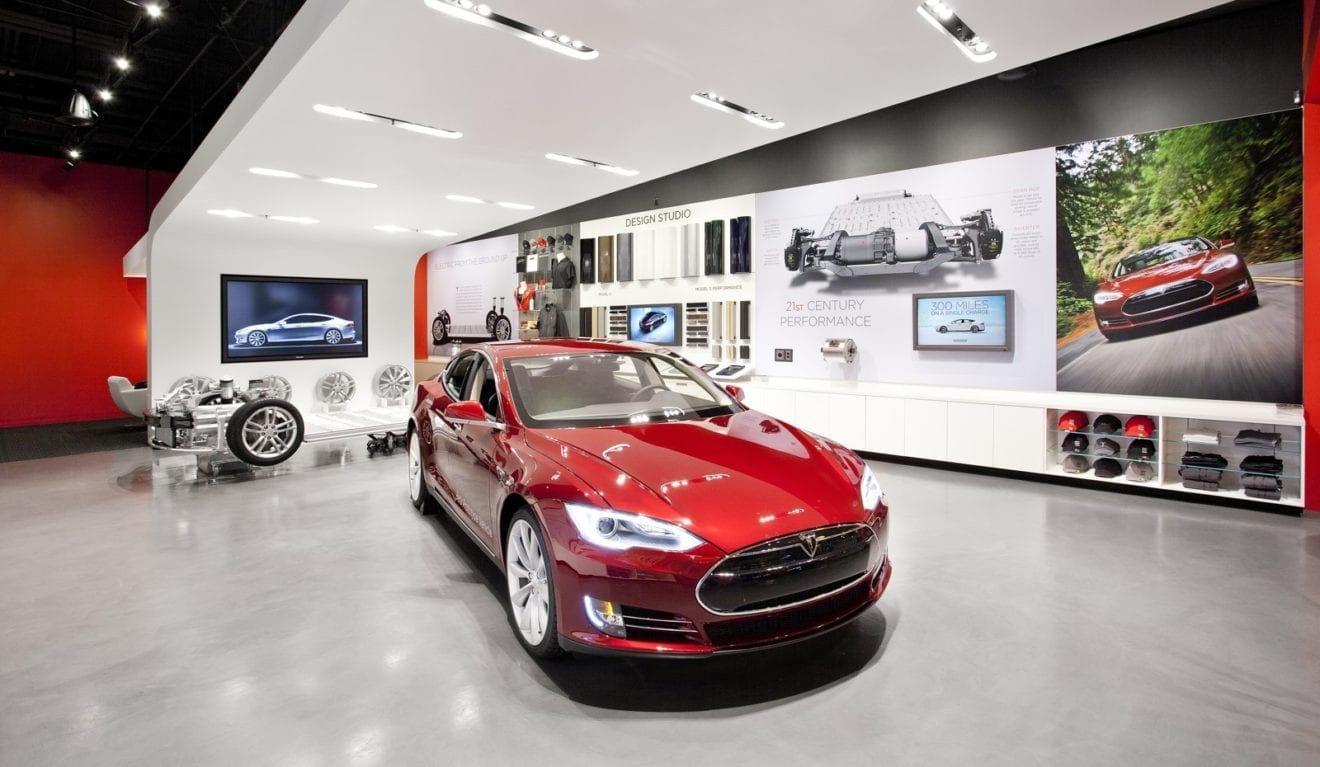
    Teslarati reported on November 28 that Tesla Motors is all-set to open its first showroom inside South Korea’s largest shopping mall, the Starfield Hanam Complex. The store is expected to open today. However, the news didn’t do much to the stock as TSLA declined 0.41% during after-hours trading on Monday.

    The company’s latest store in Gyeonggi Province would be its first retail outlet in South Korea. With its entry, Tesla may provide tough competition to the region’s largest automaker; Hyundai Motor. The latter is also expected to open a store in Starfield. Moreover, the company is expected to launch its competitively priced Electric Vehicle (EV) before the year-end.

    Moreover, executives of Starfield Hanam indicated that they were notified about the store’s opening date. However, they believe that the date may be delayed, depending on the company’s preparations.

    Teslarati reported: “While the Silicon Valley-based automaker takes aim at expanding its retail presence in South Korea, the company is also busy with laying the ground work for the build out of its Supercharger network across the country.” The company is also reportedly viewing its plans of building supercharging stations around Seoul.

    The report further mentioned that TSLA has also invested in constructing another showroom within the country’s high-end Gangnam district. The district is also considered as the Rodeo Drive of South Korea. Earlier in September, the company had signed a $439,059 lease to get its hands on a three-story upscale commercial building in the district. The store is expected to be surrounded by Ferrari, Lamborghini, and Bentley showrooms. Moreover, neighboring stores will also include Cartier, Dior, and Hermes.

    Wall Street analysts have assigned a PT of $225.13 with a 14.8% upside over the last closing price. Analysts’ ratings include 3 Buy, 1 Overweight, 9 Hold, two Underweight, and four Sell.


  • AirAsia starts flying Philippines-Taiwan

    AirAsia starts flying Philippines-Taiwan

    The low-cost carrier’s Philippine subsidiary started flying direct from Manila to Taipei on 21 November, and then on 25 November it commenced flights between Cebu and Taipei.

    “We are aiming to go further across Asia by strengthening AirAsia’s presence in Taiwan. Today heralds… brighter and much closer ties between two countries to improve trade and tourism,” said Philippines AirAsia’s CEO, Dexter Comendador. He added that the new services would cater to “travellers, overseas Filipino workers and Taiwanese tourists”.

    The new Manila-Taipei route will operate daily with late night flights, while the Cebu-Taipei service will run three times a week (Wednesdays, Fridays and Sundays) with early morning departures from the Philippines.

    The AirAsia Group also operates direct flight to Taipei from Kuala Lumpur and Kota Kinabalu.

  • Spa Ceylon opens nine POS operations in Asia

    Spa Ceylon opens nine POS operations in Asia

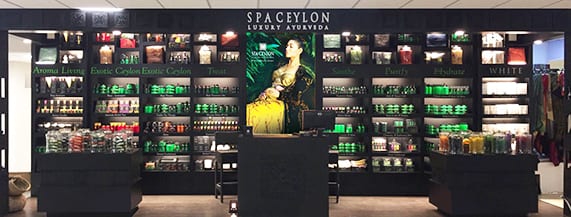
    Sri Lanka’s Spa Ceylon Ayurveda retail and spa company has opened nine new points of sale in Asia, including business with standalones, kiosks and airlines since it exhibited at last May’s Tax Free Asia Pacific show and it is expecting five more new presences in early 2017.

    Spa Ceylon says this progress follows the debut presence of its range of body, bath, beauty, aroma and wellness products to travel retail, which has been built on ‘success across ten countries with 55 boutiques and spas already in operation in downtown retail’.

    SPECIAL TRAVEL RETAIL OFFERINGS

    Commenting on the offering, company management said: “The all natural range of products offer a fresh new aspect to travel retail through Ayurveda-based formulae, using exotic herbs, fruits and minerals from their island home of Ceylon.

    Spa Ceyon has a strong presence at Bandaranaike International Airport in Colombo, Sri Lanka.

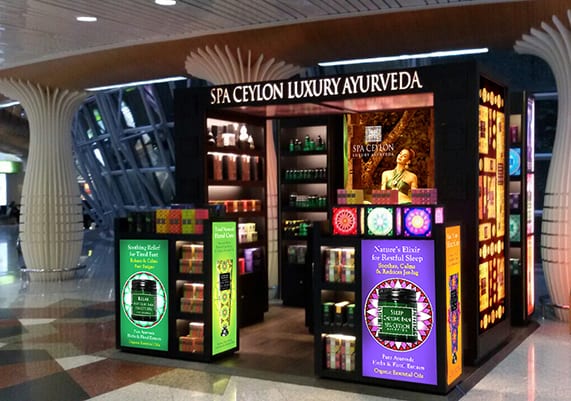
    KLI Airport 2

    Spa Ceylon at Kuala Lumpur International Airport in Malaysia.

    AMBITIOUS EXPANSION PLANS

    “The vibrant packaging in jewel-hued bottles and gift boxes adorned with colourful traditional palace art makes the brand stand out and has soon become a popular gift purchase among travellers.”

    By contrast, the impulse offering comprises the Spa Ceylon Palace Art range which is a collection of lip balms, hand creams, soaps, solid perfumes, coconut butters and balms with rich tropical scents made with fruit butters, herbs and oils.The company describes the core of its travel retail offering based on wellness and impulse. It adds that the wellness ranges such as ‘Sleep, De Stress and Detox’ offer an array of products suited for travel weariness and wellness needs.

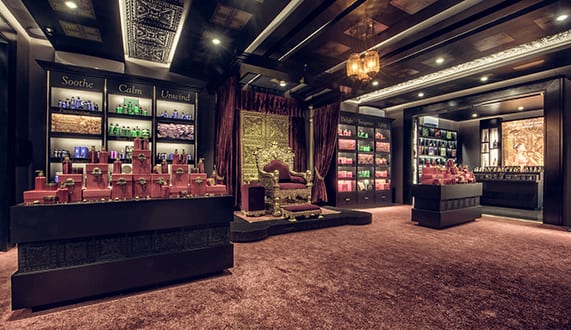
    The Spa Ceylon store in the prestigious Royal Court, in Colombo, Sri Lanka.

    GROWING TR FOOTPRINT IN JAPAN

    Spa Ceylon’s management says it has continued to grow its global foot print within travel retail and downtown retail with the opening of its first retail store in Tokyo in October 2016, followed by a 3,000sq ft flagship store in Tokyo’s premium shopping district in the Ginza in November 2016.

    A further 10 locations are planned in the next calendar year in Japan and Spa Ceylon also intends to expand rapidly over the next 24 months, reaching a milestone of 100 stores internationally by 2018, across 20 countries.

  • Global Blue collaborates on Chinese VAT refund scheme

    Global Blue collaborates on Chinese VAT refund scheme

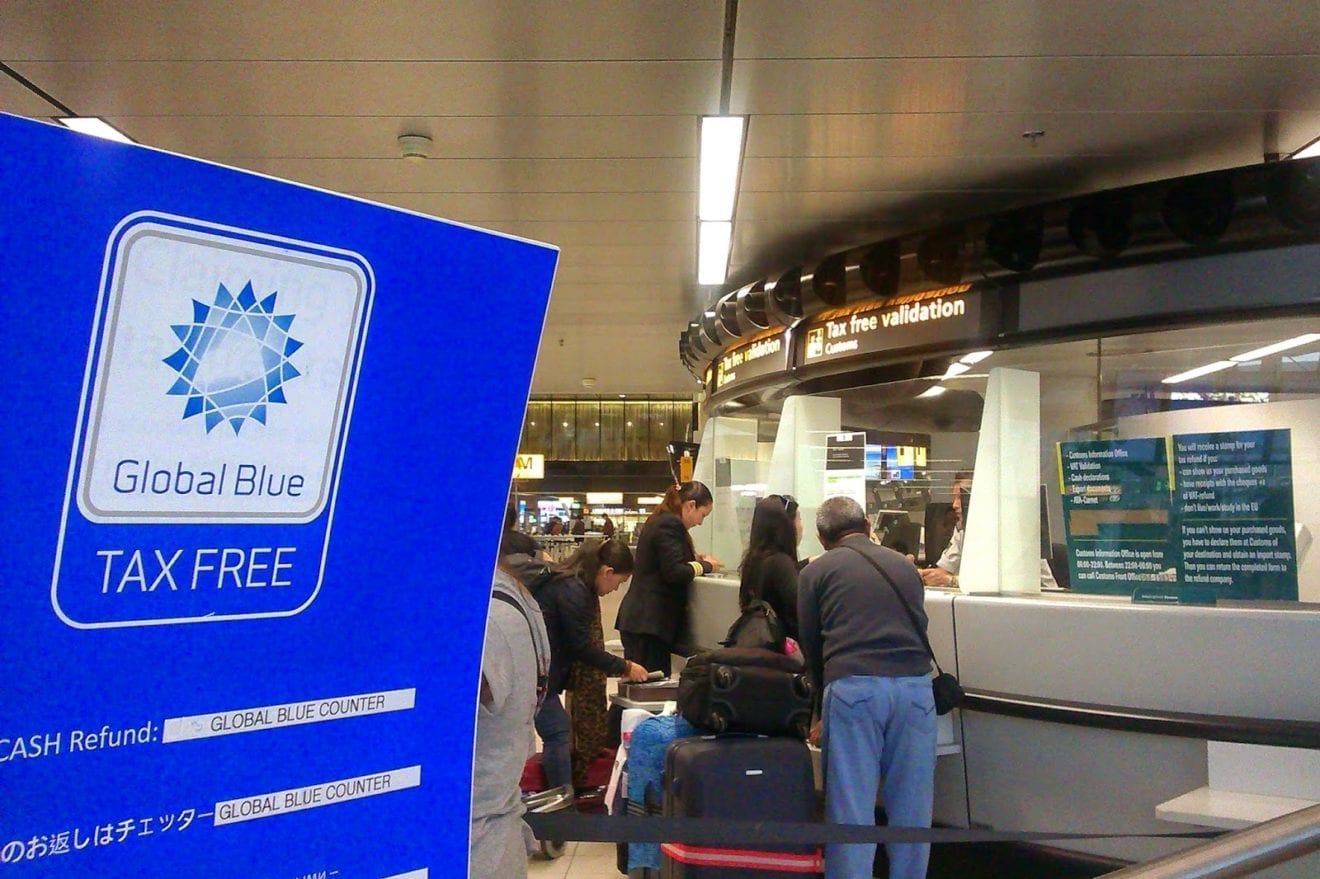
    Tax-free specialist Global Blue has partnered with the Bank of China to launch a VAT refund service to overseas tourists in Shanghai.

    Travellers in Shanghai are now able to save 9% on their purchases as China has introduced its first tax-free shopping scheme for foreign visitors. The scheme will be among the first of its kind in mainland China, allowing eligible travellers to reclaim the VAT imposed by the Chinese government, when making purchases within the country.

    For travellers, eligibility for VAT refunds will be based on a set of simple criteria. These include possession of a non-Chinese passport (or specified ID from Hong Kong, Macau and Taiwan), receipt of purchase showing spend of over RMB500 ($72) in one store on the same day, and proof that the traveller has remained in mainland China for no more than 183 consecutive days.

    If these eligibility criteria are met, merchants simply have to provide a VAT invoice, then issue the shopper with a Tax Refund Application form provided by the Chinese Government, which includes the description of purchased goods and the traveller’s details.

    Global Blue will work with Bank of China to encourage local retailers to sign up to the scheme. It will also provide licensed retailers with ongoing training to sales staff and consult on the processes surrounding the issuing and completion of VAT refunds.

    Already almost 200 stores in Shanghai have already signed up to the tax-free shopping scheme, including major department stores [e.g. Takashimaya, Pacific, Parkson and Bailian (Group) Department Stores], luxury brands (e.g. Chanel, Hermes, Tiffany and Louis Vuitton), high street names (e.g. Zara, Bershka and Marks & Spencer) and local retailers (e.g. Silk King, Lao Feng Xiang Jewellery and Chow Tai Fook Jewellery).

    Global Blue CEO Jacques Stern commented: “We are excited about launching this partnership with Bank of China, a true market leader in the international banking space. The VAT refund service represents a great opportunity for merchants in Shanghai to attract high-spending international travellers and encourage higher spend in-store. For visitors to the city, this scheme will bring obvious benefits, allowing them to shop and spend with leading Chinese merchants for less.”

    Bank of China vice president Mr. Wang added: “This is a very exciting period for Shanghai’s retail sector and we are confident the introduction of these services will be a powerful tool in helping businesses connect with valuable international shoppers. Global Blue’s experience of promoting and supporting Tax Free services around the world make it a valuable partner and we look forward to a long and happy working relationship.”

    In addition to merchant support, Global Blue will manage marketing activities inside and outside of China to increase traveller awareness of the VAT refund scheme. Promotional channels will include Global Blue’s website, app and a wide range of traveller focused collateral including SHOP Maps and point-of-sale materials. The partnership will also see Global Blue collaborating closely with local governments’ tourism departments.

    In addition to VAT refund services in Shanghai, Global Blue has also named Bank of China as a banking refund partner for returning Chinese shoppers across the country. Bank of China will operate refund counters from 10 branches throughout China, making it easier for Chinese consumers to claim overseas refunds back home.

  • Hong Kong consumers oppose spectrum fee hike

    Hong Kong consumers oppose spectrum fee hike

    PCCW’s HKT is opposing a proposal by the SAR government to raise the spectrum utilization fee for all mobile operators, publishing research indicating that a wide majority of consumers oppose the suggestion.

    Research commissioned by HKT and conducted by Policy 21 suggests that 72.8% of consumers believe a fee increase that the operator said would be likely in the event the government raises spectrum prices would be unacceptable.

    Hong Kong mobile users currently pay a fee of HK$18 per month covering contributions towards mobile license, administration and MTR and tunnels expansion costs, and operators are likely to raise this fee if their spectrum costs increase.

    Of the remaining 17.4% of respondents who consider a fee increase acceptable, 84.7% would only accept an increase of HK$10 or less per month.

    The government’s proposed fee increase would be implemented on the expiry of existing 900-MHz and 1800-MHz licenses, and would affect 40% of the total amount of spectrum currently assigned to mobile operators.

    HKT presented the findings yesterday at an industry forum organized by the Hong Kong General Chamber of Commerce. Consultancy firm Network Strategies also used the event to unveil a study into the optimal price of spectrum in Hong Kong.

    “In comparison with international benchmarks, the reference prices are very high. Use of these reference prices for setting reserve or fixed prices may lead to artificially high SUFs which may have a distortionary effect on the market,” Network Strategies director and founder Dr Suella Hansen said at the forum.

    “With efficient spectrum pricing and sufficient spectrum allocation, incumbent operators may minimize costs to produce retail services efficiently, continue to invest and develop innovative services and products, all of which promote social efficiency. However, consumer welfare will not be promoted if the price of spectrum does not reflect its true market value.”

  • Sa Sa International sees fall in profits amid drop in tourism

    Sa Sa International sees fall in profits amid drop in tourism

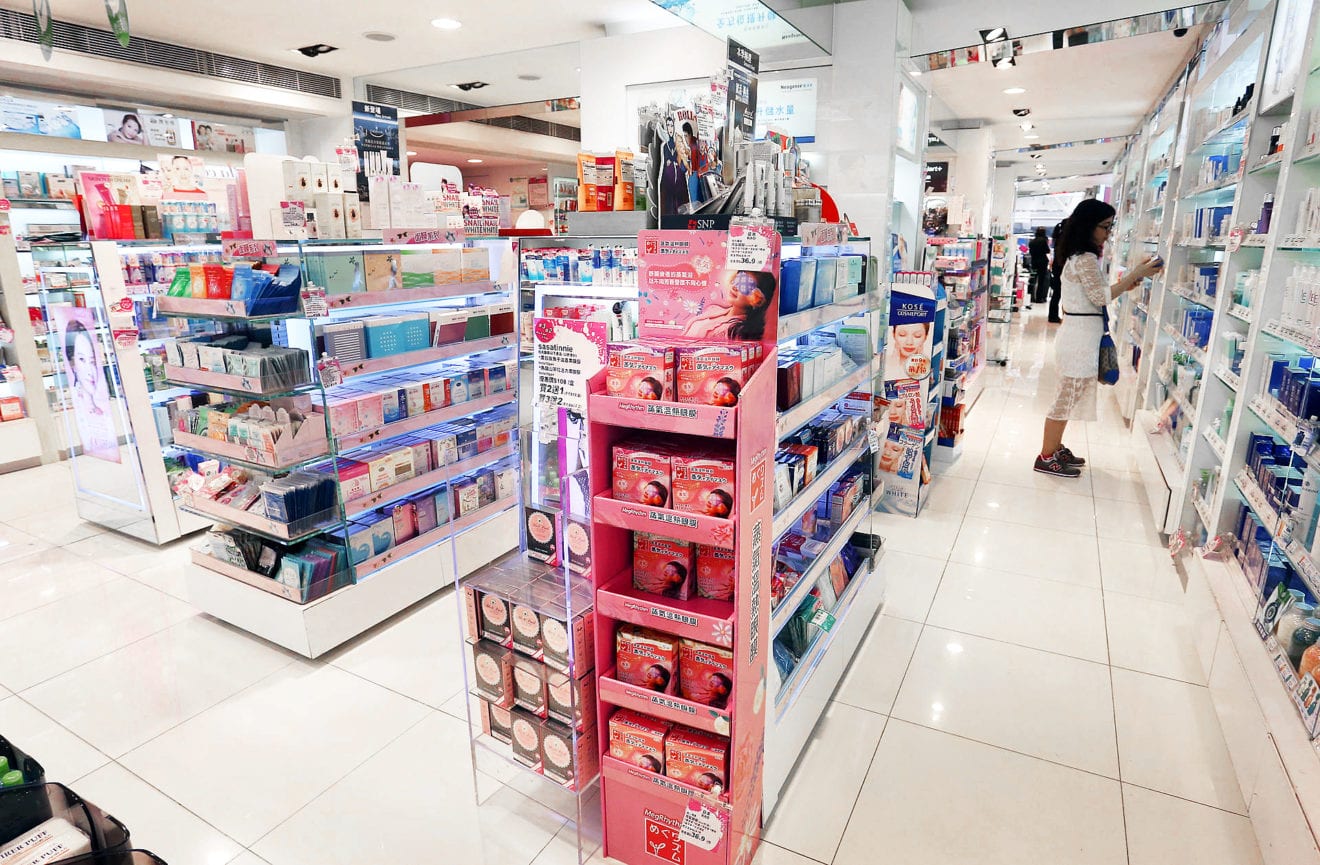
    In the period ending September 30th 2016, Sa Sa International’s turnover reached HK$3.63 bn (€442.2 mn), a 4% drop from HK$3.78 bn (€460.5 mn) compared to last year’s results.

    Sa Sa totalled profits of HK$96 mn (€11.7mn), indicating a 37.3% drop from last year’s HK$153 mn (€18.6 mn) during the same period.

    Purchasing patterns

    Despite a continued reduction in tourist footfall, the total number of transactions by local and mainland Chinese consumers increased by 0.2% and 4.4% respectively.

    However, the average sales value per transaction saw a slump, decreasing by 6.3% for purchases made by local consumers and 6.6% for tourists. This was reflected in the leading cosmetics company’s retail sales in Hong Kong and Macau, which fell by 3.6% from HK$3 bn (€365.5 mn) to HK$2.9 bn (€353.3 mn).

    The Hong Kong market has witnessed changing consumer attitudes towards product selection. As the Hong Kong dollar strengthened and the Chinese Yuan deteriorated, these have also been cited as having a detrimental impact on Sa Sa’s interim results.

    To reflect the evolving marketplace, Sa Sa focused on adapting to consumer demands by speeding up product launches, combatting lengthy product cycles with shorter alternatives, reducing price points of on-trend lines and creating innovative marketing displays.

    The shopping experience

    Sa Sa is currently concentrating on increasing sales by bringing these efficient product cycles to market through facilitated CRM processes, online marketing and online-to-offline (O2O development.)

    The O2O landscape has been developing rapidly throughout APAC in recent years. As a result, Sa Sa hopes to maximise this opportunity to improve the shopping experience for its customers through creating online operations for digital marketing that connect with its physical stores.

    “We…remain resolute in our belief that we can further strengthen our competitiveness in the coming years and convert difficult challenges into golden opportunities, such as those offered by O2O, by changing consumer behaviour and by the growing affluence of the less developed regions of Mainland China” said Dr Simon Kwok, BBS, JP, Chairman and CEO of the Group.

    This year, the cosmetics brand launched a new mobile app to reflect the market’s preference for mobile over desktop usage. Sa Sa collaborated with online retailer Kaola to complement this release and existing partnerships with T-Mall, JD.com and suning.com.

    It used these channels to promote its range of Korean products, which it produced to reflect the popularity of the K-beauty and K-pop influences trending through APAC and the wider markets. As a result, Sa Sa saw its sales increase by 51.5% in Hong Kong and Macau, with its own brands and exclusively distributed products dropping by 2.5% from 41.3% to 38.8%.

    Consumer support

    On 21st November, two days before the interim report was released, Sa Sa International announced it had been presented the award at the “World’s Excellent Brands Awards 2016-2017” by China Media Network (CMN).

    The prestigious accolades are given to those brands that demonstrate an awareness, recognition, leadership and representativeness of tourism-related global brands by an evaluation committee and selection of tourists.

    Following public voting and evaluation, Sa Sa received the “World’s Excellent Brands Awards” and has previously been awarded the “Most Popular Hong Kong and Macau Brand” by CMN.

  • Esprit India to sell on Myntra

    Esprit India to sell on Myntra

    Esprit India has secured an exclusive online partnership with online fashion retailer Myntra.

    Esprit will sell its men’s and women’s casual wear range on the platform, and will launch its latest collection exclusively online on Myntra. The all new winter wear collection by Esprit aspires to revive 90s fashion and sports luxe in a selection of 405 different styles.

    Gunjan Soni, CMO and head of international brands business with Myntra, says Esprit is a truly international fashion brand with global appeal and a brand ethos that exemplifies comfortable fashion.

    “It gives us great pride to forge an exclusive association with Esprit as part of our focused endeavor in making Myntra the de-facto destination for International fashion in India.”

    Guillaume Thery, GM Asia-Pacific with Esprit, added: “Esprit has built strong brand equity among shoppers in India over the years. With the exponential growth of the online shopping medium and the expansive market of India, it was imperative that we work with the segment leader in taking our brand development to the next level. Myntra was the obvious partner of choice given their understanding of the online fashion landscape and their ability to partner and develop strategies that complement our business imperatives for the region.”

    Myntra has emerged as India’s leading fashion e-tailer and home to the largest selection of international premium fashion brands, including Nike, Adidas, Puma, Levis, Wrangler, Arrow, Jealous 21, Diesel, CAT, Harley Davidson, Ferrari, Timberland, US Polo, FabIndia and Biba.

  • Bluebell Group invests in designer startup

    Bluebell Group invests in designer startup

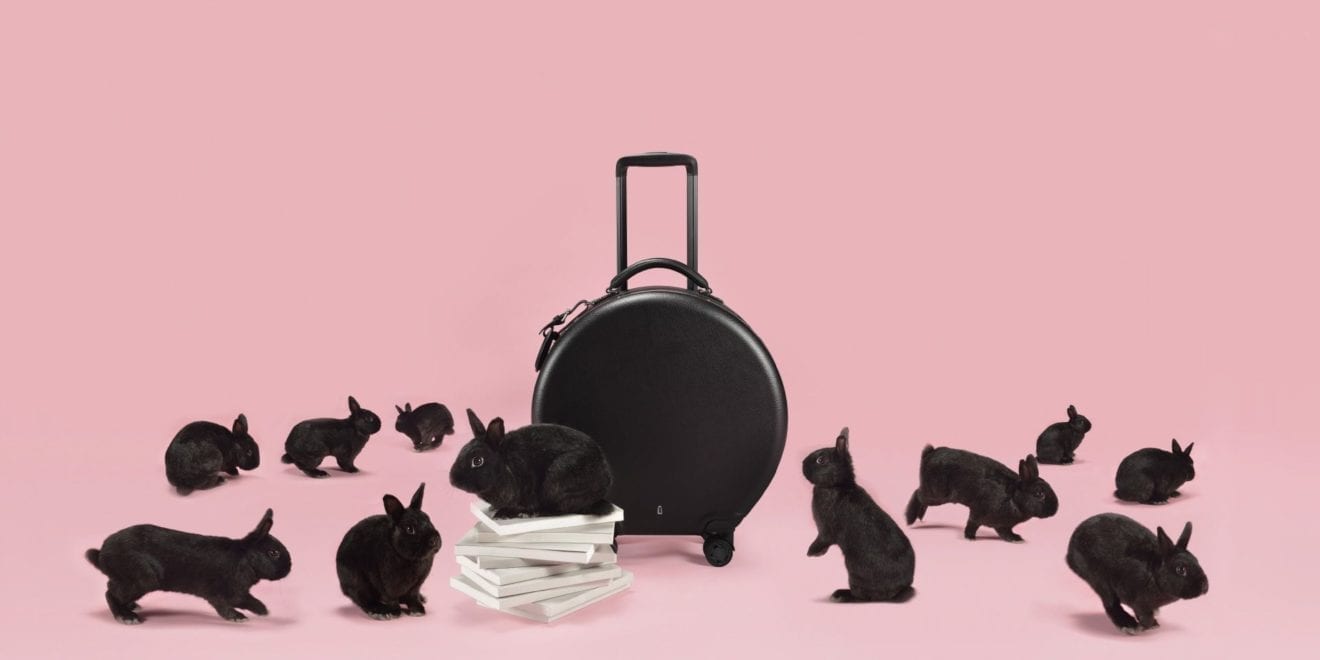
    Bluebell Group has invested in a new luggage design house Ookonn, which takes inspiration from a hat box, selling direct to consumers online.

    Ookon is the brainchild of Anson Shum, who conceived a style and design based on an old-fashioned, round hat box.

    At the time, Shum was working in a marketing and communications role with Bluebell Group.

    “When I resigned last year, I told the company of my plan to start my own label,” Shum said in an interview.

    ookonn-lugguage

    “They were so nice to me, and asked if there was any way we could work together. I showed them my business plan, and they offered to coach and mentor me.

    “Eventually nearing the end of my employment period, I did a formal presentation in front of all the shareholders. And the week after, I was told that Bluebell wanted to invest in Ookonn. It was a surreal moment. I think they decided to invest because of the product, the business model, and obviously the fact I have built a good relationship with them.”

    Shum and his business partners sell the Ookonn bags online, where they cost upwards of HK$2280 for basic models.

    “Online business is more relevant to my target audience. Ookonn is a lifestyle brand targeting millennials. While we get customers from different age groups, the feeling and foundation of the brand is for a younger audience in their early 20s to early 30s. While online is important, it is only one part of the business model, since we are launching in Hong Kong and China. But for other markets, perhaps we can collaborate with several bricks-and-mortar multi label stores,” said Shum.

    He describes his case designs as “a bit more playful” than most common luggage ranges.

    ookonn-lugguage-1

    “I’ve been working in fashion and luxury for 12 years, and have had plenty of opportunities to travel. But while I can find a lot of beautiful options for clothes and accessories, there are not that many for luggage. Most luggage brands in the market are business oriented. So I wanted to see if I could create a luxury brand that would generate excitement.”

    The bags come with a variety of options for handles, covers and belts and can be customised with the buyer’s chosen monogram.

    The bags come from Transport Safety Authority locks, wheels which turn a full 360 degrees and a light polycarbonate shell.

  • Cafe de Coral grows revenue, profit, outlets

    Cafe de Coral grows revenue, profit, outlets

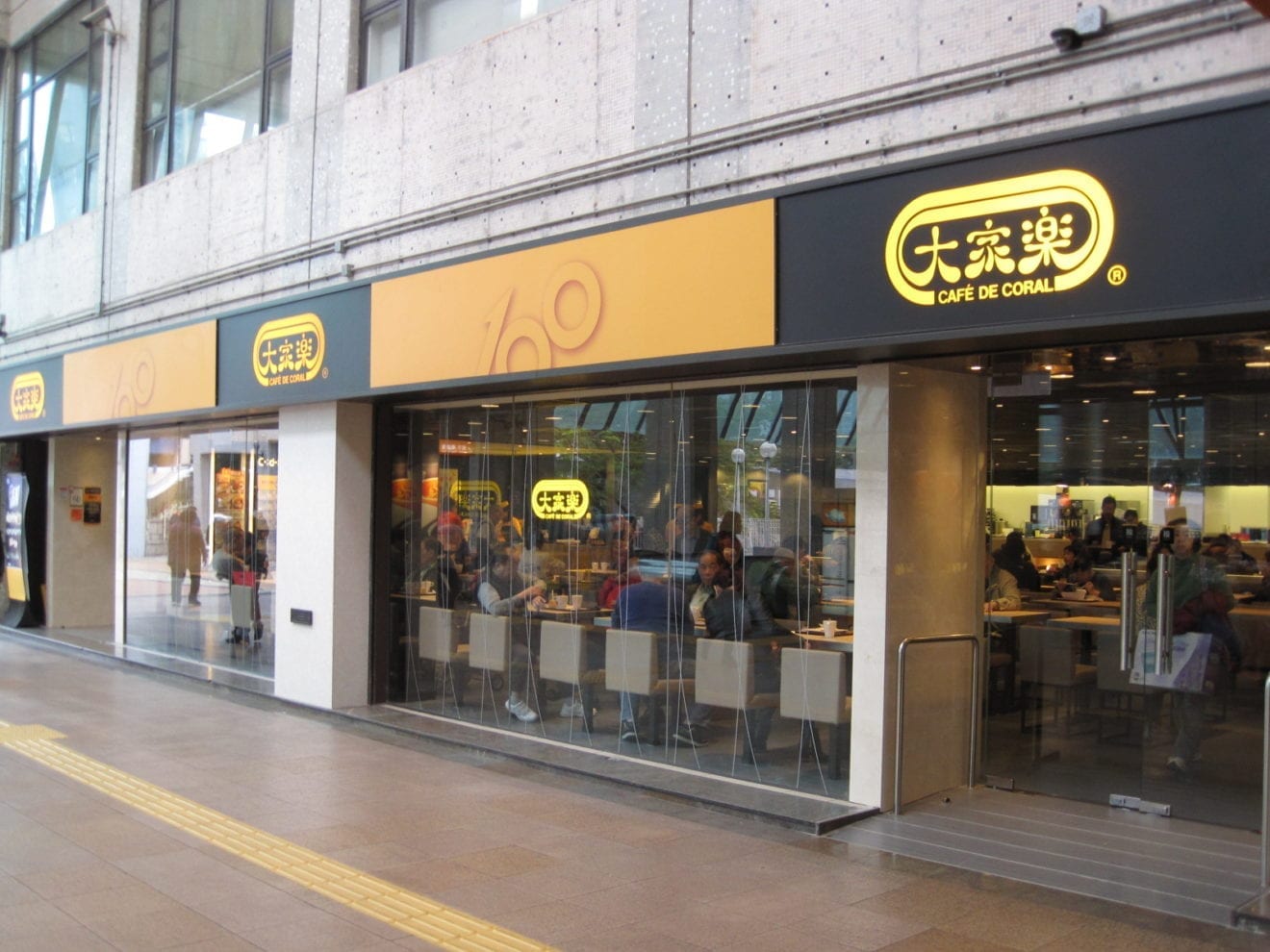
    Total revenue for the half-year to the end of September rose by 4.3 per cent to HK$3.89 billion (US$501.5 million) for restaurant and catering group Cafe de Coral Holdings.

    Net profit, at HK$232 million, was up 11.8 per cent, while profit attributable to shareholders rose similarly to HK$3.89 billion, according to its interim results.

    With stronger momentum in the fast-casual and casual-dining sector, the group says its quick-service restaurant (QSR) and institutional catering business continued to achieve encouraging results and steer further expansion.
    “Mainland China business persistently improves its profit margin with a lower break-even point, which has laid a solid platform for expansion,” says the group. “The positive results demonstrate not only the capable stewardship of our new management team, but also the successful completion of the group’s succession plan.”

    “Encouraging” revenue and same-store sales growth resulted in a robust and stable performance for the group’s (QSR) and institutional catering business.

    In China, revenue stabilised for its fast-food business, thanks to updated menus.

    Overall, the group’s QSR and institutional catering business in Hong Kong reported solid revenue gains, up 7.7 per cent. Same-store sales under the Cafe de Coral fast-food and Super Super Congee & Noodles grew 5 and 4 per cent respectively. As of September 30 the group had 288 QSR and institutional catering outlets, including 160 Cafe de Corals, 47 Super Super Congee & Noodles shops and 79 Asia Pacific Catering outlets.

    Strategic tenancies

    To speed up its expansion of the Cafe de Coral network, the group took advantage of the softer leasing market to take up tenancies at strategic and prime locations. Four outlets were added, with 11 more set to open. Seven more Super Super Congee & Noodles shops were added, with eight openings scheduled.

    Asia Pacific Catering renewed all major contracts while Luncheon Star continues to be the leading provider for schools.

    For its fast-casual and casual-dining sectors, the group saw 14.4 per cent revenue growth. Its catering-inspired Shanghai Lao Lao brand has evolved into a popular chain with eight outlets, says the group. Two of the outlets opened during the six months, with four more scheduled.

    Encouraged, the group says it will aim to scale up Mixian Sense to provide another lucrative revenue stream.

    Meanwhile, it is rejuvenating its Western-style brands, The Spaghetti House and Oliver’s Super Sandwiches. Decors and menus are being revamped.

    Launched last year, its Japanese and Korean-style franchise restaurants are still in the investment stage.

    Non-performing outlets in eastern and southern China have been closed, plus the management team has been localised as well as menus being revamped.

    Same-store sales from the fast-food business grew by 1.2 per cent with “remarkable profit improvement” on the mainland even after excluding the effect of new VAT rules and despite the segment revenue falling by 16.3 per cent. This was mainly a result of the strategic closure of non-performing stores.

    “While the imminent outlook is less than promising, the group remains confident its businesses will continue to fare reasonably well. Fortunately, our core QSR and institutional-catering segments, in particular, are relatively resilient to downturns.”

  • Under Armour Korea flagships planned

    Under Armour Korea flagships planned

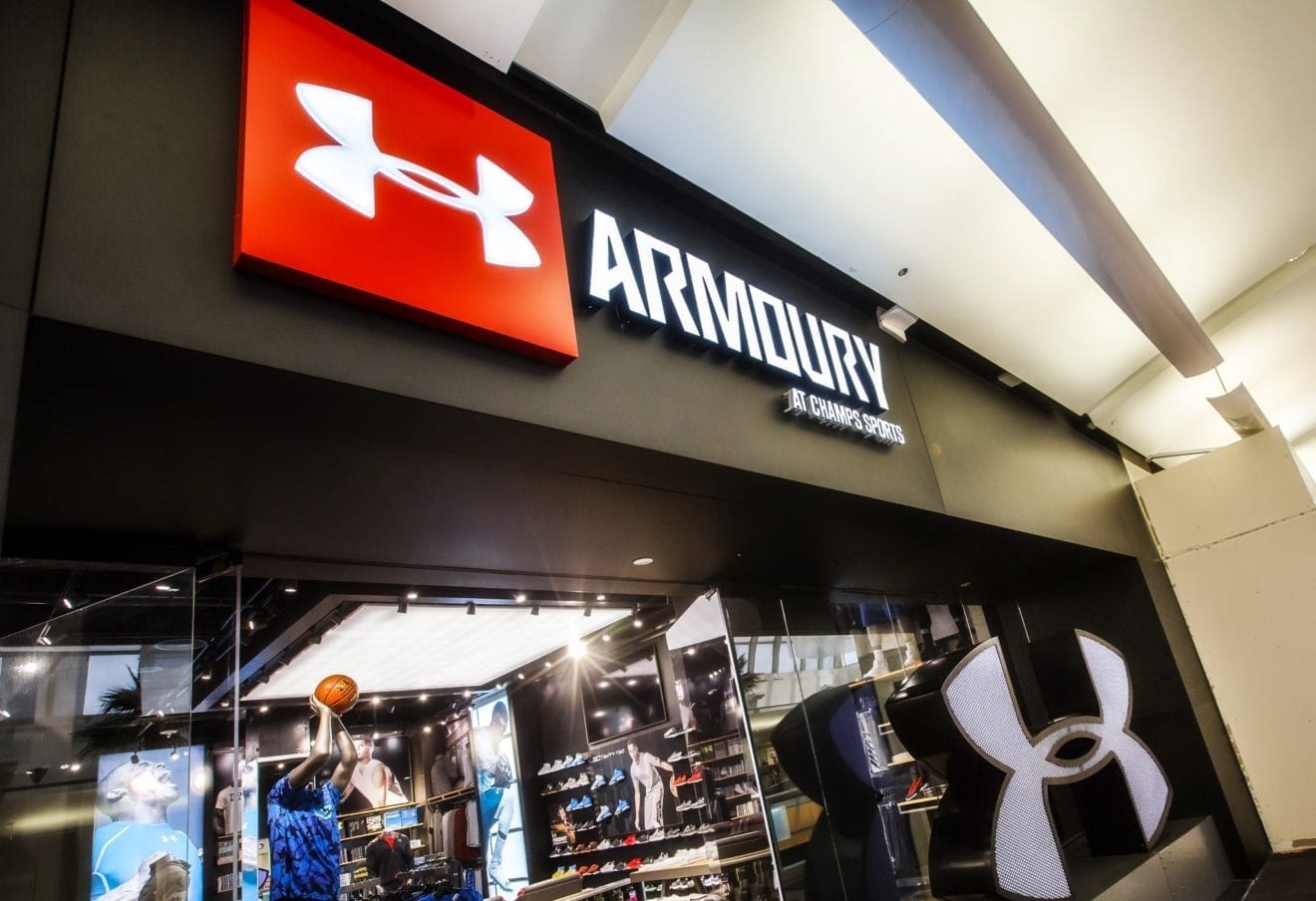
    Under Armour Korea plans to open flagship stores to make the most of its growing popularity in the Asian market.

    The US-headquartered sports brand says it has opened an office in South Korea to operate its business directly from next year, after taking over distribution from local partner Hyosung Galaxia.

    “Under Armour will strengthen its marketing, distribution and retail efforts, providing Korean consumers with the best brand and shopping experience,” said David Song, country manager of Under Armour Korea.

    “We will open our flagship store in southern Seoul in January. The brand will also continue to connect with athletes directly and promote sports, fitness and healthy living through its connected fitness platform, which is the world’s largest digital health and fitness community.”

    Song said Korea is a “pivotal component” in the company’s international growth plan.

    “Through design, innovation and our Under Armour connected fitness platform, we look forward to forging long-term relationships directly with athletes at every level in the country.”

  • More shoppers spend less in Black Friday

    More shoppers spend less in Black Friday

    More shoppers spent less on Black Friday in the US – and more was spent online than ever before.

    Those are the key take-outs from the three day long shopping extravaganza, which is being followed up by Cyber Monday giving Americans a second chance at scoring shopping bargains.

    But perhaps the biggest trend this year was how Black Friday was adopted internationally – even as far away from America as Vietnam, shopping centres were packed with bargain hunters, lured by billboards promising as much as 50 per cent off stock.

    According to data from the National Retail Federation, more than 154 million US consumers shopped last Friday, spending an average $289 – $11 less than last year. Gifts accounted for $214 of that spend.

    “It was a strong weekend for retailers, but an even better weekend for consumers, who took advantage of some really incredible deals,” said NRF president and CEO Matthew Shay.

    Most of the shopping occurred Friday, perhaps reflecting the limited stock of some retail deals.  The NRF said of the consumers who went to physical stores, 75 per cent shopped on Friday, 40 per cent on Saturday and 17 per cent on Sunday.

    And the data showed a continuing migration from offline to online. Last year, 103 million people shopped online and 102 million in stores. This year more than 108 million shopped online and 99 million in stores.

    Adobe released data based on anonymous tracking of 22.6 billion visits to retail websites, showing more than $5 billion was spent online over the holiday weekend – and a record $3.34 billion on Friday. Mobile devices accounted for $1.2 billion of the weekend sales.

  • Jumbo Seafood grows profit 17.9pc

    Jumbo Seafood grows profit 17.9pc

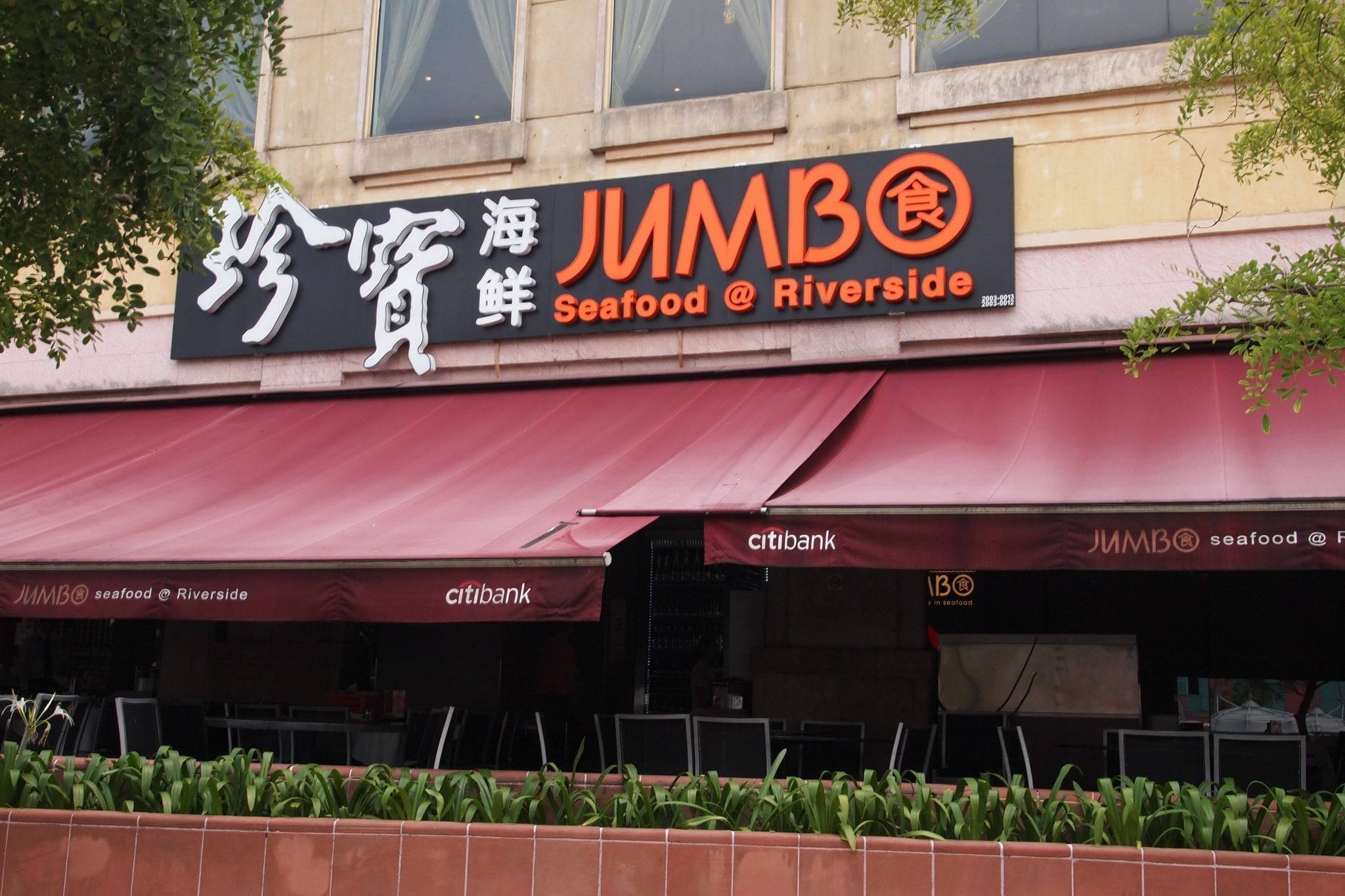
    Restaurant group Jumbo Seafood has reported a full-year net profit of S$15.7 million (US$11 million) – up 17.9 per cent from the previous year.

    Overall group revenue grew 11.4 per cent to S$136.8 million, attributed mainly to revenue contributions from its new seafood outlets in Shanghai as well as an overall increase in revenue from its other restaurants.

    Jumbo Seafood executive chairperson/CEO Ang Kiam Meng says the group managed to increase yields despite the ongoing challenges of the industry.

    “We look forward to further improving our financial performance by streamlining our operations to raise productivity and efficiency while lowering operating costs.”

    In October, Jumbo opened its fifth Ng Ah Sio Bak Kut Teh (pork ribs soup) outlet in Singapore.

    Jumbo is a multi-concept dining and F&B group with a network spanning Singapore, China and Japan. It also provides catering services, and in Singapore sells packaged sauces and spice mixes.

  • Tesco Thailand ‘not for sale’

    Tesco Thailand ‘not for sale’

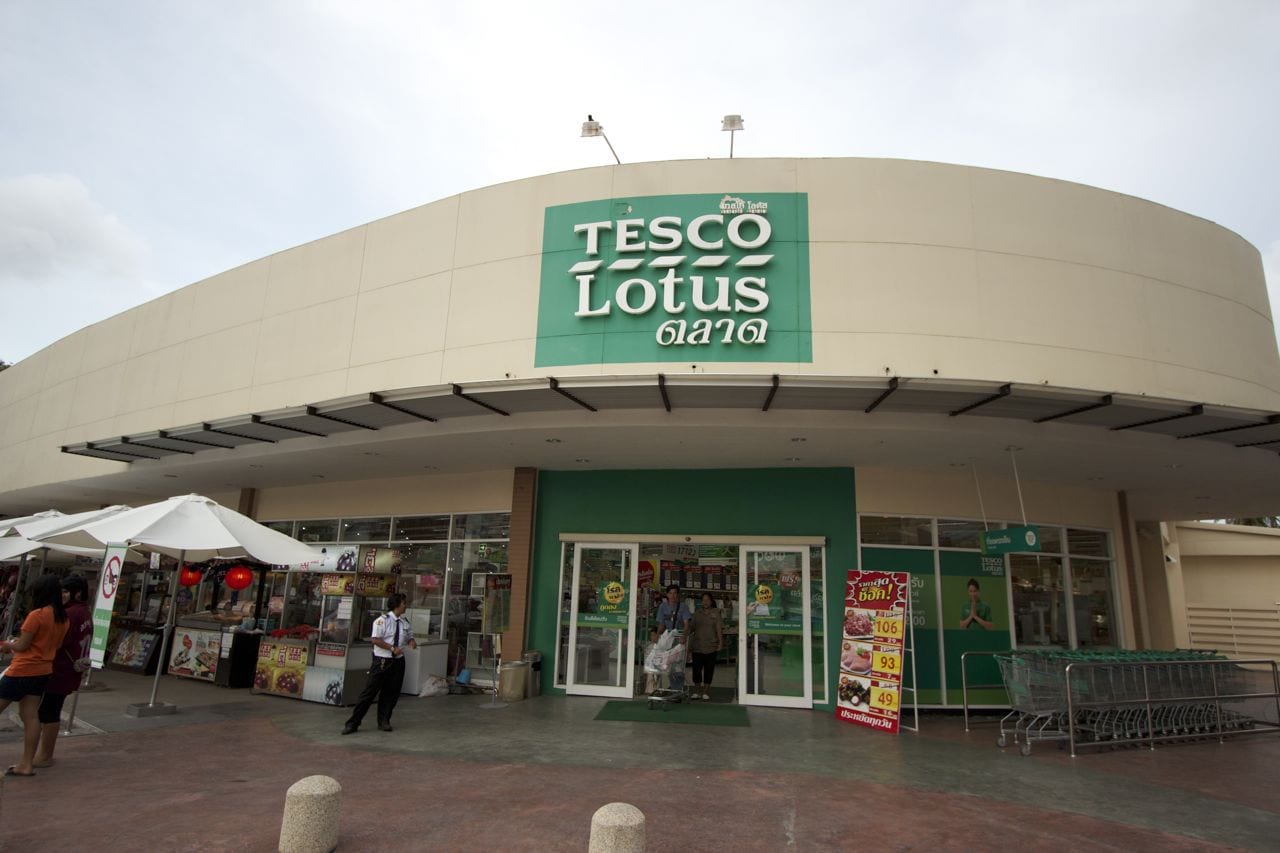
    Tesco Thailand is not for sale, the parent company’s CEO Dave Lewis has committed during a visit to Bangkok. “I’m here to look at the expansion plans.”

    After Tesco UK sold off its Malaysian subsidiary in 2015 and its Turkish operation earlier this year, there was considerable speculation the Thai operation may also be divested as the embattled retailer repaid mounting debts and restored its balance sheet.

    But in recent quarters the company has reported improving sales and margins and the Tesco Lotus operation in Thailand – which now boasts 1800 outlets ranging from hypermarkets to convenience stores – performs strongly in the group’s remaining portfolio covering 11 markets.

    Lewis, on a visit to Thailand, says the company now plans to increase its investment in the country during the next few years and sees growing opportunities there.

    “What you will see over the next three to five years is continued investment,” Lewis said in an interview. “If anything, we have an opportunity to invest more now than in the past.”

    He categorically denied the chain may be sold.

    “I want to be very clear – our commitment to Southeast Asia, our commitment to Thailand is absolute and not changing. The business is not for sale.”

    Lewis said that Tesco wants to expand its store formats to serve as marketplaces for small businesses and communities.

    “If you look at the history of Tesco, this is how we built our business in the UK,” he said. “Our relationships with suppliers go back 50, 60, 70 years. They have grown as we have grown. So one of the things that we think we can do well is incubate and grow businesses.”

  • Yum China seeking delivery deal

    Yum China seeking delivery deal

    Fast-food giant Yum China Holdings is looking at buying food-delivery services firm Daojia.com.

    Discussions are at an early stage, but a deal could be worth up to US$200 million, as reported.

    Established in 2010, Daojia.com focusses on online food orders and delivery services targeting the middle class urbanites in 10 Chinese cities. With a 3000-strong logistics team, it works with more than 6000 restaurants.

    Food-delivery apps are becoming more popular in China with services being offered by Baidu Inc’s Waimai, Alibaba Group Holding’s Meituan and Tencent Holdings’ Ele.me.

    China’s second-largest eCommerce fim JD.com and Macquarie Capital were investors in a $50 million round of fundraising by Daojia two years ago.

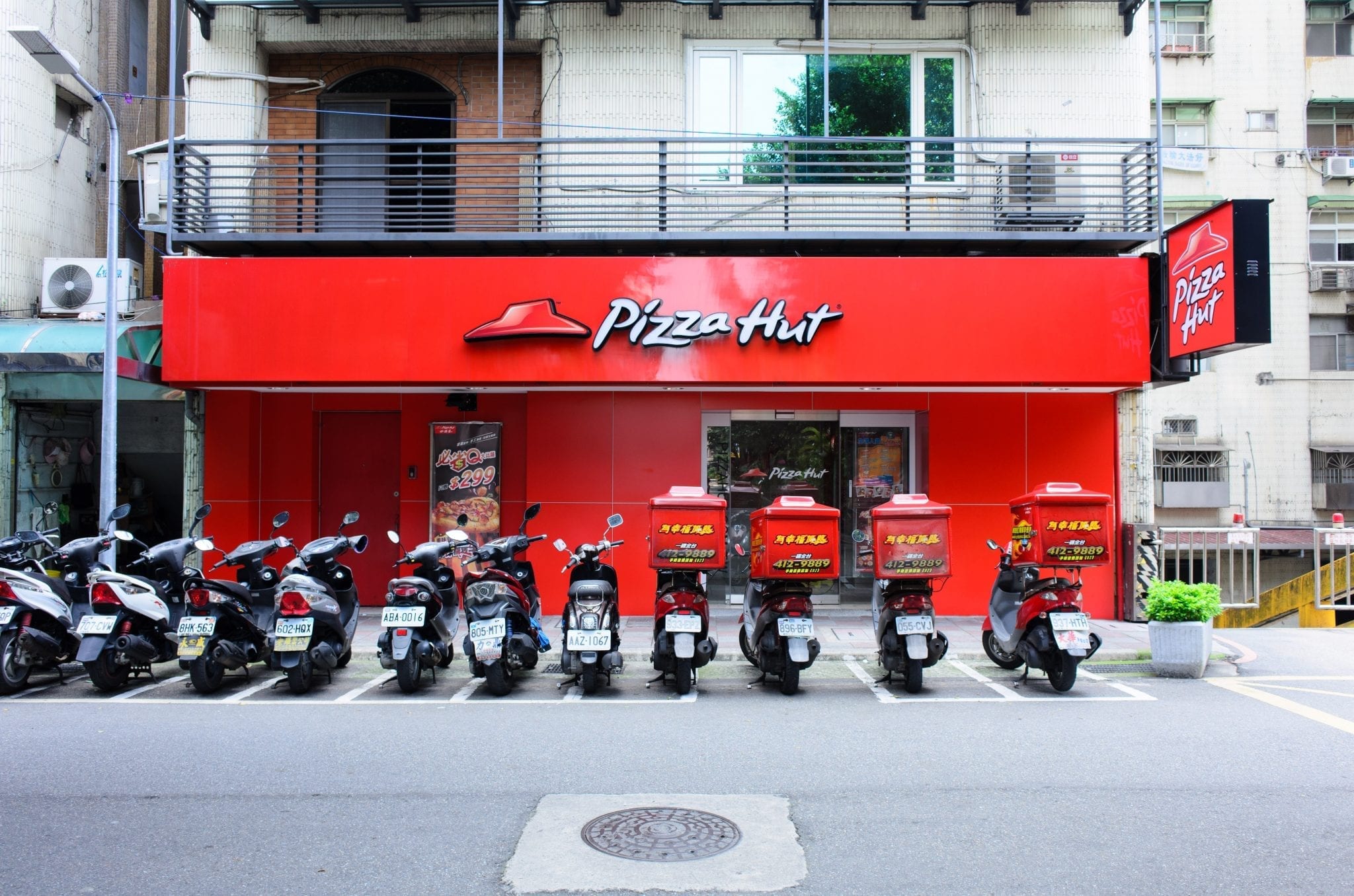
    Yum China was spun off from US-based fast Yum Brands Inc 12 months ago. The company’s brands include KFC and Pizza Hut.

    CEO Micky Pant says that while only 10 per cent of the company’s sales are delivered, deliveries are growing at double digits and will be an important driver of growth.

    Yum China secured a $460 million investment from Primavera Capital and Alibaba affiliate Ant Financial before its spin-off. Yum China already is the biggest user of Ant’s Alipay mobile payments service. The restaurant company is also investing in its mobile ordering system and loyalty programs.

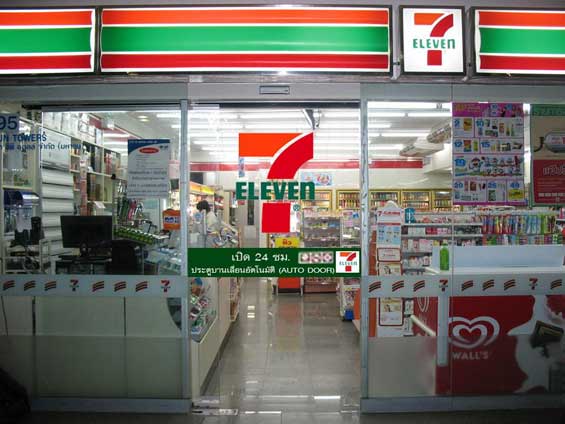
  • 7-Eleven Malaysia Continues to Expand Store Network

    7-Eleven Malaysia Continues to Expand Store Network

    The Group’s revenue for the current quarter of RM547.8 million grew by RM28.5 million or 5.5% against the corresponding quarter’s revenue in the previous year of RM519.2 million. The growth in revenue continued to be driven by the growth in new stores, improved merchandise mix and consumer promotion activity. This growth was achieved despite prolonged on-going retail market softness caused by weak consumer confidence/spending.

    Gross profit of RM169.0 million improved by RM9.2 million or 5.8% compared to the corresponding quarter in the previous year and this was mainly attributed to the revenue growth of 5.5%.

    Selling and distribution expenses for the quarter increased by RM14.8 million or 10.4%, mainly caused by new store expansion resulting in higher staff cost, rental cost, store depreciation expense and utility cost. In addition, the increase in the minimum wage effective 1st July 2016 has caused the store staff costs to rise by approximately 10% in the current quarter.

    Administrative and other operating expenses for the quarter increased by RM0.7 million or 3.3% due to higher staff cost, head office IT depreciation expense and amortization of intangible assets.

    The profit before tax of RM15.5 million decreased by RM7.0 million or 31.2% compared to the corresponding quarter in 2015 despite positive sales growth due to higher selling and distribution expenses caused by new store expansion and the impact of minimum wage increase effective 1st July 2016.

    For the 9 months ended 30 September 2016

    For the 9 months ended 30 September 2016, the Group’s revenue of RM1.58 billion grew RM73.2 million or 4.9% against the corresponding 9 months’ revenue in the previous year of RM1.51 billion. The growth in revenue was driven by the growth in new stores (total stores as at 30 September 2016: 2,057 stores), improved merchandise mix and consumer promotion activity.

    Gross profit improved by RM28.1 mil or 6.1% compared to the corresponding 9 months in the previous year and this was mainly attributed to the revenue growth of 4.9% and gross profit margin expansion of 0.4% points.

    Selling and distribution expenses for the 9 months period in 2016 increased by RM23.7 million or 5.7%, mainly caused by higher staff cost, rental cost, store depreciation expense and utility cost which is in tandem with new store expansion coupled with impact of minimum wage increase on the staff cost.

    Administrative and other operating expenses decreased by RM5.5 million or 8.5% vis-à-vis the corresponding 9 months in the previous year due to higher staff cost, head office IT depreciation expense and amortization of intangible assets.

    The profit before tax of RM58.8 million increased by 1.3% or RM0.8 million despite revenue growth of 4.9% and gross margin expansion by 0.4% points due to higher selling and distribution expenses from new store expansion and also the impact of minimum wage increase effective 1 July 2016 on the salary cost.

    Future Prospects

    The Board of Directors is of the view that the trading conditions for the remaining period of the current financial year is expected to remain challenging due to continued weak consumer confidence/spending and current macro-economic conditions. Despite this latest development, we remain positive of holding onto our market leading position.