Author: Mei Ling Tan

  • Jewel Changi Airport wins prestigious Retail Real Estate Award at MAPIC Awards 2016

    Jewel Changi Airport wins prestigious Retail Real Estate Award at MAPIC Awards 2016

    Jewel Changi Airport (Jewel), a lifestyle destination being developed in the heart of Singapore Changi Airport, has been named Best Futura Shopping Centre at MAPIC Awards 2016 in Cannes, France – a prestigious retail real estate industry event which honours the world’s most exciting and innovative retail property projects.

    Developed by Jewel Changi Airport Trustee – a joint venture between Changi Airport Group and CapitaLand Mall Asia – Jewel is a mixed-use complex featuring a wide range of lifestyle offerings including a five-storey indoor garden, unique play attractions, comprehensive shopping and dining options, a hotel, and facilities for airport operations.

    Celebrating excellence, innovation and creativity in the global retail real estate industry, the MAPIC Awards, into its 21st run, saw a total of 180 entries from 40 countries. A newly-introduced category, the Best Futura Shopping Centre award recognises upcoming retail developments with outstanding architectural qualities and strong, original concepts. Other considerations include the innovative use of materials, integration with the environment and impact on the local community. Based on these evaluation criteria, Jewel emerged winner of the inaugural accolade.

    Designed by a consortium of consultants comprising Safdie Architects led by world renowned architect Moshe Safdie, as well as Benoy and local architects RSP, Jewel features a distinctive steel and glass facade, that will house a refreshing environment of lush greenery that are integrated with facilities and attractions.

    There are two main centrepiece attractions in Jewel – the Forest Valley, a huge five-storey garden filled with thousands of trees, plants, ferns and shrubs, and the 40-metre high Rain Vortex, currently the world’s tallest indoor waterfall. The complex spans five storeys above ground and five basement storeys.

    Following the commencement of Jewel’s construction in end-2014, works on the five basement levels of the complex have been completed, and the focus going forward will be on the works above ground. Jewel is on track to open in early 2019.

    “The MAPIC Awards are one of the most prestigious accolades in the retail real estate industry and we are honoured to be a recipient this year. In developing Jewel, it is our vision to create a world-class destination that will enhance Singapore’s tourism appeal and augment Changi Airport’s position as a leading air hub in the world. With its unique features that will engage and entertain visitors, we aspire for Jewel to be a place of discovery and experiences for both local residents and international travellers. This award is a tremendous encouragement to the team and an affirmation of Jewel’s innovative design and concept,” said Ms Hung Jean, Chief Executive Officer, Jewel Changi Airport Devt.
  • FedEx brings packages to 7-Eleven stores

    FedEx brings packages to 7-Eleven stores

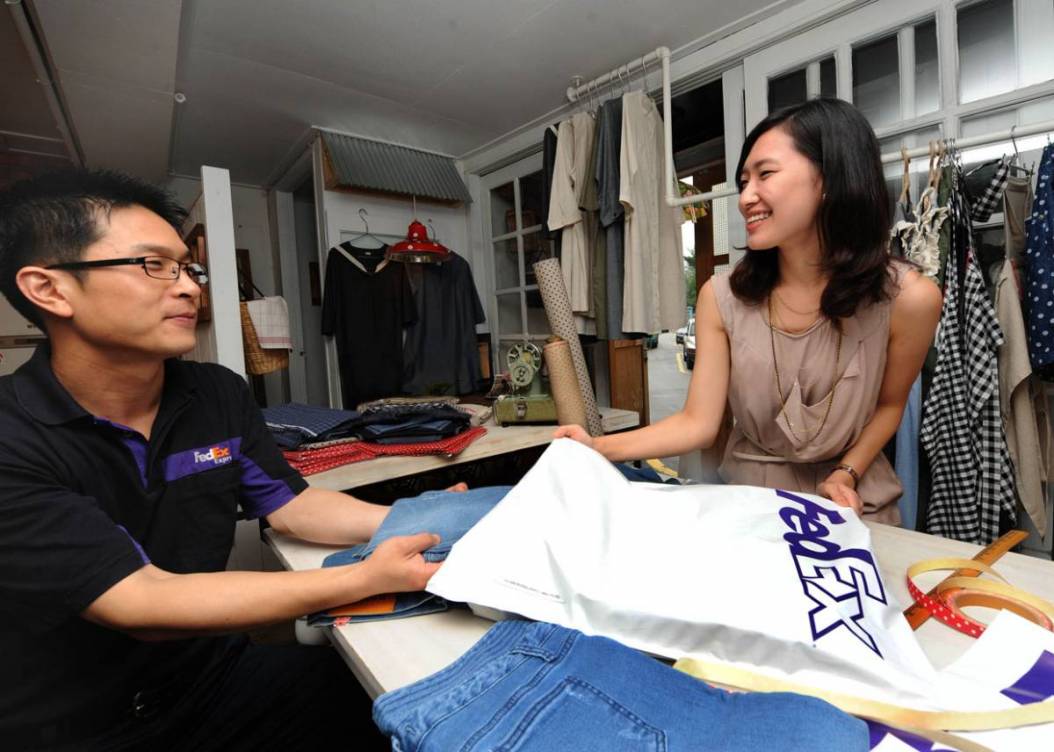
    FedEx Express, a subsidiary of FedEx Corp and convenience store chain 7-Eleven, announced today that customers and online shoppers can collect their packages at selected 7-Eleven stores. The service is only applicable to shipments of up to 10 kilograms in weight and 105 cm in dimension and with a total value for customs of no more than US$500 per shipment.

    FedEx Express, a subsidiary of FedEx Corp and convenience store chain 7-Eleven, announced today that customers and online shoppers can collect their packages at selected 7-Eleven stores. The service is only applicable to shipments of up to 10 kilograms in weight and 105 cm in dimension and with a total value for customs of no more than US$500 per shipment.

    Customers simply need to reply to their FedEx pre-delivery notification message and indicate their preferred 7-Eleven location. They will then receive an SMS message with the pick-up details.  Customers are required to present both the air waybill number and SMS message at their chosen 7-Eleven store upon pick-up.

    Packages must be collected within five days. Anthony Leung, managing director, FedEx Express, Hong Kong and Macau said the company’s retail service network expansion was a response to market needs. Rose Yeung, sales and marketing director, 7-Eleven Hong Kong and Macau, said this represented “another step forward in expanding our service portfolio, which includes bill payment, ticketing, self pick-up and donations.”

  • Stores in China using apps to increase foot traffic

    Stores in China using apps to increase foot traffic

    A growing number of retail stores in China are using specially designed apps to track shoppers’ behavior in a bid to boost sales.

    Yo-ren, an information technology startup, has developed an app to collect information about members enrolled in reward programs offered by stores. Convenience store operator Lawson has introduced the app at select locations in China.

    The Chinese government has desire to make consumption the primary driver of growth. But spreading online shopping will bring the detriment on brick-and-mortar shops.

    Incentive programs

    In 2015, the Shanghai-based Yo-ren, which provides digital marketing services in China, began supplying Lawson stores in Shanghai with an app to manage the convenience store’s reward points program. Since the beginning of this year, the companies have expanded use of the app to other cities, including Beijing, Dalian and Wuhan.

    The app is designed to provide product information and discount coupons while giving customers reward points based on their purchases.

    Under the current plan, members earn 10 points for each yuan they spend, exchangeable for store coupons, at the rate of 1,000 points for 1 yuan (15 cents).

    Since the service was rolled out, the number of members in Shanghai increased to 350,000. About 15% of them use the app at least once a week. These active users visit Lawson stores three times per week on average.

    Lawson has invested around $900,000 in Yo-ren, which is now using the money to enhance the app’s features.

    Tailored services

    Lawson plans to analyze information collected through the app, such as customer profiles and purchase records, for consumer preferences and trends. Findings will then be used to boost traffic during slow business hours, such as by offering coupons for free cups of coffee between 3 p.m. and 5 p.m. at locations close to members’ workplaces.

    Chinese consumers are flocking to internet shopping services provided by Alibaba Group Holding and other e-commerce players. Soaring online purchases are denting earnings at brick-and-mortar retailers, especially department stores.

    Convenience stores have proved less vulnerable to the trend, but Yo-ren CEO Osamu Kaneda said there is still a lot of room for them to boost their ability to attract consumers.

    Yo-ren’s app allows stores to track members in real time. Its features enable stores to analyze customer preferences and then develop new revenue streams from makers through targeted advertising. The app will also help stores tailor their services to match customers’ needs.

    China is in the midst of an economic evolution in which consumer spending is replacing investment and exports as the main driver of economic growth. The service sector is an important link in this shift because it employs large numbers of people.

    But the decline of brick-and-mortar sales will inhibit consumption due to slower job creation in the service sector and lower wages for those jobs.

    To make consumer spending the new engine of economic growth, China needs to engineer a balance between online shopping and sales at traditional retail stores.

  • DFS Group, Make-a-Wish and Louis Koo Help Make Superhero Wish Come True

    DFS Group, Make-a-Wish and Louis Koo Help Make Superhero Wish Come True

    DFS Group (DFS), the world’s leading luxury travel retailer, alongside Make-A-Wish (worldwish.org), the world’s largest wish-granting organization, and actor Louis Koo, came together at T Galleria by DFS, Canton Road today to help Yuet-Lun, a 4-year-old boy from Hong Kong with congenital nephrotic syndrome, fulfill his wish of being a superhero. The event, which kicked off DFS’ #GiveJoy campaign in Hong Kong, saw Yuet-Lun transformed into his favorite superhero, fighting crime in T Galleria by DFS with the help of his father and Louis Koo dressed as superheros.

    “DFS is committed to supporting the communities where we live and work, and the holiday season is a particularly important time to give back to those in need,” said Jay Frame, DFS Group’s Vice President Corporate Communications and CSR. “We are thrilled to partner with Make-A-Wish to make Yuet-Lun’s wish come true in Hong Kong and to help grant the wishes of nine other children around the world.”

    Yuet-Lun, dressed as a superhero, arrived with his father at T Galleria by DFS, Canton Road and was greeted by Louis Koo and given a special mission and map to find treasure inside the store to save Hong Kong. As he began his mission, actors posing as thieves jumped out and stole his mission map, requiring Yuet-Lun to fight off the thieves throughout the store in order to complete his mission. After defeating the thieves, Yuet-Lun found the treasure on the third floor of T Galleria by DFS and successfully saved Hong Kong.

    The mission of Make-A-Wish is to grant the wishes of children with life-threatening medical conditions to enrich the human experience with hope, strength and joy. Since its inception in 1980, Make-A-Wish has collectively granted the wishes of more than 380,000 children in nearly 50 countries. Each wish that comes true inspires these seriously ill children to persevere against their illnesses.

    “We are proud to renew our partnership with DFS and its ambassadors this holiday season to help grant even more wishes to deserving children facing critical illnesses,” said Make-A-Wish International President and CEO, Jon Stettner. “We are particularly grateful to DFS and Louis Koo for helping to make Yuet-Lun’s wish come true in Hong Kong. It’s through the support of partners like DFS and its customers around the globe that make these life-changing wishes possible.”

    This is the third year DFS has partnered with Make-A-Wish International and in 2016, DFS will help grant 10 wishes to children like Yuet-Lun in the communities where DFS operates. Donation boxes will also be placed in T Galleria by DFS stores in Hong Kong and Macau for shoppers to make a contribution to Make-A-Wish:

    • T Galleria Beauty by DFS, Hong Kong, Causeway Bay
    • T Galleria by DFS, Hong Kong, Canton Road
    • T Galleria by DFS, Hong Kong, Tsim Sha Tsui East
    • T Galleria by DFS, Macau, City of Dreams
    • T Galleria by DFS, Macau, Shoppes at Four Seasons
    • T Galleria by DFS, Macau, Macau Studio City
    • T Galleria Beauty by DFS, Macau, Galaxy Macau Store

    DFS customers can help grant wishes by following @DFSOfficial and liking posts about Make-A-Wish from @DFSOfficial and other influencers throughout December. For every post that receives 1,000 “likes,” DFS will donate to Make-A-Wish International to help grant up to ten wishes to children around the globe.

  • India to become handset component hub

    India to become handset component hub

    India is on track to manufacture $80 billion worth of mobile phone components over the next five years, new research suggests.

    This will help India become a global manufacturing hub, the study conducted by IIM Bangalore and market research firm Counterpoint Research has revealed.

    This presents a significant opportunity from the domestic demand perspective to manufacture mobile phones in the country and source local components, driving the government’s Make in India initiative and reduce dependency on imports.

    “India can potentially be the world leader in mobile phone manufacturing ecosystem and this has to be done in a phased manner,” said Aruna Sundararajan, secretary, ministry of electronics and IT, government of India, at an event here where the study findings were released.

    India has beaten the US to become the second largest global smartphone market in terms of users in early 2016 and is on track to cross half a billion smartphone users mark within the next five years.

    The contribution of domestically manufactured mobile phones has increased from 14% in 2014 to 67% in 2016 and is further estimated to reach 96% by 2020. However, 67% of the handsets manufactured in India contribute to just six per cent of the true local value addition with most of the OEMs still importing Semi Knocked Down components (SKDs).

    “Out of 50 facilities from original equipment manufacturers to original design manufacturers and electronics manufacturing services to component suppliers involved in manufacturing of mobile phones in India, almost three-fourth are Indian manufacturers, followed by Taiwanese with 10% and Chinese with 10 %,” the study revealed.

    “Under the proposed plan, we estimate that more than $15 billion worth components will be sourced locally over the period of five years through 2020 creating over a million direct and indirect jobs in India.”

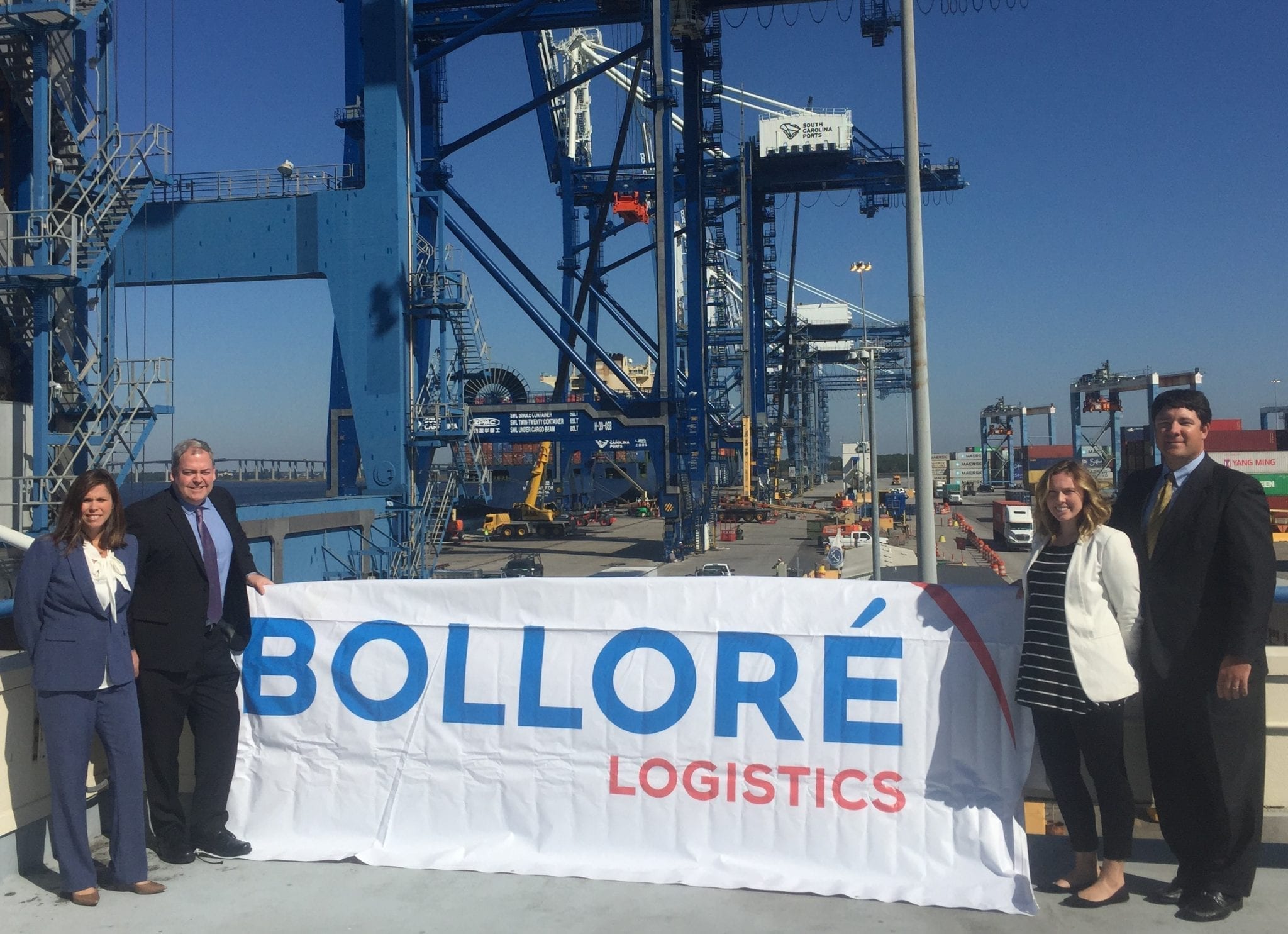
  • Bolloré Logistics USA Has Opened a New Office in Charleston

    Bolloré Logistics USA Has Opened a New Office in Charleston

    The US Southeast continues to expand in both population and manufacturing infrastructure, and the Port of Charleston serves as the international ocean gateway to support this region.

    Planned port expansions and deepening projects are poised to push the Port of Charleston into the top three USA container volume ports (along with New York and L.A.) by 2020.

    Bolloré Logistics Charleston will focus on the heavy east/west ocean traffic flows with North Europe as well as China, Japan, and Southeast Asia. The new office will focus on a number of industries in the Carolina’s, including Aerospace, Automotive, Manufacturing, and Retail to name a few.

    Mr. Tyler Smith, in addition to being the Branch Manager, is a Licensed Customs Broker. Bolloré Logistics USA now has an active corporate license with U.S. Customs and Border Protection in the 16th Customs District covering all Customs ports in the State of South Carolina.

    Ms. Candice Kurent will be responsible for the sales development.

    “Opening our newest office in Charleston demonstrates our commitment to grow in the United States and a specific focus on the dynamic and growing economy in the Southeast,” mentions Mr. Seth Brown, Regional Manager for the Southeast. “With our new office, we show our commitment to being close to our customers, unlike many of our competitors who are choosing to centralize or off-shore their operations. We are already a Top10 logistics and transportation player globally and our aim is further profitable growth in the coming years,” he adds.

  • Boycott China? Dragon now angel for Indian startups

    Boycott China? Dragon now angel for Indian startups

    ‘Boycott China’ messages may have become routine on WhatsApp in India. But in the startup world, India and China are drawing closer.

    Chinese firms and funds have become big investors in Indian startups , and they are becoming particularly useful now as US funds slow down. Beijing Miteno Communication Technology, a Chinese tech conglomerate, made this year’s biggest acquisition in the technology startup space — the $900 million buyout of Media.net, a subsidiary of Mumbai-based Directi, founded by brothers Bhavin and Divyank Turakhia.

    Ecommerce giant Alibaba has made large investments in Paytm and Snapdeal. Didi Chuxing, the equivalent of Uber in China, has invested in Ola. Internet giant Tencent recently led a $175 million funding in messaging app Hike; prior to that, it led a $90 million round in healthcare solutions firm Practo and, through its joint venture with South Africa’s Naspers, invested in online travel firm Ibibo Group.

    “There are demographic similarities and both countries are seeing consumer growth for digital firms. Also, Chinese players have experience in market creation and running successful digital companies, so they can play a bigger role than being just financial investors,” says Ashish Kashyap, founder of Ibibo, which last month merged with rival MakeMyTrip. Alibaba, for instance, is seen to be actively helping Paytm in various aspects.

    Bhavin Turakhia says the Chinese understand the Indian market better than US companies do as the Indian market is on the same evolution path as that of China, but about 5 to 10 years behind.

    Chinese companies and funds have become big investors in Indian startups . Cheetah Mobile, which owns products like Clean Master, invested in fitness app GOQii late last year.

    Ctrip, one of China’s largest online travel companies, invested $180 million in MakeMyTrip in January. China-based investment firm Hillhouse Capital has invested in CarDekho. Smartphone maker Xiaomi led a $25-million funding round in content provider Hungama Digital Media Entertainment in April.

    Web services company Baidu has said it is scouting for investment opportunities in Indian startups.

    Even other Asian companies are nowhere close to investing as much as the Chinese in Indian startups. Japan’s SoftBank and Singapore’s Temasek are among the few non-Chinese ones that have made investments. Taiwan’s Foxconn has also made several investments, like in Qikpod, Hike and Snapdeal, but some see Foxconn as practically a Chinese company, given that much of its operations is in China.

    What’s pushing the Chinese tech companies to make large investments are two things: one, many of them are making big profits in their home market, thanks partly to the restrictions on foreign competition; and two, the Chinese economy is slowing down.

    So they want to use their surpluses to expand into what is potentially the world’s third largest digital market.

    “There are only two big growing markets where they can invest: India and the United States. Silicon Valley does not respect Chinese capital. So the Indian tech sector becomes attractive to them,” says Mohan Kumar, executive director at Norwest Ventures, a US-based venture fund that has operations in India. Kumar also notes that Chinese investors often value Indian startups at three to five times more than what other seasoned investors do. “So entrepreneurs naturally prefer them,” he says.

    Higher valuations mean the Chinese investors take lower stakes for the same amount of investment, and founders can hope for an even higher valuation in their next round of fund raising.

    Language and politics are a challenge. May be for that reason, the Chinese are for now preferring partnerships and not outright buys. Even investment firms are building partnerships. Chinese VC fund Incapital has tied up with Indian fund IvyCap Ventures to enable its partner investors to have a closer look at potential investment opportunities in Indian startups.

    China is showing interest in traditional industries too. In July, Chinese pharma company Shanghai Fosun Pharmaceutical Co acquired Indian injectables manufacturer Gland Pharma for $1.27 billion, and in August, Chinese conglomerate Jiangsu Longzhe Technology and Trade Development Co acquired Diamond Power Infrastructure, Vadodara-based manufacturer of cables, conductors, transformers and other power sector equipment, for $125 million. But digital technology looks to be where the biggest action is.

  • Singapore Sovereign Fund Invests $136 Million in Korean Retail Complex

    Singapore Sovereign Fund Invests $136 Million in Korean Retail Complex

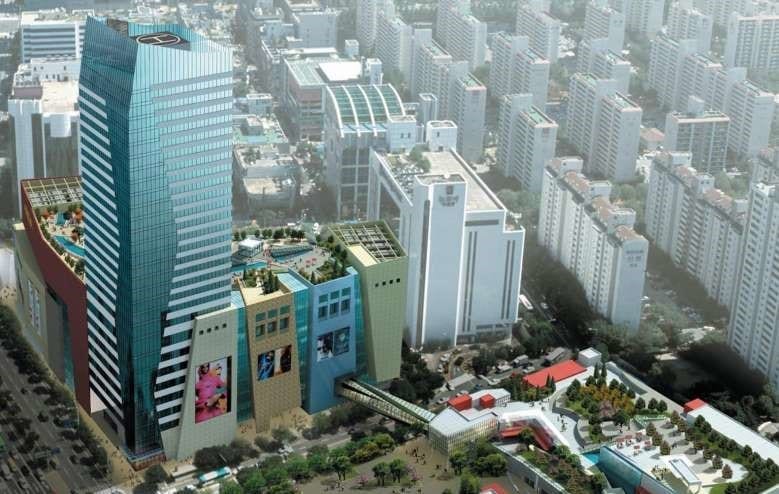
    Singapore’s sovereign wealth fund, GIC Real Estate Pte Ltd, has acquired GG-Square, a Seoul-based retail complex, for $136 million.

    The complex was completed in 2014 and is spread over an area of 238,248.43 square meters. It has 28 stories and is located in the heart of Anyang, a bustling metropolitan area in the southern part of Seoul. The complex is strategically located as it offers direct access to the city’s subway. Besides retail outlets, G-Square also has offices, spread over an area of 34,681 square meters.

    The complex is operated by one of the largest retail operators in South Korea, Lotte Shopping Co. However, after acquisition, it will be managed by IGIS Asset Management, a leading real estate management company in South Korea.

    GIC has been showing interest in the real estate, of late. Earlier in 2016, the sovereign wealth fund entered into an agreement with Shingsegae Inc., a South Korea-based department store franchise, to develop a retail mall based in Songdo.

  • Cash Crunch Chokes off India Palm Oil Imports From Indonesia & Malaysia

    Cash Crunch Chokes off India Palm Oil Imports From Indonesia & Malaysia

    India’s palm oil imports are expected to slip next month by up to a fifth, including from the top two producers Indonesia and Malaysia, as New Delhi’s removal of high-value rupee notes from circulation disrupts distribution systems and curbs demand.

    Traders in Malaysia, India’s largest palm oil supplier taking up half of its imports last year, say the absence of the large bills has already impacted sales. Indian buyers are delaying shipments and cancelling vessel space bookings, and the traders expect them to hold back further in the month ahead.

    In India – top importer of vegetable oils – traders are forecasting up to a 20 percent drop in crude and refined palm oil imports for December from the previous month, with edible oil refiners reducing purchases as the cash crunch weakens retail demand.

    Having fewer high-value notes in circulation is also hampering distribution because village shops typically pay local wholesale dealers in cash.

    “Bulk buyers are not ready to lift stocks. Most of November shipments we cannot cancel or postpone as tankers have already left Indonesian and Malaysian ports. So we are postponing shipments in December to January,” said a senior official with an Indian oil refiner who declined to be named.

    Cargo surveyor data shows Malaysian palm oil shipments to India for the first half of November have already dropped by 81 percent to 85 percent versus the corresponding period last month.

    “Inquiries have fizzled out since last week,” said a Kuala Lumpur-based trader, who reported an over 50 percent decline in sales volumes. “It’s not going to be easy now for the market to sustain high price levels.”

    Benchmark palm oil prices have been volatile in recent trading sessions, hitting a four-year high a week ago and then posting its biggest intraday drop in more than four months in the next session.

    Palm oil looks set to fall more than 3 percent this week, down about 0.2 percent on Friday around 2,870 ringgit per tonne.

    Purchases from top consumers India and China typically fall-off at year-end because palm oil solidifies during the Northern Hemisphere winter, but this year the numbers are being hit hard.

    India’s total palm oil imports stood at 739,159 metric tons, according to traders, and are expected to fall to 650,000 metric tons in November and by another 20 percent from there in December.

    Total palm oil imports in December 2015 were 790,368 metric tons, according to the Solvent Extractors Association of India (SEA).

    No cash in a cash market

    Exact numbers aren’t available from largest producer Indonesia, but analysts there also expect lower shipments to India because of the cash shortage, while Indian buyers said they have cut vegetable oil imports from all suppliers, even for soyoil from Brazil and Argentina in December.

    Last week, Indian Prime Minister Narendra Modi declared 500 rupee and 1,000 rupee bills no longer legal tender to crack down on corruption and bring unaccounted wealth back into the economy, leaving millions with insufficient cash.

    “Retail sales are going down as many people don’t have cash to buy essential commodities. Refiners are not able to dispose their stocks, so they are likely to cut imports in the short-term,” said B.V. Mehta, executive director of SEA.

    Still, while India cannot do without imports due to limited local supplies, it is not clear how long the slowdown will last.

    Jitendra Kadam, a grocery shop owner from India’s western state of Maharashtra, said consumers have cut down purchases of everything from sugar to edible oils.

    “Until they get notes of smaller denominations, demand will remain weak,” he said.

    Said a Malaysian trader: “Everything is at a standstill. There is not enough cash around, so people are not going to trade much. They are going to wait and see.”

  • Abercrombie & Fitch to shut Hong Kong store in wake of economic downturn

    Abercrombie & Fitch to shut Hong Kong store in wake of economic downturn

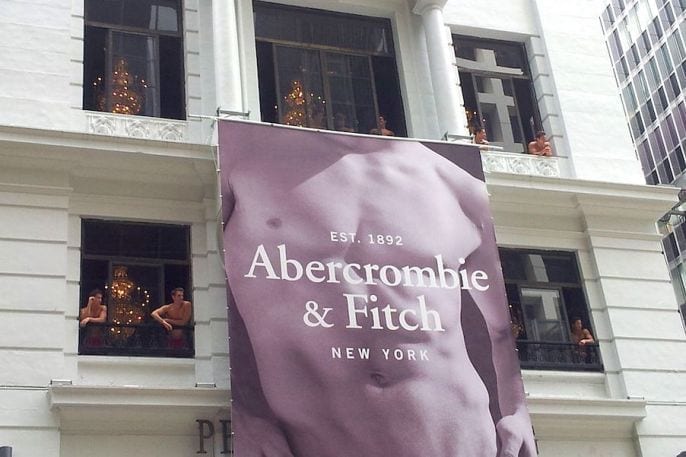
    US fashion chain Abercrombie & Fitch will close its four-storey ­flagship store in Central as early as next year amid the economic downturn and a slump in shoppers from the mainland.

    The 25,600 sq ft store on ­Pedder Street opened in 2011, paying HK$7 million in rent per month, double that of previous tenant Shanghai Tang.

    It has initiated an early exit ­before its lease expires in 2019.

    “The company exercised a lease kick-out option for its A&F flagship store in Hong Kong,” the retailer said on Friday. It claimed the move was “part of the ­company’s ongoing strategic review” and “was expected to drive economic benefit over time”.

    The closure of the store should be “substantially complete” by the end of the second quarter of fiscal year 2017.

    The move would trigger a “lease termination charge” of ­approximately US$16 million in the next quarter, it said.

    There would be no Abercrombie & Fitch branded store in the city after, but the company intended to add five stores on the mainland by the end of January.

    Comparable sales of the brand fell 14 per cent between August and October compared with the same period last year.

    It did not ­reveal its sales performance in Hong Kong.

    The city’s retail sales slumped 9.6 per cent in the first nine months of the year.

    Helen Mak, senior director and head of retail services at ­researcher Knight Frank, said Hong Kong was gradually losing its appeal to mainland tourists as a prime shopping destination after 10 years of high retail growth.

    Earlier this month, US fast-fashion brand Forever 21 said it would close its flagship store in the heart of the Causeway Bay shopping district late next year.

    Helen Mak, senior director and head of retail services at researcher Knight Frank, said many retailers had expanded aggressively a few years ago when the Chinese economy was strong and shoppers poured into the city.

    A&F had made aggressive expansions in the city a few years ago when the Chinese economy was still strong and mainland shoppers tourists poured into city to buy luxury goods.

    “Many retailers were optimistic about the market outlook at that time … But they may not be able to afford it now,” Mak said.

    Tourism spending by Chinese visitors has fuelled the boom in Hong Kong’s retail and commercial property sectors in recent years.

    Coach, another premier US brand, also closed its four-storey main store in Central last year amid weak retail sentiment.

    “Hong Kong is not too special a place for shopping in Asia. Many mainland shoppers now choose to go to elsewhere in the region, such as Japan, South Korea, Taiwan, etc,” she said.

    Last but not least, the yuan depreciation has also hit retail businesses, as a declining yuan makes Hong Kong goods more expensive for mainland shoppers, Mak said.

  • Xiaomi Mi Mix now available via Lazada in Singapore

    Xiaomi Mi Mix now available via Lazada in Singapore

    Xiaomi Mi Mix now available via Lazada in Singapore

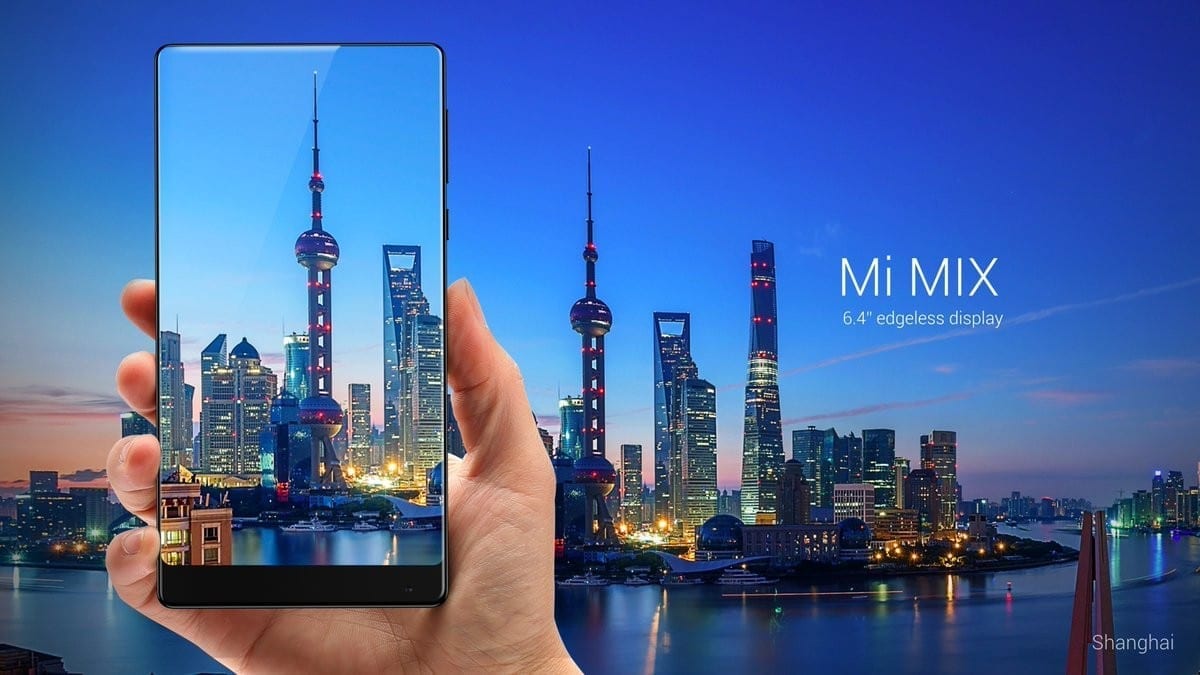
    Xiaomi fans in Singapore are in for a treat as the Mi Mix concept phone is now available for purchase via Lazada. Although the phone’s availability is officially limited to China, some enterprising stores like Lazada have come to the rescue of prospective smartphone buyers in the island state.

    The only caveat with the Lazada deal is that you will get just one month local-seller warranty at a premium price.

    The regular 4GB/128GB variant of Mi Mix retails at ¥3,499, which is the equivalent of S$720. In contrast, the Mi smartphone starts at S$1,278 in retail outlets across Singapore.

    On the other hand, the premium 6GB/256GB model is priced around ¥3,999 (S$820) in China and the same retails at a whopping S$1,639 in the island state.

    The all-screen and all-ceramic phone from Xiaomi definitely carries the premium looks of any eye-catchy phone in the market.

    It must be noted that the Xiaomi Singapore is not currently stocking the Mi Mix, despite featuring its official store on Lazada. So, your only option is to buy the phone through third-party importers and sellers via Lazada, which is too risky as it comes without the official hardware warranty.


  • Global Brands Group sales among best in class

    Global Brands Group sales among best in class

    Global Brands Group sales rose 15 per cent in the second half year.

    That’s a figure CEO Bruce Rockowitz believes puts the Hong Kong brand licensee and manager second only to Under Armour in business performance in the current lacklustre global economy.

    Sales soared 49 per cent in women’s and men’s apparel, its gross margin stretching from 39.9 per cent to 41. 7 per cent.

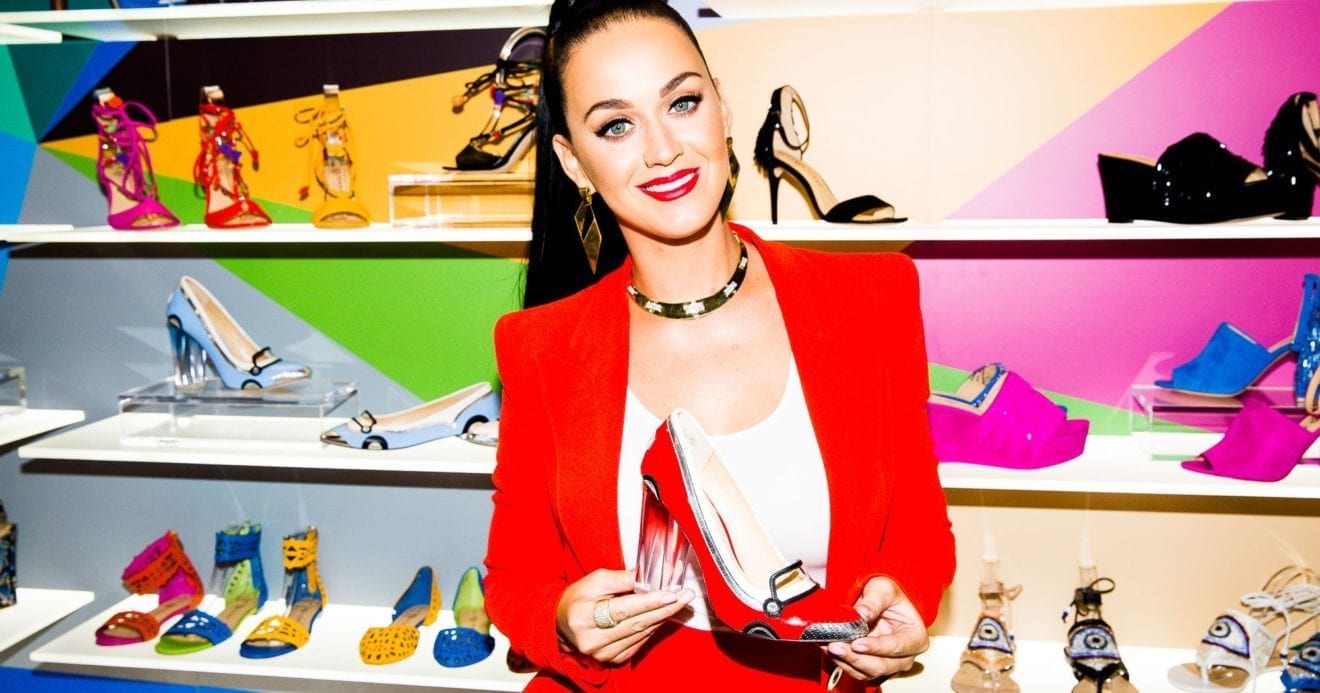
    It’s biggest category – childrenswear – recorded a 10.3 per cent sales increase and an improvement in gross margin from 34.8 per cent to 36.3 per cent. Footwear and accessories sales rose 3.4 per cent and its brand management business, its smallest division at present, improved by 52.8 per cent. That business will benefit from a significant boost when the company launches its first Katy Perry-branded products, a footwear range, in early 2017, targeting consumers in the US and Europe.

    “We’ve had a very strong year in relation to the market,” said CEO Bruce Rockowitz at a results presentation in Hong Kong late Thursday. “We’re two years into the spin-off [from Li & Fung Group] and we’ve done a lot of heavy lifting. Our top line is exceptional compared to the market.

    The momentum we have so far is in spite of the market and in spite of the [US] election which put a lot of uncertainty out there.

    “Our revenue is up 15 per cent , driven by organic growth, and with no acquisitions.”

    Hong Kong will underperform

    Rockowitz says Asia remains a small market for the group, which is developing it with David Beckham and the Spyder brand and in the children’s sector.

    “Asia remains promising given an expanding middle class, despite China’s growth rate slowing.

    “Hong Kong is different to the rest of the world because we are tied to China and tourists from China to here. I think the Hong Kong market will still be underperforming for the rest of the [fiscal] year.”

    He said high rents were affordable when business is good – “which it is not right now”.

    Within Asia, Korea is performing strongly.

    “Korea is a place where you can develop great design and great DNA of brands.”

    Spyder is performing well there, with GBG expecting to have 100 stores trading by the end of March.

    Global Brands Group now holds licenses of varying terms but up to 30 years in its core categories. In kidswear, its brands include Disney, Calvin Klein, Tommy Hilfiger, Under Armour and Nautica. In men’s and women’s fashion Spyder, Juicy Couture, Jones New York, Joe’s Jeans, Buffalo Jeans and David Beckham. In footwear, Calvin Klein, Cole Haan, Michael Kors, Kate Spade and GBG’s own brands including Aquatalia and Frye.  It’s fast-growing brand management group formed a joint venture with Creative Artists Agency in July propelling it instantly into the world’s largest company in the space. Brands include Katy Perry, David Beckham and Jennifer Lopez.

    High hopes for Katy Perry

    Rockowitz believes securing the Katy Perry brand management will bring huge benefits to GBG, suggesting US$20 million in sales in the first year of the partnership. Perry has 100 million followers on Twitter and is revered across the northern hemisphere and Asia. The company will launch the footwear collection in February-March 2017 after revealing it to the trade last August.

    It will be distributed to leading US and European retailers initially, with Asian consumers having to buy it online or wait until two or three seasons ahead before their regional launch.

    “Neither of us want to grow too fast and get it wrong. The products are in line with Katy’s image. Retailers are excited, but consumers haven’t seen it yet.”

  • Alibaba investing in Sanjiang Shopping Club

    Alibaba investing in Sanjiang Shopping Club

    Chinese eCommerce giant Alibaba Group Holding plans to invest 2.1 billion yuan (US$305 million) in supermarket chain Sanjiang Shopping Club.

    Sanjiang’s share were suspended by the Shanghai stock exchange on November 8, with trading resuming today.

    Under the terms of the deal, according to stock-exchange filings, Alibaba will subscribe to a private placement in Sanjiang, giving it about a 25 per cent stake.

    Sanjiang also plans to issue up to 188 million yuan worth of exchangeable bonds to Alibaba, which will also acquire another 9.3 per cent stake for 438.6 million yuan via a share transfer, says Sanjiang. This will take Alibaba’s stake to 32 per cent, above the 30 per cent threshold where Chinese law says a company must make a full takeover bid in China. Alibaba will need approval from Sanjiang’s shareholders to waive this requirement.

    Sanjiang said it aims to use Alibaba’s eCommerce platform as China’s economic growth slows.

  • South Korea’s LPG sales jump 17% to 6.4 mil mt over Jan-Sep on strong petchem demand

    South Korea’s LPG sales jump 17% to 6.4 mil mt over Jan-Sep on strong petchem demand

    South Korean LPG providers sold 6.4 million mt LPG in the domestic market over January-September, up 17.4% year on year, amid lower retail prices and stronger demand for petrochemical production, company officials said Friday.

    The rise outpaced the 0.8%-increase seen for full-year 2015 sales, when the suppliers sold 7.52 million mt, up from 7.46 million mt in 2014.

    Of the total 6.4 million mt LPG sold over the first nine months, SK Gas, the market leader, sold 2.83 million mt, up 49.7% from 1.89 million mt a year earlier.

    Its market share also increased to 44.3% for the period, up from 34.6% in the same period last year.

    In May, SK Gas started commercial production at its propane dehydrogenation plant that converts LPG into propylene.

    The PHD plant uses 700,000 mt/year of propane as feedstock to produce 600,000 mt/year of propylene.

    SK Gas is run by SK Group that also owns the country’s biggest oil refiner SK Innovation.

    Sales of second-largest supplier E1 Corp. rose 14.1% year on year to 1.54 million mt over January-September, up from 1.35 million mt in the year-ago period.

    E1 Corp. and SK Gas provide LPG to the domestic market through imports, while the country’s four oil refiners produce domestically.

    LPG sales by South Korea’s second-largest refiner GS Caltex fell 8.5% year on year to 741,000 mt over January-September, from 810,000 mt a year earlier.

    Top refiner SK Innovation’s LPG sales also dipped 10.1% year on year to 569,000 mt for the first nine months, from 633,000 mt in the same period last year.

    Third-largest refiner S-Oil Corp. sold 445,000 mt of LPG over January-September, up 3.7% from 429,000 mt, while smallest refiner Hyundai Oilbank’s sales dropped 20.3% to 177,000 mt, from 222,000 mt a year earlier.

    “LPG demand for petrochemical making soared 90% over the first nine months from a year earlier, while demand from industry use jumped 31% year on year in the period, driven by lower domestic prices,” an SK Gas official said.

    But LPG demand for transport has been on the decline over the past few years, falling 4%-7% year on year over January-September due to fewer LPG-powered vehicles while consumption by households and commerce edged down 0.7% from a year earlier, the official said.

    RETAIL PRICES FALL IN Q3

    Retail propane prices averaged Won 1,651 ($1.39)/kg in the third quarter of 2016, down 8.3% from Won 1,801/kg a year earlier, according to state-owned Korea National Oil Corp.

    Retail butane prices also fell 8.1% to average Won 1,863/kg in the third quarter, down from Won 2,028/kg in the year-ago period.

    According to KNOC, which provides data on barrels basis, South Korea consumed 28.83 million barrels of LPG over July-September, up 22.2% from 23.59 million barrels in the same period last year.

    The third-quarter growth slowed compared with a 29.4% rise seen the second quarter when the country consumed 20.11 million barrels of LPG, KNOC said.

    For the first nine months, LPG consumption increased 21.8% year on year to 79.21 million barrels, KNOC said.

    “LPG demand is likely to keep rising later this year unless retail prices rebound,” the SK Gas official said. To meet strong domestic demand, South Korea’s LPG imports jumped 34.1% year on year to 59.18 million barrels over January-September, compared with 44.14 million barrels a year earlier, according to KNOC.

    LPG imports from the US, the biggest supplier, soared nearly three times to 27.83 million barrels for the first nine months, from 9.68 million barrels in the year-ago period.

    South Korea’s LPG demand was sluggish in previous years. The country consumed 89.87 million barrels of LPG last year, unchanged from 89.58 million barrels in 2014, which was down 3.7% from 93.06 million barrels in 2013.

    Amid weak demand, South Korea’s LPG imports fell 2.3% year on year to 62.71 million barrels last year, compared with 63.53 million barrels in 2014, according to KNOC.

    -Charles Lee

  • Samsung home appliances now available on Lazada Malaysia

    Samsung home appliances now available on Lazada Malaysia

    Samsung Malaysia Electronics (SME) Sdn Bhd today established a partnership with online shopping mall Lazada Malaysia to offer its first portal-in-portal site in South-east Asia.

    Head of Consumer Electronics Business Jimmy Tan Chee Wee said the partnership would allow more Malaysian consumers to shop online for their desired Samsung home appliances.

    “Today, many consumers are tech-savvy and enjoy online shopping on their own space, and the partnership will help them enjoy savings and convenience compared with the conventional way of shopping,” he said.

    Tan was speaking at the “Unbox the Wonders of Home” year-end online campaign in conjunction with Lazada’s Online Revolution campaign here today.

    He said the collaboration would provide SME a greater opportunity to reach a wider customer base through online portal and mobile applications, and share the latest promotions as well as product information at the same time.

    “Lazada helps to track every shop within the onsite portal according to the postcodes to ensure each of them is geographically tagged and catalogued to fit the shopper’s address.

    “This will bring them to the nearest SME retail shops, automatically entitling them to free and fast delivery,” he said.

    Tan said products offered online range from smartphones to televisions and refrigerators, with no price differences between online and offline products.