Author: Mei Ling Tan

  • Huawei launches cloud VPN integration service

    Huawei launches cloud VPN integration service

    Huawei has launched a new service which it says can resolve problems in enterprise leased line services that have affected telecoms operators, such as slow provisioning, lack of services, and difficult operation.

    According to Huawei, the CloudVPN Integration Service Solution can quickly meet the customized ICT needs of enterprise and enable operators to boost enterprise revenue by delivering a variety of value-added services.

    “A lot of operators are starting to think how to carry out CloudVPN business to market for their customers. But when they started this journey, they faced a lot of challenge,” said Bruce Xun, vice president of Global Technical Services Department at Huawei.

    By integrating a variety of value-added services, combining cloud, leased line, and value-added services, operators can provide one-stop CloudVPN for their enterprise customers, Xun noted.

    The CloudVPN Integration Service provides accurate network planning, helping carriers reduce time to market for new services over the overlay network architecture. Multi-vendor ICT resource orchestration allows enterprises to use cloud and network resources on demand and in real time, shortening the services provisioning time to minutes.

    Operators can reduce service delivery time from a month to 15 minutes with the CloudVPN Integration Service solution.

    The solution can meanwhile accurately identify the network bandwidth bottlenecks based on enterprise service prospects, optimizing networks accordingly to ensure services quality.

    At the launch, Huawei also announced it completed integration and certification with 20 ecosystem partners, including Fortinet, Check Point, Citrix, Red Hat, Riverbed and Infoblox, via its Cloud Open Labs. The company aims to expand the number of partners to 30 by the end of the year.

    Xun said Huawei’s Cloud Open Labs gives operators access to a range of third-party value-added services that have been pre-integrated by its partners.

    The agile integration capability of the CloudVPN Integration Service solution allows operators to add new VAS in just seven days.

    Huawei is planning to enhance its multi-vendor integration tool by increasing the development and testing team with 60 more senior engineers to support multi-level multi-vendor integration tool development.

    The service is expected to be commercially available by the end of the year.

  • Promotion, collaboration sought to boost tea exports

    Promotion, collaboration sought to boost tea exports

    The government should give more attention to Indonesia’s tea industry by intensifying promotional efforts and strengthening collaboration among ministries to reverse the trend of declining exports that started a few years ago, a public policy expert suggests.

    “The Trade Ministry, for example, can collaborate with Pak Arief Yahya [the tourism minister]. So while traveling overseas, they could promote Indonesian teas,” University of Indonesia’s public policy lecturer Riant Nugroho said on Monday.

    The declining tea exports, which was partly caused by there being limited land for tea plantations, could also be solved through better coordination with the Public Works and Public Housing (PUPR) Ministry, he added.

    “Talk to them and find out ways so they won’t use all the available area to build [the planned] Jakarta-Bandung high-speed railway, for example,” he said, referring to the megaproject designed to better connect Jakarta and the capital of West Java, Indonesia’s largest tea-producing region.

    Ranked as the seventh largest tea producer in the world, Indonesia’s tea exports dropped to 62,700 tons last year from 92,000 in 2009, with the value going down to US$128 million from $171 million in the same period.

    Only 6 percent of the 62,700 tons exported last year comprised value-added processed tea.

    “Tea production in the country still faces a lot of challenges, such as the limited area for plantations, outdated machinery and low tea prices at the farm level,” said the Trade Ministry’s director general for foreign trade, Dody Edward.

    Among the largest of Indonesia’s tea export destinations are Russia, Malaysia, Pakistan, Australia and Germany.

  • BlackBerry launches branded smartphone in Hong Kong

    BlackBerry launches branded smartphone in Hong Kong

    BlackBerry has launched a new branded smartphone, the Android-based DTEK60, in Hong Kong.

    The DTEK60 is the second device in the DTEK series of Android smartphones. BlackBerry launched the DTEK50TM in Hong Kong in September.

    In line with BlackBerry’s decision to stop producing its own smartphone hardware, as announced in September, the device was manufactured and partly designed by China’s TCL. BlackBerry is providing its enterprise messaging and security software.

    The DTEK60 includes a fingerprint sensor for unlocking the devices and authorizing purchases, an intelligent keyboard designed to learn from users to increase accuracy and speed, the BlackBerry Hub for consolidating messages and a customizable convenience key providing quick access to commonly-used applications.

    The device has a 5.5” Quad HD display, an 8 megapix front and 21 megapixel rear camera and a battery life that supports up to 24 hours of mixed use.

    It comes preloaded with BlackBerry’s full suite of enterprise mobility management and secure productivity solutions, and supports advanced security features including a secure boot process, Android OS hardening and full disk encryption.

    “With the DTEK60, BlackBerry continues to focus on our strengths: state-of-the-art software and security solutions. When you see our logo it means security, from our class-leading enterprise software to devices secured by BlackBerry software,” BlackBerry COO Ralph Pini said.

  • Asia’s Largest Logistics and Maritime Conference Opens

    Asia’s Largest Logistics and Maritime Conference Opens

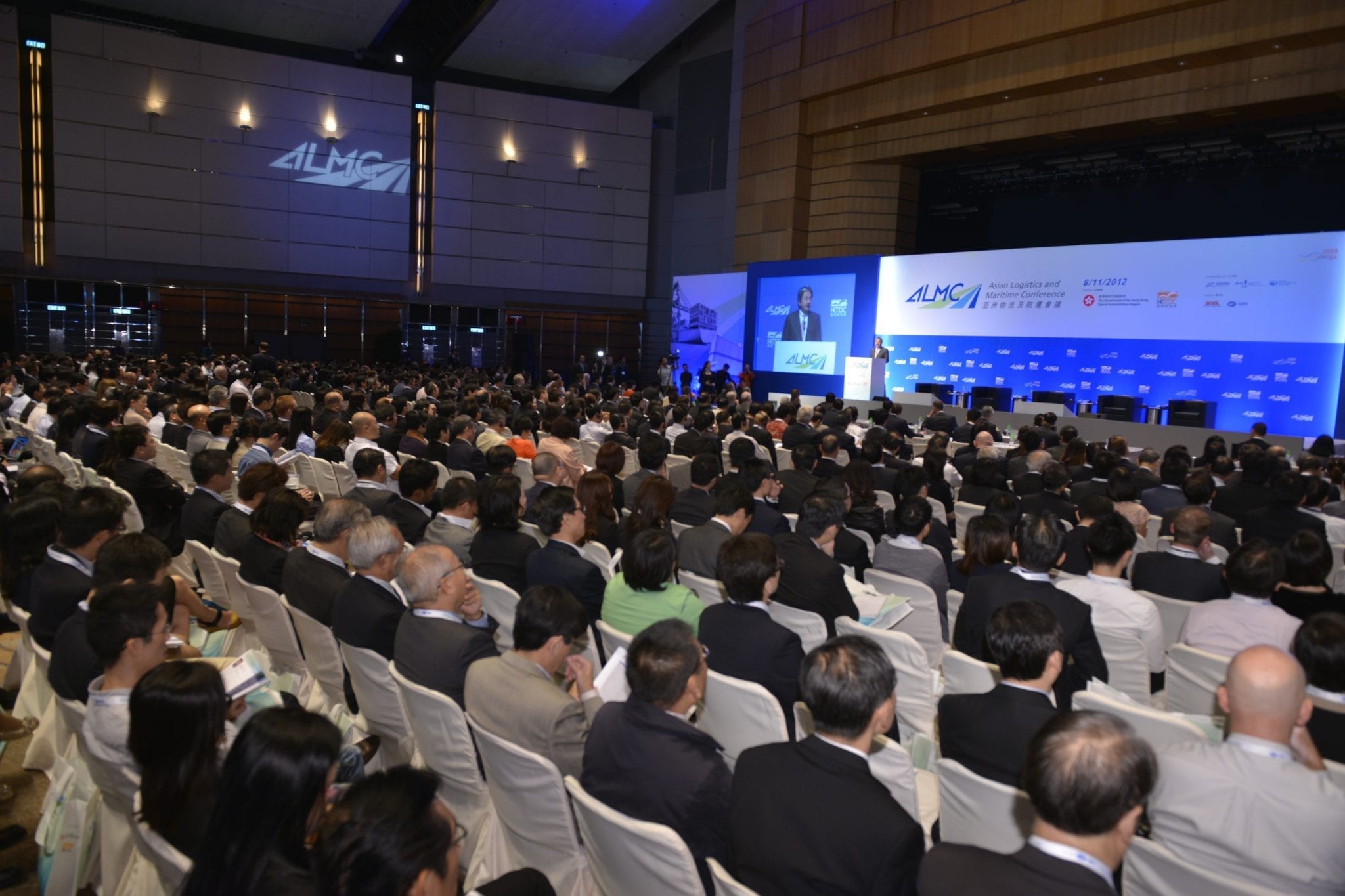
    The sixth Asian Logistics and Maritime Conference (ALMC) today (22 November) launched its two-day run at the Hong Kong Convention and Exhibition Centre. More than 70 leaders from the logistics and maritime industries are speaking at the conference. Today’s activities included the plenary session “China’s Grand Initiatives: Where are the Opportunities?” The ALMC is the largest event of its kind in Asia, welcoming industry elites from some 30 countries and regions. The conference is jointly organised by the Hong Kong Trade Development Council (HKTDC) and the Government of the Hong Kong Special Administrative Region (HKSAR).

    Speaking at the opening ceremony, Carrie Lam, Acting Chief Executive of the HKSAR, said, “Strategically located at the heart of Asia, Hong Kong has long been the gateway to southern China, and the bridge between the Mainland and the rest of the world. Our infrastructure is world-class, rated first in the World Economic Forum’s Global Competitiveness Report. Our robust economy, trade freedom, regulatory efficiency, and excellent logistics services have made Hong Kong one of the world’s busiest logistics hubs.”

    In her welcoming remarks, Margaret Fong, Executive Director of the HKTDC, said: “The ALMC aims to help the industry navigate choppy economic waters and chart a course towards new business opportunities. The three main themes of ALMC 2016 are the Belt and Road Initiative, China’s 13th Five-Year Plan and cross-border e-commerce. In each case, the logistics and maritime industries are front and centre. In just a few short years, the Belt and Road Initiative has moved from the drawing board into reality, with new ports, roads and railways linking markets along the Belt and Road routes from Asia to Europe via the Middle East and North Africa. In addition to infrastructure, world-class shipping and logistics services and know-how are required to fully realise the potential of the Initiative.”

    China’s grand initiatives

    A highlight of this year’s ALMC was this morning’s plenary session “China’s Grand Initiatives: Where are the Opportunities?” Three high-profile speakers examined key strategies of the Chinese mainland – the Belt and Road Initiative, “Internet Plus” and “Made in China 2025”. The three speakers were HE Sultan Ahmed Bin Sulayem, Group Chairman and Chief Executive Officer, DP World; Zhao Huxiang, Vice Chairman, China Merchants Group; and Joseph Phi, President, LF Logistics.

    Addressing various topics, seven forums were also held today focusing on the Supply-chain Management, Logistics, Air Freight and Shipping sectors. As well as helping the logistics industry analyse the latest market trends, the forums also shed light on how the manufacturing and trading industries can capitalise on the latest logistics solutions to grow their business, lower costs and increase competitiveness.

    The first Supply-chain Management & Logistics Forum “Relocating Your Manufacturing Base – the Pros and Cons”, heard from speakers about the risks and opportunities from a supply-chain management perspective. Speakers included Dr Qu Jian, Vice President, China Development Institute; Dr John Cheh, Vice Chairman and CEO, Esquel Group; Takeshi Kondo, General Director, Yusen Logistics (Vietnam) Co, Ltd; and Tommy Lui, Director & Group Chief Representative – Southern China, Li & Fung Development (China) Ltd.

    Other forums today included “Changing Landscape of Asian Air Cargo”, “Expert Panel: What’s on the Horizon for Liner Shipping?”, “Staying Ahead in Temperature-controlled Cargo Handling”, “Expert Panel: Tanker and Gas Trade Outlook”, “Sustainability – Greening the Supply Chain” and “Expert Panel: Dry Bulk Market Outlook”.

    Cross-border E-commerce

    Tomorrow’s plenary session will be on the topic of “Cross-border E-commerce: Who Will Rule the Game?” The HKTDC has invited Dr Guo Dongbai, CTO, AliExpress; Zheng Changqing, Senior Director, eBay Inc; Andrey Zatsepin, Head of International Logistics, Ozon.ru; and Haruko Takachi, CEO, Japan Post International Logistics Co, Ltd. to discuss the latest developments in cross-border e-commerce.

    The rapid development of digital technology is disrupting the retail industry, prompting the HKTDC to enrich this year’s ALMC programme for supply chain management and logistics. Tomorrow’s forums include “Omni-channel Strategy: Navigating the Future of Retail”, which will showcase outstanding examples of multi-channel retailing and examine online-to-offline (O2O) integration and ways to improve the customer experience. Expert speakers include Pieter Paul Wittgen, Co-Founder and COO, Grana.com; Filippo Gori, Business Development Director, International Brands, Vip.com; and Malcolm Monteiro, CEO, Asia-Pacific, DHL eCommerce. The trio will discuss the impact of omni-channel retailing on supply chain management and logistics.

    Other forums tomorrow include “New Opportunities for Modern Logistics Industry in the PRD Region and Zhuhai from the completion of the Hong Kong-Zhuhai-Macau Bridge”, “Big Data, the Cloud and Your Business”, “Dalian Development Area – Core of Liaoning FTA, uprising International Financing, Logistics and Shipping Centre of Northeast Asia” and “Linking North America and Asia: Transpacific Trade back on Track”.

    Exhibition and business matching sessions

    To help industry professionals gather the latest market intelligence and services, and promote Hong Kong’s advantages in logistics, the HKTDC is once again organising an exhibition alongside the conference. Nearly 100 exhibitors are showcasing their e-logistics solutions and logistics, maritime and related services. The HKTDC is also arranging more than 150 one-on-one business matching sessions to help participants foster new business partnerships.

    This year’s ALMC is supported by the Hong Kong Logistics Development Council (LOGSCOUNCIL) and the Hong Kong Maritime and Port Board. It is also a flagship event of the Hong Kong Maritime Industry Week.

  • Big year-end discounts on way

    Big year-end discounts on way

    The government seeks cooperation from retailers and wholesalers to cut product prices to help reduce consumers’ expenses and stimulate the economy in the final month of the year.

    The government is set to team up with wholesalers and retailers, which together have 13,500 branches nationwide, to cut product prices by 20%-80% to help reduce consumers’ expenses and stimulate the economy in the final month of the year.

    Commerce Minister Apiradi Tantraporn said the Internal Trade Department has been assigned to discuss with retailers and wholesalers, including hypermarket and supermarket operators, the possibility of holding special promotions to spur spending among Thais and tourists during December.

    “The ministry has cooperated with retailers and wholesalers to organise various activities to cut living costs since late 2015,” she said. “The campaign for this year-end promises special events with discounts as high as 80% for certain items.”

    Mrs Apiradi insisted the discounts will be given to brand-new products, not those currently on sale. Products that will feature in the campaign include food and beverages, consumer goods, electrical appliances, garments and accessories.

    The Business Development Department has also been instructed to talk with retail outlets under its supervision to participate in the year-end special discount programme, particularly for items like milled rice, instant noodles, vegetable oil, seasonings, detergent, dishwashing liquid, fabric softener, toothpaste and shampoo.

    She said the ministry has also asked for cooperation from department stores and retail outlets to hold special events or sales promotions to stimulate rice purchases to help local rice farmers.

    Retailers and wholesalers who are expected to participate in the scheme include the Thai Retailers Association, Siam Makro, the operator of Makro cash-and-carry store chain, Ek-chai Distribution System, the operator of Tesco Lotus hypermarkets, Big C Supercenter, Central Department Store, Robinson Department Store, Central Food Retail, the Mall Group, Tang Hua Seng, CP All, Foodland supermarket, Aeon (Thailand), Saha Lawson, Central FamilyMart, CPF Trading and TCC Logistics & Warehouse.

    In a separate development, the savings and credit cooperatives of employees of Thai Airways International Plc (THAI) will support direct sales of rice from farmers, said Mrs Apiradi.

    Flt Lt Kanok Thongpurk, vice-president of THAI, said farmers will be allowed to sell their products through all channels of THAI employees’ savings and credit cooperatives as well as THAI offices both in the provinces and Bangkok, including Don Mueang and Suvarnabhumi airports.

    Meanwhile, the Public Warehouse Organization and agricultural cooperatives have been instructed to open their spaces for farmers to sell their grain.

  • Nutmeg higher in demand in Europe

    Nutmeg higher in demand in Europe

    Exports of nutmeg from Indonesia to Italy has increased toward the end of the year, a North Sulawesi official said.

    “Orders have come more regularly from Italy for North Sulawesi nutmeg. Demand is growing toward the end of the year,” head of the provincial industry and trade office Jenny Karouw said here on Tuesday.

    Jenny said in the third week of November 2016 nutmeg exports to Italy totaled 15 tons worth US$112,500.

    She said nutmeg from the district of Sitaro Islands is high in demand in Europe especially in Italy for its high quality.

    “The quality of nutmeg from the district of Sitaro Islands has been internationally recognized. The exporters, therefore, should maintain the reputation,” she said.

    Buyers from Europe would look for other suppliers once they found the quality is not up yo their expectation, she added.

    Nutmeg from North Sulawesi has been exported to Europe and the United States, where quality is the priority.

  • Fujitsu develops technology to boost virtual networks

    Fujitsu develops technology to boost virtual networks

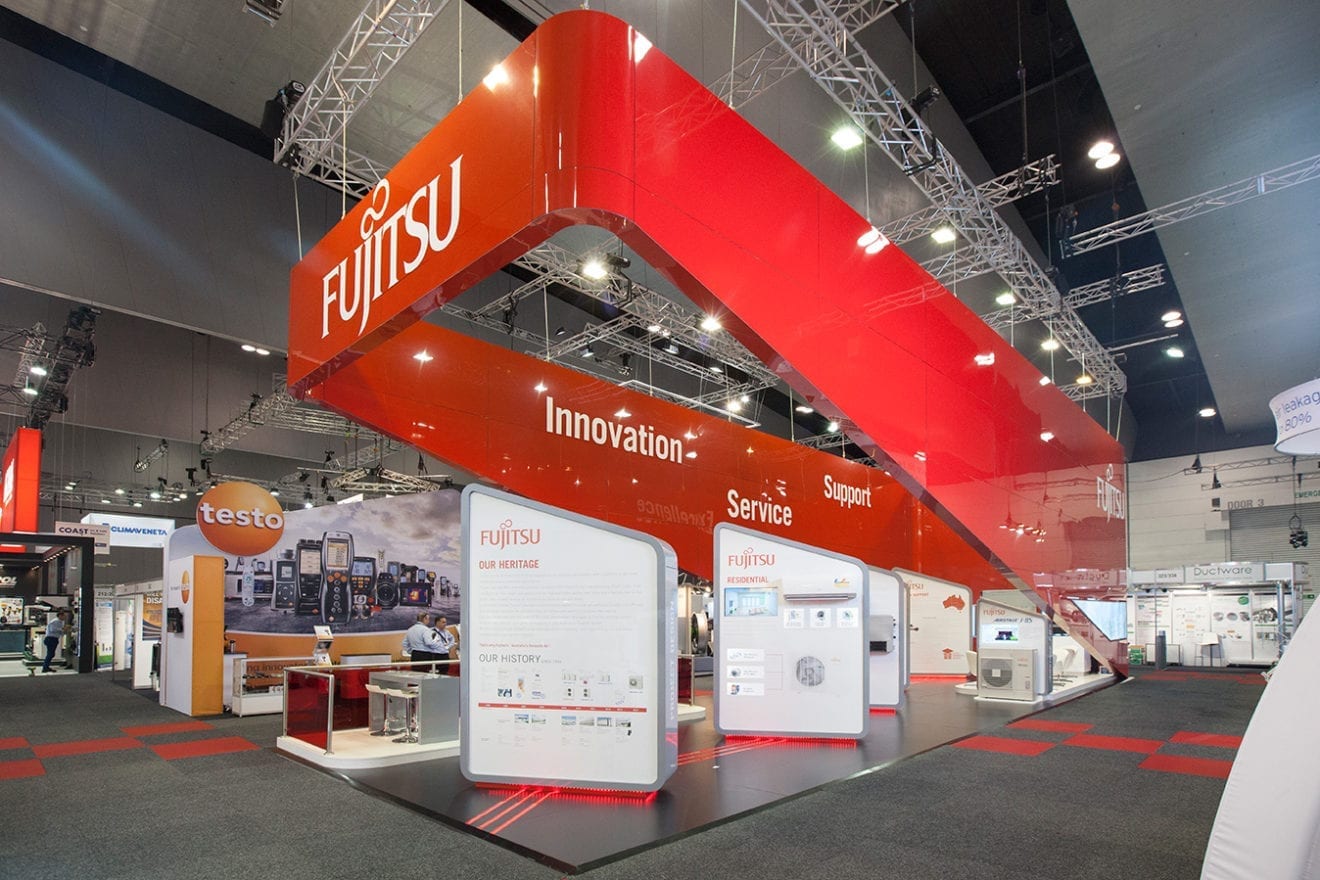
    Fujitsu Laboratories has developed automatic analysis technology to boost communications performance and quality in virtual networks.

    With the spread of virtualization technologies, such as the cloud, software defined networking (SDN), and network functions virtualization (NFV), there is demand for the ability to flexibly set up and operate high performance virtual infrastructure.

    In order to set up and operate virtual infrastructure for operations that require high performance, it is necessary for experts with knowledge of both hardware and software to take time to analyze bottlenecks and set up the virtual infrastructure appropriately. This results in high operating costs with frequent changes to the system structure or usage situation.

    To address this issue, Fujitsu Laboratories has developed a technology that, with a low load, captures communications packets passing through virtual infrastructures. The system uses this information to identify communication bottlenecks and automatically recommend configurations to improve communications speed and to reduce packet loss and other measures to raise virtual network quality.

    These technologies have been confirmed to roughly double communication speeds of virtual networks.

    Fujitsu said that with this technology, high communication performance and quality can be maintained, even in environments where the system structure and usage situation frequently change, such as virtual infrastructure for the cloud or telecommunications carriers.

  • BNI President Addresses Rush Money Issue

    BNI President Addresses Rush Money Issue

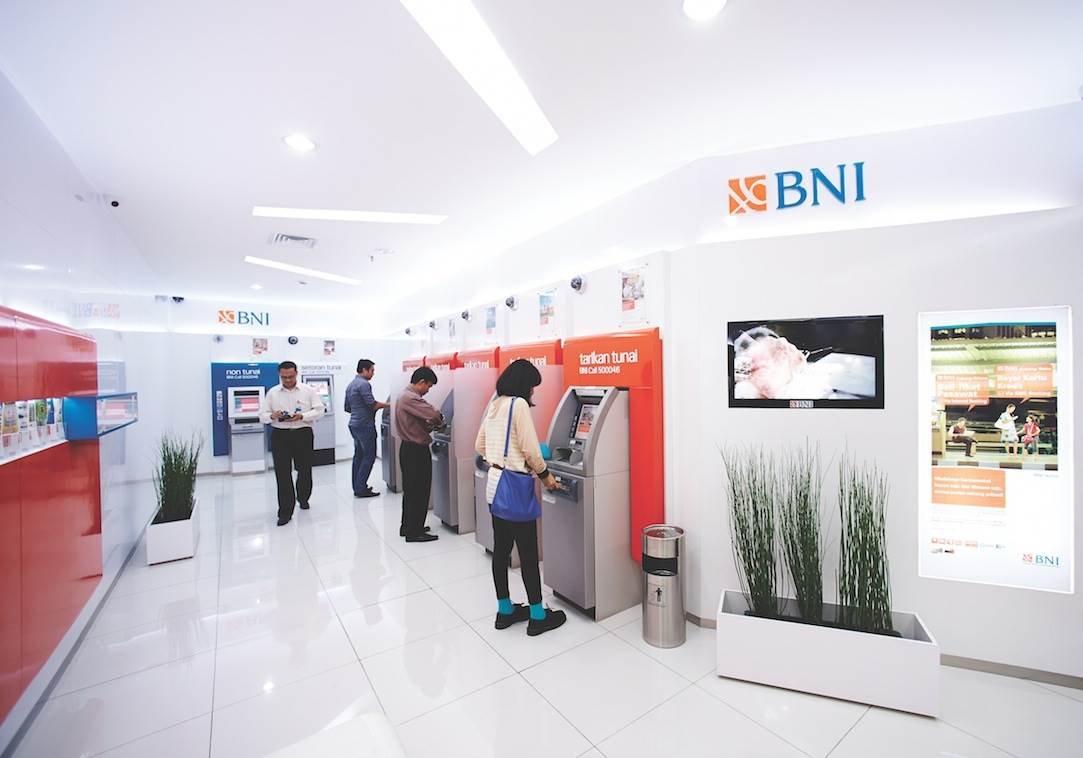
    Bank Negara Indonesia (BNI) president director Achmad Baiquni asked customers not to panic and get affected by solicitations to withdrawal money en masse. The so called rush-money rumor has been circulating on social media in recent days.

    According to Baiquni, the rumor is baseless and irrelevant, considering Indonesia’s banking fundamentals are normal and healthy.

    “Banking conditions are very good, so there should be no reason to worry,” Baiquni told.

    Baiquni firmly stated that banks’ performance continues to grow, both in terms of assets, loans, deposits and third party funds. Baiquni also urged people to ignore the call to withdraw their savings from banks.

    “Let’s not over-blow the issue—especially in social media. There is no need to worry,” Baiquni said.

    In terms of macroeconomics, Baiquni said the rupiah is stable while the Jakarta Composite Index is slowly gaining. “Last week’s correction was only a brief Trump effect.”

    Baiquni said BNI is asking customers to remain calm and not be provoked by the issue. “If there are customers who want more information about this matter and require an explanation, we are ready.”

    Earlier, the Police Headquarters’ Director of Special Economic Crimes Brig. Gen. Agung Setya said the solicitation is prone to prone risks of greater crimes that can harm the public.

  • Reliance Group launches dedicated IoT venture

    Reliance Group launches dedicated IoT venture

    Indian conglomerate Reliance Group, parent company of Reliance Communications (RCom), has teamed up with Cisco Jasper to launch a new dedicated IoT venture in the market.

    The new venture, UNLIMIT, will provide enterprise customers throughout India with a service that combines the RCom mobile network with Cisco Jasper’s IoT connectivity management platform.

    As part of the partnership, Cisco will also improve its IoT engineering talent base in India by hiring more expert staff for its Cisco Innovation Center in Bangalore.

    Indian customers seeking to expand their IoT services to new overseas markets will be able to take advantage of Cisco Jasper’s partnerships with operator groups representing more than 120 mobile networks worldwide.

    The new service is also expected to play a key role in supporting the government’s Digital India project, which aims to transform 100 cities across the nation into smart cities.

    “IoT is a critical enabler for India’s growth, and businesses throughout the country are already utilizing its huge potential to help deliver innovative new services to their customers, while reducing cost and increasing revenue,” commented Juergen Hase, CEO of Reliance Group’s Unlimit IoT business group.

    “We are delighted to partner with Cisco Jasper, and this strategic partnership will strengthen the market position of UNLIMIT significantly.”

  • Forbes Japan names Auto-cybersecurity Start-Up Trillium the ‘RISING STAR’ Startup

    Forbes Japan names Auto-cybersecurity Start-Up Trillium the ‘RISING STAR’ Startup

    Forbes Japan, the Tokyo-based edition of Forbes, one of the world’s most authoritative business news medias, celebrated entrepreneurs and Start-ups today at the Annual “JAPAN’S STARTUP” Awards, and the winner of the ‘RISING STAR’ STARTUP OF THE YEAR 2017 Award – Trillium Inc, a Tokyo-based Start-up that has developed a robust, comprehensive cybersecurity solution for the automotive industry.

    The Awards promote start-ups ready to create a ‘New Japan’ – leading the Japanese economy into the next age through innovation and entrepreneurial efforts. Finalists for the ‘RISING STAR’ 2017 were selected by the Forbes Japan editorial team with input from online readers. The winning Start-ups will be featured in the magazine’s Jan 2017 edition, which will appear on Nov 25.

    David Uze, Trillium CEO, an American who has lived in Japan for over 25 years, hopes Trillium can make a valuable contribution to his adopted country. “As autos and electronics are the bedrock of Japan’s prosperity, we believe our cybersecurity solution can help ensure the nation’s economic future. And we are grateful to Forbes Japan for recognizing the importance of our work.”

    “This is another indication that Trillium is on track to emerge as that rarest of creatures, a ‘Made-in-Japan Innovator,’” said Uze. “For automakers, cybersecurity is a mission as urgent as ending hydrocarbon use. Plans for innovation across-the-board depend on digitizing tomorrow’s cars: in emissions, safety, autonomous drive, driving dynamics and infotainment. But until they find an adaptive, multi-layered solution to cyber threats, all plans could come screeching to a halt with one devastating hack. The industry doesn’t yet have a solution – but we do, and we’re ready to go.”

    Trillium’s ‘Made-in-Japan solution’ strongly secures all three key ‘cyber-threat domains’ in the car with a software-based approach that is compatible with any architecture or operating system. More than just robust and comprehensive, it can be implemented for as little as 1/20th the cost of competing solutions – most of which are still under development.

    “Meanwhile, our multi-layered solution is at an advanced stage,” Uze said. “We have moved into the real-world testing phase via partnerships with a legendary Japanese Super GT racing team and a leading maker of automotive semiconductors. And we are now in discussions with a wide range of automakers and tier-one component suppliers. We’re ready to implement whenever they are.”

    Trillium Inc. was founded in 2014 with a team of executives and engineers from Japan, Europe and the U.S. with extensive experience in relevant fields, backed by lead investment from Global Brain Corp, a Tokyo-based venture capitalist.

  • Alibaba eyes young, savvy Indonesia market

    Alibaba eyes young, savvy Indonesia market

    Chinese e-commerce giant Alibaba Group sees “huge potential” in the Indonesian market as the government, through a recent e-commerce road map, pushes efforts in developing the sector to make the country the biggest digital economy in Southeast Asia by 2020.

    Alibaba Group vice chairman Joseph Tsai said the diversified company — which has assets in e-commerce, technology, payment systems and logistics — saw “huge potential in Indonesia” for two reasons: The young population and a mobile phone savvy public.

    “We acquired (Southeast Asia e-commerce platform) Lazada so that we could be in Indonesia as well as five other Southeast Asian countries — Malaysia, the Philippines, Singapore, Thailand and Vietnam, with Indonesia obviously being the largest market,” Tsai told a press briefing on the sidelines of the 11.11 Global Shopping Festival on Nov. 11. The 11.11 Alibaba Group Global Shopping Festival, more commonly known as Singles’ Day, is the world’s largest shopping event.

    Alibaba Group acquired Lazada for US$1 billion earlier this year, its largest international investment ever. Lazada, which operates its own logistics and networks, is currently one of the fastest growing online shopping platforms in Indonesia.

    “We see that consumers in Indonesia are even younger than consumers in China. Indonesia is very much a “mobile first” e-commerce environment. People are enthusiastic about mobile phone use,” Tsai said.

    A survey of smartphone owners in Indonesia, who account for 43 percent of the population, showed that up to 57 percent of online shopping in the country is done on mobile phones, with average time spent on smartphones reaching more than two hours (136 minutes) per day, according to recent Google research.

    “They’re skipping computers and instead using mobile phones as their premier technology device. That growth is extremely fast, and we’re extremely excited about that,” Tsai said of the Indonesian market.

    Emerging Middle Class

    Indonesia’s e-commerce transactions are expected to reach US$24.6 billion this year, three times the US$8 billion recorded in 2013, thanks to emerging numbers of internet users and middle class Indonesians.

    The government even expects e-commerce transactions to reach US$130 billion in 2020 as it introduced the 14th economic stimulus package on an e-commerce roadmap covering support for funding, human resources training, logistics and telecommunication infrastructure, among other elements.

    In tapping into the growth potential in Indonesia, Alibaba Group aims to localize its operations to make them relevant in serving domestic consumption, which accounts for more than half of the country’s gross domestic product (GDP).

    “We want to be as local as possible to understand consumers locally through the Lazada platform,” Tsai said.

    In doing so, Alibaba Group may introduce the 11.11 Global Shopping Festival in local platforms to capture more transactions from Southeast Asia.

    “The service will also roll out to other markets, such as Southeast Asia, leveraging Alibaba Group’s investment in Southeast Asia e-commerce site Lazada, and markets that have a sizeable Chinese community,” the company’s press statement explained.

  • India smartphone sales reach 32.3m in Q3

    India smartphone sales reach 32.3m in Q3

    India’s smartphone market crossed the 30 million unit shipments milestone for the first time in the third quarter, research firm IDC said.

    IDC’s Quarterly Mobile Phone Tracker shows that the 32.3 million units sold during the quarter represent 17.5% growth over the previous quarter.

    Karthik J, Senior Market Analyst, Client Devices, IDC India, attributes the growth to the channel preparation for the festive season, mega online sales and early import of smartphones owing to Chinese holidays in October.

    Online smartphone shipments increased to 31.6% with impressive 35% Quarter-on-Quarter (QoQ) growth due to a strong performance by key online players primarily from China-based vendors.

    IDC noted that the Lenovo Group, which accounts for almost one-fourth of total online smartphone shipments, continues to lead online channel followed by Xiaomi.

    Karthik said Lenovo’ sales were primarily driven by its K5 series and Motorola’s G4 series models. Meanwhile, Xiaomi’s Redmi Note 3 and newly launched Redmi 3S also fuelled the online shipments to a large extent.

    In addition, 4G smartphone shipments grew 24.8% over the previous quarter. IDC noted that 7 out of 10 smartphones shipped in Q3 were 4G enabled and 9 out of 10 smartphones sold by online retailers were 4G.

    Overall, despite the recall of Samsung’s flagship Note 7, the Korean handset manufacturer leads the Indian smartphone market with a 23% share, recording 8% sequential growth and 9.7% growth from the same period last year.

    The Lenovo Group (including Motorola) climbed to second place with 9.6% share of smartphones. Motorola’s volume almost doubled Quarter-on-Quarter driven by newly launched E3 Power and G4 models. K5 series continues to be lead runner for Lenovo accounting for over 40% of its total volume.

    Meanwhile, Xiaomi makes its debut in top 5 as its shipments doubled over the previous quarter. With the primary focus on online and minimalistic product portfolio, the company has grown more than 2.5 times over the same period last year.

    IDC expects 2016 to end with a higher single-digit annual growth, considering the smartphone performance in Q3.

    “The entry of the new vendors have extended the feature phone supply since past few quarters. However, with expected entry of Jio in the feature phone market, a category is expected to grow significantly. This, in turn, might further slow down the feature phone to smartphone migration,” commented Navkendar Singh, senior research manager, IDC India.

  • Smart footwear market due for rapid growth

    Smart footwear market due for rapid growth

    More than 6 million units of smart footwear will ship in 2021, up from just 300,000 this year, ABI Research predicts. This would represent a CAGR of 82%.

    “The growing elderly population is driving change in the way healthcare can and will be provided, and remote monitoring is one aspect of the m-health industry that can cut costs and improve care,” said ABI Research analyst Stephanie Lawrence said.

    By supporting sensors within shoes or smart socks, home monitoring and remote patient management applications can track a host of valuable parameters with minimal disruption to those being monitored.

    Lawrence further explained that new home and remote patient monitoring smart footwear devices also grant healthcare providers 24×7 access to in-depth, real-time health updates concerning their patients’ posture and gait.

    “Such detailed reporting used to be constricted to a hospital bed; now healthcare providers can paint a fuller picture of their patient’s health outside of the hospital, ultimately allowing them to better monitor ongoing issues and make more accurate diagnoses,” he said.

    ABI Research said that for remote patient monitoring, companies are already turning to smart footwear as a form factor to support diagnostic medical data collection. This includes companies like Plantiga, FeetMe, and Orpyx.

    For instance, diabetic patients are at risk for peripheral neuropathy, or sensory loss, and often cannot detect dangerous pressure levels in their bodies. Orpyx’s SurroSense RX has insoles that use sensors to detect the amount of pressure that a person places on each part of the foot. The device can then alert the user and his/her doctor to any issues.

    “Rising vendors in the smart footwear market need to develop devices that can detect exactly how a person is walking, and provide accurate feedback concerning any issues,” concluded Lawrence.

    “This will ensure that healthcare workers receive detailed health information about their patients, and will allow the smart footwear market to continue to advance and grow significantly.”

  • Singtel expands ReadyRoam to 26 countries

    Singtel expands ReadyRoam to 26 countries

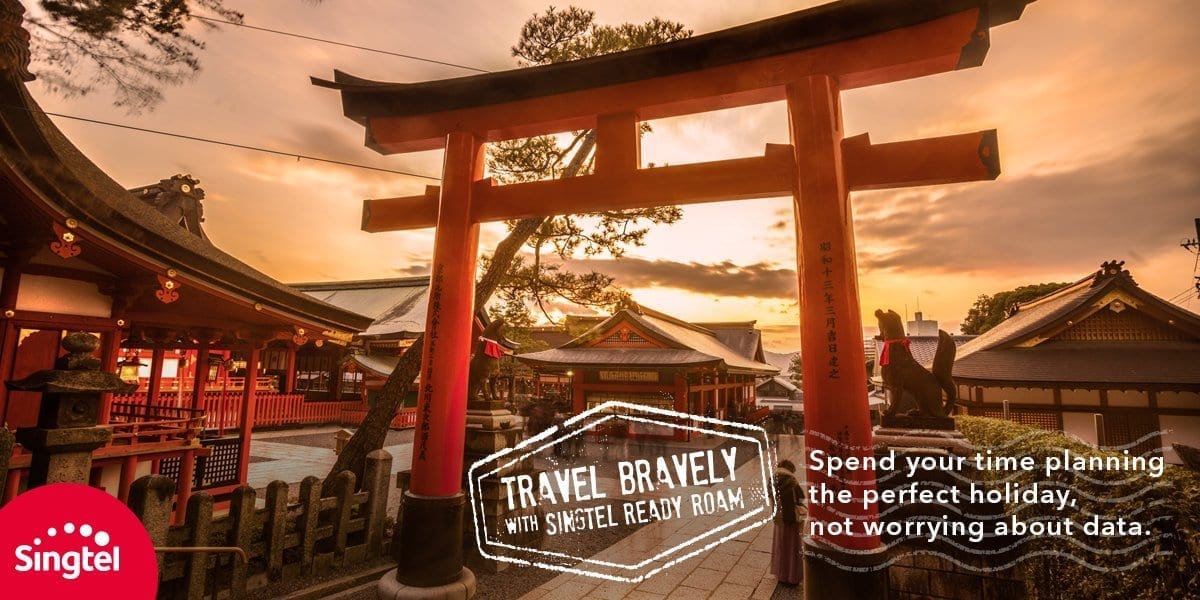
    Singtel has expanded its ReadyRoam mobile data roaming service to cover multi-destination roaming across 26 countries in Asia, Europe and North America.

    The ReadyRoam 1GB for 30 days service will allow customers to use the same pool of data while traveling between any of the supported countries.

    The base service supports roaming between 11 Asian markets – China, Hong Kong, India, Indonesia, Japan, Macau, New Zealand, the Philippines, South Korea, Taiwan and Thailand – for S$20 ($14).

    For customers traveling further afield, ReadyRoam USA and Europe supports roaming to the above countries, as well as Canada, Denmark, France, Finland, Germany, Ireland, Italy, the Netherlands, Norway, Portugal, Spain, Sweden, Switzerland, the UK and the USA.

    Excess usage will be charged at S$0.019 per MB or S$0.034 per MB depending on a customer’s plan.

    “It’s the holiday season and many of our customers and their families will be traveling,” Singtel VP of mobile marketing consumer Singapore Diana Chen said.

    “Our enhanced ReadyRoam 1GB for 30 days will allow them the convenience of remaining contactable via their Singtel SIM card number while roaming seamlessly across multiple destinations.”

  • Starbucks launches mobile payment app in Indonesia

    Starbucks launches mobile payment app in Indonesia

    Starbucks recently launched a mobile application in Indonesia to allow customers to pay for in-store purchases at the coffee marker’s more than 260 stores across the country.

    Building on the cashless payment system Starbucks Indonesia introduced in 2013 with Starbucks Card, the move is part of the broader plan to expand the company’s digital ecosystem.

    The new Starbucks Indonesia Mobile App for iPhone and Android allows customers to quickly pay for in-store purchases by scanning the barcode linked to a registered Starbucks Card. Customers can register multiple Starbucks Cards onto their account, which are linked to the Starbucks mobile app.

    The app also compiles the latest information on Starbucks products in a browsable menu of beverage, food, and merchandise, as well as feature a convenient store locator.

    “This is the latest Starbucks innovation which aims to provide an enhanced experience and meet customers’ needs in the digital space while continuing to provide an exceptional experience in our stores,” Starbucks Indonesia VP of marketing and operations Roger van Tongeren said.