Author: Mei Ling Tan

  • CAT to cut network leasing rates by 10%

    CAT to cut network leasing rates by 10%

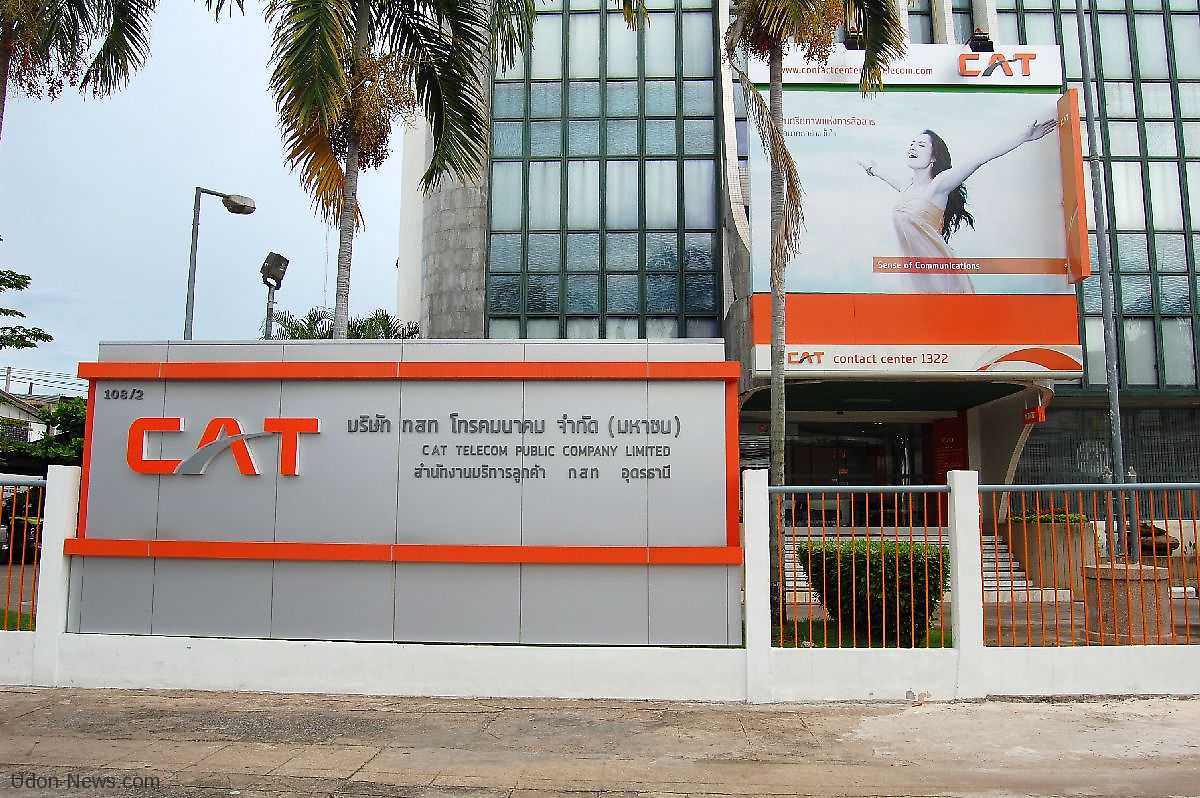
    Thai state-owned operator CAT Telecom will cut its wholesale 850-MHz network leasing prices by 10% to help the companies using the network under an MVNO model improve profit margins.

    CAT plans to implement the price cuts by the end of the year, citing comments from president Col Sanpachai Huvanandana.

    Several MVNOs had asked CAT to lower its rates to help reduce operating costs and help MVNOs struggling to compete stay above water.

    But Sanpachai insisted that the rates are not too high, and that it is instead competitive pressures and low ARPUs that are leaving MVNOs finding it difficult to compete.

    CAT currently has five companies providing 3G services on the operator’s 850-MHz network – TrueMove subsidiary Real Move, Samart i-Mobile, Penguin operating unit the White Space, 168 Communication and Data CDMA.

    According to the report, Samart i-Mobile recently returned 300,000 mobile numbers to save rates on numbering fees after determining that the company can not profitably provide services due to a high network leasing cost. Thai mobile operators pay a fee of 1 baht ($0.029) per month per mobile number.

  • SmarTone signs pre-5G partnership with Ericsson

    SmarTone signs pre-5G partnership with Ericsson

    Hong Kong’s SmarTone has contracted Ericsson as its sole supplier for core and RAN equipment over the next five years, as part of a partnership aimed at paving the way for 5G deployment.

    The companies plan to conduct early trials and pilot deployments of key pre-5G technologies from this quarter.

    Ericsson will help SmarTone upgrade and expand its network infrastructure and refarm more spectrum for LTE, and will deploy NFV and SDN technologies to improve network performance and efficiency.

    The companies have been working to introduce technologies including LTE-Advanced and LTE-Advanced Pro to the SmarTone network.

    “SmarTone is pleased to extend our strategic partnership with Ericsson to pave the way for 5G in Hong Kong,” SmarTone CTO Stephen Chau said.

    “[We] will continue to invest in spectrum and pre-5G technologies within the next few years to provide a superior customer experience and to evolve our network into an advanced, dynamic and cloud-based network architecture.”

    He said the deployment will help the company capture future business opportunities from new types of applications including VR and M2M applications such as the IoT.

    SmarTone was established in 1992 and publicly listed in 1996. The company provides voice, mobile and fixed broadband services in Hong Kong and Macau.

  • Pertamina`s profit up 209 pct in third quarter

    Pertamina`s profit up 209 pct in third quarter

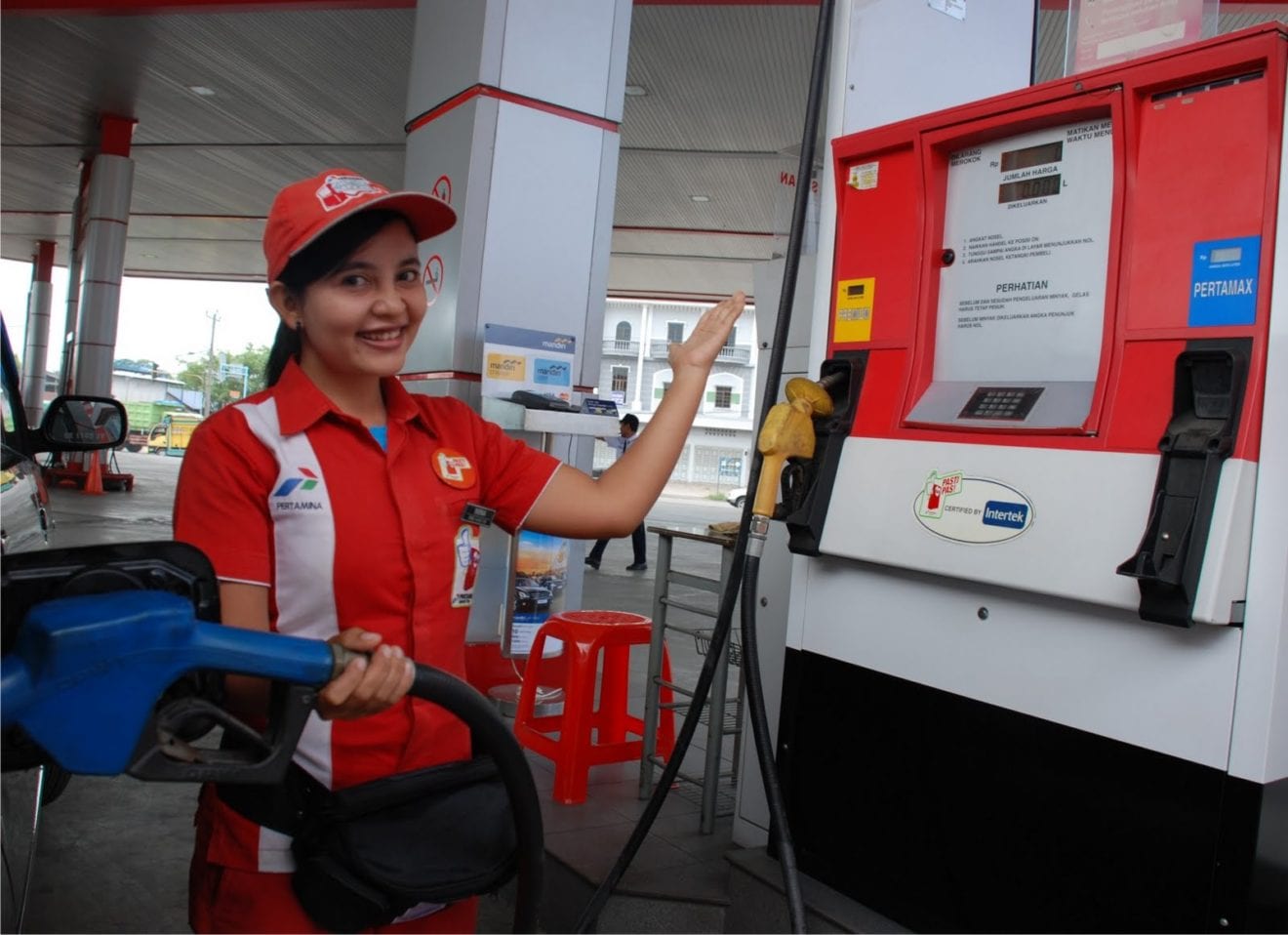
    PT Pertamina made a net profit of US$2.83 billion in the third quarter of this year, 209 percent more than the US$914 million it made in the third quarter in the previous year.

    The president director of the state-owned oil and gas company, Dwi Soetjipto, on Tuesday credited the achievement to improved operational performance and efficiency as a result of various initiatives and breakthroughs.

    He said although the profit soared, corporate income was down 16.8 percent to US$26.62 billion from US$32 billion in the previous period due to a relatively lower price of crude.

    “What is encouraging is that net profit performance has been good as a result of enhanced efficiency and initiatives like the Breakthrough Project,” he added.

    Dwi Soetjipto noted that the company continued to improve its operational performance by increasing efficiency and successfully cut costs up to 27 percent in the first month of this year.

    “Until September 2016, around US$1.6 million had been saved through Breakthrough Projects,” he revealed.

    The companys downstream performance in the third quarter reached 646,000 barrels of oil equivalent per day, consisting of 309,000 barrels of oil and 1,953 mmscfd of gas per day.

    This was 12.3 percent more compared to the same period before.

    Meanwhile, the geothermal power production reached 2,233 GwH electricity equivalent.

    He stressed that the company continued to develop infrastructure including gas, processing and marketing infrastructure.

    Several projects such as Gresik-Semarang, Muara Karang-Muara Tawar and Tegal Gede gas pipeline projects have been completed up to 70 percent.

    The first RDMP (Refining Development Master plan Program) phase of the refinery project in Balikpapan, Kalimantan, is expected to be completed in June 2019 and it will become operational in September 2019 while the first phase of the project is expected to be completed in the middle of 2021 when its production will meet Euro 5 standard.

    The New Grass Root Refinery project in Tuban, East Java, a joint venture between Pertamina and Rosneft of Russia, is expected to be completed by the end of 2021. The production there will also meet Euro 5 standard.

    The RDMP of the refinery project in Cilacap, Central Java, which is a cooperation project with Saudi Aramco, is expected to be completed in 2022, also with Euro 5 Standard in production.

    “As for the New Grass Root Refinery project in Bontang (Kalimantan), it has been decided that it would be referred to Pertamina for completion, a goal expected to be achieved tentatively by 2023 with Euro 5 Standard production,” Dwi Soetjipto explained.

  • Samsung offices in South Korea raided over corruption scandal

    Samsung offices in South Korea raided over corruption scandal

    South Korean prosecutors investigating a confidante of President Park Geun-hye for corruption have searched the offices of Samsung, according to local media.

    Samsung, the world’s largest manufacturer of smartphones, televisions and memory chips, is suspected of having secretly funded the sporting activities of the daughter of Choi Soon-sil, Park’s friend, it was reported on Tuesday.

    Samsung, which is already reeling from the disaster surrounding its Galaxy Note 7 smartphone, confirmed that its offices had been raided but gave no further details.

    The company is suspected of having transferred $3.1m to a company owned by Choi in Germany.

    The money was allegedly used to pay for daughter’s training as a dressage rider.

    Growing scandal

    Tuesday’s raid also came just as Park agreed to cede some control of state affairs as the result of the damaging corruption scandal that has engulfed her administration.

    In what is being considered a major political concession, Park told the speaker of the National Assembly that she would accept a prime minister chosen by the opposition-controlled legislature “and let him control the cabinet”.

    The prime minister is normally a largely symbolic post in South Korea, where power is firmly concentrated in the executive.

    It was a double surrender by Park – effectively jettisoning her own nominee for prime minister and relinquishing some of her extensive powers to whoever parliament chooses.

    It was reported from Seoul, said that Park’s concession “doesn’t go perhaps as far as some opposition members were demanding – that all affairs should be handled by the prime minister and that the president should simply step back altogether – but it does allow some ground for work to start on some agreement”.

    Park is facing a growing scandal over Choi’s alleged influence on state affairs despite her having no official position in the government, with tens of thousands of protesters in Seoul demanding Park’s resignation over the weekend.

    Choi has been arrested on charges of fraud and abuse of power.

    The charges relate to allegations that Choi used her personal relationship with Park to coerce donations from large companies like Samsung to non-profit foundations she set up and used for personal gain.

    She is also accused of interfering with government affairs, including the nomination of senior officials.

    Unhealthy influence

    Reports of the unhealthy influence Choi wielded over Park have sent the president’s approval ratings plunging to record lows and led to mass street protests calling on her to resign.

    In a bid to restore public trust, Park reshuffled her advisers and senior cabinet members, and nominated a liberal candidate for prime minister from outside her conservative Saenuri Party.

    But opposition parties had pledged to block her nominee on the grounds that they were not properly consulted.

    During their meeting, Chung Sye-kyun, the parliamentary speaker, told Park that her biggest priority should be to alleviate widespread public concern and anxiety.

  • Singaporean middle-income earners spend the most online

    Singaporean middle-income earners spend the most online

    Check out what do Singaporeans buy based on monthly income.

    On average, shoppers spend S$155 a month, or S$1,860 a year, on retail purchases and travel bookings online. Those with monthly salaries between S$4,000 and S$5,000 spend the most at S$194 a month, which is 20% more than those earning S$5,000 – S$6,000.

    These are some key findings from a study by Personal finance comparison site SingSaver.com.sg and online shopping rewards portal ShopBack.

    Together, they polled 1,979 Singaporeans aged 21 to 60 about their online shopping habits and how they save money at digital stores.

    Fashion is a number one spend category for shoppers with a monthly income under S$6,000. Electronics is the next most popular category for those earning S$3,000 – S$5,000 a month, and Health & Beauty for those earning less than S$3,000 a month. Only shoppers earning S$4,000 – S$5,000 a month count travel as part of their top 3 online expenditures.

    Meanwhile, respondents who earn over S$6,000 a month spend more on online groceries than fashion purchases and electronics.


  • Zalora partners with Calvin Klein Asia

    Zalora partners with Calvin Klein Asia

    Zalora has partnered with Calvin Klein Asia to launch Calvin Klein Jeans, Calvin Klein Underwear and Calvin Klein Performance at Zalora.com.

    The partnership significantly expands the distribution of Calvin Klein presence in five key markets including Singapore, Hong Kong, the Philippines, Taiwan and Malaysia.

    Zalora will launch the Fall 2016 season, offering more than 300 assorted products spanning womenswear, menswear, underwear, bags and small leather goods.

    Parker Gundersen, CEO of Zalora Group said Calvin Klein enjoys tremendous appeal across Asia.

    “With strong partners like Calvin Klein, we remain well ahead of the competition in terms of product assortment and ability to serve the millions of consumers throughout Asia seeking trusted and convenient access to fashion online,” he said.

    The shop has its own dedicated address and the products are also available on Zalora’s app.

  • Toys R Us Singapore plans two new stores

    Toys R Us Singapore plans two new stores

    Toys R Us Singapore plans two new stores, despite the current downturn in the retail market.

    Country manager Raymond Burt told Channel NewsAsia the first will open before Christmas and a second will follow in early 2017.

    The announcement came at the opening of the chain’s latest store at VivoCity, its ninth store in the city state.

    The locations of the new stores were not revealed although it is believed the new VivoCity outlet, with 30,000 sqft of floor space, will remain the largest in Singapore.

    “We will continue to grow here as we still see Singapore as a growth market,” Toys R Us APAC president Andre Javes said.

    “We don’t want to make decisions just based on the current economic situation which is tough… but this market has been a good one for the past 32 years and we have no issues investing more.”

    Javes, who described the toy category as “recession-proof” said he expects the company to benefit from a raft of branded merchandise opportunities related to Hollywood blockbuster movies scheduled for release in coming years.

  • Retailers need to embrace changing Chinese tourist demographics

    Retailers need to embrace changing Chinese tourist demographics

    Increasing numbers of Chinese tourists are travelling alone – and retailers in Asia seeking to cash in on their growing spawning power need to find ways to embrace the trend.

    Traditionally, Mainland Chinese tourists have travelled in groups – sold packages before they leave home and effectively herded into shopping destinations, often with commissions paid to tour organisers or guides.

    But that is set to change soon with the Beijing-based government tightening the rules on cheap package tours.

    South Korea is a case in point where the trend has been identified early and active work is underway to appeal to the new demographic.

    Duty-free operators and department stores have stepped up customised marketing targeted at shoppers in their 20s and 30s and deep-pocketed travelers from China, as they have become the main customers over the past few years.

    The shifting focus took on a new urgency as the Chinese government has been moving to tighten regulations on cheap tour packages, raising concerns among South Korean businesses relying on them as the biggest source of travel income.

    Out of 5.98 million Chinese nationals who visited South Korea last year, nearly 60 per cent were independent travelers, according to the state-run Korea Tourism Organization.

    Lotte Duty Free, which is operated by Hotel Lotte, offers a “personal shopper service” for VIP customers to pair them up with stylists who give advice and suggest products that may suit their needs.

    The nation’s largest duty-free operator has about 600,000 customers registered for VIP programs and also provides airport pick-up services for those who spend a certain amount of money.

    Shilla Duty Free, which is operated by Hotel Shilla, said it regularly holds “beauty classes” to advise on the best cosmetic products and offer makeup services to attract Chinese customers in their 20s and 30s.

    Tourism officials stress efforts to develop a wider array of options for Chinese travellers to encourage them to revisit in the future.

    “We have focused on attracting more independent travelers over the past years not only from China and Japan but also Southeast Asian nations and the Middle East to meet their diversifying needs and upgrade the tourism industry’s competitiveness,” Hwang Myung-seon, a senior official at the Ministry of Culture, Sports and Tourism, said.

  • Two more stores for Brooks Brothers Hong Kong

    Two more stores for Brooks Brothers Hong Kong

    US apparel brand Brooks Brothers has opened a flagship store at Gateway Harbour City in Tsim Sha Tsui, as well as a concept store at Times Square, Causeway Bay.

    Brooks Brothers is known for creating the button-down collar and seersucker suits, and its new boutiques showcase the same classic looks as featured at its first Hong Kong store at IFC Mall.

    Brooks Brothers opened its original store in New York in 1818.

  • CenturyLink to sell data centers for $2.15b

    CenturyLink to sell data centers for $2.15b

    US-based global operator CenturyLink has arranged to sell its data centers and colocation business to a consortium led by BC Partners and Medina for $2.15 billion.

    CenturyLink plans to use the net proceeds from this sale to partly fund its acquisition of Level 3 Communications announced last week

    Under terms of the agreement, the consortium will assume ownership of CenturyLink’s portfolio of 57 data centers at closing. The data center portfolio includes approximately 195 megawatts of power across 2.6 million square feet of raised floor capacity.

    Post-sale, the company will continue to focus on offering customers a wide range of IT services and solutions, including network, managed hosting and cloud.

    Though it will no longer own the data centers, CenturyLink will continue to offer colocation services as part of its product portfolio through its commercial relationships to be entered into at closing with the BC Partners/Medina-led consortium.

    “After conducting a thorough review process, we are pleased to have reached an agreement with BC Partners,”  CenturyLink CEO Glen F. Post III said.

    “We believe this transaction will benefit customers, employees and investors. Both CenturyLink and BC Partners have a strong customer focus and are committed to ensuring a seamless transition of the customers and their colocation environments.”

  • Nissan expects sales growth to slow in China, U.S. in near term

    Nissan expects sales growth to slow in China, U.S. in near term

    Nissan Motor Co Ltd on Monday said its sales growth in the world’s two biggest auto markets is likely slow in the near term as consumer tax breaks end in China while U.S. tastes move away from the automaker’s main area of focus.

    Japan’s second-biggest automaker by sales, which earlier blamed a strong yen for a 19 percent drop in second-quarter profit, made the comments after growth in Chinese and North American retail vehicle sales outperformed many markets in April-September.

    Sales in China in the six-month period grew 3.8 percent from a year prior, and Nissan’s head of operations in the country, Jun Seki, expects double-digit sales growth for calendar 2016, aided by economic incentives aimed at stimulating demand.

    “But as the government’s small-car subsidies wind down at the end of the year, we’re expecting to see a slowdown in sales early next year, and see single digit growth for the year,” Seki told reporters at Nissan’s Yokohama headquarters via telephone.

    Nissan also said recent growth in China’s auto market was due mainly to rising demand for local brands. In response, the automaker said it would further promote its China-only Venucia brand.

    The automaker sells almost a quarter of its output in China, and around 40 percent in North America.

    Its North American retail vehicle sales rose 5.4 percent in April-September. But it said demand growth was peaking and that any additional growth had been limited by its dependence on sales of sedans, at a time when low fuel prices had boosted demand for petrol-guzzling sport utility vehicles.

    Aggressive buying incentives for its sedans had also crimped profit margins, Nissan said.

    The automaker on Monday nevertheless kept its operating profit forecast at 710.0 billion yen ($6.80 billion) for the year through March, down 10.5 percent from a year prior, and said it continues to expect sales of 5.6 million vehicles.

    It also said it still expects the domestic currency to average 105 yen to the U.S. dollar and 120 yen to the euro.

    Earlier, Nissan said yen strength was responsible for July-September operating profit falling 19 percent to 163.9 billion yen – a result that still beat the 154.5 billion yen average of 10 estimates from analysts surveyed by Thomson Reuters I/B/E/S/. For April-September, profit fell 14 percent.

    Nissan raised its exposure to the strong yen at the start of the business year in April as it has been exporting its Rogue SUV crossover model from Japan to North America to meet demand.

  • Philippines Inspect Plane Order at PT Dirgantara Indonesia

    Philippines Inspect Plane Order at PT Dirgantara Indonesia

    Under Secretary for Finance and Material, Department of National Defense of the Philippines (General Retirement) Raymundo Elefante, said that his country is currently interested in purchasing Indonesian defense products to modernize the Philippines’ weapons and combat equipment.

    Raymundo said that two NC212i airplanes he had inspected at PT Dirgantara Indonesia (PTDI) is part of the Philippines’ airplane procurement program. The planes will be delivered to the Philippines’ early next year. “Aircraft produced by PTDI will be used in various conditions such as natural disaster, medical evacuation, and other conditions,” Raymundo said while inspecting the two airplanes at PTDI’s aircraft factory complex in Bandung, November 4, 2016.

    Raymundo said that his country decided to choose NC212i because of its competitive prices. In addition, the Philippines also currently wait for its ship order from PT PAL.

    Raymundo however, did not provide detailed information on the ship orders. PT PAL had delivered one of the Philippines’ ship order and another one will be finished next year.

    Budiman Saleh, Director of Commerce and Restructuring of PT Dirgantara Indonesia said that the two NC212i plane was the first airplane purchase by the Philippines in the last 20 years. “We have to respect [the Philippines] and its modernization program. This is the first purchase by the country after 20 years,” Budiman said.

  • Adonara Hotel Group to Open 20 New Hotels

    Adonara Hotel Group to Open 20 New Hotels

    Amor added the Adonara Group will open the 20 new hotels in Bali, Makassar (Sulawesi), Yogyakarta, Bangka (administratively part of Sumatra) and Solo (Central Java). These locations were selected as local demand for hostelry is considered high enough. Moreover, the central government of Indonesia has high hopes for the tourism sector. By expanding the tourism sector the government seeks to reduce the economy’s reliance on exports of raw commodities. By 2019 the government targets to attract 20 million visitors (per year), more than double 9.73 million foreign visitor arrivals in 2015.

    With regard to the exact location Adonara aims for provincial capital cities, located nearby airports or industrial estates. Amor said it requires approximately IDR 30 billion (approx. USD $2.3 million) to develop a budget hotel or two-star hotel (with around 100 rooms) in Indonesia. The return of investment (ROI) is estimated at 6 – 7 years. The ROI for four-star hotels is estimated at 8 – 10 years.

    E-commerce is becoming an increasingly important part of Adonara’s business. Currently, approximately 30 percent of total room reservations are done online. To support its hotel business the group acquired the Room Today Asia platform.

    Up to this year’s 3rd quarter Indonesia’s hotel industry has been bleak. However, Amor sees a rebounding hotel industry in 2017 as Indonesia’s economic growth accelerates, while inflation is expected to remain low, thus boosting domestic investors’ purchasing power.

    On its website Adonara describes itself as a hotel operator that manages unique three – five star hotels as well as budget hotels in various locations across Indonesia (Sumatra, Java, Bali, Kalimantan, Sulawesi and Papua).

  • Indonesia promotes tourism branding at World Travel Market

    Indonesia promotes tourism branding at World Travel Market

    The Tourism Ministry is promoting a tourism brand of Wonderful Indonesia at the global travel fair of World Travel Market (WTM) in London from November 7 to 9, 2016.

    By promoting the event, the ministry is featuring the beauty of Banyuwangi (East Java) images on five decker buses from October 31 till the end of November, according to a statement from the Tourism Ministry received by ANTARA here on Wednesday.

    Indonesia has signed an agreement as the prime sponsor of the travel fair. Tourism Minister Arief Yahya said the agreement will help in promoting Indonesian tourism.

    “WTM is a global travel fair. As in 2015, around 50 thousand tourism professionals from 183 countries participated in the fair,” the minister said.

    He added that WTM was an effective and efficient media to promote Indonesia and its tourism brand of Wonderful Indonesia in the global market.

    With a visa-free policy and deregulation on yacht or cruise ship travelling to Indonesia, the government expects 20 million foreign tourists by 2019, nearly double the target of 10.4 million set in 2015.

    At the fair, the Indonesian delegation will showcase UNESCOs world heritage of Borobudur Temple, Prambanan Temple in Central Java, diving spots in Raja Ampat in Papua, as well as golf, spa and shopping tour in Jakarta and Bandung (West Java).

    The UK and European Union are very important markets, as the number of potential tourists is quite great. Each tourist would stay at least for 10 days on average and would spend a huge amount during their trip.

  • Indonesia faces increasing senior-citizen population

    Indonesia faces increasing senior-citizen population

    Indonesia is facing the problem of a growing number of elderly people who are expected to reach over 32 million in the next two decades.

    Indonesia’s elderly in 2010 was 4.9 percent of the population, or 11,878,236 people. This number is projected to increase to 10.8 percent, or 32,112,361 people in 2035.

    Senior researcher Sukamdi of the Center for Population and Policy Studies (PSKK) of the Gadjah Mada University (UGM) said the country is actually going to face a big problem.

    “The same issue also occurs in other countries such as Japan. However, there is no awareness of the fact we have a big problem with the elderly. In my view, Indonesia has not shown a sufficient response to the problem of the elderly,” Sukamdi said on the UGM campus on Saturday.

    The data at the UGMs PSSK on Indonesias Population projections from 2010 to 2035 indicate the percentage of the elderly population will increase to 100 percent, he said.

    The postproductive age group or age older than 65 years, has now become an important issue because it could become a potential or expense in the human life cycle as a whole, according to him.

    “If in the current productive age a person, he or she, is capable of saving, then when he or she becomes older or no longer productive in terms of the economic aspect, he or she will not become a burden to the state,” he said.

    Anyone being old or being elderly will face three gaps, he said.

    First, the geographical gap, namely, the relationship or the physical encounters between parents and children, will be increasingly rare, he said.

    Second, the cultural gap, namely, the differences in perspectives and values between parents and children.

    Third is the economic gap.

    “The third gap is being faced increasingly by the elderly. We heard the news yesterday, that in Condong Catur there was an elderly person who died but it was only five days later that the family and neighbors came to know. This is just one example, but in fact there have been several similar cases,” Sukamdi said.

    Regarding the elderly, the Office of the High Commissioner for Human Rights strives to ensure that neglected population groups are given space and weight in the human-rights agenda, and that governments take all measures required to protect and promote their human rights.

    The Indonesian government, through the Ministry of Social Affairs, has prepared the Assistance for the Elderly but for the time being it has reached only 30,000 neglected elderly.

    In November 2016 the assistance will reach 125,000 neglected elderly over 70 years by involving them in the Family Hope Program (PKH) in order to receive 200,000 rupec per month, each.

    With the Family Hope Program, the social affairs minister says the government will reach 155,000 needy elderly, although the number is still far from the overall number of neglected elderly.

    Currently, the overall number of neglected elderly is recorded at 1.8 million, and 1.6 million of whom are potentially displaced in the face of the demographic bonus, expected to lead to a positive impact on economic development and progress in the field of agriculture and industry.

    In the meantime, all Asean member countries are facing the same social issues related to the social welfare of children, the elderly and persons with disabilities.

    “The Asean countries, including Indonesia, are dealing with issues connected to the protection of children, elderly and disabled,” Social Affairs Minister Khofifah Indar Parawansa said at the ninth Asean Regional Meeting on Development and Social Welfare in Jakarta late last month.

    Earlier, Khofifah, along with several of her counterparts from the Asean countries and China, Japan and South Korea, discussed many such social problems.

    The minister said the Asean countries are facing a variety of issues related to children, including the problem of online pornography. A proposal to stem this problem has been initiated Malaysia with a proposal.

    “There was a recommendation at a meeting about children held last June in Vietnam. Many countries are facing such problems, as also those related to protection of abandoned children,” Khofifah noted.

    She said inputs given by Asean and three Asian countries which participated in the meeting emphasized the importance of checking child trafficking and ensuring childrens education, including quality standards in early childhood education and parenting.

    Most Asean countries will have a large number of the elderly people, and, therefore, should take measures to facilitate them in their daily life, especially those who are active and productive.

    “Some programs have been carried out well in Japan, China and South Korea and will be a basis to strengthen cooperation among the Asean and the three countries on the issue,” the minister concluded.