Author: Mei Ling Tan

  • Tencent IBG helps local businesses attract tourists from China

    Tencent IBG helps local businesses attract tourists from China

    International Business Group (IBG) of Tencent, a leading provider of Internet value added services in China, announced today the roll-out of one-stop service advertising solutions. The ad solutions include options to build brand awareness and develop product familiarity, prior to the Chinese tourist’s visit to Singapore as well as in-market advertisements to target Chinese tourists while they are in the country.

    Singapore saw 1.47 million visitors from the mainland in the first half of this year, up 55.2% from the same period last year, according to the Singapore Tourism Board. Chinese tourists accounted for nearly 18% of the visitors to Singapore during this period. Aware of the untapped spending potential of these tourists, the Singapore Retailers Association recently launched initiatives such as the Singapore Golden Week, timed to coincide with the national holidays in China.

    “Singapore is well positioned to benefit from the surge in the number of Chinese tourists,” said Benny Ho, Senior Director of Business Development, Tencent. “Reaching out to Chinese tourists on platforms they are familiar with is the best approach for local businesses.”

    Brands need to engage early in the Chinese customer journey in order to influence purchase decisions before they travel. Tencent’s one-stop service advertising platforms will help Singapore businesses raise awareness and increase engagement opportunities with the surging numbers of Chinese tourists, even before they depart China. Tencent’s suite of advertising solutions provides previously unavailable opportunities for Singapore advertisers, enabling brands to engage Chinese customers globally and to offer an easy all-in-one advertising hub and solution leveraging both domestic and international traffic.

    Mobile advertising for mobile tourists

    According to the eMarketer’s survey “WeChat in China” from June 2016, the top two leading social media sites/chatting apps among social media users in China are WeChat and Qzone – both Tencent products. With WeChat’s position as a leading social media platform in China, the roll-out of one-stop service advertising solutions would empower local businesses to unlock the untapped spending potential and better reach Chinese tourists. Additionally, Tencent’s International Advertising Solutions can be customised to fit specific brand objectives.

    Tencent’s platforms continue to grow their influence with Chinese consumers. There are more than 806 million active users for both WeChat and Weixin today, and GlobalWebIndex (GWI), operator of the world’s largest study on digital consumer behaviours and trends, revealed that between the first half of 2015 and the first half of 2016, WeChat nearly doubled its usage rates in APAC outside of China. The leading mobile messaging app in China, Weixin connects users through its communication features with services and hardware through its open platform, including advertising, official accounts, and online to offline (O2O) payment. Mobile QQ, one of the most popular communication apps in China, and Mobile Qzone, a leading social networking site in China, and QQ Music, one of the most popular digital music platforms in China, will also provide the Chinese social platform gateway for advertisers in Singapore.

    To address communications and business objectives, there will be WeChat representatives to assist merchants in Singapore. Tencent’s IBG will provide a one-stop service advertising solutions including media planning, creative designs, advanced user targeting, ad placement execution, bid optimisation, and reporting.

    Tencent creates a robust ecosystem in China through these customised advertising solutions, unleashing the potential to reach high-spending Chinese consumers. Key advertising products include “WeChat Official Account Banner Ad”, which redirects users to an external URL through a single click, “WeChat Moments Ad”, unique native social feed style display ads for a non-disruptive experience and “Mobile Qzone Friend Newsfeed Ad” which manifests as either an article or a video and is shown in a similar format as friend posts. Thus far, Tencent has launched its International Advertising Solutions across, Hong Kong, Indonesia, Japan, Korea, Malaysia, and Taiwan in Asia, excluding China.

    IBG will not have an exclusive partner in Singapore and will welcome any local partners and resellers to support marketers and advertisers.

  • OCBC Bank is first local bank to win top honours

    OCBC Bank is first local bank to win top honours

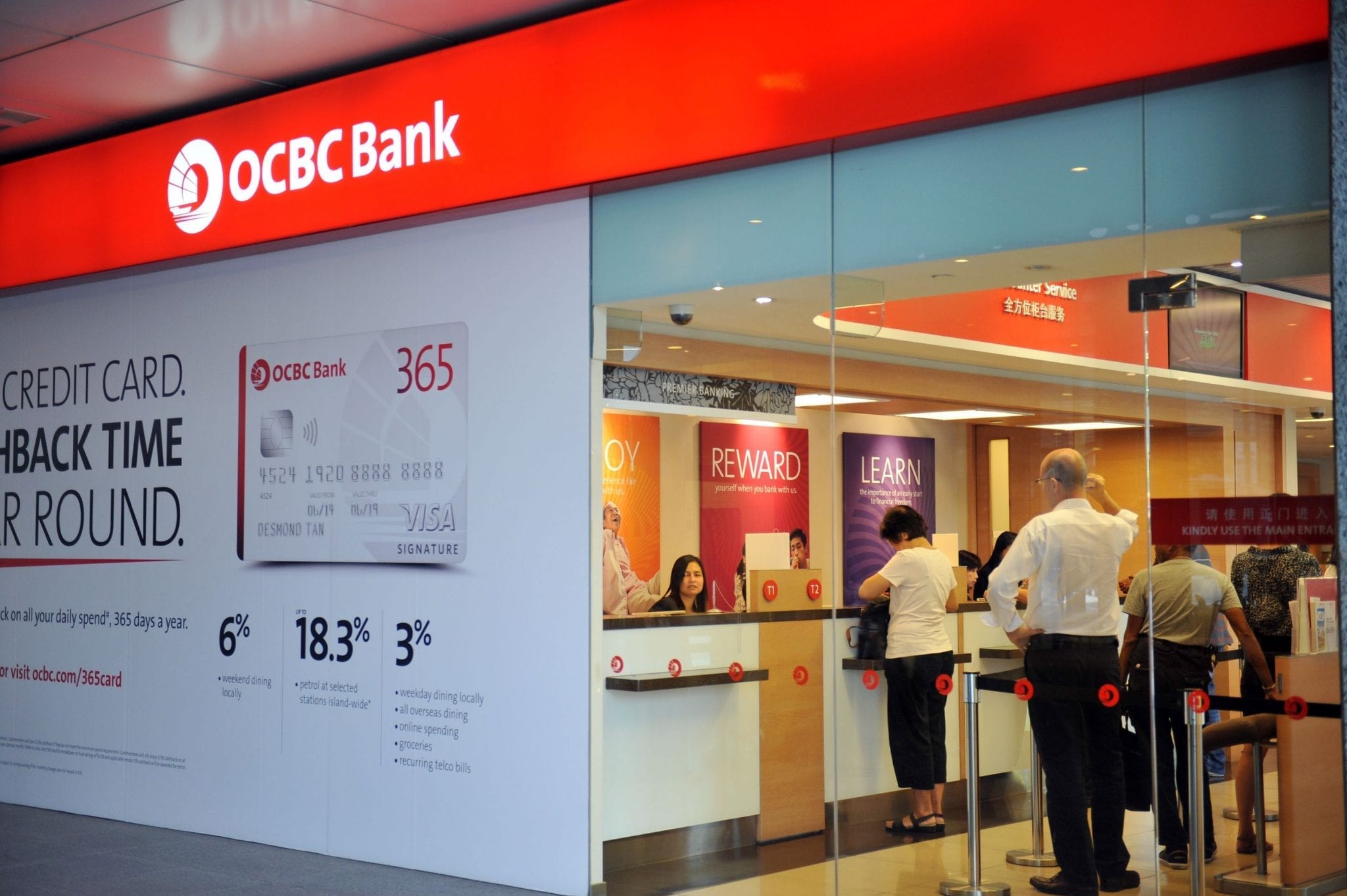
    OCBC Bank marked another milestone in its journey towards ever-greater performance and business excellence by earning the World Class Award – the highest award tier – at the 2016 Global Performance Excellence Awards (GPEA), under the “Large Service” organisation classification. The GPEA is administered by the Asia Pacific Quality Organisation (APQO), an autonomous, scientific and technical organisation that brings together professional quality organisations from countries in Asia and the Pacific, including Singapore. For 16 years now, it has given out the Global Performance Excellence Awards – which are the only internationally-recognised honours for performance and business excellence.

    To be even considered for an Award, stringent criteria must be met. An organisation must start by being a winner at its own country’s national quality awards. Then, within two years, it must be recommended as a candidate for the GPEA by that country’s national quality award organising committee. OCBC Bank qualified by first being conferred the prestigious Singapore Quality Award by SPRING Singapore in 2014, following rigorous assessment of OCBC Bank’s consumer financial services business, and then by being recommended by SPRING Singapore for the GPEA.

    The organisations are reviewed by an international team of experienced examiners who assign scores and summarise the results of their assessment. The results and recommendations are then submitted to an international ‘Jury of Judges’ who make the final decision on which Award category each organisation wins.

    Mr Dennis Tan, Executive Vice President and Head of OCBC Bank’s Consumer Financial Services Singapore, said: “This award is an honour for all of us at OCBC, and is testament to our commitment to high standards of service quality. This is a key milestone in our journey towards organisational excellence. Since we embarked on our Business Excellence journey in 2001, we have tightened and enhanced our processes to deliver customer-centric, useful, fast, friendly and simple service to customers. This has earned us local recognition, with our 2014 Singapore Quality Award win, but we have not stopped there. We have continued to pursue even greater heights of business excellence – and this has culminated in our earning the Global Performance Excellence Award. While the team is very encouraged by this, achieving recognition is never a means in itself. We continue to consistently and relentlessly deliver quality products and services to meet our customers’ needs. Chasing excellence is a constant journey, never a destination.” 

    Mr Harnek Singh, President of the APQO, said: “Singapore has established itself as a leading financial centre. OCBC was amongst the first banks to win Singapore’s pinnacle award – the Singapore Quality Award – recently. This speaks volumes about the visionary leadership and well-entrenched, effective systems and processes that steer OCBC’s business excellence journey. With technology and innovation being increasingly a key competitive advantage, OCBC has successfully leveraged on technology and innovation as an enabler to offer innovative customer-centric offerings, cut costs, respond to changing customer expectations and create the agility needed to capitalise on opportunities in the market. OCBC has successfully offered a slew of award-winning, innovative products and services.” 

    OCBC Bank’s strengths in performance and business excellence are underscored by a focus on customer centricity and a competency in mining customer data through analytics to deliver intelligent customer experiences. OCBC was the first bank in Singapore to offer banking facilities at branches on Sundays, developed the ground-breaking OCBC 360 account (a deposit account that rewards customers with higher interest rates for banking more with OCBC Bank) and grew its youth segment – FRANK by OCBC – through intensive data analytics and research on how youths behave and desire to be engaged.

    OCBC Bank is also a leader in banking digitalisation. Over the past three years, it has introduced numerous first-to-market innovations in digital and mobile banking in Singapore to meet customers’ needs. Many of the bank’s customer touch points have been digitalised: Voice biometrics has replaced traditional identity verification when customers call its Contact Centre, the OCBC Open Account app now enables customers to apply for the popular OCBC 360 Account via their mobile phones or tablets without ever visiting a branch, and OCBC OneTouch uses fingerprint recognition to give customers quick and easy access through their mobile devices to their account balances and transactions. OCBC Bank has also launched a mobile application – OCBC One Wealth – that is a one-stop wealth management app providing customers with convenient access to market information, investment ideas, personalised alerts about their existing investments and even the ability to directly purchase unit trusts using their mobile devices.

    Mr Patrick Lim, Director of Business and Service Excellence at SPRING Singapore said, “OCBC Bank’s Consumer Financial Services Division was awarded the Singapore Quality Award in 2014 for having developed innovative new banking products and customised channel delivery, enabling it to be among the top banks in the highly competitive financial sector. Its recent GPEA win highlights the bank’s dedication to achieving business excellence. Recognition at GPEA proves the bank’s ability to demonstrate outstanding management capabilities while delivering superior performance and results.”

  • Standard Chartered and IBM back Byte Academy’s Singapore fintech school

    Standard Chartered and IBM back Byte Academy’s Singapore fintech school

    Standard Chartered Bank, IBM, Insead, Thomson Reuters and Microsoft are backing a fintech school at New York-based Byte Academy’s first international venture, in Singapore.

    The firms have come together to form a fintech skills charter that will guide Byte Academy’s 12-week and eight-week courses for students focussing on fintech and software development.The 12-week full-time courses will provide the fundamentals for students to work on real, industry-specific problems and allow for interaction with industry partners to prepare for direct placement and job matching upon graduation. Students that graduate receive guaranteed job placements at the bank and tech partners.

    Shameek Kundu, global head, data, architecture and innovation, Standard Chartered, says: “The establishment of Byte Academy is another progressive initiative which will help to fuel Singapore’s Smart Nation ambitions by adding to the country’s great ecosystem of financial institutions, technology companies, universities and research organisations.”

    Nobuhiro Ito, director, developer experience and evangelism, Microsoft Singapore, adds: “Byte Academy’s presence here in Singapore will help accelerate skills development that will help contribute to a more vibrant FinTech ecosystem and build a stronger Singapore core.”

  • John Little to close last store by year end

    John Little to close last store by year end

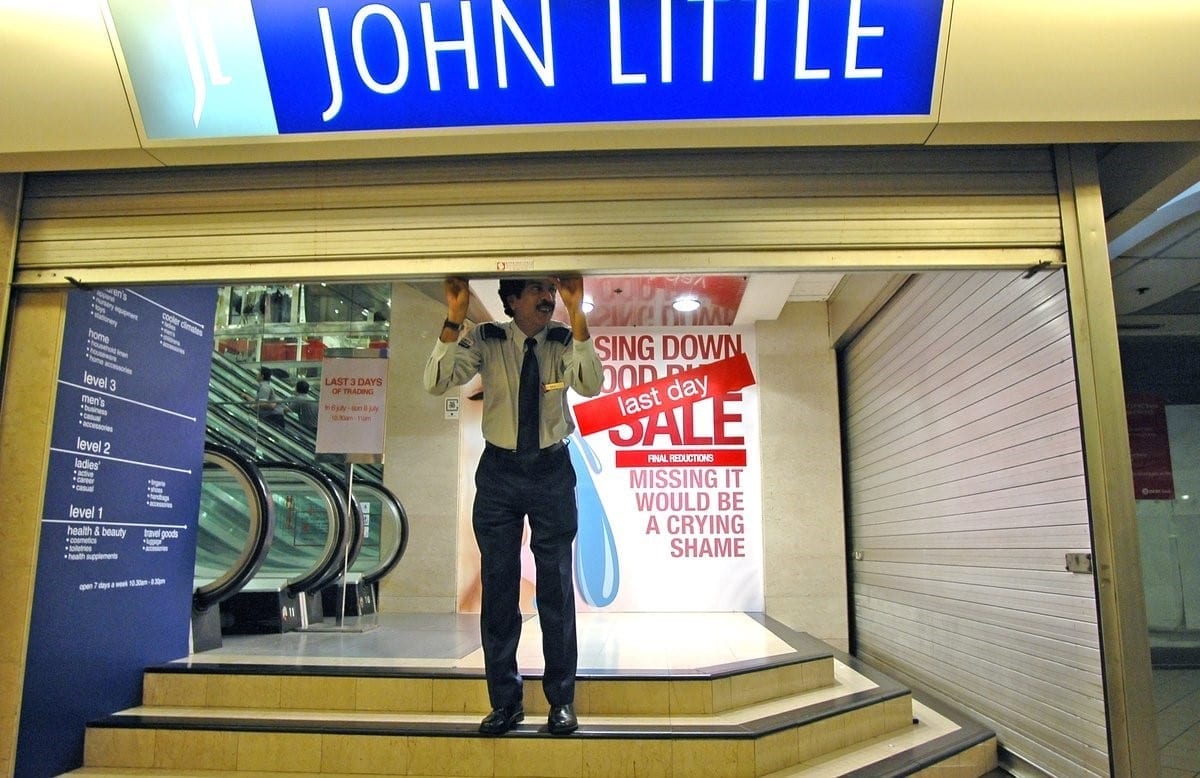
    After 174 years, John Little is closing its last department store in Singapore.

    The remaining outlet at Plaza Singapura will shutter by the end of next month.

    In a statement on Friday, Robinsons Group – which manages John Little, the oldest department store in Singapore – said that the decision was made “after evaluating the relevancy and sustainability of the John Little brick-and-mortar business”.

    But it does not mark the end of the John Little brand. Robinsons Group said that John Little will “evolve as a brand into a pop-up format, which is in line with the global trend for retail businesses”.

    John Little’s new format will be revealed next year.

    The closure is part of consolidation efforts to focus on businesses that are growing within the group, the statement said.

    The Al-Futtaim Group – the Dubai-based owner of Robinsons Group, Royal Sporting House and other retail brands – announced plans earlier this year to shut 10 loss-making outlets here.

    John Little had seven branches in 2002, including its flagship store at Specialists’ Shopping Centre, which it vacated in 2007, after more than 20 years.

    Its outlet at Jurong Point shopping mall shut its doors earlier this year.

    Staff affected by the closure of John Little have been briefed and will be deployed to other businesses within the organisation, which includes Robinsons and Marks and Spencer, Robinsons Group’s statement said.

    John Little Plaza Singapura will be holding a moving-out sale offering discounts of up to 90 per cent until it closes.

  • Singapore shop owner keeps no shopkeeper, trusts in customers’ honesty

    Singapore shop owner keeps no shopkeeper, trusts in customers’ honesty

    At a void deck below a Housing Board block in Hougang is a provision shop but, unlike many others, no one attends to it.

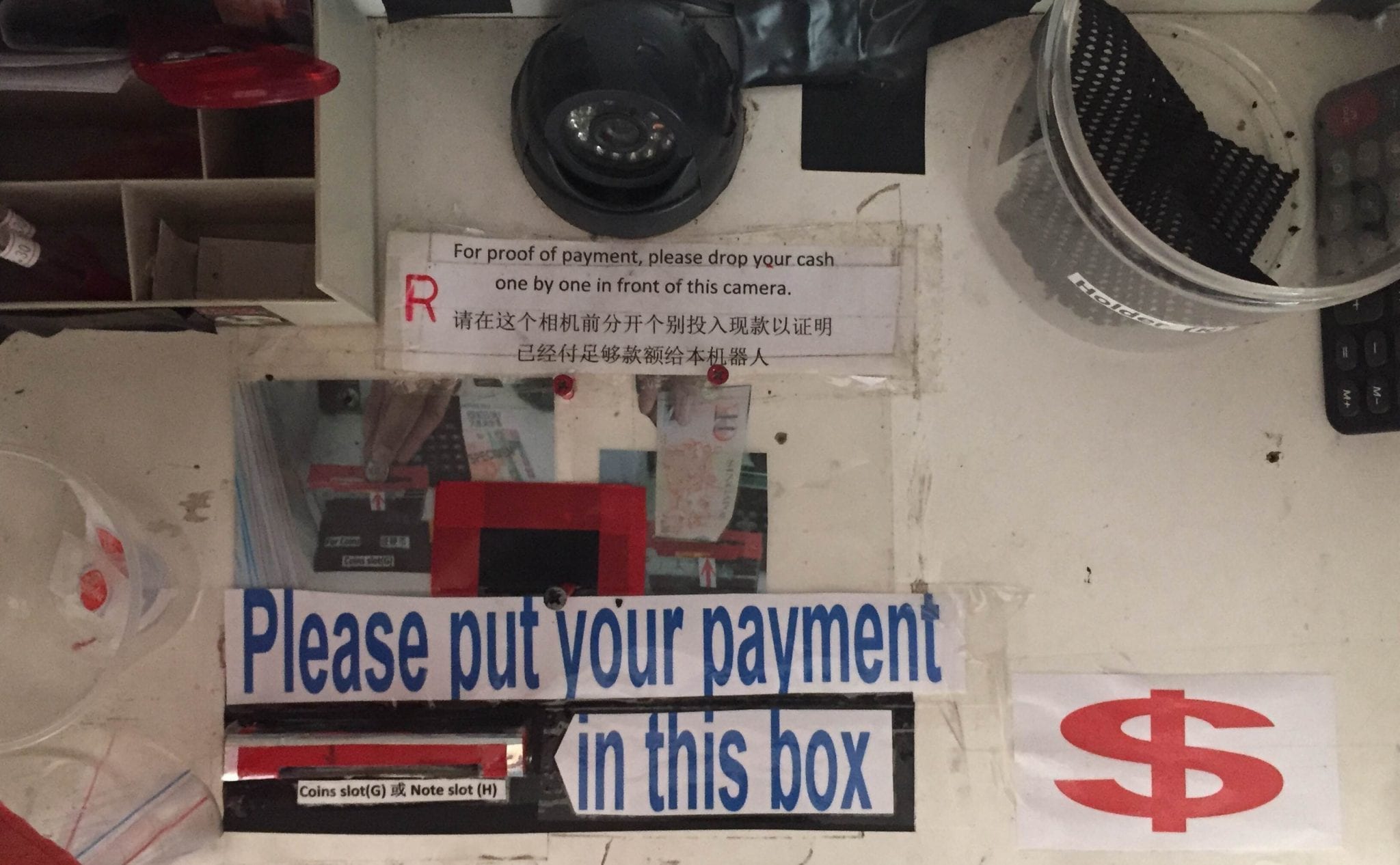
    A handmade cash register at the front of the shop displays instructions on how to pay for items: check the price tag, show it to any one of the shop’s eight closed-circuit television (CCTV) cameras, and place the money into a slot. To get change, press buttons on the register to either get $1 or $0.10 back in coins.

    The “shopkeeper-less” store at Block 242 Hougang Street 22 is owned by Alex Song, 54, who runs a clothing store town and got into the provision shop business in June 2015 “with no experience”.

    Within the first three months, he figured out why many provision shops struggle to survive. It was difficult to hire shopkeepers he could trust and suppliers were charging him a high price, he said.

    “The cost price of my items were sometimes higher than the retail price at supermarkets,” Song said on Tuesday, November 1.

    To cut manpower costs, the former airforce technician fashioned his own “robot cash register”, at a cost of less than $200, to man the shop. The robot-looking cash register is made mostly of wood, with some plastic and metal, with CCTV cameras embedded as its “eyes”.

    He started by placing just a small amount of sweets and biscuits for sale in front of the shop, and closed the rest of the store. Four CCTV cameras kept an eye on would-be thieves.

    “At first I was worried that when I return to the shop at night, I would see an empty shop,” he said with a laugh.

    He progressively opened more of the shop and added four more CCTV cameras to cover blind spots. The cost of the eight CCTV cameras set him back by about $1,000.

    He estimated that thieves strike about twice a month, causing him losses of about $50 per month – an amount he said pales in comparison to the $1,500 it would cost him to hire a shopkeeper.

    Photographs of thieves, captured by his CCTV cameras, are plastered around the store.

    But he has made a police report just once, when a group of people stole from the shop.

    “After I put up the photos, some of the thieves actually came back to return me money and apologise, so I let it slide,” said Song.

    He recalled one case in which three children, all siblings, stole food and drinks worth over $10 at his store.

    “The cameras caught them very clearly. After I put up their photos, their mother brought them to my shop to apologise and pay me back. She was very sad and cried,” he said.

    “It woke the kids up. A few days later, they wrote a letter to me to apologise.”

    In another case, a man pretended to pay for a can of luncheon meat at the register but used his head to block the CCTV camera. But he did not realise that another CCTV camera in front of the register caught him putting the coins into his mouth instead.

    The man is still at large.

    But despite the hassle of running the shop this way, Song said: “It’s worth it if one person can change for the better and not steal anymore in future.”

    Meanwhile, he is looking for a new location to move his provision shop to.

    “I’m not making money, not because of the (shopkeeper-less) system but because of the poor crowd. But I’ll bring the system along with me to the next location,” he said.


  • David Beckham splits with H&M

    David Beckham splits with H&M

    David Beckham has split with fashion retailer H&M – and he’s being upstaged by a Canadian pop star with a hairdo worse than Donald Trump’s…

    H&M introduced its first Beckham Bodywear collection featuring form-fitting underwear in 2012 and expanded the partnership to include a broader range of garments including jerseys and light summer suits dubbed Modern Essentials in March 2015. There’s even been a Beckham raincoat.

    But now the brand believes it is time for a change. It has signed up Grammy-winning R&B artist Abel Tesfaye, 26, who performs under the deliberately misspelled name The Weeknd, for a one-off menswear collection which will go on sale from March. The chain believes the new signing will appeal to younger shoppers than Beckham, now 41.

    According to Bloomberg, H&M said it would not rule out future collaborations with Beckham, who also has partnerships with Hong Kong-based Global Brands, endorses Adidas shoes, Breitling watches and Samsung smartphones.

    An H&M spokeswoman told Bloomberg there was no direct link between the end of the Beckham partnership and the signing of Tesfaye.

    The singer will choose his favourite items for an H&M collection to be called Spring Icons Selected by The Weeknd.

    Queuing for Kenzo

    Meanwhile, H&M’s collaboration with fashion label Kenzo launched yesterday, leading to queues outside two stores in Singapore where the collection was on sale – in the Orchard Building and at Ion Orchard.

    The Orchard Building store opened at 8am and by 7.30am about 100 people were lined up outside the store. Some at the front of the queue had reportedly arrived on Tuesday morning, presumably holding the place in shifts.


  • Boom quarter for Alibaba Group

    Boom quarter for Alibaba Group

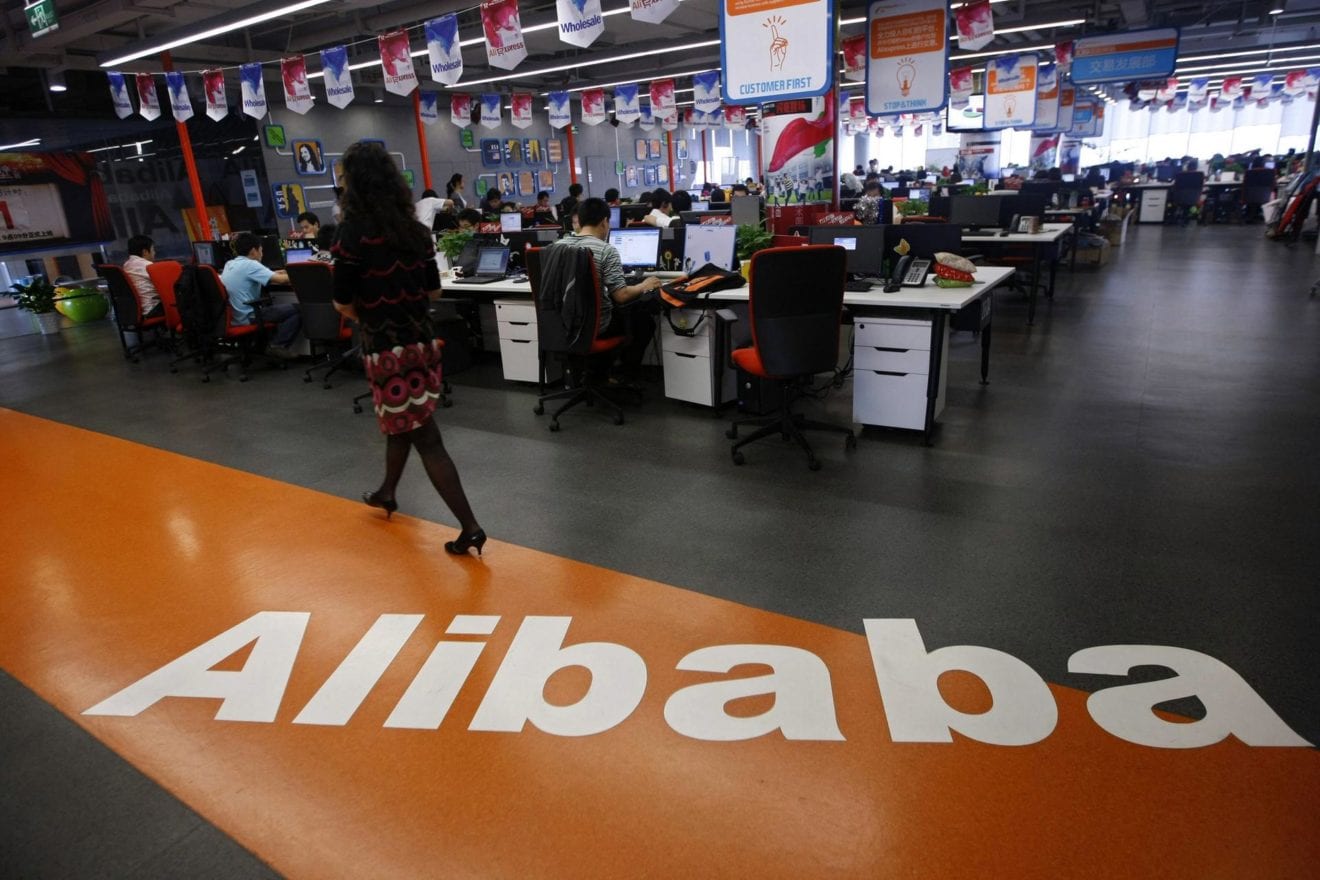
    While China’s economy goes through a sluggish patch, internet shopping mall giant Alibaba Group has announced a sparkling quarter in which profit beat expectations, its fledgling cloud computing business more than doubled sales, and its entertainment income quadrupled.

    “Our results reflect our increasing ability to monetise our 450 million mobile users through new and innovative social commerce experiences,” says CEO Daniel Zhang.

    “Beyond the strong performance of our core commerce business, we are pleased with the continued rapid growth of our cloud computing business. We also see huge potential in our newly integrated digital media and entertainment unit. By combining engaging online experiences with highly relevant content, we delivered impressive financial and operational results for the quarter. ”

    CFO Maggie Wu says the group had robust revenue growth of 55 per for the quarter ended September 30.

    “Our highly profitable and cashflow-generative core commerce business enables us to invest in our future growth areas of cloud computing, digital media, and entertainment and innovation initiatives. We expect each of these businesses to drive long-term value for both our customers and shareholders.”

    At RMB34.292 billion (US$5.142 billion), revenue increased 55 per cent year-over-year, the star sector being digital media and entertainment, which ballooned 302 per cent to RMB3.608 billion. There was also an impressive 130 per cent growth in revenue from cloud computing to RMB1.493 billion, while revenue from innovation and other sources grew 78 per cent to  RMB698 million, and revenue from core commerce rose 41 per cent to RMB28.493 billion.

    Up 23 million

    Mobile monthly active users (MAUs) on its China retail marketplaces reached 450 million in September, an increase of 23 million over June, while annual active buyers reached 439 million, an increase of 5 million from the 12-month period ended in June.

    Customers for its cloud computing business grew to 651,000 from 577,000 in the previous quarter. The operating loss from cloud computing was RMB398 million for the quarter, and adjusted EBITA loss narrowed from RMB158 million in the previous quarter to RMB57 million.

    Alibaba says its Taobao app continues to be the leading social-commerce platform, serving creative content, social-engagement opportunities and personalised shopping recommendations. Livestreamed demonstrations for fashion apparel, cosmetics, maternity/baby products, sports and activewear generated millions of daily views.

    The company says it also achieved high social engagement on the mobile Taobao platform, citing more than 6 million app users sharing their shopping experience with friends each day.

    “We continue to see strength in the consumer electronics category, with robust growth in smartphones and large appliances,” says Alibaba. “In September, Apple recognised our branding reach and distribution capability by appointing Tmall the third-party online platform for the simultaneous launch of the iPhone 7 with Apple in China.”

    In the large appliance category, Alibaba is continuing to work with Haier’s logistics subsidiary RRS, with orders from its marketplaces handled by RRS growing by more than 82 per cent for the quarter.

    Triple digits

    Alibaba has also continued to make strong progress in the FMCG category, with personal care, food, and mother and baby being among the top growth categories. Its Tmall Supermarket has seen its volumes grow by triple digits year-on-year.

    “Multinational FMCG brands are working with us as the partner of choice, not only to drive their transaction volume, but also in the areas of brand building, channel expansion and product launches to grow their presence in China.”

    During the year Alibaba launched innovations around livestreaming, AR and VR to drive consumer engagement. Examples include a livestreamed “See now, buy now” fashion show watched by 7 million viewers on Taobao, Tmall and the Tudou and Youku apps. Alibaba also integrated the omni-channel shopping experience at more than 60,000 offline storefronts, including Gap, Uniqlo and Intime department store.

    A pilot program has been introduced to help global merchants sell beyond China. Hong Kong and Taiwan are the first markets outside the mainland.

    Alibaba Cloud hosts and provides security products and services for more than 35 per cent of China’s websites, says the company.

  • Japan Food Holding trims offshore outlets

    Japan Food Holding trims offshore outlets

    Singapore-based Japanese restaurant chain Japan Food Holding achieved 10.8 per cent growth in net profit for the six months to September 30.

    This took its net profit to S$2.7 million (US$1.95 million) on the back of a 5.5 per cent increase in revenue to S$33.5 million.

    At the end of the period it had 51 outlets, up six from the same time a year ago.

    On a quarterly basis, the group maintained its net profit at about $1.4 million, while its revenue eased up by 4.7 per cent to $16.6 million.

    Japan Foods says its improved performance was driven mainly by it having more restaurants, with encouraging performances from its new brands including Dutch Baby Cafe, Ginza Kushi-Katsu and New ManLee Bak Kut Teh. There was also a higher gross profit margin for the second quarter, up from 84.3 per cent last year to 85.1 per cent, thanks to constant cost-management efforts such as bulk purchasing and product pricing.

    Outside Singapore, the group’s network dropped to 19 restaurants from 24 with the closure of three Ajisen Ramen restaurants in Malaysia and Vietnam. In Hong Kong, the group’s associated companies closed two Menya Musashi restaurants when their leases expired.

    Takahashi says the coming 12 months are expected to remain challenging in Singapore because of intense competition, tight labour supply, rising business costs and the uncertain economic outlook.

    Executive chairman/CEO Takahashi Kenichi says that consumer sentiment turning “bearish” because of recession fears has been tough on F&B businesses. “However, I believe we are offering good-quality food at reasonable price points, and this has enabled us to continue attracting diners.”

    Despite the solid overall result, the group’s flagship brand and main revenue generator, Ajisen Ramen, as well as its Keika Ramen brand, had a fall in revenue from $6.9 million in last year’s second quarter to $6.5 million for the latest period. This was a result of two Singapore restaurants – at Compass Point and Tiong Bahru Plaza – having to close for mall renovation works.

  • Kobe Bryant joins Katy Perry in 11.11 launch

    Kobe Bryant joins Katy Perry in 11.11 launch

    Legendary Los Angeles Laker Kobe Bryant will join Katy Perry as the headline celebrities in Alibaba’s 11.11 Countdown Gala Celebration on November 10.

    US pop-rock band OneRepublic has also been confirmed, likely to perform its hit song Counting Stars

    11-11

    Alibaba had earlier named Katy Perry as a “global ambassador” for the gala, which is being held in Shenzhen in the hours leading up to the eCommerce giant’s 11.11 Global Shopping Festival’s midnight kickoff. The American singer will perform a number of her chart-topping singles, including her most recent, Rise.

    Mixing sports stars, singers and actors is a variety show formula that has been long dormant in the West as broadcast entertainment, Alibaba’s eclectic event – a way to warm up online shoppers for the world’s largest online sale – drew 100 million Chinese viewers in its debut last year.

    Alibaba Group chief marketing officer Chris Tung called the gala “a global carnival, a world-class performance that involves the audience throughout the event with many touch points and is like nothing else you have experienced”.

    It’s those touch points that Alibaba is focusing on in order to make the four-hour broadcast something viewers can participate in instead of just watch. One interactive feature planned for the show will give the audience a chance to win prizes by shaking their phones with the Mobile Taobao and Tmall apps open during key moments. Alibaba will also offer a sort of “choose your own adventure” feature where viewers can vote to decide how some segments of the gala play out.

    While the Hangzhou, China-based company did not release the full roster of celebrities expected to appear on the live broadcast, choosing instead to tease out names over the coming week, Alibaba did say that Beth Behrs, star of US sitcom 2 Broke Girls, which is wildly popular in China, and German footballer Thomas Muller are on the list.

    Alibaba has recruited Hollywood talent to produce the gala. David Hill, who is known for his work on the Oscars, NFL Super Bowls and reality show American Idol, was brought on board earlier this month to oversee the event. “Combining Alibaba’s technology with my experience at other global events we are going to develop a spectacle like no other,” Hill said in the statement.

    In addition, four one-minute time slots will be awarded to those merchants, consumers and charities who submit the best advertisements or promotions to Alibaba. Those winning videos will be aired during the gala.

  • Moynat first store in Taiwan opened

    Moynat first store in Taiwan opened

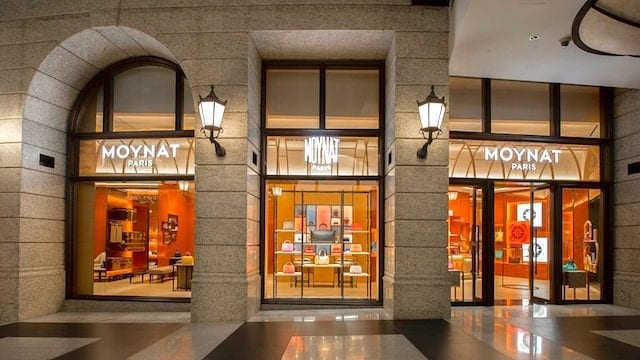
    French luxury trunk-maker Moynat has opened a store in Taiwan.

    In Taipei’s Bellavita Mall, the store covers 120 sqm and is the 12th global outlet for the brand.

    Moynat store -Bellavita Mall - Taiwan 1

    It features the brand’s complete range of handbags for both men and women, as well as leather accessories.

    Moynat store-Bellavita Mall - Taiwan 3


    Moynat is owned by Groupe Arnault, the family holding company of LVMH Moet Hennessy chairman/CEO Bernard Arnault.

  • First Cross-Border Rewards Platform UTU Launches

    First Cross-Border Rewards Platform UTU Launches

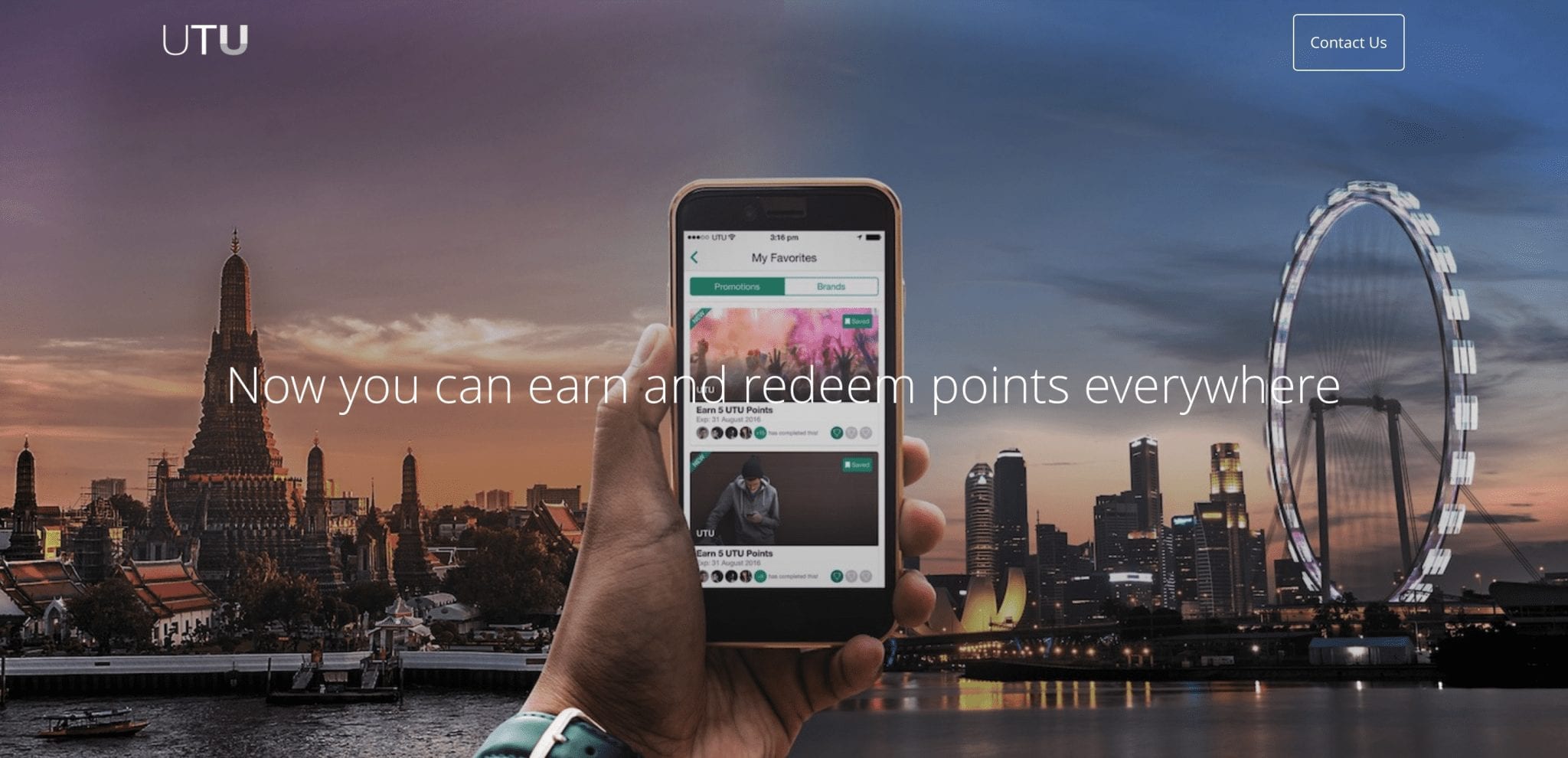
    Father and son team Asad and Ameer Jumabhoy from tourist VAT refund and payments technology company The Scotts Group, and Jeremy Tan, an expert in financial technology, mobile payments and loyalty platforms from Korvac Holdings, announce the launch of UTU, a cross-border loyalty and rewards platform that enables people to convert, earn and redeem points in real time at any UTU merchant outlet worldwide through their smartphone.

    UTU consolidates rewards points from multiple credit and debit cards; eliminates the time it takes for those points to be processed; removes the barriers to cross-border loyalty; and offers shoppers a new kind of consumer model – one that enables them to earn rewards points now and pay with them at point of sale. The platform also features a merchant portal that allows brands to set up their own promotions, optimize campaigns and track their return on engagement.

    “UTU’s potential lies in its ability to engage merchants with consumers, acquirers with merchants and issuers with their consumers on a single integrated platform,” says Asad Jumabhoy, an entrepreneur and pioneer in the digitization of global tax-free shopping. “Real innovation minimizes the gap between process and people. With UTU, we’re bringing it all together in the retail, travel and rewards space at home and away, online and instore.” 

    UTU launches in Thailand in November, with further roll out happening in Asia in 2016/2017. The choice of Thailand as a launch location is attributed to the country’s deep loyalty culture, and presents UTU the opportunity to fill an immediate need (e.g. as of August 2016 over 70 million credit and debit cards were in circulation in the country; Thais carry an average of seven loyalty cards each; and brand rewards programs are the country’s most popular Google search category). Brand partners at launch include Visa Thailand, the Tourism Authority of Thailand, RSH Limited and Singapore’s NTUC Link. Availability in the UK, Europe and US is anticipated in 2017. 

    “We are excited to be working with UTU on the expansion of the Plus! Partners network beyond Singapore and is in line with our vision to provide gratifying experiences for members of the Plus! Rewards Program,” says Tony Tan, CEO of NTUC Link. “This synergistic partnership allows Plus! Members to maximize the mileage of their overseas expenditure as points earned during their travels can be converted and redeemed for rewards when they return home. The growing number of leisure and business travelers in our membership base will definitely benefit from the enriched array of options UTU will make available around the world.”

    “UTU promises to enhance everyday retail experiences by providing greater seamlessness between customers and brands across borders,” says Indranu Hati, CEO of RSH Thailand Group. “UTU is the perfect loyalty service partner for us, given our growing footprint in nearly a dozen countries across Pan Asia.” 

    UTU is a response to the observation that the tourist today is a local tomorrow, and a local today is a tourist tomorrow. With more than one billion people travelling to foreign countries a year, locals and tourists want integrated loyalty programs, greater ease in managing their rewards points and more relevant deals from merchants. With UTU, shoppers continue to be rewarded, regardless of geography, through the one piece of technology they use every day – their mobile phone. 

    To use UTU, users download the free mobile application; register up to five credit or debit cards on to the UTU app; earn rewards points when they shop; convert those points through the UTU platform; and spend them at thousands of participating redemption outlets. Users can also gift points, select to receive promotions and earn extra points through merchant engagement.

    The global loyalty industry is estimated to reach US$20 billion by 2020. Loyalty management today is an expensive and segmented process which has resulted in a plethora of programs delivering incremental advantages to the consumer. Merchants bear the cost of loyalty systems and front line education and training. Shoppers are burdened with physical cards and are responsible for monitoring their points and merchant offers through separate portals. UTU eliminates the inconvenience for all parties and provides a streamlined experience. 

    “We congratulate UTU on launching this global loyalty rewards program and choosing Thailand as its springboard,” says Suripong Tantiyanon, Country Manager, Visa Thailand. “Through Visa Direct, UTU taps the push payment capability of Visa’s global payment system to redeem points and rewards.” 

    “Loyalty is the key to brand success in a digital world, yet we’re still limited in how we are rewarded for how we choose to spend our money,” says Ameer Jumabhoy, a second-generation student at MIT Sloan School of Management involved in MIT’s Digital Currency Initiative. “What we’re working to achieve with UTU is to remove those boundaries and give people the freedom to get more.”

  • 2C2P’s Online-To-Offline E-commerce Service Now Available At Over 320,000 Locations

    2C2P’s Online-To-Offline E-commerce Service Now Available At Over 320,000 Locations

    2C2P, the leading Southeast Asian payments company which processes billions of dollars in transactions each year, has announced 320,000 offline payment locations for its ‘123’ payment solution. ‘123’ is an alternative payment service. Through it, consumers of 2C2P’s merchants across Southeast Asia (SEA) can pay for their online purchases with cash or alternate means at these 320,000 offline payment locations. 2C2P’s merchant partners include some of the largest online retailers across Southeast Asia, spanning the travel and tourism, retail, food and beverage and hospitality industries, among others.  123 enables these online retailers to bring online commerce to the region’s unbanked population which, according to KPMG, spanned 73 per cent of the region’s population, or 438 million people.  

    At online check-out, their consumers will have the option to pay for purchases using 123. They will be provided a bar code which can be printed out or scanned from their mobile devices, enabling them to then pay with cash or alternate means 2C2P’s extensive network of offline payment locations – available through 2C2P’s channel partners. Payment channels include cash over-the-counter at retail chains and agents, ATMs and electronic kiosks (such as AXS, SAM, SingPost), as well as internet banking and mobile banking. These locations are available across Southeast Asia, including Indonesia, Malaysia, Myanmar, the Philippines, Singapore and Thailand.

    Bringing e-commerce capabilities to rural Myanmar

    123 has increased its payment locations across the SEA region, with 12,000 new locations added in Myanmar in 2016, near ten times the network of the country’s largest bank. It has achieved this by establishing partnerships with Myanma Post Offices, Myanmar Awba Group and ABC convenience store chain. Retailers and merchants including Myanmar National Airlines (MNA) and Oway are among the first in Myanmar to actively offer 123 to their customer base.

    MNA is the largest airline carrier, and one of only two international carriers in Myanmar. It has the most extensive route network within the country. With 123, its customers can book their tickets online and then pay at over 12,000 physical locations across Myanmar, or pay through AYA Mobile Banking and branches. Customers of Oway, Myanmar’s largest online travel agent, can use 123 to make travel bookings more convenient and accessible – all without a debit or a credit card.

    Aung Kyaw Moe, CEO and Founder of 2C2P said, “2C2P has made extensive efforts to open up Myanmar’s unbanked population to e-commerce. As the country continues to see increased mobile penetration, rising urbanization and improved consumer spending, there is an urgent need to modernise its e-commerce and payments infrastructure. 2C2P’s vision is to bring e-commerce to every single person in Myanmar, and more broadly, in Southeast Asia. In so doing, we look to build the region’s e-commerce future.

    “2C2P, through 123, looks to bring convenience to Myanmar’s citizens, particularly those that remain underserved by banking and financial institutions – lacking banks accounts, credit and debit cards or access to a bank branch. They can now, for the first time, tap into the fast-growth of national, regional and global e-commerce by paying for their online purchase at a convenient offline location via 2C2P’s extensive network of physical channel partner locations,” added Aung.

    Myanmar’s Ministry of Hotels and Tourism estimates 6 million annual inbound tourists for 2016, a 25 per cent increase from 2015 (4.68 million). This number is predicted to cross 7.5 million by 2019. The Asian Development Bank (ADB) is optimistic that tourism will drive the country’s overall economic growth. It forecasts tourism revenues to have increased by 19 per cent from 2014 to 2015 to US$2.1 billion – representing over 4 per cent of Myanmar’s GDP.  Asia-Pacific will overtake North America to become the largest digital travel market globally in 2019, according to eMarketer.

  • PayPal appoints Somwang Luangphaiboonsri as Country Lead for PayPal Thailand

    PayPal appoints Somwang Luangphaiboonsri as Country Lead for PayPal Thailand

    PayPal, a global leader in digital payments, has appointed Somwang Luangphaiboonsri as Country Lead of its Thailand subsidiary. 

    As Country Lead, Mr. Somwang will be responsible for assisting PayPal to capitalize on the explosive growth of cross-border e-commerce in the Thai market. Together with the newly-established PayPal Thailand team, Mr. Somwang will also be focused on educating Thai merchants on the growth opportunities available in the global e-commerce marketplace. 

    Rahul Shinghal, General Manager for PayPal Southeast Asia said, “I am pleased to announce Somwang’s appointment as the Country Lead for the Thailand office. Somwang has been instrumental in many of our partnership dealings with Thai merchants, including Thai Airways.  I am excited to see the growth of our offerings to customers in the market.” 

    Having spent more than 16 years in the finance and technology industries, Mr. Somwang is a veteran in the e-commerce space. Prior to joining PayPal, Mr. Somwang co-founded a domestic online payment service provider and built the company to be the platform of choice for many Thai consumers. He is well-entrenched in the Thai payments scene, and is also a secretary of the Thai E-Commerce Association and the secretary of Thailand ePayment and eMoney Association.

    “Fintech is a hot topic right now and Thai businesses will need guidance to help them navigate through the fast-changing payment innovations in order to tap on the consumer growth opportunity. I am looking forward to PayPal introducing new solutions for its Thai merchant partners for their evolving customer needs and building PayPal’s presence in Thailand,” said Mr. Somwang. 

    The appointment of Mr. Somwang is just one of the latest steps taken by the digital payments company to reinforce its position in Thailand this year. PayPal has been actively building its merchant portfolio to enable Thai businesses to have access to a seamless cross-border payment experience. In August 2016, an MoU was signed with the Department of International Trade Promotion (DITP) to promote and facilitate cross-border trade for Thailand’s small and medium sized businesses. PayPal also onboarded leading travel businesses including Centara Hotels & Resorts, Centre Point Hotels Group, and Thai Airways as merchant partners that same month, being the sole payment provider for their cross-border online payments. 

  • Indonesian ministry to boost fish consumption

    Indonesian ministry to boost fish consumption

    The Indonesia Industry Ministry will continue to encourage and increase fish consumption in various regions to raise domestic demand for fish, in an effort to advance the maritime and fisheries sector.

    “We will boost fish consumption, apart from exports, through developing traditional fish industry, which would increase the demand in the fishery sector at home,” Industry Minister Airlangga Hartarto said.

    The minister made the remarks in his address to the working meeting of the Indonesian Chamber of Commerce (Kadin) on fisheries affairs in Jakarta on Monday.

    Hartarto said that his ministry would also encourage fish consumption on a national scale.

    Slamet Soebjakto, Director General of Fisheries of the Ministry of Maritime Affairs and Fisheries, said his ministry wanted to increase the peoples sources of protein intake through increasing their fish consumption.

    It was earlier reported that the Indonesian government had been giving priority to increase the fisheries production by relaxing regulations for fishermen and local industries. The move is meant to support these sustainable industries in the development of the national fisheries sector and maintain seafood sovereignty.

    As part of the efforts to boost fish production, the government, though the Ministry of Maritime Affairs and Fisheries (KKP), had earlier built 15 Integrated Fisheries and Marine Resource Development Centers (SKPT) in various regions in the country. The aim of the SKPT is to boost fishery exports directly from the center without the need to go to Jakarta.

    The SKPT aims to maintain food resilience, increase fish consumption, foreign exchange earnings through exports, and raise the income of the people.

    Five of the SKPT are located in Simeullue (Aceh), Natuna (Riau Islands), Tahuna (North Sulawesi), Saumlaki (Maluku) and Merauke (Papua).

    Ten others are also built in Mentawai Island (West Sumatera), Nunukan (North Kalimantan), Talaud (North Sulawesi), Morotai (North Maluku), Biak-Numfor (West Papua), Sarmi (Papua), Mimika (Papua), Tual (Maluku), Rote Ndao (East Nusa Tenggara/NTT), and Maluku Barat Daya (Maluku).

  • Soekarno-Hatta Airport train expected to be operational by July 2017

    Soekarno-Hatta Airport train expected to be operational by July 2017

    The railway service connecting Jakarta to Soekarno-Hatta International Airport in Tangerang, Banten Province, should be complete and fully operational by July 2017, President Director of PT Railink Heru Kuswanto said here Monday.

    The service will provide 124 trips per day, with each train consisting of 10 coaches capable of transporting 274 passengers per trip.

    It is expected to run every 15 minutes to transport a total of 33,976 passengers per day, Kuswanto said.

    Canadian firm Bombardier was appointed to manufacture the trains.

    “The coaches will be delivered from Sweden in March 2017,” Kuswanto said.

    The government has invested US$70 billion to procure 10 trains from the rail equipment division of Bombardier.

    The trains will be customized to meet the national standard of railway gauge of 1,067 millimeters.

    The government has a budget of Rp2.7 trillion for the construction of the airport railway service which will be integrated into several Jakartas city train stations such as Manggarai, Sudirman Baru, Duri, and Batu Ceper.

    The train journey from Manggarai Station to Soekarno-Hatta International Airport is expected to take 54 minutes at Rp100,000 per trip.

    The railway network will be integrated with Terminal 1, 2 and 3 of the Soekarno-Hatta International Airport.

    PT Rilink is a joint venture enterprise between national railway company PT Kereta Api Indonesia and the state-owned airport service enterprise PT Angkasa Pura.