Author: Mei Ling Tan

  • Indonesia, Australia Cooperates on Mining Gold, Copper

    Indonesia, Australia Cooperates on Mining Gold, Copper

    National mining company PT. Aneka Tambang (ANTAM) and Australian mining company Newcrest Mining Ltd. are building a partnership in order to explore gold and copper potential in Indonesia.

    A statement released by the Australian Embassy on Sunday, November 6, 2016, mentioned that the collaboration document between both countries was signed by Indonesian Trade Minister Enggartiasto Lukita and Head of the Investment Coordinating Board Thomas Lembong in Sidney.

    Australian Ambassador to Indonesia Paul Grigson, who was present during the document signing, also welcomed the collaboration. “Two-way investment is a form of acknowledgment that both countries’ economics have many potential to offer,” Paul said.

    Indonesia and Australia have decided to raise economic issues in both countries’ bilateral partnership by reviving the Indonesia-Australia Comprehensive Economic Partnership Agreement (IACEPA), according to Grigson.

    “More investment means joint prosperity,” Grigson said, while adding that increasing investments will create new job opportunities for both countries.

    Indonesia-Australia partnership in the gold and copper mining sector has been established since late 2015 in the form of preliminary studies.

    The preliminary studies were later followed up with a joint exploration in Indonesia.

  • Indonesia expects 250,000 Taiwanese tourists

    Indonesia expects 250,000 Taiwanese tourists

    Indonesian Economic and Trade Office to Taipei (KDEI) is expecting more than 250 thousand tourist arrivals from Taiwan to Indonesia by the end of 2016.

    “In 2015, the number of Taiwanese tourists visiting Indonesia was 211 thousand. Hopefully, by the end of this year, this number will increase as we are also actively promoting tourism under the Wonderful Indonesia brand,” KDEIs Tourism and Transportation Director Agung Sepande said here on Monday.

    He noted that about 70 percent of Taiwanese tourists travel to Bali as the island is perceived as an attractive place and has various sites of tourist interest.

    To attract more Taiwanese tourists, the KDEI is promoting tourist sites in other areas, too.

    “We are inviting Taiwanese journalists to support this promotional exercise. We will take them to Bali and Lombok. Next year, journalists will visit Jakarta and Yogyakarta,” Agung pointed out.

    He noted that Taiwanese tourists in Indonesia want to dive and surf because the countrys beaches are very scenic and conducive to these activities.

    At the Asia Pacific Culture Day 2016 held by Taiwan some time ago, Indonesia had promoted culture and maritime tourism to thousands of visitors from more than 20 countries.

    Taiwan itself is a tourist destination with a variety of sites that accentuate cultural, culinary, shopping, romantic and ecological aspects.

    In Taiwan, travel guides divide the country into North, South, Central, East and the part outside the Formosa Island.

  • Brocade migrates BookMyShow to new IP network

    Brocade migrates BookMyShow to new IP network

    Brocade has migrated BookMyShow, India’s largest online entertainment ticketing brand, to a new IP network optimized for application performance.

    The deployment has further enhanced the booking experience offered by BookMyShow by enabling it to better handle increasing peak demands and roll out new services on the fly. The solution also provides it with a flexible foundation to continue its rapid market penetration in India.

    Alongside online movie ticketing, BookMyShow also offers non-movie ticketing for plays, sports, and live events, leading to a tremendous increase in its user base and the amount of data traffic across its platforms.

    To meet the growing scale of its operations, BookMyShow has been constantly upgrading its technologies and infrastructure at the back end to continue offering a seamless booking experience, especially during the release of blockbuster films and bookings for key non-movie events.

    “People in India are increasingly realizing the convenience and benefits associated with online ticketing,” said Viraj Patel, VP of Technology, BookMyShow.

    “This, coupled with increasing smartphone and mobile Internet penetration, is resulting in more users experiencing BookMyShow. Over 70% of our transactions are already through mobile. This makes it imperative for BookMyShow to pre-empt demand and traffic spikes to ensure that its infrastructure can continue delivering a consistent and seamless booking experience.”

    “Brocade has designed a solution optimized to our requirements, thereby preventing the surfacing of any new bottlenecks and, at the same time, enabling us to scale on demand while ensuring 100 percent uptime.”

    “Delivering 24×7 e-commerce availability is always a challenge and online ticketing, with its spikes in demand, takes things to an extreme,” said Edgar Dias, senior regional director for Brocade India.

    “With Brocade VDX 6740 switches and Brocade VCS Fabric technology, we have been able to provide BookMyShow with a network infrastructure that enables a more automated and dynamic operating model, allowing the data center as a whole to respond rapidly to changing patterns of demand. At the same time, this network architecture can be scaled to handle massive growth in online ticket sales in the coming years.”

  • BMW warns profits under pressure as car margins slip

    BMW warns profits under pressure as car margins slip

    BMW’s profit margins on cars fell in the third-quarter, hit by spending on more engineering staff and new electric car technologies against a backdrop of stiffer price competition in the U.S. luxury car market.

    BMW and its rivals are struggling to maintain profit levels amid heavy investment in new technology including electric and self-driving cars, cleaner diesel engines as well as new ride-hailing business models to rival Uber.

    The Munich-based carmaker reiterated its full-year target of a slight increase in group pretax profit but warned that margins would remain under pressure due to continued investment.

    “Costs generally rise towards the end of the year so we expect this to have a dampening effect on earnings,” Chief Financial Officer Friedrich Eichiner told analysts on a call on Friday to discuss BMW’s results.

    “Capital expenditure will also be higher in the last three months of the year, mainly due to the start of production and ramp-up of the new BMW 5 Series,” Eichiner said, adding that research and development spending would remain high into 2017.

    While sales of BMW, Mini and Rolls-Royce cars rose 7.1 percent in the quarter ending in September, the return on sales at BMW’s core automotive division fell to 8.5 percent from 9.1 percent a year earlier.

    By contrast, archrival Mercedes-Benz Cars’ (DAIGn.DE) third-quarter operating margin was 11.4 percent while Audi’s was 6.9 percent for the first nine months of the year.

    BMW’s shares took a hit in early trading, but had recovered by late afternoon to trade unchanged at 1530 GMT, outperforming German blue-chips .GDAXI which were 0.8 percent lower overall.

    BMW said the dip in automotive profits was mainly attributable to higher personnel expenses as staff numbers rose 3.6 percent, along with changes in the mix of vehicle models sold.

    Customers are migrating to less profitable smaller sport utility vehicles (SUVs) while BMW’s popular 5-series is at the end of its lifecycle and competing with a brand new Mercedes-Benz E-class.

    BMW said sales in the United States, a market where sales of highly profitable large sport utility vehicles has been strong, had fallen 3.6 percent in the quarter.

    “Pricing remains a challenge in North America in particular,” Eichiner told analysts.

    The more competitive sales environment has already forced German premium auto maker Audi to cut its sales forecast for the year and to warn that its operating margin would remain below its 8 to 10 percent target range this year.

    BMW said it plans to keep the return on sales at its automotive division between 8 and 10 percent, a goal it has achieved for the last 26 quarters in a row.

    At a group level, BMW said third-quarter earnings before interest and taxes (EBIT) were 2.38 billion euros ($2.6 billion), in line with a 2.37 billion consensus forecast in a Reuters poll and little changed from 2.35 billion last year.

    The group benefited from a profit boost from its financial services business and a gain from derivatives hedging.

    “Operational performance on a group level came in as expected but for automotive below expectations,” DZ Bank analyst Michael Punzet said in a note on Friday.

  • Singulato is China’s latest e-car newcomer to rev up with big fundraising

    Singulato is China’s latest e-car newcomer to rev up with big fundraising

    Little-known Chinese electric car start-up Singulato Motors is expected to say this week it raised around $600 million in a second fundraising – the latest such move illustrating China’s headlong ‘gold rush’ into all-electric battery cars.

    The apparent ease with which Chinese electric car start-ups can raise new funds is largely down to government subsidies and favorable policies. Subsidies can total around 110,000 yuan ($16,285) a car, or around a third of the sticker price of a model such as the BYD e6.

    While China today is reminiscent of Detroit in the early 20th century, with a host of new car makers arriving on the scene, Beijing is expected to phase out subsidies from 2020 – potentially crushing the start-ups’ survival rate.

    China has made a priority of making smart, connected electric cars. Entry barriers are relatively low, and Beijing sees the sector as a way for its auto industry to challenge, and even overtake, established global automakers, several of which have instead focused more on cleaner hydrogen fuel cell propulsion technology.

    Shen Haiyin, Beijing-based Singulato’s 42-year-old co-founder and CEO, says his company has raised about $700 million in total, much of it from an investment fund run by the municipal government of Tongling City in Anhui province as part of a “strategic partnership”.

    Tongling city mayor Ni Duping said the decision to invest in Singulato is part of a strategy to promote the new energy automotive industry. “We believe this effort will definitely allow Tongling to accelerate the city’s industry transformation,” he said in a statement.

    The company plans to invest in technology and build what Shen says will be a state-of-the-art electric vehicle (EV) production plant in Tongling capable of making 200,000 cars a year, by around 2020.

    The two-year-old start-up, with 140 employees, plans to roll out its first product, a crossover sport utility vehicle, by late next year or early 2018. Production will be outsourced, at least initially, to an existing automaker with excess manufacturing capacity, Shen said.

    “We’re targeting our EVs at young city dwellers in Beijing, Shanghai, Shenzhen and other large cities where buying a gasoline car is becoming more difficult because of purchase restrictions imposed by the government,” Shen told Reuters in his modest office.

    “If they buy an EV, they could buy a car immediately as EVs are exempt from purchase restrictions. Tech-savvy young people are naturally going to gravitate toward EVs.”

    Battling road congestion and air pollution, more Chinese cities are restricting new vehicle purchases – holding auctions and lotteries to sell a limited number of license plates. In Beijing, drivers of gasoline cars are barred from driving on one weekday per week. All-electric battery cars and heavily electrified plug-in hybrids are usually exempt.

    EASY MONEY

    Singulato’s fundraising follows an around $1 billion financing deal for another Chinese EV start-up WM Motor, again largely involving a municipal government.

    Other well-funded Chinese electric car start-ups include Future Mobility, LeEco’s LeSee, Next EV, Ch-Auto’s Qiantu Motor, and Changjiang Auto, as well as U.S.-based Chinese-funded start-ups Atieva and Faraday Future.

    LeSee, which aims to launch an all-electric luxury car, for example, raised more than $1 billion in a latest financing, mostly from Chinese investors including state-owned enterprises and a local municipality.

    Some 289,000 ‘new energy’ vehicles, including all-electric battery and plug-in electric vehicles, were sold in China in January-September. Full-year sales are likely to fall well short of a 700,000 target, according to a top official at the China Association of Automobile Manufacturers.

    MOVING IN-HOUSE

    Singulato’s Shen, who made his money as a tech entrepreneur in Tokyo, plans to aim straight for the electric car mass market rather than follow Tesla Motors’ model of first making a high-profile electric battery super sports car to stir up buzz around a new brand.

    Shen declined to elaborate on his pricing strategy beyond saying his cars would compete on price with Tesla’s $35,000 Model 3.

    For its first model, Singulato has developed in-house the electric propulsion and smart, connected systems, while doors, seats, panels and other basic parts were outsourced to Beijing-based IAT Automobile Technology Co.

    For future models, Singulato plans to design, develop and manufacture more on its own, and has been scouting global automakers for talent.

    “Compared to gasoline cars, EVs don’t have complex mechanical systems like the engine and transmission. They’re much easier to engineer and manufacture,” Shen said.

    “We think an even bigger differentiator will be how connected and intelligent the car is going to be, and we’re focusing on that more than the car itself.”

  • DoCoMo to phase out i-mode handset shipments

    DoCoMo to phase out i-mode handset shipments

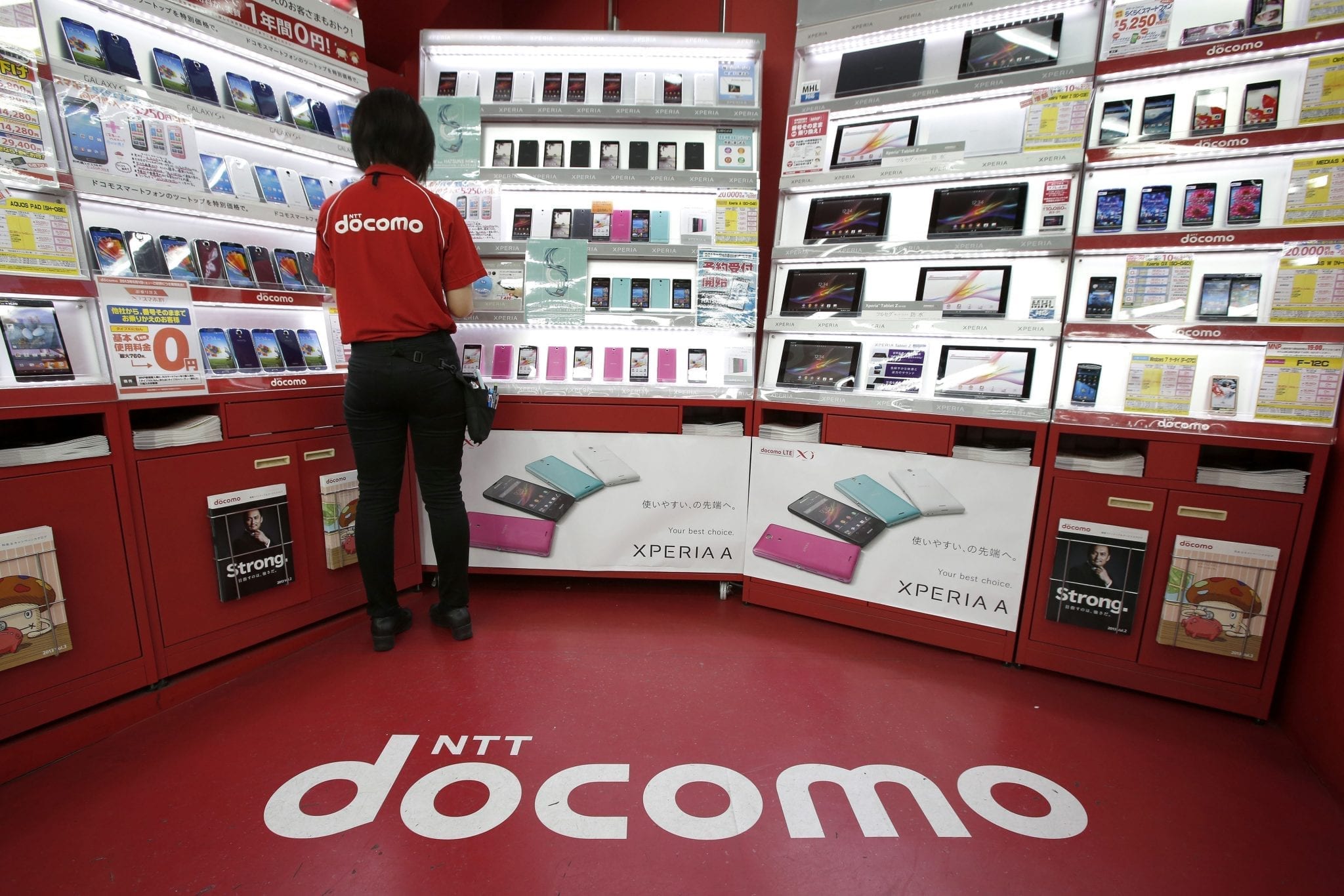
    Japan’s NTT DoCoMo will end shipments of most feature phones compatible with its home-grown i-mode mobile internet standard by the end of the year.

    With the exception of some models such as devices for elderly users, production of phones with access to the i-mode service will cease this year.

    Of the six i-mode models currently available for general consumers DoCoMo plans to end shipments of five and stop selling the models as soon as existing stock runs dry.

    But DoCoMo plans to continue operating its i-mode email service for existing users.

    Production of i-mode handsets has been becoming more and more difficult due to supply chain issues – the parts and raw materials are becoming harder to find as the industry has almost entirely turned its focus to smartphones, the report notes.

    DoCoMo introduced the i-mode service in 1999, and the standard was partly responsible for the strong growth of Japan’s mobile market.

    At its peak nearly 50 million subscribers were using phones compatible with the service. This has fallen to 17.4 million this year – but this still accounts for around 30% of the operator’s subscriber base.

    Unlike true mobile broadband, i-mode can only deliver services that have been converted to use the technology over gateways, placing it at a significant disadvantage compared to smartphones using web browsers.

  • New Zealand cellcos to blacklist Note7’s next week

    New Zealand cellcos to blacklist Note7’s next week

    New Zealand’s mobile operators have hammered a nail into the coffin of Samsung’s discontinued Galaxy Note7 smartphones, arranging to blacklist use of the device across all of their mobile networks.

    Industry body the New Zealand Telecommunications Forum (TCF) is working with Samsung to cut off access to Note7 owners from November 18.

    After this date, the devices will not be able to be used across any New Zealand mobile network, although Wi-Fi services will still be available.

    TCF CEO Geoff Thorn said the blacklisting represents an additional safety measure by the nation’s mobile operators.

    “Numerous attempts by all providers have been made to contact owners and ask them to bring the phones in for replacement or refund, this action should further aid the return of the remaining handsets,” he said.

    The blacklisting marks and attempt by operators to coerce the hold-outs to take advantage of the global recall of the device and be refunded or swap their handsets with a Galaxy S7 or S7 Edge.

    Samsung permanently ended production of Note7 smartphones last month after reports that even some devices that had been replaced in the September recallhad suffered from the same overheating battery problem that led to a handful of devices exploding. Airlines worldwide had already banned in-flight use of the devices.

  • VinaPhone launches Vietnam’s first 4G services

    VinaPhone launches Vietnam’s first 4G services

    Vietnam’s VinaPhone has become the market’s first operator to launch 4G services, commencing with a deployment providing full coverage of Phu Quoc Island.

    The VNPT mobile subsidiary has deployed 100 4G base stations to provide total coverage of the island.

    The operator plans to rapidly deploy 4G services in 2017, installing 21,000 base stations nationwide.

    Pricing will be set at the same or in some cases lower rates than 3G services. The company will use the network for services including mobile TV and cloud video conferencing.

    VinaPhone began commercial 4G trials in January, and was awarded a commercial license in the 1800-MHz band last month, along with MobiFone and Viettel.

    Viettel has separately revealed plans to launch its own 4G services in the first quarter of next year. The operator is ready to deploy services nationwide following extensive testing in the province of Vung Tau.

    According to the report, Viettel plans to differentiate by focusing on nationwide expansion, in contrast to deploying in major cities first. The company took a similar approach during it 2G rollout around a decade earlier.

  • Indonesia posts 5% growth in Q3

    Indonesia posts 5% growth in Q3

    Indonesia’s economy grew largely in line with market expectations in the third quarter, though lower government spending and a slowdown among its major trading partners proved a drag on growth.

    Data released by the statistics bureau yesterday showed Indonesia grew 5.02 per cent in the July to September quarter from the same three-month period last year.

    This was close to the median estate of 22 economists surveyed by Bloomberg News of 5.08 per cent though it was below the 5.18 per cent in the second quarter.

    The results are a dampener for South-east Asia’s largest economy – home to more than 250 million people – which has been striving to meet a 7 per cent growth target envisioned by President Joko Widodo when he took office two years ago. Lower commodity prices and weaker global demand have been a consistent roadblock to the target.

    Statistics bureau chief Suhariyanto said a contraction in exports deepened to 6 per cent in the third quarter from the 2.73 per cent slump in the previous one, due to slowing growth in the key markets of China, Singapore and South Korea.

    5.02%

    Indonesia’s growth in the July to September quarter, from the samethree-month period last year. This is below the 5.18 per cent in the second quarter.

    6%

    The contraction in exports in the third quarter, deepening from the 2.73 per cent slump in the previous quarter, owing to slowing growth in key markets China, Singapore and South Korea.

    US$10b

    The budget cut announced in August by Finance Minister Sri Mulyani, for the whole of 2016.

    China grew at a steady 6.7 per cent annually in the third quarter, midway between the government’s goal of 6.5 to 7 per cent.

    Singapore’s growth came in at just 0.6 per cent year on year. South Korea grew 0.7 per cent, marginally ahead of expectations but still a tad below the second quarter.

    Household spending rose 5 per cent in Indonesia, the data showed. But a reversal in government spending was a drag on the economy.

    In August, Finance Minister Sri Mulyani announced a US$10.2 billion (S$14.3 billion) budget cut for the year. “She took the decision to cut government spending, to make sure the aggregate deficit for the year would not exceed 3 per cent of GDP,” OCBC economist Wellian Wiranto wrote in a note. Government spending tumbled 45 trillion rupiah (S$4.75 billion) in the third quarter year on year, data showed.

    Indonesia’s economy has been hobbled by low global commodity prices, tepid foreign investment and infrastructure bottlenecks. Last year’s growth of 4.8 per cent was the weakest since 2009.

    President Joko is seeking billions of dollars to help fund an ambitious agenda to build roads, railways and seaports, Bloomberg reported.

    Reacting to the data yesterday, he said he hoped for a lift in the fourth quarter. “We hope with the trigger of (government) payment realisation and budget disbursement, it can improve slightly.”

    A total of six interest rate cuts by Bank Indonesia this year are helping spur spending as inflation remains inside the 3 per cent to 5 per cent target band.

    Analysts argue that revenue collection from the government’s flagship tax amnesty scheme could help cushion the economy from aggressive state spending cuts.

    “The cuts in spending would continue to weigh on the fourth quarter outlook, but stabilisation of oil and commodity prices should bode well for the overall economy,” UOB economist Ho Woei Chen said.

  • Indonesian unemployment rate down in 2016

    Indonesian unemployment rate down in 2016

    The Indonesia Central Bureau of Statistics (BPS) said in August, 2016, the country had 7.03 million jobless people among 125.44 million of labor force.

    “Compared with August, 2015, the number of working people rose 3.59 million and the number of jobless people declined 530,000. The number of workforce, therefore, increased 3.06 million in August, 2016,” BPS chief Suhariyanto told reporters here on Monday.

    Suhariyanto said the number of working people rose in almost all sectors during the one year period excepting in the construction sector where the number of working people dropped 230,000 people or 2.8 percent.

    “The highest increase in number was recorded in the public service sector in which there were 1.52 million more working people or an increase of 8.47 percent, followed by an increase of 1.01 million or 3.93 percent in the trading sector, and 500,000 or 9.78 percent increase in the transport, warehousing and communications sector,” he said.

    Among the 118.41 million working people, the largest number was in the agriculture sector reaching 37.77 million or 31.9 percent, followed by the trade sector reaching 26.69 million or 22.54 percent and the service sector 19.46 million or 16.43 percent, industrial sector 15.54 million or 13.12 percent, the construction sector 7.98 million workers or 6.74 percent, the transport sector 5.61 million workers or 4.74 percent, the financial sector 3.53 million or 2.98 percent and mining sector 1.83 million or 1.56 percent.

    BPS said in August, 2016, Labor Force Participation Rate (TPAK) was 66.34 percent or every 100 working age people , around 66 were actively employed. Unemployment rate in the same period was 5.61 percent.

    The highest unemployment rate by provinces was in Banten reaching 8.92 percent , followed by West Java at 8.89 percent. The lowest unemployment rate was in Bali at 1.89 percent and Bangka Belitung at 2.6 percent.

    “Tourism sector contributed to low unemployment rate in Bali and Babel,” Suhariyanto said.

    He said in August 2016 , there were 50.21 million people or 42.4 percent of the working people in formal sector having business with permanent workers of 68.2 million.

  • Potential bidders for Takata may balk at GM bankruptcy precedent

    Potential bidders for Takata may balk at GM bankruptcy precedent

    As auto supplier Takata Corp (7312.T) prepares for a possible U.S. bankruptcy filing, potential bidders are poring over a recent U.S. court ruling that could expose a buyer to liability for the company’s defective air bags, sources have told Reuters.

    Takata faces potentially billions of dollars in costs from the world’s largest automotive recall, stemming from millions of its air bags that were equipped with malfunctioning inflators.

    The Japanese company has said it is seeking a financial backer. But interested bidders, if the parts maker goes up for sale, want Takata to put its U.S. business into bankruptcy first, the sources said.

    Generally, U.S. bankruptcy law allows a bidder to buy assets free and clear of lawsuits and other liabilities, and the selling company uses the money to repay its creditors.

    General Motors used the strategy when it filed for Chapter 11 bankruptcy in 2009. The automaker quickly sold its best assets to a so-called “new GM,” scrubbed free of billions of dollars of debt, which enabled the company to withstand an economic crisis.

    In July, the 2nd U.S. Circuit Court of Appeals in Manhattan held that General Motors Co (GM.N), the “new GM,” could be sued over faulty ignition switches made by “old GM.”

    The ruling set what some see as a troubling precedent.

    “What that says to me: buyer beware,” said Henry Jaffe, a bankruptcy lawyer with Pepper Hamilton in Wilmington, Delaware who represents debtors and creditors. Jaffe said the ruling could undercut what bidders are willing to pay for Takata.

    Takata’s air bags use a chemical compound that can explode with excessive force after prolonged exposure to hot conditions and have been linked to at least 16 deaths globally, mainly in the United States. About 100 million Takata air bag inflators have been classified as defective, leading to continuing safety recalls.

    Last month, the company received proposals from five bidders, all of whom have presented plans that require Takata to file for a GM-style bankruptcy protection.

    Takata’s creditors include automakers who want to be reimbursed for millions of dollars spent on recalls. They may also demand that any buyer of Takata’s assets share in some of those costs. The automakers could also try to use the tools of bankruptcy to protect themselves from lawsuits by car owners for the faulty air bags, according to bankruptcy attorneys.

    The U.S. government is also likely to play a role. Takata is operating under a five-year, $200 million consent decree with the U.S. National Highway Traffic Safety Administration.

    Given the uncertainties, bidders could propose using “holdback,” bankruptcy lawyers said. Some sale money would remain in escrow and be used to settle any unanticipated legal claims against the buyer. Over time, unused money would be released to the Takata bankruptcy estate.

    Takata and its creditors would likely resist a holdback, lawyers said.

    In Japan, Takata Chief Financial Officer Yoichiro Nomura told reporters on Friday that the company hoped to reach an agreement with its automaker customers on a restructuring by year end. He said the company preferred to avoid bankruptcy.

    Takata has posted a net loss in three of the past four financial years, but it remains one of the auto industry’s biggest suppliers of air bag systems. The company is also one of the world’s top seatbelt producers, and makes steering wheels, electronic control units and child safety seats.

    ‘GIVE A BUYER HEARTBURN’

    To get a sale approved quickly, a Takata buyer may have to assume some legal obligations, an approach used by “new GM” which took on 15 categories of liabilities.

    “That will give a buyer heartburn,” said Bill Weintraub at Goodwin Procter in New York, who worked with ignition switch plaintiffs on the GM appeals court case.

    GM has said it plans to ask the U.S. Supreme Court to review the July ruling, which it said wrongly punishes it, the buyer, for mistakes made by “old GM,” the seller. The company and business groups have argued that the ruling, if allowed to stand, will depress the value of assets that are sold in bankruptcy.

    Those who are close to GM and Takata are quick to point out the situations of the two companies differ in key ways.

    Takata’s air bags have been subject to headline-grabbing recalls for years. By contrast, GM knew its ignition switches were faulty when it introduced them in 2002 but concealed the problem until 2014, five years after its bankruptcy sale.

    Because of the concealment, the court of appeals reasoned that GM’s customers had been denied the opportunity to object or file a claim over the ignition switch defects as part of GM’s bankruptcy and sale. To remedy the lack of notice, the court said car owners could pursue a class action against the buyer of GM rather than the bankruptcy estate.

    Takata’s notoriety could work to the advantage of bidders, ensuring potential claims have been identified.

    “You have a known problem,” said bankruptcy lawyer Ed Weisfelner, who also represented some ignition switch plaintiffs in the GM appeal case.

    The GM ruling only binds U.S. Bankruptcy Courts in one of 11 U.S. judicial circuits, and Takata may look to other courts.

    In its appeals case, GM cited precedent in the 3rd U.S. Circuit, which it said is more protective of buyers in bankruptcy sales.

    Takata’s main U.S. subsidiary, Michigan-based TK Holdings Inc, is incorporated in Delaware, giving the company access to the state’s prominent bankruptcy court and 3rd U.S. Circuit precedent.

    “Any bankruptcy judge will be really nervous about this one,” said John Pottow, a professor at University of Michigan Law School who specializes in bankruptcy.


  • Unicom trials ADVA’s G.metro technology

    Unicom trials ADVA’s G.metro technology

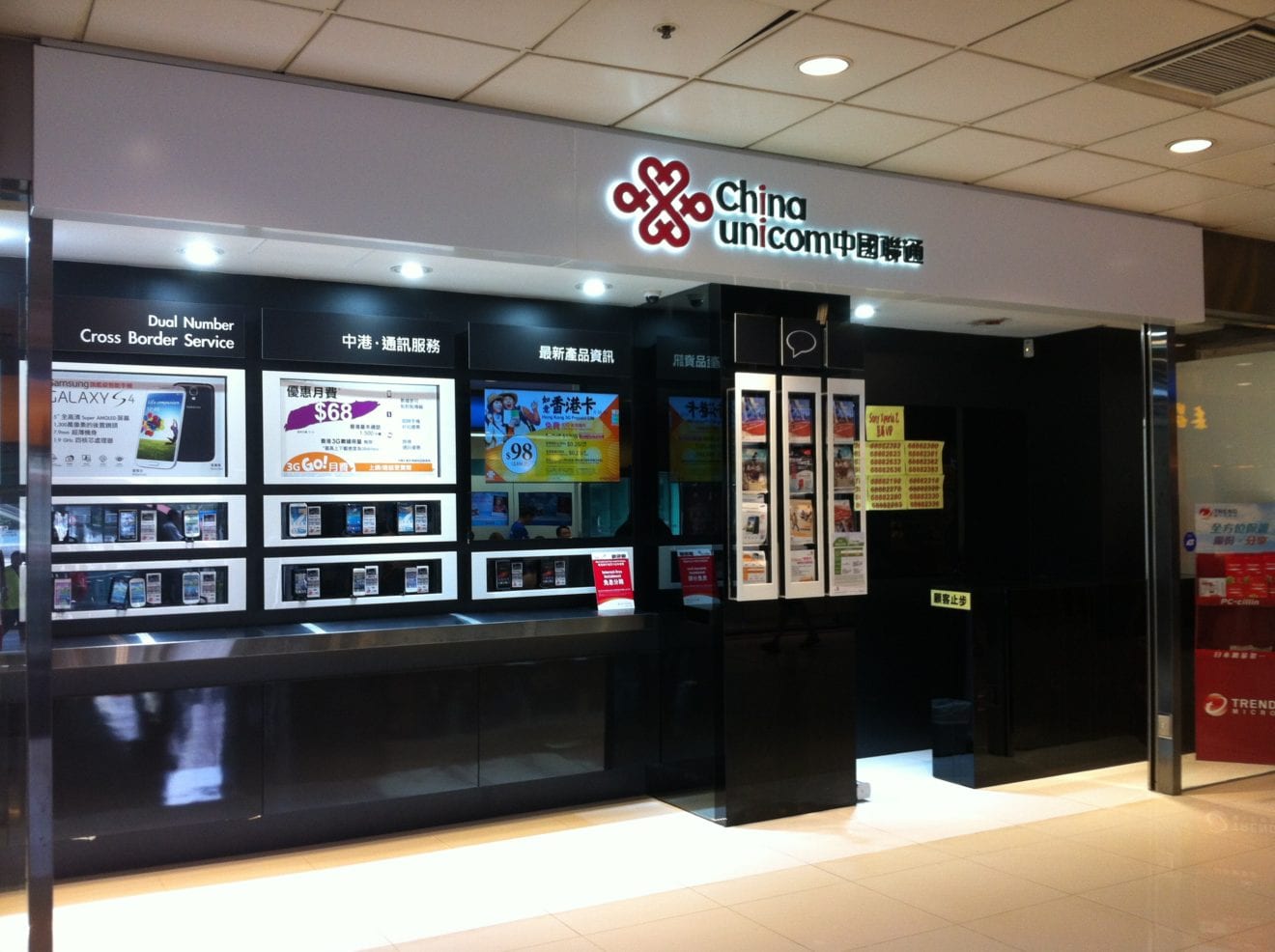
    China Unicom has completed a field trial of ADVA Optical Networking’s prototype G.metro (WDM-PON) technology in a fronthaul network.

    The operator demonstrated the use of a prototype technology involving using a single bidirectional fiber link between head-end and tail-end equipment during a lab demonstration in Beijing.

    The prototype uses autonomous transponders to help reduce the costs and complexity involved in metro access network applications.

    “Due to booming demand for mobile data, it’s become essential that we find innovative ways to increase capacity. Converged metro-access networks are key to this, but so are reducing complexity and improving operational efficiency,” China Unicom network technology research institute director Guangquan Wang commented.

    “During the trial, the prototype was installed in one of our central offices in Tianjin to replace the transmission link of one of our working LTE stations. The results showed that the new technology integrated seamlessly with our current wireless equipment and had no impact on services whatsoever.”

    G.metro directly distributes DWDM wavelengths to remote radio units, base stations, desktops or end users, enabling up to 40 DWDM wavelength channels with a 100GHz grid. Each channel is able to transmit data at 10Gbps over a 20km fiber distance without optical amplification.

  • Indonesia optimism despite drop in economic growth

    Indonesia optimism despite drop in economic growth

    Despite economic growth slowing in the third quarter, the government remains optimism that better state budget realization will lead to an economic rebound by year-end.

    Economic growth slowed to 5.02 percent year-on-year (yoy) in the third quarter amid a reduction in government spending and weak international trade, the Central Statistics Agency (BPS) announced on Monday. Growth stood at 5.19 percent yoy in the previous quarter.

    President Joko “Jokowi” Widodo, however, said he was grateful that growth was slightly above the government’s initial forecast of 4.9 percent

    “Our estimate was slightly below 5 percent. It turned out that, Alhamdulillah [Thank God] it is now a bit above 5 percent,” Jokowi told reporters on Monday.

    Jokowi voiced optimism that growth in the final quarter would improve with better state budget realization.

    “We expect the budget realization rate to be slightly better in the fourth quarter, although we should also understand that the global economy continues to decline,” he said.

    BPS chief Suhariyanto said government spending had contracted by 2.97 percent yoy due to recent budget cuts. However, cumulative government spending from January to September increased 1.97 percent from the same period last year.

    Amid a weak global economy, Indonesia saw its gross domestic growth increase only 4.79 percent last year, the lowest rate in six years. The government is targeting economic growth of 5.2 percent this year and 5.1 percent in 2017.

  • Rupiah strengthens to 13,045 as of Monday afternoon

    Rupiah strengthens to 13,045 as of Monday afternoon

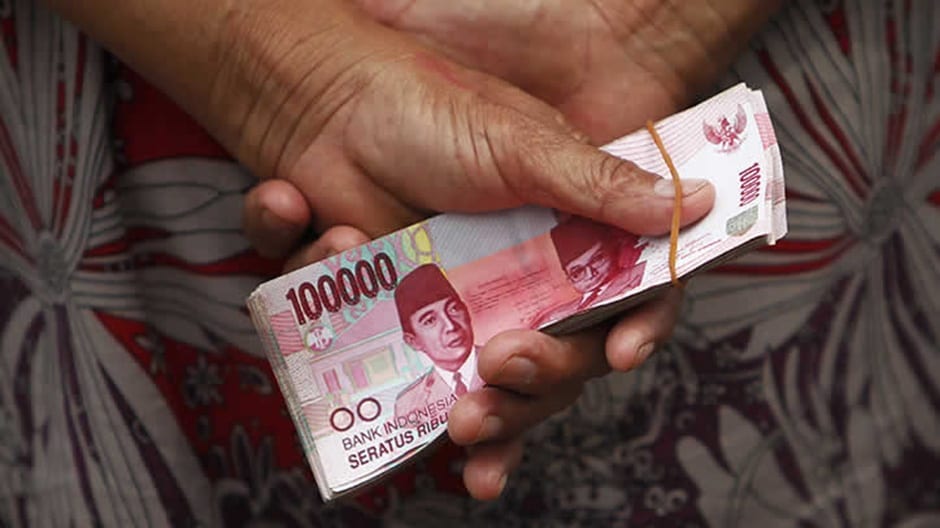
    The interbank exchange rate of rupiah in Jakarta moved higher by 23 points, reaching 13,045 rupiah per one US dollar compared to 13,068 rupiah previously.

    “Rupiah strengthened against US dollar in line with the growth indicated in the just released domestic economy data,” said Woori Saudara Indonesia Tbk money market watcher Rully Nova in Jakarta on Monday.

    According to the Central Bureau of Statistics, Indonesias economy experienced a 5.02 percent growth in the third quarter of 2016, thus reflecting that the cumulative growth has reached 5.04 percent by the third quarter of the year.

    The strengthening of the domestic currency has a lot to do with the market players confidence in Indonesias economy amid an uneven global economic scenario, spurring an interest in assets with rupiah denomination.

    At the same time, Nova believed the strengthening of the currency was still relatively limited, corresponding with commodity prices, especially the worlds crude oil price which is still at US$50 per barrel, indicating the psychological level of investors.

    The WTI Crude Oil was at US$44.76 per barrel as of Monday evening, while Brent Crude Oil was at US$46.11 per barrel.

    “The crude oil prices are expected to show an upward trend, sustaining rupiahs fluctuation in a positive area,” he noted.

    Meanwhile, Indonesias Central Bank recorded on Monday that rupiahs the middle exchange rate moved higher to 13,082, compared to 13,103 on Friday.

  • Hong Kong retail sales decline lessening

    Hong Kong retail sales decline lessening

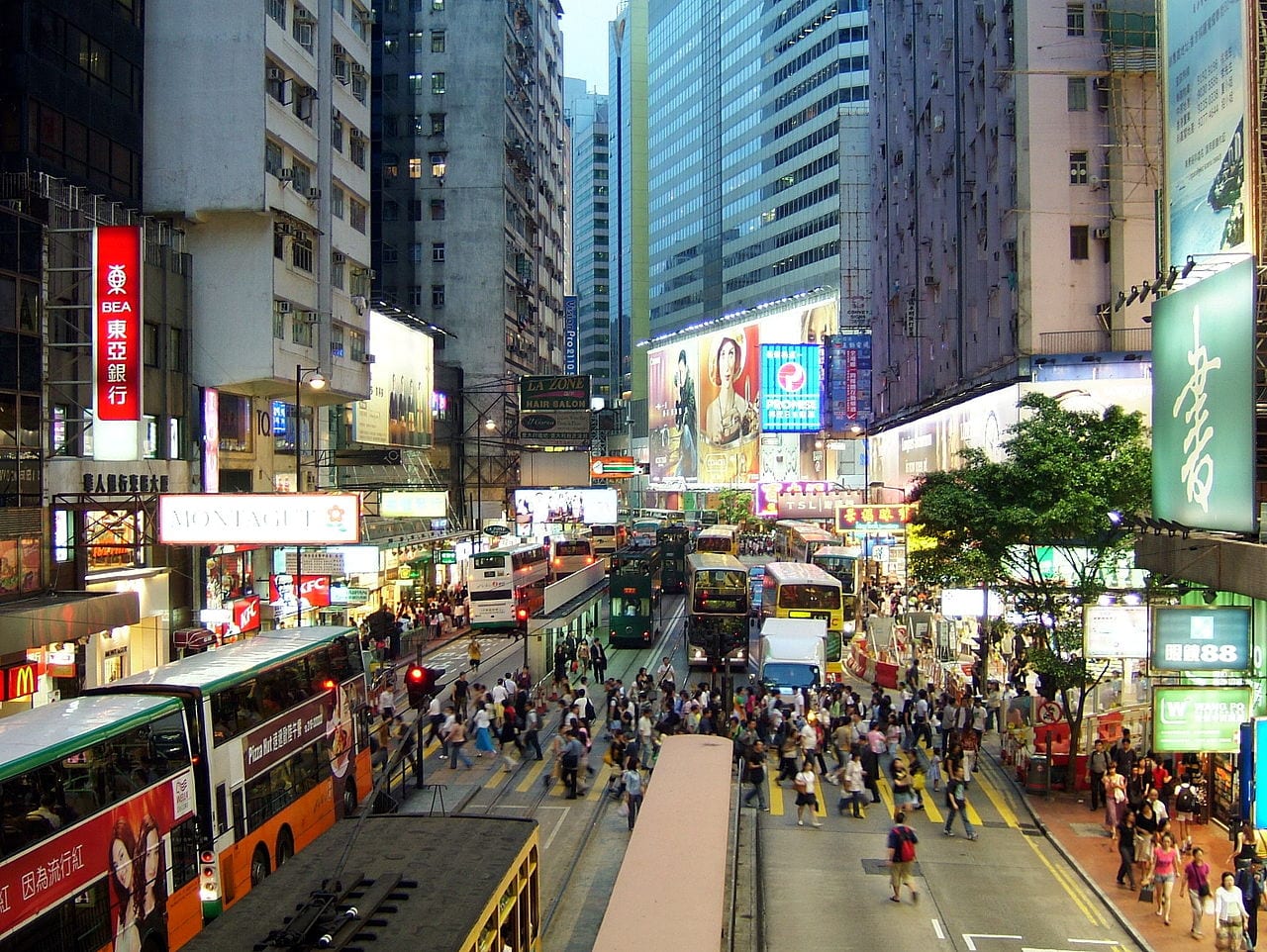
    The heavy rate of decline in Hong Kong retail sales may be over, with September figures showing a relatively small contraction.

    According to data released by the Census and Statistics Department (C&SD), the value retail sales in September, provisionally estimated at $33.8 billion, decreased by 4.1 per cent with the same month last year.

    That compares very favourably with a year-to-date figure of 9.6 per cent and August’s revised figure of 10.5 per cent. However, it should be noted, these declines are measured against a low base as 12 months ago the city’s major retail decline was well underway.

    “Retail sales showed a visibly narrower year-on-year decline in September, conceivably due partly to a reduced drag from the smaller decline in visitor arrivals in that month and partly to some improvement in consumer sentiment amid a somewhat more stable external environment,” said a government spokesperson.

    “Looking ahead, the near-term outlook for retail sales is still subject to uncertainty, depending on the performance of inbound tourism as well as the extent to which local consumer sentiment will be affected by various external uncertainties.”

    After netting out the effect of price changes over the same period, the provisional estimate of the volume of total retail sales in September 2016 decreased by 3.9 per cent compared with a year earlier.

    For the first time in more than a year, luxury goods did not show the greatest decline. The worst-performing category in September was electrical goods and photographic equipment down 12.8 per cent, with jewellery, watches and valuable gifts down 12.3 per cent. Department store sales slipped 2.4 per cent.

    Apparel sales actually rose by 1.8 per cent, and optical retailers experienced 1.7 per cent growth.

    There were negligible changes in any other category.