Author: Mei Ling Tan

  • Opportunity Grows in Indonesia as Tourism Sector Blooms

    Opportunity Grows in Indonesia as Tourism Sector Blooms

    The government’s ‘Wonderful Indonesia’ campaign (which began in 2011) has transformed Indonesian tourism into a vibrant, lucrative, and rapidly growing industry. Alongside national ‘gems’ like the ancient Borobudur Temple, the divers’ haven of Raja Ampat, and the Komodo National Park, a host of new destinations are becoming established – among them Bintan, Maluku, and Lombok.

    Tourism is responsible for creating close to 10 million jobs, and last year the government allocated a further Rp.1.3 trillion (US$98.4 million) to promote tourism. That year it contributed 9.6% of total GDP – behind Indonesia’s top earners of oil, gas, coal, and palm oil.

    Minister of Tourism Arief Yahya announced that in 2019, tourism would be Indonesia’s biggest foreign exchange earner. By that time, he wants tourism’s contribution to national GDP to have doubled, bringing in US$24 billion annually.

    The objective to reach 20 million tourists by 2019 is equally ambitious. This year’s target is 12 million; the total last year was 9.73 million. To support these targets, the Asian Development Bank agreed to lend Indonesia US$10 billion over the next five years.

    Business tourism lags behind leisure tourism: in 2014, total business tourists (3.16 million) were half that of leisure tourists (6.27 million). Events like the 39th PATA (Pacific Asia Travel Association) Travel Mart, recently hosted in Greater Jakarta, reflect the potential for business tourism. That event attracted 1358 delegates from 63 countries, and the tourism ministry must work with businesses to bring more events like this to Indonesia in the future.

    Business tourism could facilitate the expansion of the hospitality industries, particularly high-class hotels and restaurants (and other venues suitable for conferences and exhibitions). The government recently altered its ‘Negative Investment List’ such that foreign investors have greater access to (and ownership of) strategic businesses – including in the tourism and hospitality industries. Substantial cash injections should boost economic growth, creating more jobs and facilitating more creative enterprise, to ensure Indonesia remains globally competitive.

    Travel outside of Bali remains challenging, and the infrastructure is in need of a significant revamp. The government has responded to this increased demand by announcing plans to expand current airports as well as construct new ones. This is an essential strategy: after the upgrade of Labuan Bajo airport, Komodo Island, home of the endangered Komodo dragon, is able to accommodate 1.5 million tourists annually (before, the number was 150,000).

    Potential hotspots: Bintan and Maluku

    Bintan, the largest island in the Riau Archipelago, is known for its natural beauty, boasting long stretches of pristine, white-sand coastline. It is near Singapore and the Malaysian state of Johor, and is primarily marketed at people living in, or visiting, Singapore. Bintan thus profits from the international traffic running through Singapore’s world-class Changi airport.

    Julia Suryakusuma notes that development of Bintan has been slow, and a substantial cash injection is needed to transform Bintan to the level at which it is able to compete with Bali. So as not to appear hollow, sterile and just ‘another’ island resort, she recommends that Bintan markets itself as an ecotourism destination, based around the indigenous community of Orang Laut, in Tanjung Berakit (to the northeast of the island). After all, the incorporation of local culture is what lies behind Bali’s success. Ecotourism is a growing sector in the tourist industry with huge business potential, although difficulty is sometimes faced in getting the locals to participate. It is increasingly popular with American tourists, an important market which has long eluded Indonesia.

    The far-flung region of Maluku, albeit a popular diving destination, is being promoted in a broader capacity as a key tourism site for eastern Indonesia. With this it has the potential to open up the regional economy, for the more remote islands of eastern Indonesia are relatively undeveloped in comparison to the western regions. Within Maluku, the Buru regency has been spotlighted as one of Indonesia’s ‘tourist icons’. Here, the Ministry of Tourism recently launched the Bupolo tour festival, where various cultural events were showcased, in a bid to attract more tourism.

    Lombok and Halal tourism

    Lombok, in West Nusa Tenggara, is also in the midst of a significant transformation. Mandalika Resort in Lombok is a vast complex being developed by the Indonesia Tourism Development Corporation (ITDC), the state-owned company responsible for the Nusa Dua complex in Bali.

    The government has allocated Rp.1.8 trillion (US$138.57 million) to develop Mandalika. Mandalika is now a special economic zone (SEZ), which means investors will be granted tax and fiscal incentives, as well as other business-related benefits; a factor which will undoubtedly encourage the proliferation of hotels, restaurants and bars over the next few years, as well as better and stronger infrastructure. According to the ITDC, it will be ready by 2018.

    However, Lombok is becoming known for a different reason. At the 2015 World Halal Travel Summit and Exhibition in Abu Dhabi, Lombok was recognised as the World’s Best Halal Tourism Destination and Halal Honeymoon Destination.

    Halal tourism is a growing sector, given the increasing number of Muslim tourists, and as the world’s most populous Muslim country Indonesia is strongly positioned to exploit that industry. The government has officially listed West Nusa Tenggara, West Sumatra and Aceh as Halal tourism destinations.

    The government announced it would be targeting more Arab tourists, particularly from Saudi Arabia. Saudi Arabia is the largest tourism contributor to Indonesia from the Middle East, with 147,074 visits in 2014. It was recently added to the list of countries for which visa entry is no longer required. The government also signed agreements with key Gulf airlines, including Qatar Airways and Emirates Airlines, to increase the frequency of direct flights to the archipelago.

    Given Indonesia’s determined promotion of tourism, economic opportunity is rife and investors should be aware.

  • Indonesia central bank surprises with another cut to key rate

    Indonesia central bank surprises with another cut to key rate

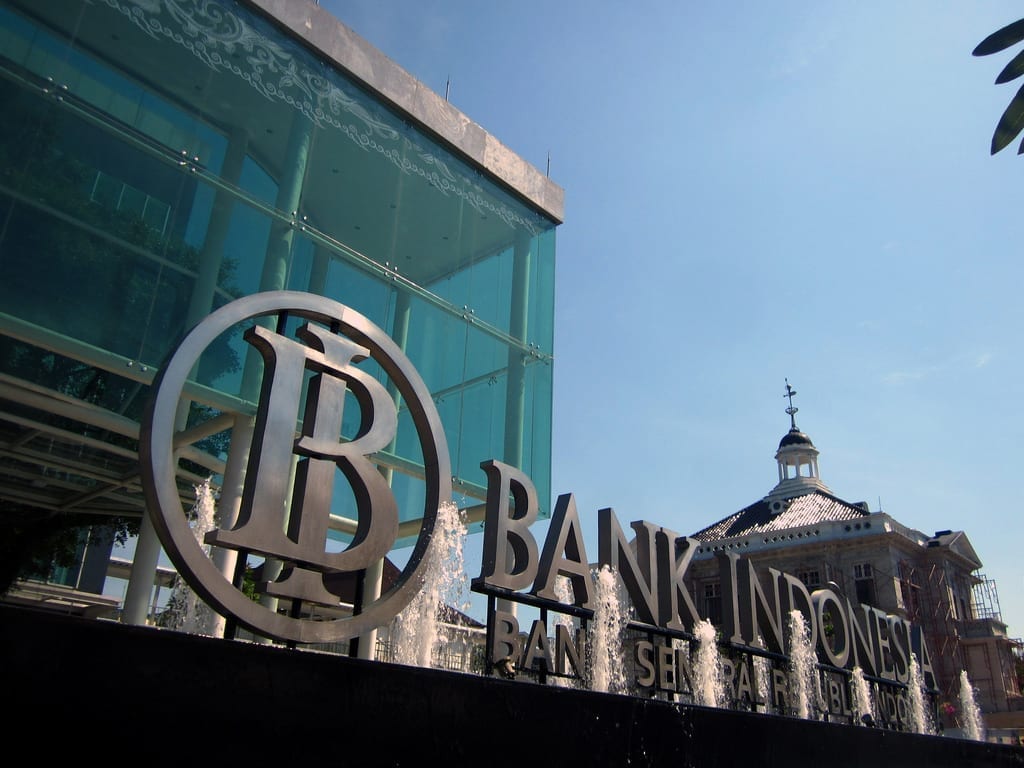
    Indonesia’s central bank surprised the market on Thursday by cutting its benchmark interest for a sixth time this year, renewing efforts to spur sluggish lending and growth.

    Bank Indonesia (BI) cut the 7-day reverse repurchase rate by 25 basis points to 4.75 per cent. “In the midst of a weak global economy, we believe this monetary easing will strengthen efforts to push domestic demand, including for credits, so that it could support the momentum for economic growth,” BI said.

    Thirteen of 17 economists in a Reuters poll had expected the benchmark to be kept at 5.00 per cent on Thursday.

    The central bank made six cuts to its benchmark this year by a total of 150 basis points.

    In August, it switched its benchmark from the 12-month reference rate to the 7-day reverse repurchase rate to try to more directly affect market rates.

    The economy gained some momentum in the second quarter, with good crops higher government spending helping push annual growth to 5.2 per cent.

    But the central bank said state spending cuts, sluggish bank lending, and weak global trade probably weakened third quarter growth to around 5 per cent. BI’s outlook for 2016 is between 4.9-5.3 per cent.

    So far, BI’s 2016 rate cuts have had limited impact on commercial banks’ lending. In August, it grew just 6.83 per cent from a year earlier, the weakest since November 2009.

    Indonesia is due to announce third quarter growth early next month.

    In September, Indonesia’s annual inflation rate was near the lower end of BI’s target band, at 3.07 per cent. The rupiah has been stable, trading near 13,000 a dollar since July. The third quarter’s current account deficit is expected to stay at a comfortable level.

    Ng Weiwan, economist at ANZ said real interest rates in Indonesia “remain elevated despite the rate cuts this year.”

    “Credit growth will be constrained with the overhang from the non-performing loan and the deposit rate caps limiting the interest that banks can pay for deposits,” Mr Ng added.

  • CapitaLand unveils Asia’s first AI chatbot concierge for shoppers at Future Cities

    CapitaLand unveils Asia’s first AI chatbot concierge for shoppers at Future Cities

    CapitaLand customers will soon get to enjoy a slew of virtual concierge services that allows them to hail rides, book restaurants, and browse retailer offerings by simply chatting with Sparkle – the Group’s fully automated artificial intelligence (AI) chatbot – the first chatbot piloted by a real estate developer in Asia. Unveiled at CapitaLand’s Future Cities: Asia Forum this evening, Sparkle is among a series of new features released on CapitaStar, Singapore’s largest multi-mall, multi-store cardless rewards programme. Members may start chatting with Sparkle from 1 November 2016 when the refreshed CapitaStar app is available for download from the App Store and Google Play.

    Mr Lim Ming Yan, President & Group CEO of CapitaLand Limited, said: “CapitaLand was among the first in our industry to embrace online-to-offline and offline-to-online (O2O). With the launch of Sparkle and partnerships with tech stalwarts and well-loved retail brands, we are now leading the way into the next era of consumerism, defined by convergent offline-AND-online (O&O) experiences. This is a first for an Asian real estate developer, and we want to invite our customers to join us to co-create Sparkle by interacting with it and making it smarter. This way, Sparkle will be a chatbot trained by customers, for customers. Ultimately, we want to create an exceptional customer experience that offers the best of both offline and online. As a market leader with scale and depth across the entire real estate value chain, CapitaLand is in a good position to optimise our customer touch points and harness meaningful data points to map out holistic customer journeys.”

    Grab, Southeast Asia’s largest ride-hailing app company, has signed on as a launch partner, which will see integration of ride-hailing functionalities with Sparkle. This collaboration is part of an exclusive comprehensive tie-up with Grab announced as CapitaLand’s Strategic Mobility Partner to bring ‘live, work, play’ mobility across its diverse real estate portfolio to the Group’s customers in Singapore. Whether it’s a journey from home to work or a trip from a serviced residence to a shopping mall, shoppers, guests, tenants and residents in CapitaLand properties taking Grab rides to or from one of its properties in Singapore will get to enjoy perks ranging from special discounts to STAR$® rewards in CapitaLand’s CapitaStar loyalty programme, and priority bookings, in phases from 1 November 2016 onwards.

    Mr Lim Ming Yan and Mr Anthony Tan, CEO & Co-founder of Grab, inaugurated the partnership with a Memorandum of Understanding (MOU) at the Future Cities: Asia Forum. The MOU signing was witnessed by Guest-of-Honour and keynote speaker Dr Vivian Balakrishnan, Singapore Minister for Foreign Affairs and Minister-in-charge of the Smart
    Nation Programme Office.

    Mr Lim said: “CapitaLand’s partnership with Grab shows how the lines are blurring be tween what is online and offline. Our properties are social spaces where people and communities flourish and connect; and mobility solutions such as Grab are very much the venous systems that connect people with one another, and to the built environment. There is great synergy in this O&O integration. CapitaLand’s physical buildings have helped to incubate many successful Singapore companies and brands over the years. Moving forward, we look to partner more new-economy companies, to help bridge their services to our network of
    customers.”

    The Future Cities: Asia Forum brought together a panel of change-makers from the government, real estate and technology sectors to discuss what it takes to be the builder of future cities and the catalysts for change as Asia’s bustling metropolises evolve into smart cities.

    During the Future Cities: Asia Forum, Dr Vivian Balakrishnan shared his insights into Singapore’s Smart Nation initiative, the lessons learnt as a forerunner in this future-forward drive, and what is next as the city-state engages with global innovators for continued growth. Also on the panel were Mr Lim Ming Yan; Mr Hubert Yoshida, Chief Technology Officer of Hitachi Data Systems; and Mr Ming Maa, President of Grab.

    The new CapitaStar: upgraded with new functionalities and AI chatbot concierge CapitaStar is getting a boost with new functions to link up members and retailers with O&O convenience. The refreshed app comes with a simple digital-first STAR$® redemption mechanism that brings unrivalled convenience to both customers and retailers with simpler and faster processes. Customers can look forward to redeeming great deals with their STAR$®, which will be easily authenticated at the point of sale with a simple merchant app.

    The app also comes with an enhanced machine-learning receipt scanning system to help shoppers get their STAR$® credited faster than before. Another key feature of the new CapitaStar app is the pilot Sparkle virtual concierge chatbot. It
    is CapitaLand’s first endeavour into conversational commerce to connect CapitaStar members with other lifestyle services and forward-thinking retailers. Sparkle is designed to decipher localised linguistic cues while understanding and remembering context. The engine also learns automatically through intelligent feedback scoring algorithms, making the conversation
    smarter along the way.


  • Singapore retail sales decline gains pace

    Singapore retail sales decline gains pace

    Real Singapore retail sales fell 6.5 year-on-year in August – twice the rate of decline of the previous month.

    Retail sales august 2

    While the headline figures were 1.1 per cent over July, and 1 per cent over August 2015, those figures included motor vehicle sales. Excluding motor vehicles, retail sales declined 2.1 per cent from July to August.

    According to Statistics Singapore, the retail sales value in August 2016 was estimated at S$3.6 billion, including vehicles.

    While sales in department stores and of computers and phones increased by up to 3.1 per cent month-on-month, sales of recreational goods, apparel & footwear, furniture & household goods, optical goods and books, medical goods & toiletries, supermarkets, mini-marts & convenience stores, watches & jewellery and food & beverages all decreased between 0.5 per cent and 8.9 per cent month-on-month.

    Year-on-year, sales of computers & phones, watches & jewellery, apparel & footwear and recreational goods decreased by between 11.1 per cent and 19.6 per cent. Similarly, sales at petrol service stations, of food & beverages, furniture & household equipment, optical goods & books, supermarkets, department stores, medical goods & toiletries and mini-marts & convenience stores declined between 0.4 per cent and 9.9 per cent.

    Food & beverage sales

    Retail sales FB

    Meanwhile, sales of food & beverage services decreased 1.6 per cent in August 2016 over July.

    Compared to August last year, sales of food & beverage services declined 2.5 per cent. Fast food retailers grew their sales by 3.9 per cent and caterers by 4.7 per cent, but restaurants were down 5.3 per cent.

    Year-on-year, turnover of restaurants fell 8.8 per cent in August 2016.

  • Bata moves infrastructure into the cloud

    Bata moves infrastructure into the cloud

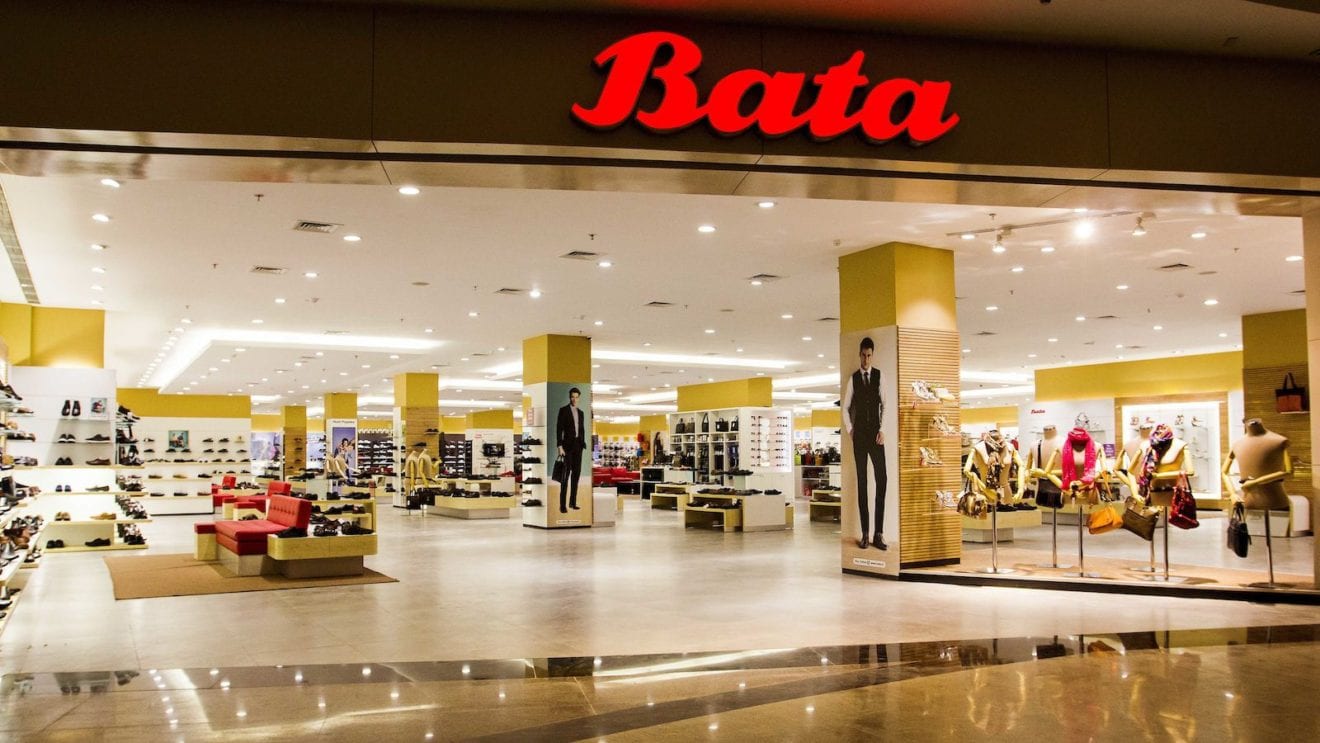
    Datapipe has partnered with footwear retailer Bata to drive its digital transformation by moving its technology infrastructures to the cloud.

    Bata is seeing strong growth in Asia’s multibillion-dollar footwear market, specifically in India, China and Southeast Asia. The company tapped Datapipe, a specialist in managed cloud services for the enterprise, to manage its cloud deployment and deliver the security, speed, cost-efficiencies, and scalability required for these high-growth markets.

    Bata’s global sourcing infrastructure, hosted on Amazon Web Services (AWS), is increasingly reliant on cutting-edge cloud infrastructure for its day-to-day operations including its Point of Sale (PoS) system, warehousing, logistics, and purchase order processes. As a managed cloud-service provider and AWS premier consulting partner, Datapipe was selected to assist Bata with developing and growing its presence in Asia by unlocking operational efficiencies.

    Jason Singh, head of marketing for APAC at Datapipe said that with Bata’s rapid growth in emerging markets, the company needed an IT infrastructure that was secure, scalable, and incredibly reliable.

    “We worked closely with Bata to optimise its AWS architecture and practice. This freed up the company’s technology team to focus on other core aspects of its business. As a result, Bata’s focus is where it should be: serving its customers and managing its production facilities, while Datapipe manages its cloud deployments.”

    To bolster Bata’s digital transformation, particularly around best practice design and security, Datapipe adopted a two-phased approach to ensure an optimised environment. Datapipe first redesigned Bata’s existing cloud environment based on AWS best practices including platform based security configurations. The second phase will deploy comprehensive network and instance-based security controls and services, ensuring secure connections to Bata’s eCommerce websites for users in the region.

    Jeremy Chong, director, global footwear services at Bata said the Datapipe team has strengthened the security and efficiency of Bata’s cloud infrastructure, allowing the company to focus on business growth.

    Bata has more than 5200 retail stores in 70 countries and production facilities in 18 countries. The APAC footwear market is projected to reach US$127.2 billion in annual revenues by 2020, according to Euromonitor, up from $104 billion in 2015. Growth in the global footwear market will be fuelled by demand from developing markets in Asia, according to Verdict Financial. eMarketer, meanwhile, predicts worldwide retail eCommerce sales will reach $1.915 trillion in 2016, with double-digit growth due to hit $4 trillion by 2020.

  • DLF Brands quits luxury sector

    DLF Brands quits luxury sector

    India’s DLF Brands, which runs high-street fashion brands mall Emporio in Delhi, is quitting the luxury business.

    It has just shut down two of the seven stores of US fashion brand DKNY after parting ways earlier with such brands such as Giorgio Armani, Mango, Salvatore Ferragamo and Sephora.

    “We don’t have any plans to open more DKNY stores,” says DLG Brands MD Timmy Sarna. “And we don’t want to be in the high-fashion business. It’s difficult to scale up that business because there aren’t too many locations in the country where you can sell luxury.”

    Instead, DLF Brands, the retail arm of real-estate company DLF, wants to focus on mass brands. “We have profitable businesses in Kiko, Mothercare and Sunglass Hut,” says Sarna.

    DLF Brands has bought the franchise rights of UK-based Mothercare for 15 years, and plans to launch smaller stores, even in community-based markets, selling value-added products.

    “From 109 stores at present, we want to increase the number to 300. A major part of production is happening here now, so prices will eventually come down,” Sarna says. “Apart from this, our other brands such as Sunglass Hut, Claire’s and make-up brand Kiko are doing extremely well and are profitable.”

    DLF Brands started its exit from the luxury market in 2012, quitting its joint ventures with Ferragamo and Giorgio Armani. In 2014, it shut down stores of Italian menswear brand Boggi Milano, then last year parted with LVMH’s make-up and skincare brand Sephora, which was taken over by Arvind Lifestyle Brands.

    “You can either be in the fashion business or in the mass-brand business. You cannot have your finger in too many pies,” says Sarna.

  • Karl Lagerfeld Macau hotel planned

    Karl Lagerfeld Macau hotel planned

    Fashion designer Karl Lagerfeld has announced plans to launch his own branded hotel chain.

    He has already taken a first step in signing on to design a tower for the Lisboa Palace Hotel, planned to launch in Macau in 2018. Besides the Karl Lagerfeld Macau hotel, another tower in the complex is being designed by fashion peer Donatella Versace.

    Lagerfeld’s company says it “in the process of studying other opportunities to open other properties around the world”.

    Under the banner of Karl Lagerfeld Hotels & Resorts, his properties will include members’ clubs, restaurants and residential buildings, all under a licensing agreement with Amsterdam-based Brandmark Collective.

    Lagerfeld’s contribution to the Lisboa complex features a statue of his cat Choupette at the entrance, while his own silhouette graces the room keys. In comparison, Versace’s design is more low key with the lobby decked out in gold trim and white marble, while the pool has mosaic tiles.

    Both designers feature Chinese elements in their designs, with Lagerfeld weaving in Phoenix and peony emblems, and Versace focussing on dragon and chrysanthemum details.

    Born in Germany 83 years ago, Lagerfeld has already collaborated with luxury Parisian hotel Le Crillon and the Metropole in Monaco, but his new business will involve his company designing entire hotels.

  • TWG Tea makes debut in Canada

    TWG Tea makes debut in Canada

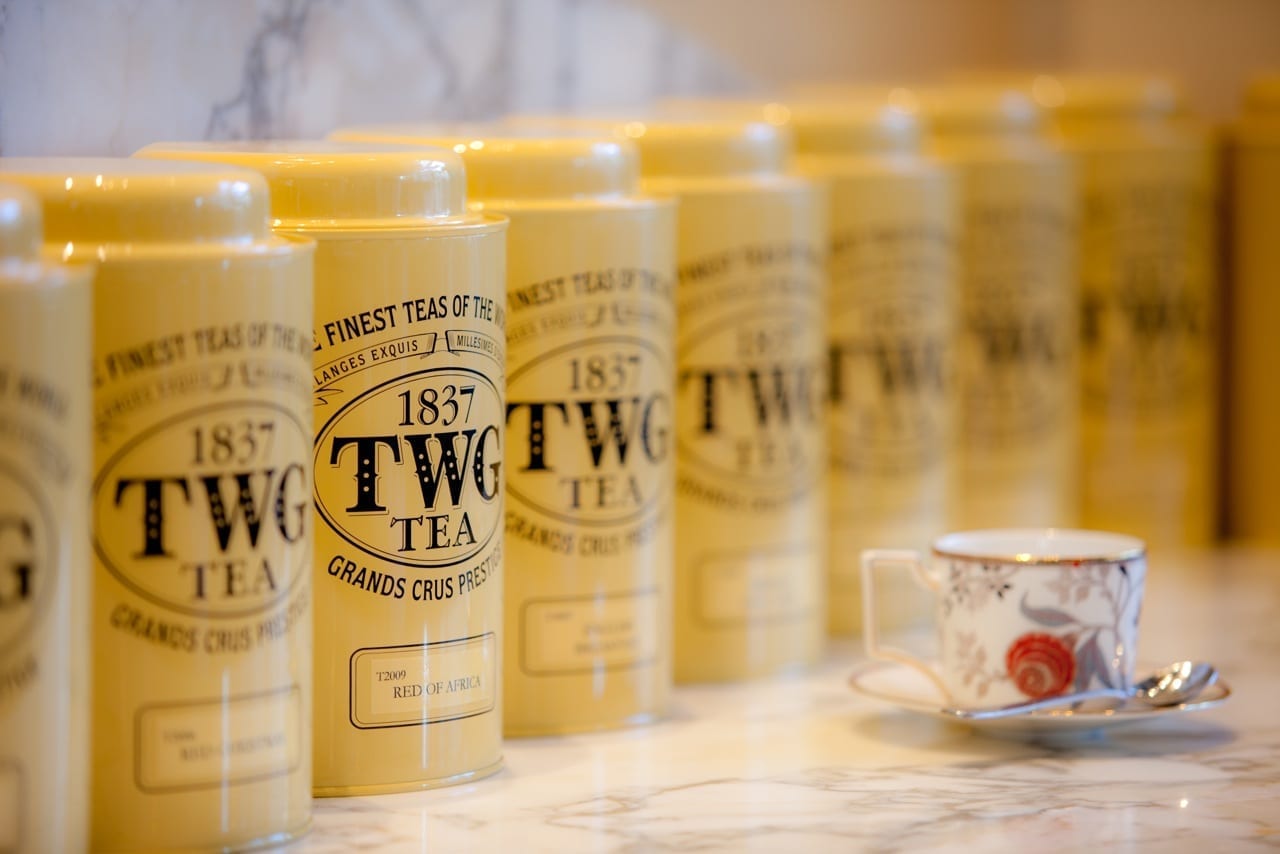
    Singaporean brand TWG Tea has entered the North American market with a store in Vancouver.

    In its eight years, TWG Tea has opened 56 owned and franchised boutiques and salons in 17 cities including Dubai, London and Shanghai.

    In Canada, its franchise and distribution rights have been bought by Tom and Karinna James, who previously owned Urban Tea Merchants in Vancouver. The city is ideal for TWG’s North American debut because of its tea culture, large Asian population and local appreciation for niche and artisanal beverages.

    “Our Asian population are very sophisticated tea drinkers,” says Tom James, thanks to the introduction of tea concepts such as Davids Tea and Starbucks’ Teavana.

    Tea sales in Canada reached $1.3 billion last year, with 40 per cent growth by 2020 predicted.

    Tom and Karinna James opened luxury tea house Urban Tea Merchant in 2004. The shop has been closed and will reopen as TWG next month with a boutique, salon and small wholesale component focussing on hotels and gourmet stores.

    Tea will be served in 18-carat gold-plated teapots, says James, who plans to open several stores in Canada.

  • Chow Tai Fook sales plummet

    Chow Tai Fook sales plummet

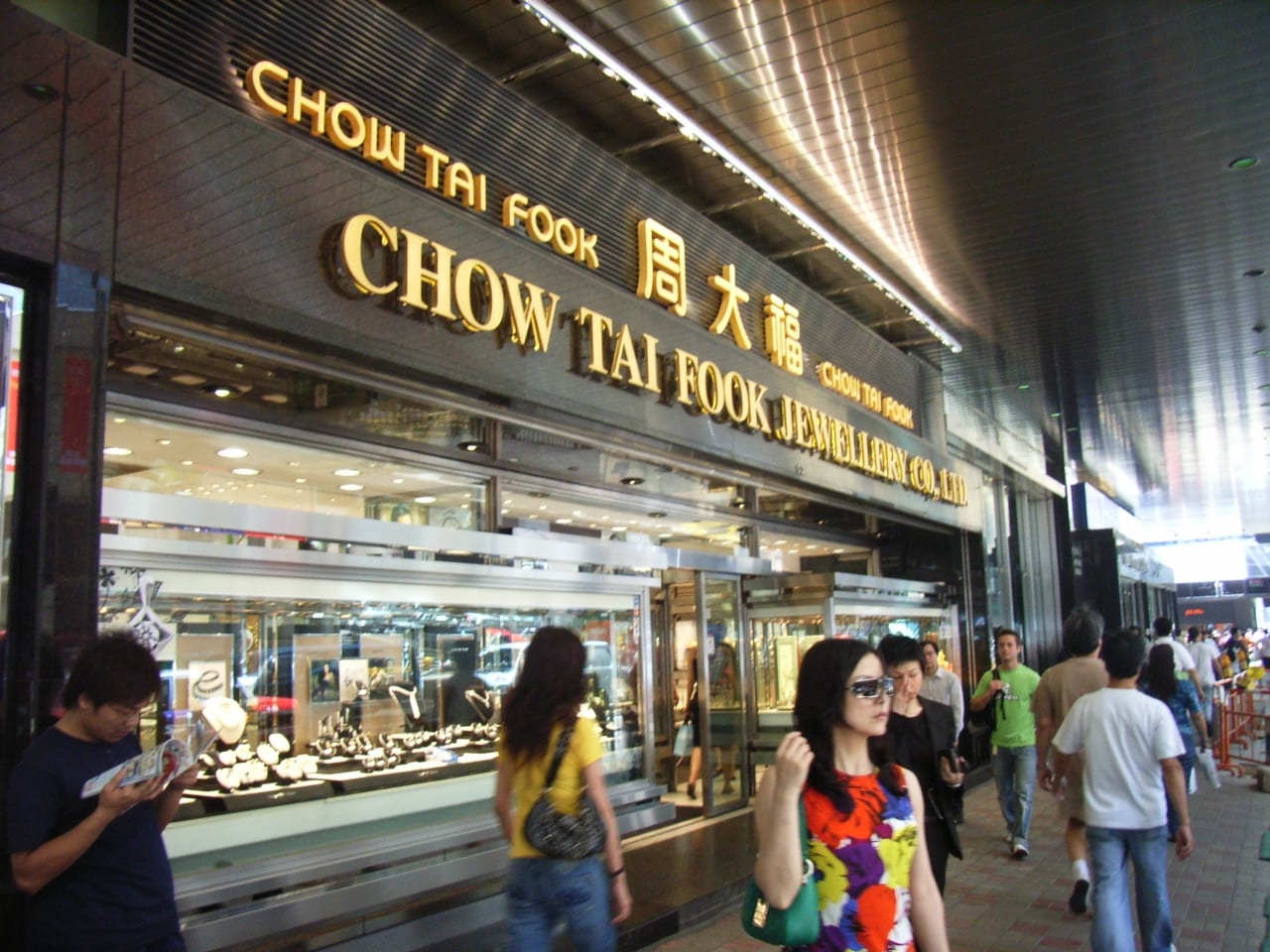
    Chow Tai Fook sales plunged in both Hong Kong and Mainland China markets in the quarter to September 30.

    By value, same-store sales fell by 30 per cent in Hong Kong and Macau and by 22 per cent on the mainland. By volume, same-store sales in Hong Kong fell 39 per cent, and on the mainland by 32 per cent, compared with the same quarter last year.

    Sales of gold products, which account for about 53 per cent of total sales, fell by 23 per cent in Hong Kong and Macau and by 27 per cent in the mainland. Gem set jewellery sales were down 23 per cent and 17 per cent.

    In a statement, the company said its figures in both markets were affected by the high base of 2015, when there was a surge in sales of gold as the price fell.

    But the changing buying behaviour of Mainland Chinese tourists also took its toll, evidenced by the percentage of total sales settled by China UnionPay of in RMB falling from 57 per cent to 43 per cent year-on-year.

    Chow Tai Fook opened a net 11 points of sale during the quarter: 12 jewellery stores and one watch store opened in Mainland China, while its Hong Kong store count dropped by two. At the end of September, Chow Tai Fook had 2326 points of sale.

  • Global m-banking userbase to hit 2b by 2021

    Global m-banking userbase to hit 2b by 2021

    Over 2 billion consumers worldwide will have used their mobile devices for banking purposes by the end of 2021, up from 1.2 billion this year, Juniper Research predicts.

    Growth in mobile banking is being driven by consumer adoption of banking apps the changing way consumers manage their finances, the research firm said.

    The study found that the number of mobile banking logins are now exceeding that of internet banking logins in many markets. For example, the BBA (British Trade Association for Banking) announced that banking app logins in the UK reached a record 11 million per day during 2015, compared to 4.3 million internet banking logins during the same period.

    Meanwhile, a recent consumer survey conducted by Juniper Research found that around 65% of mobile banking customers in the US and the UK use an app to conduct banking services.

    The report found that banks are becoming increasingly concerned that their market position is being undermined by tech companies and pure-play vendors enabled by technology and regulations to enter the marketplace.

    Additionally, by 2017, banks in the EU will be compelled to open their APIs. This will result in many innovative new products that analyze (with permission) user data to create more attractive financial services for customers.

    “Recent industry shifts highlight why traditional banks must respond rapidly to retain market share by cultivating new revenue channels and enhancing existing base through sustained innovation,” research author Nitin Bhas said.

    “However the challenge here for new players is to increase market share and maintain profitability in the long-run.”

  • Cashless push stimulating APAC m-payment market

    Cashless push stimulating APAC m-payment market

    A top down regulatory push toward cashless societies will stimulate exponential growth in the mobile payment market in Asia-Pacific (excluding China and India), which will surge from $71.92 billion to $271.47 billion by 2021, research from Frost & Sullivan indicates.

    According to the research firm, the number of active customers will also double to 130.8 million users by this time.

    With standardization and increasing openness toward FinTech, competition is intensifying for the entire supply-side ecosystem. Mobile payments solution providers will need to fully understand the mobile payments market in the region to gain an edge.

    Asia-Pacific is expected to continue to lead the world in mobile payment developments as smartphone penetration here is the highest. Apple, Samsung and Google with Apple Pay, Samsung Pay and Android Pay have also addressed existing security concerns through tokenization in the payment infrastructure, supplemented by biometrics on the smartphone.

    “The mobile payments market in Asia-Pacific, however, is guided by local preferences and considerations,” noted Frost & Sullivan Digital Transformation Industry Principal Analyst Quah Mei Lee.

    “For instance, in Indonesia and the Philippines, telcos lead with their e-money products whereas in Japan, South Korea and Australia, credit card is the key payment method. Understanding these dynamics is critical for mobile payments solution providers to succeed.”

    Mobile payment in Asia-Pacific is being led by developed countries such as Japan, South Korea, Australia and Singapore. Japan and South Korea has dominated since the early days of near-field communications (NFC) in 2011 and continues to account for 89.2% of market revenue share in Asia-Pacific.

    Among mobile payment market segments, m-commerce dominates despite the rapid increase in point-of-sale (POS) payment transaction volumes. The strong deployment of NFC in some countries is expected to help expand POS payment shares.

    For now, the mobile payment market has the most promise in countries that have a mandate to go cashless, like South Korea, Australia, Singapore and Malaysia. These will be followed closely by countries such as Thailand and Vietnam which are slowly transitioning to cashless.

    “The opportunities are limitless and mainstream integration of mobile payments into everyday life is already underway,” said Quah. “Even beyond this, there is tremendous potential for growth alongside connected devices in the Internet of Things era.”

  • Ooredoo Maldives signs deal with Thuraya

    Ooredoo Maldives signs deal with Thuraya

    Ooredoo Maldives has contracted mobile satellite services provider Thuraya to supply fisheries and resorts in the tropical nation with satellite-based voice and broadband connectivity.

    The operator yesterday launched Thuraya SatSleeve+ and SatSleeve Hotspot devices and accompanying data packages at its retail outlets.

    In the first phase of the partnership, Ooredoo is offering the devices and services to fisheries under a two-year contract.

    The agreement addresses a mandate from the Maldives government requiring commercial fishing operators to outfit their vessels with satellite equipment and supply anglers with satellite phones, to address requirements including worker safety.

    Ooredoo’s Hussain Niyaz commented that “traditionally, fishery is the main occupation and major source of livelihood in the Maldives. It is also the second largest industry in the country. Safety is an important driver in this sector, where there are many accidents.”

    In the second phase of the agreement, which will come into effect later this year, the operator will market the services to the Maldives’ 105 plus resorts.

    This too will fulfil a mandate by the government requiring all resorts and tourist facilities to install satellite communications equipment as an additional safety measure.

  • RFID market is growing

    RFID market is growing

    IDTechEx Research has tracked the RFID market since 1999. IDTechEx find that in 2015, the total RFID market is worth $10.1 billion, up from $9.5 billion in 2014 and $8.8 billion in 2013. This includes tags, readers and software/services for RFID cards, labels, fobs and all other form factors, for both passive and active RFID. IDTechEx forecast that to rise to $13.2 billion in 2020.

    In retail, RFID continues to be adopted for apparel tagging – that application alone will demand 4.6 billion RFID labels in 2016 – which still has some way to go with RFID penetrating about 15% of the total addressable market for apparel in 2016. RFID in the form of tickets used for transit will demand 800 million tags in 2016. The tagging of animals (such as pigs, sheep and pets) is substantial as it continues to be a legal requirement in many more territories, with 420 million tags being used for this sector in 2016.

    In total, IDTechEx expects that 8.9 billion tags will be sold in 2015 and 10.4 billion in 2016. Most of that growth is from passive UHF RFID (RAIN RFID) labels. However, in 2015 UHF (RAIN RFID) tag sales by value will only be 11% of the value of HF tag sales, mainly because HF tags where used for security (such as payments, access etc) have a higher price point versus the cheaper, usually disposable UHF (RAIN RFID) tags used for tagging things.

  • Lenovo launches transit app in China

    Lenovo launches transit app in China

    Lenovo has commercially launched its transit application in China with the electronic payment and settlement service provider BMAC (Beijing Municipal Administration and Communications Card).

    The service is supported  on Lenovo X3 smartphones driven by the eSE PEARL by OT (Oberthur Technologies).

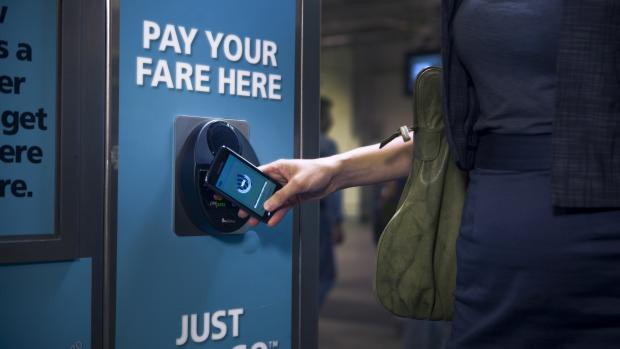
    Thanks to OT’s NFC embedded Secure Element, end-users can now use their Lenovo X3 smartphone to install the Beijing Municipal Administration Traffic Card in their Lenovo Transit application and commute simply by waving their phone in front of contactless transit terminals.

    PEARL by OT is described as  the most advanced embedded Secure Element on the market, offering a yet unattained level of security and the largest memory on the market. It allows easy deployment of secure mobile contactless payment, transit, governmental and automotive applications, as well as secure access to online services for enterprise and consumer markets.

    In addition to its eSE, OT provides its Key Management System to Lenovo to manage security domains on the eSE in which partners can securely load, install and run their applications.

    Via its China Secure Hub, a platform used to connect handset makers and their partners in different cities in China, OT also securely ensures the connectivity between Lenovo and BMAC’s TSM provider, Beijing eNFC science and technology.

    “China is often at the forefront of new technologies and we are happy to offer Lenovo users with a convenient, secure and easy-to-use way of commuting with the BMAC application” said Viken Gazarian, deputy managing director of the connected device makers business at OT.

    “PEARL by OT is the best eSE on the market to address the fragmented market of transport systems throughout the world and is the sole component to support international as well as Chinese transit technologies,” said Gazarian.

  • ‘Tremendous challenges’ for Chinese eCommerce

    ‘Tremendous challenges’ for Chinese eCommerce

    Chinese eCommerce companies could face “tremendous challenges” as Alibaba aims to transform the the mainland’s traditional retail industry, worth an estimated US$4.5 trillion.

    In a letter to shareholders, CEO Daniel Zhang says the company hopes to “upgrade” traditional retailers through improvements to distribution, service and product manufacturing.

    “The most important opportunity on the horizon is not growing online sales in isolation but rather helping traditional retailers upgrade into a brand-new retail model,” he writes. “The consumer retail industry as a whole is experiencing radical disruption driven by digital transformation.”

    Alibaba chairman Jack Ma has set a target of 20 years to attain 2 billion customers and support 10 million profitable businesses globally.

    Zhang cites cloud-based infrastructure and data as two areas where Alibaba sees future growth.

    “Cloud computing and big data will become ubiquitous,” he says. “Data has already become the new ‘natural resource’ that is as vital as oil and electricity. Cloud computing is the new ‘engine’ powering commerce.”