Author: Mei Ling Tan

  • Samsung to compensate suppliers hit by Note 7 crisis

    Samsung to compensate suppliers hit by Note 7 crisis

    Samsung Electronics said Tuesday it would compensate suppliers hit by the decision to scrap its Galaxy Note 7 smartphones because of safety fears with exploding batteries.

    The South Korean electronics giant announced a week ago that it was discontinuing the Note 7 after a chaotic recall that saw replacement phones also catching fire.

    Samsung said the affair would cost the company an estimated $5.3 billion in lost profits over the three quarters beginning July.

    The crisis also hit its numerous suppliers — who produce everything from camera modules to casings — with their losses estimated at up to $1.7 billion.

    “We will offer full compensation for remaining inventories of Note 7 components among our suppliers,” the firm said in a statement.

    “We feel sorry for causing concern among our suppliers due to discontinuation of the Galaxy Note 7…we will complete the compensation quickly to minimise difficulty faced by them,” it said.

    The statement provided no specific figures, but said the payout would be calculated according to the different suppliers’ inventory volumes.

    Given the Samsung Group’s stature within Asia’s fourth-largest economy — it accounts for around 17 percent of GDP — the Note 7 debacle has had a national impact.

    The central Bank of Korea said it had taken the crisis into consideration when it trimmed South Korea’s 2017 growth outlook to 2.8 percent last week from its previous 2.9 percent forecast.

  • Sa Sa seeks cheaper rent

    Sa Sa seeks cheaper rent

    Twilight has come for the retail industry in Hong Kong, said cosmetic outlet operator Sa Sa International (0178) chairman Simon Kwok Siu-ming, although he remains optimistic of better days ahead.

    The week-long national holiday saw improved sales for the firm, and he hopes the uptrend is sustainable for the rest of the year, especially during Christmas and New Year high season. Regarding the mainland tax reform on luxury cosmetics, with the Chinese government cutting taxes from 30 percent to 15 percent starting this month, Kwok said it came unexpectedly, and it’s too early to determine its impact on Sa Sa.

    But he expressed confidence in Hong Kong products. “I think it is more important to know that authentic and quality goods can be bought here,” he said.

    Kwok noted Sa Sa managed to open several outlets in recent months. But under pressure to reduce operating costs, he hoped shop rents can come down to reasonable levels soon, so that there will be no staff layoffs or pay reductions.

    Sixty percent of Sa Sa sales came from neighborhood areas, and the retailer said earlier it will shift away from the tourist areas if landlords refuse to slash rents.

    But Kwok said the firm was able to find cheaper outlets, as a contract was renewed at a site opposite the Sogo store in Causeway Bay at 60 percent lower monthly rent of HK$800,000.

  • Volkswagen centralizes ASEAN after-sales operations in Malaysia

    Volkswagen centralizes ASEAN after-sales operations in Malaysia

    German automaker, Volkswagen Group has announced the relocation of its regional after sales center for the Asia-Pacific region. Previously, Singapore supplies for the regional retail outlets in the Asia-Pacific Region. The Volkswagen Group, however, decided to relocate it to Malaysia expanding their logistics capacity to almost 50,000 square meters.

    “The expansion and the relocation of our regional genuine parts center from Singapore to Malaysia reflect the significance and potential of these growing markets and will lay the foundation for further growth. Malaysia will be the new hub for after sales logistics in the region,” said Imelda Labbé, Head of Volkswagen Group After Sales.

    “Our new regional logistics center in South-East Asia will allow us to supply parts throughout the region even faster than before. From 2018, directly connected dealerships in Singapore and Malaysia will receive two deliveries per day. This will significantly improve our customer service in the region at the same time as laying the foundation for further growth,” added Marcus Edelmann, Director After Sales for the Volkswagen Group Regional Office in South-East Asia.

    Starting on 2018, the company says it will be able provide faster supply of genuine parts to 28 markets in the Asia-Pacific region through their new supplier, Malaysia. Meanwhile, the regional retail outlets will then receive of up to 2 deliveries per day. Work will start on the logistics center on January 2017. There are also plans for the later integration of the after sales activities of other Group brands and the regional pooling of the delivery chain for genuine parts.

    These parts will be built in the Port of Tanjung Pelepas (PTP) free trade area in Johor Bahru, at the southern tip of the Malay Peninsula. The automaker says that the direct connection to the port eliminates the need for intermediate handling. As a result, Volkswagen says the logistics processes will become more efficient and environmentally compatible.


  • South Korea prosecutors to indict Lotte chairman, father and brother in corruption probe

    South Korea prosecutors to indict Lotte chairman, father and brother in corruption probe

    South Korean prosecutors will file charges on Wednesday against Lotte Group’s chairman, Shin Dong-bin, father and brother alleging they committed offences such as embezzlement and breach of trust worth hundreds of millions of dollars at the family-owned conglomerate, as reported on Tuesday.

    Closing a wide-ranging probe into corruption that has convulsed Korea’s fifth-largest conglomerate, prosecutors will announce the results of their investigation into the retail-to-chemicals group on Oct. 19, a prosecution source with direct knowledge of the matter told Reuters.

    The person, who requested anonymity as he was not authorized to speak to the media, declined to comment on whether Shin, 61, will be indicted.

    Shin’s father, the 93-year-old Lotte Group founder Shin Kyuk-ho, and his brother Shin Dong-joo, will also be charged with offences such as tax evasion and breach of trust.

    A Lotte Group spokeswoman declined to comment.

    The probe has constricted management at Lotte, a household name in Korea, since it flared into public in June, derailing plans for billion-dollar deals and freezing expansion of a group with assets worth 103 trillion won (US$92 billion). It also served as the backdrop to the apparent suicide of a leading executive at the group.

    While Shin would be charged with embezzlement of about 50 billion won and breach of trust involving about 175 billion won, he would not be arrested.

    Last month the Seoul Central District Court turned down prosecutors’ request for an arrest warrant for Shin after he appeared at a court hearing, saying it didn’t view detaining the executive as necessary.

    Once indicted, appeals processes could mean Shin potentially faces trial in court for many months.

    A spokesman for the Seoul Central District Prosecutors’ Office could not be immediately reached for comment.


  • Lotte jumps into Shanghai retail

    Lotte jumps into Shanghai retail

    Lotte Department Store has signed on to a joint venture with Citic Group, a state-owned Chinese company, to operate a shopping mall in Shanghai and to build three more in the region between 2017 and 2019, the Korean company announced Monday.

    The joint venture will operate the already-existing Citic Square Mall in the bustling commercial district of Jing’an on West Nanjing Road. The mall is currently run by Citic Group, and Lotte’s participation in the joint venture with the Chinese company will allow the Korean retail giant to step foot into the Shanghai market without having to navigate through China’s byzantine business regulations.

    Lotte will hold approximately 49 percent of the joint venture’s shares and will focus on operations, while Citic Group will help with property development.

    The partnership was first offered by Citic Group, which makes 60 trillion won ($52.6 billion) in annual sales from financial services, energy and property development. “In China, companies in property development have started to launch businesses in retail because they already have the land to build new facilities,” a Lotte Department Store spokesman said.

    Although Citic Group is an influential company in China, it lacks expertise in retail, as it wasn’t the group’s main business in the past. Competition is also tough, as Shanghai is currently home to over 50 department stores and 80 shopping malls.

    Lotte Department Store, on the other hand, already has five branches across China and has experience with merchandising, store design and employee training in the country. Sales at Lotte’s five department stores rose 28 percent last year from the previous year.

    The Korean retail giant said it plans to use the partnership to create more opportunities for Korean brands to enter Shanghai. Consumers in the metropolis have shown particularly high interest in Korean popular culture, making it a good starting point for Korean fashion companies looking to set foot in China.

    “We believe the partnership with Citic Group will strengthen our stance in the Chinese market,” Lotte Department Store CEO Lee Won-jun said. “Our plan is to use this opportunity to help other domestic companies with potential to expand to China as well.”


  • ASEAN e-commerce market keeps booming

    ASEAN e-commerce market keeps booming

    The ASEAN region (The Association of Southeast Asian Nations) is emerging as one of the most promising e-commerce markets in the world to replace the saturated Chinese market.

    Following the establishment of the ASEAN Economic Community (AEC) at the end of 2015, e-commerce is providing huge opportunities for Korean retailers seeking new customers abroad.

    Most member states of ASEAN, including Indonesia, Thailand, Malaysia, Singapore, the Philippines and Vietnam, are experiencing an e-commerce boom.

    The Internet-based retail market has been relatively underdeveloped in Southeast Asia due to low Internet penetration and lack of customers with purchasing power.

    However, with the middle class growing and Internet penetration spreading, the number of online and mobile shoppers in the region is rising fast.

    Still, it is fragmented and Internet users account for only around 40 percent of the total population of Southeast Asia, indicating that the region has much room to grow.

    According to the 2016 report “E-Conomy SEA (Southeast Asia)” released jointly by Singapore’s sovereign fund Temasek and Google, the average annual growth rate of Internet users in the region is forecast to reach approximately 14 percent by 2020, well above 4 percent for China and 1 percent for the United States.

    Online shoppers, accordingly, are also on a sharp rise.

    According to Bain & Company, the number of digital consumers, or those aged over 16 and using e-commerce, reached 150 million in 2015. Of them, around 100 million or 75 percent actually purchased goods online.

    By nation, Indonesia ranked at the top with 51 million digital consumers, followed by Vietnam (31 million), the Philippines (28 million), Thailand (23 million), Malaysia (14 million) and Singapore (3 million).

    “Chinese and global Internet companies should look at Southeast Asian e-commerce as their next potential gold rush,” reported IT-specialized media TechCrunch in June, 2015.

    In particular, ASEAN’s e-commerce has a special feature that sets itself apart from other countries.

    For example, the online retail market in the U.S. and Korea first grew with expansion of PC-based shopping. However, Southeast Asia experienced the e-commerce boom with more consumers accessing Internet via smartphones.

    In 2015, e-commerce in the ASEAN is estimated at $5.5 billion (6.06 trillion won), and the amount is expected to rise to $8.78 billion by 2025, according to E-Conomy.

    The portion of e-commerce to retail sales in the region stood at only 0.8 percent in 2015 but is forecast to jump to 6.4 percent by 2025.

    Global players eye ASEAN

    Against this backdrop, global players are making fast forays into the ASEAN e-commerce market.

    In April, Alibaba, China’s largest e-commerce company, purchased a controlling stake in Southeast Asian online retailer Lazada Group for $1 billion, its largest overseas investment.

    Lazada was started by Germany’s Rocket Internet in 2012 with headquarters in Singapore. It is operating in Malaysia, Indonesia, the Philippines, Thailand and Vietnam. It is the number one e-commerce player in Philippines, Malaysia, Thailand and Vietnam.

    In June, U.S. retail giant Amazon also decided to invest $600 million to open an e-commerce platform in Indonesia, according to Daniel Tumiwa, chairman of the Ecommerce Association of Indonesia (IDEA).

    Japanese SoftBank and Silicon Valley venture capitalist Sequoia Capital acquired a $100 million stake in Tokopedia, the biggest startup investment in Indonesia. eBay, another U.S. e-commerce giant, currently owns Qoo10, the online shopping mall based in Singapore.

    Korean companies are also expanding their operations in the region to capitalize on the rising popularity of hallyu or the Korean Wave.

    On Sept. 20, CJ Korea Express, South Korea’s largest parcel delivery service company, signed an international delivery service contract with Lazada. Under the deal, CJ would deliver goods made in Korea purchased by customers via Lazada’s website.

    On the same day, KOTRA, Korea’s trade-investment promotion agency, joined hands with Qoo10 to start an online support program and help Korean small firms export their goods to Southeast Asia. Qoo10 has a total of 300 million online members in Singapore, nearly 60 percent of its population.

    SK Planet opened 11th Avenue, its online shopping mall, in Indonesia in 2014 and Malaysia in 2015.

    Korea is now focusing on expanding exports of consumer goods to ASEAN as it has faced limitations to increase external shipments of parts and intermediary products.

    “With more Korean firms entering the ASEAN e-commerce network, including Lazada, exports of Korean consumer goods, such as mobile phones, cosmetics, food and fashion items, are on a sharp rise,” Roh In-ho, KOTRA’s Asia Regional Director based in Singapore, said.

    For sustainable growth, Korean firms need to make more effort to come up with localized strategies that meet demands from local customers.

    “If diversifying marketing strategies, ASEAN e-commerce will offer good opportunities for small Korean exporters,” Roh said. “It is very important to develop designs and products that locals would like.”

  • LIU JO Open at Paragon Mall in Singapore

    LIU JO Open at Paragon Mall in Singapore

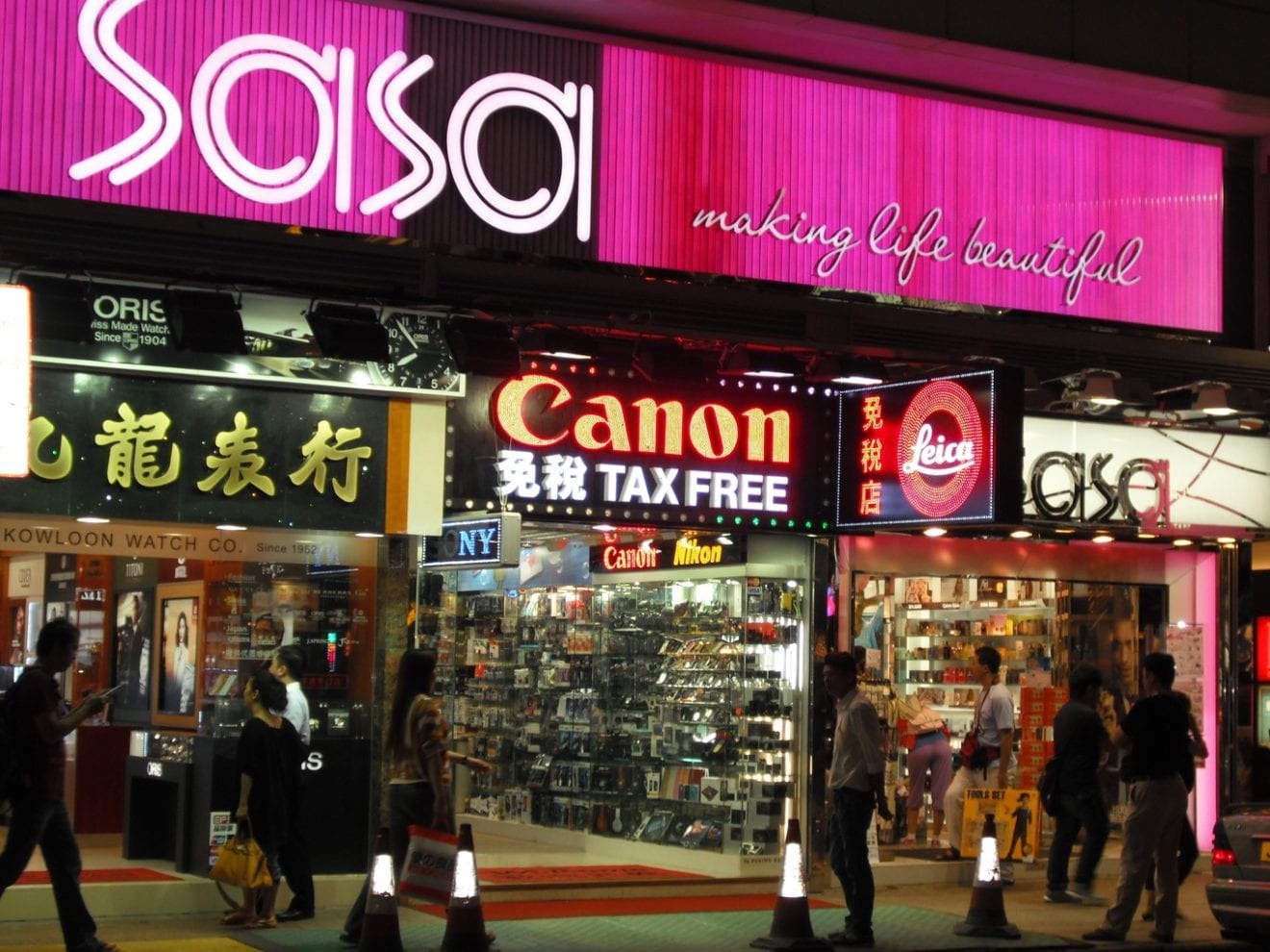
    Italian fashion brand Liu Jo is pleased to announce the opening of its new boutique in the prestigious Paragon Mall in Singapore. It is also the key flagship boutique for South East Asia region.

    The impressive vast 3,305 square feet boutique marks an important milestone in Liu Jo’s fast-growing expansion in the Asia region and continues the new exciting Curiosity retail concept which aims to create an exclusive but warm and homely ambience for its shoppers. The new layout highlights precious metals in a modern, intriguing design, presenting a minimalist, sleek and sophisticated décor to give pride of place to its collections. Complemented with the recognisable Liu Jo brand codes and signature eclectic style, the new boutique presents a refreshed expression of the brand’s mission to celebrate feminine elegance and quality.

    Previously located at Wisma Atria Mall, loyal followers of the brand will be pleased to know that the new Paragon boutique boasts a larger retail space, and will house an extensive selection of the Italian brand’s ready-to-wear and accessories offering. Liu Jo Black Label Collection, Liu Jo White Label Collection, Liu Jo Blue Denim Collection, Liu Jo Gold Label Collection, Liu Jo Sport, Les Plumes de Liu Jo, Liu Jo Accessories, Liu Jo Shoes and the Liu Jo Eyewear and, Liu Jo Fragrances will be available at this flagship boutique.

    This new Paragon boutique is a key step to the development of the Italian company to increasing and strengthening its global market share. Singapore will play a strategic key role: it will be a key platform for further focus on the rapid growth of the South East Asia market.

    Presenting a new interpretation of accessible luxury shopping, this new boutique marks the continuation of the steady success and popularity the brand enjoys in Asia. The international fashion brand currently has presence in 50 countries and 3 different continents – Europe, Africa and Asia – through a distribution network including over 350 mono-brand points of sales and 5000 multi-brand points of sales world-wide.

  • The first ever SPAR China Congress

    The first ever SPAR China Congress

    The first ever SPAR China Congress kicked off in Weihai, in the Shangdong Peninsula yesterday. The three-day long Congress is being attended by SPAR International Board members, SPAR colleagues from across China and international retail experts as well as guest speakers and strategic partners.

    The Congress gives SPAR China Partners the opportunity to share best practice with each other and international SPAR Partners. Also in attendance are Graham O’Connor, Chairman of SPAR International & SPAR South Africa; Peter Blakemore, Chairman of A F Blakemore UK, Tobias Wasmuht, Managing Director of SPAR International, Paul Klotz, Chairman of SPAR Italy and Knut Johansson, Chairman of SPAR Norway. Over 200 delegates representing more than ten nationalities are gathered in the city.

    Delegates will visit a number of SPAR stores and the food production centre in Weihai, which offers a unique opportunity to see the rapid expansion of retail formats and instore product offerings which are inherent to the market.

    Since entering China in 2004, SPAR now has a presence in the provinces of Shandong, Guangdong, Shanxi & Inner Mongolia, Beijing (city), Sichuan, Henan and Hebei and a central office located in Shanghai. SPAR China has adhered to the brand philosophy of freshness, choice, value and service, focusing on the development of the SPAR Hypermarket, SPAR Supermarket, SPAR Neighbourhood and SPAR Express formats. 

    Great support has been received from many of the SPAR Partners around the world during the development of the strong SPAR operation in China which has continued to show excellent results year-on-year and is ranked fifth amongst global SPAR Partners in turnover terms reporting €1.9 billion in the 2015 results. Investment continues not only in retail with 360 stores trading today, but also supply chain expansion across all of the regions in which SPAR trades.

    “We seek to grow and expand in unity with all our SPAR Partners by sharing our resources and knowledge, ‘Better Together’, just like the theme of the SPAR China Congress. The success of the Congress will help drive the booming growth of our partners and the retail market in China,” said Yoep Man, SPAR China Managing Director.

    A SPAR International Board meeting is also taking place this week in Weihai, enabling the Board of Directors to meet with the Partners from SPAR China and to at see first-hand the development of the brand in this high potential market. 

  • DHL Express has inaugurated its South Asia Hub at Singapore Changi Airport

    DHL Express has inaugurated its South Asia Hub at Singapore Changi Airport

    The €85 million (US$85.5 million), 23,600-square-metre facility is located at the Changi Airfreight Centre and features the first fully automated express parcel sorting and processing system in South Asia.

    “Over the years, we’ve invested significantly to bolster our network and services in Asia Pacific,” said Ken Allen, CEO of DHL Express. “Our investment in the DHL South Asia Hub is the most recent in a series of global network investments made, and is the largest infrastructural investment made in Singapore to date. The country’s strategic location not only boosts our operational network capabilities, but also supports growing trade in the region aided by a stronger global economy.”

    According to DHL, the 24-hour facility is 33 percent larger than the previous hub. It is also six times faster, being capable of processing up to 24,000 shipments and documents per hour and handling more than 628 tonnes of cargo during the peak processing window.

    “The DHL South Asia Hub is a significant milestone in further enhancing our multi-hub strategy in the region,” said Ken Lee, CEO of DHL Express Asia Pacific. “With four hubs in Asia Pacific — Hong Kong, Shanghai, Singapore and Bangkok — this links over 70 DHL Express Gateways located throughout the region. Together, these facilities reinforce our customer commitment to provide the most efficient international express connectivity between key markets in the region. This will also allow us to add more network flights in and out of Singapore, such as the recent introduction of the Phnom Penh-Bangkok flight that adds to our existing Bangkok-Singapore service, as regional trade continues to grow.”

    Between 2012 and 2015, the average number of shipments per day grew by 50 percent for Oceania, 30 percent for South Asia and 25 percent for Southeast Asia, according to DHL.

  • Indonesian herbal medicine to be marketed abroad

    Indonesian herbal medicine to be marketed abroad

    An original Indonesian herbal medicine, Jamu, will be marketed abroad in the Middle Eastern and ASEAN regions, the chairman of the Jamu Association of Central Java, Nyoto Wardoyo, said here on Wednesday.

    Jamu is made from natural materials, such as roots, bark, flowers, seeds, leaves and fruits.

    “Indonesias ambassadors in various countries have started to introduce Jamu to other countries, such as Arab nations and Hongkong,” he informed.

    According to him, Jamu is in demand in many countries because they have realized that its health benefits.

    “Jamu is well known for its nutritional value. Demand for the product is rising and the exports have increased,” he reiterated.

    He also appreciated the fact that the government is encouraging the herbal medicine industry to progress.

    “Entrepreneurs expect expeditious grant of a license. Once we complete all the requirements, we want the government to immediately issue a permit,” he stressed.

    He hoped for better synergy between farmers, entrepreneurs and university researchers to develop Jamu products.

    He also hoped that Jamu products could be a part of the BPJS health program.

    “When people suffer mild colds, coughs or flu, the doctors can treat them with Jamu,” he underlined.

    Thanks to these efforts, the usage of Jamu is expected to rise at home as well as abroad.

  • Beware the Internet of Unpatchable Things: Akamai

    Beware the Internet of Unpatchable Things: Akamai

    A recent spate of attacks involving attackers using IoT devices to remotely generate attack traffic by using a 12-year old vulnerability in OpenSSH have been discovered by researchers at Akamai Technologies.

    Akamai notes that the research and subsequent advisory do not introduce a new type of vulnerability or attack technique, but rather a continued weakness in many default configurations of Internet-connected devices. These devices are now actively being exploited in mass-scale attack campaigns against Akamai customers.

    The Threat Research Team said it has observed incidents of what it has called SSHowDowN Proxy attacks originating from the following types of devices:

    • CCTV, NVR, DVR devices (video surveillance)
    • Satellite antenna equipment
    • Networking devices (e.g. Routers, Hotspots, WiMax, Cable and ADSL modems, etc.)
    • Internet connected NAS devices (Network Attached Storage)

    Compromized devices are being used for mounting attacks against a multitude of internet targets and internet-facing services, such as HTTP, SMTP and Network Scanning. It is also being used to launch attacks against internal networks that host these connected devices.

    Once malicious users access the web administration console, they have been able to compromise the device’s data and, in some cases, fully take over the machine.

    “We’re entering a very interesting time when it comes to DDoS and other web attacks; ‘The Internet of Unpatchable Things’ so to speak,” explained Ory Segal, senior director for threat research at Akamai.

    “New devices are being shipped from the factory not only with this vulnerability exposed, but also without any effective way to fix it. We’ve been hearing for years that it was theoretically possible for IoT devices to attack. That, unfortunately, has now become the reality.”

  • Indonesia’s logistic sector lags behind other ASEAN countries

    Indonesia’s logistic sector lags behind other ASEAN countries

    Indonesia needs to work harder to improve its logistic sector because its performance lags behind those of other ASEAN countries such as Singapore, Thailand and Malaysia, Finance Minister Sri Mulyani said on Wednesday.

    “On the Logistics Performance Index (LPI), according to the World Bank, Indonesia stood at 63rd place of the 160 countries surveyed,” the minister said in her opening speech during the Jakarta International Logistics Summit and Expo in Jakarta.

    Singapore topped the list of ASEAN countries, ranking fifth globally, while Malaysia ranked 32nd and Thailand 45th, she added.

    The LPI is a benchmarking tool created to help countries recognize challenges and opportunities they face in their performance on trade logistics and improve it.

    She said there were aspects affecting the competitiveness of logistics in Indonesia, namely a lack of infrastructure and complex customs and excise procedures.

    “To realize this, the government has utilized the state budget and funds from the private sector to develop infrastructure across Indonesia,” she said.

    Besides improving infrastructure, another important measure is to fix the quality of regulations and simplify bureaucracy, she said.

  • KDDI, Toyota develop app to reduce road accidents

    KDDI, Toyota develop app to reduce road accidents

    Toyota Motor, Komeda and KDDI in September have jointly developed a smartphone application called Driving Barista, aimed at reducing the number of traffic accidents in Aichi Prefecture caused by drivers using their smartphones while driving.

    This is the first traffic safety initiative in Japan involving a smartphone application, which is to be carried out and jointly promoted by an automobile company, a communication company, and a food and beverage company.

    For thirteen consecutive years, Aichi Prefecture has had the highest rate of traffic fatalities in Japan. Furthermore, there were also 50,101 arrests involving the use of smartphones while driving, and the increase in violations of this nature has also intensified the problem.

    Toyota, Komeda, and KDDI will promote traffic safety in Aichi Prefecture through an educational initiative where participation is accessible for all, and can lead to a reduction in traffic accidents.

    The Driving Barista application can only be used within Aichi Prefecture. By using the gyro sensor to sense the tilt of the smartphone body, and the GPS to determine the distance driven, this application measures the distance the driver has driven while leaving the smartphone face down. When the cumulative distance reaches 100 km, the driver can receive a coupon for a cup of blended or iced coffee at a Komeda Coffee Shop.

    According to one survey, approximately 60% of respondents said they use their smartphones while driving, with approximately half of these respondents keeping only one hand on the steering wheel. Therefore, the companies hope that the new application will raise drivers’ awareness about not using smartphones while driving.

    “We have already been carrying out educational activities to prevent the use of smartphones while driving, and we hope that this initiative between the three companies will help solve the problem facing Aichi prefecture,” said Akira Dobashi, director in charge of CSR and environment at KDDI.

    “We developed the Driving Barista smartphone application as a fun way to help prevent traffic accidents,” said Dobashi. “We hope to contribute to accident prevention by providing a new experience for drivers.”

  • Hotel occupancy rates increase in Bali

    Hotel occupancy rates increase in Bali

    The occupancy rates of star rated hotels in Bali averaged 72.40 percent in August or an increase of 1.76 percentage points from 70.62 percent in the previous month.

    “The occupancy rate was quite encouraging when visits by foreign tourists shrank 9.52 percent in Bali compared with the previous month,” head of the Bali branch of the Central Bureau of Statistics (BPS) Adi Nugroho said here on Wednesday.

    Adi said the occupancy rates would boost hotel operators as an occupancy rate of 50 percent is enough to cover operating cost including salaries of employees.

    In August, 2016, Bali recorded 438,135 visits by foreign tourists including 437,929 arrivals recorded by the Ngurah Rai airport and 206 arrivals at seaport.

    The number of arrivals dropped 9.52 percent in August from July but an increase of 44.3 percent year-on-year, Adi said.

    Adi said most foreign tourists stayed at star rate hotels in six of nine regencies in the province.

    The highest occupancy rate was recorded by hotels in the regency of Badung averaging 75.38 percent or up from July, followed by hotels in the city of Denpasar averaging 66.34 percent though declining from the previous month.

    Hotels in the regency of Gianyar followed in the third place with occupancy rate averaging 60.01 percent , down from 66.84 percent in July , the regency of Buleleng recorded an occupancy rate of 57.69 percent up from 52.23 percent and the regency of Karangasem 47.45 percent, down from 50.92 percent.

    Three other regencies – Jembrana, Bangli and Klungkung – have no star rated hotels . They have only inns or non standard hotels.

    Four star hotels recorded the highest occupancy rate averaging 78.16 percent, followed by five start hotels averaging 77.31 percent, one start hotels 64.96 percent , three start hotels 58.55 percent and two star hotels with occupancy rates averaging 56.31 percent.

    Adi Nugroho said despite the significant increase in the occupancy rate. the increase was recorded only in the regencies of Badung and Buleleng.

    In three other regencies, hotel occupancy rates declined including in the city of Denpasar, regencies of Gianyar and Karangasem, Adi Nugroho said.

  • Telstra close to launching Gigabit-class LTE

    Telstra close to launching Gigabit-class LTE

    Telstra has worked with Qualcomm, Ericsson and NETGEAR to develop the world’s first Gigabit-class LTE mobile device and Gigabit-class commercially ready LTE network.

    A new NETGEAR mobile router based on Qualcomm’s Snapdragon X16 LTE modem and Wi-Fi equipment will enable download speeds of up to 1Gbps over Telstra’s upgraded LTE network, which uses equipment supplied by Ericsson.

    Telstra now plans to conduct device, network and user testing ahead of a commercial launch, which is expected within the next few months.

    Combined, the equipment is capable of delivering Gigabit-level LTE speeds through a combination of 3x carrier aggregation, 4×4 MIMO on two aggregated carriers and 2×2 MIMO on the third, as well as 256-QAM.

    “We pride ourselves on our connectivity expertise and we continue that tradition today by completing the first commercialization of a Gigabit Class LTE network and device,” Telstra group managing director of networks Mike Wright said.

    “With the world’s first Gigabit Class LTE network, we have substantially improved our network capacity and increased real-world LTE download speeds, while also gaining a distinct advantage over competitors as we can now offer an entirely new class of LTE service.”

    Ericsson head of RAN products Per Narvinger added that “Telstra’s commercial ready Gigabit Class LTE network and device is an important milestone as it paves the path to 5G.”