Author: Mei Ling Tan

  • Renault launches two new cars in Indonesia

    Renault launches two new cars in Indonesia

    Despite a bleak forecast for the automotive market in Indonesia, French carmaker Renault and its local partner PT Auto Euro Indonesia launched two new products in Jakarta on Wednesday: the KOLEOS and KWID.

    Serge Yoccoz, Renault ASEAN director of operations, said Indonesia was one of only a few countries to see the launch of the KOLEOS, a medium sport utility vehicle (SUV), ahead of Europe.

    “The new KOLEOS will be [Renault’s] flagship for the Indonesian market,” he said. “It has been redesigned to have unique features and has the ability of an SUV.”

    As for the KWID, Yoccoz added, the mini crossover would be offered for consumers eyeing high fuel efficiency and low maintenance costs. “The KWID will be able to address Indonesian customers’ [demand] for a stylish car,” he said.

    The KOLEOS is offered at Rp 460 million for its standard version and Rp 495 million for the panoramic sunroof version. Meanwhile, the KWID is tagged at Rp 117.7 million and is expected to be able to compete in the compact car segment, which accounts for 16.3 percent of the whole automotive market, according to 2015 data from the Association of Indonesian Automotive Manufacturers (Gaikindo).

    Bambang Subijanto, director of Indomobil Sukses International–an umbrella company of Auto Euro Indonesia, said the Renault-Nissan and Indomobil partnership would create good business synergy and respond to customers’ demands, especially in after-sales services.

    The sales target for both models is set at 1,000 units, until 2017.

  • Vietnam grants 4G licenses to three cellcos

    Vietnam grants 4G licenses to three cellcos

    Vietnam has granted 4G licenses to three of the market’s major mobile operators – MobiFone, military-run Viettel and state-owned VNPT.

    The operators have been granted permission to roll out LTE services over the 1800-MHz band.

    Each of the three operators have been piloting LTE and LTE-Advanced services in multiple cities, with Viettel launching a trial in late 2015, VNPT testing services since January this year and MobiFone commencing a pilot in July.

    The licenses will be allocated as part of Vietnam’s government-approved telecommunications development plan, which includes a target of covering 95% of the population with 3G and 4G services by 2020 as part of efforts to ensure nationwide coverage of broadband infrastructure.

    According to the report, major operators have indicated they will be ready to launch LTE soon after receiving the licenses. They will be valid until 2024.

  • UOB Indonesia offers Rp 1.1 trillion in bonds to strengthen lending

    UOB Indonesia offers Rp 1.1 trillion in bonds to strengthen lending

    United Overseas Bank (UOB) Indonesia plans to issue Rp 1.1 trillion (US$84.5 million) in bonds in November. The issuance hopes to raise cash to support the bank’s lending capacity next year.

    UOB Indonesia president director Kevin Lam said Rp 1 trillion in proceeds would come from the senior bond while the remaining Rp 100 billion would come from the subordinated bond. Both will be offered from Nov. 17 until Nov. 22.

    “The bond will enable us to maintain solid funding as we help our customers seize business opportunities arising from increased infrastructure development and consumer demand,” he said during a public expose in Jakarta on Wednesday.

    The senior bond is divided into three series with a buy-back option, he further explained.

    Series A is offered with 370 days of maturity and a 7.4 percent coupon rate per annum. Series B will mature in 3 years with an 8.25 percent coupon rate. Series C will have a 5-year tenor with a coupon rate of 8.5 percent.

    Meanwhile, the subordinated bond has a 7-year tenor with a 10 percent coupon rate. All the coupons will be paid every three months.

    In the first half of 2016, UOB Indonesia saw its interest income increase by 22.32 percent year-on-year (yoy) to Rp 1.73 trillion.

    Net profits rose by 86.81 percent yoy to Rp 281.69 billion.

  • China Mobile Hong Kong to upgrade network to 4.5G

    China Mobile Hong Kong to upgrade network to 4.5G

    China Mobile Hong Kong has contracted Huawei to fully upgrade the operator’s FDD/TDD converged LTE network to a 4.5G LTE-Advanced Pro network.

    The upgrade is aimed at offering customers a superior user experience and laying the groundwork towards a future 5G network evolution.

    In October last year, the 3GPP formally named LTE-Advanced Pro as the new LTE standard with the designation of 4.5G. China Mobile Hong Kong has commenced its network upgrade following a series of network optimization projects this year.

    “After stringent selection processes, we firmly believe that Huawei’s world leading network technology and equipment have made it the ideal partner for CMHK’s 4.5G network upgrade,” China Mobile Hong Kong director and CEO Sean Lee said.

    “We are very pleased to work with Huawei to upgrade our 4G mobile network to 4.5G for significant network capacity optimization and speed improvement, as well as achieving superior user experience for consumers and commercial customers.”

    Huawei president of carrier business Zou Zhilei added that the upgrade is aimed at reinforcing the operator’s market leading position.

    “Our advanced 4.5G technology will enable CMHK to capitalize on the emerging new devices, new businesses and new experiences, offering an excellent mobile video experience for customers in Hong Kong, as well as enhancing its capability in expanding enterprise and industry (B2X) segment,” he said.

  • Qualcomm unveils 5G modem chipset solution

    Qualcomm unveils 5G modem chipset solution

    US chipset maker Qualcomm has announced what it says is the world’s first commercial 5G modem chipset solution to help accelerate the deployments of 5G networks globally.

    Announced at the Qualcomm 4G/5G Summit in Hong Kong on Tuesday, Qualcomm said the Snapdragon X50 5G modem is designed to support original equipment manufacturers (OEMs) in building 5G smartphones and other devices, as well as aid mobile operators with early 5G trials and deployments.

    The solution, with 800MHz bandwidth support, works in the millimetre-wave (mmWave) spectrum in the 28-GHz band and supports a peak download speed of 5Gpbs. It employs MIMO antenna technology with adaptive beam-forming and beam-tracking technology.

    “The Snapdragon X50 5G modem heralds the arrival of 5G as operators and OEMs reach the cellular network and device testing phase,” said Cristiano Amon, executive vice president at Qualcomm Technologies.

    “Utilizing our long history of LTE and Wi-Fi leadership, we are thrilled to deliver a product that will help play a critical role in bringing 5G devices and networks to reality. This shows that we’re not just talking about 5G, we’re truly committed to it.”

    The Snapdragon X50 5G platform includes the modem, the SDR051 mmWave transceivers, and the supporting PMX50 power management chip.

    The modem can be used for multi-mode 4G/5G mobile broadband, along with fixed-wireless broadband devices, when paired with a Qualcomm Snapdragon processor with an integrated Gigabit LTE modem and interwork cohesively via dual-connectivity.

    Sampling for the Snapdragon X50 5G modem is expected to begin in the second half of 2017, with the first commercial products integrated the modem expected in the first half of 2018.

    The company also introduced three new processors for mobile devices – the Snapdragon 653, Snapdragon 626 and Snapdragon 427 processors.

    The Snapdragon 653, Snapdragon 626 are expected to be available in the market by the end of this year, while the 427 processor will appear in commercial devices by early 2017, Qualcomm said.

  • Local e-commerce not fazed by Alibaba expansion plan

    Local e-commerce not fazed by Alibaba expansion plan

    Local e-commerce company Bukalapak is not worried about Chinese giant Alibaba’s plan to expand into Indonesia as local players can still compete with foreign ones, the company’s co-founder said.

    Bukalapak co-founder and chief financial officer Muhammad Fajrin Rasyid said that unlike social media, which adopted a general model for their users worldwide, e-commerce business models needed a so-called “local touch”. This was because customers’ preferences for goods, methods of payment and logistic systems were different in each country, he went on.

    “Our customers mainly buy ‘local goods’ such as sambal [traditional hot relish] and they prefer to use cash on delivery as a method of payment. We must understand things like this,” Fajrin said at a Centre for Strategic and International Studies (CSIS) seminar on the digital economy in Jakarta on Monday.

    He further said that some foreign e-commerce companies had fallen victim to their own poor understanding of local customs. Japanese online market Rakuten Belanja Online closed in March while German-backed online delivery service Foodpanda Indonesia was shuttered on Oct. 3.

    “We are sure our customer to customer [C2C] model is still suitable for Indonesia. We have 1 million sellers and our mobile apps have the highest rate by users compared to other e-commerce companies,” Fajrin said.

    During the event, Investment Coordinating Board (BKPM) deputy of investment planning Tamba Parulian Hutapea confirmed that Chinese tech giant Alibaba would enter the Indonesian market soon. The company has bought German e-commerce company Lazada and plans to use the latter’s resources in Indonesia to make entry into its market.

  • Indonesia`s  food and beverage companies show their product in Paris

    Indonesia`s food and beverage companies show their product in Paris

    Twenty of Indonesias food and beverage companies from around the country have displayed their products at Salon International de Lalimentation (SIAL) in Paris, France.

    The Industry Ministry of Indonesia has assisted these companies in displaying the diversity of Indonesia’s leading products, ranging from coffee, soft drinks, processed oil, health drinks, snacks, biscuits, instant noodles, processed fruit and processed fish, as well as organic foods, said Secretary of the Directorate General of Agro Industry of Industry Ministry, Enny Ratnaningtyas, in a press release received here on Tuesday.

    The Indonesian companies reflect the competitiveness of Agro products from Indonesia in international markets, as well as opening opportunities for broadening export markets.

    According to Enny, the SIAL Paris 2016 event will bring Indonesian food and beverage products to the European community, as well as the world, due to the attendance by businessmen and visitors from many foreign countries.

    “Moreover, the SIAL Paris 2016 exhibitors can interact with all potential buyers from Europe and Asia, as well as visitors from around the world who will be present at this exhibition,” said Enny.

    Enny also said the twenty companies will be located in the Indonesian pavilion, in Hall 4 booth 4M138 at the Paris-Nord Villepinte.

    The booth is located close to the Indonesian Trade Promotion Center of Lyon.

    Separately, Director General of the Ministry of Industry Panggah Ago Susanto noted that the nation’s food and beverage industry has been able to excel in both the domestic and global markets.

    This is reflected in its positive performance, such as in 2015, which accounted for 30.84 percent of the GDP of the non-oil processing industry and 5.61 percent of the national GDP.

    Meanwhile, the export value of Indonesian food and beverage products in 2015 amounted to 26.539 billion US dollars.

    “Special food and drink exports to France in 2015 reached 34.5 million US dollars, or 0.13 percent of the total exports of food and beverage products to the world,” said Panggah.

  • Rudiantara to Not Give Up on Google Tax

    Rudiantara to Not Give Up on Google Tax

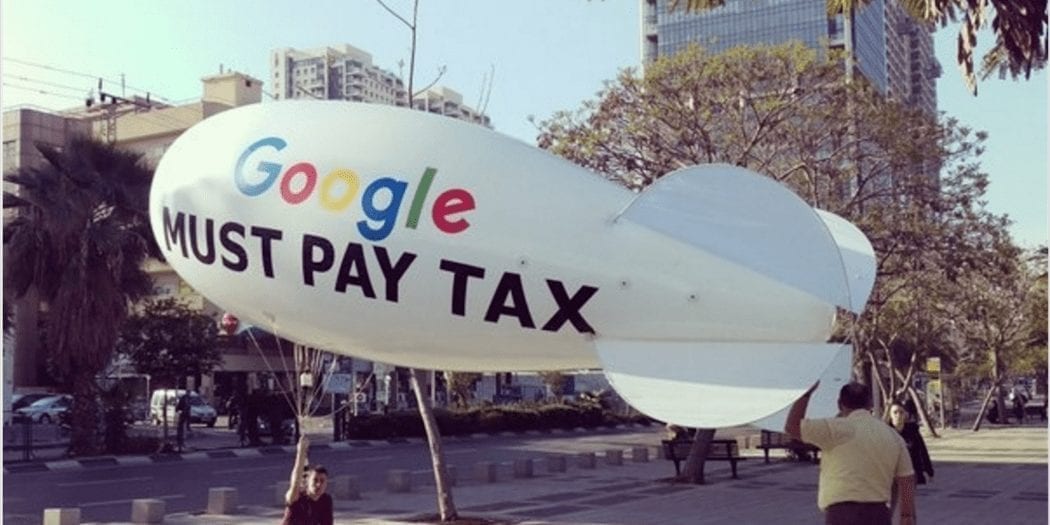
    The Communication and Informatics Minister Rudiantara said that his office and the finance ministry are working to collect tax search engine, Google. “I support the effort. We will not give up,” he told Tempo in Pontianak, West Kalimantan on Tuesday, October 18, 2016.

    Rudiantara said he has no idea why Google tends to avoid paying taxes. “I do not know why. They choose not to pay their duties,” he said

    The minister added that Indonesia has sent a letter to Google, stating that all businesses in Indonesia are subject to taxes.

    “I told Google, if they plan to reach a settlement, we can talk this out,” said Rudiantara.

    Google has not registered as a corporate in Indonesia, although it reaps profit in Indonesia. It has also refused to pay taxes in the past five years worth Rp5.5 trillion.

  • Korea’s Mangosix arrives in Japan

    Korea’s Mangosix arrives in Japan

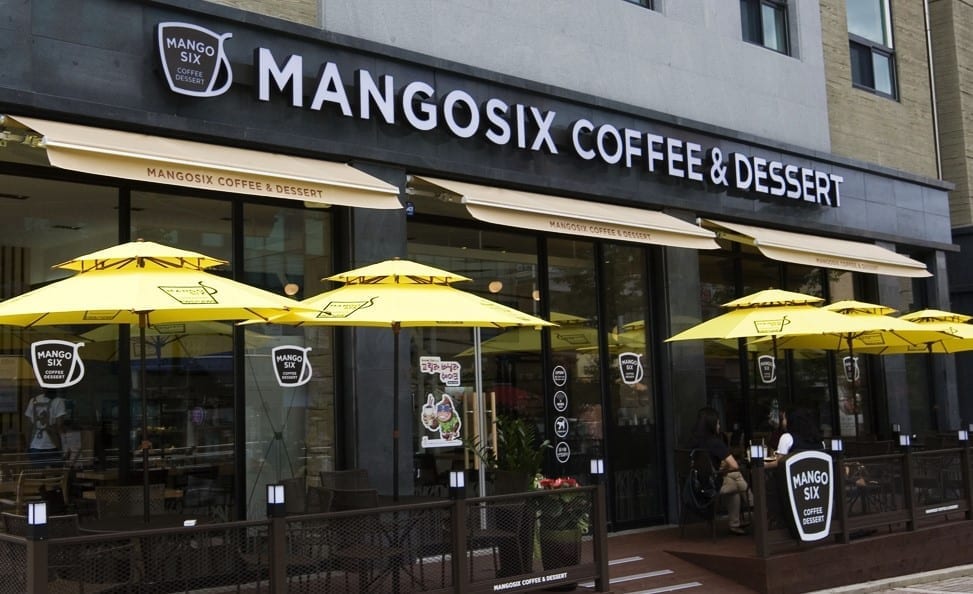
    Korean cafe chain Mangosix has opened its first branch in Japan, in Don Quijote Miyakojima store in Nishisato, Hirara, in Okinawa.

    With mango juice as its main product, Mangosix opened its first store in 2011 and now has about 230 outlets in Asia, Europe and the US.

    For the first time, Mangosix will also offer ice brewed coffee at its Japanese store. Milkissimo’s gelato from Hokkaido is used for sweets and coffee toppings. Miyako-jima island is known for its mangoes, which is why the company decided to open its first store there.

    Mangosix Japan president Akira Kito says the company aims to open 30 stores in Japan within the next three years.

  • Fast Retailing profit rebounds

    Fast Retailing profit rebounds

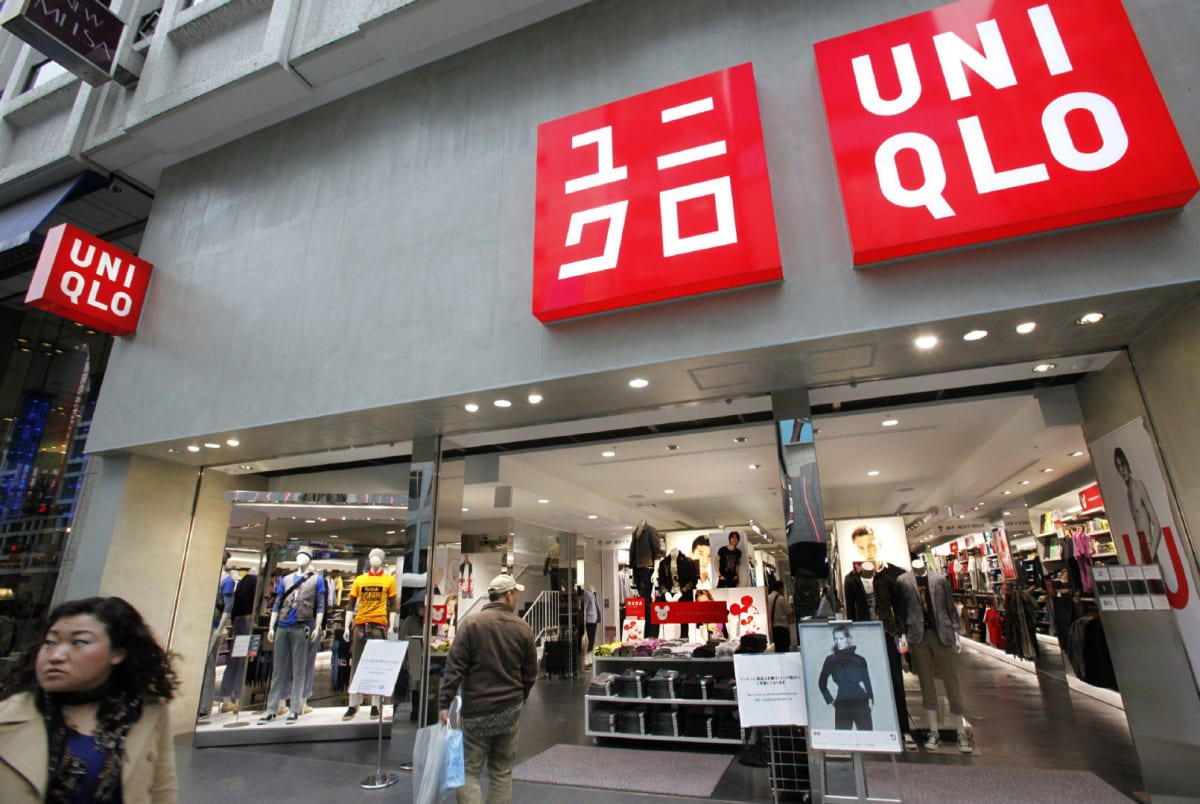
    While Fast Retailing profit fell in the full year, the Japanese apparel giant says its second-half profit rebounded sharply.

    Consolidated revenue rose 6.2 per cent to JP¥1.7864 trillion (US$17.19 trillion) while its operating profit fell 22.6 per cent to ¥127.2 billion.

    Factors underlying the sharp decline in profit include a ¥11 billion foreign-exchange loss, a ¥13.8 billion J Brand impairment loss, and ¥9.3 billion for impairment losses on Uniqlo Japan and Uniqlo US stores, plus retirement and store-closure losses.

    In the second half, from March to August, profit rebounded by 94.3 per cent year-on-year, attributed to a nascent recovery in sales at Uniqlo Japan and Uniqlo International, and concerted cost-cutting efforts.

    For Uniqlo Japan the second-half profit bounced back by 38 per cent. Revenue for the year was ¥799.8 billion, up 2.5 per cent, with profit dropping 12.6 per cent to ¥102.4 billion. Same-store sales rose 4.9 per cent in the second half compared to a 1.9 per cent decline in the preceding six months.

    For Uniqlo International, full-year revenue was up 8.6 per cent to ¥655.4 billion while profit fell 13.7 per cent to ¥37.4 billion. In the second half, however, profit rebounded to 15 times the previous year’s level, mainly because of sharp profit gains in Uniqlo Greater China (encompassing China, Hong Kong and Taiwan), Southeast Asia and Oceania, and Europe.

    For the group’s global brands, revenue rose 11.3 per cent while profit fell 34 per cent for J Brand, revenue rose 32.7 per cent and profit by 34.8 per cent for GU, profit was also up for Theory, while Comptoir des Cotonniers, J Brand and Princesse Tam.tam had losses.

    During the 12 months, Uniqlo International opened a series of stores, including its first global flagship store in Southeast Asia, the Uniqlo Orchard Central store in Singapore. As of August 31, the number of Uniqlo International stores had grown by 160 to 958.

  • Tourists boost Central Group revenue

    Tourists boost Central Group revenue

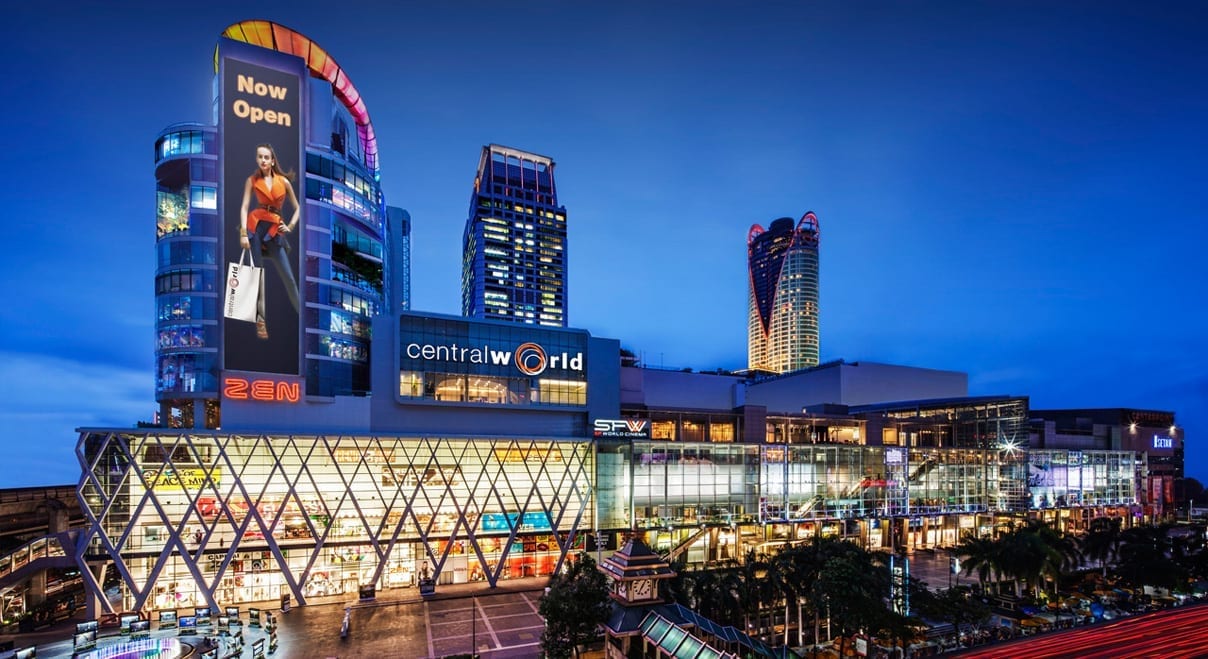
    Thai retailer Central Group expects revenue to rise 21 per cent to Bt320 billion ($9.17 billion) this year following strong growth in overseas business plus tourist spending.

    Controlled by Thailand’s Chirathivat family, Central is seeking to expand in Southeast Asia, says CEO Tos Chirathivat, citing Cambodia, Laos, Myanmar and Vietnam.

    He expects overseas revenue to account for 40 per cent of total in the next five years from 30 per cent now.
    Central bought superstore chain Big C‘s Vietnam business from French retailer Casino in April, comprising 43 stores and 30 malls. Vietnam is Southeast Asia’s fastest-growing market for Central, and the company expects sales to reach Bt37 billion this year.

    Central has also benefited from rising tourist numbers in Thailand, with sales up 15 per cent this year versus 5 per cent for Thai customers, says Tos.

    The group, whose interests include shopping mall developer Central Pattana, Robinson Department Store and Central Hotel Plaza, plans to spend more on its online retail business, which currently accounts for just 1 per cent of revenue.

    Central bought fashion-focused eCommerce site Zalora in April as part of a push to win back shoppers who increasingly prefer internet shopping.

  • Timberland Asia launches online

    Timberland Asia launches online

    Footwear and apparel brand Timberland Asia has partnered SP eCommerce, a Singapore Post company, to launch its official eCommerce store for the Southeast Asian region.

    The Singapore-based online store uses SP eCommerce’s security, management, digital marketing, store operations and customer-care technology. Order fulfillment is being handled across Singapore through SingPost’s last-mile distribution network.

    This gives Timberland the ability to deliver a seamless shopping experience, with exclusive online promotions as well as its full retail catalog.

    “This is a natural next step for Timberland,” says Malaysia/Singapore GM Daisy Tan of Timberland owner VF Corporation. “Working with one partner for the entire shop-to-ship process lets us focus our attention on serving our customers and growing our business.”

  • Sprooki platform to launch in Indonesia

    Sprooki platform to launch in Indonesia

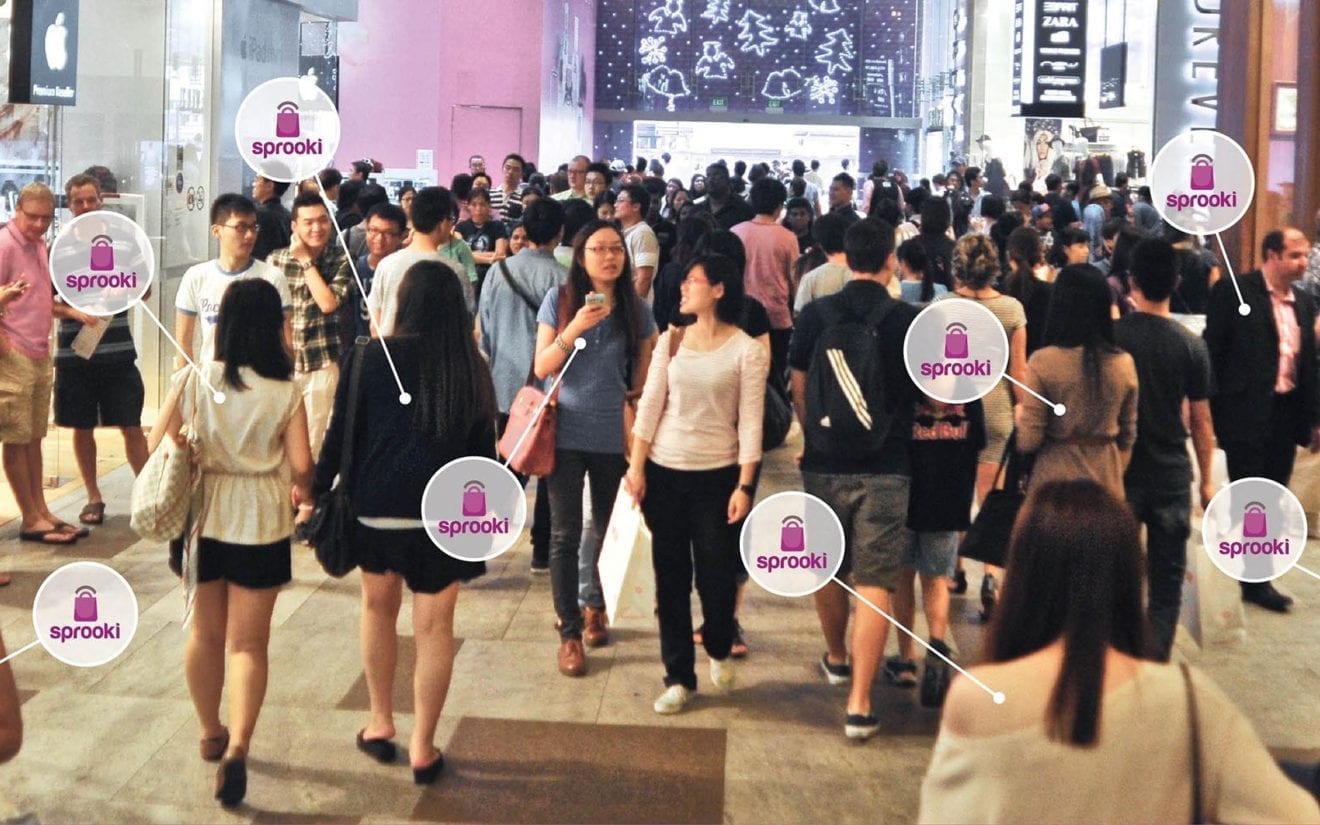
    Shopper-engagement platform Sprooki will launch in Indonesia next month at the 125,000 sqm Supermal Karawaci retail precinct in western Jakarta.

    It will be integrated with the precinct’s touchpoints and mobile apps, allowing retailers to offer customers individualised content such as vouchers, special offers, event alerts and store information.

    Sprooki Michael Gethen and Claire Mula

    Sprooki Michael Gethen and Claire Mula

    Customers will be able to share content on social media including Facebook, which has more than 60 million users in Indonesia. Sprooki is available in both English and Bahasa languages.

    Based in Singapore, Sprooki uses customer location, profile and behaviour data to help retail outlets, shopping malls and department stores engage with their customers via smartphones and other devices.

    Supermal Karawaci is the largest shopping centre in Banten province, west of Jakarta, with more than 1000 stores, three cinemas and the largest Timezone arcade in Southeast Asia – complete with an indoor rollercoaster.

    Sprooki CEO/co-founder Michael Gethen says the deployment will help Supermal Karawaci’s retail tenants improve sales and give the mall unprecedented insight into shopper habits and behaviour.

    Sprooki

    “By implementing the Sprooki platform, our mall will be one of the first shopping precincts in Indonesia to incorporate a data-driven mobile platform to improve shopper experience,” says Supermal Karawaci marketing and leasing GM Pipih Tjandra.

    Sprooki’s mobile platform is already being used by Southeast Asian shopping malls such as a Lend Lease’s 313@Somserset in Singapore and Crescent Mall in Ho Chi Minh City, Vietnam, as well as thousands of retailers and major brands such as Coffee Bean and Tea Leaf, Forever 21, Gap, GNC, Marks & Spencer and Pie Face.

  • China biggest buyer of Korean beauty products

    China biggest buyer of Korean beauty products

    China was the biggest buyer of Korean beauty products last year, grabbing almost half of the country’s cosmetics exports, according to Korea Health Industry Development Institute data.

    Chinese buyers accounted for 41.1 per cent of South Korea’s cosmetics exports, jumping from 22.1 per cent portion in 2013.

    The value of the exports also skyrocketed, from US$274.34 million in 2013 to $1.04 billion last year.

    However, exports to China could be in jeopardy if Beijing imposes economic sanctions in response to South Korea’s push for an advanced US missile defense system, says the institute. South Korea announced in July that it would take on the Terminal High Altitude Area Defense (THAAD) system by the end of next year to counter growing threats from North Korea.

    “There is concern over the Chinese government enacting indirect or direct economic sanctions and possible anti-South Korea sentiment in China,” says the institute.

  • Golden Week spending spree hits $180b

    Golden Week spending spree hits $180b

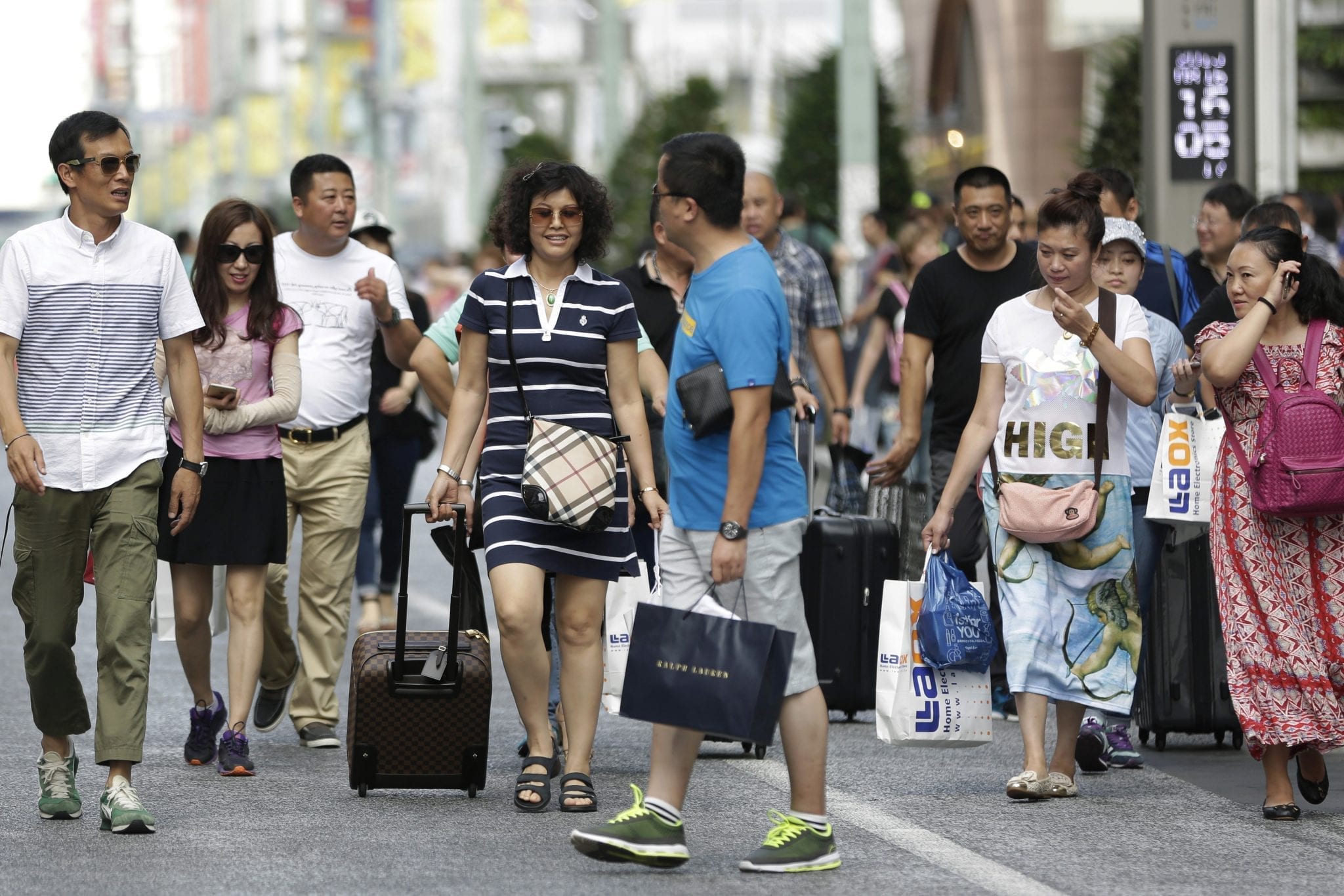
    Retailers and catering businesses were the main beneficiaries of the 1.2 trillion yuan (US$180 billion) Golden Week spending spree by Chinese consumers.

    This was 10.7 per cent up on last year’s figure, according to Ministry of Commerce (MOC) data, with the biggest spenders being in Chongqing municipality and Sichuan province in west China, and Hunan province in central China.

    Jewellery and gold, home appliances, IT products and energy cars were among the top picks during the week. There was also a demand for catering services for weddings, birthdays and family reunions.

    It is the second consecutive year Golden Week has hit the 1 trillion yuan spending milestone, says China.org.

    Despite an estimated 6 million Chinese tourists travelling overseas during the holiday week, domestic spending was highly encouraged, reports the International Business Times. Beijing has encouraged domestic spending to stimulate the economy, which jumped 6.7 per cent between January and June.

    “The economy this year, especially in the third quarter, is better than expected,” according to Premier Le Keqiang.

    A joint report by the China Tourism Research Institute and cTrip shows Chinese tourists spent as much as 8000 yuan during the national holiday.

    About 593 million Chinese tourists visited attractions across China, says the China National Tourism Administration, spending a total of 482.2 billion yuan, 12.8 per cent year on year.

    Golden Week, from October 1 to 7, is a national holiday of seven consecutive days.