Author: Mei Ling Tan

  • Zurich Insurance has launched a solution in Hong Kong and Singapore

    Zurich Insurance has launched a solution in Hong Kong and Singapore

    Zurich Insurance has launched a solution in Hong Kong and Singapore which provides risk-assessment services and protects businesses against the risks associated with supply chain disruptions.

    Called Zurich Supply Chain Insurance, the product is the first-of-its-kind in the Asia-Pacific region and is now available to qualified customers based in the two markets.

    “Increasing globalisation, improved transport and logistics through to technological advancements have enabled companies to source materials from virtually anywhere in the world,” said Keith Thomas, chief executive officer of Zurich’s Global Corporate in Asia Pacific business unit. “While this provides increased flexibility and cost savings, it can also result in complex supply chains that are highly interconnected, more exposed and difficult to manage.”

    According to Zurich, the new solution helps reduce supply chain failures and provides cover if delayed or undelivered supplies result in a financial impact on a company’s operations. Supply Chain Insurance consists of two components. In the first phase, risk engineers carry out a risk assessment to identify and evaluate customers’ exposure to critical risks throughout their supply chain, and recommend prioritized mitigation actions. In the second phase, the risk assessment is combined with other sources of data to underwrite and price the risk.

    “Many organizations are not aware who their key suppliers are, especially in the lower levels of the supply chain, and very few have visibility over their entire supply chain,” said Hassan Karim, technical underwriting manager of Zurich Asia Pacific. “Half of supply chain disruptions occur beyond the preliminary supplier of goods, therefore making it extremely difficult to establish where an organization lies within its suppliers’ priorities.”

    Karim added that it is essential to take a holistic approach and to identify critical supplies when working with customers to manage their exposures.

    “Effective supply chain risk management can present significant benefits to businesses and is becoming an increasingly important driver of their profits,” he said. “Every customer’s supply chain is different so we work with them to shape the appropriate solution and offer an individually tailored policy to meet their specific needs.”

    The Supply Chain Insurance solution has been available in Europe and North America for the past six years, according to Zurich.


  • Vodafone plans to launch world’s first NB-IoT networks

    Vodafone plans to launch world’s first NB-IoT networks

    Vodafone has revealed plans to launch what it expects will be the world’s first live commercial narrowband IoT (NB-IoT) networks in early 2017.

    The operator will launch LPWA NB-IoT networks in Germany, Ireland, the Netherlands and Spain during the first three months of the year.

    Vodafone said it will be able to implement the NB-IoT rollout by way of a software upgrade to its existing 4G base stations, allowing the company to deliver nationwide coverage almost immediately in the four markets.

    The operator plans to roll out the technology to additional markets later in the year, and provide full coverage of the operator’s global network by 2020.

    In preparation for the launch Vodafone has been conducting testing of the technology. Last week Vodafone Spain completed the first test of an NB-IoT connected product on a commercial network, by burying a parking sensor in a space within Madrid’s Vodafone Plaza. A smartphone app was able to display that the space was occupied when a car was parked in it.

    “The questions of battery life and deep in-building penetration have now been answered by NB-IoT,” Vodafone’s director of IoT Ivo Rook said.

    “The low cost of the modules means we can expect a new wave of connected devices and soaring market demand. Vodafone’s world leading expertise and experience in IoT will prove invaluable in shaping this exciting market.”

    Singapore’s M1 has also announced plans to deploy a commercial NB-IoT network in 2017, but did not specify the time during the year that the company plans to launch.

  • Vodafone Australia to offer fixed broadband services

    Vodafone Australia to offer fixed broadband services

    Vodafone Australia has revealed plans to branch out into offering fixed broadband services over the national broadband network (NBN).

    The operator plans to extend into fixed-line broadband to give its mobile customers more access to data both at home and on-the-go.

    While the NBN rollout is not scheduled for completion until 2020, around three million premises have access to the network and more than 1.1 million have signed up.

    At a press briefing, Vodafone Australia CEO Inaki Berroeta said the move into fixed broadband is a “natural progression” for the company, and it’s the right time to make the move because the NBN project is reaching the scale required to deliver an NBN service that complements its mobile network. It is expected that 4 million premises will be NBN-ready by the end of the year.

    Vodafone plans to make its first commercial NBN services available next year.

    Market research from Roy Morgan indicates that 550,000 of Vodafone’s mobile customers already intend to switch fixed broadband provider over the next 12 months, giving the operator a large potential market at the ready.

    Vodafone’s customers are also over 50% more likely than average to be dissatisfied with their current fixed broadband provider, and are statistically 10 percentage points less likely than the national average to have market leader Telstra as a fixed broadband provider.

  • How to make the most of the Asian food retailing boom

    How to make the most of the Asian food retailing boom

    Asia’s consumers are expected to spend US$5.9 trillion on food, beverages, and tobacco by 2018, making up 60 per cent of global expenditure in this category.

    This means retailers need to expand aggressively, scaling up in new markets and keeping their supply chains adaptable to target more customers to make the most of the Asian food retailing boom. The middle class population in Southeast Asia is projected to grow to 400 million by 2020 and businesses that fail to scale will miss out on this tremendous market opportunity.

    Food retailing is all about delivering the best customer experience through high on-shelf availability (OSA), wide stock variety, and immaculate product quality to drive sales. Whether you are a convenience store chain, supermarket, or hypermarket, the goal is to build and retain a loyal customer base while keeping operating costs low to ensure prices remain competitive. However, food retailers in Asia Pacific face a unique set of roadblocks.

    Countries across the region are at different stages of development. With geographic diversity, companies face significant challenges when it comes to taking advantage of the growth possibilities. This will prove problematic, especially with Asia Pacific’s status as the world’s largest and fastest growing B2C eCommerce region. Consumers will expect faster, better services from food retailers as their threshold for waiting times lower in the “on-demand” age.  A recent announcement by Kantar Worldpanel forecast online grocery sales will be worth US$150 billion by 2025 – currently South Korea and Japan hold the first and second spots on the global e-commerce grocery market with Taiwan in the fifth position and China coming in sixth.

    The Four Ingredients of Supply Chain Success

    Asian food retailers , especially those selling fresh or frozen products, face issues due to the time-sensitive nature of the products which spoil quickly if not kept in the right conditions. Delivering chilled or frozen food across long distances is difficult due to infrastructure and asset availability, with options such as local sourcing or storage not always feasible. In light of these factors, it is critical to change the mindset to view the supply chain as a strategic business enabler driving competitive advantage, rather than a backend function focused on transport and storage. Here are four key ingredients to get you on your way.

    1. Take a fresh look at your supply chain

    Make a commitment to review your supply chain from end to end. What you need to look out for are potential cost inefficiencies and gaps in service performance, and understand the underlying reasons why these occur to help identify appropriate new solutions. For example, can you automate packing processes to speed up your deliveries down the line? Are you facing over- and under-stocked inventories because you cannot accurately anticipate supply and demand? Getting these questions answered is vital to your success. One route is to engage a consultant to assist. However, a specialist supply chain partner with extensive expertise will not only help with the review and design, but also has the capability to deliver. But also think about the long-term strategy and predicted expansion so that the new design is fit not just for today, but for your future business.

    1. Streamline your operations end to end

    Facilities, people, transportation, and technology are the ingredients within your supply chain that influence your overall business performance. Hence, it is important to make the right investments and realise the maximum benefits through continual review and optimisation.

    You can begin by analysing your truck fleets and find ways to fully use their capacity and improve routing. New designs and technologies enable delivery trucks to have different temperature zones to transport ambient, chilled, and frozen products in the same vehicle – enabling food products to be consolidated and transported using a single vehicle rather than needing to run multiple vehicles to the same location. And to accelerate deliveries, transport management systems provide insight and data analysis to determine the quickest and most cost-effective routes – incorporating telematics and real-time tracking gives full visibility throughout the journey which can lead to far more efficient unloading processes at the receiving end. Often, retailers can leverage a specialist 3PL like DHL and its existing investments in resource, technology, facilities and assets, such as trucking, to reduce retailers’ cash outflow and deliver a competitive cost-per-unit. In addition, a good supply chain management (SCM) partner with inroads in emerging markets can offer effective consultation on building delivery networks in new territories.

    1. Add visibility and control

    Gaining more control over your supply chain empowers you to navigate and anticipate any potential disruptions to food product deliveries. The first step is to improve visibility over inventory levels to maximise OSA whilst minimising spoilage – it’s a fine balance to manage and focus on the detailed insights of supply and demand patterns. Inventory optimisation manages stock cost effectively, balancing stock holding with customer service levels by taking into account availability, requirements, and lead time variability.

    A high level of inventory is not only capital intensive but also expensive to service through increased indirect spend, such as warehousing, transport, and procurement. Hence, not only will inventory optimisation reduce logistics costs, but drive excellent service to create satisfied customers by having the right stock at the right location.

    By looking at inventory holding, you can then make informed decisions about your storage requirements, and whether other options are more suitable. For instance, instead of using a conventional warehousing model, you can complement it with cross-docking for fast-moving goods. This speeds up distribution and reduces warehousing space as stock is not moved into storage. You can also consider hybrid inventory models to make the most of your existing warehouse facilities. Effective solutions can help you achieve an average inventory age of between 15 and 30 days which brings the additional benefit of improving cash flow. Achieving these metrics is not easy but specialist knowledge, experience, and sophisticated systems are the catalysts to creating a lean and responsive operation.

    1. Innovate to deliver

    Innovation has become a critical differentiator for food retailers in recent years. Automated sorting and storage retrieval solutions can speed up picking processes and shrink warehousing footprints; packaging technologies can quickly create promotional packs with minimal labor requirements; and IT system development will enhance customer experience should shoppers switch from purchasing in-store to online, where they will have home delivery or “click and collect” options. These are just a few developments and there are many more taking place to help meet the ever-increasing customer expectations when making decisions.

    Get Your Supply Chain Right

    Supply chains are no longer just “part of the organisation” for today’s food retailers. An adaptive and flexible supply chain is the difference between winning and losing the market – given the escalating demands of customers. You must understand your customers, and then focus on those elements which are most important to them to drive sales. Whether you are competing on price, convenience, or quality or even a combination of all three, these best practices will give you a head-start in creating an integrated supply chain that will bring advantages now and into the future.

    If you are part of the Asian food retailing industry, you need to start re-thinking your supply chains today to meet the challenges of tomorrow.

    -Dean Eichorn-

  • FPT Retail Vietnam sets up milk store chain

    FPT Retail Vietnam sets up milk store chain

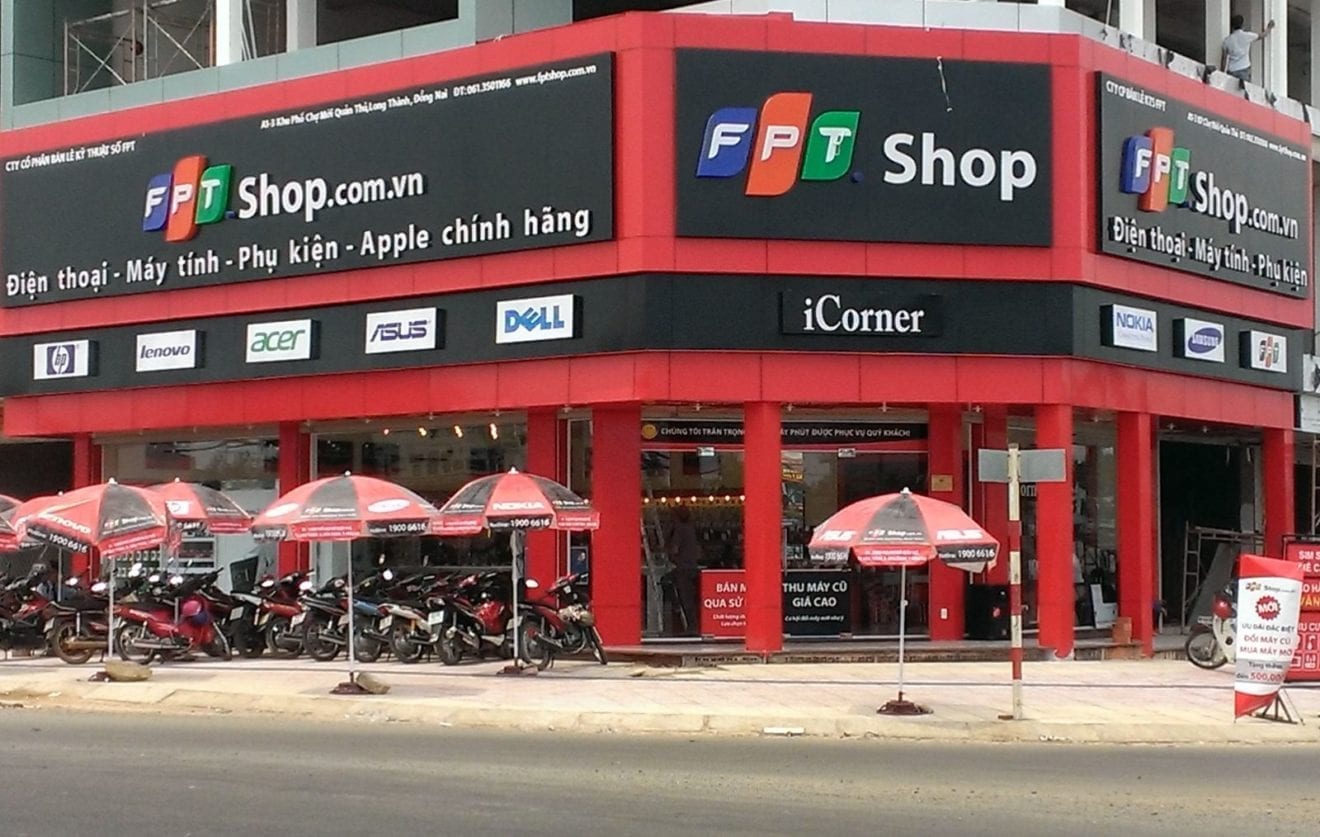
    Vinamilk and FPT Retail Vietnam have entered a joint venture to open a chain of stores specialising in dairy products.

    This “uncommon partnership” is hoped to bring benefits to both parties, FPT adding extensive retail industry experience and insight, Vinamilk a household name and favourite brand.

    A six-month pilot program will see the concept trialled at two of 200 FPT stores in Ho Chi Minh City, with a nationwide rollout to follow if the trial proves a success. Most of the stores will be located alongside an FPT store.

    Vinamilk-FPT instore

    The two sides hope this ‘win-win partnership’ will maximise their own strengths in manufacturing, distribution and retail.

    Shoppers at the Vinamilk stores will have access to product information, direct or online consultation, delivery and other promotions and offers.

    Vinamilk started selling dairy products online earlier this month to compete with new players in the dairy market, including Dutch Lady, Mead Johnson, Nestle, Abbott and TH True Milk.

  • Telkom picks HAUD for A2P SMS monetization

    Telkom picks HAUD for A2P SMS monetization

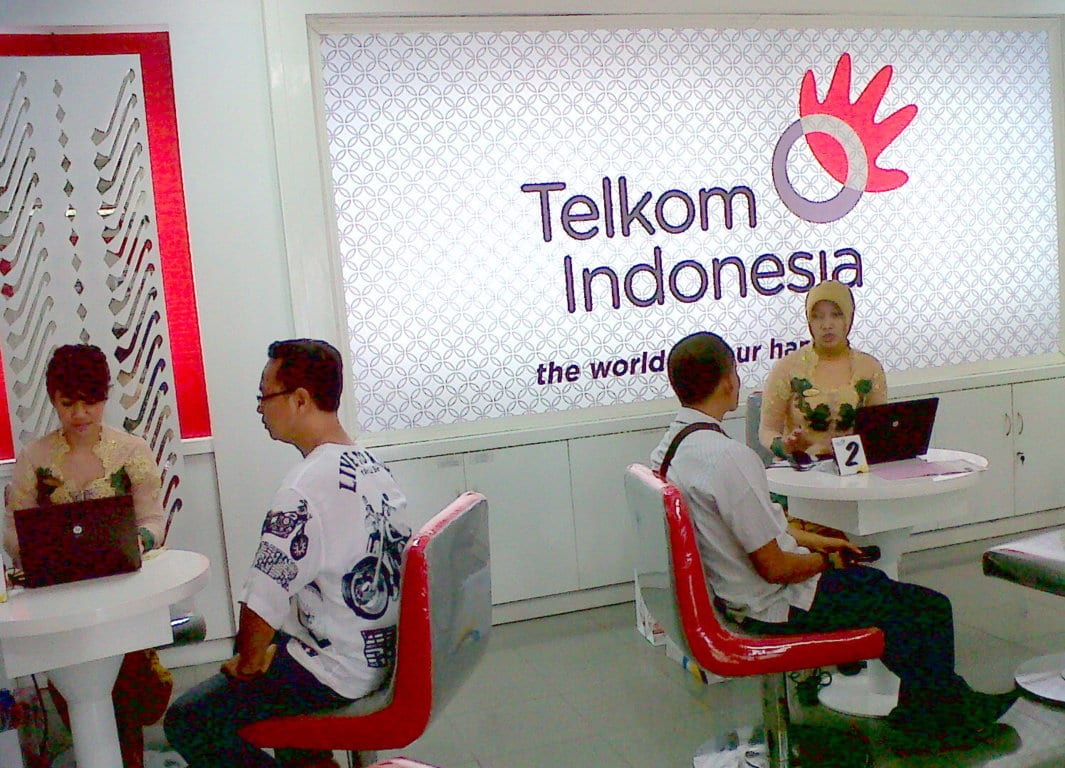
    Telkom Indonesia has adopted HAUD’s A2P SMS monetization and SS7 security managed services to create new sources of revenue and improve subscriber experience for the operator.

    The managed service agreement with HAUD will help Telkom Indonesia mitigate any lost A2P revenue, and its subscribers are protected from spam and fraudulent SMS traffic.

    Through its Revenue-as-a-Service approach, HAUD will manage the entire A2P monetization process, from traffic identification and blocking, to redirection of traffic to monetizable channels, without requiring any initial investment from the MNO.

    HAUD’s mobile network firewall provides modular protection against SS7 security vulnerabilities, fraud and spam SMS, while preventing grey route traffic that bypasses network termination fees. Its range of packages effectively ring-fence networks from malicious messages, while improving customer experience and revenue assurances.

    Mårten Björkman, SVP for Asia Pacific at HAUD, said Revenue-as-a-Service is a new approach to helping operators to make the most of all possible income streams available to them.

    Björkman said the global A2P SMS market is worth billions, but many operators are not equipped to claim their fair share, and routinely lose out on large amounts of revenue due to the ongoing use of grey routes.

    “HAUD’s knowledge and experience of the global A2P and fraud landscape can help MNOs like Telkom Indonesia stay in control of their networks with a minimal outlay of resources,” he said.

    Michael Adiguna, AVP of sales strategy at Telkom Indonesia, said the agreement with HAUD was particularly attractive, and the ability to deliver results almost instantly “was impressive.”

    “With our revenues maximized and network utilization improved, we can focus on delivering the quality of service that modern mobile users demand,” said Adiguna. “HAUD’s solution makes sure that the messages our subscribers receive are from genuine, trustworthy sources.”

  • Carl’s Jr Cambodia opens first drive-through

    Carl’s Jr Cambodia opens first drive-through

    Cambodia has its first quick-service drive-through restaurant with the opening of a Carl’s Jr burger outlet in Phnom Penh, being run by TH F&B Co.

    Carl’s Jr Cambodia has been franchised by California-based CKE Restaurants Holdings, the parent company of Carl’s Jr and Hardee’s.

    “We’ve been experiencing phenomenal international growth this year,” says CKE international president Ned Lyerly. “In fact, Cambodia comes on the heels of successful openings in Australia, Japan and Kenya, and marks the 40th country CKE International has entered.

    “This is an important market for our overall expansion strategy, and we plan to open 15 restaurants in Cambodia.”

    Carl’s Jr Cambodia store

    As well as burgers, the Carl’s Jr brand offers chicken sandwiches, all made fresh to order. Its burgers feature chargrilled Australian beef. Also on the menus are ice-cream shakes.

    “We’re confident that Cambodia, with its large youthful population and increased awareness and desire for western brands, is going to love having this global burger chain,” says TH F&B MD Hav Norm.

    On the corner of Street 51 and Street 310 in Phnom Penh, the restaurant is open 12 hours daily, offering partial table service, an “all you can drink” beverage bar and complimentary Wi-Fi.

    Carl’s Jr Cambodia

    A privately held company headquartered in Carpinteria, California, CKE had its beginnings with Carl Karcher’s hot-dog cart in the 1940s. It now has 3729 franchised or company-run Carl’s Jr Restaurants and Hardee’s outlets in 44 states and 40 countries.

    Awarded with the master franchise and the exclusive rights to run Carl’s Jr in Cambodia, TH F&B Co has a portfolio including Cold Stone Creamery and Gyu-Kaku Japanese BBQ.

  • GTel Mobile has become Vietnam’s fourth 4G licensee

    GTel Mobile has become Vietnam’s fourth 4G licensee

    GTel Mobile has become Vietnam’s fourth 4G licensee, joining MobiFone, Viettel and VNPT in securing a license.

    As with the major operators, GTel Mobile has secured permission to deploy 4G services on the 1800-MHz band.

    GTel Mobile is owned by Vietnam’s Global Telecommunications Corporation (GTC).

    The operator was originally established as a joint venture between Russia’s Vimpelcom and GTC, providing services under the Beeline brand, but Vimpelcom sold its indirect 49% stake in April 2012. The company now provides services under the Gmobile brand.

    The news comes days after the government revealed it had allocated 4G licenses to MobiFone, Viettel and VNPT. The telecoms ministry has set a target of ensuring at least 95% of Vietnam’s population is covered with 3G or 4G infrastructure by 2020.

    GTel’s license acquisition leaves Vietnamobile as the market’s only operator yet to secure a 4G license, the report adds.

  • Gong Cha Korea to expand globally

    Gong Cha Korea to expand globally

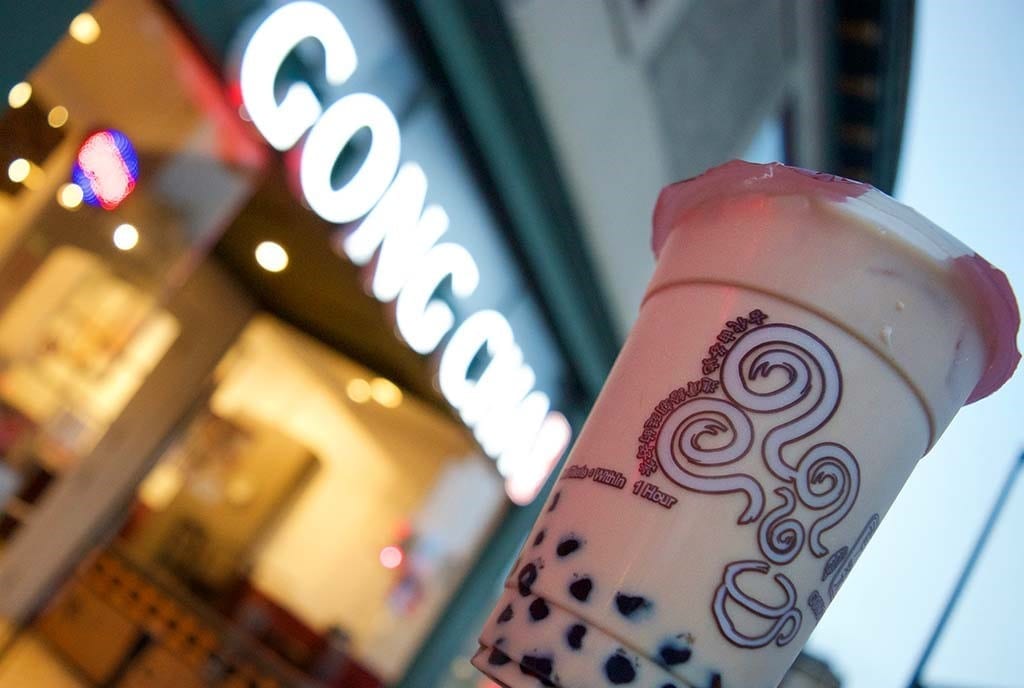
    Bubble tea brand Gong Cha Korea is planning international expansion.

    Aided by the global passion for Hallyu, or the so-called Korean Wave, Gong Cha plans to open stores in the Middle East and Europe. It will also buy more than 1380 stores in 18 countries, including the US, Canada, Australia, New Zealand, China, Japan, Singapore, the Philippines, and Hong Kong.

    Currently, Gong Cha Korea operates only about 360 stores in its home market, which last year brought in KRW8 billion (US$7 million) profit – representing 11 per cent growth year-on-year.

    As most of Gong Cha’s customers are aged from 10 to their 30s, the company expects entering new foreign markets will be easier through creating synergies with Hallyu.

    The expansion will be facilitated by a share transaction with its parent company Royal Tea Taiwan in which the Korean business will progressively boost its ownership from 35 per cent to 70 per cent by January 2017.

    Royal Tea Taiwan was launched in 2006, and introduced to Korea by franchisee Kim Yeo-jin in 2012. Two years later, Japanese private equity fund Unison Capital bought 70 per cent of the Korean business.

  • M1 nine-month profit falls 12.6%

    M1 nine-month profit falls 12.6%

    Singapore’s M1 has reported a 12.6% decline in net profit for the first nine months of the year, due to slowing service revenue and depreciation and amortization costs associated with the operator’s 4G network.

    Net profit fell to S$117.9 million ($84.7 million), while service revenue decreased 1.4% to S$604.5 million as a result of the ongoing impact of OTT substitution on traditional telecoms services revenue.

    Mobile data revenue grew by 6.2 percentage points year on year to account for 54.2% of service revenue, with average postpaid smartphone data usage growing to 3.4GB per month in the third quarter from 3.3GB a month a year earlier.

    Fixed service revenue for the nine-month period meanwhile increased 26.1% year-on-year to S$77.1 million, or 12.8% of service revenue. M1’s fiber customer base increased by 7,000 to 152,000.

    Looking ahead, M1 said barring unforeseen circumstances, the operator expects a similar percentage decline in net profit for the full year as reported for the first nine months.

    Announcing its results, M1 said its planned of Singapore’s first nationwide commercial NB-IoT network, announced n August, will help open up a new growth market for the operator.

    “The needs and behavior of our consumers and corporates are changing rapidly. We will continue to make network investments to provide our customers with a superior and all-encompassing experience while also tapping into new growth areas in data analytics, IoT and other solutions,” M1 CEO Karen Kooi said.

  • Carolina Herrera Vietnam flagship opens

    Carolina Herrera Vietnam flagship opens

    Carolina Herrera has opened a flagship store at Saigon Centre shopping mall.

    The first Carolina Herrera Vietnam store, it is located on Level 1, facing Le Loi St – one of the most visible spots in the city’s centre.

    Carolina Herrera Vietnam 1

    At the grand opening, CH introduced its latest Fall-Winter collection to customers, with the demonstration of models and Vietnamese Beauty Pageants.

    Founded in 1981 in New York by the “Fashion’s First Lady”Carolina Herrera, CH currently has 129 freestanding stores and more than 220 shops-in-shops in Europe, Asia, Africa, Middle East and America.

    Carolina Herrera Vietnam 2


    Carolina Herrera represents elegant lifestyles for men and women through fashion, fragrance, and bridal collections.

    The brand comes to Vietnam under the management of Maison, a local Vietnam fashion distributor which represents 21 international brands including Christian Louboutin, Jimmy Choo, Mango, and Topshop.

  • McDonald’s social media blitz: 200 staff added to Tweet & Like

    McDonald’s social media blitz: 200 staff added to Tweet & Like

    Gearing up for a McDonald’s social media blitz, the fast food giant has recruited 200 staff from tech-savvy online companies.

    The new recruits have come from companies such as Amazon and PayPal and are stationed in the McDonald’s head office in Oakbrook Illinois, in Singapore and London.

    Their challenge is help the iconic burger brand catch up with rivals in using social media to monitor customer experiences, engage with customers and monitor what is trending online.

    Just two years ago, McDonald’s was not even following or responding to online comments on its brand or products – yet its name is mentioned every one to two seconds.

    “We seemed deaf and mute,” Paul Matson, director of social and digital engagement at McDonald’s US, said in an interview with the Wall Street Journal.

    Matson believes the expanded team will help win business from social media-addicted millennials – some 78 per cent of whom visited a McDonald’s restaurant at least once a month during the first quarter of 2016.

    Besides improved monitoring and communication, the company is using social media to test market products and concepts – replacing more traditional focus group research. The spin-off from that is increased exposure of the concepts, wider engagement and a far great sample base than focus groups allow.

  • Australia may refarm 1.5-GHz, 3.6-GHz for MBB

    Australia may refarm 1.5-GHz, 3.6-GHz for MBB

    Australian telecoms regulator ACMA has proposed refarming spectrum in the 1.5-GHz and 3.6-GHz bands for mobile broadband, including potentially in future 5G networks.

    In a discussion paper, the regulator has proposed re-planning the spectrum bands in light of the international interest in utilizing them for mobile broadband by the ITU-R and APT, as well as individual countries. The regulator is seeking feedback from the industry and other stakeholders.

    ACMA said the bands are currently used for a range of other services – including satellite and fixed broadband services in the 3.6-GHz band, and defence use and fixed services in the 1.5-GHz band.

    “There are international standards that support 4G technologies in both the 1.5-GHz and 3.6-GHz bands. Importantly, the 3.6-GHz band is also being looked at internationally as an early band for 5G and the ACMA has decided to bring forward discussion of its future use,” ACMA chairman Richard Bean said.

    “This paper gives current users of the bands as well as potential new entrants an opportunity to help us better understand the issues relevant to each band. Their views will help us to determine what, if any, frequencies and geographical areas should be considered in a possible future re-farming of the bands for mobile broadband.”

  • After Death of Thai King, Luxury Market Wavers

    After Death of Thai King, Luxury Market Wavers

    Following a decade of declining health, 88-year-old King Bhumibol Adulyadej of Thailand, the world’s then-longest-reigning monarch, passed away in Bangkok on October 13. The king’s untimely death concluded a reign that lasted more than seven decades and initiated a year-long period of mourning, bearing substantial consequences for the nation’s luxury and fashion sectors.

    As declared by Prime Minister Prayuth Chan-ocha, leader of the junta that has ruled the country since 2014 after seizing power through a bloodless coup d’état, civil servants will be expected to wear “sombre-coloured” attire for the duration of the mourning period, while the rest of the population has been ordered to “tone down” or cancel entertainment and “joyful events” for at least the next month.

    Though the first full week of mourning has yet to pass, the consequences are already being felt. “I think [the fashion and luxury sectors] are definitely going to suffer — there will be a drastic decline in consumers of fashion brands,” predicts Kullawit ‘Ford’ Laosuksri, editor-in-chief of Vogue Thailand. “For example, I have spoken to a distributor of Kate Spade and Valentino, and they said that they had to re-estimate their Spring/Summer orders … The tourist and retail sectors are going to see a decline in sales — that is something the whole nation is afraid of.”

    Indeed, many of these fears are justified. “Retailers and hotels cancelled all promotions and activities related to sales and events during October to November,” says Anisa Ngandee, an analyst from Euromonitor. “Generally, the last quarter is usually the peak tourism period and the months where retailers [see] festive spending [during the] holiday seasons; thus, it will have a short-term impact on the retailers and hotels sales.”

    Regarding his publication, Laosuksri says, “There’s nothing we can do for the November issue, [but] for December issue, we are definitely going to decrease the print run, [while] a lot of traditional advertisements will be — if not in black and white — condolence messages.”

    From a Western perspective, the extent of mourning may seem extreme, but King Bhumibol’s reign was unique. For most Thais, life under Bhumibol is all they have ever known. “I and all the Thai people view this passing of the king as something that is quite personal as if somebody from our family has passed,” says Laosuksri. King Bhumibol’s heir, Crown Prince Maha Vajiralongkorn, has delayed his ascension to join the Thai people in grieving for his father; however, the country’s general election will go ahead as planned in late 2017.

    In recent years, the Thai luxury market has shown tremendous promise, growing 8 percent year-on-year from 2015 to 2016, reaching a total value of nearly $1.6 billion, according to Euromonitor. This can partly be attributed in part to the country’s young, wealthy upper-middle class. According to Digital Luxury Group,a business intelligence firm headquarted in Geneva, 20.5 percent of consumers who earned $150,000 or more in 2014 fell into the 30-34 age bracket, while another 18.6 percent fell into the 35-39 bracket, giving luxury brands and retailers ample space to penetrate the Thai market.

    The tourist and retail sectors are going to see a decline in sales — that is something the whole nation is afraid of.

    Nevertheless, despite this wealthy domestic consumer base, tourism still plays a significant role in sales of luxury goods. According to Bain & Company’s 2015 Global Luxury Goods Report, “Thailand [is a] top performer [in the Southeast Asia market] thanks to Chinese flows with strong potential going forward.” Just two days before the death of the king, Thailand’s biggest retailer, Central Group, announced expectations of a 21 percent rise in revenue to 320 billion baht ($9.17 billion) for fiscal 2016; sales at Central stores to foreigners rose 15 percent while transactions with domestic consumers merely increased by 5 percent.

    Given the immediate decline in the domestic demand for luxury goods, the Thai government must now tighten their dependence on the tourism sector to offset regressions, as retailers scramble to compensate losses in sales. “[The fashion industry] is very much going to depend on tourism; therefore, I think the government will be trying their best to promote it … after the one-month period,” predicts Laosuksri.

    If Laosuksri’s forecasts are correct, the Thai government will need to amplify its current efforts to engage Chinese tourists. “Thai authorities are leveraging Mandarin websites and KOL (key opinion leader) representation in China to promote the destination,” says Thibaud Andre of Daxue Consulting, a market research firm based in China. “[They] are strongly pushing their domestic practitioners to be more educated on Chinese culture and basic Mandarin, as well as [to increase activity] on Chinese platforms such as Wechat, Weibo or Taobao.”

    Despite the negative image of Chinese tourists in Thailand and controversy surrounding the recent crackdowns on “zero-dollar” budget tours targeted at lower-income tourists from China earlier this month, according to the Siam Commercial Bank, the average daily expenditure per person amongst Chinese tourists has grown to 5,748 baht ($164.1) in 2015, from 4,425 baht ($126.4) five years prior. In terms of purchasing power, foreign shoppers, especially Chinese tourists, have become a cornerstone of the Thai luxury market.

    In data provided by Thailand’s Department of Tourism, from January to August of this year, approximately 6.6 million tourists from China visited Thailand — more than from Europe, the United States, Australia, Africa and the Middle East combined – with nearly two million arriving between January and February 2016 alone, an especially high-traffic period for the Lunar New Year.

    In the near future, Thailand’s luxury retail market may face several hurdles in sustaining recent growths in sales — particularly given the country’s strict lèse-majesté laws and the increasing risk of ultra-monarchist violence in the capital deterring inbound tourists from mainland China. “In the short term … we already lowered our expectations to 10.5 million visits for 2016 due to the mourning period,” says Andre. “Chinese agencies are already refunding their clients and tour operators are cancelling trips.”

    While the short-term forecast may seem turbulent, market analysts remain positive about the future. According to Ngandee, “In the long term, with the development of infrastructure, expected number of tourists are projected to be positive; [compounded with] the expansion of Thai middle-income population, industries are generally looking forward to more optimistic performances.” Nevertheless, Euromonitor suggests that stability still remains contingent upon next year’s government election.

    However, the country has shown resilience during previous political and social upheavals, and many Thai industry insiders like Laosuksri maintain a sense of hope in this period of uncertainty.

    “Euromonitor projects that more than 12 million incoming Chinese tourists at the end of 2020, [and] Thailand is expected to remain among the top destinations and might overtake the second hit destination [for outbound Chinese travellers] at the end forecast period,” assures Ngandee.

     

  • Surge in Chinese tourist arrivals continues to boost South Korean duty free

    Surge in Chinese tourist arrivals continues to boost South Korean duty free

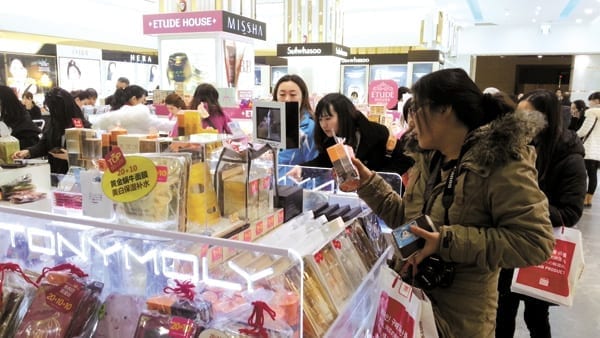
    Chinese visitor numbers to South Korea in August climbed by +70.2% year-on-year to 873,771, according to the Korea Tourism Organization. The figures are distorted by the 2015 MERS health crisis which ravaged inbound tourism in 2015, prompting a -32.3% year-on-year fall in arrivals last August. A better base comparison is the +15.2% growth in August 2016 over the same month in 2014, when Chinese arrivals reached 757,683.

    Chinese visitors are critical to South Korea’s travel retail sector (the world’s largest), representing 52.5% of total arrivals in the month.

    For the first eight months of 2016 Chinese arrivals rose by +48.8% year-on-year to 5,608,046.

    The importance of group tourists to the travel retail channel is underlined by the breakdown of Chinese visitor numbers (see table below) with 4,839,309 group travellers arriving in South Korea over the first eight months. Group tourists accounted for 86% of Chinese arrivals. Others (principally free independent travellers) represented just 731,731 arrivals, a 13% share, with business travellers and officials making up the balance.

    Attracting the FIT market is an increasingly important battleground in the fight between retailers to attract big-name luxury brands.

    However, arrivals by ‘others’ fell -7.0% year-on-year in the first eight months, while Chinese group tourist numbers surged +64.1%.

    Japanese arrivals grew -51.7% to 225,456 in August, a 14% share.

    The first eight months of 2016 saw a +23.5% rise in Japanese visitor numbers to 1,451,565, a 12.6% share.

    Korean departures increased by +12.5% in August to 2,064,241; and for the first eight months by +16.8% to 14,780,387.

    Visitor arrivals by gender for August; Source: Korea Tourism Organization

    Visitor arrivals by gender for August; Source: Korea Tourism Organization

    Accumulative visitor arrivals by gender for first eight months; Source: Korea Tourism Organization

    Accumulative visitor arrivals by gender for first eight months; Source: Korea Tourism Organization

    Visitor arrivals by purpose and nationality for August; Source: Korea Tourism Organization

    Visitor arrivals by purpose and nationality for August; Source: Korea Tourism Organization

    Accumulative visitor arrivals by purpose and nationality for first eight months; Source: Korea Tourism Organization

    Accumulative visitor arrivals by purpose and nationality for first eight months; Source: Korea Tourism Organization

    Outbound departures of Korean nationals by gender for the first eight months of 2016; Source: Korea Tourism Organization

    Outbound departures of Korean nationals by gender for the first eight months of 2016; Source: Korea Tourism Organization

    Outbound departures of Korean nationals by age for the first eight months of 2016; Source: Korea Tourism Organization

    Outbound departures of Korean nationals by age for the first eight months of 2016; Source: Korea Tourism Organization