Author: Mei Ling Tan

  • Susi Promises Banking Access for Fishermen

    Susi Promises Banking Access for Fishermen

    Marine and Fisheries Affairs Minister Susi Pudjiastuti will facilitate fishermen or ship owners who owns ships with a capacity of less than 10 gross tonnage to have access to banking services. Minister Susi said that ship owners would only need came to the Marine and Fisheries Affairs Ministry office.

    “I will establish an outpost at the Ministry’s licensing office. We will meet [fishermen] with banking institutions,” Susi said on Wednesday, October 5, 2016.

    Susi promised to help fishermen to be able to access credit facilities to get funds to replace their trawls. Susi targeted fishermen to be able to get at least Rp 200 million loan. The Minister also offered to provide a debt restructuring program for fishermen.

    Susi hoped that ship owners will take the opportunity to replace their trawls and fish with more environmentally friendly method. The Minister added that she had recently managed to help a fisherman to get a fresh loan from the bank.

    Susi said that she had contacted two state-owned banks, Bank Rakyat Indonesia, and Bank BNI, to help with the program. The Minister also expected other banks to take part in the program, which is supported by the Financial Services Authority.

    In addition, the Marine and Fisheries Affairs Ministry had asked fishermen to re-measure their ships, while Minister Susi guaranteed that there will be no illegal levy in the process.

  • Vedder Price expands into Singapore

    Vedder Price expands into Singapore

    Vedder Price announced the opening of a new office in Singapore, continuing the growth of the firm’s global footprint. The Singapore office will initially tap existing members of Vedder Price’s prominent Global Transportation Finance (GTF) practice, with plans to further develop this new office through additional lateral hires. The office will practice U.S. and UK law.

    The Singapore location gives Vedder Price a foothold in a key region that is critical to the firm’s clients and where the firm’s GTF practice is already thriving. The Asian global transportation finance market is expected to undergo explosive growth in the next 20 years, particularly in aircraft finance, as the region’s population grows and air travel surges. Growth in maritime finance is also expected.

    Vedder Price enjoys a strong worldwide reputation for legal services related to global transportation finance. The firm serves a broad base of clients across all transportation sectors, including the aviation, aerospace, railroad and marine industries, and serves both U.S.-based and international clients who execute deals worldwide under U.S. and UK law. The firm was named the “Law Firm of the Year” at the 2015 Aviation 100 Awards and recognized for “Overall Deal of the Year.

    “This is an exciting time for our firm and practice as we expand our capabilities into Asia,” said Dean N. Gerber, Vedder Price Board of Directors member, Executive Committee Vice Chair and Chair of the firm’s Global Transportation Finance team. “Singapore continues to be a key focal point for global transportation finance and leasing, and we expect this to continue for years to come given market conditions. We look forward to establishing new relationships and to strengthening our ability to serve our many clients already doing business or domiciled in Asia.”

    The office will be established by Shareholder Ji Woon Kim who recently relocated from the firm’s New York office. Mr. Kim will manage the business development and strategic growth of the office, including lateral hires. Mr. Kim, who has spent his entire career at Vedder Price, has helped build the GTF practice for more than a decade. In 2013, he was recognized as a Rising Star by Airfinance Journal, and in 2014, he was listed as a Rising Star by New York Super Lawyers in the practice of aviation and aerospace. He will be joined by solicitor Lev Gantly who relocates from the firm’s London office.

  • Siam Discovery bags two awards from Thailand Property Awards 2016

    Siam Discovery bags two awards from Thailand Property Awards 2016

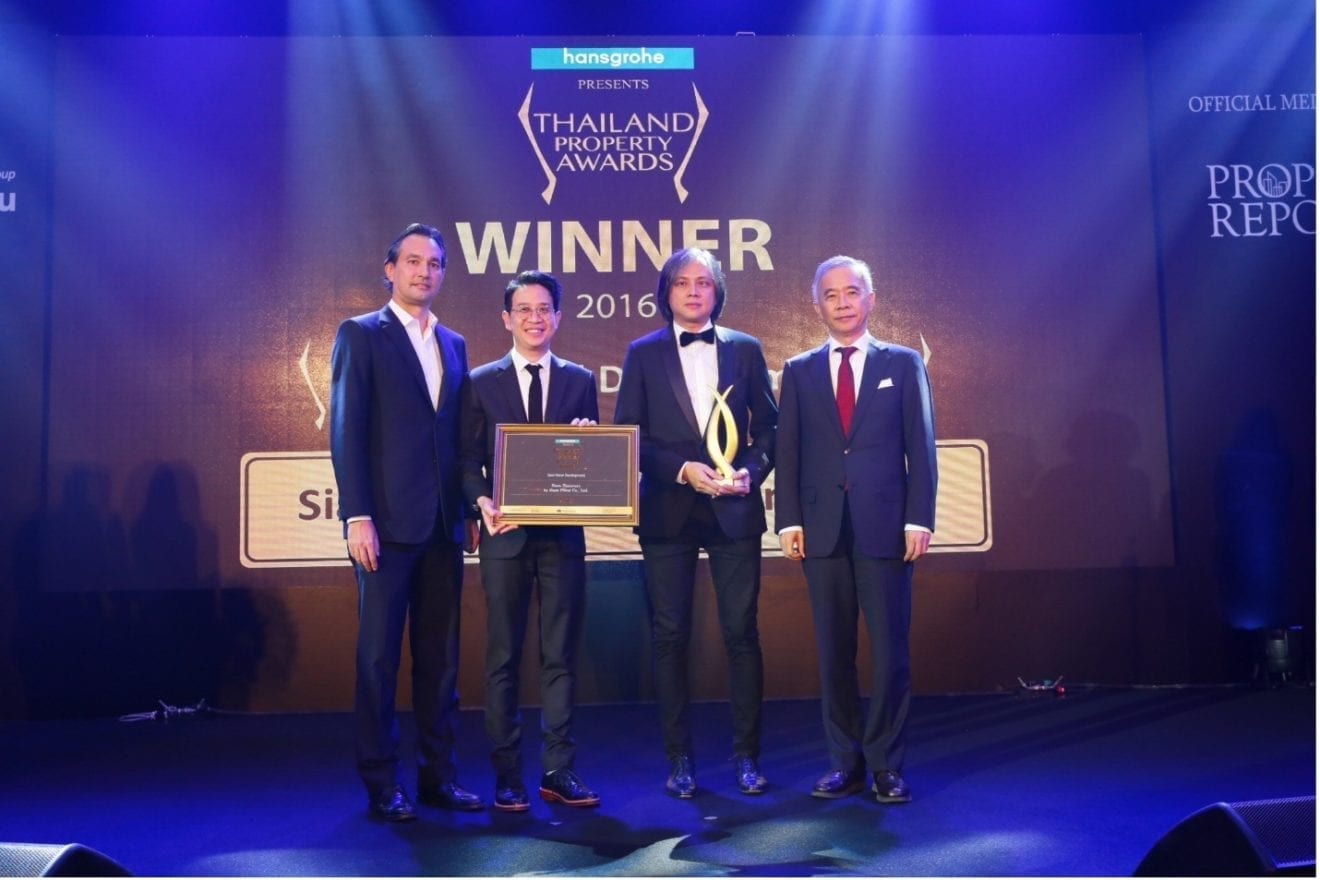
    Siam Piwat Co., Ltd., the owner and operator of world-class developments such as Siam Paragon, Siam Center, Siam Discovery, and Paradise Park shopping centers, and joint-owner of megaproject ICONSIAM, reinforced its success after the relaunch of Siam Discovery – The Exploratorium in May, Thailand’s first hybrid-retail destination and lifestyle specialty store, by winning two prestigious awards in the real estate industry, namely “Best Retail Development” and “Best Commercial Development” from Thailand Property Awards 2016.

    Ms. Chadatip Chutrakul, Chief Executive Officer of Siam Piwat Co., Ltd., said, “We are extremely proud that Siam Discovery has won Best Retail Development and Best Commercial Development awards from Thailand Property Awards 2016. These accolades stand testament to Siam Piwat’s success as the Icon of Innovative Lifestyle and Thailand’s retail and real estate innovation leader, who is ready to continue offering experiences that are novel yet meet our customers’ needs.”

    “The awards reflect the success of the distinctive design and the ideas behind it by a team of world-renowned design experts such as the world’s leading designer Nendo (Oki Sato) and Urban Architect Co., Ltd., who came together and imbued the architecture of the refurbished Siam Discovery with elegance and uniqueness. Created under the never-before-seen concept of “Thailand’s first hybrid retail store,” Siam Discovery has broken every rule of Thailand’s retail industry to offer exciting experiences and creativity. This emanates from every single design detail, not only in the general ambience of Siam Discovery, but across its entire area of over 40,000 square meters, including its open space, transforming it into Thailand’s largest lifestyle specialty store. Even the product displays and stores of over 5,000 brands are decorated to match the personalities of each specific Lifestyle Lab on each floor to give our customers the freedom to browse for products that suit their stories and interests and make shopping both convenient and a fun exploration,” said Chadatip.

    Thailand Property Awards, was held for the 11th time with the aim to boost the stability and efficiency of Thailand’s real estate market and encourage real estate entrepreneurs wishing to participate in the event to continue to enhance their projects each year. The judging panel of Thailand Property Awards was composed of respected experts in different branches of the real estate industry, ranging from consultants and project managers to designers and architects, as well as Prof. Dr. Manop Bongsadad from the Housing Development Department, the Faculty of Architecture, Chulalongkorn University, who presided over the event as the honorary chairman.

  • Hong Kong Airport remained at the top of the list of China’s busiest airports for cargo

    Hong Kong Airport remained at the top of the list of China’s busiest airports for cargo

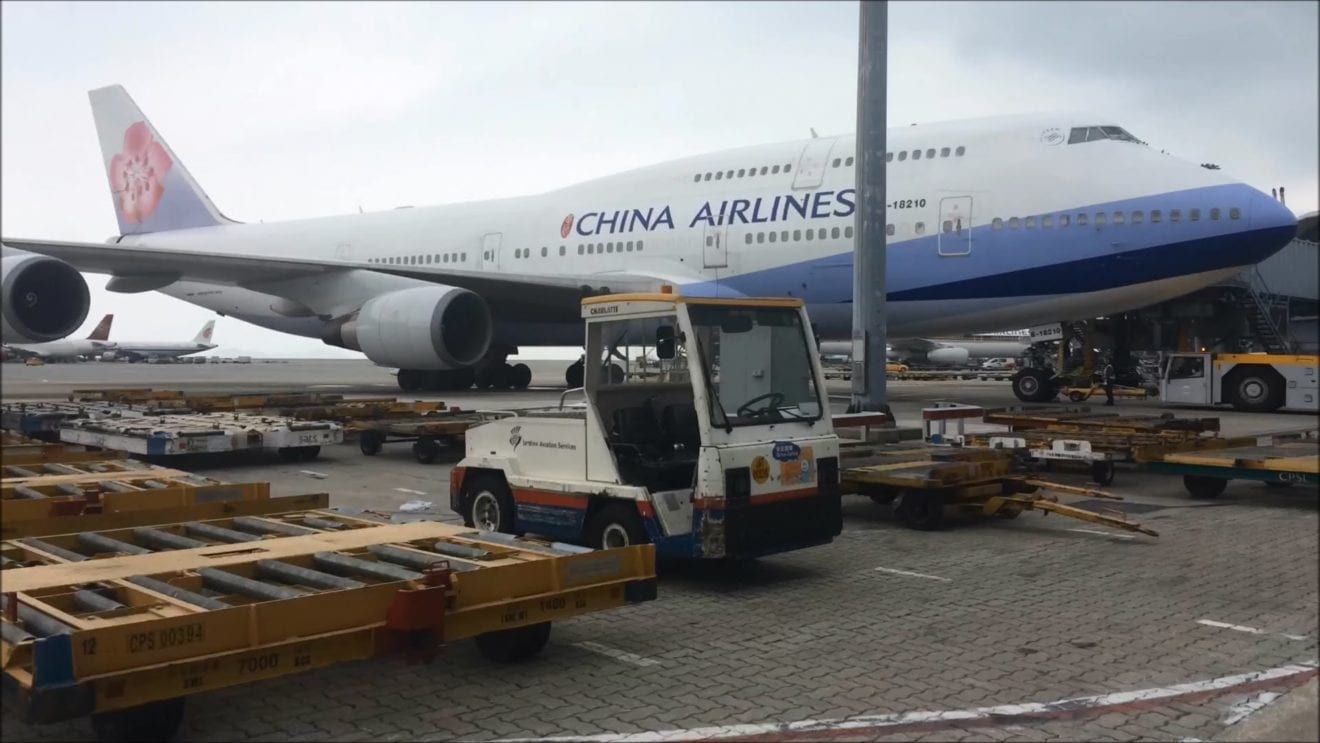
    Hong Kong International Airport remained at the top of the list of China’s busiest airports in terms of cargo traffic for 2015.

    According to statistics, Hong Kong handled a total of 4.38 million tonnes during the year. While this was only a 0.1% year-on-year increase, the airport also maintained its status as the busiest cargo airport in the world for a sixth consecutive year.

    In April 2016, the airport authority received approval from the government for its outline zoning plan and to proceed with the reclamation work for the three-runway system. The expansion project, which includes a 3,800, runway, new taxiways and a new passenger terminal, isn’t expected to be completes until at least 2023, and it remains to be seen whether that will further limit the growth of the cargo business.

    Next on the list was Shanghai’s Pudong International Airport, which handled approximately 3.28 million tonnes in 2015, a 2.9% growth over 2014.

    But flights at the airport are still prone to lengthy delays. According to the Civil Aviation Administration of China, Pudong came last in a ranking of the on-time departure performance of 27 major airports, with just 54.3% of flights departing on-time. 

    “We’re trying hard to solve the congestion issues during the day and talking to the air traffic control authorities,” says Xun Meng, deputy general manager of the Aviation Logistics Development Company at the Shanghai Airport Authority. “Unfortunately we don’t have much control over ATC and slots, but as an airport operator, we have the responsibility and duty to fight for what’s best for our customers. So we’re going to try and coordinate slots for cargo by solving one or two issues. For example, we could agree with some domestic airlines to lease or sell their spare or unused slots to cargo carriers.”  

    Two other factors that could benefit the development of the cargo business, according to Meng, are the completion of the fifth runway and the optimization of military and civil airspace in the Shanghai area. 

    FedEx has been building its own ¥700 million (US$105 million) freight hub at the airport. The necessary inspections will be carried out from July to the end of November 2016. 

    “From December to April next year, it will be handed over to FedEx and they will be launching operations,” says Meng. “This hub is located at the western cargo area and will handle mainly international express shipments and cargo in transit.” 

    The implementation of e-freight has become an important indicator in the evaluation of the efficiency of airports around the world and is something which Pudong is taking very seriously. 

    “This also has very important practical consequences on the development of our hub,” says Meng. “Since we signed an agreement with IATA, Shanghai Customs, the Inspection and Quarantine Bureau, China Eastern Airlines and the e-customs department in March 2015 to promote the digitalization of cargo, we’ve set up and coordinated all the relevant groups and units, agreed on the work flow, and worked hard to roll out the e-freight programme.” 

    With the help and support of the customs department, the airport has been running trials on the use of electronic air waybills for imports and encouraged forwarders and carriers to enter into multilateral e-AWB agreements, so that carriers such as China Eastern, Cathay Pacific, Korean Air and Lufthansa can implement e-freight pilot programmes. 

    “We’ve made a lot of progress – during the first half of the year, e-AWB coverage at Pudong reached 40%,” says Meng. “More than 10 airlines and 80 forwarders are now part of our e-freight initiative, and more than 100 logistics companies have multilateral e-AWB agreements. We handle more than 30,000 e-AWBs every month, which is the highest in China and the second highest globally.” 

    Meng says that China’s readjusted economic growth isn’t a cause for major concern. 

    “The easing of the economy actually has benefits for us too,” he says. “We can use this opportunity to reorganize the airport’s facilities, accelerate the upgrade of our infrastructure and enhance our communication with the relevant government departments.” 

    The airport also has to standardise its operations and change the traditional way of thinking which places more importance on the passenger side.

    “In an environment where there are both opportunities and challenges, we realize that many domestic forwarders and carriers are looking for new trade lanes so we have to become more competitive,” says Meng. “For example, China Southern is constantly improving its high-end products such as temperature control for fresh produce and pharmaceuticals, as well as information and messaging platforms that raise the customer experience. Air China is becoming more and more professional, strengthening its partnership with Cathay to optimize the operation of widebody freighters and improving its hubs at Beijing and Shanghai. China Eastern is turning to the integrated logistics model, looking in particular at developing the e-commerce, express and forwarding businesses.”

    Additionally, Meng says that Pudong airport will need to keep up with the development of Shanghai’s free trade zone, and use whatever chances there are to reform further so that it can improve its high-end offering and overall service efficiency.

    “We also have to strengthen our cross-border e-commerce markets,” he says. “This is something that we have in common with the free trade zone and it will be extremely important for air cargo going forward.”

    In fourth place, Guangzhou Baiyun International Airport’s throughput for the year was roughly 1.54 million tonnes.

    In the next 12 months, the airport will be focusing on the consolidation of exports, the long-haul business, the construction of a cold chain hub, cross-border e-commerce and international transhipment, according to Tony Tang, general manager of the Air Logistics Service Company at Guangzhou Baiyun International Airport Co., Ltd.

    “We’re in partnership discussions with various companies to establish agreements so that we can work closely together on the commercial, technical and managerial aspects of the cold chain,” he says. “That way, we can strengthen our cold chain infrastructure and promote the growth of the business together. In terms of transhipment, we’ll integrate international and domestic flights so that customers have a wider range of transfer options. 

    Guangzhou Baiyun is planning a cross-border trucking service whereby shipments originating in Hong Kong or Macau pass through customs and are trucked to the airport, where they are then loaded onto international flights.

    “After this service is enabled at International Cargo Terminal 1, we estimate that Baiyun will receive an additional 2,000 tonnes of international cargo per year,” says Tang. “This will also help to raise our competitiveness in the Pearl River Delta.” 

    The airport’s total throughput for 2015 represented a 5.8% year-on-year increase, which Tang says was mainly due to the growth of the international business, which was up 9.6% over 2014.

    “Firstly, this came from the increase of freighter flights from Japan, South Korea and the Middle East,” he says. “Secondly, we allocated prime slots to international flights in order to encourage a boost in frequencies.”

    Baiyun is planning infrastructural upgrades to improve service quality and efficiency. For example, it will be investing ¥330 million (US$49 million) to build an integrated cargo complex so that customs, inspection and quarantine, warehousing and offices will all be housed under one roof.  

    “In terms of software, we’ll be upgrading our cargo IT system later this year,” Tang says. “Customers will be able to make delivery and pickup bookings online, which will help to achieve a paperless process at the terminal. At the same time, we’ll also implement a smart warehousing system so that the location and condition of all the cargo can be tracked and monitored.”

    What is posing a challenge for the cargo team at Guangzhou’s airport isn’t necessarily the slowing down of China’s economy, but rather the rapid growth of road and rail transport.

    “There is not much room left to grow the air freight market within 1,000km of our airport, so we’re trying hard to develop niche markets such as express and small parcels,” says Tang. “But we still think there’s huge potential in aviation, especially on routes over 1,000km long and transcontinental routes. Compared to the US, which saw a total cargo and mail throughput of about 67 million tonnes, China handled 14 million tonnes, only about 21% of the US total. This shows our potential compared to developed countries.”

    The third airport in the Pearl River Delta to be among the top 10, Shenzhen Bao’an International Airport handled a total of approximately 1.01 million tonnes in 2015, ending up with a rank of fifth.

    According to Zhengling Sun, deputy general manager of Shenzhen Airport Co., Ltd., an upgrade to the airport’s bonded logistics centre is almost ready.

    “We’re now carrying out a renewal of facilities, hardware and software,” says Sun. “We’ve already handed over all the proposals and relevant documentation to Shenzhen Customs, and we plan to be operational later in July.” 

    During the year, Shenzhen’s airport added a number of international flights, such as China Southern to Dubai and Sydney, Shenzhen Airlines to Tokyo and Air China to Frankfurt and Los Angeles.

    “We would like to introduce more freighter services, but bellyhold cargo on international passenger flights is also a good addition,” says Sun. “We’ll continue to work together with airlines to add more freighter routes, especially international routes and those in support of the Belt and Road Initiative. We’ll attract more airlines to choose Shenzhen through factors such as slots, the customs process, our air logistics policy and our internal management.”

    In response to the booming aviation market in China, Bao’an Airport is rolling out a new phase of construction work, consisting mainly of a third runway, a new passenger terminal, a satellite building, a domestic terminal and warehouses for forwarders. Planning and feasibility studies are also being carried out for a new 100-hectare cargo zone at the northern end of the airport. 

    Sun says the growth in 2015 mainly came from international and regional routes. 

    “We opened a route to Taiwan, and SF Express, China Airlines Cargo and EVA Air Cargo all launched freighter services between Shenzhen and Taipei, with up to 10 flights a week,” he says. “Cargo and mail volume for the Taiwan route increased 95% year-on-year to 43,000 tonnes. Polar Air Cargo, which launched a direct flight to the US in July 2015, also boosted its frequency from one per week to five per week.” 

    The new 73,000m2 SF Express freight centre, which opened over the course of the year, currently handles about 500 tonnes per day, of which 400 are for SF’s own freighters and 100 are for the bellies of commercial flights. 

    More growth is on the way, according to Sun, who says that Shenzhen airport’s international air cargo market is full of potential because Guangdong province is such a huge exporter.

    “Against the readjusted GDP growth across the country, Shenzhen has already restructured its economy and cannot be compared with other inland cities,” he says. “Shenzhen’s GDP no longer relies on agriculture, but is instead based on technology and entrepreneurs. The fact that these high-tech products need to be exported brings us many opportunities. 

    Zhengzhou Xinzheng International Airport, which stayed in eighth ninth place, handled about 403,000 tonnes in 2015, a year-on-year growth of 8.9%.

    To cope with increasing demand, the airport launched operations on its second runway in 2015. The 3,600m runway raised the Zhengzhou airport to category 4F.

    “We usually use the first runway for takeoffs, while the second is mainly used for landings,” says Shu Xia Kong, spokesperson for the board of directors at Henan Airport Group. “On average, more than 250 aircraft land on the new runway every day.”

    Zhengzhou is well on its way towards being ready for the arrival of Cargolux China, which is scheduled to launch operations from the airport in 2017. A major piece of land is being developed into the northern cargo zone, which is designed to be capable of handling 150,000-200,000 tonnes per year when complete.

    “The main functions are to satisfy the needs of international air freight, with plans for a bonded warehouse, a large integrator hub, terminal for other airlines and a cold chain facility,” Kong says. “We’re also planning to construct a taxiway, two access roads and other facilities such as a dangerous goods warehouse and loading and unloading bays that will occupy about 55,000m2.”

    Cargolux isn’t the only company to have chosen to establish a base at Zhengzhou’s airport.

    “China Postal Airlines is going to build a domestic and international sorting centre here which will handle up to 150,000 tonnes per year,” says Kong. “The Dalian Yidu Group, a major fruit trader, has also chosen our northern cargo zone as the site for a cold chain food import distribution centre, which will be capable of handling 200,000 tonnes per year.”

    With all this development, the airport is expecting a throughput of 90,000 tonnes for the first quarter of 2016, as well as a total of 450,000 tonnes for the year, according to Kong. 

    Zhengzhou Xinzheng recorded the second-highest growth among China’s top 10 airports in terms of throughput for 2015, after Kunming Changshui International Airport, which increased its throughput by 12.2% to about 355,000 tonnes.

    Top 10 airports in China in terms of cargo throughput for 2015

    Airport

    2015 total throughput [tonnes]

    2014 total throughput [tonnes]

    Change [%]

    Hong Kong International Airport [HKG]

    4,380,000

    4,376,000

    0.1

    Shanghai Pudong International Airport [PVG]

    3,275,231

    3,181,655

    2.9

    Beijing Capital International Airport [PEK]

    1,889,440

    1,848,251

    2.2

    Guangzhou Baiyun International Airport [CAN]

    1,537,759

    1,454,044

    5.8

    Shenzhen Bao’an International Airport [SZX]

    1,013,691

    963,871

    5.2

    Chengdu Shuangliu International Airport [CTU]

    556,552

    545,011

    2.1

    Shanghai Hongqiao International Airport [SHA]

    433,600

    432,176

    0.3

    Hangzhou Xiaoshan International Airport [HGH]

    424,933

    398,558

    6.6

    Zhengzhou Xinzheng International Airport [CGO]

    403,339

    370,421

    8.9

    Kunming Changshui International Airport [KMG]

    355,423

    316,672

    12.2

  • Alibaba leads $10m investment in fashion brand Grana

    Alibaba leads $10m investment in fashion brand Grana

    International direct-to-consumer fashion brand Grana is raising US$10 million in a Series A funding round led by Alibaba Group under the Alibaba Hong Kong Entrepreneurs Fund.

    It is one of three startups to attract support from the fund in its second round of investments.

    There is also participation from existing investors Golden Gate Ventures and Hong Kong-based MindWorks Ventures to support expansion plans in Grana’s highest growth market, the US, and to build out its product offering into new categories with sportswear, bags and accessories.

    Since launching in October 2014, the startup has had more than 15 per cent month-on-month growth in sales. Following the first-quarter announcement of its $6 million in seed funding this year, led by Golden Gate Ventures, MindWorks and Bluebell Group, the Grana team is moving into a new 18,000 sqft (1672 sqm) centralised warehouse in Hong Kong this month to manage business growth, and plans to double its headcount to 100 employees by the end of next year.

    Grana started out in a 500 sqft warehouse.

    “We’re honoured to have Alibaba as a lead investor, and the continued support of existing strategic investors”, says CEO/founder Luke Grana.

    With the new round of funding, Grana plans to expand its presence in the US through setting up its first pop-up showroom experience in New York for customers to try offline and buy online, as well as build a New York team to cater for its increasing customer base in the market.

    China venture

    To help strengthen Grana’s market reach in Asia, Alibaba is also partnering with the brand for its market entry plan into Mainland China.

    “Grana has proved itself as an international eCommerce brand that uses a data-driven approach to optimise its business offering and create an excellent customer experience,” says Alibaba Hong Kong Entrepreneurs Fund executive director Cindy Chow. “They have a creative and energetic business culture which really resonates across their omni-channel and is indicated through their rapid growth.”

    Grana ships directly to customers across 12 countries within two days from its centralised warehouse in Hong Kong. Its range includes Peruvian Pima t-shirts, Chinese silk tops and Mongolian cashmere sweaters.

    Worldwide retail eCommerce sales are forecasted to reach $3.6 trillion in 2019, according to research company eMarketer, with the Asia Pacific projected to account for 41 per cent of this, followed by the US on 21 per cent.

    New markets

    To further drive Asia Pacific as a global eCommerce hub, Grana’s business strategy will focus on looking into new markets for shipping with DHL and opening pop-up locations in key markets over the next 12 months.

    The Series A round closes at the end of this month, and Grana plans to debut its new Italian shirting, silk bomber jackets and transitional knitwear collection this season.

    Founded by Luke Grana and Pieter Paul Wittgen in October 2014, Grana ships directly within two days to 12 countries – Australia, Belgium, France, Germany, Hong Kong, Italy, New Zealand, Singapore, Spain, the Netherlands, the UK and the US.

    Alibaba Hong Kong Entrepreneurs Fund is a not-for-profit initiative launched by Alibaba Group last year with the mission of helping Hong Kong-based entrepreneurs and young people realise their dreams and visions for their businesses and communities.

    Grana is one of three startups to benefit in the second round of investments made by the $129 million fund since its launch last November.

    The other beneficiaries are food delivery firm Nosh and recipe video site DayDayCook.

    Nosh is a certified partner of online catering service Maidan, Rocket Internet’s food delivery service Foodpanda, and London-based food delivery app Deliveroo.

  • China plans 5G trials in over 100 cities

    China plans 5G trials in over 100 cities

    China reportedly plans to conduct 5G trials spanning more than 100 cities to help ensure the country plays a key role in 5G technology development.

    A spokesperson for ZTE told that China Mobile alone is planning pre-5G trials in more than 100 cities across more than 20 provinces. The operator plans to roll out 5G services in 2020 once the standard becomes finalized.

    It is unclear whether the two other state-owned operators are also involved in trials.

    According to the report, analysts believe “China Inc” has a strong interest in ensuring that a significant amount of Chinese technology is embedded into the 5G standard. This would free vendors of their need to pay royalties on foreign technologies.

    The telecoms sector is also trying to avoid a repeat of the fragmentation of the 4G standard into TDD and FDD LTE. A single standard would be hugely beneficial to the industry. China developed the TDD standard as an attempt to escape the royalty issue.

    Huawei and ZTE are closely involved in 5G technology development, and Japan’s SoftBank recently arranged to test 5G-ready equipment from the two vendors in Japan, which is expected to be one of the first markets to adopt 5G.

  • Nepal Telecom’s 4G application approved

    Nepal Telecom’s 4G application approved

    State-owned operator Nepal Telecom has become the nation’s first operator to secure approval to deploy a 4G service.

    Regulator the Nepal Telecommunications Authority has asked the operator to submit a detailed 4G  rollout plan before the license is formally issued.

    The proposal will need to include a detailed work plan, including the location and date the operator plans to use to commence the service.

    Nepal Telecom has previously indicated that the operator plans to roll out services within two months of securing approval.

    But the regulator has deferred the decision whether to approve the allocation of a license to private operator Ncell due to undisclosed reasons.

    As expected, the application of a third 4G hopeful, Smart Telecom, has been rejected due to failing to meet certain required criteria.

  • New Silkroutes Group in Joint Venture to Offer Private Equity Funds in Asia Pacific

    New Silkroutes Group in Joint Venture to Offer Private Equity Funds in Asia Pacific

    New Silkroutes Group (“NSG” or “the Group”) has formed a joint venture with three parties, including the Singapore subsidiary of China’s Nanshan Group, to develop private equity funds that will focus on healthcare and infrastructure in the Asia Pacific region, including Japan and Australia.

    The new Singapore-incorporated entity, New Silkroutes Asset Management, is 30% owned by NSG’s subsidiary New Silkroutes Capital Pte Ltd, 30% by Nanshan Group Singapore, 30% by former United Overseas Bank (“UOB”) executive Terence Ong Sea Eng, and 10% by Fuji Capital Pte Ltd.

    New Silkroutes Asset Management, which is applying for the Capital Markets Services licence from the Monetary Authority of Singapore, will initially focus on the healthcare sector in the region.

    The number of people in the middle class in Asia Pacific is expected to rise to 3.2 billion by 2030 from 525 million in 2009, according to the Organisation for Economic Cooperation and Development. This increase, together with growing affluence, is expected to drive demand for better quality medical treatment and care.

    Healthcare is an area NSG recently said it would expand into. The Group announced last month it would acquire a 51% stake in Singapore-based Healthsciences International Pte Ltd (“HSI”) for S$2.17 million. HSI’s management team has experience in developing and managing hospitals and ancillary healthcare services. It also offers primary and preventive care through its three complementary integrative healthcare clinics, and runs employee healthcare benefits programmes in Southeast Asia.

    Mr Ong will head New Silkroutes Asset Management. The veteran banker retired recently from UOB after a 34-year career, during which he ran several of the lender’s key divisions. His last position at the bank was Head of Group Global Markets and Investment Management, where he drove UOB’s global treasury and asset management businesses.

    He was also Chairman of UOB Asset Management and UOB Venture Management, and a member of several of the bank’s key committees, including its management executive committee and investment committee.

    Mr Ong was previously Deputy Chairman of the board of Simex, a futures exchange that merged with the Stock Exchange of Singapore to form the Singapore Exchange. In 2010, he was conferred the Distinguished Financial Industry Certified Professional title by the Institute of Banking and Finance Singapore. In September this year, he received the Lifetime Achievement Award from Futures & Options World, a leading news and data service for the international futures and options industry.

    “The stakeholders in this joint venture have deep expertise in their respective fields. With this collaboration, I am confident we can offer investors an attractive alternative to generate a consistent stream of income,” said Mr Ong, who was instrumental in bringing Nanshan Group Singapore into New Silkroutes Asset Management.

    “Leveraging on the networks and expertise of New Silkroutes Asset Management’s stakeholders, we will be able to source promising healthcare services companies in Asia Pacific and add value to the companies we invest in,” he added.

    Nanshan Group is a privately-held company ranked among the top 500 enterprises in China. It started with an aluminium business, which subsequently listed in Shanghai, and evolved into a conglomerate with interests in textile, finance, healthcare, real estate, tourism, education and aviation.

    Within the healthcare space, Nanshan Group has invested in and built hospitals, nursing homes and related facilities in China. In Singapore, its main focus is real estate development and aluminium trading. It acquired several industrial buildings and hotels and launched its maiden condominium project in Singapore in recent years.

    Singapore-incorporated Fuji Capital provides strategic advisory and fundraising services to companies. Its major stakeholders have investments in the financial services sector in North America. These investments include licensed entities operating in gateway cities across the US.

    “As an associate company of NSG, the new joint venture will complement our wholly owned investment management arm, New Silkroutes Capital, which is also exploring investment opportunities in healthcare, among other sectors,” said Dr Goh Jin Hian, Group CEO at NSG. “Healthcare will be another engine of growth for NSG as we believe this is an area with huge potential in Asia Pacific.”

    Based in Singapore, New Silkroutes Capital offers investment management and strategic advisory services to institutions, enterprises and high-net-worth individuals looking for professionally managed investment products. It has a joint venture in New York that can develop structured products and private-label funds.

    NSG exited the SGX Watchlist in November 2014 and is morphing into an investment holding company with businesses in investment management, energy and resources, healthcare, and infocomm technology. The Group currently gets most of its revenue from oil and gas trading.

  • Flipkart tightens cash tap to its marketplace by 70%

    Flipkart tightens cash tap to its marketplace by 70%

    Flipkart, the Singapore-based parent of India’s online retail giant, reduced investment into its marketplace unit by 70% in the year ended March, effectively restraining the firm’s sales during the period.

    Flipkart Marketplace, a Singapore-based subsidiary and investment holding company, received equity infusion of Rs 1,629 crore in fiscal 2016, significantly lower than the Rs 5,456 crore it secured in the preceding year, show Singapore government filings accessed. Contrasting with the reduced investment into Flipkart’s commerce business, US-based Amazon’s main India unit, Amazon Seller Services, received capital infusion of Rs 7,463 crore in fiscal 2016, up from Rs 1,888 crore in the previous year. Both companies have relied heavily on investments to drive sales growth, primarily using the cash to lure customers with huge discounts.

    While the eight-year-old Flipkart, which has raised $3.2 billion (Rs 21,500 crore) until now, has had the lead and can possibly afford to channel capital into strengthening other critical business arms, Amazon is aggressively catching up. A senior Flipkart executive who declined to be identified said the company has reduced its cash burn by about 40% this year.

    “It is much lesser than $40 million,” this person said, adding that “supply-chain costs have improved by 20% and we have also done a lot of work in getting our seller costs in shape.” Flipkart declined to offer comment for this report. Flipkart’s gross merchandise value, or gross sales, remained stagnant at $3.5 billion-$4 billion for most of the past year-and-half, before inching back to $4.5 billion-$5 billion in recent months.

    Amazon India has managed to narrow the gap with Flipkart’s gross sales to 15-20% in recent months, according to ecommerce executives, investors and analysts. They added that Amazon India is estimated to be out-spending Flipkart by two-three times, especially in marketing and promotions. The total equity investment in Flipkart Marketplace until now stands at Rs 7,909 crore, with most of the money flowing in during recent years.

    Amazon Seller Services’s total infusion stands at about Rs 9,600 crore. The two companies are competing to trump each other during their ongoing festival sales, although analysts say Flipkart’s investment in marketing and advertising is significantly lower this time. “Flipkart is reaping the benefits of investing a lot over the past two-three years. They have created a brand value so they may not have to invest as much,” said Satish Meena, analyst with Forrester Research.
    Both Flipkart and Amazon have a slew of companies registered in India that run their business across commerce, logistics, wholesale and payments. These units get capital infusion from investment holding companies registered overseas. Flipkart’s commerce business in India is housed under two companies.
    Flipkart Internet owns Flipkart.com and registers sales from advertisements and commissions charged on merchants. Flipkart Marketplace owns a 99.74% stake in Flipkart Internet. We obtained access to regulatory filings related only to Flipkart Marketplace. The other business is Flipkart India, the company’s wholesale cash-and-carry unit, which is owned by Flipkart directly and registers product sales. Flipkart India and Flipkart Internet reported a combined a loss of Rs 2,000 crore for fiscal 2015, show filings with the Registrar of Companies.

    Their combined sales trebled to Rs 10,390 crore that year, with Flipkart India accounting for over 90% of it. Financial numbers for the year ended March 2016 are yet to be filed.

  • More companies delaying payments, says Singapore Commercial Credit Bureau

    More companies delaying payments, says Singapore Commercial Credit Bureau

    Fewer Singapore companies are paying their bills on time, according to data released on Monday by Dun & Bradstreet Singapore’s (D&B Singapore) Singapore Commercial Credit Bureau.

    Prompt payments fell 8.9 percentage points from 51.1% in 3Q15 to 42.2% in 3Q16. At the same time, slow payments increased by 8.1 percentage points to 46.4% from 38.3% a year ago.

    Compared with the previous quarter, prompt payments fell by 3.8 percentage points to 42.2%, and slow payments rose by 3.8 percentage points to 46.4%.

    Partial payments increased by 0.8 percentage points to 11.5% from a year ago but fell by 0.03 percentage points over 2Q16.

    The data was compiled from over 1.6 million payment transactions of Singapore firms operating through the bureau.

    Prompt payment is defined as having 90% or more of total bills paid within the agreed payment terms while slow payment is defined as having more than 50% of total bills paid later than 30 days beyond the agreed credit terms.

    Delays in payment increased across all industries — construction, wholesale trade, services, manufacturing, and retail — during the quarter.

    However, the biggest proportion of slow payments came from the construction sector, where payment delays increased by 10.8 percentage points from a year ago and by 4.2 percentage points from a month ago to 50.8%.

    On a quarterly basis, special trade contractors had the greatest increase in slow payments of 5.9 percentage points to 48.8%, while the heavy construction sector had the highest proportion of slow payments of 52.7%. Delayed payments also increased in the building constructor sector by 4 percentage points to 52%.

    The wholesale trade sector had some of the greatest increases in payment delays due to the declines in local and foreign wholesale trade. Slow payments increased 4 percentage points over the quarter and 8.3 percentage points over the month to 41.2%.

    In particular, slow payments by wholesalers of durable goods jumped by 4.5 percentage points q-o-q to 41.4%, while that of wholesalers of non-durable goods rose by 2.5 percentage points q-o-q to 40.4%. per cent in Q3 2016.

    Retail had the second highest proportion of slow payments, but registered the smallest q-o-q increase during the current quarter, after a large spike in 2Q16. Delayed payments rose 2.9 percentage points q-o-q and 6.8 percentage points y-o-y to 49.4%.

    Retailers of building materials and garden supplies had the highest increase in slow payments from 53.1% in 2Q16 to 61.2% in 3Q16, followed by retailers of general merchandise, with a 6.8 percentage point increase and automobile retailers with a 6.3 percentage point increase.

    Audrey Chia, D&B Singapore’s Chief Executive Officer, noted that the weaker performance in payment was a “clear indication that firms here are feeling the impact of a credit crunch”.

    To provide some relief to cashflow problems, Chia added that firms should seek alternative measures including rigorous credit checks on customers and the diversification of funding through non-traditional financing institutions.

  • GM Korea sales plunge 12.4 pct on-year in September

    GM Korea sales plunge 12.4 pct on-year in September

    GM Korea Co., the local unit of U.S. automaker General Motors Co., said Tuesday its sales dropped over 12 percent from a year earlier last month as both its domestic sales and exports suffered heavy losses.

    In September, the company sold 45,113 vehicles globally, down 12.4 percent from the same month last year, the company said in a press release.

    Domestic sales tumbled 14.1 percent on-year to 14,078 cars, while exports retreated 11.16 percent to 31,035 vehicles.

    In the first nine months of the year, the company’s global sales slipped 4.4 percent to 434,573 cars despite a 12.3 percent on-year spike in domestic sales as its outbound shipments plunged 10 percent on-year to 306,583 units over the cited period.

  • McDonald’s China Stores Could Fetch $2 Billion

    McDonald’s China Stores Could Fetch $2 Billion

    McDonald’s Corp. Chief Executive Steve Easterbrook, aiming to slim down the Golden Arches and boost profit, has turned to the market where he can do something big, fast: China.

    The Oak Brook, Ill., chain is looking to cut a deal to turn its 2,200-store empire in China—65% of which it owns and operates—into a cash machine through all-out franchising. The move, for which a partner could be determined before the end of the year, is expected to fetch between $1.5 billion and $2 billion up front from investors, people familiar with the matter said.

    McDonald’s would also rake in an estimated 5% to 7% of sales for the 20-year life of the deal. It would keep a minority stake in these far-flung stores, while slashing its operational costs and preserving capital.

    The timing of the initiative also reflects the maturing of the fast-food business in China, where McDonald’s and Yum Brands Inc.—owner of Kentucky Fried Chicken and Pizza Hut—have operated for a quarter-century.

    As big consumer chains move from the familiar streets of Beijing, Shanghai, Guangzhou and other metropolises to smaller cities, they need Chinese partners with knowledge of the country’s real estate and market demographics to know where to put new stores and how to supply them.

    “In the lower-tier cities, we want to accelerate, and a local partner would have more local wisdom and more local resources,” Phyllis Cheung, chief executive of McDonald’s China, said in an interview. “The whole idea of franchising is that you have more flexibility and speed to market—and are more able to answer to consumer needs.”

    There appears to be a healthy appetite for the deal. A clutch of at least six bidders has shown interest in a McDonald’s China franchising deal, including U.S. private-equity giantsCarlyle Group LP, TPG and Bain Capital LLC, according to people familiar with the situation.

    The three private-equity firms have teamed up with local Chinese partners, such as CiticLtd. and Wumart Stores Inc., who know local market conditions. McDonald’s is also looking to cut a similar deal with outside investors for its South Korea stores.

    In China and Hong Kong, McDonald’s is asking its potential partner to take over its more than 1,400 company-owned restaurants and build 1,300 new stores. It still has room to grow in China, the only major market where the number of Kentucky Fried Chicken stores—5,000 and counting—outstrips the number of McDonald’s stores.

    The winner will operate in a country where the novelty of burgers, fries and shakes has long since faded. It will need to find new ways to satisfy Chinese consumers demanding healthier, more upscale and personalized alternatives.

    Bessie Wang, 33 years old, began eating at McDonald’s in grade school soon after the fast-food chain entered China 26 years ago, becoming a fan of the company’s fried-chicken sandwiches.

    On a recent weekday, Ms. Wang was dining on a spicy chicken sandwich at the McDonald’s on Beijing’s Wangfujing shopping street. But her visits have declined.

    “Taste isn’t the issue; it’s health reasons,” said Ms. Wang, an office administrator. “I don’t need to go as often anymore because other restaurants offer fried-chicken dishes.”

    Sales from established McDonald’s stores in China have bounced back from a supplier issue that led to shortages of hamburgers and chicken at some restaurants in 2014. Same-store McDonald’s sales in the country shrank for four consecutive quarters before they began recovering in the middle of last year, according to figures provided on the company’s earnings calls.

    And competition is rising. Dicos, a Taiwanese-owned chain, for example, offers chicken sandwiches at more than 2,000 restaurants in China, matching the scale of McDonald’s. Another growing Chinese fast-food chain, known as Real Kung Fu, sports a Bruce Lee logo, offering bowls of Chinese noodles with beef and pork.

    The growing competition, Ms. Cheung said, is one reason McDonald’s is looking for a Chinese partner with a “deep understanding” of China’s market, rather than one that can simply bankroll new stores.

    Yum announced a similar move last year to spin off its KFC and Pizza Hut operations in China and maintain a foothold in the country through royalty payments.

    For companies such as McDonald’s and Yum, moving toward a franchise-only model in China makes sense now because the market has matured to the point where there are more people with experience running fast-food chains and fast-casual restaurants, according to Ben Cavender, director at China Market Research Group.

    “There’s a stronger talent pool, and they have the capability to operate a franchise and operate it well,” he said. “Brands are also clamoring to try to grow into new markets, and they might not be able to do it quickly by themselves, and they need help.”

  • Alibaba And JD Face Chinese Online Clothing Market Deceleration

    Alibaba And JD Face Chinese Online Clothing Market Deceleration

    China’s burgeoning online clothing market experienced a sharp slowdown in the second quarter. Yearly growth rates tumbled from over 70% just six months ago to a two-year low of less than 45%. If the sharp slowdown continues in the second half this year, it will have a substantial impact on the revenues and profits of China’s top online retailers Alibaba, JD.com and Vipshop.

    According to the latest quarterly report by Analysys, China’s B2C apparel trade fetched a record of 208.9 billion yuan in the second quarter this year, an increase of 44.7% over a year ago. It was also higher than the 186.77 billion yuan registered in the first quarter.

    Sales figures for each company’s second quarter are higher than that of first quarter because of two factors. First, most people buy winter clothes in the fourth quarter, in part preparing for the Chinese New Year. Secondly, the second quarter is the time to buy spring and summer clothing. To further stimulate this seasonal demands, different e-retailers have organized in recent years three promotions, namely on April 19, May 20 and June 18. These three days have become national “festivals” and are successful in driving the overall growth of online apparel market.

    Online Clothing Sales Growth Rates Drop Nearly 30 Percentage Points

    However, Chinese online clothing sales now experience a sharp deceleration. The yearly transaction growth rate tumbled from an all-time-high of 72.2% at the fourth quarter last year, to only 44.7 % in the second quarter this year. It was also the lowest growth rate registered in the last two years.

  • Hong Kong Lifestyle Comes to Bangkok

    Hong Kong Lifestyle Comes to Bangkok

    Under its mega promotion campaign “In Style ● Hong Kong,”the Hong Kong Trade Development Council (HKTDC) brings “Hong Kong Galleria,” featuring the best of the city’s   fashion, design and gourmet products, to Bangkok’s  Siam Paragon, from now until 9 October.

    HKTDC Executive Director Margaret Fong, said Hong Kong is not only Asia’s leading business hub, it is also Asia’s lifestyle trendsetter. “Hong Kong has a unique East-meets-West multicultural and multilingual environment,” said Ms Fong. “It is always at the frontier of fashion and lifestyle with a wide range of international and local design brands and innovative and creative lifestyle products. The ‘In Style ● Hong Kong’ promotion highlights Hong Kong’s vibrant and unique lifestyle, as well as creativity to Thailand’s consumers and business sector.”

    The “Hong Kong Galleria” at Siam Paragon is divided into three zones, bringing an all-round Hong Kong experience to Bangkok consumers.

    Brand In Style
    The HKTDC Design Gallery is collaborating with the popular online shopping site Lazada Thailand on an O2O retail service, featuring such lifestyle brands as The Candle Co, Eco Concepts, GLUSH/, Snugalicious and Tea Lab. On-the-spot ordering with immediate home delivery is available to shoppers. Meanwhile, hktdc.com Small Orders  presents a selection of stylish Hong Kong products from Everlong, Sky’s Creative, HK Keytron, Jet T Technology and PO: Selected. Online shoppers can take advantage of special offers.

    Fashion In Style
    Through an e-wardrobe installed at the “Hong Kong Galleria,” visitors can try on the latest collections by popular Hong Kong fashion designers, Doris Kath Chan, Bonita Cheung, Koyo William Cheung, Polly Ho, Henry Lau and Mountain Yam. The six Hong Kong designers, who have featured at international fashion events such as Tokyo Fashion Week, Copenhagen Fashion Week, New York Fashion Week and CENTRESTAGE in Hong Kong, collaborated on a “Thai Silk Crossover” series for “In Style ● Hong Kong”with the unique pieces to be showcased at the “Hong Kong Galleria”.

    Gourmet In Style
    Hong Kong is well known as a food lover’s paradise and Cantonese sauces always brighten dishes. The internationally recognised Chinese brand Lee Kum Kee is presenting food tasting sessions featuring its wide range of sauces and condiments. Premium Hong Kong specialty tea brands, Contact Design, Gianna, MingCha and OrTeaTM are also offering complimentary tea-tasting. A collection of Hong Kong-style restaurants in Bangkok, featured by OpenRice Thailand as well as the signature menus developed by designated “Chef ● In Style”, Denice Wai, are available at B.Duck Cafe, Four Seasons Chinese Restaurant and Gokfayuen.

    The Hong Kong Tourism Board will also stage a promotion at the Siam Paragon from 6 to 9 October to showcase Hong Kong as a top travel destination.

    Shop for Hong Kong products
    The HKTDC Design Gallery is collaborating with Betrend and The Selected to offer a range of Hong Kong brands at discounted prices from now until December. Brands to be featured include The Candles Co, Digit Band, Eco Concepts, Team Green, Herkomst, HYOne, Paris Garden、Prima Series, Tea Lab and Team Green.

    Meanwhile, a “Hong Kong Lifestyle Products” promotion is underway in Bangkok, with well-known Hong Kong fashion brands Bossini, Episode, Esprit, Giordano, G2000 and Jessica, as well as popular retail watch brand City Chain and optical boutiques eGG and Optical 88 offering discounts and other consumer incentives.

    To enjoy these offers, simply pick up a Citywide Promotion coupon booklet available at more than 100 participating outlets across Bangkok, featuring over 30 Hong Kong and local brands from 1 September to 31 October, or visit “Hong Kong Galleria” in Siam Paragon from 3 to 9 October. More exciting Hong Kong products and gourmet can also be found at online retailer Lazada Thailand and gourmet website OpenRice Thailand.

    Symposium promoting Hong Kong services
    Apart from the consumer promotions, a symposium targeting the Thai business sector will be held on 6 October at Plaza Athenee Bangkok. Officiating the opening session will be Vincent HS Lo, Chairman of the HKTDC; Rimsky Yuen, Secretary for Justice, Hong Kong Special Administrative Region Government; and Apiradi Tantraporn, Minister of Commerce of Thailand. More than 30 business leaders and experts from Hong Kong and Thailand will offer insights on how Hong Kong can facilitate the business expansion of Thai companies

  • APAC consumers shop more on mobile

    APAC consumers shop more on mobile

    Mobile users in APAC purchase more frequently from their devices, but are less satisfied than their counterparts elsewhere, according to a new survey.

    The in-depth survey of mobile users from around the world was conducted by the Interactive Advertising Bureau (IAB).

    APAC consumers take the lead

    The IAB surveyed 3,800 respondents in 19 countries, including regional countries such as Singapore, China, Japan and Australia, and found that APAC consumers take the lead in frequent mobile purchases.

    Specifically, a third of mobile users make a weekly purchase on mobile in APAC, which is higher than the worldwide average of a quarter of mobile users. China in particular boasts of a 47% weekly purchase rate on mobile.

    On the flip side, respondents in APAC are 50% more likely to have a previous negative purchase experience, with only three in four consumers satisfied with their mobile purchase in the region compared to four in five globally.

    As a result, APAC consumers are also 11% less likely to make a repeat mobile purchase in the next 6 months, says the IAB report.

    The findings underscore the need for marketers in the region to be more transparent in their marketing efforts, and to address the negative purchase experiences cited as a key barrier to repeat purchase.

    “Many markets in APAC are mobile-first, and consumers are now mature online buyers with more discerning tastes than the global average,” says Miranda Dimopoulos, CEO IAB Singapore.

    “Advertisers who make an effort to understand their needs and craft the right messages have a tremendous opportunity to cut through the noise and seize market share.”

    “While mobile purchasers are high in APAC, poor buying experiences have dampened initial enthusiasm,” says Regina Goh, IAB mobile committee chair and managing director at ad-tech provider Blis. “Sellers in the region need to consider the consumer’s journey from the first click to post-purchase to ensure customers are delighted and come back for more.”

    The full IAB report can be downloaded here.