Nokia has signed an agreement with Australia’s Optus to collaborate on 5G development, and revealed it is working with KT to deploy the world’s first 5G commercial trial network in 2017.
Optus announced that the two companies plan to jointly conduct a 5G trial using Optus’ 3500-MHz spectrum. Optus andNokia will develop an early 5G prototype in the spectrum by 2017.
The companies have already conducted initial closed tests at Optus’ Sydney headquarters over a new 5G radio test bed on Nokia’s Airscale product, highlighting the capability of 5G to deliver virtual reality video content at the required speeds.
“There is a global race to explore and develop 5G technology, and in Australia, Optus is well positioned to lead in this space with our ownership of 3.5GHz, and close partnerships with our vendors including Nokia,” commented Tay Soo Meng, CTO of Optus’ parent company Singtel.
In a blog post, Nokia project manager for 5G development research Jani Moilanen separately detailed the steps Nokia and KT are taking to deploy a 5G commercial trial network in the 28-GHz band next year.
Nokia Bell Labs and the Nokia Korea Advanced Technology Center have developed initial network plans using 3D maps, accurate ray-tracing simulations and other technologies to address the potential for blockages of the 28-GHz band, including human bodies blocking line of sight between device and base station.
The company is also working to address other key network planning challenges, including sufficient non-line-of-sight coverage in outdoor areas.
With the Philippines’ consumption-driven economic boom showing no signs of abating, modern retail enterprises are sprouting outside the capital. Some are new companies eager to make a mark alongside the country’s established conglomerates.
DoubleDragon Properties is one of the up-and-comers. Back in April 2014, when its valuation was less than $100m, the company listed on the Philippine Stock Exchange. In its first day of trading, the stock shot up by 50 per cent, hitting the bourse’s daily limit. Since then, it has continued to be a strong performer.
The share price on Friday was nearly 30 times the price at flotation. This year, DoubleDragon’s stock has surged 140 per cent, making it the best-performing real estate company in the PSE’s property index. The price has climbed in conjunction with the rise of Rodrigo Duterte, the country’s first president from the southern island of Mindanao who came into power in June. He has promised to boost economic activity in rural areas.
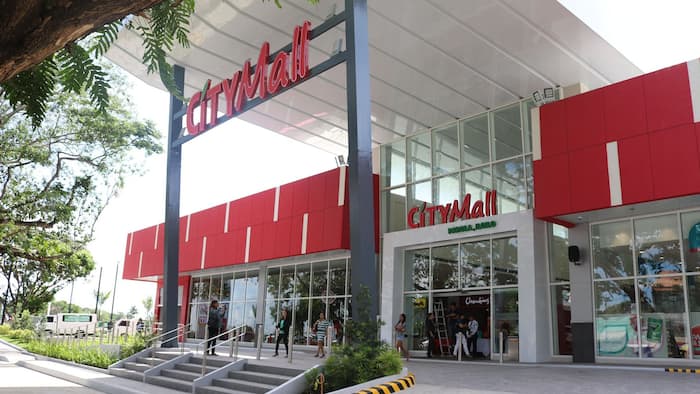
DoubleDragon’s priority is the construction of 100 shopping centers, each measuring 5,000 to 10,000 sq meters, by 2020. As of June, the company had secured 53 sites for these CityMalls, as it calls them, but built only eight.
Yet, even if some of the projects are behind schedule, its market capitalisation of 131.5bn pesos ($2.72bn) has eclipsed that of Robinsons Land — a unit of conglomerateJG Summit Holdings that has built 44 large shopping complexes and dozens of residential and office developments nationwide.
DoubleDragon is led by Edgar “Injap” Sia, a 39-year-old businessman from Visayas in the central Philippines. The self-made entrepreneur is best known locally as the founder of Mang Inasal, a fast-food company that specialises in grilled chicken.
When Mr Sia started his entrepreneurial journey about a decade ago, success was anything but a foregone conclusion. Born to a Chinese-Filipino-Japanese parents that own a grocery store in Roxas City in Visayas central Philippine region, Mr Sia dropped out of college to go into businesses. In 2003, he opened a grilled chicken eatery in the parking lot of a mall in Iloilo City, also in Visayas. Its chicken specialty, paired with unlimited rice, became a phenomenon, shaking up a fast-food market dominated by western-style fried chicken.
In 2005, Mr Sia established Mang Inasal as a franchise operation, creating the nation’s quickest-growing fast-food chain at the time.
An encounter with Tony Tan Caktiong, the founder of Jollibee Foods, the Philippines’ largest fast-food group, proved to be a key turning point. The two men share Chinese ethnicity and were both born in the Year of the Dragon in the Chinese lunar calendar, albeit 24 years apart. The “two dragons” opened a dialogue about the future of Mang Inasal.
Mr Sia’s business was becoming a threat to Jollibee. Mr Tan Caktiong offered to take control. In 2010, Mr Sia agreed to sell Jollibee a 70 per cent stake. This past April, he sold it the remaining 30 per cent. The transactions valued Mang Inasal at 5bn pesos.
From Mr Sia’s perspective, selling to Jollibee made sense on two levels. First, it would put Mang Inasal under the control of an experienced fast-food company that would nurture — rather than kill — his brand. Second, he needed the money to pursue his second dream: building a property and retail empire.
“I really like the [real estate] business, but it needs substantial resources,” Mr Sia said.
In late 2011, after Mr Sia relinquished management of Mang Inasal to Jollibee Foods, Mr Tan Caktiong approached him again. He, too, had been eyeing real estate. Sometime in 2012, the pair mapped out a plan to transform Injap Land, an Iloilo-based developer, into DoubleDragon, a nationwide player.
“We want to become one of the largest property companies in the Philippines,” Mr Sia said.
While clearly ambitious, Mr Sia is also pragmatic. Before the IPO, he accepted an offer from SM Investments — the Philippines’ largest conglomerate, owned by the Sy family — to acquire a 34 per cent stake in City Mall Commercial Centers, the entity that runs CityMalls under DoubleDragon.
This gave Mr Sia two powerful backers: Jollibee, a giant on the Asian fast-food scene; and SM Investments, which owns top Philippine lender BDO Unibank, mall developer SM Prime Holdings and retailer SM Retail.
All sides stand to benefit. Jollibee and SM Group see DoubleDragon and CityMalls as vehicles to tap provincial markets. As the principal shareholders of each company, Jollibee and SM will be priority tenants in the CityMalls.
The malls are “barely in Luzon and mostly in Visayas [and] Mindanao, which are exactly the under-penetrated regions where we think we would like to grow,” SM Group consultant Tim Daniels was quoted as saying in a local media report in 2014.
Mr Sia is avoiding Manila and broader Luzon, where more established players have secured land strategically. Instead, DoubleDragon plans to open 70 per cent of its branches in Visayas and Mindanao. To this end, he is taking advantage of know-how gleaned from the expansion of Mang Inasal. The fast-food chain now has about 450 locations, many in the same outlying areas where Mr Sia intends to build CityMalls.
He sees Mang Inasal as a barometer of local readiness for a modern shopping experience. Like the chicken restaurants, CityMalls will be situated in places with large concentrations of people — near transport terminals and markets, for example.
In October, a CityMall is set to open in the Mindanao city of Cotabato. The city is located west of Davao — the home town of Mr Duterte. Cotabato used to be a hotspot for terrorism and Muslim insurgents. “There are no SM or Robinsons malls there,” Mr Sia said, “but there has been Mang Inasal for eight years.”
Mr Sia is confident he has chosen the right target markets. “We strongly believe in the great potential of Visayas and Mindanao,” he said. “I personally had a very good first-hand business experience … in [the] Visayas and Mindanao areas during the expansion of Mang Inasal.” He added that the chain had “over 150 stores in Visayas and Mindanao in operation for several years.”
In 2015, Metro Manila’s annual economic growth rate of 6.6 per cent topped Luzon’s 5.4 per cent, Visayas’ 5.8 per cent and Mindanao’s 5.3 per cent. However, the Duterte government’s agenda for achieving “inclusive growth” is expected to brighten the prospects for rural regions. The president aims to preside over annual growth in the 7-8 per cent range for the next six years, with provinces making a greater contribution than in the past.
Since the Metro Manila market is maturing, established retail players are also eyeing opportunities in the provinces. Their strategies vary. SM Retail is building its own shops while tapping CityMalls to expand its network. Robinsons Retail Holdings and Puregold Price Club, the second and third-largest players, are in a race to acquire provincial retailers with a couple of branches.
Meanwhile, around 70 per cent of the retail sector remains informal, with myriad mom-and-pop shops. There are also independent provincial shopping centre operators running scattered locations in first-tier cities. Of the 145 cities in the Philippines as of June 30, a third were so-called “first class” municipalities, meaning they have annual revenues exceeding 400m pesos.
When it comes to creating a strategic network of shopping malls in the first-tier cities, Mr Sia hopes to be a step ahead. He envisions CityMalls as one-stop shops for daily errands. He said he did not intend to compete with bigger malls, where customers often spend the whole day on weekends, for dining, shopping and entertainment.
“The transition from the traditional unbranded fast food to modern fast food [was] already done in the Philippine provinces a decade ago,” Mr Sia said. “The transition from traditional retail to modern retail in the provincial areas has just started, and is expected to be completed in the next few years.” Mr Sia hopes to spearhead this new phase of retail industry through the expansion of CityMalls in the provinces
He continued: “That is the market where we are currently positioning CityMall, and once the transition cycle is done, CityMalls are poised to be the biggest beneficiary.”
Still, while the stock market is cheering Mr Sia’s strategy of focusing on Visayas and Mindanao, DoubleDragon does face its share of challenges.
Some analysts argue the company is overvalued, partly because most of its investors are retail investors, who tend to play up stocks. It was only in July last year that DoubleDragon managed to attract long-term institutional investors, and it may need to do more to improve its credibility with bigger funds.
“The price is not warranted at this time,” said Richard Laneda, an analyst at COL Financial in Manila.
The company’s first-half net income rose 16 per cent to 144m pesos, as revenue jumped 15 per cent to 706m pesos. It is targeting net income of 4.8bn pesos by 2020.
DoubleDragon’s price-earnings multiple is 100, higher than those of SM Prime andAyala Land, which are both trading at around 30, noted Luis Limlingan, managing director of Reginal Capital Development.
Mr Sia said analysts should look beyond that metric. “Clearly, our investors are not looking at the ‘now,’ they are looking at the next five, 10 or maybe 15-year horizon.”
Anton Alfonso, an analyst at RCBC Securities, warned that Visayas’ and Mindanao’s under-developed infrastructure could hamper DoubleDragon’s mall network build-up. Convenience store chains looking to expand there have faced similar challenges.
Despite some delays in branch openings, Mr Sia said the company was confident it would meet its targets. “We should be able to announce the next phase of our business in the next few years,” he said, adding that DoubleDragon is open to overseas opportunities as well.
To be sure, DoubleDragon has the Philippines’ consumption-driven growth going for it. Consumption generates two-thirds of the country’s gross domestic product, and projections indicate the economy should keep expanding by an average of over 6 per cent for the next six years on the back of steady remittances from overseas Filipino workers and a growing business process outsourcing industry.
Mr Sia is hardly the only new-generation entrepreneur looking to ride this wave. Steve Benitez, from the central Philippine island of Cebu, hopes to turn his Bo’s Coffee chain into the world’s next Starbucks. It currently has 60 domestic branches. Ben Chan, another self-made entrepreneur, is building an apparel company, Bench, and is taking it into other Southeast Asian countries and China.
Then there are the heirs who are taking the reins of their family businesses. In 2015, Puregold Price Club appointed the son of founder Lucio Co, Ferdinand Vincent, as chief executive. Puregold’s parent company, Cosco Capital, plans to compete with Mr Sia in the community mall segment.
Mr Sia believes the completion of the 100 CityMalls is just the beginning of his new empire — and a rock-solid foundation. “Once we complete that, our presence will be powerful, and the confidence in our company will be higher.”
In Southeast Asia huge family businesses, conglomerates and state-owned companies still dominate the region’s economies. While it remains to be seen whether Mr Sia will accomplish his ambitions, the new-generation entrepreneurs will be key in taking the region to its next stage of growth.
The tax amnesty scheme in Indonesia has had a much smaller impact on funds flowing out of Singapore’s private banking industry than feared, an RHB report suggested on Tuesday.
The funds flowing out of Singapore likely made up only 1-2 per cent of assets under management (AUM) of the private banking industry. Some 79 trillion rupiah (S$8.3 billion) was repatriated in the first nine-month phase of Jakarta’s tax amnesty programme.
The scheme allows Indonesians to declare assets that were previously undeclared to tax authorities. In return, they paid a sharply reduced tax rate on those assets – just 2 per cent – in the first phase, which ended on Sept 30.
The 79 trillion rupiah was 12 per cent of the assets of wealthy Indonesian clients that were declared to be kept in Singapore, according to data from the Indonesian government. Singapore has been a big draw for rich Indonesians. All in, the assets held here and declared to the Indonesian authorities made up 70 per cent of all overseas funds that had been declared.
RHB calculated that the total assets of the three Singapore banks’ private banking segment stood at about S$321 billion. This means the amount repatriated to Indonesia from Singapore accounts for only 2.6 per cent of the three banks’ total AUM. These already exclude the asset base of the top private banks in Singapore, such as UBS, Citi, and Credit Suisse. So, all in, the impact on Singapore’s private banking industry should be about 1-2 per cent of all assets held here, RHB noted.
“There is likely to be more repatriation of funds from Singapore to Indonesia going forward, but the experience of Phase 1 suggests that the amount repatriated is unlikely to be a large percentage of Singapore banks’ assets under management,” it said.
This comes as the tax rate for those who repatriate their assets in Phase 2 rises to 3 per cent, one percentage point more than in Phase 1. The tax rate will be increased yet again in the third phase, Jakarta has said.
Indonesian taxpayers had declared more than 3,600 trillion rupiahs in assets both domestically and overseas. An Indonesian tax authority quoted by The Straits Times said the country had set a 4,000 trillion rupiah target for the first phase.
The tax amnesty scheme comes amid heightened scrutiny of tax evasion. Banks here had to file a suspicious transaction report on clients taking part in the programme, with the Singapore authorities later having to state publicly that participation in a tax amnesty scheme alone would not attract criminal investigation in Singapore. The Monetary Authority of Singapore (MAS) said that the use of suspicious transaction reports is a practice across other jurisdictions when handling tax amnesty cases.
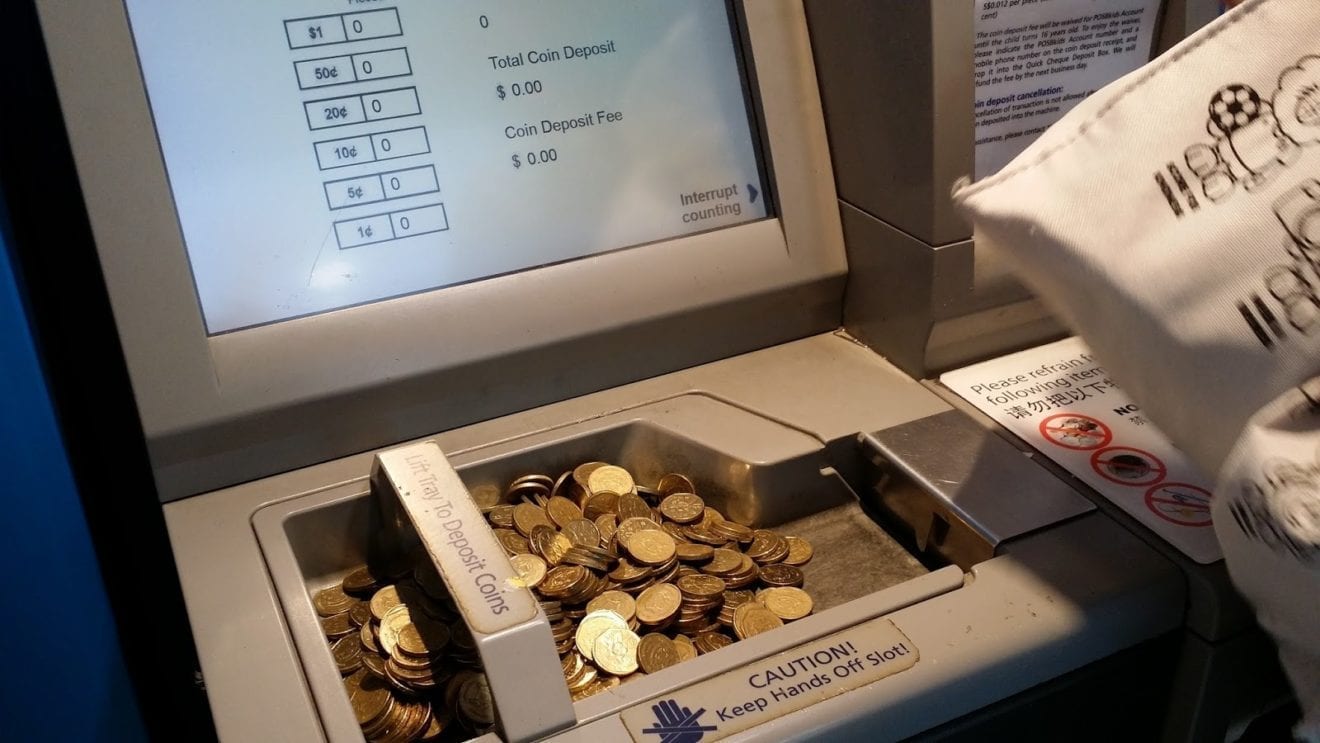
Deputy Director of the BI Financial Management Department Asral Mashuri in Jakarta, Tuesday 4, 2016, said that Bank Indonesia (BI) is planning on implementing a coin deposit machine to ease people in saving the form of money.
“The machine would look like an ATM, but this one is for coins, and the machine can sort out the money; which is one thousand and one hundred. It would be easy for people to use,” he said.
According to Asral, nowadays, many people keep the coins and left it uncirculated. The uncirculated coins have forced BI to reprint it, although coins have a longer lifespan than paper money.
A coin deposit machine is hoped to help banking institutions in retracting the coins. “This also accelerates the money circulation, and later on, banking institutions can retrieve money from people’s savings,” Asral said.
He added that it will be implemented as soon as possible. The study is still ongoing; it will be realized but not in the coming months. “The machine will be available for the public to use soon as possible,” Asral said.
Indonesia is predicted to be the country in Southeast Asia with the second-highest price for Apple’s new iPhone 7, according to a recent price study by iPrice Indonesia, local arm of online shopping startup the iPrice Group.
The iPhone is manufactured in China, which neighbors Southeast Asia, but according to the iPrice Indonesia study, the iPhone 7 will be significantly more expensive in the region compared to the United States, due to shipment export costs, import duties and taxes, and other fees imposed by governments.
According to iPrice, the iPhone in Indonesia will be one of the most expensive worldwide.
“For countries where the iPhone 7 has not yet been officially launched, such as Thailand, Vietnam, Indonesia, Malaysia and the Philippines, the tech savvy have resorted to going abroad in the hope of being the first to own it,” iPrice said in a statement e-mailed to the Jakarta Globe by Andrew Prasatya, the company’s content marketing executive.
“Unauthorized retailers are purchasing the iPhone 7 from Singapore and Hong Kong [where the iPhone 7 has already been launched] and selling them in their home countries at higher prices, which can go up to 14 percent in Vietnam and 49 percent in Thailand,” iPrice said in the statement.
Apple has not yet announced the official release date for the iPhone 7 in Indonesia.
How Expensive Can It Go?
The study estimates that an iPhone 7 with 128 gigabytes of internal storage will cost about $1,268 when it arrives in Indonesia, making it nearly $500 more expensive than in the United States, from where it originates.
As for neighboring countries, buyers in Thailand are expected to pay the most, where a new iPhone may cost up to $1,340.
The cheapest is in Singapore at $897, where the iPhone 7 has been available since last month.
The study said middle-income Indonesians, with an average salary of $1.80 (or Rp 23,900) per hour, have to work at least 87 days to afford an iPhone 7, assuming that the whole salary is spent on the phone.
They may likely think twice before purchasing a 128 GB iPhone since the price is equivalent to the latest automatic scooter by Japanese manufacturer Honda. The price would also be equivalent to three-months’ rent of an apartment located in the heart of Jakarta, or 32 bags of rice at 50-kilograms per bag.
Highly Anticipated
Still, the iPhone 7 is eagerly awaited in Indonesia. And despite negative reaction around the replacement of audio jack with Apple AirPods, the latest model is in demand because of innovations such as increased storage, a new home button and water-resistance, according to reports from various local media and online tech-focused news portals.
IPrice said regardless of its fairly high price, the iPhone generally remains popular in Indonesia.
It referred to industry data showing that about 61.2 million units of the previous generation iPhone 6 and 6s were sold in the country during the first quarter of 2015.
“In addition to the innovation of the iPhone 7, the iPhone is a status symbol in Indonesia where the owners are perceived as being rich, successful and living in luxury,” iPrice’s statement said.
The government is optimistic the country would be self sufficient in salt supply in 2017, an official said here on Wednesday.
Agung Kuswandono, the Deputy II in Coordination of Natural Resources and Service at the office of the Coordinating Minister for Maritime Affairs said self sufficiency in salt supply is expected to be reached in 2017.
Agung said the Marine and Fisheries Ministry has taken various steps to improve the quality of the farmers salt to meet the standards for household consumption and industries.
He said the country needs around 4.02 million tons of salt including 2.05 million tons of industrial salt and 1.97 million tons of consumption salt.
The domestic production is around 3.8 million tons a year including 3.1 million tons of farmers salt and 700,000 tons produced by the state -owned salt company PT Garam.
Based on data from the Indonesian Association of Salt Consuming Industries (AIPGI), in 2015 , the country needs 400,000 tons of salt to preserve fishes a year.
The process of fish salting generally does not use iodine although iodine is important for human health, Agung said.
Indonesia imports salt especially from Australia to cover the deficit in domestic supply
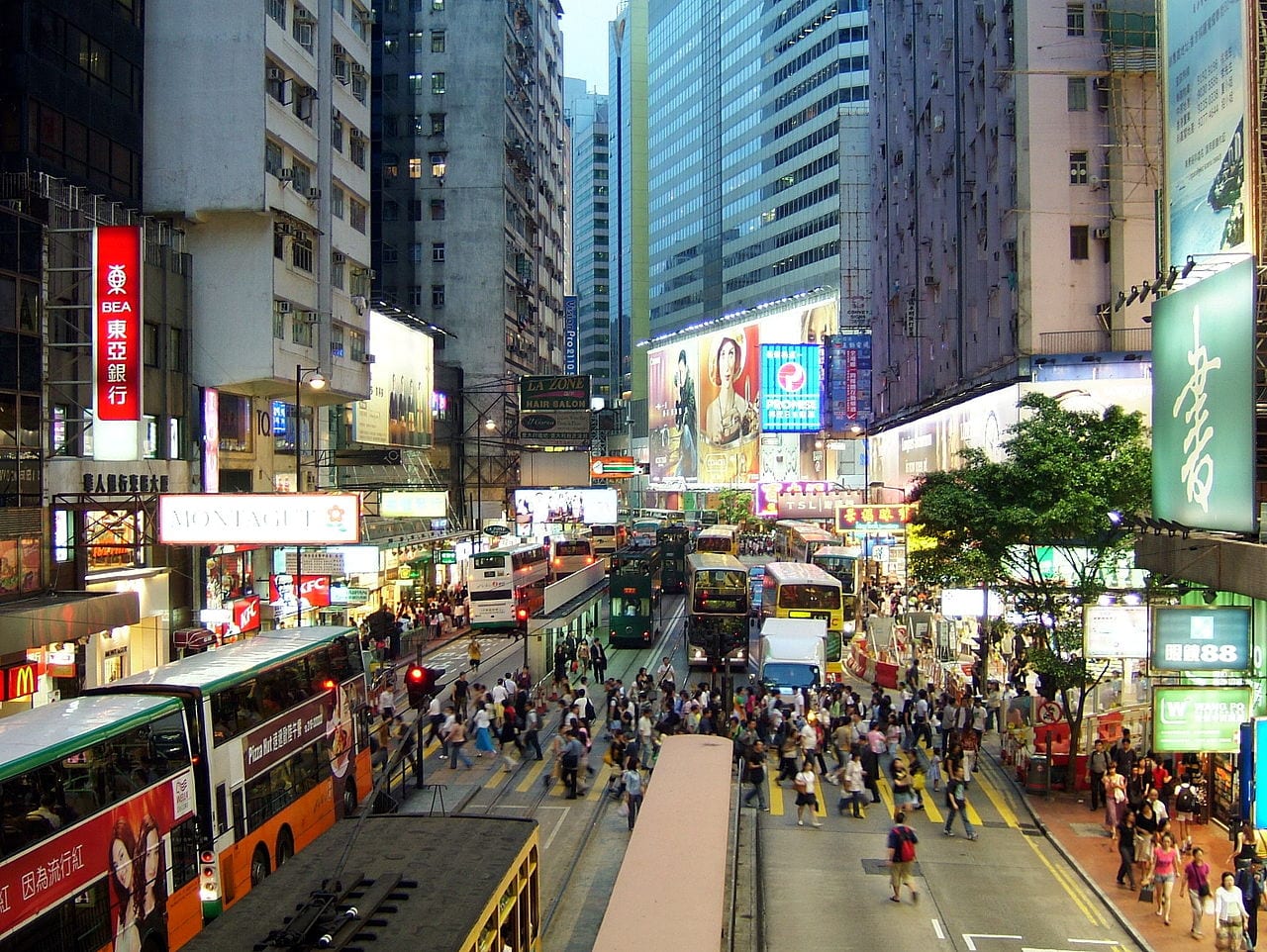
Hong Kong may no longer be the darling of European luxury brands after the combined effect of a slower local economy and fewer mainland shoppers as a result of Beijing’s anti-corruption crack down, but the city is still magnet for less expensive luxury brands and mid-priced retailers.
Retail sales have seen an 18 month-long nosedive, with August figures (the latest available) down 10.5 per cent year on year to HK$33.9 billion.
The decline, largely due to a drop in the number of mainland Chinese tourists, has forced landlords to reduce retail rents to avoid vacancies.
“This has created a lot of opportunities for retail players to emerge and innovate,” Joanne Lee, associate director of research and advisory of Colliers International said.
Some less expensive luxury brands and mid-priced retailers still have confidence in the Hong Kong retail market, taking the opportunity to move in on prime locations as high end luxury brands close up shop, according to property consultants.
French brand Sandro is an example. It finds Hong Kong is still a highly lucrative market compared with the rest of the world – even in bad economic times.
In August the Paris-based fashion chain opened its largest Asia flagship store in the heart of Causeway Bay, considered one of the world’s most prime shopping districts. It also plans to double the size of its store in Tsim Sha Tsui’s Harbour City, one of the most prestigious malls for mainland visitors.
Branding its products as “accessible luxuries”, Sandro’s chief executive Jean-Philippe Hecquet said the segment became “very powerful” when people started to look inside their wallets.
The luxury retail industry veteran, who previously worked for world’s biggest luxury group LVMH for over a decade, said that upper-middle class consumers still want to enjoy their life even with less money. “They still want to buy luxury products for sure.”
Sandro, along with sister brand Maje and Claudie Pierlot, recorded a 51 per cent year on year growth in Asia Pacific in the first six months of the year.
Encouraged by the strong performance, Sandro opened three new stores in prime shopping districts in Hong Kong, and plans to add two or three more by the end of next year. It currently operates eight outlets in Hong Kong.
The Harbour City store, which opened a year ago, quickly become the most lucrative store among its 410 retail outlets worldwide in terms of sales per square metre.
In contrast, total tenant sales at Harbour City fell 14.7 per cent to HK$13.3 billion in the first half, according to financial filings by its parent company Wharf Holding.
“The economy is about cycles. Everything happen for a reason. You just need to hang in there,” Hecquet said.
Unlike traditional luxury brands such as Gucci, Louis Vuitton and Burberry, which had previously aggressively expanded in the city to cater for the huge influx of mainland shoppers, Sandro has only recently ramped up its pace in terms of adding stores. Its first store in Hong Kong was not opened until 2012.
Hecquet admits Sandro may have missed the “golden age” when rich mainland shoppers queued up outside Chanel, Gucci and Louis Vuitton outlets, snapping up expensive leather bags emblazoned with big logos.
“For [traditional luxury brands], the traffic is going down, but for us, we still see very decent traffic,” he said.
But he noted that the emerging young upper-middle class in Asia would be the future powerhouse for luxury goods, and the right time to expand is now. The current retail downturn in Hong Kong has also freed up more prime retail locations and rents were going down. “We have been waiting for a long time to be able to open a flagship,” he said.
Hecquet said the average age of its customers in Hong Kong was from 25 to 30 years old, and mainland visitors contributed to a significant portion of sales.
Property consultants said the impact of mainland tourists will continue to diminish as retailers focus their efforts on locals and millennial shoppers.
“[Retailers will be] very much focusing on the local spending power, instead of relying on tourists,” said Daniel Shih, director of research and advisory at Colliers International.
Henrik Fisker, whose previous automotive venture collapsed in 2013 owing U.S. taxpayers $139 million, said on Tuesday he plans to launch a new electric car company next year to compete with Tesla.
Fisker declined to say who is funding his new California-based venture, called Fisker Inc, and a new battery subsidiary, Fisker Nanotech.
The Danish automotive designer’s previous venture, Fisker Automotive, once was a rival to Tesla Motors Inc (TSLA.O) in the nascent market for electric luxury cars. Founded in 2007, Fisker Automotive built fewer than 2,000 cars through 2012 while burning through $1.4 billion in private investments and taxpayer-funded loans from the U.S. Department of Energy. Fisker left the company in March 2013, before it filed for bankruptcy protection.
In 2014, Fisker was purchased out of bankruptcy by Chinese auto parts maker Wanxiang Group Corp (000559.SZ), and renamed Karma Automotive. Wanxiang also acquired bankrupt U.S. battery maker A123. It relaunched the Fisker Karma gasoline-electric hybrid sports car in August as the Karma Revero.
In an interview, Fisker said his new company plans a battery-powered model aimed at the Tesla Model S, which is priced at about $65,000. He did not specify when production would begin.
A second smaller Fisker electric car will follow, Fisker said, and will target the upcoming Tesla Model 3, which is expected to start at about $35,000.
Fisker said his new electric cars will be powered by a long-range battery that uses graphene to extend its range and life and reduce charging time. The company is targeting a 400-mile driving range between charges, Fisker said.
Fisker said his new venture is not connected with Wanxiang.
Japanese electronics components supplier Murata Manufacturing Co Ltd wants its enlarged battery business to help double automotive-related revenue when the years of rapid expansion in the smartphone market have passed, its chief executive said.
Murata is adding to its small battery operations after agreeing in July to buy most of Sony Corp’s battery division by the end of March 2017 for an undisclosed amount. In the business year through March 2016, that division generated sales of about 160 billion yen ($1.56 billion).
“We want to enter the automotive battery business through the acquisition,” Tsuneo Murata said in an interview on Tuesday.
Components makers have seen profits soar in recent years due to the rise of smartphones. Murata, which earns about 60 percent of revenue from smartphone parts, expects operating profit to have grown six times over the four years through March, helped by business from customers such as smartphone leaders Apple Inc and Samsung Electronics Co Ltd.
The company is currently benefiting from a trend toward higher-performance smartphones that use more of its components, such as capacitors and frequency filters. But to guard against any future slump, it aims to boost other sources of income.
“I believe batteries will be a powerful weapon,” said Murata, one of the sons of the founder of the Kyoto-based firm.
The CEO said he wants batteries to help the automotive proportion of revenue to reach 20 to 30 percent in about 10 years, from 13 percent in the year ended March.
In the Sony deal, Murata has bought the division responsible for selling the world’s first lithium-ion battery in 1991, but which Sony said in a July earnings briefing was losing money partly because it could not supply a major smartphone maker.
Murata intends to apply Sony’s battery technology to automobiles, the CEO said.
“South Korean battery makers may look dominant in the market right now,” Murata said. “But there are many purposes in the automotive industry alone and I think various battery makers will grow by focusing.”
DHL eCommerce Singapore has launched a hybrid shipping product to help e-tailers in Singapore tap into the cross-border e-commerce market in Australia.
According to DHL, the new product, called Parcel International Direct Australia, delivers shipments of up to 20kg to major Australian cities in four to six business days.
“Consumers worldwide are increasingly expecting greater choice and convenience in their delivery options, and demanding greater visibility and reliability during the process,” said Malcolm Monteiro, CEO of Asia Pacific at DHL eCommerce. “In a recent DHL study, we found that over 59% of customers consider shipping costs, delivery time and choice of the delivery partner before making an online purchase. As a result, e-tailing businesses and online sellers require more cost-effective and varied means to ship their products to remain competitive. Parcel International Direct Australia is a versatile shipping product that will help merchants expand their footprint in the online cross-border market.”
Deliveries can be made to conventional addresses, P.O. boxes or parcel lockers. No additional charges will be imposed for delivery to remote addresses, according to DHL.
Telstra plans to introduce a national public safety mobile broadband capability for emergency services organizations (ESOs) this summer.
Alex Stefan, Telstra’s national general manager public safety and security, said the technology behind Telstra LANES Emergency allows ESOs to communicate with each other, and it could also provide governments with significant cost savings.
“Preserving the safety, security, and prosperity of Australian communities is an essential role provided by our emergency services and Telstra is committed to providing innovative solutions and capabilities to support them,” he said in a statement.
Telstra developed the LANES Emergency solution in collaboration with Ericsson primarily to help ESOs increase their network capability, coverage and reach, without building their own private network but by offering them priority access on Telstra’s LTE network.
Telstra LANES Emergency will be available in two forms – Telstra LANES Emergency Priority, which will provide access to Telstra’s LTE spectrum; and Telstra LANES Emergency Tailored, which will consist of customer-owned dedicated spectrum and access to Telstra’s LTE spectrum or enhancements to Telstra’s LTE network.
“Through LANES we can offer Emergency Services priority data access on our 4G network or on a dedicated and partitioned spectrum for their exclusive use. On the wireless highway it is like offering Emergency Services their very own express lane,” explained Stefan.
A recent report from the Australian Productivity Commission indicated that a commercial public safety solution like LANES has the potential to save ESOs $4 billion over 20 years over the cost of running their own systems, and provides them with access to more easily updated technology and innovations.
“Telstra will be initially providing access to up to 160MHz of Telstra LTE spectrum, including our 700-MHz band, for use by ESOs under this new offering,” Stefan said.
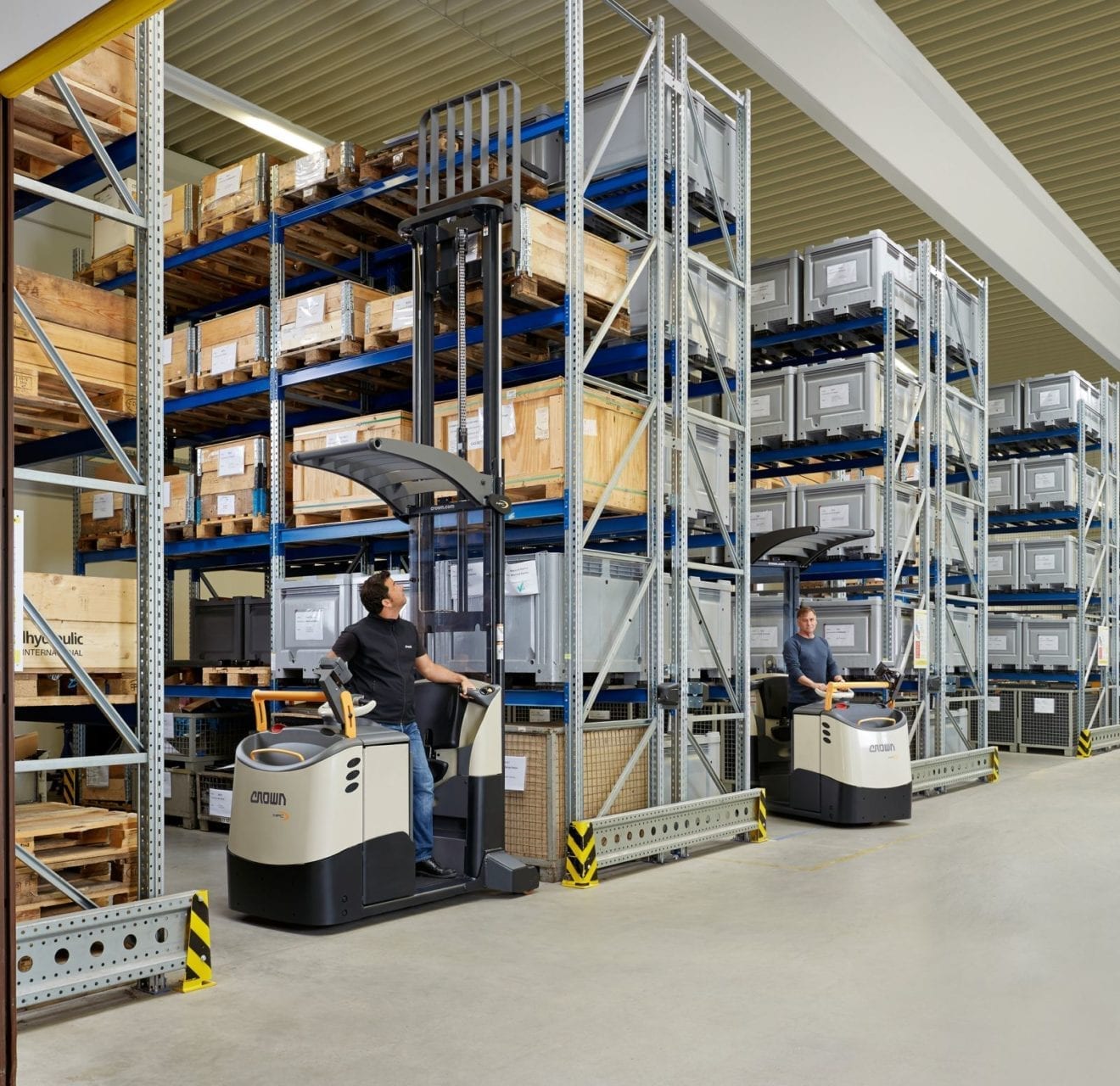
Crown Equipment has released a new series of state-of-the-art lift trucks combining the benefits of an order picker with the advantages of a counterbalance forklift.
The new Crown MPC 3000 Series combines a high-lift, clear-view mast with an outrigger-free counterbalance design and an ergonomic ride-on platform; a combination that creates a versatile, multi-purpose lift truck capable of performing tasks usually requiring more than one piece of equipment.
It features the tried-and-tested Crown AC traction motor for reliability and powerful acceleration, and is capable of travelling up to 12.5km/h and lifting 1200 kilograms to a height of 4.3 metres. It can lift full-capacity loads (at a 600mm load centre) to the full height of the mast.
MPC 3000’s all-round solid steel construction is designed and tested to withstand intensive use while its large, long-life load wheels are easily accessible for quick replacement.
The MPC 3000 automatically adjusts cornering speed and acceleration depending on steer wheel angle, fork height and load weight, for stability. Combined with responsive brakes and a suspended, shock-absorbing floorboard, MPC 3000 maximises operator safety, comfort and confidence.
Unique Layout
The MPC 3000’s layout makes it ideal for order picking as well as replenishing low-level pick slots from high-level storage, an activity that usually requires separate reach trucks and high-lift trucks.
A lack of outriggers aids work in close proximity to machinery, sandwich-stacking four-way pallets and manoeuvring in tight or congested areas efficiently and safely.
MPC 3000’s nested I-beam mast construction, plus clear-view fork carriage and overhead guard, provides operators with an almost unobstructed field of vision both forwards and upwards for swift, precise and safe usage. Optional lift/lower buttons on the backrest offer even better vantage points for positioning loads both on and off the truck.
Crown Product Engineering Development and Support Manager Michael Croxford said Crown has delivered a highly developed product capable of streamlining lift truck fleets and increasing efficiency for an array of material handling operators.
“With the MPC 3000, Crown has delivered a state-of-the-art machine capable of performing multiple warehousing tasks such as order-picking and sandwich-stacking multiple pallets while reducing the amount of equipment required,” Croxford said.
“It is also capable of simplifying the put-away process at the receiving facility in certain applications.
“Combined with its ergonomic refinement, reliability, durability and operator safety features expected of Crown equipment, the MPC 3000 is capable of reducing operating costs and saving time in a number of applications.”
The MPC 3000’s advanced design includes other proven Crown features such as Access 123, e-GEN braking and electronic steering. Fleet managers can also choose from a wide range of optional Work Assist accessories, enabling them to customise forklift trucks for specific requirements and create an even more ergonomic and user-friendly working environment.
For more information on the Crown MPC 3000 please go to www.crown.com
Dozens of domestic workers attended a course at Sanggar Kegiatan Belajar in Malang City on Tuesday. The course for domestic workers was held by the Institute for Community Research and Development (LPKP) Malang chapter and the International Labour Organization (ILO).
“Domestic workers are trained to work effectively according to the applicable standards,” said Irfan Afandi, ILO promote project coordinator for East Java.
Similar courses are also opened in South Sulawesi’s Lampung and Jakarta. East Java, along with Makassar and Lampung, is renowned for its supply of domestic workers. Whereas Jakarta is the destination market of the domestic workers.
Community-based courses for domestic workers have been trialled in Malang, East Java. Education will be held in certain communities, comprising participants hailed from several areas in Malang. The courses for domestic workers are aimed at improving their skills, particularly ability to use home appliances.
The first phase of the courses will include household management and cooking. Domestic workers will be given theoritical and practical training. The courses will last six months, with two meetings in a week.
Improved skills are expected to put domestic workers in better position to seek employment rights, such as to negotiate employment contract, standardized and timely payment of wages, defined office hours, and request for breaks and holidays. Irfan said that according to ministerial regulations, domestic workers include nannies, drivers, gardeners, as well as caregivers for elderly persons and people who have disabilities.
“A domestic worker would not be able do all things by themselves,” he said. After attending the courses, domestic workers will be given a certificate which would enable them to seek better pay and recognition as professional workers. Moreover, improved skills of domestic workers are expected to protect them from violence, sexual abuse, child exploitation and human trafficking.
Data from ILO shows that Indonesia has 2.6 million domestic workers. Most of whom are hired to work in private homes, live in their employer’s home and are not given employee leaves nor holidays.
Course participant Yuliati said she is interested to attend the course for domestic workers to get more experience. According to her, she had been learning to do domestic work by herself. “I’m paid Rp30,000 a day, without employment contract,” she said.
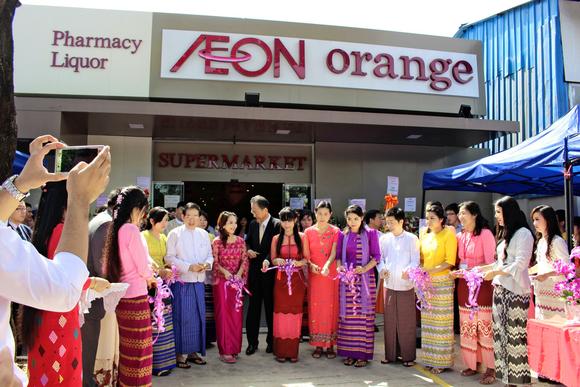
Japanese supermarket giant Aeon has become the first foreign retailer to enter Myanmar since the 2011 transition to civilian rule, a development that could herald change in a retail industry still dominated by traditional markets.
Aeon signage, a familiar sight to Japanese consumers, made its Myanmar debut Friday in a largely middle-class area along a major road in Yangon’s North Okkalapa district. The store packs some 8,000 products into a relatively compact 613 sq. meters of sales-floor space. The lineup includes about 80 items imported from Japan, including selections from Aeon’s Topvalu private brand. About 70% of the products are imported from Thailand or elsewhere, with the remaining 30%, mainly fresh foods, coming from Myanmar.
A slice of Japan
Upon entering the store, the first thing that catches the eye is a refrigerated case featuring neatly wrapped packages containing three or four slices of melon or watermelon, priced at 600 kyat to 800 kyat (47 cents to 63 cents).
“Foods from Japan like cup noodles can be eaten quickly and easily,” a worker at a beverage plant noted. The 24-year-old praised the low prices, as well as the store’s thoughtfulness in offering small servings of fruit that can be polished off before they go bad.
Refrigerated products are a rare sight in Myanmar supermarkets, since quality control is difficult. Produce is typically sold by the piece. Refrigerators are also relatively uncommon in households, so if a customer buys a watermelon, for example, it is usually eaten all at once. The Aeon store offers small packs of sliced fruit, meat and fish, giving customers the option of Japanese-style shopping — buying only as much as they need, when they need it.
Another peculiarity is prepared foods such as boxed meals, which are almost unheard of in Myanmar supermarkets or convenience stores. Ahead of the supermarket opening, Aeon set up a central kitchen in Yangon, where about 10 Myanmarese staffers cook food tailored to local tastes. A lunch box with curry, rice and salad costs 1,280 kyat, while rice balls with pork or other fillings go for 550 kyat. By comparison, a noodle dish from a local vendor typically costs around 800 kyat.
Aeon announced in August a joint venture with Creation Myanmar Group of Cos., a local company which operates 14 supermarkets in the country under the Orange brand. The venture, Aeon Orange, aims to open 10 or so stores in five years. “This is a milestone in transplanting the Japanese values of convenience, security and safety,” Aeon Orange President Yoshimitsu Kawato enthused.
An industry in transition
Modern retail is still a work in progress in Myanmar. Local player City Mart Holding, established in 1996, runs about 40 supermarkets in the country. But these stores serve mostly upper- and middle-class consumers in urban areas. Most people still turn to traditional public markets, known as zei. Modern retailers such as supermarkets account for just 10% or so of the retail industry.
Aeon aims to lure the zei crowd with such draws as the affordable, high-quality Topvalu brand. “Three towels cost 1,800 kyat,” said one shocked shopper. “Even though they’re high-quality Japanese products, they’re cheaper than what’s sold at regular stores.”
Aeon’s Southeast Asian business has suffered from something of a slump in Malaysia, a mainstay market, in recent years. “Myanmar is the market we’re focusing most on,” said President Motoya Okada, citing its “unquestionable” potential and rapid growth.
Research firm Euromonitor International sees Myanmar’s retail market expanding from $11.5 billion in 2015 to $17.5 billion by 2020 amid the rise of the urban middle class. City Mart plans to double its store count within three years, while Thai conglomerate Central Group is reportedly mulling a foray into the country. Competition over this rapidly modernizing growth market will likely be fierce.
Reform underway
Myanmar’s new government has accelerated efforts to open up the country’s economy. The retail industry, which was closed to foreign participation in 2002 in the name of protecting domestic companies, is among the clearest examples.
Aeon’s entry into the market has still met with backlash from Myanmar’s retail industry, which fears that foreign enterprises could throw around their financial weight to crush local businesses.
“We think about protecting domestic companies, but the benefits to consumers are important, too,” argued Aung Naing Oo, director general of the Directorate of Investment and Company Administration. “We welcome Aeon’s entry into Myanmar.”
The country still does not permit foreign involvement in trade. Aeon’s imports are handled by its local partner, Creation Myanmar. Opening up trade licenses to foreign businesses is the biggest key to expanding the retail industry, some argue.
Infrastructure remains an issue as well. The lack of refrigerated trucks and distribution facilities makes it difficult to get seafood and agricultural products from outlying areas to big cities. Though Japanese companies including Kokubu Group started building temperature-controlled warehouses outside Yangon last year, only a few have been completed. A boost to demand from Aeon’s presence would encourage infrastructure construction, a Kokubu spokesperson said.
With South-east Asia’s Internet economy set to rocket to hundreds of billions of dollars by 2025, international business giants are eyeing Singapore’s strategic location to gain access into the region’s e-economy, in particular, e-commerce.
In recent months, the Republic has seen several big names pump billions worth of investments into local e-commerce companies, including one investment by Chinese e-commerce giant Alibaba in Singapore online shopping website Lazada.
This comes as brick-and-mortar retail giants pump up efforts to take their offerings online to ride the digital retail wave.
The potential for growth, government assistance and Singapore as an entry point into South-east Asia make the Republic attractive, experts say.
“If you compare the overall share of e-commerce in Singapore to its overall economic development level, it is quite low. (But) Singapore has the potential because it is a hub for the South-east Asian economy. (And) because there is market potential for Singapore, of course foreign companies will come here, either independently or in collaboration with local companies. They can acquire local companies, just like Alibaba did,” said e-commerce and online retail expert Chu Junhong, associate professor of marketing, National University of Singapore Business School.
“E-commerce is a trend, (retailers) cannot avoid it. They must take advantage of this trend; it is good for them. The good news is that if retailers go online, they can open their market to the whole of South-east Asia. However, they have to be ready for the increased global competition when they go online,” Ms Chu added.
According to a report by Internet giant Google and Singapore state investment firm Temasek Holdings in May, South-east Asia’s Internet economy is expected to surge to nearly US$200 billion (S$273 billion) by 2025, up from US$31 billion last year.
The e-commerce segment alone is expected to make up almost half of the entire Internet economy in the region, with its value estimated to jump to US$88 billion by 2025, a 16-fold increase from US$5.5 billion last year.
Filtering down to Singapore, the e-commerce market here is expected to grow more than five times to about US$5.4 billion, the report showed.
Singapore has plans to increase that figure even further.
Last month, at the launch of the retail industry transformation map (ITM), the Government said it would look at e-commerce as a key enabler for retail businesses to transform, with the aim of growing the e-commerce share of total retail receipts from the current 3 per cent to 10 per cent by 2020.
Some brick-and-mortar retailers are embracing the digital wave in bold moves.
Local tech retailer Challenger opened its online store hachi.tech in April, saying that the new portal would deliver 50 per cent of its revenue in just three to five years.
It also set up a unit — Challenge Ventures — last year with a budget of S$20 million to invest in online companies and enable the firm to expand its e-commerce strategy.
International companies are also investing or participating in Singapore’s local e-commerce platforms, as a means to tap into both the local and SEA markets.
In April, Alibaba agreed to buy a controlling stake in privately owned Singapore company Lazada for US$1 billion. Lazada is a pioneer of e-commerce in many South-east Asian countries, with a presence in Indonesia, Malaysia, the Philippines, Singapore, Thailand and Vietnam.
This month, Chinese gadgets company Lenovo launched an e-store on Qoo10, a Singapore-based e-commerce platform. With the opening of the e-store, customers will be able to browse Lenovo’s range of mobiles, tablets, PCs and accessories on Qoo10’s platform.
Other than Singapore, Qoo10 has marketplaces in Indonesia, Malaysia, Hong Kong, Japan, Korea and China.
Mr Max Bittner, CEO of Lazada Group said in an interview: “We believe that there are still significant opportunities for online shopping in South-east Asia and the six markets that we are in. Our focus remains on these six markets where we are raising the customer experience and becoming the leading one-stop online shopping and selling destination of choice for consumers.
“Alibaba’s partnership is helping us in this goal by providing the know-how, systems and processes to enhance the online experience for our customers and sellers in these markets.”
Mr Bittner added that the deal with Alibaba would help Lazada accelerate its goal of providing 560 million consumers in the region with access to the broadest and most unique assortment of products, bringing significant synergies that would enhance the online experience for both buyers and sellers.
Mrs Kee Ai Nah, group director (industry & enterprise), Spring Singapore, said: “For both sellers and buyers, e-commerce has opened up options that were not possible in the physical world. To grow topline and stay competitive, businesses have to reach new customers through multiple channels. As e-commerce platforms allow businesses to internationalise without a physical footprint, and since this channel is already well-developed, Spring encourages all enterprises to explore the possibilities of selling online.”