Author: Mei Ling Tan

  • DHL Express Launches Expanded Auckland Facility

    DHL Express Launches Expanded Auckland Facility

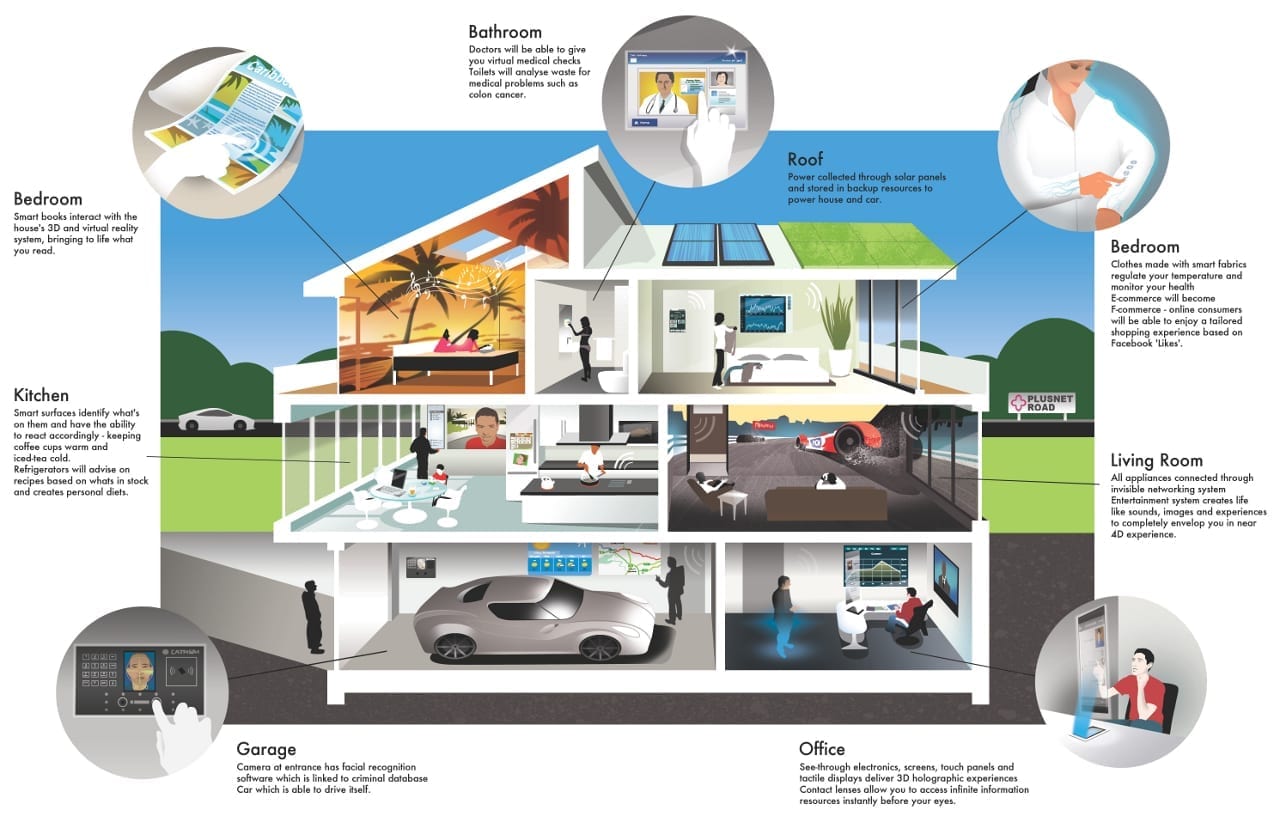
    DHL Express has opened an expanded facility at Auckland Airport to cater to growing demand for trade in and out of New Zealand.

    According to DHL, the new NZ$15.3 million (US$11.2 million) Auckland Gateway measures approximately 5,000m2 and doubles the processing capability of the previous facility.

    “International trade via imports and exports now comprises approximately 60% of New Zealand’s overall economic activity and is growing,” said Ken Lee, CEO of DHL Express Asia Pacific. “DHL Express is proud to facilitate trade for local businesses via our international network that connects New Zealand with over 220 countries and territories globally. The most popular trading partners for goods moving in and out of this Auckland-based facility include Australia, China, Hong Kong, Singapore, the UK and USA — with all trade lanes showing solid performance in recent months.”

    Some of the features include high-speed reweigh machines, telescopic extendable conveyors and 360-degreee CCTVs providing 24-hour monitoring.

    Mark Foy, country manager of DHL Express New Zealand, said that the company is committed to helping Kiwi businesses export and import products to facilitate global trade.

    “A key driver for this expanded gateway has been the growth in New Zealand SMEs shipping products internationally via DHL Express,” he said. “This expansion will assist with volume increases from all areas of the country, as innovative Kiwi businesses continue to tap into the global marketplace and reach international customers like never before.”

  • Congestion-free traffic drives growth of e-payment system

    Congestion-free traffic drives growth of e-payment system

    Electronic payment system for transportation market segments and key trends 2016-2026 by Future Market Insights (FMI), provider of syndicated research reports, custom research reports, and consulting services.

    Electronic payment System (EPS) is useful for paperless monetary transaction. It brought a revolution in business process with less paper work, less time consumption, low labor cost as compared to traditional manual process business.

    There are various modes of electronic payments such as debit card, credit card, e-wallet, smart card, EFT and others. From last a few years electronic payment has also been used by transportation agencies for the collection of parking fees, highway tolls, transit fares & others.

    Electronic payment in transportation is done with the help of cards or transponders carried by user which directly communicates with devices maintained by transportation agencies for the conduction of transaction and also to track the records.

    Its use gives rise to so many advantages as electronic toll collection supports the collection of toll fare automatically by reading the data of registered vehicle from electronic transponder and driver does not need to slow down the car or stop for the payment hence it gives relief from traffic congestion and also save time of the commuters. 

    Market Dynamics

    The key trend responsible for the growth of global electronic payment system for transportation is the growing demand of electronic payment system for transportation from developed and developing region because of the advantages provided over the traditional manual system.

    The key growth drivers are congestion free traffic, with implementation on highway or Broadway, traffic jam or congestion reduces. Cashless travel facility is another advantage.

    On the other hand there are also some factors which are hindering the growth, those restraints are high installation cost of the systems & slower growth of these systems in underdeveloped regions.

    Segmentation

    Segmentation is done on the basis of system, technology & geography. On the basis of system, it is segmented as electronic toll collection (a system designed for automated collection of toll from moving as well as stopped vehicle through wireless system), electronic transit ticketing (payment is done by a smart card for a trip on transit vehicle), and regional multimodal electronic payment system (Here all mode of transportation is done by single payment system).

    On the basis of technology, it is segmented as contactless payment system technologies, near field communication, using smart phones.

    Geographically, it is segmented into seven regions which are ; North America, Latin America, Western Europe, Eastern Europe, Japan, Asia Pacific Excluding Japan (APEJ), and Middle East and Africa (MEA). Among all the regions North America is the highest contributor in term of revenue in global electronic payment system for transportation market followed by Asia Pacific & it is expected that in near future, Asia Pacific is going to lead this market.

    Key Players

    Xerox Corporation, Cubic Transportation Systems, Transcore, LP, Siemens AG, Thales Group and others are leading the global ETC market. Electronic Transit Ticketing market is covered strongly by Cubic Transportation Systems, Global Mass Transit, Snapper Services Ltd, EOS UPTRADE, Scheidt & Bachmann. On the other hand, Electronic Payment System market is been covered by LTK Engineering Services, Longbow Technologies Sdn. Bhd., Kapsch Trafficom AG & others.

  • Healthcare SCM market worth US$2.22 billion by 2021

    Healthcare SCM market worth US$2.22 billion by 2021

    A market research report Healthcare Supply Chain Management Market by Component (Software (Inventory (Order and Warehouse Management), Purchasing (Supplier, Strategic Sourcing)), Hardware (Barcode, RFID)), Delivery Mode (On-premise, Cloud) and End User – Global Forecast to 2021″, published by MarketsandMarkets, studies the global market during the forecast period of 2016 to 2021. This market is expected to reach USD 2.22 Billion by 2021 from USD 1.45 Billion in 2016, at a CAGR of 8.9%.

    This market is expected to reach US$2.22 Billion by 2021 from US$1.45 Billion in 2016, at a CAGR of 8.9%.

    Factors such as the Unique Device Identification (UDI) initiative by the FDA, rising adoption of cloud-based solutions, increasing pressure faced by hospitals to improve operational efficiency and profitability, and compliance of the G1 system standards in various countries are driving the growth.

    Moreover, the superior supply chain performance, mobile-based solutions, and counterfeiting of drugs in the pharmaceutical industry are expected to offer significant growth opportunities for players. On the other hand, the high price of the healthcare supply chain management (SCM) software and fragmented end-user market are expected to restrain the growth of this market.

    In this report, the market is segmented on the basis of component, delivery mode, end user, and region.

    Based on applications, the market is segmented into bariatric surgery, gynecological surgery, general surgery, urological On the basis of component; the global Healthcare Supply Chain Management Market is broadly segmented into software and hardware. The software segment is estimated to account for the largest share in 2016, while the software segment is projected to grow at the highest CAGR in the forecast period.

    Based on delivery mode, the market is segmented into web-based, on-premise, and cloud-based delivery modes. The web-based segment is estimated to account for the largest share of the global Healthcare Supply Chain Management Market in 2016. Web-based models help to reduce operational and administrative expenses. This advantage is contributing to the large share of this segment.

    Based on end user, the market is broadly segmented into manufacturers, providers, and distributors. The manufacturers segment is estimated to account for the largest share of the global Healthcare Supply Chain Management Market in 2016. The providers segment is projected to grow at the highest CAGR.

    Geographically, the Healthcare Supply Chain Management Market is divided into North America, Europe,Asia-Pacific, and the Rest of the World (RoW). In 2016, North America is estimated to account for the largest share of the Healthcare Supply Chain Management Market, followed by Europe, Asia-Pacific, and the RoW (rest of the world). The North American market is also projected to grow at the highest CAGR and serve as a revenue pocket for companies offering healthcare supply chain management solutions.

    Prominent players in the global Healthcare Supply Chain Management Market are SAP SE (Germany), Oracle Corporation (U.S.), Infor Inc. (U.S.), Global Healthcare Exchange (GHX) (U.S.), McKesson Corporation (U.S.), TECSYS Inc. (Canada), Jump Technologies, Inc. (U.S.), and LogiTag Systems Ltd. (Israel).

  • Sun Life, CIMB merge life-insurance businesses in Indonesia

    Sun Life, CIMB merge life-insurance businesses in Indonesia

    Life insurer Sun Life Financial Indonesia has officially integrated with Malaysia’s financial group CIMB subsidiary CIMB Sun Life following the Rp 550 billion (US$41.8 million) acquisition of 51 percent shares in CIMB Sun Life.

    Sun Life Financial Indonesia president director Elin Waty said the acquisition, conducted between April and June, was in line with the government’s single presence policy. In the corporate action, Sun Life is now the surviving entity.

    “We warmly welcome CIMB Sun Life’s employees and look forward to working together as a unified business with an even greater ability to serve our clients […] It is also in line with Sun Life Indonesia’s vision to assist people to increase their welfare,” she said in Jakarta on Thursday.

    Sun Life Financial Asia president Kevin Strain added that the acquisition also represented the company’s effort to strengthen its platform across the Asian market.

    “The life insurance sector in Indonesia has enormous potential and is a priority market for our long-term growth in Asia,” he said.

    Strain further said the merger would strengthen Sun Life Financial’s commitment to invest US$40 million to increase its online penetration and strengthen its brand presence in Indonesia.

  • Oppo Malaysia launches KL concept store

    Oppo Malaysia launches KL concept store

    Chinese smartphone brand Oppo Malaysia has launched a concept store in Kuala Lumpur, in the centrally located tech hub Plaza Low Yat.

    Oppo Low Yat plaza MYS 1

    As well as providing sales, the store has a focus on service. Its service centre will lend customers a temporary smartphone if their own unit is in for repair.

    Customers who spend more than MYR100 (US$24) in the store receive free VIP membership of the O-Club. This allows the to accumulate points through purchases, convertible into cash discounts.

  • North Sulawesi to export coffee to China and Italy

    North Sulawesi to export coffee to China and Italy

    North Sulawesi will export coffee from Kotamobagu City to China and Italy, as demand for it is high in those countries.

    “According to a plan this year, North Sulawesi will export coffee from Kotamobagu City to China and Italy,” the Head of the Foreign Trade Department of Industry and Commerce of North Sulawesi, T Hasudungan Siregar, said in Manado on Wednesday.

    Steps are now being taken to start the exports, he added.

    “Currently, we are preparing recommendations for export. Later we will register exporters for the coffee,” he said.

    If once a company has exported about 200 tons of coffee for a year, it would be registered as an exporter, according to him.

    He hoped that people in Kotamobagu City would take advantage of this opportunity, as presently, the market for coffee is wide open.

    The community must also increase production and quality of the coffee so that if demand increases in the future, they should be able to meet it.

    “Consistency is very important in exporting commodities,” he said.

    Currently, the Department of Industry and Commerce of North Sulawesi continues to push for the main commodity of North Sulawesi to be be marketed to different countries in the world.

    This is important for generating foreign exchange for the country.

  • India’s RCom to merge with Aircel

    India’s RCom to merge with Aircel

    India’s Reliance Communications has arranged to merge its mobile business with rival Aircel to create one of India’s top four operators by customers and revenue.

    The deal is expected to be the largest ever consolidation in the Indian telecoms sector, RCom said in a stock exchange statement.

    Under the arrangement, RCom and Aircel’s parent company, Malaysia’s Maxis Communications, will combine their Indian mobile assets to form a 50:50 joint venture. Both RCom and Maxis will have equal board representation.

    The transaction is expected to take place in 2017. Through the deal RCom expects to reduce its overall debt by around $3 billion, or over 40% of its total, while Aircel expects to cut its debt by $600 million.

    The merged company will have the second largest spectrum holding among all Indian operators, with 448 MHz aggregated across the 850-MHz, 900-MHz, 1800-MHz and 2100-MHz bands. It will be a top three operator in 12 key cities.

    “We are delighted to have taken the lead in consolidation of the Indian telecom sector, first with RCom’s acquisition of the wireless business of SSTL, and now, with the combination of our business with Aircel in a 50:50 Joint Venture with [Maxis],” Reliance Group chairman Anil Ambani said.

    Maxis commented that the company has invested over $5.2 billion in Aircel since acquiring the company in 2006, marking one of the largest foreign investments in India.

    RCom’s data center, fiber and related infrastructure operations will remain separate following the merger. The deal still requires shareholder and regulatory approvals.

  • Boeing 737 restaurant opens in China

    Boeing 737 restaurant opens in China

    A decommissioned Boeing 737 aircraft has found new life as an airline-themed restaurant in Wuhan, China.

    Parked in a German-style pedestrian mall and with a covered boarding ramp accessed by an escalator, the Boeing 737 restaurant has 20 tables, and guests can even try out a flight simulation system in the cabin.

    Boeing 737 restaurant Wuhan China 2

    Named Lily Airways, the restaurant is owned by tycoon Li Yang, who says he spent 35 million yuan (about US$5.2 million) to relocate and convert the retired plane.

    Boeing 737 restaurant Wuhan China 1

    While the wait staff wears flight attendant uniforms, diners need not worry about being served such plane fare as packaged nuts – the international chefs in the on-board kitchen offer Western-style fine dining.

    Li Yang says the airliner was bought from the bankrupt Batavia Airways of Indonesia, and took almost four months to transport after being split into several parts.


    Photo courtesy: CFP – Trending in China.

  • Chinese restaurant chains bloom in Singapore

    Chinese restaurant chains bloom in Singapore

    Four Mainland China restaurant chains have set up in Singapore since November, the latest opening in Riverside Point on Friday.

    It will be the first overseas outlet for Chengdu-style hotpot chain Spicy House, which has about 30 outlets on the mainland.

    Two restaurants opened in June, Shi Miao Dao Yunnan Rice Noodles in VivoCity and Riverside Grilled Fish in Raffles City, while Faigo HotPot opened in Clarke Quay in November.

    Other China food brands in Singapore go back about four years, including Hai Di Lao Hot Pot, which will open its fourth outlet in VivoCity this month, and 9Goubuli, a Chinese restaurant in Marina Bay Sands.

    Faigo HotPot is a 12-year-old chain with more than 100 outlets across China. This is its first overseas outlet, the 130-seat Singapore restaurant being run by Shanghai Dragon Restaurant Management. The stocks are served in individual pots heated by electric stoves complete with a heat-control panel and USB ports for charging mobile devices. Diners can choose from more than 70 ingredients, and the outlet is the first in the chain to have a sauce bar offering nearly 20 condiments.

    Faigo Hotpot

    Riverside Grilled Fish, which has opened 54 outlets in China in its 11 years, is using its first overseas outlet as a springboard to make inroads into the Southeast Asian market. It specialises in spicy Chongqing-style grilled fish, and the Singapore franchise is owned by Minor Food Group, which runs the Thai Express and Xin Wang Hong Kong Cafe chains.

    Riverside Grilled Fish

    Shi Miao Dao Yunnan Rice Noodles in VivoCity’s Food Republic foodcourt serves “crossing the bridge” rice noodles, an elaborate set with 11 sides including braised chicken, fried peanuts and raw quail egg and vegetables. There is a choice of five types of soup, and the dish dates back to the Song dynasty. The Singapore stall is part of a chain which has more than 800 outlets across China, as well as Canada, Japan and Thailand.

    Spicy House owner Zac Wang from Shanghai believes Chinese hotpot chains like his will do well in Singapore, where he has been based for six years. The 120-seat restaurant at Riverside Point offers three types of communal hotpots, including one with nine compartments for cooking ingredients separately. The menu lists about 100 ingredients.

  • Finnair Targets Seafood, Pharma Growth in Asia

    Finnair Targets Seafood, Pharma Growth in Asia

    Finnair is gearing up for expansion, and preparing for a difficult market, with Asia playing a significant part in its plans.

    Currently, cargo makes up only 17% of Finnair’s revenues, and it’s a part of the airline’s strategic plan to increase that number, although maybe not to the same levels as some Asian carriers enjoy.

    “Our goal is really to maximize revenues in a structured manner in order to contribute as positively to Finnair as we can,” Janne Tarvainen, vice president and head of cargo for Finnair, told us in an interview. “The structured manner means ambitious targets for the strategic focus markets and emphasis on providing value-added, high-quality solutions to our customers

    One of the prompts for this was the 19 Airbus A350-800s joining the Helsinki-headquartered carrier’s fleet. A lot of cargo capacity is being added because of passenger growth, and it won’t be allowed to go to waste, especially after the board of directors strategized to be a modern cargo carrier and sold off the airline’s designated freighter fleet.

    How Finnair plans to achieve these goals is led by its COOL Nordic Cargo Hub programme, a new state-of-the-art cargo hub, which it calls the most modern air cargo terminal in Europe. Opening in May 2017, the terminal will be 31,000 square metres overall, with some 3,000 square metres each for pharmaceutical products and perishables – areas where Finnair hopes to make its mark.

    “Another reason why it’s cool is that it is highly automated,” added Tarvainen. “We have integrated acceptance, delivery and automated racking system and a completely automated ULD-handling.”

    Not only is the hardware Finnair has at its disposal being strongly improved, but the software that manages it is being upgraded, too. The other big initiative that Finnair is undertaking as part of its upgrade is SkyChain Cargo Management, which is to be expanded and put in use in October 2016.

    “It’s almost an off-the-shelf product, requiring a little bit of tailoring to fulfil special requirements set by the local authorities. It’s a production system with a full integration to the terminal automation supporting all the activities we do,” said Tarvainen.

    Finnair is doing all this to link the market it already serves, where seafood makes up a significant part of cargo, and the markets it is eyeing, where it hopes to make pharmaceuticals just as successful.

    There is no doubting the importance of seafood to Japan and to Finnair’s four routes there. Salmon is cultivated and prepared in northern Norway and then trucked to Helsinki, where it is loaded onto flights to Japan. The tagline for this industry is “34 hours from sea to sushi-plate” – giving it a freshness that Japan’s demanding consumers like – and pay for.

    Norway’s salmon farmers generate as much seafood business as Finland in its entirety does – each make up a bit more than 10% of Finnair cargo. Fukuoka, a new Finnair destination in Japan, where first-month figures have been “relatively successful,” proves the point.

    More striking has been the other destination Finnair opened last month – Guangzhou, although the freight carried is very different. The seafood market hasn’t started yet, nor has the pharma side, but inbound from the southern Chinese business centre Finnair is doing “very good loads” of all kinds of industrial goods, Tarvainen says.

    This fits into a pattern of a very good year so far, at least in terms of volume. In so strained a market, revenues are the sort of issue that is getting glossed over in the hope of better days to come.

    “So far this year, load-wise the development has been very, very good,” said Tarvainen.

    Last year, Finnair moved 130 million kilograms of freight, and this year has exceeded that. In the past two months there has been growth of 20%, something which also applies to RTK, he said. “That’s been pretty good. It’s excellent,” he added.

    “We have really focused on certain markets and focused on getting the loads in,” he said of the overall approach.

    Not only has Finnair opened two new routes, one of them already busy, but it has also worked its established markets, the Nordic countries and their Baltic neighbours, well.

    It also is working what its calls its extended home markets of Brussels and London. These two locations are chosen because they are the buckles in different pharmaceutical belts, and the quality of its service, especially on reliability and punctuality, helps win it.

    Tarvainen was cautious about detailing the Brussels market and its impact on the bottom line, saying only it was growing and yields were “a little bit better.”

    Where he is more forthcoming is on the immediate prospects for the sector, and he is not optimistic. Chief among his reasons is China. “The times of double-digit growth are gone. We can see the difference.”

    Longer term, there is not much bounce either. Passenger demand is growing, which means more and more cargo capacity also enters the market. Worsening this is the slump in oil prices. “No aircraft is in storage” he said, adding that cheap oil allows planes to keep flying.

    What is going right is consumer confidence, something Tarvainen hopes will lift the industry, even though he doesn’t believe miracles will happen in the big markets. Probably wise then, as Finnair plans to concentrate on the industry niches and routes where things, if not miracles, can be made to happen.

  • Consumers unaware of the power of smart homes

    Consumers unaware of the power of smart homes

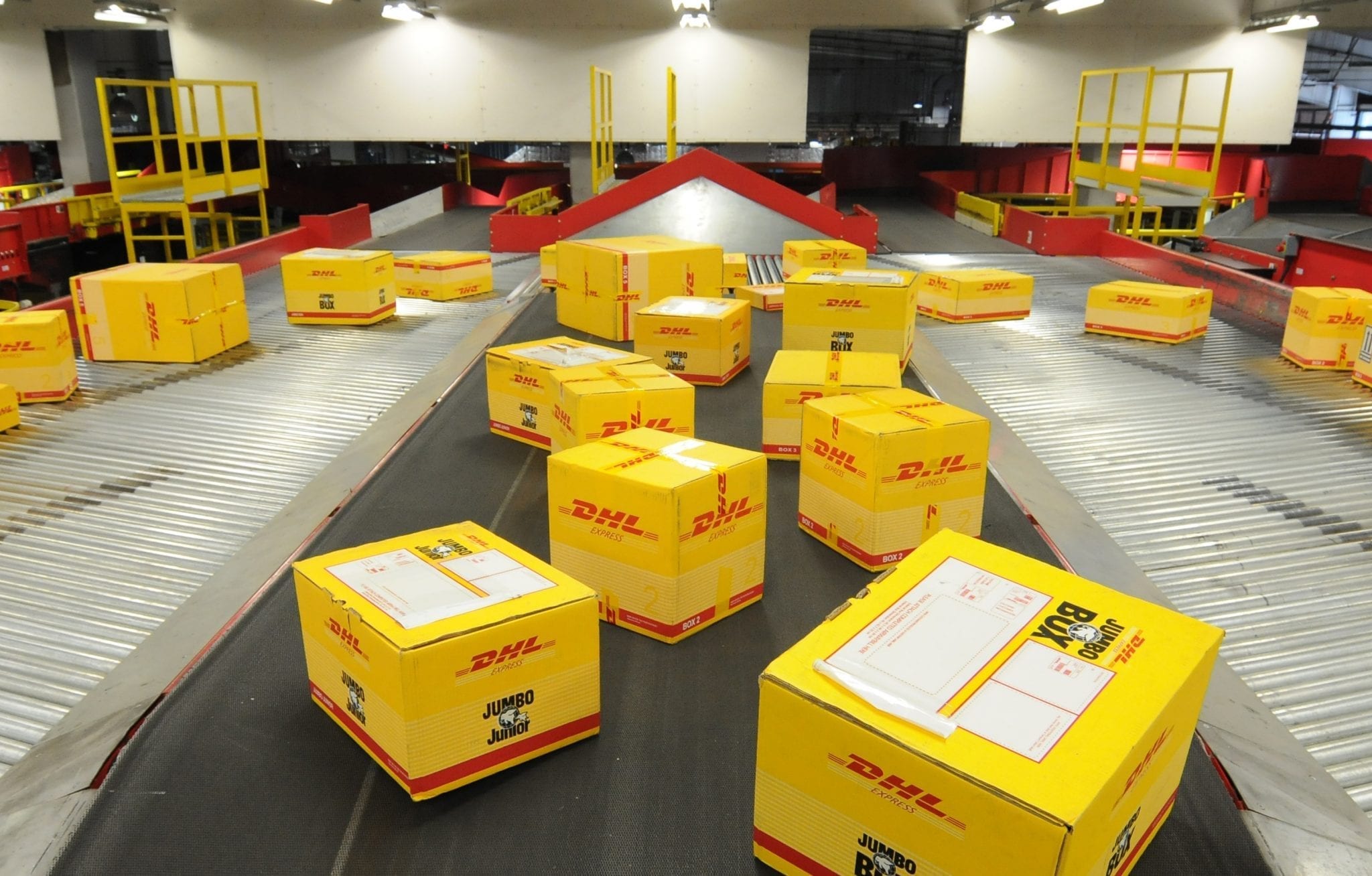
    An intelligently connected home can do more today than most consumers consider possible, according to a survey by Bosch.

    Bosch has conducted a survey on the topic of smart homes together with Twitter in Germany, France, Great Britain, Austria, Spain and the United States.

    While two thirds of the respondents know that the smart home can turn the lights off automatically when they leave the house, only 22% can imagine that the oven can already suggest the perfect recipes.

    By country comparison, Twitter users from France are most confident of what smart home technology can do compared to the British, the Americans and the Austrians, for example. Germans and Spaniards, on the other hand, consider much of what is already possible today to be a vision for the future.

    “It is particularly striking that especially the 25 to 34-year olds come closest to the reality with their assessments,” Bosch said. The fact that awareness of the possibilities decreases with age is not as surprising as the fact that many digital natives do not know what functions are possible today.

    Especially for the 16 to 24 year-olds who don’t even know a world without the internet, networking at home is still surprisingly unknown. The reason for this could be the lack of relevance that home topics have for this age group.

    Furthermore, only 50% of the surveyed are aware that today’s smart home systems are interoperable, meaning that different devices can communicate with each other, even independent of the manufacturers.

    Respondents were even more convinced by the potential for saving energy, when the heating switches off automatically as soon as the windows are opened, for example.

    The Spanish, French and English, in particular, seem to be very interested in saving money. Between 71% and 75% considered saving energy a convincing argument in the survey.

    While this was also the most popular answer the Germans surveyed gave, they come in last place here by country comparison with 59% of the mentions.

    “This is quite surprising because the Germans are normally known for their environmental consciousness,” said Bosch. “Presumably more financial than ecological aspects make energy saving possibilities so interesting in countries like Spain, France and England, however.”

  • Apple focuses on health and fitness for Watch 2

    Apple focuses on health and fitness for Watch 2

    Apple is forging a new identity for its smartwatch line, an increasingly niche brand personality that focuses mainly on health and fitness.

    “We’re thrilled with the response to Apple Watch and how it’s changed people’s lives. We are committed to fitness and health and think our customers will love the new capabilities of Apple Watch Series 2,” said Jeff Williams, Apple’s chief operating officer.

    In the past 18 months since it was introduced in the market, the Apple Watch has increasingly veered toward health fitness.

    The newly unveiled Apple Watch Series 2 comes even more packed with fitness and health capabilities including a water resistance 50 meter rating for swimming, and built-in GPS so users can now run without an iPhone.

    Apple also developed all-new algorithms for swimmers after hundreds of hours of research for two new workout options, pool and open water. The watch can count laps, track average lap pace and auto-detect stroke type to accurately measure active calorie burn.

    With built-in GPS, Apple Watch Series 2 records precise distance, pace and speed for outdoor workouts such as walking, running or cycling, without needing to take an iPhone.

    Users can also begin an outdoor workout immediately as Apple Watch Series 2 uses Wi-Fi, GPS and locally stored satellite data to quickly identify their location. On completion of an outdoor workout, view a route map that shows variations in speed in the Activity app on iPhone.

    Whether running, going for a swim or walking between meetings, the Activity app on Apple Watch Series 2 counts all daily activity towards the Stand, Move and Exercise rings.

    Combined with the performance enhancements of watchOS 3 announced in June, the Apple Watch Series 2 makes it even easier to access third-party apps, receive and respond to notifications and conveniently use Apple Pay.

  • Baroque Japan opens two shops in NYC

    Baroque Japan opens two shops in NYC

    Baroque Japan, which has a retail portfolio of young women’s fashion apparel and accessories, has arrived in New York City.

    It has opening an Enfold fashion brand shop in the West Village and a Moussy outlet in SoHo.

    Enfold New York

    Launched in 2012, Enfold has a strong presence in Europe. Its West Village store stands at 850 sqft (78.9 sqm) and its neighbours include the Marc Jacobs and Michael Kors brands.

    Moussy NY

    Covering 1776 sqft, the Moussy SoHo store focusses on its denim made in Japan. Shoppers buying the brand’s jeans will receive an original, limited-edition paulownia wooden storage box. A Baroque brand since 2000, Moussy has 43 stores in Japan and 81 in China and Hong Kong.

    Founded in 2000, the company has 356 stores in Japan, 165 stores in China and Hong Kong, and 15 brands. It launched Baroque USA Limited in April with an eye to establishing itself in the American market.

  • Lalamove delivery app enters Bangkok

    Lalamove delivery app enters Bangkok

    Out of Hong Kong, on-demand delivery app Lalamove has launched in Bangkok.

    The company is still inviting restaurants and food producers to use its 24/7 dedicated courier service and receive its “Lala Recommended” stamp of approval on Lalamove’s Facebook and Instagram pages, which also promote dishes and produce.

    Already signed up are Own Your Own Fresh, Lobster Gangster, Taka Sashimi Express and The Cooking Crab.

    Lalamove also covers other delivery needs, from documents to furniture, using delivery vehicles ranging from motorcycles to pick-up trucks.

  • Axiata may sell up to $700m in shares in three units

    Axiata may sell up to $700m in shares in three units

    Malaysia’s Axiata Group is said to be seeking buyers for stakes in its Asian telecoms assets worth up to $700 million as part of efforts to reduce debt.

    The group may sell around 11% of Indonesia’s XL Axiata and up to 30% each of Sri Lanka’s Dialog Axiata and Cambodia’s Smart Axiata, Bloomberg reported, citing unnamed sources.

    According to the report, Axiata is seeking to cut down its debt, which had grown to 21.5 billion ringgit ($5.2 billion) as of the end of June.

    Axiata Group currently owns 83.3% of Dialog Axiata, 95.4% of Smart Axiata and 66.4% of XL Axiata, on top of its operations in Bangladesh and Pakistan and minority stakes in Singapore and India.

    In a statement responding to the report, Axiata said the company “continuously reviews various strategic options to enhance shareholders’ value.”

    The company confirmed that it has been exploring options to optimize its balance sheet since the middle of last year, “potentially including, but not limited to, the portfolio rebalancing and review of shareholding across subsidiaries.”

    But Axiata added that any reports are “speculative” unless and until any transactions are entered into and disclosed to the market.