Author: Mei Ling Tan

  • BEI launches online investment-based simulation game

    BEI launches online investment-based simulation game

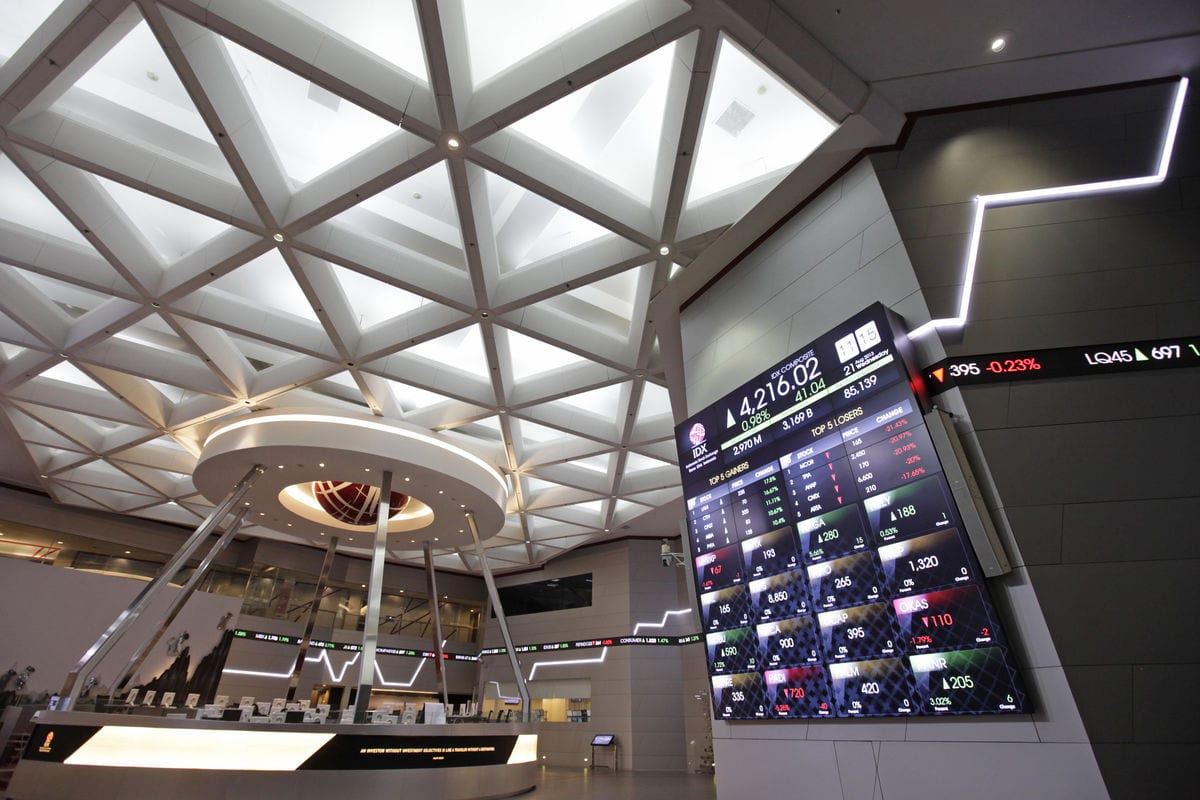
    The Indonesia Stock Exchange (BEI) launched an online investment-based simulation game “Nabung Saham Go” (Saving Stocks Go) as one of the measures to introduce the capital market industry to the public, especially to university students.

    “The game was one of the steps to introduce the capital market to the public. The Nabung Saham Go game can be played by anyone although it is aimed at university students as it is easier for them to play. The game is similar to Pokemon Go,” Development Director of BEI Nicky Hogan stated here on Tuesday.

    Hogan emphasized that the game falls under the education category and offers a fusion of the virtual and real worlds. Players will encounter small adventures bearing different themes and will get a series of interesting information.

    “The application encourages players to become more familiar with the capital market,” he remarked.

    Hogan elaborated that the “Nabung Saham Go” game invites players to collect points gained after answering the questions posed by the gaming application.

    “Players can visit certain places, such as the Financial Services Authority Building and Indonesia Stock Exchange Building to get information on how to gain points in the game. In each of the places visited, the player will have to answer a few questions on the stock market. Each correct answer will be given points,” he explained.

    In addition to “Nabung Saham Go,” Hogan said the users can play an analog game called “Stocklab,” which is associated with investment instruments, such as stocks and mutual funds.

    “The game Stocklab uses media cards and as an outline, the players will be guided on the strategy of investing and are invited to find out how the company made its initial public offering,” he added.

  • Plaza Indonesia’s ‘Fashion On4’ Showcases Favorite Local Brands

    Plaza Indonesia’s ‘Fashion On4’ Showcases Favorite Local Brands

    “We’re currently re-branding the whole level four as a new hang-out place for young people in the city,” Astri Abyanti, senior marketing communications, public relations and digital marketing manager of Plaza Indonesia, said at the opening of Fashion On4 on Tuesday (16/08).

    “We want to support Indonesia’s growing fashion industry, especially local brands that target young people. That’s why we’ve invited these nine brands to showcase their collections at Fashion On4,” Astri said.

    The nine fashion labels, according to Astri, were selected based on a survey of the shopping mall’s young clientele.

    “These are the brands that [our young clients] would like to see at the mall,” she said.

    Among the brands are Ikat Indonesia, No’om, Populo Batik, Rama Dauhan, Ria Miranda and Sky Inc.

    “(Fashion On4) breathes fresh air into Plaza Indonesia,” fashion designer Rama Dauhan said. “It’s also an opportunity for us to show that Indonesian fashion brands’ creations are on par with international ones.”

    For Fashion On4, Rama showcases his newest collection “Sensatia,” whose main strength is in easy-to-wear pieces embellished with patchwork designs.

    “It’s a great opportunity for us to branch out,” Sky Inc’s designer Amot Sjamsuri Muda said.

    For the new pop-up store, Sky Inc, previously known as Isis, presents an extended summer collection, inspired by “ulos,” a traditional fabric from North Sumatra. The fabric is made into casual dresses, crop tops and oversized jackets showcasing the intricate patterns of the traditional textile.

    Ria Miranda is the only Muslim fashion label among the nine new labels at the pop-up store.

    “I’m so excited to be here,” Ria said. “I hope to get a lot of new customers from this new store.”

    For Fashion On4, the Muslim designer presents her 2016 Fall/Winter collection, Forresta, inspired by her recent visit to Japan.

    “It’s a universal collection that can be worn by Muslim and non-Muslim [women] alike,” she said.

    The collection features simple pieces in a combination of bold colors that can easily be mixed and matched.

    Fashion On4 will be open at the mall until December 2016.

  • Direct India-Indonesia flights necessary to attract more Indian tourists

    Direct India-Indonesia flights necessary to attract more Indian tourists

    The Indonesian Tourism Ministry believes that direct flight from and to India could increase the number of Indian tourist arrivals in Indonesia.

    “The main challenge is direct flights as the existing ones are just transit flights from and to India,” Dody Prianto, assistant deputy director of the Tourism Ministry, noted here.

    Prianto was in Kolkata, India, for a roadshow to promote “Wonderful Indonesia,” the tourism brand of the country, at a hotel in the city, with the objective of attracting more tourists from India.

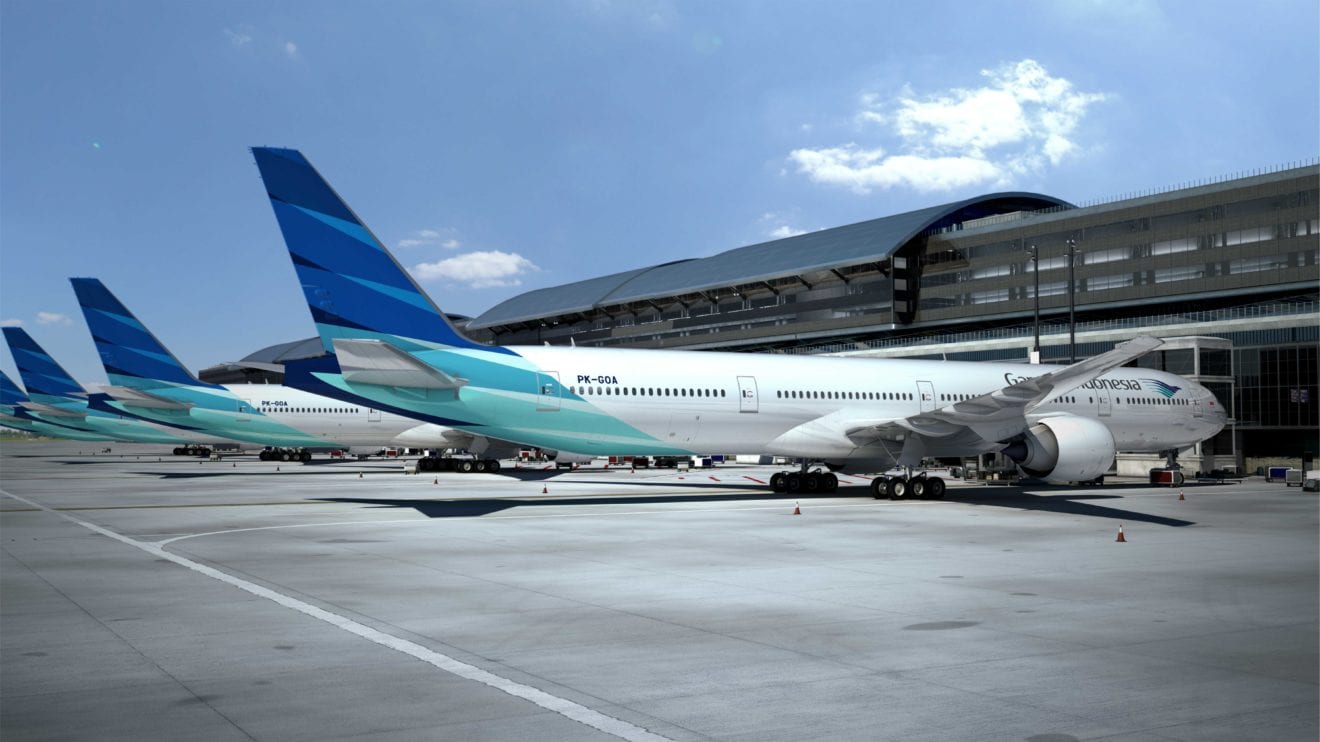
    He hoped airlines, such as Garuda Indonesia, would be interested in operating direct flights between India and Indonesia.

    To draw more Indian tourists to Indonesia, the ministry is intensifying tourism promotion to introduce other tourist destinations apart from Bali.

    He mentioned Sumatra as one of the interesting places for Indian tourists to visit as it is located near Singapore, and its culinary dishes bear similarities to those in Indonesia.

    The Tourism Ministry has set a target of attracting at least 350 thousand Indian tourists this year.

    “The target is quite high, but we are optimistic that it can be achieved,” Prianto stated.

    During the first semester of this year, a total of 185,911 Indian tourists had visited Indonesia, he said on the sidelines of a sales million event.

  • Surplus predicted in Indonesia`s rice supply

    Surplus predicted in Indonesia`s rice supply

    The agriculture ministry said the country is expected to have a surplus of 11.38 million tons in supply of milled rice by the end of this year.

    Chief spokesman of the ministry Agung Hendriadi said rice supply is estimated to reach 43.69 million tons as against requirement of 32.3 million tons this year.

    “A surplus , therefore, is expected to reach 11.38 million tons, even there would be an excess of 20 million tons in supply on stocks including early year stock and Bulog stocks and harvest 8.8 million tons,” Agung said.

    Similarly excesses are also estimated in the supply of other foodstuff including 2.1 million tons of corn grains, 339,400 tons of sugar, 18.5 million tons of cooking oil, 131,800 tons of red onion, 414,400 tons of chili, 1.59 million tons of chicken meat and 1.44 million tons of eggs.

    Meanwhile, deficit is expected in the supply of beef and soybeans.

    Deficit in beef supply is estimated to reach 220,000 tons with supply totaling 441,8000 tons as against consumption of 662,300 tons, and deficit in soybean is around 1.09 million tons with supply totaling only 1.5 million tons as against consumption of 2.59 million tons.

    Agung, however, said in general supply of the 11 strategic commodities is relatively safe until the end of the year.

    “Deficit would be recorded only in the supply of two commodities until the end of the year,” he said.

  • Consumer prices fall for 21st straight month in July

    Consumer prices fall for 21st straight month in July

    Consumer prices fell further in July, marking the 21st straight month of decline, according to data released by the Department of Statistics on Tuesday (Aug 23).

    The consumer price index (CPI) fell 0.7 per cent last month, unchanged from the previous month, as a smaller decline in the cost of private road transport offset the impact of lower retail goods prices, the Monetary Authority of Singapore (MAS) and Ministry of Trade and Industry (MTI) said in a joint statement.

    Private road transport costs fell by 4.4 per cent, compared to the 5.7 per cent decrease a month earlier, largely due to a smaller decline in car prices from a year ago.

    Prices of retail goods fell 0.2 per cent, compared to an increase of 0.5 per cent in June. This was mainly because of steeper discounts on clothing and footwear during the Great Singapore Sale, MAS and MTI said.

    Services inflation was 1.6 per cent, unchanged from the previous month. While the cost of education services rose more sharply, this was offset by a slower pace of increase in holiday travel expenses.

    Food prices rose 2.1 per cent in July. Although there was a stronger pickup in the cost of non-cooked food items, it was offset by a smaller increase in the price of restaurant food.

    The cost of electricity, liquefied petroleum gas and gas fell by 12.7 per cent, compared to the 13.7 per cent decline in June. This was due to a smaller decrease in electricity tariffs on a year-ago basis, the agencies said.

    Core Inflation, which excludes the costs of accommodation and private road transport, fell slightly to 1 per cent from 1.1 per cent in June, due to the fall in retail goods prices.

    Ms Selena Ling, Head of Treasury and Strategy at OCBC Bank, said that the main drags on inflation were familiar.

    “Looking ahead, with headline inflation having likely troughed in the second quarter and likely to creep higher in the coming months, we maintain our full-year inflation forecast of -0.4 percent year-on-year,” she said.

  • VW, suppliers struggle to resolve dispute in marathon talks

    VW, suppliers struggle to resolve dispute in marathon talks

    Volkswagen and two of its auto parts suppliers were pushing to resolve a contract dispute early on Tuesday, spokespeople said, but had no progress to report despite 17 hours of talks as the conflict threatens to cost the carmaker thousands of vehicles in lost output this week.

    Top-level negotiations between VW and the two Prevent DEV group suppliers that began at about 1100 GMT (0700 ET) on Monday and continued through the night failed to yield a breakthrough, spokespeople for VW and the suppliers said. But the two sides are continuing to seek a solution, they said, without elaborating.

    The dispute affected about 28,000 workers at six of VW’s 10 German factories on Monday when the automaker halted production of the top-selling Golf and Passat models, as well as assembly of engines, gearboxes and emissions systems, due to the Wolfsburg-based suppliers’ refusal to deliver products like seat covers and gearbox parts.

    VW’s supplier conflict poses a threat to the company’s profitability as it seeks to recover following its diesel emissions test cheating scandal.

    Analysts at UBS estimate that a one-week production halt at VW’s Wolfsburg headquarters would result in about 100 million euros ($113 million) in lost gross profit, and could have knock-on effects on other suppliers.

    CarTrim, which makes seats, and ES Automobilguss, which produces cast iron parts needed to make gearboxes, are seeking compensation after saying they faced lost revenue running into tens of millions of euros after VW canceled a contract.

    Europe’s largest automaker has been trying to force the two companies to resume deliveries, suggesting they could face fines or even seizure of missing parts.

    Lower Saxony Economy Minister Olaf Lies, a member of VW’s supervisory board, has said the dispute is hitting VW “at the worst possible time”. Whether VW management should face questions for over-reliance on single suppliers needs to be clarified, he added.

    Some industry analysts were also critical of VW.

    “A global player has based its entire production chain on a mid-sized company,” said Ferdinand Dudenhoeffer, head of the Center of Automotive Research at the University of Duisburg-Essen. “That is not only amateurish but also extremely naive.”

    Faced with billions of euros of costs from its emissions scandal, VW has indicated it would seek price cuts from its suppliers.

    While the disruption may keep workers at home, there could be a silver lining for VW in limiting Golf output. The automaker had already canceled Golf production shifts on October 4-7 and December 19-22 due to falling demand.

    VW said the stoppages were part of regular production adjustments.

    “Given the slowdown of VW sales (excluding China), the brand certainly needs to slightly trim production levels,” said London-based Evercore ISI analyst Arndt Ellinghorst.

  • Sharp innovation gap seen between advanced, emerging Asia

    Sharp innovation gap seen between advanced, emerging Asia

    Pay-TV providers in advanced economies in Asia are focused on improving existing product suites, while investment in emerging economies is being used to create new solutions to boost subscriber growth, according to NAGRA and MTM.

    Across advanced economies in the region, 97% of pay-TV providers offer IP connected set-top boxes, compared to only 42% in emerging markets.

    The latest paper from the Pay-TV Innovation Forum research program shows that there are also noticeable differences in operator provisioning of other features. 4K availability within the region varies, with 50% of providers in advanced economies offering this service, versus only 6% in emerging ones.

    There is also significant variation in the availability of TV Everywhere services, with 53% of emerging providers offering it compared with 80% in the advanced economies.

    These differences underscore that providers are focusing on varying and diverse innovation initiatives over the next five years which will be directly linked to their economic circumstances.

    In emerging markets, service providers are expected to concentrate their efforts on delivering core valued-added propositions, including HD video and a transition to hybrid STBs.

    Operators in advanced markets that already offer these services are expected to focus on developing seamless video experiences across devices, based on IP, cloud and data technologies to make content discovery as easy as possible.

  • Maxis taps YouTube for 360° film series

    Maxis taps YouTube for 360° film series

    Maxis is partnering with YouTube and Malaysia’s best storytellers to produce a Merdeka-themed film series, shot entirely using the latest cutting edge 360° cameras.

    Maxis will be working with award-winning filmmakers that include The Ming Thing, YouTube superstars with over 20 million video views; Junad Mohd Nor, whose film Ikal Mayang’s Odah premiered at Busan International film festival; and Denes Kumar & Vimala Perumal, the filmmakers behind Tamil’s box office hit, Vetti Pasanga.

    The company said that, using YouTube 360° video, it wants to empower Malaysians to be the first to “see Malaysia from different angles.”

    “Instead of premiering in a traditional physical cinema, these films will premiere exclusively via the YouTube platform to an estimated audience of 15 million via their mobile screens starting August 25,” said Sulin Lau, Maxis’ head of marketing services.

    “Because 360 films are truly immersive video, it’s a great way to demonstrate how great the Maxis 4G network is for seamless, buffer-free video,” said Lau.

    For this film series, the filmmakers are drawing inspiration from Malaysia’s diversity and will tell stories showing that even though we are made up of many different people, we can still come together and embrace each other’s differences.

    Maxis and YouTube are also inviting students and the public to submit their own Merdeka film and stand a chance to be premiered alongside the films of these award-winning filmmakers.

  • Telstra ramps up mobile offers as streaming go small screen

    Telstra ramps up mobile offers as streaming go small screen

    New research reveals mobile video streaming is growing at more than 30% a year and on-demand TV, sports and music is changing when and where Australians watch their favorite entertainment, according to Telstra.

    To help customers make the most of the mobile streaming revolution, Telstra has included a three-month subscription to all three leading streaming video providers Netflix, Stan and Presto on selected mobile plans.

    Also, Telstra mobile plan customers can now enjoy Apple Music with data-free music streaming which means listening to all your favorite songs, albums and playlists without tapping into their data allowance.

    Further, Telstra launched a new app that makes it easy to discover all the sports and entertainment content included in Telstra mobile plans.

    “Telstra mobile customers can now get Netflix, Stan and Presto, unmetered Apple Music and free access to live NRL or AFL, Netball and Basketball, providing an unmatched mobile entertainment experience,” said Michele Garra, Telstra’s executive director for media.

    She said Australians have embraced streaming video services like Netflix in their lounge rooms and that appetite is now seen translated to phones and tablets outside the home.

    “Network traffic surges during the morning and afternoon commute, suggesting two new prime-time periods are emerging, as people discover how easy it to continue watching their favorite shows on the go,” said Garra.

    Garra said to make it easier for customers to discover the full range of entertainment options available to them as part of their plan Telstra is introducing the Telstra TV+ app for mobiles.

  • Singtel interested in MobiFone privatization

    Singtel interested in MobiFone privatization

    Singtel has joined the ranks of operators interested in becoming the strategic partner of Vietnamese operator MobiFone.

    Singtel’s VP for business development Oliver Foo met with deputy ICT minister Pham Hong Hai recently to discuss a possible investment in the venture.

    The Vietnamese government plans to privatize the currently state-owned operator MobiFone, and is seeking a foreign operator interested in participating in the privatization. Companies including Norway’s Telenor, Sweden’s Comviq and Australia’s Telstra have previously expressed an interest.

    Now Singtel has also indicated it may want to participate in the opening up of the operator to private investors.

    MobiFone has an estimated brand value of $539 million. The company jointly controls the majority of Vietnam’s telecoms market together with fellow state-owned operator VinaPhone and military-run Viettel.

    But the government has not yet announced its plans for the privatization of MobiFone.

    MobiFone recently contracted Ciena to build a 300Gbps backbone networkspanning more than 1,400km across the country.

    Singtel has meanwhile been expanding its regional operations, having recently announced plans to indirectly increase its stakes in Thai mobile operator AIS and India’s Bharti Airtel.

  • Telenor, MPT apply for Myanmar 2600-MHz auction

    Telenor, MPT apply for Myanmar 2600-MHz auction

    Telenor and Myanmar state-owned operator MPT have both lodged expressions of interest regarding taking part in Myanmar’s first spectrum auction in October.

    The operators are among the potential bidders for 40 MHz of 2600-MHz spectrum reserved for mobile broadband services.

    Multiple ISPs and other companies – including Yatanarpon Teleport and Myanmar Telecommunication Network – have also lodged expressions of interest regarding the auction. In total, 22 companies have applied.

    Of the total number of applicants, 20 have been accepted as potential bidders, while the applications of two were rejected due to those companies lacking the required network facilities service license.

    Selected bidders will need to meet financial and technical prerequisites, including providing a $500,000 deposit, to qualify.

    By contrast, Telenor Myanmar’s main rival Ooredoo Myanmar has elected not to participate in favor of waiting for a separate 1800-MHz auction, which the operator expects to take part later in the year.

    During the auction the 40 MHz of 2600-MHz spectrum will be divided into two 20 MHz licenses, and this will itself be divided into three separate regions. Bidders will not be allowed to win more than 20 MHz in any one region, and will only be allowed to secure spectrum in up to two regions.

  • M1 to deploy NB-IoT network by 2017

    M1 to deploy NB-IoT network by 2017

    M1 and Nokia have teamed up to roll out the first nationwide commercial narrowband Internet of Things (NB-IoT) network in Singapore by 2017.

    When completed, the deployment – Nokia’s first large-scale deployment with an operator partner in Asia – is expected to be among the world’s first commercial NB-IoT deployments.

    NB-IoT networks and devices are designed to deliver improved network performance for M2M (machine-to-machine) communications – low-bandwidth, robust indoor penetration, and low power consumption, while delivering the benefits of licensed spectrum such as network reliability and security.

    The NB-IoT standards were finalized by the GSMA Standards body 3GPP in June 2016. Commercial NB-IoT devices are expected to be available by mid-2017.

    According to Bell Labs Consulting, there will be up to five billion IoT devices connected through mobile networks by 2020. In Singapore, NB-IoT deployment will support the nation’s journey to become a Smart Nation underpinned by data to deliver anticipatory services to its people.

    “NB-IoT is emerging to be a potentially promising technology for smart city’s machine-to-machine type of applications and services. We look forward to working with NB-IoT partners to explore the use of NB-IoT in developing innovative Smart Nation services that improve our citizens’ lives and make our businesses more productive,” said Jacqueline Poh, Chief Executive-designate, Government Technology Agency (GovTech).

    Sandeep Girotra, Nokia’s Senior Vice President of Asia-Pacific and Japan, said Nokia’s joint collaboration of NB-IoT deployment with M1 lays an important groundwork for further application of LTE-based IoT services.

    M1 also recently announced it is working with Nokia on Singapore’s first commercial HetNet deployment.

  • Singapore testing SIM logins for US visitors

    Singapore testing SIM logins for US visitors

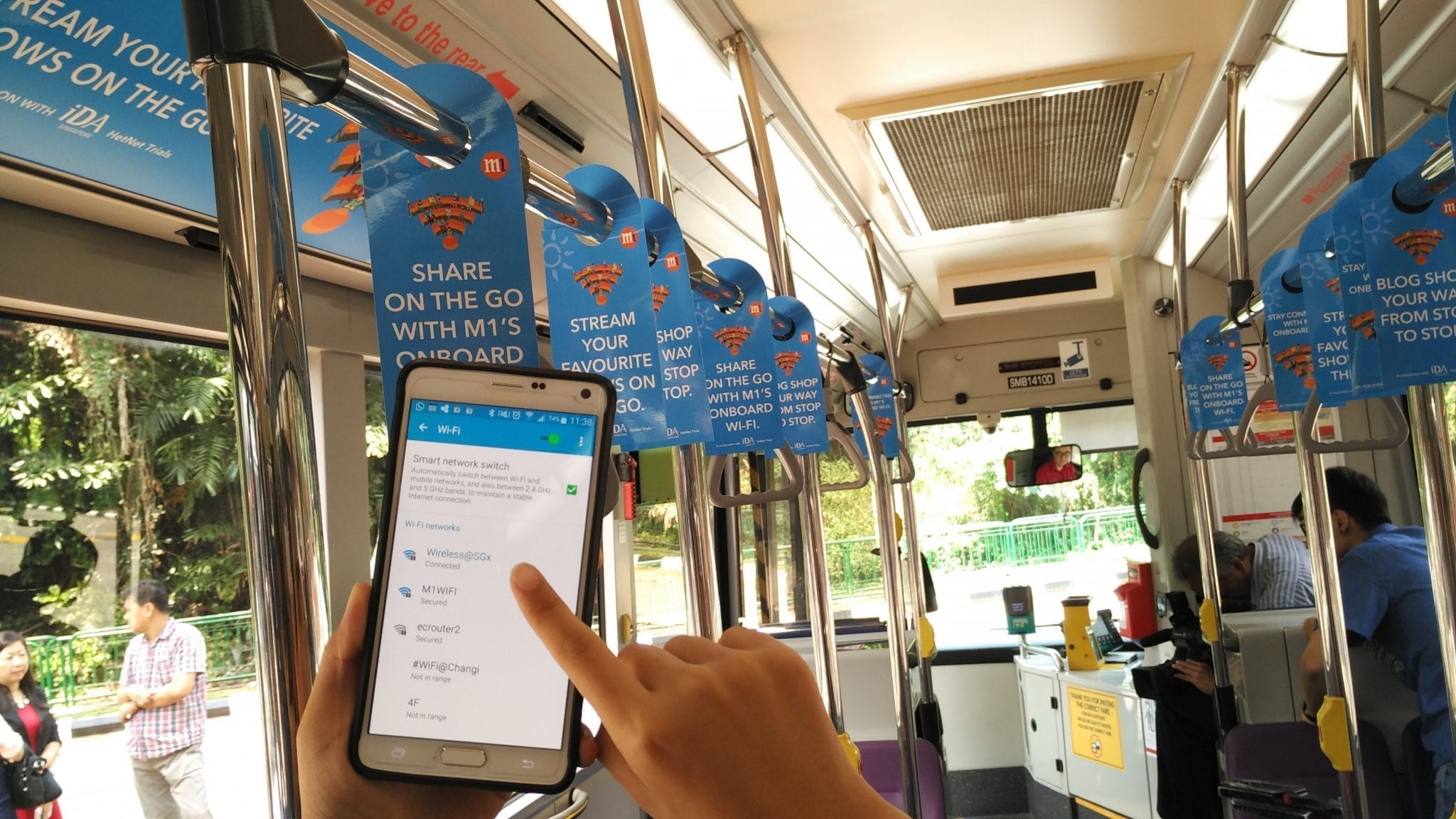
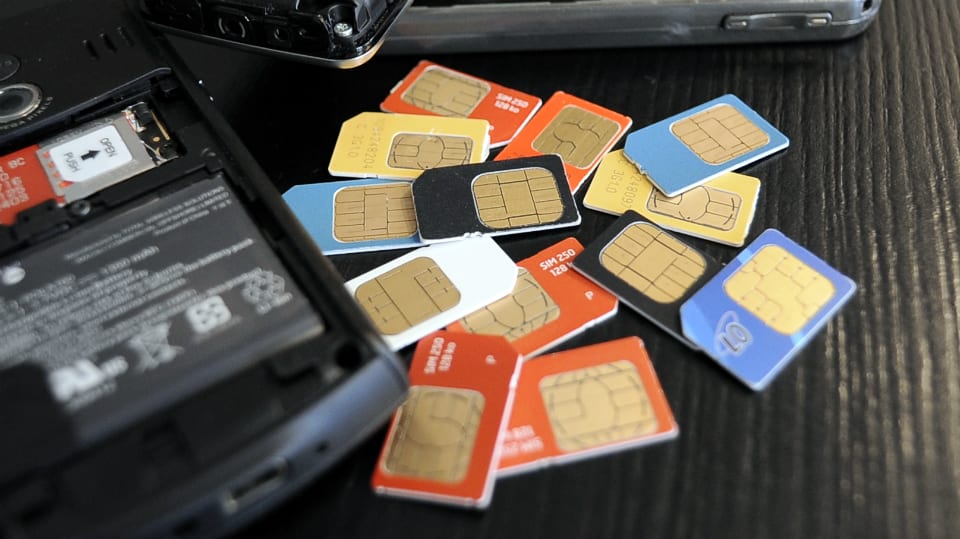
    The Infocomm Development Authority of Singapore (IDA) is piloting trials for US visitors to connect to the local wireless broadband network, Wireless@SG.

    The trials, which commenced yesterday and will run until September 21, will be conducted in partnership with the Land Transport Land Transport Authority (LTA), M1, Sentosa Development Corporation (SDC) and Singtel.

    Under the project, T-Mobile US subscribers can connect automatically to Wireless@SG after a one-time setup on their SIM devices. This would enable them to connect to around 290 hotspots in designated test areas – Sentosa and major MRT stations. Other US visitors who are not subscribers of T-Mobile can sign up for a free account in the government website.

    “Wi-Fi is fast becoming a daily necessity and Wireless@SG as the largest city-wide federated Wi-Fi network will be an important enabler to improve connectivity and liveability in Singapore as we move towards a Smart Nation,” said Khoong Hock Yun, IDA’s assistant chief executive.

    “Trialing the SIM-login method for foreign visitors is something new to us, and we hope to gather new insights, fine tune technical challenges, and enhance the Wireless@SG program further,” he added.

    IDA said the trial is taking place in conjunction with the Wireless Broadband Alliance (WBA) City Wi-Fi Roaming Project, which also allows Singapore visitors to the US to roam automatically and securely between free public Wi-Fi hotspots in participating US cities, namely, San Jose, San Francisco and New York for the same period.

    The City Wi-Fi Roaming Project is likewise a supporting activity of World Wi-Fi Day initiative. Both initiatives are backed by the Connected City Advisory Board, which aims to deliver the vision of Connected Cities around the world

  • Ooyala unveils turnkey OTT solution

    Ooyala unveils turnkey OTT solution

    Telstra unit Ooyala has introduced Ooyala AppStudio, its new turnkey over-the-top (OTT) solution for video providers to cost-effectively build and deploy comprehensive OTT app- and web-based video entertainment experiences.

    According to a report by DTVR, OTT services are booming globally as consumers flock to connected devices for content; creating a market opportunity of nearly $65 billion over the next five years.

    Using Ooyala AppStudio, broadcasters, publishers and media companies can quickly launch, manage and monetize new OTT offerings.

    The new turnkey solution promises to mitigate the expensive custom development and integration costs typically associated with OTT market entry.

    An out-of-the-box solution, it promises to ensure customers can deploy premium OTT experiences on time and on budget, with a simple, easy-to-use interface.

    As such, it does not require highly technical staff to build or manage services. Content providers can automate the build of OTT apps directly within the Ooyala AppStudio console for any device, supporting apps for Apple TV, Roku, Amazon Fire TV, and Chromecast as well as on iOS, Android and the web. No engineering is required, drastically reducing time-to-market as well as development and personnel-associated costs.

    Ooyala will demonstrate Ooyala AppStudio at the 2016 International Broadcasting Convention (IBC) in Amsterdam, September 8 through September 13.

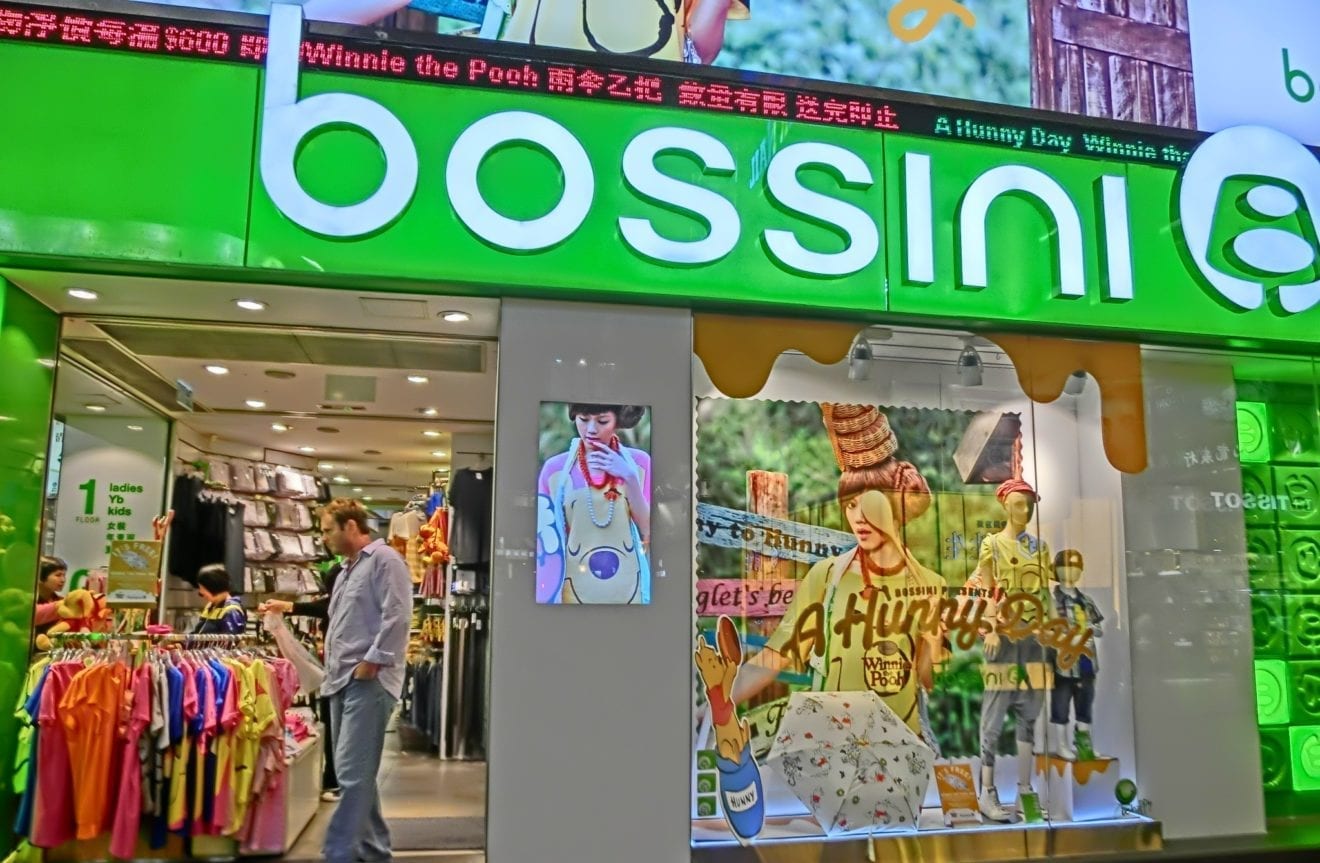
  • Property sale boosts Bossini International profit

    Property sale boosts Bossini International profit

    While expecting a leap in profit because of a special circumstance, clothing retailer Bossini International Holdings had a “significant” decrease in revenue for its latest year of trading.

    The group reports an expected jump in profit ranging from 147 to 157 per cent for the year ended June 30, mainly because of a gain of about HK$267 million (US$34.4 million) on the disposal of a macau property and a leaseback arrangement.

    Excluding that gain, the group predicts a drop in profit of between 75 and 85 per cent compared with the previous year, attributed mainly to a drop in revenue resulting from fewer tourists in Hong Kong and Macau, and a strong Hong Kong dollar.

    Other factors were weak local consumer sentiment, an unseasonably warm winter and intensified competition in several core markets.

    Bossini’s audited annual results are expected to be announced late next month.