Author: Mei Ling Tan

  • Grab Selects Adyen as Payment Solution Partner in Southeast Asia

    Grab Selects Adyen as Payment Solution Partner in Southeast Asia

    Adyen, the global payments technology company, today announced that Grab, Southeast Asia’s leading ride-hailing platform, has selected Adyen to extend the capabilities of its GrabPay platform in Indonesia, Philippines, Thailand and Vietnam. Grab will partner with Adyen to deliver a consistent, frictionless payment experience for customers traveling across markets regardless of their device or payment method.

    “As part of Grab’s drive to make ride-hailing even safer, easier and more accessible to everyone in Southeast Asia, providing trusted, seamless mobile payments is crucial for the overall customer experience. Grab wanted a partner who could support a variety of traditional and alternative payment methods to support our growth across the region. Adyen fits the bill and we are excited at now being able to offer our passengers even more payment options when they pay through GrabPay,” said Joel Yarbrough, Head of Payments & Commerce Product, Grab.

    With Adyen supporting 250 payments methods around the world, Grab customers will be offered both traditional cards and, over time, country-specific payment methods, using Adyen’s expertise and data to expand payment options.

    Business travelers who work within the region can also easily tabulate their business ride spending with Grab through the Grab for Work portal, and companies can automatically pay for their employees’ rides through the use of corporate cards.

    “Southeast Asia is a diverse and highly fragmented region and there is no one preferred method of payment. However, mobile penetration in the region remains high and drives several key trends including the rise of mobile payments and platforms as a service. Partnering with a fellow innovator and disruptor such as Grab, we are eager to empower commuters in Southeast Asia with the same convenience of hailing a ride seamlessly as paying for their Grab ride with equal ease,” said Warren Hayashi, President, APAC, Adyen.

    This partnership announcement is in conjunction with Adyen’s growth momentum in the region as it expands its presence in Singapore with a new, bigger office. Adyen began operations from its new office in August 2016.
  • US Mart opens second HCMC store

    US Mart opens second HCMC store

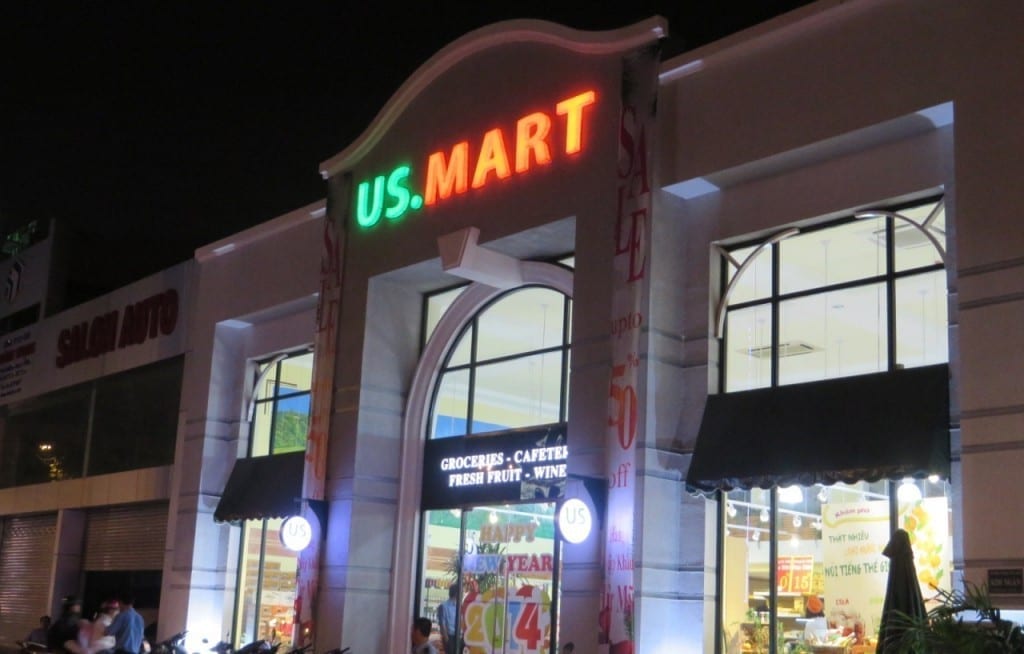
    Quality imported grocery retail pioneer US Mart has opened its second store in HCMC – and is ready, preparing for its third.

    After three successful years in the city, US Mart has opened a second store in District 7.

    The new store is located at 169 Nguyen Huu Canh St, in what is a residential enclave popular with Asian expats and and high-income locals. The company hopes this positioning strategy will bring growth to the chain, reflecting its success in downtown Saigon, District 1.

    Kim Ngan, US Mart director of communications, said the store is selling around 10,000 items, 70-80 per cent of which are imported directly from the US, including food and beverage products. The other 20-30 per cent are Vietnamese high-quality products, including specialties from Southern provinces.

    All US products are imported as a part of the Taste of America program, a joint effort with the US Department of Agriculture. According to Gerald H Smith, senior attache for Agricultural Affairs at the US consulate, Vietnam is the 11th largest market for US food and agricultural products. Statistics showed the trade in food and agricultural products reached US$5.9 billion last year.

    US Mart was founded in 2013 by businessman Nguyen Manh Tien, who recognised local customers’ need of imported goods after returning from studying in the US. Despite the high competition in Vietnam retail market, US Mart has successfully built its customer base thanks to high quality goods, food sanity, frequent promotions, and a five-day goods return policy.

    After D7 store, US Mart will open its third store in Tan Binh district this Sunday.

  • China to fuel VF Corporation brands

    China to fuel VF Corporation brands

    Multibrand fashion group VF Corporation sees Asia – and especially China – as the primary driver of growth in the years ahead.

    VF Corporation brands include Vans, Kipling, Lee and The North Face.

    The US-headquartered company says it is focused on expanding geographically to take advantage of its scale in markets around the world.

    “The Asia Pacific (APAC) market, and in particular China, represent robust growth opportunities for VF, according to the company’s business lead,” the company revealed in an online newsletter.

    “Asia Pacific is an important region for business development and remains a priority focus for the company,” said Aidan O’Meara, VF’s Asia Pacific president. “Our plan is to continue to focus on locally relevant innovation, further invest in demand creation and leverage our scale and capabilities as ‘One VF’ to fully capitalise on the growth opportunities and take market share.”

    VF’s APAC business continues to expand. In 2015, currency neutral revenues in the region were up 10 per cent reaching US$1.2 billion.

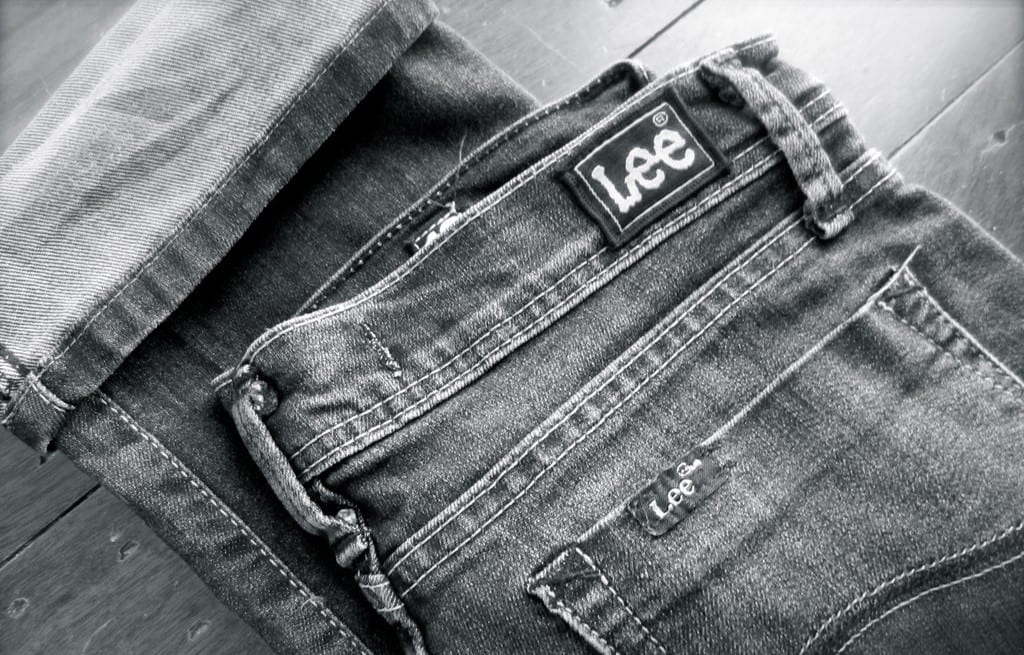
    China, which accounts for roughly half of APAC revenue, has seen consistent, strong growth from the country’s three largest brands: The North Face, Lee and Vans. In particular, Lee in China has experienced consistently strong growth over the years for the company, with product innovations driving recent success.

    Denim leads the charge in China

    VF brands currently maintain presences in more than 170 Chinese cities. And, that number is expected to increase in coming years.

    “We see growth potential in a market with increasing affluence, a burgeoning middle class and increasing sophistication and demand for quality jeanswear,” O’Meara said.

    The company sees a competitive edge in the market, particularly at Lee. VF launched Lee as the company’s first owned business in China in 1995.

    “Statistics show that while jeans ownership is about eight pairs per person in North America,” O’Meara said. “In China, it is less than one pair per person, and if you look at India, there is still a lot of room as jeans ownership averages about three pairs per person.”

    O’Meara noted there was a time when many jeans manufacturers rested on their laurels. However, as competition intensified, many consumers lost excitement with the products available on the market, opening a door for an innovative new product.

    Lee saw this opportunity and put its research and development to the test. The resulting JadeFusion Denim has been a resounding success and garnered a Bronze Innovation Edison Award in the Materials Science category.

    JadeFusion immediately accounted for 13 per cent of China’s denim sales in its first season on the market in the spring and summer of 2015.

    “Lee exemplifies VF’s continuous innovation as one of the key strategies which differentiate us from our competitors,” O’Meara said.

  • Boss puts positive spin on Estee Lauder results

    Boss puts positive spin on Estee Lauder results

    Cosmetics maker Estee Lauder has forecast a lower-than-expected profit for the full year, hurt by fewer customer visits to department stores and uncertainties in some markets.

    “We believe the risk of other economic and political disruptions will remain high as we start our new fiscal year,” says CFO Tracey Travis of the latest estee Lauder results.
    Weak sales in some Asia-Pacific countries, mainly Hong Kong, helped dent its sales figures.

    The company also says it expects to incur charges of about US$80 million to $100 million in fiscal 2017, related to restructuring initiatives, quitting businesses in certain markets and cutting its global workforce.
    However, president/CEO Fabrizio Freda has a positive spin, saying the company’s performance “gives us much to celebrate”.

    He says the company capitalised on shifting consumer preferences by leveraging its strength in makeup and positioning the company to win in luxury fragrances.

    “We nimbly allocated resources and made strategic investments in areas that gave us terrific results, including emerging markets, our makeup category, and the online and specialty-multi retail channels. Importantly, we achieved these results against a backdrop of social and political instability, currency volatility and economic challenges.”
    For the quarter ended June 30, the company had net sales of $2.65 billion, a 5 per cent increase on the prior-year period. It posted across-the-board sales gains in all geographic regions and product categories, except fragrance.

    Sales benefitted from new products and double-digit growth in several emerging and developed markets. The company also generated double-digit gains in its travel retail and online channels. Net earnings for the quarter were $93.5 million, compared with $153 million last year.
    For the year, the company achieved net sales of $11.26 billion, a 4 per cent increase over the previous year. Net earnings were $1.11 billion, up 2 per cent.
    Freda says the company will continue to seek geographic and channel opportunities to reach more consumers “while keeping a sharp focus on like-door growth”.

    During the fourth quarter, the company recorded restructuring and other charges of $101 million ($69.6 million after tax).

  • New Arrival app helps Chinese shop abroad

    New Arrival app helps Chinese shop abroad

    A new fashion app, New Arrival, aims to introduce Chinese travellers abroad to lesser-known boutiques abroad.

    The New Arrival app serves as a platform and guide for brick-and-mortar stores Chinese shoppers might otherwise miss in their travels.

    Founded by Howell Hu, the app has two sections. One part focusses on “new arrivals” from on-ground stores, letting users browse products with a swiping feature. Shoppers swipe right to like a product and see more like it, swipe left to “pass” on the product, and swipe down to add it to their shopping cart.

    From there, they can either access more information about the store or arrange to make the purchase directly on the app via Alipay. Users can also browse using a navigation system to shop by category.

    The other section of the New Arrival app lets users tour shops by city. A “nearby” option lets travellers find stores on the go, or they can search by city (destinations include Beijing, Shanghai, New York, Paris and Hong Kong).

    More than 200 stores are presently collaborating with the app, all of them either multi-brand stores or individual designers. While most of the countries included are major tourist destinations, China is also represented as well as several destinations in Asia, such as Johor Bahru in Malaysia.

    The New Arrival app allows returns within one week, and the stores themselves handle shipping.
    Available for iPhone, the app will have an Android version next month.

  • Private-label deal for E-mart Korea

    Private-label deal for E-mart Korea

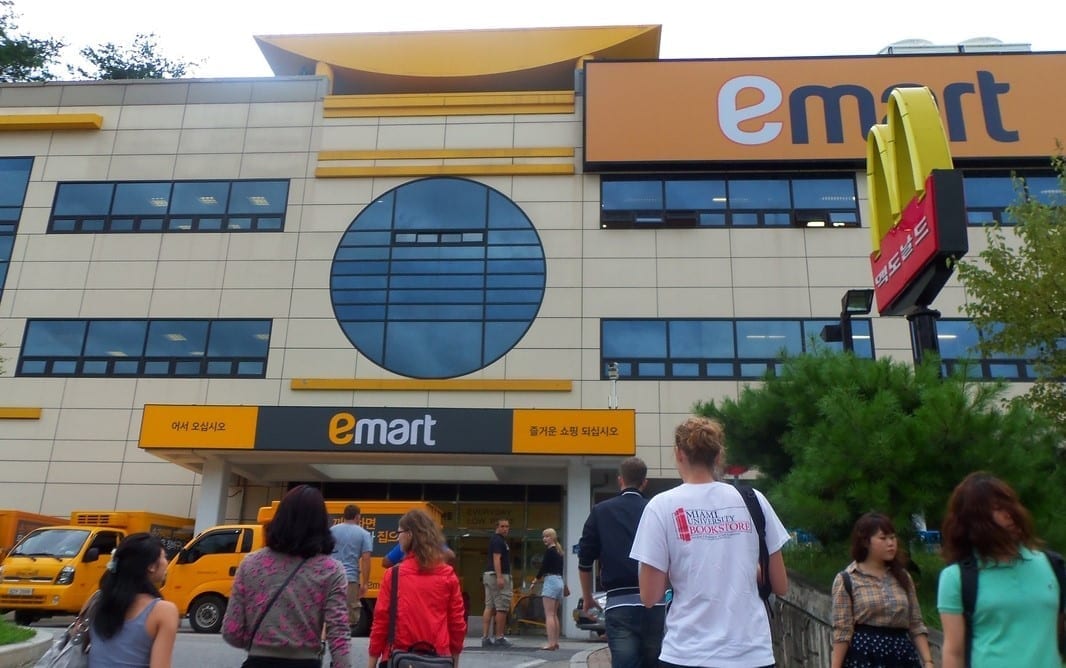
    Discount seller E-mart Korea has signed an agreement to supply its private-label items to Metro China.

    It is introducing four items from its No Brand range, to be sold from next month. It is the first time for E-mart to export to an overseas offline store.

    E-mart’s private-label products already sell in Mongolia and Vietnam. Sales of its No Brand range at its Ulaanbaatar branch, which opened last month, have already reached 600 million won (US$533,000), accounting for about 7 per cent of total sales. No Brand contributed 3 per cent of sales at its Vietnamese outlet, which opened in December.

    Introduced in April last year with nine items, No Brand now has more than 300 products, from butter cookies to car window wipers, and posted 63.8 billion won turnover in the first half of this year.

    Metro is a German retailer that is the third-largest franchise globally following Walmart and Carrefour. It has more than 2200 outlets in 33 countries, with 88 in China.

  • Ted Baker Vietnam makes debut

    Ted Baker Vietnam makes debut

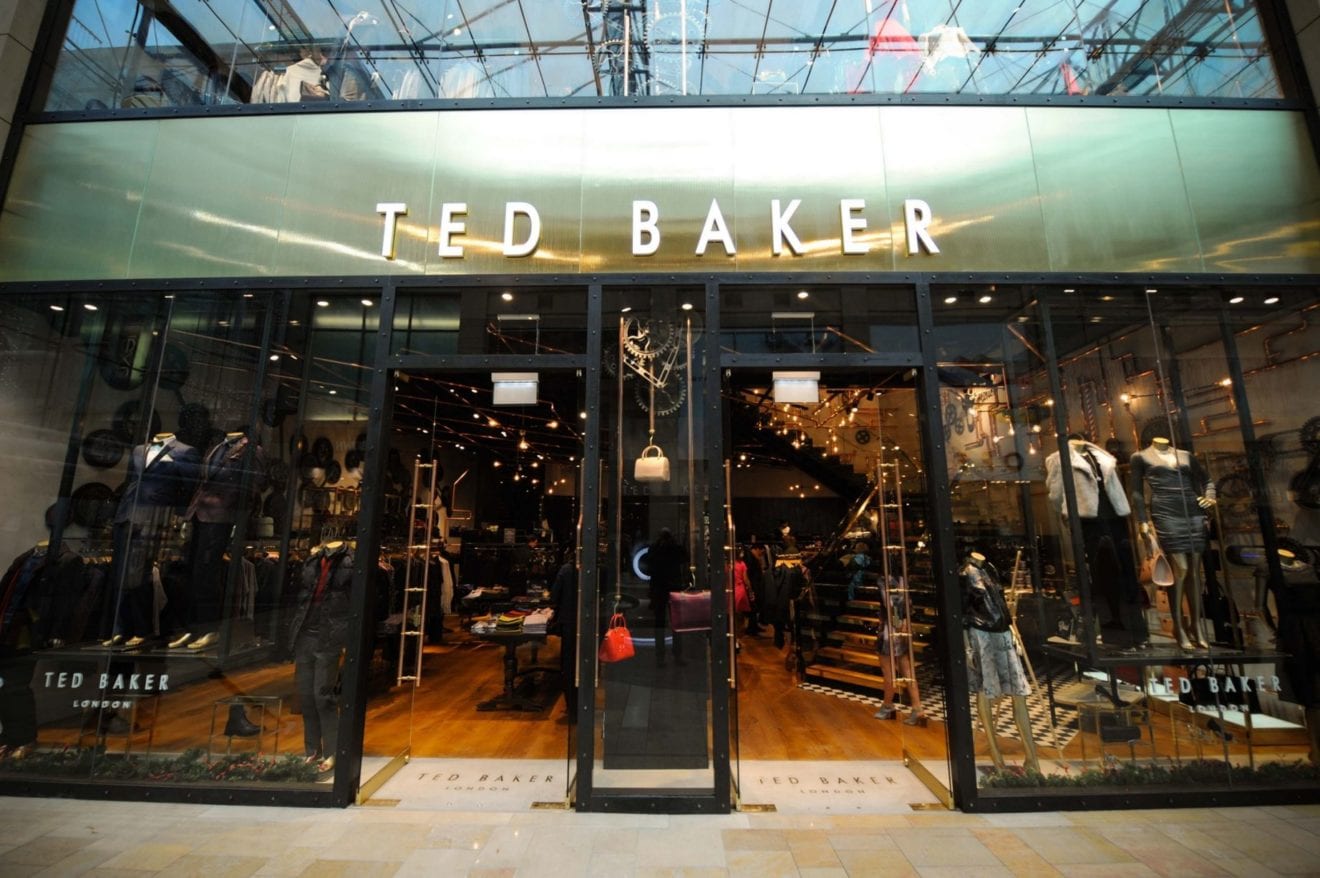
    Unconventional British fashion brand Ted Baker has opened its first store in Vietnam.

    Ted Baker Vietnam joins other luxury brands at the revamped Saigon Center in Ho Chi Minh City, with its re-opening celebrated at an event featuring Vietnamese entertainers. Guests included representatives from the UK Consulate General.

    Brought to Vietnam by retail management company Maison, Ted Baker was described at the event by British Business Group Vietnam (BBGV) director Peter Rimmer as “the most outstanding luxury fashion brand in the UK” and an inspiration for people seeking an individual style.

    Ted Baker introduced its latest collection with a mini-catwalk show at the event. Many of the guests were also wearing the label.

    Established in 1988 with a focus on menswear, the London brand has also produced collections for women seeking to blend traditional and contemporary styles.

    Maison, launched in 2012, has brought more than 17 international brands to Vietnam including Coach, Dorothy Perkins, Karen Miller, Mango and Topshop.

  • Ikea Group China launching eCommerce trial

    Swedish home furnishings retailer Ikea Group China will launch into eCommerce in Shanghai and start selling its products online within the next couple of weeks.

    As it is a pilot program, delivery services will be limited to Shanghai initially. All its ready-to-assemble furniture, appliances and home accessories, except for food and green plants, will be available.

    If the trial is successful, Ikea plans to roll out its eCommerce services across China as part of its multi-channel retailing strategy. It does not have any stores in China’s third- and fourth-tier cities, but in May Ikea established a pickup and order point in Wenzhou, Zhejiang province. The stores in nearby Ningbo will provide goods for that service.

    In its latest financial year, Ikea China had sales revenues of 11.7 billion yuan (US$1.76 billion), jumping 19.4 per cent year-on-year. About 83 million customers visited its stores, up 20 per cent from the previous year. Ikea’s websites also had more than 67 million individual visits, a 25 per cent increase.

    Ikea opened three new stores in China this year, in Chengdu and Suzhou in Jiangsu province, and Foshan in Guangdong province. It says it will keep to its plan of opening three new stores in China every year.

  • China still strong for Lenovo Group

    China still strong for Lenovo Group

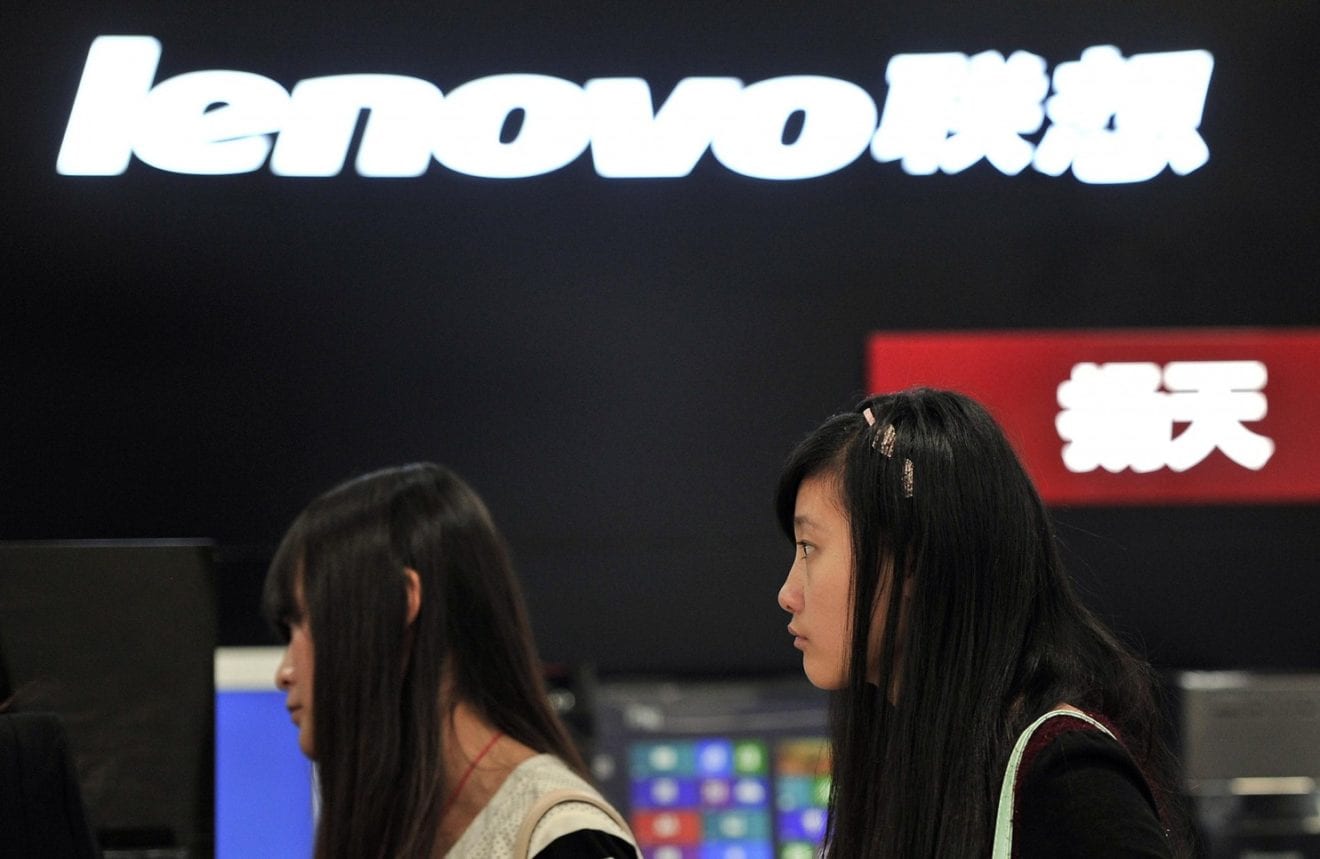
    While sales fell 9.8 per cent in China for technology giant Lenovo Group for its first quarter ending June 30, the country accounted for 28.4 per cent of the company’s worldwide sales.

    Consolidated sales reached US$2.9 billion, and pre-tax profit margins were flat at 4.8 per cent amid softening PC demand.

    Lenovo says its mobile business is moving the portfolio to higher price bands and improving user experiences in China. Data-centre revenues grew 14 per cent year-over-year, a premium for the market, supported by growth from hyperscale and contributions from new partnerships.

    Sales in the Asia Pacific region reached US$1.7 billion, 16.7 per cent of the worldwide figure, while pre-tax profit margins were down 1.2 points to 1 per cent, mainly because of a weaker PC market in Japan and the impact of currency fluctuation.

    PC market share again edged up, by 0.4 points to reach 16.4 per cent. The mobile business outgrew the market in key countries, including India and Indonesia, while the data centre group continues to work on improving profitability.

    Overall revenue for Lenovo was US$10.1 billion, down 6 per cent, with a net income of US$173 million, up 64 per cent.

    During the quarter Lenovo’s core markets saw either slow growth or year-over-year industry declines: PCs were down 4.1 per cent and tablet shipments fell 11.1 per cent, while server industry shipments were flat and smartphone markets grew 0.7 per cent.

    “Going forward, in PCs we will focus on high-growth segments and leverage industry consolidation,” says chairman/CEO Yuanqing Yang. “In smartphones, we will leverage innovative, differentiated products and continue to shift to higher price bands to drive growth and turn around this business.”

    Lenovo’s Data Center Business Group (DCG), which covers servers, storage, software and services sold under both the Lenovo ThinkServer and the System X brands, continues to face stiff challenges in mature markets, it strengthened its lead in the market in China, increasing revenue 14 per cent.

  • Segway China launches flagship store

    Segway China launches flagship store

    ‘Short-distance transport’ brand Segway China has launched a flagship store in Beijing.

    Segway COO Zhao Zhongwei and VP for Asia Pacific sales Huang Chen has issued licences to eight dealers from across greater China.

    segway store

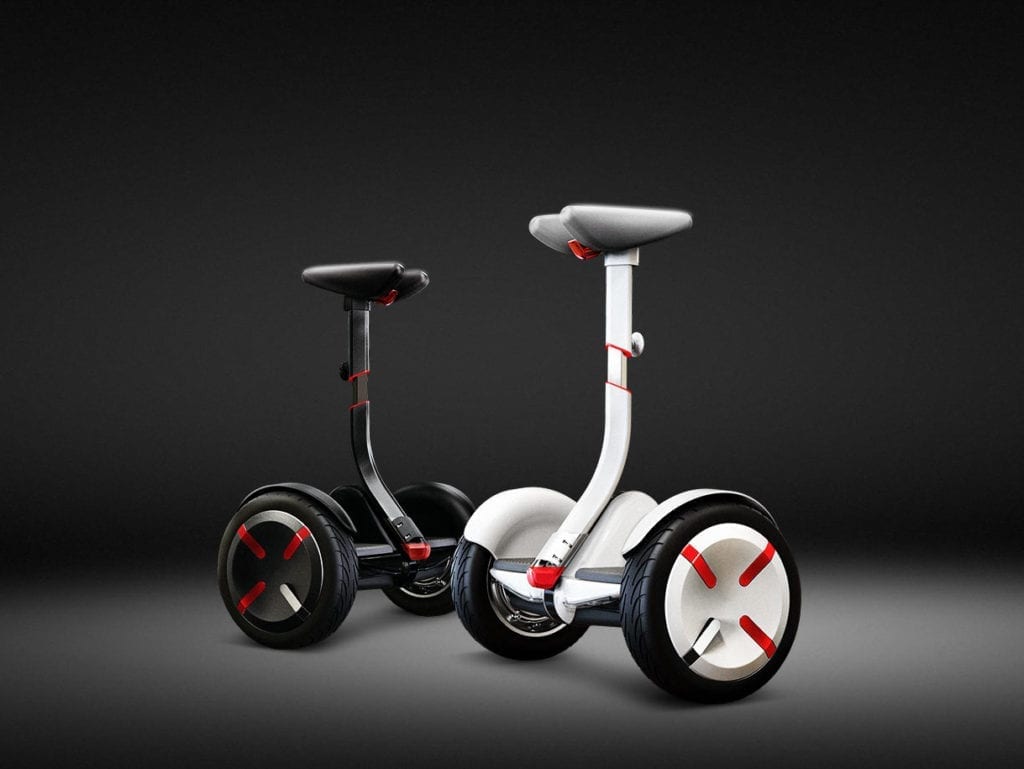
    With a minimalist interior design, the Beijing store’s dominant tone is set by the black-and-white Segway VI. Cambered elements and intelligent lighting systems create different colours and a futuristic atmosphere.

    Covering 629 sqm, the store has five zones – demonstration, test drive, after-sale services, VIP reception and an office. The demonstration zone features Segway and Ninebot‘s latest offerings as well as and futuristic products like the Segway Robot and Puma.

    The Segway flagship is at the Beichen Century Center.

    Segway China launches

    Attending the opening ceremony were Segway Group investor Yu Quan and global sales agents. Speakers included Segway CEO Gao Lufeng and investor representatives Hu Haiquan and Chen Yufan.

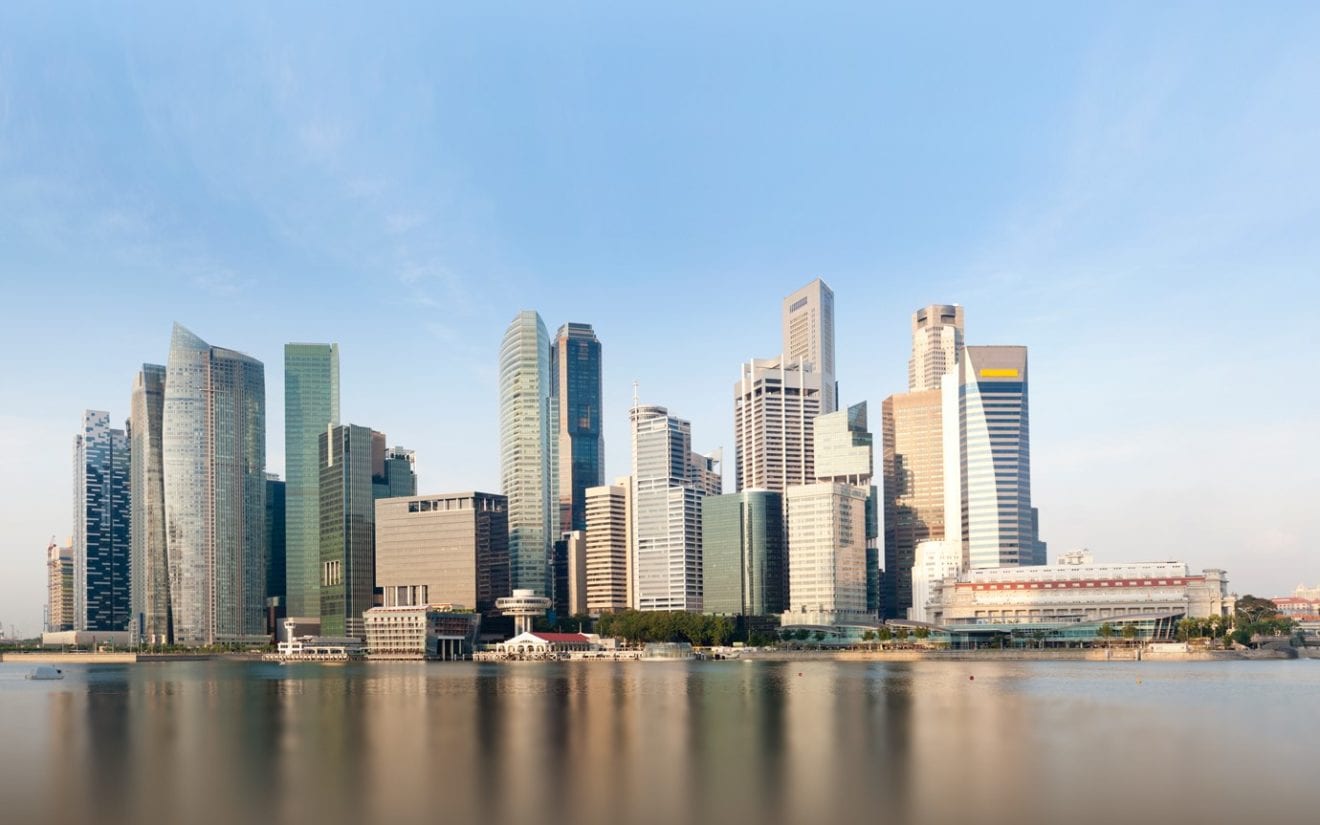
  • Singapore REITs’ performance falls flat in 2Q

    Singapore REITs’ performance falls flat in 2Q

    Overall DPU growth sits at -0.1%.

    While its retail sector remained resilient, other sectors such as hospitality and industrial have continued to impede Singapore real estate investment trust (REITs)’s growth, registering a flat -0.1% improvement in 2Q16.

    Even with the dismal performance, OCBC Investment Research said the REITs’ performance in 2Q is in line with the expectations.

    OCBC noted that the strong performances of OUE Commercial Trust, Lippo Malls Indonesia Retail trust and Mapletree Greater China Commercial Trust have offset the underwhelming performance of their peers in the hospitality and industrial sector.

    The three registered DPU growths of 34.7%, 16.4%, and 9.1%, respectively.

    Overall, the flat REIT DPU growth was amid the decent uptick in net property income at 8.2% and distributable income 5.2%.

    “This can be attributed to the regular issuance of new units as partial/full payment of management fees, coupled with REITs which have recently carried out equity fund raising exercises,” OCBC explained.

    Meanwhile, it explained how hospitality sector have remained the main drag during 2Q, pointing out to the weakness in revenue per available room for Singapore hotels and revenue for available unite in serviced residences.

    “Most industry players highlighted that June was a particularly poor month. We believe this could be attributed largely to the absence of the SEA Games which took place in June last year. Another key factor for the muted performance was due to weaker demand from the corporate sector,” OCBC said.

    For the industrial sector, its poor performance came from small-mid cap REITs.

    Looking forward, OCBC said the operational performance of the REITs would continue to be be pressured by the macroeconomic uncertainties and supply concerns.

    More so, it explained that some REIT managers are making use of the soft environment to carry out asset enhancement initiatives to reposition their assets in the future.

    These projects, the report warned, would result in a fall or loss of income contribution in the near future and will eventually mute DPU growth.

  • Cheung Kong puts The Center up for sale as Li Ka-shing trims Hong Kong assets

    Cheung Kong puts The Center up for sale as Li Ka-shing trims Hong Kong assets

    Hong Kong’s wealthiest man is putting his tallest building in the city up for sale, garnering bids from several Chinese buyers that point to the increasing trend of mainland companies with deep pockets snapping up local assets.

    Li’s Cheung Kong Property Holdings Co. has put The Center on the market with little fanfare for six months, according to a property agent involved in the deal, who declined to be named. A handful of keen buyers are bidding on the 73-storey tower, valued at HK$35 billion, the agent said.

    At that price, The Center will be Hong Kong’s most expensive real estate transaction.

    Analysts point to China’s state-owned companies with deep pockets as the most likely buyers for the tower in downtown Central, which has 1.2 million square feet of office space, 13,000 square feet of retail space and 402 car parking lots.

    “Only state-owned enterprises can afford such a sum,” said Knight Frank’s head of valuation and consultancy Thomas Lam.

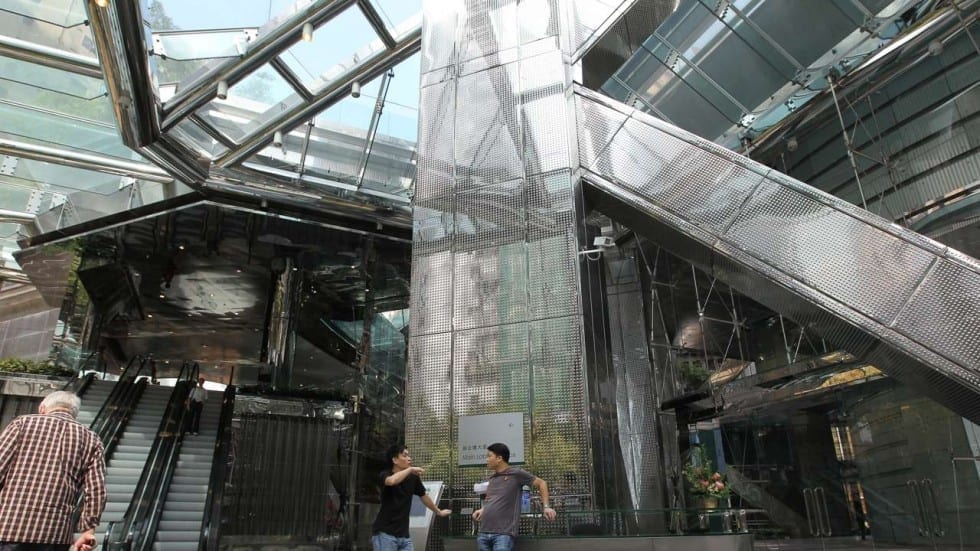
    The building, completed in 1998, is an entire steel structure without a concrete core. Its iconic lobby was featured in the Hollywood movie The Dark Knight.

    Cheung Kong owns 48 storeys in the building after Malaysian developer Guoco Group bought 11 floors in 1997. Nine of the 11 floors were sold to Singapore’s DBS Group Holdings Co. in 1998, while Cheung Kong sold the 60th and 79th floors in 1999, according to The Center’s sales brochure.

    Li has sold more than 20 billion yuan (HK$23 billion) of commercial properties in Shanghai, Beijing and Guangzhou since 2013. The tycoon’s business empire covers container ports, phone networks, power plants, real estate, retail outlets with assets in Asia, Europe and North America.

    Cheung Kong’s officials were unavailable to comment in Hong Kong.

    ICBC Asia, a subsidiary of China’s largest bank, is in discussions to buy the Center for HK$34.8 billion, Hong Kong’s Chinese-language media reported on Tuesday. The Hong Kong unit of the Industrial & Commercial Bank of China denied it’s involved in the talks.

    Cheung Kong is taking advantage of an explosive demand of office real estate by mainland Chinese companies in Hong Kong, analysts said. The decline in the Chinese yuan against the US dollar has also made it more attractive for mainland banks to seek better returns by parking their capital in real estate.

    “Chinese companies are eager to set up headquarters in Hong Kong’s central business district amid rapid business expansion,” Knight Frank’s Lam said. “They will be the key driver of new take up and office acquisition in the coming years.”

    Mainland Chinese companies hogged the limelight last year when two of them acquired two office blocks from Hong Kong-based property companies.

    China Life Insurance Co., the country’s largest insurer, paid HK$5.85 billion in November last year for Wheelock & Co.’s One HarbourGate office tower and retail podium in Hung Hom. On the same day, China Evergrande Group, the country’s second-largest developer, forked out a record HK$12.5 billion for the 26-storey Mass Mutual Tower in Wan Chai from Chinese Estates Holdings.

  • Pop-Up Stores In Hong Kong: Fad Or The Future?

    Pop-Up Stores In Hong Kong: Fad Or The Future?

    With vacancy at less than 1% in Hong Kong’s prime shopping malls, is it any wonder why brands, particularly those new to the market, are opting to grab a slice of the action by entering the market by doing a pop-up store. So what is a pop-up?

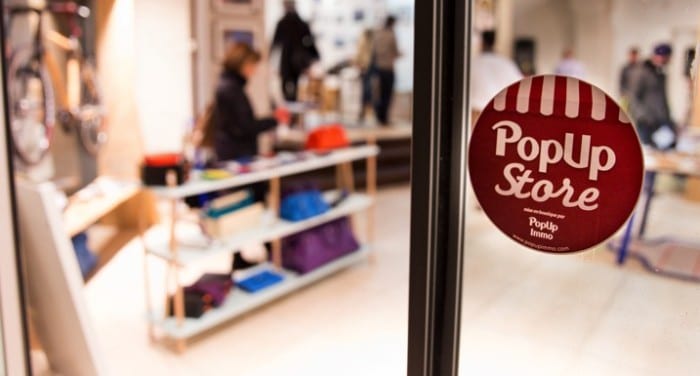
    • žžPop-up retail, also known as pop-up store or flash retailing, is a trend of opening short-term sales spaces.
    • žžA pop-up retail space is a venue that is temporary — the space could be a sample sale one day and host a private cocktail party the next evening.
    • The trend involves “popping-up” one day, then disappearing anywhere from one day to several months later.
    • žžThese shops, while small and temporary, can build up interest by consumer exposure.
    • žžPop-up retail allows a company to create a unique environment that engages their customers, as well as generates a feeling of relevance and interactivity.
    • žžPop-up retail also provides retailers to “prove” themselves in certain locations before the landlord decides whether they will provide them a shop on a long-term basis.

    Many brands are entering Hong Kong using the pop-up store model as a way to showcase their products. Although the stores are on a small scale and in a confined space, when done correctly, they allow customers to get a taste and a feel for the brand.

    Advantages for the landlord

    • Limited risk. It is allows the brand to occupy a small area that would otherwise be an open void space, a vacant shop or a shop that is undergoing some alteration work. This allowsthe landlord to maximise occupancy levels and revenues in what would otherwise be deemed as “dead space”.
    • žžAllows the brand to showcase their products and for the landlord to assess whether the brand is potentially worthy of securing a longer term store within the mall.
    • žžAllows the landlord to assess how the brand operates, how the staff interact with the customers and assess how good their customer service is.
    • žžKeeps the mall interesting and competitive.

    Advantages to the brands

    • žžWith competition for space in Hong Kong being extremely fierce, many brands are left to wait and wait for a prime location to be made available to them. A pop-up store allows them to enter the market more quickly.
    • žžBuild rapport with the landlords.
    • žžShowcase their products and designs to the landlord and use this as a platform to test their merchandise with the discerning Asian customer. In particular, mainland Chinese consumers, whose attention many brands are eager to capture.
    • žžAllows the brand to be uber creative in their design in a small space.
    • žžPop-up stores are usually located in areas with high footfalls which provide maximum exposure and opportunity to the brand.
    • žžRelatively low costs involved.

    Take an example such as Penhaligon’s, a new-tomarket brand that set up a lovely pop-up store in Harbour City and was able to parlay the success of the store to be offered permanent stores in prime locations in Hong Kong and Macau. Goes to show there are advantages to this approach.

    Disadvantages

    • žžLarge amount of investment is often required for what is a small and temporary space.
    • žžLimited time to recoup initial investment, produce impactful marketing and moreover showcase the brand and its DNA.
    • žžSometimes the tenant mix may not be ideal for the brand.
    • žžLocations are often isolated which means the brand has to work harder on the design, customer service and marketing to entice people into the pop-up store.

    Will the pop-up phenomenon remain? From what we can see in terms of market fundamentals and the success many popup concepts are enjoying, the answer is an overwhelming yes. With no let up on demand from brands seeking to expand, space availability being extremely limited and rentals not looking to subside any time soon, pop-up stores will become a more and more enticing option. However it is not all good news, many pop-ups, due to their limited time period and inability for the brand to showcase a sufficient range of products, can sometimes be detrimental to a brand. Take a fashion brand for example. They have hundreds of Stock Keeping Units (SKU’s) in their normal stores but this is often limited to a 10th of that in a pop-up. This could potentially damage the brand’s reputation, perception, sales and ultimately the brand’s ability to expand in Hong Kong. Overall, however, we believe that the positives outweigh the negatives but brands still need to be conscious of what they are doing. They need to have a strategy in place and ultimately know exactly what they are trying to achieve by having a pop-up.

  • Outlet malls booming in China as department stores feel the pinch

    Outlet malls booming in China as department stores feel the pinch

    Designer outlet malls are sprouting up all over mainland China, even as department stores find themselves struggling amid a slump in retail sales.

    At least 17 new outlet malls are scheduled to open in China in the second half of 2016, according to a report by Outlet Sight, which tracks the industry. Some developers are betting on outlet malls because they typically offer off-season or factory excess goods priced at a discount to the in-season products sold by the same brands in department stores.

    “We think designer outlets are more defensive than high-street retail,” said Chris Reilly, Asia-Pacific managing director at TH Real Estate, a property fund that manages nearly US$100 billion of real estate in Asia, Europe and the US. “Their fundamentals are better in terms of supply and demand.”

    China’s department store sector has been battered in recent years by sluggish sales growth and declining profits, with store closures intensifying since 2015. Offline sales at the mainland’s top 50 retailers declined 3.1 per cent year on year in the first half of 2016, according to figures from the National Commercial Information Centre of China.

    However, the discount mall sector appears ripe for strong growth; for a country with China’s population and spending power, there are relatively few factory outlet malls – just 40 at present – compared with as many as 300 in the US, said Zhong Beichen, chief executive of outlet developer Beijing Capital Juda, which has already opened four such outlets, in Beijing, Hainan, Zhejiang and Jiangsu.

    “We aim to open outlets in more than 20 cities by 2020 and become the largest outlet operator in China,” Zhong told the South China Morning Post. “Discount malls can perform well despite economic ups and downs” because they offer customers cheaper price points, he said. “When the economy expands, people shop to dress nice, but outlets will still be the first choice for those seeking affordable luxury in an economic slowdown.”

    Juda was spun off from state-owned property developer Beijing Capital Land Ltd and listed in Hong Kong in 2015.

    The boom is attracting developers and investors to the fray.

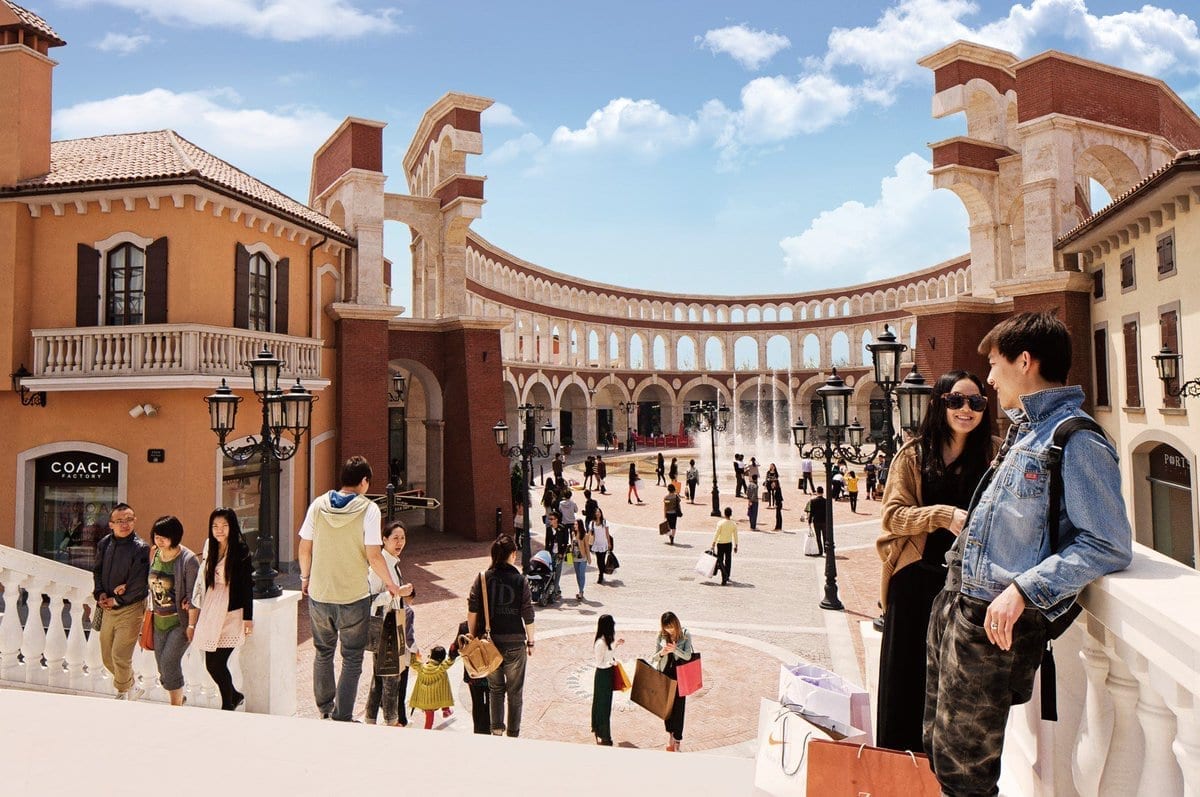
    London-based TH Real Estate launched an US$850 million fund in China, with two Italian village-themed outlet malls in Wuqing in Tianjin city and Shanghai.

    “Our target shopper is the Chinese household earning more than US$20,000 a year,” said TH Real Estate’s Reilly. “This demographic group is already the largest in the world, and we expect the number to more than double over 10 years with the rise of the Chinese middle class.”

    With TH Real Estate’s Florentia Village in Shanghai 90 per cent occupied, and its Florentia Village Wuqing full to capacity, Reilly said he is confident the China Outlet Mall Fund can grow to US$2 billion by 2020. Four more Florentia Village malls are slated to open in Chengdu, Wuhan, Chongqing and Qingdao by 2017.

    Factory outlets face stiff competition from online retailers, but have the advantage of providing a complete experience, Juda’s Zhong said.

    “Our strategy is to build outlets in places with beautiful scenery to attract families for the shopping experience,” he said, citing their 110,000 square meter outlet in Beijing’s Fangshan District, which is located near a forest park.

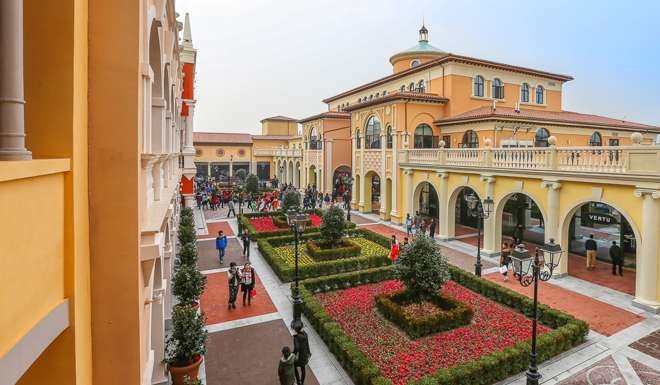
    Themed malls, such as the Florentia Village brands, are also becoming popular. Covering 90,000 square meters and with 3,000 car parking spaces, Florentia Shanghai reconstructs scenes of Florence including an Italian-styled city plaza, paved streets, porches, fountains and luxury brands such as Versace, Ferragamo and Zegna.

    “Shoppers like to visit outlets for the discounts, they want to try on designer brands, but what’s more important, it’s like a day out,” Reilly said.

    -Originally written by Summer Zhen, SCMP

  • Tata Motors launches two new commercial vehicles in Indonesia

    Tata Motors launches two new commercial vehicles in Indonesia

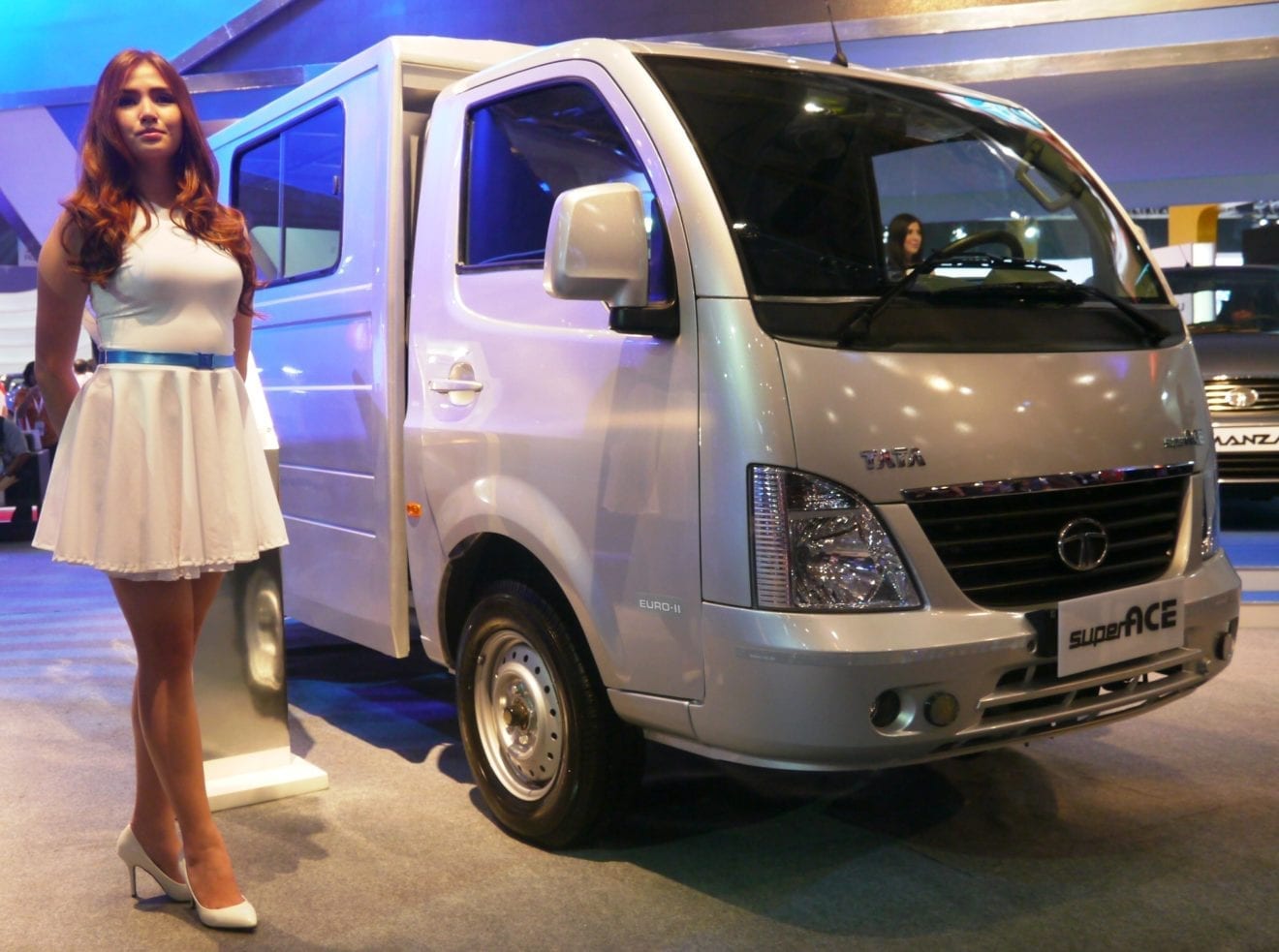
    Tata Motors today said its Indonesia unit has launched two new generation commercial vehicles in that country. PT Tata Motors Distribusi Indonesia (TMDI), a unit of Tata Motors, has launched the Tata Ultra 1012 light truck and the Tata Xenon XT D-Cab 4×4 pick-up, at the 24th Gaikindo Indonesia International Auto Show (GIIAS) 2016. Developed, keeping the Indonesian customer in mind, both vehicles have gone through rigorous trials of more than 25,000 kms, over different terrains and various operating conditions, Tata Motors said in a statement.

    “Both vehicles have been designed for the modern commercial vehicle customer with superior performance, world-class cabins, high load carrying capacity and flexible body-load configurations,” Ravi Pisharody, Tata Motors Executive Director, Commercial Vehicles, said. Tata Motors is also committed to bring the latest global technologies to the commercial vehicles market in the country, he added. Tata Motors is India’s largest automobile… Tata Motors today said its Indonesia unit has launched two new generation commercial vehicles in that country.

    PT Tata Motors Distribusi Indonesia (TMDI), a unit of Tata Motors, has launched the Tata Ultra 1012 light truck and the Tata Xenon XT D-Cab 4×4 pick-up, at the 24th Gaikindo Indonesia International Auto Show (GIIAS) 2016.

    Developed, keeping the Indonesian customer in mind, both vehicles have gone through rigorous trials of more than 25,000 kms, over different terrains and various operating conditions, Tata Motors said in a statement.

    “Both vehicles have been designed for the modern commercial vehicle customer with superior performance, world-class cabins, high load carrying capacity and flexible body-load configurations,” Ravi Pisharody, Tata Motors Executive Director, Commercial Vehicles, said.

    Tata Motors is also committed to bring the latest global technologies to the commercial vehicles market in the country, he added.

    Tata Motors is India’s largest automobile company, with consolidated revenues of Rs 2,75,561 crore in 2015-16. Through subsidiaries and associate companies, Tata Motors has operations in the UK, South Korea, Thailand, South Africa and Indonesia.