Author: Mei Ling Tan

  • VW’s Audi posts 2.3 percent rise in July sales

    VW’s Audi posts 2.3 percent rise in July sales

    Audi sold 2.3 percent more cars in July on growing demand for the redesigned top-selling A4 saloon, though kept trailing behind German luxury rivals BMW (BMWG.DE) and Mercedes-Benz (DAIGn.DE).

    Audi’s global sales increased to 149,400 cars and sport-utility vehicles from 146,073 a year earlier, the Ingolstadt-based carmaker said on Thursday, with its year-to-date deliveries up 5.2 percent to 1.10 million cars.

    Daimler’s Mercedes-Benz last week posted a 9.4 percent increase in sales to 163,770 cars, its best-ever July result, compared with a 4 percent gain at BMW’s core brand to 153,392.

    After seven months, Mercedes-Benz is on course to become the world’s biggest luxury carmaker by sales, replacing BMW which has kept the lead since 2005.

  • President to open Lake Toba Charm Carnival

    President to open Lake Toba Charm Carnival

    President Joko Widodo (Jokowi) is scheduled to open Lake Toba Charm Independence Carnival in Balige, North Sumatra, on Sunday as part of the efforts to promote tourist destinations in the region.

    “The carnival will be conducted in such a way that it will reflect the cheer and joy of the people. It will also serve as a means to promote Lake Toba,” chief of the events organizing committee Premita Fifi said here Saturday.

    The carnival will be held on August 20 and 21. First Lady Iriana Joko Widodo and a number of ministers, ambassadors, actors and actresses will attend the event.

    Shortly after opening the carnival in Balige on Sunday, President Joko Widodo is scheduled to walk three and a half kilometers along the road on the side of the lake to Parapat.

    The carnival will feature not only Batak arts and culture from North Sumatra but also those from the rest of the country.

    “Hundreds of decorated cars will travel from Balige to Parapat. Likewise, scores of decorated boats will accompany them on Lake Toba,” she said.

    The carnival is part of efforts to promote Parapat and Lake Toba as national and international tourist destinations, Premita said.

    “Admittedly, Lake Toba Charm as a world tourist destination has begun to become overcast. This event is expected to attract more domestic and foreign tourists in the future,” she said.

    Lake Toba is among 10 domestic tourist destinations which are quite popular, particularly in Sumatra, she said.

  • Nissan seeks to boost South Korean output on post-Brexit yen surge

    Nissan seeks to boost South Korean output on post-Brexit yen surge

    Nissan Motor wants to increase the output of its Rogue model at Renault’s factory in South Korea this year, as a stronger yen makes exports from Japan less competitive, a Renault executive told Reuters.

    The yen has jumped 20 percent against the dollar this year in the wake of Britain’s decision to leave the European Union, pressuring Japanese exporters. The South Korean won rose 7.4 percent against the dollar this year.

    “We have got a request to boost Rogue production by 8,000 vehicles this year,” Renault Samsung Motor Chief Executive Officer Park Dong-hoon told Reuters, adding that the company was reviewing whether it would be able to meet the additional demand.

    He added that Nissan Motor previously targeted output of 125,000 Rogue vehicles in South Korea this year.

    Rogue is Nissan Motor’s top-selling sport utility vehicle in the United States, with sales jumping 14 percent to 182,181 from January to July this year from a year earlier.

    Nissan Motor currently produces Rogues in South Korea, Japan and the United States.

  • Indonesia Stock Exchange Opens More ‘Go Public Information Centers”

    Indonesia Stock Exchange Opens More ‘Go Public Information Centers”

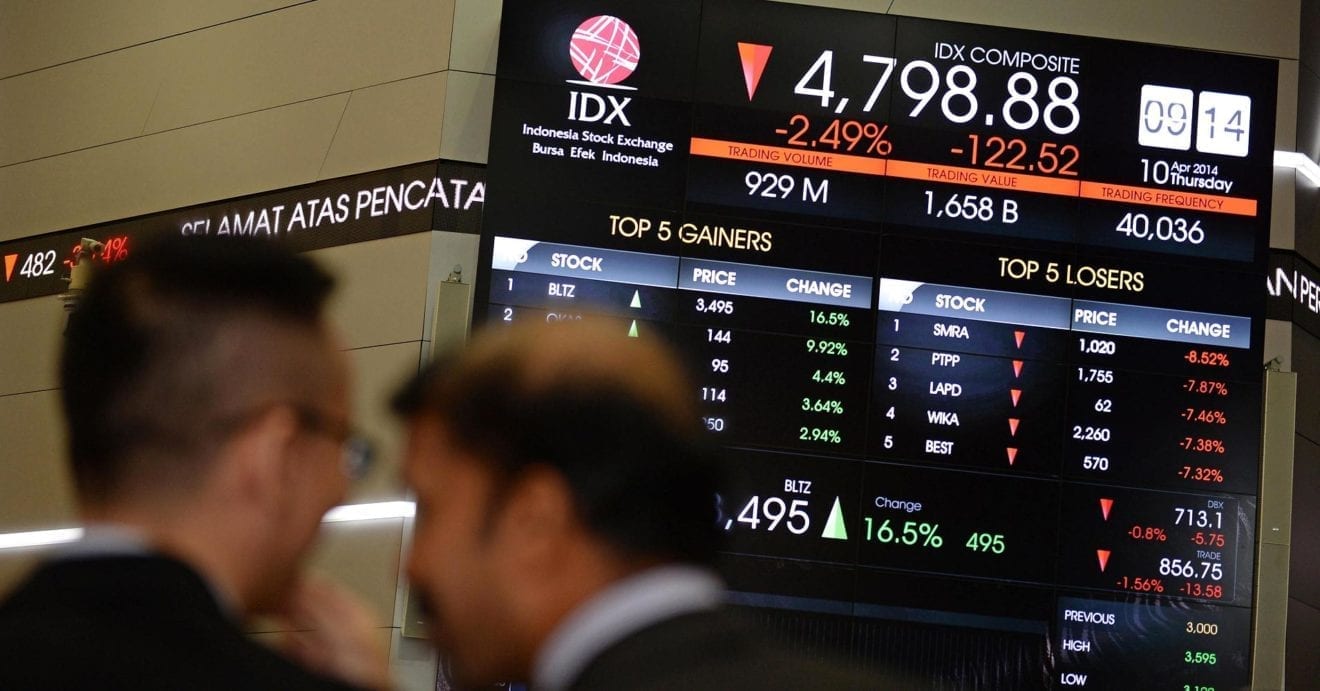
    The new information service – Go Public Information Center – will present all necessary information to private firms about the steps and processes required to become a listed company in Indonesia (including information about underwriters). The center was first opened in Indonesia’s capital city of Jakarta (in June 2016), located at the ground-floor of the Indonesia Stock Exchange Building. Over the next couple of years the IDX plans to open information centers in 15 more cities.

    The IDX targets to see 35 companies conduct on IPO on the local bourse in 2016. However, this probably is a too ambitious target. So far this year only eight companies have been added to the IDX.

    Only 529 companies are listed on the Indonesia Stock Exchange (while there may be more than 60 million business units active in Indonesia; mostly small and medium sized enterprises). This figure is much lower compared to listed companies in Thailand (644), Singapore (766) and Malaysia (904). Being Southeast Asia’s largest economy, Indonesia is eager to top this ranking somewhere in the future. Meanwhile, in the advanced Asian nations, the number of listed companies is much higher.

    According to the IDX, costs of an IPO (paid to the bourse, auditors, underwriters, independent appraisers and legal counselors) is approximately 3.16 percent of the total funds raised in the IPO. Those companies that have existed for at least a year and have a minimum of IDR 5 billion (approx. USD $373,340) in net assets can undertake an IPO on the IDX. To make it more attractive to conduct an IPO, companies are offered several tax incentives, including a discount of income tax up to 5 percent.

    Advantages for a company to go public:

    • Generate fresh funds that can be used for business expansion or to pay off debt
    • Raise public awareness of the company/adding a new group of potential customers
    • Increase the company’s market share
    • Lucrative exit strategy for founding individuals
    • Improved management due to mandatory higher degree of financial and corporate transparency to the public

    Disadvantages for a company to go public:

    • Higher costs of complying with regulatory requirements
    • Adjust to a higher degree of financial and corporate transparency
    • “Market pressure” causes companies to focus on short-term instead of long-term growth

  • Tourism provides largest number of jobs

    Tourism provides largest number of jobs

    President Joko Widodo (Jokowi) has said that the tourism industry is the number one provider of jobs.

    “Tourism has employed the largest number of manpower, but indeed it needs a change of the communitys culture,” President Jokowi said before prominent community figures living in Lake Toba area, here, Saturday evening.

    A change is needed because basically the community should be able to serve tourists coming to their region.

    “I hope prominent community, religious, and custom figures could give guidance to the community,” the Head of State said.

    Lake Toba which has been known internationally, has huge tourism potential.

    “However, over the past several years, its image and branding as a tourist area has dropped. Therefore, we work on Lake Toba first, among 10 destinations designated by a presidential decree,” he said.

    Lake Toba area is being promoted as an eco-tourism destination and MICE (Meetings, Incentives, Conferences and Exhibitions) tourism to be developed on 600 ha plot of land in the authority zone.

    The local culture and traditions will be strengthened and promoted as tourist attractions.

    To support the development of Lake Toba as a main tourist destination, the capacity of Silangit Airport will be expanded.

    “I have ordered the transportation minister and Angkasa Pura (state airport operator) to widen and lengthen the runway. I have asked for demolition of its terminal within a week, and the new one should be ready in the end of this year,” he said.

    The president also asked Garuda Indonesia to fly to Silangit Airport thrice a week, whether it is empty or full.

    “We will be grateful if it is full of passengers, so the flights could be served daily, not only by Garuda but also others such as Sriwijaya and Wing Air,” he noted.

    Initially, Silangit Airports capacity would be expanded to 150 thousand passengers, but now it would be increased further to 180 thousand passengers per year.

    The government will also create a world-class flower park to support the Lake Toba tourism.

    Jokowi also urged villagers living around Lake Toba area to plant trees for the preservation of the environment.

    “I just planted trees. The target is 300 thousand trees per district, or one million per year for all districts. We dont want the water of Lake Toba to decrease due to environmental degradation,” he said.

  • Bali`s exports of furniture up 41%

    Bali`s exports of furniture up 41%

    Balis exports of furniture rose 41 percent in value to US$4.88 million in June from US$3.47 million in May.

    Year-on-year, the furniture export earning also rose sharply in June up 36.17 percent from US$3.59 million,” the Bali office of the Central Bureau of Statistics (BPS) said.

    Head of the BPS office Adi Nugroho said furniture contributed 10.18 percent to the total export earning of US$48 million recorded by Bali in June.

    “Bali export earning rose 15.34 percent from US$41.66 million in the previous month,” Adi said here.

    The furniture including chairs, beds, cupboards, tables, and room partitions are generally made up of bamboo with rattan decorations, he said.

    The sets of furniture were exported to the United States, France, Germany, the Netherlands , Japan and Australia.

    Statues made of bamboo roots from the regencies of Bangli and Gianyar are also gaining market abroad, Adi said.

  • Bukalapak CEO Shows Confidence in Indonesia’s Internet Business

    Bukalapak CEO Shows Confidence in Indonesia’s Internet Business

    Ahmad Zaky, CEO of Indonesian e-commerce company Bukalapak.com, said that the growth of Indonesian internet business has the ability to compete with Japan and ASEAN countries. One of the strong supporting factors of Indonesia’s internet business is demography.

    “Our population mostly consists of young internet users,” Zaky said at the Investor Summit Grand City Expo event in Surabaya, Friday, August 19, 2016.

    Zaky predicted that currently, around 60 percent of the Indonesian population has access to the internet. Combined with the demography factor, Zaky forecasted that all Indonesian citizen will be able to use the internet in the next five years. “In the next five years, people not using the internet will feel alienated,” Zaky said.

    Zaky added that the rapid development of smartphone technology is another factor that supports the growth of internet users. “I can’t imagine, within the next 10 years, everything must have already use digital technology,” Zaky said.

    Zaky also compared the number of Indonesian population, which could reach up to 300 million, with Japan’s population. “Japanese population is not that many. It tends to decrease,” Zaky explained.

    Another driver of Indonesian internet business, according to Zaky, is the increasing sales of smartphones. Zaky said that smartphone sales could reach as high as 3.5 million in just one month. As a result, Zaky asserted that in the next two to three years, there will be 100 to 150 million smartphone users in Indonesia. “This is why I am confident that the internet business in Indonesia could exceed Japan,” Zaky explained.

    Zaky said that in order to overrun ASEAN and Japan internet companies, local internet business players must be able to dominate the domestic market.

    Other supporting factor, as Zaky explained, is the number of potential customers in Indonesia. For example, Zaky said that the largest number of Google PlayStore customers is from Indonesia. Foreign applications such as BlackBerry Messenger, Whatsapp, and games like Clash of Clans or Pokemon Go, are mainly downloaded by Indonesians. “Now imagine if Indonesian people were to create games or applications to be sold at PlayStore,” Zaky said.

    However, Zaky also highlighted the challenges that must be faced in the era of global competition, one of which is price competitiveness. Zaky said that nowadays, people can buy cheaper goods from China rather than Indonesia through e-commerce. “Well this will depend on the President’s discretion in developing the needed infrastructure,” Zaky said.

    Nevertheless, Zaky remains optimistic that the current economic growth can strengthen Indonesia’s position in the Asian region. “If we can conquer Indonesian [market], we can conquer ASEAN,” Zaky concluded.

  • Ford plans self-driving car for ride share fleets in 2021

    Ford plans self-driving car for ride share fleets in 2021

    Ford Motor Co plans to offer a fully automated driverless vehicle for commercial ride-sharing in 2021, the automaker announced Tuesday, expanding its efforts in driverless cars and ride sharing – two areas where rivals have already made inroads.

    To help speed development of self-driving cars, Chief Executive Mark Fields said Ford is hiking investments in Silicon Valley technology firms, tripling its investment in semi-autonomous systems, and more than doubling the size of its Palo Alto research team while expanding its campus in Silicon Valley.

    “We’re not in a race to be first,” Fields said at the company’s Palo Alto research and development lab, adding he was not concerned that rival General Motors had made a high-stakes play in ride services with its $500 million investment in Lyft in January.

    Ford does not yet know whether it will partner with Uber, Lyft or others, with Fields saying “all options are open and on the table.” He said Ford may choose not to partner, and roll out such services on its own.

    Ford’s announcement leaves many crucial strategy details still undecided. Yet Ken Washington, Ford’s vice president of research, said it was important to signal that Ford intends to win in this space, even with key elements still unknown.

    “We’re saying to partners, we are the winning partner. It’s not a hollow promise, it’s a real intent,” Washington said.

    Ford Chief Technical Officer Raj Nair said the company likely will not offer a similar driverless car without steering wheel or pedals to consumers until 2025 or later. Launching a self-driving car first for ride-sharing is a better way to reach the mass market and make the cars more affordable, he said.

    In a philosophy shared by Alphabet’s Google, Ford does not intend to develop incremental autonomous systems that would occasionally require drivers to take the wheel, instead committing to a full self-driving car.

    “We abandoned the stepping-stone approach,” Fields said, saying there are too many risks involved in the safe “hand-over” of driving responsibility between car and driver.

    The death of a Tesla driver in May who was using the company’s “Autopilot” system but had his hands off the wheel has underscored the confusion over drivers’ responsibilities in a semi-autonomous car.

    Ford also said it had, along with Baidu Inc – China’s largest internet company – jointly invested $150 million in Velodyne, which makes laser-based sensors that are a major building block in self-driving cars. Nair said Ford’s investment was $75 million.

    Earlier this year, Ford invested in Silicon Valley firm, Civil Maps, for advanced mapping for self-driving vehicles.

    Ford rivals, including General Motors and Uber Technologies, are also developing self-driving vehicles for use in ride services.

    Ford said it expects to deploy 30 self-driving Fusion Hybrid prototypes this year, and 90 next year.

    Nair said Ford, with its investments and its acquisition of SAIPS, an Israeli machine learning startup, now have the tools in place to develop a fully driverless vehicle, but said “there’s still a lot of engineering development” between now and 2021.


  • Ferrari to recall 621 vehicles in China due to defective airbags

    Ferrari to recall 621 vehicles in China due to defective airbags

    Italian luxury car maker Ferrari will recall 621 imported vehicles in China due to defective airbags, the country’s top quality watchdog said.

    The recall, set to begin on September 15, affects Italia- series cars made between March 1, 2010 and September 30, 2011, and California-series vehicles manufactured between April 1, 2009 and June 30, 2011, according to the website of the General Administration of Quality Supervision, Inspection and Quarantine.

    When the airbags of the affected vehicles inflate, the gas generators inside may become damaged and cause flying debris, posing safety risks to passengers, said the statement.

    Ferrari has promised to check all affected vehicles and replace the defective parts free of charge, the official Xinhua news agency reported. China is one of the biggest markets for Ferrari.

  • Survey shows carriers’ top picks for SDN

    Survey shows carriers’ top picks for SDN

    For global carriers, Cisco/Tail-f, Nokia and Ciena—including Cyan—are the top SDN vendors, according to a survey released by IHS Markit.

    The IHS Markit survey interviewed global service providers that have deployed software-defined networking (SDN) and network functions virtualization (NFV) or will do so in the future.

    “In our survey of global carriers, Cisco/Tail-f, Nokia and Ciena led all vendors in unaided brand awareness for SDN orchestration software,” said Michael Howard, senior research director and advisor, carrier networks at IHS Markit.

    “And Cisco/Tail-f and Nokia were also tops in SDN hardware and software under evaluation.”

    The survey explores SDN and NFV deployment timing, supplier types, perceived top vendors and operator ratings of SDN and NFV manufacturers on nine criteria.

    Howard said over three-quarters of operator respondents will use telecom equipment manufacturers, among other supplier types, to supply SDN hardware and software for their networks.

    “Carriers envision a world of multi-supplier SDN and NFV, with centralized orchestration of network services and equipment, and new control mechanisms and network architectures. They’ll use a variety of suppliers to avoid vendor lock-in,” the analyst added.

    More than 40% of survey respondents will buy from each of the following supplier types: specialized SDN vendors, open source distribution vendors, SDN application software specialists, data center virtualization/orchestration software vendors and virtualized network functions (VNF) software specialists.

    The top-ranked criteria service providers use to select an SDN vendor include product reliability, service and support, technology innovation, price-to-performance ratio and management software.

  • BMW worldwide sales increases by 4 percent in July

    BMW worldwide sales increases by 4 percent in July

    German car manufacturer, BMW Group has announced its sales number for the month of July. The automaker in total sold 180,080 vehicles around the world with an increase of 4.0% when compared to same month last year. After a sluggish first half of the years, the automaker reported a solid start to the third quarter with year-to-date sales climbing 5.5% with 1,343,217 vehicles delivered worldwide.

    “The BMW Group continues to deliver sustainable, profitable sales growth month after month,” said Dr Ian Robertson, Member of the BMW AG Board of Management with responsibility for Sales and Marketing BMW. “While we see growth across our range, the fact that the planned production for our electrified 7 Series, 3 Series and 2 Series Active Tourer models is already sold out this year demonstrates our strategy of rolling out electrification on all models is the right one. We will, of course, now respond to this high customer demand,” he added.

    In a press statement, the company stated that BMW brand sold 153,392 units, an increase of 4.0% in the July. This brings year-to-date sales for the brand to 1,139,947 units, an increase of 5.6% compared with the first seven months of last year.

    On other hand, MINI achieved record sales of 26,439 units in July with a rise of 4.0%. A total of 201,337 MINIs were sold in the first seven months of the year, an increase of 5.2% and the first time the brand has sold over 200,000 vehicles by this point in the year. According to the company, the biggest growth drivers for Mini as a brand are the Convertible and the Clubman.

    In Europe, combined monthly sales of BMW and MINI totalled 79,815 in July, up 5.6% compared with the same month last year. Year-to-date sales in Europe are up 10.5% with a total of 622,664 vehicles delivered. Almost all markets in the region have contributed to this strong growth with the three biggest markets, Germany (182,390 / +7.8%), the UK (136,914 / +9.6%) and France (49,755/ +13.0%) playing a significant role.

    Sales of BMW and MINI vehicles in Asia also saw strong growth last month with a total of 56,819 vehicles delivered to customers in July (+7.9%). In the first seven months of the year, a total of 417,730 BMW and MINI vehicles were sold in Asia, an increase of 7.4% compared with the same period last year. The region’s biggest market, Mainland China, achieved an 8.5% increase compared with the first seven months of last year, with a total of 287,753 vehicles sold. Year-to-date sales in Japan (41,750 / +8.2%) and South Korea (34,569 / +9.9%) also show strong growth.

    Sales of BMW and MINI in the Americas decreased 3.9% in July compared with the same month last year, with a total of 38,097 vehicles delivered to customers in the region. Year-to-date sales of BMW and MINI vehicles in the region total 260,621, which is down 7.4% compared with the same period last year. While sales in Canada (25,524 / +7.3%) and Mexico (18,308 / +9.1%) are up, the increasingly competitive market in the USA has seen year-to-date deliveries decrease 9.5% with a total of 209,131 BMW and MINIs delivered to customers.

    This year continues to be the best ever for BMW Motorrad, with year-to-date sales up 2.1% compared with the same period last year: 94,546 motorcycles and maxi-scooters were delivered to customers in the first seven months of the year. Monthly sales for July achieved almost the same extremely high level as last year with 13,792 units sold, a slight decrease of 2.7%.

  • Level 3 to deliver NaaS solution for enterprise customers

    Level 3 to deliver NaaS solution for enterprise customers

    Level 3 Communications announced that it is delivering an on-demand network-as-a-service solution on the market using Cisco’s Network Services Orchestrator (NSO), enabled by Tail-f.

    The firm said its Adaptive Network Control Solutions suite leverages the benefits of network automation and Software-Defined Networking (SDN) to deliver technology solutions to customers in a rapid, self-service manner, empowering them to be more agile and competitive.

    Level 3 customers want faster, easier ways to bring applications from test environments to full-scale production. They’re looking to integrate new third-party cloud services and applications more easily, with less complexity and overhead. With the click of a button, Cisco’s NSO innovative capabilities are helping to enable Level 3’s customers to rollout new services in a matter of minutes or days rather than weeks or months.

    With the support of NSO, Level 3 developed a programmable wide area network (WAN). The service provider can automate the full range of data services and multivendor devices in its markets around the world. The company can also orchestrate the entire service lifecycle—including activation, testing and ongoing service-level assurance—through a single data model.

    Travis Ewert, SVP of network software development at Level 3, said “The power of agility in today’s competitive marketplace is not overstated.”

    “Global businesses need network resources that are flexible enough to be leveraged as a service, with the reliability and security they can rely on to deliver critical business applications. With Cisco NSO, Level 3 is making the once-distant dream of full lifecycle service automation a reality for enterprises around the world,” the executive said.

    The company further said Level 3 now manages more than 75,000 different network devices around the world. It is offering the same automated services, with the same scalability, high availability and redundancy across geographies, regardless of the underlying infrastructure.

  • Shenzhen-Hong Kong Connect project approved

    Shenzhen-Hong Kong Connect project approved

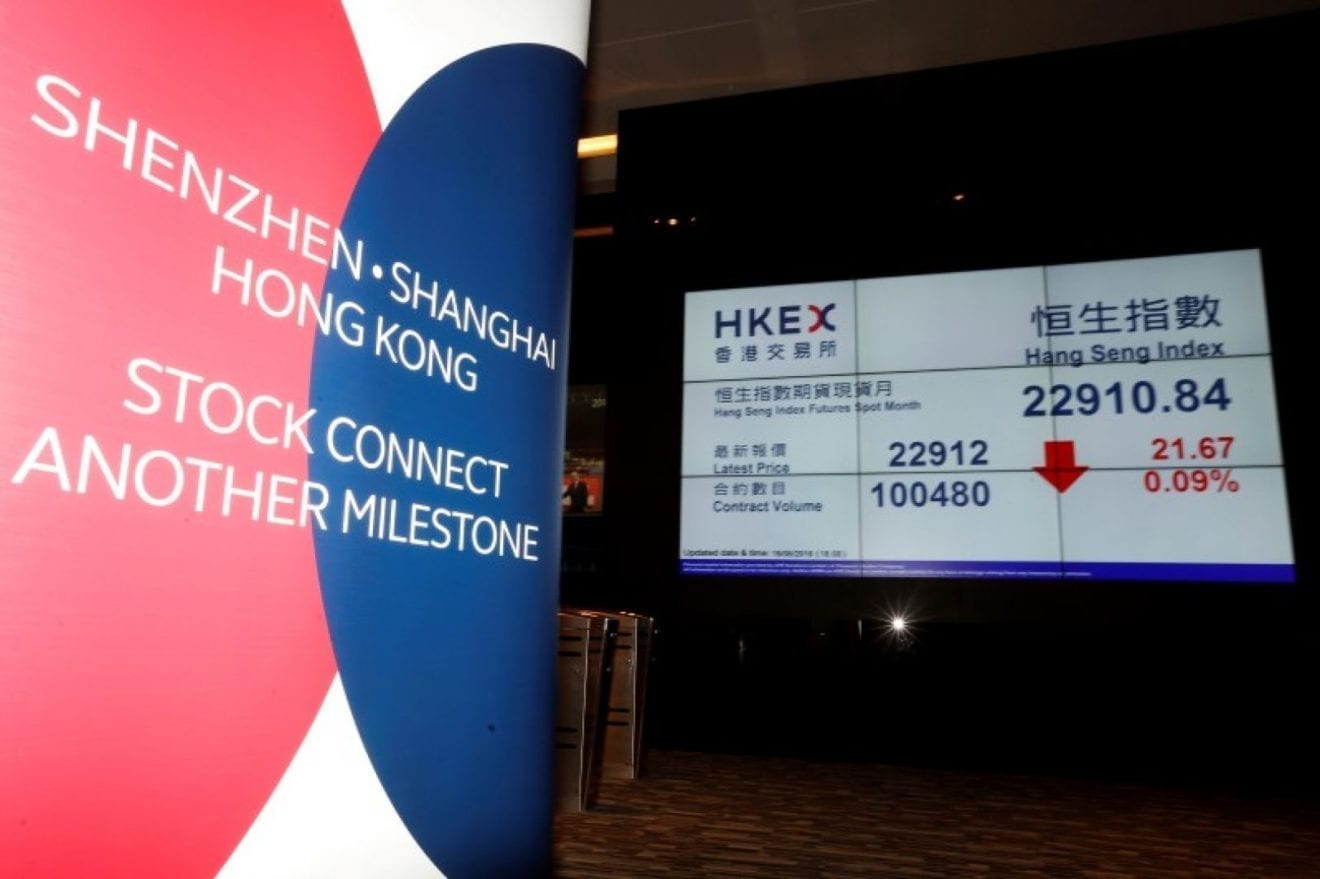
    The Securities and Futures Commission (SFC) and the China Securities Regulatory Commission (CSRC) today have given in-principle the approval of the structure of the proposed Shenzhen-Hong Kong Stock Connect.

    The project will provide mutual stock market access between Hong Kong and Shenzhen via a northbound trading link and a southbound trading link. There will be no aggregate quota under Shenzhen-Hong Kong Stock Connect.

    Today’s joint announcement issued by the SFC and the CSRC also abolishes the aggregate quota under Shanghai-Hong Kong Stock Connect with immediate effect.

    “The expansion of mutual stock market access represents yet another milestone towards strengthening the interconnectivity between the stock markets in Hong Kong and the Mainland as well as consolidating Hong Kong’s position as a major offshore renminbi centre,” said Mr Carlson Tong, the SFC’s chairman.

    The launch of Shenzhen-Hong Kong Stock Connect is subject to the finalization of all necessary regulatory approvals, market readiness and relevant operational arrangements.

    A separate announcement on the commencement of Shenzhen-Hong Kong Stock Connect will be made in due course.

  • Carrefour China concentrating on convenience

    Carrefour China concentrating on convenience

    Carrefour China says it will concentrate on convenience store development for the rest of this year.

    The French-headquartered retailer has been losing market share in the hypermarket segment and has closed about 30 stores during the past three years. It is trying to find a new growth model for the competitive Chinese model according to IGD analyst Catherine Ellwood and IGD Singapore program director Shirley Zhu.

    Hypermarkets will still play a role for Carrefour, particularly in western and central China, they say. The retailer is changing focus because of the increasing challenges for hypermarkets.

    Carrefour reportedly plans to open 40 to 50 convenience stores in Shanghai as well as about 15 Carrefour Easy stores by the end of the year.

    Rapid urbanisation, smaller families and rising affluence levels mean Chinese shoppers are demanding more convenient solutions, says the IDG team.

    “Convenience stores present a huge growth opportunity, but winning in this sector under rising costs and fierce competition is not an easy task.”

    However, Carrefour does have the advantage of existing sourcing and supply-chain capability for fresh products. Daily delivery from its own fresh distribution centre ensures availability and quality.

    A typical Carrefour Easy store has a floor size of 250 to 300 sqm with plenty of room for fresh produce displays. The stores act as pick-up locations for online shopping, and have kiosks to provide various services. There is also free Wi-Fi and charging devices in-store.

    For mobile payment alone, the stores accept Alipay, Apple Pay, Samsung Pay and WechatPay.

    Carrefour opened an extra distribution centre in June. The 21,000 sqm centre, in Dongguan, Guangdong province, will help with expansion in south China. Carrefour aims to have six distribution centres by the end the year.

  • Saigon underground mall planned

    Saigon underground mall planned

    Ho Chi Minh City can expect its first underground shopping mall by 2020.

    According to local news sources, the city’s government has sought central government approval to build a four-level Saigon underground mall beneath a station in its first metro route, from Ben Thanh market to Suoi Tien theme park.

    The underground complex will include a shopping mall, walking streets, a square, and other infrastructure.

    The mall is said to cover 40 per cent of the 45,000sqm area, starting from/under Ben Thanh market, going along Le Loi St and ending at the city center’s iconic Opera House.

    The US$303 million project will be constructed jointly by Toshin Development and other consortiums, including Nikken Sekkei Civil Engineering, Osaka Chikagai, and Join.