Author: Mei Ling Tan

  • Maybank debuts m-banking in Cambodia

    Maybank debuts m-banking in Cambodia

    Maybank has introduced its mobile banking app in Cambodia as part of efforts to strengthen its presence in the country.

    The app is the first in Cambodia to offer augmented reality and a QR code reader. A similar app was launched in Malaysia in 2014.

    Maybank group head of community financial services Datuk Lim Hong Tat, who launched the new app in Phnom Penh, said that internet banking has become a trend for many digitally savvy Cambodians who are increasingly comfortable transacting over this channel.

    Maybank’s online banking channel, namely M2U, which was introduced in Cambodia in 2012, is seeing robust growth with its registered user base increasing by over 50% within a year, and the volume of transactions has also risen by over 50% from 2014 to 2015,” said Lim.

    Lim said that with the launch of mobile banking app, customers in Cambodia will enjoy enhanced customer experience and greater speed when undertaking banking transactions over their mobile phones.

    “With the mobile banking app, Maybank customers can check their account balance, including all debit card purchases and perform simple transactions anytime, anywhere, alleviating the need for trips to our branches,” Lim explained.

    Other features offered by the app include the ability to send money to anyone with a mobile phone number – such transactions allow for cash to be withdrawn at any Maybank ATM without using an ATM card.

    The augmented reality branch locator tool allows customers to scan their surroundings and follow onscreen directions. It also detects nearby ATMs and promotions exclusive to the Maybank customer.

    The in-app QR code reader as well as loan calculator is available for public use, even if they are not yet a Maybank customer.

    Maybank Cambodia currently operates a network of 21 branches throughout the country complemented by 40 self-service terminals.

  • Cool Kids Fashion featuring 70 brands

    Cool Kids Fashion featuring 70 brands

    Today’s Chinese kids are increasingly being dressed to a fashion.

    “The demand for the children’s wear in China has shifted from fulfilling basic needs to pursuing fashion and style,” says marketing director Aber of Shenzhen Perseus Brand Management, an exhibitor at Cool Kids Fashion Shanghai this week.

    “Nowadays, Chinese kids want to look ‘cool’ and ‘chic’, so we have incorporated these elements into our products.”

    Differentiation by style, branding and marketing has become more important as demand rises, says Kidswant Children Products product centre director Pinky Lu. “Low prices are no longer effective in securing market share; conversely, the ability to suit personal taste differences is becoming more important.”

    More than 70 global fashion brands will be showcasing their latest product at the third edition of Cool Kids Fashion Shanghai, being held concurrently with CBME China from July 20 to 22.

    Fierce competition

    With fierce competition in the children’s fashion market in China, brands are constantly pushing out new products, says Baodaxiang Shopping for Kids Group procurement manager Yanjing Wang. “The new generation of consumers is more interested in style, brands and value for money.”

    Among the brands at Cool Kids Fashion will be B. Duck (Hong Kong), CCILU (Japan), Cocolico (France), Lab by Baby (Korea), Metro Kids Company (Portugal), Mim-Pi (Netherlands), Overkids (Italy), RIA (Spain), Shadez (Switzerland) and Tip Toey Joey (Brazil). The event will bring together distributors, department stores and property developers, franchisees and fashion buyers.

    There will also be events highlighting trends, creativity, innovation and talent.

    Trend forum speakers include WGSN creative director Zhang Yiling and H&M visual merchandising manager Raj.

    Twenty shortlisted aspiring designers out of 1035 contestants will have their designs and creations displayed at the Kids Design Contest Gallery, followed by a runway showcase.

    Brands featuring in the fashion shows include Angel’s Face (UK), BabyBol (Spain), Blaa (Finland), Maya (US), PennyScallan (Australia) and Teddy Doctor (China).

    Meanwhile, CBME China will showcase baby, child and maternity products. The two shows will cover 223,305 sqm, featuring 3673 brands from 2366 suppliers, at the National Exhibition and Convention Center (NECC) in Shanghai.

    Design is one of the most important factors when parents buy children’s clothing, according to the UBM China Baby Products Market Consumer Research Report 2015.

  • Wrap & Roll Vietnam gets capital injection

    Wrap & Roll Vietnam gets capital injection

    Restaurant chain Wrap & Roll Vietnam has received a $7 million capital injection from Mekong Capital..

    “The founders and management team of Wrap & Roll have done an extraordinary job of establishing Wrap & Roll as a proven concept with urban consumers in Vietnam and Singapore,” said Chad Ovel, a partner at Mekong Capital. “They have successfully created Wrap & Roll as a modern way to enjoy authentic and healthy Vietnamese food.”

    Mekong Capital invested into the chain via their new enterprise called Mekong Enterprise Fund III to make its first deal since June last year. The fund will focus on retail, restaurants, consumer products and customer services in Vietnam. The private equity company has already taken a stake in electronics retailer Mobile World.

    Wrap & Roll Vietnam owner Nguyen Thi Kim Oanh said the restaurateur found Mekong Capital to be a credible partner to help the business grow sustainably.

    “Mekong Capital not only funds the company but also supports our company with strategic consultancy in many management fields such as human resources, restructuring, management practices and corporate finance.”

    With the experience in investing of Mekong and 10-year operating of Wrap & Roll, the two companies hope the concept will find success globally.

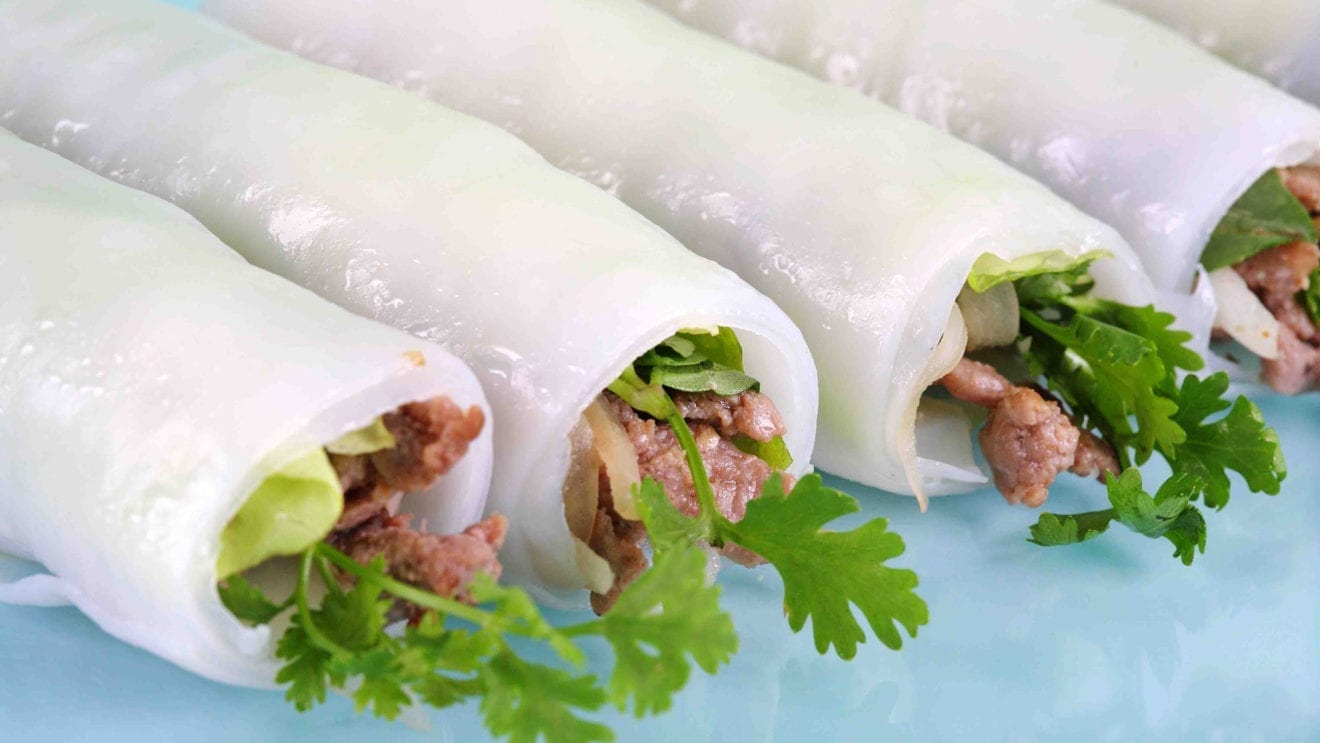
    Established in 2006, the healthy, traditional food brand has 11 restaurants in Vietnam and four franchises in Singapore. More restaurants are announced to be opened in Hanoi and Ho Chi Minh City. Other international markets are being evaluated.

  • Alibaba and Kodak team up to fight fakes

    Alibaba and Kodak team up to fight fakes

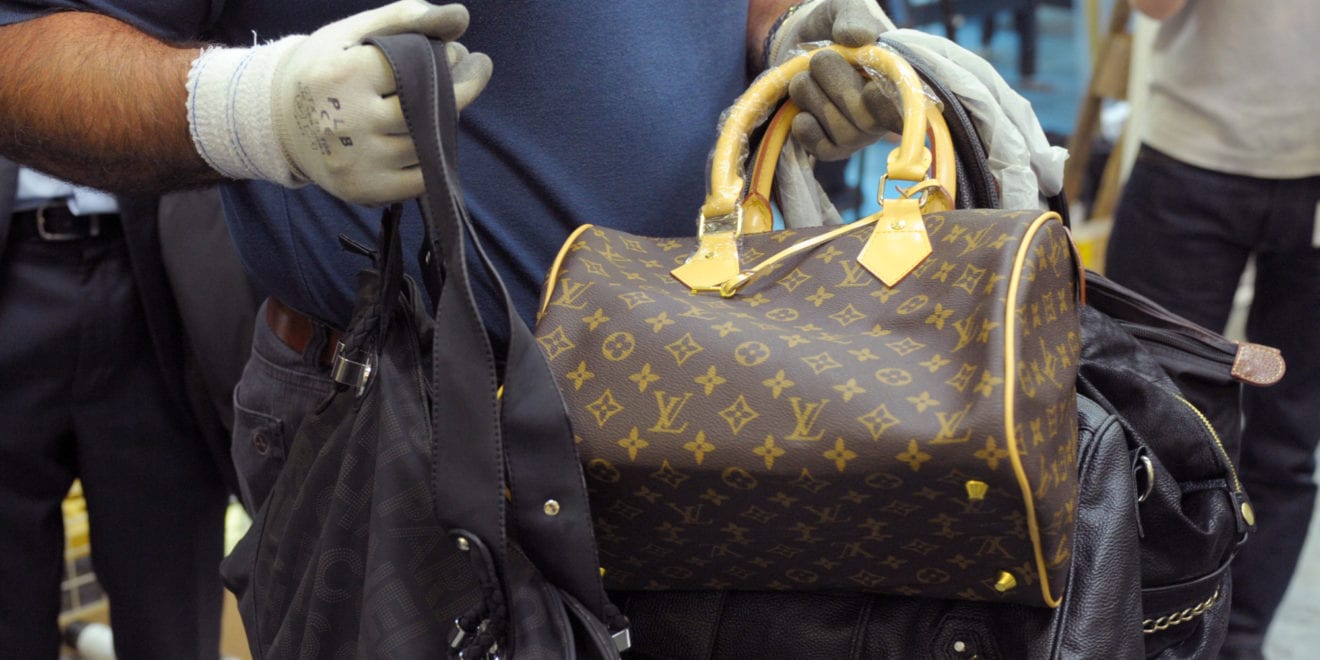
    Alibaba and Kodak have teamed up in a new business venture using high technology to fight fake goods being traded online.

    The cameras and film that helped build the Eastman Kodak empire, launched in 1888, are long gone, but the company has found new life authenticating products.

    With a history of research and hundreds of patents, Kodak is behind a startup working to combat counterfeiting with a technology that places an invisible, digitally traceable marker on products to ensure they are authentic.

    Targeting eCommerce, the new company is named eApeiron, which comes from the Greek word for everlasting.

    Fake and pirated products globally accounted for almost a half-trillion dollars in 2013, according to a report this year by the Organisation for Economic Cooperation and Development (OECD), with 84 per cent of seized goods originating in China and Hong Kong. As well as losses and brand erosion for companies, counterfeiting can mean lost tax revenue for governments. It also discourages innovation.

    “If you’re in charge of brand protection or you’re a security officer of a major brand, this means you have a new tool,” says Kodak CEO Jeff Clarke.

    Miami-based eApeiron will set up its research, engineering and manufacturing arms within Kodak’s business park in Rochester, New York. Some research will also take place in Shanghai and Tel Aviv.

    With China’s largest eCommerce company Alibaba Group an investor, its president Michael Evans will sit on eApeiron’s board along with Clarke. Its CEO is Charles Fernandez.

    Invisible ink

    Meanwhile, invisible-ink security products are already available, including VerifyMe, which signed a memo of understanding in May with HP’s Israel-based Indigo division, part of its HP Graphics business.

    One of VerifyMe’s anti-counterfeiting pigment technologies lets consumers see visible markings on a product while manufacturers can use devices to see invisible markings to support their supply and distribution-chain security.

    YPB Group in Australia makes scannable markers that are invisible to the eye because they blend into the material of the product they are marking.

    While luxury-goods companies are often targeted by counterfeiters, the OECD report says there are also potentially dangerous faked goods such as drugs, toys and spare parts. Tracing these items through the supply chain could ensure they are not expired or forgeries, Clarke says.

    Beaten by the digital revolution, Kodak filed for bankruptcy in 2012, emerging the following year as a commercial printing business. Kodak has continued to team with young companies on technology research, and its labs have more than 50 scientists and 4000 patents.

  • Starbucks investing in upscale chains

    Starbucks investing in upscale chains

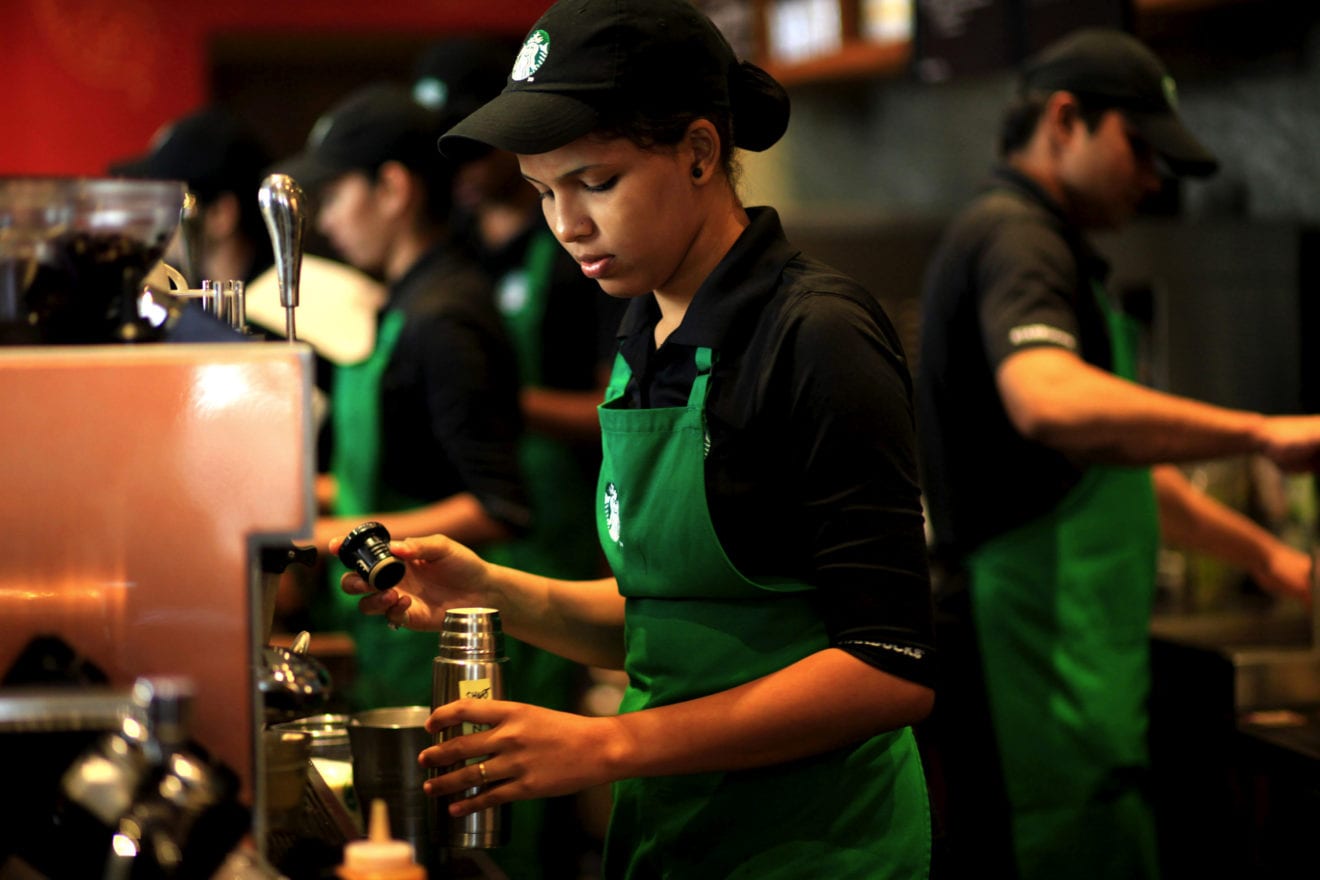
    Starbucks plans to open a new brand of stores called Starbucks Reserve-only starting next year.

    The coffee chain has also joined global investment team, Milan-based Angel Lab and Pekepan Investments to expand the footprint of standalone boutique bakery’s and cafes into international markets.

    Starbucks Reserve-only will offer premium, small lot reserve coffee in stores that will be approximately twice as large as current Starbucks stores and will feature ‘more of a cafe atmosphere’.

    “We recognise our customers expect and desire a higher level of product and we want to give it to them,” said Howard Schultz, company chair and CEO.

    The company plans to open the new stores next year in hundreds of locations.

    Schultz said the new brand is part of a broader company plan to improve and expand its food offerings.

    The company also announced earlier it has partnered with Italian restaurant Princi, the boutique bakery and café founded by Rocco Princi in 1986 known for its artisan breads created from traditional family recipes.

    Princi’s menu will become the exclusive food offering in all new Starbucks Roastery locations, including Shanghai and New York and will be fully integrated into all new Starbucks Reserve-only stores starting 2017.

    The investment team, which includes Milan-based Angel Lab and Pekepan Investments, will focus on expanding the number of standalone Princi locations worldwide as well as making Princi the exclusive food purveyor at the new Starbucks Reserve Roastery and Tasting Rooms in Shanghai and New York. The Shanghai and New York Roastery locations are on track to open in 2017 and 2018, respectively.

    “We have never baked in our stores in 45 years. But all of that will change with the creation of this unique partnership,” Schultz said.

    “Rocco and his team at Princi possess a passion for handcrafted food and artisanal baked goods that mirrors how I feel about our coffee. The attention to detail, the care invested in selecting the ingredients and the artistry of preparation is second only to the service Rocco offers customers inside his Princi stores.”

    “I can think of no better pairing for our most premium coffee experience and am excited by the possibilities we envision in Princi food elevating every daypart – breakfast, lunch, and dinner – in Starbucks Roasteries and Reserve Stores.”

    Currently, Starbucks has nearly 24,000 stores worldwide and offers Reserve coffee in 2,000 locations in 30 countries.

  • Real Singapore retail sales continue to decline

    Real Singapore retail sales continue to decline

    Real Singapore retail sales in May rose on April’s figures – but remain down year-on-year.

    According to Statistics Singapore, total retail sales (seasonally adjusted) increased 1.4 per cent in May 2016 over April. Excluding motor vehicles, retail sales increased an even better 2.3 per cent.

    But compared to May 2015, retail sales decreased 3.3 per cent after removing motor vehicle sales from the data. Including vehicles, total sales rose 3 per cent year-on-year.

    After seasonal adjustment, retail sales of watches & jewellery, furniture & household equipment, food & beverages, optical goods & books, department stores, apparel & footwear, medical goods & toiletries and petrol stations increased between 0.8 per cent and 6.5 per cent in May 2016 compared to April.

    Retail sale SG May 16

    In contrast, retail sales of recreational goods, mini-marts & convenience stores, phones & computers and supermarkets decreased by between 0.4 per cent and 6.3 per cent in May over April 2016.

    Year-on-year, retail sales of furniture & household equipment and medical goods & toiletries grew by 3.1 per cent and 1.9 per cent respectively.

    Conversely, retail sales of phones & computers and petrol service stations declined 17.3 per cent and 14.9 per cent respectively. Sales of recreational goods, optical goods & books, watches & jewellery, food & beverages, supermarkets, mini-marts & convenience stores, apparel & footwear and department stores also fee, by between 1.9 per cent and 8.7 per cent. .

    The total retail sales value in May 2016 was estimated at $3.7 billion, higher than the $3.6 billion in May 2015.

    Food & beverage service sales

    Retail sale SG FnB May 16

    Sales of food & beverage services (seasonally adjusted) increased 0.9 per cent in May over April.

    Compared to May last year, sales of food & beverage services increased 0.7 per cent.

    The total sales value of food & beverage services in May 2016 was estimated at $690 million, higher than the $685 million in May 2015.

    Year-on-year, sales by ‘other’ eating places grew by 6.7 per cent and by fast food outlets by 1 per cent.

    However, turnover of food caterers decreased 3.7, and of restaurants by 3.6 per cent.

  • Telenor will sit out of Indian spectrum auction

    Telenor will sit out of Indian spectrum auction

    Telenor Group has revealed it will not participate in India’s upcoming spectrum auction, leading to speculation about the company’s future in the market.

    The company has decided after thorough consideration not to participate in the auction, “as we believe the proposed spectrum prices do not give an acceptable level of return,” Telenor said in its second quarter report.

    “We will continue our efforts to meet customer demands and grow the business based on the current spectrum holding. As we evaluate our options in India, we will be disciplined on capex,” the report states.

    Telenor reported revenue from India of 1.55 billion kronor ($181.9 million) in the second quarter, up 13% from the prior year. But Telenor India also reported a wider loss for the quarter of 132 million kronor, and 3.32 billion kronor for the first half of the year.

    Given that Telenor only operates in six of India’s 22 telecom circles, and exclusively holds 1800-MHz spectrum – limiting its ability to effectively roll out 4G services – Observers had considered additional spectrum to be essential to Telenor India’s ongoing operations.

    With the operator electing to sit out of the auction, some experts are speculating that the company could pull out of the market.

    By contrast, Telenor’s operations in Myanmar are already cashflow positive, the Q2 results show. Telenor Myanmar reported an operating profit of 614 million kronor, on the back of 3% higher revenue of 1.49 billion kronor.

    Telenor Myanmar added 1.4 million new mobile subscriptions during the quarter, taking its total base to 16.9 million. But ARPU in local currency decreased by 8% due to promotional spending and increased penetration in rural areas.

  • Telkom launches 1Gbps broadband for enterprises

    Telkom launches 1Gbps broadband for enterprises

    Indonesia’s PT Telkom has launched a new line of high-speed broadband services for enterprise customers offering speeds of up to 1Gbps.

    The operator’s new Smart Office Pro services are designed to meet business customers’ requirements for high-speed broadband in the digital age.

    The company is offering a 1Gbps package bundled with up to 1,000 minutes of free voice calls, IPTV and bundled services including storage, hosting and managed services.

    At a press conference announcing the new offers, Telkom director enterprise and business services Muhammad Awaluddin said the service aims to help customers benefit from increased efficiency, flexibility, stability, sustainability ad continuity.

    He added that the launch is in line with the operator’s commitment to building a digital society in Indonesia, which itself also aligns with the government’s vision of transforming the nation into a digital economy.

  • Philippines’ new ICT chief orders spectrum audit

    Philippines’ new ICT chief orders spectrum audit

    The chief of the new Philippines Department of Information and Communications Technology (DICT) has ordered the inventory of used and unused telecoms spectra.

    In his first public speaking engagement and media interview since assumption into office on July 1, DICT Secretary Rodolfo Salalima said frequency is a scarce public resource and the patrimony of the nation.

    “I do not want public telephone entities to be warehousing frequencies, meaning getting assigned frequencies from the government, storing it without using it but using it for speculative purposes,” he said.

    He clarified that this act is contrary to the Philippine Constitution and a public service law which states that frequency must be assigned only to those who can make it effective and efficient use of it.

    “If they (telecommunications companies) have not used these frequencies within a reasonable time as stated in the position of giving or assigning to them the frequency, we better start revoking these frequencies because it ought to be assigned to telcos that can effectively and efficiently utilize them,” he added.

    The DICT Chief, however, gave assurances that due process will be observed if the department will resort to revocation of spectrum licenses or permits if some telcos are found to have not used them within the prescribed period.

    “We will hear them out,” he said, further clarifying that what telcos pay for is only the use of the frequency. “They do not become owners of these frequencies because they can never be owned under the Philippine Constitution.”

    The issue stemmed from the recent co-purchase of the telco business of San Miguel Corporation (SMC) by the country’s two dominant carriers – PLDT and Globe Telecom, which the government’s antitrust body, the Philippine Competition Commission (PCC) now wants investigated.

    Salalima said frequency is crucial to the operations of telecommunications companies in servicing the public.

    “This is the reason why to my mind, PLDT and Globe have to purchase control of the holding company of SMC so that at least they can have part of the frequency (not the entirety) needed for them to further improve the service,” he said.

    He clarified though that he is leaving it to the PCC to decide on the issue of whether the telco buyout deal is in the best interest of the public. His concern is the efficient use of spectrum, especially in light of the need to improve internet connection speed in the country and public services.

    Newly elected President Rodrigo Duterte has given local telecommunications players one year to shape up telco services and internet speed or ship out.

    The DICT, which was given the mandate to make policies and plans in regard to telco services and the country’s ICT infrastructure, is still in the transition period. It is currently awaiting the Implementing Rules and Regulations (IRR) of the law that created the new department only last May.

  • China’s Growing E-Commerce Addiction

    China’s Growing E-Commerce Addiction

    I am admittedly an Amazon shopping addict, so it was interesting to have a long conversation recently with Chinese colleagues in Nanning about their own growing addictions to online shopping. They are big fans of Taobao, although they also use other e-commerce sites likeJD.com and Suning.com. My colleagues are representative of a larger trend of Chinese consumers shifting partly from brick-and-mortar shopping to online shopping, and expanding online shopping in its own right. E-commerce now represents a high-growth sector.

    Though relatively new to online shopping, Chinese consumers already make up for almost half of global online retail sales, and are only growing in numbers. Online retail sales amounted to $581.61 billion in 2015, surging 33.3% from the previous year. The volume of online sales in China now exceeds that in the US, and online sales are expected to grow 20% annually by 2020. Furthermore, online shoppers represent the vanguard of China’s growth story, since they tend to be young, urban, and highly educated. They have a different attitude toward shopping than older generations, which were shaped as savers by more challenging political and economic circumstances. Younger shoppers are more willing to spend.

    Compared to brick-and-mortar retailing in China, e-commerce sales often experience fewer licensing requirements and quicker customs clearance. As a result, e-commerce is to some extent replacing shopping in physical marketplaces, and will comprise 42% of growth in private consumption by 2020 according to Boston Consulting and AliResearch. For this reason and others, hypermarkets such as Carrefour and Walmart have shut down a number of stores. Online shopping also allows consumers to access products that are not available in stores, including organic foods and some luxury products from overseas.

    As consumers in Tier 1 and Tier 2 cities (think Beijing, Shanghai, but also Chongqing and Chengdu) become increasingly savvy online shoppers, there continues to be large potential for online sales particularly in Tier 3 and 4 cities. E-commerce penetration amounts to 89% in Tier 1 and 2 cities, but only amounts to 62% in Tier 3 and 4 cities, as per the McKinsey iConsumer China 2016 Survey. The online shopper base in Tier 3 and 4 cities is 257 million, a population number that is larger than that of almost all countries in the world (except India, China as a whole, and the United States). That is serious market potential.

    To keep up with increasing demand from smaller urban and rural areas, online retailers are seeking to expand logistics infrastructure and services. For example, Alibaba ’s logistics arm, Cainiao, now owns 180,000 express delivery stations for the shipment of products and has recently expanded its fresh food distribution centers across China. The firm recently completed its first external funding round and is expected to spend $16 billion over the next five to eight years to expand its network. Growth in China’s underdeveloped logistics sector can certainly be expected to accompany the expansion of e-commerce.

    *originally posted by Forbes

  • chuang x yi concept store by lukstudio in shanghai

    chuang x yi concept store by lukstudio in shanghai

    chuang x yi concept store by lukstudio in shanghai

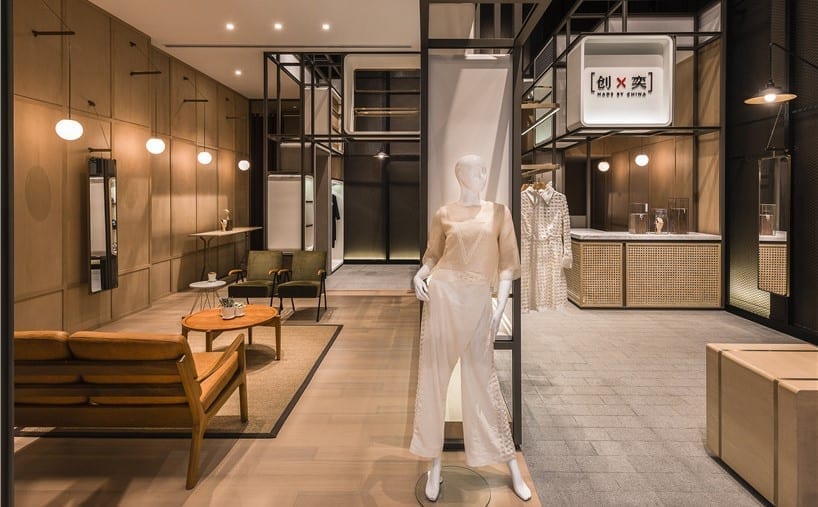
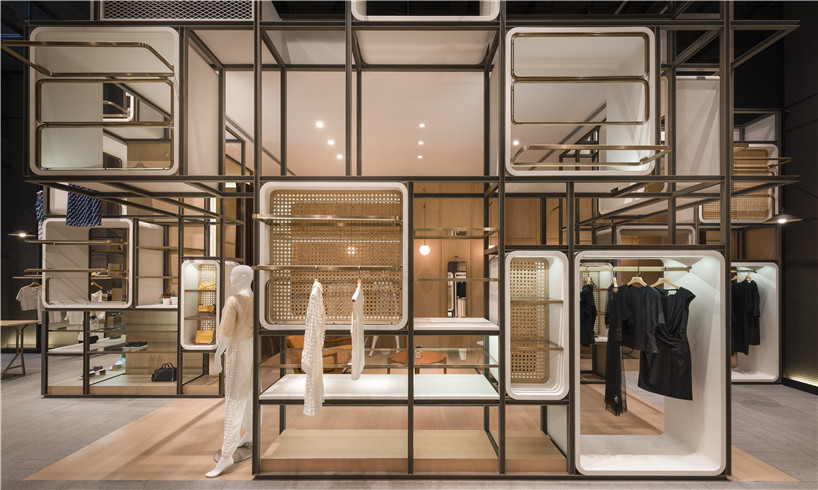
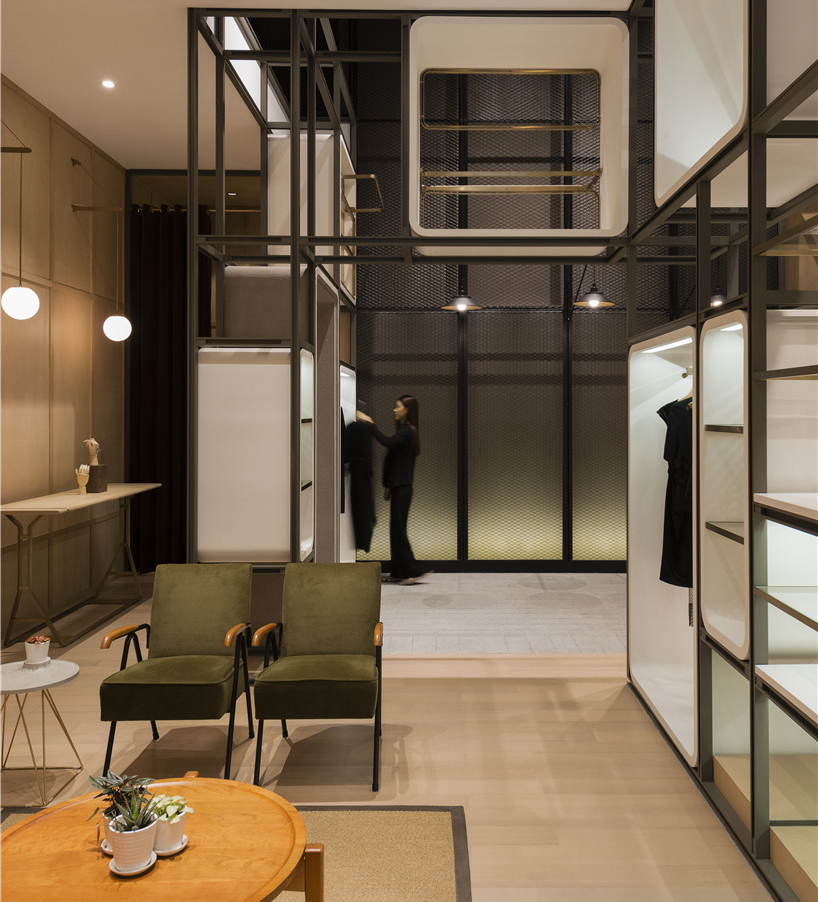
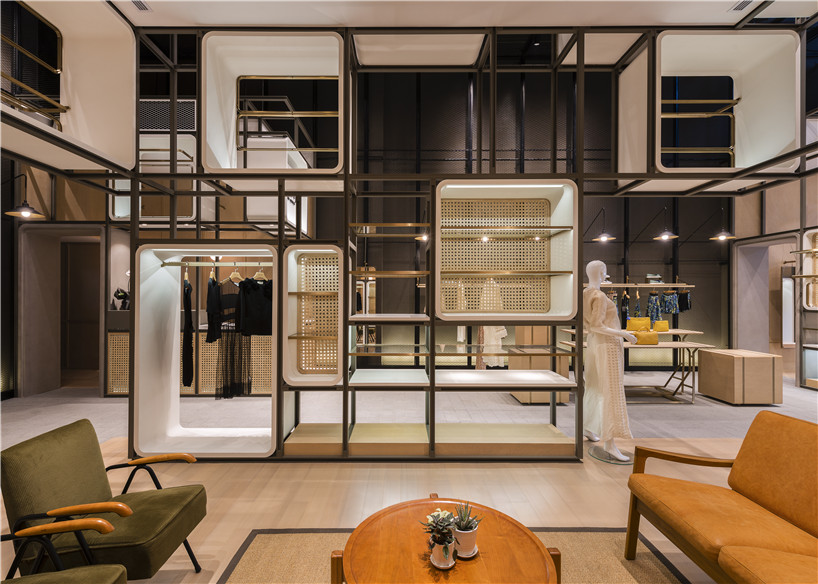
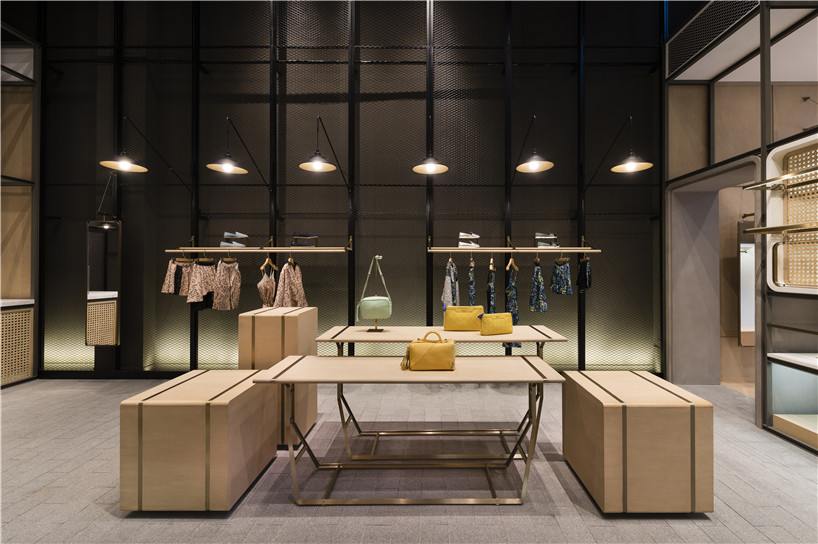
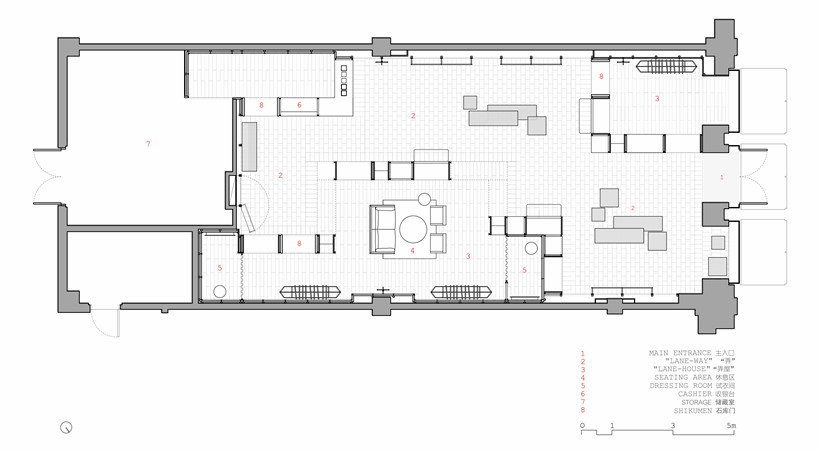
    lukstudio’s ‘modular lilong’ was developed at the behest of value retail china to showcase ‘chuang x yi’ — a fashion platform for chinese designers. the 150 sqm site, located in yioulai shanghai village, is organized around meandering lanes, or lilong, a system that allows creative displays in areas with spatial constraints. this concept, in part, is what gives shanghai its signature streetscape.

    lukstudio07-designboom
    ‘chuang x yi’ concept store
    images © dirk weiblen

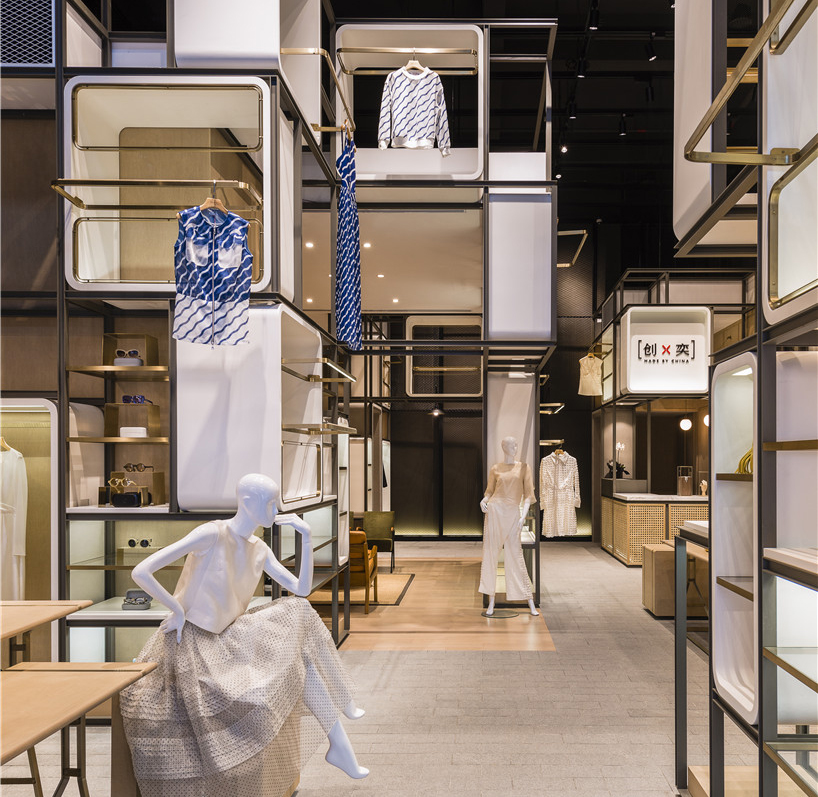
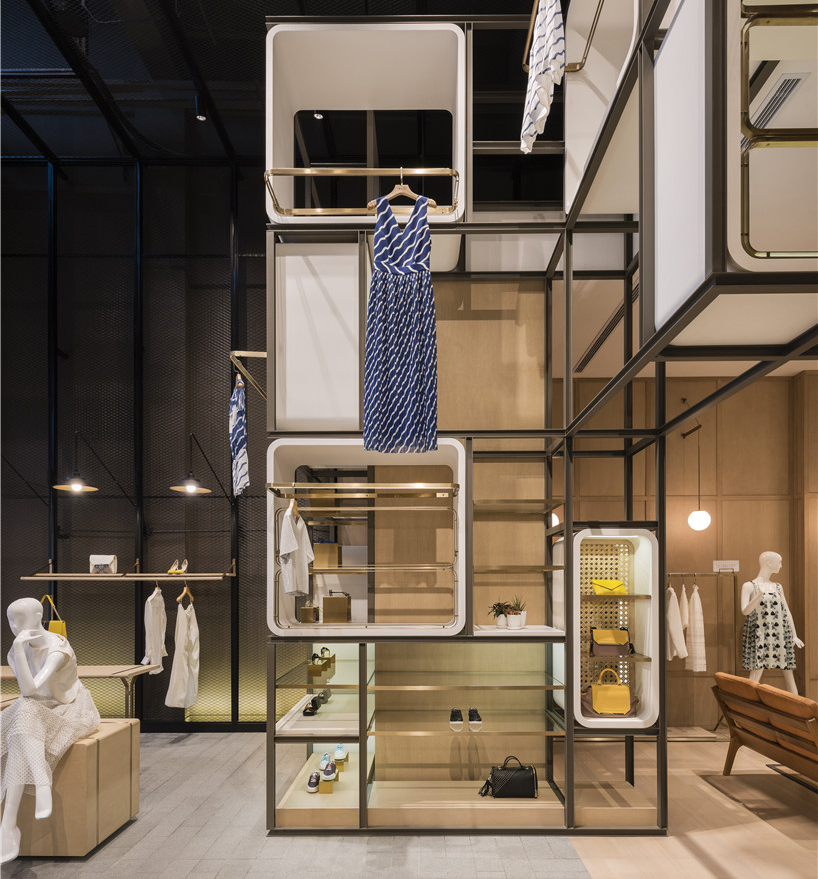
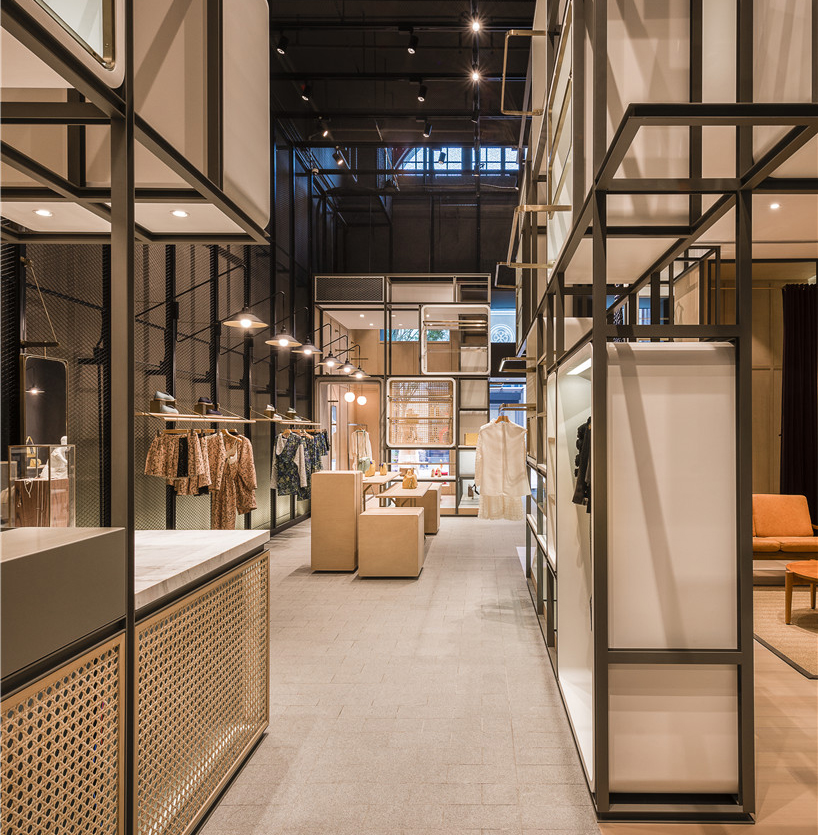
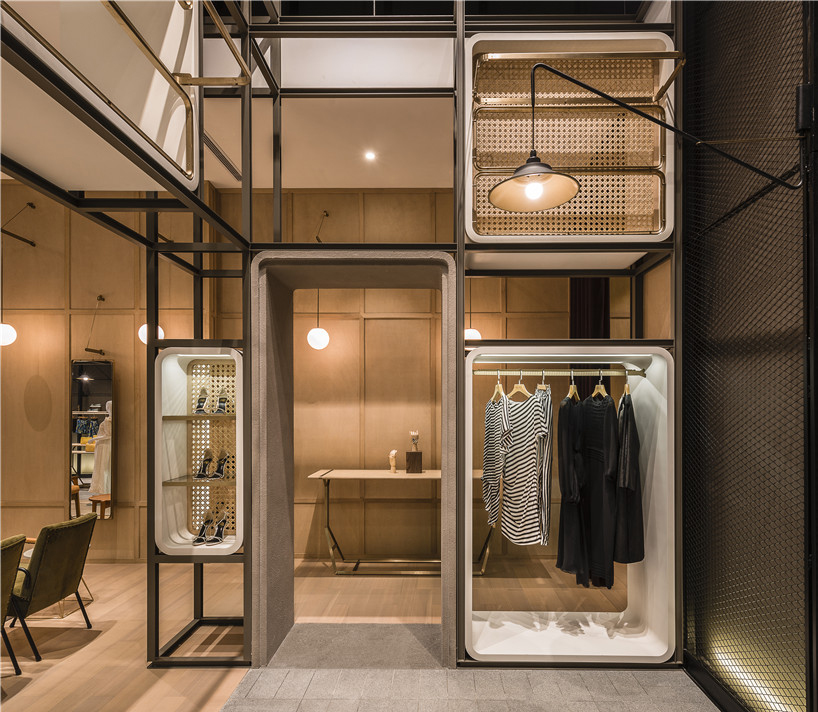
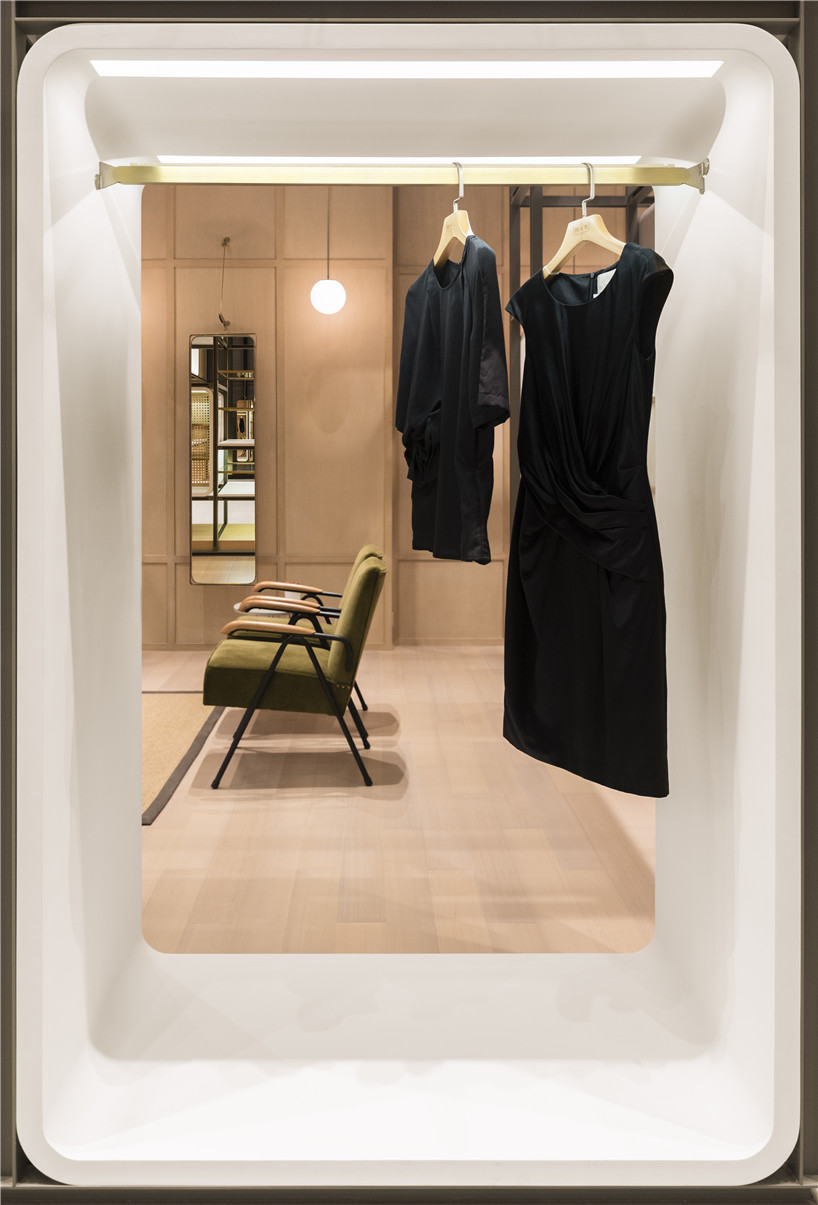
    ‘lilong’, interpreted by lukstudio, results in a modular interior that can be easily disassembled and re-located to other locations. pieces are based on architectural features and textures often found in a ‘lilong’ including old stone ‘shikumen’ gates; visualized in smooth, rounded corners in displays. laundry lines become copper-coated clothing racks, and bamboo rattan is utilized as dividers.

    lukstudio06-designboom
    rattan serves as dividers in the store

    the retail experience of ‘chuang x yi’ offers a visual dialogue between interior and urban environment, combining many layers into a cohesive structure. lukstudio’s work is a journey of discovery that connects historical shanghai architecture and the consumer culture of today.

    lukstudio05-designboom
    interior by lukstudio


    seating and structural display

    lukstudio04-designboom
    grid layout


    interior

    chuang x yi concept store lukstudio shanghai china
    display cube

    lukstudio03-designboom
    axonometric

    lukstudio02-designboom
    floor plan

    project info:

    name: chuang x yi: the modular lilong
    client: value retail china
    location: shanghai village, 88 shendi east road, pudong new area, shanghai, china
    net area: 150 sqm
    interior & lighting design: lukstudio
    team: christina luk, marcello chiado rana, alba beroiz blazquez
    display furniture & custom lighting: TIWU design
    lounge furniture: lost and found, MRT
    timeline: jan. – feb. 2016
    construction: mar. 2016
    general contractor: centroid construction
    photography: dirk weiblen


  • E-Mart and Lotte enter Vietnam

    E-Mart and Lotte enter Vietnam

    The Go Vap district near Tan Son Nhat International Airport and part of Ho Chi Minh City in Vietnam are widely known as special to the Korean retail industry. This is because despite the fact that there are not many Koreans residing in the area, Korean retail giants are competing fiercely in the region. E-Mart, Lotte Mart and Vietnam’s second largest retailer Big C all have stores competing in a four kilometer (2.5 mile) radius.

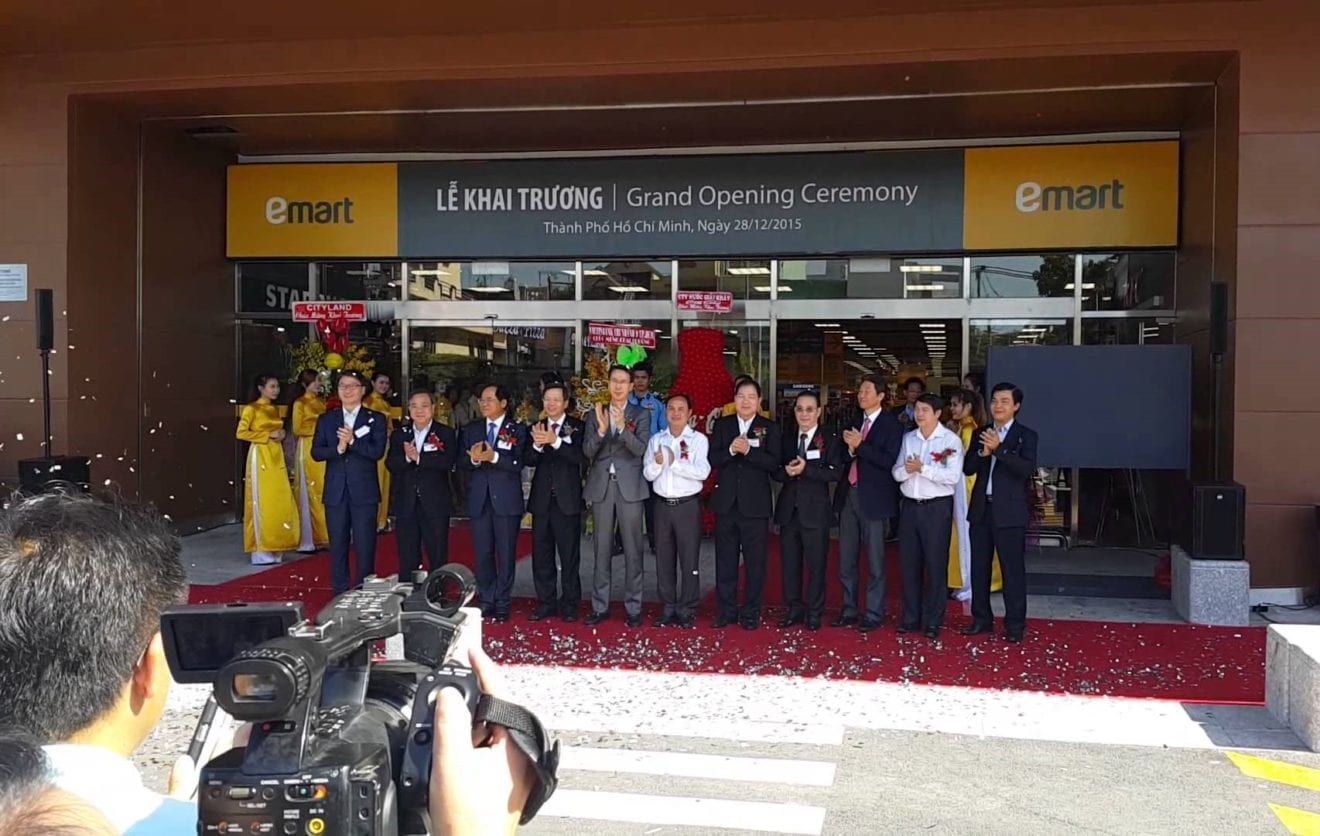
    E-Mart and Lotte Mart are competing for dominance in the young Vietnamese market. More than half of Vietnam’s population of 93 million is less than thirty years old. The large market industry is also undeveloped in Vietnam, with 75 percent of shopping being done at traditional markets, so there is great potential for growth. This potential attracts big retailers like E-Mart and Lotte Mart. Go Vap is particularly attractive because its residents are middle class, well-earning couples. Lotte Mart established itself in Vietnam in 2008 and has 12 stores, which is the third highest in Vietnam for a retailer. E-Mart leapt into the Vietnamese market last December with its store in Go Vap and it is planning to expand its operations.

    The E-Mart store in Go Vap is no different from the ones in Korea. There were the iconic yellow shopping carts as well as No Brand products displayed in the center of the store. No Brand products, modeled after the Japanese company Muji, are relatively cheap because they have no branding and packaging costs, but their quality remains unaffected. E-Mart’s membership card has the phrase “Korea’s No.1 Mart.”

    “We have set up our stores to reflect the Korean lifestyle,” Chang Yun-suk of E-Mart said. “The reasonably priced No Brand products are considered Korean luxury products in Vietnam.”

    E-Mart also operates an Electro Mart, which specializes in electronic goods, in Vietnam. Even on a weekday afternoon, there are plenty of Vietnamese customers flying drones and enjoying the action figures on show, as well as singing karaoke. E-Mart showcased the Electro Mart when it opened its E-Mart Town last June and it only has them in a few places in Korea, including in Yeongdeungpo in Seoul and in Pangyo, Gyeonggi.

    The Korean lifestyle theme is felt in the food available in the area, with Starbucks and Korean pork belly, or samgyeopsal, restaurants in the store. It is unusual to have a Starbucks in a large mart like E-Mart in Vietnam but Shinsegae Group, which operates Starbucks in Korea, persuaded the Vietnamese authorities to have a Starbucks in the store like they do in Korea. Vietnam normally only has Starbucks in hotels, department stores and luxury shopping malls.

    On the other hand, the Lotte Mart store in Go Vap, located only three kilometers from its rival E-Mart, has a Vietnamese feel. The store is filled with a thousand types of Vietnam Choice L products, which are developed and produced in Vietnam. Lotte Mart aims to offer products based on the Vietnamese lifestyle. The traditional rice noodles and cookies are all made in Vietnam. At the end of this year, Lotte Mart will release a point system for all of its subsidiaries in Vietnam known as Vietnam L. Point.

    Lotte Mart even exports Vietnamese products to Korea. Lotte Mart stores in Korea offer various Vietnamese goods including Vietnamese G7 coffee and hosts a special program onVietnam every summer. This is because Lotte Group is very well established in Vietnam with its many subsidiaries based there, including top restaurant business Lotteria, Lotte Hotel and Lotte Department Stores. Lotte wants to project a positive image of itself to the Vietnamese people.

    In fact, the Lotte Mart enjoys so much export success in the Vietnamese market that even Vietnamese politicians and media often jokingly ask their domestic companies, “Do you know how much Vietnamese products Lotte Mart export?”

    The E-Mart and Lotter Mart stores differ greatly, but their large size and strategy for entertainment are compatible. The E-Mart store is 10,579 square meters in size while the Lotte Mart store is 13,223 square meters. Both stores welcome between 10,000 and 15,000 customers every day and both have large motorbike/scooter parking lots capable of holding 1,500 such vehicles to cater to Vietnamese customers, whose main method of road transport is either motorbikes or scooters.

    Both stores also target couples with children, hence they both have large children’s cafes, each measuring 990 square meters. Lotte Mart’s entertainment stores, including its bowling arena and cinema, cover a considerable area of 6,600 square meters, while E-Mart’s occupies 4,628 square meters.

    “Vietnam does not have many amusement parks and cinemas so families often come to large marts to enjoy leisure activities,” Hong Won-sik, general director of Lotte Mart Vietnam, said. “Also, considering the business side, Vietnam has such low consumer prices that it is common to make profits through external store rents rather than from selling fresh products.”


  • Tesla in talks for store in Korea’s biggest mall

    Tesla in talks for store in Korea’s biggest mall

    Tesla Motors Inc. is in talks to open its first store in what will be South Korea’s biggest mall, according to the shopping complex’s owner Shinsegae Group.

    The two parties are negotiating over an outlet at Starfield Hanam, which is set to be the country’s largest mall when it opens in September, according to Shinsegae Group. Built jointly by Shinsegae Group and Taubman Asia, the four-story complex occupies an area the equivalent of 70 football fields and is located about six miles east of Seoul.

    Premium automakers including BMW are opening showrooms in retail districts to attract walk-in customers who wouldn’t otherwise visit car dealerships. Shinsegae Group owns Shinsegae Co. and E-MART Inc. and is South Korea’s second-largest retail conglomerate, behind Lotte Group.

    Atsuko Doi, a spokeswoman for Tesla in Tokyo, didn’t immediately reply to an email request for comment. Tesla said last month it plans to set up an office in Seoul, without giving further details. The U.S. electric vehicle maker advertised positions in sales, engineering, service and marketing in Seoul on its website. South Korea would be Tesla’s fourth market in Asia after China, Hong Kong and Japan.

    Separately, Hyundai Motor Co. said in an email that it will open its first premium Genesis brand store in the Starfield mall later this year.

  • Bursa Malaysia expected to trade higher next week

    Bursa Malaysia is likely to trend higher next week on improved sentiment including Bank Negara’s overnight policy rate (OPR) cut, rebound in oil prices, global bank stimulus and a stronger currency.

    Affin Hwang Investment Bank Vice-President and Retail Research Head, Datuk Dr Nazri Khan Adam Khan said the benchmark FTSE Bursa Malaysia KLCI (FBM KLCI) was ready to stage further upside if the ringgit and commodities continued to strengthen.

    He said the local bourse should be catalysed by Bank Negara’s unexpected move to reduce the OPR to 3.00% from 3.25%.

    “The index should be bullish with the rate cut although the broad market is slow to react.

    “We see the OPR cut as a pre-emptive move to ensure that inflation remains under control and the economy remains on a steady growth path,” he told Bernama.

    This was confirmed by the Malaysian bonds three-year yield which dropped to its lowest level since 2009 and a stronger ringgit which hit a 10-week high against the US dollar this week, he added.

    He said technically, the FBM KLCI had broken out from its consolidation zone and was still looking to test its immediate resistance level at 1,680.

    “Overall, given the buoyant mood coming from global markets as well as positive catalysts in the domestic front, we reckon that the FBM KLCI could be poised to trend upwards this week to break out from its consolidation zone,” said Nazri Khan.

    He said the upside resistance and downside support are now spotted at 1,700/1,680 and 1,650/1,630 levels, respectively.

    On Friday-to-Friday basis, the FBM KLCI rose 23.86 points to 1,668.40 from 1,644.54 recorded last week.

    The FBM Emas Index improved 190.22 points to 11,657.87, the FBMT 100 Index rose 184.2 points to 11,360.08 and the FBM Emas Syariah Index was 208.9 points higher at 12,228.11.

    On a sectoral basis, the Finance Index fell 22.19 points to 14,252.12, the Industrial Index increased 46.35 points to 3,140.55 and the Plantation Index improved 13.94 points to 7,531.31.

    Weekly turnover increased to 8.18 billion units worth RM9.37 billion from 2.87 billion units worth RM3.37 billion last week.

    Main market volume rose to 5.44 billion shares worth RM8.84 billion from 1.95 billion shares valued at RM3.21 billion previously.

    Warrant turnover swelled to 1.22 billion units valued at RM197.75 million from 446.69 million units worth RM75.04 million last week.

    The ACE market increased to 1.49 billion shares worth RM320.29 million from 471.92 million shares valued at RM89.36 million previously.

  • IKEA to Recall Unsafe Furniture in China

    IKEA to Recall Unsafe Furniture in China

    Swedish furniture giant IKEA will recall their unstable Malm furniture line of chests and drawers in China.

    The decision came after many vocal Chinese consumers complained that IKEA was discriminating them. The Malm line was still in Chinese stores amidst recalling over 29 million pieces of chests and drawers in Canada and the United States.

    The product recall in North America transpired two weeks ago, after being linked to the death of six children.

    When IKEA refused to recall their product from their Chinese outlets, consumers complained online and through government controlled media. Government controlled newspaper Xinhua accused IKEA of committing “blatant bullying.”

    The government-run General Administration of Quality Supervision, Inspection and Quarantine claimed that after meeting IKEA, the company decided to change their minds.

    Last Tuesday, the furniture company decided to recall about 1.7 million pieces from their stores. IKEA offered free home installation and an optional refund.

    IKEA’s spokeswoman, Xian Jiaxin, said, “IKEA is a very responsible company. Consumer protection is very important to us, which is how we came to this decision.”

    Many Chinese shoppers go to IKEA for their furniture needs. As a result, the Swedish company incurred a large amount of sales. By September 2015, total revenue totaled to $1.55 billion.

    The furniture company is determined to firm its hold in the vast Chinese retail market. Total retail sales annually is worth $4.5 trillion in China, which will soon exceed sales from the United States.

    Jeff Walters, managing director of the Boston Consulting Group said, “If you look across the world and you look where there is still significant growth in consumer spending, the answer is very much China. Of course any company is going to make sure it’s standing on the right side of regulation to have access to a market that size.”

    Many Chinese consumers are becoming more discriminating due to violation of rights in the past. Since then, government inspectors have been more stringent in regulation and inspection of goods and products.