Author: Mei Ling Tan

  • Subdued tourism and weak retail sales likely to hurt Hong Kong economy

    Subdued tourism and weak retail sales likely to hurt Hong Kong economy

    In the first quarter of 2016, Hong Kong’s economy had contracted 0.4 percent on sequential basis and grew 0.8 percent on year-on-year basis. This was the first contraction since 2014 amidst weak retail sales and trade sectors, sluggish consumer demand and cautious business spending.

    Fewer visitors and subdued tourist expenditure further weighed on retail sales in April. Moreover weaker trade growth led to high jobless rate in the trade and wholesale sector. Downtrend in retail and tourism sector continue to be present because of fewer tourists and tepid spending and cautious consumer confidence.

    Hong Kong’s retail sales’ value dropped for the 14th consecutive month in April. It declined 7.5 percent year-on-year to HKD 35.2 billion. The retail sector continues to be in doldrums amidst fewer tourists and weaker tourists spending. The luxury segment has weighed majorly on the nation’s retail sales, with the sales value of watches and jewellery, declining for the 19th consecutive month by 16.6 percent in April.

    Given the dull outlook for the country’s retail sector, Hong’s Kong’s retail property market might drop further even as retail shop rentals and prices declined 1.3 percent year-on-year and 7.8 percent year-on-year respectively in March. Additional rental concession and higher vacancy rates in core business district might be likely, noted OCBC Bank in a research report.

    In April, jobless rate in the retail sector grew to 5.3 percent amidst subdued tourist activities and luxury consumption. This was disappointing as compared to an average of 4.4 percent in 2014. This is due to weak business performance in retail sales in the midst of contracting tourist spending. The Hong Kong’s retail sector is expected to be limited by subdued inbound tourism activities amidst downturn in Chinese economy and external uncertainties. This might be a drag on employment in the retail sector.

    “Overall, HK’s labor market may worsen further with unemployment rate expected to rise to 3.5 percent over 2016,” added OCBC Bank.

     

  • End of Growth for Hypermarkets?

    End of Growth for Hypermarkets?

    Hypermarkets, which offer a wide range of products under one roof, once prospered in Korea. Recently, however, sales growth has stagnated with a rapid change in consumer behavior. 

    According to industry watchers, hypermarkets in Korea anticipated high growth this year, following poor performance in 2015 from widespread public fear of MERS in June. But their high hopes have proven to be overly optimistic. 

    Lotte Mart, one of Korea’s leading hypermarket franchises, only saw 0.2 percent year-over-year sales growth in June. Homeplus, Korea’s second largest retailer, even showed negative sales growth. 

    E-mart, a subsidiary of Shinsegae, and the largest retail hypermarket in Korea, also recorded negative growth in May (4.4 percent), but improved its performance in June, although not as much as anticipated. 

    “We can’t disclose our growth rate for June because of government regulations, but considering the base effect caused by the MERS incident, the rate is far from our expectations,” said an E-mart official. “The industry itself is at risk, and its low growth has become a fixated phenomenon.” 

    Among the three retail giants, Homeplus has been suffering most from negative growth in recent years, and starting this year the company decided not to disclose its monthly growth rate in order to avert potential negative influence that it may further pose in the industry.

    “The company policy is not to disclose monthly growth rates,” said a Homeplus official. “But it’s true that the industry is suffering.” 

    Industry experts point to changing consumer trends, with preference rapidly shifting from offline to online purchasing. 

    “There are so few customers at these hypermarkets nowadays,” said an industry official. “Department stores, on the other hand, are more crowded because they often deal with high-end products. But a rising number of consumers are shifting over to e-commerce platforms to purchase daily necessities, which are the main products offered by hypermarkets.”


  • Korean cosmetics makers fear losses from THAAD deployment

    Korean cosmetics makers fear losses from THAAD deployment

    South Korean retailers and cosmetics companies are closely watching China’s moves after Korea and the US decided to deploy an advance missile defense system in the country on July 8.

    Neighboring China lodged a swift protest against the decision announced in the morning which is expected to further heighten geopolitical risks.

    Local cosmetics makers and duty-free shops are on alert as they worry about losing Chinese market and consumers who account for a growing portion of their revenues.

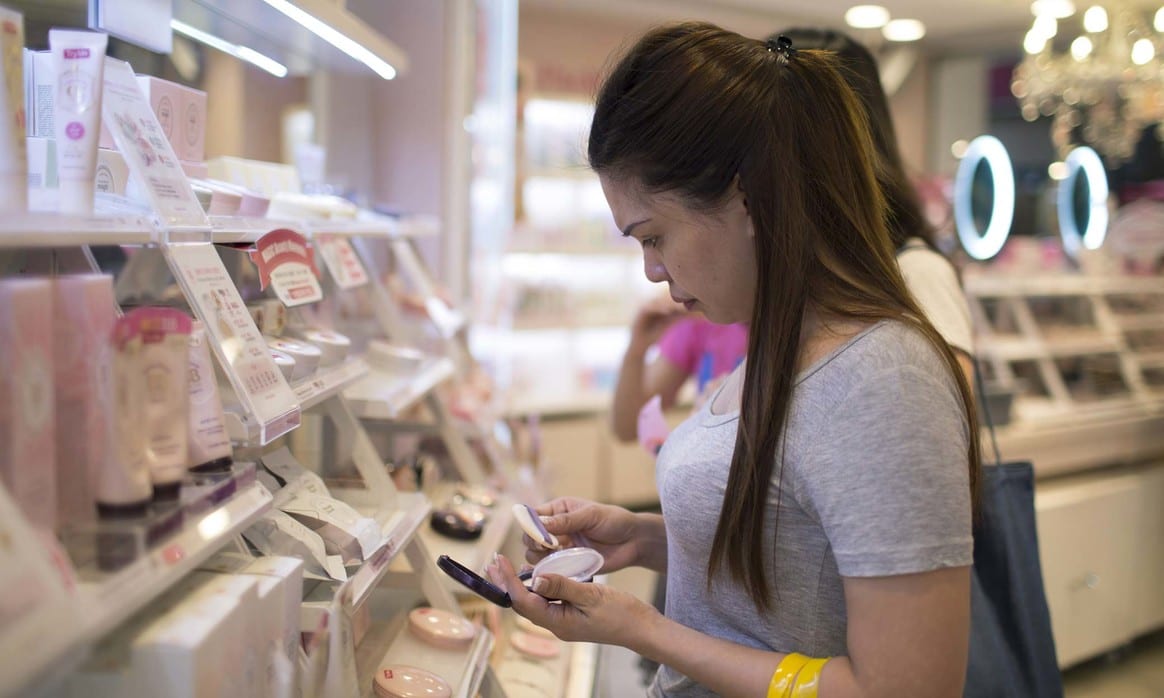
    Customers shop for cosmetics at a local duty-free shop.

    On the day, cosmetics stocks like LG Household & Health Care and AmorePacific plunged more than 4 percent.

    “The THAAD issue was a huge blow to Cosmetic stocks earlier this year and it happened again,” an official at a cosmetics company said.

    South Korea’s cosmetics exports to China doubled on-year to US$1.08 billion in 2015, which accounts for nearly 40 percent of global sales, according to the Korea International Trade Association. South Korea is the second-largest cosmetics exporter to China following France.

    “There hasn’t been an immediate impact so far as China hasn’t took any trade-related actions but we still have to keep an eye on the issue,” she said.

    If ties between the two countries weakens, China could tighten regulations on safety and tariff issues, experts said.

    Retail companies, which started to see a rebound in the number of Chinese tourists to Korea after a sharp drop due to the Middle East respiratory syndrome outbreak hit the country last year, are in panic mode.

    “We are worried over the possible drop in the number of tourists coming here if political conflicts drag on for long,” said an official at a duty-free store in Seoul.


  • Thailand Future Fund secures adviser

    Thailand Future Fund secures adviser

    Vorapak Tanyawong, president of KTB, said yesterday that the financial adviser would propose the options for fund mobilisation to the government, with KTB having the nationwide network to distribute fund units to retail customers.

    The capital from selling fund units will be used to finance infrastructure projects, starting with the high-speed-rail project from Bangkok to Nakhon Ratchasima province.

    Separately, KTB yesterday unveiled the KTB PromptPay campaign, which offers prizes worth a total of Bt9 million.

    The campaign will run from July 15 to October 15.

    Songpol Chevapanyaroj, senior executive vice president and head of the bank’s global transaction banking group, said the campaign was part of a strategy to get existing customers to use KTB as their main bank.

    Under the scheme, the bank said fund transfers would be more convenient because there would be no fee if the amount was less than Bt5,000, while the cost of cash management was reduced as well.

    Vorapak said the benefit of being the main bank for customers was the cross-selling of products.

    The bank said it had received more than 300,000 PromptPay pre-registrations since it began accepting them on July 1.

    Official registrations for the scheme, which is designed to enhance e-payments, will be accepted from July 15.

    KTB said it had about 17 million depositors, and it hopes to bring in 8 million more under the campaign.

    Vorapak said the bank’s upcountry customers were more aware of using automated teller machines and digital banking, with transactions at branches declining, including those for retail vendors’ lottery reserves.

    He said retail vendors were migrating to booking lottery tickets via ATMs and KTB’s online channels because they could access reserves from those channels more quickly than they could through the branches.

  • Sony’s GEM expands into SE Asia

    Sony’s GEM expands into SE Asia

    GEM, the joint venture entertainment channel between Sony Pictures Television (SPT) Networks and Nippon Television Network (Nippon TV), is expanding into new Asian markets.

    The channel will launch in Indonesia, the Philippines and Singapore, making it available to viewers on over 10 pay-TV platforms across six markets in Asia.

    From August 1, it will roll out on Indovision, MyRepublic, Nexmedia, Skynindo and Transvision in Indonesia, ACCION’s distribution network of provincial cable affiliates in the Philippines, and Singtel TV in Singapore.

    GEM is already available on PPCTV in Cambodia, nowTV in Hong Kong and TrueVisions in Thailand.

    Since its launch in 2015, GEM has carved a niche in the premium Asian entertainment space offering first-run and exclusive dramas, comedies and variety entertainment shows from Japan and other northeast Asian markets.

    “We’re focused on taking GEM beyond the screen and into the lives of fans across the region via talent tours, local filming and fan meets. Our new series, ‘We are Asia – Dean Fujioka & Friends,’ marks the first original series for GEM, and will pave the way for more localized content in the future,” said Ang Hui Keng, SVP and GM of Sony Pictures Television Networks in Asia.

    In addition to the channel’s first original production, viewers can look forward to Nippon TV’s “The Music Day 2016 – Beginning of Summer”, which brings together Japan’s top artists in a festival that celebrates the very best of J-pop.

  • Global pay TV subs rise 2% in Q1

    Global pay TV subs rise 2% in Q1

    The worldwide number of pay television subscribers reported by informitv’s Multiscreen Index rose by 6.9 million or 1.7% in the first quarter of 2016.

    Three in five (60%) of the 100 leading pay-TV services in the latest index report showed net subscriber gains in the quarter.

    The greatest quarterly subscriber gains were in the Asia-Pacific region, where there were 5.35 million subscriber additions. Six operators in India added a total of 4.71 million between them, with SITI Cable Network reporting 1.1 million new digital subscribers.

    The 10 services with the largest quarterly subscriber losses had just under a million fewer television customers between them. They were headed by AT&T U-verse, which shed 382,000 subscribers, although these losses were almost matched by gains of 328,000 for satellite subsidiary DIRECTV.

    The top 10 services from the United States in the index closed the first quarter with just 18,000 subscribers more than at the start of the year, but they were down by over 880,000 year-on-year.

    In the United Kingdom and Ireland, Sky and BT added 136,000 television subscribers, while Virgin Media and TalkTalk lost 21,000.

    Canal+ in France lost the most subscribers in Europe, with its numbers declining by 200,000. Orange and Free added 234,000 subscribers in France.

    Also, 81% of around 400 million homes subscribing to the services covered by the index now have access to some form of multiscreen viewing. The actual adoption and usage of multiscreen services is much lower.

    “North, Central and South America still contribute over a third of the subscribers in the index,” said informitv analyst Sue Farrell. “They gained just 0.54 million subscribers, compared to 1.41 million in the first quarter a year ago.”

    “The Multiscreen Index shows an overall gain in subscribers, with more services gaining rather than losing television subscribers,” said the editor of the report William Cooper. “Although mature markets like North America are relatively saturated, it shows that there is still room for growth in other regions.”

  • McDonald’s Hong Kong opens toy museum

    McDonald’s Hong Kong opens toy museum

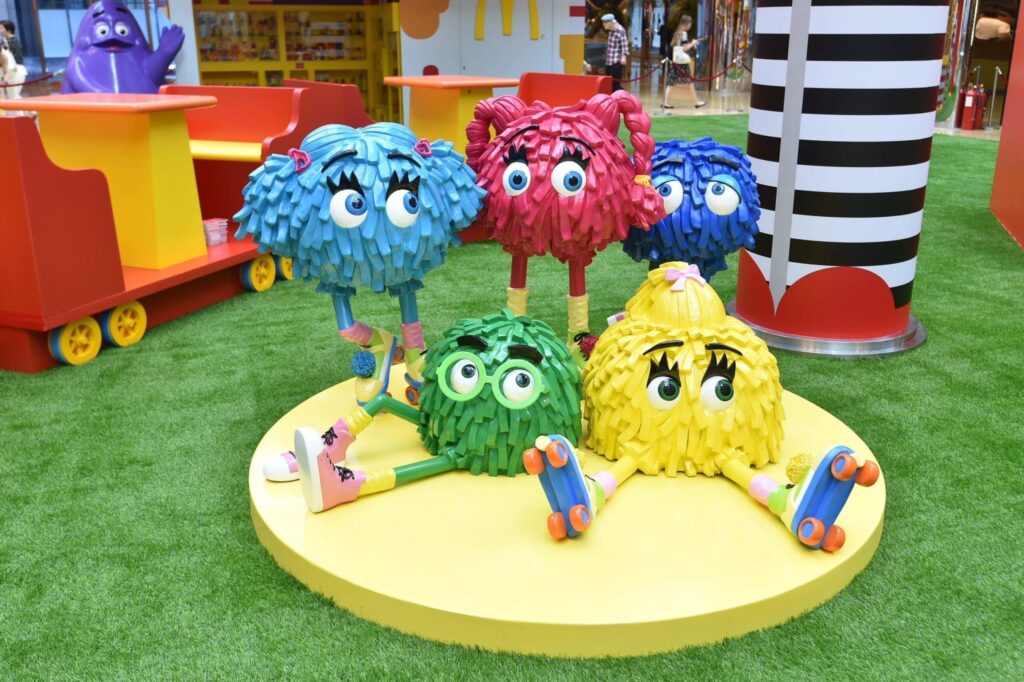
    In partnership with creative agency DDB and Tribal Hong Kong, McDonald’s Hong Kong has opened a concept store in Taikoo Shing.

    Featuring more than 1000 of the family restaurant’s toys dating back to 1980, the interactive McDonald’s Toy Museum at City Plaza was opened after a four-day campaign in which DDB and Tribal Hong Kong recreated McDonald’s advertisements from the past.

    Covering TV, newspaper, magazine, outdoor, radio and online placements, the campaign kicked off with McDonald’s iconic “fish symphony” TV spot, coincidentally created by DDB Group Hong Kong’s chief creative officer/MD Carol Lam in 1997.

    toy-museum-1

    toy-museum-3 toy-museum-2

    “Imagine paging through a glossy magazine and coming across an old McDonald’s ad, or hearing a crackly old radio spot on your favourite station,” says Lam. “The magic of our campaign lies in this stark contrast between old and new, creating a stolen moment for customers to reflect on a simpler time.”

    DDB Group Hong Kong’s digital arm Tribal drove the reach of the campaign through a mix of modern media channels including social media with the help of key opinion leaders, encouraging people to share their McDonald’s memories.

    The museum itself was brought to life by event agency Amaz, while Tribal’s QR code activation offered customers the chance to win prizes.

    “The retro campaign and Toy Museum give us the chance to honour our history while looking toward our bright future,” says McDonald’s Hong Kong director of marketing Esther Chung.


  • Uniqlo Canada stores about to launch

    Uniqlo Canada stores about to launch

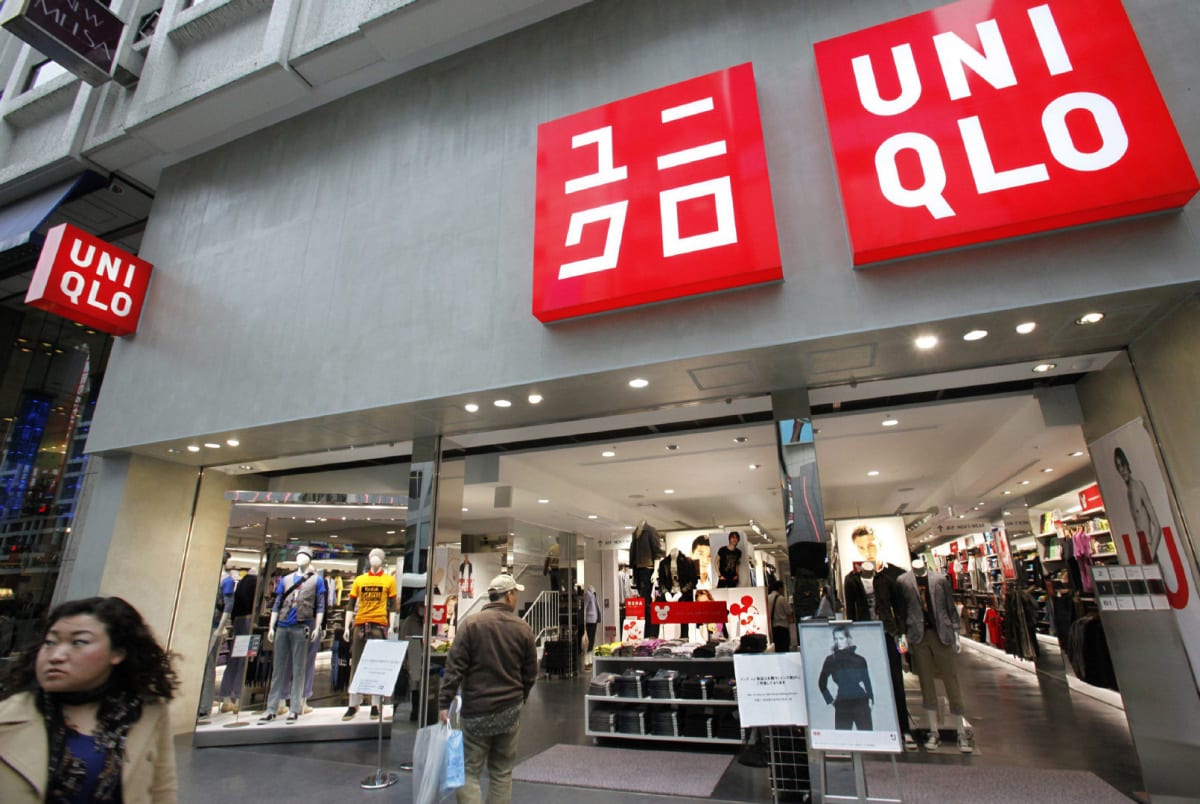
    Japanese lifestyle retailer Uniqlo Canada is close to opening its first two stores, in Toronto.

    Uniqlo Canada COO Yasuhiro Hayashi says the autumn collection to feature at the stores has special technology to provide warmth in Canada’s icy winter. The brand’s Heattech innerwear features moisture-wicking fabric that retains heat, and also has anti-odour properties.

    Women’s and men’s collections range from casual to dressy, including a variety of cashmere sweaters as well as lightweight down jackets and vests.

    Uniqlo’s first Canadian store will open in late September or early October at CF Toronto Eaton Centre. Between fashion retailers Nordstrom (opening on September 16) and H&M, which has had a major expansion, the Uniqlo store will cover about 28,000 sqft (2600 sqm) over two levels.

    Uniqlo’s second Canadian store will open at Yorkdale Shopping Centre in October, in a new $331 million 300,000 sqft wing anchored by Nordstrom. Uniqlo will occupy about 24,000 sqft over two levels and be a neighbour with fellow Japanese lifestyle retailer Muji.

    Hayashi says Uniqlo’s Canadian store expansion will be gradual, with the company seeking to create brand recognition before moving into new markets.

    Uniqlo’s Canadian broker, Jeff Berkowitz of Aurora Realty Consultants, says Toronto was picked as the brand’s introductory market, and he is now looking real-estate opportunities in western Canada.

    Retail consultancy HRD Advisory president Farla Efros says she thinks Uniqlo will be a big success in Canada as it fills a void in the retail landscape between upscale boutiques and fast-fashion.

    Meanwhile in Japan, Uniqlo’s same-store sales last month increased by 4.5 per cent year-on-year while own-store sales grew 4.7 per cent. Total sales, including online, rose 6 per cent. The company attributes the increases to higher temperatures this year.

  • Fosun International acquiring French brand IRO

    Fosun International acquiring French brand IRO

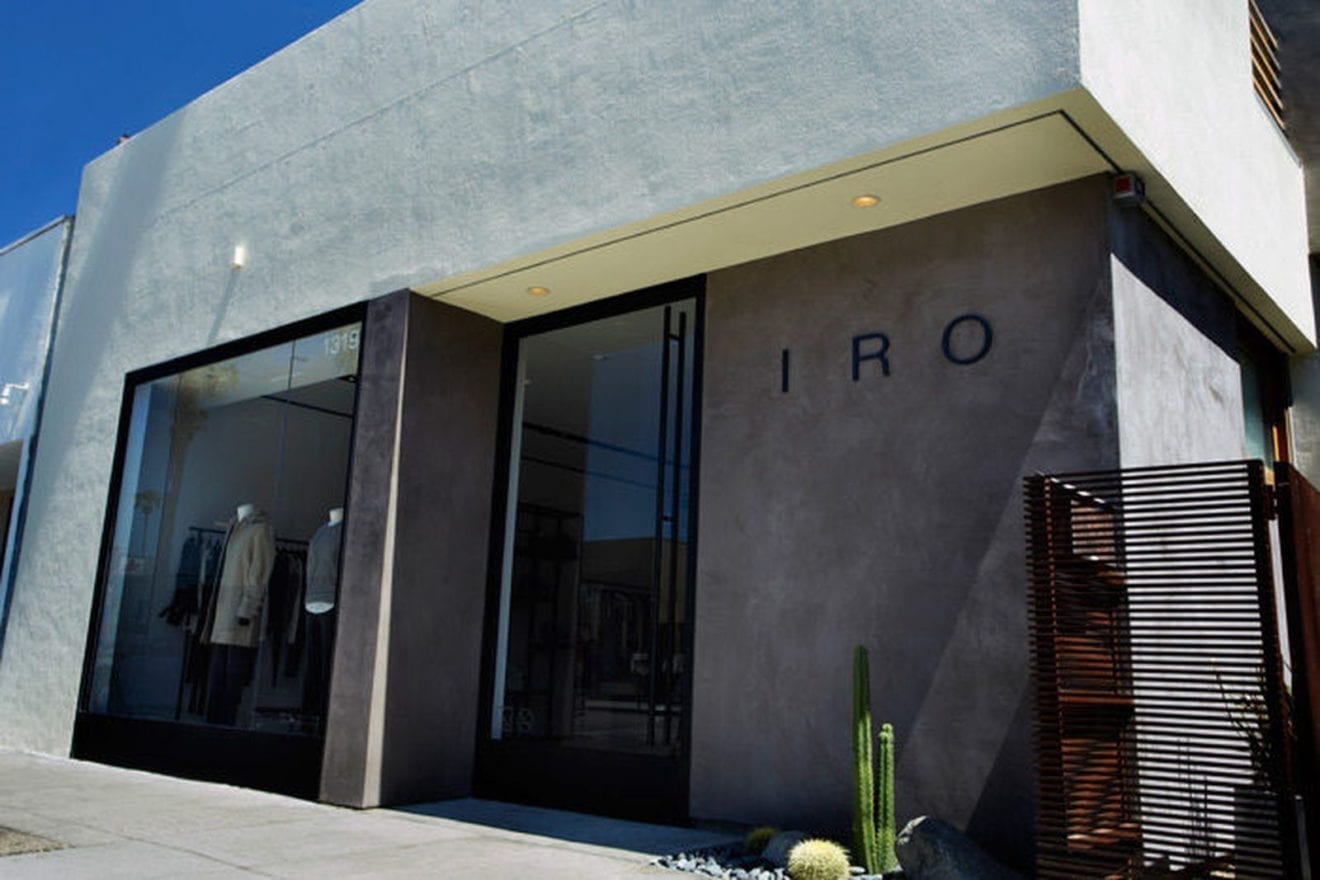
    Chinese fashion retailer Fosun International will reportedly acquire French apparel brand IRO.

    IRO’s founders, brothers Laurent and Arik Bitton, will retain a 40 per cent stake, while Fosun will acquire the 25 per cent shareholding of the Marciano family, founder of the Guess Group, along with the remaining shares, making it the major shareholder.

    The deal, worth about €130 million (US$143.533 million), has been confirmed by a Fosun spokesperson quoted in the Chinese media.

    IRO was founded in Paris in 2004, with a men’s clothing series being added in 2011. Its followers include supermodels and fashion bloggers like Kate Moss, Rosie Huntington, Gigi Hadid and Aimee Song.

    With annual sales of about €60 million, IRO has stores in Paris, New York, London and Rome – all up, seven outlets in France and 25 internationally, including four in the US. It also has more than 40 counters in high-end department stores.

    Fosun has diverse interests covering fashion and retailing, and also owns the French resort group Club Med. The company has invested in many overseas consumer brands, including Greek fashion brand group Folli Follie, American high-end women’s clothing brand St John, Italian high-end custom men’s clothing Caruso, and fashion lifestyle brand Tom Tailor.

  • Garuda Indonesia Raking It In During Idul Fitri Holiday

    Garuda Indonesia Raking It In During Idul Fitri Holiday

    Flag carrier Garuda Indonesia filled more seats on its domestic flights during the Lebaran exodus this year, as more people chose air travel to return to their hometown for Idul Fitri.

    The state-controlled airline’s average load factor — which indicates how much an airline makes use of its seat capacity — went up to 74 percent from June 24 to July 5, a day before Idul Fitri, on all of its domestic routes, Benny S. Butarbutar, Garuda Indonesia’s vice president of corporate communication, said on Saturday (09/07).

    Benny did not give a figure for last year’s Idul Fitri holiday.

    Still, the latest figure could mark a turnaround for Garuda. The full-service airline had seen its load factor dip to 69 percent in the first three months of this year, compared to 74 percent in the same period last year, as weak economic growth forced cost-conscious travelers to opt out of the airline’s services.

    Garuda added 32,000 more seats on 132 extra flights, 112 of which are on international routes, between June 24 to July 17 to cater for Indonesians during the annual Lebaran exodus, Benny said.

    “This represents a 35 percent increase in our extra capacity from the same period last year,” Benny said.

    The National Police estimated 17.6 million people made the travel back to their hometown during the Lebaran exodus this year. Ouf of that figure, 4.6 million chose air travel, up 7.6 percent from a year ago as people’s purchasing power has increased and local airlines offer new fleets and routes.

    Air travelers met with relatively few problems during this year’s Lebaran exodus compared to their peers taking land routes, who were met by hellish traffic jams on toll roads across Java.

  • HGC launches cloud backup service

    HGC launches cloud backup service

    Hutchison Global Communications (HGC) has launched a one-stop enterprise-grade cloud backup service to augment its cloud portfolio.

    The Backup-as-a-Service offering is designed to allow enterprises to back up files, operating systems and applications at he Wong Chuk Hang data center run by HGC GlobalCentre (HGCGC).

    HGC Cloud Backup supports a wide range of brands, operating systems, applications and cloud platforms. It is designed to allow companies to restore and retrieve specific stores of data without the need to recover the entire content of a backup.

    The service is being offered under a pay-as-you-go model and is supported by an online self-service portal.

    HGCGC data centers are designed to meet ISO information security standards, and customers can opt for a private leased line to further improve security.

    In order to enhance the service, HGC has also revealed plans to introduce data backup replication by the end of the year. Backup data will be stored at Kwai Chung as well as the Wong Chuk Hang data centers.

    “Launch of HGC Cloud Backup greatly enriches our portfolio of cloud services,”HTHKH COO Jennifer Tan commented.

    “This new Backup-as-a-Service capability – plus the planned dual data center backup and replication solution – will minimize the worrying risks associated with data storage. Customers will therefore be in a much better position to protect their digital assets and recover critical information during disaster incidents, thereby ensuring robust business continuity.”

  • LF Beauty to exploit Asian beauty boom

    LF Beauty to exploit Asian beauty boom

    Li & Fung Group subsidiary LF Beauty is seeking to cash in on soaring demand for beauty products in Mainland China and wider Asia.

    China’s skincare and cosmetics market is projected by the Hong Kong Trade Development Council to grow by an average annual rate of  of 12.8 per cent from this year through 2019 – considerably faster than the expected global rate of 6 per cent.

    “Asian beauty is now setting the pace for the world. China, South Korea, Japan as well as the entire Southeast Asian market, are very important for us. [That] represents about 4.5 billion in population,” said Gerard Raymond, president of LF Beauty, in an article published by China Daily.

    A large population base dominated by younger demographic distinguishes the Asian market from more mature western markets, he said.

    “The younger generation consumer knowledge and wealth is growing very fast. And they are very willing to try new and innovative things.”

    LF Beauty is partners with suppliers and retailers of product solutions including fragrances, skincare, color cosmetics, and in a one-stop-shop offer provides retailers with logistics support, merchandising systems and point-of-sale solutions.

    Raymond said in the China Daily report that “there never have been more opportunities for brands to stand out and keep pace with their consumers” than in the Asia region

    “It’s never been more challenging. In this competitive environment, we work to help many of the world’s best-loved brands to innovate, thrive and become market leaders,” he said.

    “We have seen that Chinese women now are very interested in beauty products from South Korea,” he said. “In this respect, we have already established a joint venture in South Korea, which allows us to transfer their knowledge to Chinese market directly and serve the demands of local consumers.”

  • Telenor Myanmar launches 4G services

    Telenor Myanmar launches 4G services

    Telenor Myanmar has officially launched 4G services, starting in capital city Nay Pyi Taw.

    With the launch the operator has become Myanmar’s second mobile operator to launch LTE services, following Ooredoo Myamar’s debut in May.

    Telenor Myanamr CEO Petter Furberg said in addition to the debut in the capital, the company is continuing to test 4G in other cities, and will progressively roll out the technology nationwide.

    “While Telenor users in Nay Pyi Taw now can enjoy 4G services we aim to expand the service to other cities gradually. To provide high speed 4G services all over the country Telenor will need more spectrum,” he said.

    “Telenor is looking forward to participating in the spectrum auctions planned by the Union Government later this year. Due to explosive growth of data and increasing data demand by the Myanmar people we believe it is urgently required to expand our services to 4G all over Myanmar.”

    He noted that 60% of the operator’s 16 million customers are now data users, and that Telenor has Myanmar’s largest internet network with more than 5,800 towers across the country in all states and regions.

    “Myanmar is experiencing an extensive growth of mobile subscriptions and we are also witnessing higher demand for mobile data,” Petter said. “Our 4G service is one more important step in the rapid development of the Myanmar telecom sector.”

  • AIS introduces self-service at contact centers

    AIS introduces self-service at contact centers

    Thailand’s AIS has upgraded its customer contact center system in a bid to provide a consistent, enhanced and personalized customer experience for its growing subscriber base.

    The new system now routes up to 70% of all customer calls to a self-service system.

    The self-service capacity allows subscribers to gain access to services such as activating their SIM card, subscribing to roaming services or selecting rewards, without dealing with long queues.

    Leveraging Avaya’s Self-Service solution, AIS’ Advanced Contact Centers (ACC) have streamlined customer care and enhanced personalized live agent support at its contact centers located in Bangkok and Korat.

    The centers currently employ 3,300 customer service employees, serving 40 million subscribers nationwide.

    Smartphone users in Thailand are expected to reach 20 million in 2016 and this is expected to soar further with the introduction of 4G commercial services this year. Demand for more sophisticated, seamless and highly reliable broadband connectivity from business is also expected to escalate as Thailand’s digital economy accelerates.

    ACC saw the digital transformation of its contact center as a critical enabler in the new economy. The new self service system will ensure a consistent customer experience for AIS’s 11 million calls it receives through its contact centers every month.

    In the past, each customer call routed to a live agent can cost between 50 to 100 baht ($1.42 to $2.84), depending on the competency level of the agent. In contrast, the new system means that each call costs only 1 baht for ACC.

    The new system also provides capabilities for ACC to identify and categorize AIS’s customer calls and the services they require before matching them with the right agents trained to help specific service requests or customer types.

  • Saigon retail market to be put to the test

    Saigon retail market to be put to the test

    Is there too much retail space in Saigon – downtown Ho Chi Minh City – the commercial hub of Vietnam?

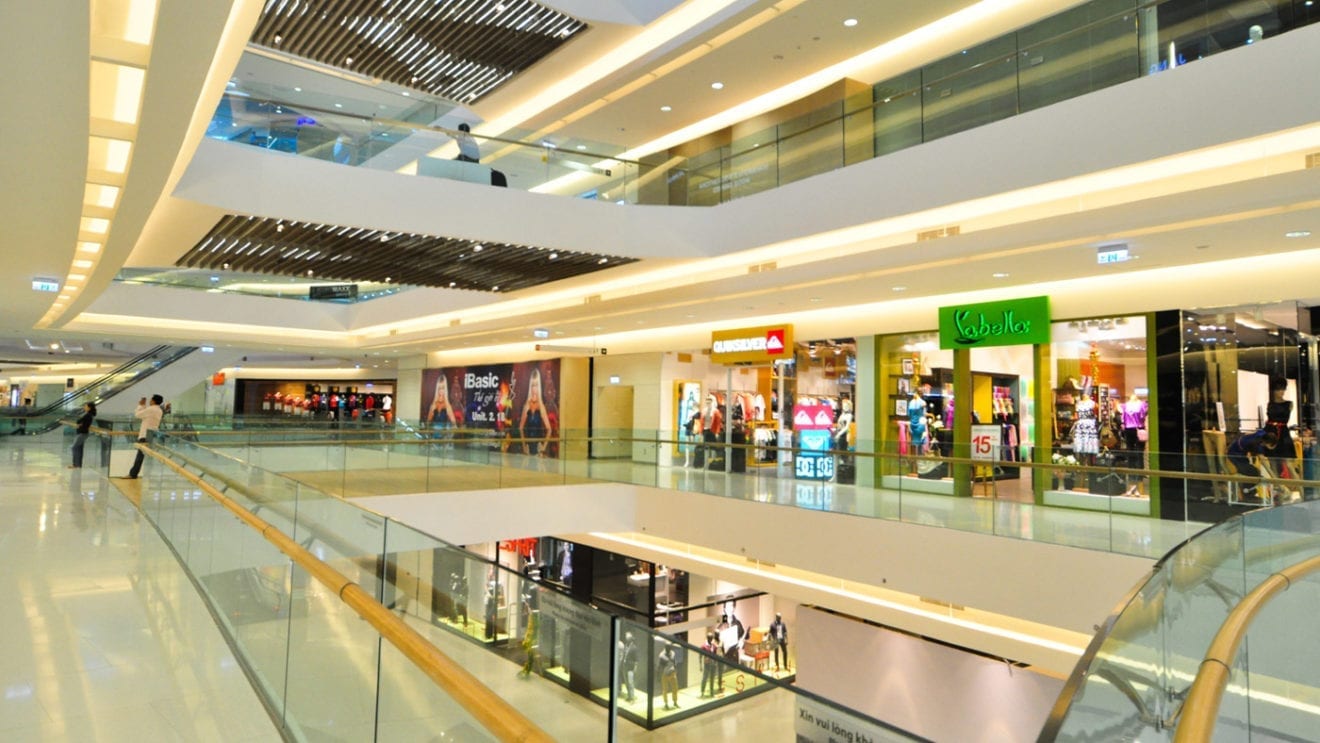
    With more than 1.1 million sqm of retail space, it looks like the Saigon retail market is oversupplied. The closing of Parkson Paragon in the city’s District 7  last month only amplified such concerns.

    But Cushman & Wakefield Vietnam GM Alex Crane begs to differ. He says demand is there if the retail formats are built to meet the market.

    He believes with the population of 10 million, the city is far from overloaded with retailers. The main problem lies in the wrong location or design – and incorrect retail segments.

    “I think the real test will show in the opening of shopping malls in the city center. Let’s just wait,” Crane said.

    The malls he may well be referring to are the upmarket Japanese department store Takashimaya-anchored Saigon Center 2 under completion now in District 1 and The One opposite Ben Thanh market when will be connected to the underground rail network currently at easing stage prior to construction.

    When these malls are operating, it will be easier to evaluate the real positioning of the retailers and the real demand of the market, says Crane, who is optimistic that it is not about the balance of population and retail space, but the practical demand.

    To Sigrid Zialcita, MD of Research Department, the key for shopping malls is to have suitable retailers (for market demand) and logical space designs – as well as market-savvy managers.

    “Joining WTO and TPP is turning Vietnam into a rising star in the retail market,” added Zialcita.

    HCMC’s demand for F&B, household supplies and fast moving consumer goods remains high based on the young population. But retailers entering the market need to conduct careful research to ensure their positioning strategies meet the market.

    While the retail market requires constant change and adjustment to customer demands, globally there is a continuing trend towards ‘one stop shopping’. Vietnamese are increasingly looking to go to places where they can eat, entertain and shop in a modern, air conditioned mall.

    According to data from AT Kearney, Vietnam has been one of the top 30 rising retail markets for foreign investors since 2008. Retail and consumer merchandising revenue has increased considerably between 2011 and 2015.