Author: Mei Ling Tan

  • Adidas Group India plans shopping app

    Adidas Group India plans shopping app

    Sportshoe brand Adidas Group India is planning to launch a shopping app by December, primarily to drive customer engagement through content and loyalty programs, as well as boost online sales.

    It is a significant move as it indicates increasing fragmentation in online fashion shopping, as most brands do not have independent shopping apps, reports Live Mint.

    With its app, Adidas is aiming to strengthen its online presence as brands and offline retailers adopt omnichannel strategies to offer customers access to products across physical stores via their mobile phones and websites.

    “Our engagement with consumers does not end in incremental sales,” says Adidas Group India’s senior eCommerce director Abhishek Lal. “Shopping is just a small fraction. We are planning an app and rewards program to increase engagement with the brand.”

    Separate apps will be rolled out for Adidas and its subsidiary Reebok India.

    Adidas is currently available on online stores such as Amazon India, Flipkart and Myntra, and online channels contribute 10 to 15 per cent of the company’s overall sales, says Lal.

    Other brands are already building online stores to reduce their dependence on the likes of Amazon India and Myntra. Leading the way is Madura Garments with two online stores, Abof and Trendin. Its brands include Allen Solly, Louis Philippe and Peter England.

    By launching an app, Adidas is also trying to tap into social commerce by offering content and creating communities of fashion followers.

    “Social commerce is complementary to pure play eCommerce, and also the way forward for us,” says Lal. “There is no history of a single-brand app yet, so it is hard to assess what the outcome will be.”

    Adidas has also expanded its omnichannel presence since its launch early last year. Adidas plans to bring about 400 stores under the omni-channel loop by December. Those already involved in the strategy have had their revenue grow about 3 to 5 per cent.

    “There has been some impact on revenue because of omni-channel,” says Lal. “A lot of sales were lost because sizes were not available in stores. There was also a lot of cross-selling. We have a brand called Neo which is available only online, so a lot of people walked into the stores and bought Neo on the tab. That is an upsell opportunity.”


  • Xiaomi continues quest for quality

    Xiaomi continues quest for quality

    Smartphone giant Xiaomi continues to distance itself from the lower end of the market, as Chinese buyers shift their attention mainly to device upgrades.

    Xiaomi international VP Hugo Barra says the company continues to direct its efforts at becoming a premium brand, reports the South China Morning Post.

    “Our customers are demanding premium products from us, so we are delivering higher quality with more premium components.”

    Research company IDC has forecast just 2 per cent growth this year for smartphone sales as more users chose to upgrade their handsets.

    Meanwhile, Xiaomi may expand its Mi Home experience centre across Hong Kong. Opened a year ago so customers can try out different products, it has been a successful retail experiment, says Barra.

    “Part of the strategy here is to think about how we can reinvent the retail experience to make it much more experience-focused … which helps the online business as well.”

    Xiaomi has just launched its latest 6.44in. Mi Max phablet and the Mi Air Purifier 2. The phablet, which will cost from HK$1799 (US$230), is considered one of the largest smartphones on the market.

    IDC estimates 20 per cent of smartphone sales last year were phablets, and by 2020 they are expected to account for 32 per cent of the market.

  • Valentino Omotesando flagship opens

    Valentino Omotesando flagship opens

    Valentino Omotesando, the Italian fashion label’s first flagship store for Japan, has opened in Tokyo.

    Valentino Omotesando flagship 2

    It covers 467 sqm on two floors at the Omotesando Hills Mall in Aoyama, and its interior design follows the new codes formulated by the brand´s creative directors, David Architects of London, and Maria Grazia Chiuri and Pierrepaolo Piccioli.

    Valentino Omotesando flagship 3

    Marble columns connect the two levels, while the facade has a sculptured terrazzo facade of pillars and glass walls.

    Valentino Omotesando flagship 7

    Valentino Omotesando flagship 4

    A feature of the opening is a special window installation featuring photos and videos by artist Mariporu, including personal material and introducing his Maripol, Little Red Riding Hood.

    Valentino Omotesando flagship 8

    Valentino Omotesando flagship 5

    Valentino Omotesando flagship 6

    Proceeds from the sales of a limited-edition canvas tote bag decorated with studs, priced at 15,000 yen (US$148), will be donated by Maison Valentino to help the victims of Kumamoto earthquake, three months ago.

  • New Ippin mall offers Japanese goods

    New Ippin mall offers Japanese goods

    An eCommerce company that sells printer inks and sanitary napkins, C-Connect, has launched Ippin, an online shopping mall that specialises in direct sales and distribution from Japan to other countries.

    Ippin not only sells products made in Japan, but also “Produced by Japan” and “Popular in Japan” items. Customers can buy directly from 18 regions and countries, though the initial target is mainly China and Southeast Asian countries.

    Categories include food, fashion, cosmetics, children’s and baby items, and electric appliances.
    Independent websites are provided for each country, such as China, Singapore and Malaysia, with recommended item rankings and payment methods (16 currencies) to suit the market, such as credit cards, Alipay and Paypal.

    Users can choose from three languages (English, Chinese and Japanese) with more to be introduced.

    C-Connect was founded in 2009.

  • Self-driving bus unveiled in Tokyo

    Self-driving bus unveiled in Tokyo

    Japanese technology firm DeNA Co. showcased its first self-driving bus in Tokyo on Thursday, unveiling a vehicle that runs on electricity and can carry 12 passengers.

    The EZ10 Robot Shuttle, developed in conjunction with French company Easy Mile, will first be used at a shopping facility in Japan’s Chiba prefecture next month and has a maximum speed of 40 kilometres per hour (25 miles per hour).

    Last month bus company PostBus unveiled a self-driving electric shuttle in the Swiss city of Sion. Automated driving technology is currently in the spotlight with the U.S. National Highway Traffic Safety Administration investigating a May 7 fatality of a Tesla Model S driver using autopilot technology.

    “We take safety very seriously,” Hiroshi Nakajima, general manager of DeNA’s automotive business, told a news conference. “Because we worry that there may be a serious accident, we take double or triple safety checks and begin from there.”

  • Toyota plans to cut 800 jobs in Thailand

    Toyota plans to cut 800 jobs in Thailand

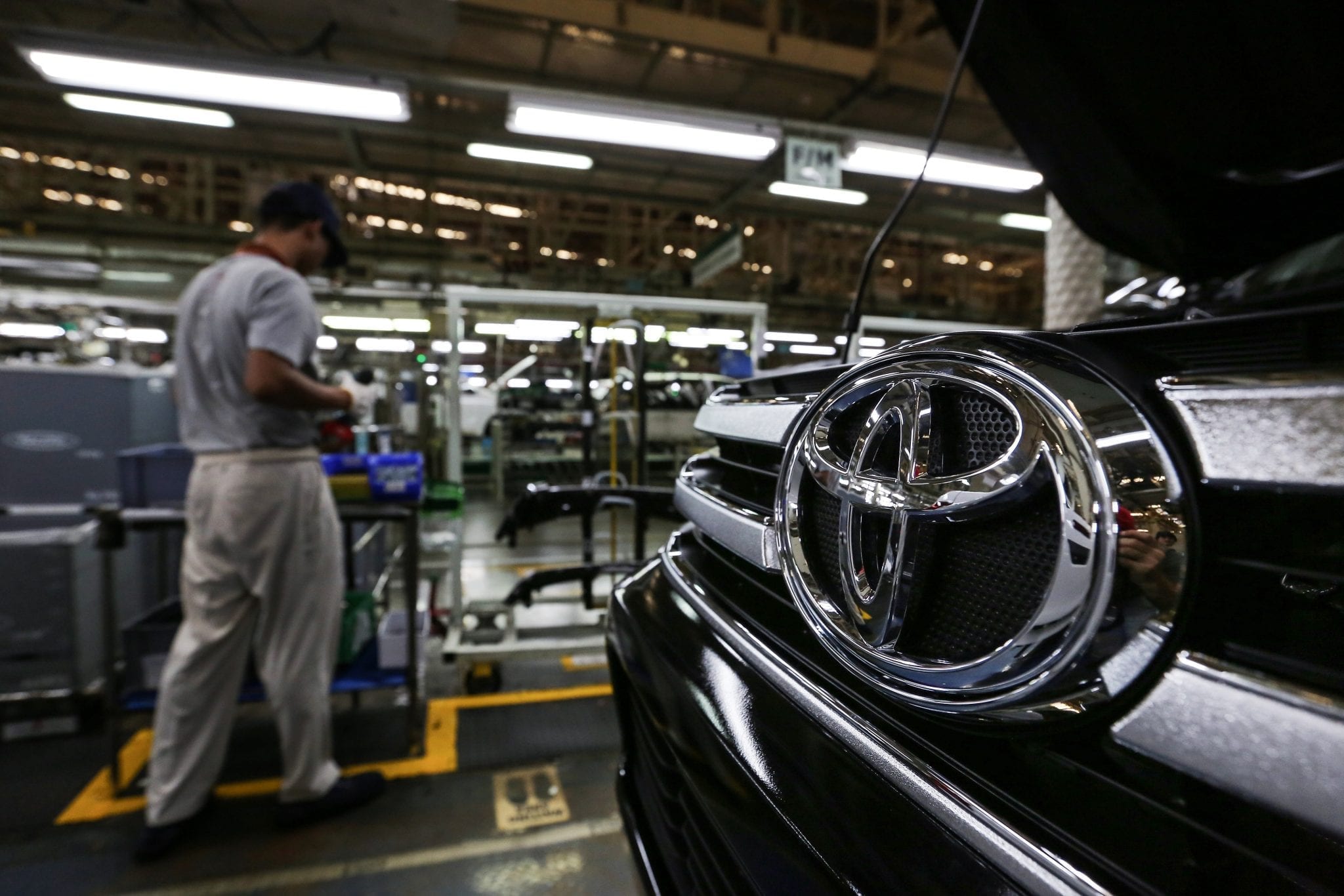
    Toyota Motor Corp’s Thai unit has launched a voluntary redundancy program aimed at cutting around 800 subcontractors in Thailand due to economic problems in the southeast Asian country and abroad.

    Thailand’s economic slowdown, along with uncertainty over the global economy, have affected both the domestic automotive industry and exports since the beginning of the year, it said in a statement.

    That has caused a reduction in production volume, overtime hours and monthly income offered to employees, it said.

    The company has offered the redundancy package to around 800 subcontractors but more workers have applied for the scheme, Phuphal Samata, the president of Toyota Thailand Worker’s Union, told Reuters.

    “There isn’t overtime payment anymore, so many subcontractors may want to find other work and take this compensation package,” he said.

    Toyota commands about a third of the local auto market and has 18,000 workers in Thailand, 40 percent of whom are subcontractors, he said.

    Thailand is a regional production and export hub for the world’s top carmakers. The sector accounts for around 10 percent of the country’s gross domestic product.

    Domestic auto sales have declined almost every month on a yearly basis since May 2013 following the ending of a government car subsidy scheme in 2012.

    In January, Toyota forecast Thailand’s total domestic car sales would fall 10 percent in 2016 from a year ago to 720,000 units. It sees its own annual auto sales falling 9.8 percent from last year.

    Job cuts at Toyota are unlikely to spread to other automakers as the firm has hired many workers since the car subsidy scheme, said Surapong Paisitpattanapong, spokesman for the Federation of Thai Industries’ Auto Industry.

    “I don’t think others will immediately follow suit because May’s auto production, exports and domestic auto sales are growing. There’s still hope,” he said.

  • BMW to develop driverless car technology with Intel, Mobileye

    BMW to develop driverless car technology with Intel, Mobileye

    BMW is teaming up with Intel and Mobileye to develop new technology for the auto industry that could put self-driving cars on the road by around 2021.

    The alliance highlights a shift in the dynamics of research and development in the car industry, which until recently saw automakers largely dictating terms for suppliers to manufacture their proprietary technologies at specified volumes and prices.

    Now carmakers are increasingly striking up partnerships with technology firms using open technology standards, seeking to harness their expertise in areas including machine learning and mapping as they race against Silicon Valley companies such as Google, Tesla and Apple to develop driverless vehicles.

    “Highly autonomous cars and everything they connect to will require powerful and reliable electronic brains to make them smart enough to navigate traffic and avoid accidents,” Intel Chief Executive Brian Krzanich said on Friday at a joint news conference announcing the alliance.

    The three companies said their new platform would be made available to multiple carmakers and they expected vehicles with highly and fully-automated driving would be brought into mass production by 2021. It is too early to say which other carmakers would join the alliance, BMW Chief Executive Harald Krueger said at a news conference on the outskirts of Munich on Friday.

    Sophisticated cruise control systems already enable “hands off” driving as cameras and computers allow cars to automatically brake, steer and accelerate in traffic at low speeds. But drivers are required to stay in control.

    Now BMW, Intel and Mobileye will develop cars with even higher levels of automation described as “eyes off,” “mind off,” and “driver off”. This requires much more computing power and software know-how, forcing traditional carmakers to collaborate more closely with technology specialists.

    Both industries see huge revenue opportunities in the market for autonomous vehicles, although it is unclear how many drivers will be prepared to relinquish control and how quickly laws will be put in place to allow fully autonomous vehicles on the roads.

    But creating common technology standards would help all manufacturers update their vehicles faster, Intel Chief Executive Brian Krzanich said. “That will be critical for advancing the safety aspects of this.”

    A common approach to standards will also make it easier for regulators to understand and approve the roadworthiness of a vehicle while still leaving enough scope for individual car manufacturers to customize their cars, Mobileye Chairman Amnon Shashua said.

    Beyond technological hurdles there are legal questions over who is responsible when a crash occurs. On Thursday, the driver of a Tesla Model S car, operating in Autopilot mode, was killed in a collision with a truck in the United States, prompting an investigation by federal highway safety regulators.

    When asked about the crash, BMW CEO Harald Krueger said: “The accident is very sad …. We believe today the technologies are not ready for series production,” he added, explaining the alliance had not forecast that until 2021.

    “For the BMW group, safety comes first,” he said.

    As part of the new alliance, Intel, the world’s largest computer chip maker which has been looking to expand into the automotive electronics market, will supply the microprocessors – or central processing units – to control an array of sensors.

    Auto camera and software maker Mobileye will supply its Road Experience Management (REM) technology and make its latest EyeQ5 chip available to be deployed on Intel computing platforms.

    The three companies said they would demonstrate their technology in a prototype in the near future.

  • Red Bull apologises to Indonesia over offensive ad

    Red Bull apologises to Indonesia over offensive ad

    Red Bull has publicly apologised for shooting a commercial in which an athlete performed acrobatic stunts across one of Indonesia’s ancient holy temples, an official said Thursday.

    Red Bull has issued an apology in Indonesia’s national newspapers admitting it shot an advert at the 9th-century Borobudur temple “without permission from the appropriate authorities”

    The energy drink manufacturer issued an apology in national newspapers admitting it shot the video at the 9th-century Borobudur temple “without permission from the appropriate authorities”.

    The video — in which a famous “free running” athlete is shown jumping between the temple’s stone stupas — triggered outrage in Indonesia, where Borobudur is a revered Buddhist site and national icon.

    In one scene, the athlete is seen walking past a sign clearly stating “No Climbing” in both English and Indonesian before performing acrobatics throughout the UNESCO-listed heritage site.

    The video was shot secretly despite the crew having been issued a warning by temple guards, Borobudur Conservation Agency head Marsis Sutopo told AFP.

    “They must have shot again while our guards were not looking,” he said.

    The video, uploaded online on March 18, sparked outrage within Indonesia and prompted the government to threaten a legal suit against Red Bull.

    Authorities later issued a warning to the drink company after determining no physical damage had been incurred.

    Red Bull met with government officials in early June and agreed to place formal apologies in national newspapers.

    “We want to set an example because we painstakingly try to conserve this historical site,” education ministry official Hilmar Farid told AFP.

    “It was obvious as there was a “No Climbing” sign there too.”

    Red Bull have also been asked to shoot a new video explaining the importance of protecting holy sites, Farid added.

  • Starbucks barista from Indonesia Ryan Wibawa competes in the World Brewers Cup finals

    Starbucks barista from Indonesia Ryan Wibawa competes in the World Brewers Cup finals

    “It was like a dream come true,” said Wibawa, a Starbucks barista from Indonesia.  I felt very humbled and honored to represent my country in an international competition. The experience was the best teacher.”

    Wibawa was matched against 36 competitors from all over the world at the championships, which took place from June 23-25 in Dublin, Ireland. As part of the competition, he crafted three coffee beverages that were judged on aroma, flavor, taste, acidity, body and balance. Wibawa also had to impress the judges with his customer service skills.

    “The competition was hard, but it was a great challenge for me,” he said. “No words can describe the feeling,” he said. “From every competition I gain something, new knowledge, new friends and new skills.”

    Although a competitor from Japan took first place, Wibawa is proud to have ranked among the top 25.

    Wibawa was first exposed to coffee when he joined Starbucks two years ago. He learned quickly and developed an enthusiasm for all things coffee, which led to being selected as his district’s coffee master in 2014. A year later, he won Starbucks Indonesia’s Barista Championships and ranked number one in the Indonesian Brewers Cup Championship. In February 2016, he placed in the top three at the China and Asia Pacific (CAP) region’s Starbucks Barista Championships. His vast experience paved the way for competing in Dublin.

    “Participating in a world competition definitely had a different feeling,” said Wibawa. “The competitors from all around the world had excellent coffee skills. It was a tough competition and a great learning experience.”

    When Wibawa is not competing, he works at Indonesia’s first Starbucks Reserve store in Jakarta, where he delights customers with his coffee craft. He also shares his expertise by training other Starbucks partners at Indonesia’s third Starbucks Reserve location in Bandung.

    “I am very lucky and grateful to have a very supportive family, friends and all Starbucks partners,” he said. “They gave me the strength to compete in the World Brewers Cup competition.”

  • New Tax Tariff for Online Retailers in Indonesia ?

    New Tax Tariff for Online Retailers in Indonesia ?

    The new regulation implies that those individuals and companies that generate revenue and profit through online retailing (including sales through Facebook or Instagram pages) are required to report their income and fulfill their tax obligations.

    In general, a corporate income tax rate of 25 percent applies in Indonesia. Small and medium-enterprises with an annual turnover below IDR 50 billion (approx. USD $3.8 million) obtain a 50 percent tax discount (imposed proportionally on taxable income of the part of gross turnover up to IDR 4.8 billion). In 2013, Indonesia’s Finance Ministry issued a regulation that set a one percent income tax tariff on individual and institutional taxpayers with an annual gross turnover below IDR 4.8 billion (approx. USD $363,636).

    However, the main problem for Indonesian authorities is that it faces difficulties to monitor transactions of the nation’s small and medium-sized businesses. Most of these businesses do not have legal entities or taxpayer identification numbers (NPWP).

    Meanwhile, the idEA estimates that Indonesia’s e-commerce retailers see an increase of at least 30 percent (y/y) in income during the Idul Fitri holiday (4 – 8 July 2016) as it detected a shift in consumer behavior. According to the idEA an increasing amount of Indonesian consumers prefer to shop online rather than visit offline stores.

  • Capital Financial Indonesia Eyes Rp 715b From July IPO

    Capital Financial Indonesia Eyes Rp 715b From July IPO

    Sinarmas Sekuritas was appointed as the lead underwriter of the company’s share sale, with assistance from Jasa Utama Capital, Yulie Sekurindo, Phillip Securities Indonesia, Panin Sekuritas, Valbury Asia Securities and Erdikha Elit Sekuritas.

    Kirana Cemerlang Abadi currently owns 99.9 percent of the company’s shares. If the IPO plan goes smoothly, Kirana’s holding will be diluted to 52.38 percent.

  • Ngurah Rai Airport offers additional flights for Lebaran holidaymakers

    Ngurah Rai Airport offers additional flights for Lebaran holidaymakers

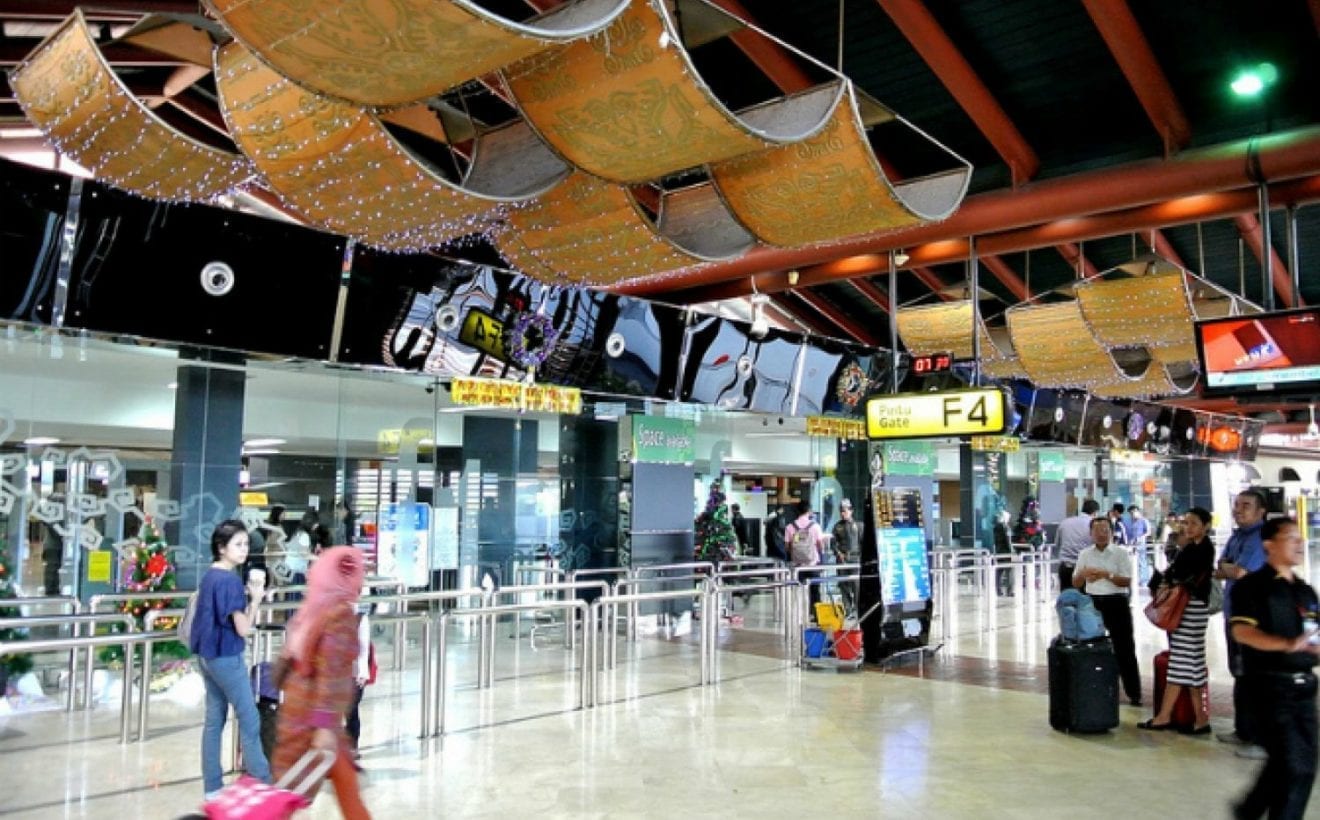
    Some airline companies at the Ngurah Rai International Airport in Bali have started offering additional flights to handle the influx of passengers during the post-fasting Lebaran holidays.

    PT Angkasa Pura-I General Manager Trikora Harjo explained here on Tuesday that the additional flights were provided for international arrivals and departures.

    Harjo revealed that a total of 419 passengers had used additional flights for international arrivals and departures on Tuesday.

    Similar to the long Lebarang holidays in previous years, the flow of passengers at the Ngurah Rai Airport is different compared to that in other regions of Indonesia.

    The Ngurah Rai Airport is always dominated by an influx of both local and foreign tourists keen on spending the long holidays of Lebaran.

    Harjo stated that the number of departures last year had reached 119,937, while this year, it was forecast to reach 151,548.

    Referring to the growth in the percentage of domestic passengers, Harjo has estimated that the flow of departing passengers will peak during the period between six and five days before Eid.

    On June 30, six days before Eid, the number of domestic passengers departing from the Ngurah Rai Airport had reached 15,026 aboard 112 aircraft. This figure indicated a 128 percent increase compared to the previous year.

    As of July 1, five days prior to Eid, the number of domestic passengers departing from Bali was recorded at 15,771, a 105 percent rise from the year before.

    The increase in the percentage of domestic passengers was anticipated as the last working day for both public and private institutions fell on Friday, July 1.

    In this way, the travelers opted to return to their hometowns on the same day as they would get to spend more time there.

    The Ngurah Rai International Airport served 226 additional flights, proposed by seven airlines for both domestic and international routes.

  • Average internet speeds grow 12% during Q1

    Average internet speeds grow 12% during Q1

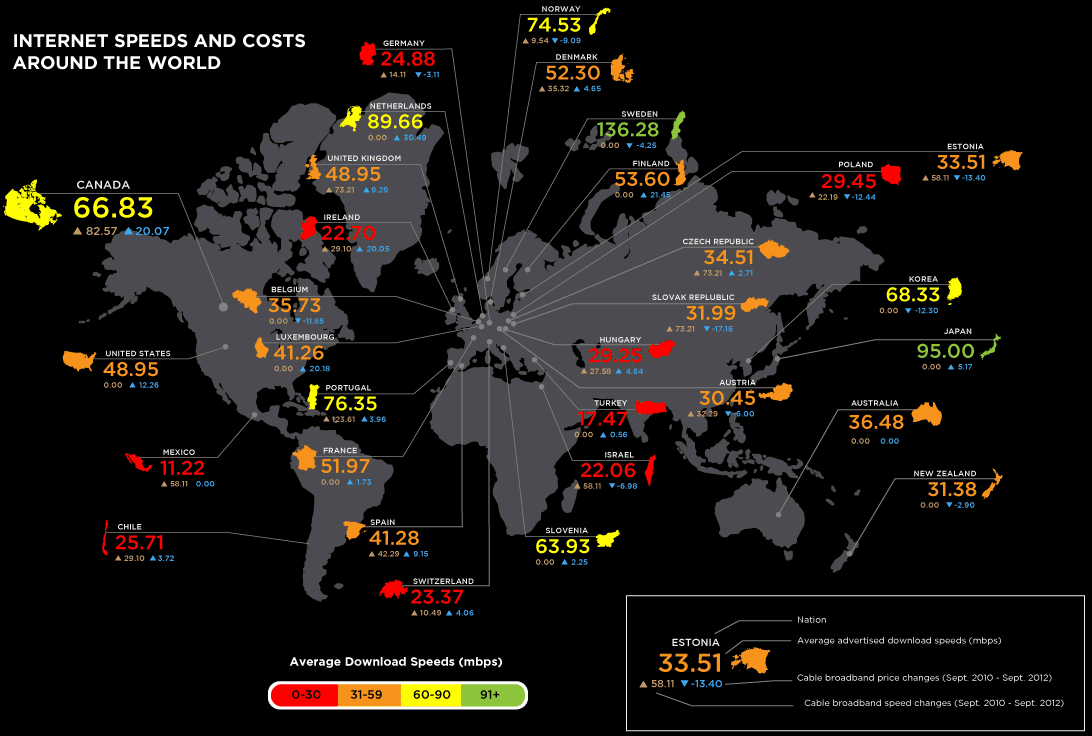
    Global average internet connection speeds grew 12% sequentially during the first quarter to 6.3Mbps, according to Akamai’s latest State of the Internet report.

    The report aslso shows that the global average peak connection speed increased 6.8% to 34.7 Mbps over the same period.

    Global broadband adoption of 10Mbps, 15Mbps, and 25Mbps connections also grew significantly during the quarter, posting year-over-year gains of 10%, 14%, and 19% at each threshold, respectively.

    Meanwhile, average mobile connection speeds ranged from a high of 27.9Mbps in the United Kingdom to a low of 2.2Mbps in Algeria during the period, while average peak mobile connection speeds ranged from 171.6Mbps in Germany to 11.7Mbps in Ghana.

    “What this means,” said Rob Morton, Director of Public Relations, Akamai Technologies, in a video message, “is that more people around the world can take advantage of video streaming with higher bit rates, resulting in a better quality viewing experience.”

    David Belson, editor of the State of the Internet Report, said the expectation is that this summer’s biggest sporting events will be watched by more online viewers than ever.

    “Global connection speeds have more than doubled since the summer of 2012, which can help support higher quality video streaming for bigger audiences across even more connected devices and platforms,” he affirmed.

    The report noted that at the country level, South Korea continued to have the highest average connection speed in the world at 29.0Mbps, an 8.6% gain over the fourth quarter of 2015, while Singapore maintained its position as the country with the highest average peak connection speed at 146.9Mbps, an 8.3% quarterly increase.

    It said South Korea also led the world across the 10Mbps, 15Mbps, and 25Mbps broadband tiers once again, with adoption rates of 84%, 69%, and 42% respectively, after seeing robust quarterly gains across all three metrics.

  • Globe defends need for 700-MHz to ISOC

    Globe defends need for 700-MHz to ISOC

    Globe Telecom has challenged the Internet Society-Philippines Chapter (ISOC) move to oppose Globe and PLDT’s proposed joint acquisition of San Miguel Corporation’s telecoms assets, including its 700-MHz spectrum holdings.

    ISOC recently wrote to the Philippine Competition Commission opposing the planned acquisition on grounds including the argument that there is nothing special about the 700-MHz band in particular.

    Globe chief technology and information officer Gil B. Genio has written his own letter to the society to clarify what the company called “erroneous facts” presented in the society’s objections.

    He said the 700-MHz band would allow the operator to expand its LTE footprint to areas that were previously unserved even by 3G.

    “The 700-MHz provides an additional capacity layer over existing 3G and LTE capacity layers using frequencies on the 1800-MHz, 2100-MHz band and the 2500-MHz bands. As a result of this layer, customers at the cell edge coverage of the high frequency capacity layers are served by the 700 MHz providing better experience to these customers,” he said.

    “As an off-shoot of these, the 3G and 4G layers using high frequency band are offloaded, providing additional capacity for better mobile data experience of our customers. Aside from its ability to carry information, the use of the 700-MHz band provides better coverage versus higher frequency bands (such as 2300 or 2600), and therefore mobile service providers can support more high speed users using the same tower or cell site footprint that currently exists today.”

    In response to ISOC’s argument that it is possible to deliver strong wireline connectivity without specturm assets, Genio said Globe has been seeking to aggressively roll out fiber in key cities.

    But he added that these efforts have been hampered by bureaucratic red tape as well as the challenges of providing effective backhaul to an archipelagic country.

    “We want to underscore the fact there has been a history of underinvestment in fixed broadband infrastructure in this country, which is why we are on catch up mode to lay down as much fiber optic cables in our primary cities and key development areas as we can,” he said.

    “Our situation in the Philippines is different compared to others as our primary means of broadband access remains wireless (mobile) broadband for now. In using wireless technology, it is more pervasive, however over the long term, it will have difficulty in matching the throughput rates or speed of fixed broadband network. Hence our desire to build more infrastructure as fast as we can.”

  • Alibaba launches internet-enabled smart car

    Alibaba launches internet-enabled smart car

    Alibaba Group has announced the launch of OS’Car, the first mass-produced internet car powered by the company’s YunOS smart car operating system.

    The company has developed OS’Car RX5 in collaboration with SAIC Motor Corp. The new car will be supported by a cloud-based platform that enables data streaming, modeling and reporting to augment the driving experience.

    YunOS provides drivers will features such as an intelligent map with accurate location tracking without Wi-Fi or GPS, as well as integrated screens including an intelligent rear-view mirror for safer driving.

    The vehicle supports voice commands – in fact audio is the primary mode for controlling the system. It can automatically recognize the driver through connected smartphones or smart watches and provide personalized services such as greetings or preferred music.

    “What we are creating is not ‘internet in the car’, but a ‘car on the internet’. This is a significant milestone in the automobile industry. Smart operating systems become the second engine of cars, while data is the new fuel,” Alibaba Group chairman Dr Wang Jian said.

    “Going forward, cars will become an important platform for internet services and smart hardware innovation. We will be embracing a world where everything is closely connected.”

    YunOS has been designed as an open platform to support third party hardware and services.