Author: Mei Ling Tan

  • 2016 Porsche Macan retail prices confirmed, from RM415,000

    2016 Porsche Macan retail prices confirmed, from RM415,000

    Sime Darby Auto Performance (SDAP), authorised importer of Porsche vehicles in Malaysia, has finally confirmed prices for the entry-level Porsche Macan. Starting at RM415,000, the confirmed base prices are some RM20,000 lower than was previously indicated during the launch, at RM435,000.

    The updated Macan features minor styling enhancements, added standard infotainment equipment such as the Porsche Communication Management system (PCM) and a power hike of some 15bhp, now totalling 252bhp between 5,000rpm and 6800rpm, while a 20Nm increment of torque now totals 370Nm, enjoyed between 1,600rpm to 4,500rpm.

    The optional list of equipment is exhaustive, as with any Porsche – including Porsche Dynamic Light System Plus (PDLS Plus) which continuously adjusts the headlight level and the Sport Chrono Package which cuts down 0.2 seconds on the 0-100km/h sprint to just 6.5 seconds.


  • New Fashion Gallery set to open in Changi T2

    New Fashion Gallery set to open in Changi T2

    Lagardère Travel Retail Asia Pacific COO Emmanuel de Place has confirmed that the travel retailer is to introduce ‘an exciting new version’ of its successful Fashion Gallery retail concept in Singapore Changi Airport Terminal 2 this month, as it also eyes the upcoming MTR duty free contract in Hong Kong.

    He says the Changi Airport Fashion Gallery initiative – still to be unveiled – is just one of many ongoing retail developments across several Asia locations this year, as LTR continues to update its growing fashion offer in the region, alongside its duty free, travel essentials and foodservice businesses.

    In an interview, Emmanuel de Place said he is convinced that Asia will continue to progress over the next five years: “The market will definitely continue to grow thanks to the passenger growth and all of these emerging countries in Asia gaining maturity and building more and more passengers,” he said.

    “So we definitely want to take a share of that at Lagardère Travel Retail, as we have over the past few years.”

    GROWTH POTENTIAL IS THERE

    Whether Asia will grow in proportion with the rest of the company’s business remains to be seen, but de Place certainly believes it is possible: “It may well, because certainly Asian countries are growing faster than any other region and especially when we look at China.

    “The potential of travel retail growth there is definitely enormous, even though there have been some questions in the last few years about that high-end luxury segment of this travel retail market.

    “But we still believe there will be some growth and definitely with our development plans across the three business lines as you know, with duty free and luxury at one end and travel essentials and foodservice.”

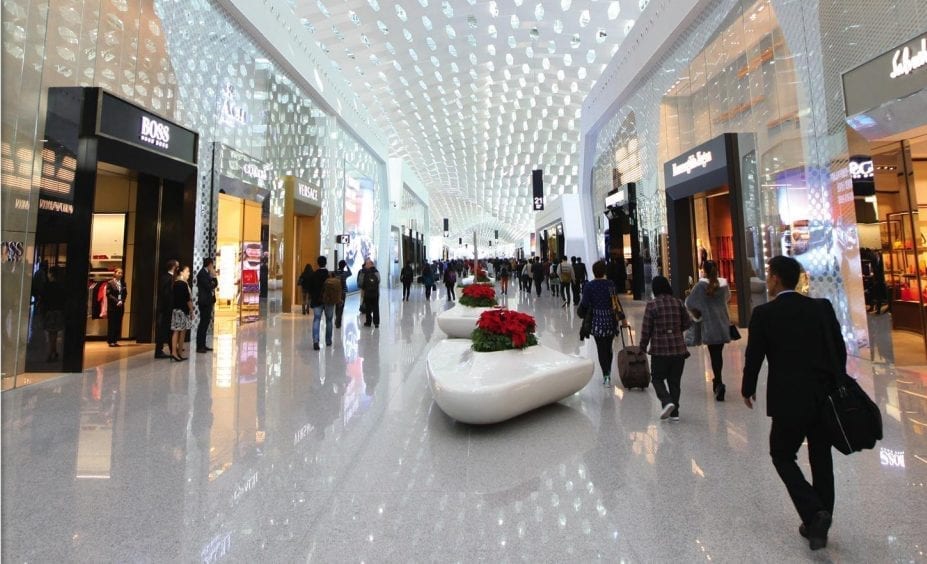
    web Lagardère Travel Retail's fashion stores at Shenzhen Bao'an International Airport.

    Lagardère Travel Retail’s fashion stores at Shenzhen Bao’an International Airport in China.

    MTR IS ALSO OF INTEREST

    Meanwhile, turning to Hong Kong, de Place also confirmed that LTR remains very interested in the Mass Transit Railway (MTR) Express train concession at the West Kowloon Terminus, which will ultimately connect Hong Kong with the Mainland when it is finally completed.

    He said: “When we look at the big project at the station that they are bidding in Hong Kong then definitely that would be a very nice combination of foodservice, gifts, souvenirs and a lot of specialty shops and a duty free offer. So definitely we believe that we can propose something interesting.”

    A comprehensive interview with Emmanuel de Place appears in the July print edition of The Travel Retail Business, where he talks in depth about the company’s duty free and travel retail business across the Asia Pacific region.

  • Popularity of Korean Jewelry Soars

    Popularity of Korean Jewelry Soars

    K-pop, K-drama, K-beauty, K-fashion…the list goes on. But the latest K-trend that is showing significant growth is ‘K-jewelry’. 

    According to Lotte Duty Free on July 3, Q2 sales of domestic jewelry brands at its duty free stores across Korea increased by 80 percent compared to Q2 2015. It’s a noticeable increase considering total sales grew by 30 percent. 

    The number of domestic jewelry brands at Lotte Duty Free also increased from 20 in the second half of 2015 to 30 this year. 

    “(Jewelry brands’) sales alone are smaller than cosmetics or general merchandise, but their growth rate is what’s noticeable,” said a Lotte Duty Free official. “We believe several factors influenced the growth, such as the increased demand for Korean products following the popularity of K-beauty (cosmetics) products, a rising number of tourists in Korea, and the on-going hype of Hallyu (the Korean wave).” 

    Korean brands of premium and bridge (medium-priced) jewelry products are aggressively targeting consumers on foreign soil such as China, Hong Kong, and Japan. 

    J.Estina is one of the pioneers of the K-jewelry fever, which begin to pick up widespread public interest in the late 2000s when former figure skater star Kim Yuna wore the company’s crown-shaped earrings.

    J.Estina is one of the pioneers of the K-jewelry fever, which begin to pick up widespread public interest in the late 2000s when former figure skater star Kim Yuna wore the company’s crown-shaped earrings. (image: J. Estina)

    More recently however, its products gathered huge interest from Chinese consumers when actress Song Hye-kyo appeared in the 2016 TV series Descendants of the Sun wearing a J. Estina necklace, earrings, and bag. The brand currently operates in some 20 duty free shops in and out of Korea, and it plans to launch five more before the end of the year. 

    A French jewelry brand owned by Sejung Group, Didier Dubot, is also focusing on targeting Chinese consumers. 

    The brand was first made popular through a K-drama, My Love from the Star (2013 – 2014), when  female protagonist Jun Ji-hyun appeared wearing Didier Dubot accessories. Launched in 2013, the brand garnered widespread consumer interest in Korea with unique-style jewelry such as ‘layered-rings’ and mix-match earrings. 

    Didier Dubot currently operates Hong Kong boutiques at Harvey Nichols, a high-end department store, and Hysan Place, a shopping mall. Proving the brand’s high demand in the region, its Hysan Place branch generated 150 million won in revenue in the first month after its opening in 2015. The company also recently recruited Julia Roitfeld as its art director with high hopes. Roitfeld is the daughter of Carine Roitfeld, who served as a former editor-in-chief of Vogue Paris from 2001 to 2011. 

    “Our brand is popular among the younger fashion-friendly generation in their 20s and 30s in the China,” said a Didier Dubot official. “We plan to expand our business to mainland China and Taiwan, and we expect good results.”

    “Reasonable pricing, product designs that reflect the latest fashion trends, and marketing strategies using famous Korean celebrities are all helping these brands to prosper in overseas markets,” said a Korean retail industry watcher.


  • Lenovo announces ambitious telecoms push

    Lenovo announces ambitious telecoms push

    Lenovo has launched an ambitious plan to develop integrated solutions for the telecommunications industry that provide the backbone for rich mobile content, 5G networks and IoT workloads.

    The company aims to help operators build out next-generation data centers using open source technologies to address the growing demand for agile, cost-effective and flexible architectures.

    As part of this initiative, announced at the Red Hat Summit, the company unveiled plans for Open Platform@Lenovo (OP@L), which will be powered by Red Hat’s software stack for network function virtualization (NFV) and run on hardened, OCP-compliant infrastructure.

    Leveraging OP@L, Lenovo plans to advance open NFV architectures that can be customized and are highly secure to address the demanding needs of service providers.

    To advance its plans for the telecommunications industry, Lenovo is joining the Open Platform for NFV (OPNFV) project as a Platinum member. OPNFV is a carrier-grade, integrated Open Source platform that is spawning advanced solutions and services using NFV. As a Platinum member, Lenovo will hold seats on the project’s Board and Technical Steering Committee.

    Lenovo’s offerings leverage Red Hat, Linux, OpenStack and OPNFV technologies, among others. The company already is a member of Open Compute Platform (OCP), and its work within OPNFV will build upon this foundation.

    As part of its efforts, Lenovo also plans to work with Red Hat to develop a certified solution stack based on Red Hat’s NFV Platform, built on Red Hat OpenStack Platform.

    The integration of Red Hat NFV platform with Lenovo’s OP@L is the latest development in an expanding strategic collaboration between the companies, which was announced late last year.

    The two companies are collaborating to develop and deliver open and flexible solutions for service provider clients, as well as those in other industries. Lenovo already offers Red Hat Enterprise Linux, Red Hat Enterprise Virtualization and CloudForms software within its portfolio.

  • Hong Kong travelers remain glued to their smartphones

    Hong Kong travelers remain glued to their smartphones

    An overwhelming 95% of Hong Kong travelers use social media during their trip, with many spending hours per day glued to their devices, a survey from Hotels.com indicates.

    The survey suggests that while on vacation Hong Kong smartphone owners are likely to spend 59% more time on their devices than on a sunbed.

    More than one in ten (11%) even spend more than five hours a day with their smartphones in their hands.

    Social media tops the list of app categories used by traveling, followed by mapping, travel, public transport and messaging.

    Around 42% of Hong Kong respondents to the survey admit to uploading photos over social media just to make friends jealous.

    Another motivation for the heavy social media use involves a fear of missing out, with nearly half (46%) saying they comment on friends’ posts just so they don’t miss out on anything while they are away.

    Desire to stay connected also informs travelers’ choice of accommodation, with 40% of respondents indicating they will only select a hotel if it offers free Wi-Fi.

    “Our study shows that some travellers, especially millennials, spend more time looking at their screens than enjoying the sun or the sights,” Hotels.com regional MD for greater China, emerging SEA and India commented.

    “However, most Hong Kong travellers are actually using their device to search for local sights or attractions, food only comes second and information on public transit is third.

  • Hong Kong’s choice between mainland and despair

    Hong Kong’s choice between mainland and despair

    Hong Kong faces great economic uncertainty and unprecedented market volatility, and given the Brexit chills, analysts expect a contraction. In fact, John Tsang Chun-wah, the Hong Kong Special Administration Region’s financial secretary, has warned that the city’s economy faces its “worst time in 20 years”. Growth has more than halved to about 2.5 percent over the past five years.

    The writing has been on the wall for Hong Kong since the outbreak of the global financial crisis, yet critical decisions have been delayed. The SAR’s old growth drivers are still necessary but not enough to propel growth, because the West can no longer absorb Asian imports, and the Chinese mainland’s economic growth has slowed down.

    Last spring, concerns about Hong Kong’s economy led some rating agencies to downgrade their outlook to negative, after doing the same for the mainland. But while the mainland can still rely on catch-up growth, Hong Kong’s aging economy has to adjust to stagnating growth and income polarization.

    In the past, Hong Kong’s property developers reduced risks by relying on prudent financial policies, funding flexibility and recurring income streams. Today, those positives have been offset by rising supply, slower growth, and the United States Federal Reserve’s future rate hikes.

    True, retail sales can still contribute to Hong Kong’s growth, but they cannot do so without mainland residents’ critical role as consumption engines. Also, the SAR’s thriving tourism sector is not viable without mainland residents, who comprise by far the largest group of tourists to Hong Kong. Actually, without the mainland, Hong Kong would be left with only half its trade and a quarter of its foreign investment.

    Hong Kong is highly vulnerable to Brexit spillovers, too. Outside the European Union, it has perhaps the largest trade, investment and financial linkages with the United Kingdom. And because the value of Hong Kong dollar is rising on the back of the US dollar as investors seek safe havens, Hong Kong faces even greater headwinds than Singapore.

    Last year, Hong Kong’s exports to the UK and the rest of the EU comprised 14 percent of the total, relatively the highest in Asia and thus exposed to Brexit and EU risks. In contrast, the mainland’s Belt and Road Initiative will allow Hong Kong to continue to benefit from trade and investment.

    In the past, Hong Kong was the mainland’s financial gateway to the world. But that role has been gradually taken over by Shanghai and other mainland cities, which makes Hong Kong’s attractiveness as a financial hub non-viable without regional economic integration.

    In the coming years, the current trends will become more prominent. During Hong Kong’s reunification with the motherland in 1997, the US economy was almost 10 times bigger than China’s. Europe was still integrating into a regional block. And Hong Kong’s living standards were 11 times higher than those on the mainland.

    Today-almost two decades later-the US economy is only about 40 percent larger than that of China. Europe faces fragmentation threats. Hong Kong’s living standards are on average about 3.7 times higher than those on the mainland, but almost at par in certain districts of Shenzhen in Guangdong province.

    Moreover, income polarization in Hong Kong has soared to alarming levels, according to the Gini coefficient, which some say is worse than those in Brazil or Zimbabwe in international comparisons.

    Worried over the gloomy prospects, Hong Kong tycoon Li Ka-shing recently suggested raising profit tax to boost public spending and narrow the wealth gap. In the absence of hope, the political despair even among a few may undermine the living standards of many in the future.

    But Hong Kong has a choice. By participating in the mainland’s economic growth it can alleviate transitional pains and move to greater equity. To thrive, small and open economies need growth, integration-and hope.

     

  • Brexit to bring cheaper British goods into China, JD director

    Brexit to bring cheaper British goods into China, JD director

    Chinese e-commerce giant JD.com said on Friday British goods will come into Chinese market at cheaper prices after the country voted to leave the European Union (EU).

    “British products will be more competitive,” Tony Qiu, director of JD Worldwide, made the remarks in Paris at a news conference after discussing with French companies about coming out on top in the Chinese market.

    Since British people voted to leave the EU last Friday, the pound has dropped almost 8 percent against the dollar, accompanied with plunges in global stock markets.

    He said it’s not clear yet whether the Brexit will impact the company’s business.

    JD does have the ambition to sell goods to the European people in the long run, he added.

    JD.com, China’s second largest e-commerce platform, has already partnered with French brands, such as L’Oreal and Evian, to direct sell French cosmetics and drinks through its on-line channel.

    JD.com together with Alibaba Group, the biggest player in the field of e-commerce, account for about 80 percent of online retail sales in China.

    In late June, Wal-Mart sold its online retail site Yihaodian to JD.com. The deal will see Wal-Mart become a retailer inside Yihaodian rather than have a separate online store entirely. The partnership with JD.com is seen as a way for the US giant to gain a stronger foothold in the highly competitive Chinese e-commerce market.

  • ShopBack Singapore enhances the “Shop-and-Save” lifestyle with mobile app launch

    ShopBack Singapore enhances the “Shop-and-Save” lifestyle with mobile app launch

    Before ShopBack Singapore hits its two-year mark, the local start-up revs up its presence with a mobile app launch today. From now onwards, shoppers are able to shop with greater convenience, at anytime, anywhere from computers and tablets to Apple iOS and Android apps.

    Expanding its move beyond desktop and mobile-optimised sites, ShopBack aims to make the “Shop-and-Save” lifestyle ubiquitous and accessible not only in Singapore, but in the rest of its markets. Currently, ShopBack is present in Singapore, Malaysia, the Philippines, Indonesia and India.

    “Today, we help consumers save on their shopping with up to 30% Cashback offering. When we give shoppers Cashback, we’re returning them some of the money that they’ve used for their purchases via ShopBack,” said Ms. Josephine K Chow, Country Head of ShopBack Singapore. “An average shopper can save about $500 a year with just an extra click on desktop.”

    ShopBack SG - Mobile App - Pic 2

    “With ShopBack app, shopping smart just gets simpler. Now you only need to download one app to shop and access offers at over 500 online stores like LAZADA, Groupon, ASOS and more,” said Ms. Chow.

    Key Features of ShopBack Singapore Apple iOS and Android apps

    • Cashback Shopping – Earn up to 30% Cashback at over 500 stores.
    • Upsized Cashback – View stores offering upsized Cashback to access better deals! Simply look out for the money bag icon on the top left corner of the store front.
    • Coupon Codes – Get access to unique coupon codes that can be easily copied and applied before checkout.
    • Popular Stores – Check out what other ShopBack Singapore users frequently shop at.
    • Staff Picks – Staff recommendations of the latest stores as well as latest deals served in a tab.
    • Highest Cashback – Find out the shops that offer the highest amount of Cashback to gain the most out of shopping trips.
    • My Total Cashback – Access ShopBack wallet to view the amount of savings earned. Consumer can also easily trace their Cashback using this function.
    • Notification Settings – Stay updated with trending deal, Cashback earned and payment alerts.

    To encourage user adoption of the “Shop-and-Save” lifestyle, ShopBack Singapore is offering a $5 cash bonus which can be unlocked with a minimum purchase of $25 for any necessities and niceties from 4 July 2016 (midnight onwards) to 5 July 2016 (before the clock strikes twelve).

    Topped with up to 80% in-store clearance offers as well as ShopBack’s up to 30% Cashback, users can achieve as high as 50% savings for their steals using a single app.

    Cathay Cineplexes, Guardian and Uber amidst the latest stores riding the “Shop-and-Save” wave

    With more than 250,000 ShopBack Singapore shoppers championing the “Shop-and-Save” lifestyle, the start-up begins to see more online retailers joining the league. ShopBack Singapore refreshes its store offerings with new partnerships of up to three stores per week, including the traditionally brick-and-mortar brands that are seeking effective ways to get a piece of the growing e-commerce pie.

    “Our retail partners pay us on a performance-driven commission model. If we don’t channel sales to them, they’re not required to pay us,” said Mr. Henry Chan, Co-Founder of ShopBack. “This attractive business proposition allows us to bring actual measurable value to our retail partners in the online space.”

    Apart from brands that are established in the brick-and-mortar realm, renowned online stores like Naiise and Honestbee are the latest additions to ShopBack Singapore – all signing up to provide the “Shop-and-Save” way of life to shoppers.

    Entirely developed in-house in Singapore, the mobile app has gone through several rigorous rounds of testing before its launch as a power-up to boost ShopBack’s status as The Smarter Way to Shop.

    With the app, ShopBack Singapore expects users to double their engagment with the brand and aims to achieve app downloads from at least 20% of ShopBack Singapore’s users within the first day of launch.

  • Bolloré Logistics Expands its Logistics Operations in Myanmar

    Bolloré Logistics Expands its Logistics Operations in Myanmar

    Bolloré Logistics Myanmar recently announced the start of operations for its new logistics center strategically located in the Mingaladon area, 8km from airport, 25km to main sea port terminals and with quick access to the Asian Highway network.

    Through a wide range of services and best practices process, this facility will provide our customers with operational, commercial, and cost flexibility and efficiency.

    “This is a worthy investment in view to reinforce our presence in Myanmar, and it will enable us to offer more value-added services to our customers such as kitting, packing, labeling, price tagging, and delivery nationwide”, highlights Elizabeth Shwe, Director at Bolloré Logistics Myanmar.

    This new state-of-the-art multi-user warehouse benefits from a surface of 6,000 sqm and is equipped with 24/7 security guards. CCTV, fire protection, seven loading bays, forklifts, all are in use to reinforce clients’ satisfaction. This new warehouse is specialized for industries such as Garment, Telecom, and medical equipment.

    “Following our successes and developments in Telecom and medical equipment, it was much needed to continue investing in order to cope with the continuous increase of garment needs,” mentions Julien Loiret, General Manager at Bolloré Logistics Myanmar.

    Beside our regular services, the Myanmar branch office has been developing tailor-made solutions for textile customers such as buyer consolidation, multimodal delivery from Myanmar to overseas (sea/air, crossborder).

  • True Corp deploys world’s largest 4T4R 4.5G network

    True Corp deploys world’s largest 4T4R 4.5G network

    Thailand’s True Corporation has deployed what it says is the world’s largest commercial 4-transmit-4-receiver (4T4R) 4.5G network using Huawei RAN technology.

    Huawei provided its SingleRAN 4T4R technology for the rollout. To date True Corporation’s wireless division True Move has deployed over 6,300 4T4R sites

    Announcing the deployment, Huawei said compared to conventional 2T2R networks, the deployment has improved downlink throughput at cell edge by over 38% and uplink throughput by 50%.

    True Corp is conducting the deployment to support Thailand’s booming demand for mobile data. Currently Thailand’s most common data charge model involves unlimited monthly packages and data usage per subscriber exceeds 1GB.

    “Spectrum is extremely precious resource for all operators. Any technology which improves the spectrum efficiency attracts operators.” True Corporation executive advisor Steven Christopher Hopcraft said.

    “[The] 4T4R solution improves the spectrum efficiency, and that’s the reason why True chose 4T4R. Along with the mature ecosystem, we think that the deployment of 4T4R is a wise choice.”

    In January, True Move revealed that it will spend 56 billion baht ($1.59 billion) this year to roll out an LTE-Advanced network covering 97% of the population.

  • Phantaci makes it real in Singapore

    Phantaci makes it real in Singapore

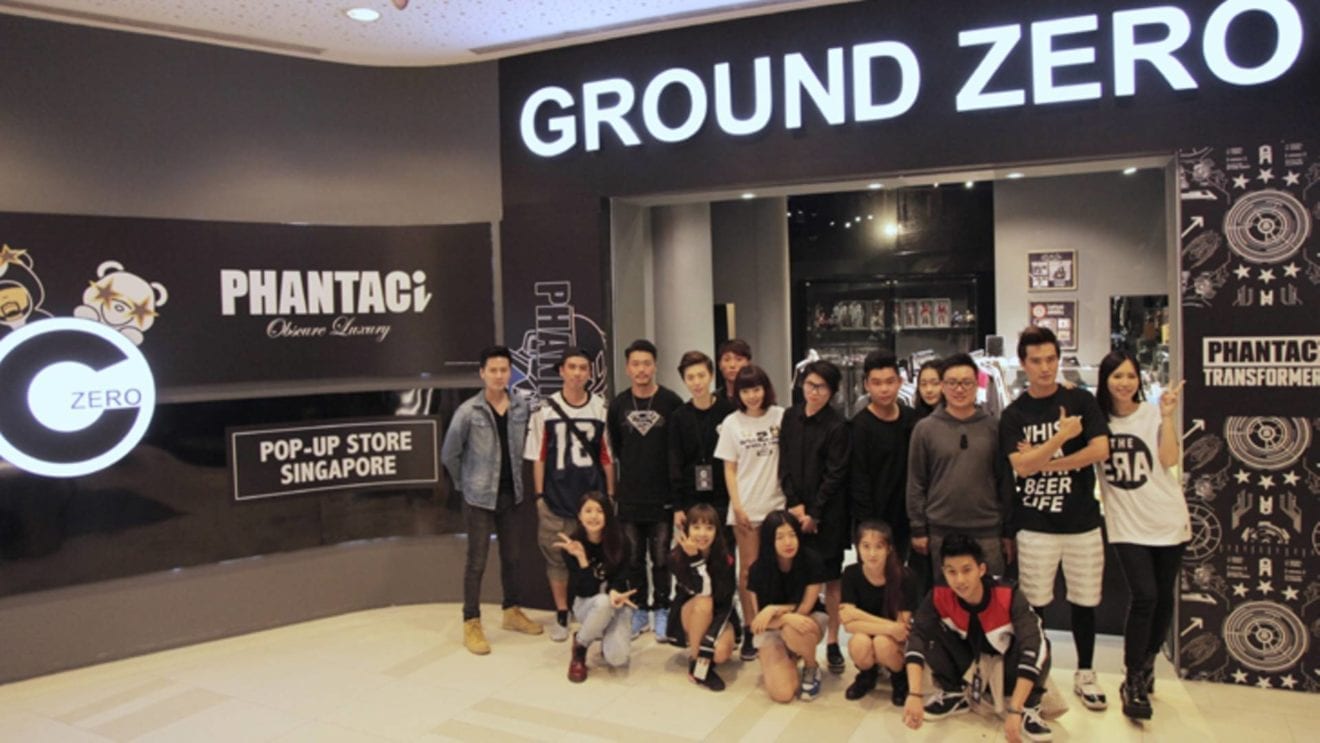
    Taiwanese streetwear label Phantaci has launched its first overseas boutique, at Orchard Gateway in Singapore.

    Covering 1200 sqft (111 sqm) on the mall’s second floor, the outlet features pink shelving and black-and-white tables echoing a piano keyboard.

    2

    As well as an in-house collection, Phantaci collaborates on products with such top brands as Casio, Nike and Stussy.

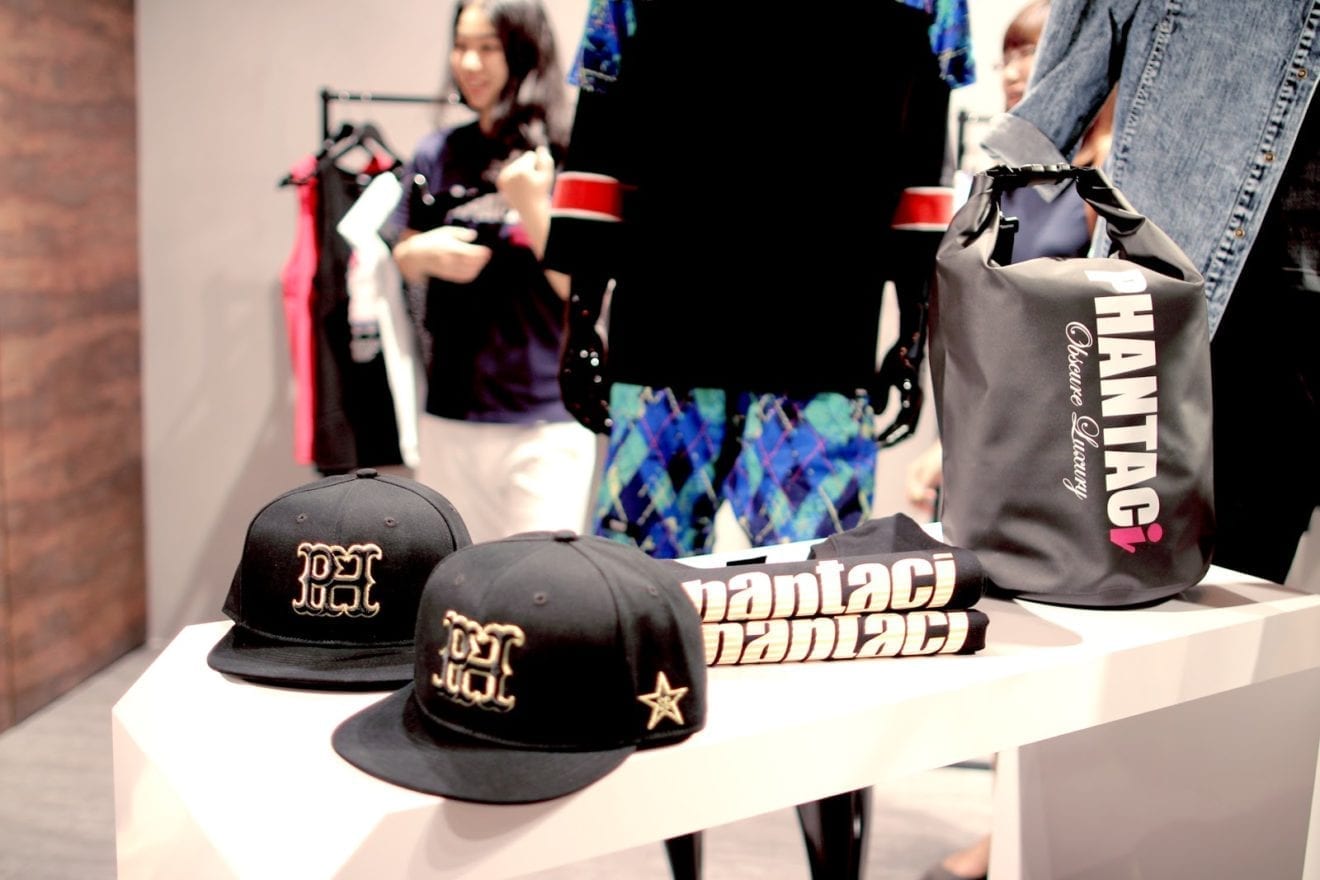
    To mark the opening, Phantaci is offering an exclusive selection of merchandise including a black-and-gold Phantaci shirt and an embroidered cap.

    Phantaci was established in 2006 by MandoPop musician Jay Chou and Ric Chiang.

  • FairPrice Shop grocer’s new budget banner

    FairPrice Shop grocer’s new budget banner

    Singapore’s largest supermarket operator NTUC FairPrice has unveiled a new budget banner and format today, imaginatively named FairPrice Shop.

    The official opening ceremony of the first store was underway this morning in Eunos Crescent – the store will be called FairPrice Shop@Eunos.

    “As FairPrice continues to serve its social mission to moderate the cost of living in Singapore, it will be launching a new retail format, FairPrice Shop, targeted at budget conscious shoppers,” the company said.

    “The format will feature a more focused range of products offering greater value, including the

    introduction of an exclusive range of housebrand fresh produce, which is five to 10 per cent cheaper than FairPrice’s existing housebrand fresh produce line. FairPrice Shop will be located primarily within mature estates with a higher concentration of low-income families.”

    The store was formally launched by Lim Boon Heng, chairman of NTUC Enterprise, and associate professor Fatimah Lateef, MP for Marine Parade GRC (Geylang Serai), who were hosted by Bobby Chin, chairman, NTUC FairPrice.

  • CJ Group bids for McDonald’s Korea

    CJ Group bids for McDonald’s Korea

    South Korean food-to-entertainment conglomerate CJ Group has submitted a letter of intent to buy fast-food chain McDonald’s Korea.

    Details have yet to be decided, but the deal could be worth 300 billion won ($256.86 million) to 500 billion won, says the Korean Economic Daily newspaper, quoting investment banking sources.

    McDonald’s Corp headquarters in the US announced in March it was reorganising its business in Asia by bringing in partners to own the restaurants within a franchise framework.

    Describing its aim to be a global lifestyle company, CJ Group aims to provide healthy, happy and convenient lifestyles based on its four core businesses: food and food services, bio and pharmaceuticals, entertainment and media, and home shopping and logistics.

    CJ’s business divisions include cinema chain CGV and bakery-cafe network Tous le Jours.

  • Dutch jeans with taste of Japanese style

    Dutch jeans with taste of Japanese style

    After centuries of isolation ended in the late 1800s, Western-style fashions caught on in Japan, and now designers are adding Japanese style elements from traditional garments to Western clothing.

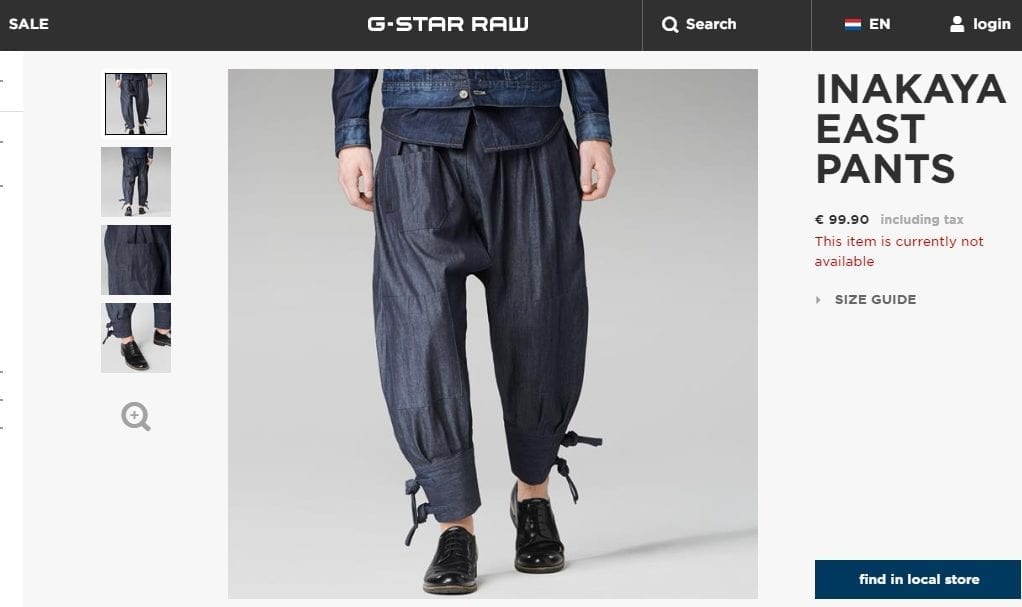
    Jumping on this bandwagon is Dutch label G-Star Raw with its new offering Inakaya Denim. “Inakaya” means “person from the countryside”, which is apt as the jeans are styled like the work pants customarily worn by Japanese farmers. The billowy cut should make the pants easy to move around in, as should the lightweight material used, reports Rocket News.

    Details include ankle straps for a tapered look, and an extra-large hip pocket that can accommodate smartphone and keys.
    G-Star Raw’s suggested retail price for Inakaya Denim is 25,920 yen (US$254).

  • AWS opens first Indian region

    AWS opens first Indian region

    AWS has launched two data centers in Mumbai, taking the total number of Availability Zones to 35 across 13 technology infrastructure regions globally. With these data centers, Mumbai becomes AWS’ sixth region in Asia Pacific.

    The new AWS Mumbai Region consists of two separate Availability Zones at launch. Availability Zones refer to data centers in separate, distinct locations within a single region that are engineered to be operationally independent of other Availability Zones, with independent power, cooling, and physical security.

    AWS customers focused on high availability can architect their applications to run in multiple Availability Zones to achieve even higher fault-tolerance.

    According to Andy Jassy, CEO of AWS CEO Andy Jassy said more than 75,000 customers in India are using other AWS Regions.

    “These same 75,000 Indian customers, along with others interested in starting use of AWS, have asked for an AWS India Region so they can move their applications that require low latency and data sovereignty,” he said.

    “We’re excited to make this available today, with the same pay-as-you-go pricing, ability to get started immediately without having to negotiate enterprise agreements or wait days for access, and unmatched functionality that customers enjoy in AWS Regions worldwide.”

    AWS is also partnering with India’s National Institute of Electronics and Information Technology to train 25,000 people on cloud technologies.