Author: Mei Ling Tan

  • Trend Micro teams with NXP for virtualized CPE

    Trend Micro teams with NXP for virtualized CPE

    Trend Micro Incorporated has announced an agreement with NXP Semiconductorsto join forces for a virtualized Customer Premises Equipment (vCPE) project on NXP’s ARM-based NFV platform.

    “With the introduction of NFV, security is no longer limited to on-premise networks, bringing new opportunities to telecom carriers and providers for service delivery,” said Dr. Terence Liu, vice president, Network Threat Defense Technology Group, Trend Micro.

    “For more than 27 years, we have been committed to protecting our customers, and as technology evolves, we continuously innovate and develop solutions for next-generation networks such as NFV.”

    Trend Micro’s DPI technology provides network security and management functions, such as virtual patching, parental control and quality of services (QoS), and has been widely adopted in a variety of products, from home routers to enterprise-facing Intrusion Prevention System (IPS) and Next-Generation Firewall (NGFW).

    This vCPE integration is optimized for NXP’s QorIQ LS2085A processor in order to provide better performance for carrier-grade NFV environment.

    “NFV requires a scalable, open platform to deliver security throughout the network,” said Noy Kucuk, Vice President of Product Management for NXP’s Digital Networking business.

    “Integrating security acceleration and standard ARM CPUs, NXP’s QorIQ LS series of ARM-based processors lay the ideal foundation for NFV infrastructure. We’re pleased to collaborate with Trend Micro as service providers prepare large-scale vCPE deployments later this year.”

  • Indian telco sector to be worth over $100b by 2020

    Indian telco sector to be worth over $100b by 2020

    The Indian telecoms services market is on track to pass the $100 billion mark by 2020, maintaining its status as one of the fastest growing markets in the world, a new report predicts.

    Market Research Store forecasts that the market will grow at a CAGR of 10.3% for the period between 2015 and 2020 to reach $103.9 billion.

    Wireless services will grow at a 9.3% CAGR over the same period to reach $39.02 billion, with 4G services achieving a CAGR of a strong 26.6%.

    According to the report, increasing network coverage and shrinking tariff rates due to heavy competition have served as the main drivers of the market in recent years. Due to these factors the market has grown exponentially to emerge as the second largest market in the world.

    Bharti Airtel leads the Indian wireless market, followed by Vodafone, Idea Cellular and Reliance Communications. Reliance Jio Infocomm is meanwhile expected to have a disruptive impact on the market when it fully launches pan-India 4G services.

    The banking, financial services and IT enabled service industries are helping to drive demand for telecoms services as they seek to engage more with customers through mobile applications, the report states. Oil and gas is meanwhile emerging as another key industry segment.

  • Towards a more relevant insurance proposition in Thailand

    Towards a more relevant insurance proposition in Thailand

    Generali Life Assurance is forging ahead with plans to tap the country’s growing middle class in what until now has been an under-explored market for wealth management products generally, and especially insurance solutions.

    With most high net worth (HNW) investors preferring to park money in US dollar or Euro-denominated products, wealth management may seem to be a non-starter in the Thai economy.

    But being largely unexplored, Thailand, where the country’s financial system had been fortified and the local business sectors gained much more sustainable strengths after the infamous Asian meltdown of the 1980s, offers attractive opportunities for wealth managers, say local players.

    According to Bundit Jiamanukoonkit, country manager and chief executive officer, Generali Life Assurance (Thailand) Plc, the country is witnessing traction in the demand for local products – both in the asset management and insurance segments.

    And although the demand for traditional insurance products currently dominates the sector, a growing middle class is helping the market for wealth management-type solutions get bigger.

    “I think it’s under-explored,” says Jiamanukoonkit, commenting on the growth opportunity for wealth management in Thailand.

    He adds that over the last 10 years, with an increasing number of Thais turning “middle upper class”, the wealth management sector has started coming of age as well.

    Competing

    The motivating factors, according to Generali, are the same as elsewhere in the region, in terms of children’s education, retirement planning and ensuring social security.

    “People want to have available funds to meet their medical needs, and for some in the affluent segment, even planning succession and passing on wealth,” explains Samdarshi Sumit, chief retail officer, Generali Life Assurance (Thailand) Plc.

    And according to Jiamanukoonkit, an interesting feature of the competitive landscape in Thailand is that there is no-one who really dominates the HNW market for life insurance.

    New channels

    Consequently, Generali – with its rich experience dealing with all type of customers including HNW individuals in Europe – has crafted an exclusive tie-up in Thailand with the Kiatnakin Phatra financial group, a local banking group and a significant wealth management player.

    This opens up access to a huge client-base with products that clients want.

    “We have a complete range of products which are focused on all the segments, including endowment, annuity, whole life protection, accident and health [policies], and everything which is needed by all the segments including the affluent,” says Sumit.

    Jiamanukoonkit adds that despite the growing demand for wealth management and insurance products, there remains a need to educate investors.

    For instance, the HNW clients think they have more than enough and insurance is not a necessity, he explains.

    Months after its debut, Generali with KK Priority’s first HNW insurance solution “CHRONOS” – the 24/7 solution providing worldwide experience that makes life of HNW customers much easier and more fulfilled – has proven the market opportunity that’s worth to pursuit, he adds.

    “We want to seek for more understanding among Thai HNW [individuals] and also get closer [to them],” he says.

    Still, Jiamanukoonkit’s priority is to scale up, and to be the “number-one choice retail insurer”.

    And, however lofty that may sound, he also believes that the goal is not far-fetched.

    “As there is no strong established player in the segment, we can do something great and acquire this group of customers and earn their trust,” he says.

    His other objectives include offering “better service and a premium brand at a reasonable price”.

    New experiences

    Generali has also identified ‘going digital’ as an area of significant importance.

    “This is especially in the direct marketing business where we have a significant portion of our premium coming from,” says Sumit.

    In line with this, Generali has already created a digital platform called Generali 365. This allows its clients to avail of a range of services, from transaction experience to online generation of tax certificates.

    “Generali 365 can be downloaded to a mobile and customers can see new offers and new products, as well as get special privileges offers that fulfil their lifestyles on food or hotels, and everything is there within a single application,” explains Sumit.

    But being largely unexplored, Thailand, where the country’s financial system had been fortified and the local business sectors gained much more sustainable strengths after the infamous Asian meltdown of the 1980s, offers attractive opportunities for wealth managers, say local players.

    Bundit Jiamanukoonkit

    And although the demand for traditional insurance products currently dominates the sector, a growing middle class is helping the market for wealth management-type solutions get bigger.

    “I think it’s under-explored,” says Jiamanukoonkit, commenting on the growth opportunity for wealth management in Thailand.

    He adds that over the last 10 years, with an increasing number of Thais turning “middle upper class”, the wealth management sector has started coming of age as well.

    Competing

    The motivating factors, according to Generali, are the same as elsewhere in the region, in terms of children’s education, retirement planning and ensuring social security.

    And according to Jiamanukoonkit, an interesting feature of the competitive landscape in Thailand is that there is no-one who really dominates the HNW market for life insurance.

    New channels

    Consequently, Generali – with its rich experience dealing with all type of customers including HNW individuals in Europe – has crafted an exclusive tie-up in Thailand with the Kiatnakin Phatra financial group, a local banking group and a significant wealth management player.

    This opens up access to a huge client-base with products that clients want.

    “We have a complete range of products which are focused on all the segments, including endowment, annuity, whole life protection, accident and health [policies], and everything which is needed by all the segments including the affluent,” says Sumit.

    Jiamanukoonkit adds that despite the growing demand for wealth management and insurance products, there remains a need to educate investors.

    For instance, the HNW clients think they have more than enough and insurance is not a necessity, he explains.

    Months after its debut, Generali with KK Priority’s first HNW insurance solution “CHRONOS” – the 24/7 solution providing worldwide experience that makes life of HNW customers much easier and more fulfilled – has proven the market opportunity that’s worth to pursuit, he adds.

    “We want to seek for more understanding among Thai HNW [individuals] and also get closer [to them],” he says.

    Still, Jiamanukoonkit’s priority is to scale up, and to be the “number-one choice retail insurer”.

    And, however lofty that may sound, he also believes that the goal is not far-fetched.

    “As there is no strong established player in the segment, we can do something great and acquire this group of customers and earn their trust,” he says.

    His other objectives include offering “better service and a premium brand at a reasonable price”.

    New experiences

    Generali has also identified ‘going digital’ as an area of significant importance.

    “This is especially in the direct marketing business where we have a significant portion of our premium coming from,” says Sumit.

    In line with this, Generali has already created a digital platform called Generali 365. This allows its clients to avail of a range of services, from transaction experience to online generation of tax certificates.

    “Generali 365 can be downloaded to a mobile and customers can see new offers and new products, as well as get special privileges offers that fulfil their lifestyles on food or hotels, and everything is there within a single application,” explains Sumit.

  • China’s Cross-Border E-Commerce Booming to $85.76B in 2016

    China’s Cross-Border E-Commerce Booming to $85.76B in 2016

    Cross-border e-commerce in China will hit $85.76 billion this year, up from $57.13 billion in 2015, as 40 percent of China’s online consumers buy foreign goods, according to a new analysis by digital marketing researcher eMarketer.

    EMarketer estimates that each of China’s digital shoppers this year will spend an average of $473.26 on foreign goods, up from $446.33 last year. By 2020, half of China’s digital shoppers–or more than a quarter of the country’s population of about 1.4 billion–will be buying foreign products online, eMarketer estimates, with total sales of $157.7 billion.

    This growth is part of an overall increase in online shopping in China, which soared more than 70 percent in 2015 to $672.01 billion driven in part by a higher standard of living and the advent of global digital sales platforms such as Alibaba’s Tmall Global, launched in 2014.

    ecom graphic copy

    Cross-Border Retail E-Commerce Buyers in China

    Tmall Global and other business-to-consumer, or B2C, platforms allow international brands to sell their products directly to China’s digital shoppers and break into the market. Online retail remains the easiest channel for all types of consumers to obtain products that are otherwise difficult or expensive to access within China. China’s consumers tend to prefer foreign goods in specific categories such as milk powder, diapers and pet food, perceiving them to be of higher quality and more trustworthy.

    Cross-border e-commerce remains on the rise despite April’s implementation of a new tax on overseas purchases, noted eMarketer analyst Shelleen Shum. While it increases prices slightly for some product categories such as jewelry and infant formula, “the demand for foreign goods via the cross-border e-commerce channel is still expected to remain strong due to better prices compared to offline retailers, perceived quality and better variety,” she said.

    Shum added that B2C channels are also integral to the growth of foreign goods sales in China, because they help customers feel they are getting more bang for their buck. B2C platform sales are expected to take up a growing share of the cross-border e-commerce market in 2016 as consumers shift to channels they regard as more professional and organized. “Since the merchants selling on these B2C platforms have to be authorized, they are considered more trustworthy,” noted Shum.

    Globally, cross-border e-commerce habits vary. But when it comes to China, the demand for foreign products is surging, thanks to the combination of overseas travel, increased internet usage, exposure to foreign brands and convenience of online retail. China is projected to become the largest cross-border B2C market by 2020.

  • Hong Kong-Based ePayWeb to acquire 10% stake in AW Virtual Mall

    Hong Kong-Based ePayWeb to acquire 10% stake in AW Virtual Mall

    Hong Kong-based electronic payment processing service company ePayWeb Asia has agreed to acquire 10% stake in the planned Allied Wallet (AW) Virtual Mall.

    As per the deal, ePayWeb agreed to invest $100m in exchange for a 10% stake in the company.

    The AW Virtual Mall is an online shopping experience which is expected to have over 3 million independent stores and over 1 billion shoppers per day in the next 48 months.

    In addition to creating a new experience for online shoppers, the new online shopping mall will allow consumers to find required items available at the best prices by taking a picture of it.

    Claimed to be the first of its kind, the AW Virtual Mall will enable users to find a product they are looking for, by uploading a photo of the item.

    The AW Virtual Mall users can then select the best price, which is quoted by the store owners, and checkout safely and securely.

    Allied Wallet founder and CEO Andy Khawaja boldly said: “E-commerce is projected to reach $3.5 trillion by 2019 and we’re on track to provide the most state-of-the-art shopping experience in the industry – like nothing anyone has ever seen.”

    AW Virtual Mall said that the website provides complete social media experience for users to personalize their profile, communicate, and share.

    Allied Wallet is a provider of e-commerce merchant services and online payment processing services.


  • Giants fulfills CSR at bubur lambuk distribution

    Giants fulfills CSR at bubur lambuk distribution

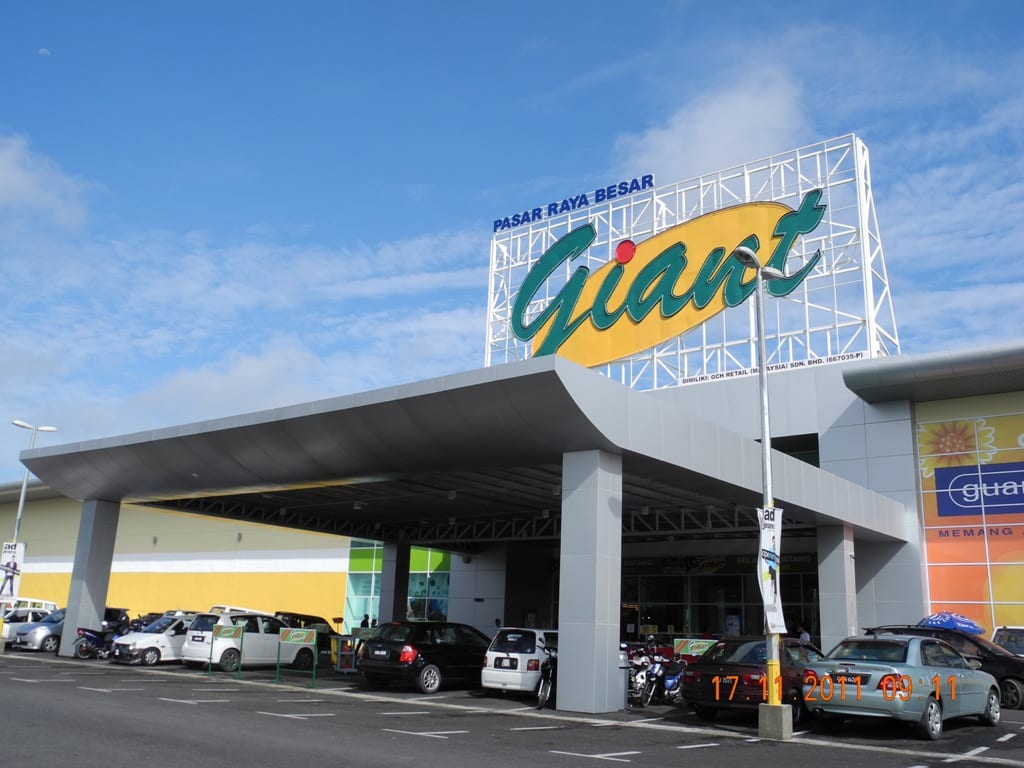
    GCH Retail (Malaysia) Sdn Bhd held its Bubur Lambuk Corporate Social Responsibility (CSR) programme at Giant Hypermarket Petra Jaya here yesterday.

    Themed ‘Ceria Ramadan bersama Giant & Adabi’, the event saw the presence of Assistant Minister for Early Childhood Education and Family Development Sharifah Hasidah Sayeed Aman Ghazali who distributed the popular must-have Ramadan dish to people from all walks of life at the mall.

    GCH Retail general manager Johalias Fazili Fazi and senior manager (Government Relations) Mohd Shahrizal Ayub were also present.

    In addition to preparing the ‘bubur lambuk’ and distributing them to the people, GCH Retail also donated RM5,000 to Kompleks Kebajikan Laila Taib.

    About 30 children from Kompleks Kebajikan Laila Taib were accompanied by Hasidah on a shopping spree at the hypermarket mall during the event.

    Now in its fourth year, the annual programme was first introduced in 2013 and have since received great response from the people nationwide.

    GCH Retail Malaysia & Brunei regional director Dato Tim Ashdown in a statement said Giant was honoured to once again organise the programme for a charitable cause as well as to foster closer ties among GCH Retail and the people especially the needy.

    “We will continue this commitment of ours to hold this charitable effort in the future.”

    This year, visitors of Giant Hypermarket will be able to receive their complimentary bowls of ‘bubur lambuk’ from noon onwards at selected Giant Hypermarkets in seven locations nationwide.


  • Joyalukkas inaugurates second showroom in Kuala Lumpur

    Joyalukkas inaugurates second showroom in Kuala Lumpur

    The globally renowned jewellery retail chain  expanded its presence in the Malaysia by opening its second showroom, located in  Lulu Hypermarket, Capsquare Mall, Jalan Munshi Abdullah, Kuala Lumpur.This is  as part of their mega expansion plan for this financial year as committed rapid  expansion across. The Showroom was inaugurated by Datin Paduka Seri Rosmah  Mansor wife of YAB Dato' Sri Mohd. Najib bin Tun Haji Abdul Razak, Hon.  Prime Minister of Malaysia in the presence of Mr. John Paul Alukkas, Executive Director, Joyalukkas Group, many local dignitaries and VIP’s.

    Joyalukkas’s first foray into Malaysia was in 2014, with the opening of the biggest jewellery showroom in the country at the heart of Kuala Lumpur at Jalan Masjid India.

    “When we first arrived in Malaysia, the response from the public was simply  overwhelming. We set out to offer the best jewellery shopping experience to the  residents and they have rewarded us over and over again with their eager  patronage,” says Mr. Joy Alukkas, Chairman & MD, Joyalukkas Group.

    “We are very grateful to the wonderful people of Malaysia and look forward to  delivering more choices, better value and an even higher standard of customer  service at our second showroom,” said Mr. John Paul Alukkas, Executive Director,  Joyalukkas Group.

    Joyalukkas opened at the Lulu Hypermarket and Department Store, Capsquare, Kuala Lumpur in time for the Mega Winnings campaign, where customers get the chance to win four diamond necklaces and up to 2 KG gold till 14 August 2016.

    Joyalukkas opened at the Lulu Hypermarket and Department Store, Capsquare,  Kuala Lumpur in time for the Mega Winnings campaign, where customers get the  chance to win four diamond necklaces and up to 2 KG gold till 14 August 2016.

  • Bauhaus annual net profit down nearly 60 pct

    Bauhaus annual net profit down nearly 60 pct

    Hong Kong clothing retailer Bauhaus International (Holdings) Ltd saw its annual net profit plummet by 59.1 per cent to HK$52.9 million (US$6.6 million) for its past fiscal year, due to the plunge in the company’s earnings from the Hong Kong and Macau markets.

    According to its filing with the Hong Kong Stock Exchange last Friday, the retailer’s total turnover posted a year-on-year decrease of 5 per cent to HK$1.5 billion for the fiscal year ended March 31, compared to some HK$1.59 billion one year ago.

    “As a result of Mainland China’s uncertain economic prospects, instability of financial markets and the appreciation of the Hong Kong dollar against other Asian currencies (including the Renminbi), the consumer spending momentum obviously deteriorated during the year under review and resulted in highly volatile and discount-driven retail dynamics,” it claimed.

    For the financial year, the clothing seller generated some HK$1.03 billion from its sales in Hong Kong and Macau, which represents a year-on-year decrease of 8.8 per cent compared to HK1.13 billion one year ago.

    In addition, the company claimed that a negative same-store-sales growth rate of some 9 per cent was recorded in the two cities.

    The decreases in sales in the two cities led to a slump in the company’s profit before tax from the segment, down by 46.6 per cent year-on-year to HK$99.6 million.

    As at the end of March, Bauhaus was operating 214 self-managed outlets, including 86 stores in Hong Kong and Macau, 94 in Taiwan and 34 in Mainland China, as well as 11 franchised outlets in the country.

    The company’s turnover derived from the Mainland China market also registered a decline of 2.8 per cent year-on-year to HK$128.8 million, but turnover from Taiwan jumped by 9.2 per cent year-on-year to HK$342.2 million for the year, according to the filing.

    The retailer proposed a final dividend of HK6.0 cents per ordinary share to its shareholders, which is down by 56 per cent year-on-year compared to HK$13.5 per cents for the 2014/15 financial year.

  • Alco Electronics’ David Leung on Making Gadgets in China

    Alco Electronics’ David Leung on Making Gadgets in China

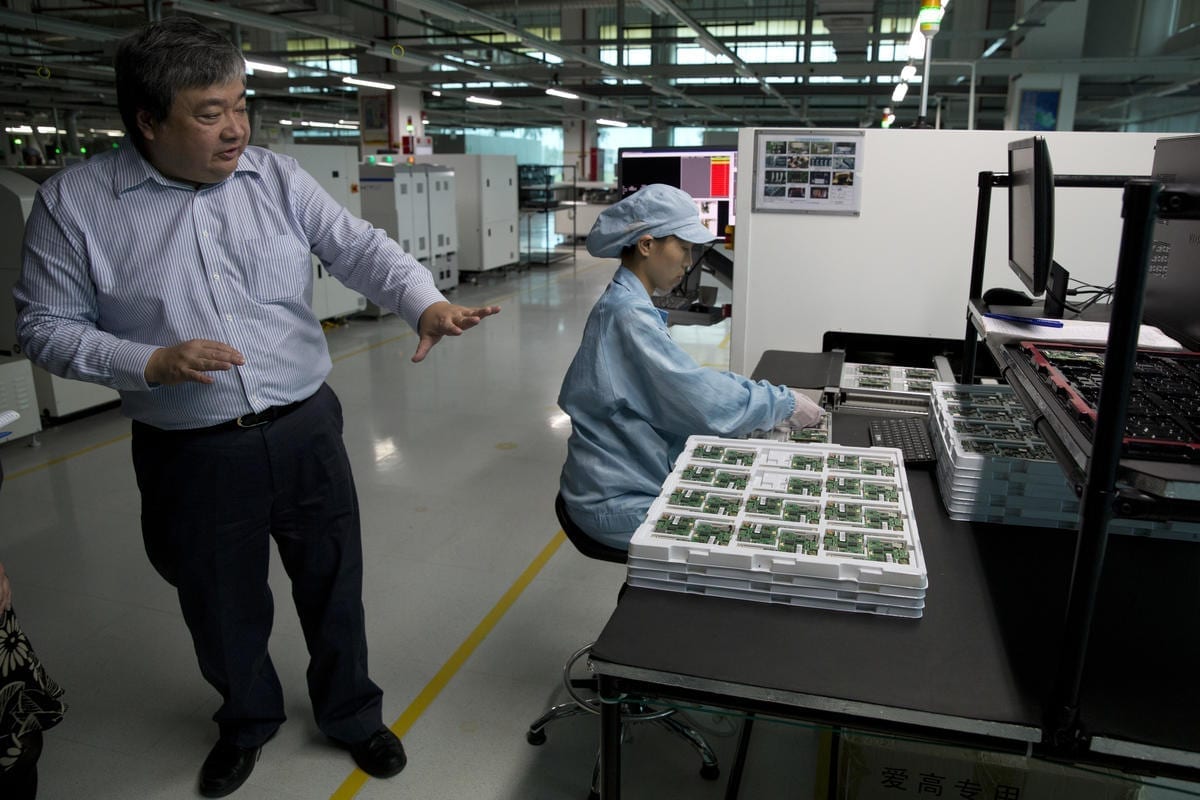
    A look inside Alco Electronics Ltd.’s factory in China shows what it takes to succeed as a maker of gadgets for the rest of the world — human precision in tiny tasks and increasingly automated manufacturing, but also flexible thinking and perks to keep the best employees.

    Chinese workers in blue coats and caps worked on a production line making tablets during The Associated Press’ recent visit to the 2.5 million-square-foot plant. Their tasks can be tedious, such as soldering a connecter onto a circuit board. Machines do things like inspect incoming circuit boards and tighten screws on tablets — automation that lowers costs and improves quality. A droning noise signals where tablets are undergoing testing for all functions for eight hours before they’re packaged. That’s critical to help reduce returns.

    Sunroofs keep the production floor lit and reduce energy use

    The company, which counts Wal-Mart Stores Inc. as one of its top five retail customers, gets about 60 percent of its sales from tablets and other computer products. Nearly 70 percent of its annual sales of about $330 million came from North America. It ships its products under the RCA and Venturer brands.

    Alco, founded in 1968 to make AM/FM radios to export primarily to North America, has shifted with market demands. In 1980, it moved production from Hong Kong to China in search of cheaper labor. Due in part to automation and the changing labor market, it has about one-tenth of the employees it had at its peak of nearly 20,000 workers.

    The company is now juggling customer demand for affordable but high-quality electronics as it wrestles with escalating labor pressures and other costs in China. David Leung, head of sales for North America, recently spoke with about what’s selling, the differences in the Chinese and U.S. markets, and what Alco needs to do to attract workers.

    Q. So the tablet is hot.

    A. In the U.S., Wi-Fi is everywhere. So any device with the Wi-Fi capability is very popular. Content owners are putting the apps onto the tablet so they can sell directly to the consumer. We work directly with Wal-Mart on Vudu (which distributes movies over the internet to TVs.) The tablet is like a vending machine for your home. In peak times, we can do 40,000 (tablets) a day that is if all 200 components arrive on the same day.

    Q. What kind of worker are you hiring?

    A. It is not a shoe factory or a garment factory. In general, we don’t need a skilled worker. We need a disciplined worker, a worker willing to learn.

    Q. How are you trying to attract workers given the labor shortage?

    A. Wages alone is not the biggest incentive. It’s wages plus perks. We provide classes for them to learn in their free time. Many workers like to learn Cantonese and English as well. We also have karate classes, cooking classes. We have hired table tennis, basketball and yoga teachers to better their skills. We also host tournaments for volleyball, basketball, table tennis and badminton in our Sport Centre. Since we are now making electric bicycles for Europe, we also have a cycling team.

    Whatever the worker likes to do, we will try to find a teacher.

    Q. Where do you sell your products other than the U.S. market?

    A. Canada, Mexico. We ship to South America, Central America. And lately we’re making shipments to India.

    Q. What about China?

    A. At the moment, we do not do a lot of business in China. Our product is more geared for the overseas market. We are starting to do some China business. We (started) selling Window tablets in the China market using portals like JD.com. In China, the physical store is not a big thing. They all rely on the internet. So we need to do our product with different packaging that is more suitable for the internet. Many of the streaming portals are not available in China. Even YouTube is not available. Also, Google is not available in China so we have to redo all our software.

    China is a very big country. We need to learn about the distribution channel in China. We’ve been doing export market selling to the United States for the past 30 years. So although our factory is in China, selling in China is a brand-new market for us.

    Q. How is marketing products in China different from North America?

    A. Online is No. 1 in China. China skipped all the shopping mall phenomenon and they jumped right into internet selling. So in order to sell to China, you have to find the right website. You have to really get into the social network to promote your product. It’s not the advertisements on TV that is the most important. It’s the advertisement through social networking that is key in the selling of your products.


  • A look into the history of NEC Philippines

    A look into the history of NEC Philippines

    NEC Corporation is a Japanese multinational provider of information and communication technology products and services with headquarters in Tokyo.

    The 117-year-old firm started operations in the Philippines some 20 years ago when the local subsidiary NEC Philippines was incorporated in January 11, 1996. Gervacio points out that the global firm has been in the country as far back as the 1960s through a Manila Representative Office. In July, it will be celebrating its 20th anniversary with a conference and exhibition in Manila.

    A technology giant recognized for its cutting-edge innovation, NEC delivers IT and network solutions to business enterprises, government and individual customers in the form of software, hardware and related services. Through a combination of its advanced technologies in ICT, it is providing safety for the public and thereby helping to establish safer cities.

    Under the strategy of “Solutions for Society,” NEC offers product solutions for biometric such as facial and fingerprint recognition technology. The use of it for security and authentication purposes has become increasingly common due to its accuracy and efficiency. An example of use is the e-passport system where it has been implemented in many countries around the world, including Southeast Asia.

    The system incorporates NEC’s world-class biometric technology in facial and fingerprint recognition for secured identity protection and eradicates duplication. Ranked world No.1 by United States’ NIST (National Institute of Standards and Technology), NEC offers facial recognition and fingerprint technologies deployed in solutions such as NeoFace® Watch and NeoFace® Smart ID.

    With terrorism and security threats being a growing concern in public areas and international borders, these solutions have helped law enforcement agencies and security organizations all over the world identify individuals and tighten security measures.

    With cyber attacks on a rising trend in a borderless world, NEC’s powerful advanced cyber security solutions can protect organization’s IT and security systems from various cyber threats even before it occurs.

    It recently opened its Cyber Security Factory in Singapore which complements NEC’s Security Operations Centers located in strategic parts of the world including Japan and Australia, with an aim to provide an inter-connected network to share intelligence on cyber threats and deliver 24/7 security to customers.

    NEC is known mainly to electronic experts, but its platforms and solutions are everywhere from the sky above, on land, and deep in the bottom of the ocean waters.

    Up in the sky, NEC satellites are orbiting the earth and their cloud solutions are a boon to computer and phone interface and exchange. The NEC radio systems are responsible to bounce signals to our cell phones.

    On land, the Private Automatic Branch Exchange (PABX) allows connection to a local number, while the Key Telephone System (KTS) enables multiple users control over multiple telephone lines without the requirement for an operator, system attendant or receptionist.NEC Point of Sales(POS) Solution can also be found at major retail stores nationwide.

    NEC’s presence can also be found in the bottom of the seas because the company’s thousands of kilometer long cables are lying in the ocean depths, which are responsible for transporting through fiber optic the data and communication exchanges from one country to another.


  • MemSQL brings enterprise security to real-time Analytics

    MemSQL brings enterprise security to real-time Analytics

    MemSQL has introduced new enterprise security capabilities to further the adoption of solutions requiring both speed and advanced security.

    With this additional functionality, enterprises can streamline the security and administration of MemSQL, resulting in wider adoption and maximum protection in performance environments.

    Specifically, MemSQL is introducing Role-Based Access Control (RBAC) for its distributed database platform. RBAC provides enterprises a flexible way to set security measures by user role and group—all while maintaining maximum performance.

    “More companies across more industries now view real-time workflows as a critical technology enabler,” said Nikita Shamgunov, CTO and co-founder, MemSQL. “In many cases, security cannot be compromised just to keep up with the data. With the addition of RBAC, MemSQL customers can scale the number of users and roles to tens of thousands without compromising performance—absolutely critical in today’s real-time world.”

    MemSQL customers can now use simple and robust security configurations to create a role with specific capabilities, which then can be associated with a user and specified access. The RBAC feature was extensively run with a rigorous set of functional and performance tests, including inside a FIPS 140-2 environment.

    Shamgunov said real-time is the new standard for processing and analyzing data. Historically, companies with stringent security requirements have been kept at arm’s length from achieving real-time results.

    By including RBAC in its latest release, MemSQL furthers adoption of real-time data in environments requiring comprehensive security. This includes global industries such as healthcare, IoT, and government.

  • Convenience stores: Staying relevant in harsh times

    Convenience stores: Staying relevant in harsh times

    For Malaysian consumers, the last couple of years have been a mercurial ride with the implementation of the Goods and Services Tax (GST) and the subsequent effects of it as well as other global and domestic events which have rippled through prices of goods and services.

    As cost of goods and services gradually increases, most consumers have cut down their spending, to save on essentials.

    Softening consumer confidence have also taken a toll on businesses. In particular, the retail sector was affected more significantly by lower consumer confidence.

    Nevertheless, at the start of 2016, statistics and reports have shown that consumer confidence in Malaysia are slowly recovering and there are signs of of it stabilising.

    According to Nielsen Global Survey of Consumer Confidence and Spending Intentions, the Malaysian consumer confidence remain stable at the start of the first quarter of 2016 with 79 percentage points (pp), dipping one point from previous quarter).

    Globally, the report showed that Malaysia held on to its ranking as 36 most confident country in the first quarter (1Q) 2016 (unchanged from last quarter). Of note, the average global consumer confidence is 98 pp (one pp from previous quarter). Consumer confidence levels above and below a baseline of 100 indicate degrees of optimism and pessimism.

    However, while there are signs pointing towards improvements in consumer sentiments in Malaysia, analysts and industry observers are still cautiously optimistic on consumer trends.

    SOURCE: Nielsen Global Survey of Consumer Confidence and Spending Intentions 1Q16

    SOURCE: Nielsen Global Survey of Consumer Confidence and Spending Intentions 1Q16

    Richard Hall, country manager of Nielsen Malaysia, pointed out in a statement, “With no real changes in the economic outlook, Malaysians’ confidence remains low and we see that this trend will continue to be the case until the pressure on the ringgit ease.

    “Only when the pressure of the ringgit improves, can consumers start to feel the burden of their day-to-day spending lessen.”

    Nielsen noted that while the nation’s fiscal status (52 per cent compared to 50 per cent in prior quarter) continues to top the list of major concerns among Malaysian consumers, nearly a quarter of the respondents have cited that job security is now their second top worry (22 per cent).

    “Recessionary sentiments among Malaysians continue to remain high (84 per cent, unchanged from last quarter) with only one in five respondents feeling positive that the country will be out of an economic recession in the coming 12 months (22 per cent, unchanged from prior quarter),” the survey reported.

    The survey also revealed that consumers in Malaysia would continue to reduce household spending even when economic conditions would improve with nearly nine in 10 Malaysian consumers changing their spending habits in the past year to improve saving (88 per cent).

    It said, the top three areas where consumers in Malaysia would continue to cut back even when economic conditions do improve are spending less on new clothes (65 per cent), reducing out of home  entertainment (56 per cent) and switching to cheaper grocery brands (51 per cent).

    “Despite the fact that none of the economic key performance indexes (KPI) indicate that the country is in a recession, consumers continue to believe that the current situation and the future for the country is not positive.

    “To change this attitude will require a step change in the current environment,” Hall observed.

    Affin Hwang Investment Bank Bhd’s research arm (Affin Hwang Capital) in a recent report highlighted  the main themes affecting consumerism include the implementation of GST and the weakened ringgit against the US dollar.

    “While the consumer sentiment is at its all-time low with consumers mainly worried about the higher costs of living, income levels and the economy, several macroeconomic indicators are pointing towards an improvement,” it pointed out.

    “Consumers have been hit by higher costs of living, with headline inflation spiking to a high of 4.2 per cent year-on-year (y-o-y) as of February 2016.

    “Both Malaysian Institute of Economic Research (MIER) and Nielsen surveys highlight job security and income worries as key concerns among consumers, in addition to the current state of the economy,” it said.

    In a separate report, the research arm of TA Securities Holdings Bhd (TA Securities) expected consumer sentiment to remain weak in 2Q and continue to remain flattish throughout the year.

    However, it pointed out that consumer sentiment level, according to MIER, have rebounded by 9.1 points, suggesting that consumers have adjusted their spending pattern to take into account the impact of GST their purchasing activities.

    “Coupled with financial aids given by the government through BR1M, reduction in employees’ EPF contribution, and increase in minimum wage for private and public sectors workers that will be implemented on July 1 this year, could lessen the impact of demand slowdown,” it added.


    Grocery retail retains growth despite headwinds

    A closer look into the consumer sector shows that while consumer sentiments is expected to remain subdued in the near-term, Malaysian consumers’ purchasing power is improving in certain categories.

    According to Nielsen, consumer purchasing power in the Fast Moving Consumer Goods (FMCG) category gained traction in 1Q of 2016 versus the same quarter in the prior year (4.7 per cent).

    It added, all FMCG super categories registered a healthier growth lead by beverage (8.8 per cent), grocery (4.3 per cent), household (3.9 per cent), health & wellness (2.7 per cent), snack & confectionary (two per cent) and personal care (1.7 per cent).

    “In spite of the FMCG industry having a strong start to last year due to the GST introduction in April 2015, we have been pleasantly surprised to see the majority of categories still in growth, with the modern trade leading the way.

    “While there has negative sentiments surrounding the increasing cost of living, consumers still need to buy groceries and it looks like they are not necessarily down trading their purchasing decisions,” Hall noted.

    In Malaysia, while hypermarkets still dominate the general FMCG or grocery markets, there are growth opportunities for convenience stores given that demand still remains strong for FMCG or grocery goods.

    In a report, the research arm of DBS Bank Ltd (DBS Group Research) pointed out, “There is room for Malaysia to grow its convenience stores as the number of convenience stores per one million total population lags behind Indonesia, Singapore and Thailand.

    “However, it leads Asean-5 in supermarket and hypermarket outlets-to-population ratio. Among the three main modern grocery retail formats, convenience stores registered the fastest growth from 2009 to 2014 at 17 per cent compounded annual growth rate (CAGR),” it said.

    It also noted that convenient stores offer products and services that are within reach of consumers compared to supermarkets and hypermarkets.

    “The layout of many Malaysia towns tends to be spaced out and it is common for people to commute in cars. As such, there are many big box hypermarket developments in Malaysia.

    “Hypermarkets are seen as a convenient place with a wide selection of products for consumers to visit. Supermarkets in suburban neighbourhoods play the role of supplementing hypermarkets, while convenience stores offer 24-hour service.

    It also pointed out that generally, purchasing habits for consumers in Asia have also shifted with convenience as a key factor in their purchasing habits.

    “Formats penetrate Asean food consumption in different manners. Supermarkets will always be a key feature in malls located in densely populated cities.

    “Convenience stores are strong in penetrating every corner of cities and in obscure locations outside them. Hypermarkets are capable of capturing consumption in more spaced-out locations with high automobile accessibility.

    “With modern and traditional grocery retailers situated in cities and neighbourhoods, it is convenient for consumers to pick up grocery items physically and even on the move,” it said.

    Convenience store retailers are likely to sustain growth, given their aggressive outlet expansion to meet demand for convenience, DBS Group Research observed.

    With that, BizHive takes a look at some of Malaysia’s top convenience store retailers.


    7-Eleven the ‘go-to’ convenience store

    Since its listing on Bursa Malaysia in 2014, 7-Eleven Malaysia Bhd (SEM) has grown by leaps and bound across the nation.

    With a market share of 82 per cent of the standalone convenience store segment as of March 2014, SEM, which manages the 7-Eleven convenience store chain in Malaysia, is the largest convenience store operator in the nation.

    TA03438

    As of Dec 31, 2015, SEM has a total of 1,944 stores serving more than 900,000 customers per day. According to its 2015 Annual Report, 1,793 or 92.2 per cent of its stores are corporate-owned while 7.8 per cent are operated by franchises.

    “Sales and profits both delievered impressive results despite the difficult retail market environment which was significantly impacted by the introduction of GST for the first time on April 1, 2015.

    “On top of this, consumer confidence was measured at a 10-year low level in 3Q15 which also subsequently impact consumers spending behaviour,” said Shalet Marian, independent none-executive/chairman of SEM, in her chairman’s statement from its 2015 Annual Report.

    “Despite the earlier mentioned headwinds in the the total FMCG retail market in 2015, the company has recorded a strong six per cent growth rate in total sales compared to the previous year.

    “Total sales amounted to RM2.006 billion although our same store sales showed marginal decline of 3.6 per cent as a result of the GST impact on sales values.”

    This year, according to previous news report, SEM expects to spend between RM85 million and RM90 million as part of its expansion plan which includes the opening of 200 new stores this year.

    SEM chief executive officer Gary Brown was quoted as saying that this expansion would see more outlets in Klang Valley, the east coast, as well as Penang, Johor and Melaka.

    “We will continue to invest in new stores and building our network. The investment also included refurbishment of our existing 200 stores this year,” he said to reporters after the group’s AGM.

    He was quoted as saying that the company had also set aside major capital expenditure to continue to upgrade its new information technology (IT) system.

    “The new IT system project which started in 2014 costing RM66 million is expected for completion by the middle of this year,” said Brown.

    Marian added, “Our plan is to continue to bring 7-Eleven true convenience to more and more customers in Malaysia and as such we expect to expand our store network by approximately 200 new stores in 2016.”

    In 2015, SEM had opened 199 new stores nationwide. As at December 31, 2015, the group has total cash reserves of RM126 million.

    Meanwhile, on SEM’s performance in 1Q16, the research arm of Maybank Investment Bank Bhd (Maybank IB Research) noted that its results were in line with expectations but the research house remains cautious of its earnings outlook.

    “We continue to expect new store openings and better contribution from its refurbished stores to help drive growth.

    “As a recap, for 2016 and beyond, we understand that SEM targets to open 200 stores per annum. Nonetheless, we remain cautious on its near term earnings as it will be facing some near term headwinds such as the minimum wage hike come July 1, 2016.

    “In the longer term however, we expect SEM to eventually pass the higher cost through to consumers via higher merchandise prices,” it opined.

    Aside from that, recently, SEM had signed a memorandum of understanding with Brahim’s SATS Food Services Sdn Bhd (BSFS), a 51 per cent owned subsidiary of Brahim’s Holdings Bhd (BHB).

    This will expose Brahim’s to a wider market via SEM’s close to 2,000 stores network all across Malaysia, which is in line with the objective of the strategic partnership between BHB and SATS Ltd (SATS) to venture into non-airline business in Malaysia.

    Analysts believe that this is a synergistic partnership as it could benefit both parties which are currently faced but headwinds in the consumer sector.

    “We understand that some convenience store players domestically has been facing some supply chain issues (such as product quality, consistency and choices) mainly due to dependence on multiple fresh food suppliers and scale and reach of the existing food suppliers.

    “Therefore, collaboration with a sizeable party could benefit SEM in the longer term in terms of cost efficiencies and consistency of product quality/choices while not having to move away from its core competence of managing convenience stores.

    “To note that fresh food and services as a percentage of merchandise sales has been fairly stable, at est. 10 per cent,” Maybank IB Research opined.

    Under this MoU, BSFS is expected to provide packaged ready to eat (RTE) meals such as panini sandwiches, the ever popular nasi lemak and fried rice that would be branded under 7-Eleven’s proprietary food service brand of  ‘Fresh to Go’.

    Looking ahead, Marian said, “Despite the current uncertainty and consumer confidence issues which impact our customers and their spending behaviour, I am confident about the growth prospects of our company as we are resilient and have positioned ourselves to maintain our market leadership position not just in 2016 but for the years beyond.”

    Bison: Malaysia’s largest home-grown retailer

    Incorporated in 2013 as Prempac Sdn Bhd and converted into a public limited company in 2015, Bison Consolidated Sdn Bhd (Bison) was successfully listed on Bursa Malaysia earlier this year in March.

    The research arm of CIMB Investment Bank Bhd (CIMB Research) cited Bison as Malaysia’s largest home-grown convenience store operator and has an estimated total market share of 8.6 per cent in 2015, with up to 255 outlets (including eight, WHSmith outlets).

    TA03439

    Through its subsidiaries, the group provides unique offerings under its main trade name ‘myNews.com’ a press and convenience retailing business.

    According to its initial public offering (IPO) prospectus, Bison also operates other outlets under the trade names of ‘newsplus’ ‘MAGBiT’, and THE FRONT PAGE’ as well as under the trade name of ‘WHSmith’ through its join venture with WH Smith Travel, an indirect wholly-owned subsidiary of UK-based WH Smith Plc.

    While it was incorporated in 2013, Bison’s conception can be tracked back to 1996 with the establishment of Bison’s first newsstand outlet under the brand name ‘MAGBiT’.

    CIMB Research highlighted that over the last few years, Bison has been registering positive and consistent revenue and core net profit growth, with a two-year compounded annual growth rate (CAGR) of 17.4 per cent and 7.5 per cent, respectively.

    “The double-digit revenue growth was mainly driven by higher merchandise sales, consumer services and advertising and promotion, which were boosted by the growth in the number of stores for the group,” it added.

    The research team also noted that for the past three years, Bison?s gross profit margin has expanded from 33.3 per cent in FY13 to 34.2 per cent in FY15.

    “The consistently better margins can be attributed to the increase in revenue from its consumer services as well as its advertising and promotion revenue, which carry no cost components due to its nature as fee income,” it said.

    In Malaysia, the retail convenience store sector has been viewed as largely underpenetrated.

    According to a study by Smith Zander, Malaysia’s retail convenience store penetration rate is 135 stores per million people, far below that of more developed countries in the Asian region, such as Singapore (162 stores/million people), Hong Kong (190 stores/million people), Japan (407 stores/million people), Taiwan (419 stores/million people) and South Korea (485 stores/million people).

    As such, CIMB Research believes that this industry still has plenty of potential to play catch-up.

    “Given Bison’s established and well-known presence in the domestic retail convenience store industry, management believes that the group is well positioned to capture the significant growth opportunities available,” it added.

    “With an estimated market share of 8.6 per cent (in terms of total number of outlets in 2015), Bison is the second-largest retail convenience store industry player in Malaysia.

    “Even though the retail convenience store scene remains highly competitive, we are not overly concerned as Bison has an extensive and strategic store network compared to the smaller players, which mostly hold less than one per cent of the market share (based on the latest publicly-available data collated by Smith Zander),” it commented.

    While Bison, like every other retailer, faces headwinds such as weak consumer sentiments, the research team said the group would be able to withstand these challenges as most of its earnings are derived from its merchandise sales which are mostly generated from food and beverages and small ticket items.

    It also noted that the group could benefit from its commission-based income from consumer services and advertising and promotions.

    It further pointed out that despite the overall weaker market conditions, Bison had managed to generate a healthy net profit growth of 7.4 and 7.5 per cent y-o-y in FY14 and FY15, respectively.

    Overall, CIMB Research forecast Bison to deliver a two-year profit CAGR of 31.1 per cent against 25.5 per cent revenue CAGR, based on the group’s net profit of RM13.5 million recorded in FY15.

    “We are forecasting for turnover to be fuelled by a conservative SSSG of 1.4 per cent over the next two years (in line with the historical three-year SSSG CAGR of 1.4 per cent) on the back of the group’s expansion plans for its outlets and increased income from its advertising and promotion as well as consumer services.

    “Our SSSG assumption has also factored in the potentially softer consumer spending backdrop amid concerns of mounting prices and a gloomier job outlook.

    “We highlight that despite the implementation of GST in April 2015 and rising living costs, the group still managed to chalk up commendable 19.3 per cent y-o-y growth for its FY15 revenue.”


    FamilyMart enters the fray

    The FamilyMart brand of convenience store, owned and founded by Japanese-based FamilyMart Co Ltd, has over 17,540 stores in seven countries worldwide, as at March 31, 2016.

    Ranked as the second largest convenience store chain in the world, the convenience store focuses on retailing convenience products, with emphasis on ‘nakashoku’ or ready-to-eat/take-out food and beverages.

    Earlier this year, FamilyMart as well as QL Resources Bhd’s (QL Resources) wholly owned subsidiary, Maxincome Resources Sdn Bhd have announced earlier this year that they will be bringing in the popular brand into Malaysia to serve the rising demand of consumers here.

    To note, Maxincome Resources has signed an area franchise agreement with FamilyMart which grants QL Resources via Maxincome Resources, the exclusive master franchisee rights to develop and operate FamilyMart convenience stores in Malaysia for 20 years, renewable for subsequent periods at the option of the Master Franchisee.

    With this agreement, QL Resources anticipates to open the first FamilyMart in Malaysia by December 2016.

    “FamilyMart Co Ltd’s philosophy and values resonate with QL Resources’ mission of providing nourishing agro-based products for the benefit of all. Their emphasis of delivering quality food is also a value that QL Resources, as a food company values and sees synergy in.

    “In addition to this synergistic effect, this expansion is a long-term investment which also opens up bigger growth opportunities in the consumer market for the group. It fits into our strategy of strengthening and expanding integration of the group’s value chain,” said QL Resources.

    Basing their target on the track record of FamilyMart stores in other countries, QL Resources aims to have 300 FamilyMart stores in Malaysia in five years.

    This development came as a surprise for analysts as the convenience store market in Malaysia has thriving competition with the presence of the dominant 7-Eleven chain as well as Bison’s retail convenience stores.

    However, analysts believe QL Resources’ foray into the convenience store sector as well as its experience as a food producer makes this franchise beneficial for the company.

    AllianceDBS Research Sdn Bhd (AllianceDBS) in a recent report, highlighted that the focus on read-to-eat food and beverage might bring synergistic benefits to QL Resources’ surimi-based products, snack foods, and processed poultry product businesses.

    “The strong FamilyMart brand name is also a positive factor – it already has a strong presence in neighbouring country Thailand with circa 1,200 stores. This venture will lengthen the value chain of QL Resources’ agro-food operations, and offers the chance to deliver another steady cash generation business if QL Resources manages to secure strategic locations for its outlets,” it opined.

    The research arm of Public Investment Bank Bhd (PublicInvest Research) also believed that through this convenience store concept, QL Resources would have the direct channel to consumers versus its current reach mainly to distributors.

    “With its manufacturing capabilities to support the food service industry coupled with product development, we believe QL Resources’ food brands can grow further on the platform of FamilyMart and potentially to other markets with FamilyMart’s presence,” it commented.

    The research team also pointed out that through reviews, the hroup had identified key factors that reveal more emphasis on lifestyle and quality preferences whilst having the convenience factor.

    These include consumer trends which sees rising importance in product quality and convenience, the rise in urbanisation to 80 to 85 per cent by 2027, young demographics with the median age at 27 to 28 years, Malaysia’s target of a GNI per capita of US$15,690 by 2020 and the 11th Malaysia Plan which aims to strengthen infrastructure thus the expenditure on public transport would serve only to create convenient store business opportunities.

    Overall, it said, “The FamilyMart contributions will only begin to bear fruit in the longer-term due to its initial expected six to seven year gestation period. In the medium term however, this move would only serve to enhance its branding recognition which could boost sales for its products.”

    AllianceDBS Research also believed that the earnings impact on FY16 to FY17F would likely be negligible given the expected number of store openings in the near term and the necessary gestation period.

    All in, there is a global drive towards convenience channels in Asia with more consumers opting for an easier and more convenient way to shop for their groceries.

    As the consumer sector slowly begins to stabilise from the support of the government and Malaysia’s recovering economy, the retail convenience store sector would likely see more room for growth in the country.

     

  • Cisco dives deeper into data center visibility

    Cisco dives deeper into data center visibility

    Cisco has announced Cisco Tetration Analytics, a platform designed to help customers gain complete visibility across everything — packet, flow, speed — in the data center in real time.

    Cisco Tetration Analytics gathers telemetry from hardware and software sensors, and then analyzes the information using advanced machine learning techniques.

    Tetration addresses critical data center operations such as policy compliance, application forensics, and the move to a whitelist security model. Through continuous monitoring, analysis, and reporting, the Tetration Analytics platform provides IT managers with a deep understanding of the data center that will simplify operational reliability, zero-trust operations and application migrations to SDN solutions and the cloud.

    With Cisco Tetration Analytics, organizations can understand what applications are dependent on each other throughout their data center and into the cloud, and move from reactive to proactive — make informed operational decisions and validate the effect of policy changes before they are implemented.

    Firms can also search across billions of flows in less than a second using Tetration’s forensics search engine and user interface, and continuously monitor application behavior to quickly identify any deviation in communication patterns.

    “Gaining much deeper visibility into the data center and automating actionable analysis across a company’s infrastructure marks a critical technology advancement in building secure digital business models like cloud, mobile and IoT,” said David Goeckeler, SVP and general manager of Cisco’s Networking and Security Business Group.

    “We believe the insights we gain from applications and the data center overall will enhance existing software solutions and drive the future development of new advanced software that will improve business operations, efficiency and customer experiences,” said Goeckeler.

  • Culture shift needed to maximize benefits of analytics

    Culture shift needed to maximize benefits of analytics

    While big data analytics is on every communications service provider’s (CSP) radar, investment levels are relatively minor for most organizations, with many barely scratching the surface, according to Pyramid Research.

    The company’s latest report states that the return on investment from telco analytics is far behind that of online companies like Amazon, Google and Facebook.

    Among those CSPs with more mature implementations, however, the focus has evolved from how to use technology to extract and manage the data, to how to effectively apply big data and real-time analytics to enhance the user experience, optimize investments and add value to third-party partners.

    Pyramid Research said operators who are able to make BDA work for them will be at a significant advantage over their competitors in a market environment characterized by diminished variations between operators and the services they offer.

    The extent to which BDA implementations are successful will be a significant factor in determining the market’s winners and losers, the company said.

    “Our industry survey demonstrates that one of the most challenging aspects of the telco BDA implementations is the need for a significant shift in the structure and culture of the organization,” said Ozgur Aytar, director of research at Pyramid Research.

    “To maximize the BDA opportunity, telcos should put into place the correct leadership structure, break down barriers to data access and create a collaborative environment where people from different parts of the organization can work together for mutual benefit,” said Aytar.  “It is important to recognize that BDA is not primarily a technological investment but a major organizational restructuring.”

  • Tata Teleservices may sell spectrum to pay DoCoMo

    Tata Teleservices may sell spectrum to pay DoCoMo

    India’s Tata Teleservices is reportedly considering pursuing a sale of part of its spectrum holdings to help raise funds for the compelled buyout of NTT DoCoMo’s stake in the operator.

    The company is looking into selling some of its 800-MHz and 1,800-MHz spectrum, and is sending feelers to rival operators that may be interested in the sale.

    Operators including Vodafone and Telenor had previously expressed an interest in acquiring part of Tata Teleservices’ spectrum, but the discussions at the time stalled due to a lack of clarity around spectrum trading regulations.

    But the operator’s efforts to sell its spectrum may well be complicated by the fact that most of its 1,800-MHz spectrum had been allocated under the earlier regulatory regime and is not eligible for trading.

    Indian spectrum trading rules also require operators to pay a substantial fee to liberalize the spectrum to be sold, which would reduce the potential proceeds.

    Tata Teleservices needs to raise money to fulfil its obligation to buy out NTT DoCoMo’s minority stake for $1.17 billion.

    DoCoMo announced in 2014 that it plans to exercise its option to compel Tata Group’s majority shareholders Tata Sons to buy out this stake for at least 50% of the acquired price, but the transaction has not yet taken place.