Author: Mei Ling Tan

  • Alipay to offer cross-border Grab payment

    Alipay to offer cross-border Grab payment

    Ant Financial’s Alipay and ride-hailing company Grab have partnered to allow Chinese travelers to take advantage of cross-border payment when using Grab’s services in Singapore and Thailand.

    Starting today, Alipay users in Singapore and Thailand can pay for their taxi and private-hire car rides booked through the Grab mobile app with their Alipay accounts.

    Previously, Chinese travellers had to pay for their rides either by cash or their dual currency credit card. The Alipay option allows Chinese travelers to pay for their fares in Renminbi, without having to worry about exchange rate fluctuations.

    The deployment will soon be extended to other Southeast Asian markets that Grab currently operates in, such as Malaysia and Indonesia.

    “By collaborating with partners like Grab, we provide Chinese travelers the kind of convenience they are used to in China – no matter where they are in the world,” Ant Financial VP of international business Sabrina Peng said.

    Alipay last month partnered with Uber, Grab’s rival in Southeast Asia, in a similar deal which allows the latter’s passengers worldwide to pay for rides in Renminbi.

    Alipay has been working with local merchants in 69 overseas markets. As of May 2016, Alipay is accepted in more than 70,000 retail stores outside of China, and tax reimbursement via Alipay is supported in 24 countries and regions, including South Korea, Germany and France.

  • SoftBank CEO-elect Nikesh Arora steps down suddenly

    SoftBank CEO-elect Nikesh Arora steps down suddenly

    In a surprise move, SoftBank president and heir apparent Nikesh Arora has stepped down from his role.

    Nikesh announced on Twitter that current SoftBank CEO Masayoshi Son will continue to be CEO for the next 5-10 years, and he has therefore decided to move on from the company.

    Nikesh had been selected last year to be groomed to replace Son, following a $482 million investment in SoftBank that Nikesh had described as “a personal bet on the Softbank Group.” Nikesh had joined SoftBank in 2014 from Google, where he was Chief Business Officer.

    At the time the succession seemed to be a done deal. But in a statement, Son said his plans have changed.

    “Nikesh is a unique leader with unparalleled skills around strategy and execution. He should be CEO of a global business, and I had hoped to hand over the reins of SoftBank to him on my 60th birthday – but I feel my work is not done,” Son said.

    “I want to cement SoftBank 2.0, develop Sprint to its true potential and work on a few more crazy ideas. This will require me to be CEO for at least another five to ten years – this is not a timeframe for me to keep Nikesh waiting for the top job.”

    Son said Nikesh will continue to act in an advisory role for Softbank starting from July 1.

    At the start of this year a US law firm called for an independent investigation into Nikesh, citing unnamed SoftBank investors, accusing him of having a conflict of interest and strongly criticizing his investment strategy on behalf of SoftBank.

    But the day before Nikesh announced his resignation, the SoftBank board had announced that a special committee had found the allegations to be without merit.

  • China Jo-jo Drugstores Inc Institutional Investor Sentiment Worsened in Q1 2016

    China Jo-jo Drugstores Inc Institutional Investor Sentiment Worsened in Q1 2016

    China Jo-jo Drugstores Inc institutional sentiment decreased to 0.75 in 2016 Q1. Its down -0.25, from 1 in 2015Q4. The ratio turned negative, as 3 hedge funds increased or opened new stock positions, while 4 reduced and sold holdings in China Jo-jo Drugstores Inc. The hedge funds in our partner’s database now possess: 148,237 shares, up from 123,312 shares in 2015Q4. Also, the number of hedge funds holding China Jo-jo Drugstores Inc in their top 10 stock positions was flat from 0 to 0 for the same number . Sold All: 2 Reduced: 2 Increased: 1 New Position: 2.

    China Jo-Jo Drugstores, Inc. is a retailer and distributor of pharmaceutical and other healthcare products found in a retail pharmacy in the People’s Republic of China. The company has a market cap of $28.55 million. The Company’s operating divisions include retail drugstores, online pharmacy, wholesale business selling products similar to those the Company carries in its pharmacies, and farming and selling herbs used for traditional Chinese medicine . It has a 32.5 P/E ratio. The Firm has 59 store locations under the store brand Jiuzhou Grand Pharmacy in Hangzhou.

    About 6,781 shares traded hands. China Jo-Jo Drugstores Inc has declined 14.29% since November 10, 2015 and is downtrending. It has underperformed by 14.11% the S&P500.

    According to Zacks Investment Research, “China Jo-Jo Drugstores, Inc., through its contractually controlled affiliates, operates a retail pharmacy chain in China offering both western and traditional Chinese medicine. Its contractually controlled affiliates include Hangzhou Jiuzhou Grand Pharmacy Chain Co., Ltd., Hangzhou Jiuzhou Clinic of Integrated Traditional and Western Medicine General Partnership, and Hangzhou Jiuzhou Medical & Public Health Service Co., Ltd. The chain has stores throughout Hangzhou, the provincial capital of Zhejiang Province.”

    California Public Employees Retirement System holds 0% of its portfolio in China Jo-Jo Drugstores Inc for 29,300 shares. Citadel Advisors Llc owns 25,965 shares or 0% of their US portfolio. Moreover, Citigroup Inc has 0% invested in the company for 434 shares. The New York-based Morgan Stanley has invested 0% in the stock. Renaissance Technologies Llc, a New York-based fund reported 79,800 shares.

  • AirAsia seeks governement support to explore more Indonesian destinations

    AirAsia seeks governement support to explore more Indonesian destinations

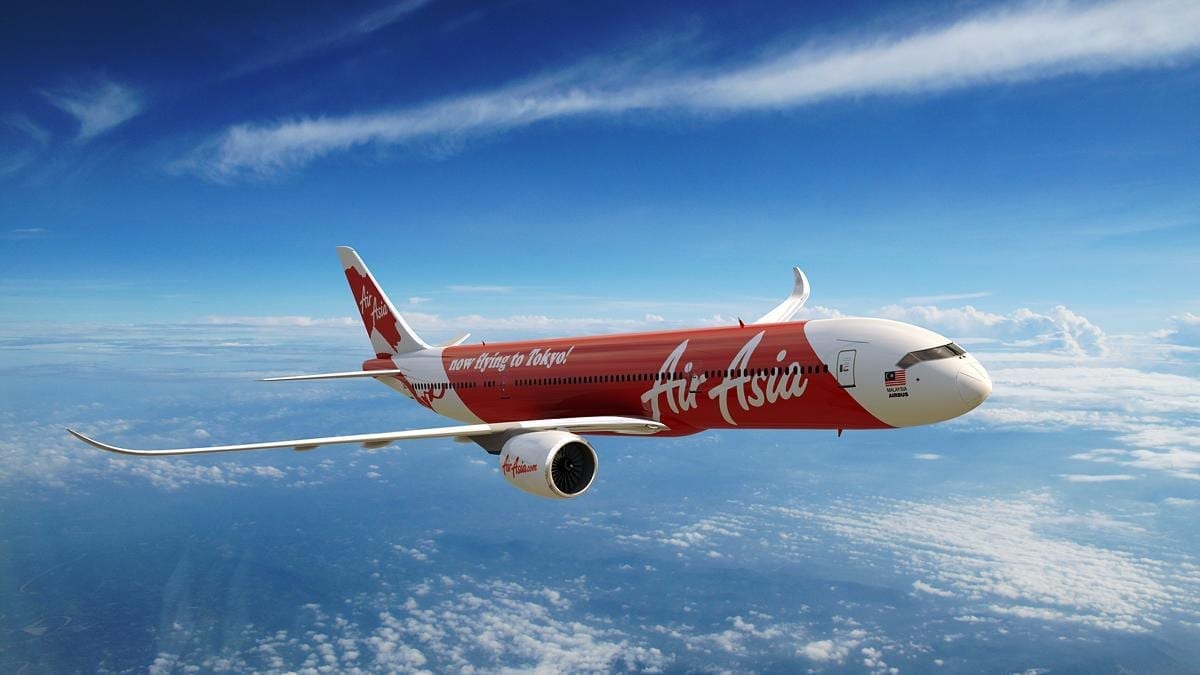
    AirAsia Group CEO Tony Fernandes shares his views on his company’s Indonesian unit and his business strategy.Once an ailing airline struggling with debt, Malaysia-based budget carrier AirAsia has successfully transformed itself to become one of the most successful airlines in the region while working to achieve its noble vision: democratising air travel by offering low fares and high quality service. Despite a market slowdown, AirAsia has so far become the world’s best-performing airline stock this year.

    In Indonesia, the company manages two units – Indonesia AirAsia (IAA), which operates a fleet of 29 Airbus A320s, and Indonesia AirAsia X, the country’s first long-haul, low-cost carrier – and has become a serious competitor for major local low-cost airlines, including Lion Air and Citilink. Last week, AirAsia Group CEO Tony Fernandes invited The Jakarta Post’s Farida Susanty to his office in Kuala Lumpur to discuss the company’s business strategy, his vision for the company’s Indonesian units and his response to the recent launch of the world’s biggest alliance of low-cost airlines to challenge the company’s stronghold in the business. The following are excerpts of the interview.

    You keep saying that Indonesia is more than just Bali. How do you envision the country’s aviation industry in the next few years?

    Tony Fernandes: We want to invest more in Indonesia. That’s why we’re after a change in Indonesian regulations. We think that domestic flights are already well-covered as Citilink, Lion Air and Sriwijaya Air are doing a good job. We also contribute a little. However, our strength is in international flights and this is the reason why our international flight to Bandung West Java, Indonesia’s fourth most-populous city is always full. No one flew to Bandung before us. So we want to do more Bandung [flights]. We have 55 million international passengers that we can bring to Indonesia. So, what do we need? Well, we need the regulations on ownership to change. We would like taxes for leasing and fuel to be more market-driven. We would like the Indonesian government to look at smaller airports. I said to the Indonesian government, for small airports that have no international flights, why don’t they bring down the charges for airlines, so at least we can try some direct flights from Thailand, Malaysia, Singapore or even China?

  • Chinese Investors Eye Indonesia`s Pharmaceutical Sector

    Chinese Investors Eye Indonesia`s Pharmaceutical Sector

    Four Chinese pharmaceutical firms have expressed their intent to invest in Indonesia as conveyed to the Chairman of Indonesia Investment Coordinating Board (BKPM) during his visit to three Chinese cities: Qingdao, Hangzhou and Shanghai.

    Franky said that Chinese investment will enhance domestic pharmaceutical industry because 96 percent of raw materials in the pharmaceutical industry are still imported. “The time is right, because the government has just revised the negative investment list,” Franky said in a written statement yesterday, June 19, 2016.

    The revision has made pharmaceutical sector 100 percent open to foreign investment, he said. “Because President Joko Widodo hopes that, by 2019, the need for pharmaceutical raw materials can be met domestically by 50 percent.”

    China is one of Indonesia’s main sources of investment. Chinese investment realization has reached US$2.6 billion since 2010. BKPM has recorded investment commitment worth US$5.3 billion from China since 2010.

    In the first quarter this year, Chinese investment realization reached US$464 million with 339 projects. Their investment has absorbed 10,167 workers. It has put China in the fourth place of the list of countries with the most investment in Indonesia behind Singapore, Japan, and Hong Kong.

    Pharmaceutical industry players have welcomed the plan to invest from China. However, they have called on the government to direct the investment to primary industries, such as chemical producers. “We need domestic raw materials, so we will not import it. We have been acting like a tailor, all raw materials are from abroad,” said Yasser Arafat, Corporate Secretary of PT Indofarma (Persero) Tbk

  • Indonesia promotes specialty coffee in the Netherlands

    Indonesia promotes specialty coffee in the Netherlands

    Indonesia has again promoted its specialty coffee in the Netherlands to draw the attention of several people in The Hague.

    The promotional activity, being conducted through the Indonesia Coffee Festival, complied with the Indonesian governments policy to conduct economic diplomacy in the Netherlands.

    The promotion at the New Babylon Meeting Center was organized by the Indonesian Embassy in The Hague along with the Indonesian Students Association (PPI) in the Netherlands and PPI in The Hague, Minister Counsellor of Information, Social, and Cultural Affairs for the Indonesian Embassy in The Hague Azis Nurwahyudi informed Antara here on Monday.

    In his remarks, Indonesian Ambassador to the Kingdom of the Netherlands Wesaka Puja stated that coffee was one of Indonesias leading export commodities as the country was the fourth-largest coffee producer in the world.

    The Indonesian government has continued to expand its overseas markets, especially in Europe, he remarked.

    Chairman of the Committee on The Hagues PPI Priska Astasari stated that the joint activity was also aimed at promoting economic development in Indonesia.

    Some seven companies from Indonesia were invited to participate in the festival: Adena Coffee, Javanusa, De Ngokow Coffee, Ephraim Coffee, Asasta Power, Mr O, and Blanco Coffee and Book.

    During the festival, some talk shows were organized to hold discussions on the various traits of Indonesian coffee.

    For instance, Charis Christian Julianto from the Ephraim Coffee Company disseminated information on coffee farming in Indonesia, including the history of the emergence of coffee beans in Indonesia and the concept of sustainable coffee production adopted by the Indonesian coffee farmers and entrepreneurs.

    Thereafter, Sara Datuk from the Javanusa Company provided information on the different flavors of coffee from various regions in Indonesia, such as the provinces of Aceh, West Java, and Papua.

    Aki Baihaki noted that fair trade in coffee should be profitable for entrepreneurs and the coffee farmers.

    Barista Yakup Aydin also demonstrated the ways of making espresso and latte art.

    Bimo Pramana from the Blanco Coffee and Book Company in Yogyakarta Province stated that by attending the Indonesia Coffee Festival in The Hague, he had gained a new experience and had increase his knowledge regarding the demand in the European market, especially in the Netherlands.

    The event also offered an opportunity to build a network among coffee entrepreneurs in both countries.

  • Taiwan Mobile eyes investments in India, Indonesia

    Taiwan Mobile eyes investments in India, Indonesia

    Taiwan Mobile is considering investing in the telecoms markets of India and Indonesia due to their strong growth potential.

    At the operator’s annual general meeting, chairman Richard Tsai said the company is evaluating opportunities to enter the markets.

    While Tsai acknowledged that India’s overcrowded market has resulted in heavy price competition, he said that the large population is creating opportunities in segments including data transmission.

    The operator is evaluating the possibility of teaming up with operators in India to carve out a slice of the nascent 4G market in the nation.

    According to Tsai, the company has also been eyeing an entry into the e-commerce sector in Southeast Asia, with subsidiary momo.com preparing to explore the markets of the Philippines and Vietnam.

    Domestically Taiwan Mobile is focused on developing its third party payment business while kicking off an OTT content business. Taiwan Mobile has meanwhile set a target of lifting its 4G subscriber base to 5 million in 2017 from 3 million at the end of 2015.

  • Indonesia plans to implement certification to prevent fish laundering

    Indonesia plans to implement certification to prevent fish laundering

    Indonesia will implement a certification system to prevent fish laundering, Minister of Fisheries and Marine Resources Susi Pudjiastuti said here on Tuesday.

    “I will make sure that all imports of fish will require a catch certificate in order to prevent so-called fish laundering,” she stated.

    She admitted that Indonesia imported fish to meet the demand from the industrial sector such as certain restaurants which need salmon fish, a species not found in the country.

    The minister explained that she has allowed these imports because she believed it will not hurt the price of local fish.

    “Our fish imports have dropped,” she continued, adding, “Indonesia imported many kinds of fish, not only salmon, which are not found in the country.”

    Susi pointed out that skipjack tuna is not found all year round in Indonesia. In addition to the decreasing trend of fish imports, the fish culture in Indonesia has also helped reduce dependency on fish feed, she noted.

    She praised her offices program of distributing various types of fish feed machines to various regions as it seemed to have yielded results.

    The office has increased the number of auditors from 700 to 1,000 this year to certify good fish culture practice.

    “We want more counselors and auditors as the number of people involved in fish culture has also increased. Similarly, production, exports and fish consumption have also increased,” the director general of fish culture, Slamet Soebjakto, informed in Mataram on May 26.

  • Khiri Travel the first to earn Travelife Partner status in Indonesia and Laos

    Khiri Travel the first to earn Travelife Partner status in Indonesia and Laos

    Travelife is a leading training, management and certification initiative for tourism companies that are committed to sustainability. Travelife was founded with the support of ABTA in the UK and ANVR in the Netherlands in 2007 as a thorough responsible tourism certification scheme for tour operators and hotels.

    Khiri Travel in Indonesia and Laos have both been awarded Travelife Partner status following a major social and environmental audit. Khiri Travel is the first in both Indonesia and Laos to earn Travelife Partner status.

    Travelife certification for tour operators and travel agents comes in three rising stages: Engaged, Partner, and Certified. Khiri Travel Indonesia and Laos are two-thirds of the way to full certification. Khiri Travel Myanmar, Thailand and Vietnam achieved full Travelife Certification in 2015.

    Travelife is a leading training, management and certification initiative for tourism companies that are committed to sustainability. Travelife was founded with the support of ABTA in the UK and ANVR in the Netherlands in 2007 as a thorough responsible tourism certification scheme for tour operators and hotels.

    Richard Brouwer, CEO of Khiri Travel, said: “Travelife Partner status shows a great pioneering spirit and dedication by the Khiri teams in Indonesia and Laos. Khiri Travel is committed to measurable sustainability because it boosts customer satisfaction, staff motivation and business efficiency. Khiri Laos and Indonesia will keep working towards full Travelife Certification.”

    Naut Kusters, General Manager for Tour Operators and Travel Agents for Travelife said: “Khiri Travel in Indonesia and Laos are on the right path. Sustainability management is about commitment and consistent sustainable business practices. This includes a tour operator’s products, how they monitor and manage their impacts, and how they support their suppliers on their road to sustainability. I expect that the lead of Khiri will be an incentive for other companies to join the route towards sustainability.”

    The three-stage Travelife process acknowledges OECD corporate social responsibility guidelines including labor conditions, human rights, environmental responsibilities, biodiversity and fair business practices.

    The Travelife standard for tour operators is also formally recognized by the UN-supported Global Sustainable Tourism Criteria (GSTC).

  • Astra doubts car sales would increase

    Astra doubts car sales would increase

    The country’s largest car manufacturer, PT Astra Internasional, expresses doubt that sales of automotive products would increase in 2016.

    Car and motorcycle sales would not increase under the economic slowdown, Astra’s investor relation officer, Ira Ardianti, said here on Monday night.

    Sales of both two and four wheeled motor vehicles have been flat in the past five months, she cited. The people’s purchasing power is still weak and have no fund to spare for luxury, she said.

    Sales of motorcycles dropped in the regions mainly because of the commodity price fall such as palm oil and rubber prices, Ardianti said.

    In the first quarter of 2016, Astra’s car sales dropped to 127,000 units from 137,000 units in the same period last year. In April and May, Astra’s sales of cars totaled 31,000 units and 33,000 units respectively.

    Its sales of motorcycles also shrank to 1.1 million units in the first quarter of 2016. In April and May sales were recorded at 348,000 units and 338,000 units respectively.

    “We could not make prediction , but hopefully the economy would improve and the people’s purchasing power would be stronger,” she said.

    The Indonesian Automotive Industry Association (Gaikindo), however, said car sales in Indonesia (from factories to dealers) surged 11 percent to 87,919 units in May 2016, the second straight month of rising car sales year-on-year.

    Gaikindo chairman Jongkie Sugiarto attributed the increase mainly to delivery of new models ahead of Idul Fitri holiday.

    In April car sales in Indonesia grew 4.6 percent to 84,703 units from 81,000 units in the same month last year.

    This is encouraging after being on the decline for 16 straight months previously.

    Stakeholders in the automotive industry hope that this is the start of a rebound, in line with accelerating economic growth.

    In the first quarter of 2016 Indonesias economic growth accelerated to a growth pace of 4.92 percent yoy), higher than the 4.73 percent GDP growth pace in the same quarter last year.

  • Peruri to build currency paper factory in 2017

    Peruri to build currency paper factory in 2017

    The state-owned money printing company, Peruri, has set a target to build a currency paper factory in 2017, according to the companys President Director, Prasetio.

    Such a currency printing firm is badly needed because Indonesia does not have one so far, Prasetio pointed out here on Monday.

    “God willing, we will be able to sign a Memorandum of Understanding (MoU) with our partners, so that it can be realized next year,” Prasetio explained, adding that the venture is open to both domestic and foreign investors to be partners.

    Prasetio further said that the currency paper plant will be built on Peuris own land in the West Java Provincial District of Karawang.

    Prasetio did not elaborate how much investment would be required for the project.

  • Citilink to serve international flights China-Morotai

    Citilink to serve international flights China-Morotai

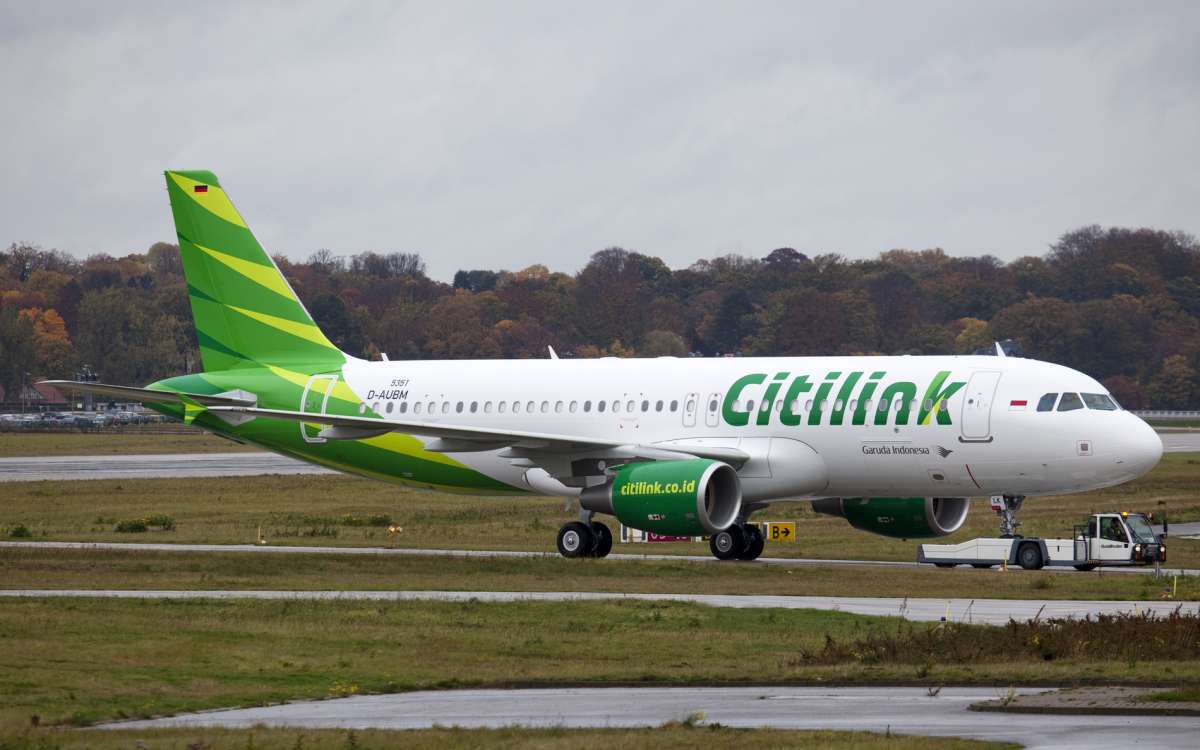
    Citilink plans to open a new international flight route between China and the Morotai island in North Maluku to support development of the island into one of ten main tourist destinations in the country.

    Head of the North Maluku Telecommunications and Informatics Service Burhan Mansyur said the management of the airline has signed a memorandum of understanding with the district administration of Morotai on the plan to open the international flight route.

    The Morotai island was one of military bases of the Alliance Forces during the World War II facing Japan in the Pacific war.

    The plan is Citilink, a subsidiary of the nations flag carrier Garuda Indonesia, would open the route between China and Morotai via Manado in North Sulawesi.

    Realization of the plan, however, would depends on the completion of project to modernize the Leo Wattimena airport of Morotai, Burhan said here on Tuesday.

    He said the runway of the airport already meets the conditions to serve international flights but it needs renovation in its passenger terminal.

    He said as one of ten main tourist destinations, modernization of the the airport would be given a priority with fund from the state budget.

    Head of the North Maluku Tourism and Cultural Service Anwar Husen said the opening the international flight route would bring more foreign tourists to the Pacific rim island.

    Not many foreign tourists are interested to visit Morotia on problem in air transport, Anawar said.

    Even domestic tourists from the western part of the country could visit Morotai only via Manado and Ternate.

    Apart from its historical background as former main military base of the Allied Force, Ternate has wide sparkling sand beach and under sea panoramic scene attracting many surfers to that location.

  • Garuda to strengthen fleet with 17 new units of aircraft

    Garuda to strengthen fleet with 17 new units of aircraft

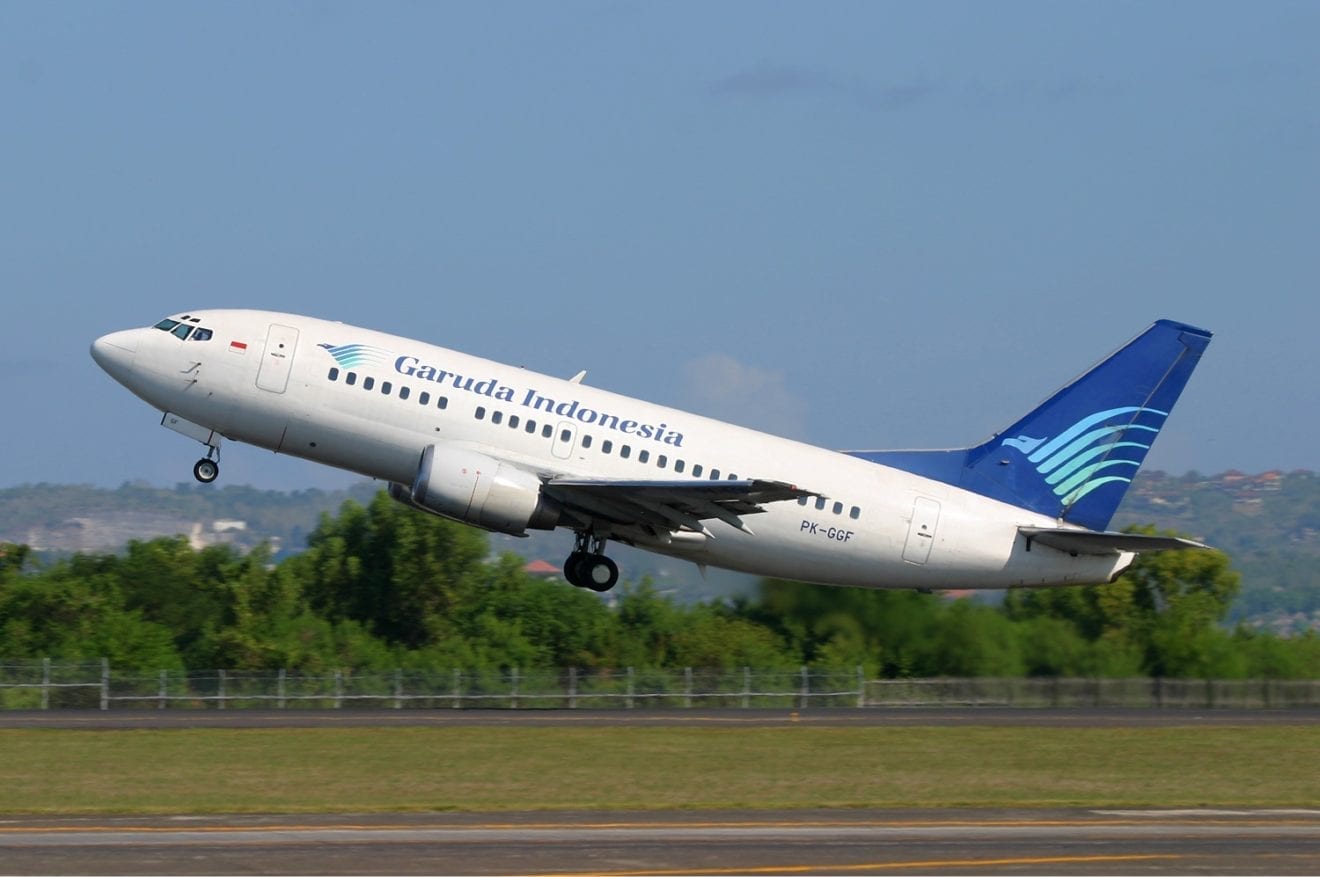
    Garuda Indonesia Group said it will strengthen its fleet with 17 new units of aircraft this year. The 17 units of aircraft will include a Boeing 777-300 ER, four units of Airbus A 330-300, and four units of ATR 72-600 for Garuda Indonesia and 8 units of Airbus A 320 aircraft for its subsidiary Citilink,a Garuda vice president for Corporate Communications Benny Siga Butarbutar said here on Tuesday.

    With the addition of new units, the Garuda Indonesia Group will operate 197 units of aircraft, Benny said on the sideline of commissioning a new route between Medans Kualanamu airport and Singapore.

    “The total number is 197 units including 53 units operated by Citilink,” he said.

    Citilink is a budget airline serving mainly domestic flights, with Garuda, the nations flag carrier serving international as well as domestic flights.

    From Kualanamu Garuda Indonesia Group serves direct flights to Jakarta, Banda Aceh, Lhokseumawe, Sabang, Batam, Lampung, Palembang, Denpasar, Sibolga, and Gunung Sitoli on the islanf of Nias off western coast of North Sumatra.

    Garuda Indonesia President M Arif Wibowo said the airline will also increase service for short distance flights.

  • Garuda Indonesia launches re-operations of Singapore-Medan flight

    Garuda Indonesia launches re-operations of Singapore-Medan flight

    Indonesia’s national airline, Garuda Indonesia, today launched the re-operation of a daily flight between Singapore and Medan. The flight reopening is in line with the airline’s future expansion plan, and the continuously commitment as the flag-carrier to help boost Indonesia’s economic, business, and tourism growth, as well as part of its effort to further strengthen the backbone of its connectivity in Southeast Asia region in line with the Open Sky policy.

    The relaunches ceremony was located at the Changi International Airport, and proudly unveiled by Indonesian Minister of Tourism Mr Arief Yahya, President & CEO Garuda Indonesia M. Arif Wibowo, Indonesian Ambassador for Singapore H.E. Ngurah Swanjaya, VP Airline Development Changi Airport Group Damon Wong, along with other officials of Garuda Indonesia Board of Director and Tourism Ministry of Indonesia.

    President & CEO Garuda Indonesia M. Arif Wibowo stated that aside from the airline’s expansion program, the reoperation of the flight is also a commitment to support Indonesian government program in boosting the Top 10 Priority Destinations in which one of them is Lake Toba.

    “We believe this new service will stimulate growth of business and trade in the region, more so as Medan is strategically located as the gateway to Sumatera and the rest of Indonesia’s western regions. The new service will offer passengers a wider choice of destinations as well as greater flexibility and convenience when travelling between Singapore and cities in Sumatera, such as Palembang, Banda Aceh, Sabang, Lheuksmawe, Gunung Sitoli, and Pinangsori,” he added.

    Apart from business and leisure travel, many visitors from Singapore come to Medan as the city is quite well known for its vibrant mix of cultures and reputation as a culinary paradise as well as popular tourism attractions.

    Commenting on the airline’s strategic initiative, Indonesian Minister of Tourism Arief Yahya explained that Singapore is considered as an international transportation hub, as well as the tourism hub for Indonesia. Furthermore, the Minister also promotes Lake Toba, one of the Top 10 Priority Destinations in Indonesia.

    “Toba is the largest and deepest volcanic lake in the world. Lake Toba is a giant caldera, with crater formed by the eruption of a super volcano 74,000 years ago. Experts believe that huge explosion of Toba volcano was the largest in the last 2 million years, and had triggered a dramatic volcanic storm. As an attraction, Lake Toba is a very distinctive, world-class natural landscape,” he added.

    The Medan-bound service will run daily and will be operated by Garuda’s Boeing 738 aircraft with a two-class cabin configuration featuring its globally praised Business Class service concept and the World’s Best Economy Class (Skytrax Global Airline Awards 2013).

    The service will depart from Changi Airport at 11.15am and arrive at Kualanamu International Airport at 11.45am local time. The return flights to Singapore will depart Kualanamu International Airport at 13.30pm and arrive at Changi Airport at 16.00pm local time.

    Garuda Indonesia had also launched the Wonderful Indonesia Travel Pass last January in an effort to promote Indonesia’s tourist destinations beyond its main hub, as well as to boost travel, by making travelling within Indonesia a truly affordable and seamless experience.

    The launch of this service is part of Garuda Indonesia’s 50th Anniversary in Singapore. The airline’s presence in Singapore, for over 50 years, marks Singapore not only as one of the airline’s most important markets, but also as a symbol of an even better relationship between the two countries in the next fifty years. Ever since the first day of its consecutive operations in Singapore 50 years ago, the airline has grown considerably and transformed into one of Asia’s most successful airlines.


  • Cloud computing can help firms cut costs

    Cloud computing can help firms cut costs

    With the rise of cloud computing in business practices worldwide, Microsoft is encouraging Indonesian industries and businesses to take advantage of this technology in their day-to-day operations, mainly due to the cost-cutting advantages that it offers.

    Microsoft Indonesia’s national technology officer Tony Seno Hartono explained that by using public cloud services, such as the ones Microsoft offers through its Azure service, Indonesia’s businesses could significantly increase their operational efficiency, by 25 to 50 percent.

    This is due to the fact that cloud services provide many streamlined features such as server management, data storage and even the electricity to keep the data-storing servers alive. “It can help businesses decrease their operational costs, because using cloud services is basically like outsourcing. Microsoft has a huge data center, capable of storing data and managing it for you. Why not utilize our services?” he said on Monday.

    Microsoft, he continued, is in talks with an unspecified telecom operator to build a data center in Indonesia, but says the negotiations are still ongoing. Indonesian users of Azure currently have their data stored in Microsoft’s data centers abroad, such as in Singapore and the US.

    Adding to the virtues of cloud computing, Tony elaborated that the local creative industry could also harness the benefits of Microsoft’s multiple data centers for creating works of art. One example is in the animation industry, where higher quality animations require massive amounts of time and data to be rendered.

    During the making of James Cameron’s blockbuster film Avatar, Cameron collaborated with Microsoft to render the CGI animations using their public cloud services, thus saving the film production time and costs.

    Tony said that if Cameron had not utilized Microsoft’s multiple data centers, the animations from Avatar would have taken many years to render properly due to the film’s scale and size.

    Within the film industry in Indonesia, many have expressed interest in using Microsoft servers but none have used them so far, because the industry still remains small, and large-scale animation jobs in Indonesia tend to be taken to foreign animation studios to be worked on, Tony added.

    From the perspective of Winastwan Gora, chief operating officer of tech education start-up Kelase, the usage of Azure cloud services has benefitted his company’s operations and has helped cut costs.

    Kelase signed up for Microsoft’s BizSpark service, for three years of Azure usage with a usage cost limit of US$150 per month. The move guaranteed them space on Microsoft’s data centers abroad for storing and processing their information.

    “By utilizing the Azure cloud, we were able to improve our communications and marketing efforts and also, our analytical and source control mechanisms became easier to carry out compared with other means. In other words, it’s now easier for the company to be run digitally,” Gora said.