Author: Mei Ling Tan

  • Central Department Store app launched

    Central Department Store app launched

    A Central Department Store app has been launched to keep customers informed about in-store promotions, aiming to drive traffic in the lacklustre market in Thailand.

    In the Thai language, Central Smart Shopper lets users key in such factors as date, store branch and budget. It then shows a list of available promotions from about 20 credit-card companies.

    Executive VP for marketing Piyawan Leelasompop says the aim is to capture younger-generation shoppers. “They are eager to change, and one day we could foster the relationship and build brand loyalty.”

    Part of retail giant Central Group, the department store has invested more than 10 million baht (US$280,000) to develop the app, and targets 100,000 downloads by year-end. It plans to further develop the app to link to online shopping.

    This follows Central Group acquiring the Thai market for online fashion marketplace Zalora, as well as a slump in Thai spending. Thailand’s retail sector slowed to 2.8 per cent growth last year, according to the Thai Retailers Association.

    Central Group will kick off a one-and-a-half-month sale on Friday at its 64 branches nationwide, including Central Department Stores. It will invest 100 million baht in the campaign to offer discounts of up to 80 per cent.

  • German Retailer Metro to Open its First Two MyMart Stores in Shanghai

    German Retailer Metro to Open its First Two MyMart Stores in Shanghai

    Germany’s Metro Group has opened two My-Mart convenience shops in Shanghai, revealing its new concept.

    My Mart convinient store- Metro Group China 1

    Both stores opened the same day in Putuo district, where Metro China has its headquarters and flagship stores. One is about 110 sqm, near a subway station, and the other about 70 sqm. Both shops offer Metro’s exclusive imported products, private label lines and traceable fresh fruits, as well as about 100 ready-to-eat items.

    My Mart convinient store- Metro Group China 4

    My Mart convinient store- Metro Group China 3

    My Mart convinient store- Metro Group China 2

    Metro China plans to make the My-Mart convenience shops the offline self-pick-up spots for goods ordered at the group’s online shop.

    More My-Marts will open in Shanghai and it is planned to roll out the concept to other cities in China through franchise.

  • Illegal OTT boxes are the new P2P piracy

    Illegal OTT boxes are the new P2P piracy

    Online video piracy is alive and well in 2016, but the threat landscape has shifted from straight conditional access (CA) technology and P2P file-sharing to illegal OTT set-top-boxes (STBs) that connect users to sites that look like professional OTT service providers with fancy EPGs, but are in fact hosting stolen content.

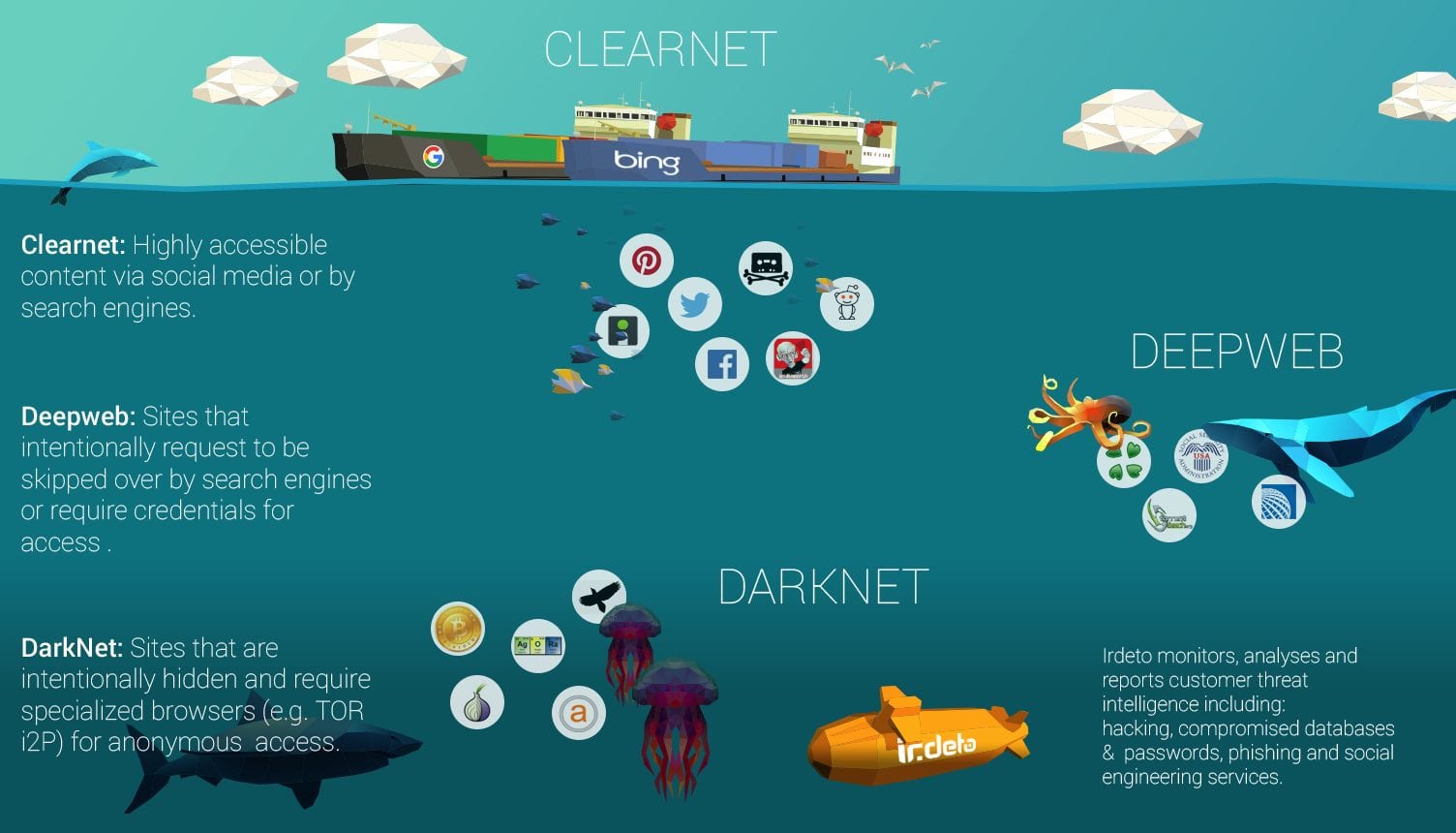
    “So these new-age pirates are no longer hacking the CA on the STB, they are selling their own STBs and delivering illegal content through them,” says Bengt Jonsson, VP of Asia-Pacific at Irdeto.

    Combating that involves some tried-and-true techniques like watermarking so stolen content can be identified. But that’s just the start, says Jonsson.

    “You also need a monitoring service to go and find stolen content on these sites and identify it,” he says. “And you need a takedown service where you go to the ISPs and tell them, ‘We represent this customer, this is their content and it’s pirated,’. And you have to monitor for compliance.”

    Irdeto supplies all of these services, and also has agreements with major e-commerce sites like Alibaba and eBay under which they will remove illegal OTT STBs from the site when Irdeto identifies them.

    However, says Jonsson, this kind of piracy is a global problem that requires cooperation from both the pay-TV operators (as well as industry organizations like CASBAA) and regulators who police copyright infringement.

    A challenge to the latter is jurisdictional issues – for example, what do you do when content produced in Australia is being pirated for an OTT box sold in Ukraine?

    “We start by using watermarking and fingerprinting to trace the source of the content, and from there we can locate the subscriber and block them and see where the traffic is going,” says Roger Harvey, Irdeto’s ANZ managing director. “So we can determine both where the pirate site is and where they got the content from.”

    The rest is up to legislation frameworks in each country to not only combat piracy, but keep up with changing delivery models such as the shift from linear pay-TV to multiscreen OTT.

    Interestingly, the ability to track and monitor stolen content also gives Irdeto’s customers valuable data on how popular certain content is and where.

    “We have what’s called a heat map, where our customers can see what content is being consumed in what area, legally or illegally, which shows demand for it,” Jonsson says. “An effective way to combat online piracy is to deliver a legal alternative, so with this, data content owners can see what viewers want so much that they’re willing to pirate it if it’s not available.”

    Last week, Irdeto partnered with Taiwan-based ALi Corp, which will integrate Irdeto’s security solutions on its latest generation chipset offerings for STBs.

  • Here’s How Estee Lauder Plans To Grow In China

    Here’s How Estee Lauder Plans To Grow In China

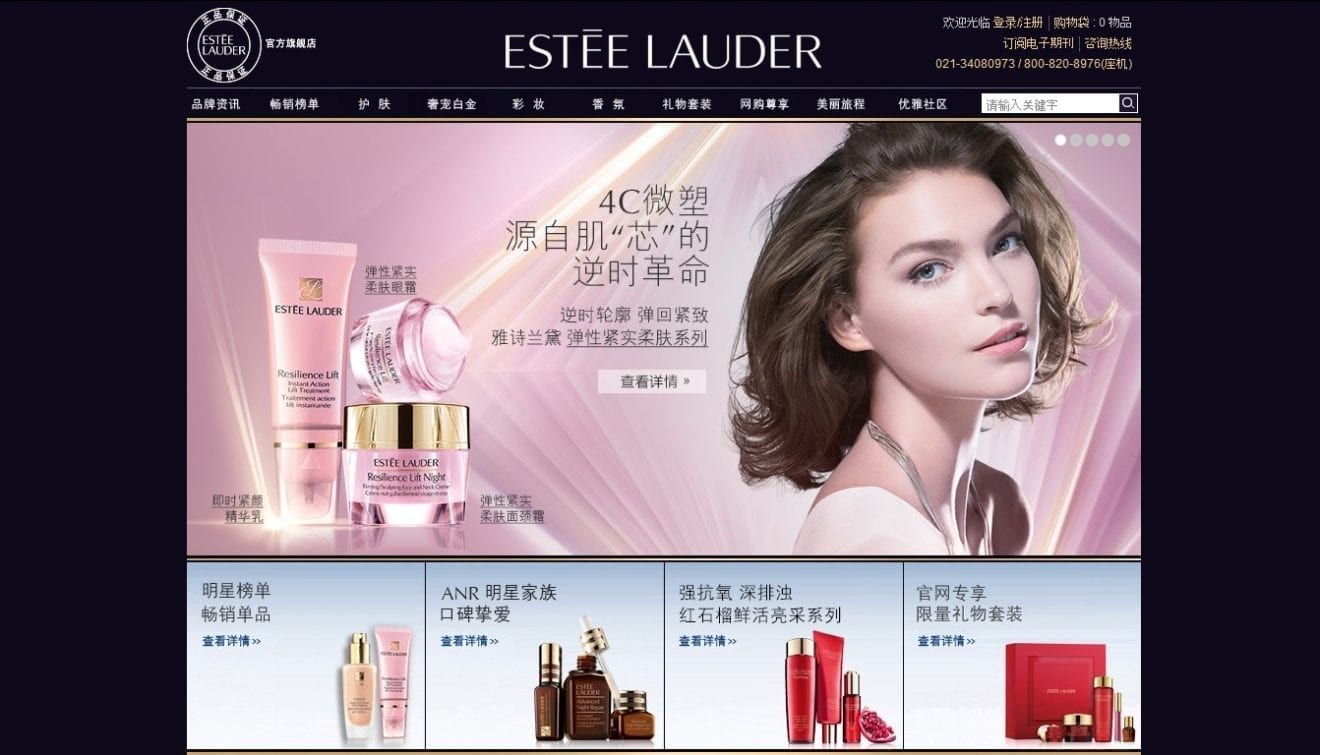
    In Q3 2016, Estee Lauder registered an 8% growth in retail sales in China, lower than its all the time high of 20%, but still strong according to the company. The growth in China was primarily due to a 70% growth in e- and mobile commerce sales and 10% of the company’s business in China is now online. Estee Lauder now plans to diversify its brand portfolio in the region along with a geographically diversification by penetrating into more cities in China. It also plans to increase the number of freestanding stores, particularly in cities where there are no alternative distribution solutions such as departmental stores. While the Asia Pacific region (including China) accounts for less than 20% of the company’s net sales, it holds strong potential. Most of the company’s brands expect Estee Lauder registered double digit growth in China for Q3 2016. We believe that its investment in e-commerce, its diversification and increasing focus on distribution channels will drive revenues for the company from this region in future.

    Focus On E-Commerce Initiatives

    Estee Lauder reported that 70% of its growth in China for Q3 2016 came from online sales which now account for 10% of total sales in the region, slightly lower than the 12% figure for the U.S. The company plans to explore the omni channel opportunity in the region, where its freestanding stores will be connected to the online brand and be more efficient. The company also has a store in Alibaba’s Tmall which aims to bring luxury brands to Chinese consumers. Mainland China’s overall luxury market is estimated at $ 17.2 billion. According to a report by KPMG, 50% of China’s domestic luxury consumption will be generated online by 2020. Estee Lauder’s investment in e-commerce initiatives in China is aimed at tapping this market and the company is already witnessing results.

    Diversification – Portfolio and Geographic

    Estee Lauder is looking to spread its geographical reach in China by expanding into more cities through a distribution channel of free standing stores. This model will work well in smaller Chinese cities where there are no departmental stores, but consumers are keen to buy the company’s products. Currently it operates free standing stores of its M.A.C and Jo Malone brands in the region, but expects to add other brands in future. The company believes that over time its speciality channel will also develop in China. Most of its brands, with the exception of Estee Lauder, registered double digit growth in the region for Q3 2016. The company can improve the its visibility in the region by broadening its distribution channel, increasing availability in stores and fostering e-commerce initiatives.

    While Estee Lauder’s sales in China are witnessing growth currently, the company is focused on the region and plans to invest on online and distribution initiatives to generate additional sales. As the Chinese economy shifts towards consumption with an increasing demand for foreign luxury products, Estee Lauder has strong growth prospects in the region.

  • Brand building shifts from billboard to online

    Brand building shifts from billboard to online

    From billboard and television, the Philippine market is slowly shifting to online in brand building, capitalizing on the growth of mobile penetration and the use of electronic commerce.

    According to leading global market research and insights company TNS, brands in the Philippines have leveraged on the social media-savviness of the Philippine market in pushing their brands which are now using Facebook twice as much in the previous year to push their products.

    Anne Rayner, global head of Communications Research, in a press briefing said electronic commerce is picking up and growing three times as fast as the global average.

    Rayner said 81 percent of brands on Facebook in the Philippines use this medium to market their products, which is almost double than the 47 percent global penetration.

    In the Philippines, Rayner said, 11 percent of purchases are now made via mobile.

    The study also showed that almost two thirds of product research (62 percent) is happening online in the Philippines – and much of this is happening in-store while people shop.

    “This highlights just how vital it is for retailers and businesses to understand which touchpoints are most important to driving sales, as it may not be those in the physical store,” Rayner said.

    Rayner clarified though that the Philippines remains a TV-heavy market but that studies would indicate a shift to mobile as half of the population are connected.

    “This has allowed them to increasingly watch videos on their smart phones during peak TV times in the early evenings. In one year, the Philippines emerged from the most TV-heavy market to just in the top 10. Brands should embrace on how to reach consumers,” Rayner said.

    “In the Philippines, it’s all about mobile and Facebook is very critical. Social media now looks like TV,” she added.

    When it comes to customer relations management, Rayner said, Filipinos prefer social media rather than call centers such that it would be better to set up service centers to handle after-sales.

    Rayner also said billboards in the Philippines are overused and brands should use them for deliberate, specific strategies on top of other media, depending on the products.

    A study done by TNS a few years ago showed that the Philippines was a country of billboards, but Rayner said this has changed.

    “Studies show that from telcos to infant nutrition, billboards are not a good value for money, just because brands become visible (through billboards) does not mean they are impactful. Billboards just become wallpapers,” Rayner added.

    Car dealerships, for example, use TV and billboards to drive sales.

    E-commerce in the Philippines in 2015 grew nine percent, three times faster than the global average, with 20 percent of Filipinos buying through ecommerce, half of which are via mobile.

    Rayner said the Philippines has overcome the accessibility challenge in e-commerce but trust issue remains a hurdle.

    She said most e-commerce purchases are for travel.

    According to Rayner, growth of e-commerce in the Philippines is hampered by the fact that most fast-moving consumer goods are purchased on last-minute, where Filipinos go to their old reliable retail outlets for their purchases.

    The TNS study revealed thaton average, Filipinos use five different touchpoints before making a purchase. Touchpoints are the different ways that consumers interact with a business.

    From traditional methods like customer service call centers to newer interactions like social media, the array of touchpoints now available for businesses has completely changed the marketing landscape.

  • The moment to tap the Philippine furniture market is now

    The moment to tap the Philippine furniture market is now

    The Philippine economy is a thundering train and it is about time for the Nordic design and furniture companies to get on board, Joni Koro, project manager at Nordic Business Council Philippines and founder of GRØN Design Solutions, says.

    “The sheer amount of new office, retail and residential developments is staggering. Although I have lived in Malaysia, Mainland China and Taiwan in the past, this is something I haven’t seen anywhere before”, the Finnish Manila-resident says.

    With an annual growth of around 6 percent, the island state is one of the world’s fastest growing economies.

    The construction boom is huge and in 2015 Metro Manila recorded the highest premium office space take-up in history on 459,000 square meters. Similar take-up of premium office space is expected also for 2016.

    Naturally this creates a great demand for furniture and design companies to furnish the office spaces.

    A lot of multinational offices are opening in Manila, and they are looking for sustainable quality furniture and are ready to pay the price for it, so the time to tap into the market is now, Joni Koro tells.

    But why just now?

    “Well if you ask me, actually we’re already late. It’s like when talking about China, the best time to get into the market was 5 years ago, but the second best is now and this also goes for the Philippines”, the Finnish entrepreneur says.

    “Unfortunately Philippines has really been flying under the radar in the Nordic region. There’s a huge potential here, especially since the last six years have been the best in the Philippine history.”

    Battling the US and European design

    When Joni Koro says, that the Scandinavian engagement on the furniture market is already late, it’s partly because more American and some European furniture companies have already jumped the gun and invested heavily in the Philippine market.

    As the market is now American contract furniture companies like Steelcase, are the biggest competitors on the market for quality Scandinavian offering, but more European companies has penetrated or are to penetrate the furniture market as well.

    Another reason why it is a good idea for the Scandinavians to tap into the market, is that the name of the cold north is already hot in the Philippines.

    “The concept of Scandinavian design and quality is fairly well known in the Philippines, but the offering is mostly limited to local mockups which rarely live up to the Nordic standards”, Joni Koro says.

    Why is Scandinavia and the Philippines a match

    If you ask Joni Koro there are several reasons why Scandinavian furniture and the Filipino market should be a successful match.

    The most significant reason is a rising interest for green awareness and thereby a demand for sustainable and environmentally friendly furniture, especially at the multinational offices, which represents the most likely buyers for Scandinavian furniture. This demand fits like a glove with what Scandinavian furniture is famous for.

    “The green movement is definitely getting stronger in the Philippines. Looking at the new office building developers, more and more of them are applying for the US Green Building Council’s LEED certification for their new buildings, he says.

    “The certificate works like a seal of approval that your office is environmentally friendly and of course gives the company a good name and a chance to price the square meters higher in a country where electricity price is one of the highest in Asia”. Joni Koro tells.

    The certifications have become highly popular. “I think out of the 80 upcoming high-end office buildings, roughly 30 have already applied for the certificate. These are the buildings the multinationals also want to be located in”.

    One way to achieve higher level in certification is choosing a green furniture supplier, as this will grant the company points when the application is rated and most Scandinavian furniture manufacturers have the green profile, that grants these points.
    Processed with VSCO with b1 preset

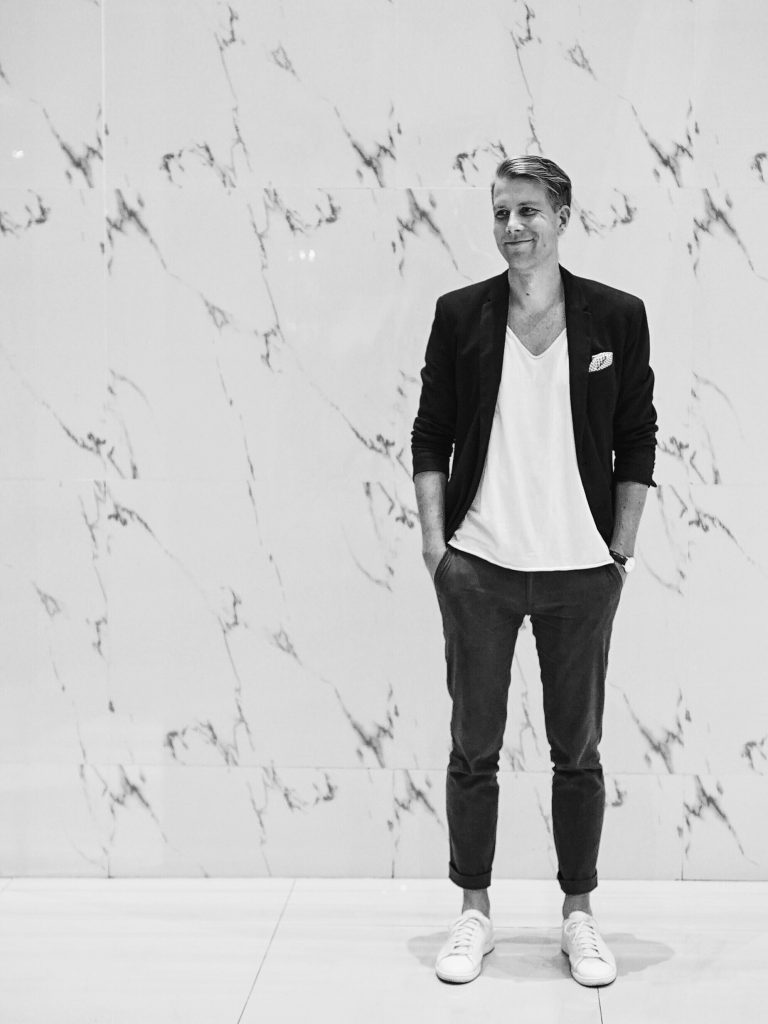
    According to Joni Koro, Scandinavian design has advantages in the Philippines.

    Another reason why Scandinavian furnitures fits the Philippine market are the traditions of Scandinavian furniture.

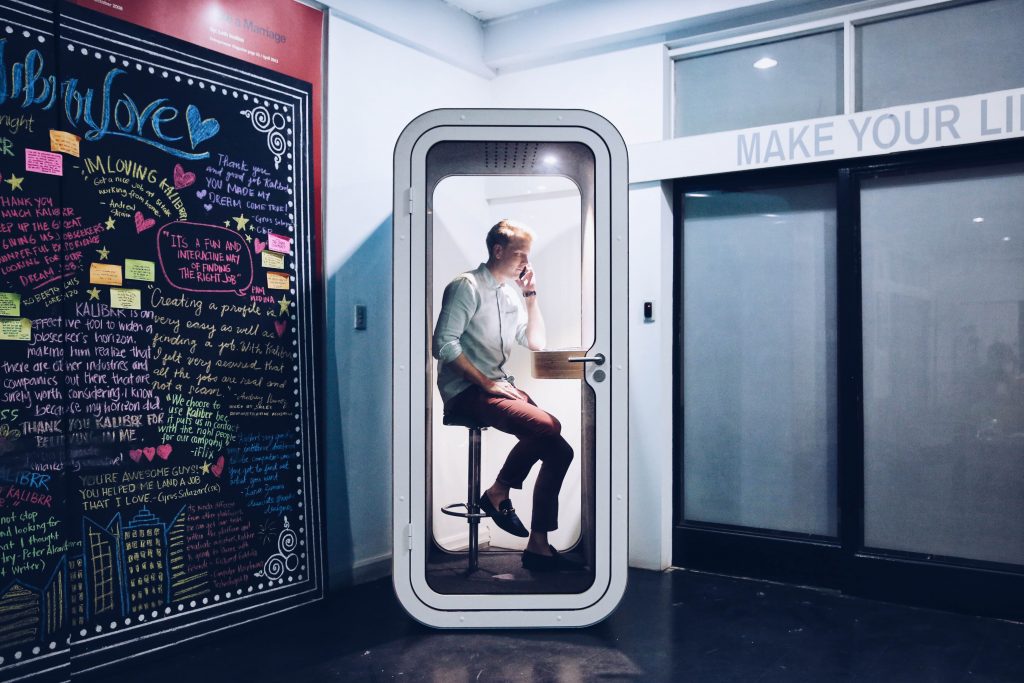
    Joni Koro’s own enterprise, GRØN Design Solutions, is the local partner for Denmark’s largest office furniture manufacturer, Duba-B8 as well as for Finland-based silent space manufacturer Framery acoustics. For Joni Koro these brands are good examples on what Nordic furniture has to offer in the Philippines.

    “Duba-B8 products are highly ergonomic which starts to be a hot topic also in Asia. In this regard Scandinavians are the world leaders”, Joni Koro explains.

    “At the moment, the demand for ergonomic, sustainable high-end furniture, that Nordic brands often represent still comes mostly from the multinational companies. But this is to change”.

    “Another very interesting product is a movable silent space from Finland. Framery silent spaces address the noise issues at open plan and activity based offices. This company is growing four fold this year – the demand around the globe for their solutions is huge and we also see the potential and need here in the Philippines”.

    Any challenges?

    As there might be many reasons and conditions to tap into the market now, there are on the counterpoint challenges to be aware of.

    “Unfortunately the local demand for high-end sustainable office furniture is still fairly limited and we can talk about niche market here. The price matters”, Joni Koro admits.

    “Even though the Philippines is closer to the western cultures compared to many, or any, other Asian country, most of the local companies still rely on cheap Chinese furniture and on layout design support individual work in cubicles instead of collaboration and activity based working”, he says.

    The Philippines elected a new president the 9th of May 2016. The new man in charge turned out to be Rodrigo Duterte, who is seen as a highly controversial figure in Western media, mainly because of his outspoken quotes on justice policy. But the new political situation shouldn’t be a challenges for the market, Joni Koro says:

    “Despite we a new President in the country the fundamentals are there. The growth of the consumption driven economy is further fed by expanding Business Process Outsourcing sector as well as Overseas Filipino Workers’ remittances, which last year were the third largest in the world, USD 26 billion. The Gross Domestic Product (GDP) is set to grow by 5 to 7 percent in the coming years. If Duterte does well with building the confidence towards foreign investors and can accelerate the infrastructure project the country could grow up to 8 to 10 percent, so the economical situation is still fertile”.

    The Scandinavian situation

    When overviewing the state of Scandinavian design in the Philippines in general, one senses that there’s a taste for it. Some well-known brands are responding to that and have already entered scene.

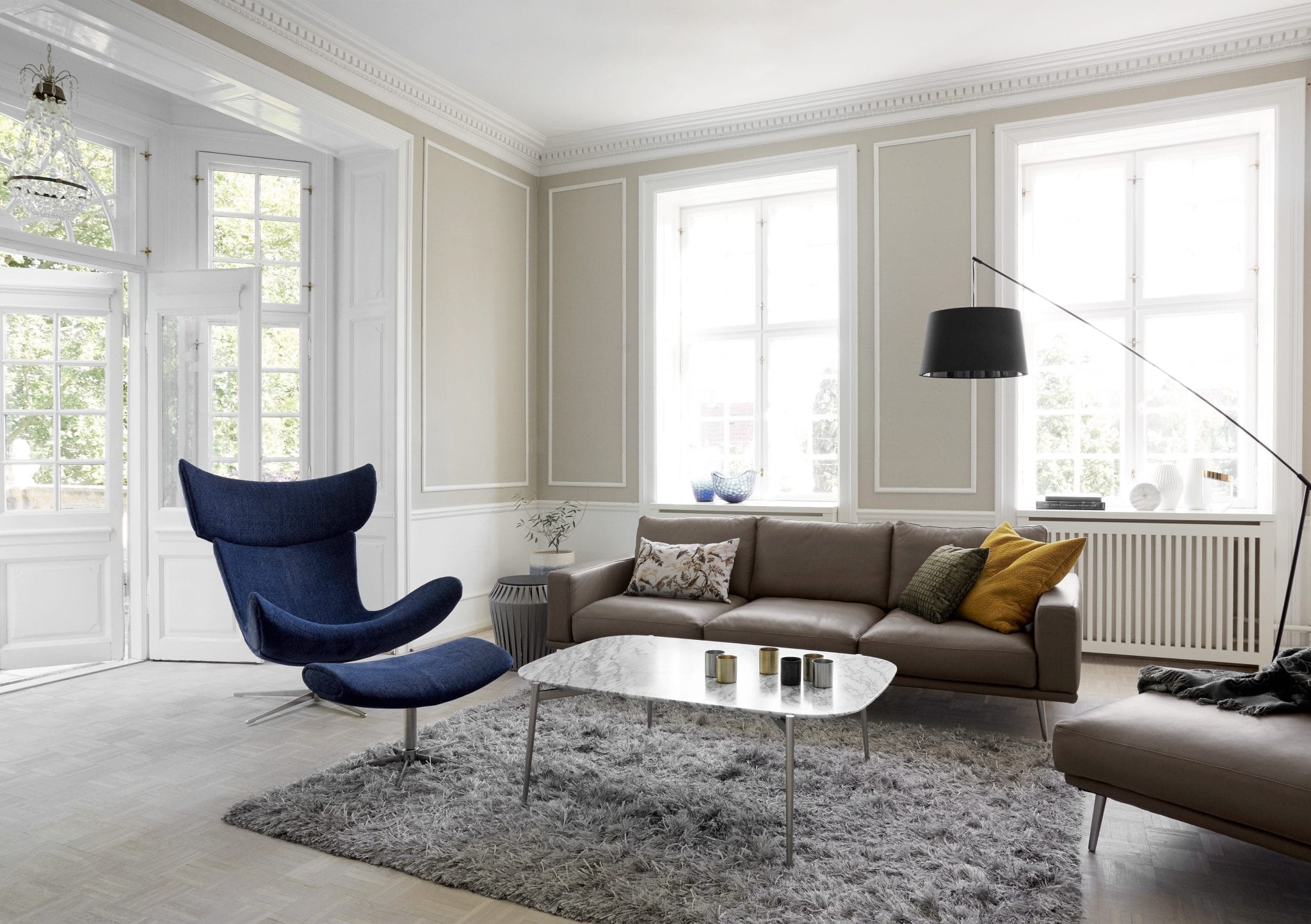
    Popular companies like BoConcept and Hay have opened retail stores with a help of local partners. Republic of Fritz Hansen and some other household names can also be found in multi-brand design stores.

    Joni Koro does his to open the market for Scandinavian furniture through NBCP and GRØN Solutions.

    “I want to bring authentic Nordic design and especially quality to the Philippines – first to the office market and soon after to the consumer market as well. I want to build a gateway for Nordic furniture and decor companies to enter the Philippine market”.

    Even though the Scandinavian design and furniture mark in the Philippines is still fairly unseen, things are developing, Joni Koro says and hopes.

    A big leap would be to get IKEA to the market, he says. “That would really create awareness of Scandinavia”.

    Do you have any advices to give if one were to get into the Philippine market with Scandinavian design?

    “The demand for high-end products in the consumer market is strong, but if you want to play it safe and build the awareness of your brand slowly you should start with fast-moving items like decorations. If I should give any recommendations you should of course do you research as always, be committed to the market, and find a trustworthy local partner to work with to deal with retail restrictions”.
    Processed with VSCO with a5 preset

    Joni Koro in the Framery’s O booth – a single person phone booth, he distributes in the Philippines as a demo unit.
  • Samsung Pay wins Citi support for Singapore launch

    Samsung Pay wins Citi support for Singapore launch

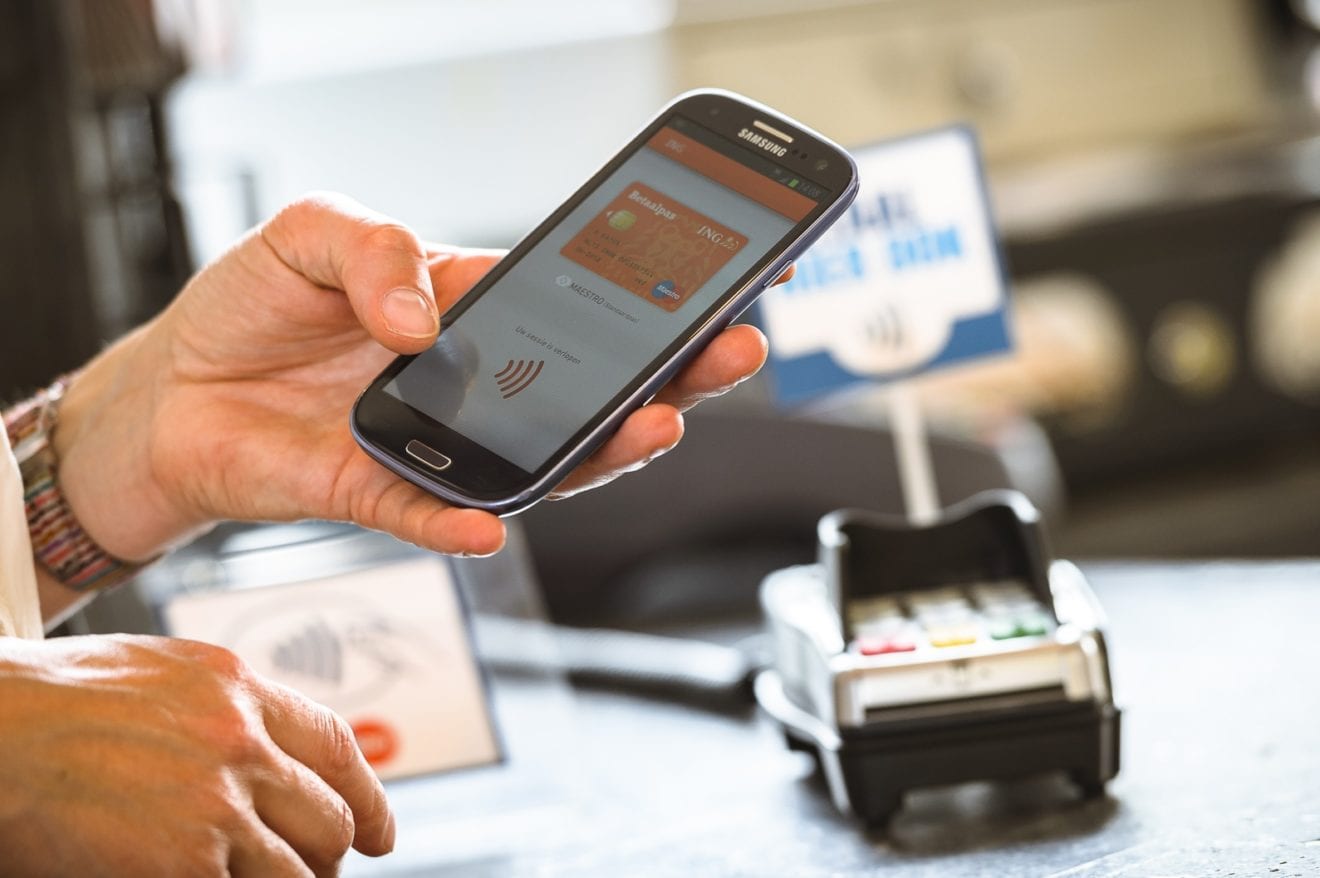
    Samsung has secured the support of Citibank as it readies the release of its mobile payments service in Singapore.

    Samsung has already won around Singapore’s major banks as it prepares for the launch of its service in Q2.The company is hoping the deal with Citi will give it the edge over rival Apple, which last week announced that it had lined up five major banks, extending the use of the mobile wallet beyond a limited earlier release for AmEx cardholders.

    Samsung says it will be able to tap in to Citibank’s extensive customer base and merchant network to promote greater adoption and usage of digital payments in the country.

    The South Korean consumer electronics giant says it has signed up ‘thousands’ of consumer to enter into beta tests of Samsung Pay ahead of its launch later this quarter.

  • Lotte tests ‘Virtual Fitting Service’

    Lotte tests ‘Virtual Fitting Service’

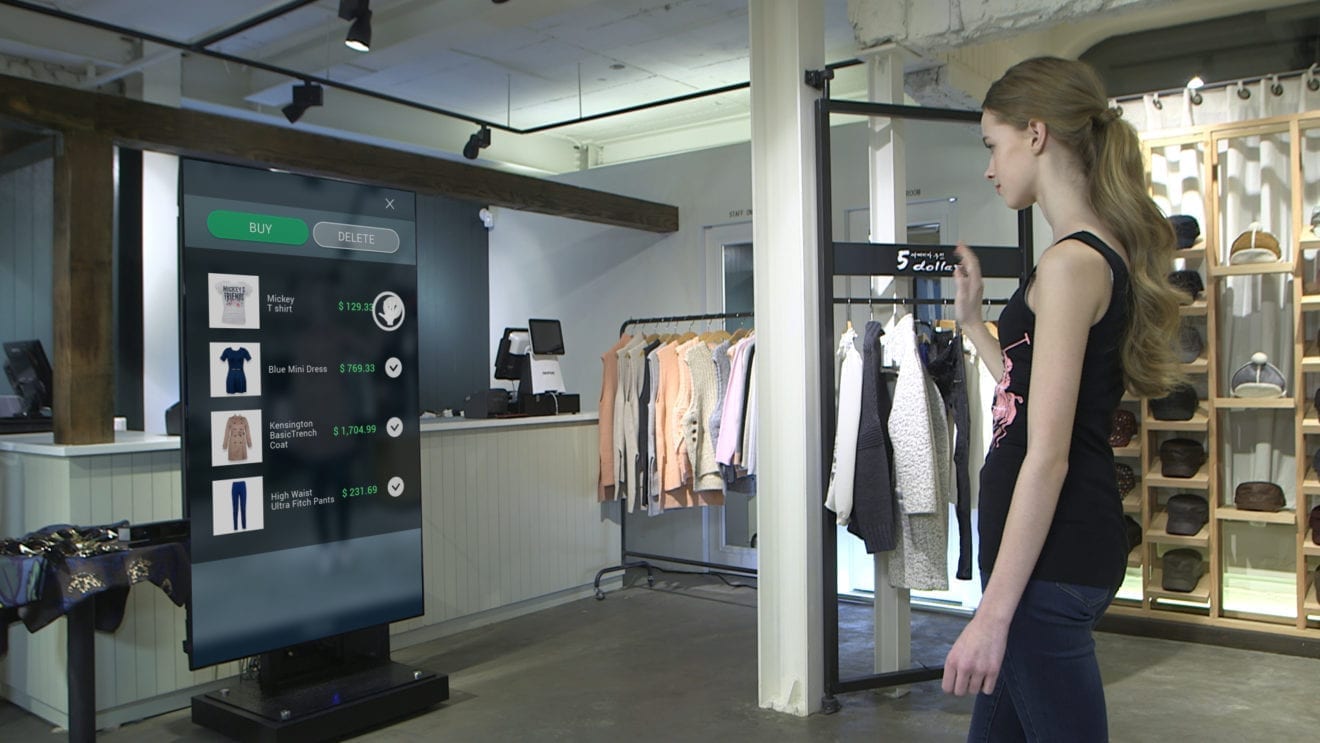
    Lotte Department Store is to implement a ‘Virtual Fitting Service’ for customers to try on clothes, without actually putting them on.

    The service uses a special mirror that provides a virtual reflection of the customer wearing the clothing by applying a 3D image of the product to the customers’ body. It will also help customers to save both time and the nuisance of having to try on different clothes. The service is expected to launch in the latter half of 2016.

    Lotte will also install 3D foot measuring devices in the third quarter, at shoe stores located in its flagship store, and Jamsil and Yeongdeungpo branches. The devices can measure a customer’s  foot in just two seconds, and recommend products based on a client’s foot size and shape.

    “We’re trying to create a more convenient environment for our customers by making use of the latest advanced technologies,” said Lee Wan-shin, chief of marketing at Lotte Department Store.

    “We’ll continue our efforts to make store visits a more pleasant shopping experience.”

  • Major revamp for SM Mall of Asia

    Major revamp for SM Mall of Asia

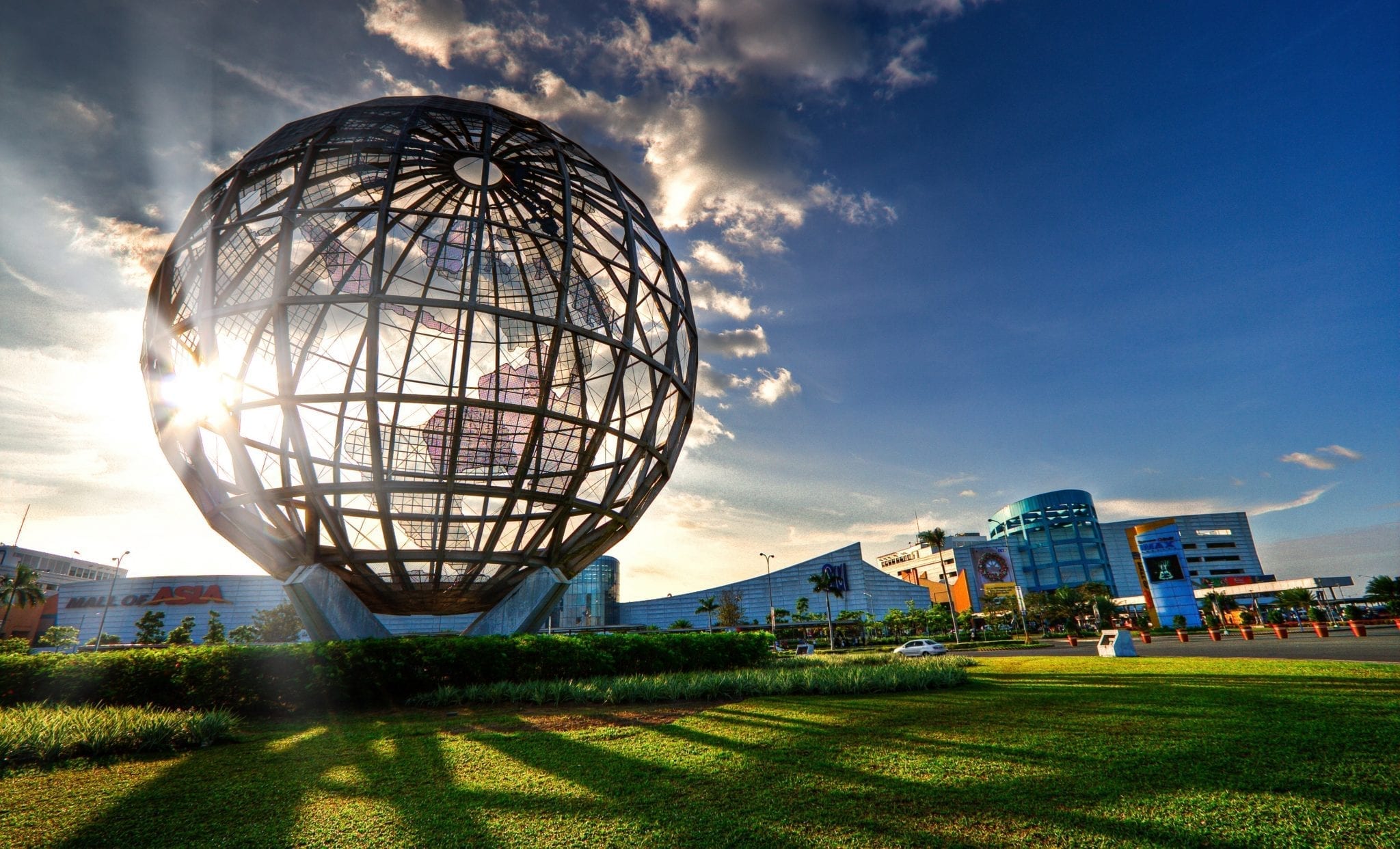
    SM Mall of Asia is set to revolutionize its look 10 years after it opened in Manila Bay.

    The Philippines’ biggest mall will soon house a FIFA World Cup-size soccer field on the mall’s roof deck and a botanical garden. Miami-based firm Arquitectonica will design these.

    By the end of the year, an Olympic-size skating rink will also open on the third floor.

    Designer furniture will deck a new food hall, in tune with the mall’s modern look.The mall will also adopt a “warmer” look and feel, according to Steven Tan, senior VP for SM Supermalls, with the interior to feature new colour scheme and wooden panelling.

    According to Tan, SM Prime president Hans Sy told the design team to give the mall a “wow” factor.

    “I’ve seen the perspectives, and the view from up there will be breathtaking. There will be an unobstructed view of the sea and it is beautiful,” Tan said.

    SM Mall of Asia has 700 tenants and has an occupancy rate of between 98 per cent and 100 per cent. This has prompted the company to undertake the redevelopment in phases.

    Conrad Manila, SM Prime’s deluxe hotel brand, is set to open in June with a new retail podium called S’Maison which will house unique concept stores as well as luxury retail stores, fine dining restaurants and state-of-the-art cinemas.

    New brands are also set to come in including Swedish clothing giant H&M which is slated to introduce a 3000 sqm flagship store.

    SM-MOA

    Recently the mall unveiled a 2.7 megawatt “solar car park” in partnership with Solar Philippines, which is nearly twice the size of the 1.5 MW SM North Edsa solar car park. Comprising 10,426 solar panels and 40 inverters, it supplies nearly 20 per cent of the mall’s power needs.

    In another development, the Manila-Acapulco Galleon Museum is taking shape to feature the history of the 250-year old global trade route where the Philippines and Mexico played major roles. The museum will highlight the galleon trade’s impact on today’s commerce, banking, travel, and cultural exchange.

    SM and SM Prime chairman, Henry Sy, who once called this mall the greatest project of his life, had a vision to build one of the largest malls in Asia which will not just be a shopping complex but a premier destination.

    “The mall will be a major Asia Pacific destination,” Sy said at that time.

    SM Mall of Asia opened in May 2006 as the flagship development of SM on 60ha of reclaimed land in Pasay City. The mall introduced the first Olympic-size skating rink and the first Imax theatre in the country.

  • Fashionology: blending fashion and technology

    Fashionology: blending fashion and technology

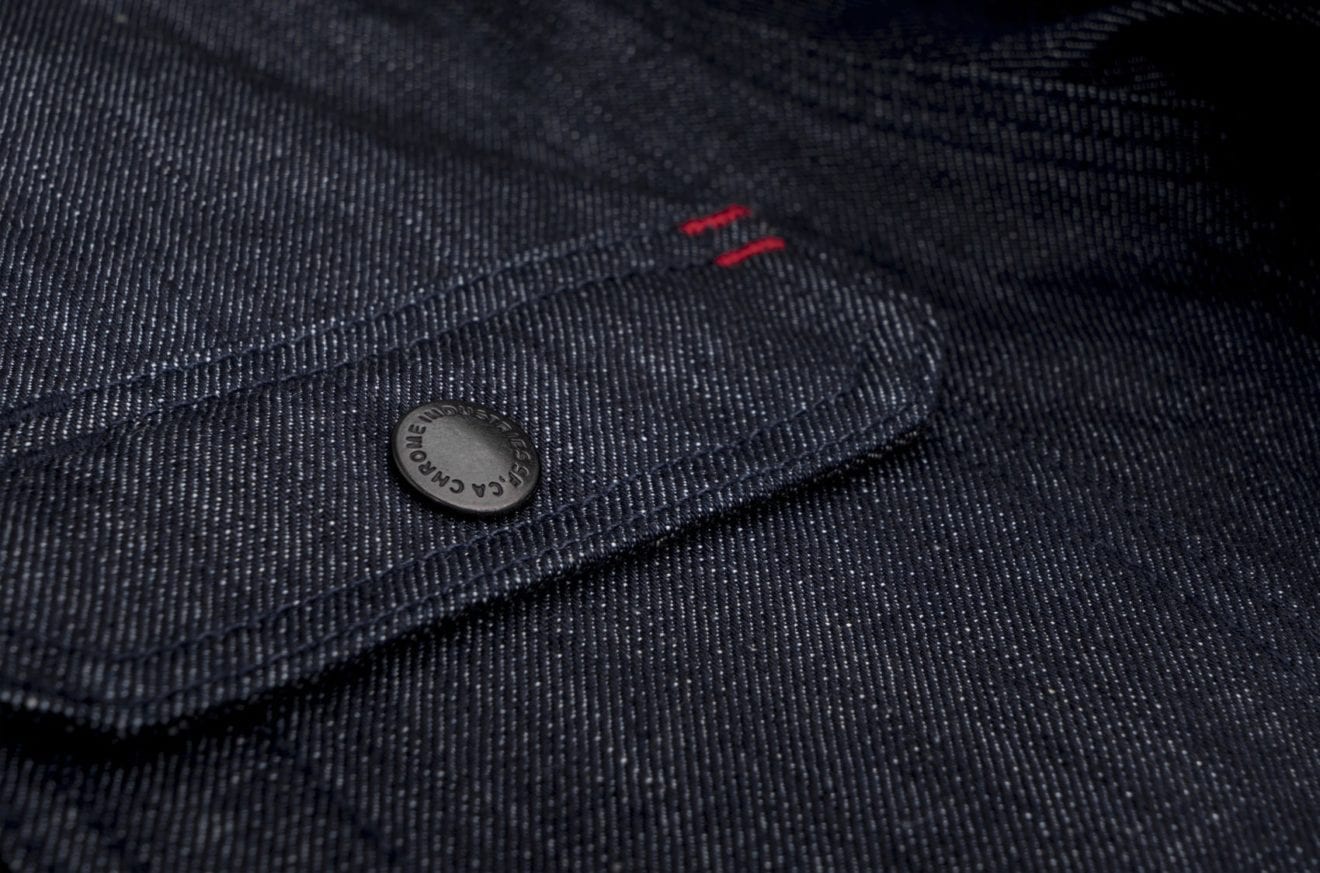
    An increasing number of clothing products are combining fashion and technology, part of a new trend called ‘fashionology’, using materials such as cooling fibers used in spacesuits, or those emitting far-infrared radiation.

    T-shirts that use such new materials are becoming popular, especially for outdoor brands.

    Cool 360, developed by K2, uses a perforation technique to make way for airflow on its mesh-fabric back. It also features a phase-change material used in spacesuits for an enhanced cooling effect. Phase-change materials absorb heat when temperatures rise, and emit heat when temperatures fall, help maintaining a consistent temperature.

    K2

    Cool 360, developed by K2, uses a perforation technique to make way for airflow on its mesh-fabric back. It also features a phase-change material used in spacesuits for an enhanced cooling effect.

    “We applied heat to one mannequin wearing the phase-change material and another wearing normal clothing at 15-minute intervals,” said a K2 official. “We discovered that the temperature of the mannequin wearing the phase-change material was three to four degrees Celsius lower.”

    Millet, another outdoor brand, also released a t-shirt that uses a cooling fiber, Cold Edge. When the wearer of the t-shirt starts sweating, the functional fiber embedded in the fabric expands and reacts with the sweat, ultimately creating a cooling effect.

    Smart fabrics that ward off contamination and facilitate laundering are also making their entrance into the market.

    Fashion brand Bean Pole recently presented new pants and shirts that are less susceptible to daily contamination. The company’s nanotechnology helps micro-particles to attach to the surface of the fibers, and create a coating around the threads. The coating, therefore, allows one to easily wipe off liquid and food, or even mud on a rainy day.

    Fashion brand Bean Pole recently presented new pants and shirts that are less susceptible to daily contamination.

    Fashion brand Bean Pole recently presented new pants and shirts that are less susceptible to daily contamination.

    M Corset, an underwear company, presented Venex, a new product line that can even help to relieve stress. According to the company, the small amount of far-infrared radiation emitted from its products stimulates the nerve cells, which can reduce stress levels.

    “The clothing industry has lately been focusing on ‘smart materials’ to target consumers,” said a K2 official. “With the approaching summer, there will be more intense competition between products that use cooling materials.”

  • UberEats Singapore hits the road

    UberEats Singapore hits the road

    UberEats Singapore has launched, the ride-hailing app’s food-delivery service making its Asian debut.

    Using the standalone app, Singaporeans can order food from about 100 restaurants. While deliveries are initially limited to the central business and commercial area, the company plans to expand its service coverage as well as menu.

    Making its debut in Toronto early this year, the app expanded to four major US cities in March, and Uber began signing up restaurants and testing the service in Singapore last month.

    Singapore was also the first Asian market to have Uber’s ride service, in February 2013.

    UberEats is up against entrenched food-delivery services such as Rocket Internet-backed FoodPanda and Deliveroo, whose investors include Accel and DST Global. Using the map-routing algorithms Uber uses to connect drivers and passengers as quickly as possible, UberEats Singapore promises delivery within 35 minutes.

    It has raised US$9 billion in funding so far, and the delivery driver program is separate from ride-sharing, though drivers can do both.

  • Siam Discovery ‘ready to rock the world’

    Siam Discovery ‘ready to rock the world’

    Siam Discovery in the heart of Bangkok officially opened last week – billed as a shopping centre experience like none other in the world.

    And when you took a walk through the THB4 billion (US$112 million) redevelopment, for once in this industry the experience exceeded the hype.

    “We are ready to rock Bangkok and rock the world,” says Chadatip Chutrakul, CEO of Siam Piwat, which owns the trio of Siam-branded malls next to the confluence of Bangkok’s downtown Skytrain lines.

    They rocked our world, for sure, because there genuinely is nothing like this anywhere we’ve seen in the world. This is a centre designed to engage even the most jaded shopper. More than a collection of stores, it is a curation of brands presented in an array of environments created by Japanese designer Oki Sato and his team from Nendo in Tokyo.

    Siam Discovery Bangkok

    From the brilliant white modern elegance of the Issey Miyake women’s fashion store at the entrance level to the Nendo-designed Loft fitout on the upper level – and everything in between – this is a retail destination that will wow, engage and delight.

    “We hope people coming here get inspired,” says Sato. “We hope every single person who comes here is challenged.”

    While there are various branded stores in the revamped Siam Discovery, they are almost incidental to the overall experience. In what marks Siam Piwat’s first foray into running its own department  store – a misnomer in this context – Sato and his team have created a series of striking merchandising areas all without walls, mixing materials and concepts, and showcasing products ranging from high-end fashion to homewares and electronics.

    Complementing them are areas dedicated to revolving pop-up concepts – most of them engaging customers, others for name brands to test their mettle with the Thai consumers and tourists who will frequent this centre when it opens to the public on Saturday morning (May 28).

    Women can create their own lipstick tones; there are 3D printers that can create sculptures of photographs; you can paint your own pattern prints to create your own clothes or a personalised coffee mug; you can test pilot a drone, run 500m on a treadmill to donate money to charity, or strike a pose for an Instagram post … And more – much more.

    Siam Discovery Bangkok 10

    The 40,000 sqm Siam Discovery, perhaps best known to visitors to Thailand as the home of Bangkok’s Madame Tussauds wax museum, has been completely gutted over the past 12 months. Now it features six levels of experiential retail, each with its own distinct theme. Ground level is Her Lab, anchored by  Issey Miyake and featuring an assembly of mid- to high-end fashion labels including Comme des Garcons, Marimekko and Rag & Bone.

    Up one floor is His Lab, a full storey of menswear, shoes and – perhaps a highlight – a “skin lab” featuring possibly the largest collection of men’s skincare and grooming products outside Tokyo. In the corner is a bespoke barber shop offering haircuts and shaving services: understated and old world.

    Siam Discovery Bangkok 2

    Siam Discovery Bangkok 6

    Siam Discovery Bangkok 1

    Next level up is Streetlab, a collection of casualwear, streetwear, sportswear, shoes and accessories. Again there is a mix of shop fronts and open displays where Siam Piwat has chosen the merchandise – and displayed it imaginatively. A highlight: sunglasses on batons both rising from the floor and descending from the ceiling. To complement the sporting and fitness theme, there is a salad bar and a Boost Juice cafe.

    Siam Discovery Bangkok 4

    Siam Discovery Bangkok 11

    One more floor up is Digital Lab: gadgets, techno toys, cameras, stationery, even a store selling customised motorcycle helmets (it is opening with a display of helmets owned by famous Thais, including a popular actor and the head of a major bank). This is where you can fly a drone, check out a Yamaha display featuring MotoGP-themed bikes, or relax at an unusually designed Starbucks made from recycled materials.

    Siam Discovery Bangkok 7

    Creative Lab, another level up, is largely a housewares store, including Thailand’s second Habitat shop and heavily Japanese-influenced displays of homewares, ornaments and collectibles. There is a Thann Spa, most certainly its most stunning design yet, an artisan coffee roaster, Cafe Now, and a tiered stairwell designed to encourage people to chill and relax much like they would in an Italian piazza – but in air-conditioned comfort. That space will be used for demonstrations and the occasional live music event.

    Siam Discovery Bangkok 12Siam Discovery Bangkok 8

    And on the top floor, as well as the entrance to a new Virgin Active gym, there is a toy zone, books, outdoor gear space, a cafe and more places for interactive pop-up concepts.

    As with the successful redesign of the adjacent Siam Centre, Chadatip worked with brands to ensure the centre offers products not available elsewhere. So even familiar brands have one-off displays or limited-edition runs – some carrying Siam Discovery or Siam Piwat branding for the launch.

    Siam Discovery Bangkok 3

    Sato says Siam Discovery is his first project in Thailand, and his most ambitious anywhere to date. From day one he worked with Chadatip’s team on how to create a flow of visitors through the building.

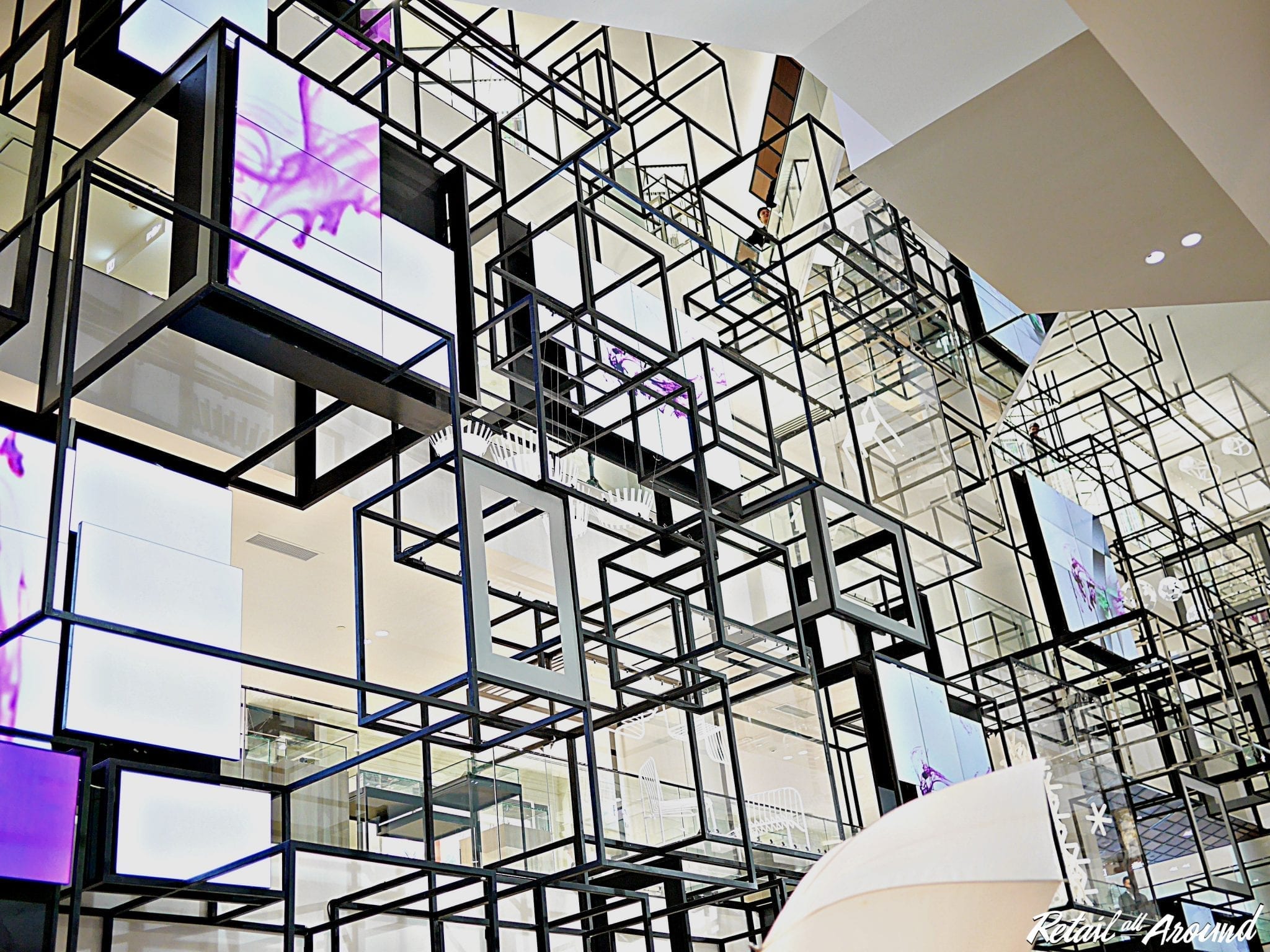
    Instead of the original two sets of escalators, there is now only one, creating more of a sense of space in the atrium. About 220 black frames have been built to hold LCD screens and other displays to draw people to the upper levels.

    “So you have vertical flow, you have horizontal flow and then you create circular flow,” says Sato.

    The concept of “lifestyle laboratories” reflects the aim of creating something markedly different to a conventional mall, where brands each have dedicated rooms in planned precincts. While “curating” is a term used all too loosely in modern retail, it does seem appropriate here. Teams of people have chosen products from a variety of brands to merchandise them in a complementary fashion so people walking through the centre will be guaranteed to see something new.

    Siam Discovery Bangkok 9

    “The idea is not about adding products through brands, but through different lifestyles, cultures and trends,” says Sato. “So customers can choose their own lifestyle.

    “We hope people coming here will be inspired, that they find something, and that every single person who comes here is challenged.”

    Shopper, retailer or mall manager: from our experience during today’s preview, all will be equally challenged by the new Siam Discovery.

  • Will Singapore Pools’ new sports betting site launch in time for Euro 2016?

    Will Singapore Pools’ new sports betting site launch in time for Euro 2016?

    It’s anybody’s guess as to whether Singapore Pools will be able to launch its new online sports betting site in time for the Euro 2016 football tournament.

    In February 2015, Singapore’s new Remote Gambling Act (RGA) took effect, prohibiting all online gambling sites except those that divert most of their proceeds to charitable and other social causes. Unsurprisingly, the new act led to an exodus of betting sites that had been serving the market.

    Singapore Pools, which holds a monopoly on sports lottery products in the city-state, was given six months in which to apply for an exemption to the RGA. The company duly submitted its application last July, but was warned at the time that the approval process could take up to one year.singapore-pools-betting-site-euro-2016

    Fast-forward 11 months and Singapore Pools is no closer to launching its new site. This, despite less than two weeks remaining to the June 10 kickoff of Euro 2016. The Straits Times recently contacted the Ministry of Home Affairs to inquire about the state of Singapore Pools’ application, only to be told the paperwork is “currently being evaluated.”

    The company’s existing site allows punters to check sports odds, but actual wagers must be placed over the phone or at one of the company’s retail points of sale. Singapore Pools’ new site, which is to be powered by betting technology stalwarts OpenBet, would allow punters to place wagers directly online.

    Given the lateness of the hour, Singapore Pools’ management is likely going through antiperspirant products much faster than usual. But given that the company is hardly a stranger to local authorities, the possibility that the new site won’t launch in time – which could reduce sales during Euro 2016 and thus deprive those social causes of badly needed funds – the delay in approving the company’s application seems sketchy at best.

  • BeautyFresh has bold Asian ambitions

    BeautyFresh has bold Asian ambitions

    Singapore cosmetics startup BeautyFresh is eyeing the eCommerce potential in its home market and broader Asia.

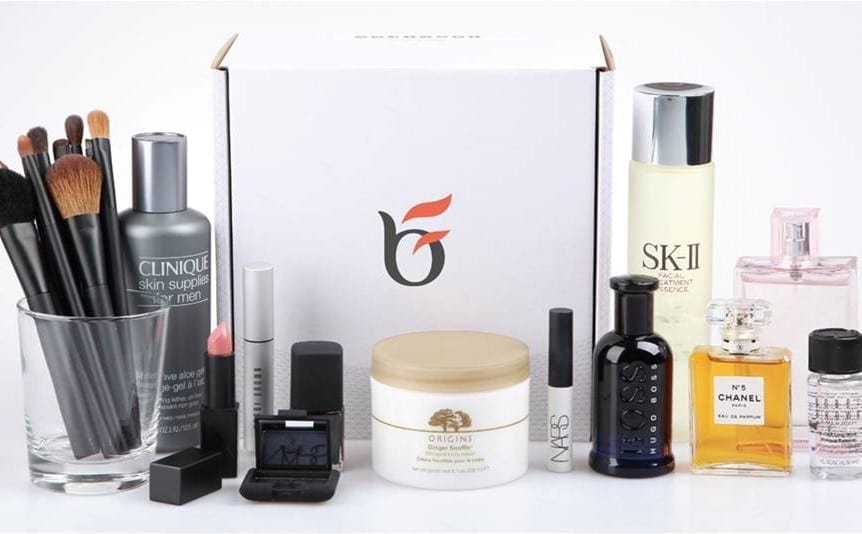
    Stocking more than 70 international brands including Chanel, Dior, Jo Malone and Nars, the company ensures authenticity of its products by scanning them with ultraviolet light to check for defects. Employees also check to ensure products are not near expiry dates.

    Director Jack Wong has a background in online security, so is using his expertise to ensure that client data is secure. The web developments and encryption of the BeautyFresh site are similar to those of online banking (signified by a green lock in the URL).

    Meanwhile, market research firm Mintel says that a growing number of Chinese consumers are going online to buy international beauty products.

    Jo Malone_BeautyFresh.com (1)

    Its research shows that 58 per cent of Chinese consumers bought foreign products online from a domestic shopping website in the six months to the end of November last year. The top three countries buying beauty products were South Korea (47 per cent), Japan (29 per cent) and France (27 per cent).

    According to the report, cross­-border eCommerce grew more than digital retail generally last year, a trend that is expected to continue.

    While cross-border eCommerce is increasingly competitive and provides great sales opportunities, the report warns that brands need to be increasingly responsive to consumer demand.

    Quality of products (63 per cent) and prices (38 per cent) are the top concerns for Chinese online buyers.

    BeautyFresh offers free delivery on orders worth US$40 or more, and offers a 30-day money back guarantee.

  • ZTE China plans new stores

    ZTE China plans new stores

    Chinese multinational telecommunications equipment and systems company ZTE Corporation plans to open 23 stores this year, mainly in China but also Germany and Mexico.

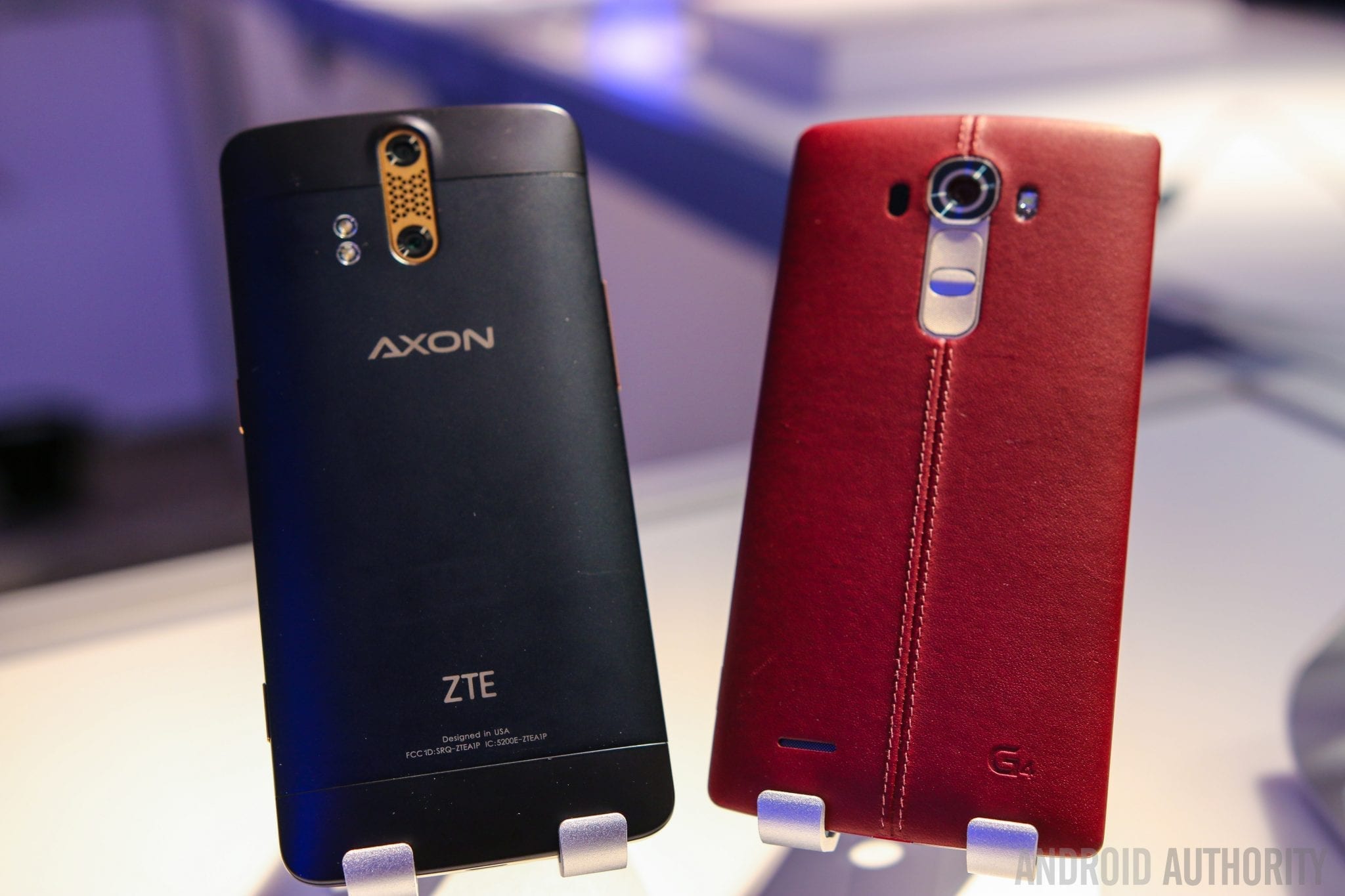
    Meanwhile, its latest smartphone, the flagship Axon 7, will go on sale for $449 in the US next month, up against Apple’s iPhone 6s and Samsung’s Galaxy S7.

    Headquartered in Guangdong, ZTE China has three business units – carrier networks (54 per cent), terminals (29 per cent) and telecommunication (17 per cent). Its core products are wireless, exchange, access, optical transmission and data telecommunications gear, mobile phones and telecommunications software.

    ZTE China also offers video on demand and streaming media. It primarily sells products under its own name.