Author: Mei Ling Tan

  • Singapore ponders Paym-style payments platform

    Singapore ponders Paym-style payments platform

    Singapore is looking into the creation of a payments system similar to the UK’s Paym that would let someone send money using only the recipient’s mobile number, email address or social network account.

    The all-in-one addressing system – which would mean senders would not need a recipient’s bank account details – is being explored by banks and the Monetary Authority of Singapore (MAS), the organisation’s managing director, Ravi Menon, revealed during a panel discussion.Menon says that the move would fit in with MAS’s desire to boost interoperability within the industry as a way to promote innovation, arguing that common standards for payments systems would result in seamless transactions across a range of platforms.

    With this in mind, the country is also working towards a unified POS terminal that can read all kinds of cards at retail and hospitality outlets.

    Menon’s remarks came during a discussion on how Singapore can harness the power, and manage the risks, of fintech. The island has been aggressively pushing itself as a major global hub for the fast growing industry – last week it opened a dedicated office designed to help startups set up in the country as a part of a S$225 million, five year plan to build a vibrant ecosystem for innovation.

    Menon says that fintech is fundamentally changing the financial industry, and may well be its best hope for the future. He told the audience that MAS’s job as the country’s regulator is to adopt a risk-based approach to fintech innovation, not front-running but running alongside.

    The watchdog does this by actively engaging with fintech firms and allowing them to experiment with new technologies in a safe environment. This will be boosted soon by the introduction of a “regulatory sandbox” where firms can experiment and launch products or services within controlled boundaries.

    The all-in-one P2P payments platform and unified POS system are also part of MAS’s plan to promote innovation, this time by enabling interoperability. Another aspect of this strategy will see the publication of open APIs, with MAS working with FIs on sharing aggregated data to improve market and risk analyses, forecasts and projections.

  • McDonald’s bares plans to explore growth opportunity in Asia

    McDonald’s bares plans to explore growth opportunity in Asia

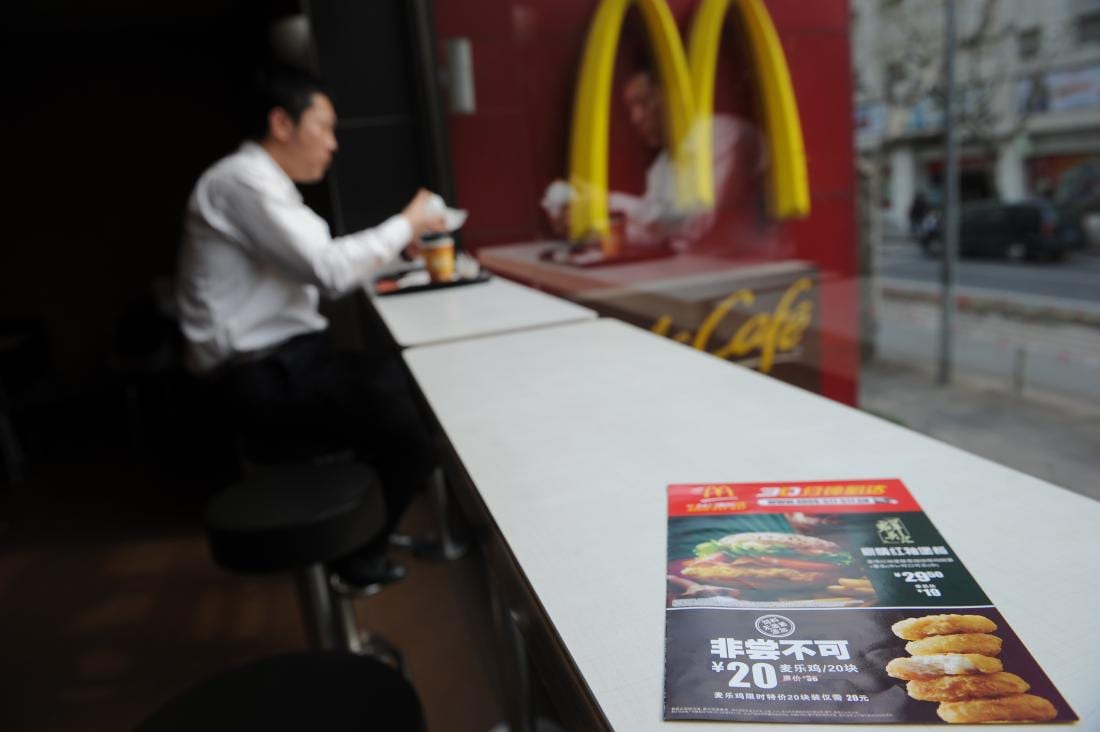
    McDonald’s Corporation said it is keen to explore growth potential in Asia and is currently seeking partners who would enhance its competitive advantages in the region.

    “Asia represents a significant area of opportunity for McDonald’s to blend our global quality standards with local insights and expertise from partners who share our vision and values,” said Steve Easterbrook, McDonald’s President and CEO, in a statement.

    This move is expected to allow the fast-food chain to accelerate our growth and scale faster across diverse markets.

    “We’re in the midst of transforming our business and taking a strategic and thoughtful approach to enhance our ability to grow around the world,” Easterbrook said.

    The McDonald’s chief said China, Hong Kong, and Korea collectively represent more than 2,800 of its restaurant locations, the majority of which are currently company-owned. The three countries are considered high-growth markets, which means they have relatively higher restaurant expansion and franchising potential.

    Over the next five years, McDonald’s said it intends to add more than 1,500 restaurants in these three territories.

    The company also recently announced its intent to identify strategic partners in Taiwan and Japan. Last year, McDonald’s committed to strategically evaluate ownership structures in markets around the world with the overall goal of reducing the number of restaurants that the company owns and operates. More restaurants will be placed under local ownership.

  • Bank Negara unit MyClear to set up new retail payment platform

    Bank Negara unit MyClear to set up new retail payment platform

    The Malaysian Electronic Clearing Corp Sdn Bhd (MyClear), a wholly-owned subsidiary of Bank Negara Malaysia (BNM), is developing a new real-time retail payments platform to serve both as a catalyst and enabler for innovative payments in Malaysia.

    BNM deputy governor Datuk Muhammad Ibrahim said the enhancement, which is expected to launch in 2017, would adopt a multi-currency system that leveraged on the SWIFT messaging system for large value payments.

    “The enhanced Real-Time Gross Settlement System (RENTAS) would cater for multiple messaging formats including the internationally-recognised ISO 20022 which supports the transmission of richer remittance data and facilitates interconnectedness with other economies within the region,” he said in his keynote address at the Malaysia E-Payment Excellence Awards (MEEA) in Kuala Lumpur on Monday.

    He said BNM would continue to foster an enabling environment for infrastructure building and network expansion, adding the enhanced platform also promoted effective competition among industry players to spur the development of innovative solutions, provide greater choices and value proposition to the public and, in the process, lower costs.

    Meanwhile, MyClear managing director Peter Schiesser said the retail payment platform initiative is in line the implementation of faster payments in the United Kingdom, Singapore and Sweden.

    The platform has also delivered significant economic benefits, as well as new immediate payment initiatives in Australia, the United States and the European Union, he added.

  • Coffee wars: South Korea’s cafe boom nears saturation point

    Coffee wars: South Korea’s cafe boom nears saturation point


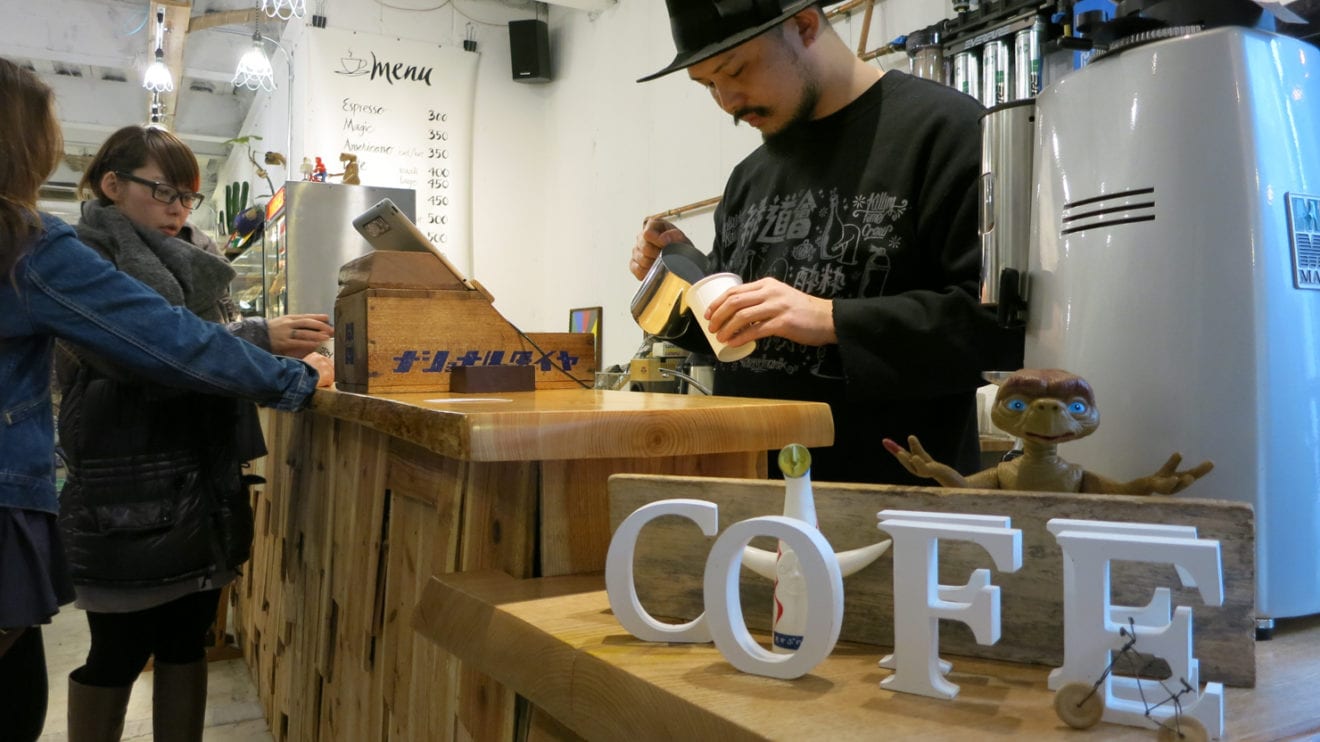
    In fashionable retail and commercial districts of southern Seoul, nearly one in every two buildings boasts a coffee shop – evidence of a boom that has delivered dizzying growth for the likes of Starbucks and local chains.

    But now the market is getting even more crowded, as convenience stores such as 7-Eleven offer 1,000 won (87 cents) cups, and smaller players are feeling the heat.

    “We declared an emergency situation, gathered all employees eight times to debate strategies,” Moon Chang-ki, CEO of mid-priced coffee chain Ediya, the country’s largest operator by location with about 1,800 stores, told reporters recently. “If we sell at that price, our store owners won’t earn any margins.”

    To compete, Ediya says it has instead focused on improving the quality of its coffee, and actually raised prices last year. Other chains have responded to growing competition by cutting back on store numbers and staff, or expanding overseas.

    The number of chain and stand-alone coffee shops in South Korea more than tripled to about 49,600 in 2015 from 12,400 in 2011, according to Korea Contents Media – far faster than overall consumption of coffee, which Koreans have been drinking for decades.

    PEAK COFFEE

    South Korea’s per capita coffee consumption has nearly doubled since 1990 to 2.3 kg (5 lb) per person, according to the International Coffee Organization – still roughly half the 4.5 kg that Americans consume.

    Revenue growth at coffee chains in the country slowed to about 8 percent in 2014, however, from more than 20 percent annually between 2008 and 2012, analysts say. While the number of new coffee shops in Seoul increased, so did closures, according to city data.

    Brewed coffee sales at 7-Eleven, run by Lotte Shopping’s Korea Seven Co Ltd, jumped 88 percent in 2015 after it introduced drip coffee early last year costing about a dollar, almost one-fifth the cost of an average Starbucks cup.

    McDonald’s Corp stores cut coffee prices to 1,500 won from 2,100 won early last year, and have seen sales of the beverage almost triple, the company told Reuters.

    By contrast, local chain Cafe Droptop, with about 225 shops, cut about 20 percent of its workforce at the end of 2015. Another chain, Coffine Gurunaru, with about 100 shops, incurred combined operating losses of 2.5 billion won ($2.2 million) in 2013 and 2014 after being profitable in the previous two years, filings show.

    “Even fried chicken restaurants and pubs are adding coffee, trying to be a cafe, while espresso machines are spreading in offices,” said Lee Kyung-hee, who heads the Korea Business Strategy Institute, a consultancy. “The coffee industry is fighting a war without borders.”

    GOING ABROAD

    Starbucks entered the market in 1999, and is widely credited with starting the country’s habit for splurging on higher-quality coffee and creating a cafe industry SK Securities said was worth about 2.5 trillion won ($2.2 billion) in 2014.

    Starbucks Coffee Korea, a 50-50 joint venture between the world’s biggest coffee chain and South Korean hypermarket operator E-Mart, now has 860 stores, putting the country behind only China and Japan as the company’s biggest markets in Asia, with sales more than doubling between 2011 and 2014.

    It posted a 20 percent increase in net profit to 30.77 billion won in 2014, the most recent year for which results are available, on revenue of 617 billion won, up 28 percent.

    But with industry growth slowing, some chains have been pushing abroad.

    Caffe Bene, which reached 932 domestic stores in 2014 before trimming back to 850 at the end of March, posted a 3.3 billion won net loss in the first three quarters of 2015, according to the latest public data.

    Last month, a joint venture between Singapore’s Food Empire and Indonesia’s Salim Group acquired a 38 percent stake in Caffe Bene, becoming the second biggest shareholder after South Korean private equity fund K3 Equity Partners.

    The chain said it was looking to expand in Southeast Asia to drive growth.

    Zoo Coffee, with 65 domestic shops, has opened about 200 franchise stores in China since entering the country in 2013 and in December announced a tie-up with China’s giant Dalian Wanda Group to open 50 stores per year there.

    Cafe Droptop in November opened its first overseas outlet in Shanghai.


  • Gammon India to sell EPC biz to Thailand firm for Rs 250 crore

    Gammon India to sell EPC biz to Thailand firm for Rs 250 crore

    Debt-laden civil contractor Gammon India has accepted the proposal from Thailand-based GP Group to sell a controlling stake in Gammon’s engineering, procurement and construction (EPC) business for R250 crore.

    In a filing to BSE, the company said that the board of the company “considered and accepted the proposal from GP Group, Thailand to invest in the company’s Civil EPC by investing in the company’s wholly owned subsidiary, Gammon Retail Infrastructure Private (GRIPL)”.

    As part of the agreement, GP Group shall invest a sum of R250 crore, of which R26 crore is to be invested on completion of business transfer agreement and balance R224 crore upon completing the scheme of arrangement for acquiring upto 75% stake in GRIPL.

    The sale of EPC business forms part of the company’s efforts to repay the CDR lenders. Gammon India’s CDR package of R13,000 crore in 2013, was among the largest approved in the last two years.

    According to the Master Restructuring Agreement (MRA) dated September 24, 2013 executed by Gammon India with the CDR lenders, the company was required to ensure that either the corporate guarantees issued by the company on behalf of its subsidiaries are released in full or the company monetises or divests its investments in the domestic and overseas subsidiaries.

    However the progress on company’s asset monetisation programme and sale of foreign businesses has remained very slow. The signing of agreement for the sale of EPC business, is the first in a series of asset sales that the company needs to undertake to repay the banks.

    On November 23, lenders had decided to initiate strategic debt restructuring or SDR for Gammon India by converting a portion of its debt to equity. Lenders have 18 months to find a buyer for the firm, failing which the account will need to be classified as a non-performing asset (NPA). In August last year, Gammon India’s board had approved the restructuring and transfer of its EPC business to Gammon Retail Infrastructure (GRIL) and the T&D business to Transrail Lighting (TLL), subsidiaries of Gammon India. In FY14 ending September 2014, GRIL reported a loss of R42,807 and TLL reported a net loss of R89.3 lakh.

    In December, the consortium of eight banks had become the largest shareholder of Gammon India in the public shareholder category. As on March 9, banks stake in Gammon India had gone up to 55.43%, which was further upped to 63.41% as on March 18, according to the shareholding pattern on BSE. The shareholding under financial institutions/banks stood at 2.18% as on September 30.

    The SDR rules allow banks to convert a company’s debt into shares at a price below the current market value or an average of closing prices in the ten trading days before a decision is taken at the Joint Lenders Forum(JLF). They can hold at least 51% of the equity of the company.

    The company’s gross debt at the end of March 2014 stood at R11,061 crore, up 15.4% over March 2013, Bloomberg data showed. In FY14, the company reported a consolidated net loss of R729 crore on the back of R3,763 crore in revenues.

    The finance costs stood at R699 crore. The company has not reported its 2015 earnings numbers.

    The company is promoted by Abhijit Rajan (2.24%) who is also its chairman and managing director and other promoters include Pacific Energy Private (4.93%), Devyani Estate and Properties (3.33%) among others. Their stakes have come down to present levels from 5.99%, 13.20% and 8.93% respectively, at the end of September 2015.

    Gammon India plans to divest 30% in Gammon Infra Projects

    Gammon India will be divesting up to 30% stake in its listed infrastructure arm Gammon Infrastructure Projects (GIPL), held through its wholly owned subsidiary Gammon Power Limited (GPL), said a BSE notice. Company’s board has approved the divestment, which will be done in one or more tranches. “This divestment will be done at such times and in such manner as the board /duly constituted committee of directors, may approve, on the floor of the stock exchanges, at the price prevailing on the exchanges on the date of such sale,” the company said. fe Bureau

  • Starbucks China sales soar 18 per cent

    Starbucks China sales soar 18 per cent

    Starbucks China has recorded a massive 18 per cent increase in sales in the second quarter, fuelled by a 5 per cent increase in transactions.

    The Chinese boost was one of a string of highlights in the quarter in which Starbucks set a new sales record of US$5 billion globally, up by 6 per cent on a same-stores basis.

    The Seattle-based coffee giant served nearly 16 million more customer occasions worldwide in the three months to March 27, 12 million of those in the US where it is experiencing a resurgence.

    Earnings per share rose 18 per cent to a record 39 cents, with US and Americas comp-store sales up 7 per cent. Operating profit rose 11 per cent to a second quarter record $878 million, its operating margin up to 17.3 per cent.

    Starbucks boosted its worldwide store network by 350 to 23,921.

    CEO and chairman Howard Schultz described the Starbucks China performance as “stunning” and said the overall financials underscored the strength of the brand and the resilience of the global retail and consumer packaged goods business.

    “Loyalty, technology and innovation are continuing to fuel our digital flywheel and propel our business forward all around the world.”

  • UBS optimistic on Australia, Japan real estate markets

    UBS optimistic on Australia, Japan real estate markets

    UBS Asset Management is optimistic on the Australian and Japanese real estate markets, according to its latest Asia Pacific quarterly outlook report. Amid a challenging macro conditions, transaction volume for commercial real estate fell 12% y-o-y in 2015. However, Japan and Australia bucked the trend as domestic lenders eased their credit policies on account of improving fundamentals and collateral quality.

    Toh Shaowei, UBS Asset Management director of research and strategy for Asia Pacific, says: “Broadly speaking, the near-term condition in APAC region is still challenging and there is a ‘longer winter’, but the long-term fundamentals remain strong. We see a few macro themes and continue to monitor them.”

    In Japan, household spending is likely to be the main driver of economic growth on the back of ongoing wage rises, healthy job market and lower oil prices. Negative interest rates have also boosted capital expenditures. Notably, these expenditures have focused largely on new product development, R&D and efficiency saving measures to counter aging population and labour shortages.

    Occupancy rates and rents for Japan’s key office markets have also trended up due to limited new supply and steady demand from large corporates. These corporates have benefited from Bank of Japan’s asset purchases, lower borrowing costs and weaker currency which boosted earnings.

    The leasing market in the Japanese logistics sector remains robust on the back of increasing demand for same day deliveries from end users and growth of online shopping. However, rising supply from new developments are likely to restrict overall rental growth.

    In Australia, Sydney and Melbourne led the recovery in the office leasing market as the country shifts its growth model from the mining sector and resource-rich state. Finance and insurance, professional services and the technology, media and telecommunications sector are the key drivers of demand for office space. Meanwhile, net absorption level in resource-rich states of Queensland and Western Australia continue to lag but is gradually stabilising, says UBS.

    Separately, robust demand from international retailers looking to gain exposure to the Australian market have strengthened the rents and occupancy rate of prime retail space. However, secondary retail space is expected to continue to underperform amid subdued wage growth and increasing penetration of online retailers. UBS anticipates near-term rental growth to remain below historical averages as households allocates a higher share of their incomes to healthcare and education.

    On the home front, the outlook for Singapore’s real estate market remains challenging in the near term. The clampdown in foreign labour supply and an elusive labour productivity gain have lifted business costs and dented corporate sentiments. Coupled with a supply onslaught, UBS expects the overall office sector performance to remain depressed over the next two years.

    UBS expects the weakness to be broad-based across all property segments. Singapore’s retail rents are likely to witness a flat to marginal declines over the next 12 months while sluggish manufacturing outlook is clouding the overall prospects for the industrial property sector.

  • Cheap convenience store coffees enjoy growing popularity

    Cheap convenience store coffees enjoy growing popularity

    Low-cost coffees at Korean convenience stores are increasingly popular among price-conscious consumers, posing a threat to coffee shop franchises, industry data showed Monday.

    Local convenience stores have served canned coffee and instant coffee with hot water for years, but they are expanding sales of higher-quality drinks through self-serve coffee bars to get a bigger chunk of the rapidly growing market.

    The nation’s top three convenience store chains, which each have over 7,000 outlets nationwide, offer coffee at around 1,000 won (87 cents), a price one-third or one-fourth that of major franchise coffee shops.

    Helped by affordable prices, coffee sales at major convenience store chains have soared in the first quarter compared to a year ago.

    7-Eleven, operated by Lotte’s affiliate Korea Seven, said sales at “Seven Cafe” jumped nearly four times in the first three months of this year, without elaborating on the specific sales figures.

    GS 25, a chain under GS Retail, also saw coffee sales at “Cafe 25” rise nearly three-fold during the period, and CU, a chain by BGF Retail, said its sales at “Cafe GET” rose 62 percent.

    Convenience stores plan to expand their on-the-go coffee services this year as well as bakery items and ice beverage menus this summer to expand coffee-related sales. The 7-Eleven and GS 25 chains plan to triple the machine to 3,000 this year, according to company officials.

    As major chains are set to expand coffee services to edge out their rivals, industry officials expect the competition to accelerate polarization in the market between mini take-out stores and trendy cafes. Their fast rise poses a threat to franchise coffee shops, which have posted lackluster performances amid a supply glut and rising rental fees in major retail strips.

    Ediya, a homegrown coffee brand that has the largest number of shops nationwide, said the average sales per store slipped 2 percent in 2015 from a year ago.

    “We have been paying keen attention to convenience store coffees. After in-depth discussions with employees late year, we concluded that creating Ediya’s own taste is the most important,” Ediya CEO Moon Chang-ki said during last week’s press conference.

    “Despite the influx of cheap coffee, we will strengthen R&D to improve the quality of our coffee products.”

    The coffee market was valued at 6 trillion won last year and was expected to grow about 10 percent in the next five years.

    Amid the coffee craze, convenience store coffee grew at the fastest pace to snip away the market share of other caffeine beverages. Coffee sales at convenience stores amounted to 40 billion won ($34.7 million) in 2015 and are expected to expand to 100 billion won this year, according to industry data.

  • Gieves & Hawkes exploring RFID route

    Gieves & Hawkes exploring RFID route

    The new Gieves & Hawkes store in The Mailbox, Birmingham is using RFID technology to help the retailer gain a clearer view of stock inventory and to aid the business’s loss prevention strategy.

    Further installations of the technology are being discussed with solutions provider Catalyst, but for now the menswear retailer is solely monitoring results in the West Midlands store, which opened last summer.

    Sam Thompson, regional IT manager for Gieves & Hawkes parent company Trinity Group, said: “The technology has been easy to deploy and the store appreciates the benefits it offers.

    “The data generated is useful in managing store stock levels.”

    Catalyst, which is owned by global supply chain organisation Li & Fung, operates a cloud-based data platform and is providing Hawes & Curtis with handheld readers for scanning products and overhead readers, which are invisible to the customer but offer the company’s staff item level intelligence. The tech range is showcased in the company’s London, New York and Hong Kong showrooms, allowing retailers to walk in and see the solutions in action in a mock-up store scenario.

    We visited the Catalyst London showroom in 2014 and witnessed how the readers can be combined with other technology such as smart changing room systems or digital screens, to boost the customer’s in-store experience.

    Catalyst works alongside Smartrac for the Gieves & Hawes project, with the latter’s UCode 7 Web RFID tags printed, encoded and applied to all garments delivered to the store. The tags are deactivated using Catalyst’s ePay readers at the till point, with the information fed straight into the retailer’s point of sale system, giving the business a real-time view of stock inventory.

    The RFID solution also provides an alternative to electronic article surveillance in the fight against theft.


  • Versace Asia to open Central flagship

    Versace Asia to open Central flagship

    While other luxury brands are scaling back in Hong Kong’s subsiding retail market, international fashion brand Versace Asia plans to open a flagship store in Central in October.

    Shanghai Commercial Bank says the Milan-based fashion house has signed a three-year lease, with an option to renew, for 12,600 sqft (1170 sqm) on the ground and first-floor levels of a redeveloped building owned by the bank in Queen’s Rd.

    “We needed to pick clients in this market,” says the bank’s CEO David Kwok, noting that it interviewed Versace “for quite some time”.

    “Many other players wanted to sign Versace. You can’t miss our tower when driving through Central. It’s a good address for them,” says Kwok.

    “It goes to prove Hong Kong is a true financial centre. We had thought the market would be very bad, so we were quite modest when setting our pricing.”

    Jeannette Chan, JLL regional retail director, said Versace was taking advantage of declining retail rents and the availability of space in Central.

    “Versace sees it is an optimal time to boost its brand presence in Hong Kong.”

    Versace has two retail stores in Hong Kong, in Admiralty and Tsim Sha Tsui. Its new Asia flagship will sell men’s and women’s apparel, jewellery and accessories.

  • Credit card companies collaborate to lift fee income

    Credit card companies collaborate to lift fee income

    Local credit card companies are launching offline-to-online (O2O) service businesses by collaborating with various sectors to increase transaction fee income.

    KB Kookmin Card reached an agreement with Uber Korea on Monday to jointly develop card products and take part in joint promotion campaigns in and outside Korea.

    “We hope to offer a wider variety of membership benefits to our credit card customers and expand in new sharing economy businesses like Uber,” said Shin Seong-hoon, head of the marketing division of KB Kookmin Card.

    The joint venture not only helps Uber expand its customer base in Korea against competition with Kakao Taxi, but also assists Kookmin Card to seek a future growth engine by developing taxi reservation services that are offered in association with credit card membership benefits. It may allow Kookman Card to expand its payment service to 400 cities where Uber operates.

    KB Kookmin Card is not alone moving towards such services.

    Shinhan Card has collaborated with four companies, including Kyobo Bookstore, GS Retail, Korea Smart Card and the car sharing service start-up Socar, since last year to offer O2O services and foster a loyal customer base.

    Shinhan also plans to launch a chauffer service this month in Seoul and Gyeonggi by affiliating with existing dispatch companies. It profits from a transaction fee of 2 to 2.5 percent.

    It also has been offering an easy payment services on flower delivery, quick-delivery and tutoring payment, after agreements with six companies.

    Shinhan aims to expand the O2O services by joining hands with 14 more companies by the end of the year.

    Local credit card companies aim to beef up their transaction fee income, which accounts for nearly 50 percent of their total annual income.

    ?However, analysts say it won’t be so easy for the credit card companies to grab market share by winning the competition with IT giants like Kakao and start-ups like Baedal Minjok, which have so far dominated the market share based on their broad customer base.

    “It is true that the credit card companies also have a large customer base, as well as broad affiliated retail shop networks,” said Yoon Jong-moon, a researcher at the Credit Finance Research Institute. “However, such a network is not enough to compete against the IT platform operators, because the card companies will see only a limited growth in profits by doing O2O services among their own customers and affiliated shops.”

  • On Pedder takes first step into eCommerce

    On Pedder takes first step into eCommerce

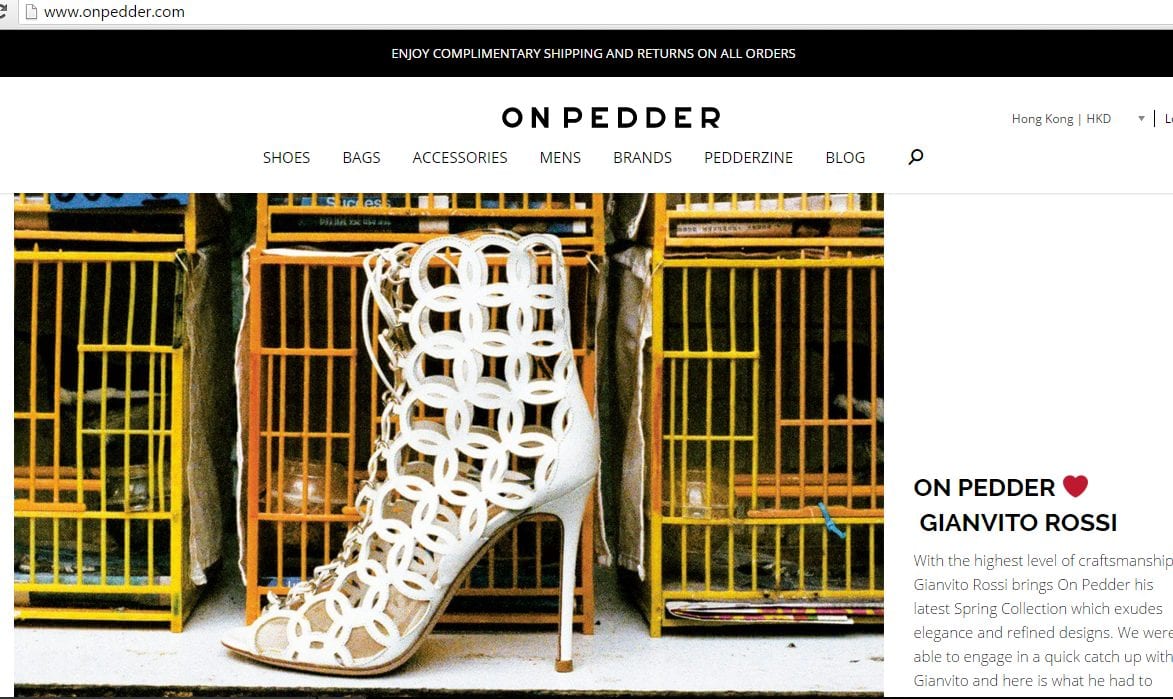
    Hong Kong shoe retailer On Pedder has launched an eCommerce site featuring a curated mix of luxury footwear.

    It is centered around the retailer’s Pedderzine, a seasonal art-fashion hybrid magazine distributed to customers.

    Complimentary shipping is being offered by the site, with returns possible, for customers in Hong Kong, Japan, Macau, Philippines, Singapore, South Korea, Taiwan and Vietnam, as well as Australia and New Zealand.

    Brands include 3.1 Phillip Lim, Aquazzura, Chloe, Common Projects, Gianvito Rossi, Giuseppe Zanotti Design, N⁰21 , Neil Barrett, Nicholas Kirkwood, Paul Andrew, Rene Caovilla, Sophia Webster and Valentino.

    More brands are showcased under the “On Pedder Love” section of the site, along with exclusive product.

    On Pedder collaborated with Hong Kong photography and video artist Luke Casey for Pedderzine this season, which focuses on Hong Kong and Kowloon’s roots and was shot on the streets of Jordan and Sham Shui Po and Jordan, including karaoke bars, back alleys, markets and brothels.

    “We wanted to create an online destination for our customers to enjoy the energy and aesthetics of our in-store curation,” says Pedder Group president Peter Harris.

  • Hong Kong Gift & Premium Fair

    Hong Kong Gift & Premium Fair

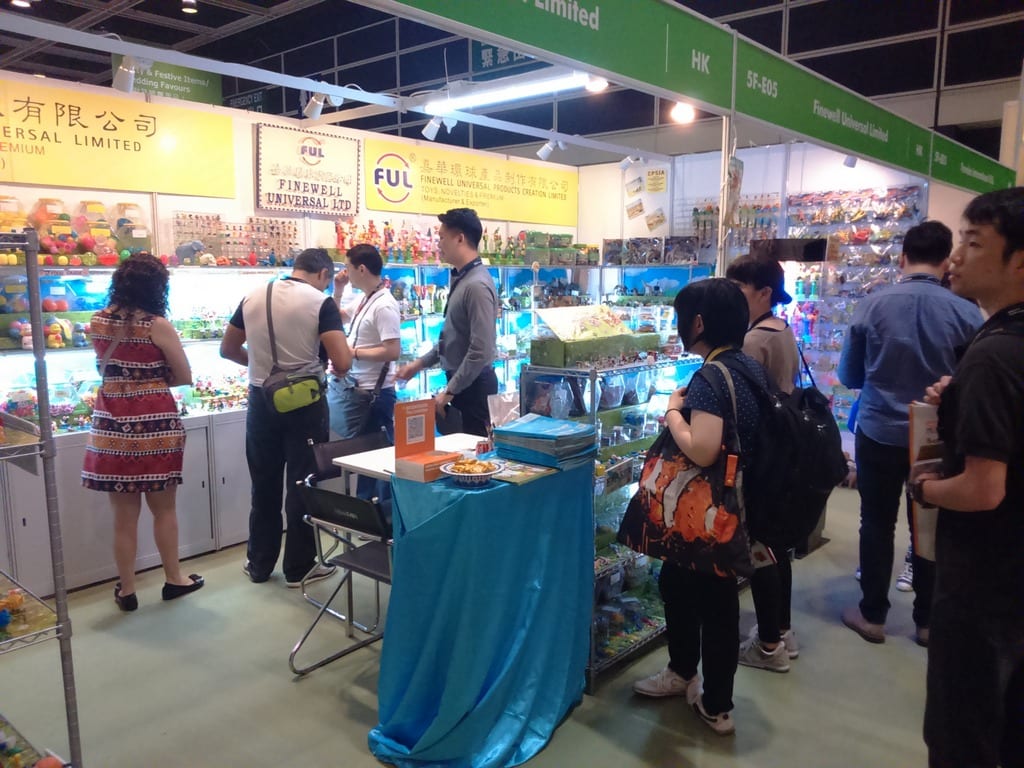
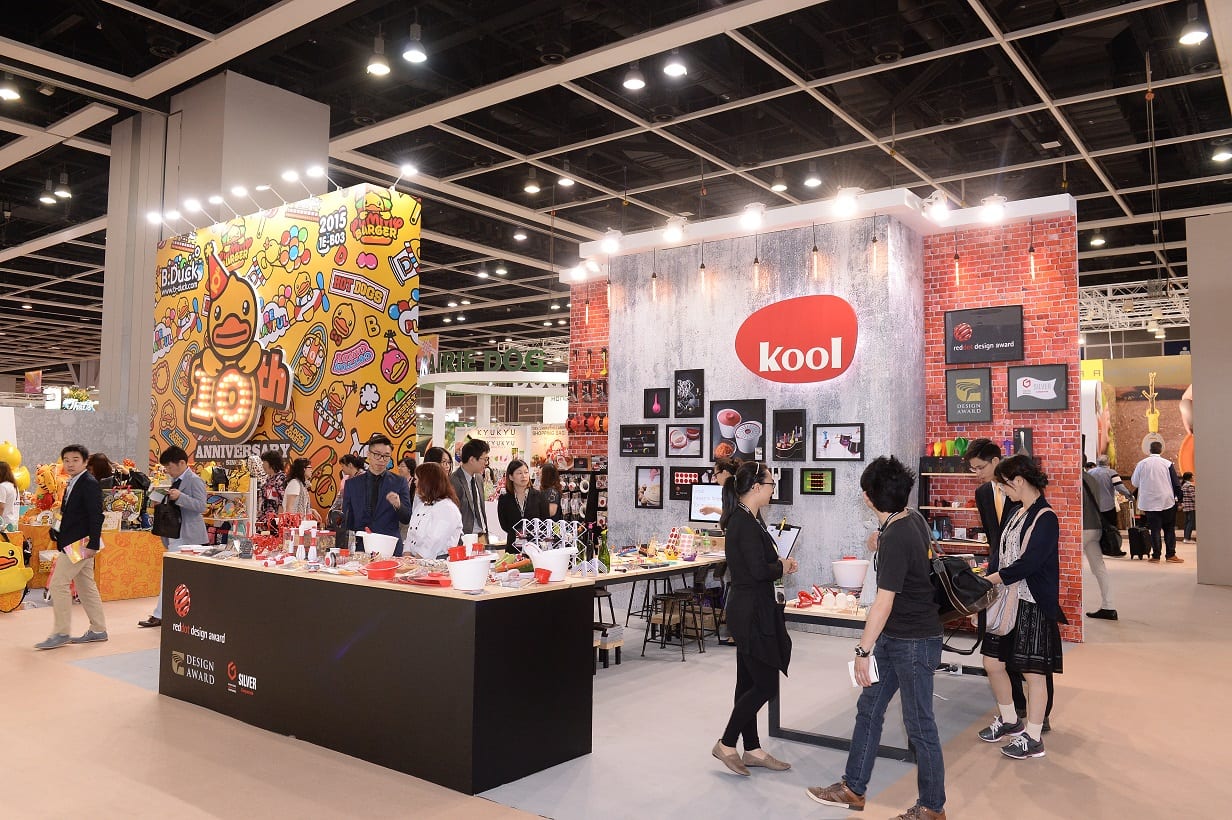
    Organised by the Hong Kong Trade Development Council (HKTDC), the 31st Hong Kong Gifts & Premium Fair concluded today at the Hong Kong Convention and Exhibition Centre (HKCEC). The concurrent 11th Hong Kong International Printing & Packaging Fair (27-30 April) also came to a close at AsiaWorld-Expo. The twin fairs together attracted more than 64,000 buyers from 134 countries and regions. Around 50,000 buyers visited the Gifts Fair, while over 14,000 buyers attended the Printing & Packaging Fair. Markets such as the Chinese mainland, Malaysia, the Philippines, Italy and Indonesia saw growth.

  • Ericsson reshuffles management team

    Ericsson reshuffles management team

    Ericsson has announced changes to its management team, with the departure of three senior vice presidents and several promotions, as part of a boarder reorganization of the company into five business units and one dedicated customers-service unit.

    Anders Lindblad, currently head of Business Unit Cloud & IP, will head Ericsson’s new Business Unit IT & Cloud Products.

    The new Business Unit IT & Cloud Services unit will be headed by Jean-Philippe Poirault, currently Ericsson’s Head of Consulting and Systems Integration.

    Fredrik Jejdling, currently head of region sub-Saharan Africa, will become SVP and head of Business Unit Network Services.

    Charlotta Sund, currently head of region Northern Europe and Central Asia, will take up the role of SVP and head of Customer Group Industry & Society.

    Niklas Heuveldop will become SVP, chief customer officer and head of Group Function Sales. Heuveldop is currently Ericsson’s head of Global Customer Unit AT&T.

    Lindblad, Poirault, Jejdling, Sund, Heuveldop will also join the Ericsson executive team.

    The three top executives leaving Ericsson as part of the shakeup include Jan Wäreby, Anders Thulin and Mats H. Olsson.

    Magnus Mandersson, currently EVP and head of Segment and Business Unit Global Services, will hold the position as head of Segment Global Services, EVP and Advisor to the CEO.

    Angel Ruiz, currently head of Ericsson’s North America region, will be replaced by Rima Qureshi. Qureshi is currently Ericsson’s SVP and head of Group Function Strategy and Head of M&A. Ruiz will continue with the company as chairperson of regions North and Latin America.

  • Hong Kong Gifts & Premium Fair Attract 64000+ Visitors

    Hong Kong Gifts & Premium Fair Attract 64000+ Visitors

    Organised by the Hong Kong Trade Development Council (HKTDC), the 31st Hong Kong Gifts & Premium Fair concluded today at the Hong Kong Convention and Exhibition Centre (HKCEC). The concurrent 11th Hong Kong International Printing & Packaging Fair (27-30 April) also came to a close at AsiaWorld-Expo. The twin fairs together attracted more than 64,000 buyers from 134 countries and regions. Around 50,000 buyers visited the Gifts Fair, while over 14,000 buyers attended the Printing & Packaging Fair. Markets such as the Chinese mainland, Malaysia, the Philippines, Italy and Indonesia saw growth.

    “In the face of a fluctuating global market, suppliers should promote their brands and products even more proactively, while distributors and retailers should seek out new competitive products,” said Benjamin Chau, HKTDC Deputy Executive Director. “Showcasing top-quality items and providing a diverse range of choices, the two fairs are the ideal platform for both promoting and sourcing products.”

    The HKTDC organised a total of 171 buying missions from 75 countries and regions for the two fairs, comprising more than 13,200 buyers. At the fairground, business matching services were also provided to foster business opportunities and partnership-building. Moreover, in view of the keen demand for small order sourcing, the hktdc.com Small Orders display at the Gifts Fair featured over 360 showcases offering more than 2,500 products available for orders of between five and 1,000 units. A total of 23,000 business connections were generated during the four-day fair.

    Mr Chau also noted that, during the Gifts Fair the HKTDC signed a memorandum of understanding (MoU) with Thailand, a key ASEAN country, to strengthen business promotion and cooperation between Hong Kong and Thailand. This includes offering a top-quality promotion platform for Thai products through the HKTDC’s fairs and online promotion services, covering sectors such as garments, fashion accessories, textiles, food and agricultural products.

    Cautiously optimistic on sales prospects; decorative gifts & figurines to lead market growth

    The HKTDC commissioned an independent onsite survey during the Gifts Fair, interviewing some 920 buyers and exhibitors about their views on market prospects and product trends. The survey found that the industry is cautiously optimistic about the gifts market this year. Close to half of the respondents expect overall sales to remain the same in the coming year with 20 per cent expecting sales to improve. Thirty-seven per cent of respondents expect production costs and sourcing costs to increase. More than 60 per cent of respondents, however, do not expect to raise FOB selling prices or retail prices, suggesting that they will not transfer increasing costs to customers. As for the market with the highest growth potential, most respondents pointed to the Chinese mainland, followed by Hong Kong and Korea.

    The survey also analysed product trends in the gifts and premium market. Most respondents said they expect decorative gifts and figurines to have the strongest growth potential this year, followed by tech gifts and advertising gifts and premium. As for products, the industry generally believes that consumers are increasingly focused on product practicality and quality, followed by their pricing and cosmetic design.

    Ideal platform for exploring business opportunities & promotion

    Tian Guofeng, Director, Exhibition Department, China International Center for Economic & Technical Exchanges, Ministry of Commerce, said this was the first time that the Ministry had organised a delegation to the Gifts Fair, comprising 10 companies from Yunnan Province. “As the Hong Kong fair is not only the world’s largest gifts and premium fair but also the most influential show of its kind, it will help Yunnan manufacturers develop overseas markets,” said Mr Tian. “Exhibitors from Yunnan Province are showcasing a wide variety of high-end products such as metal ware, silverware, wooden gifts, pottery, stone carvings and gunny handbags. Responses from buyers have been very encouraging.”

    Shosuke Fukushima, Director of Japan Pavilion, Business Guide-Sha, Inc., said that Japanese exhibitors achieved very good results at last year’s fair, so they returned this year with 17 companies joining the Japan Pavilion, the largest-ever such delegation. “Japanese exhibitors are here showcasing all kinds of trendy products such as cosmetics, garments, stationery, toys and video games. The Hong Kong fair is an international trade fair where Japanese exhibitors can talk to many buyers and learn more about the market needs. More importantly, Hong Kong is a key gateway for Japanese companies to look for distributors and retailers from all over the world. We’ll continue to organise the Japan Pavilion next year.”

    Hong Kong exhibitor Phoebe Wong, Director of Eco Concepts, said it was their fifth time to participate in the fair. The company produces various green products with PLA (polylactic acid). “Through business matching services provided by the HKTDC, we have met with more buyers from Europe, probably because our products can meet their strict requirements in terms of environmental protection. On the first day of the fair, we have already got an order worth US$9,000 from a Thai buyer,” said Ms Wong.

    Another Hong Kong exhibitor, Gianna Company Ltd., strives to inject new design elements into products. The company’s Managing Director Lawrence Tong said the market trend towards innovative designs is prevalent. “We received onsite orders worth over HK$2 million in total from long-time clients. We have also established contacts with many potential buyers from various countries at the fair,” said Mr Tong.

    Meanwhile, at the Printing & Packaging Fair, Hong Kong exhibitor Tommy Yu, Senior Manager of VersaTech Energy Innovation Limited, and Environmental Consultant of The Hong Kong Printers Association, noted cleaner production is the way forward amid growing environmental concerns. The Hong Kong Printers Association made good use of the Hong Kong International Printing & Packaging Fair to promote new technology for cleaner production. “Many large-sized printers have taken the task seriously and we want to encourage more SMEs to join the wave through the exhibition. In the first few hours of exhibition, about 50 visitors including printing-related companies from Hong Kong, the Chinese mainland, the Philippines and Taiwan approached us. They showed keen interest in how new technology in cleaner production can work for printers.”

    New products and onsite orders

    Sia Yew Ming, Senior Corporate and Trade Marketing Manager, Mediacorp TV Singapore Pte Ltd, was a first-time visitor to the Gifts Fair. She came looking to develop products that are related to their TV programmes with a view to selling them to consumers through convenience stores and book shops in Singapore. She said that, with so many suppliers at the fair, there was a great variety of products at competitive prices. She said she placed an order of 500 units of USBs and 500 units of power banks on the second day of the fair. “I have found a lot of new ideas and new products here. I have found 10 potential suppliers and will follow up after the show,” she said.

    Barama is an importer and wholesaler of stationery, paper products, school bags and toys in Argentina. This year was their seventh visit to the Hong Kong Gifts & Premium Fair. Alex Leibovich, Manager of Barama, said they were looking for school products and new suppliers. “So far, we have identified three new suppliers of paper products and punchers at the fair, and we have already placed onsite orders for US$20,000 worth of paper products and US$13,000 worth of punchers.”

    B. Food Product International from Thailand sells food products domestically as well as to different markets worldwide including Asia and Europe under two major brands S-Pure and BETAGRO. Sakhorn Jullarat, the company’s Product and Process Development Director, said, “We put strong emphasis on the quality and safety of the food we produce every day. This is our first visit to the Hong Kong International Printing & Packaging Fair. We’ve already found five potential suppliers for packaging items that will be used for our frozen and chilled food products. We can find a lot of interesting packaging products and ideas here. We would like to visit the fair again next year.”