Author: Mei Ling Tan

  • Giant Cambodia launches in Phnom Penh

    Giant Cambodia launches in Phnom Penh

    Giant Cambodia has opened its first store in the kingdom, in Phnom Penh’s Grand City Mall.

    It is part of a major expansion into Cambodia by the Malaysian wholly owned subsidiary of pan-Asian retailer Dairy Farm International, which also has a 70 per cent stake in Lucky Private, the owner of Lucky Supermarkets.

    Dairy Farm International Indochina CEO Paul Sheldrake says Giant will offer a new experience and choices for Cambodians with its brand-name health and beauty products and housing accessories.

    New international shopping complexes are boosting retail supply in the capital, such as the 57,000 sqm Parkson’s Phnom Penh City Centre scheduled to open last year but revised to late this year. Also coming on line then will be Lion City, an integrated project by Malaysia’s Lion Group covering 61,000 sqm.

    Other new entrants include HongKongLand’s Exchange Square, covering 8000 sqm and opening early next year.

    Real estate analyst CBRE has forecast retail space in Phnom Penh to increase more than 110 per cent by early next year.

  • All Saints Japan opens first Tokyo store

    All Saints Japan opens first Tokyo store

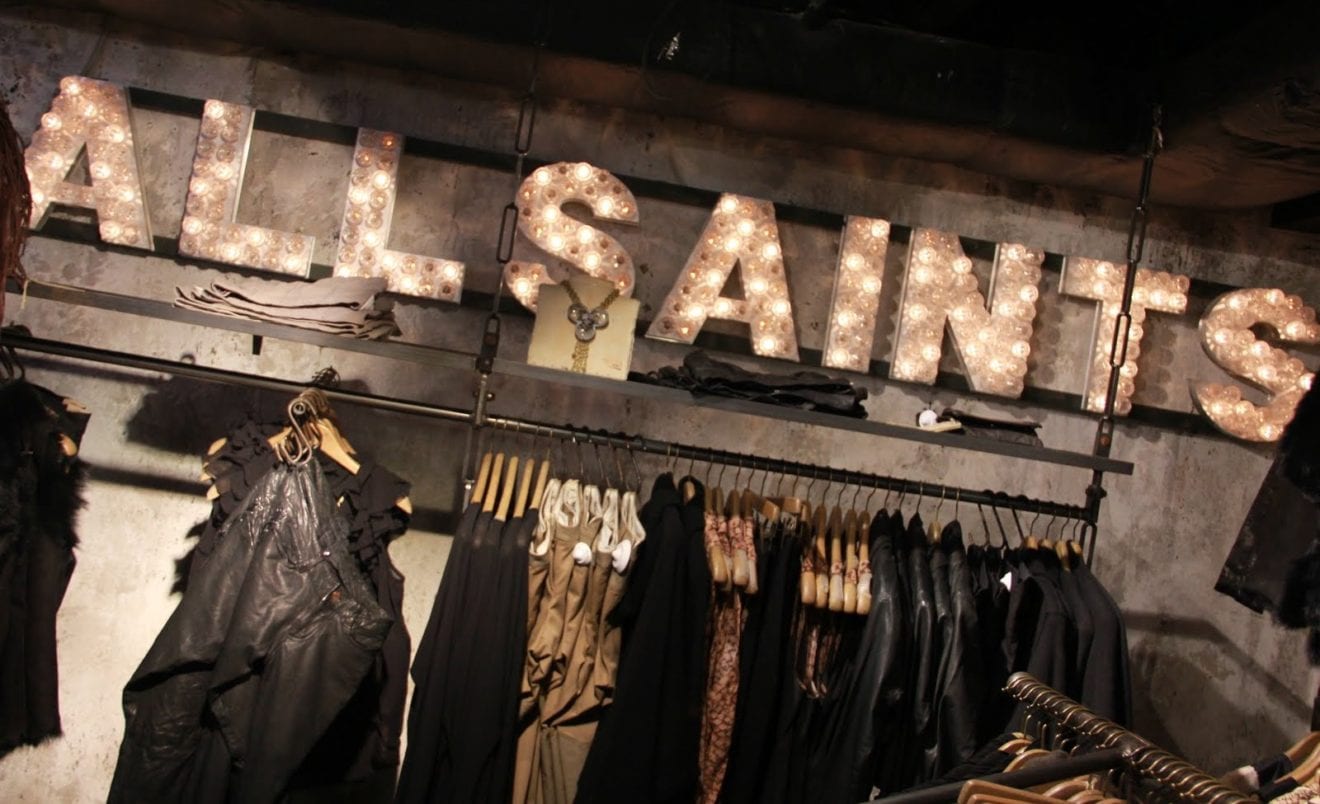
    Fashion group All Saints Japan has launched, with a dedicated website as well as a store in Tokyo.

    Out of the UK, All Saints made its Japan debut at Tokyo Fashion Week last month. It partnered with infrastructure company Locondo to develop the digital platform and tailor it for Japanese consumers. Locondo also worked on All Saints’ logistics offer, looking at delivery and returns options, and working out fulfilment logistics.

    All Saints Japan instore 1

    Both menswear and womenswear will be stocked in the 3000 sqft (278 sqm) Tokyo Bay store, as well as All Saints’ debut handbag collection. The store will carry more than 30 styles of leather jackets.

    All Saints Japan instore

    All Saints halved its pretax losses in its last financial year when sales jumped 11 per cent, thanks to its new CEO William Kim, who was brought in to run the business after private-equity firm Lion Capital bought a majority stake. He has closed stores, overhauled its website, streamlined distribution and cut supplier numbers from 400 to 55.

    While All Saints has on-the-ground presence in 18 countries, it ships to 200.

  • Shanghai mall installs slide for shoppers

    Shanghai mall installs slide for shoppers

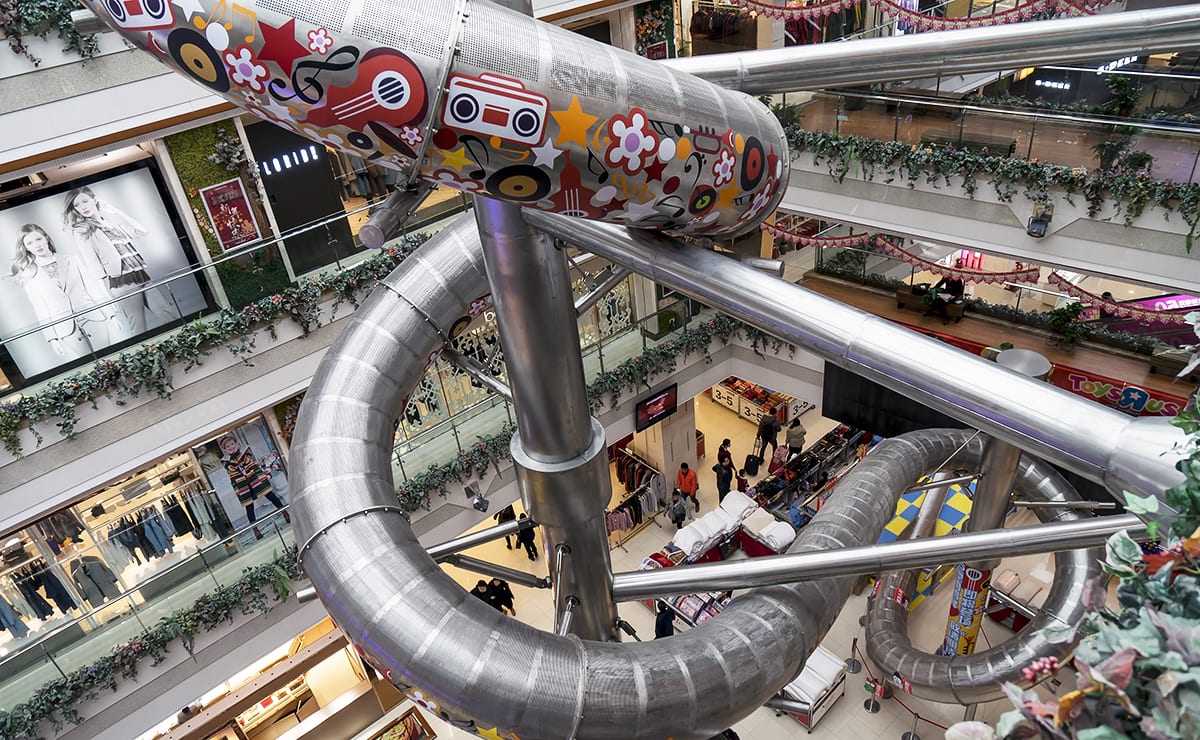
    Forget stairs and elevators – a Shanghai mall has installed a five-storey enclosed slide for shoppers.

    Spiralling down some 54 metres, the 76cm wide chute at the Printemps mall in the Pudong New Area is covered in bright patterns and is named The Happy Slide. It take just 16 seconds from the top floor of the mall to the ground floor.

    Printemps, despite a 150-year retail history in Paris, has been experiencing declining sales at the mall, prompting the management to think outside the box to attract more customers.

    While the slide is free to use, it is only for people aged between seven and 60 years old, provided they are not pregnant and do not have cardiovascular or back problems. At the moment, the attraction is open only to VIP mall members, and they need to wear a safety bag and cross their arms while sliding.

    Super-Slide-shanghai-mall.2

    Shaped like a traditional twisting Chinese dragon, the stainless steel tube is covered in cartoon-style flowers, stars and musical instruments.

    Images show a man in a suit taking the slide, as well as another emerging with his smartphone shooting video.

    However, one Facebook user questions its safety: “China can’t build escalators properly without people falling through them, so you’d be nuts to go down this.”

    Singapore’s Changi Airport put up the state’s tallest slide, measuring four storeys, or 12m, high in 2010, and it is still a major tourist attraction.

  • IKEA Will Open First PUP Store In China

    IKEA Will Open First PUP Store In China

    Ikea’s first pick-up and order point in China is currently being built in Wenzhou and is expected to officially open at the beginning of this summer.

    Ikea PUP store is a new model established by the company in 2015. With an area of about 1,800 square meters, the Ikea Wenzhou PUP store will display about 2,500 kinds of products. Meanwhile, local consumers can order most of Ikea’s products at the order point. It is reportedly a small-sized Ikea and the extension of the Ikea Ningbo store.

    Consumers can first experience Ikea products in the display zones and choose to buy the products directly from Wenzhou PUP store or place an order to the Ikea Ningbo store in eastern China. The ordered products will then be delivered to the Wenzhou order point or to consumers’ homes. In addition, the Wenzhou PUP store will have professional staff to provide home solution planning and purchase services. However, no food and beverage area is available at the PUP store.

    A representative from Ikea China said that the establishment of the Wenzhou order point will make consumers’ shopping experience more convenient. Meanwhile, it will lay a foundation for the future expansion of Ikea’s online businesses. Ikea started the operation of this new PUP model from 2015. So far, it has launched such stores in London, Toronto, and Phuket.

    Ikea’s financial report for 2015 revealed that the company’s total sales for 2015 were EUR31.9 billion, a year-on-year increase of 11.2%. Its sales increase was mainly contributed by store sales, especially new stores integrating e-commerce functions.

  • Central Group to buy Zalora’s businesses in Thailand and Vietnam

    Central Group to buy Zalora’s businesses in Thailand and Vietnam

    Central Group is set to buy Zalora’s businesses in Thailand and Vietnam, according to reports.

    Zalora is a fashion-focused e-commerce site.

    Central Group’s assets, which include multiple shopping malls and national department store chains, are worth close to $10 billion and it employs some 70,000 people.

    The deal to buy the country businesses from Zalora will cost Central Group around $10 million each, reported TechCrunch.

    Sources close to Zalora suggest that the company is selling the businesses in an effort to streamline its costs and move towards becoming profitable.

    Even though Zalora was only started four years ago, the company claims 10 million people have downloaded its mobile apps and the company makes 1.4 million transactions per year across 10 countries in Asia-Pacific.

  • Singapore Pavilion on Alibaba’s Tmall helps access China market

    Singapore Pavilion on Alibaba’s Tmall helps access China market

    Local food manufacturers looking to expand into China will now have an easier time with the help of a new initiative by IE Singapore and the Singapore Food Manufacturers’ Association (SFMA).

    Dubbed “Singapore Pavilion”, it is an online store on Alibaba’s Tmall, a major Chinese website for business-to-consumer online retail.

    The initiative will “provide companies with a plug-and-play model, so they can export their products to China more quickly and easily”, said Ms Liane Ong, IE Singapore’s China group director.

    The trade agency said it sees e-commerce as an “important retail channel for Singapore companies to access the huge China market”.

    Ms Ong added that the Singapore brand commands a premium in China, amid rising affluence of Chinese consumers and food safety concerns.

    Despite this, companies wanting to export to China have always faced obstacles, with issues such as product registration and marketing to consumers being key problems, according to Mr Chong Ka Wee, chief executive of Kino Biotech, which owns proprietary brand Kinohimitsu.

    Kino Biotech is one of 45 firms to have signed up under Singapore Pavilion to sell its products and that has helped it save time and cut costs.

    “Normally, for product registration, you would have to go through processes like changing your labelling to adhere to the local regulations,” Mr Chong said. “All these processes can take up to 15 months.

    “Selling through a cross-border e-commerce platform, the product registration process can be simplified and shortened to just one month. The best part is that you can use the existing product labelling and original packaging.”

    Mr Thomas Pek, president of SFMA, said that under the initiative, companies would have to pay an initial deposit of $10,000, and then just $300 a month.

    A single company trying to get online space in Tmall would usually have to pay around $300,000 per year.

    For Mr Chong, an added benefit of joining Singapore Pavilion is getting to raise awareness of the firm’s products as part of a stronger Singapore brand along with those in the industry, and the feedback from Chinese consumers will be valuable in deciding how to expand in China.

    “We may be competitors in Singapore but we can form an alliance overseas as part of the Singapore brand and capture market share together.”

  • Was Las Vegas Sands’ First Quarter as Bad as Advertised?

    Was Las Vegas Sands’ First Quarter as Bad as Advertised?

    Success or failure is often in the eye of the beholder, and in the case of Las Vegas Sands that sentiment holds very true today. On Wednesday after the market closed, the company reported first-quarter revenue of $2.72 billion and earnings of $320.2 million, or $0.40 per share. Hold-adjusted EBITDA, which is a proxy for cash flow from resorts, was a whopping $1.03 billion in just one quarter. But for the market, that wasn’t enough.

    Analysts had been expecting revenue of $2.88 billion and earnings of $0.63 per share on an adjusted basis (compared to the $0.45 reported), so the stock was down sharply in trading Thursday morning. But are things really as bad as they appear?

    What you need to know about Las Vegas Sands in Macau
    Before getting into the detailed numbers, it’s important to point out that Macau’s overall gaming revenue declined 13.3% in the first quarter. That’s the bar against which every company’s results should be measured.

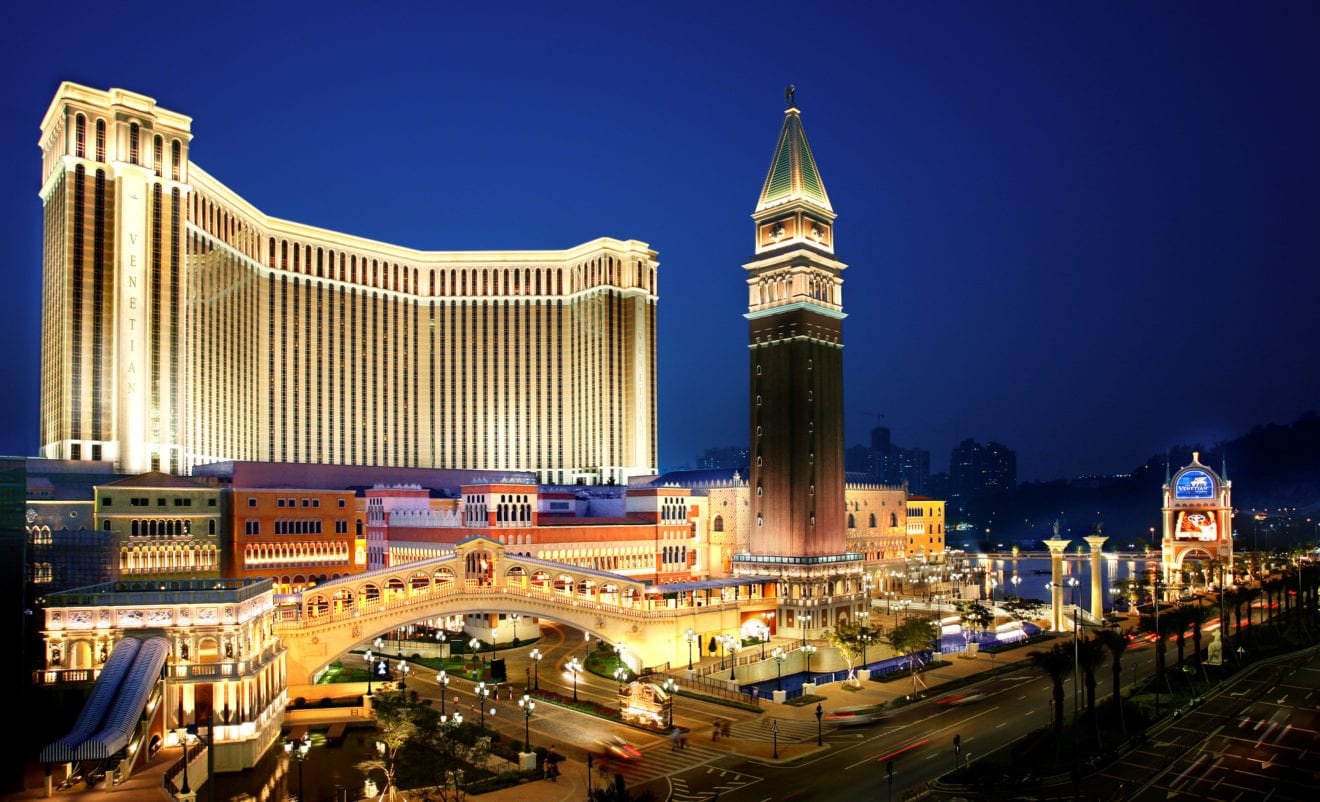
    You can see below that three out of Las Vegas Sands’ four resorts in Macau actually performed well in the quarter, compared to the Macau market as a whole, with only Sands Macau underperforming it. As the only property the company has on the Macau Peninsula, where Wynn Resorts has already said it will have weak numbers, even that’s not a surprise.

    Q1 2016 Revenue Q1 2016 EBITDA
    The Venetian Macau $749.0 million

    (4.9%)

    $267.8 million

    (0.8%)

    Sands Cotai Central $530.3 million

    (7.3%)

    $163.5 million

    4.9%

    Sands Macau $175.1 million

    (22.3%)

    $31.0 million

    (46%)

    Four Seasons Macau $148.3 million

    (8.1%)

    $48.2 million

    8.3%

    SOURCE: LAS VEGAS SANDS EARNINGS REPORT.

    Good luck helped improve results for some of the resorts, particularly Sands Cotai Central, but Las Vegas Sands is still gaining share in Macau even after adjusting for luck.

    Marina Bay Sands

    MARINA BAY SANDS

    Singapore is a different story
    At Marina Bay Sands in Singapore, which is actually Las Vegas Sands’ most profitable resort, results were a little weaker. Revenue fell 23.1% to $603.1 million and adjusted EBITDA fell 33.8% to $274.9 million (still a huge number for one resort). But that doesn’t tell the whole story.

    Casino revenue, which accounts for a vast majority of the resort’s revenue, fell 28.3% in the quarter. But VIP gaming volume only fell 4.5% and mass-market volume only fell 9.2%. What led to the weak results was a very low hold percentage in VIP, meaning bad luck for the casino. Without that bad luck, revenue and EBITDA still would have fallen, but not by much.

    Las Vegas continues to steadily grow
    In Las Vegas, revenue rose 2.3% to $384.9 million and EBITDA jumped 17.3% to $86.9 million. This is consistent with competitors like Wynn Resorts, which said it expects a small amount of growth in revenue at the midpoint of its first quarter preliminary  results.

    Las Vegas isn’t going to be a huge growth market for Las Vegas Sands, but slow and steady will win the race.

    What determines long-term success
    When you look at Las Vegas Sands’ numbers in the context of the Macau market, they look a lot better than when you compare them to Wall Street analysts’ guesses about what the numbers would be. And it’s far more important to gain share in Macau long-term than to meet Wall Street’s expectations.

    What investors really need to watch over the next few quarters is the impact of new competition. Wynn Palace will open near the end of the second quarter and MGM Cotai will open sometime next year, competing with the resorts I listed above, and the soon-to-open Parisian for Las Vegas Sands. It’s possible that LVS’s market share might start to slip in a big way as new resorts enter the Cotai market that the company currently dominates.

    Until that competition comes, I see a lot more positives in Las Vegas Sands’ fundamentals than warning signs. And with the stock down in early trading, this could be a great buying opportunity for investors with a long time horizon.

  • Mobiles sold in India must have panic button from 2017

    Mobiles sold in India must have panic button from 2017

    India’s telecoms ministry will mandate that all mobile phones sold in the country from 2017 must include a ‘panic button’ providing easy access to emergency services.

    As part of the new norms phones sold from 2018 will also have to include GPS navigation systems.

    While it is not yet clear what form the panic button system will take, it is likely to allow customers to call emergency services by pressing or holding a single button or pressing the power button several times in a row.

    The regulation also applies to feature phones, and will likely be achieved by holding down a button on the keypad.

    The move forms part of a wider campaign to help ensure the safety of women in the wake of growing reports of violence including rape and molestation. Women’s safety has been a political priority since the high-profile fatal gang rape of a 23 year old student on a Delhi bus in 2012.

    While India currently lacks a central number for calling emergency services, the government is aiming to introduce one this year.

    Manufacturers selling devices in India – including international smartphone giants like Apple and Samsung – will need to be compliant with the new regulations from next year.

  • DBS introduces a mobile-only bank in India

    DBS introduces a mobile-only bank in India

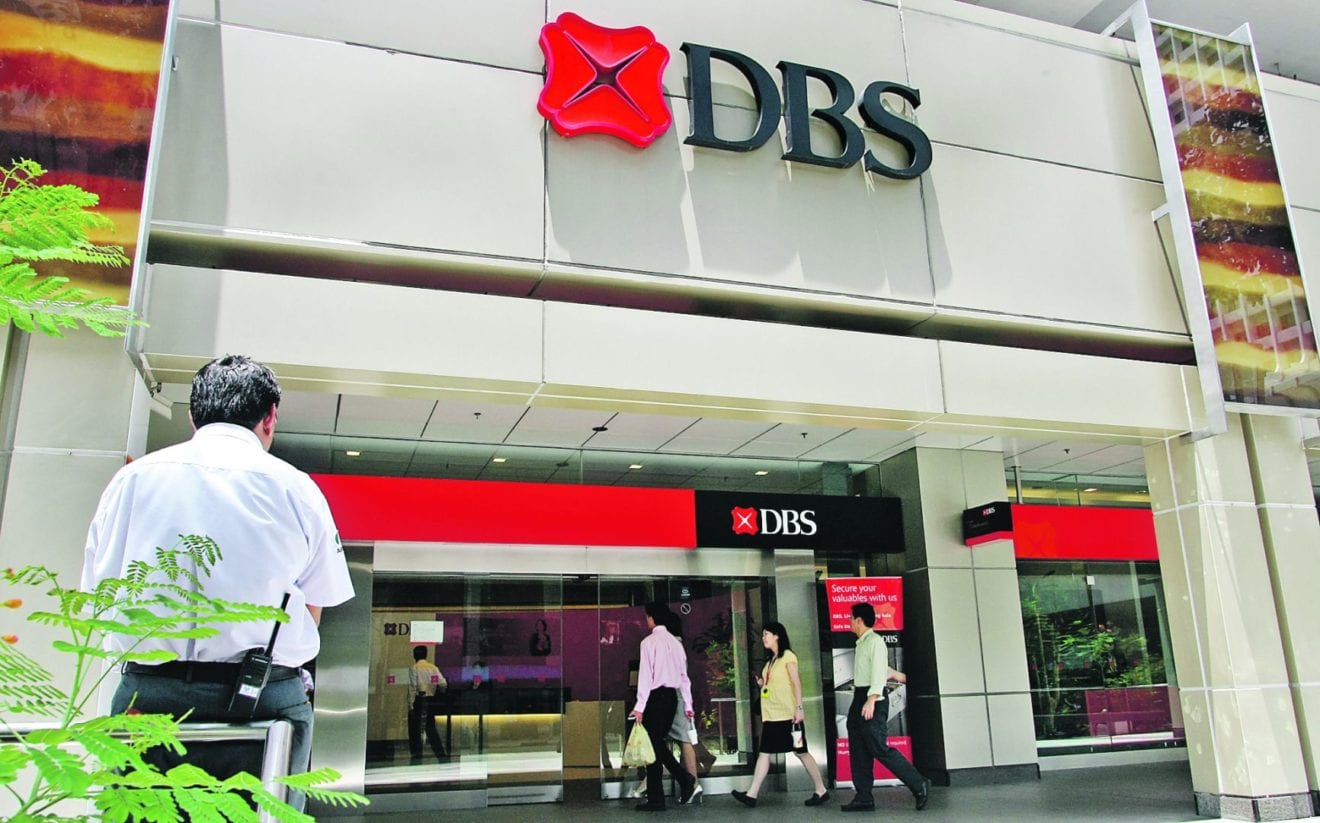
    Singapore’s DBS Bank has launched what it says is India’s first mobile-only bank. Dubbed digibank, the mobile app functions as an entirely paperless, signatureless and branchless bank for India’s residents.

    The initiative aims to break away from conventional banking norms such as form filling and other cumbersome processes.

    Account-opening can be done easily and effortlessly at an extensive network of outlets run by DBS’ partners, including over 500 cafes across India. No paperwork will be involved and instead, customer authentication is done purely using the Aadhaar card, a biometrics-enabled ID which has been issued to over 1 billion Indians.

    Other digibank features include 24/7 customer service provided by a real-time, AI-driven virtual assistant, which understands natural language and is incorporated with the ability to anticipate and answer some 10,000 customer questions.

    This AI feature was made possible due to DBS’s partnership with US-based fintech Kasisto. The latter is a spin-off from SRI International which created the technology behind Apple’s Siri.

    In-built into digibank is a budget optimizer that helps customers do their budgeting, track expenses and analyze purchasing trends. The function is equipped to understand customer behavior and preferences, synthesize data, and provide recommendations.

    The budget optimizer also studies customers’ spending patterns and prompts them if they are overspending. Conversely, if a customer’s savings regularly exceed his or her expenditure, digibank will provide suggestions on how to make one’s money work harder.

    Dynamic inbuilt security, which is safer than OTP, is employed in digibank. Most bank customers are used to receiving One-Time Passwords (OTPs) via SMS, and then typing codes into pages to authorize their mobile banking transactions. digibank has an embedded soft token security, avoiding the need to wait for SMSs to arrive and providing even stronger security for transaction authorization.

    The new offering also gives account-holders earn 7% interest from the first rupee, one of the highest in the market with no minimum balance requirements. Customers receive a physical debit card which can be used across all Visa-enabled online and POS transactions, as well as overseas. Free cash withdrawals will be available at more than 200,000 ATMs nationwide.

    Said DBS CEO Piyush Gupta, “India’s banking system is at the cusp of massive change, and as a bank committed to shaping the future of banking, we are excited to roll out a revolutionary, mobile-only bank. With digital, we are able to create a completely different customer experience. What’s more, digibank’s efficiencies and lower costs enable us to pass on significant benefits to customers in the form of greater customer value.”

  • Indonesia’s H3I taps Nokia for core network upgrade

    Indonesia’s H3I taps Nokia for core network upgrade

    Hutchison 3 Indonesia (H3I) has contracted Nokia to expand its core network to meet growing mobile data demands in the market.

    Under the agreement, Nokia will supply H3I with packet core technology in cities including Surabaya, Semarang, Solo and Yogyakarta – the most densely populated cities in the country.

    Nokia will also provide network planning, optimization, implementation and care services, as well as its Flexi convergent mediation device and its NetAct operations support system. The contract is also aimed at laying the groundwork for future network upgrades to meet emerging demands.

    H3I has been seeing data traffic double around every nine months as a result of rapid smartphone and 3G data adoption in Indonesia’s growing economy.

    Mobile is playing a leading role in providing internet connectivity to Indonesians. As of the start of 2016 there were over 320 million mobile subscribers across Indonesia, while fixed broadband penetration remained under 2%.

    “We are pleased to have Nokia’s services and technology expertise at our side as we evolve our core network to meet the speed and quality needs of a growing number of connected consumers and business users in Indonesia,” H3I president director Randeep Singh Sekhon said.

  • Shopping mall vacancies in town highest in 5 years

    Shopping mall vacancies in town highest in 5 years

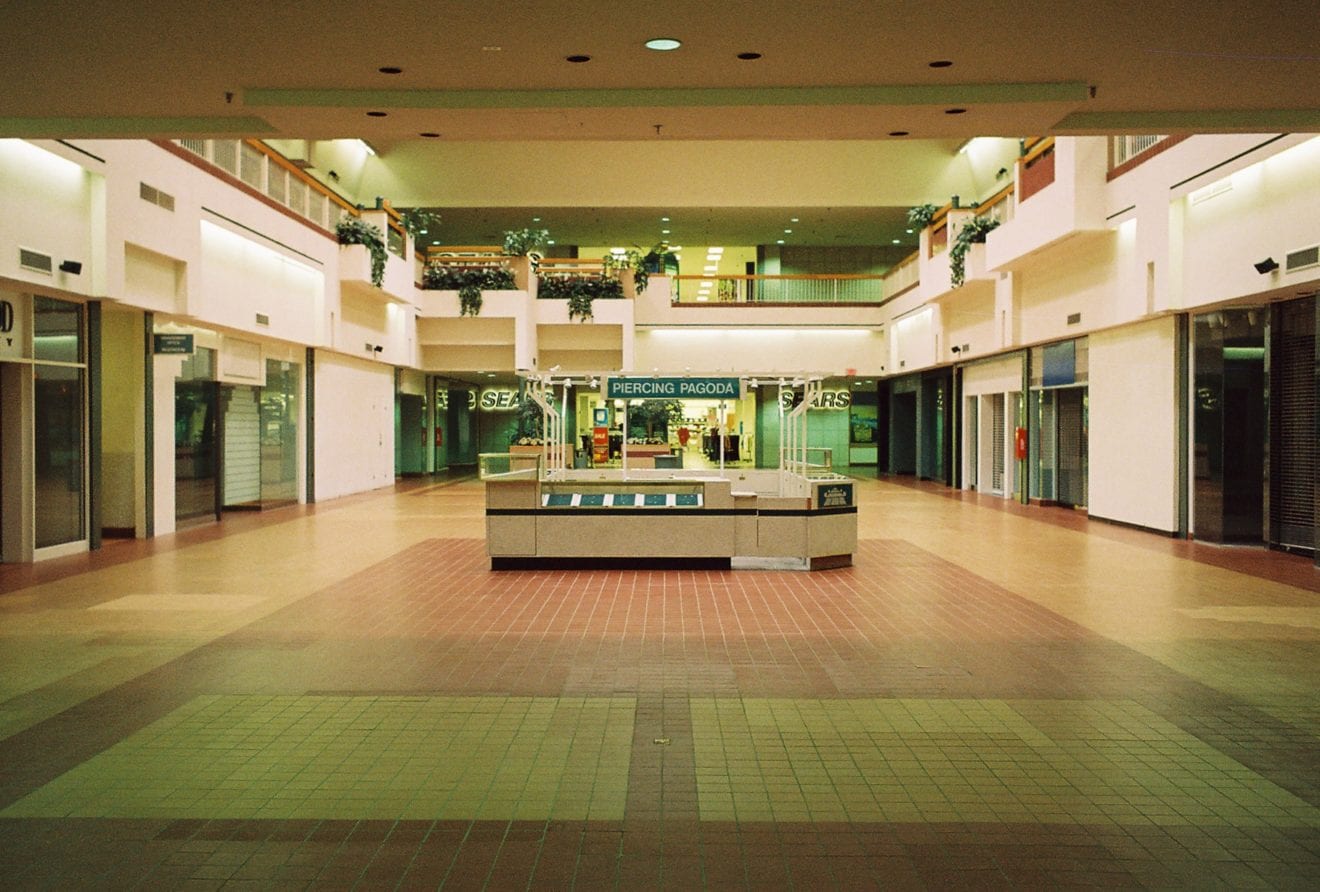
    Vacancies at retail malls in the central region hit a five-year high in the first quarter of the year, driven largely by more vacant space in the Orchard sub-market.

    The rate went up from 8 per cent to 8.7 per cent, analysis from Colliers showed, the highest since the Urban Redevelopment Authority (URA) started tracking retail space data including food and beverage, fitness and entertainment businesses from the first quarter of 2011.

    In the Orchard planning area, the vacancy rates rose 1.2 percentage points to 8.8 per cent in the first quarter, URA figures showed.

    These disappointing numbers come as the retail sector continues to battle rising costs, weak sentiment and increased supply of space. The islandwide vacancy rate of retail space rose to 7.3 per cent in the first three months of the year, up slightly from 7.2 per cent in the previous quarter.

    Citing URA Realis data, analysts said retail rental volume plunged by 32 per cent to 1,725 transactions in the first quarter from 2,550 deals in the last three months of 2015.

    “We are seeing higher vacancies setting in, particularly for the newer shopping malls,” said Cushman & Wakefield research director Christine Li. “Besides spaces which have yet to fill up, spaces which tenants have pre-terminated also add to rising vacancy levels.”

    Century 21 Singapore chief executive Ku Swee Yong told The Straits Times malls with higher vacancies in the Orchard area include Shaw Centre, Orchard Gateway, Orchard Central and Palais Renaissance. “Vacancy rate in general will likely worsen in the coming quarters because some retailers have said they would be shutting their non-performing stores later this year,” he noted.

    Dubai-based conglomerate Al-Futtaim Group said last month it would shut 10 stores under its distribution and retailing arm RSH in the second half of the year. Its group chief executive for Asia Christophe Cann said yesterday: “At present, we are looking to exit at places where rentals are too high for us to continue to run a business.”

    He said landlords have a stake in the retail industry, and “it would benefit tenants, and the retail industry as a whole, by lending a helping hand during challenging times”.

    Sakae Holdings chairman Douglas Foo made a similar point, citing a good working relationship with the manager of Wheelock Place, where Sakae Sushi has an outlet. “When we talk about rental renewal, they don’t give you heart attack rates. Certain landlords will up rates by 30 to 40 per cent, and you have to ask how retailers can do a sustainable business like that.”

    The slow leasing activity exerted downward pressure on rents, which fell 1.9 per cent in the first quarter, following a 1.3 per cent drop in the previous three months, URA data showed.

    Consultancy JLL expects retail rents to contract by about 7 per cent to 8 per cent this year, in anticipation that some landlords may have to offer greater discounts to maintain stable occupancy.

    Analysts say other challenges such as the manpower crunch are likely to persist for the rest of the year. Colliers International noted, however, that falling rents in the central area are an opportunity for some brands to open new flagship stores and strengthen their presence.

  • Local retail sector seen growing 4% this year

    Local retail sector seen growing 4% this year

    Retail Group Malaysia (RGM) is projecting a 4% growth rate for the local retail sector this year, as it believes that consumers will still continue to spend in spite of the global economic uncertainty.

    RGM managing director Tan Hai Hsin said while consumers are cautious, they will continue to spend on goods and services that are important and relevant to them.

    “People are still spending on their children’s education even though it is not cheap. The MATTA Fair is also still doing well as people are still traveling,” he said in a talk in conjunction with the StarProperty.my Fair 2016 i-City edition yesterday.

    Tan said the outlook for the local retail sector this year is expected to be challenging.

    “There is no major stimulus. It’s also not an election year, this year. Right now, we’re relying on the global economy and if it’s down, it will affect us.”

    According to RGM’s Malaysia Retail Industry Report last month, the local retail industry recorded a measly year-on-year sales growth of 1.3% in the fourth quarter of last year.

    RGM said the year-end school holiday and festive season did not lift the buying spirit of Malaysian consumers, adding that the higher cost of overseas travelling due to weaker ringgit did not encourage more domestic spending.

    “The weak ringgit performance during the last quarter of 2015 had resulted in higher import costs. Higher import costs led to increased retail prices. Increased retail prices had further deteriorated the purchasing power of Malaysian consumers.

    “Despite heavy price discounts and aggressive promotions, retailers could not raise the consumers’ spending.

    “During this latest quarter, they suffered further decline in profit margin growth,” he added.

    For the full-year 2015, RGM said the Malaysian retail industry grew by a mere 1.4% as compared to the same period a year ago. The total retail sales turnover for 2015 was RM96.2bil.

    “Last year was the worst annual retail growth rate since 2010. In 2009, the retail industry growth rate was 0.8%,” RGM said.

    According to National Property Information Centre’s (Napic) 2015 Property Market Report, the retail sub-sector recorded a slight improvement in occupancy to 82.4% in 2015 from 81.8% in 2014, with a take-up rate amounting to more than 780,000 sq meters.

    The StarProperty.my Fair 2016 i-City edition, which is being held at i-City from April 22 to 24, will feature projects including i-Soho, i-Suite, Liber­ty Tower and Parisien Tower in i-City, and 8Kia Peng at Kuala Lumpur city centre.

    Besides talks and fun activities, 1,000 visitors will receive complimentary theme park tickets given daily.

  • How smaller retailers can win market share and drive growth

    How smaller retailers can win market share and drive growth

    I’m always interested in the small business owners I meet across the world, many running generations-old businesses that offer one-of-a-kind treasures. These shop owners, with their time-honored craftsmanship, quickly win over even the most casual window shopper, effortlessly converting passersby into loyal customers.

    Creating this sort of memorable customer experience is one of the keys to success for small retailers in the fashion and luxury goods sector.

    However, as the worlds of fashion, luxury and media descend upon New York for Fashion Week, these experiences and transactions seem increasingly quaint and inconsequential; one could be forgiven for thinking that high fashion remains the exclusive preserve of global retailers and big-name luxury brands.

    While that may once have been true, it’s no longer the case. Remarkably, more and more fashion retailers are starting to embrace being ‘small’ as a strategy for success and growth. Increasingly user-friendly technology tools are helping smaller retailers to speak and deliver to their niche customer sets across all channels with the same voice as they would in a shop in Hong Kong.  So what is driving their success?

    Tech-savvy

    According to research from eMarketer, e-commerce growth is projected to double the retail industry average at least until 2017. Half of all shoppers discover new products when searching with smartphones, and 82 percent of smartphone owners look online for product information when shopping. Smartphones already account for over 40 percent of ecommerce transactions in Japan and South Korea, so it is no wonder that small retailers are realizing that they need to be as tech-savvy and flexible as their customers. That means engaging and delighting shoppers on mobiles, social media and online channels.

    Highly personal

    Technological advancements and the democratizing power of the Internet have allowed retailers to scale up without sacrificing intimacy and personal service. As customers no longer think about retailers’ brands in a silo, neither does the small retailer. They analyze insights from website visitor traffic, social media interactions, and newsletter click-through rates to better understand their customers. Any retailer with a Facebook page can now easily discover that their average customer is, for example, female, aged between 16 and 24, listens to Adele, and by using this data to precisely tailor their sales and marketing strategy, they can more effectively engage and delight their customers.

    Cultivate and engage a community

    It is much more profitable to sell to loyal customers than to constantly look for new ones. A Bain study showed that just a five percent growth in customer retention could boost profitability by 75 percent.

    Small retailers are starting to use this insight to build loyal online communities, which do the selling for them. No wonder a brief Google search on the words ‘e-commerce’ and ‘social media’ turns out 101 million results, with articles such as ’12 Social Media Tactics to Drive Traffic to your E-commerce Site’ being the most visited. Another way is through loyalty programs, which 30 percent of independent retailers are planning to implement in 2016. This is on top of the quarter of independent retailers who already have a loyalty program in place.

  • Luxury gifts retailer opens in Sheung Wan

    Luxury gifts retailer opens in Sheung Wan

    Luxury tableware and gifts retailer Town House is opening another retail store location at Wing On department store in Sheung Wan.

    The expansion of Town House into a fully-fledged retail shop in Wing On is part of a strategy to open new retail locations to take advantage of consumer demands for affordable, high quality home accessories, the retailer said.
    In November 2015, Town House opened its most recent shop at the K11 Mall in Tsim Sha Tsui.

    Suresh Kanji, general manager of Town House said: “We look forward to welcoming customers to all our locations, but take great pride in the expansion of our relationship with Wing On, a great company with a history of over 100 years of serving Hong Kong.”

    The new store offers gifts and tableware from renowned brands such as Riedel, Nachtmann Crystal, Bohemia Crystal Glass, Maxwell & Williams, Britto, Laguiole, Duccio di Segna, and A. Anglada.

  • L’Occitane sales on the up despite disappointing performance in Hong Kong

    L’Occitane sales on the up despite disappointing performance in Hong Kong

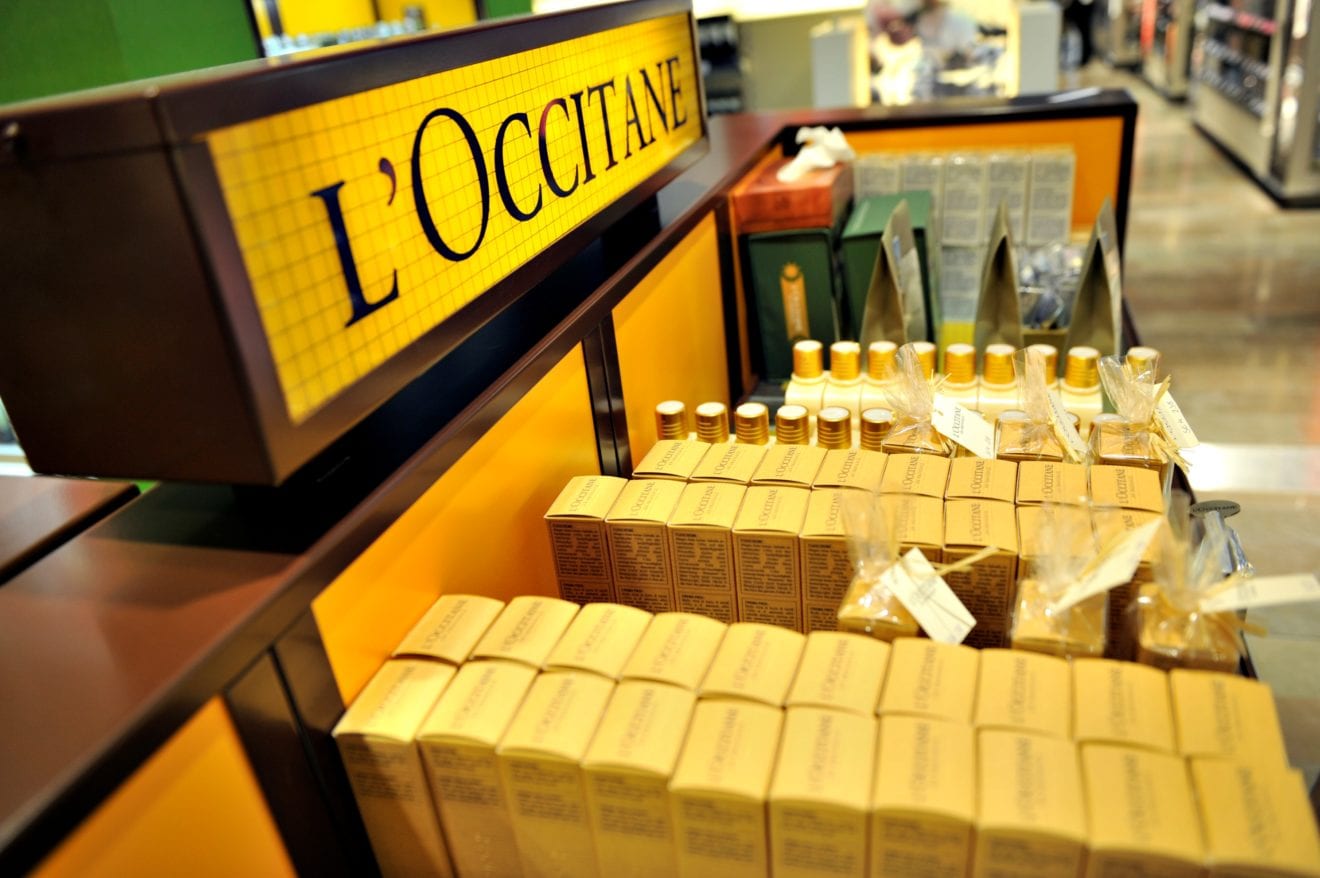
    French beauty brand L’Occitane has announced sales for the year ending March 31 increased by 8.9 percent at 1.28 billion euros.

    Growth surged on in China – which saw sales grow by 16.8 percent – France, Japan, Brazil and Russia however a poor performance in Hong Kong saw total retail sales in Hong Kong and Macau fall by 15.2 percent. The disappointing results were attributed to a fall in mainland Chinese tourists visiting the region, which also affected Hong Kong’s travel retail sector.

    L’Occitane has a strong presence in Hong Kong with 36 stores in the region.