Author: Mei Ling Tan

  • Calbee’s famous fried chips & made before your very eyes

    Calbee’s famous fried chips & made before your very eyes

    Japanese snack brand Calbee has joined with Four Seas Mercantile Holdings to open its first overseas concept store “Calbee Plus” in Hong Kong, where customers can buy its famous potato chips straight from the deep fryer.

    Located in Lee Tung Street in Wan Chai, the Okashi Galleria x Calbee Plus store offers customers potato chips and potato sticks that are deep fried on the spot.

    95013884-807a-4b1e-bf24-323225b8f79b calbee3

    For snack lovers, it doesn’t get more indulgent than this: the crisps out of the fryer will be drizzled with chocolate sauce, and served with Japanese fresh milk 3.5 soft serve ice-cream on the side.

    More than 10 different kinds of freshly fried chips and potato sticks are available, including normal and wave-cut chips in four flavours: barbecue, double cheese, chocolate, and Hong Kong’s exclusive flavour: typhoon shelter spicy – which is inspired by the city’s famous typhoon shelter spicy crab.

    Customers can also purchase limited edition Japanese confectioneries in the store.

    On its opening day, it saw long queues snake outside the freshly fried-in-front-of-you potato chips store.

    Peggie Lau, associate director of communications at Four Seas Mercantile Holdings, toldMarketing that Calbee Plus is more than a retail store, and aims to bring a holistic experience to customers.

    “By watching the making of those freshly made products through the glass wall open kitchen, we want to bring fresh and delicious products to customers which also aligns with the brand philosophy: making tasty and joyful snacks,” she said.

    Calbee

    Besides targeting snack lovers, the snack maker also wants to attract families to the store.

    “We want to take customer loyalty to the next level. In addition to trying the fresh potato chips, we also want them to experience the service, to witness how we make the products in front of them, and more importantly, to get feedback from them for product research and developments.”

    Lau said the store was aiming to attract 1,000 visitors every day, with plans to open four more stores within five years in Hong Kong to become an attraction for food lovers and overseas visitors.

  • Hong Kong keeps close eye on Singapore’s moves

    Hong Kong keeps close eye on Singapore’s moves

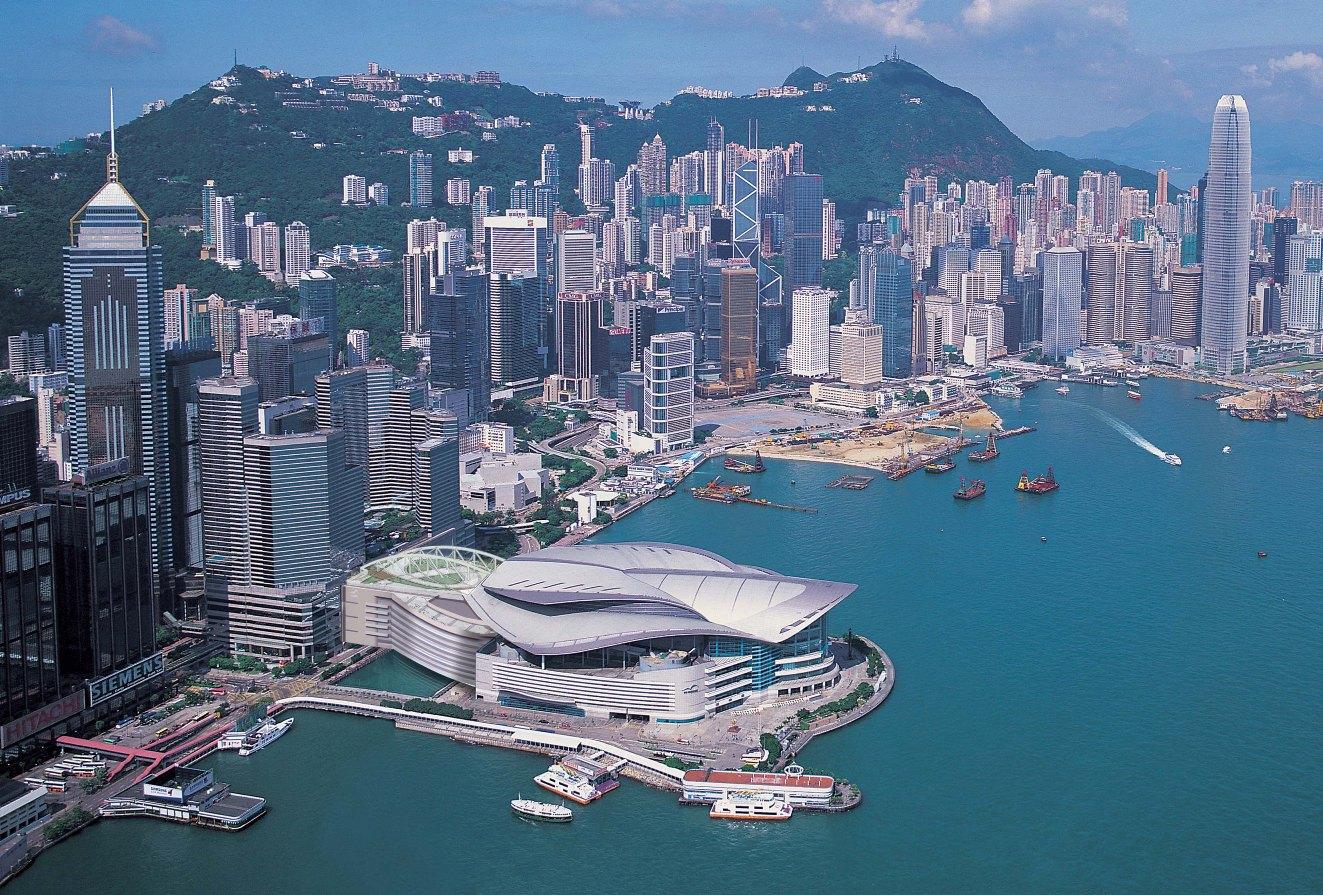
    Faced with a cloudy economic outlook, Hong Kong is casting a keen eye on action taken in Singapore, a fellow open economy buffeted by external forces – and an old rival.

    Thursday offered a good look. Finance Minister Heng Swee Keat announced a Budget that includes government spending of $73.4 billion.

    It comes a month after Hong Kong’s Financial Secretary John Tsang announced its Budget with an expenditure of HK$490 billion (S$87 billion). The reaction here is that, at first glance, the two financial czars – both men coincidentally have a Master’s in Public Administration from Harvard – might have been studying the same playbook.

    Given tough times ahead, they announced near-term relief mainly in the form of tax rebates and loan schemes for small and medium- sized enterprises (SMEs), and handouts for people to help boost consumption. Buzzwords such as innovation, robotics, and research and development also liberally litter the duo’s respective long-term visions.

    Ernst and Young’s Hong Kong tax managing partner Tracy Ho puts it thus: “They (Singapore) watch us, and we are watching them too.”

    Hong Kong is facing headwinds from a mix of political tensions and economic trends. Its retail sales recently suffered the worst decline in 13 years. Tourist numbers are down. The economy will grow between 1 and 2 per cent this year, Mr Tsang has said. But a greater anxiety is over the city’s long-term prospects. One nagging worry is the lack of diversity in its economy, in terms of its dependence on China and in its industry mix. Hong Kong is heavily dominated by the financial, hospitality and other services sectors, with a negligible manufacturing presence.

    It is in this broader vision that Singapore’s Budget on Thursday offers takeaways for Hong Kong, say those interviewed. Businessman David Ting, past president of the Chamber of Small and Medium Business, laments that unlike in Singapore, Hong Kong SMEs “do not have a clear direction on where we should go”. In particular, he lauds the Singapore Budget for being “very focused”. The $4.5 billion Industry Transformation Programme offers targeted industries a road map for how they can grow.

    On why Hong Kong businesses, known for their entrepreneurial spirit, will need such guidance now, Mr Ting says the landscape has changed. With China closed off in the past, it was easier for businesses to suss out opportunities, he adds.

    Lawmaker Charles Mok, an IT entrepreneur, says that while there are superficial similarities between both Budgets, given the emphasis on R&D, there was a distinct difference in how it is to be applied. In Singapore, the focus is on how to reinforce the manufacturing industry by introducing automation, he says.

    “In Hong Kong, we talk of developing R&D. But who is it for? Factories in China? What about our domestic industry – how do we help them get restarted?” says Mr Mok.

    On the flip side, Singapore’s Silver Support Scheme to help the elderly does not go far enough, notes social work expert Nelson Chow. “It helps the bottom 20 per cent. But in Hong Kong, this is something we’re already doing. The next step is to introduce a universal pension.”

  • Maldives laments HSBC retail banking loss

    Maldives laments HSBC retail banking loss

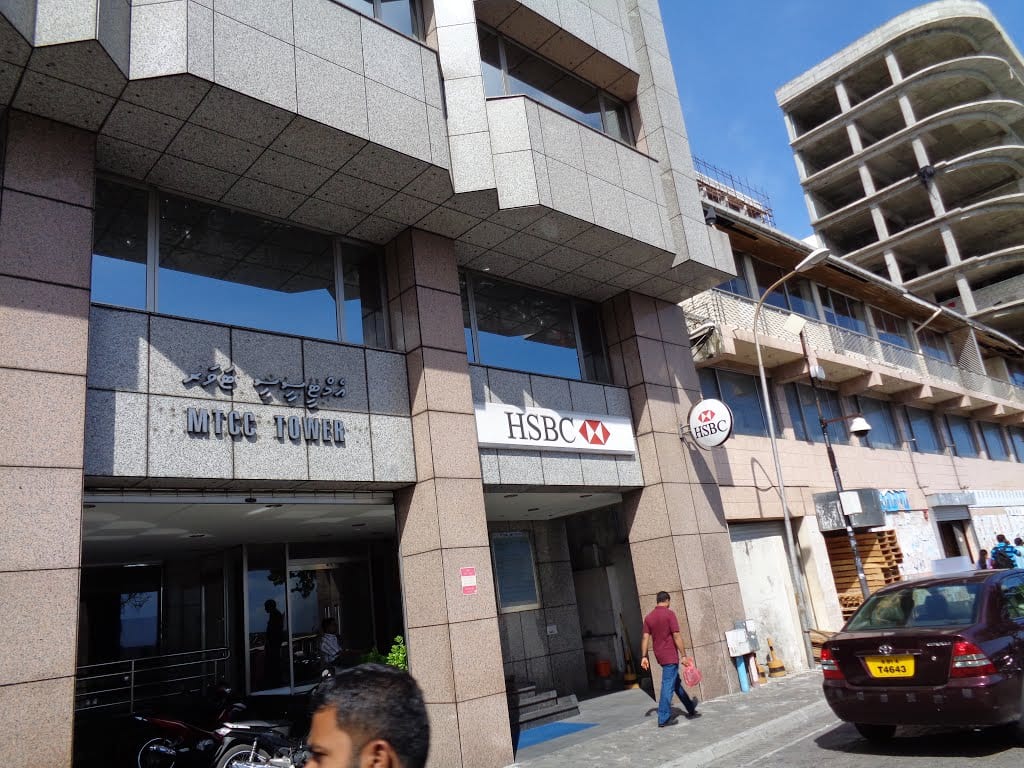
    Maldives central bank on Thursday lamented the decision by Banking giant Hong Kong and Shanghai Banking Corporation (HSBC) to cease retail banking in the Maldives from April.

    Speaking at the parliamentary finance committee governor Azeema Adam insisted that the Maldives Monetary Authority (MMA) does not wish HSBC to cease retail banking services in the Maldives but said the country still needed the bank’s other services.

    Male branch of HSBC had decided to cease retail banking operations from April 28 and is now informing its customers.

    An official from the Maldives Monetary Authority (MMA) also confirmed the plans by HSBC’s Male branch to shift to corporate-only operations. The official, however, did not give details.

    HSBC was not available for comment.

    HSBC operates in Maldives as a trading desk of the HSBC branch in Sri Lanka.

    The governor however, pointed out that HSBC’s decision was not limited to the Maldives.

    “Every bank has its own standards. Certain services that they offer. Instead of forcing something on them we look to find out how it could prosper as a business. We put in a lot of effort to bring HSBC to the Maldives,” Azeema explained.

    “Even when they [HSBC] first came they had sought to serve high net worth customers and individuals. We had given them the operating license knowing that all those years ago.”

    Azeema also revealed that several challenges had prompted the bank to adopt cost cutting measures.

    “It’s not something we also want. But if we look at the services provided by the banks in Maldives, HSBC is the third largest bank in the country. In terms of deposit size and loan size,” she continued.

    HSBC is the second highest banking profit tax payer in the Maldives, she added.

    An account in HSBC has to be opened with an initial deposit of MVR 50,000; the highest initial deposit required of any bank that operates in Maldives. The bank also pays the lowest deposit interest rate at 1 – 1.75 percent. Deposit interest rate on US Dollar accounts is 0.10 percent.

    As the bank charges a high amount in fees, the bank mainly hosts Maldivian businesses.

    In May 2014, complaints mounted over the bank’s decision to close down accounts held by many small and medium businesses citing administrative reasons. The businesses had complained that the move was made without prior notice.

    The decision by one of the biggest banks in the world comes a week after it was revealed that the Maldives had lost a major international banker.

    President Abdulla Yameen Abdul Gayoom told residents of Gaafu Dhaal atoll Gadhdhoo on February 15 that one of the major correspondent banks had dropped Maldives from its client list, while another one is considering a similar move. The reason, according to the president, is false claims made about Maldives, including threats posed by home-grown jihadists.

    “When we make such claims without considering the repercussions, it’s the people of Maldives that has to suffer,” he said, after inaugurating a project to establish a clean water system in the island.

    The president did not identify the bank that had dropped the Maldives. Haveeru, however, understands that US-based JPMorgan Chase had terminated its dealings with Maldivian banks in 2013.

    A correspondent bank is a financial institution that provides services on behalf of another, equal or unequal, financial institution. It can conduct business transactions, accept deposits and gather documents on behalf of the other financial institution.

  • Samsung’s Galaxy S7 Series Popular in Israel

    Samsung’s Galaxy S7 Series Popular in Israel

    South Korean tech giant Samsung Electronics Co. said Tuesday its latest flagship smartphones, the Galaxy S7 series, posted robust sales in Israel just a week after their launch.

    The Galaxy S7 series officially hit the shelves on March 14, coming out in major markets including South Korea, the United States and Europe.

    Samsung sold over 10,000 units in the first week in Israel as its advanced waterproof function and visual display received positive feedback, according to company officials.

    “Although only 3,000 units were pre-ordered, sales after the official launch jumped over 42 percent compared to that of the previous phone Galaxy S6,” Goh Kwang-hak, the chief of Israel branch, said.

    Samsung Electronics’ latest smartphone line, the Galaxy S7, hit the shelves of major markets on March 14, 2016. (Photo courtesy of Samsung Electronics)

    Samsung’s smartphones account for 45 percent of the market in Israel, which has a population of 7.8 million and a brisk secondhand phone market. It far surpasses U.S. rival Apple’s 30 percent share.

    The retail prices of the Galaxy S7 and Galaxy S7 edge in Israel are US$907 and $1,011, respectively. The edge version comes with a display that curves at both edges.

  • Whisky Magazine picks DFS’ Changi T3 duplex

    Whisky Magazine picks DFS’ Changi T3 duplex

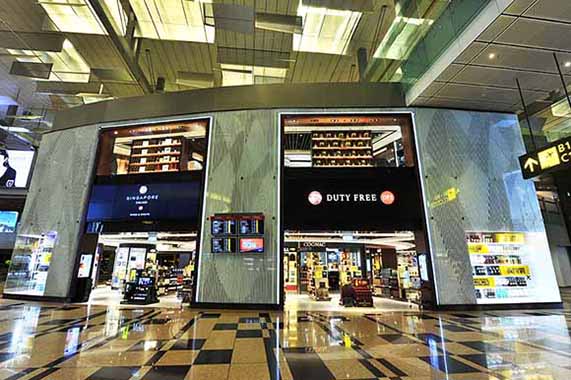
    DFS Group’s Singapore Changi Airport duplex duty free liquor and tobacco store in Terminal 3 was recently voted Travel Retailer of the Year in the 2016 ‘Icons of Whisky Awards by Whisky Magazine.

    As reported many times, the store was opened last May as part of an airport terminal-wide upgrade of the wines and spirits category, where the Civil Aviation Authority of Singapore raised the bar by encouraging contract bidders to push the envelope in terms of shop standards and quality.

    DFS’ May 7 2015 response was the long-anticipated opening of its $64m new terminal wide programme of stores over 85,350sq ft, including its 11,400sq ft dual-floor duplex Changi Airport T3 liquor and tobacco store – the largest single space for liquor and tobacco in any DFS store around the world.

    DFS Group’s flagship wines and spirits store at Singapore Changi Airport Terminal 3 is also the LVMH-owned company’s single biggest contract investment in wines and spirit to date. Prior to the opening, Michael Schriver [the then COO of DFS] described the project as ‘DFS most ambitious airport store ever’. At the same time, Ms. Lim Peck Hoon, EVP, Commercial at the Changi Airport Group described the L&T business as the single biggest commercial concession accounting for around 20% of total sales.

    According to DFS, Whisky Magazine receives nominations for its huge number of awards, which are subsequently shortlisted by its editorial panel and then finalized after a voting process online.

    DFS IS THRILLED…

    “We are absolutely thrilled that our DFS, Singapore Changi Airport store has been awarded Travel Retailer of the Year by Whisky Magazine and look forward to continuing to deliver innovative experiences and exceptional products for our customers in 2016,” said Brooke Supernaw, DFS Group’s Senior Vice President Wines, Spirits and Tobacco.

    “At each of our locations, our aim is to provide our customers with a surprising and delightful shopping experience where they can engage with the brands and products they love. We are particularly proud of DFS, Singapore Changi Airport which over the past year has expanded to become Asia Pacific’s largest assortment of single malts.

    DFS-Changi-L&T-tall-shot

    Click on picture above to enlarge:

    “From the duplex’s design to the interactive tastings held on site, our customers have loved this new approach to travel retail and we’re delighted the industry has fallen in love as well.”

    DFS adds that this is the first year the Icons of Whisky Awards have included a Travel Retail category, which was awarded at both the regional and global level.

    SEVERAL RIVALS COMPETED

    The retailer says it beat competitors from Ireland, England, Germany, the UAE and the Netherlands to receive Whisky Magazine’s Travel Retailer of the Year in the Rest of the World regional category award last in January.

    Following this it adds it is now pleased to have gone  head-to-head with rival entries from America and Scotland to secure the global title at the awards ceremony held in London last week.

  • Hong Kong textile cos eye Make in India to cut costs

    Hong Kong textile cos eye Make in India to cut costs

    India is rising, not only as a new choice of relocating labour-intensive industries from China, but also as a retail market of good potential, says a research report by The Hong Kong Trade Development Council (HKTDC).

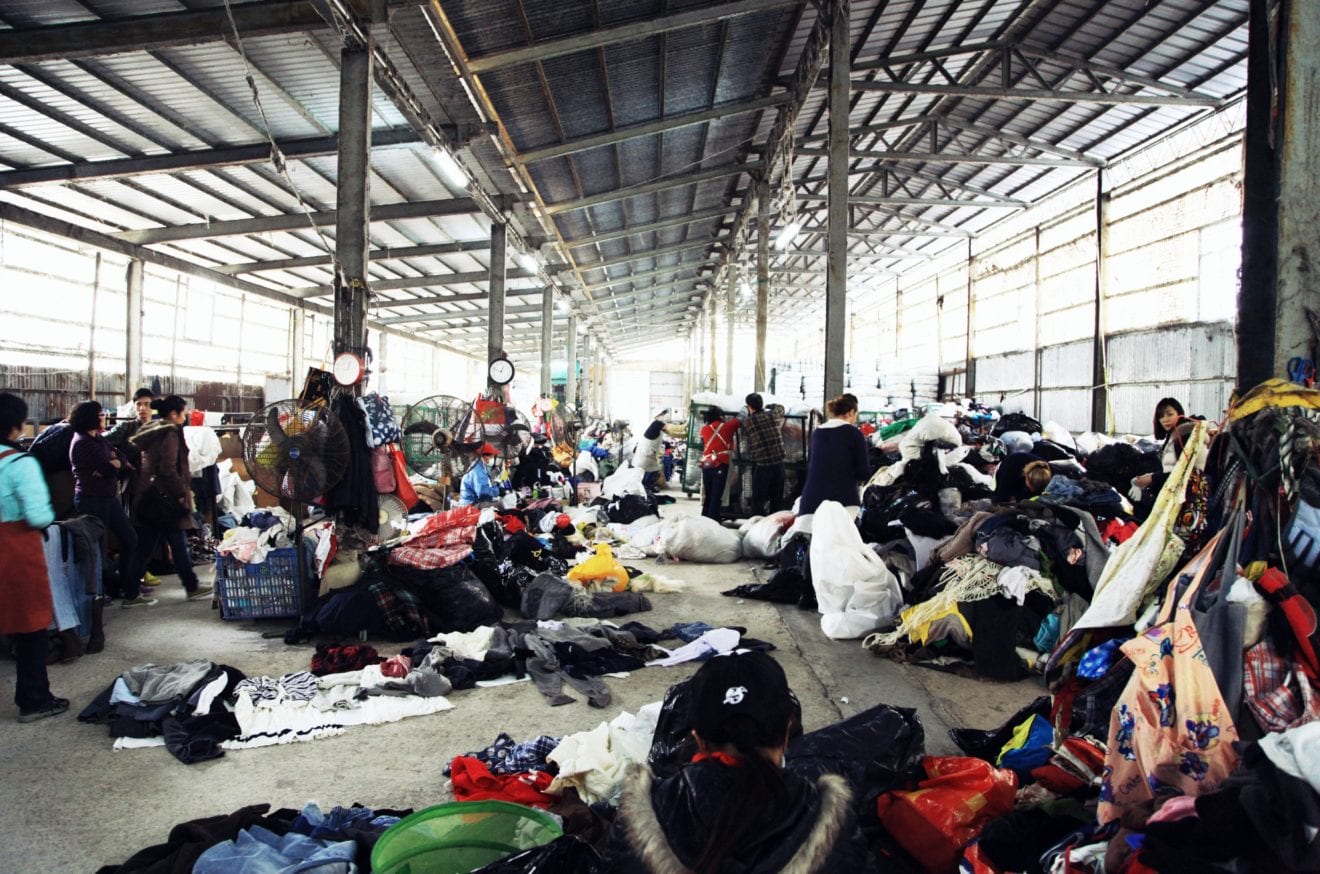
    In recent years, the sustained rise in production costs on the Chinese mainland has eroded the profit margins of many Hong Kong companies with labour-intensive factories located on the Chinese mainland, prompting them to seek alternative production bases elsewhere.

    While Southeast Asian countries offer many choices, the HKTDC report says India offers many advantages as an alternative production base, along with the added advantage of having a domestic market of great potential.

    According to the report, the majority of Indian garment producers are focused on the domestic market, as their product quality was generally lower than the standards required by overseas importers.

    Despite this, many big Indian exporters have successfully lined up with international buyers, including department stores, retail chains and brands.

    The paper was written after a recent field trip to India that included factory visits and interviews with garment manufacturers.

    In the four years to 2014, India’s garment exports increased at an average annual rate of 12 per cent, surpassing China’s 9 per cent, in line with Bangladesh’s 13 per cent and eclipsed by Vietnam’s 17 per cent.

    With advantages of raw materials and prospects of vertical integration, India is a strong garment exporting country and a location worth considering for factory relocation in relation to labour-intensive manufacturing, such as garment-making.

    The report pointed out that while China is the undisputed world leader in exporting textiles and garment products, many have overlooked India’s position as the world’s second biggest exporter of textile and garment products in 2014, selling a total of $36 billion, during the year, far behind China’s $399 billion.

    For textile exports alone, India was second after China in 2014, with a share of 5.8 per cent of the global market, compared to China’s enormous 35.6 per cent share.

    HKTDC says it is not surprising that the bulk of garment manufacturing in India is for the domestic market, supported by the country’s huge capacity in textiles production.

    India stands out to be a substantial exporter in both garments and textiles. In 2014, India imported textiles worth only $3.8 billion, lagging much behind Vietnam’s $12 billion, Bangladesh’s $6.8 billion, and just ahead of Cambodia’s $3 billion, the report said.

  • Gokongwei retires as chair of Robinsons Retail

    Gokongwei retires as chair of Robinsons Retail

    Taipan John Gokongwei Jr., the country’s second richest man according to Forbes,  has stepped down as chairman and CEO of Robinsons Retail Holdings Inc. (RRHI), which is in charge of the family’s retail business which include supermarkets and household brands Toys “R” Us, True Value, and Mini Stop.

    His only son Lance Gokongwei, 49, took his place on March 18, while his brother James Go remains as vice chairman.  Go is the chairman and CEO of JG Summit Holdings as of March 21.

    Gokongwei, who will turn 90 years old on Aug. 11, has promised to retire when he reaches 90 and just focus on his philantrophic work.

    In a rare chat with reporters in December last year, Gokongwei said Lance was doing a good job running the family-owned business empire.

    The elder Gokongwei, however, will remain chairman of the Gokongwei Brothers Foundation, which was launched in 1992 with his three brothers. It has helped schools such as Ateneo, La Salle and soon the University of the Philippines.

    Gokongwei, who was born in China to Filipino parents,  arrived in Cebu as a one year old toddler. He then built his multi-billion dollar empire in Cebu by trading goods off on a bicycle and on board a small boat off the pier of the province.

    For someone turning 90, Gokongwei said the only thing he could ask for himself is good health.

    RRHI reported a net income of P3.12 billion in the first nine months of 2015, up 18.8 percent year on year as net sales rose 12.7 percent to P63.3 billion.

    As of the end of September last year, RRHI had a total of 1,466 stores with the addition of  208 new stores. This translated to a 10.7 percent increase in gross floor area to approximately 939,00 square meters over a year ago.

  • Hong Kong airport cuts back on bookshops: Page One out, new mainland-based operator takes over

    Hong Kong airport cuts back on bookshops: Page One out, new mainland-based operator takes over

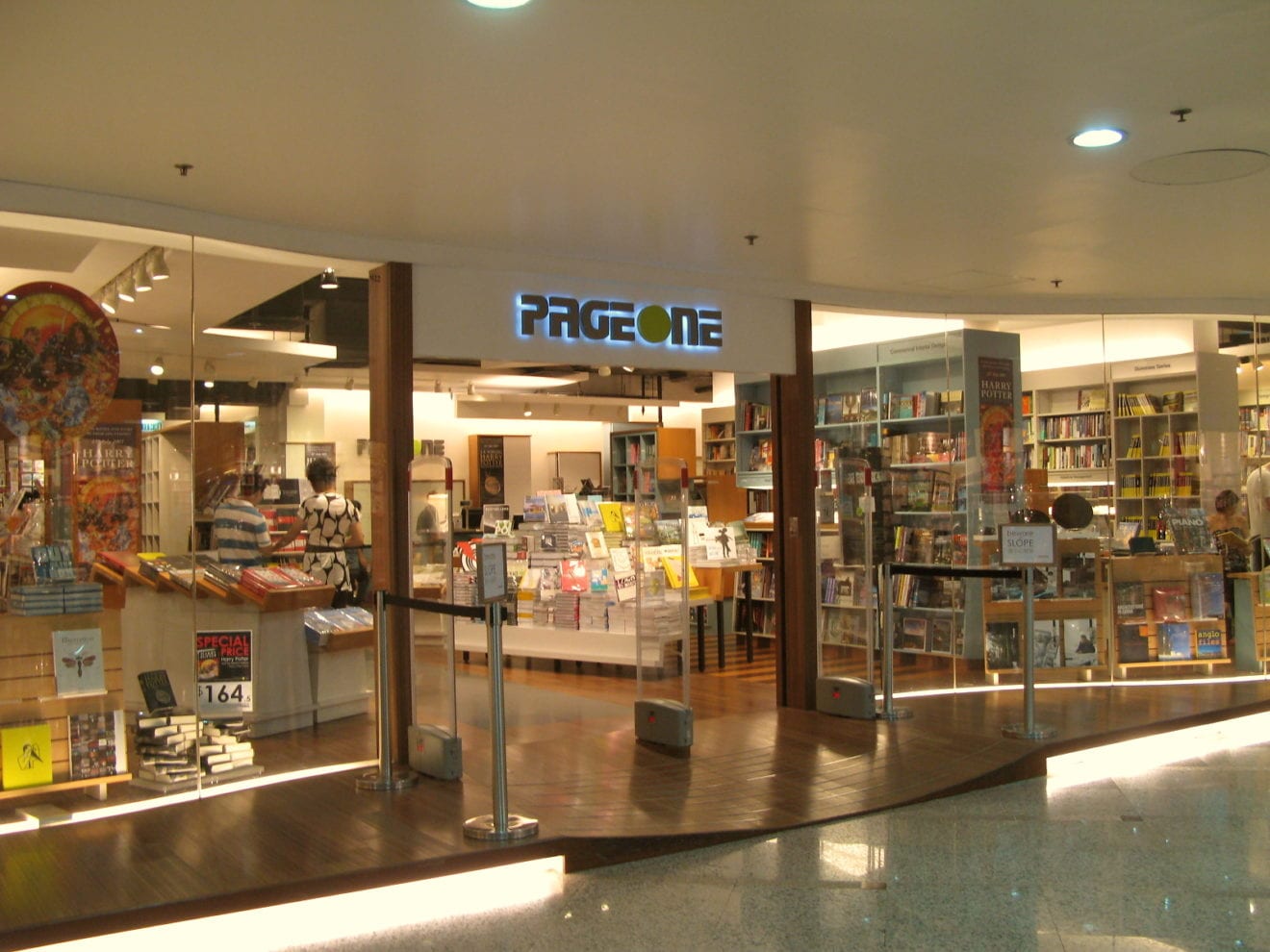
    Hong Kong International Airport is cutting back sharply on the number of bookshops for departing passengers and replacing all Page One stores with new outlets run by a mainland-based firm.

    The overhaul includes the ­replacement with high-end fashion stores of the airport’s two biggest bookshops in the departure area – once popular with mainland travellers buying books and magazines banned across the border.

    At a time of major controversy over Hong Kong’s banned-book trade, the number of airport bookshops is being reduced from 16 to 10, and four remaining shops moved, mostly to smaller sites positioned near departure gates.

    The two biggest bookshops – the 250 sq m Relay and Page One stores in prime positions near gates 20 and 21 in departures at Terminal One – are being replaced by luxury fashion stores MCM and Hermes respectively.

    Singapore-based chain Page One has lost all six of its airport bookshops while French-owned Relay, which has been doing business at the airport for 11 years, has had its number of outlets cut from 10 to five.

    Five of the 10 remaining bookshops at the airport will be run by a new operator, mainland publisher and bookstore chain Chung Hwa, under the new arrangement which comes into effect in April.

    The cutback in book retail space has triggered concerns that the Airport Authority might have come under pressure to shut down shops selling politically sensitive titles or exercised self-censorship in the wake of the ongoing controversy.

    Five Hong Kong booksellers went missing last year, sparking fears they had been kidnapped by mainland agents operating beyond their jurisdiction, but they later turned up on the other side of the border, saying they had gone there voluntarily in connection with an investigation into the smuggling and sale of banned books.

    However, an Airport Authority spokeswoman said the decision had been taken to reduce bookstore space because of a “change in reading habit and advancement in technology” following regular customer surveys on travellers’ needs.

    Relay and Page One were granted their most recent licences to run 16 bookshops at the airport in 2009. With the leases expiring in April, the Airport Authority invited bids for the relocated spaces in June last year and decided the winners in August.

    A spokesperson for the marketing department of Page One Hong Kong declined to say if the chain lodged a bid but said: “The proposed units’ allocation for the latest tender offered by the Airport Authority [was] not appropriate for us to continue our presence.”

    Because of that and the tourism downturn and sluggish economic conditions, Page One had decided to re-evaluate and restructure plans for retail stores to “match the current retail downturn”.

    Lisa Leung Yuk-ming, associate professor from the department of cultural studies at Hong Kong’s Lingnan University, said Chung Hwa had “quite a strong mainland Chinese background” and people might surmise political reasons for the changes.

    “Airport book shops became a haven for all these controversial books about Beijing government officials and their sex lives and how they made their way [to power] through corruption,” she said.

    “They were a haven not only for books but for magazines publishing gossip tabloid stories about the mainland Chinese government.

    “This might be a reprisal for bookshops selling these kind of things or it might be self-censorship by the airport themselves to try to weed out these problematic bookshop labels.

    “It might be a more proactive strategy to let more pro-Beijing commercial presses have space at the airport as a way to toe the official line – [and say] these are the books you should be reading rather than these problem [ones].”

    The Airport Authority spokeswoman repeatedly declined to address concerns over a possible political motive for the reduction in bookshop space.

    “The selection of books to be offered in the shops is decided by bookstore operators,” she said.

    The decision to cut back on book shops contrasts with the authority’s comments in 2009 when the previous contracts were awarded. Then, the authority said its surveys found books, magazines and newspapers were among the best-selling categories for departing passengers.

  • MasterCard launches Contactless Card in Myanmar

    MasterCard launches Contactless Card in Myanmar

    The latest of MasterCard’s efforts to better serve the people of Myanmar, the CB EasiTravel Prepaid MasterCard Contactless card provides consumers with a more convenient way to pay when travelling abroad without compromising security.

    U Kyaw Lynn, CEO and Vice Chairman, CB Bank said, “More Myanmar citizens are making trips to neighbouring countries than ever before, buoyed by the recent relaxing of entry visa restrictions. This trend will continue as the economy grows and gains traction. CB Bank is always looking for ways that will bring convenience to Myanmar travellers. CB Banks’s newly issued MasterCard Contactless card will give added convenience when making payments internationally.”

    Latest projections by the International Monetary Fund put Myanmar’s economic growth at around eight per cent for 2016. As well as seeing a growth in outbound tourists, inbound tourism is set to significantly contribute to Myanmar’s growth in the coming years.

    According to the inaugural MasterCard Asia Pacific Destination Cities Index launched earlier this year, Myanmar’s former capital Yangon is expected to see very strong growth in inbound tourism. Of the 167 cities ranked, Yangon has the third highest compound annual growth rate of 45.7 per cent for total inbound tourist expenditure over the period 2009-2015, just behind Kandy of Sri Lanka (47.3 per cent) and Okinawa of Japan (49 per cent).

    Antonio Corro, Country Manager, Thailand and Myanmar, MasterCard said, “Earlier this month, it was announced that four foreign banks were issued preliminary approval to operate in Myanmar. It is great to see the government taking further steps toward opening up Myanmar’s economy and we are optimistic that this will provide an excellent foundation for commerce to thrive. The people of Myanmar are also optimistic about the future of their country. MasterCard’s latest MasterCard Index of Consumer Confidence recently revealed that people in Myanmar have the most positive outlook on the future of any Asia Pacific market. With the launch of the first MasterCard contactless card in the country, we are continuing to develop the local payment landscape and look forward to more partnership opportunities that allow us to further financially empower the people of Myanmar.”

    Currently, more than 2,800 restaurants, retail outlets and hotels in Myanmar accept payment card

    According to MasterCard’s latest research, 61 per cent of people in Myanmar (also known as Burma) are seeking to travel abroad more in the next 12 months, a stark increase from just 25 per cent two years ago. To meet this growing demand for travel and cross-border spending, MasterCard together with Co-operative Bank Ltd (CB Bank) have launched the CB EasiTravel Prepaid MasterCard Contactless card.

  • Will underperforming Dairy Farm ever recover?

    Will underperforming Dairy Farm ever recover?

    Profitability is at a six-year low. Retail giant Dairy Farm has been underperforming in recent years, battered by weak sales, soft consumer sentiment and smaller market share. As a result, its profitability and share price has taken a beating, with the stock now hovering at its lowest point since 2010.

    Despite Dairy Farm’s poor showing, RHB Research remains bullish on the retailer’s growth story, noting that the company has much room for margin improvement in the medium term.

    “We believe there is much room to improve on gross margin in its supermarket/hypermarket segment, as the company reiterated its commitment to increase direct sourcing,” RHB said.

    RHB Research is also positive improving sales of the group’s corporate brands, and believes that country management changes will allow Dairy Farm to revive its presence in its key markets.

    “Current valuations are at their lowest point since 2010. This is perhaps reflective of weak profits, which are also at its lowest level in this period. However, we view Dairy Farm as a deeply-entrenched retail company, which has a strong potential to turn around its stumbling performances in the past few years.

  • Inside Bonia Selangor

    Inside Bonia Selangor

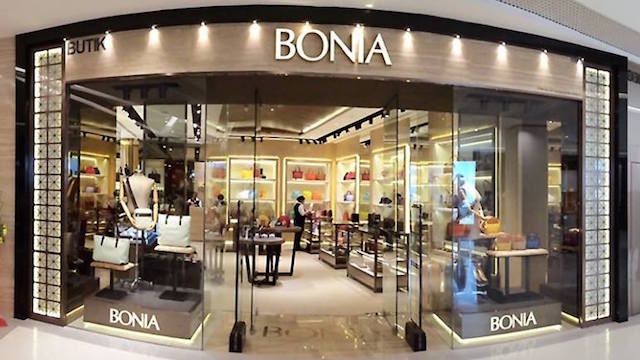
    Malaysia-listed luxury fashion retailer Bonia has opened a new generation boutique in its home market.

    The new store is on the ground floor of the Aeon Seksyen 13 Shah Alam shopping complex in Selangor.

    Bonia - Aeon Shah Alam Selangor Malaysia 2

    As the accompanying images released by the brand on Facebook show, the store has a distinctly curved facade and something of a ‘maison’ feel. It is thus similar to the style used by luxury European brands, with stock clustered by category in precincts, but not quite rooms.

    Bonia - Aeon Shah Alam Selangor Malaysia 3


    Stock is sparsely laid out to make the core leather goods ranges the hero of the displays, augmented by the brand’s apparel offer.

    Bonia - Aeon Shah Alam Selangor Malaysia 4

    Bonia Group has more than 700 sales outlets and 70 boutiques across Asia specialising in leatherwear, footwear and accessories.

    Bonia - Aeon Shah Alam Selangor Malaysia 1


    Altogether it has a network of more than 1200 sales outlets and 170 standalone boutiques throughout the world, including countries such as Brunei, Cambodia, China, Indonesia, Japan, Malaysia, Myanmar, Singapore, Thailand, Taiwan and Vietnam.

  • Third Manila NBA Store opens

    Third Manila NBA Store opens

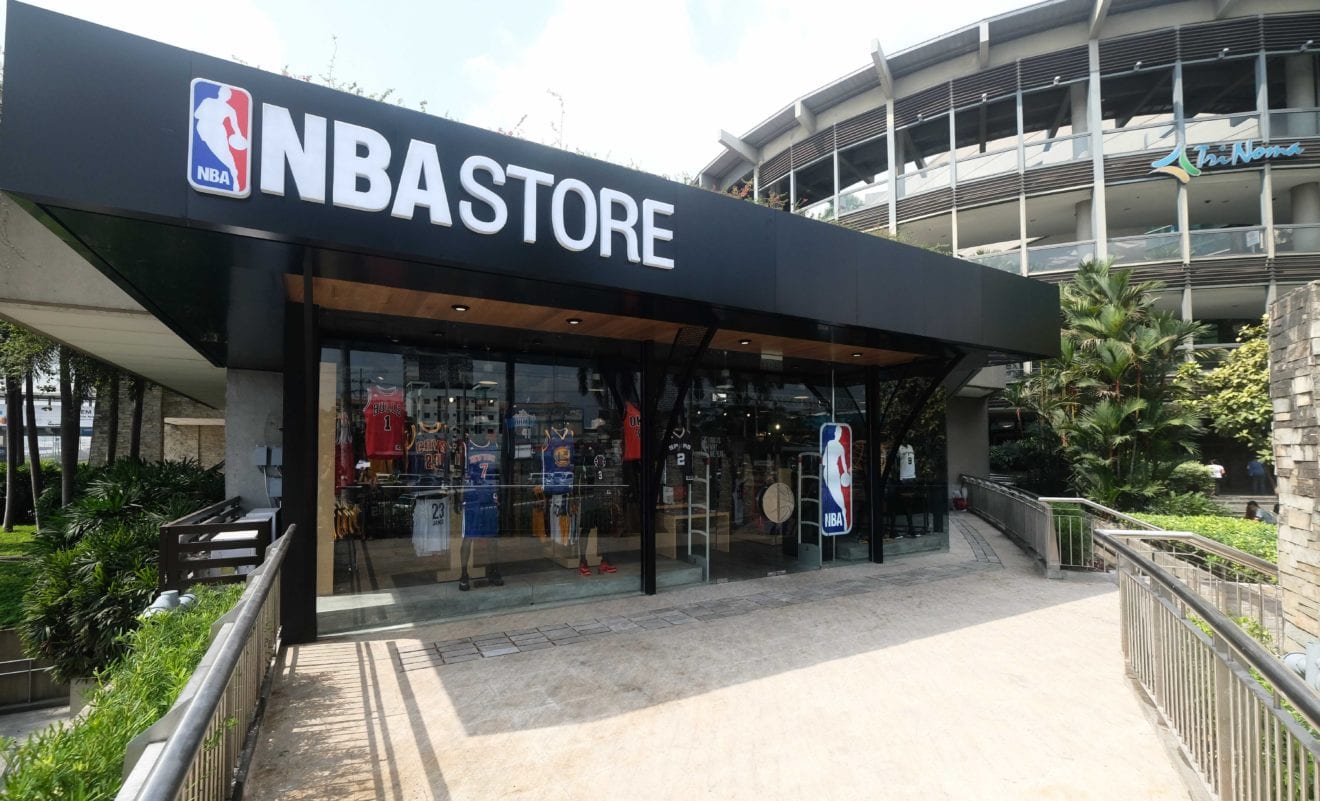
    The National Basketball Association (NBA) has opened the third Manila NBA Store.

    “[The new branch] has the most complete assortment of [NBA] products and merchandise in the Philippines,” said NBA Philippines MD Carlo Singson during a press conference.

    NBA store Philippines, Quezon cityThe International Athletic Trading Company (AITC) is managing the new branch in Trinoma Mall, Quezon City (right picture). It also oversees the NBA’s flagship store in Glorietta 3 in Makati City, and its second store in Mega Fashion Hall at SM Megamall in Mandaluyong City.

    IATC president and CEO Melvin Lloyd Lim said he is bullish about their new Quezon City presence, observing that the North Edsa area is “always packed with people” due to the presence of two (soon to be three) large commercial malls.

    “Based on my experience with retailing, this mall is one of the most successful Ayala malls,” Lim pointed out.

    All 30 NBA teams are represented in the merchandise at the NBA Store’s 280 sqm space including official jerseys, footwear, performance gear, lifestyle apparel, basketballs and collectibles.

    The stores feature assorted NBA products and other brands such as Adidas, Nike, Under Armour, New Era, Panini, Spalding, Stance and 2K Sports.

    In October 2015, the flagship NBA Store in the Philippines received the 2015 Asia Sports Industry Gold Award for the “Best Sports Retail Campaign” in recognition of its industry leading standards.

  • Everything you need to know about payments, ecommerce, and venture capital in Indonesia

    Everything you need to know about payments, ecommerce, and venture capital in Indonesia

    Macquarie’s annual conference in Jakarta on telecoms, technology, and ecommerce is one you shouldn’t miss. Last week, it brought together top decision makers in Indonesia’s digital economy.

    Macquarie Group’s corporate advisory branch Macquarie Capital gained relevance in Asia’s tech industry through advising startups and tech companies on capital raising, IPOs, as well as mergers and acquisitions. It’s, for example, responsible for advising aCommerce and PropertyGuru on their recent fundraises.

    Speakers at the event included Indonesia’s tech minister Rudiantara; executives of the three major telcos Telkom, Indosat, and XL; CEOs of retail giants; venture capitalists; and founders and CFOs of Indonesia’ most talked-about startups.

    Here are two days of back-to-back panels, distilled into digestible insights.

    1. A new ‘light touch’ approach to internet regulations

    Indonesia produced its share of confusing headlines about internet policies. Suddenly it wants to regulate everything: ecommerce, transportation, foreign investments.

    The new mantra is a “light touch approach” – allow change to happen and regulate where necessary.

    While opaque announcements caused concern, it’s obvious the current administration sees the digital economy as a key factor defining Indonesia’s future. It’s willing to go great lengths to support its growth.

    If you listen to tech minister Rudiantara or trade minister Thomas Lembong speak on the subject, you’ll hear their new mantra is a “light touch approach” – allow change to happen and regulate where necessary.

    It may still take some time for the administration to adopt the new mantra, but Rudiantara demonstrated he walks the talk when he refused transportation minister Jonan’s request to block access to app-based transportation services Grab and Uber. The Macquarie event coincided with a day of massive street protests organized by the taxi industry.

    Indonesia’s information and communications technology minister Rudiantara.

    Indonesia’s information and communications technology minister Rudiantara at a Tech in Asia event.

    2. Retail’s inevitable shift to ecommerce is on the way

    Similar to the changes in the transportation industry, a shift to ecommerce from offline retail is inevitable, Lippo Group director John Riady said. Consumers would eventually demand the higher convenience and product variety made possible by ecommerce.

    Lippo Group was an early mover last year when it launched its ecommerce endeavor Matahari Mall. This year, most of the big traditional retailers in the archipelago are getting on board with ecommerce plans of their own. Luxury brand retailer Mitra Adiperkasa is one of them, launching Map Emall in February.

    Lippo and Mitra Adiperkasa have taken different paths to achieving this shift to digital. Lippo’s strategy was to assemble a team of ecommerce professionals to start Matahari Mall from scratch as a separate corporation. Mitra Adiperkasa prefers to keep things close to home and manages its ecommerce site from within.

    Both John Riady and Ravi Kumar, COO at Mitra Adiperkasa, agreed that logistics and payments are still challenges to overcome. Indonesian shoppers lack trust in online payments.

    Facebook’s Head of ASEAN Kenneth Bishop offered advice on how to encourage customers to build trust: ecommerce applications should consider adding social features that let buyers ask questions before making a purchase.

    vp-sharma-map-emall-

    Mitra Adiperkasa’s VP Sharma launches Map Emall.

    3. A mobile world means engaging with customers around the clock

    The challenges of creating online services for a mobile-first market cropped up often in the discussions. Large parts of Indonesia’s young generation are coming online for the first time with smartphones, and don’t have access to desktop computers.

    Anthony Fung, the CEO of Zalora, and Fajrin Rasyid, CFO at Bukalapak, both observed that visits and transactions from mobile devices had overtaken those from desktop computers.

    Along with the shift to mobile comes a shift to new shopping behaviours. Whereas most online shopping used to occur during work hours, that pattern is starting to fade. Potential customers can now be engaged throughout the day, and even late in the evening.

    This requires brands to build even stronger emotional bonds with their customers. Zalora for example does this by focusing not only on selling products, but having a sense of fashion of its own. “If we want to be a fashion player, we need to be fashionable, know the trends, or even create them” said Anthony.

    4. More Youtube stars and on-demand video portals

    A more robust mobile infrastructure and Indonesia’s shift to 4G means streaming video on mobile devices is easier than ever.

    mobile-messaging-indonesia-BBM

    Mobile phones are part of everyone’s lives.

    This will likely lead to a digital video explosion this year. On one side that’s going to be user-generated content created by Indonesian millennials on platforms like YouTube, where social media stars like comedian Raditya Dika are already raking in millions of views on popular videos.

    There will be an explosion of digital video content this year.

    On the other are video streaming portals like iFlix, that offer quality international and regional video content for a subscription fee. iFlix will come to Indonesia in a tie-up with one of the local telcos, iFlix special advisor David Goldstein said at the Macquarie event.

    It must have learned from US-based competitor Netflix’ mistakes. Netflix got blocked by Indonesia’s state telco Telkom and its mobile operator subsidiary Telkomsel after it launched here last month.

    Video streaming is a sensitive issue in Indonesia for two reasons – first, content provided by on-demand portals will have to undergo the scrutiny of the local censorship body, and second, it eats up a lot of bandwidth, which is a challenge for the telcos.

    Regional players who understand Indonesia’s cultural sensitivities and partner with telcos could have the upper hand in the archipelago – that’s clearly the path Malaysia’s iFlix intends to take.

    5. Southeast Asia grows closer through startup mergers and acquisitions

    Tech startups growing into regional enterprises in Southeast Asia is an ongoing trend.

    Adrian Vanzyl, co-founder and CEO of Thailand-based Ardent Capital just went through a major merger with one of Ardent’s portfolio companies, Moxy. The women-focused ecommerce portal merged with Indonesia’s Bilna, forming Orami.

    “Mergers and acquisitions are a really good way to expand into markets with speed and efficiency,” Adrian said.

    After an initial phase of bringing together the teams and creating a new company culture, an effective merger or acquisition can be cost saving compared with trying to conquer a new market alone. “You’re in a new league of traction numbers and you can talk to a new league of investors,” Adrian explained, which is why he’s confident that we’ll see more merger and acquisitions in Southeast Asia’s tech sector this year.

    Orami-launch-event-team

    Moxy and Bilna rebrand as Orami after a completing one of the biggest ecommerce mergers Southeast Asia has seen so far.

    6. Profitability can wait

    The potential in Indonesia’s digital economy is so good that startups should focus on growth and brand building, not immediate profitability.

    Startups should focus on growth and brand building, not immediate profitability.

    Most of the players in Indonesia’s startup ecosystem, whether big ecommerce companies like Matahari Mall or on-demand services like Go-Jek, are not profitable yet.

    But that’s not the issue, John Riady said. “Focus on long-term value, not immediate profitability, make sure you can withstand trends and fluctuations,” he suggested.

    What’s necessary is a clear path toward profitability. Bukalapak’s Fajrin Rasyid said ideally, a startup should be able to switch between a profitability mode and growth mode at will. However, the panel agreed, there are also market forces at play which may force a startup to spend more to stay in the race.

    7. Waiting for a breakthrough in online payments

    What’s needed to catapult Indonesia’s digital economy to the next level is an online payments system that is widely accepted, works smoothly on mobile devices, and makes it easy and safe for customers to pay for things online.

    So far, there’s no such solution. Online payments are fragmented and complicated, which leads to many customers abandoning transactions.

    “Ecommerce payment methods have changed little in the past year,” said Chris Eyles from Fusion Payments who moderated the fintech panel at the Macquarie Event. “Over 50 percent of ecommerce transactions are still paid for via asynchronous offline payments such as cash on delivery and bank transfers which is limiting ecommerce growth and costing online retailers a lot of lost orders,” he added.

    startups-lending-money-poor-indonesia

    Payments are best done offline in Indonesia.

    One problem is that banks are still on the fence about their strategy in dealing with online transactions, which is holding back the entire ecosystem.

    Indonesian banks, for now, seem to prefer mobile wallet systems, but it has led to a situation where each bank offers its own ewallet version.

    Telcos also each have their own ewallets, but are planning closer collaboration in the future, which could possibly lead to the merger of the wallets of the three major telcos – a silver lining in Indonesia’s siloed payments landscape.

    Chris also observed that Indonesia’s fintech ecosystem lacks funding. “Why has Indonesia yet to see any major investments in the fintech space despite hundreds of millions being invested in the local ecommerce industry?” he asked.

    It could be due to unclear regulations, the dominance of banks, economic uncertainty, or a lack of suitable companies to invest in – most likely a mixture of all four factors.

    What became obvious is that Indonesia needs a breakthrough in online payments for its digital economy to make a leap. If there’s no local solution, it could fall into the hands of a global player to fill that gap.

    8. Investors continue to find value in Indonesia’s tech sector but are getting pickier

    Indonesia-landscape

    Anupam Garg, who leads Macquarie Capital’s telcos, media, and technology investments advisory in Asia, observed that the investing community still shows a great deal of optimism on the Indonesian technology space, despite there now being a higher focus on unit economics when assessing the value of individual businesses.

    “We expect tech fundraising to continue to thrive in Indonesia with some potential pickup in M&A activities,” he said.

    The general outlook was optimistic on a panel with VCs from some of the most active funds in Southeast Asia. The advice was to pick investments wisely, and to avoid certain verticals..

    Steven Venada form CyberAgent Ventures said that there already are three big winners in the ecommerce space: classified, retailers, marketplace. He doesn’t see many more opportunities for startups in this space, “unless you can outgrow them by 10x,” he warned.

    Better chances, according to him, are now in different verticals and niche markets.

    Stefan Jung from Venturra Capital explained his own caution about investing in fintech. “Should I wait until the regulation in this space becomes more clear?” he asked. “But then maybe I’m too late. Fintech is one of the most outstanding opportunities on a global level.”

  • Pop-up stores giving shopping malls a boost

    Pop-up stores giving shopping malls a boost

    Hit by rising vacancy rates and competition from e-commerce websites, shopping malls are turning to a temporary solution to attract shoppers – pop-up stores.

    At least two companies have sprung up in recent months to play middleman between retailers looking for temporary shopfronts and malls with vacant spaces.

    Invade, launched last month, has a pool of 38,000 retailers and 100 landlords. The four-month-old PopUp Angels has more than 100 spaces on its platform and several hundred brands on board.

    Those looking to rent a retail space for a short term, usually between three months and a year, can browse a list of available spaces on both websites, which will earn a fee when there is a successful match.

    Pop-up stores offer a win-win solution. Landlords can fill spaces in malls while looking for long-term tenants, and retailers get to reach out to new customers without committing to costly multi-year leases.

    Shoppers benefit as well, because pop-up stores tend to have more diverse offerings, retail experts say.

    Invade founders Kent Teo, 30, and Koh Cheng Guan, 29, started out as flea market organisers seven years ago and later ventured into multi-label pop-up stores. The idea for a real-time retail booking system came when more malls started approaching them with underused spaces.

    “Two to three years ago, we would get about one landlord a month asking (for our help). But now, we get three to four,” said Mr Teo, likening Invade to a “retail space Airbnb”. Airbnb is a popular holiday rental site.

    Invade’s pool of retailers, gathered from flea-market-organising days, include online fashion labels, artisans and tech start-ups.

    PopUp Angels was set up by Mr Adrian Chan and Mr Kit Chan, the duo behind food and beverage businesses Best Fries Forever and Cloud & Cream. The two 37-year-olds wanted to ease the “cumbersome” process of finding space and setting up and marketing pop-up stores.

    More malls have been offering short-term leases in the past two years, as the supply of retail space outpaces demand, said Mr Adrian Chan.

    Urban Redevelopment Authority data shows the islandwide vacancy rate for retail space rose from 4.5 per cent at the end of 2013 to 5.8 per cent a year later. At the end of last year, it was 7.2 per cent.

    Retail space here grew in volume by 22,000 sq m in the fourth quarter of last year. Malls that have come on the scene recently include Capitol Piazza, which opened in Stamford Road last year, and Waterway Point, which opened in Punggol in January.

    But demand for retail space has dampened, given high labour costs and growing competition from online platforms and regional shopping destinations.

    Both online and brick-and-mortar retailers are starting pop-up stores, albeit for different reasons.

    Furniture and lifestyle company HomesToLife last year opened two pop-up stores, at I12 Katong and Westgate, with leases of a year each – to “build momentum” in the lead-up to launching its flagship store, which opened in Mohamed Sultan Road early this month.

    “The stores offered a sneak preview of our products and, by monitoring the sales there, we could better design our marketing campaign,” said senior branding consultant Sotiria Kostavara.

    Ms Samantha Soh, 27, who owns online clothing store Ellysage, opened her first standalone store at Orchard Gateway in January, with the help of Invade. She hopes to extend the three-month lease, which ends this month.

    “For any fashion label, a physical store is important. A lot of my customers tell me they want to try on the clothes first,” she said.

    “It’s also a very useful touchpoint… I can interact with my customers.”

    Singapore’s largest mall operator, CapitaLand Mall Asia, which owns and manages 18 malls here, said pop-up stores form about 1 per cent of its tenants. In 2014, it opened retail zone J.Avenue at its JCube mall to cater to such stores, providing an electronic point-of-sale system and basic shop fittings to make it easier for first-time retailers.

    Ms Sulian Tan-Wijaya, a senior director for retail and lifestyle at Savills Singapore, said the trend for such stores started three to four years ago, “but it was rare and not obvious to shoppers”.

    The trend is now more evident as more online, multi-label and indie brands are sprouting up in malls alongside established global retailers, she said.

    “Pop-up stores will not pay high rents, as their business model does not allow for high margins,” she said. “But they add diversity to the mall mix with their eclectic offerings and generate shopper traffic.”

    Mr Gary Nonis, property consultancy JLL’s national director for retail, warned that too many pop-up stores in one mall could hurt the mall’s branding in the long run. He said: “It might be deemed less attractive by seasoned operators, which would rather have strong branding, and this could also hurt their potential performance in the mall.”

  • New L’Oreal Thailand boss goes for the top

    New L’Oreal Thailand boss goes for the top

    Keraudy will take over from Umesh Phadke as the first female managing director of L’Oreal Thailand on April 1. She is currently general manager of L’Oreal Thailand’s consumer products division, and will come to the top position with significant experience in L’Oreal across multiple countries.

    “My second priority will be to continue growing our people and ensure we are doing business in a sustainable way. We want to make sure L’Oreal Thailand is the best place to work for all employees and grow our business in a manner that will have a positive impact on both society and the environment,” she said.

    L’Oreal Thailand has 21 brands, ranging from mass market brands to luxury, offering consumers a wide range of beauty products and price points. Last year alone, it sold 87 million product items across all categories.

    L’Oreal (Thailand) Co, a subsidiary of the world’s leading beauty company, has announced impressive 2015 performance, especially in the facial skincare segment, the largest in the Thai beauty market, as well as accelerated growth in the makeup sector.

    L’Oreal’s business is ranked No 1 in the Asean countries where it operates.

    The value of Thailand’s skincare market last year was estimated at Bt26 billion, up 5 per cent over 2014. Facial skincare accounted for 68 per cent of the market, with makeup, which posted the fastest growth of 6.5 per cent, valued at about Bt14 billion.

    Outgoing managing director Umesh Phadke said L’Oreal Thailand had performed strongly performance and remained the fastest-growing beauty company in the country.

    “Our leadership in the highly competitive facial-skincare market, our fast growth in the makeup market, and our adherence to the very highest standards of trust and innovation in our operations [are] at the heart of this great achievement for our company. I would like to thank every L’Oreal employee for their contribution to this great success,” he said.

    In order to accelerate further in 2016, the company will focus on five key areas: introducing new brands, strong product innovation, effective communication, both online and offline, expanded distribution channels and increased concentration on sustainability.

    Digital innovation will also be key strategy for L’Oreal Thailand in a highly mobile and connected market. Thailand has nearly 82 million mobile connections, and more than 37 million people use Facebook every month.

    Average social-media use is almost three hours a day.

    “We are focusing more on digital media, and have invested 130 per cent more in digital media compared [with] last year. Our Garnier Sakura White campaign with ‘selfie sticks’ used as a means of relating to Thai consumers who love taking selfies had almost 3 million views on YouTube and was recognised as the best campaign worldwide,” Phadke said.

    E-commerce is another growing trend, with overall Internet retail increasing by 30 per cent in 2015 to Bt47 billion in total value, according to Euromonitor. DHL reports that the Thai e-commerce market is growing rapidly, and is expected to more than triple in size to Bt138 billion by 2020.

    “Thai people aspire to beauty,” Phadke said. “It is a consistent part of Thai life, and this can be seen prominently in the culture, arts, architecture, and the way one expresses oneself here.

    “The Thai quest for beauty has facilitated the growth of the Thai beauty market, and fills the future with great opportunity. With exciting new brands, strong product innovations, innovative digital communications, e-commerce growth and high-quality in-store services and experiences, we are confident that we will take our place at the top of the makeup market in the near future, while continuing our strong leadership of the facial-skincare market.”

    The company says Nathalie Gerschtein Keraudy has strong understanding of the Thai beauty market, with three years of success in the country’s business results.

    Phakde will move to a new role as country manager of L’Oreal Indonesia.