Author: Mei Ling Tan

  • TOT allows AIS to trial use of 2.1-GHz spectrum

    TOT allows AIS to trial use of 2.1-GHz spectrum

    Thai state-owned operator TOT has granted former concession holder AIS permission to provide a trial mobile service over the 2100-MHz spectrum band.

    TOT has not yet permitted AIS to commercially use the spectrum but will allow the private operator to conduct technical testing ahead of the signing of a planned partnership deal.

    But regulator NBTC is looking into the decision to allow the trial using 15 MHz of the 2100-MHz band after receiving an informal complaint complaining that this should not be allowed as they have yet to finalize the terms of the partnership.

    The operators are currently negotiating a deal to provide a joint 3G service over TOT’s 2100-MHz spectrum.

    AIS had been using the spectrum as part of its earlier build-operate-transfer concession agreement with the state-owned company.

    AIS subsidiary AWN currently provides wireless broadband over 15MHz of its own 2100-MHz spectrum and 15MHz of 1800-MHz spectrum, both acquired at auction under the new licensing regime. But the operator is keen to acquire access to more spectrum to meet rising data demand.

    In addition, AIS has reportedly reached an agreement with rival Dtac to roam the remaining AIS 900-MHz 2G subscribers to Dtac’s 1800-MHz network upon the switch-off of the 900-MHz service.


  • Myanmar likely to delay 2600-MHz auction

    Myanmar likely to delay 2600-MHz auction

    Myanmar’s telecom ministry may need to delay a planned auction of 2600-MHz spectrum due to a conflict over whether the spectrum should be allocated before the regulatory framework is finalized.

    The Ministry of Communications and Information Technology (MCIT) has intended to auction 140MHz of 2600-MHz spectrum by the end of March.

    But after industry consultations, the government has acknowledged that it may need to delay the process. The consultations brought to light a conflict between those believing that the spectrum should be allocated as quickly as possible to ensure the nation’s telecom operators have sufficient spectrum to meet demand, and those believing that a spectrum roadmap should be completed first to give greater clarity to the industry.

    Both Telenor Myanmanr and Ooredoo Myanmar have expressed a belief that the spectrum roadmap should be released before the auction.

    MCIT posts and telecom director U Than Htun Aung acknowledged that the ministry didn’t expect such a range of conflicting views on the matter, and that the auction may need to be delayed as a result of the conflict.

    The ministry had last indicated that it planned to conduct the auction on March 24.

  • Rackspace debuts Red Hat powered private cloud

    Rackspace debuts Red Hat powered private cloud

    Rackspace has launched a new private cloud service that delivers OpenStack private clouds as-a-service using the Red Hat Enterprise Linux OpenStack Platform.

    Rackspace Private Cloud powered by Red Hat expands the Rackspace OpenStack-as-a-Service product portfolio.

    Managed by OpenStack and Red Hat experts at Rackspace and backed by Fanatical Support, the service combined public cloud benefits with the security, control and performance of an enterprise environment. The offering is backed by an industry-leading 99.99% OpenStack API uptime guarantee.

    Rackspace is contributing to Red Hat’s continued efforts to improve Red Hat Enterprise Linux OpenStack Platform by testing and certifying for broad hardware and software compatibility, performance and availability.

    Rackspace manages and maintains the Red Hat environment including the underlying Red Hat Enterprise Linux, Red Hat Satellite and Red Hat Enterprise Linux OpenStack Platform so customers can focus on their business applications and not their infrastructure.

    Customers have a single point of contact that will deploy, manage and maintain their private cloud at Rackspace. As an additional feature, customers have the flexibility of bringing their own Red Hat subscriptions to Rackspace, using Red Hat Cloud Access.

    “As the leading operator of OpenStack clouds with the most comprehensive OpenStack product portfolio in the industry, Rackspace is excited to expand our managed services and expertise to the Red Hat Enterprise Linux OpenStack Platform,” said Darrin Hanson, vice president and general manager of OpenStack Private Cloud at Rackspace.

    “We help make OpenStack simple by eliminating the complexity and delivering it as-a-service to customers in their data center, a Rackspace data center or in a colocation facility.”

  • Rakuten launches mobile e-commerce app in Taiwan

    Rakuten launches mobile e-commerce app in Taiwan

    Japanese e-commerce giant Rakuten has launched  consumer-to-consumer mobile e-commerce app Rakuma in Taiwan.

    The app, first launched in late 2014 in Japan, enables the sale of goods between individual consumers via smart devices. It allows quick product listing and direct communication among users.

    Rakuten said the app will target Taiwanese consumers interested in easy mobile access to e-commerce and is available for free download on Google Play and the iTunes Store.

    “We are excited about Rakuma making the leap from Japan to Taiwan with this popular mobile app and providing Taiwanese users with the opportunity to ‘sell and buy’ their personal, home and fashion goods seamlessly on their smart devices,” said Rakuma Business Manager, Takafumi Inoue.

    Taiwan is a priority market for Rakuten’s global growth strategy as Taiwan Rakuten Ichiba is already a leading e-commerce company in Taiwan and other newer Rakuten services, such as the Rakuten Card credit card and Rakuten Travel, continue to experience rapid growth.

    Rakuten is building its ecosystem of services that offers Taiwan users valuable membership benefits.

  • Mobile apps collecting alarming amounts of data

    Mobile apps collecting alarming amounts of data

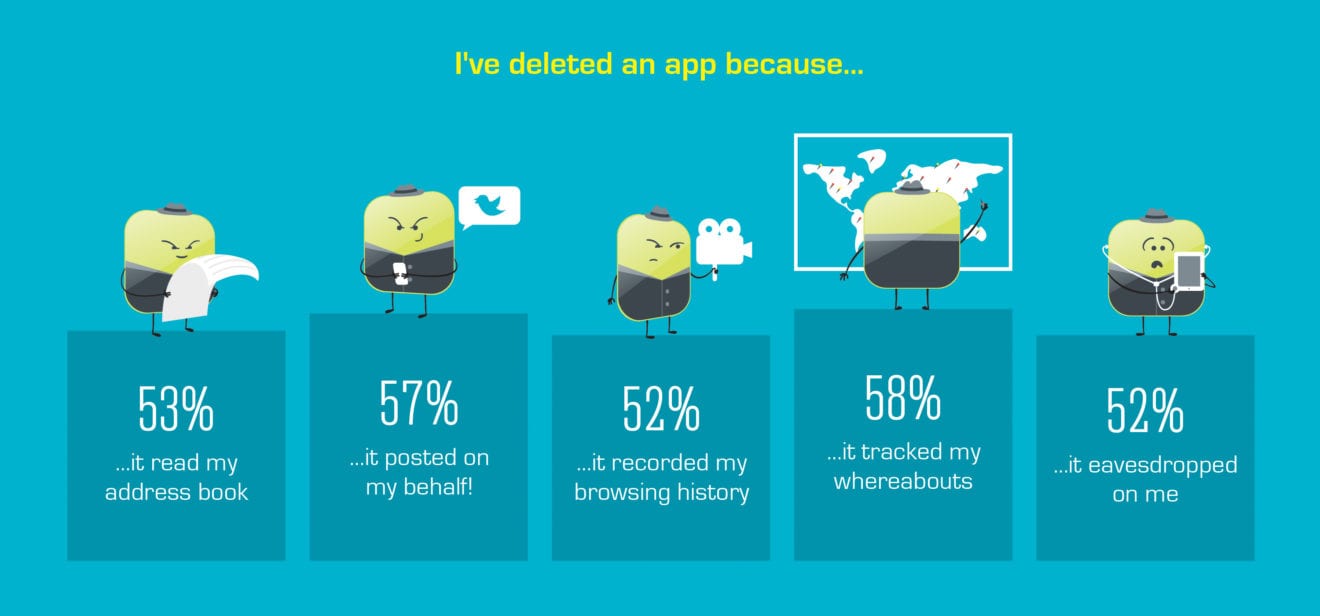
    More than half of mobile applications are collecting “alarming” quantities of data, a new study indicates.

    Hewlett Packard Enterprise’s HPE mobile application security report 2016 analyzes scans of more than 36,000 iOS and Android mobile apps, and reveals the impact of increasing data collection.

    As mobile applications become more prevalent in the work environment, it’s essential that organizations understand the security vulnerabilities of mobile applications and implement mobile security best practices and policies required to protect today’s digital enterprise. Adversaries are shifting their focus to mobile platforms, with more than 10,000 new Android threats discovered per day in 2015, and an iOS malware growth rate of more than 230%.

    “Modern mobile applications are collecting, transmitting and storing a wide range of data that often is not necessary to the application’s function, and can cause significant financial and reputational damage if a vulnerability is exploited,” said Jason Schmitt, vice president and general manager, HPE Security Fortify at Hewlett Packard Enterprise.

    “With attackers’ growing interest in mobile, it’s critical that developers build security into applications from the onset, and organizations take a proactive approach to data security to better protect both personal and corporate data.”

    Not all apps need to track your location

    A majority mobile applications track your location, but not all of them need to. More than 50% of the scanned applications accessed geolocation data. This can create serious privacy implications in the event of an attack, as an attacker can gain access to the physical location of otherwise anonymous, unsuspecting users.

    While it makes sense for a traffic application to track location, the study found that more than 70% of education applications on iOS did as well. This is disturbing as education applications are often marketed towards children.

    The report also found that calendar data was accessed by more than 40% of the iOS games and more than 50% of the iOS weather apps scanned. Calendar data can be particularly sensitive, detailing not just when business meetings take place, but also the topics and invitees.

    Ad and analytics frameworks are commonplace in application development, with more than 60% of applications scanned using these frameworks. A framework that is misconfigured – or insecure to begin with – could be storing or transmitting a significant amount of highly specific and potentially sensitive data about users.

  • Viettel launches carrier billing for Google Play

    Viettel launches carrier billing for Google Play

    Viettel has become Vietnam’s first operator to offer to offer direct carrier billing for the Google Play store.

    The operator has teamed up with carrier billing company Fortumo to offer carrier billing to its 55 million subscribers.

    Both postpaid and prepaid customers will be able to take advantage of the new function.

    Announcing the move, the companies said that smartphone penetration in Vietnam has reached 36.2% of all mobile users, but only 1.9% of the population have a credit card and 26.5% have a debit card. This makes the market well-suited to carrier billing services.

    “The key reason for Viettel selecting Fortumo was our industry-leading technical platform that is capable of simultaneously handling large app stores as well as leading OTTs,” Fortumo chief business officer Gerri Kodres said.

    “Additionally, Fortumo has been preferred choice for carriers in Asia because of our strong focus on the region and local presence.”

    In Asia, the operator’s platform is also used by music and streaming providers such as Sony, Alibaba’s UCWeb, Tencent and Huawei.

  • Price war in Singapore over mobile data

    Price war in Singapore over mobile data

    A price war has erupted in Singapore for the first time in four years, as operators seek to stay competitive by lifting their data allowances.

    SingTel recently introduced a new add-on plan giving customers the option of doubling their mobile data allowance for an extra S$5.90 per month.

    Both M1 and StarHub quickly followed suit, with M1 introducing a similar option to SingTel and StarHub offering an extra 3GB of mobile data for a promotional rate of S$3 per month, rising to S$6 from April.

    The offers mean the operators have effectively halved their mobile plan charges in some cases. The biggest discounts are for more high-end plans.

    The cuts follow the ISP seeking to become Singapore’s fourth mobile operator, that it plans to charge as little as S$8 for a mobile plan with 2GB of data, with value added services charged at market rates.

    MyRepublic also plans to offer an unlimited data plan for S$80 per month. The incumbent operators currently do not offer unlimited data options.

  • Thailand’s AIS facing 2G switch-off

    Thailand’s AIS facing 2G switch-off

    Subscribers to Thai operator AIS’ 900-MHz 2G service could face having their services disconnected by midnight tonight amid an ongoing dispute over spectrum usage.

    AIS still has around 400,000 2G subscribers left on its 900-MHz 2G network, but spectrum AIS had been using for the service has been reallocated at auction to True Move H Universal Communication.

    True’s 900-MHz license is due to take effect from today, leaving the fate of the remaining subscribers hanging in the balance. According to the report, AIS is expected to announce that its 2G subscribers will not face any disruption as a result of the reallocation, even though the rules stipulate that AIS will have to switch off its 900-MHz service after the spectrum changes hands.

    The NBTC recently held meetings with AIS, state-owned TOT and True over ways to prevent disruption to the remaining customers. But the companies were reportedly unable to reach a mutual agreement.

    True had offered to let AIS use its 900-MHz spectrum in exchange for a usage fee, but AIS has insisted on using the 900-MHz spectrum from the other winner of 900-MHz spectrum, Jas Mobile Broadband. The NBTC has rejected this proposal.

    Meanwhile the regulator has ordered that the applications of around 800,000 2G subscribers of AIS and rival Dtac be port their mobile number to True’s network be expedited.

  • Dtac launches social media campaign in support of AIS

    Dtac launches social media campaign in support of AIS

    Dtac has launched a social media campaign under the hashtag #fairfight pledging support for AIS and its subscribers.

    The campaign features Dtac CEO Lars Norling saying that he cares for all mobile users and that AIS 2G subscribers are welcome to roam on Dtac and do not have to worry about their SIM cards being cut off. AIS subscribers do not need to port their numbers to any new network to continue using their phones.

    This is a thinly veiled reference to TrueMove’s ongoing campaign to win customers from both their networks.

    However, at the last moment literally minutes before the planned network switch-off, AIS was granted an injunction by administrative court nullifying the NBTC order that AIS would have to switch off its 2G network on midnight of 15 March.

    AIS CEO Somchai Lertsutiwong asked the court that it be allowed to continue to use 5 MHz of Jas’ 900-MHz spectrum (that it is already using). Somchai argued that continuing to use Jasmine’s as yet unclaimed spectrum would have no effect on TrueMove’s 900-MHz licence that was granted on Monday 14 March.

    The court order allowed AIS to continue using the 900-MHz spectrum for another 30 days until 14 April. The deadline for Jasmine to pay for its 900-MHz spectrum is 21 March.

    AIS has an estimated 400,000 users still dependent on its 2G network, most with 3G capable SIMs but old 3G handsets.

    Meanwhile AIS has been ordered by the supreme court to pay state-owned CAT Telecom $200,000 (7 million baht) plus interest for negligence. The court ruled in CAT’s favour that AIS was responsible for negligence in allowing 165 subscribers to take out 185 numbers with incomplete or falsified identity documents or signatures and make overseas calls on CAT’s network that could not be traced and billed.

  • Lenovo, Juniper enter data center alliance

    Lenovo, Juniper enter data center alliance

    Lenovo and Juniper Networks have inked a global partnership to jointly build new converged, hyper-converged, and hyper-scale data center infrastructure.

    As part of the partnership, customers will be able to purchase Juniper’s networking products directly from Lenovo for easier acquisition, as well as consolidated support.

    In line with the move to disaggregate of hardware and software in the data center, the two companies intend to bring open, flexible solutions to market, leveraging the ONIE (Open Network Install Environment) model.

    To meet customer needs for fast provisioning and easy administration, both companies expect to collaborate to offer simplified management and orchestration in the data center leveraging Lenovo’s xClarity management software as well as Juniper’s Network Director and Contrail SDN software.

    In addition, the two companies plan to collaborate around go to market on a worldwide basis targeting enterprise customers, service providers, channel partners as well as system integrators.

    Lenovo and Juniper aim to develop joint go-to-market plans and a tailor-made resell model to address unique localization requirements in China.

  • Thai telecom market let down by state mis-investment

    Thai telecom market let down by state mis-investment

    Telecoms consultancy Yozzo has released a report on Thailand’s telecom market at the end of 2015 in which it highlighted a vibrant, healthy market that is let down by mis-investment by the state.

    Report author Allan Rasmussen told TelecomAsia that according to the ICT Ministry’s own national statistical office 25 million Thai citizens do not use the internet because they do not know how, 47,000 do not use the internet because of network access issues and 216,000 because they find it too expensive. However, the ICT Ministry is spending $427 million (15 billion baht) [on the state telcos] to roll out internet so that everyone can get online at cheaper prices – when that is obviously not the issue.

    “It would be a wise move to teach them how to surf [the internet] as obviously neither lack of network nor pricing is the major issue,” he said.

    On the plus side Rasmussen noted that overall the data shows that the Thai population is very well positioned when it comes to mobile communication with very high mobile internet usage as part of a daily routine.

    “It is especially great to see the female population having a small upper hand with 83.9% using a smartphone to access the internet while ‘only’ 79.6% of males do the same,” he said.

    The report also shows that 2015 was a record year in terms of smartphone sales, with 22 million units.

    “Samsung is probably also smiling as 20% of this volume carried their brand, mostly due to the introduction of their Galaxy J series (J2, J5 and J7) but overall the 47% year-on-year growth in sales was due to the fierce handset promotions from the operators as they tried to move users from 2G to 3G or 4G handsets.

    “In June 2015 alone, there were a staggering 1,800 different mobile device models competing in the market Thai market a clear indication on just how interesting the Thai market is for mobile device manufactures,” he noted.

    In terms of social media YouTube stood out with a 70% growth in watch time and equal (70%) growth in uploaded content. But the real killer was that Thailand now has 18 local YouTube channels with more than a million subscribers each, which is 4.5 times the average.

    The full report can be accessed here.

  • Dtac’s 4G rollout proposal rejected for now

    Dtac’s 4G rollout proposal rejected for now

    Thai regulator NBTC has rejected a request from mobile operator Dtac to be allowed to deploy a 4G service based on its existing unused 1800-MHz spectrum.

    Dtac has access to 50MHz of 1800-MHz spectrum under its existing 2G concession arrangement with state-owned CAT Telecom, which is due to expire in 2018.

    But the NBTC has declared that approving the proposal to use an unused portion of the 1800-MHz spectrum would violate the concession agreement.

    The regulator stated that Dtac must present formal evidence demonstrating that CAT and Dtac have mutually agreed on the 4G proposal, noting that it has no authority to allow companies to violate the terms of concession agreements.

    Dtac currently uses 25MHz of its 1800-MHz spectrum for 2G, and after returning 5MHz of the remainder for the 4G auction last year now has 20MHz left unused.

    But securing the go-ahead from CAT will require the companies to negotiate on a revised revenue sharing agreement. This threatens to delay Dtac’s 4G rollout, which would potentially be a significant disadvantage if rival operators are able to deploy LTE services more rapidly.

  • BlackBerry launches security consulting practice

    BlackBerry launches security consulting practice

    BlackBerry Limited has launched a new Professional Cybersecurity Services practice to offer organizations new consulting services, tools and best practices.

    The new practice will address strategic security; technical security; automotive and IoT security; and detection, testing and analysis.

    As part of the new initiative, BlackBerry recently acquired UK-based Encription Limited, which brings years of cybersecurity consulting experience to the organization. The acquisition of Encription was completed last month.

    Encription’s offers span both software security and hardware capabilities, as well as penetration testing – mimicking the techniques of malicious hackers to ensure organizations are aware of cyber risks posed by criminal hackers and how to address them.

    Cybersecurity is a persistent and increasing business risk for organizations that depend on mobile endpoints that connect through networked and cloud-enabled platforms. It is estimated that data breaches currently cost the global economy more than $400 billion every year.

    Some industry sectors, such as automotive, are being forced to grapple with cybersecurity threats for the first time as cars become more connected, intelligent and self-sufficient.

    Cybersecurity consulting is currently estimated to be a $16.5 billion annual global business that is forecast to grow to $23 billion per annum by 2019.

  • Airtel to allow prepaid data top-ups for postpaid plans

    Airtel to allow prepaid data top-ups for postpaid plans

    India’s Bharti Airtel has introduced an innovative new service allowing post-paid business customers to top up their data allocations with prepaid credit.

    The operator will allow customers to recharge their accounts through retail or online credit purchases or mobile wallets.

    The new Prepaid on Postpaid feature has been introduced to give business customers more flexibility in how they use their mobile plans while simplifying the data experience.

    Users of corporate plans that lack mobile data, for example, could pay for their own allocations rather than needing to swap SIMs or devices every time they want to use their data allocations.

    Standard prepaid data recharges start at 99 rupees ($1.48), the company said. Airtel has asserted that allowing prepaid top-ups for postpaid plans is an industry first.

    Bharti Airtel is India’s largest mobile operator with an estimated 245.8 million customers as of the end of January.

  • Local Milan Station revenues plunge 81 pct in 2015

    Local Milan Station revenues plunge 81 pct in 2015

    Luxury branded handbag store chain Milan Station Holdings Ltd. saw its revenues plunge by 80.8 per cent year-on-year to HK$15.6 million (US$1.94 million) in Macau for 2015, following its closure of retail stores in the territory, according to its filing with Hong Kong Stock Exchange on Wednesday.

    ‘The gaming industry and tourism industry in Macau shrunk in recent years, which greatly bombarded the Group’s business locally. During the year, the Group closed the retail stores in Macau, while the points of sale in exclusive clubhouses also performed unsatisfactorily,’ the retailer noted in the filing.

    The company said it would adjust the product mix for its current sales points in local exclusive clubhouses as well as focusing on selling mid-priced brands in order to improve its revenues in the Special Administrative Region.
    For last year, the company generated total revenues of HK$400 million, a 35 per cent year-on-year drop compared to the HK$616 million it made in 2014. Meanwhile, it posted a narrowed net loss of HK$48 million for the year, some 9 per cent lower than the HK$53 million loss suffered one year ago.

    In addition to the sales drop in the city, Milan Station’s Hong Kong sales also fell 23.9 per cent year-on-year to HK$343.9 million. The company explained that the decline is due to the decreased number of Mainland China tourist visits to the HKSAR, weakening per capita consumption, and exchange rate fluctuations.