Author: Mei Ling Tan

  • Is Dalian Apple Store world’s largest?

    Is Dalian Apple Store world’s largest?

    Opening on Saturday, the second Dalian Apple Store is disputedly the brand’s largest flagship to date.

    It is located in the eight-storey Olympia 66 shopping mall in the Xigang district of the Chinese port city. Opened in December, the centre has won several awards, including Best Retail Architecture in Asia Pacific.

    The new shop takes Apple three-quarters of the way toward its goal of 40 stores in China by the end of the year.

    Dalian is known for its food and luxury shopping, attracting visitors from Japan and Korea, as well as China. It already has one Apple Store, at Parkland Mall (pictured), which opened in October.

    There has been confusion – and even vandalism – related to both stores regarding size, especially asApple does not tend to share area details of its stores. While the new store is being touted in the media as the world’s largest, Parkland Mall had signs up in 2012 saying “Apple’s World’s Biggest Flagship Store will be coming soon”, Cult of Mac reported in March that year.

    To add more confusion, when Apple barricades were put up outside Parkland, rival shopping centre Dalian Department Store sent a security team to push down the Apple banners, and there is video of the security guards destroying the barricades.
    It was not clear what the dispute was about, but local reports indicated the rival store opposed the Apple expansion of the mall.

  • Analog TV signs off in Singapore in 2017

    Analog TV signs off in Singapore in 2017

    Analog television broadcasts in Singapore will stop by the end of 2017, according to the Ministry of Communications and Information.

    Public broadcaster Mediacorp converted all seven of its free-to-air (FTA) TV channels to the digital terrestrial transmission (DTT) format in December 2013, but continues to broadcast in analog. This will end next year.

    Minister Yaacob Ibrahim said that the freed-up spectrum will provide more capacity for mobile broadband and better support Singpaore’s Smart Nation development.

    Analog broadcasting in Singapore could be turned off before 2020. Viewers who want to continue watching FTA television channels after digital migration will need to buy either a new TV set with a built-in digital tuner or connect a digital set-top box (STB) and an indoor antenna to their existing TV sets.

    A label issued by the Media Development Authority (MDA) indicates whether the TV set or STB is compliant with Singapore’s digital format.

    The MDA also offers free digital STBs to low-income households, and says it has installed digital TV receivers to almost half of the 77,000 homes that automatically qualified for assistance.

  • Ulta Beauty on expansion fast track

    Ulta Beauty on expansion fast track

    US retail chain Ulta Beauty is on a rapid expansion program, buoyed by soaring demand for cosmetics.

    In the words of US retail publication Chain Store Age, “no [US] retailer has more momentum right now than Ulta Beauty”.

    In the last financial quarter – to January 31 – the company opened 103 new stores, taking its total network to 874. It has already confirmed another 100 for this year as part of a US$390 million capital expenditure program.

    And it is achieving growth not just by network expansion: same store sales rose 12.5 per cent in the last quarter and it is expect to post double digit growth throughout 2016.

    “We continue to benefit from the powerful combination of strong demand in the beauty category and Ulta Beauty’s highly differentiated offering that propels our business to transcend prevailing trends across the retail landscape,” said Ulta Beauty CEO Mary Dillon.

    Fourth quarter sales reached $1.3 billion and net income increased 23.6 per cent to $107.8 million.

    Full year sales increased 21.1 per cent to $3.9 billion and same store sales increased 11.8 per cent compared to a 9.9 per cent the prior year. Full year profit increased 24.5 per cent to $320 million.

    As well as its swelling store ranks, Ulta Beauty is thriving online: fourth quarter eCommerce sales increased 44.2 per cent to $94.8 million and full year eCommerce sales by 47.5 per cent to $221.1 million.

  • Vodafone India aims to double SME base in Bangalore

    Vodafone India aims to double SME base in Bangalore

    Vodafone India has outlined a strategy aimed at doubling its SME customer base in Bangalore, known as the Silicon Valley of India.

    Vodafone Business Services announced a three-pronged plan to increase its SME coverage in the state of Karnataka – particularly capital Bangalore (Bengaluru) – and across India.

    The three spokes of the strategy are coverage, intelligence and automation. Coverage involves widening the company’s ecosystem of channel partners and advanced resellers.

    Automation will involve making it easier for SMEs to do business with Vodafone through initiatives involving opening a system access partner portal. Intelligence will involve launching six new services tailored for specific industry verticals, to complement the six already launched.

    In addition Vodafone will use the newly launched VBS cloud platform to provide SaaS to Indian SMEs. The operator has also introduced Ready Business 2.0 – an integrated suite of Vodafone communications services designed to help SMEs find answers to business problems.

    “Vodafone Business Services will help growing businesses become ready for their next phase of growth. Our newly launched cloud platform will act as a one-stop shop for SMEs for all their ICT related business needs,” VBS national head for SMEs Ajay Sehgal said.

    “With our Ready Business 2.0 proposition, our fixed, mobile and cloud solutions can empower SMEs in scaling up faster, enhancing operational efficiencies and building a more connected and productive workforce, thus making their business more responsive to customers.”

  • Telstra to plans another free data day after outage

    Telstra to plans another free data day after outage

    Australia’s largest operator Telstra will offer customers another free data day as an apology for its third mobile network outage in less than a month.

    Telstra CEO Andy Penn said he is “deeply disappointed” and acknowledged that multiple outages in such a short period is “absolutely unacceptable.

    The outage took place on Thursday, and was caused by a large number of customers who were disconnected due to an international connectivity issue all reconnecting at once.

    An estimated 8 million subscribers were affected, or around half of Telstra’s total mobile customer base.

    While services were restored for most customers within two hours, the company was still responding to customer complaints over Twitter as of Friday with a message that the company was progressively restoring mobile services, the report notes.

    The disruption followed another outage affecting millions of customers  – which led the operator to offer customers a free data day by way of an apology – and another affecting around 500,000 pre-paid customers earlier this month.

    Also last week, Telstra announced it has appointed former Nokia CEO Stephen Elopto the newly created role of group executive for technology, innovation and strategy.

    In his new role Elop will help Telstra meet its ambitions of becoming a world-class technology company, Penn said in a statement.

    “Stephen will immediately add major firepower to our team with his extensive and deep technology experience and an innate sense of customer expectations. He is a recognized international technology leader and strategist from across a range of global organizations,” he said.

  • TrueMove H taps Ericsson for LTE-A rollout

    TrueMove H taps Ericsson for LTE-A rollout

    Thailand’s TrueMove H has appointed Ericsson to support its LTE-Advanced rollout in north, central west and south Thailand.

    Under the contract Ericsson will help deploy LTE-A carrier aggregation and further expand TrueMove H’s 2G and 3G networks on the 900-MHz, 1800-MHz and 2100-MHz spectrum bands.

    The three year contract will see Ericsson provide multi-standard radio equipment using the new Ericsson Radio System, ranging from indoor small cells to macro cells.

    “We are committed to offering our customers the best mobile broadband experience,” True Corp COO Vichaow Rakphongphairoj said.

    “Our Partnership with Ericsson will further strengthen our 3G/WCDMA and 4G/LTE leadership in Thailand and enable us to offer optimized mobile data service with the best smartphone performance to our customers.”

    TrueMove H was one of two winners of 900-MHz 4G spectrum during an expensive auction last year, after bidding 76 billion baht ($2.1 billion).  But fellow license winner Jasmine appears likely to  miss the deadline for paying the first installment of its own bid.

  • TrueMove, StarHub and China Mobile enter in an alliance

    TrueMove, StarHub and China Mobile enter in an alliance

    StarHub has signed an MoU with China Mobile and TrueMove covering hand-in-Hand collaboration.

    Under the agreement, China Mobile Communications Corporation, the world’s largest telco, will play host to the collaboration in five areas: device collaboration on research initiatives for mobile network evolution technologies; strengthening complementary capabilities for data business services; enhancing mobile business through global roaming cooperation and information sharing; leveraging network resources to maximize efficiency; and co-developing new business opportunities in relation to innovation and the IoT.

    StarHub CEO Tan Tong Hai said the signing was an important milestone for StarHub, and a timely one as China embarks on its One Belt One Road project in which Singapore is well poised to facilitate the journey.

    Tan said that Singapore being the regional hub for Southeast Asia is the best place to build this bridge between Southeast Asia and China. He spoke of the investments China Mobile had made in submarine infrastructure linking the region to East China.

    The One Belt One Road project is the combination of the Silk Road and the Maritime Silk Road under a vision by Xi Jinping that focuses on connectivity and cooperation among countries primarily in Eurasia.

    Tan promised seamless cross-border experience for his China Mobile partners.

    “As part of this partnership, we will also look into other areas of collaboration such as data analytics, content, cyber security and Internet of Things,” he said.

  • Macau casinos deploy Avaya technology

    Macau casinos deploy Avaya technology

    Four out of the six casino operators in Macao have engaged Avaya to provide telephony and other technology services to drive their digital transformation strategies.

    The four operators are using Avaya’s IP telephony technology to ensure staff can be reached with a single number, enabling them to respond promptly to guest enquiries.

    Avaya IP telephones in the guest rooms are also being used to provide guests with easy access to rich information and hotel services, such as room service and speed check-out. 

    One casino resort has meanwhile centralized a contact center to serve a number of hotels, with agent resources allocated dynamically according to the volume of calls that the hotels receive, so that all customer enquiries are responded promptly.

    In addition, a number of the operators have deployed Avaya’s SDN Fx architecture, which is based on Fabric Connect networking technology.

    To improve security, one casino resort has configured all applications with individual Avaya Virtual Service Network configurations, so that they are all isolated from each other.

    While gaming is still the pillar industry of Macao – the “Las Vegas of the East” – operators are increasingly focusing on the wider tourism market, entertainment and non-gaming revenue streams, along with cost-cutting initiatives and efficiencies to drive profitability.

    With Macao in the midst of a multi-billion dollar development boom, operators also need to provide competitive differentiation, while looking to future-proof investments.

  • China Telecom FY15 profit grows 13.4%

    China Telecom FY15 profit grows 13.4%

    China Telecom has reported a sharp increase in its net profit for 2015 thanks to one-off gains from the sale of telecom towers and related assets last year.

    Profit surged 13.4% year-on-year to 20.05 billion yuan ($3.07 billion) on the back of a one-time gain of 3.94 billion yuan from the transfer of towers and other infrastructure to China Tower, the JV formed by the three telcos last year.

    Revenues rose 2.1% to 331.20 billion yuan, while EBITDA fell 0.8% to 94.11 billion yuan, impacted by a number of regulatory changes and higher costs.

    In its 2015 annual results, China Telecom said revenue growth was mainly driven by its mobile businesses, with revenue rising 3.5% to 124.50 billion yuan.  Fixed service revenue increased 1% to 168.76 billion yuan.

    China Telecom finished the year with 58.46 million 4G customers, or more than a quarter of its total mobile subscriber base of nearly 200 million customers. The operator’s 4G ARPU stood at 78 yuan, against the 58.46 yuan of blended ARPU.

    The operator added more than 51 million 4G customers last year after it received government approval to provide a nationwide 4G service in February.

    Mobile data traffic doubled last year, with 4G contributing 51%.  Monthly average data traffic per 4G user increased by 25% year-on-year to 751 MB. By January-February this year, 4G customers averaged 850 MB per month.

    By comparison, biggest rival China Mobile had 312 million TD-LTE customers, while China Unicom, the country’s second largest mobile carrier, had 44 million 4G customers.

    China Mobile last week reported a 0.6% dip in its full-year net profit for 2015, while Unicom posted its first decline in net profit since 2010 for last year.

    Looking ahead, China Telecom said “2016 is a crucial year for the Company in building up a more favorable market position for the future,” adding that the company will strengthen the core competence in network and operation and grasp the opportunities from the scale-up and value enhancement of its 4G and fiber broadband businesses.

    China Telecom president and COO Yang Jie said China Telecom aims to add 60 million 4G subscribers this year. The operator plans to add 290,000 more 4G base stations by the year-end, bringing the total to around 800,000, as it expands coverage in towns and rural areas.

    China Telecom also plans to deploy 4G+ in all cities, start testing 800-MHz band spectrum and prepare for the launch of VoLTE in 2017.

    The company expects capex to fall to around 97 billion this year from 109 billion in 2015, with nearly half of spending going towards 4G.

    In addition, the operator will expand its FTTH network by another 50 million homes passed, to a total 270 million.

    China Telecom saw a strong growth in its FTTH business last year, with net additions of 28.38 million customers for a total 70.99 million of wireline broadband subscribers.


  • HDS launches churn-predicting software

    HDS launches churn-predicting software

    Hitachi Data Systems (HDS) has launched a new Hitachi Unified Compute Platform (UCP) 6000 for Predictive Analytics solution, with integrated next-generation advanced analytics software that predicts churn.

    The solution gives telecom and media service providers insight into customer behavior with predictive scoring for real-time decision making. It uses the open and scalable Hitachi UCP architecture, which is designed to support high-performance, mission critical workloads and scale without disruption.

    With the ability to proactively address customer attrition, service providers can gain competitive advantage and increase customer satisfaction and loyalty by identifying churn-prone subscribers and creating targeted retention offers before customers defect.

    “With continuous technological advancements, relatively short product and service lifecycles, growing content consumption, and highly competitive marketing among vendors, customer churn is a significant issue in today’s global telecom marketplace,” said Sean Moser, SVP for global portfolio and product management at HDS.

    “Equally important is a proactive approach to customer retention, satisfaction and loyalty, which can all grow revenue and increase profit,” said Moser.

    The new solution promises deeper insight into customer behavior and provides data that improves the customer experience.

    With its fully integrated enterprise-class storage, networking and blade servers, UCP 6000 for SAP HANA delivers promises deployment of SAP solution environments, speeds time to value, and removes IT infrastructure disruption.

  • DJI Korea opens Hongdae flagship

    DJI Korea opens Hongdae flagship

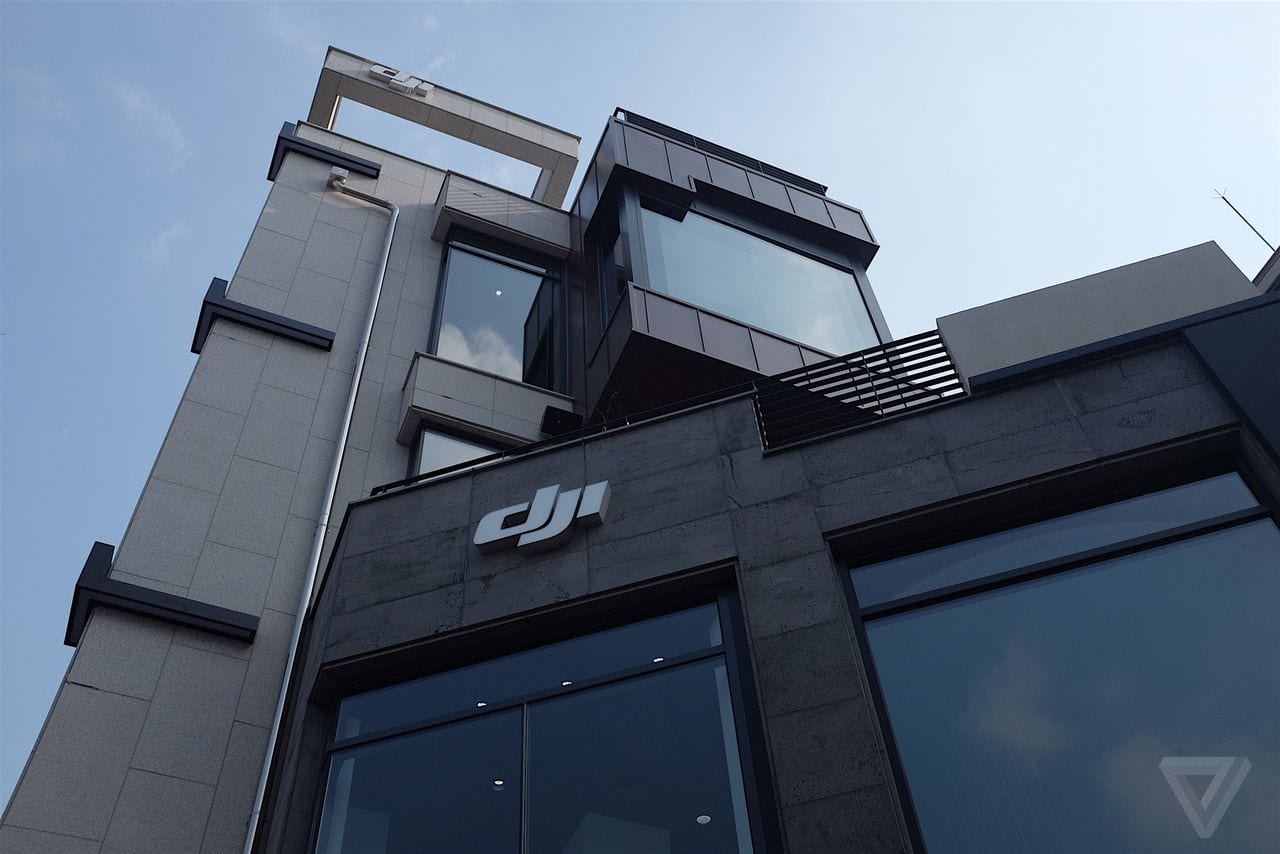
    DJI, the world leader in unmanned aerial vehicle technology, opened its first South Korean retail store at the weekend.

    The DJI Korea flagship has opened in the city of Hongdae in greater Seoul.

    The flagship store features the Phantom 4, the newest and most-intelligent consumer quadcopter camera (or “drone”) introduced by DJI just last week. Visitors will have the opportunity to see the Phantom 4 in action for the very first time in Korea and can test fly other models in special cages.

    DJI flagship store Hongdae Korea 4

    “With more and more people consuming video content on their mobile devices and the growing community of photographers and content creators, DJI sees Korea as a market with strong potential,” said DJI country manager Taehyun Moon.

    DJI flagship store Hongdae Korea 5

    DJI flagship store Hongdae Korea 7


    “The DJI Korea flagship experience is an important touchpoint to connect people with our cutting-edge technology and get a sneak peek into the future. We want to provide a truly unique experience for anyone who walks into our new store.”

    DJI flagship store Hongdae Korea 12

    Highlights of the flagship store include:

    • Hall of Inspire:  An immersive visual experience where visitors can sit back, relax and enjoy aerial footage and content from creators around the world.

    DJI flagship store Hongdae Korea 8

    DJI flagship store Hongdae Korea 9

    • Customer Experience Zone: DJI pilots will perform demos throughout the day and visitors can learn about the unique features of different products.

    DJI flagship store Hongdae Korea 3

    • Product Showcase: Various display areas that will feature a full range of DJI products, from the newest Phantom 4 to handheld gimbals to aerial platforms for developers and business applications.

    DJI flagship store Hongdae Korea 11

    DJI flagship store Hongdae Korea 10

    • After-Sales Support: A dedicated team of customer-support staff will provide technical assistance, help with firmware updates and make reservations for drop-off repair.

    DJI flagship store Hongdae Korea 13

    The store’s exterior and interior were custom-designed to fit with both DJI’s and the Hongdae district’s vibe.  The five-story, 870 sqm store will showcase a full range of DJI’s aerial technologies and camera products.

    DJI flagship store Hongdae Korea

    The Seoul store is DJI’s second foray into retail after the December opening of its OCT Harbour shop near the company’s headquarters in Shenzhen, China.

    The DJI Korea flagship store is located at Eoulmadang-ro, 140 Mapo-gu, Seoul, Hongdae District, South Korea. Opening hours are Mon – Sun, 10am – 10pm.

    DJI flagship store Hongdae Korea 1

  • Qatar Airways Cargo expands Asia networks

    Qatar Airways Cargo expands Asia networks

    Qatar Airways Cargo’s expanding list of freighter destinations will see the addition of Budapest, Prague and Ho Chi Minh City in March.

    With the addition of these cities, Qatar Airways Cargo, the air freight division of the Qatari national carrier, will have 14 European freighter destinations and six to the Asia-Pacific region.

    The Doha-Ho Chi Minh freight service will be operated twice a week by an A330F, departing Thursdays and Saturdays, with 120 tonnes of cargo capacity, in addition to the 72 tonnes weekly belly-hold capacity on the daily passenger flights to Ho Chi Minh.

    The new service by Qatar Airways Cargo is expected to support Vietnam’s growing influence as a major exporter of garments, footwear and handicrafts, with cargo sent to the United States and Europe via Doha.

    The new Doha–Budapest–Prague service will also be operated by an A330F, departing Thursdays and Sundays with the 120 tonnes of weekly cargo capacity on the A330F to be split evenly between the two Eastern European cities.

    This new route will provide a gateway into the Eastern European market from Asia for electronics and automotive parts, as well as textiles, pharmaceuticals and biotech products.

    Qatar Airways Cargo will continue to expand its network this year as new freighter aircraft enter the fleet.

    The airline took delivery of a new A330F and a new 747F nose loader last month, and a further A330F is scheduled to arrive in the first quarter of the year, followed by three new 777Fs by the end of 2016.

    Qatar Airways Cargo flies its freighters to 52 dedicated-cargo destinations and flies belly hold cargo on passenger aircraft to more than 150 international destinations.

  • DHL, UPS Bid for South Korea’s Logen Logistics

    DHL, UPS Bid for South Korea’s Logen Logistics

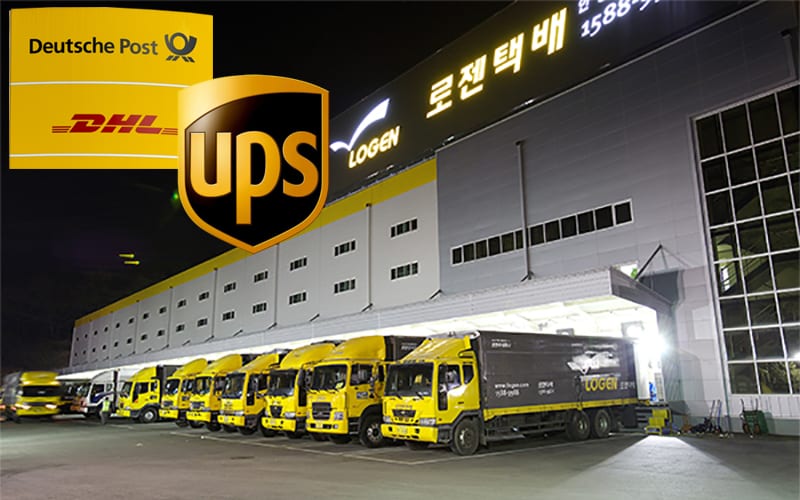
    Deutsche Post DHL Group and UPS are reportedly among the companies which have submitted preliminary offers for South Korean package delivery firm Logen Logistics.

    According to a report today, Affinity Equity Partners, CVC Capital Partners and STIC Investment were also among the bidders.

    Logen is currently wholly owned by Hong Kong-based Baring Private Equity Asia, which bought the delivery specialist from Mirae Asset Private Equity in 2013.

    Logen is reported to be the fourth largest courier services company in South Korea – behind CJ Korea Express, Hyundai Logistics and Hanjin Transportation.

    Global logistics companies UPS and DHL are eying Logen amid burgeoning e-commerce and online shopping in Korea and as part of expansion to the Asian market.

    Private equity firms also believe the logistics business is lucrative investment.

    Moreover, Logen is a solid company with a loyal client base and growing earnings.

    Unlike other parcel delivery service companies, Logen is based on the customer to customer (C2C) business that connects deals between merchants and consumers.

    Logen last year bought a 70 percent stake in KGB Logis Co. for 25.0 billion won, making it the industry’s fourth with a combined market share of over 10 percent.

    Logen recorded 20.7 billion won in operating profit on sales of 263.5 billion won last year.

    The combined earnings before interest, taxes, and amortization of the Logen and KGB Logis are estimated at 40 billion won for this year, up from last year’s around 30 billion won.

  • DHL extends TAPA certification stronghold in Asia Pacific

    DHL extends TAPA certification stronghold in Asia Pacific

    DHL Express, the world’s leading international express provider, has recorded a new milestone in its continuous drive to offer superior security and service levels in end-to-end supply chain solutions in Asia Pacific. The Transported Asset Protection Association (TAPA) Asia recognized DHL Express for having the most Freight Security Requirement (FSR) sites in Asia Pacific.

    The company’s North Operating Center in Beijing is the 100th facility within the DHL Express network in Asia Pacific to be awarded the prestigious TAPA ‘FSR’ security certification. It is also the company’s 22nd facility in China to be TAPA ‘A’ certified.

    The internationally-recognized TAPA certification is a highly sought-after logistics security accreditation and certification, and considered to be one of the industry’s most rigorous independent certification. Facilities are certified after a detailed audit conducted by independent TAPA-trained auditors on areas such as the way high value goods are handled, warehoused and transported as they move throughout the global supply chain.

    “Obtaining TAPA certification for our facilities is critical to ensuring the safety and security of our facilities and shipments as this is an increasing concern of our customers. With Asia Pacific accounting for 25% of total international express traffic, the second largest after Europe¹, it is critical that we have a robust system to safeguard the integrity of shipments that we handle. This achievement fortifies our position as the industry leader in Asia Pacific,” said Ken Lee, CEO, Asia Pacific, DHL Express.

    Security awareness is firmly embedded within DHL Express. Within its award-winning global Certified International Specialist (CIS) engagement and development program, DHL Express has incorporated a CIS Security Awareness module. This module ensures that every employee globally is equipped with knowledge on the fundamentals of security, including a sound understanding of the security risks and threats faced and knowing what can be done to help prevent or minimize the risk of security incidents occurring.

    Tony Lugg, Chairman of TAPA Asia, said, “DHL has consistently and effectively demonstrated their efforts to integrate TAPA standards in their global network. Their commendable resolve echoes TAPA’s mission of enhancing the security and integrity of the global supply chain by protecting high value goods from risks and contributing to sustainable economic growth.”

    Adrian Whelan, Senior Vice President, Head of Global Customs and Security and a former TAPA Asia Board Member commented on this milestone achievement, ‘DHL Express was one of the first logistics companies to subscribe to the TAPA Freight Security Requirement standards. We are now the global leader in terms of TAPA certified sites with over 270 sites certified globally, with 100 of these from Asia Pacific. We will continue to invest in the security of our global supply chain.”

  • Tod’s Hong Kong may close stores

    Tod’s Hong Kong may close stores

    Tod’s Hong Kong is continuing to suffer from the luxury spending downturn – and may close some stores.

    Milan-based luxury goods brand Tod’s says while the Mainland China market “has stabilised” there has been “no improvement in Hong Kong”.

    The company was commenting with the release of its 2015 trading figures, reassuring shareholders that despite the Hong Kong woes it remained on track to deliver a 5 per cent rise in revenue this year, despite falling same-store sales since January 1.

    Tod’s Hong Kong has 14 stores.

    CFO Emilio Macellari said during an analysts call the company had been unable to renegotiate any of its rents in the territory – but had avoided rent increases at two malls. As a result it may close one or two stores.

    Globally, it plans to reduce the number of new store openings from 31 last year to between 15 and 20 this year, recognising slowing growth worldwide.

    More than 20 per cent of Tod’s global sales are in Greater China – but they shrank 12 per cent last year on a constant currency basis, with Hong Kong and Macau accounting for a majority of the decline.

    Sales in Japan and the US are also declining but the brand was holding its own in Europe, especially its home market Italy.

    Despite declining sales, the company reported a 5 per cent increase in earnings for 2015. Macellari said the company’s strategy of widening its product range to include handbags and apparel would help restore growth and meet forecasts.