Author: Mei Ling Tan

  • Korea has potential to top Singapore in MICE

    Korea has potential to top Singapore in MICE

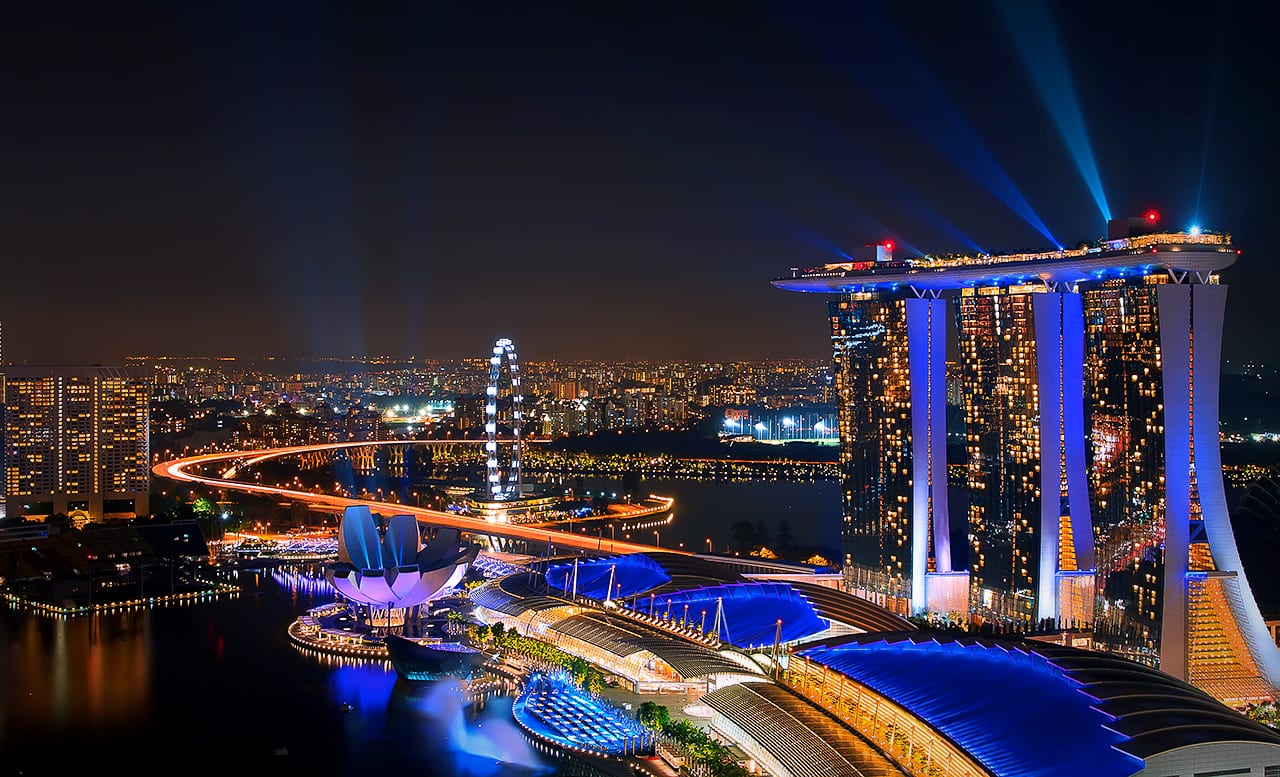
    South Korea has the potential to become the world’s top MICE (meeting, incentive tour, convention and exhibition) destination once it upgrades its tourism infrastructure, Marina Bay Sands (MBS) CEO George Tanasijevich said.By Kim Jae-kyoung

    He added that a large-scale integrated resort similar to MBS in Singapore will not only help Korea revitalize its infrastructure but also serve as a marketing tool to attract more business and leisure tourists from abroad.

    “Korea has a greater opportunity to lift its MICE industry even higher (than Singapore),” Tanasijevich said in an interview with The Korea Times at the MBS Hotel overlooking a panoramic view of Singapore.

    He pointed out that Korea has many advantages over competitors such as Singapore, because it has both rich cultural assets and advanced technology.

    “You have wonderful cultural, historical attractions that the tourism industry leverages very effectively. Where I think it is lacking is in more modern tourism infrastructure. The integrated resort is something that would be a huge positive effect on tourism in Korea,” he said.

    “Korea has a well-established international airport, a highly skilled workforce, and high connectivity. It also has a network of small firms that can support a large-scale resort and at the same time benefit from it. And Korea is very innovative in technology and pop culture.”

    However, the CEO said that there are infrastructure limitations, or even an outright lack of infrastructure within the MICE industry in Korea. He believes that an integrated resort will relieve many such constraints.

    One limitation he cites is that the largest ballroom in Seoul can only serve dinner to around 700 people at once, compared to MBS that can serve dinners to 6,600 people at the same time.

    “That’s an example of an infrastructure constraint in terms of facilities that MICE industry offers in Korea. You can’t have the world’s biggest event because the world’s biggest event wants to have dinners that are bigger than 700 people,” he said.

    Another example of limitation or constraint in the market is entertainment facilities.

    Tanasijevich, who is managing director of Global Development for Las Vegas Sands Corp., said that Korean entertainment is sweeping across the globe but venues are inadequate to really promote the industry within Korea.

    “If we are given the opportunity to develop the resort in Korea, what we would do is create major entertainment components included in it,” he said.

    “It can serve as a home of K-pop, home of Korean entertainment so that you can use it as a marketing tool to draw high-value tourists into Korea who would contribute significantly to your economy.”

    The Singapore-based CEO said that Sands is not interested in investing in building a resort allowing only foreigners to gamble.

    “That’s not our business model. That’s not what interests us in Korea so we are not moving forward with that kind of project. What we are looking to do is to create a MICE-focused resort that is more substantial than MBS.”

    The following is an excerpt from the interview.

    Q: Sands has had tremendous success with MBS in Singapore. What do you think are the key success factors?

    A: We are pleased that in our seven years of operations, we are still partnering with the government to deliver its promises of tourism, jobs and growth to Singapore. I would say the biggest contributor is our unique MICE-focused resort business model, which is a strong fit for a city like Singapore, a top destination for tourism as well as MICE business.

    We did not just bring a replica of what we have developed in other parts of the world. We proposed a very strong MICE element, which would fulfill Singapore’s aspirations as a MICE destination.

    Then we added celebrity chef restaurants, theaters, nightclubs, a sizeable retail mall and a museum to add excitement to Singapore as an entertainment and dining attraction. To alleviate the problem of insufficient hotel rooms, we constructed 2,500 rooms. We then added an iconic SkyPark and architecture that would make a stunning skyline for Singapore, given that we were awarded the focal site in Marina Bay.

    Likewise, we will study the Korean market carefully and develop an integrated resort that will fulfill the aspirations and objectives of the Korean people if we have the opportunity to be in Korea.

    Q: MBS is now a symbol of Singapore and considered a successful integrated resort model. Korea is different from Singapore in many aspects. Do you think the same model can be applied to Korea?

    A: On the flip side, Korea is also similar to Singapore in many ways. It is a developed country with a strong economy, its workforce is highly skilled and its people have the same aspirations for better jobs, better lives and growth for the country. We will adapt our model to Korea, which like Singapore, is a very strong MICE contender among the world’s top business destinations.

    Q: Do you think an integrated resort can contribute to economic growth by creating more jobs and bolstering the tourism industry?

    A: Today, MBS is one of the largest job creators in Singapore. We hire over 9,500 team members for our daily operations and house another 3,000 staffers under the employment of various tenants in our retail mall.

    By 2015, MBS had created 46,000 direct, indirect and induced jobs in the Singapore economy, according to economists. Since we opened in 2010, we have offered thousands of Singaporeans unprecedented opportunities to work alongside the world’s biggest celebrity chefs, stage the biggest entertainment events and learn new skills and trade in gaming, conventions and more.

    If we have an opportunity to open an integrated resort in Korea, we will create similar opportunities for the Korean people, especially for young Koreans who want good careers in a multinational company.

    In MBS, Singaporeans make up 60 percent of senior management, and account for 80 percent of the supervisory and managerial positions. The numbers illustrate that we can provide not only employment, but good jobs for Koreans if we have the opportunity to open in Korea.

    Q: The biggest hurdle to opening an IR in Korea is the public’s negative sentiment against casinos. What is your view on Koreans’ concerns?

    A: We believe many Koreans associate the word casino with gambling dens, which is not what our type of integrated resort like MBS is. Our proposal for Korea is an entertainment complex with theaters, celebrity chef restaurants, a mall, hotel, convention facilities, attractions, and even arenas and parks. The casino is less than 5 percent of the total footprint, making it possible for millions of visitors to enjoy our resort without taking a step into the casino.

    We will work closely with the government to inform and educate the Korean public about our type of integrated resorts we intend to invest in Korea if the government allows us the opportunity to do so.

    Q: What is your bottom line in investment in Korea?

    A: We do not believe that a foreigners-only casino will accomplish the goals of the Korean people. Korea already has 16 of them. It will neither warrant the type of investments we intend to make nor achieve the economic impact that the Korean government wants to achieve. We believe a restricted-entry casino that allows Koreans, subject to social safeguards and barriers to entry in place — no bigger than 5 percent of the total integrated resort footprint, will do so.

    Q: Do you have preferred places to build an integrated resort in Korea?

    A: We think that Seoul and Busan are ideal locations for our type of business model and the size of investment we are prepared to make.

    As you can note from MBS in Singapore, because we have such substantial elements for MICE facilities we need to be in a downtown location that is accessible to major international airports and a place where we can provide opportunities for companies and business people.

  • How to Purchase Condos at Affordable Prices

    How to Purchase Condos at Affordable Prices

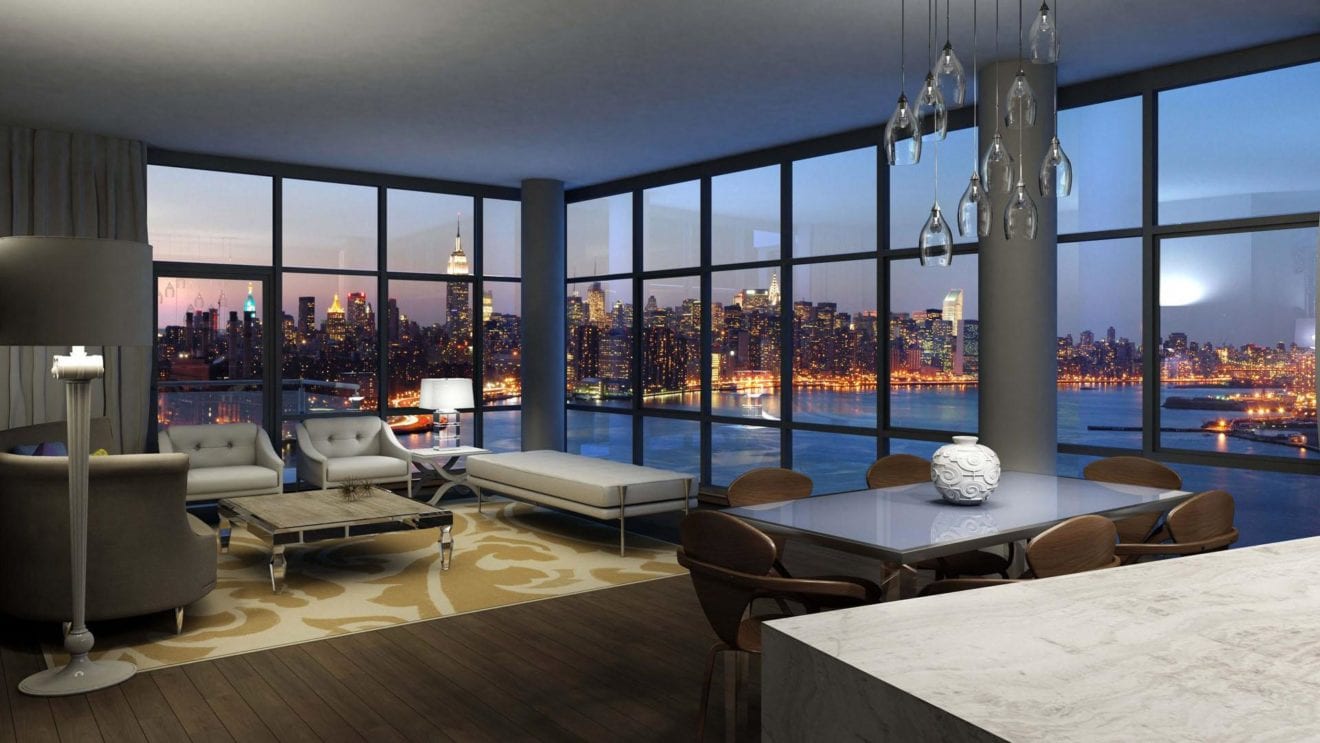
    There have been several vast changes in the housing market today that is influencing the types of residences being built. Market trends show that traditional housing units are no longer the most attractive options for potential buyers. This is due to a variety of reasons and our progression as a society. Today, a new launch condo is the most sought after piece of real estate in the market and on Property Guru. Unlike never before, consumers are looking for housing that comes at affordable prices and that eliminates many of the hassles involved with traditional living.

    Condos may have many more advantages than a conventional housing unit, but the process of purchasing each is very similar. For quite a few people this can be a complicated process. There are several ways that you can ensure that you purchase not only the condo of your dreams but also at an affordable price. These few tips will show you how to buy a condo at a great value and in the most beautiful and desirable locations.

    1. Know when to Buy

    Much like any average service or product, the prices of condos are affected by the time of year. Peak season for condos often involves higher prices than normal, all in an attempt to drive up profits. Avoid this popular part of the year, which is usually during the Spring season, to save massive amounts of money. In the Spring, many sellers put their condos on the market at overpriced values. This can make getting a great deal extremely hard to find, especially as condo sellers are traditionally known to be stubborn with their selling prices all throughout the Spring and the Summer seasons.

    To purchase the best piece of condo real estate at a low price to you, browse and buy condos during the waning months of the year. The Fall and Winter months are known for having a market full of remarkable deals being made. Sellers who originally had overpriced their lots realize by the beginning of Fall that unless they lower their offer prices, they will receive no offers at all. This makes the waning months of the year the best time to purchase a condo at an affordable price.

    1. Contact Your Bank

    To purchase any condo at an affordable rate, a loan from your bank is necessary. This is a two-step process. To receive a loan for buying a condo, you also need to ensure you can afford a loan to begin with. No bank will initiate loans with a client that has a bad credit score history or has outstanding debts. This makes paying off debts and establishing a good credit history a priority.

    By consulting your bank experts, you can establish which kind of loan options are available to you. The better your credit history, the better loan you shall receive. What this equates to is being able to purchase a condo in a larger price range. The most recommended option by financial experts before purchasing any condo is to talk with your local banking officials to assess if you are eligible for a pre-approved loan.

    1. Research Different Neighborhoods

    Not all condo prices are the same throughout one area. Different localities have different price ranges, and miscellaneous items included. As the New York Times reports, premiums and closing costs are other financial issues that come with every condo buying process. These factors vary across neighborhoods and so it is important to research a multitude of different localities to assess price differences.

    Potential buyers can also get a better feel for their future surroundings by visiting the real estate properties themselves. Research can only give you so much information. For a real understanding of a property and what it entails, the absolute best method is to visit and tour the place in person. Hiring a real estate agent to help you during this process is extremely helpful to find the best condo choices based on your budget.

    Summary

    As Kiplinger states in their article, after the value of properties have lowered by almost 41 percent, condos have rebounded as one of the most popular residential choices today. The market is full of thousands of different possible condo options. Choosing which condo is best for you can be a relatively simple process. By following these three tips, you can purchase the condo of your dreams in a location that is close to paradise.

    Remember, it does not have to be expensive. With research, loan options, and knowing the best season to buy or browse condos, you can purchase these pieces of real estate at affordable rates. With all their advantages in lower maintenance and upkeep costs, it is no wonder that so many people across the world are turning to condos as their premier choice of residence.

  • Kirin to make, sell Ichiban Shibori beer in Myanmar

    Kirin to make, sell Ichiban Shibori beer in Myanmar

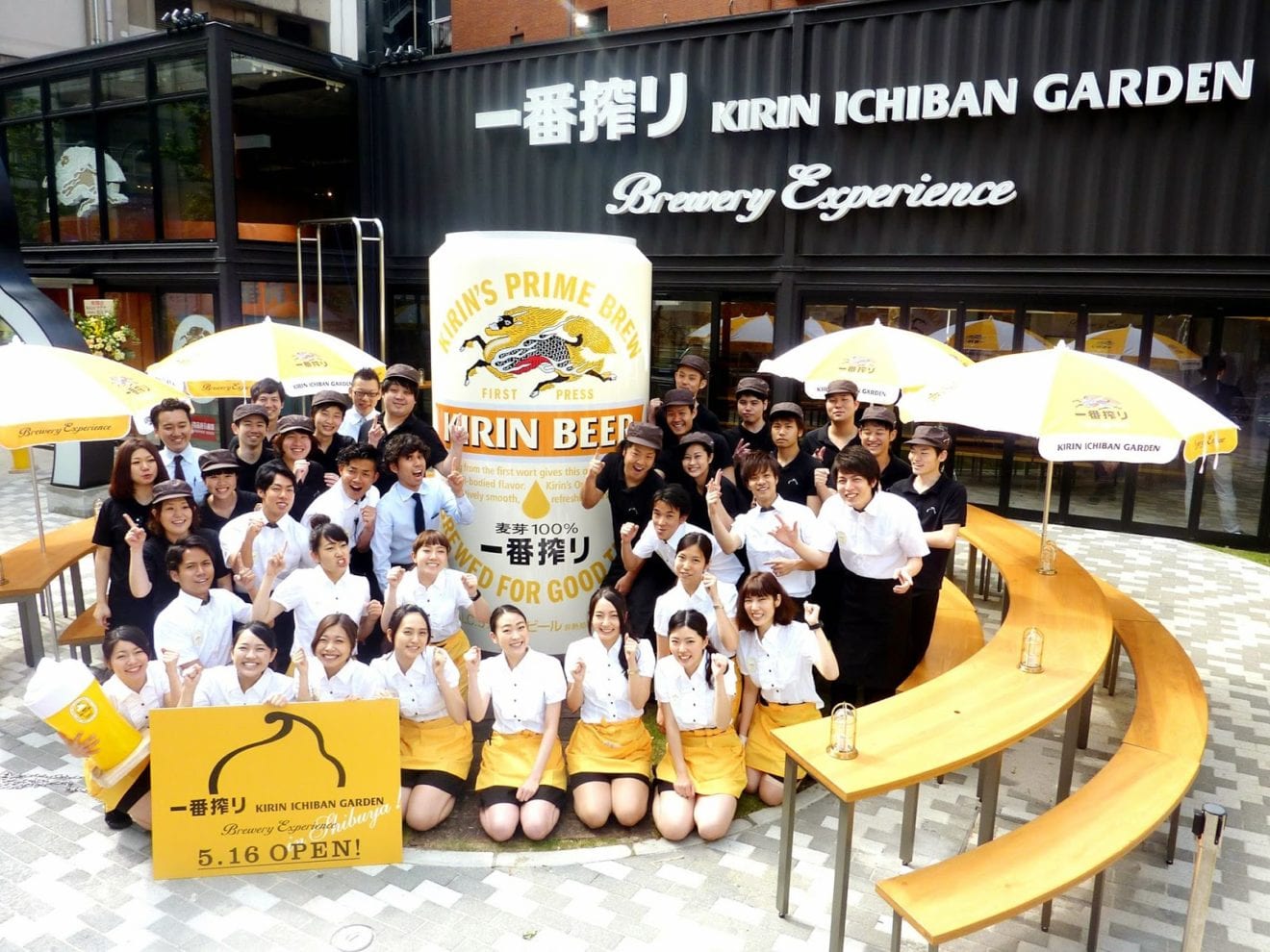
    Kirin Holdings will begin brewing and selling its flagship Ichiban Shibori beer in Myanmar as early as this month.

    The Japanese brewer will make the premium beer at the Yangon plant of Myanmar Brewery, which Kirin acquired last summer. It will initially provide it to Japanese restaurants and other high-end eateries, and aims to supply around 150 outlets within the year. Cans and bottles for retail stores will be rolled out gradually in the future.

    Ichiban Shibori will be sold to restaurants for just under 300 yen ($2.67) per bottle, around 50% more than typical local beer and in the same price range as premium European brands.

    Myanmar Brewery has an 80% share of the country’s market. Most of its products are in lower price ranges and it has lacked a high-end lineup to challenge European brewers. By selling Ichiban Shibori along with Myanmar Brewery’s existing brands, Kirin aims to offer beer in a wide range of prices and fight back against European competitors.

    Kirin sold the equivalent of 5.42 million 20-bottle cases of its beer brands overseas in 2015. It is targeting 6% growth to 5.72 million cases in 2016.

  • Myanmar National Airlines To Yangon Airport New Terminal

    Myanmar National Airlines To Yangon Airport New Terminal

    Asia World Group has opened the first phase of a new airport terminal in Yangon that will be capable of handing up to 20 million passengers a year when complete, with US fast-food chain Kentucky Fried Chicken the first international restaurant confirmed to open in the new space.

    President U Thein Sein (right) and Steven Law (left) attend the new airport terminal opening. Photos: Aung Myin Ye Zaw / The Myanmar Times

    Yangon Aerodrome Company Limited (YACL), an Asia World subsidiary, built the airport in less than two years, completing the project in time to be claimed as one of the final achievements of the outgoing administration. U Thein Sein opened the terminal, which will be known as T1, on March 12, in one of his last public appearances as president as his five-year term draws to a close.

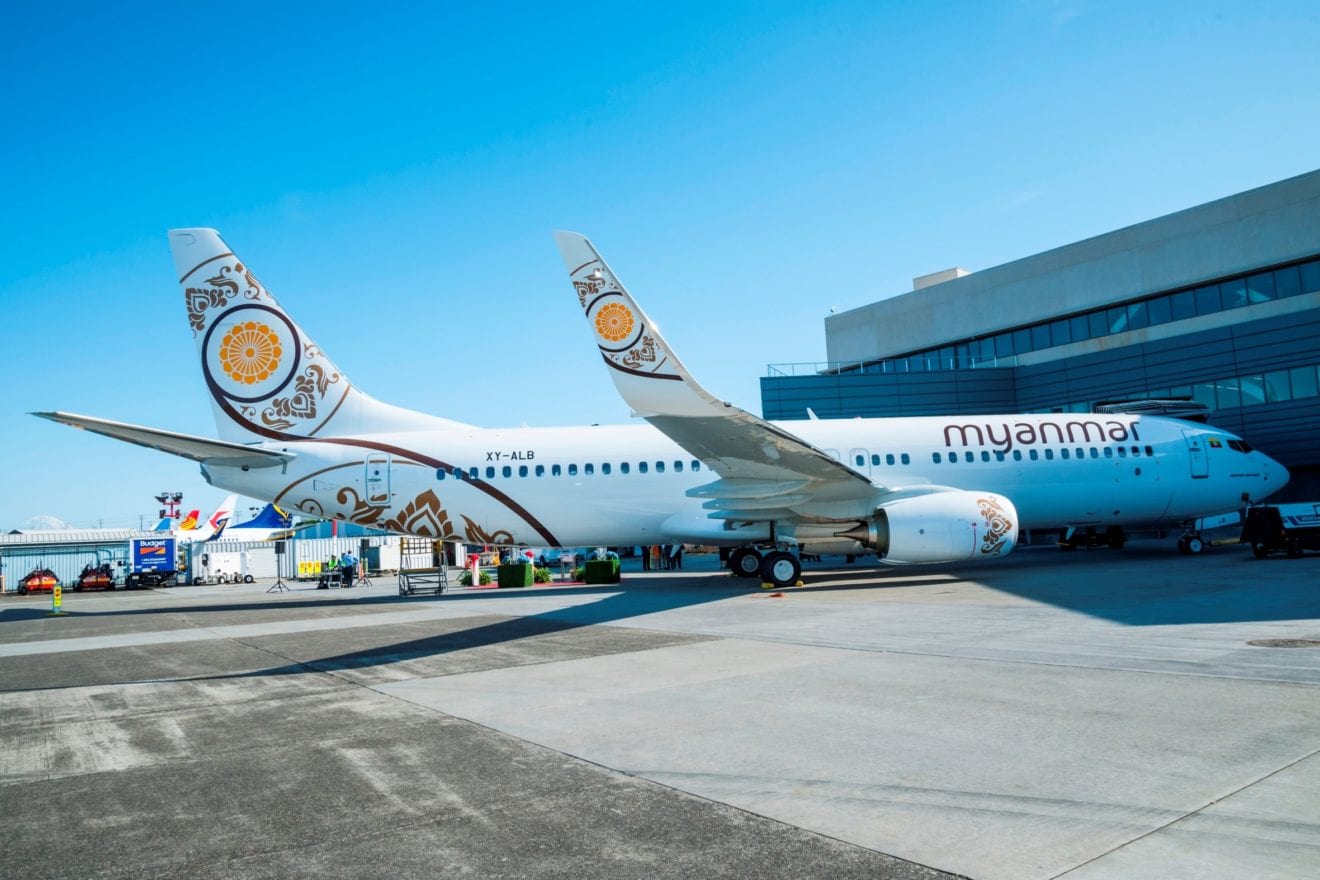
    Myanmar National Airlines, the recently rebranded national carrier, will be the first to move into the new terminal, officials said, with the airline’s maiden departure scheduled for March 20.

    Yangon’s existing international terminal, which is also managed by Asia World Group, will be rebranded as Terminal 2. Work on a new domestic terminal has already begun and plans are being drawn up for an “airport city” comprising a cultural centre, hotels, commercial and retail space.

    A view over the new Yangon International Airport Terminal 1.

    US-blacklisted Asia World was awarded a contract to build the US$660 million project in 2013 in controversial circumstances – the tender committee did not award it the highest mark, favouring a bid by a Japanese consortium, asreported last year.

    In response to a question about the tendering process, project manager Jerzy Wilk told The Myanmar Times that the company had no influence over the DCA’s decision-making, and that the tender was carried out in the public domain. The company’s track record demonstrates its capability, he said.

    YACL was awarded the contract in 2013 and signed a concession agreement with the Department of Civil Aviation in 2015. The group has provided 100 percent of the funding, through equity and loans from banks, said Mr Wilk.

    Balloons mark the opening of the new international airport.

    YACL chair U Htun Myint Naing, who also goes by the name Steven Law, said in a speech on March 12 that in building the airport the company had been confronted with several challenges.

    “First, as everybody is aware, this is not a greenfield project. It is an in-operation project and we needed to carefully deliver during this period,” he said.

    “Another challenge is our airport is a city airport, so we had a lot of limitations in the master plan and design … Also we built all these things within a short time period.”

    The company is operating with limited space – much of the land around the airport is taken up with military compounds and golf courses. Singapore’s CPG Corporation, which designed the world-class Singapore Changi Airport, helped with the design and planning, as did Surbana, said Mr Law in his speech.

    Around 88pc of flights into Myanmar land in Yangon. The airport has seen passenger numbers rise from 1.99 million in 2010 to 4.68 million in 2015, according to literature distributed by YACL.

    Guests ascend an escalator in the new terminal building.

    Weekly international flights from Yangon increased 3.88 times between 2010 and 2015. Twenty-eight international airlines now fly into Yangon and several more have confirmed new routes – Emirates Airlines, for example, will begin daily flights to Dubai in August and Hong Kong Express will launch flights later this year.

    YACL targets 8 million international arrivals through the airport in three years, according to YACL’s chief operating officer, Sulaiman Zainul Abidin.

    Last May, Singapore Myanmar Investco signed a 10-year agreement with DFS Group to develop and operate duty-free retail outlets at Yangon and Nay Pyi Taw airports and the company will be responsible for bringing in international brands.

    A tender has been called for the 7800 square metres of retail space with 50 retail outlets, and 3400 sq m of space across 16 restaurants. KFC has already set up its restaurant on the airport’s ground floor, and plans to open from the end of this month, said Mr Abidin.

    While Asia World Group and Mr Law are on the US Specially Designated Nationals list, YACL is not. Company officials did not explain how KFC has been able to sign with the group, and KFC’s local partner Yoma Strategic had not responded to questions by press time.

    Staff talk beside new baggage reclaim belts.

    Asked whether US sanctions had an impact on international demand to open outlets in the new terminal, Mr Abidin said it had not. “We conducted a tender. So far the response is from almost any country you can find … I don’t see any problems.”

    Despite the sanctions link, international trade will be able to pass freely through the airport, under the US Treasury’s General Licence 20, issued in December. While the license is only valid for six months, it is widely expected to be renewed in June.

    Mr Law has benefited more than most sanctioned companies from the license, which also allows trade to pass through his Yangon port terminal.

    The license is aimed at promoting trade and does not cover business deals between Asia World and US companies beyond transactions “ordinarily incident” to trade, officials from the Office of Foreign Assets Control said on a media call last December.

  • Czech CEO boosts Filipino spending

    Czech CEO boosts Filipino spending

    David Minol, who grew up in the Czech Republic, describes the Philippines as a hot country, not only because of its tropical climate but also in terms of its rapidly growing economy.

    His company, Home Credit Philippines, is taking advantage of the large Filipino population and their growing penchant for appliances, electronics, mobile devices, computers and other gadgets.

    Home Credit Philippines lends to ‘unbanked’ people aiming to buy appliances, electronics or furniture on an installment basis.  Two and a half years after it set up its shop in the country, the company lent nearly P2 billion to 200,000 borrowers and recruited 1,700 Filipinos mostly for its salesforce.

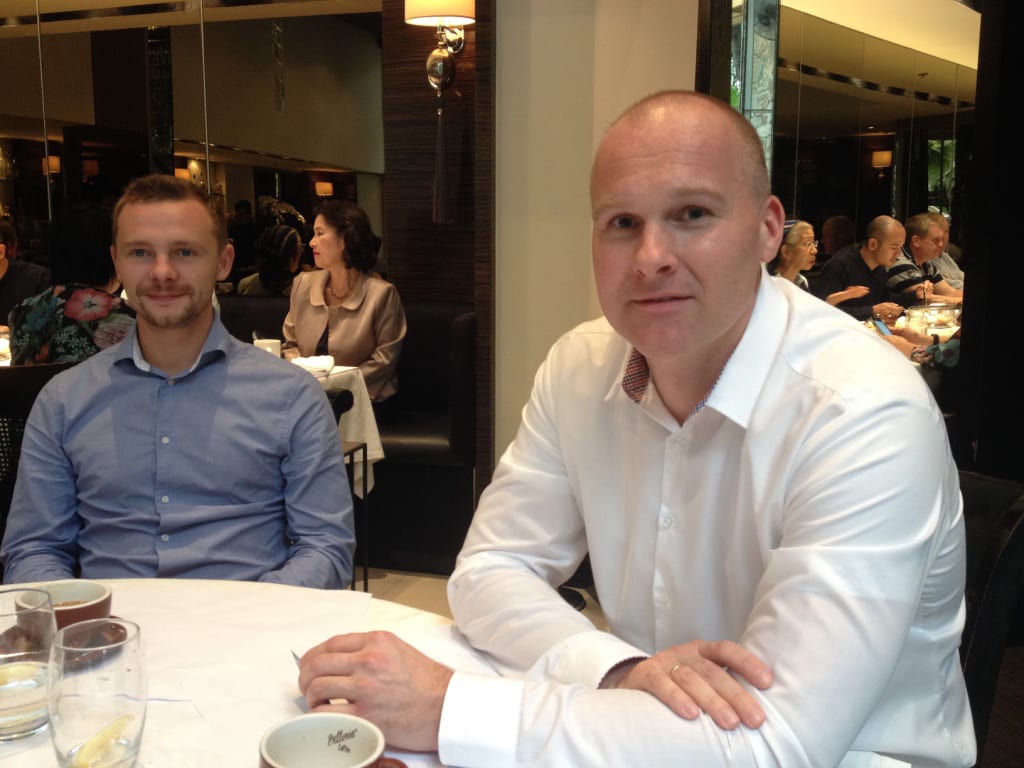
    “We call it consumer finance, which means we are in financial services, but in retail business.  Our customers are in our mind.  Our company is a customer-centric organization, focused on the retail,” Minol says in an interview at a restaurant in Makati City.

    “Our customers are unbanked.  Typically, they do not have the bank account, they do not have access to the traditional banking system.  We are the ones that are giving them the first-time experience in financial services.  We try to support the financial literacy program here,” he says.

    Minol says Home Credit Philippines is a non-banking financial institution, accredited by the Securities and Exchange Commission. “Having the experience from other countries, the application process and obtaining the license from SEC was one of the quickest in the Asian market.  We really had very professional experience from the SEC,” he says.

    Home Credit, the parent company based in the Czech Republic, infused P2 billion worth of equity capital in the Philippine unit, which has offices in Ortigas and Cubao.  Minol, who first arrived in the Philippines in July 2013, now lives in Dasmariñas Village, Makati City, along with his wife and two children. His daughter, the youngest, was born in the country.

    “We operate in mostly emerging markets.  First, typically a significant proportion of the population is unbanked.  There is a strong demand for financial services by the middle and lower-middle class.

    This is actually the spot, and the market segment that we are looking at.  We are serving the people who are not served by traditional banking organizations,” says Minol.

    “If they go to the shop of SM Appliances, Automatic Centre and other big retailers, instead of paying cash or using the credit card, they can buy the goods and enjoy an affordable installment plan from Home Credit. This is our operation.  We have our own people in the shop.  We help customers in application process, within 30 minutes.  It is really easy, simple and fast procedure for the customer to get a loan, and he can leave the shop already with the electronic or mobile phone for example in his hand.  That is our value proposition,” he says.

    Minol says borrowers prefer to pay in installment because they want to keep their cash.  “We recently ran some marketing research about that.  It is really about the available cash.  For some of the customers, they prefer to keep their cash for other purposes. They would rather pay the downpayment, and pay in installment.  For some of them, it is about upgrade.  Instead of buying cheap feature phones, they prefer smartphones, with Internet functions, that they can use to find jobs.  So they would use the money for the downpayment or upgrade … We can really see a rich demand from mass and sub-mass population for installment financing,” he says.

    The company, encouraged by the rapid pace of growth in the Philippines, now plans to introduce more financial products and even apply for a quasi-banking license with Bangko Sentral ng Pilipinas.

    Minol says the mass market comprises Home Credit’s customers.  “It is the people who have income, either employed or self-employed or recipients of remittances from abroad, and who typically do not have credit cards,” he says.

    He says Home Credit also teaches financial literacy among customers.  While customers ventilate their grievances in the Internet over the alleged aggressive collection tactics by Home Credit collectors, Minol says it is important for the company to exercise risk management.

    “That is the cornerstone of our business.  We manage the risk to make it a value proposition for the client,” he says.

    Home Credit provided its first loan in the Philippines in October 2013, making the country its youngest market in Asia.  It provides loans ranging from P2,000 to P60,000, with an average size of P8,000. Average tenor is 12 months, although it could range from six months to 18 months, depending on the commodity and the preference of customers.

    “We are growing.  We already have 200,000 customers. Our average loan is P8,000.  If you do the calculation, we will be already lending P2 billion in the first two and a half years of operation.  We have invested significantly in the technology and the people.  We are looking for profitability in the coming years,” he says.

    Minol, a chartered certified accountant and who has a Master’s degree in finance from the University of Economics, Prague, has worked with Home Credit since 2006, acting as deputy to the CEO and later chief financial officer for Home Credit China.  He served as chief financial officer for Asia from 2011 to 2013, before he was tapped to form the Philippine unit in July 2013.

    Borrowers can apply for in-store financing to purchase consumer durable goods by presenting at least two valid IDs, completing an application form and paying the downpayment. Applications are processed within 30 minutes, says Minol.

    Minol says Home Credit is now present in nearly 1,000 stores nationwide.  Among its merchant partners are Acer, Automatic Centre, Lenovo, Memo Xpress, MyPhone, Oppo, Samsung, Silicon Valley, SM Appliance and Robinsons Appliances.

    “Our people are physically present in those shops.  If you go to the Automatic Centre, for example, you can see Home Credit employees wearing the red uniform. You can immediately apply for a loan from Home Credit.  Instead of paying cash, you will get the gadget and pay in installment,” he says.

    Monthly installments are settled at BDO, RCBC, Malayan Bank, SM Stores, Bayad Center, LBC, Villarica Pawnshop, Prime Asia Pawnshop, Cebuana Lhuillier, 7-Eleven and various payments centers.

    The company is on an expansion mode and began operating outside Metro Manila, including Cavite, Pampanga, Cebu and recently Isabela.

    Home Credit started in 1997 in a village near Brno, the second biggest city in the Czech Republic. Its parent company is PPF (První privatizační fond), which is owned by billionaire Petr Kellner, the richest person in the Czech Republic.  “Having a strong leadership and capital for expansion, he is one of the elements behind the Home Credit expansion as well,” Minol says.

    “After a couple of years, we expanded to Russia.  It is still one of the biggest markets for us.  Then we went to ex-Soviet Union countries.  We have business for years already in Kazakhstan, Belarus and in 2006, we started operating in Asia.  It is the first wave of Asian expansion, which had China and Vietnam,” he says.

    “I went in 2006 to China.  Three or four years ago, we started looking at other opportunities in Asia. So we opened in India, Indonesia and the Philippines.  So the Philippines is the youngest market.  Now, the last country that we are going to open in is the US.  We have already signed a joint venture agreement.  We will be opening our US operation in a month’s time,” he says.

    “We can see that the business is strictly diversified.  It is in Europe, Russia, Asia and now the US.  We are finally becoming a global company.  We started in Czech Republic 20 years ago,” Minol says.

    On what makes Home Credit different, Minol says “the essence of the business is risk management.”

    “We believe that over the years, we have developed a unique know-how for the emerging market.  If you look at most of our countries, they are emerging countries.  We develop a set of procedures and train the people on how we do the risk management,” he says.

    Minol says Home Credit now has a significant operation in terms of the number of people.  “Here in the Philippines today, we have 1,700 employees, which is after two and a half years of operation.  That is a significant number. We keep hiring 100 to 200 people every month.  In the horizon of next two to three years, we should be aiming at 5,000 people.  Majority of the employees are in the sales force,” he says.

    Home Credit has emerged as the biggest employer among Czech companies in the Philippines.  “In April, we will be opening our 1,000th shop.  Today, that number is 960 something, so we will have 1,000 shops operating.  And we will keep growing.  We still see the potential, as the customer demand is much bigger than 1,000 shops. So we will continue with the expansion to bring our services to the broader population,” says Minol.

    “As of today, we have 200,000 customers.  It is really the beginning. We have to be careful.  We are looking for a significant number in terms of customers,” he says.

    Minol says the Philippines is an interesting market, because it has a long history of consumer finance that began in the 1960s.

    He says interest rates on Home Credit products range from 4 percent to 5 percent, depending on the commodity and maturity of the loan.  “We now have selective producers and retailers with zero interest campaign, where customers do not pay any interest. We also have this campaign that if you pay all the installment on time, the last month is a gift from us.  Instead of paying the 12th month installment, and you paid all the 11 months on time, the 12th month is for you and it is a gift. So it is a combination of different products.  On average, I would say the interest is about 4 percent to 5 percent, monthly,” he says.

    Minol says Home Credit is in the Philippines for the long term, with a target to have 1 million customers in the coming years. “We don’t do this business for the short term.  It is for the long term.  The point here is to be in the Philippines basically forever.  That’s why we don’t like the short cut.  We want to build the business from the beginning,” he says.

  • Hong Kong Television Network: A Rare Combination Of Growth And Net-Net

    Hong Kong Television Network: A Rare Combination Of Growth And Net-Net

    HKTV has a very interesting story and background. The company’s original name was “City Telecom” which was built by CEO and founder Wong Wai Kay in 1992.

    Mr. Wong was born and graduated in Hong Kong, worked in IBM and later became an immigrant of Canada. In 1992, he started City Telecom, conducting long distance telephone business at the beginning. At that time, international long distance phone call was very expensive and was under monopoly by Hong Kong Telecom. Wong started his discounted phone call plan and had success in reducing the rate significantly.

    Since year 2000, he started an ambitious plan to build broadband internet for local residents in Hong Kong. At the beginning, many investors thought that plan was crazy, and the company indeed had many years of large losses, but eventually he successfully built the first broadband network and covered 90% of the Hong Kong families by 2010.

    After this success, he sold all the broadband network and telecom business to CVC Capital Partners, a global private equity firm, for HK$4.87 billion in 2012, and then he changed his focus to building a TV program business, the current HKTV. Since the company was then rich in cash after the sale, he issued a HK$2.5 special dividend or HK$2 billion to shareholders in 2012.

    However, after 2012, a new drama began as the company was trying to apply for TV broadcasting license. Rumor says that because Wong had offended the local government, Hong Kong government rejected the license application from HKTV. Many Hong Kong residents apparently thought this was totally unfair, since between 36,000 and 80,000 protesters gathered and protested the government’s decision. Later, HKTV also filed a lawsuit against the government and actually won the lawsuit in some sense with the Hong Kong High Court ordering the Executive Council to reconsider the proposal. However, it seems that Executive Council filed another lawsuit after that and the decision is still pending with no expected date of resolution.

    Since HKTV failed the application for traditional TV broadcasting, it tried to turn into digital mobile TV broadcasting, but that was again getting into trouble since the government claimed that it has to require a license too if it uses DTMB (Digital Terrestrial Multimedia Broadcast) transmission standard to do broadcasting. HKTV then filed another lawsuit to this claim but failed in court this time in late 2015. Now the company is trying to consider other transmission standards to do broadcasting, but whether it will get government approval is still highly uncertain.

    Since the path to build a good TV programme business is at least temporarily blocked, Wong suspended the TV programme activities and turned his focus to building the first large scale online retail platform in Hong Kong: HKTVMall.

    Online Retail In Hong Kong

    Unlike mainland China and many other developed countries, online retail never got very popular in Hong Kong. The primarily reasons are:

    1. Shipping cost is high.

    Shipping cost from overseas such as Japan, US and Europe is too high. The shipping cost from mainland China is relatively cheaper, but it is still cross boarders and not as cheap as shipping within the mainland China.

    With shipping cost high, returning a product becomes even harder and uneconomical.

    2. Lack of trust in products from sellers in mainland China.

    Some official report from China says only 41% of sample online purchases meet the quality standards when buying from online sellers in mainland China. It might not be a big problem for people who live in China since they might be experienced enough to know a few tricks to identify the best sellers (relying solely on reviews and ratings usually don’t work), but for Hong Kong residents, it might not be that simple. Personally, I had a few purchase experiences a couple years ago when purchasing on TaoBao, and the experience was very bad, nothing comparable to the experience in Amazon, but this might have changed in the recent years.

    Also, a lot of the “trust” problems are not just with the online sellers, but also with the producers of the goods. As IP is not widely respected in China, good brand names often get copied without severe punishment, which in turn discourages any effort/investment on building a good brand.

    3. Small local area.

    Hong Kong is a fairly small city with a lot of retail shops. Therefore, shopping in local retail store is pretty convenient and doesn’t require much traveling at all. However, people might still need to wait in lines from time to time though.

    4. Small market.

    With about 8 million people, it is a small market. Therefore, it is not very attractive to big corporations such as Alibaba (NYSE:BABA).

    For the reasons above, large scale online retailing was virtually non-existence in Hong Kong before HKTV tried to enter this market.

    HKTVMall

    Click to enlarge

    HKTVMall started the online retail platform in late 2014. The platform invites product listings of many local merchants and the delivery services are also sometimes provided by these local merchants. For merchants without resource to prepare listings, the company would help them on that and the company has its own delivery team for fast and high quality delivery service.

    Serious marketing campaign didn’t start until Summer 2015. Due to the large scale local campaign and promotion activities, the web site was very popular at that time.

    However, the real high organic growth probably didn’t start until late 2015 or early 2016. As Wong said, comparing to November 2015, the sales volume had gone up 100% by January 2016, and he planned to expand the delivery team by tripling its size by the end of 2016. He also said the growth of sales had been in double digits every month.

    At the same time, the web site also got much better over time. Not only it became much prettier, it also got easier to search products. Recently, there are more and more reviews with the listed products, which can provide good information for consumers.

    Since it is called HKTVMall, along with the shopping, customers can also view TV programs online or on mobile, as well as the promotional TV ads for the products on sale.

    So far, HKTVMall has about 1 million active users, or about 12% of Hong Kong population.

    Advantages of online retail

    To better understand HKTV’s business model, it might be good to have a review on the advantages of online shopping:

    1. Convenience.

    For people who don’t really enjoy shopping by itself, but need to buy needed products anyways (like me), online shopping can become an almost exclusive shopping method. After all, considering all the time to drive to store, search for products in a physical store, wait in lines to check out and drive back, a few clicks on a web site or a mobile app can save a lot of time. This time saving provides a lot of intangible value to consumers.

    It should be mentioned that the increasing popularity of mobile devices also helped online shopping.

    Although this advantage may be less obvious for Hong Kong residents (since they live pretty close to the retail shops), it can still save them the time for waiting in line or walking over.

    2. Low cost.

    Online retailers can save the expense of renting a physical store. This saving can be especially significant in Hong Kong as the local rent has gone up significantly in the last few years. According to Wong, rental expense is about 25% of the retail price for those local retail stores.

    So far, HKTVMall has not achieved a cost advantage over local stores yet, due to its present small scale. However, as the scale gets bigger, there is likely a cost advantage later.

    3. More selection and easy to search.

    One big advantage for online shopping is the vast selection of products which is very hard to achieve in a local store. It is also much easier to search products online.

    4. More information transparency.

    Information transparency should be considered as a new source of efficiency, since this reduces the waste on marketing, and increases competition on price and real quality of the products. Because of information transparency, consumers can easily compare prices between retailers and producers, and can get feedbacks about the product quality through ratings and reviews.

    Many shoppers go online to shop because they can get these feedbacks to help them find the best product.

    Of course, there are also some disadvantages in online shopping:

    1. Shipping cost.

    It depends on the item’s price and size, but shipping cost is generally significant for many products.

    2. Time delay.

    Again, it depends on the products. Some are very time sensitive, others are not.

    3. Not able to see or try the products.

    For a well-known brand and product, this might not be a problem, but generally this is an issue that stops online shopping for many products.

    4. Difficult for returns.

    This might be less of a problem in Hong Kong and China than in US, since it is my impression that it is pretty difficult to return products there in local stores too, but maybe Hong Kong is quite different from China.

    Overall, some products are more suitable for online shopping, but some others are not. But in general, online shopping should be on the trend to get much more popular, even in Hong Kong, mostly it is a habitual behavior that will be gradually changed. Also, online retail has significant networking effects, so its attractiveness will increase over time too as the network gets larger.

    Why It is Cheap

    1. Burning cash

    Since the TV programme business has failed (at least temporarily), and the new online retail platform is still being built, the business is burning cash at a fast rate.

    Recently, the company’s earnings warning announcement indicated that the loss in year 2015 increased 200% relative to the 16 months in 2014. This means the second half of 2015 may have a loss of about HK$460 million, or about twice of the first half of 2015. Considering that this company only had a $1.4 billion market cap at the current price, there is no doubt that this is a very big loss that will scare many people away.

    However, when we take a closer look at the announcement, we can find that the “cash loss” may be much smaller:

    The increase in loss for the Year is mainly attributable to:

    1) the impairment loss on certain assets resulting from the uncertainties on the media business; and

    2) the increase in programme costs charged to the profit or loss over the showing period while the revenue from licensing of programme rights and net advertising income was not increased proportionally; and

    3) the e-commerce business was officially launched on 2 February 2015 and is still in its early investment stage to be financially material to the Group.

    As we can see, the impairment loss may be related to the HK$370 million intangible asset which includes the right of using network capacity of former subsidiary, which should be a non-cash charge. There is also HK$132 million programming cost on balance sheet as a part of current asset which should be charged off as the company suspended all TV programs. So the actual cash loss may be just HK$200 million or less in the 2nd half of 2015. However, this is just my estimate, and we will have to find out the fact in the coming annual report of 2015.

    2. Unproven business model

    Although HKTVMall has achieved fast growth recently, the business model is still not fully proven and there is still a lot of uncertainties associated with it.

    The same can be said about the movie and mobile TV businesses. As Mr. Wong invests into these two new businesses, there are a lot of uncertainties ahead.

    3. Small market cap.

    The current market cap is about HK$1.415 billion, which is less than $200 million. This small market cap will not bring much interest from many professional large investors.

    Protection From Downside

    The stock is currently trading at a discount to its liquidation value, but it might not be obvious if someone uses a screener. This is because a large part of the asset is in the long-term financial asset (which is counted as non-current asset).

    According to the semi-annual report, the company currently has HK$1.66 billion financial assets. Most of that asset is in debt securities. Since it is level 2 asset valued at market quoted prices, it is likely to be some relatively illiquid corporate debt. $1.28 billion of this is long term (more than 1 year maturity date), so it is classified as non-current asset, and won’t be showing in the net current asset in a screener. However, it should certainly be considered as liquid asset in the consideration for liquidation value.

    Below is a summary and classification of all assets on the balance sheet:

    Number in HKD millions
    Current asset 1106
    Programming asset (part of current asset) 132
    Long term financial asset 1285
    Investment properties 230
    New media center 450
    Current liabilities 477
    Click to enlarge

    Since the programming cost should be charged off over time, it shouldn’t be a part of the liquidation value. The value of investment properties is calculated from 20 times of rental income listed in the annual report. If we assume half of the real estate value for liquidation purpose, the net liquidation value should be the following:

    1106 – 132 – 450 + 1285 + (230 + 450)/2 – 477 = HK$1672 million.

    Here we excluded HK$450 million from current asset as the contracted cost to build the 31,777 square meter media center, which is expected to finish by October, 2016.

    Notice that this is based on the figures on 6/30/2015. As shown above, the recent earnings announcement may indicate another HK$200 million cash loss in the second half of 2015, if we count this in, the actual liquidation value may be $1472 million, just a little above the current market cap ($1415 million).

    The net cash is 1106 – 132 – 450 + 1285 – 477 – 200 = HK$1132 million. Here, I have included the HK$200 million cash loss in 2nd half 2015, and treated the debt securities as “cash” asset since it can be liquidated or used as collateral to borrow bank loans.

    Enter the Movie Industry

    Since the company failed to acquire mobile TV license, the decision to continue the suspended construction of the large media center seemed to be surprising to many. The CEO said the following in the semi-annual report:

    I remain my belief that Hong Kong needs its own creativity, as well as local dramas and movies. Therefore, we would consider to invest and participate in movie production, contributing to the movie industry of Hong Kong.

    Given the fact that existing TV programs were generally welcome by the local residents and considered as high quality programs, it is hopeful that the new movie production and/or mobile TV production can also be promising. However, in any case, there will likely be significant cash drains at least at the beginning of those developments.

    Checking the details in 10k, I found that if HKTV doesn’t finish the construction by February 2017, it will have to give up the construction completely and lose the existing investment of HK$150M on it. So maybe Wong didn’t really want to enter movie industry any time soon, but need to finish the construction by the deadline and prepare for the future needs.

    Recently, there is also more news about the TV license front. The company expected to get another final decision from the government 1-2 months later. The CEO also mentioned his intention on continuing TV program development in the future.

    Competitions

    As I mentioned above, online retail is likely to get more popular in Hong Kong since online shopping has many advantages. However, it doesn’t mean competitors can’t get popular later or squeeze the margin of HKTVMall to make its success less attractive.

    Still, I believe there are several advantages of HKTVMall over the potential competitors:

    1. Scale advantage.

    Although its scale can’t be compared with online retail giants like Alibaba, at least in the local area, it can achieve a large scale, which can allow it to beat other local online retailers, and achieve a low-cost advantage in the local area.

    Again, there is significant networking effects and first-mover advantage here.

    2. Local delivery of grocery products.

    Many online retailers in US and China have been trying to get into the grocery business such as vegetables and meat, but without much success. Looking at the recent HKTVMall activity, it seems that a lot of the sales were actually on frozen meat and seafood. This can work maybe because local stores have more significant rental expense, or because the city has high density, or both. If it can actually work in a larger scale, it will be a significant barrier for outside competitors.

    3. Focus on quality, service and trust.

    Recently, the company had an official announcement that all merchants who sell on its platform have to use authorized suppliers. This is to assure the quality and genuineness of the products. This could be an attempt to differentiate from TaoBao. Although it might affect the chance of getting super-cheap supplies, I consider this as a positive move, since differentiation is important here.

    Also, comparing to TaoBao, customers buying from HKTVMall may enjoy the convenience of returns for some returnable products which is nearly impossible when buying from TaoBao, due to the shipping cost and logistics.

    4. Familiarity to local culture.

    Hong Kong has its own local culture due to its unique history, language and territory. This can help many of its marketing efforts. Local residents may also be more acceptive to local merchants.

    5. Support from local residents.

    There is evident support to the company from local residents in Hong Kong. Many people have expressed their supports in comments and reviews, along with sympathy to the CEO regarding the denial of TV license.

    Why I Like It

    1. Good management.

    The most attractive part here is the CEO’s ability and ambition. On one hand, he might be brave and takes more risks than usual; on the other hand, he may also bring a lot of upside potential to the investment.

    The CEO also has the track record of achieving something others would think very hard or even unbelievable. For example, a local online retail platform looked very hard to many and nobody was even thinking about trying, at least not on a big scale. So as I was following the company since 2014, I was surprised by the fact that Mr. Wong could actually pull it off and achieve today’s success.

    Since the CEO owns 44% of the stock (the top two insiders own 50%), this is also a typical owner-operator stock, with the management’s interest aligned with shareholders. The CEO also has a track record of returning value to shareholders through large special dividend, not like some other family businesses which often hoard on cash.

    The CEO also has a focus on customer experience. Using his words, he doesn’t like to outsource the customer support to 3rd parties because he wants to control what could affect customer experience.

    2. Good business model.

    The track record of the CEO shows that the businesses he created brought a win-win situation to all parties, including shareholders, customers and employees. This is exactly the kind of entrepreneur our society needs. The long distance calling plan reduced cost for consumers. The broadband internet brought high speed internet to local residents.

    The recent business plan on HKTVMall may also bring a brand new way for local shopping, therefore bring a lot of value to Hong Kong residents.

    As mentioned above, online retail platform tends to have significant networking effect and scale advantage, therefore can potentially create a barrier for new entrants.

    Online retail platform also has high ROIC since it has much less fixed cost comparing to the traditional retailers (almost no working capital needs, and no operating leases for store rentals).

    3. Downside protection.

    Since it is a net-net stock, there is some downside protection. However, given the significant cash burn, this protection is not as strong as the other net-nets.

    4. Huge growth potential.

    Given today’s small market cap, if the online retail business or the TV/Movie business can be successful, the upside is very big. Looking out for 3-5 years, the upside could well be 3-10 times of the current price. In some sense, this is the main benefit of investing in small-cap growth opportunities.

    5. Active stock.

    Although it is a small-cap stock, it is pretty active too, especially when there is news about it. This is because the company has good visibility and support from local residents. An active stock is generally a good thing for value investors.

    6. Support from local residents.

    As mentioned, many local residents have shown their support to the company and the CEO. This could be a strong plus in terms of marketing and attracting talents.

    7. Clean accounting.

    Due to the background of the CEO and announced cash transaction for the sale of City Telecom business, the balance sheet should be clean and trustable. This may be less of a problem when investing in US, but I think this added assurance can be more important when investing overseas.

    8. Relatively cheap stock market in Hong Kong.

    In general, due to gloomy outlook of Hong Kong economy and mainland China’s economy, the Hong Kong stock market has many more cheap stocks than US. This makes selecting good value stocks much easier and much less risky in the Hong Kong market.

    Risks

    The main risk is the uncertainties associated with the new businesses in online retailing and movie/mobile TV. If these fail, the cash burn may reduce the liquidation value pretty fast, so the downside protection may be not that good. In other words, the current net cash may only last 3 years. With each year passing, the liquidation value will be reduced.

    Another risk comes from the fact that this is a Hong Kong stock in retail and media businesses. Many of the shareholders are likely more familiar with the business, and therefore may have an information advantage over overseas investors like me.

    Conclusion

    HKTV is a unique opportunity as it presents significant growth potential, but also has some downside protection from liquidation value.

    Although the downside risk is still large because of the cash burn and still immature business model, I believe the growth potential is much bigger than the downside risk, and therefore, it should be attractive to growth investors and quality-value investors.

    Although this is an OTC stock, the liquidity is not too bad, since it was once listed in major exchanges. Investors who have access to Hong Kong stock market may also consider purchase in Hong Kong market too (Symbol 1137).

    Disclosure: I am/we are long HKTVY.

    I wrote this article myself, and it expresses my own opinions. I am not receiving compensation for it (other than from Seeking Alpha). I have no business relationship with any company whose stock is mentioned in this article.

    Editor’s Note: This article discusses one or more securities that do not trade on a major U.S. exchange. Please be aware of the risks associated with these stocks.
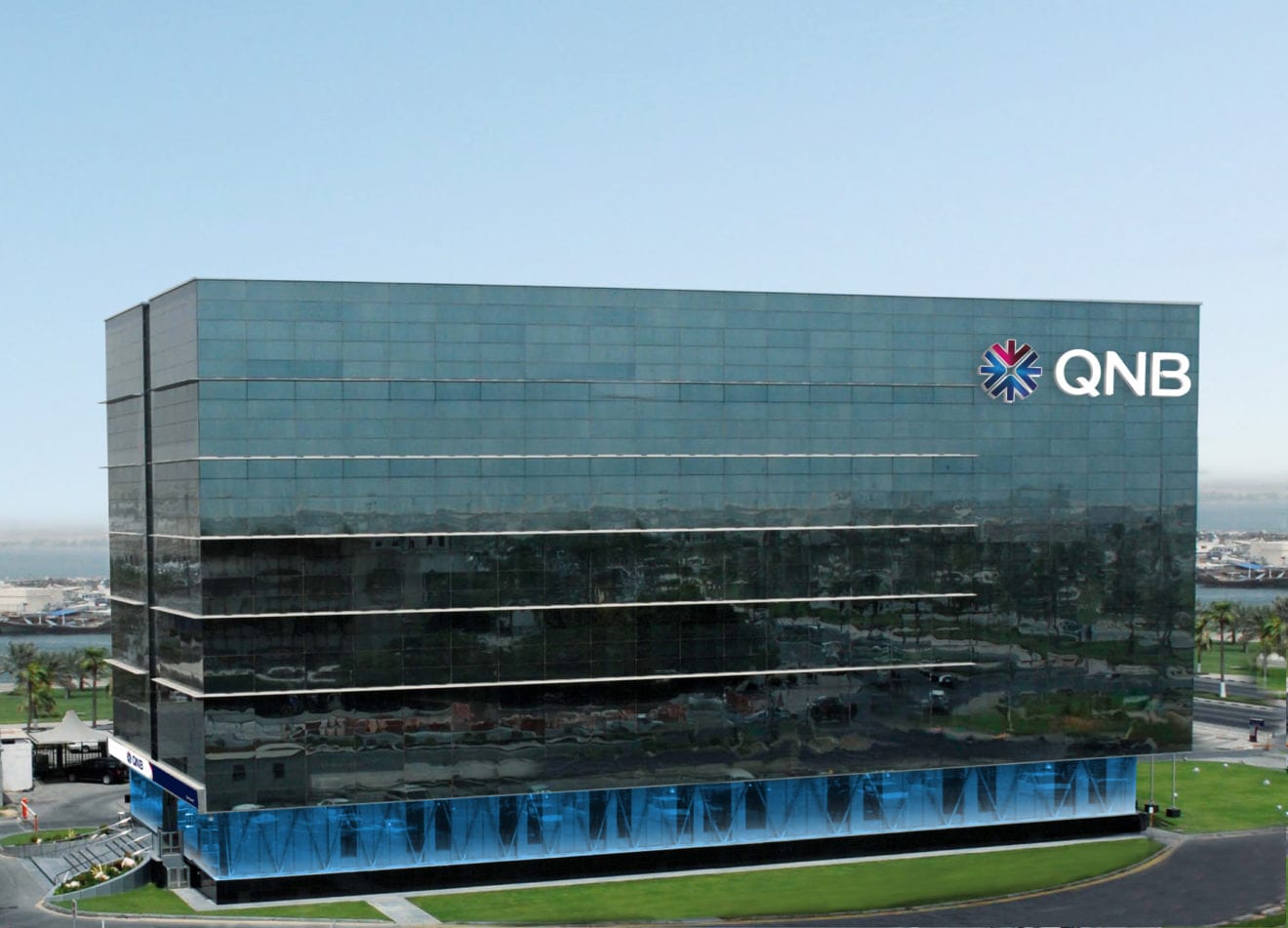
  • QNB chosen ‘Best Retail Bank in Qatar’

    QNB chosen ‘Best Retail Bank in Qatar’

    QNB has been recognised as the “Best Retail Bank in Qatar” by the Asian Banker Magazine.
    The prestigious award was received during The Asian Banker’s International Excellence in Retail Financial Services Awards 2016 ceremony held recently in Hong Kong.

    The awards ceremony was held in conjunction with The 15th Annual Excellence in Retail Financial Services Convention. It is considered an important financial event in the global retail banking agenda, where regional and global elite retail bankers can come together and enjoy unprecedented networking opportunities.

    According to The Asian Banker, QNB, a leading financial institution in the Middle East and Africa, received the “highly competitive award after successfully undergoing all the stringent valuation” for the international excellence in Retail Financial Services Programme.

    “The award is a true testament to the excellence of QNB’s retail services, given that the programme is considered the most prestigious, comprehensive and anticipated awards programme that recognises excellence amongst the world’s leading retail financial institutions as well as the undisputed performance benchmark of the best retail banks in an increasingly fierce marketplace,” QNB said.

    As a leading provider of strategic intelligence on the financial services industry, The Asian Banker facilitates awards programmes known for their rigor, impartiality and transparency.

    QNB is a previous recipient of these distinguished awards, gaining such recognitions as “Best Transaction Bank in the Middle East & Africa”, “Best Direct Bank”, “Best Cash Management Bank in Qatar”, and “Best Trade Finance Bank in Qatar”.

    QNB Group’s presence through its subsidiaries and associate companies extends to some 27 countries across three continents providing a comprehensive range of advanced products and services.
    The total number of employees is more than 15,200 operating through more than 635 locations, with an ATM network of 1,390 machines.

  • Apple’s iBeacon on trial at Central World

    Apple’s iBeacon on trial at Central World

    Nattakit Tangpoonsinthana, executive vice president of marketing, said yesterday that while urbanisation has driven the retail industry in recent years with the growth of shopping malls in the provinces, the new retail landscape is being reshaped by the Millennials and Generation Z shoppers.

    Millennials are people aged about 21-30 and Gen Z are 15-20. Although these two groups represent only 10-20 per cent of shoppers, they are leading the voices in social media and influencing purchases and consumption.

    “Retailers must give importance to these new-generation shoppers, who will be the game-changers of the retail industry and general businesses within five years,” he said.

    To fulfil the needs of these shoppers, CPN, which is aiming to become a leader in the regional retail industry, is creating a seamless experience, focusing on customisation and becoming a social enterprise.

    iBeacon enables tenants to send tailored messages to shoppers who have loaded the CentralWorld app on their smartphones.

    CPN is also talking with a software company to mine Big Data from its The 1Card customer relationship management programme, which holds mountains of data on 8 million-9 million members.

    The Millenniums and Gen Z shoppers have already shaken up the fashion world, which has launched more frequent new collections and “limited editions”.

    To address the tastes of these groups who get bored fast, CPN will have to create more “wows” and “happenings”, launch concept stores and speed up store renovations from every eight to nine years in the past to every four to five years now.

    CPN has increased its digital marketing budget to 10 per cent of its Bt700 million marketing budget from just 3 per cent in the past.

    Marketing staff have to have digital literacy. Store managers must know not only on how to run their physical branches but also how to engage and converse with their shoppers online.

  • Singapore Retail sales up 7.5% in January as car sales surge

    Singapore Retail sales up 7.5% in January as car sales surge

    Singapore’s retail sales increased 7.5 percent in January on a year-on-year basis, mainly due to a spike in sales of motor vehicles, said the Department of Statistics Singapore (SingStat) on Tuesday.

    On a month-on-month basis, retail sales dropped 1.2 percent in January. Excluding motor vehicles, retail sales decreased 0.5 percent.

    The total retail sales value in January was estimated at 4.1 billion Singapore dollars (3 billion U.S. dollars), higher than 3.8 billion Singapore dollars (2.8 billion U.S. dollars) in January in 2015.

    Compared to January 2015, retailers of motor vehicles, medical goods and toiletries and department stores recorded increases of between 11.9 percent and 50.9 percent in sales in January 2016. Similarly, retail sales of supermarkets, mini-marts and convenience stores, wearing apparel and footwear and optical goods and books rose between 1.4 percent and 7.9 percent.

    In contrast, retail sales of telecommunications apparatus and computers decreased 30.5 percent in January 2016 over January 2015. Retail sales of watches and jewellery, food and beverages, petrol service stations, recreational goods and furniture and household equipment also declined between 0.8 percent and 8.4 percent over the same period.

    The total sales value of food and beverage services in January 2016 was estimated at 685 million Singapore dollars (500 million U.S. dollars), lower than the 689 million Singapore dollars (503 million U.S. dollars) in January 2015.

    The Retail Sales Index and the Food and Beverage Services Index measure the short-term performance of retail and Food and Beverage service industries based on their sales records. The sales figures exclude taxes.

  • IDA, SPRING Singapore & CapitaLand partner to boost last-mile delivery for retailers in $20m project

    IDA, SPRING Singapore & CapitaLand partner to boost last-mile delivery for retailers in $20m project

    The three parties have signed a Memorandum of Intent (MOI) to launch an In-Mall Distribution (IMD) trial expected to benefit 300 retailers.

    If successful, the model may be rolled out to other shopping malls owned or managed by the CapitaLand Group in Singapore.

    With two CapitaLand malls – Tampines Mall and Bedok Mall – part of the pilot project, the trial will provide useful insights into how to calibrate the logistics solution for wider implementation.

    The initiative falls under the Nationwide Urban Logistics Programme spearheaded by IDA and SPRING Singapore.

    The idea was first mooted in the Infocomm Media 2015 followed by a funding announcement of $20 million from IDA and SPRING Singapore to implement urban logistics in the retail sector.

    According to the IDA, if deployed nationwide, it could lead to an estimated reduction of trucks on the road by 25 per cent and a cut in waiting and queuing time for deliveries by 65 per cent. The aims is to enable trucks with less-than-full loads to consolidate and sort their goods in an offsite centre before delivering to malls.

    Subsequently, these goods can then be re-loaded and then delivered to their intended destinations on a single truck within the same day, reducing the number of trucks going to the same destination and improving truck load utilisation.

    Teresa Teow, head of retail management in Singapore for CapitaLand Mall Asia Limited, the manager of CMT malls, explained: “As the owner and manager of Singapore’s largest shopping mall network, we are constantly looking at ways to innovate and further improve our operations and shopping experience by leveraging technology and strategic partners.”


    Steve Leonard, executive deputy chairman of the IDA said, “Achieving the Smart Nation vision of Singapore will only be possible if government and industry work closely together, adopting new ideas and embracing new technologies.”

    Leonard added, “We know that the complexities and logistics of moving large amounts of goods in densely-populated areas is a big challenge. Together with our partners, we want to explore how analytics and robotics can be part of new ways to solve these challenges. It is imperative that the government and the industry not only work together, but keep looking forward to adopt new ideas and new tech in business.”


  • Biggest M&M store in travel retail opens at Hong Kong International Airport

    Biggest M&M store in travel retail opens at Hong Kong International Airport

    International Travel Retail in partnership with DFS Group today opened the largest M&M’S outlet in travel retail at Hong Kong International Airport.

    The 35sqm store is located in Terminal 1 and, according to DFS, is designed to offer “chocolate lovers a unique, entertaining and fun travel experience, driving travellers into the store”.

    Biggest M&M's store in travel retail opens at Hong Kong International Airport
    With interactive retail theatre and a focus on fun, it reveals that the M&M’S shop-in-shop is personalised and unique to Hong Kong.

    It states: “The atmosphere of this vibrant city is brought to life inside the store with a replica of one of Hong Kong’s iconic dragon boats on display, along with localized artwork incorporating the brand’s world famous Red and Yellow characters.”
    Dragon boat
    Additionally, the offer will include items that meet the consumer demand for destination merchandise with “Hong Kong Travel Collection” packs of Snickers, Mars and Twix along with a Hong Kong themed M&M’Sbox featuring the iconic dragon boat.

    While the key focus of the store is on M&M’S,  products from core brands Snickers, Mars, Celebrations and Twix are also offered based on the company’s ‘Laws of Growth’ belief in ensuring that consumers are offered best-selling SKUs at all times.

    Commenting on the opening, Mars International Travel Retail’s regional sales director, Christophe Bouye, says: “By offering passengers outstanding retail experiences that first and foremost will make them smile, we are confident it will increase shopper engagement and encourage conversion.

    “Through placing consumers in a smiling frame of mind, we believe that this will not only benefit the confectionery category, but all sectors of the travel retail offer here in Hong Kong.”

    The new outlet is located close to Gate N28 on the central concourse.

  • Victoria Beckham launches Hong Kong store, her first outside Britain

    Victoria Beckham launches Hong Kong store, her first outside Britain

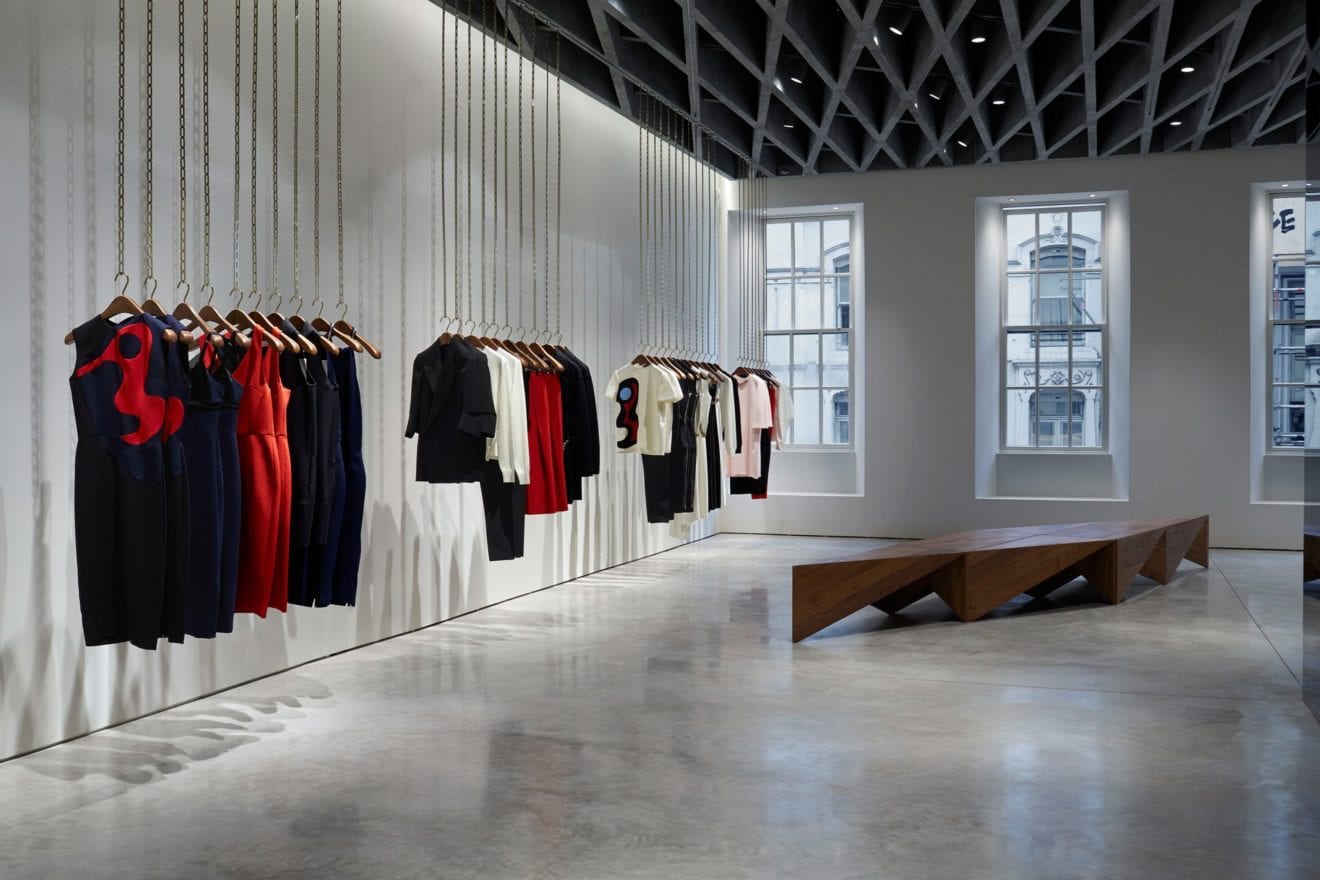
    Today, fashion designer Victoria Beckham launched her first shop outside Britain in Hong Kong as she seeks to tap the Asia market despite a downturn in luxury spending.

    Beckham’s store in Hong Kong’s Landmark building lies at the heart of Central.

    The British designer did a final check of the store this morning as crowds of fans waited outside, before sweeping out in a fitted black turtleneck dress and oversized sunglasses, surrounded by security.

    Beckham’s designs are already available in the region, which is the brand’s fastest-growing market.

    Hong Kong is Beckham’s first bricks-and-mortar store outside the UK, designed by London-based architect Farshid Moussavi.

    “The process wasn’t easy… opening a store is a huge project. Together with my team, I’ve worked really hard to get to this point,” she told the South China Morning Post.

    “I know Asian women really understand luxury, good quality and appreciate when garments are made well – and my clothes are,” Beckham added.

    A photo posted on Beckham’s Instagram feed ahead of the launch showed her posing on a plinth next to a mannequin.

    Beckham will also attend Saturday’s amfAR AIDS research fundraiser in Hong Kong, where stars including Uma Thurman will take to the red carpet.

    The new store has been developed in collaboration with Asian fashion retail brand Joyce, which already carries her collections.

    The brand aims at wearable luxury, from jeans and tailored shirts to dresses and accessories. Shirts sell online for around $400 with dresses selling upwards from a few hundred US dollars.

    “I think she’s going to be very popular here,” said hedge fund manager Sally Zhang, 30, after browsing in the store Friday.

    “Compared to other shops, which are too fancy, not fit for the office, this one is quite different,” said Echo Xu, also a hedge fund manager.

    Beckham, 41, opened her first shop in London’s Mayfair in September 2014.

    But despite Hong Kong shoppers’ warm welcome, Beckham faces challenges after the city posted its worst retail sales decline in 13 years in 2015.

    The slump was fuelled by a drop in tourists from mainland China, which has particularly hit sales of luxury goods.

    The Hong Kong dollar has strengthened against the yuan, making it more expensive for mainland visitors to shop. Growing anti-China sentiment in the semi-autonomous city is also keeping some away.

    Hong Kong billionaire tycoon Li Ka-shing said yesterday that the business environment in the city was at its worst for 20 years, with property and retail “doing worse than during SARS,” referring to the 2003 disease outbreak.

  • Can CapitaLand Mall Trust survive 2016’s volatile equity market?

    Can CapitaLand Mall Trust survive 2016’s volatile equity market?

    CapitaLand Mall Trust (CMT) is poised to dominate the retail REIT scene in 2016, with positive rental reversions and increased tourist arrivals playing to its favour.

    According to a report by RHB, CMT is likely to enjoy mid single-digit (about 5%) positive rental reversion in 2016 as encouraging trends are expected in CMT’s tenant sales (psf/month) and traffic flow at its malls.

    “In the recent reported quarter, the retail REIT reported an upward trend in tenant sales, a 5.3% YoY increase for FY15. With this, we think that the retail landlord is in a better position to command higher rental rates this year,” asserts RHB.

    Moreover, an anticipated pick-up in tourist arrivals is seen to spur consumer spending in malls. This bodes well for CMT, as its malls are located near tourist attractions such as Plaza Singapura, Bugis Junction and Clark Quay.

    RHB also thinks that the expected recovery of Singapore tourism could be boosted by positive catalysts like lower airfares, a busier year for events, and an anticipated climb in Chinese tourists visiting Singapore.

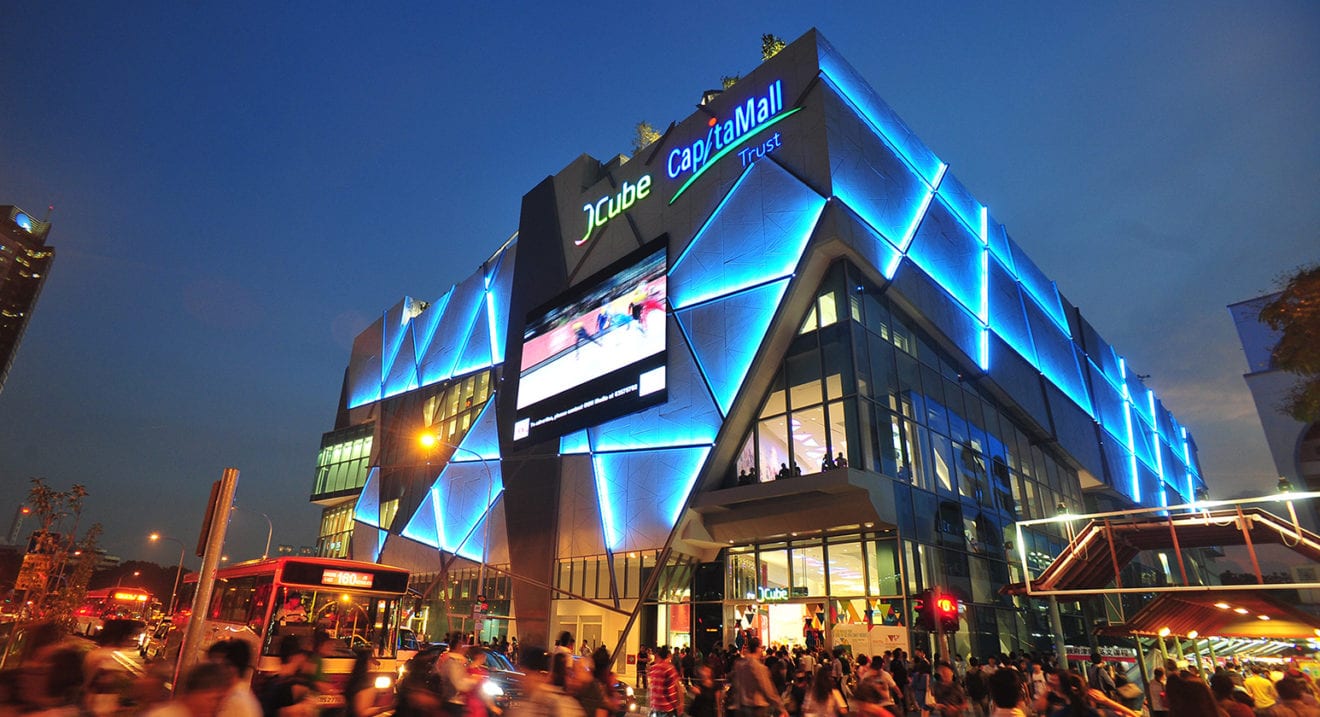
    Further, there’s still room for CMT to exercise a capital recycling strategy given that it currently owns non-core assets such as JCube and Sembawang Shopping Centre.

    RHB further notes that on top of this, CMT handles its portfolio favourably. For instance, CMT recently parted ways with its non-core asset Rivervale Mall, which was estimated to be divested at a attractive cap rate of about 3.4%. Compared to the average cap rates for retail assets, independent real estate company CBRE estimated 4Q15 average cap rates to range from 4.75% to 5.25%.

    “In addition, we advise investors to take up CMT as it is highly liquid, which may be especially advantageous in the current volatile equity market,” states RHB.

  • Faster way to shop online with Visa

    Faster way to shop online with Visa

    According to Visa Consumer Payment Attitudes Study 2015, 67% of Malaysians shop online at least once a month, an increase from 53% in 2014.

    However, 81% of online shoppers in the country have abandoned a purchase because it took too much time to complete the payment process, revealed a study conducted by eCommerce Monitor in 2015.

    Now, online and mobile shoppers can purchase their desired items without much fuss because there is a better way to do so.

    Visa has just officially launched its Visa Checkout in Malaysia, a fast, easy and secure payment service that allows Malaysian consumers to pay for goods online, on any device, in just a few clicks.

    All users need to do is enter their username and password rather than a 16-digit credit card number, and select their required Visa credit, debit or prepaid card to complete the transaction.

    Visa country manager for Malaysia Ng Kong Boon noted the increasing significance of technology becoming part of Malaysians’ everyday lifestyle, including shopping online and on mobile devices.

    “Visa Checkout is designed to improve the digital shopping experience by making the payment process fast and secure, reducing the number of steps required to complete an online purchase.

    “We have partnered with several key merchants in the country to be part of our launch and we are confident consumers will embrace Visa Checkout across all their devices,” said Ng, adding that at least 100 merchants are expected to engage in Visa Checkout by year end.

    Visa Checkout is now accepted at a wide variety of online merchants in Malaysia including Golden Screen Cinemas (GSC), Superbuy.com, SweetSpot Digital, Little Whiz, Twenty3, Avenue 86, CUTI, Malindo Air and Lelong.my.

    There are also 13 banks in Malaysia on board for this service, with Maybank being the first bank to enrol Visa cardholders for the service and offer Visa Checkout acceptance to merchants across the country.

    With the roll-out of Visa Checkout, Visa aims to concentrate on its existing cardholders for this service.

    “Today, we have more than 20 million debit and credit cards issued in the market, and all these cards will be targeted for the Visa Checkout enrolment. Of course, new customers are welcome to enrol too,” shared Ng.

    In conjunction with the Visa Checkout launch, both GSC and Malindo Air are giving special offers to Visa Checkout users.

    Customers can enjoy normal movie tickets at a flat fee of RM8 until June 3, with a maximum of six tickets per Visa card per transaction.

    Those purchasing Malindo Air flight tickets or holiday packages with minimum transaction of RM250 will get a RM50 discount code for subsequent purchases from the airline.

    Both offers are subjected to terms and conditions.

  • Le Lumiere joins WDM Authorised Diamond Dealer programme

    Le Lumiere joins WDM Authorised Diamond Dealer programme

    Joining the list of retail jewellers who are part of the WDM Authorised Diamond Dealer programme is Le Lumiere owned by Tomei, a leading Malaysian retail jewellery chain. Le Lumiere has become the first Malaysian retail jewellery to be part of the program.

    An agreement to this effect was signed between Datuk Ng Yih Pyng, Managing Director at Le Lumiere’s parent company and WDM Chairman Alex Popov.

    Datuk Ng added appreciated Le Lumiere achieving the status of the pioneer retail jeweller in order to acquire the title of WDM Authorised Diamond Dealer in Malaysia. This furthers the company’s efforts to ‘sustain the retailer’s image, contribute to the improvement of consumer confidence in diamonds and diamond jewellery, and thereby increase sales of diamonds and diamond jewellery.’