Author: Mei Ling Tan

  • Losses force Esprit to downsize

    Losses force Esprit to downsize

    Following a first half loss of HK$238 million (US$30.6 million), fashion retailer Esprit plans to prune unprofitable outlets while improving productivity.

    “In the very short term, we will continue to see the closure of unprofitable spaces from our retail store network and our wholesale partners’ points of sale,” the company says in its interim results announcement. It expects these actions will help group turnover remain stable although it may be reduced.

    During the six months, the company posted a 13 per cent dip in sales to HK$9.31 billion. It says the losses are partly the result of the unfavourable impact of the euro depreciating against the Hong Kong dollar.
    With a loss per share of 12 cents, the directors did not declare an interim dividend.

    Meanwhile, the company has seen positive retail sales growth through both online and offline channels, particularly in Europe. Its challenges lie in its wholesale business, currency risks and lower performance in Asia.
    It says the underperformance in the Asia-Pacific region was partly attributable to a combination of volatility in the financial markets, the economic slowdown in China and the devaluation of the yuan, which significantly dampened consumer sentiment.

    Esprit’s largest geographic market, Germany, had HK$4.44 billion turnover, representing year-on-year growth of 1.5 per cent. For the rest of Europe the turnover of $3.38 billion was down from $3.92 billion of the previous year’s second half. Turnover in Asia Pacific amounted to $1.42 billion, a year-on-year drop of 6 per cent.
    Esprit says it faces challenges ahead with volatility in the financial markets and economic uncertainty that could further dampen consumer sentiment, especially in Asia. And if the euro continues to be weak, it would put pressure on the group’s gross profit margin.

    Meanwhile, the group is expecting an estimated net gain of about $725 million from the sale of six wholly owned property subsidiaries in Hong Kong, a deal finalised in December. Once the sales is settled, the group plans to lease back most of the properties.

    Also the group has introduced efficiencies in its product development and supply chain processes, as well as developing a “more ambitious” commercial strategy using an omnichannel model. It has been using an intensive brand-marketing campaign since September to strengthen and rejuvenate its image.

    Already it has seen positive sales performances, plus increased customer loyalty and better online and mobile sales.

    “Driving these productivity gains further remains our top priority in the near term,” says the company, noting an increase to 49 per cent of eCommerce sales by mobile devices and a 92 per cent growth in smartphone sales.

  • Mall of Qatar wins award at Asia Retail Congress

    Mall of Qatar wins award at Asia Retail Congress

    Mall of Qatar has won the Retail Leadership Award in the real estate category at Asia Retail Congress 2016 held recently in Mumbai, India.

    On behalf of Ramez al-Khayyat, managing director of UrbaCon Trading & Contracting (UCC), the award was received by Siva Kumar, estimation and proposal director of UCC, and Patrick Hage-Chahine, PR and events manager at Mall of Qatar.

    “Being developed by UCC’s Doha branch, this super-regional mall spread over 5.4mn sqft of area combines incredible shopping with captivating live entertainment and leisure options,” according to a statement. “An innovative and inspiring architecture, easy accessibility, fascinating new live entertainment concepts and signature restaurants will all capture the imagination of the nation when the Mall of Qatar opens its doors in the third quarter of 2016.”

    The Asia Retail Congress recognises best practices in the retail industry across categories such as fashion, consumer durables, mobile & telecom services, food, travel & hospitality, health and real estate.

    Speaking on the occasion, al-Khayyat said: “We are privileged to receive this esteemed recognition from the Asia Retail Congress. This recognition provides a great incentive to continue our journey to provide best-in-class services and create new benchmarks in the retail industry.

    “One of the major distinguishing architectural features of the Mall of Qatar is the 30m-high, 6,000sqm glassed dome roof that illuminates a captivating central arena called The Oasis, which will become the heart of the project. The Oasis will host live entertainment shows performed daily on a revolving circular stage, set in a pond surrounded by interactive dancing fountains.”

    Expected to receive a footfall of 20mn customers annually, the Mall of Qatar will feature 7,000 underground and surface car parking spaces, 500 shops, including over 100 restaurants, and a 19-screen cineplex, as well as a 200-bedroom luxury and fashion hotel operated by Curio, a Collection by Hilton, the statement adds.

  • Korean department stores struggle

    Korean department stores struggle

    Chinese travellers have emerged as one of the few bright spots for Korean department stores suffering from dull domestic consumption.

    The arrival of a new demographic of consumers has prompted an all-out fight to attract deep-pocketed clients, industry officials told Yonhap.

    Sales at department stores inched down 0.4 per cent on-year to 29.22 trillion won (US$23.69 billion) in 2015, Statistics Korea showed, mostly attributable to the Middle East Respiratory Syndrome (Mers) outbreak and rapidly rising online marketplaces.

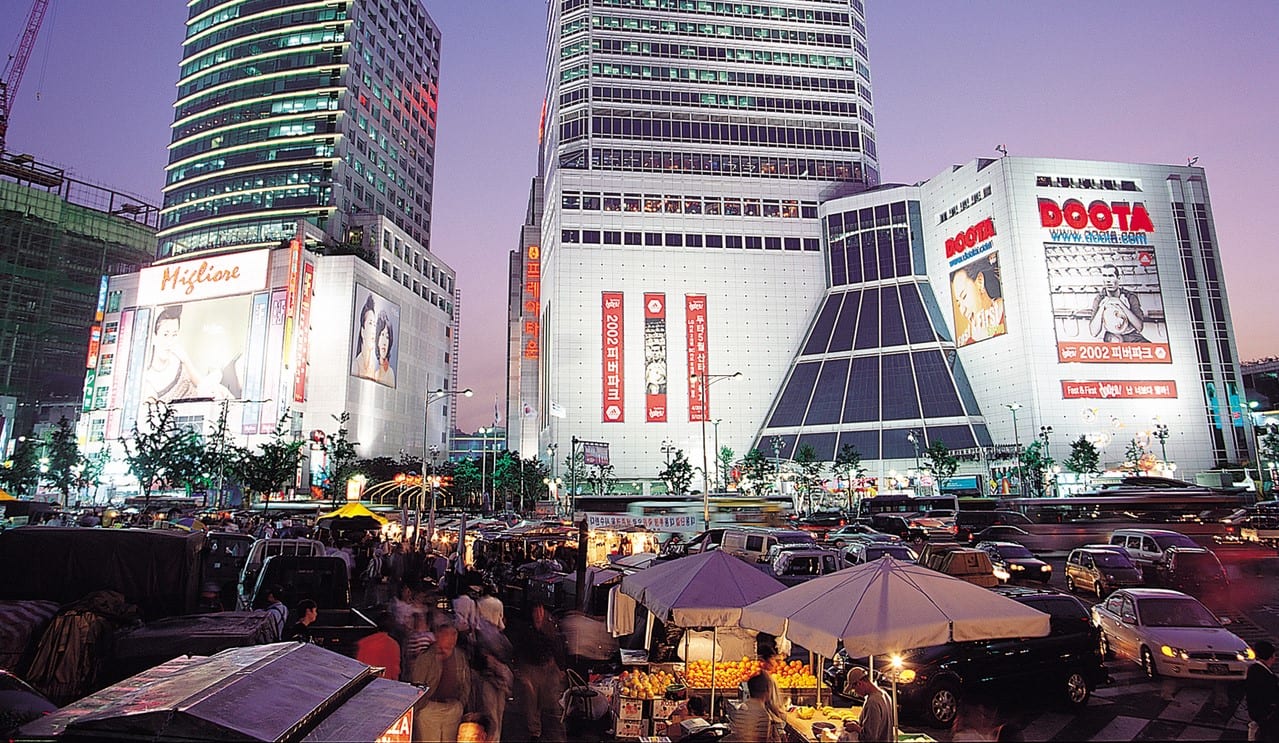
    While consumption among locals has steadily slowed over the past years, major department stores in downtown Seoul saw growing sales among Chinese nationals.

    At Lotte Department Store in the famous shopping district of Myeongdong, sales by Chinese customers accounted for 18.1 per cent of the total, rising 6.8 per cent from a year ago.

    At the nearby Shinsegae Department Store, sales by Chinese customers rose 21.8 per cent in 2015 from a year ago, though the pace slowed from 131 per cent in 2014 and 87 per cent in 2013 in the wake of the Mers outbreak. The store did not release exact sales figures.

    Foreign luxury watch and jewellery brands topped their shopping list, while leading Korean fashion and cosmetic brands were also picked up by Chinese travellers.

    Among them, the Seoul-based luxury bag manufacturer MCM was the second-most selling brand by the Chinese, while sunglass brand Gentle Monster and Amore Pacific’s high-end cosmetic lineSulhwasoo were named as popular items.

    “While the Chinese mostly preferred foreign luxury brands and local cosmetic brands, a wider range of Korean products have been selling among Chinese customers,” said Park Young-hwan, a marketing official at Lotte Department Store.

    In response to the changing consumption trends, Korean department stores have launched a variety of promotional events through social networking services and invited China’s popular bloggers to embrace rich Chinese customers.

    Some stores have even assigned assistants for VIP customers to provide guidance while they shop. Others have offered limousines and pick-up services.

  • Lotte Group in Indonesian confectionery push

    Lotte Group in Indonesian confectionery push

    South Korean confectionery manufacturer Lotte Group is planning an eCommerce joint venture with one of Indonesia’s largest conglomerates, the Salim Group, within the next few months with the aim of being up and running by early next year.

    This follows a new government policy on eCommerce that opens up a market of nearly 250 million people to foreign brands. According to the Korean media, the deal was formalised when Lotte Group chairman Shin Dong-bin met with Salim Group chairman Anthony Salim in Singapore during an Asia Business Council meeting.
    Under Shin, Lotte has been aggressively expanding its overseas businesses, and the Indonesian confectionery market is considered a key strategic opportunity, reports Deal Street Asia. The company hopes to secure a strong foothold in the eCommerce market through an omni-channel retailing strategy and establishing a stable delivery service via the partners’ offline stores.
    Also planning to introduce products popular in Korea, Lotte first became involved in the Indonesian market in 2008 when it acquired 10 stores of the Dutch discount chain Makro. Lotte has one department store in Indonesia and 41 retail outlets, while Salim Group has 11,000 Indomartconvenience stores. The Salim Group’s businesses cover such sectors as food, distribution, telecommunications, media, automobile manufacturing and property development.

    An eCommerce roadmap has been drafted by the Indonesian government as a basis for guidelines regulating the sector. It covers such aspects as funding, taxation, communication infrastructure, logistics, cyber security, consumer protection and education, with the aim of achieving eCommerce transaction value of $130 billion by 2020.

  • Singapore’s Sun Electric begins solar power distribution

    Singapore’s Sun Electric begins solar power distribution

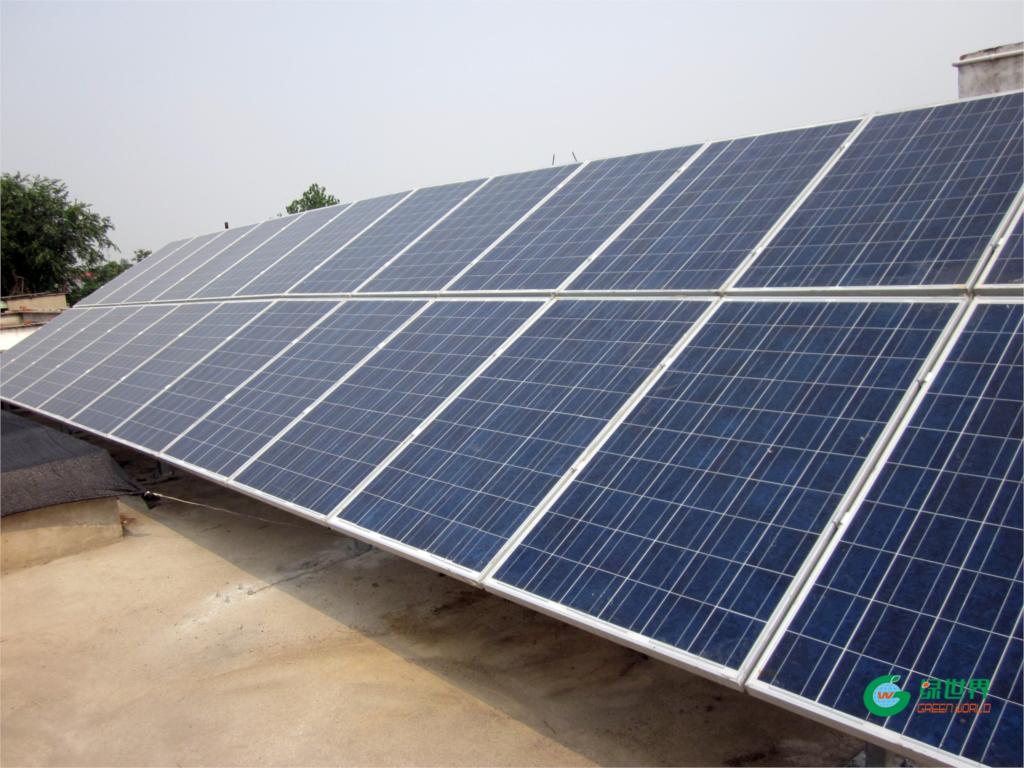
    Providing an environmentally friendlier alternative to power generation fired by coal or natural gas, home-grown Sun Electric kicked-off its first live distribution of solar power today (Feb 29) to local businesses. The solar power is distributed through Singapore’s power grid and supplied by solar energy generators installed in collaboration with JTC Corporation (JTC) and SPRING Singapore.

    The first solar energy company to obtain an electricity retail license in Singapore – Sun Electric also launched an array of clean energy products under SolarSpaceTM, a platform that enables consumers in cities to buy solar energy even if they do not have a roof of their own to install solar panels.

    “Our programme was developed to change the way cities obtain energy, and to allow cities to harness clean energy that can be obtained from their environment. Smaller consumers of energy such as SMEs can now do their part for the environment and sustainability by adopting clean energy,” Dr Matthew Peloso, CEO of Sun Electric said at a press conference attended by Mr Loh Khum Yean, Chairman of the Energy Market Authority (EMA).

    The programme, Dr Peloso said, allows rooftop owners to capture sunlight striking their roofs, and sell it to energy consumers in their city. Rooftop owners can install solar panels and generate energy while tracking their contributions to their city in real-time, and customers who buy the energy can monitor their usage easily on Sun Electric’s platform. This means that a city can now blend in solar energy as a component of its power supply with various consumers, the company said in a media release.

    Previously, only building owners who bought energy themselves could use solar power. Now, building owners can install solar energy generators on those rooftops while energy consumers who do not own rooftops can buy clean energy from them. “This system harnesses the power and connection of people who can put this city on a sustainable footing. This system requires no subsidies, and allows any competitive and open energy market to adopt solar energy,” Dr Peloso noted.

    Dr Peloso also announced the launch of Sun Electric in the USA, Japan, Australia, and the Philippines with “strategic partners abroad”.

    “By the second half of 2018 we aim open the electricity retail market to full retail competition. This will empower the remaining 1.3 million small consumers, mainly households , with more option on how to better meet their electricity needs,” Mr Loh Khum Yean, Chairman of the Energy Market Authority (EMA).

    Market interest in clean energy, Mr Loh said, has been growing significantly in Singapore where the total installed solar PV capacity has increased from 1.5 megawatt in 2009 to 43.8 megawatt by end 2015, enough to power around 14000 four-roomflats a year. “We expect the strong growth of solar to continue as technology improves and cost goes down… The demand for Cleantech solutions is growing both locally and overseas. This presents business growth opportunities not just for established companies but also for SMEs,” Mr Loh added.

    The company said, its portfolio of products including – SolarFlexTM, SolarLiteTM, SolarPeakTM and Solar100TM offer tailored electricity packages according to the percentage of clean energy required by individual consumers.

    Seven local companies including The Chope Group, Sky Tower on Sentosa, Pilatique, Seagift, Lotto Carpets Gallery, Absolute Living, and Duta Holdings, are the first set of clients receiving electricity from the solar energy generators installed on JTC rooftops in Tuas South under the test-bedding programme.

  • Glashutte Original expands in Asia

    Glashutte Original expands in Asia

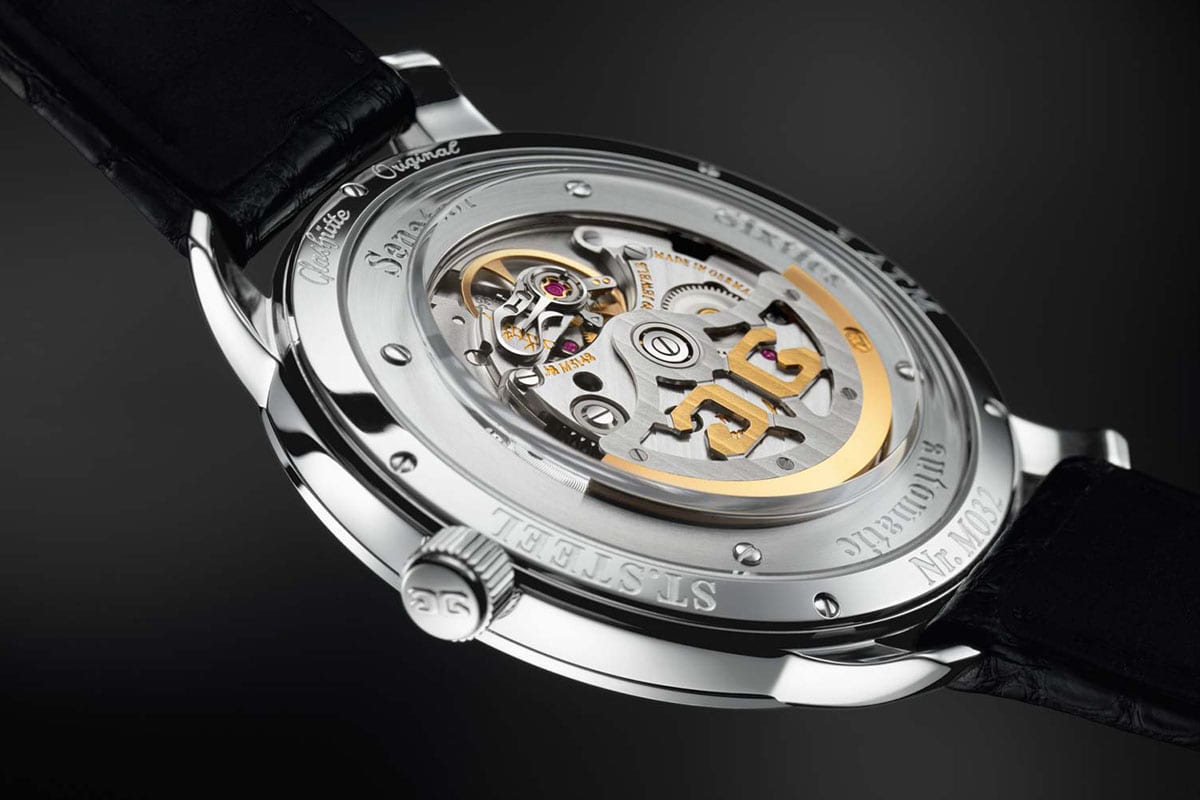
    German watchmaker Glashutte Original is rapidly building its network of Asian boutiques as it tries to build its share of global luxury watch sales.

    During the last three months, Glashutte has opened three new stores in Asia, including its first in Southeast Asia inside The Shoppes at Marina Bay Sands in Singapore.

    Glashuette Singapore MBS

    “The fine art of German watchmaking has its friends all over the world.  With the opening of not three new boutiques in Asia, Glashutte Original has added impressive strength to its presence, bringing even more of its manufactory art to China and Singapore,” the company said in a statement.

    The boutique at AMP in Wangfujing Rd in Beijing is the latest of the new stores as the brand continues to execute its international expansion strategy. Only at the end of December, the Saxon-based manufacturer opened its first in the city, in the popular Beijing SKP.

    “All three new boutiques offer a warm welcome to international connoisseurs of fine watches:  in keeping with the brand concept they offer visitors a world of experience that takes them straight to the heart of the German art of watchmaking.

    “Carefully chosen materials, stylish interiors and a contemporary environment present an essential expression of the brand DNA.”

    The Wangfujing Rd boutique, at 147 sqm, is the largest of the brand’s five Chinese retail stores.

    A watchmaker on the premises offers information and insights into his centuries-old art and puts his knowledge and experience to good use in answering any questions customers may have. Also awaiting customers is a luxurious lounge area that enhances the visual, emotional and individual experience of the visit, along with an interactive presentation allowing each visitor to explore in depth, using a touch-screen, the fascination of Glashutte Original.

  • South Korea’s card spending jumps 16 pct in Jan.

    South Korea’s card spending jumps 16 pct in Jan.

    South Korea’s card spending rose sharply in January, data showed Friday, on the back of increased consumption for the Lunar New Year holiday and a gradual recovery in domestic demand.

    Purchases made with plastic cards reached 56.1 trillion won (US$45.4 billion) last month, up 15.9 percent from a year earlier, according to data compiled by the Credit Finance Association (CREFIA).

    The data includes transactions on credit, debit and prepaid cards. Cash advances, overseas spending and card loans were not included.

    Of the amount, credit card spending went up 15.9 percent on-year to 44.79 trillion won, while those of debit cards advanced 16.2 percent to 11.2 trillion won over the cited period, according to the data.

    “This year, the new year holiday started earlier than last year, which mainly led to the growth in January’s credit card spending,” a CREFIA official said.

    The retail sector, including department stores and big retail chains, enjoyed a 20.4 percent surge in credit spending on-year to 6.7 trillion won, the data showed.

    In particular, purchases made by credit cards in convenience stores spiked 56 percent thanks to the increase in small families and the solid growth in sales of their private-brand products, according to the association.


  • Wanda said to plan massive retail-leisure project near Paris

    Wanda said to plan massive retail-leisure project near Paris

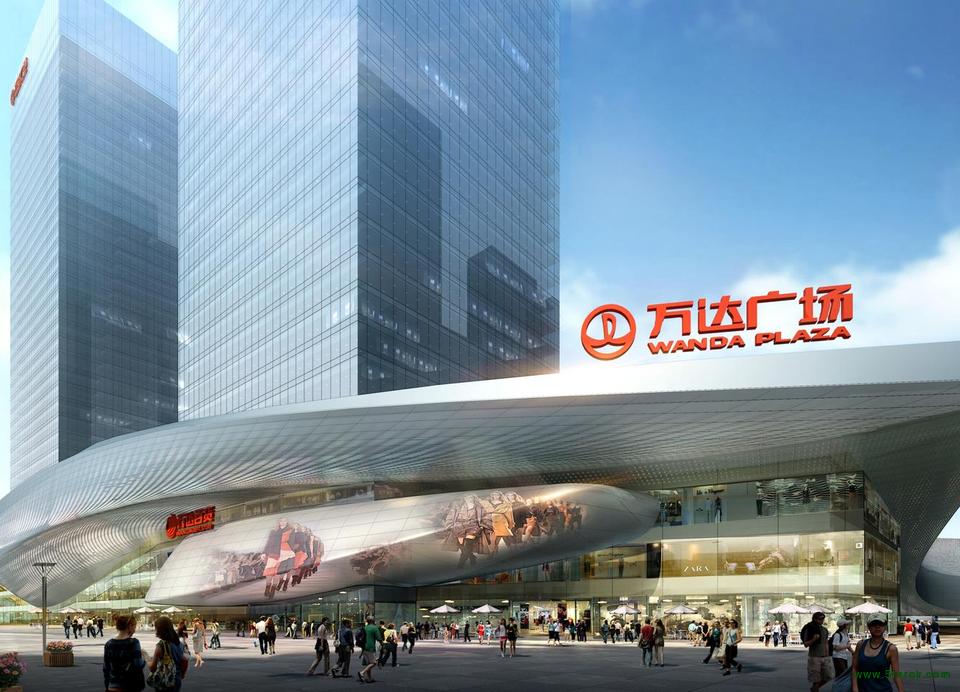
    Chinese billionaire Wang Jianlin’s Dalian Wanda Group Co. plans to invest billions of euros in a retail and leisure development outside of Paris, Bloomberg reports, citing people familiar with the matter.

    Wang said at the University of Oxford on Tuesday that Wanda would announce a “major deal” this week, though he didn’t provide details.

    The project, known as EuropaCity, will be built in Gonesse, a town 16 kilometers northeast of Paris, between Le Bourget and Charles de Gaulle airports, according to a website for the property.

    For Wanda, which runs theme parks across China, movie theater chains in the United States and a soccer club in Spain, the move represents a renewed overseas push, underscoring Wang’s increasingly global ambitions.

    The conglomerate agreed in January to buy “Godzilla” producer Legendary Entertainment for US$3.5 billion, paving the way for the tycoon to become the first Chinese person to control a Hollywood film company.

    Construction on EuropaCity is slated to begin in 2019, with the project opening in 2024, according to the website.

    The development, being built by property company Immochan, will include a theme park, shopping center, water and snow parks, sports fields, performance spaces and hotels, according to the site.

    Immochan is the development arm of Groupe Auchan, a family-owned supermarket operator. A spokesman for Immochan declined to comment.

    Wang, who is estimated by the Bloomberg Billionaires Index to be worth US$27.2 billion, told executives in January that visitor arrivals and revenue at Wanda’s tourism projects in Wuxi and Guangzhou will beat those of Disneyland in Shanghai and Hong Kong, respectively.

    Besides the Legendary deal, Wanda announced a US$2.3 billion investment in three hospitals, the formation of a financial group and the signing a US$10 billion development deal in India.

    In addition, Wanda has said it’s planning five major acquisitions in 2016, three of them overseas.

    Separately, the group’s Wanda Cinema Line Co. theater chain unit was suspended from trading in Shenzhen on Wednesday pending the announcement of an acquisition.

    The Wall Street Journal reported that the group is seeking to raise US$1.5 billion from domestic Chinese investors for its closely held film-making Wanda Pictures subsidiary.

    While Wang’s investments in Europe include the Club Atletico de Madrid soccer team and Swiss marketing firm Infront Sports & Media AG, Wanda’s culture-and-entertainment business has a relatively smaller presence in the region than in China.

    Wang’s film, tourism and sports operations all fall under Wanda’s fast-growing Cultural Industry Group, which saw revenue climb 46 percent last year and is forecast to climb 30 percent in 2016.

    By comparison, Wanda Group estimates overall sales rose 19 percent in 2015 and will probably decline 12 percent this year because of the slump in its property business.


  • Royal Enfield opens retail store in Bangkok

    Royal Enfield opens retail store in Bangkok

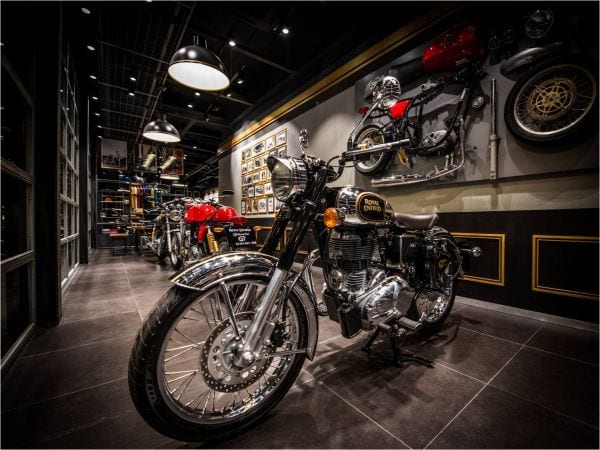
    Royal Enfield launched its retail operations in Thailand with an exclusive store in Thonglor, Bangkok, Wednesday, Feb.24. Royal Enfield’s first retail store in Thailand has been set up in partnership with General Auto Supply Co. Ltd.

    The 3,685 square feet retail outlet located at 842 SoiSukhumvit 55 (Thonglor), Sukhumvit Road, KlongtanNua, Wattana, Bangkok, is a full-service dealership and will provide aftermarket service to the buyers. The new store will sell the Bullet, world’s oldest motorcycle in continuous production since 1932, for Thailand Baht 179800 for 500cc, which is approximately Rs 3.45 lakh. The range of motorcycles includes the Classic 500, Classic Chrome and the Continental GT 535cc cafe racer.

    “Royal Enfield is today one of the most profitable automotive brands in the world and we believe that our future growth will come from our international markets such as Thailand where motorcycles are a popular medium of commuting. Our phenomenal success in India gives us the confidence to thrive in similar markets like Thailand and Indonesia, which will play an instrumental role in fuelling our growth in Asia,” Arun Gopal, international business head, Royal Enfield, said in a statement.

    Royal Enfield announced its entry into Thailand, the fifth largest two wheeler market in the world in December 2015, at the Thailand International Motor Expo.

    With a target to become a global leader in mid-sized motorcycle segment, Royal Enfield has been expanding its global footprints across UK, Europe, Latin America, Middle-East and now in South East Asia. In 2015, the company sold over 4.5 lakh motorcycles across the globe and also announced its plan to produce upto 9 lakh motorcycles by end of 2018, from two of its existing manufacturing facilities and a third upcoming facility near Chennai.

  • Fund expands Indonesia exposure, buys into retail

    Fund expands Indonesia exposure, buys into retail

    Singapore sovereign wealth fund GIC has increased its exposure to Indonesia’s growing middle class by investing 5.2 trillion rupiah ($385 million) in Trans Retail, the main retail arm of conglomerate CT Corp.

    CT Corp’s businesses span television and online media to retail, banking and amusement parks. Its retail arm Trans Retail, formerly a local unit of French retail group Carrefour, currently runs 86 hypermarkets and supermarkets in the country under the Carrefour and TRANSmart brands.

    GIC said in a press release on Wednesday that Trans Retail is taking advantage of the rapidly expanding consumer class as Indonesia’s retail scene shifts from traditional mom-and-pop stores to modern trade formats.

    “We are keen to build lasting partnerships with reputable local partners,” said Amit Kunal, GIC’s head of direct investments group for Southeast Asia.

    CT Corp’s owner Chairul Tanjung, Indonesia’s fifth richest businessman in 2015 according to U.S. magazine Forbes, is a rare breed of non-ethnic Chinese tycoons in the country who built his business from scratch. CT Corp gained full ownership of Trans Retail after it increased its stake to 100% in 2013 for 525 million euros ($578 million). The group also has a stake in Garuda Indonesia, the country’s flag carrier.

    GIC has been boosting investments in consumer sectors overseas, especially in emerging markets where the middle class population is growing. Its investments include retail, e-commerce, education and medical sectors.

    In 2014, the sovereign wealth fund participated in a round of investment for Indian e-commerce company Flipkart, which raised a total of $1 billion, and invested $104 million in Taiwanese music-streaming company KKBOX. The fund has also actively invested in various shopping malls overseas, including in the U.S., South Korea and Brazil.

    Nonetheless, uncertainties remain in the outlook for Indonesia’s retail scene. Trans Retail does not disclose its financial performance, but the earnings of Indonesian retailers have been under pressure amid a slowdown in consumer spending.

    Matahari Putra Prima, a listed hypermarket operator affiliated with the Lippo Group conglomerate, reported a 30% year-on-year decline in net profit for the nine months ended in September 2015. On Wednesday, supermarket operator Hero Supermarket said it would sell off its convenience store business.

  • Xiaomi to open 300 retail stores to secure top spot

    Xiaomi to open 300 retail stores to secure top spot

    Xiaomi to open 300 retail stores to secure top spot

    Lei Jun, CEO of the Beijing-based Xiaomi Corp, at the launch of Mi 5 smarthphone. ZHANG JIN/CHINA DAILY

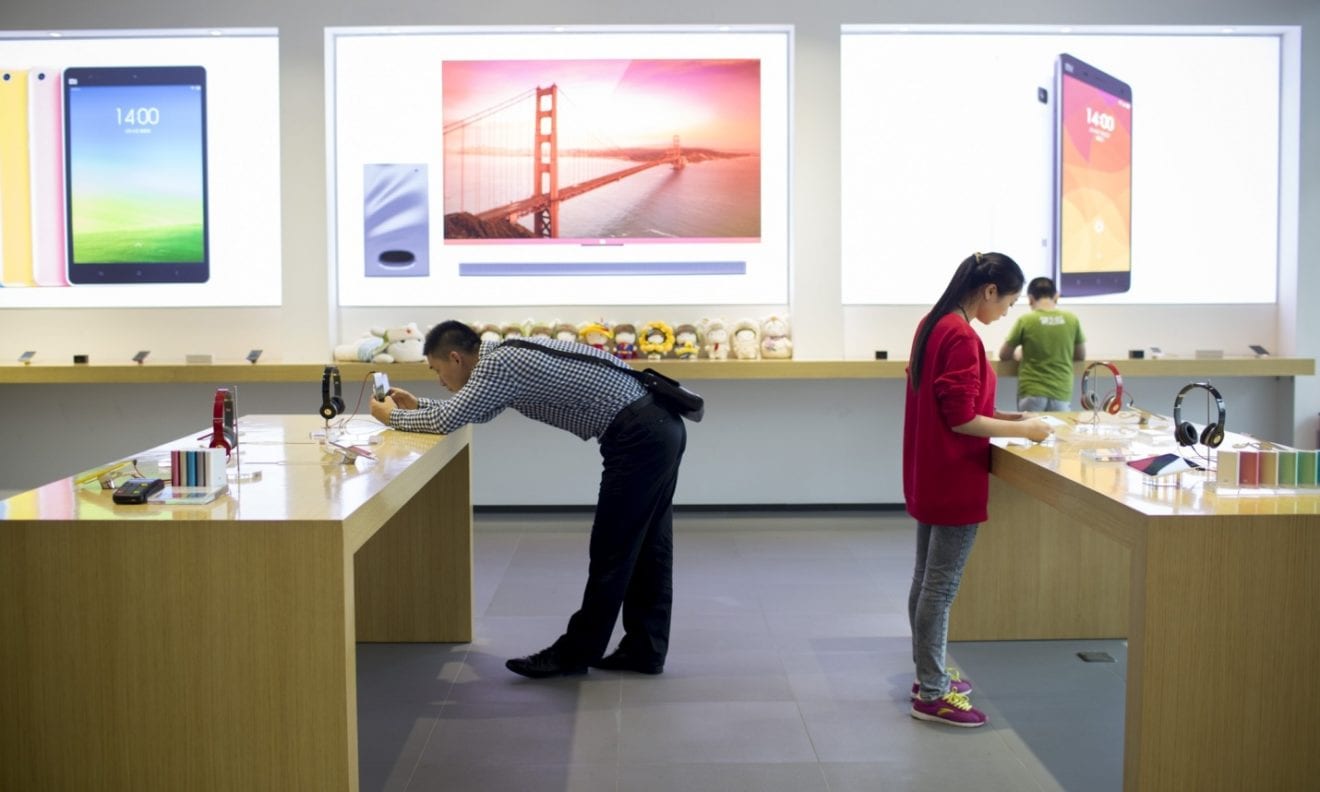
    Smartphone maker Xiaomi Corp on Wednesday debuted its flagship handset and pledged to open 300 retail stores to fight against Huawei Technologies Co Ltd, which is threatening its leading position in China.

    Lei Jun, CEO and co-founder of the Beijing-based Xiaomi, said the new device and offline sales plan will let the challengers know who is the boss on the market.

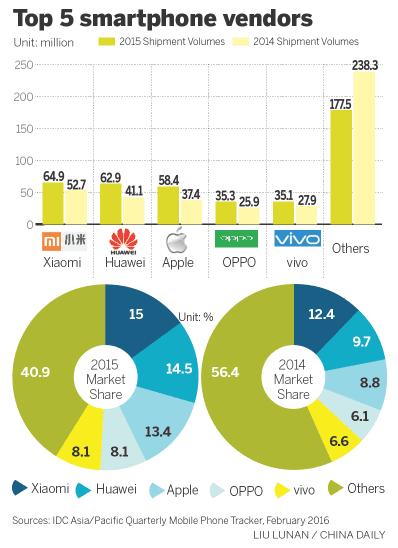
    “We are sorry other vendors were left disappointed,” Lei said on Wednesday at the launch. He was obviously mocking Huawei’s 2015 plan to get on top of Xiaomi in Chinese market by the year-end. Xiaomi ended up shipping 2 million devices more than Huawei did last year, according to research firm International Data Corp.

    “We are rolling out more top-tier products to secure the No 1 place,” said Lei.

    The company will relay on the new Mi 5 handset to achieve the target. The 5-inch-screen handset comes with a 16-megapixel back camera, a fingerprint sensor, a ceramic back, a powerful processor and a 128-gigabyte storage.

    The retail prices were set between 1,999 yuan ($306) to 2,699 yuan depending on the configurations. In comparison, Huawei’s slightly bigger flagship Mate 8 is selling from 3,199 yuan. The storage and processing power are similar to Mi 5’s cheapest option.

    The Mi 5 will be available on the Chinese mainland starting from March 1, followed by India, according to Xiaomi. However, the product will not enter the United States market although the 5-year-old Xiaomi launched an online store in the US selling power banks and mobile accessories.

    The delayed US release was largely due to lack of necessary patents. Lei said at Wednesday’s event the company is growing its patent pool and has applied about 3,600 patents over the past years.

    China, the world’s biggest smartphone market, will remain the top priority for Xiaomi in the coming years however. Lei said the company will open 200 to 300 retail stores in Chinese cities to boost sales.

    Nicole Peng, director of consultancy Canalys China, said going offline was a huge strategic change for Xiaomi as the company aims to grow sales as the market goes weak.

    Most of the Xiaomi devices were sold online currently. Internet-only sales model helped Xiaomi keep down its operational cost. The decision was made as demand for smartphones in the country stopped to grow because of high penetration rate.

    A number of vendors are also mulling over more stores in smaller cities for bigger sales.

    Apple Inc is heavily dependent on Chinese market and the company eyes to have around 40 bricks-and-mortar stores in the country. The new outlets mainly target buyers in smaller cities such as Qingdao in Shandong province.

    Tay Xiaohan, an analyst from IDC, said the market has changed significantly as telecom carriers are reducing smartphone subsidy.

    “Xiaomi entered the market at a time when the China smartphone market was still growing, and was able to capture a significant market share with its disruptive sales model,” Tay said.

    Company steps into financial services

    Xiaomi Corp has purchased a 65 percent stake in a third-party payment company, indicating that the biggest smartphone maker in China is preparing to step into the financial services sector.

    Xiaomi completed its stake purchase of Inner Mongolia-based Jiefu Ruitong in late January, according to a filing to the State Administration for Industry and Commerce. Jiefu Ruitong provides mobile and Internet payment services. The company said it handled more than $300 million in payment transactions as early as 2011.

    The performance of Jiefu Ruitong is unclear because it is a privately owned firm.

    During Mi 5’s launch, Xiaomi CEO Lei Jun said the new device would support mobile payment using near-field communication technology. The device could also work as a public transit card to pay bus and underground fares.

    Xiaomi to open 300 retail stores to secure top spot

  • Imax China to Install 100 New Screens in 2016, Bullish on Growth

    Imax China to Install 100 New Screens in 2016, Bullish on Growth

    Imax China, the Hong Kong Stock Exchange-listed subsidiary of the Canadian giant-screen exhibitor, reported a robust year of growth in the booming China market on Thursday.

    The company’s greater China box office reached $312.4 million, a 53.8 percent increase over net grosses in the territory in 2014. Reflecting the record box office and the company’s ongoing screen installations, total revenues surged 41.4 percent to $110.6 million, with adjusted profit growing 66.9 percent year-over-year to reach $43.4 million.

    The company said it will continue its expansion in the Chinese market with the installation of 100 new screens in 2016. Last year, Imax installed a record 74 giant screens, bringing its country-wide network total to 307 theaters.

    In 2015, Imax exhibited 31 films in China, a record eight of which were local-language Chinese titles. Imax reports that its per screen average in greater China was up 10 percent for the year to $1.34 million. The company indicated that it was pleased with the growing-per-screen average given that it has been aggressively expanding in the market at the same time.

    The biggest performing title for the company in 2015 was Furious 7, which earned a record $39 million in Imax box office. Local blockbuster Monster Hunt also set a domestic record, grossing $27 million in the format.

    Imax China, listed on the Hong Kong Stock Exchange on Oct. 8, 2015, received $57 million in net proceeds, resulting in a cash balance of $90.7 million as of Dec. 31, 2015.

  • China changes the tax rules on purchases from overseas e-retailers

    China changes the tax rules on purchases from overseas e-retailers

    In some cases consumers will owe more tax, and in other cases less.

    Foreign online retailers and brands have benefited in recent years from China’s relaxed rules on purchases by Chinese consumers on overseas websites. China’s new rules on import duties and taxes will hurt some of those overseas online sellers, while helping others.

    The new rules, to take effect in April, provide an exemption from import duties for purchases from foreign websites of up to 2,000 yuan ($306) but add a sales tax of 11.9% that consumers don’t pay today. That sales tax is still less than the 17% value-added tax consumers pay when shopping in stores in China.

    The existing rules, which mirror the regulations for consumers bringing in purchases from abroad or receiving them by mail from friends overseas, allows a consumer to import up to 1,000 yuan ($153) worth of products at a time for personal use, up to 20,000 yuan in a year. Those purchases are subject to import duty—which generally vary from 10% to 50% of the purchase price, depending on the type of product—but the tax is waived if it’s under 50 yuan ($7.65.) That 50-yuan exemption will be eliminated in the new rules.

    The new policy will benefit sellers of products for which the duty is high, such as cosmetics, which are hit with a 50% duty tax, says Li Pengbo, CEO of China Cross-border E-commerce Research Center, a consulting company. But other items for which the duty is low, such as children’s products, the new rules will make it more expensive for Chinese consumers to buy from overseas websites, Li says.

    Here are some major product categories, with the duty tax percentage:

    • Food, 10%
    • Alcohol, 50%
    • Apparel, 20%
    • Cosmetics, 50%
    • Electronics, 20%

    Thus, under existing rules a Chinese consumer who buys a shirt for $50 on a foreign e-commerce site pays a fee of $10 (20% duty on a $50 purchase), whereas under the new rules he would pay only $5.95 (no duty, but a sales tax of 11.9%.) However, a consumer buying $30 of powdered milk today would pay no duty or sales tax (the duty would be $3, 10% of $30, but that is waived because no fee is charged if the duty is below 50 yuan ($7.65)), whereas under the new rules she would pay $3.57 (no duty, but a sales tax of 11.9%.)

    Both the new rules and the old ones also apply to foreign companies that sell on Chinese marketplaces under the relaxed cross-border e-commerce rules that China has adopted in recent years. Such major Chinese e-commerce operators as Alibaba Group Holding Ltd., JD.com Inc. and the Amazon China subsidiary of Amazon.com Inc. have created special sections of their online shopping sites featuring imported goods sold under the special cross-border rules. Those rules allow foreign companies to store items in 10 free-trade zones without clearing customs, and then send them through an expedited customs process when a Chinese shopper places an order.

    They also allow the sale, up to the limit for personal use—1,000 yuan today and 2,000 yuan when the new rules take effect in April—of goods that have not been authorized for sale in China, as long as they have been found safe in their home country. That’s a big deal for sellers of products like cosmetics and food that can take years to gain approval from the Chinese government for domestic sale.

    Chinese consumers have taken advantage of the cross-border e-commerce rules to buy significant quantities from foreign web merchants. China’s customs authority reported this month that the first seven of the free-trade zones established in China since late 2013 handled 100 million inbound parcels purchased from foreign e-retailers with a total value of $2 billion.

    The relaxed rules on purchases from foreign websites have drawn protests from domestic retailers who say they have to pay import duties on all goods they bring into the country and charge consumers the national 17% value-added tax.

    Gong Dingyu, founder and chief operating officer of Chinese children’s product retail chain Leyou, tells Internet Retailer, that the new rules represent of a different way to tax goods purchased from overseas e-retailers.

    “The old policy is unfair because traditional trading companies and physical stores don’t have the same favorable policy as cross-border e-commerce,” Gong says. “Also, without products being monitored and inspected by the Chinese government, online consumers could buy imported products with quality issues.”

    JD.com is No. 1 in the Internet Retailer 2015 China 500 and Amazon China No. 5. While Alibaba’s big online marketplaces Taobao and Tmall account for about three-quarters of online purchases in China, Alibaba is not ranked because it is a marketplace operator and not the merchant of record for any sales on its sites.

  • Shinsegae unveils revamped Gangnam department store

    Shinsegae unveils revamped Gangnam department store

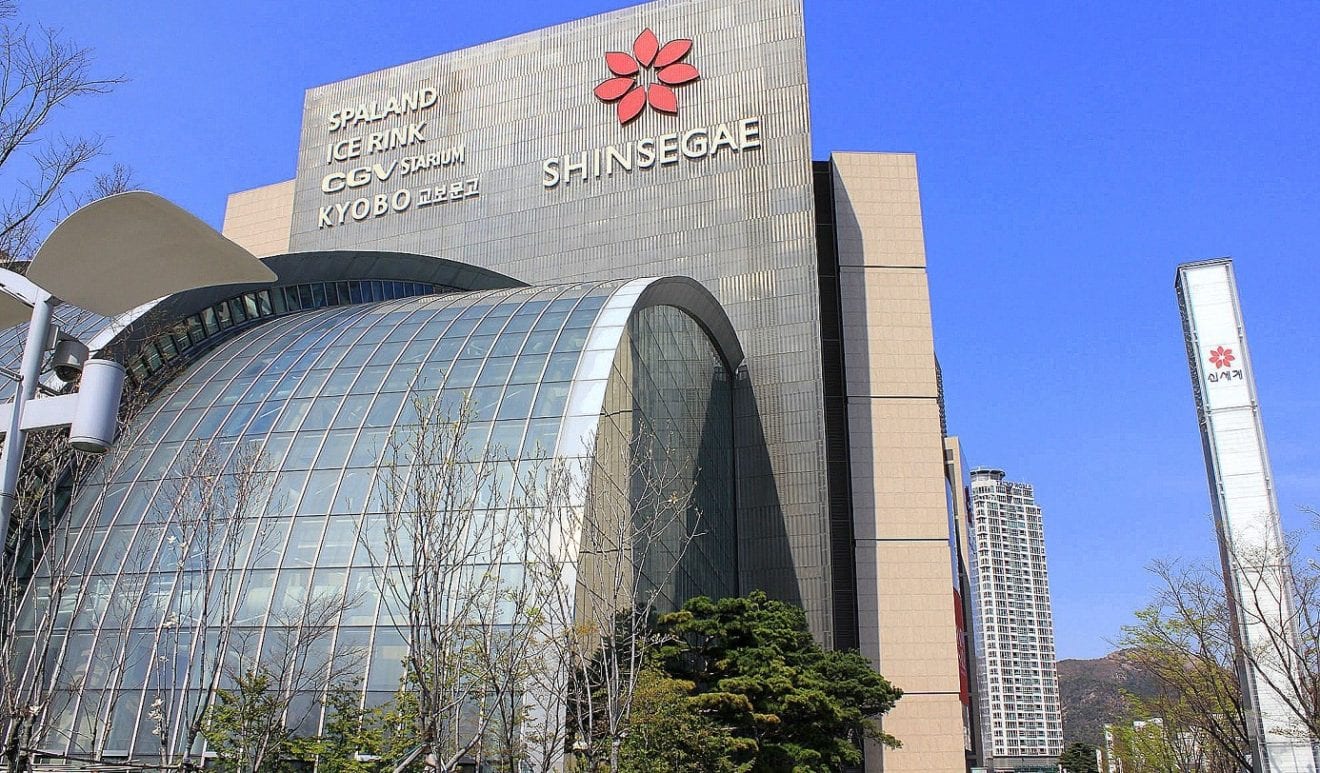
    The revamped Shinsegae department store in Gangnam will officially open on Friday.

    The store’s concept is heavily inspired by the high-end department store chains Le Bon Marche in France and Saks Fifth Avenue in the U.S.

    The Shinsegae Group, which is Korea’s second-largest retailer, has added six new floors to the annex building of its store in the affluent area of southern Seoul. This makes the 86,500 square-meter store the largest department store in Seoul. It also now houses 1,000 brands, up from about 600 brands previously.

    “The Gangnam store is important in every way. We are striving to suggest shopping as a lifestyle rather than to seek for simply sales growth,” said Jang Jae-young, CEO of Shinsegae Department Store, at the press briefing to mark the opening.

    The company has seen sales come to a standstill over the past few years, mainly due to the global economic slowdown as well as competition from other retail channels such as e-commerce.

    The revamped store is designed to attract people who prefer a luxurious in-store shopping experience and Shinsegae expects it to be a game changer. Its Gangnam branch is expected to generate 1.7 trillion won ($1.2 billion) in its first year and 2 trillion won by 2019.

    Brands within the store are categorized into four major themes – shoes, contemporary, kids and living. Products Items are divided based on themes rather than by brand names. Hence luxury brands, such as Christian Louboutin, and domestic brands, such as Soda, mingle in the same zone.

    For those preparing for marriage, the store has dedicated a whole floor to wedding gifts and lifestyle goods. There, you can find anything from luxury goods, such as jewelry and watches worth hundreds of millions of won, to silver three-story tea trays or zen-style flower arrangements.

    “According to our research, people from countries exceeding gross domestic production per capita of $30,000 value the experience of shopping, its process and services they receive. We think the Korean market is ready for this,” said Ryu Sin-yul, vice president of the Gangnam store.

    Shinsegae plans to open five more stores this year — Busan Centum City Mall in March, an urban duty free store in May, two stores in Gimhae of South Gyeongsang Province and Daegu in June and December respectively as well as Hanam Union Square shopping mall in September.

    “We are not trying to compete with (other retail powerhouses such as) Hyundai or Lotte. We will create a new generation of shoppers who have never been to department stores before,” Ryu said.

  • Honolulu Coffee Shop opening in Singapore

    Honolulu Coffee Shop opening in Singapore

    Honolulu Coffee Shop, known in Hong Kong for its egg tarts with flaky pastry, will open a 50-seat restaurant in Singapore in April.

    At The CentrePoint in Orchard Rd, the restaurant will go head to head with Hong Kong’s Tai Cheong Bakery, which is known for its egg tarts made with shortcrust pastry and is scheduled to open in Orchard Rd within the next three months, according to the Straits Times.

    Meanwhile, Tai Cheong will set up a pop-up stall early next month at a location yet to be advised. The new outlet is a joint venture with Food People, a company set up by The Pine Garden MD Wei Chan and Han Jin Juan of Palm Beach Seafood Restaurant.

    Honolulu Coffee Shop is a franchise brought in by a new F&B company set up by Lee Yuen Yong, who is also MD of Asia Gourmet. That company brought in wonton noodle specialist Mak’s Noodle from Hong Kong, which has shops at The CentrePoint and Westgate, and will open a third at VivoCity in May.

    Lee says not many people in Singapore know about Honolulu Coffee Shop, “but its egg tart is the best we can get in Hong Kong”. He says the recipe has 70 years of history, with all other egg tarts evolving from it.

    “On more than 10 trips to Hong Kong, the team tried egg tarts from more than 50 stores before deciding that Honolulu’s are the best.”

    Honolulu Cafe Hong Kong Wan Chai

    Its signature egg tart has 192 layers of flaky pastry.
    Meanwhile, Chan says the market is big “and diners will figure out which egg tart tastes better”.

    Honolulu Coffee Shop was founded in the 1940s by Yeung Jin Hei, who died nearly three years ago. It started out selling coffee, tea and baked goods, and over the past 20 years its menu has evolved to include everything from noodle dishes to sandwiches.

    Yeung’s second son Derrick, 50, took over the business in 1996 and runs it with his 51-year-old brother Wayne, who handles the six outlets in Hong Kong.

    Derrick has been instrumental in expanding the brand overseas, starting 18 months ago. Honolulu has three shops in Beijing and one in Shanghai. The Singapore shop will be its fifth overseas outlet and will also serve macaroni and noodle dishes as well as weekly specials.

    He is now meeting suppliers and recruiting staff and chefs, who will be trained in Hong Kong.
    Aside from Singapore, he plans to open in Taiwan in line with his plans to go “more international”.
    Asked why the chain is called Honolulu, he says it dates back to the time Hong Kong was a British colony and the company wanted a Western name.