Author: Mei Ling Tan

  • Perry Ellis International Announces Original Penguin Children’s Apparel Agreement

    Perry Ellis International Announces Original Penguin Children’s Apparel Agreement

    Perry Ellis International, announced today that it has entered into an agreement with Lifestyle Essences Inc. for the distribution of children’s apparel in the Philippines under the Original Penguin by Munsingwear® brand through standalone Original Penguin children’s stores as well as premium specialty stores.  These innovative products are planned to launch in Fall 2016.

    Original Penguin is an iconic American brand that mixes sportswear and contemporary fashion appealing to a style-savvy consumer who’s into details, but doesn’t take himself too seriously. Original Penguin pays homage to its brand heritage, while staying culturally relevant in its global markets. The brand reworks their archive of mid-century classics to reflect today’s lifestyle without compromising that heritage or the craftsmanship that established the Original Penguin name.

    “Lifestyle Essences has been a terrific partner in building the Original Penguin men’s apparel, footwear and accessories business in the territory; launching kids is a natural step in further expanding the brand.  We are confident with this new partnership and look forward to working with the Lifestyle Essences team to offer Original Penguin’s lifestyle product while continuing the expansion of our global reach,” commented George Feldenkreis, Chairman and CEO of Perry Ellis International.

    Cheryl Ann Lao Lee, Managing Director of Lifestyle Essences Inc. said, “We are very excited about adding a full line up of children’s wear to our clothing repertoire. We are confident that many longtime fans of Original Penguin in the Philippines will have fun dressing up their little ones in something smart and preppy. This new partnership with Perry Ellis International encourages us to become a more dynamic and versatile retailer in the country.”

    For more information about Perry Ellis International, Inc. and the company’s entire portfolio of brands, please visit. www.PERY.com.

  • Ikea finding India alluring, but difficult

    Ikea finding India alluring, but difficult

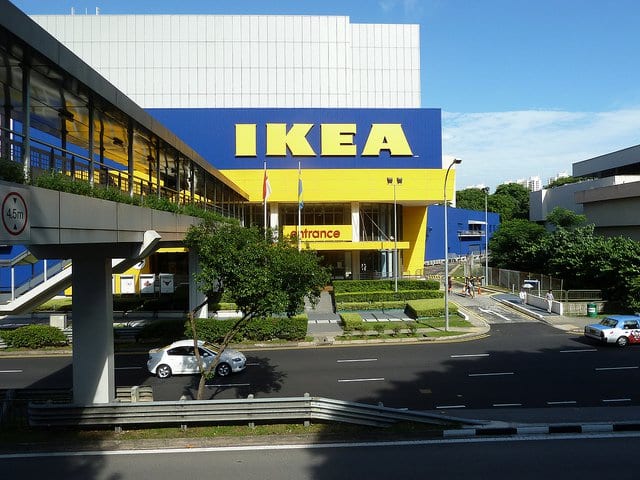
    Ikea has good reason to expand into India. The country has an emerging middle class dominated by millennial-age, mobile-first consumers, among other perks. That has led many retailers to eye the country as an alternative to faltering China.

    English is an official language in the country, and serves as a common language for many of the sub-populations there. And while there’s a Chinese equivalent to Facebook, Twitter, and other social media platforms, the most widely used ones in India are those that are widely used in the U.S. India gives Facebook its second-largest membership base, after the U.S. That means brands have one less barrier to bust through when reaching Indian consumers.

    Above all, though, experts have told Retail Dive that India’s demographics are almost ideal for retailers, with a population that includes a large young, mobile-first generation and a growing middle class. It’s now outpacing China as the world’s fastest-growing big economy.

    But, it turns out, there’s a catch, or several. The bureaucratic and economic realities in India also present significant obstacles, as this report on Ikea demonstrates.

  • How China’s Alibaba spends $18 billion investing in companies

    How China’s Alibaba spends $18 billion investing in companies

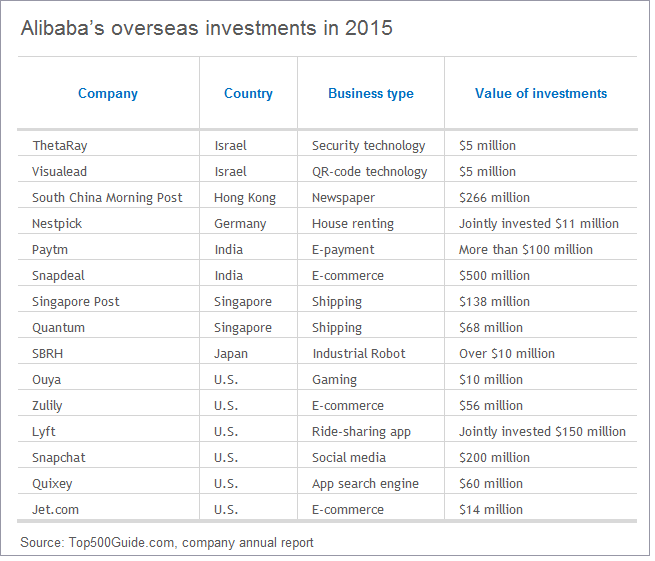
    The Chinese e-commerce giant acquired eight companies and invested in 15 overseas businesses in 2015.

    Alibaba Group Holding Ltd. is not just an e-commerce company that can create $14 billion in online sales in 24 hours. With near-constant investments, the Hangzhou-based company has evolved into a business empire, aiming to serve more consumers beyond its current 400 million active users.

    Alibaba spent about $18.3 billion to invest in 65 companies, including acquiring eight companies and investing in 15 overseas businesses, according to China-based market data company IT Orange.

    Alibaba’s major investment sectors are e-commerce, entertainment, finance, enterprise solution & technology, and online to offline, according to IT Orange. In China, O2O or online to offline, refers to a way for Internet companies to develop mobile apps that connect local services, such as a dry-cleaner, with online users.

    Alibaba continued to invest in the technology vendor sector, but total spending in this sector was still small, IT Orange says. Alibaba also reduced investments in healthcare and travel companies in 2015, compared with 2014.

    Alibaba in 2014 invested in 40 companies by spending more than $17 billion, including stakes in two healthcare companies and two travel companies, according to IT Orange.

    Those 65 companies—including Chinese ride-hailing app Kuaidi, travel site Wanzi.com, Hong Kong-based newspaper South China Morning Post, China-based shipping company YTO Express and Chinese film studio Bona Film Group—operate in various industries but could help Alibaba build a more diversified business to offer more services more efficiently.

    “Alibaba has been a giant online corporation with diversified businesses ranging from marketplaces, retail and payment to travel, entertainment, transportation and other businesses. Alibaba doesn’t need to focus (on one) as it knows all those industries from its home market,” Ralf Gladis, founder and CEO of payment firm Computop Inc., tells Internet Retailer.

    Take YTO as an example. YTO says its shipping network covers 2,300 Chinese cities and about 43% rural villages. The company says the partnership with Alibaba helps it improve efficiency and expand into rural areas and global market. The company says it delivered 3.3 billion parcels in 2015, compared to 2.1 billion in 2014. 70% parcels delivered by YTO were generated by e-commerce orders and about 70% of those e-commerce parcels came via Alibaba Group businesses.

    In 2015, YTO reduced delivery time by investing more in air transportation. The company purchased three Boeing B737-300 airplanes to further reduce some cross-province delivery times from three days to one day. YTO also worked with many regional shipping companies to build an international network that covers eight countries, including Japan, Korea and Germany.

    YTO says Alibaba’s support also includes data and information. Alibaba sends feedback from online shoppers to YTO so the shipper can find and fix the problem faster than before.

    In 2015, Alibaba increased its strategic investments in 20 large companies. Some investments have topped several hundred million dollars, including investing in The Postal Savings Bank of China; Suning Commerce Group, No.3 in the Internet Retailer 2015 China 500; and Chinese smartphone maker Meizu, No. 168.

    Alibaba also acquired eight companies, including the Chinese version of YouTube, Youku.com. Youku.com says videos played on its site have topped 600 million times per day in 2015. Alibaba bought Youku.com for $4.67 billion.

    Alibaba’s 15 overseas investments in 2015 mainly focus on e-commerce, entertainment and technology. IT Orange estimates Alibaba spent about $2.5 billion for stakes in those companies, including e-commerce companies Jet.com and Zulily.com.

    Alibaba declined to confirm the information from IT Orange but says the company may have invested in more than 65 companies in 2015 because it also invested in many small startups.

    Alibaba’s investment goal is to learn the best practices from others and then use them to improve its operations in China and global markets, according to Alibaba’s IPO filing document.

    “Alibaba is just trying to get insight into the next big thing with the goal of eventually importing the tech back home where they have the world’s largest Internet audience. They’re investing in U.S. companies because this is where tech innovation is happening,” Laura Swanson, senior consultant at omnichannel consulting firm FitForCommerce, tells Internet Retailer, “Essentially they’re giving themselves a front-row seat to watch these companies so that by the time certain products or services reach China, Alibaba will have the control.”

    Alibaba already leads in some areas. “Alibaba is not only bigger than Silicon Valley companies, it is also more innovative in many areas. Working with both PayPal and Alipay, we know by experience that Alipay is far ahead of PayPal when it comes to payment innovations. For instance, Alipay customers can use their (mobile) wallet in many bricks-and-mortar retail stores, and they get excellent services including hassle-free tax-return services when they shop abroad,” Gladis says.

    By investing in U.S. e-commerce companies like online marketplace Jet.com, Alibaba could understand consumer behavior on both ends of the world to help U.S. merchants selling to Chinese consumers as well as help Chinese merchants selling to U.S. consumers, Gladis says.

    For more Chinese e-commerce data, please click here for Internet Retailer 2015 China 500.

  • Mobile commerce to drive retail innovation in 2016

    Mobile commerce to drive retail innovation in 2016

    The pervasiveness of mobile commerce will present some of the biggest challenges that will impact retailers’ strategies during 2016, according to latest predictions from Manhattan Associates, Inc.

    In 2016, retailers will also be impacted by more personalised shopping and rapid migration to customer-centric retailing.

    Retailers should make informed choices about what is right for the consumer and what is right for the business.

    They should strive to make the shopping experience personal and frictionless, re-define the role of the store assistant and recognise the power of Millennials.

    In addition, they should embrace mobile to achieve customer-centric retailing success and deliver faster, and be more flexible with returns.

    “Growing consumer demand, expectations for a more personalised shopping experience and increased mobile use will cause retailers to make some fundamental changes in 2016,” said Richard Wright, managing director, Southeast Asia at Manhattan Associates. “We have therefore identified five key areas in which retailers can focus attention, to not only achieve customer satisfaction but also to drive business growth and profitability.”

    Digital personalisation success

    Inspired by the digital personalisation success, retailers are now eyeing in-store experience as they recognise the rise in customer expectation and the differentiation personal service can offer.

    Retailers are beginning to understand the importance of store assistant to the overall shopping experience and the business. Predictions from Manhattan Associates alsoindicate that Millennials or Generation Y treat their mobile phone like an extension of their family and are always looking for an Internet connection.

    Mobile has begun to play a more important role in browsing, buying and paying for goods.

    Price is the number one attraction for two-thirds (67%) of shoppers across both online and in-store shopping.


  • Thai insider trading row lays bare governance concerns

    Thai insider trading row lays bare governance concerns

    An escalating row over insider share trading by executives at one of Thailand’s most high-profile groups has laid bare wider worries about corporate governance and regulatory enforcement in Asian emerging markets.

    Leading fund managers have vowed to freeze investments in CP All, part of the multinational Charoen Pokphand Group agribusiness, food and retail conglomerate, until it takes further action against three directors fined by the stock market regulator.

    The unusual public spat has highlighted what critics say are soft penalties for financial market wrongdoing in Thailand, which risk further hurting investor confidence already hit by domestic political turmoil and fears of global crises.

    Jamie Allen, secretary-general of the Asian Corporate Governance Association, a non-profit group that works with investors, companies and regulators, said of the CP All case: “This is unprecedented in Thai corporate governance. We have not seen domestic institutional investors show this level of public concern before about insider trading.”

    The case has also tapped into concerns about corporate governance in the broader Asian region, where many companies — such as CP Group — are still wholly or partly controlled by their founding families.

    Bandid Nijathaworn, chief executive of the Thai Institute of Directors, said the CP All dispute showed both companies and regulators still needed to improve compliance with market rules and norms, despite progress made since the 1990s Asian financial crisis.

    “This debate is a reflection of the heightened awareness and recognition of the importance of corporate governance,” he said. “We support the [regulator] to tighten up to make the punishments much tougher than we see.”

    This debate is a reflection of the heightened awareness and recognition of the importance of corporate governance– Bandid Nijathaworn, chief executive, Thai Institute of Directors

    Thai financial institutions managing more than $170bn in funds this week said they would boycott new investment in CP All, which is the operator of the 7-Eleven convenience store chain and is 42 per cent owned by CP Group companies. Among them were the Association of Investment Management Companies and Thailand’s two largest pension fund managers. They want CP All to impose unspecified further sanctions on executives who were among a group of six people fined a total of Bt33.3m ($930,000) for insider share trading in December, under a settlement with Thailand’s Securities and Exchange Commission.

    CP All’s shares tumbled 8.5 per cent between the regulatory announcement and the end of last week, more than three times the fall in the broader benchmark SET index. But the company’s stock rallied more than 5 per cent on Friday, in what some analysts suggested was relief that the fund managers stopped short of announcing they would cut their holdings.

    The SEC fined Korsak Chairasmisak, CP All’s executive chairman, along with fellow directors Piyawat Titasattavorakul and Pittaya Jearavisitkul, over purchases of shares in Siam Makro, the retailer, when CP All was in talks to take the company over in 2013. Mr Korsak, who accounted for more than 90 per cent of the fine, has acknowledged buying the shares, but said he did not mean to commit insider trading.

    CP All said in a stock exchange announcement this month that the directors had not intended wrongdoing, although they had acted with “imprudence” and “limited understanding” of the rules. The company said it would strengthen its corporate governance committee and formally admonish the executives, but would allow them to stay in their posts because they had settled the case quickly and had “track records of ethical practice”.

    The dispute has also raised questions about the enforcement of insider trading rules by the Thai authorities. The regulator’s notice of penalties for the case gave few details about how the offence was carried out or of the profit made by perpetrators, who in two instances were fined as little as Bt333,333 ($9,340).

    Critics say light penalties not only fail to deter wrongdoing, but actually encourage it by making it a risk worth taking. The SEC and the Stock Exchange of Thailand did not respond to requests for comment.

    Corporate governance at Asian companies slipped between 2010 and 2014 after steady improvement since the 1997-98 financial crisis, according to a report published in late 2014 by CLSA, the Asia-focused brokerage, and the Asian Corporate Governance Association. While some countries, including Thailand, had not fallen back, CLSA said the overall picture was still a “warning flag for investors”.


  • Retailers grapple with dull domestic consumption

    Retailers grapple with dull domestic consumption

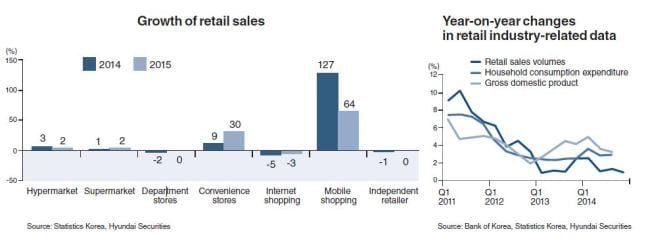
    South Korea’s retail stocks suffered a series of challenges last year, including the broader economy’s downturn to a nationwide outbreak of a deadly virus. Experts see no turnaround in sight for them this year, as economic worries continue to weigh down on consumer sentiment while competition from online and mobile rivals intensify.

    “It’s hard to expect a dramatic turnaround for the retail industry, except from the base effect from the year-earlier period when the MERS outbreak kept people holed up in their homes,” said Kim Ji-hyo, an analyst at Eugene Investment & Securities,

    The combined operating profit of 10 major retail companies, including


    department stores, home shopping firms and convenience stores, declined 11 percent in 2015 from a year earlier, according to Hyundai Securities.

    The government had pushed retailers to hold coordinated sales events last year starting in October, which helped increase private consumption by an annual 3.2 percent in the final quarter of 2015 — the strongest figure in five years.

    But the spike in spending seemed short-lived after the bargain ended.

    January’s consumer sentiment index slipped to a level on par with July last year when consumption fell into the doldrums in the aftermath of the Middle East respiratory syndrome outbreak.

    “For the time being, I do not expect to see meaningful growth in domestic consumption,” Kim said.

    Last December, hypermarkets reported a 5.1 percent year-over-year drop in sales as they failed to recover from the human traffic loss to department stores during the massive sale events initiated by the government, according to Mirae Asset Securities.

    Department stores were also affected by an unseasonably warm winter that held back the sales of winter goods, which suffered a 5.7 percent year-on-year decline.

    Shares of retail giant Shinsegae fell by nearly 20 percent, from 262,500 won ($212.63) in November to 211,000 won in Monday’s trading.

    Some say the malaise of the retail sector owes much to a shift in consumer spending patterns.

    Major retailers are failing to adapt to the growth of online and mobile shopping, they say.

    “The sharp drop in retail firms’ earnings is bound up with the mobile shopping market’s growth. It won’t be an easy battle to fight against online rivals,” Kim Keun-Jong, analyst at Hyundai Securities said.

    For traditional retailers, opening of physical retail outlets used to provide significant advantages in expanding the geographical reach of business, but with the huge spike in mobile shopping, they have lost the competitive advantage, he added.

    In contrast to large retailers, Korea’s mobile retail market is large and growing. Its value increased to 13 trillion won in 2015 from just 60 billion won in 2008.

    Convenience stores remain a bright spot for the retail industry. Sales at convenience stores jumped 29.6 percent on-year to 16.52 trillion won last year, due to the popularity of convenient meals prepared away from home and increased margins in cigarette prices.

    “Although the positive impact of the cigarette price hike on the convenience stores’ revenues will fade away this year, they are expected to improve profitability by expanding a range of private brand products, such as prepackaged meals and coffee,” Lim Dong-geun, an analyst at Mirae Asset said.


  • Facelifted Mazda CX-5 launched in Thailand

    Facelifted Mazda CX-5 launched in Thailand

    Mazda Sales (Thailand) has launched the facelifted CX-5 with tweaked looks, new safety and convenience features, more economical drivetrains and slightly lower retail prices.

    Exterior changes include new front grille design and LED daytime running lights with adaptive function up front. Inside, there’s the brand’s latest infotainment called MZD Connect. There’s also a new drive mode selector to alter the vehicle’s driving characteristics.

    Safety features from Mazda’s i-Active Sense package include lane departure warning, automatic braking at low speeds, blind spot monitoring and rear traffic alert.

    The engine lineup has been streamlined to just two variants. The 2.2-litre diesel now comes with front-wheel-drive-only format that’s capable of yielding 17.5kpl on the average.

    The 2.0-litre petrol can now take E85 gasohol – just like in the Mazda 3 and CX-3 – and can return 14.5kpl. The 2.5-litre variant, meanwhile, has been dropped from the CX-5 lineup.

    Under new excise tax rules based on CO2 emissions, the diesel now has a lower price range of 1.53-1.69 million baht, whereas the petrol costs between 1.22-1.33 million baht.

  • Royal Enfield sets up shop in Bangkok, Thailand

    Royal Enfield sets up shop in Bangkok, Thailand

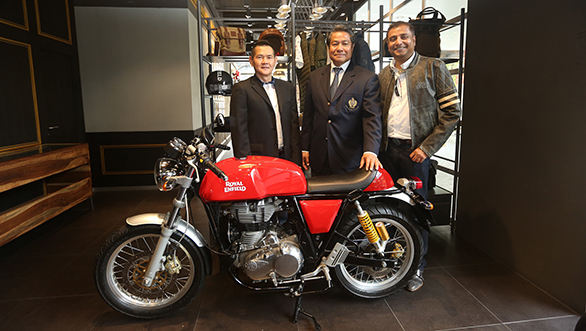
    Royal Enfield has just opened up its first exclusive showroom in Thailand, which is located in Thonglor, Bangkok. The Royal Enfield’s retail store there has been set up by General Auto Supply Co Ltd. The showroom will sell the Royal Enfield Bullet priced at THB 1,79,800 (approximately Rs 3.45 lakh), the Royal Enfield Classic 500 which will cost THB 1,89,800 (approximately Rs 3.64 lakh) and the Royal Enfield Classic Chrome for THB 1,98,800 (approximately Rs 3.81 lakh). The Royal Enfield Continental GT café racer, which displaces 535cc, will be sold in Thailand for THB 2,19,800 (approximately Rs 4.22 lakh). All-prices are ex-showroom.

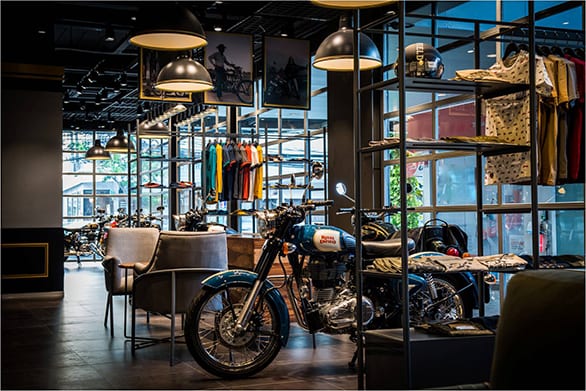
    An inside view of the new Royal Enfield store in Bangkok

    A Royal Enfield proudly stands at the new the company's new exclusive store in Bangkok launched today

    Natavude Charoensukhawatana, Executive Director, General Auto Supplies Co Ltd-Palakorn Suwanarath, Privy Councillor, Thailand-Arun Gopal, Royal Enfield, international Business head

    From left to right: Natavude Charoensukhawatana, executive director, General Auto Supplies Co Ltd, Palakorn Suwanarath, privy councillor, Thailand, Arun Gopal, Royal Enfield, international business head

    “Royal Enfield is today one of the most profitable automotive brands in the world and we believe that our future growth will come from our international markets such as Thailand where motorcycles are a popular medium of commuting. Our phenomenal success in India gives us the confidence to thrive in similar markets like Thailand and Indonesia, which will play an instrumental role in fuelling our growth in Asia. We see a huge potential for our evocative, all purpose, and middle-weight (250-750cc) motorcycles that will allow customers an optimum choice for upgrade,” said Arun Gopal, the international business head of Royal Enfield.

    Royal Enfield opens Thailand’s first exclusive store in Bangkok

    Royal Enfield, the fastest growing motorcycle brand in the world, today launched its retail operations in Thailand, with the price announcement of its complete range of motorcycles, apparel and accessories at the launch of its first exclusive store in Thonglor, Bangkok. Royal Enfield’s first retail store in Thailand has been set up by the prestigious General Auto Supply Co. Ltd.

    In Bangkok, Royal Enfield’s iconic motorcycle– the Bullet, world’s oldest motorcycle in continuous production since 1932, is available at a price of THB 179800 for 500cc. Royal Enfield’s retro street model, known for its post war, timeless styling – the Classic 500 is available for THB 189800 and Classic Chrome for THB 198800. The Royal Enfield Continental GT 535cc café racer is now available at a price of THB 219800.

    “Royal Enfield is today one of the most profitable automotive brands in the world and we believe that our future growth will come from our international markets such as Thailand where motorcycles are a popular medium of commuting. Our phenomenal success in India gives us the confidence to thrive in similar markets like Thailand and Indonesia, which will play an instrumental role in fuelling our growth in Asia. We see a huge potential for our evocative, all purpose, and middle-weight (250-750cc) motorcycles that will allow customers an optimum choice for upgrade”, said Mr. Arun Gopal, International Business Head, Royal Enfield.

    “Also, Thailand is home to one of the most enthusiastic and seasoned riding communities in the world, with thousands of riding clubs and a prevalent culture of leisure riding. With Royal Enfield coming into the market riding enthusiasts will have an option to ride a unique product that is known for its leisure riding experiences”, he added.

    With a view to become the leader in global mid-sized motorcycle segment, Royal Enfield has been expanding its global retail footprint across UK, Europe, Latin America, Middle-East and now in South East Asia, with its most recent launch in Indonesia. Royal Enfield announced its entry into Thailand, the fifth largest two wheeler market in the world in Dec 2015, at the Thailand International Motor Expo. With its aspirational yet accessible range of motorcycles suitable for riding within the city, as well as long-distance rides during weekend, the 115 years old iconic motorcycle brand intends to revolutionize and reinvigorate the mid-size motorcycle segment in Thailand.

    “As part of our international strategy, we are focused on building the brand and creating demand in nodal cities across the world such as London, Bogota, Medellin, Dubai, Madrid, Paris, Jakarta and now Bangkok. We are working to create a robust eco-system comprising of highly differentiated retail experience and aftermarket capabilities, rides and community events and other adjacencies that bring to life the heritage and world of Royal Enfield. We believe that once we are successful in Bangkok, our brand and products will resonate very well in other key Thailand cities as well”, Arun added.

    Delivering the brand philosophy of “Pure Motorcycling” in every aspect of ownership experience, Royal Enfield’s exclusive store will be the first ever in the country. The 1190’ square feet store creates an ambience of motorcycle enthusiast’s living room by featuring an interesting visual merchandising format, comfortable sitting spots in several corners, and innovative product displays, which include a wall display of a stripped down Continental GT showcasing the bike’s internals and frame. The store will house not only Royal Enfield’s motorcycle range, but also its complete range of apparels and accessories, including purpose-built protective riding gear and lifestyle gear. The space of store has been designed not just as a point of purchase but also a meeting point for enthusiasts to have conversations around motorcycling.

    The 3685’ square feet retail outlet located at 842 SoiSukhumvit 55 (Thonglor), Sukhumvit Road, KlongtanNua, Wattana, Bangkok, is a full-service dealership by General Auto Supply Co. Ltd, is equipped to provide service and aftermarket capabilities. Royal Enfield will work closely with General Auto Supply to bring a differentiated experience for motorcycle enthusiast in the region.

    Royal Enfield designs classic styled motorcycles that are simple, evocative, tactile and fun to ride, providing riders with a “Pure Motorcycling” experience. Blending traditional craftsmanship with modern technology, as a means to achieve the perfect balance between the man, machine and the terrain, Royal Enfield motorcycles creates a unique experience for riders that is more approachable and unintimidating.

    In Calendar Year 2015 the company sold over 450,000 motorcycles across the globe to support its global growth strategy and also announced its plan to produce upto 900,000 motorcycles by end of 2018, from two of its existing manufacturing facilities and a third upcoming facility, in Tamil Nadu, India. With a view to become the leader in the global mid-sized motorcycle industry, Royal Enfield is also building two new technology centres – one in India and one in UK, to enhance capability and execute long term product strategy. Royal Enfield recently announced its entry into Brazil along with the launch of its first subsidiary outside India in North America.

  • Lotte, Salim to set up e-commerce platform solution JV in Indonesia

    Lotte, Salim to set up e-commerce platform solution JV in Indonesia

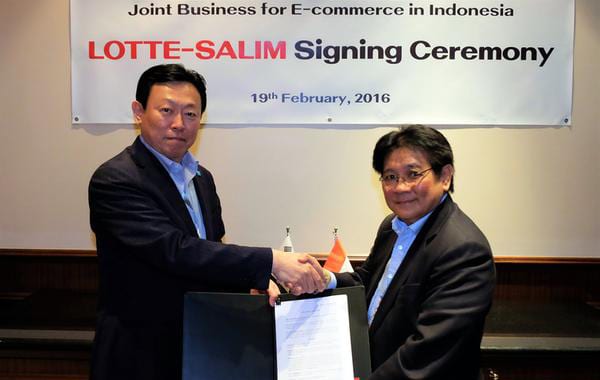
    South Korea’s retail conglomerate Lotte Group said Sunday that it plans to form a joint e-commerce venture with Indonesia’s biggest conglomerate Salim Group to grab a pie of the rapidly growing e-commerce market in Indonesia.

    According to Lotte Group, its Chairman Shin Dong-bin on Friday signed a memorandum of understanding (MOU) agreement with Salim Group Chairman Anthony Salim to establish an e-commerce platform solution joint venture in the first half of this year. They aim to officially launch the company early next year.

    The South Korean retail mogul expects the Indonesian online retail market to grow to 25 trillion won ($20.27 billion) in value by 2020 after the market grew to 3.2 trillion won in 2014. The two companies plan to set up a comprehensive e-commerce platform solution and logistics service that will allow Lotte’s 41 offline retail stores and one department store operating in the Southeast Asian country as well as Salim’s 11,000 offline convenient stores, Indomaret, to sell and deliver products to Indonesian consumers. They will also introduce some popular products of Lotte Mart and Lotte Department Store in Korea through the new platform.

    In Indonesia, Lotte is operating one department store, 41 retail stores (including two grocery stores), 31 Lotteria fast-food franchises, two Angel-in-us cafés and two Lotte duty-free shops (one in airport and the other in downtown). In 2010, the retail group acquired Titan Chemicals, one of the leading petrochemical company in Southeast Asia, to gain a foothold in the petrochemical industry in the region.

    Salim Group, the biggest Indonesian conglomerate, operates a diverse array of business ranging from food, infrastructure, logistics, telecommunications, media and automobile, to real estate.

  • Esprit remains confident despite first-half loss

    Esprit remains confident despite first-half loss

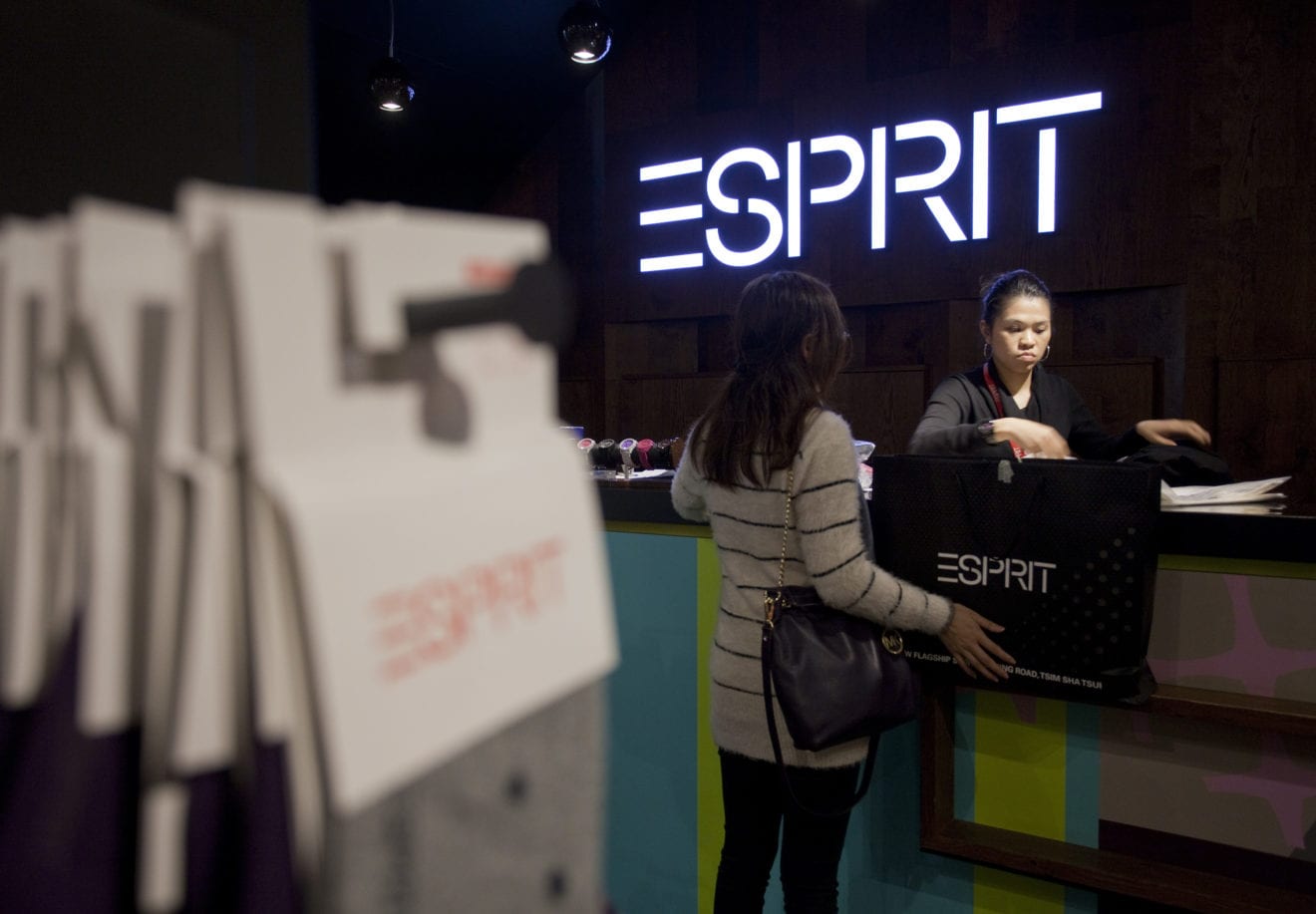
    A strategic plan is starting to yield results for Esprit, which is buoyant in its outlook despite a first-half loss weighted on by weakened demand in China.

    Net loss for the Hong Kong-listed fashion retailer amounted to HKD238m (£22m) for the six months to 31 December, compared to a profit of HKD47m (£4.3m) in the same period the year before.

    Esprit introduced a vertically integrated business model in its previous financial year, the same supply chain process used by high street giant Zara. Esprit said this, coupled with cost efficient product development, is enabling it to develop improved products in terms of design, quality and value-for money.

    “The performance during the first six months of this financial year gives us confidence that the implementation of our vertical and omnichannel model is an effective basis to turnaround our business,” said CEO Jose Manuel Martinez.

    “We remain confident that we are heading in the right direction and are laying the necessary foundation to restore competitiveness and long term growth for Esprit.”

  • Hero Supermarket Indonesian retailer unloads convenience stores

    Hero Supermarket Indonesian retailer unloads convenience stores

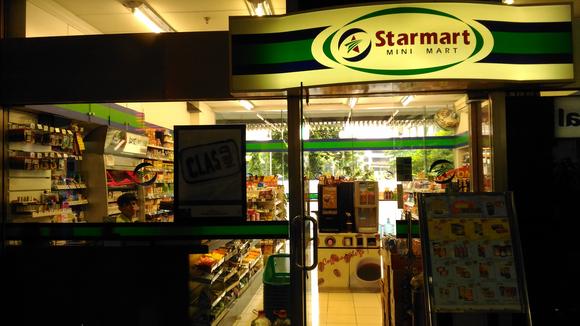
    Indonesian retailer Hero Supermarket on Wednesday said it will sell its poorly performing Starmart convenience store business to local food conglomerate Wings Group.

    Hero is selling about 80 Starmart outlets to Fajar Mitra Indah, a unit of Wings Group and the franchisee of Japan’s FamilyMart convenience stores in the country. The move follows the closure of 50 Starmart stores in 2015. In a press release, Hero said it will pull out entirely from the convenience store business. The sale will have no material impact on the company’s finances, it added. The value of the transaction was not disclosed.

    A Startmart outlet in Jakarta

    Fajar Mitra plans to convert 50 of the Starmart stores to FamilyMarts by the end of the year, which will help raise the number of FamilyMart stores to around 80, according to a person familiar with the matter.

    Starmart has been struggling to compete against the top two local brands, Alfamart and Indomaret, which run about 10,000 outlets each and are expanding aggressively. Hero’s move comes after Supra Boga Lestari, a high-end supermarket operator, recently announced the sale of its Ministop convenience store business.

    Hero’s core supermarket business, which targets middle-class shoppers, has also faced intense competition from hypermarkets, which purchase large amounts of merchandise and sell at low prices. Combined with slowing consumer spending and rising labor costs, the company’s earnings have eroded quickly. Hero’s net profit in 2014 plunged more than 90% from the previous year, and it slipped into a loss for the nine months ended September 2015.

    In addition to Starmart, Hero has also closed some of its Guardian drugstores. Searching for new sources of revenue, the company became the franchisee of Swedish furniture retailer Ikea, opening its first store in Indonesia in 2014. But its prospects have been clouded by a recently published Supreme Court ruling that allowed a local furniture company to use the Ikea trademark.

    Hero is owned by the retail arm of Hong Kong-based conglomerate Jardine Matheson Holdings. Jardine, which also controls Indonesia’s largest automaker, Astra International, has been increasing its investment in other countries in the region, such as Thailand and Vietnam.

  • Rakuten and Gmarket announce trading partnership

    Rakuten and Gmarket announce trading partnership

    When Japanese e-commerce platform Rakuten shut offices in Singapore, Malaysia and Indonesia two weeks ago, the company stressed a renewed corporate focus on cross-border trading in East Asia.

    In a concrete result of the mandate, Rakuten announced today a partnership with South Korea’s largest e-commerce shopping mall Gmarket to boost cross-border trading amongst merchants in both countries.

    “Rakuten is delighted to announce this collaboration between the leading internet shopping mall retailers of both Japan and Korea, as another step on the path toward more active and profitable cross-border trading for merchants, small and large, of both countries,” said Masato Takahashi, Managing Executive Officer at Rakuten.

    As part of the deal, Gmarket will launch mini-stores on Rakuten Ichiba (its Japanese platform) to offer Korean fashion and beauty products in the country. At initial launch, the deal will include 200 items of women’s fashion and 100 Korean SME beauty products.

    Henry Chun, Head of Gmarket, explained his perspective as to why the deal would be beneficial for his company.

    “The deal will pave the way for Korean small fashion and cosmetic brands who have been struggling to introduce their unique, high-quality products to consumers worldwide, to increase their exports to Japan,” he said.

    In Korea, Rakuten will launch a flagship e-commerce store on Gmarket and offer products on the Korean company’s curated commerce service G9.

    The next few months will be focussed on increasing the product line on both platforms.

    During its fiscal year 2015 review, Rakuten revealed its Vision 2020 plan. The strategy was an inwards move which resulted in the Southeast Asia shutdowns. The desire to promote cross-border agreements in East Asia was part of the Vision 2020 plan.

    This is not the first deal of this nature in recent months for Rakuten. In December, the Japanese company inked a similar deal with Chinese e-commerce giant JD.com. In that instance, Rakuten opened a store on the JD.com network.

    Gmarket is owned by eBay, the American online auction company bought it for a whopping US$1.2 billion in 2009.

  • Hong Kong Government Allocates About $64 Million In Fashion Industry For Upcoming Budget

    Hong Kong Government Allocates About $64 Million In Fashion Industry For Upcoming Budget

    The Hong Kong government just settled its 2016-17 budget — which includes an allocation for the fashion industry of 500 million Hong Kong dollars (or about $64.35 million at current exchange rates).

    Financial secretary John C. Tsang told us that the funds will go towards developing the fashion industry, specifically promoting local designers and brands internationally and in Hong Kong. He added that the city’s government will establish an incubation program for fashion designers, “drawing on the experience of other fashion capitals like London, New York and Seoul.”

    Additionally, the Hong Kong government will set up a resource center to provide technical training and support for young designers, according to Tsang.

    “The uncertain pace of U.S. interest rate [normalization], heightened financial market volatility, modest and patchy growth in advanced economies, weak growth in emerging markets, a slowdown in inbound tourism and subdued exports will all impact on growth prospects,” the Hong Kong government said in a release, WWD reported.

    The Hong Kong Trade Development Council will also team up with the local government to sponsor programs that will bring emerging Hong Kong-based brands to fashion weeks in Paris and New York. From Sept. 7-10, the HKTDC plans to host a new event called Centrestage — giving Asian brands a platform for runway shows. 

    In related news, Lane Crawford recently tapped nine artists to create a series of visual installations for the luxury retail company’s stores in Hong Kong and China in celebration of the Chinese New Year — which began earlier this month.

    Participating artists include Andrea Minini, Angel Chen, Desmond Leung, Hui Hoi Kiu, Huijun Guan, Mosaic Art Projects (which is led by visual artists Karen Pow and Chao Harn Kae), Jan Zhou and Yeli Gu.

  • StanChart still profitable in Singapore

    StanChart still profitable in Singapore

    Singapore remained one of the few bright spots for Standard Chartered last year amid huge losses elsewhere.

    Profit before tax in Singapore was US$567 million (S$796 million) in the 12 months to Dec 31, down 33.4 per cent year-on-year but still the second best country performance.

    Hong Kong’s profit contribution was top, at US$1.49 billion, but still down 17.9 per cent compared with a year ago. In China, profit pared 45.3 per cent year-on-year to US$88 million, according to the group’s results released overnight.

    Elsewhere, signs that StanChart was struggling amid global headwinds were more apparent.

    In India, it suffered a loss before tax of US$981 million, a huge reversal from 2014’s profit of US$561 million. Its losses in Britain widened from 2014’s US$154 million to US$1.41 billion last year.

    The banking group reported a total loss before tax of US$1.52 billion, down from a US$4.24 billion profit in 2014.

    Group chief executive Bill Winters warned of a choppy outlook, noting in the annual report: “The economic and geopolitical backdrop for the group clearly deteriorated over 2015 and has not improved into 2016.”

    But StanChart’s business in Singapore, where it employs about 7,000 people, presents a rosier picture.

    “The bank in Singapore remained profitable in 2015. We saw a double-digit year-on-year growth in retail deposits and bancassurance, achieved a substantial increase in wealth management market penetration and grew our priority banking client base,” Singapore chief executive Judy Hsu said in a statement yesterday.

    She added: “We also maintained positive business momentum in financial markets, driven by a significant increase in foreign currency volume and revenues, and improved on the quality and interest margins of transaction banking’s cash income business.

    “Singapore is a core market for the bank and plays a significant role as a hub for our global business and as a gateway to Asean… and we will continue to invest in the growth of our Singapore franchise across retail, private banking, commercial and institutional clients.”

    Ms Hsu’s comments came amid concerns about how global banks are faring in Singapore. In November, StanChart moved to cut 15,000 jobs globally, including an unspecified number of positions here.

    Uncertainty yet looms at the bank, which is undergoing “accountability reviews” targeting around 150 current and former employees globally. The reviews have led to some layoffs and the move to claw back past year bonuses.

    A Singapore spokesman declined to comment on whether any staff here was affected by the reviews, adding: “The accountability reviews are still ongoing and more actions, including the reduction or cancellation of prior year incentive awards, are likely.”

  • Bleak New Year for Chow Tai Fook

    Bleak New Year for Chow Tai Fook

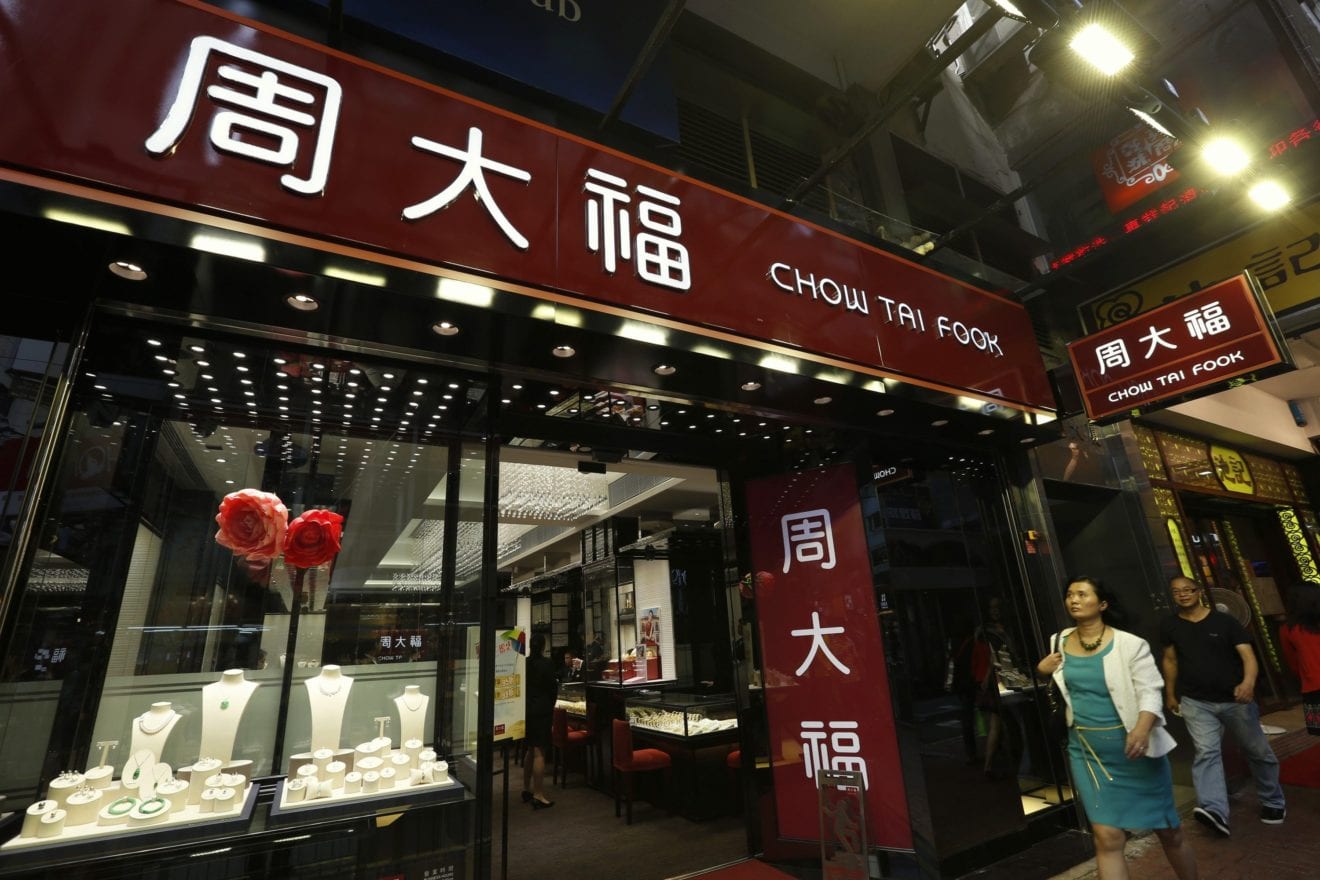
    Chinese New Year sales for the Chow Tai Fook Jewellery Group took a dive in Mainland China, Hong Kong and Macau.

    Unaudited figures for the period, from January 25 to February 14, show the value of retail sales dropped 30 per cent in China and 23 per cent in Hong Kong and Macau – a 29 per cent dip for the group – compared with the previous Chinese New Year.

    Same-store sales dropped 31 per cent in China, 22 per cent in Hong Kong/Macau, and 28 per cent for the group. Same-store sales figures were also broken down into product – gem-set jewellery dropped 30 per cent in China, 3 per cent in Hong Kong/Macau, and 20 per cent for the group, while gold products fell 33 per cent in China, 25 per cent in Hong Kong/Macau, and 31 per cent for the group.

    Chow Tai Fook says the plunge in China was mainly because of more outbound travel from the mainland during the celebration, and a weakening of consumer sentiment for luxury goods because of the economic slowdown and volatility in the stock market.

    It attributes the decrease in Hong Kong and Macau to the drop in mainland tourists to Hong Kong as well as continuing weak retail sentiment in both regions.

    “Management anticipates the retail business environment will continue to be challenging for the fourth quarter and the sales performance will be worse than that of the third quarter,” the company said a statement.