Author: Mei Ling Tan

  • Metro Philippines plans 100 stores

    Metro Philippines plans 100 stores

    Listed retailer Metro Retail Stores Group, based in Cebu, has launched an expansion program aimed at taking its network in The Philippines to 100 stores within five years.

    Nearly three years after supertyphoon Yolanda devastated the coastal community in the Leyte region, the biggest retailer in the Visayas plans to open a store in Tacloban City.

    Metro representatives met with Mayor Alfred Romualdez last month to tell him of the company’s decision to invest in Tacloban, reports the Cebu Daily News.

    Metro plans a two-storey building for a 2ha. property in Real Street, owned by a church. The Metro Gaisano in Tacloban will create job opportunities and also help the city government in terms of taxes. Construction is scheduled to start next month, with the store expected to open within a year.

    Metro, the country’s fourth-largest retailer, earlier said it planned to open 50 to 70 new stores in the next five years. Most of these would be in the Visayas.

    There are two other Gaisano-owned shopping malls in Tacloban — the Gaisano Capital and Gaisano Central.

    The retail arm of Vicsal Development, Metro debuted on The Philippines stock market in November.

  • China quick to adopt digital wallets

    China quick to adopt digital wallets

    Nearly half of consumers in China who took part in a new survey shop with digital wallets.

    Overall, the study shows that digital wallets are the fastest-growing payment technology in the region, with one in five of those surveyed using the technology.

    MasterCard’s latest mobile shopping survey shows that digital wallets are used by 19.5 per cent of respondents in Asia Pacific, a two-fold increase from two years ago (9.7 per cent).

    Emerging markets are leading the way with 45 per cent of smartphone users surveyed in China using digital wallets, 36.7 per cent in India and 23.3 per cent in Singapore. The results are based on interviews with 8500 people aged between 18 and 64 years across 14 markets in October and December.
    While mobile banking apps (31.8 per cent) are still the most widely used, among new mobile technologies such as in-app shopping and mobile NFC payments, digital wallets have had the fastest uptake over the past two years.
    Also, 48.5 per cent of respondents overall have used their smartphone for shopping in the three months before the survey. India tops the region at 76.4 per cent – up 29.3 per cent from two years ago – followed by China (76.1 per cent), South Korea (62 per cent) and Thailand (61.1 per cent). After India, growth has been most marked in Vietnam (up 17.7 per cent from two years ago) and Singapore (up 17.1 per cent).
    “New forms of mobile payment technology, such as MasterCard’s digital wallet MasterPass, are making transactions easier and safer, online, in-app and in-store,” says MasterCard’s Asia Pacific group head for digital payments, Raj Dhamodharan. “As more and more merchant apps provide shopping and services, consumers need a digital wallet that provides the best balance between security and convenience.”

    For example, consumers in Singapore are using their MasterPass wallet to pay bills and book taxis.
    Across Asia Pacific, 53.9 per cent of respondents cite convenience as the key driver for shopping on their smartphone. Other motivating factors include the ability to shop on the go (42.9 per cent) and the growing availability of apps that make it easy to shop online (41.4 per cent).
    Clothing and accessories (35 per cent), personal care and beauty products (20.9 per cent) and movie tickets (20.4 per cent) are the top mobile purchases. In China, 64.6 per cent of respondents use their smartphones to buy clothing and accessories, followed by 42.5 per cent in India and 42.1 per cent in Korea.

    Nearly half of consumers in China who took part in a new survey shop with digital wallets.

    Overall, the study shows that digital wallets are the fastest-growing payment technology in the region, with one in five of those surveyed using the technology.

    MasterCard’s latest mobile shopping survey shows that digital wallets are used by 19.5 per cent of respondents in Asia Pacific, a two-fold increase from two years ago (9.7 per cent).

    Emerging markets are leading the way with 45 per cent of smartphone users surveyed in China using digital wallets, 36.7 per cent in India and 23.3 per cent in Singapore. The results are based on interviews with 8500 people aged between 18 and 64 years across 14 markets in October and December.
    While mobile banking apps (31.8 per cent) are still the most widely used, among new mobile technologies such as in-app shopping and mobile NFC payments, digital wallets have had the fastest uptake over the past two years.
    Also, 48.5 per cent of respondents overall have used their smartphone for shopping in the three months before the survey. India tops the region at 76.4 per cent – up 29.3 per cent from two years ago – followed by China (76.1 per cent), South Korea (62 per cent) and Thailand (61.1 per cent). After India, growth has been most marked in Vietnam (up 17.7 per cent from two years ago) and Singapore (up 17.1 per cent).
    “New forms of mobile payment technology, such as MasterCard’s digital wallet MasterPass, are making transactions easier and safer, online, in-app and in-store,” says MasterCard’s Asia Pacific group head for digital payments, Raj Dhamodharan. “As more and more merchant apps provide shopping and services, consumers need a digital wallet that provides the best balance between security and convenience.”

    For example, consumers in Singapore are using their MasterPass wallet to pay bills and book taxis.
    Across Asia Pacific, 53.9 per cent of respondents cite convenience as the key driver for shopping on their smartphone. Other motivating factors include the ability to shop on the go (42.9 per cent) and the growing availability of apps that make it easy to shop online (41.4 per cent).
    Clothing and accessories (35 per cent), personal care and beauty products (20.9 per cent) and movie tickets (20.4 per cent) are the top mobile purchases. In China, 64.6 per cent of respondents use their smartphones to buy clothing and accessories, followed by 42.5 per cent in India and 42.1 per cent in Korea.

  • BrandOutlet pushes Indonesian style

    BrandOutlet pushes Indonesian style

    Local brands are a focus of a new eCommerce fashion venture in Indonesia.

    Part of the PT Media Nusantara Citra Group (MNC), BrandOutlet features fashion and beauty collections for women, men and children, reports the Jakarta Post.

    Not to be confused with the UK’s Brand Outlet, the new site devotes 6 per cent of its offering to quality local brands such as Damn! I Love Indonesia, Ingrid Husodo and Nikicio. Its international labels include Michelle Worth, Oscar de la Renta and Ted Baker.
    “Most of the branded products are available only at offline shops and boutiques, making them inaccessible to people living outside big cities such as Jakarta and Surabaya,” says BrandOutlet COO Andry Huzain. “We aim to provide anyone anywhere with easy access to buy them affordably.”

    Andry says mobile applications for iOS and Android users will be available in April.
    The company also publishes an eMagazine offering features tips, tricks and updates on fashion trends.
    BrandOutlet’s COO, Valencia Tanoesudibjo, is the daughter of MNC Group CEO and founder Hary Tanoesudibjo.

    Meanwhile, a fashion eCommerce app has been launched in Jakarta that enables users to buy products for a range of online shops without having to open each individual site.

    Lyke showcases up to 100,000 products on such platforms as Berrybenka, Bobobobo and Local Brand, as well as smaller businesses that market through blogs or social-media platforms, reportsE27.

    Users can also “follow” their favourite shops and receive recommendations based on their preferences.
    “Lyke is the perfect partner for local fashion brands that want to reach out out their customers via mobile,” says CEO Bastian Purrer, who quit his MBA studies at Harvard Business School to launch the business. Future plans include features that enable social interaction between users, such as sharing the fashion products or celebrity styles they like.
    Online shopping via mobile site or app is starting to gain traction in Indonesia, with companies such as Zalora claiming that most of their sales during the national online shopping day Harbolnashappened on mobile sites and apps.

  • HSBC, Standard Chartered Caught Between ‘Brexit’ and China

    HSBC, Standard Chartered Caught Between ‘Brexit’ and China

    Two big U.K. banks’ shares tanked over the past couple of days, and unlike the British pound, they’re not weakening because of the so-called “Brexit” referendum — although that certainly doesn’t help.

    Instead, their fall may have a lot to do with the market and economic turmoil that has been taking place in China.

    The London-listed shares of emerging markets-focused bank Standard Chartered (SCBFF) fell by 10% at one point on Tuesday morning after it reported its first annual loss in more than 25 years.

    The bank reported a loss before tax of $1.5 billion last year, in sharp contrast to 2014’s profit of $4.2 billion.

    On Monday, HSBC’s (HSBC) shares fell in an otherwise rising market after the bank, which is the biggest in Europe and one of the biggest in the world by assets, reported a loss of $858 million before tax in the fourth quarter of last year, vs. a profit of $1.7 billion in the fourth quarter of 2014.

    HSBC, which is doing a lot of business in Asia and was even thinking of moving its headquarters there before deciding earlier this year to remain in London, eked out a 1% increase in pretax profit for full 2015 to $18.87 billion, but its adjusted loan impairment charges were up 17% at $3.7 billion over the period.

    The weak results of the two banks chime with rising investor worries about the exposure of U.K. banks to Asia, and particularly China, at a time when European banks have been making investors nervous again.

    Richard Barnes, senior director at Standard and Poor’s credit rating agency, received many questions about the risk of European banks’ exposure to Asia last week during an analyst call, and said the region was important particularly for HSBC and Standard Chartered.

    However, “we’ve seen European banks generally retrenching from a number of regions in the world including Asia … banks are trying to reduce exposure,” Barnes said, adding that, in China, “banks look again at their exposure to state-owned enterprises and are focusing on the ones that are likely to be supported by the government in a downturn.”

    HSBC has been deeply involved in the liberalization and deepening of China’s capital markets, having successfully negotiated a majority stake in a new, nationally licensed securities joint-venture in the mainland. HSBC Group Chairman Douglas Flint acknowledged in a statement on Monday that “China’s slower economic growth will undoubtedly contribute to a bumpier financial environment,” but he added that the country “is still expected to be the largest contributor to global growth as its economy transitions to higher added value manufacturing and services and becomes more consumer-driven.”

    He said this transition is driving the bank’s focus on the Pearl River Delta as a priority growth opportunity, as the area is a concentration of high-tech, research-focused and digital businesses.

    HSBC’s exposure to mainland China is around $143 billion, according to its annual report; of these, $135 billion are loans to other banks or non-bank financial institutions, sovereign and corporate loans, while $8 billion are loans to retail clients.

    China is perhaps even more important for Standard Chartered and has helped reduce the bank’s loss over the past year. Its Greater China business showed a pre-tax profit of $1.37 billion last year, compared to a loss of $1.33 billion in its European operations. In terms of exposure to China, Standard Chartered listed $77.67 billion in loans to customers in the country.

    The two banks would normally be sheltered from fears over their exposure to China by their presence in one of the strongest financial centers in the world, London. But with uncertainty in the U.K. rising because of the referendum on EU membership, expect a few particularly volatile months ahead for HSBC and Standard Chartered.

  • Walmart India ramps up investment

    Walmart India ramps up investment

    US-retail giant Walmart is investing between $240m and $300m to bolster its presence in India by expanding its number of stores from 21 to 70 by 2020.

    “We have a cash-and-carry model, and the growth has been good for us,” Walmart India VP and head of corporate affairs Rajneesh Kumar told Retail Update.

    “Each store takes two to three years to set up. These will create nearly 2000 direct and indirect jobs.”

    Walmart India inside

    Meanwhile, Walmart’s technology centre in Bengaluru is also expanding its role and headcount, ramping up from 750 employees to 1200 by next month, says the Business Standard.

    “Most of the growth at Walmart Labs here is driven by supply chain and analytics,” says Walmart Global Technology Services VP and MD Jayakumar K. “The focus is to set up two centres of excellence, from ground up.”

    Walmart is working to merge its retail stores and online presence to become an omni-channel player, and has merged its computer systems technology team and its eCommerce technology team in Silicon Valley to create Walmart Technology.

    Jayakumar says that as the announcement is new, the immediate impact on the India centre is yet to unfold.

    “However, the combined structure in some sense already exists here. The Bengaluru centre is the only one in the world for Walmart where both these teams work together. We not only work in the same building, but have also collaborated on projects.”

    Walmart has made huge changes to its technology roadmap for its eCommerce over the past few years. Two years ago, the company changed from using off-the-shelf applications to using more software developed in-house.

    In India, it has created the Pangaea platform, which has been partially rolled out locally and this year will be introduced in other countries.

    Jayakumar says this approach allows the company to be quicker and more agile when launching products.

    As well as its focus on technology, Walmart is also tapping into the start-up ecosystem, acquiring 15 start-ups since 2011.

  • Thailand’s First Tanning Salon Opens in Bangkok

    Thailand’s First Tanning Salon Opens in Bangkok

    “A tanning salon in Thailand? Isn’t that like trying to sell ice to the Eskimos?”

    That was the response from a friend when I mentioned I was going to visit a tanning salon in Bangkok that claims to be the first of its kind in the country.

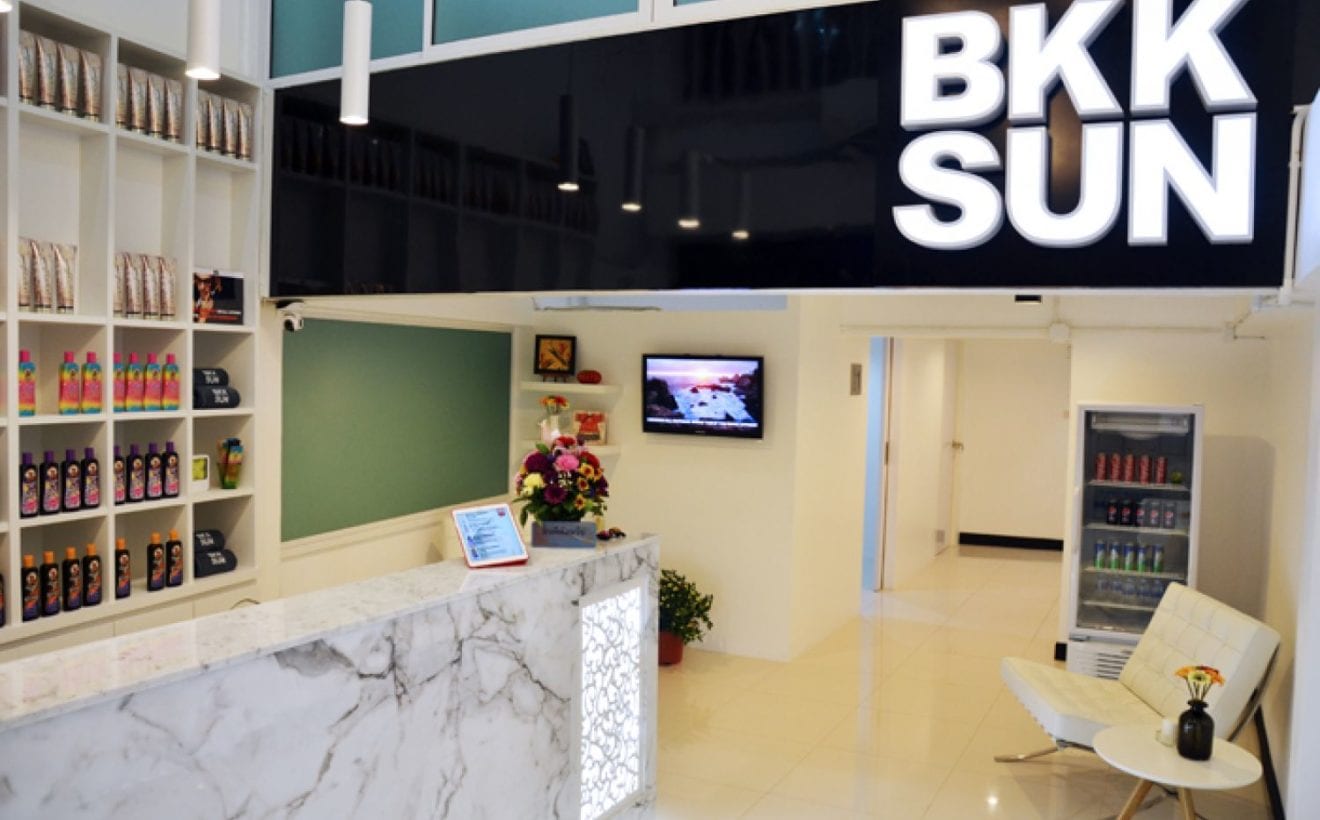
    It’s a fair question, and one that CEO Jeff Amato has heard several variations of in the run-up to the opening of his new venture, BKKSUN.

    “Of course people have asked me ‘why are you opening in the sunniest place on Earth?’” the American laughed as he sat in his office in the newly opened salon in Sukhumvit, minutes away from Thonglor BTS.

    “But we have a lovely high season that lasts just two to three months and the rest of the year it’s too hot and uncomfortable to be outside if you’re in the city,” he added, explaining that ironically it’s during these months that Bangkokians can be deprived of sunshine, and therefore a tan, as they take shelter in air-conditioned offices and malls away from the sweltering humidity of the city.

    Hopping in one of the tan booths or sunbeds at BKKSUN for just a few minutes could give them that much-needed hit of Vitamin D to pick up their spirits and release feel-good endorphins, he said.

    “You need sunshine in your life,” smiled the Missouri native, who fled the cold winters of the Midwest for the blazing heat of Thailand eleven years ago.

    Regardless of whether a tan salon can be a hit in Bangkok, it’s a welcome change from the pervasive skin-whitening craze here, from whitening creams, masks and soaps sold at every pharmacy and beauty counter, to racist adverts, competitions and even school vocab charts, all with the message that dark skin is ugly, while “white is winning”.

    However there is an emerging trend of more Thai celebs and role models celebrating and promoting darker skin, like Nonthawan “Maeya” Thongleng, a southern beauty with tan skin who beat out paler-skinned competitors in 2014 to be crowned Miss Thailand World.

    Top actress Janie Tienphosuwan and influential beauty blogger Pearypie naturally have fair skin, but both are known for working on their tans and sending the message to young Thai girls that tan skin can be beautiful too.

    And with the recent launch of TAN Magazine which aims to promote healthy, sun-kissed skin, perhaps the tide is turning.

    “Tanning is trending,” Amato said. “Thai celebrities have really embraced tanning and I give them a lot of credit for starting this trend.”

    “The whole world loves Thai tan skin and I think promoting tanning is a great message for people.”

    The salon is in its soft opening phase, having launched around six weeks ago, and already has around 15-20 customers coming through its doors every day for spray tans and tanning booth sessions.

    lthough the majority of their clients are, unsurprisingly, foreigners, Amato and the salon’s director of operations, Amy Oanchali, say around 30 percent are Asian, with Thais making up most of that figure.

    “Whitening is not for everyone,” Amato said. “When we did our research we knew there was not just a demand for tanning here, but a pent-up demand.

    “Tanning is huge in Hong Kong, Shanghai and Tokyo, so we saw Bangkok as the last bastion.

    “I think it’s cool that we’re the first to bring tanning salons to Thailand.”

    The salon’s minimalist look, overseen by Thai designer Nong, of gleaming white surfaces and tasteful black and white artwork dotting its three floors (a fourth will soon open), and its expensive tanning equipment imported from the States, are obviously geared towards more well-heeled clients, although prices are pretty decent — a stand-alone sunbed or booth session is THB799, and that price drops if you opt for a package. New customers get a promo price of THB299.

    The salon recommends new customers complete a short questionnaire which determines their skin type. Staff can then recommend tan session times, so customers can gradually and safely build up an even tan, they say.

    However Coconuts is obliged to remind readers of the risks associated with UV radiation and indoor skin tanning, which has been linked to some skin cancers.

    Amato and Oanchali are confident that they can grow their customer numbers and are even eyeing a second location in Silom.

    But first they want to focus on their flagship store in Thonglor and their customers there.

    “We’ve already got some regular customers who are so interesting and nice, we’ve been delighted,” Amato said.

    “We just want them have a killer experience.”

  • Hong Kong start-up PopUp Angels offers retailers Popup Stores

    Hong Kong start-up PopUp Angels offers retailers Popup Stores

    Hong Kong start-up PopUp Angels is offering a short-term alternative to retailers and landlords with pop-up store rentals as shop vacancies across the city continue to rise.

    Launched in November in Hong Kong, the PopUp Angels portal lets retailers, or food and beverage companies, test ideas and reach new markets without committing to a long contract.

    While demand from potential tenants is high, the city’s landlords are slowly coming round to the idea as their traditional model comes under threat from slumping retails sales.

    “Given that the retail market in Hong Kong has been doing so well in the past few years, it takes a while for the landlords to realise the golden age has passed and it’s time to find different ways to maximise the use of their vacant spaces,” said Kit Chan, director of PopUp Angels.

    Real Estate Agency Sheraton Valuers predicted the vacancy rate for ground floor stores in Causeway Bay to reach one in 10 in the wake of the recently ended Lunar New Year holiday.

    Retail sales recorded a year-on-year decrease of 3.7 per cent in 2015, hitting the lowest level since 2002, pushing many retailers to close stores.

    The start-up is aimed at companies testing a new idea or online retailers wanting to open a bricks and mortar store for a short period to boost their brands’ presence.

    PopUp Angels offer spaces to rent for any period from one day to up to a year, Chan said.

    Rental prices range from HK$3,000 (US$386) a day for a 375-sq-ft space in Central to HK$25,000 a week for two-storey location in the Western district.

    The start-up is also able to put potential tenants in touch with contractors and help guide them through any licensing issues.

    PopUp Angels was launched last September in Singapore, where the majority of vacant properties it lists are in shopping malls, according to Adrian Chan, who heads the operation in the Lion City.

    Melanie B, owner of Yoga BamBam, leases out the 375-sq-ft first floor space above her studio in Central through PopUp Angels to help with costs and to bring in some creativity.

    The former art gallery below PMQ – a design cluster on the grounds of the city’s former Police Married Quarters – was renovated with the goal of leasing the space as a pop-up by including internet access for card payment, a sturdy floor and lighting suitable for displaying art.

    “I don’t like stagnation, so the idea of a pop-up is that it changes every weekend, or every week,” she said.

    “So to have designer lingerie one week and then a hair product the next seems like a fun way to do it.”

  • Virtual reality in retail stores

    Virtual reality in retail stores

    Virtual Reality, as a concept, has been around for over 50 years.

    In the beginning, it was literally the stuff of science fiction.  Then in the early 90’s it actually became reality, when physical prototypes were developed, using the modern technology of the era.  The results were underwhelming – imagine pixelated graphics and heavy, nausea inducing headsets. The concept lay dormant for 20 years before anyone thought to revisit its feasibility.

    That person was Palmer Luckey, the young inventor and founder of Oculus VR. What he discovered is that without anyone realising it, technology had quietly caught up with the requirements of VR. There were now low-latency head orientation sensors and small, high-refresh rate OLED displays which didn’t exist just five years ago.

    Using these off the shelf parts, he constructed a rudimentary hardware proof-of-concept which delivered an immersive experience far beyond what had been seen before.

    From this initial prototype, Oculus was founded, bringing on board many high profile experts in the field of computer graphics, alongside millions of dollars in funding. Their inaugural consumer VR product is about to be released to the public, and many smart people consider this to be a watershed moment.

    Will this be the event that introduces practical VR to the masses?

    Oculus (now owned by Facebook) is leading the way, but Apple, Google, Microsoft and Sony are all working on their own implementations of VR. There’s a full-on VR technology arms race happening, with the usual suspects involved.  They recognise the huge potential of the medium, and the unique ways it can complement their existing product offerings.

    VR 2.0

    This new generation of VR technology is in its infancy, and as with any nascent platform, pundits try to predict the types of experiences it will enable. Stereotypically, new mediums are often projected (interpreted) through the lens of the incumbent platforms which precede it.

    The first automobile was considered a “horseless carriage”. The first motion picture content was essentially just televised theatre. Simply re-imagining the experience of an old medium through a new one may be the path of least of resistance, but it ignores the unique elements of the new.

    So the theory goes, in order to fulfill its true potential, a new medium needs to abandon previous biases and embrace the characteristics and constraints which are unique to it.

    But does this calculus apply to VR? Perhaps not. Unlike all previous mediums, it is has no baked-in constraints. It is not simply a proxy for storytelling or communication. Its ambition is to replicate the reality we natively experience. It is, by design, the last medium.

    The obvious question becomes, what are the scenarios for which diving into an alternate reality becomes preferable to the “real” reality someone is experiencing. As mature as the underlying technology becomes, VR, for the foreseeable future, will forever be chasing the tail of “real life”.

    So what is the individual incentive to temporarily replace what we already (if we’re so lucky) get for free? Understanding the motivations that drive these virtual experiences can uncover the opportunities and jobs to be done of the medium.

    Applications

    In the context of VR, the virtual “reality” is simply “content”. As with all previous mediums, the success of this one will be intrinsically tied to the abundance and quality of content created for it. In this respect, authors and the tools they use to create with will be just as important as the technology that audiences use to consume with.

    These creation tools are also nascent, and consist of both hardware and software solutions.  Let’s explore a potential use-case for this technology within the realm of current domains.

    Virtual reality in retail: eCommerce and virtual stores

    A common current trend in the eCommerce space is the realisation that an online presence alone is not enough to deliver the ideal consumer experience. Even Amazon, the largest pure-play online commerce company has recently opened a “bricks and mortar” physical presence near its headquarters in Seattle.

    What is the impetus for taking this step “backwards” into the 20th century? Well, these companies have discovered that even with an (essentially) limitless online catalogue, the experience of browsing their catalogues online doesn’t compare to the act of literally walking down the aisles of a physical store. It is no substitute for the physical discovery process we take for granted.

    This applies not only to the type of merchandise that Amazon became famous for, like books, but especially so for more visual products like clothing and fashion. There is no substitute for the tactile experience of wandering through a curated store.

    But providing a physical presence requires sacrificing one of the key advantages of online commerce; having an effectively infinite reach, with the ability to target any consumer, wherever they are, independent of their physical location. Reaching global penetration at this physical scale is beyond the reach of all but the largest retailers.

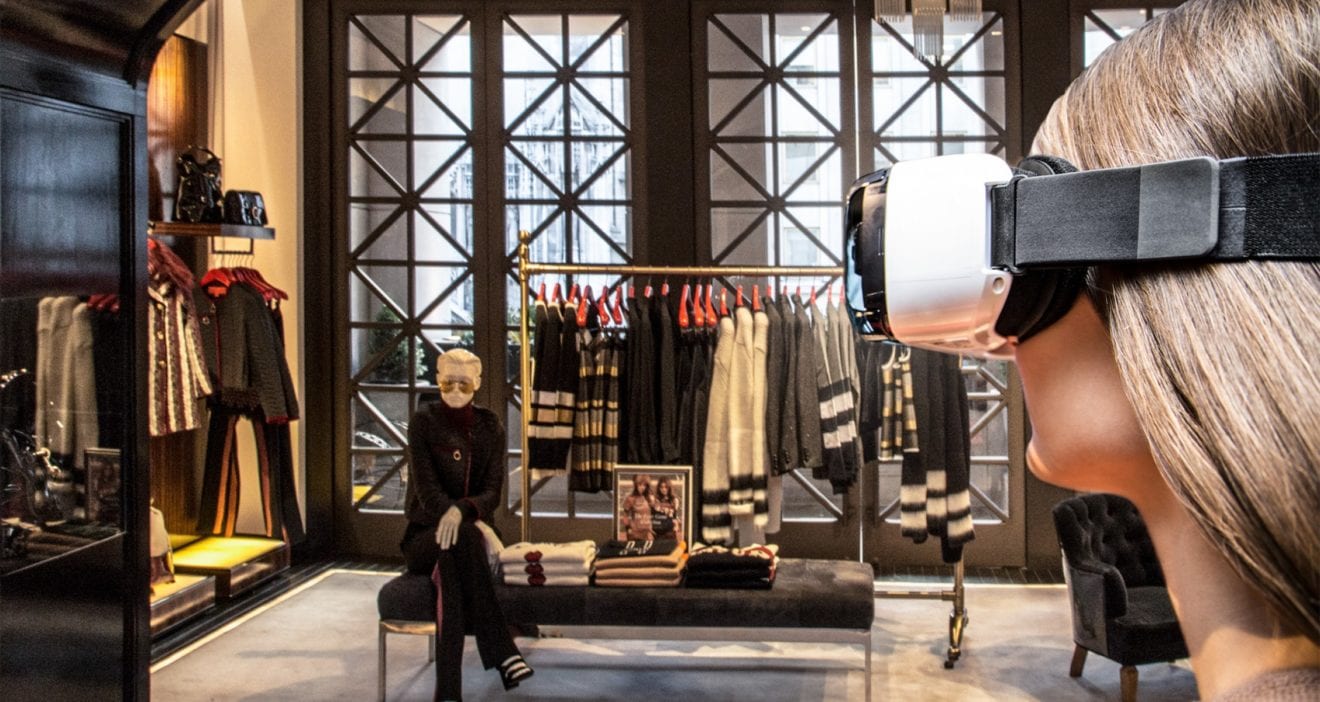
    Imagine consumers using VR to browse a virtual physical store, representing the catalogue (or a subset of) the online inventory. Even brands that have an existing physical retail footprint would benefit from the ability to amplify this bricks-and-mortar experience across markets they don’t have the scale or reach to address.

    Sizing has been an eternal struggle for online clothing retailers and consumers alike. How to know if the shirt you’re purchasing online will actually fit properly when it arrives?  Sizing charts are not standardised, and even if they were, there is no single reference body type to target a perfect fit.

    So how do you try before you buy? A virtual fitting room could come very close to replicating the experience of trying on clothes in a real physical fitting room. Imagine associating detailed physical dimensions of your body with your online shopping persona.

    Using this information, alongside similarly detailed sizing information for the individual clothing items could let you try on pieces of clothing in a virtual mirror. As you raise your arms or tilt your hips, you could see the fabric as it contours and hangs off your virtual body.

    Future opportunities

    This is just one creative application of VR hardware and virtual environments. The potential is almost limitless, and there isn’t a field or industry that won’t be touched in some way by this technology.

    While the incumbent hardware/software companies have all planted their stakes in the ground, there will be massive opportunities for all players in the ecosystem, especially content creators who understand how to create experiences on this new canvas.

    Once again, this illustrates the competitive advantage which exists for companies who can master the intersection of design and technology. Organisations who successfully combine these two disciplines will be in a unique position to benefit from the enormous future demand for virtual experiences.

    written by Marc Lamothe, Technical Director at Start Hong Kong

  • Clothing retailer Esprit reports first-half loss

    Clothing retailer Esprit reports first-half loss

    Esprit has been in the midst of an ambitious revamp over the past year that has included store closures, price adjustments, new return policies, and technology and distribution improvements.

    “Looking ahead into 2H FY15/16, we remain confident that we are heading in the right direction and are laying the necessary foundation to restore competitiveness and long term growth for Esprit,” the company said in its earnings report.

    Turnover at Esprit’s largest market, Germany, grew 1.5 percent year on year in local currency terms. Retail turnover grew 8.6 percent, while wholesale turnover declined 9.6 percent.

    Gross profit margin remained unchanged at 50.5 percent.

    “The weakness in the Euro, if persists, will put some pressure on the group’s gross profit margin,” the company said.

    Esprit, which earns the bulk of its revenues in Europe, said the operating environment appeared challenging amid volatile financial markets and economic uncertainty that might dampen consumer sentiment.

    Shares in Esprit closed up 2.9 percent on Tuesday, outpacing a 0.3 percent fall in the overall market.

  • SingPost GD Express sale to boost eCommerce

    SingPost GD Express sale to boost eCommerce

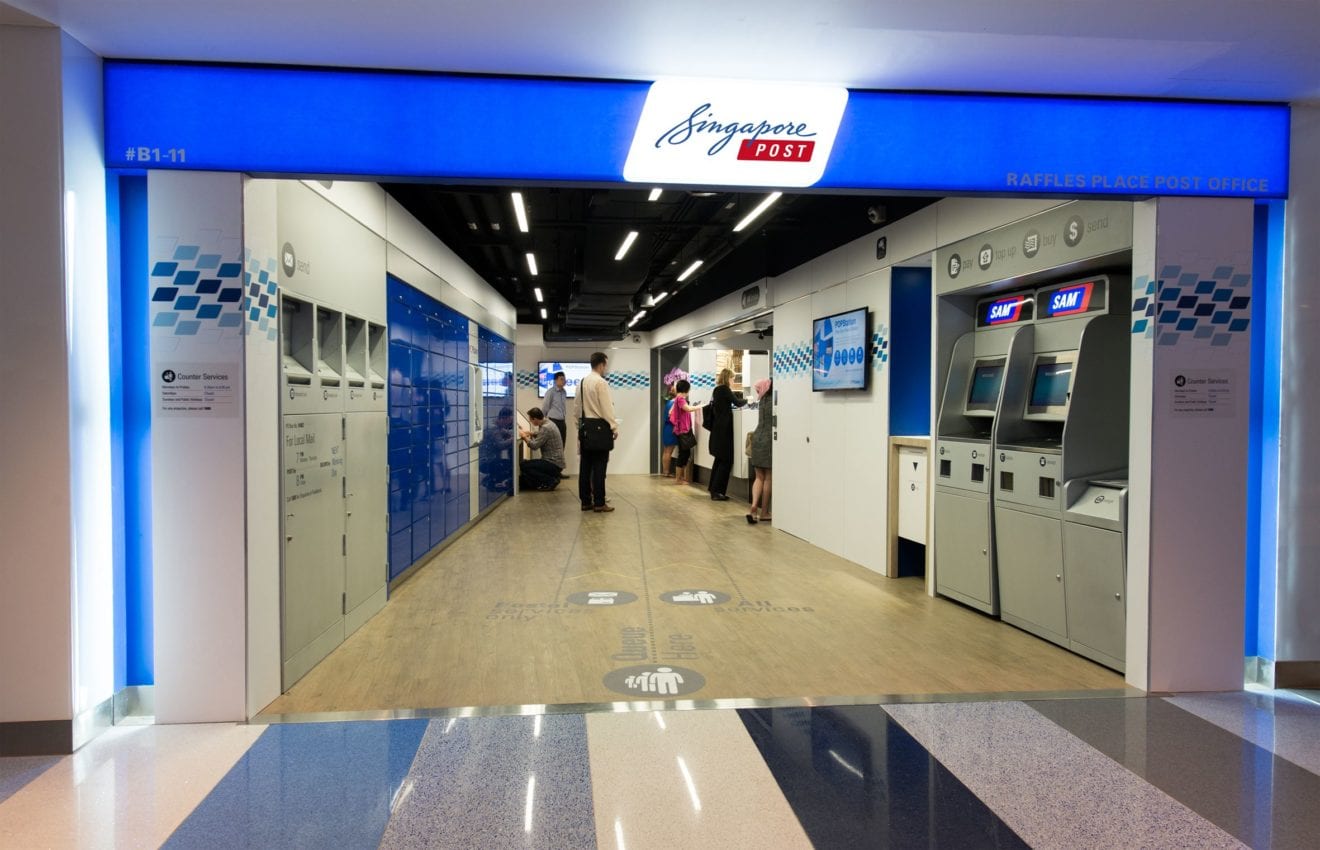
    Singapore Post (SingPost) has sold off part of its stake in GD Express (GDEX) for S$78.4 million (US$55.88 million) and will use the proceeds to drive global growth for its eCommerce logistics.

    This is a net gain of S$64 million – about five times return on the initial investment.

    Yamato Asia, a wholly owned subsidiary of Japanese transportation and forwarding group Yamato Holdings, has bought the 137,418,000 shares.

    Proceeds from the SingPost GD Express sale will be reinvested into its eCommerce services and networks in the US, Europe, China and the rest of Asia Pacific, in line with the group’s strategy to continue strengthening its integrated end-to-end eCommerce logistics, including front-end web management, warehousing and fulfilment, last-mile delivery and international freight-forwarding.
    SingPost deputy group CEO Mervyn Lim says the group is gearing up “on an accelerated path” to becoming a global leader in end-to-end eCommerce logistics.

    “This deal gave us a good return on our investment and also boosted our available resources to drive SingPost’s eCommerce logistics growth as it pivots into the US with the recent investments inTradeGlobal and Jagged Peak.”
    With interlinked systems with GDEX, the group will continue to reap business synergies with the added uplift Yamato brings to GDEX.

    “Collaborations and partnerships are vital to SingPost as we connect the dots in building a global eCommerce logistics ecosystem,” says Lim. “We continue to work with strategic partners in Malaysia and the rest of Southeast Asia while leveraging the Quantium Solutions commercial network, as well as those of our associated companies, to reinforce the ecosystem we are building.”

    SingPost now holds a 11.2 per cent strategic stake in GDEX and retains its board seat.

  • Salim Group backed Indonesian bread maker forays into Philippines

    Salim Group backed Indonesian bread maker forays into Philippines

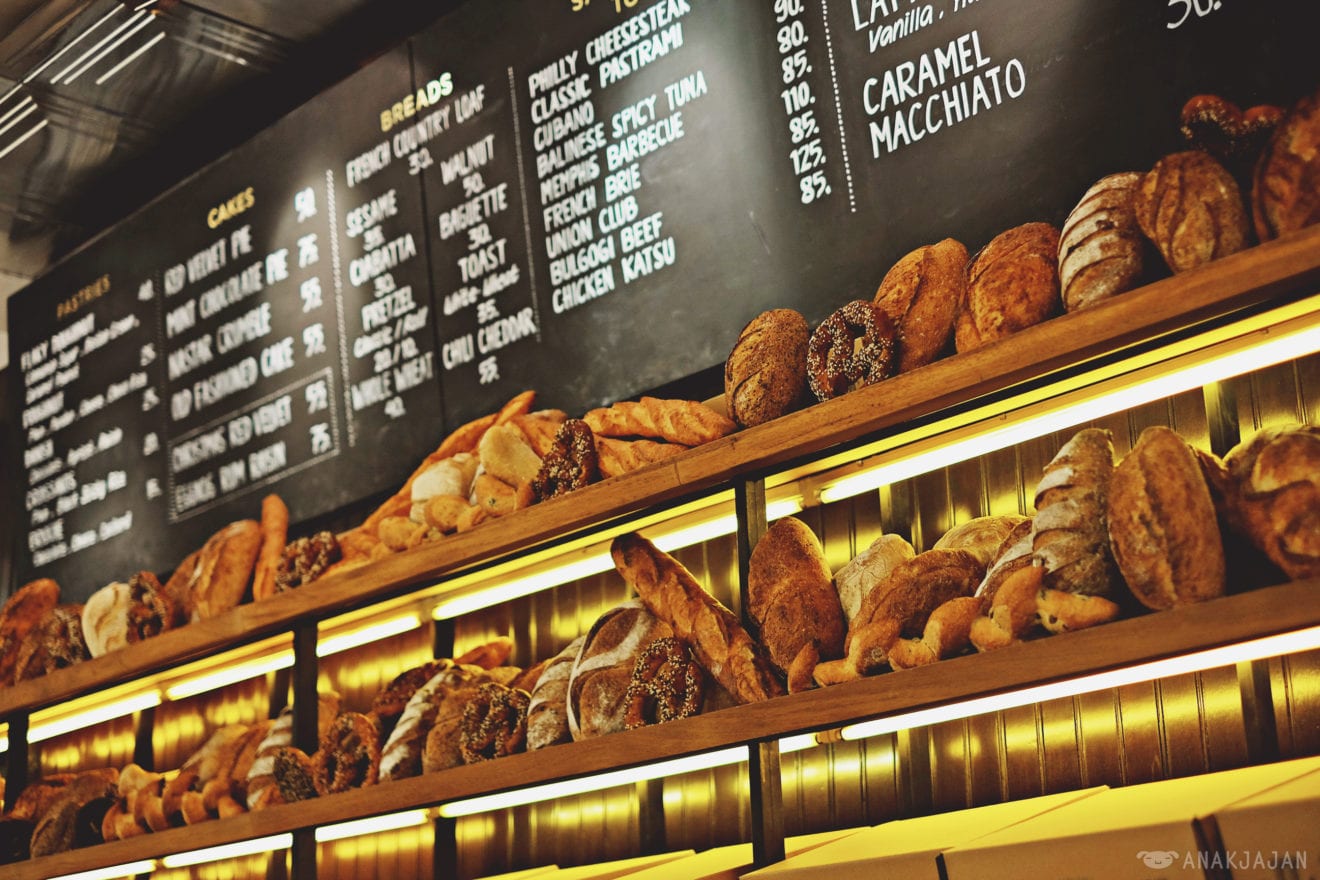
    Indonesia’s top bread producer Nippon Indosari Corpindo on Monday said it will enter the Philippines bakery market by setting up a joint venture factory with local food company Monde Nissin Corporation.

    A girl looks at breads shaped like roasted pigs, locally known as “Lechon”, sold for $3 at a bakery in Manila December 31, 2012. Lechon is a popular delicacy served during New Year revelries in Philippines. © Reuters

    Nippon Indosari will own 55% of the joint venture, Sarimonde Foods Corporation, which will have a total paid up capital of $12.5 million. It plans to start producing white and sweet bread in 2017.

    The Philippines marks Nippon Indosari’s foray into overseas markets. Established in 1995, the company produces the locally well-known Sari Roti branded sweet bread sold in local retail stores and commands a 20%-plus market share. The company logged 1.56 trillion rupiah ($109 million) in revenue for the nine months ended September, a 15% increase from the previous year, while net profit rose 46% to 192 billion rupiah.

    But competition at home is intensifying. A joint venture between Japan’s Yamazaki Baking and Mitsubishi Corp. began producing bread locally in 2014 under a partnership with Sumber Alfaria Trijaya, which runs a network of 12,000 convenience stores and mini supermarkets. Nippon Indosari wants to establish a new source of revenue in the Philippines, a populous and growing consumer market.

    “The Philippines is a very attractive market to serve as the company’s overseas expansion area because it has a very large population,” Nippon Indosari said in a news release. “The Philippines has a demographic profile that is no different from Indonesia, where 60% of the population is aged under 30 years, has a growing middle economic class, and has the trend for healthy and practical food that fits their busy lifestyle.”

    The Philippines is also a core market for Salim Group, which owns 31.5% of Nippon Indosari’s shares through its Indonesia-listed investment vehicle Indoritel Makmur Internasional. The group, controlled by Chinese-Indonesian billionaire Anthoni Salim, has interests in Philippine Long Distance Telephone, the country’s largest telecommunication company, and infrastructure developer Metro Pacific Investments. But its presence in the food industry was small.

    Japan’s Sojitz Corp. and Pasco Shikishima Corp. also have minority stakes in Nippon Indosari.

    Monde Nissin is a major snack maker in the Philippines. The privately held company produces packed instant noodles, biscuits, cookies and yoghurt drink. In most product segments, the company directly competes with Universal Robina, a leading producer of branded consumer foods.

    The 35-year-old company founded by entrepreneur Betty Ang has been expanding aggressively in the last few years by teaming up with other brands and acquiring companies. With vast distribution network and market presence, cereal maker Kellogs partnered with the company last month as its distributor. In October 2015, Monde Nissin signed a joint venture agreement with Thailand’s Malee Beverage Public Co. Ltd., a leading juice and canned fruit manufacturer. In the same year, it acquired British meat substitute maker Quorn and Australian food producers Menora and Black Swan.

  • China Consumption Growth To Stay Strong In 2016

    China Consumption Growth To Stay Strong In 2016

    China’s consumption will grow at a quick pace in 2016, the country’s Minister of Commerce Gao Hucheng assured investors Tuesday, while tackling issues such as impact of yuan devaluation, building more free trade zones and the U.S.-led Trans-Pacific Partnership (TPP) at a news conference.

    A slowdown in China’s traditional economic drivers — heavy industries and manufacturing — last year sent jitters in global financial markets and commodity markets, as China’s policymakers look to shift the balance of the economy toward a consumption-led growth.

    “China realized a major transformation of economic growth, from growth mainly driven by investments and foreign trade to one mainly driven by domestic demand, especially by consumption,” the minister said. In terms of consumption, China’s total retail sales of consumer goods rose 10.7 percent to hit 30.1 trillion yuan ($4.59 trillion) in 2015, he added.

    Consumption accounted for 66.4 percent of China’s GDP growth in 2015, the Chinese statistics bureau said in January.

    A weaker yuan has not had a direct impact on China’s foreign-trade growth, Gao said, adding: “I don’t believe yuan exchange-rate volatility since the August reform can have big impact on our trade.” The renminbi, has declined by a further 3 percent against the U.S. dollar after China devalued its currency by nearly 2 percent on Aug. 11 last year.

    Earlier in February, China had announced monthly trade figures that missed expectations with exports slipping 6.6 percent in January compared to a year earlier, while imports fell 14.4 percent year-on-year.

    China’s trade decline in 2015 was much lower than those of its main trading partners and the world in general, Gao said Tuesday.

    Gao also said that the ambitious TPP agreement, signed earlier in February among twelve Pacific Rim countries — of which China is not a member — and the China-led Regional Comprehensive Economic Partnership, are moving in the same direction.

    “Bejing does not think that the (TPP) targets China,” Gao said.

  • E-commerce ‘unstoppable’ as 4G rollout goes rural in Thailand

    E-commerce ‘unstoppable’ as 4G rollout goes rural in Thailand

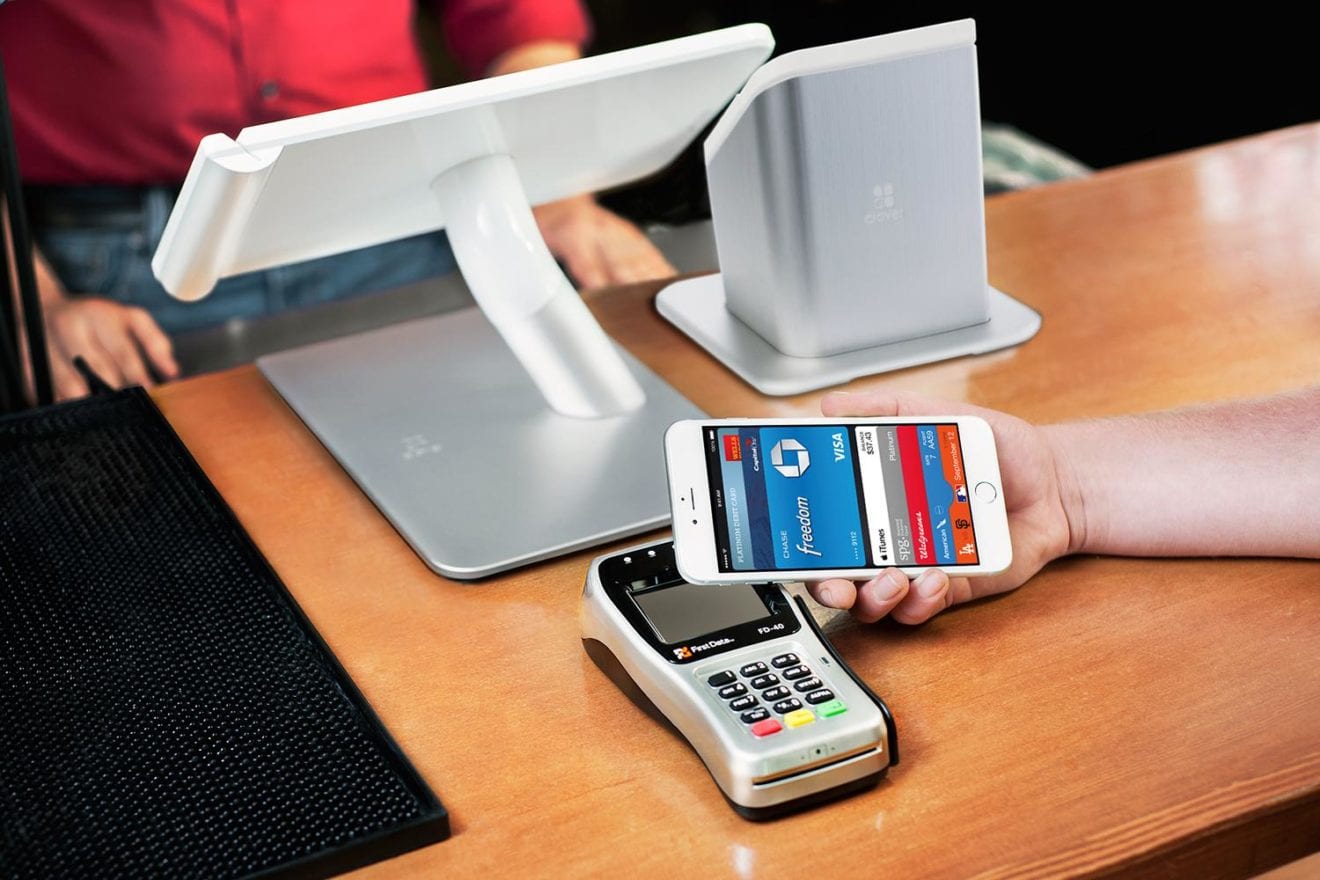
    On The Ground: Mobile will be the catalyst for digital-focused communications and online retail—aided by a data sector in its infancy. Apart from King Bhumibol Adulyadej, there is another unifying force in Thailand: mobile.

    Thailand is the world’s leader in mobile internet usage, ahead of Saudi Arabia and Malaysia, with four hours of web time per day, about 44 percent of a Thai’s total internet time. “Thailand is a mobile-led society, as is most of Southeast Asia except Singapore,” said Grant Bertoli, CEO of Marketbuzzz.

    Thailand did not see internet adoption kick in until the end of the Web 2.0 wave in 2007, and most of the access to the internet was through mobile. “Thailand leapfrogged straight to mobile as the primary device, and as people dwell longer on it, the mobile is increasingly becoming the device,” indicated Pathamawan Sathaporn, managing director of Mindshare Thailand.

    Smartphone ownership, largely driven by lower costs, has accelerated to a point where current We Are Social numbers show that 69 percent of Thais own at least one smartphone. Mobile connections, thanks to budget packages in the competitive telco market, stand at 122 percent as a percentage of the total population.

    With the realisation of 4G service in Thailand (more of which in tomorrow’s On The Ground feature), mobile will be the catalyst for digital-focused communications and rich-media content in 2016, said Rattakorn Potharam, general manager and executive creative director of MRM Thailand.

    “This is noteworthy as rural areas are now given a better chance at mobile ubiquity.” Potharam already observes content in three prominent categories: tear-jerking dramas, Thai-humour comedies and gossipy ‘insights’ transcending above-the-line formats to digital.

    Above average social use

    As the pool of mobile internet users in Thai provinces expands, social-media users will follow suit accordingly. Thai urbanites already spend more time on social networking than the global average, with Facebook being the most popular platform. In fact, Bangkok is the number one city of Facebook users in the world with over 104 percent penetration, according to Social Bakers. And 65 percent of all locals use Facebook to search for brand information according to eMarketer—the fourth highest in APAC.

    According to TNS, 74 percent of Thais also use instant messaging daily, well above the 55 percent worldwide figure. Line is the leading app in Thailand with more than 33 million users—that is half the Thai population using Line.

    These social platforms are playgrounds of expression for Thai consumers, but they are open only in their digital lives while more conservative in person. “Whatever we are expressing on Facebook, when it comes to reality we may not do so, as rooted in the Thai culture of being accommodating,” said Yupin Muntzing, chief executive officer of McCann Thailand. This dynamic can be inspiring for future developments in brand communications.

    E-commerce opportunities abound

    Coupled with that, there are numerous implications for marketing without the burden of a PC-internet legacy. Thailand being a mobile-first market allows businesses a unique position to capitalise.

    On the commerce side, Lazada began operations only a few years ago and made a bold statement to become the Amazon of Southeast Asia. And they were one of the first e-commerce players in the region to launch both iOS and Android apps. Now, the brand claims that more than half of its traffic comes from mobile.

    New faces in the e-commerce sector include Shopee, a mobile-only discounted marketplace, Eatigo offering daily lifestyle deals, and GrabBike (rebranded to Grab) delivering urban commuting services.

    In 2015, overall internet retail recorded healthy value growth of 30 percent to stand at THB47 billion (US$1.33 billion), according to Euromonitor, with fashion and consumer electronics significant contributors.

    The Thai e-commerce market is expected to more than triple in size to THB138.86 billion (US$3.94 billion) between now and 2020, according to DHL that introduced a next-day logistics addition to its delivery infrastructure in January for this reason. At present, Thailand’s share of the market is still relatively low compared to other high-growth economies, according to DHL E-commerce Asia Pacific CEO Malcolm Monteiro. Only 1.7 percent of DHL’s total sales in Thailand are from e-commerce, compared to more than 10 percent in China.

    Anisa Ngandee, research analyst at Euromonitor, is of the view that pure internet retailers such as Lazada, WeLoveShopping and iTrueMart perform much better than multi-channel players due to the shift in buying behaviour. The provision of mobile payments, especially when facilitated offline, will be a differentiator, Marketbuzzz’s Bertoli advised.

    “Although Thai people like shopping online, they find it more convenient to pay upon delivery, especially consumers within provincial areas. Sales are still limited to younger generations,” added Ngandee.

    In the meantime, MRM’s Potharam feels e-commerce will be “unstoppable and borderless”, at least among younger buyers on social media. “Thai consumers are born social. They are yearning for relationships, rapport and chemistry. In this sense, social commerce is undergoing a makeover to match this demand for socialising, while Line, Instagram and Facebook are becoming storefronts for interaction and conversation.”

    Social and content collide

    As a result, smaller Thai brands have embraced their entrepreneurial spirit in these mobile times, selling their products and services in as many ways as possible, whether Luuk Thep dolls or clothes. Preetanjali Kukreja, strategy director at Brand New Day, has noticed local businesses “getting a lot more aggressive” on Instagram, prioritising these accounts over official websites or Facebook pages. “Somehow it feels less intrusive on Instagram compared to Facebook,” she said. “It’s simple, quick, visual, and cheap as a sales tool. People just scroll through pictures of products, click to see the price, then ‘line’ the vendor and you’re done.”

    It is of little wonder that Line is one of the go-to channels for SMEs to reach consumers, not simply for shopping, but for lifestyle solutions as well, like content. The Feb 2015 launch of Line TV, competing with digital television, provided exclusive content to customers via mobile.

    Thailand now has a “huge appetite” for content across all forms—a push factor for advertising, media and even telecoms operators, said Sunee Paripunna, CEO of Omnicom Media Group Thailand. True Digital Plus, a Thai telco, has increased its budget from US$1 million to US$3 million to buy digital content in 2016, for example.

    In the past, Thai advertisers have focused their attention on content creation in the pursuit of digital marketing, but have missed opportune moments of context now made possible by mobile technology, said MRM’s Potharam. To reap the benefits of mobile, the key is gearing towards “contextual content” that is targeted and personalised. “The context will matter a lot and unveil new spot-on insights into creativity,” he said.

    Data driving integrated marketing

    Also, mobile development will open more doors for brands to collect real-time data generated by consumers who are connected online. Big data, though in its infancy stage, will transform communications, particularly for retail, telecoms, finance and lifestyle services, said Potharam.

    For starters, Julien Chalté, co-founder and co-CEO of WearYouWant, has gathered data to identify the bulk of the online retailer’s classic customers. “In December 2015, the profile that emerged was a 36 year old woman, living in Bangkok who likes to shop on Wednesdays between 11 am and 2 pm,” he said. Half of WearYouWant purchases were made during this shopping peak of the year. Outside of Bangkok, 20 percent of customers filled shopping carts from Chiang Mai, with white shoes being the favourite purchase during December. In Nonthaburi, home to a fifth (19 percent) of shoppers, skincare and makeup products were the top category. A tenth of customers placed orders in Chonburi and was mainly looking for black outfits (79 percent of all orders).

    With more data like the above, real integrated communication—“something marketers have dreamed of”, said Potharamhas potential to blossom in 2016. In the past, marketers have “tried to be visible everywhere in the digital world but were seldom standouts”. To steal a march on their rivals, brands need a “unified ecosystem of experiences under one enriching brand story”, he said.

    That represents a new canvas for shoppable content, stated Mindshare’s Sathaporn. “People will move more quickly from seeing to shopping”.

    As Thai advertisers compete to reach multi-tasking, ad-avoidant consumers, the type of content that will stick are reality shows, singing contests and other international content formats adapted for Thailand, said Sathaporn, who expects the domestic advertising industry to grow by only three to six percent in 2016—a lower growth forecast than 2015 amid economic uncertainties.

    So, even as Thailand’s king ails and its economy slithers, advertisers may be able to rely on mobile and content for continued joy.

  • Rail option for Indian online shopping deliveries

    Rail option for Indian online shopping deliveries

    While eCommerce can go off the rails when it comes to delivery, train companies are coming to the rescue.

    Because most customers are not at home during the day when parcels are delivered, Network Rail in the UK is solving this with its Doddle mail collections points at train stations – an idea now being trialled by the Delhi Metro Rail Corporation in India, reports Springwise.

    Indian online shopping site customers will soon be able to arrange to collect their purchases from 10 Metro stations in New Delhi, including MG Road, Huda City Centre and Kashmere Gate.

    When making online purchases, users will have the option to choose “station collection” as a delivery method. They then click on their preferred station and will be given a one-time password via email or SMS. Their order will be delivered to the designated station, where they can collect it from a kiosk during their commute to or from work.

  • Hong Kong tourism, retail continue slump with less mainlander visits

    Hong Kong tourism, retail continue slump with less mainlander visits

    The Hong Kong Tourism Board (HKTB) said on Jan. 19 that the number of visitors to the city fell 2.5 percent last year over 2014 to 59.31 million, among whom 45.84 million were from the Chinese mainland, down 3 percent. The number of overnight mainland visitors dropped 5.7 percent to slightly less than 18 million.

    Even Christmas season failed to meet expectations, with the number of mainland travelers being merely 3.72 million in December, down 15.5 percent, the biggest monthly drop in 2015.

    The total number of visitors to Hong Kong had been on the decline for seven consecutive months since June, the HKTB said.

    On the other hand, the retail sector also had a difficult time. According to the latest data from Hong Kong’s Census and Statistics Department, retail sales totaled 475.2 billion Hong Kong dollars in 2015, down 3.7 percent from 2014, the biggest drop since 2002.

    Last December’s retail sales were estimated at 43.7 billion Hong Kong dollars, down 8.5 percent year-on-year, while the total volume of retail in the same month fell 6.1 percent.

    Sales revenues of jewelry, watches and luxury gifts registered the biggest fall, down 17 percent in December year-on-year and 15.6 percent last year from 2014. In addition, clothes, commodities at department stores, medicine and cosmetics all saw a fall in revenue.

    The retail sector has been falling since March 2015, and saw revenue drops for ten months in a row last year. Retail sales in August totaled 37.9 billion Hong Kong dollars, down 5.4 percent year-on-year, the biggest fall in 2015.

    On February 15, Hong Kong Disneyland said it suffered a net profit loss of 148 million Hong Kong dollars, the first of its kind since 2012.

    Besides, Ocean Park,recently reported a double-digit fall in the number of mainland visitors during the Spring Festival holidays, while total admissions to the park fell 14 percent in 2015. Tom Mehrmann, the park’s chief executive, said the number of mainland visitors now has dropped to a mere 40 percent of the total admissions from over 50 percent in July 2015, and he expected a further drop in numbers during the months to come.