Author: Mei Ling Tan

  • ‘Dire’ Hong Kong market cripples Burberry sales

    ‘Dire’ Hong Kong market cripples Burberry sales

    A “dire” Hong Kong market has damaged Burberry sales for the latest quarter.

    Retail revenue remained unchanged at £423 million, but like-for-like sales fell 3 per cent.

    “Whilst sales declined across all three regions (Asia Pacific, EMEIA and the Americas), a dire performance in Hong Kong and Macau stood out as a particularly stubborn thorn in the side of the luxury player,” observed Andrew Hall, an analyst with Verdict Retail.”

    Burberry has appointed a new CEO, Marco Gobbetti, who inherits sales weakness across all regions from Christopher Bailey, who remains on as president and chief creative officer.   Gobbetti’s appointment is seen as a direct response to growing frustration with Bailey’s inability to turn Burberry’s poor performance around.

    “One of Gobbetti’s priorities must be examining operations in these far eastern markets and considering new avenues for growth especially given there has been a renewed crackdown on gift giving in China, accompanied by the growing popularity of ‘Daigous’ – overseas shoppers who buy luxury goods and ship them to China for clients,” said Hall.

    Britain’s exit from the EU is likely to benefit Burberry in the short term, as international tourists to the UK rush to capitalise on the weakened pound. However, long term,  Burberry’s UK operations may well suffer from a reduced flow of wealthy tourists as travel to the UK becomes more regulated, making it imperative Burberry finds a way of turning this evolving geopolitical drama to its advantage.

    “While Gobbetti faces a number of challenges as he attempts to revive flagging retail sales, his experience at Celine will stand him in good stead,” said Hall.

    “Burberry’s strength in digital and the continuing appeal of its brand are good foundations to work with and the clear segmentation of leadership between Bailey and Gobetti will benefit Burberry’s strategic direction.”


  • Kapok at NDC launches own label

    Kapok at NDC launches own label

    Lifestyle shop Kapok at NDC has launched its own label, Future Classics.

    The label features wardrobe staples with a focus on fabric, silhouette and details, and is said to “redefine genderless casualwear”.

    “Working with Japanese and technical fabrics, Future Classics garments are cut to fit and flatter Asian body shapes,” says Kapok, describing the clothing as a “subtle show of selvedge on denim, with a quirky hanger embroidery logo to add a touch of fun”.

    Kapok also features bags by Danish brand Rains, French labels like APC and Maison Kitsune, and Astier de Villatte city-themed candles.

    Kapok was founded by former French banker Arnault Castel in Hong Kong in 2006. The brand now has eight stores in the city, and opened two years ago in Singapore at the National Design Center.

    Future Classics’ will be available in Kapok at NDC from Friday following the collection’s reveal in Hong Kong.

  • Welcoming Australian FreakShakes in Asia

    Welcoming Australian FreakShakes in Asia

    Milkshake treats known as FreakShakes, devised by suburban cafe in the Australian capital of Canberra, have started making inroads to Asia.

    Patissez became a social-media sensation last year when it introduced its signature milkshakes piled with cookies, pretzels and even slabs of cake. Also known for its cakes and desserts, the family-owned patisserie was besieged by queues, so a second store was opened in the centre of the city.

    Now its first store outside Australia has been attracting crowds since opening in Kuala Lumpur last month.
    “We’re thrilled. The team in Kuala Lumpur is excellent,” says owner Anna Petridis. “The store is on Jalan Talawi, Bangsar Village, and it’s beautiful – everything a Patissez store should be. I plan to use that store as the model for all future outlets.”

    Patissez has also just opened in Singapore, in the new Raffles Holland Village. “It’s totally different to Kuala Lumpur but has its own flavour, which definitely suits the area and local market,” says Petridis.

    Now the company is planning more store locations in Kuala Lumpur and Singapore, plus expansion into Bangkok, Beijing and Shanghai. As part of this growth, it is setting up the “Patissez Exchange” which will enable staff members at any level to have the chance to work in the international stores.

  • Zara Vietnam flagship nearly ready

    Zara Vietnam flagship nearly ready

    Zara Vietnam’s flagship store is taking shape at Vincom shopping mall in Ho Chi Minh City, and is expected to open soon.

    The Spanish fast-fashion brand announced in May that it would expand to Vietnam this summer, setting its debut store’s opening date for this month. However, posters in the city say the store opening is next month. It is expected the store will have two storeys.

    Zara-Vietnam

    Fast-fashion brands are popular in Vietnam, and Zara has a huge customer base there. After ordering online and having items brought in from overseas, Vietnamese customers have been eagerly anticipating the arrival of its stores.

    However, the brand would need to look at its pricing. Vietnamese consumers have found that while some brands are considered economical in the West, once they enter Vietnam their prices double or even triple, with Mango and Topshop typical examples.

    Mango Mega store VN

    Zara is aiming to open up to 360 stores globally this year, and in Vietnam is sharing the market with other international fashion like Gap, Nine West and Ralph Lauren.

    Meanwhile, Mango is planning to open a men’s store in Vietnam, and H&M is said to be considering expansion in Vietnam.

  • Bangkok commerce group launches WeMall

    Bangkok commerce group launches WeMall

    Bangkok company Ascend Commerce has spent more than Bt300 million (US$8.555 million) branching into eCommerce by developing WeMall, which it hopes will feature more than 1000 brands next year.

    Ascend Group CEO Punnamas Vichitkulwongsa says the ASEAN eCommerce industry has outpaced the global growth rate. Thailand’s share of the $15 billion online retail market in the region is around $2 billion, with the country ranking fourth behind Singapore, Indonesia and Malaysia.

    appwemall

    Ascend GM Seubsakol Sakolsatayadorn says online shopping now accounts for 2.3 per cent of the total retail-market value in Thailand, with the growth rate for developed nations ranging between 10 and 12 per cent.

    He says WeMall will focus on end-to-end services and promote itself as the branded marketplace with trusted mechanics for online shoppers. The outlet offers two forms of partnerships, full-scale services and self-formulated services.

    “Brands can run their own online outlets via ready-to-use features. When the business climate turns increasingly competitive, they will be able to adjust their strategy in a timely manner.”

    WeMall has been running trial services for a month, during which it attracted more than 2 million visitors, and more than 60,000 products were sold and delivered.

    “In its pivotal phase,” says Seubsakol, “WeMall features more than 15,000 items from more than 1100 brands in nine main product categories: beauty and healthcare, home appliances, electronic devices, computers and laptops, lifestyle, mums/kids/babies, cellphones and tablets, and cameras and gadgets.”

  • Thai PM grants regulator total immunity when censoring

    Thai PM grants regulator total immunity when censoring

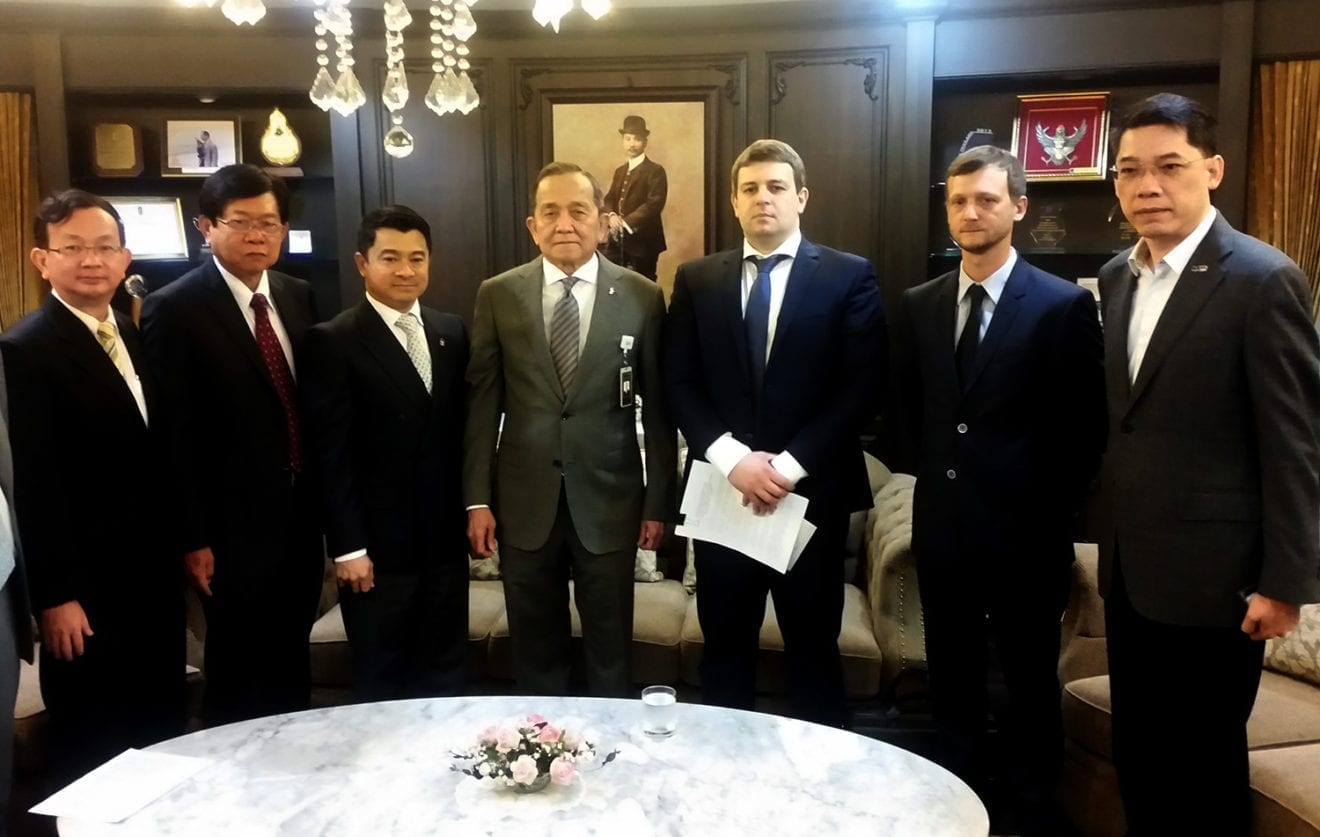
    Thailand’s Prime Minister and head of the ruling Junta General Prayut has used Article 44 of the interim constitution, commonly known as the absolute power clause, granting total indemnity for the National Broadcasting and Telecommunications Commission when engaging in censorship for national security.

    Article 44 order 97/2557 grants the NBTC commissioners, NBTC secretary-general, NBTC staff and anyone appointed by the NBTC total indemnity from any criminal, civil or disciplinary action resulting from their actions when acting in good faith against those who are engaged in sedition, are a threat to national security, are disturbing the peace or those who are acting against the good morals of the country. However, an affected third party may still seek monetary compensation through the courts.

    The order came days after the NBTC lost a court case when it tried to silence a TV station that was loyal to the former regime of Thaksin Shinawatra.

    Meanwhile, Thailand’s state enterprise policy commission has agreed with the plans put forth by the ICT Ministry and ordered the two state telcos – CAT Telecom and TOT Corporation – to merge their data operations and transfer staff to three new companies within a year.

    Transmission and fiber networks will be under the National Broadband Network Company, Internet gateway and submarine networks will be merged under the Neutral Gateway Company and data centers will be merged under the IDC Company.

    This has not gone down well with the unions.

    CAT Union chairman Thaworn Poomtieng held a rally at CAT’s headquarters yesterday and issued a statement that the plan was drawn up only by the ICT Ministry and Deloitte without any input from CAT management and condemned the order to split up the state telco as dictatorial.

    Thaworn questioned whether the plan was actually to strengthen the state enterprise or if it was simply to sell it off.

    CAT acting President Surapan Meknavin said that he has not yet received any details of the plan from the State Enterprise Policy Commission and that in the past he has only had some high-level talks about reorganisation without going into any detail.

    The move has only added to a groundswell amongst Thailand’s netizens with many fearing the merged Neutral Gateway is simply the first step towards the rebranding of the much hated Single Gateway mass-surveillance project.

    ICT Ministry spokesperson Chatchai Khunpitiluck issued a statement that anyone still talking about the Single Gateway probably either had some misunderstandings or that they were purposefully distorting the issue in order to damage the country.

    Earlier Prime Minister and junta leader General Prayut Chanocha dismissed the numerous Prime Ministerial orders published on the Cabinet website referring to the Single Gateway mass surveillance project as a clerical error by someone who simply got his notes wrong.

  • Starbucks rolls out mobile pay app in China

    Starbucks rolls out mobile pay app in China

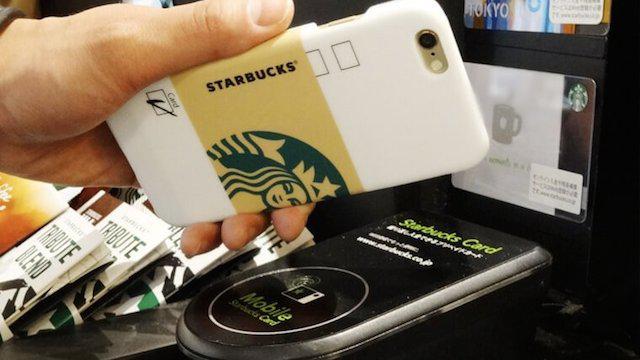
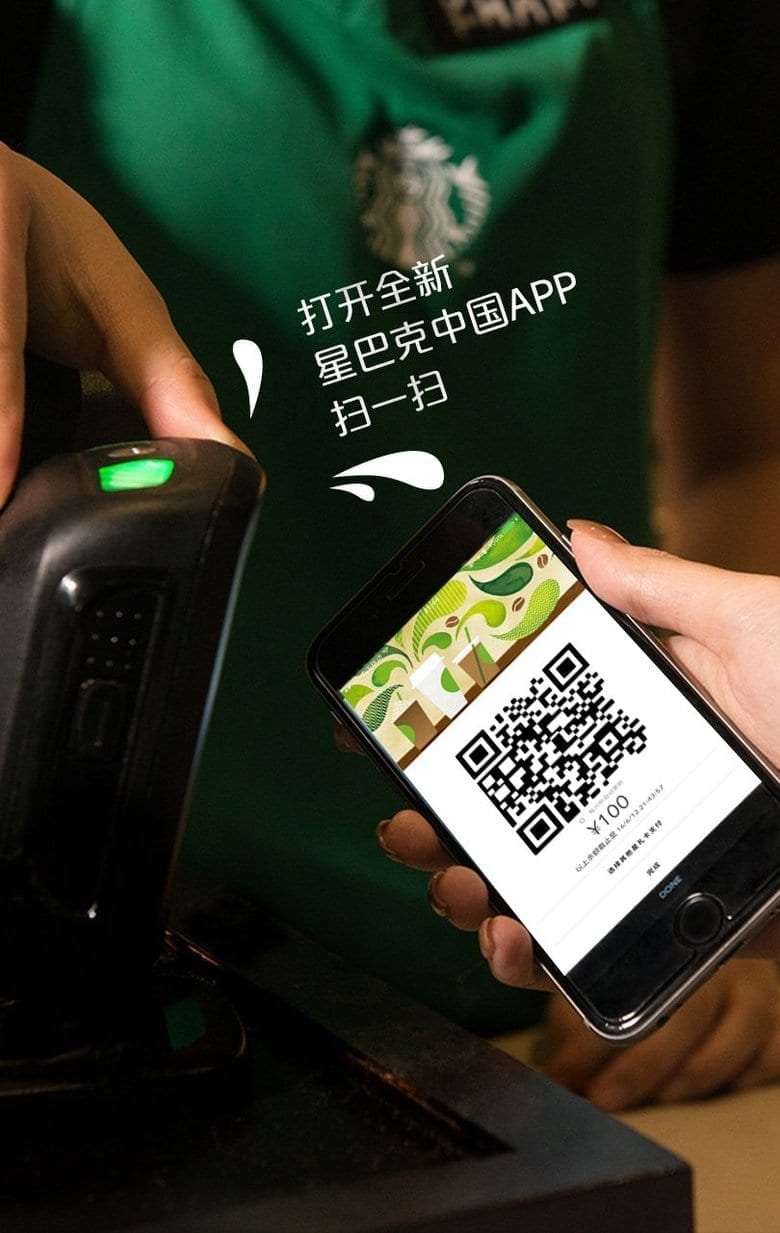
    Starbucks this week launched its mobile payment system in China, marking another step forward in two areas the company sees huge growth potential: China and mobile technology.

    Customers can now pay for their Starbucks purchases at some 2,200 stores in China by using the Starbucks app on their phone, linked to a pre-loaded Starbucks gift card.

    “With the ongoing seismic shift in consumer behavior due to mobile technology, Starbucks is committed to exploring new ways to leverage digital innovations to deliver an elevated Starbucks Experience to our customers,” Belinda Wong, president of Starbucks China, said in a news release.

    “We are confident our social, web, mobile, loyalty and card assets will deliver greater value and convenience to our customers, while further differentiating the brand in China.”

    Starbucks is betting big on China, where the company is adding 500 stores a year. It plans to have 3,400 stores there by the end of 2019.

    1bfaa232-492f-11e6-85c2-6f67e37b8616-780x1233

    In June, it opened a store at Shanghai Disney Resort — a location that Starbucks CEO Howard Schultz said earlier this year could become “Starbucks’ highest-grossing retail store overnight.”

    In the most recent quarter, Starbucks’ China market saw 18 percent revenue growth — likely due to new stores the company is opening there — and 5 percent transaction growth, according to the company.

    The 5 percent transaction growth is the “highest anywhere in the world,” said Scott Maw, Starbucks’ chief financial officer.

    The mobile app lets customers in China not only use their phones to pay for their coffee drinks but also manage their Starbucks Card account, find nearby Starbucks stores and track and redeem rewards.

    Starbucks’ mobile app has been a big success for the company.

    About 21 percent of all transactions in its company-owned U.S. retail stores take place through its mobile app, according to Bloomberg News.

    In the U.S., where the company has rolled out a “mobile order and pay” that lets customers bypass store lines by ordering and paying for their drinks ahead of time on their phones, usage doubled year-over-year in the most recent quarter.

    Starbucks processes 8 million mobile order and pay transactions per month, the company said.

    The company has also closely linked its loyalty rewards program with its mobile app, tying payments made via the app toward earning rewards, and displaying prominently progress made toward earning a reward.

  • Apple Ups China Game with $1 Million Donation for Flood Relief

    Apple Ups China Game with $1 Million Donation for Flood Relief

    Apple donated ¥7 million ($1 million) this week to the China Foundation for Poverty Alleviation(CFPA), a non-governmental relief agency. The money is intended to help relief efforts in south China, which has been racked with flooding on the Yangtze.

    Apple didn’t announce the donation, but the CFPA did, as reported. Apple CEO Tim Cook posted a statement of support on Weibo, saying, “Our thoughts are with all those devastated by the flooding along the Yangtze River.”

    The newspaper also noted that Apple donated some $8 million dollars for victims of the 2008 Wenchuan Earthquake in China’s Sichuan region.

    Apple has stepped up its philanthropic efforts under CEO Tim Cook, but most of what we hear about are efforts here in the U.S. Apple’s active involvement in China is part of a broader effort for the company to integrate itself with the insular country. It’s also the first donation from a U.S. company reported by the CFPA.

    Other recent activity by Apple in China includes a $1 billion investment in Didi, a Chinese ride-sharing firm. Apple has also opened numerous Apple Store retail locations in China. In May, Apple launched Chinese loops and instruments for Logic Pro X and GarageBand.

    Chinese Headwinds

    These moves come while China conducts an on-again, off-again campaign against Apple in state-owned media. The Chinese government also shut down iBooks and movie sales in iTunes in China, while new regulations could require Apple (and every other company) to become part of the Chinese surveillance machine. In Chinese courts, Apple has endured trademark and patent losses covering its iconic iPhone.

    But Apple clearly isn’t giving up on this market. Tim Cook has said on multiple occasions that China is important to Apple. Earning its place in the Chinese economy will require continued investment, significant lobbying, and substantial marketing efforts.

    This donation to the CFPA is not only the right thing for Apple to do, it’s smart business. And I don’t mean that cynically at all. I suspect Tim Cook would have authorized the donation whether or not it was smart business. To that end, I was unaware of the 2008 donation to earthquake victims, and it’s not like Apple advertised its gift to the CFPA.

    But it does remain smart business. The key to knocking down Apple’s barriers in China is to become more and more of a Chinese company. This donation is another small step in doing so.

  • Innovate or die: Singapore retailers advised to reinvent as brick and mortarshops lose luster

    Innovate or die: Singapore retailers advised to reinvent as brick and mortarshops lose luster

    Some brands are even advertising via Snapchat.

    In a fast-paced and technologically-savvy city-state such as Singapore, brick and mortar shops of retailers, however traditional, may not be adequate anymore.

    According to a report by Cushman and Wakefield, Italian luxury brand Prada, for example, has announced plans to advertise via Snapchat, and will be offering their range of goods online.

    Additionally, the Singapore Tourism Board is using WeChat and Baidu Connect, and other online travel services and social review sites to reach out to independent Chinese travelers.

    “Thus, it is essential for all major stakeholders to reinvent their operations to drive the retail scene forward,” the report noted, highlighting the inevitable paradigm shift.

    Meanwhile, to combat the surge of e-commerce, the report said retailers are increasing F&B components in shopping malls and department stores, as such experience-based concepts are irreplaceable by online retail.

    “For instance, Muji Café and Meal will be opening their second outlet in Raffles City, and a cluster of 16 restaurants will open in Wisma Atria’s Japan Food Town. In addition, Robinsons the Heeren welcomed Angela May Food Chapters in this quarter,” the report added.


  • Telcos should follow teenagers’ digital lifestyle

    Telcos should follow teenagers’ digital lifestyle

    Only 12% of teenagers feel service providers understand their lifestyle and offer services to match it, according to a study from Amdocs.

    Conducted by Vanson Bourne , the study surveyed 4,250 respondents aged 15-18 from the United Kingdom, United States, Canada, Brazil, India, Germany, Russia, Mexico, Philippines, and Singapore.

    Among those polled, 30% report experiencing bad customer service from their CSP over the past year, and 46% say they will not use that CSP again. A third of respondents then shared this information with families and friends.
    Findings also show that 43% of teenagers believe their smartphone makes them smarter and “cooler”; 52% check their social media accounts first thing in the morning; and over 30% say they would probably not meet someone again if they lacked a Facebook or WhatsApp account.

    Almost half of respondents say they prefer using emojis (47%) and posting photos (45%) to sending emails as emojis express how they feel more clearly than words.

    Teens require constant internet connectivity, with respondents saying they are more likely to feel anxious and alone if separated from the internet (56%) than when separated from their family (52%. The value of internet access is so significant that the majority (55%) strongly believe fast internet access to be a human right.

    A majority stream movies (53% streaming; 17% downloading), TV (51% versus 11%) and music (47% versus 29%); and they are typically doing so for free with less than a third saying they ever pay for any content.

  • Yoma to redevelop Yangon project, Centrium Square retail units sold

    Yoma to redevelop Yangon project, Centrium Square retail units sold

    A consortium – that includes Yoma Strategic Holdings, its wholly-owned subsidiary Yoma Strategic Investments (YSIL); Mitsubishi Corporation and Mitsubishi Estate; First Myanmar Investment (FMI); and the International Finance Corporation (IFC) – will redevelop a Yangon mixed-used development.

    The Asian Development Bank (ADB) will become party to the deal, with the rest of the corporate entities establishing a joint venture (JV) corporation – Meeyahta Development Limited (MDL).

    Yoma will maintain a 48 per cent share in the JV firm with smaller shares held by FMI (12%), Mitsubishi (30%), IFC (5%) and ADB (5%).

    The proposed development excludes Yoma’s plan to redevelop the former headquarters of the Burma Railway Company into a five-star hotel, The Peninsula Yangon, which was announced in 2013.

    According to Yoma Strategic, it is currently awaiting the approval from the Myanmar Investment Commission for the incorporation of the joint venture (JV) entity.

    According to the deal, yhe shareholders agreement will be terminated should the first subscription of shares fail to take place on or before the deadline of 30 June 2017.

    The agreement is deemed an interested person transaction as FMI’s chairman and controlling shareholder, Serge Pun, also holds about 36.27 per cent of direct and deemed interests of Yoma Strategic. As such, Yoma requires shareholder approval to finalise the deal.

    Centrium Square retail units sold in bulk for S$70.1m

    Thirty two retail units at Centrium Square with a total strata area of 16,738 sq ft are likely to have been sold through a bulk purchase for S$70.1 million, based on caveats published by the URA. This transaction saw first storey retail units sold at an average price of S$6,015 psf, with second storey units fetching an average price of S$3,932 psf.

    Centrium Square is a freehold development comprising two levels of retail units, 39 medical suites and 143 office located close to Farrer Park MRT station and is on the site of the former Serangoon Plaza. The developer is Feature Development, an affiliate of Tong Eng Group.

    According to a report from The Edge Property, the buyer is believed to be Canali Logistics, which purchased Hotel Grand Chancellor at Belilios Road in Little India in 2014.

    The opening of Farrer Park Hospital,  part of an integrated complex comprising Farrer Park Medical Centre, which houses specialist clinics and One Farrer Hotel and Spa, have positioned the area to be a medical hub.

    Separately, RB Capital is developing Farrer Square, a mixed-use project comprising medical suites and 300-room Park Hotel Farrer Park.

  • Nepal Telecom revs up rollout of new services

    Nepal Telecom revs up rollout of new services

    Nepal Telecom chose Tecnotree to supply its Agility Mediation and Interconnect system, which will enable the rapid rollout of new services for the telco’s 14 million subscriber base.

    The Tecnotree Agility Mediation and Interconnect system will replace Nepal Telecom’s existing systems for GSM and other networks – and supports mobile, fixed line and broadband lines of business as well as future services.

    The solution will be delivered as a turnkey project, including complete hardware and third party software implementation.

    “By enabling the integration of new and legacy network components we are pleased to help Nepal Telecom to execute its convergence strategy and achieve its objective of complete optimized Business Support Systems,” said Padma Ravichander, CEO of Tecnotree.

  • IIJ to sell prepaid data roaming SIMs in Taiwan

    IIJ to sell prepaid data roaming SIMs in Taiwan

    ISP and MVNO Internet Initiative Japan (IIJ) has arranged to sell a prepaid SIM card for Taiwanese visitors planning to visit Japan at all Taiwan 7-Eleven locations.

    The ready-to-use, data only Japan Travel SIM offers 1GB of data for 30 days for TW$780 ($24), with additional data packs purchasable at select locations in Japan.

    The service is being offered over NTT DoCoMo’s LTE and 3G networks, which offers download speeds of up to 375Mbps and upload speeds of up to 50Mbps in certain coverage areas.

    IIJ said Taiwan ranks third after China and South Korea in terms of the number of visitors to Japan. Total Taiwanese travelers to Japan increased 30% in 2015 to a record 3.67 million.

    Meanwhile 7-Eleven is the largest convenience store chain in Taiwan, with 5,045 locations as of April.

    Japan Travel SIMs will go on sale at Taiwanese 7-Eleven stores from July 18.

  • Dtac profit tumbles 90% to $4m in Q2

    Dtac profit tumbles 90% to $4m in Q2

    Thailand’s Dtac has reported a record 90% slump in net profit for the second quarter of the year, due to a steep decline in prepaid subscribers as well as high capex and other costs.

    Net profit for the quarter fell to 141 million baht ($4 million), in a result the operator also attributed on higher depreciation and amortization costs and lower ebitda, as well as a one-time 394 million baht restructuring cost.

    The company’s total subscriber base shrank by 524,000 to 25 million, with prepaid subscribers falling by 715,000. By contrast, postpaid net additions increased by 77% to 191,000.

    In its quarterly report, Dtac blamed the weak prepaid performance on “competitors’ aggressive subscriber acquisition activities through heavy handset subsidization and strong distribution channels.”

    To address the decline, Dtac has reintroduced prepaid handset subsidies and launched new Dtac prepaid branded SIMs targeting data-oriented users.

    Dtac’s 4G userbase meanwhile increased from 2.9 million in Q1 to 3.5 million in the second quarter, and the operator aims to grow this to 6 million by the end of the year.

    Blended ARPU for the second quarter grew 7% year-on-year to 211 baht as a result of the lower prepaid subscriber base, but declined 2.6% quarter on quarter as growth in data revenue failed to fully compensate for declining voice revenue.

    Capex meanwhile grew to reach 4.29 billion, or 22% of total revenue, as Dtac spent heavily on network rollouts. Network opex increased 3.9% year-on-year to 1.49 billion baht.

    For the full year, Dtac warned it expects intense market competition to continue into the second half. As a result, the company expects service revenues to slightly decline from the previous year, and plans to maintain capex at the same level as last year, which was around 20 billion baht.

  • NTT Com launches high-speed broadband in Myanmar

    NTT Com launches high-speed broadband in Myanmar

    Japan’s NTT Communications has launched high-speed internet services for enterprises in Myanmar, starting with the Yangon area.

    The company has secured a network service license from Myanmar’s Ministry of Transport and Communications, and has started offering the new Digi-Path Premier service in the market.

    The service provides dedicated, fully managed circuits from 1Mbps to connect enterprises with NTT Com’s global network, with 24/7 monitoring of circuits. Delivery of circuits can require as little as one month.

    NTT Com is also providing optional services including global IP address, web hosting, mail hosting, rental routers, managed firewalls, internet VPN and file transfers.

    NTT Com, along with NEC and Sumitomo, jointly deployed a 30Gbps core optical network between three major Myanmar cities in 2013, under contract from the Myanmar government. The operator established an office in the nation in October 2012, the first in the country from a foreign operator.

    The operator said it is now providing internet connections to enterprises globally including in seven Southeast Asian countries – Singapore, Malaysia, Indonesia, Thailand, Vietnam and Cambodia, as well as Myanmar.