Author: Mei Ling Tan

  • Victoria’s Secret to open first flagship store here

    Victoria’s Secret to open first flagship store here

    Victoria’S Secret will open its first South-east Asia flagship store in Singapore by year end and unveil a full assortment of its sexy wares.

    The international lingerie brand will open the 12,000 sq ft outlet in the fourth quarter of the year at Mandarin Gallery in Orchard Road.

    The two-storey store, which faces the street, will take over the units that Mont Blanc, Bimba Y Lola and Bathing Ape used to occupy.

    These brands will be moving to other areas in the four-storey mall. The concierge counter on level two was also relocated to level three to accommodate the largest American retailer of women’s lingerie.

    The nine existing Victoria’s Secret stores here are all the brand’s beauty and accessories stores. They sell fragrances, accessories like bags and only a small range of women’s underwear.

    Patrina Tan, senior vice-president of retail, marketing and leasing at Overseas Union Enterprises, which manages Mandarin Gallery, said that the hoarding on the mall went up last week.

    “Mandarin Gallery has always been known to be a mall that houses the best of the best in retail and food. We have the king of ramen, the king of ribs. So naturally, Victoria’s Secret echoes and reinforces what the mall stands for,” she said.

    There are plans for the brand to hold fashion shows here on top of other events, she said. “It is a long-awaited brand that has never been available in this part of the world.”

    The Straits Times understands that prices at the store here will differ from those elsewhere as they will be based on domestic variables like taxes and profit margins.

    Its product range will be identical to that offered in stores in the United States and will not be tailored to the local market.

    Victoria’s Secret is one of several global brands that have chosen to set up shop here recently.

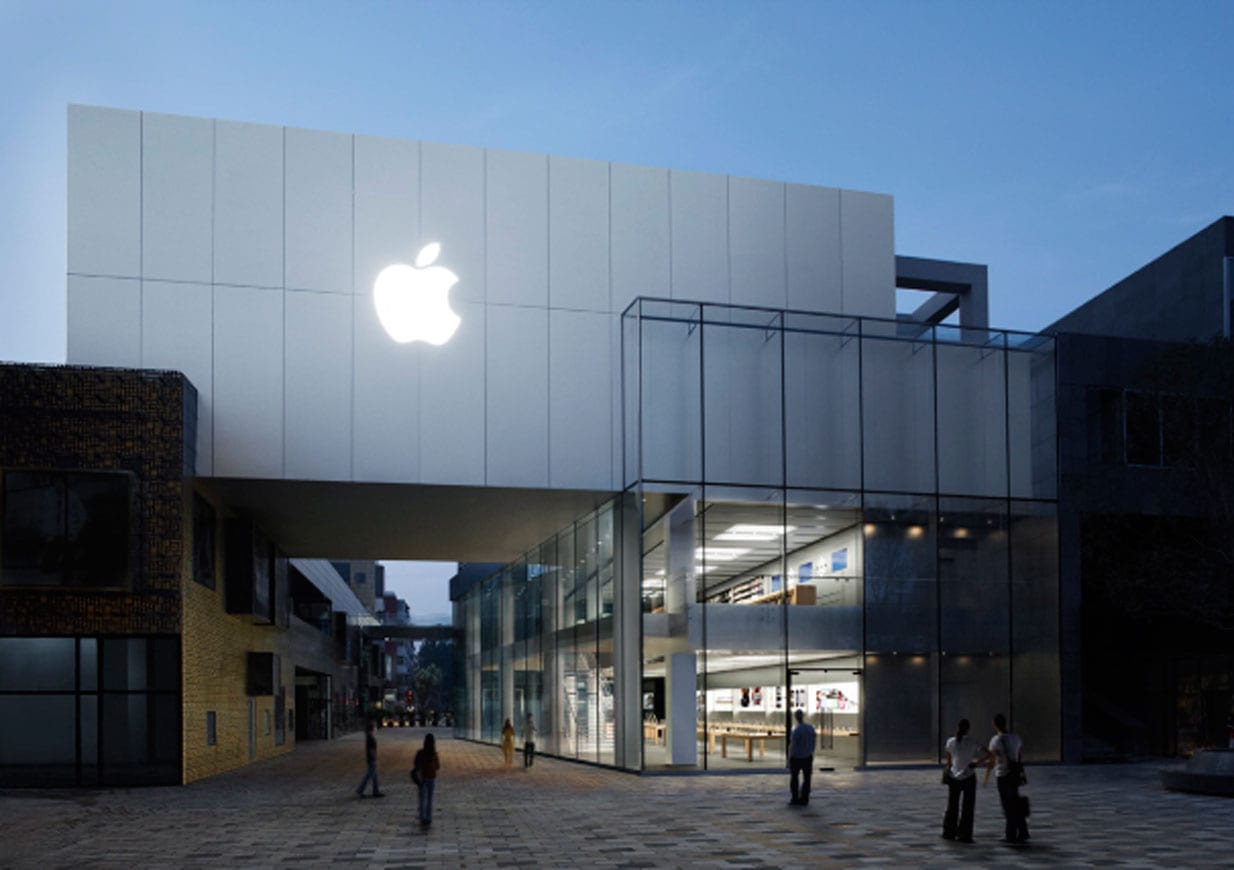
    French sporting goods store Decathlon will open a 35,000 sq ft store in Chai Chee Technopark next week; popular French women’s wear label Maje opened its first flagship store at The Shoppes at Marina Bay Sands in October; Singapore’s first Apple store will open next year; and the renowned Dover Street Market will soon make its debut here.

    Experts said that international retailers, faced with economic challenges in developed markets, are looking to emerging markets such as South-east Asia.

    “Singapore is seen as an ideal test bed for brands looking to break into South-east Asian markets and is viewed as an important place to build brand awareness,” said Sarah Lim, Singapore Polytechnic’s senior retail lecturer. “Customers in countries in the region will identify with the brand when it moves over to their countries.”

    She said that Victoria’s Secret will up the ante in the retail scene here: “They don’t just sell products, but strengthen their brand with fashion shows and experiential shopping. Other brands can learn from them.”

    Shoppers like Gina Farr, 32, are excited.

    The fitness trainer is a fan of the brand’s underwear and owns several pairs that she bought from the smaller stores here.

    “The quality is great, and there will be a wider range including bras. The range of items they have here now is too small,” she said. “I would probably shop there quite often when it opens.”
  • Korean Customs to issue more duty free licenses?

    Korean Customs to issue more duty free licenses?

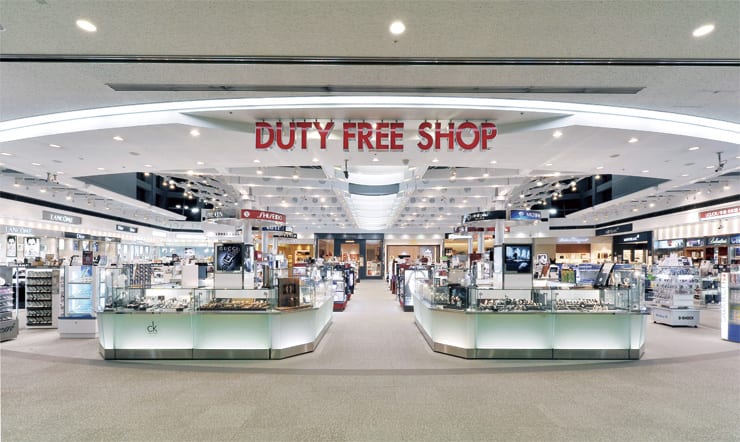
    Park Geun-Hye’s South Korean government has commissioned a formal review of the domestic duty free industry, its impact on tourism and what it perceives as the dominance of Lotte Duty Free and Shilla Duty Free in the sector.

    A private consulting firm has been commissioned to undertake the review, which is expected to forward its findings to government before releasing the results into the public domain.

    We understand that Korea Customs Service officials have informally told duty free industry executives that new Seoul downtown duty free shop licenses could be issued in 2016 – and possibly other key locations – as part of government efforts to reduce Lotte’s and Shilla’s present duty free industry dominance.

    “The government is researching the duty free environment and will announce the results including whether new downtown licenses will be issued and where, and the number of new licenses,” commented a reliable duty free industry source in Seoul.

    “The government has asked a private consulting company to research the duty free market here to boost tourism and reduce the present duty free market duopoly. The government is looking at a different solution to taking away existing licenses; instead they are planning to have more licenses. We hope there will be a positive result from the government’s announcement.”

    Although no decision has been made so far, Korea Customs Service officials are understood to have told duty free industry executives that new downtown licenses may be issued this year. Seoul, the South Korean capital, and Busan are the most likely locations for new downtown shop licenses, along with Jeju Island.

    ‘RUMOURS’ OF MORE LICENSES…

    “KCS is leaking rumours that there will be new duty free licenses around March 2016. There is still a debate in our National Assembly about diluting existing duty free retail monopolies by giving new licenses,” said the source.

    “KCS is thinking to issue more duty free licenses for Seoul and Busan. Tourism in Busan is growing, but not like Seoul. Lotte’s grip already is weaker as they have lost their Lotte World Tower license; also, Shinsegae Duty Free is coming into central Seoul with their new Namdaemun super store, which will take a significant part of Lotte’s Sogong shop’s sales.”

    News of the government’s duty free industry review comes as speculation continues to grow over the future use of Seoul’s Lotte World Tower duty free store and the Walkerhill downtown duty free shop, after both retailers recently lost licenses to successful rival bids from Shinsegae Duty Free and Doosan Duty Free.

    Under KCS regulations, losing duty free license holders may continue to operate their shops for a grace period of six months after license expirations to allow them to sell off stock, find new employment for staff and wind up their businesses.

    Both the Lotte World Tower and Walkerhill downtown stores are continuing to trade while their owners decide future arrangements for their outlets.

    PRESIDENT PARK GEUN-HYE SAID TO BE ‘CONCERNED’

    South Korean President Park Geun-Hye (top right) has only recently voiced concern about the large financial losses that both Lotte and Walkerhill face under KCS’s new non-renewable license arrangements, after investing in multi-million dollar new duty free facilities, only to lose their licenses soon afterwards.

    “There is a rumour that Lotte will try to pass its Lotte COEX duty free shop license in Seoul to Lotte World Tower duty free shop,” the source said. In the Lotte World Tower shopping complex there are already duty paid Louis Vuitton, Chanel and other luxury brand boutiques.

    “Without its Lotte World Tower duty free license there is no reason for Lotte to keep its former duty free boutiques there as well and have double stores in one location. Lotte will have to destroy all its investment in these duty free boutiques. The government does not want to see this happen, so it is thinking of different options.”

    Other possibilities apart from Lotte being permitted to transfer its COEX downtown duty free store license are that it could win a new license if KCS issues a new series in Seoul this year. Alternatively, another company winning a new duty free license might be permitted to operate the Lotte World Tower outlet, though it is unlikely that Lotte would agree to this.

    WALKERHILL RECONFIRMS IT IS LEAVING THE BUSINESS

    While Lotte continues to search for a solution, the SK Group parent of Walkerhill Duty Free has reconfirmed that it is to leave the duty free industry altogether and it will not seek a new duty free license in future.

    The Walkerhill duty free store actually represents only a very small share of the SK Group’s total revenue compared with its major business activities, that include telecommunications, transportation, oil refining and other energy-related interests.

    SK recently invested more than US$30m in upgrading and expanding its Walkerhill duty free store which forms part of the Walkerhill hotel and entertainment complex in eastern Seoul. The retailer’s options now include converting the duty free store back to hotel use, or leasing the shop to another retailer.

    Paradise Casino, which operates the Walkerhill complex casino, is understood to be disappointed at the loss of the duty free license as many high spending Chinese visitors to the duty free store visited the casino after shopping.

    In fact, the Walkerhill duty free shop and casino rely upon each other to attract customers, as many visitors to Paradise Casino also visit the ajoining duty free shop, which has built a strong reputation for its wide range of high-priced watches, along with other luxury goods.

  • Why More Retailers Could Default in 2016

    Why More Retailers Could Default in 2016

    Last year was grim for retailers. This year could be even worse. Despite a late surge in holiday sales, companies like J. Crew Group Inc. and 99 Cents Only Stores are struggling under debt they took on in leveraged buyouts years ago. Their bond prices have plummeted — in some cases to as little as 25 cents on the dollar — as investors brace for possible defaults.

    The industry has been limping along for a while now due to a variety of forces. Spending has migrated to the Internet, lenders have turned wary and the debt burdens of pre-crisis buyouts will make it tough to revive struggling merchants. Eleven retailers defaulted last year through Dec. 14, the highest annual tally since 2009, according to Standard & Poor’s data. And the near future doesn’t look much brighter.

    “We expect more retail defaults in 2016 than 2015 and 2014,” said Robert Schulz, an S&P credit analyst.

    The credit market is echoing that sentiment. Bonds of indebted retailers dropped further last year in anticipation that some will need to restructure.

    This wave of distress is different from the tough times of the Great Recession, said Patrick Dalton, chief executive officer of Gordon Brothers Finance Co., an asset-based lender that works with retailers. Now, “it’s an industry issue, not an economy issue,” he said. Shoppers are seeking value and turning away from pricey logos, which is hurting the teen-clothing category in particular. “What looks the same but costs three times less is where everyone’s going,” Dalton said.

    In general, shoppers are spending less on stuff and more on experiences such as going out to eat. They’re also saving more. And retailers that once reigned in America’s shopping malls are losing customers to online rivals like Amazon.com Inc.

    “Amazon is crushing everybody,” Dalton said.

    Buyout Burden

    Bond prices of the most distressed companies reflect those problems. J. Crew’s bonds lost 7.4 percent in December, dropping to a record low of 25 cents on the dollar on Dec. 22, reflecting creditors’ lack of confidence that the retailer will be able to shoulder $2.1 billion of debt from a 2011 leveraged buyout by TPG Capital Management and Leonard Green & Partners.

    Bon-Ton Stores Inc.’s 8 percent notes last traded at 33.4 cents on the dollar on Dec. 23, according to Trace, the bond-price reporting system of the Financial Industry Regulatory Authority.

    Margot Fooshee, a J. Crew spokeswoman, declined to comment. Angela Thurstan at 99 Cents Only and Christine Hojnacki at Bon-Ton didn’t respond to requests for comment.

    Restructuring advisers have already started circulating names of retailers proposing various debt-renegotiation plans as bond prices continue to drop.

    “It’s going to be a busy year of restructuring for retailers,” said Steven Ruggiero, a credit analyst focusing on retail at RW Pressprich & Co. in New York. “Hedge funds and private-equity investors that were taking a pause at the end of the year waiting to see how December sales would pan out and how redemption was for their funds are now ready to pounce.”

    Things could have been a lot worse. Sales during November and December rose 3.4 percent, according to research and consulting firm Customer Growth Partners. An uptick in shopping during the week between Christmas and New Year’s helped mitigate what Craig Johnson, the research firm’s president, called a terrible year for margins, as retailers jockeyed to win over lukewarm shoppers.

    The days when retailers could load up on debt and hope to sell their way out of it appear to be over. In the meantime, obligations heaped on during pre-2008 leveraged buyouts are coming due.

    Refinancing Debt

    Sports Authority Inc., for example, has a $300 million term loan due in May 2017, but its private-equity owner Leonard Green & Partners is already under pressure to refinance it while there’s still more than a year to maturity. Once an obligation passes that threshold, it becomes current, which is considered more difficult to deal with in a restructuring.

    Although the sportswear retailer received a $95 million infusion in late 2015 to shore up vendor confidence, addressing that debt appears to be a challenge. Kellie Kerwin, a spokeswoman for Sports Authority at ICR, didn’t comment.

    Even healthy retailers are posting disappointing results. Bed Bath & Beyond Inc. said third-quarter profit and comparable-store sales will be less than forecast. Department stores including Macy’s Inc. and Nordstrom Inc. have cut their annual forecasts. Some of that is due to record-high temperatures, which have produced a glut of coats, sweaters and other seasonal goods.

    “The merchants that have been lagging don’t have the luxury to lag anymore,” said Jonathan Eyl, a consumer analyst at Nasdaq Advisory Services in New York.

  • Apple on a roll with retail expansion in China as it announces 30th store

    Apple on a roll with retail expansion in China as it announces 30th store

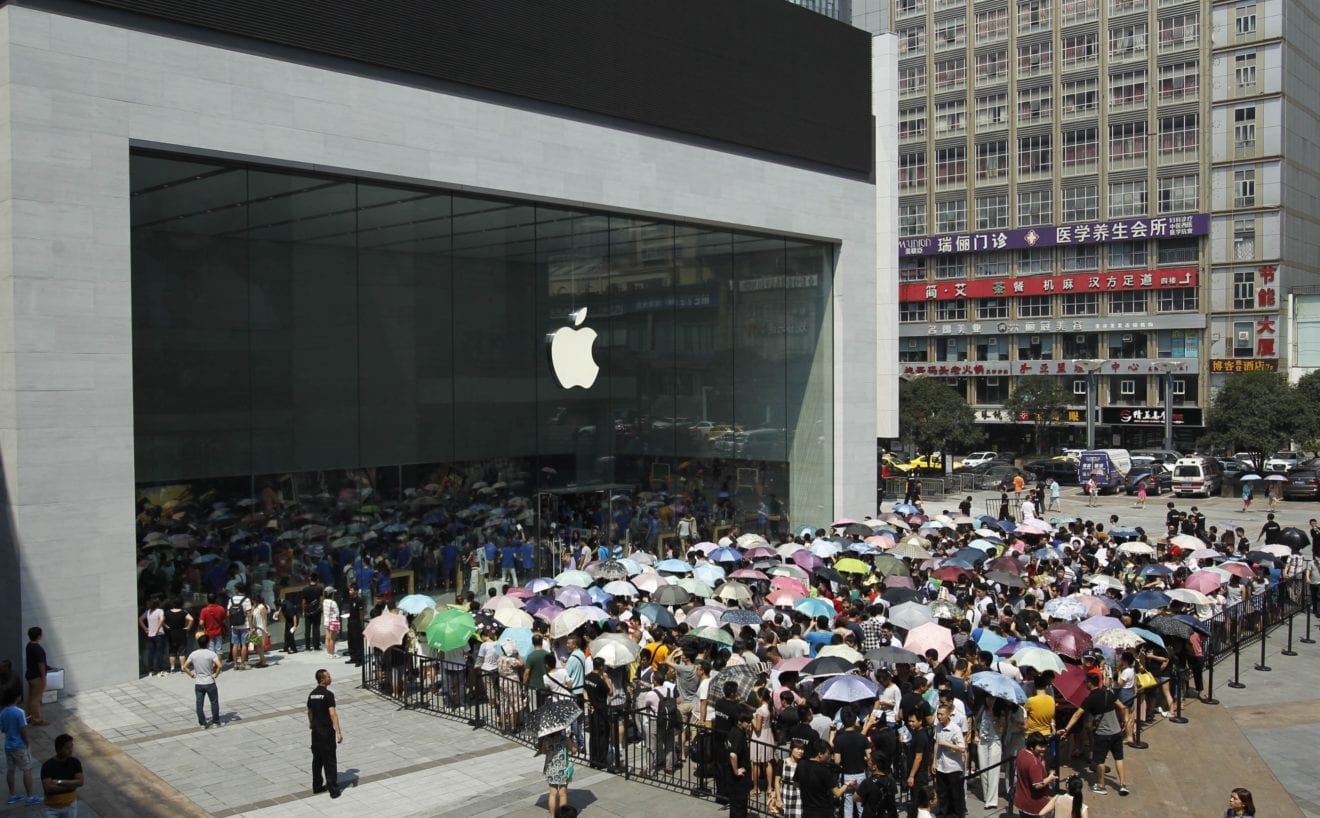
    China’s current economic problems – share trading suspended for the second time in a week after stocks fell 7% – doesn’t seem to be impacting Apple’s retail store expansion program in the country. The company has announced the opening of its 30th retail store in China, the second one it is opening this month. Back in 2014, the company set a goal of opening 40 stores in the country by October of this year.

    The latest store is in Xiamen, a port city on the Taiwan Strait. Xiamen is home to one of the four Special Economic Zones established by the Chinese government back in the 1980s, to encourage foreign investment and trade.

    Unusually, the store opens on a weekday, with Apple’s website showing that it will open at 10am on Thursday 14th January. The store is located in the SM Lifestyle Center at 399 Jiahe Road, in the Siming District of the city. It opens just a few days after the 29th store in Shenyang.

  • Amazon opens web services in Korea

    Amazon opens web services in Korea

    Amazon Web Services has reported the opening of its twelfth geographic locale in Korea bringing the number of accessibility zones to 32. There are two new accessibility zones accessible in Seoul giving Korean clients the power alternative that they have been asking for quite a while.  The new zones bolsters Amazon EC2 , T2, M4, C4, I2, D2, and R3 occurrences . Other services incorporate Amazon Elastic Block Store (EBS), Amazon Virtual Private Cloud, Auto Scaling, and Elastic Load Balancing. A full posting is accessible in a site by Jeff Barr, Chief Evangelist at Amazon Web Services.

    The service is accessible now and developers can get to the zone details from https://aws.amazon.com. Itemized data relating to the zones was not made accessible but rather every zone comprises of one or more server farms. For Korean clients these will convey low dormancy arrangements anyplace in Korea, conveying under 10 millisecond service the nation over, something that was not accessible before to Amazon clients.

    The Act on the Development of Cloud Computing and Protection of Users (Korean Cloud Act) came into action on 28th September 2015 and was the first Cloud processing law to be passed in the world. With two zones accessible, adaptation to internal failure and failover between the two zones inside of the single national fringe is additionally ensured. The accessibility zones have been produced to be profoundly adaptable so that if request develops AWS will have the capacity to meet it.

    Andy Jassy, Senior Vice President, Amazon Web Services remarked: “Customers continue to choose AWS as their infrastructure technology platform because we have a lot more functionality than any other cloud provider, a significantly larger partner and customer ecosystem built around AWS, and unmatched maturity, security, and performance.”

  • Mercedes-Benz Malaysia hits highest ever record sales for 2015

    Mercedes-Benz Malaysia hits highest ever record sales for 2015

    The Mercedes-Benz brand recorded an all-time high of 10,845 units sold for 2015, which also represents a year-on-year growth of a massive 56 per cent growth over 2014 sales units of 6,932.

    Locally-assembled models, namely the C Class, E Class and the S Class made up the bulk of the total sales, accounting for 7,989 units, while the remaining 2,856 were made up of imported units. Of the imported (CBU) units, 2,811 units were made up of the A Class, CLA and the GLA models, which helped to pump up the total to make Mercedes-Benz the leading Premium brand in Malaysia. The latter three models represent Mercedes-Benz Malaysia’s (MBM) very successful foray into the compact size passenger car segment.

    Locally assembled Mercedes-Benz models accounted for 74 per cent of total sales for 2015. — Picture by YS Khong

    Locally assembled Mercedes-Benz models accounted for 74 per cent of total sales for 2015. — Picture by YS KhongThe highest volume, surprisingly, came from the E-Class, which maintains its tradition for being the most popular “Towkay” (meaning ‘boss’ in the Chinese Hokkien dialect) sedan, with 3,383 units sold. Following closely behind was the C Class, also a highly desired aspiration of newly-successful businessmen and corporate executives, which accounted for 2,697 units sold. The highest growth segment was in the flagship model, the S400L hybrid, which grew 201 percent in 2015 compared to the same period in 2014, accounting for 1,909 units.

    The timely introduction of the new compact vehicles series, which includes the A Class, CLA, and GLA models, and these models, together with MBM’s EEV strategy that actually saw a reduction in retail prices across certain key models, helped Mercedes-Benz Malaysia to achieve its record-breaking sales numbers. With a recent announcement that it will continue to pass on the benefits derived from certain tax exemptions back to its customers, MBM looks forward to continued leadership for 2016.

  • Apple to open its 25th new retail store in China

    Apple to open its 25th new retail store in China

    Apple has declared that its 29th retail location in China opens in Shenyang, the capital city of Liaoning, on Saturday, January 9 at 10:00 a.m. local time. The store will be situated in the MixC shopping center at 288 Qingnian Street in Shenyang’s Heping District.  The new store will be open Monday to Sunday between 10 a.m. to 9:30 p.m. local time, and offer traditional Apple Store services, including the Genius Bar, Workshops, Joint Venture, events and classes.

    This new MixC area in Shenyang will be Apple’s 25th retail location in Chinese territory, and the organization also operates in four retail locations in Hong Kong. Shenyang is situated around 250 miles (402 km) upper east of Dalian, a noteworthy port city in southern Liaoning where Apple’s 21st retail location in China opened on October 24, 2015.

    Apple has forcefully extended its foot print in China under the initiative of retail chief Angela Ahrendts, having opened new stores in Nanning on December 12, Beijing on November 28 and Chengdu on November 21. Apple likewise opened stores in retail locations in Chongqing, Hangzhou, Hong Kong, Nanjing and Tianjin all through 2015.

  • SM Cinema adds more cinema screens nationwide

    SM Cinema adds more cinema screens nationwide

    Beyond technology, SM Cinema extends its world-class experience to persons with disability (PWD) by providing dedicated areas for their convenience. SM Cinema also holds separate screenings of sensory friendly movies for those with special needs such as the blind and deaf, as well as children with autism and down syndrome.

    “We are very pleased to bring state-of-the-art cinema technology and a whole new movie experience out into the suburbs and provincial areas. We remain focused in providing the complete entertainment experience to every corner in the country,” SM Lifestyle Entertainment President Edgar Tejerero said.

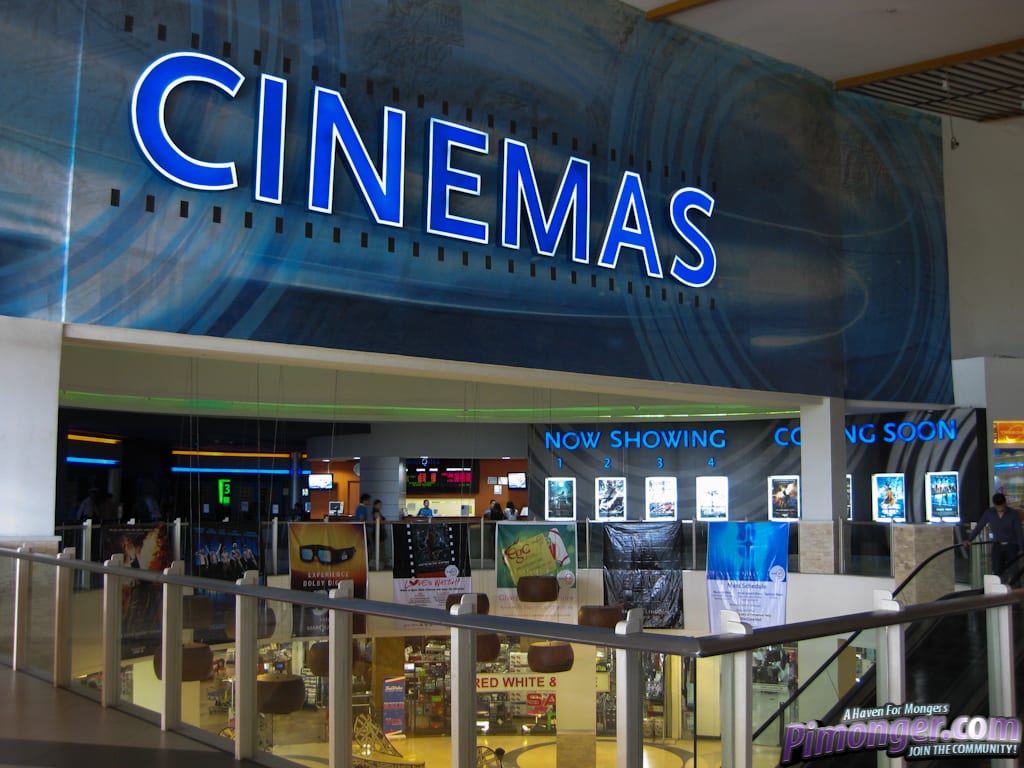
    For 2015, SM Cinema added four fully digitized cinemas in SM Center Angono in Rizal, its 55th branch. With digital surround-sound technology, the cinemas in Angono promise to deliver an optimum movie-watching experience. Each theatre will cater to 200 patrons in a stadium-like seating, making certain that all patrons will enjoy the view from any seat they choose.

    In Cebu, SM Cinema recently added the first laser projection system in Southeast Asia in its large screen cinema at the recently opened SM Seaside City, Cebu. This format uses the Christie® 6P laser projection system and features a super-sized screen almost 30% larger than the regular cinema screen size. The Christie® 6P laser produces the brightest images with 80% illumination and offers the best 3D platform that accurately reproduces the colors of the actual movie set, developing the most immersive cinema experience. The SM Large Screen Cinema also proudly uses the DOLBY ATMOS Sound System and the top-of-the-line Christie Vive Speakers, its audience fully immersed in surround-sound technology. SM Large Screen Cinema will house 351 guests in stadium-like seats.

    Earlier this year, SM Cinema also opened in Cabanatuan City through SM Megacenter and SM Cabanatuan; in Rizal Province through SM San Mateo and SM Angono; and in Caloocan through SM Sangandaan. SM Cinema also partnered with housing arm SM Development Corp to open its cinemas at Light Mall, the first theater available in an SM residential complex.

    Tejerero added that he is optimistic that ticket sales will be robust by the end of 2015 given blockbuster movies such as Heneral Luna, Star Wars: The Force Awakens, A Second Chance, Felix Manalo and movies shown during the Metro Manila Film Festival in December.

  • Singapore firms join Chongqing project

    Singapore firms join Chongqing project

    A slew of Singapore firms, including property giant CapitaLand and banks DBS and UOB, have joined the third Sino-Singapore government-led project, which is based in Chongqing.

    DBS inked four strategic partnerships with Chinese government agencies and banks to provide comprehensive financial services for the project. One of them will see DBS and the Industrial and Commercial Bank of China providing financial solutions and services to the Chongqing government to boost trade and investment.

    Financial services is one of four priority areas of the China-Singapore (Chongqing) Demonstration Initiative on Strategic Connectivity, which focuses on modern connectivity and modern services.

    The others are aviation, transport and logistics, and information and communications technology.

    DBS Bank (China) chief executive Neil Ge said the bank will leverage on its experience and expertise in developed financial markets such as Singapore and Hong Kong “to explore financial innovation with its partners as well as strengthen economic ties between Singapore, Chongqing and western China”.

    UOB inked a memorandum of understanding with the Chongqing financial affairs office to promote cross-border trade and investment between Chongqing and South- east Asia. They will help Chongqing firms expand into South-east Asia through UOB’s advisory unit, banking products and regional network.

    Mr Eric Lian, president and chief executive officer of UOB (China), said in a statement that the bank’s Chongqing branch has doubled its wholesale banking customer base since its launch in September 2014, in areas such as electronics, retail and wholesale services and infrastructure sectors that are to be developed as part of the project.

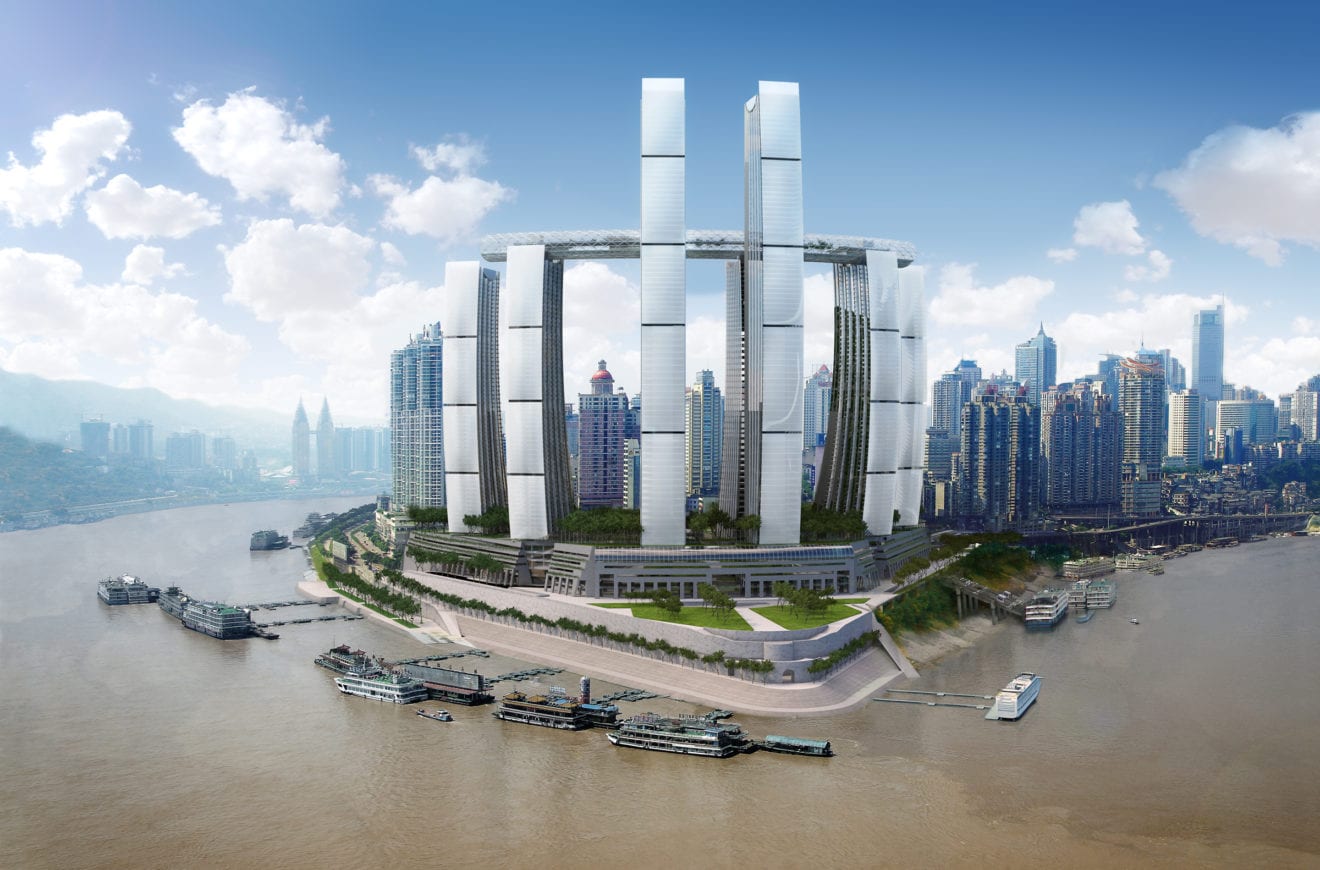
    CapitaLand is partnering the Yuzhong district government to set up the Sino-Singapore Collaboration Centre at Raffles City Chongqing, its biggest single project in China costing 24 billion yuan (S$5.2 billion), to be completed by 2018.

    CapitaLand president and group CEO Lim Ming Yan said its Raffles City aims to be a testbed for the latest technologies in areas such as modern retail, collaborative workspace and smart homes.

    “Coupled with the support of the Sino-Singapore Collaboration Centre located therein, it will be able to effectively bridge companies pursuing cross-border expansion to the immense growth opportunities in Chongqing,” he added.

  • Stronger HK dollar a turn-off for tourists

    Stronger HK dollar a turn-off for tourists

    The sharp decline in the yuan and volatile stock markets have exacerbated retail and tourism woes in Hong Kong as a weak currency means it is no longer attractive for mainland visitors to shop and dine in the city.

    Experts fear the falling yuan will further discourage mainland tourists. A total of 38.6 million visited the city in the first 11 months of 2015, accounting for about 77 per cent of all arrivals to Hong Kong.

    “Mainland tourists will turn to places with weaker local currencies,” says Charlie Chen, head of Asian consumer research at French bank and financial services company BNP Paribas.

    Although the yuan is falling against the US dollar, Chen says it is not necessarily depreciated when converted to other major currencies, like the South Korean won and Japanese yen. But the Hong Kong dollar is pegged to the US dollar, which means higher prices when converted to yuan.

    “The luxury sectors will be hit the most if the yuan continues to depreciate,” Chen notes. He says people tend to buy expensive goods in places with weaker currencies than their own, as they can save more money in absolute terms.

    Jewellery, watches, clocks and valuable gifts are already ranked the worst performer among all retail outlets in Hong Kong, with sales down 20.6 per cent in November on a yearly basis.

    However, one of the city’s biggest jewellers, Chow Sang Sang, says it has not felt much of the heat from the fluctuation of the yuan since August, though it has constantly adjusted the exchange rate of the two currencies if customers want to pay in yuan instead of Hong Kong dollar in a bit to protect its profit margins.

    “Mainland consumers still have a reason to buy gold in Hong Kong,” says Lau Hak-bun, the company’s director of Greater China, adding that the same item still costs at least 20 per cent more on mainland China despite the recent devaluation. But if the yuan falls a further 10 per cent from last year’s level, he “needs to look at the strategy again”.

    Ricky Tse, chairman of the Hong Kong Inbound Tour Operators’ Association, also seems to be at ease. He says the impact of the yuan’s devaluation has already been “hedged” by the falling hotel rates and retail prices in the city in the past year.

    Tse says that he has observed a drop of “at least 20 per cent” in hotel rates compared with a year ago.

    “Cheaper hotel rates and more discounts to retail prices will attract more tourists to the city,” he says.

    Despite the recent contraction of tourists from mainland China in – with arrivals of tour groups dipping by about 20 per cent last year – Tse notes that more hotel rooms have been booked by overseas tourists.

    “Foreigners are very practical,” he says, adding that the number of tourists from Southeast Asia has remained stable despite the local currencies falling against the Hong Kong dollar.

  • Malaysia provides Tweakker with entry into Asian MVNO market

    Malaysia provides Tweakker with entry into Asian MVNO market

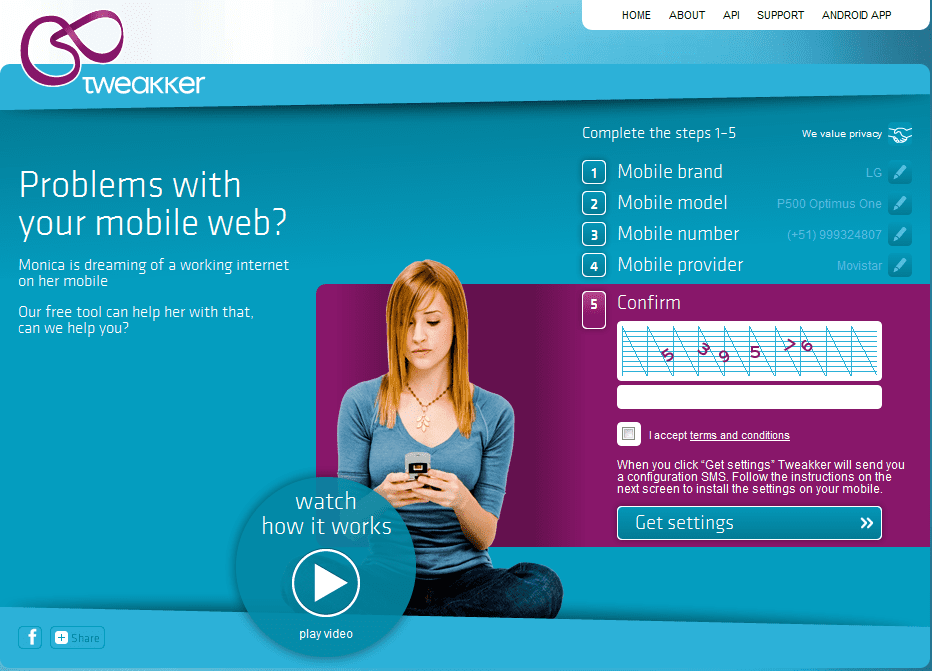
    Spirent Communications has announced  that the firm’s mobile device intelligence unit -Tweakker, has won its first contract with a mobile virtual network operator [MVNO] in Asia. Called redONE , the contract enables the MVNO to embed Tweakker’s self-care smartphone Device Guides on its website with a link to Tweakker’s cloud. After training provided by Tweakker, customer care agents will be able to reference them to minimize the time it takes when on-boarding new subscribers if they experience difficulties in getting online.

    During calls, agents will simply direct callers to the correct place in the self-care device guide library on redONE’s website through a link delivered by SMS or email. “Over 51 per cent of Malaysia’s 35 million mobile subscribers now have smartphones and this figure can only rise in the years ahead as feature phones gradually disappear,” said redONE’s CEO, Farid Yunus.

    He continued, “With a highly-diverse smartphone market, the only way our care agents can handle our growth and on-boarding connectivity issues as a result is having access to Tweakker’s how-to Device Guides.”

    Tweakker’s general manager Dennis Poulsen added, “This groundbreaking contract in the Asian market paves the way for Tweakker to quickly expand its presence in this young, vibrant smartphone region.”

    “redONE and other agile MVNOs know only too well the painful consequences of poor customer care.”

    “Tweakker’s market-proven Device Guides will help them to deliver best-practice customer engagement and solution.”

    Founded in 2012, redONE built its customer base to one million in just under three years.

    With plans to open more retail outlets across the country next year, the MVNO expects to double its customer base by end 2016 through ambitious customer acquisition campaigns. Key to achieving its growth target will be the ability to offer postpaid mobile plans at the lowest rates as well as delivering the best possible customer engagement on-boarding experience.

    Tweakker’s cloud-based Device Guides enable mobile virtual network operators (MVNOs) to provide end-users flexible self-care and high quality customer care experience with radically reduced customer care costs.

    Through its market leading device intelligence library and APN Setup, Tweakker provides MVNOs fast and seamless zero-touch on-boarding for new subscribers ensuring rapid revenue uptake.

    By connecting with Spirent’s device library, MVNOs can tap into the world’s richest and most accurate device capability data, with over 150 data points per device, and to enrich their subscriber insight for marketing and business decision purposes.

  • BlackRock sells luxury Kuala Lumpur mall

    BlackRock sells luxury Kuala Lumpur mall

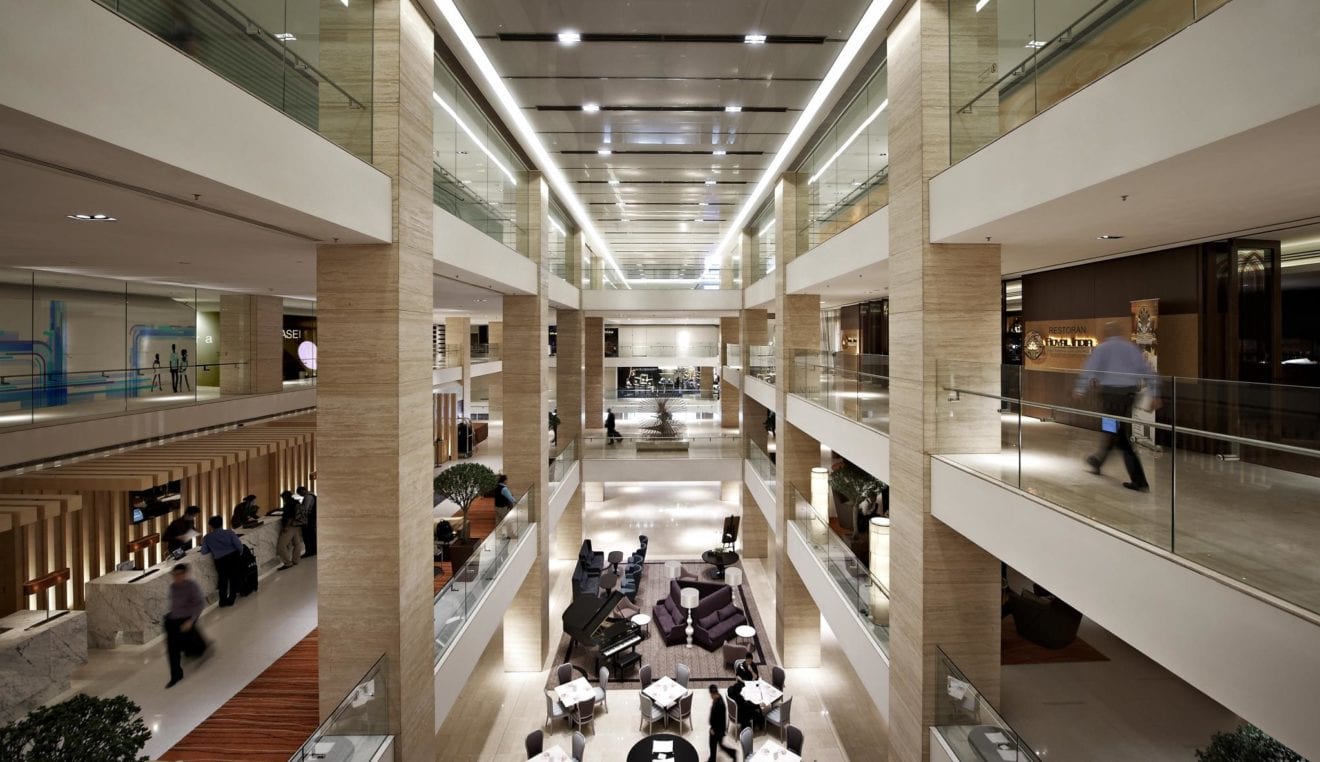
    In a MYR160 million ($37.33 million) deal, asset manager BlackRock has sold a luxury shopping mall in central Kuala Lumpur to Malaysia’s Pavilion Real Estate Investment Trust.

    Reputed to be the world’s largest asset manager, BlackRock, registered on the New York Stock Exchange, bought Intermark Mall in 2007, along with two corporate office towers and a hotel, for $600 million through a private real estate fund. One of the office towers and the hotel have since been sold, reports Deal Street Asia.

    In a filing with the Malaysian Stock Exchange, Pavilion REIT said it had entered into a sale and purchase agreement with The Intermark Sdn Bhd for the acquisition of the six-storey retail building, which has a strata floor area of about 337,427sqft (31,350 sqm) together with basement parking for 367 cars.

    With a 74 per cent occupancy rate, the Intermark will return guaranteed rentals of MYR15 million for three years, to be held by a trustee for Pavilion REIT. The company expects the purchase to be completed this first quarter.

  • Bank Mega, official Barcelona bank in Indonesia

    Bank Mega, official Barcelona bank in Indonesia

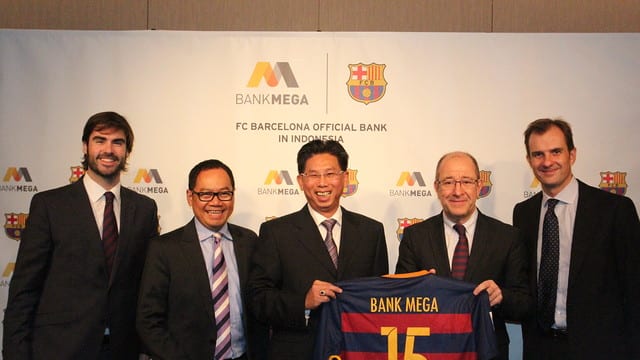
    FC Barcelona and Bank Mega signed a Regional Partnership Agreement last December to officially confirm the latter as FCB’s Official Bank in Indonesia. The representatives of the Club at the signing ceremony included Manel Arroyo, Vice Chairman, Francesco Calvo, Chief Revenue Officer and Xavier Asensi Brufau, Managing Director – Asia Pacific, while Bank Mega was represented by Kostaman Thayib, President Director and Dodit Wiweko Probojakti, Managing Director of Cards and Loan.

    The agreement makes Bank Mega Barça’s first ever banking partner in Indonesia. Holders of Mega Barça cards will have various advantages, such as the chance to win tickets for Barça games at Camp Nou, extra rewards for purchases at FCB’s official Asian online store, the chance to win exclusive FCB gifts and more. Savings Account customers that meet specific requirements will also receive special FCB souvenirs. The program will be launched in the first quarter of 2016.

    About Bank Mega

    Bank Mega is one of the largest card issuers in Indonesia under CT Corpora holding company. Bank Mega has a network of 345 branches across Indonesia.

    The bank strengthens the synergy of companies under the management of PT CT Corpora, such as Carrefour and Metro, as well as improving credit card services, a factor that distinguishes Bank Mega from the competition.

    “Bank Mega is the perfect bank to be the Official FC Barcelona Bank in Indonesia” said Manel Arroyo. “We are delighted to form this partnership and reach our massive fan base in Indonesia and show our appreciation to the fans through various partnership programs. Bank Mega is one of the top three credit card issuers in Indonesia, and it has strong synergy with retail companies under CT Corpora. We are confident that this partnership will be beneficial to Barça fans. We look forward to a long and mutually beneficial relationship with Bank Mega.”

    “This partnership is based on Bank Mega and FC Barcelona’s intention to provide benefits for the over 26 million Barça fans in Indonesia” added Kostaman Thayib, President Director of Bank Mega. “This partnership brings co-branded products that could enhance the fans’ identity as part of the Barça family and provide different benefits with exclusive programs from Bank Mega’s various products and services, including co-brand payment cards. Ultimately, the fans will have the money-can’t-buy opportunity to meet Barça players in person.”

    Mr Thayib also mentioned that the partnership will launch co-branded Mega – Barça cards, which will be specially designed for FC Barcelona fans in Indonesia.


  • Macau gaming revenue falls 34% in 2015 due to corruption crackdown

    Macau gaming revenue falls 34% in 2015 due to corruption crackdown

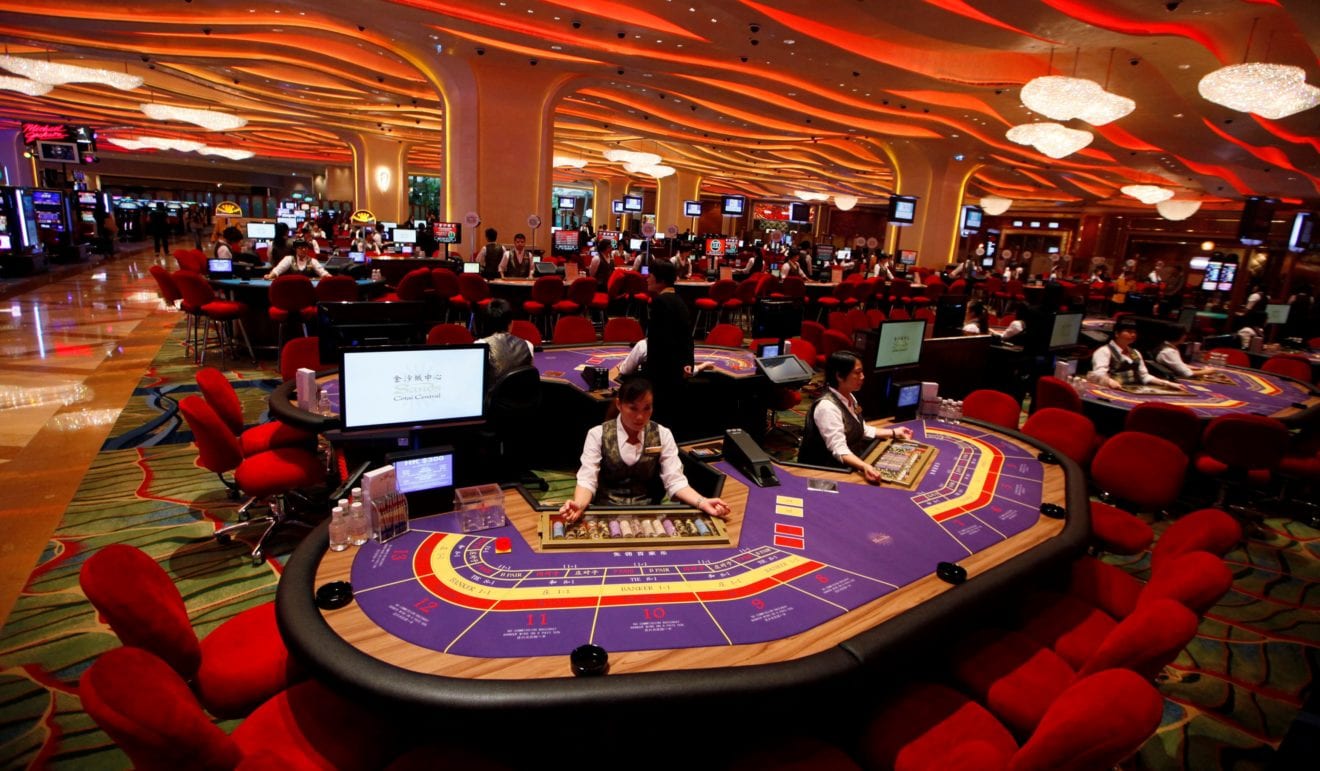
    Macau’s gambling revenue ended 2015 with a whimper, falling for a second straight year as mainland China’s corruption crackdown continued to keep high rollers from the Asian gaming hub.

    Revenue slid 34.3 percent to a five-year low of 230.84 billion patacas (US$28.92 billion), according to numbers released by Macau’s Gaming Inspection and Coordination Bureau. Gaming revenue fell 2.6 percent in 2014.

    December saw gaming revenue fall 21.2 percent, declining for the 19th consecutive month as China suffers a painful growth slowdown and Beijing’s hard-hitting campaign against corruption has hammered Macau’s key VIP sector.

    The figure for 2015 was in line with expectations of nine analysts polled by Bloomberg News who predicted a decrease of 35 percent.

    The city’s VIP section is also expected to fall 13 percent in 2016, analysts told Bloomberg.

    “Macau has been hit hard by China’s anti-corruption campaign which has deterred wealthy customers from visiting Macau,” Aaron Fischer, head of consumer and gaming research at CLSA, told AFP on Saturday.

    “2016 is not likely to be a very good year. However, after a 34 percent decline in 2015, consensus expects revenues to be roughly flat, which is a big improvement,” Fischer added.

    The slowdown in Macau, a semi-autonomous Chinese city, has been in part attributed to a high-profile corruption crackdown led by mainland Chinese leader Xi Jinping with Beijing making it clear it wants the former Portuguese colony to move away from gambling.

    Casino operators in Macau — the only place in China where casino gambling is allowed — are trying to lure mass market visitors to make up for the drop in high-roller gamblers who comprise the bulk of the city’s gaming income.

    This has led to a slew of of mega-projects on former swamp land on the coastal Cotai strip.

    The latest launch was of the Studio City hotel and casino resort in October — featuring the world’s first figure-of-eight rollercoaster — that was fronted by Robert De Niro, Martin Scorsese, Brad Pitt and Leonardo DiCaprio.

    Wynn Resorts founder billionaire Steve Wynn has previously said the situation in Macau was “uncertain.”

    “There’s no question that uncertainty is the plaguing word of the day in Macau,” he said in April.

    Wynn Resorts in November said the opening of its new US$4.1 billion Wynn Palace — a floral-themed 1,700-room resort featuring a lake with gondolas — would be delayed by three months to June 25, 2016.

    Macau soared past Las Vegas as the world’s gambling capital after opening up to international operators in 2001 and raked in more than seven times its U.S. counterpart in 2014.

    However, it is now being forced to follow Las Vegas’ lead and transform from a hardcore gambling hub into a destination with much broader appeal.

  • India’s direct selling industry likely to reach Rs 645 bn by 2025

    India’s direct selling industry likely to reach Rs 645 bn by 2025

    A report titled, ‘Direct 2015 – Direct selling: Mapping the industry across Indian states’ by FICCI-KPMG says that direct selling, the oldest and traditional forms of selling, is today a successful industry operating in over 100 countries, with a market size of $180 billion.

    In India, the market is estimated at Rs 75 billion (2013-14), and accounts for 0.4 per cent of the total retail sales in the country. The direct selling industry in the country has the potential to reach Rs 645 billion by 2025.

    As per the report, North India is the largest region by market size accounting for direct sales worth Rs 22 billion in 2013-14; South India holds the second highest share of the direct selling market is worth Rs 19 billion in 2013-14. While the north east is the smallest market, it has recorded the highest growth rate of 14 per cent in India with revenues of Rs 9 billion.

    The growth in direct selling has primarily been driven by rising income levels, high rate of urbanisation and growing consumerism in the states. The report claims that despite witnessing growth, direct selling industry faces multiple changes, one of the biggest being the lack of regulatory clarity.