Author: Mei Ling Tan

  • Postal Savings Bank of China has raised investment

    Postal Savings Bank of China has raised investment

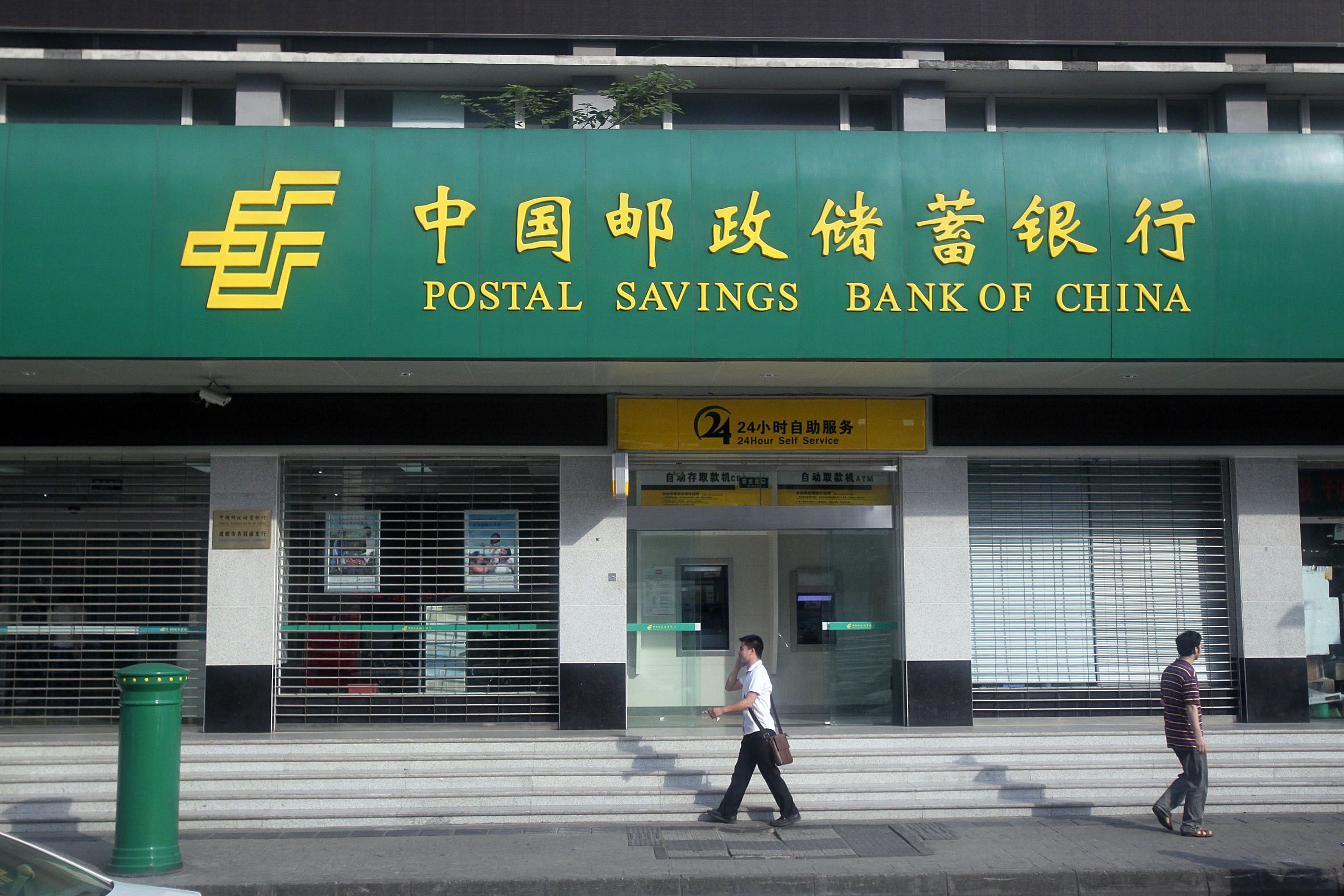
    Postal Savings Bank of China has raised $7bn from a global group of 10 investors including JPMorgan, an affiliate of Alibaba, and Temasek, valuing the state-owned lender at $41bn ahead of a float that could come as soon as next year.

    The sale of 17 per cent equity marks the largest private fundraising by a Chinese financial institution, and its international collection of investors will be seen as a signal Beijing is more open to outside funds to help with its slow-moving plans to reform its state-owned enterprises.

    Postal Savings Bank is China’s biggest unlisted lender and its sixth largest commercial bank in terms of assets. It has more than 400m retail customers and nearly 40,000 branches, many of them in rural areas where until recently the only alternative was putting money under the mattress.

    A similar pre-float sale of a $17bn stake last year in the retail operations of Sinopec was sold largely to domestic investors — so-called friends and family — in spite of interest from international groups, denting hopes at the time that China was serious about bringing in outside expertise and funding.

    Lu Jiajin, Postal Savings Bank president, on Wednesday described the placement as an “example of mutually beneficial co-operation between China and the world”.

    He added: “This indicates that the world has . . . confidence in China’s financial systems and [the] stability and profitability of China’s banking industry”.

    The international investors are UBS; JPMorgan; Singapore’s Temasek investment fund and DBS, the city-state’s biggest bank; Canada Pension Plan Investment Board; and the IFC arm of the World Bank.

    CPPIB is committing $500m. Mark Machin, head of international business and president of Asia for CPPIB, said the investment met the fund’s strategic goals of investing in less-developed regions of China and increasing exposure to the Chinese consumer.

    Chinese banks have come under pressure in a rapidly shifting landscape, and face challenges including rising bad loans and competitive pressures from the country’s interest rate liberalisation agenda.

    Hong Kong-listed shares in the country’s big four state-backed banks — ICBC, Bank of China, China Construction Bank and Agricultural Bank of China — have dropped at least 17 per cent this year.

    “This isn’t a sector bet, it’s an investment in this bank,” said Mr Machin, adding that Postal Savings Bank’s focus on consumer lending helped isolate it from some of the bad loan issues faced by corporate lenders.

    Ant Financial, the payments affiliate of Alibaba; rival internet Chinese giant Tencent; China Telecom; and insurer China Life have also committed funds.

    A filing with the Hong Kong stock exchange showed China Life is putting up $2bn and its stake will not be more than 5 per cent — implying a valuation of $41bn for Postal Savings Bank.

    Pre-IPO funding rounds are increasingly being used as a way of establishing baseline valuations and demonstrating support for a company before it approaches the public markets.

    JPMorgan said its agreement with Postal Savings Bank covered “multiple levels of collaboration” between the two sides.

    An executive at one of the companies involved in arranging the deal said: “They have reached out to strategic partners who can help them professionalise rather than just have passive investors”.

    Mr Lu said Postal Savings Bank wants to establish itself “as a 100-year bank with steady operations and excellent risk management”.

  • Johnnie Walker unveils Singapore Airlines exclusive

    Johnnie Walker unveils Singapore Airlines exclusive

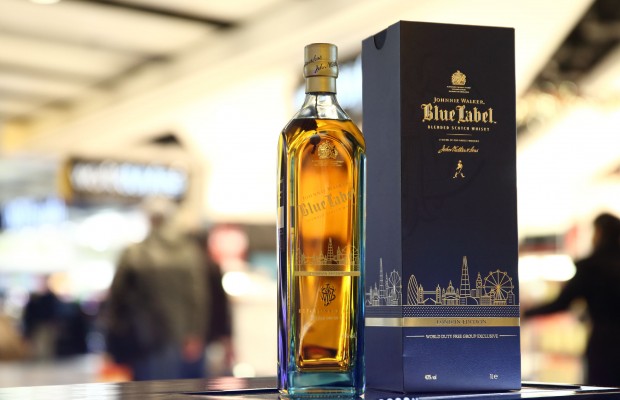
    Diageo’s Johnnie Walker House has launched Johnnie Walker Blue Label The Casks Edition, a Scotch whisky and bottle design available exclusively through Singapore Airlines. The ‘richer and more intense’ Johnnie Walker Blue Label The Casks Edition is a higher strength whisky than the main line liquid, and is bottled at 55.8% ABV.

    Johnnie Walker House, the ‘international network of luxury whisky embassies’, paired the whisky with a new bottle design based on the airline’s cabin crew uniform.

    The ‘Singapore Girl’ wears a sarong kebaya, designed by French couturier Pierre Balmain in 1968. The same shade of blue is used on the Johnnie Walker Blue Label The Casks Edition bottle design, which also features the airline’s signature batik print etched in silver.

    “It brings us great pleasure to work with Singapore Airlines, a company that shares our appreciation for the contemporary but at the same time, a great respect for heritage and progress,” said Lawrence Law, global general manager for Johnnie Walker House.

    “This partnership with Singapore Airlines provides an opportunity for consumers to buy a product that they cannot find anywhere else – an example of our continuing commitment to bringing our most successful innovations to consumers within the world of travel.”

    Mr Foo Chai Woo, Singapore Airlines divisional vice president sales and marketing added: “We are proud to be able to exclusively offer our customers the opportunity to purchase this special release in-flight via Singapore Airlines KrisShop. Having our Singapore Girl’s signature sarong kebaya batik motif reproduced on the bottle of the world’s leading luxury Blended Scotch Whisky is an honour and we are thrilled to have been selected as the first Johnnie Walker House airline partner.”

    Concessionnaire DFASS’s John Garner, president Asia and Middle East, said: “We are delighted to bring this exclusive Johnnie Walker Blue Label offering to KrisShop, for Singapore Airlines passengers. This has been a fantastic collaboration with all three parties actively involved from early ideation to getting it in-flight.

    “We believe that through this strong partnership, we will be able to provide more innovative offerings to Singapore Airlines and their passengers alike.”

    Johnnie Walker Blue Label The Casks Edition is available to purchase through Singapore Airline’s inflight retail store, KrisShop, from 1 December. Customers can pre-order via www.krisshop.com/JW.

    The whisky carries an RRSP of S$378 (US$270) for the 75cl bottle.

    Diageo’s partnership with Singapore airlines follows the publication of Generation Research data which shows that the global inflight retail market declined 6.7% in the first half of 2015.

  • Lenovo launches Moto 360 (2nd Generation)

    Lenovo launches Moto 360 (2nd Generation)

    Lenovo is bringing the new Motorola Moto 360 smartwatch to the local market, making it the first time that the Chinese company is launching a Motorola product in Singapore.

    The second generation Moto 360, which was announced at IFA 2015 in September, is available in two sizes and will go on sale from Dec 15 at retail stores Newstead and Challenger, and from online retailer Lazada.

    The 46mm silver and cognac leather version will retail at $549. The 42mm rose gold and blush leather model is retailing at $499, while the 42mm black and black leather model is priced at $479.

    The circular device is one of the latest smartwatches to run Android Wear. It comes with 4GB of storage, and the larger version houses a 400 mAh battery, while the smaller one has a 300 mAh battery.

    Lenovo, which bought Motorola Mobility in 2014, had previously focused on launching its own devices for the local market.

  • Thailand’s farmers left high and dry

    Thailand’s farmers left high and dry

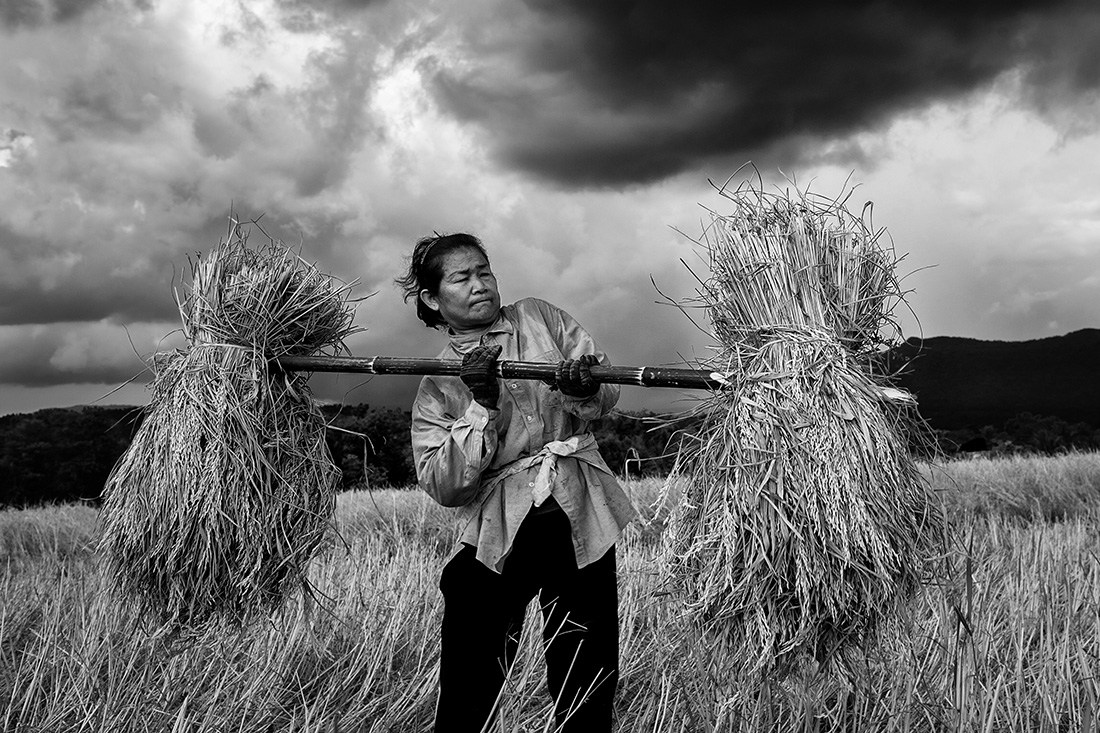
    One would not think it from the holiday bustle in Bangkok’s glittering shopping malls, but the rest of Thailand is bracing itself for a lean year.

    A rainfall deficit has left a series of reservoirs that are crucial sources of Thailand’s dry-season water at between a third and half of their capacities.

    Experts say the capital itself may run short of tap water.

    The countryside is already suffering as many people need water for their livelihoods. And the pinch is being felt more widely as spending shrinks because there is no cash available.

    Big C, Thailand’s second-biggest hypermart chain and a major retailer in smaller towns, saw total third-quarter revenues decrease by 4.6 per cent over the same period last year.

    Early last month, Siam Commercial Bank said disappointing retail industry figures were a “reality check” and that “consumers, particularly low-income consumers, have been under fiscal strain”.

    Big C’s revenue decrease was “driven by a retail sales decline”, wrote Ms Warunee Kitjaroenpoonsin, director of corporate affairs at Big C Supercenter PCL, in an e-mail. “The third quarter was also impacted by slow private consumption, high household debt levels and a slow global economic recovery.”

    Rural Thailand accounts for half of the population. From rubber to rice, embattled farmers are facing a perfect storm of water shortage, low commodity prices and an economy which, hit by domestic political uncertainty, is forecast to grow just 2.9 per cent this year.

    Thailand’s ratio of household debt to gross domestic product, at 84.2 per cent last year, was 45 per cent higher than in 2003.

    The National Economic and Social Development Board believes the figure may reach 87 to 88 per cent by the end of this year.

    The farmers are the deepest in debt. It is also the poorest farmers who have the highest debt, said Dr Nipon Poapongsakorn, a distinguished fellow of the Thailand Development Research Institute Foundation.

    “Most of the debt is from the formal sector – buying of fridges and television sets on instalment, for instance,” he explained.

    “The government has had several loan schemes so they (the farmers) are heavily indebted. And the 20 per cent poorest farm households owe 124 per cent of their income.”

    The ongoing El Nino-induced rainfall deficit and drought projected to continue into next summer will reinforce the problem of ballooning household debt, which analysts have been warning of for some years, said Dr Nipon.

    Thailand’s farmers must rely on non-farm income – trading or odd jobs or remittances from working members of the family, perhaps in Bangkok – to meet their debts.

    As much as 60 per cent of the average rural family’s income is from non-farm sources, Dr Nipon said. While that has helped, it has made the farmers vulnerable to slowdowns in the larger economy – which is what is happening now.

    Ms Meena Chaimongkol, a 46-year-old single mother, owns 2.5ha of land in Huay Khaokam, a village near Phayao in the lower north that is part of the 22 provinces affected by the water deficit.

    She said she has lost 70 per cent of the family’s padi crop this year because of erratic water supply.

    She has resorted to going to Bangkok once a month to buy used clothes to mend and sell locally. But that exposes her to an economy that is not doing much better.

    “Most farmers are able to pay debt from non-farm income,” Dr Nipon said. “But then, when the economy slows down, they have no money.”

  • Philip Morris: Singapore’s ban on tobacco display won’t curb smoking rate

    Philip Morris: Singapore’s ban on tobacco display won’t curb smoking rate

    Philip Morris Singapore said the forthcoming ban on the display of tobacco products at retail outlets will have no impact on the smoking rate in Singapore.

    The comment by the leading tobacco company in Singapore was in response to the announcement by the Ministry of Health (MOH) on Wednesday (9 December) that retailers selling tobacco products will no longer be allowed to display such items near the cashier counters of their outlets from 2017.

    The ban on point of sale display (POSD) will take place after the Tobacco (Control of Advertisement and Sale) Act has been amended, MOH said. The amendments will be tabled in parliament, whose opening session is in January 2016.

    “The POSD ban aims to protect the health of Singaporeans. By removing tobacco products from the public’s line of sight, we want to prevent our youth from picking up the smoking habit, and to help individuals who are trying to quit smoking,” said MOH in a press release.

    In an email statement to Yahoo Singapore, Philip Morris Singapore said based on its experience in working with countries that have similar regulations, there has been no clear evidence of a decrease in the smoking rate of these countries after such a ban took effect.

    “From the retail perspective, this will bring significant operation burdens to retailers. From our perspective, it will stiffen competition…when all products are hidden, how can you compete?” said a Philip Morris spokesperson, who declined to be named.

    “You can’t scientifically demonstrate with evidence that it (POSD ban) will reduce smoking rate,” he added.

    Iceland, Canada and Thailand are some of the countries in the world that have imposed a ban on POSD.

    PMI is one of the leading tobacco companies in Singapore, owning brands such as Marlboro and L&M, according to Euromonitor International.

    Retailers will be given a 12 months grace period after the ban has been gazetted, to give them “time to effect the changes and smoothen the transition process” so that they can comply with the rules, MOH said.

    “Support from the community and businesses is crucial in our fight against tobacco use. Retailers can help create the right environment for Singaporeans who are trying to stay away from cigarettes,” it added.

    On Wednesday morning, Senior Minister of State for Health and Environment and Water Resources, Amy Khor, attended a meeting with tobacco retailers to inform them of the implementation of the new guidelines.

    The Health Promotion Board (HPB) has also prepared a brochure to assist tobacco retailers in implementing the ban.

    Since 2013, MOH, HPB and Health Sciences Authority (HSA) have had a total of 14 dialogue sessions on the POSD ban.

  • Zalora Wins Big with 12.12 Online Fever 2015

    Zalora Wins Big with 12.12 Online Fever 2015

    Zalora, Asia’s online fashion destination enjoyed strong support from fashion consumers across their eight markets – Singapore, Malaysia, Indonesia, Philippines, Thailand, Vietnam, Hong Kong and Taiwan – with over six times the volume of any previous day. A Zalora-led initiative, 12.12 Online Fever aims to drive the e-commerce industry across the region, bringing to consumers some of the best deals that will encourage online purchase, hoping to convert traditional consumers into e-consumers. This year 32% of 12.12 Online Fever shoppers are first-time Zalora customers.

    As Zalora is committed to giving customers the best online shopping experience, the team prepared for the surge of volume of orders to make sure that deliveries are fulfilled within the fastest time possible. To ensure timely packing and delivery of orders, so that excited customers can get their hands on their latest fashion purchase, Zalora increased manpower in operations working 24/7 in order to ship 100% of the packages received in its warehouses within 24 hours. This resulted to having 30% of packages delivered to customers within the next day and more than 50% of packages by end of day Monday, 14 December, across the region.

    The number of fashion thumb shoppers also increased, comprising 78.5% of shoppers who shopped through their mobile devices on Saturday 12 December compared to 21.5% who shopped on their desktops. This is in line with the changing consumer behaviour and the growing trend of consumers in the region shopping heavily through their mobile devices. The number of customers who shopped on Zalora through mobile had a 250% increase from last year.

    Female consumers had a strong showing as they cover 74% of shoppers during 12.12 Online Fever

    but the men did a lot of shopping too as they contribute 26% of the shoppers. The most popular categories for both male and female are apparel, footwear and accessories. Favourite brands among women include Rubi, Mango, Dorothy Perkins and Something Borrowed while Sperry, Herschel, Onitsuka Tiger and TOPMAN were popular brands for men. Zalora’s eponymous label was popular across markets and to both male and female shoppers.

    Netizens were also talking about 12.12 Online Fever in their social media posts, a few of them commending ZALORA’s quick delivery service and alerting their friends to join in. 12.12 Online Fever received more than 1.6 million of impressions on popular social media sites Facebook, Instagram and Twitter.

    Zalora Group CEO, Michele Ferrario shared, “12.12 Online Fever 2015 was a great success not only for ZALORA but for all the partners we worked with to make this initiative possible and for consumers who got their favourite fashion brands on great price point. We thank everyone who supported us. As Southeast Asia, Hong Kong and Taiwan are enjoying immense economic growth, we wanted to engage consumers and help boost the growth of e-commerce in the region. This online sales day will give them a push, sparking consumer spending by offering their favourite items at the best prices. Last year’s record sales attested that such a cyber event resonates well with consumers in the region, and we are happy that we managed to engage more consumers this year!”

    This year’s 12.12 Online Fever also saw an increase in number of partners with a total of 376 partners across the region covering different industries from food, home, entertainment, travel to beauty. Through large-scale online sales days such as 12.12 Online Fever, ZALORA aims to boost online retail consumption expenditure, while providing reassurances about the e-commerce sector and building trust with customers.

    12.12 Online Fever is an initiative to rally e-commerce players in the region to come together on one day and create Southeast Asia’s version of Cyber Monday. Southeast Asia is experiencing rapid

    economic growth, urbanisation and technology adoption, with 12.12 Online Fever, Zalora is bringing down barriers by making it more accessible for people in this region to buy fashion online where e- commerce is still in its infancy stage in many parts of Southeast Asia.

  • Huawei Mate 8 goes on sale; sold out in China on first day

    Huawei Mate 8 goes on sale; sold out in China on first day

    The Huawei Mate 8 finally went on sale in China on Dec. 9 after its unveil on Nov. 26 and seems to have sold out at many Chinese retailers on its very first day. The flagship phone will be unveiled to the international market at the Consumer Electronics Show (CES) at Las Vegas, Nevada in January 2016.

    The Huawei Mate 8 carries a 6-inch LCD display and is available in RAM configurations of 3 GB and 4 GB. In China, the 3 GB/32 GB model of the Mate 8 costs CNY 2,999 (AU$644 or US$470) while the 4 GB/64 GB model comes in at CNY 3,699 (AU$795 or US$580).

    There is also a 4 GB variant with 128 GB internal storage capacity. This model costs CNY 4,399 (AU$ 946 or US$690). And finally, the premium and exclusive champagne edition comes with hefty price tag of CNY 6,888 (AU$ 1,473 or US$1,075), reports GSM Arena.

    The smartphone is available at over 2000 retail outlets across China. Users can also visit Huawei’s official online store, Vmall Mall, JD.com, Suning Tesco, Gome and Amazon, among other online retailers. International availability and pricing details are expected to be announced at CES 2016.

    Huawei is believed to be manufacturing one million units of the Huawei Mate 8 per month, according to earlier reports. The company is hopeful its latest flagship will surpass the previous records set by Mate 7, which sold seven million units in one year.

    The all-metal Huawei Mate 8 sports the latest Kirin 950 octa-core processor with a Mali T880 GPU; a 4000 mAh battery and a 16 MP rear camera with LED flash. The device runs on the latest Android 6.0 Marshmallow OS.

  • Carrefour opens 4th distribution center in China in Wuqing

    Carrefour opens 4th distribution center in China in Wuqing

    The grand opening ceremony of Carrefour supply chain in China-North-West China distribution center is held in Wuqing Economic Development Area, Tianjin municipality. The foundation of the center is expected to become the overpass of Carrefour China’s supply chain in northern China, which can form the radiation of Beijing-Tianjin-Hebei integration economic cycle and Shandong, Shanxi and other provinces’ logistics and distribution network, increase the distribution efficiency, support the business of stores, and boost the regional economics.

    The northern distribution center of Carrefour launched this time has superior geographical location, which is located in ProLogis modern international distribution park, Wuqing economic development area, Tianjin municipality, covers an area of 39,000 square meters. Carrefour northern distribution center will utilize the Voice Picking System, achieving 99.997% in its picking accuracy rate. The tray utilize 100cm*120 standard operating procedure to reduce packaging and labor costs and improve efficiency; moreover, the center is equipped with professional temperature controlled room which sustain temperatures of 18-22 degrees for the storage of alcohol, chocolate and milk powder.

    To reply to the supply chain strategy development needs of Carrefour in China, the establishment of northern China distribution center will cover more than 30 stores in northern China, greatly improve the company’s northern China supply chain system to provide more high-quality, convenient products and services for numbers of consumers.

    After the establishment of the distribution center in Eastern, western and northern region, Carrefour is planning to set up 2 new distribution centers in North-East Territory and South Territory of China. It is estimated that by the end of 2016, Carrefour will complete the establishment of 6 modern distribution centers in China, and cover more than 200 hypermarkets in China to fully support the emerging industry such as E-commerce of Carrefour, “easy Carrefour” convenience stores.

  • Hacking of Hong Kong’s VTech may prove worst cybersecurity breach of 2015 in Asia

    Hacking of Hong Kong’s VTech may prove worst cybersecurity breach of 2015 in Asia

    The massive hacking of customer accounts at Hong Kong-based educational toy maker VTech, which left more than six million children’s profiles exposed, may have been the worst cybersecurity breach in the Asia-Pacific this year.

    “If we made a top-five list today, VTech would place first on the list for the Asia-Pacific based on the reported number of accounts affected,” Forrester Research senior analyst Heidi Shey said.

    The VTech incident last month compromised 4.8 million parent accounts and 6.4 million related children’s profiles on the company’s Learning Lodge app store customer database and Kid Connect servers.

    Also affected were 235,708 parent and 227,705 children accounts at the company’s Planet VTech online games platform.

    That was worse than the data breach at Japanese online shopping mall operator Rakuten in April, when the identification and passwords of about five million customers were stolen.

    A recently published Forrester report showed the Rakuten incident was listed as the top corporate data breach in the Asia-Pacific over the past 12 months. Details of the VTech hack were only released last week.

    VTech chairman Allan Wong Chi-yun said he blames an “orchestrated and sophisticated attack on our network” for the incident, which ranks as the largest known targeted hack on children’s data worldwide.

    Hong Kong’s privacy commissioner Stephen Wong Kai-yi last week said an investigation had been launched into VTech’s system of collecting personal data and the safeguards used to protect that information.

    The company said it was cooperating with law enforcement worldwide to investigate the incident, and has hired US cyber forensic firm Mandiant to help in that effort.

    Companies in mainland China and Hong Kong are forecast to remain under siege from growing cyberattacks as the number of data breaches in those two markets escalated this year.

    The average number of detected cybersecurity incidents on the mainland and the city increased 417 per cent to 1,245, up from 241 last year, according to a new survey by global professional services firm PwC.

    “Today, we are witnessing attacks from all angles, but the industries facing the most impact include consumer, retail and technology,” Kenneth Wong, PwC China and Hong Kong’s cybersecurity leader, said on Thursday.

    Customer data, internal records and intellectual property were the most targeted data in detected cyberattacks in mainland China and Hong Kong, according to the PwC survey.

    Respondents reported a 64 per cent rise in security incidents that compromised customer records, much steeper than the global average increase of 35 per cent.

    The average total financial loss due to cybercrime for companies on the mainland and Hong Kong was up 10 per cent to US$2.63 million, compared with US$2.4 million in the survey last year.

    Wong pointed out that the numbers from its survey will likely be conservative because many companies rarely publicise cybersecurity incidents in their operations.

    Respondents also said current and former employees were the source of half of all the detected data breaches security in the survey.

  • Manpower plan launched for retail sector

    Manpower plan launched for retail sector

    The labour-starved retail industry will be getting a leg-up over the next five years to implement more manpower lean practices and schemes to train and retain workers under a new plan launched today (Dec 10).

    The Singapore Retailers Association (SRA) told TODAY that more than 40 per cent of frontline positions in the industry still remains unfilled, and the figure is unlikely to change due to current restrictions on foreign manpower.

    December 10

    The new manpower blueprint by SPRING Singapore and the Singapore Workforce Development Agency for the retail sector includes a study starting next year that will involve up to 30 retailers from different industries and company sizes.

    The study will identify training and skill needs for the sector, as well as offer guidelines for companies to adopt leaner manpower models and create higher added-value job roles.

    At the second stage of the study, retailers who are keen to implement the study findings can tap on grants offered by SPRING.

    The guidelines from the study will serve as best practices for industry players — mostly Small and Medium Enterprises (SMEs) — to learn at a quicker pace and from each other, noted Manpower Minister Lim Swee Say at the plan’s launch.

    According to SPRING, small retailers with annual revenues of less than S$10 million make up 98 per cent of the retail sector.

    Under the new manpower plan, up to 100 retail companies can also revamp their existing human resource (HR) strategies to improve on their compensation, and learning and development aspects. Companies will be able to receive up to 70 per cent of funding from SPRING, while employers can also tap onto SPRING to review and give recommendations on current HR practices.

    Other measures to help the retail industry include piloting new job roles for interns so as to equip them with skills needed for future jobs, and programmes to support existing staff with skills upgrading and leadership development.

    Decks, a fashion retailer which carries brands such as Surfers Paradise, was hailed as an example for the retail sector at the launch today.

  • Funan the IT mall closes amid e-commerce boom

    Funan the IT mall closes amid e-commerce boom

    It was the place where hundreds queued at midnight to get their hands on Microsoft’s Windows 95, the landmark operating system that first brought out much of today’s modern features.

    It was also where pirated game CDs were sold and sound cards could be bought in anti-static bags, with no warranty or idea where they came from.

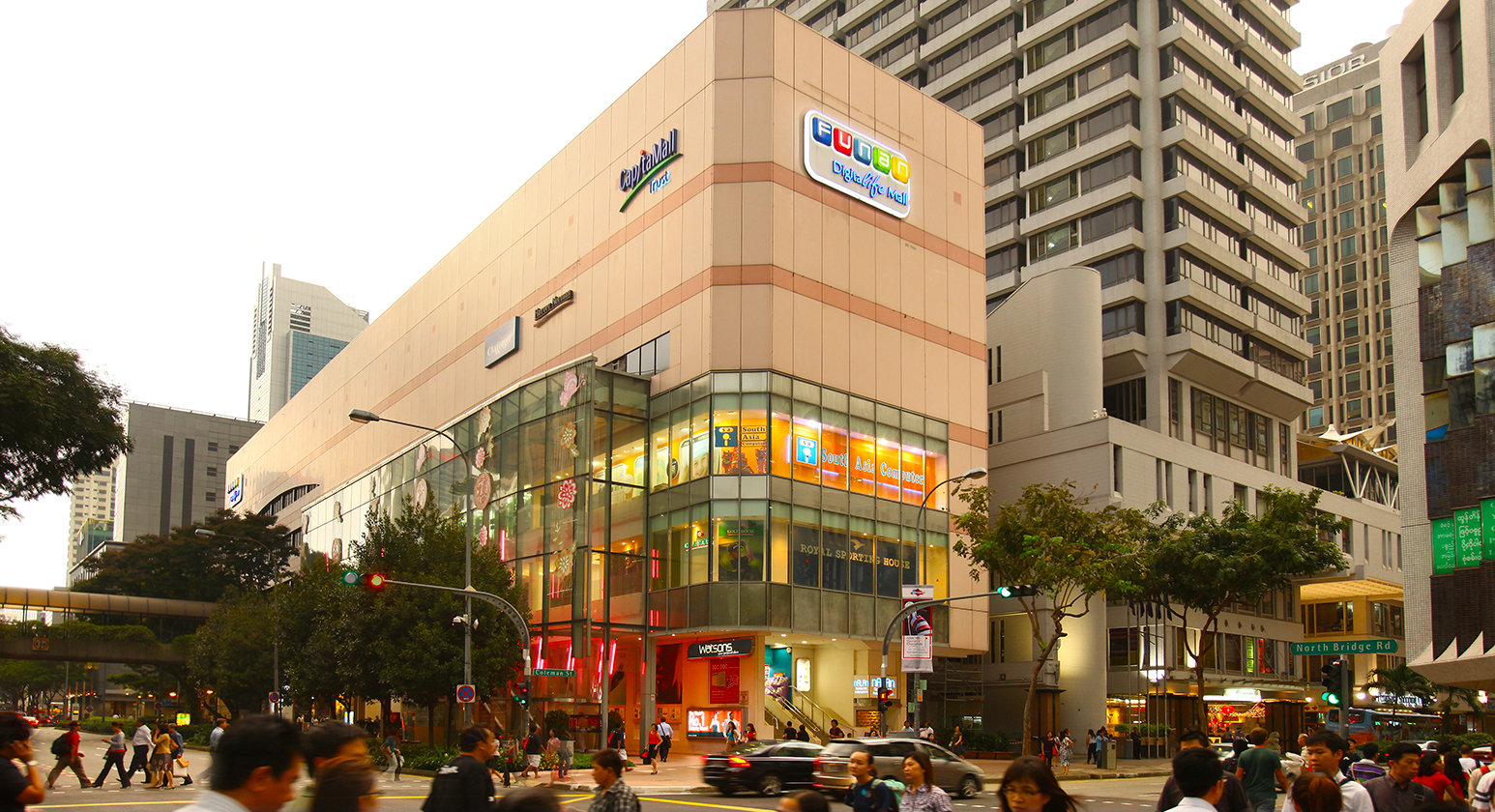
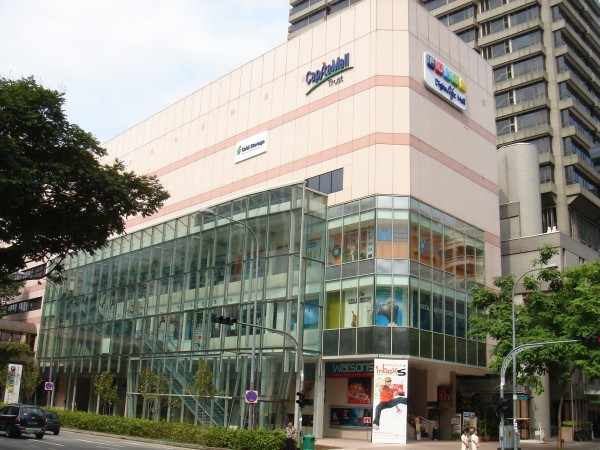
    Funan DigitaLife Mall, better known to many geeks by its original name, Funan Centre, is closing in the third quarter of next year. In its place, after a renovation, will be an “experiential creative hub”. Whatever that is.

    While Singapore’s techies miss a familiar, old haunt, where they first got their hands on a 486 PC or even where they studied in the open tables available, the writing has been on the wall long before today’s news.

    The end for Funan, while sad, is inevitable.

    Funan DigitaLife Mall. Source: Wikipedia. Creative Commons BY-SA 3.0

    Funan DigitaLife Mall. Source: Wikipedia. Creative Commons BY-SA 3.0

    Years of quarterly tech bazaars, the most recent one just a couple of weeks ago, have made some buyers delay purchases at retail outlets, which face increasingly high rentals. Some stores simply joined the fray in these shows to offset what sales they would lose during the price-cutting weekends.

    The biggest issue for Funan, however, may be e-commerce. Perhaps belatedly for such a well-connected country, Singapore has finally embraced the idea of buying things online, be it a PC or a pack of rice.

    Today, the likes of Lazada and Qoo10 make it easy to compare prices. Once, it was fun to walk to each store in Funan to see if you could get S$10 off a mouse or laptop. Today, you just move your mouse on your PC to compare.

    The change isn’t unique here. In the United States, for example, big chain stores have suffered too from the move towards online shopping.

    And to make things worse for retailers in Funan, Singapore shoppers are also buying from American sites, such as Amazon, which have become far more competitive for many items (see some examples).

    I just shipped a couple of Blu-ray discs and a Razer mousepad over from Amazon this month. Okay, I don’t get the instant gratification of walking into a shop to buy them, but the prices are lower over at Amazon.

    The last time I bought something from Funan was just weeks ago, when I picked up a Panasonic Lumix camera from a small store. I had to get some hands-on feel of the camera, so I went to Alan Photo, known for its bargains. At least the prices for some cameras are still competitive.

    I’ll be honest, though. I haven’t been to Funan much. Part of this is down to the congested parking – it’s not unique to the building to be fair; it’s the same for so many malls in Singapore on weekends. Another is the fact that I can get many commonly used items, such as printer cartridges or keyboards, at many other malls.

    That’s the biggest irony, isn’t it? As more people are buying laptops and phones, at a time when IT has become more than a geeky obsession and is a necessity in life, a big IT mall is closing down in Singapore.

    The reason is simple – people no longer have to go there to get what they need regularly. The stuff is available in neighbourhood malls. You can buy it at lifestyle shops like Tangs.

    As technology has ceased to be some specialised item, so have the shops selling it. You can buy a Mac in so many places today.

    The closing of Funan will raise questions for the other IT mall in Singapore. Of late, Sim Lim Square has been receiving bad press for a shop that brazenly cheated customers, even though many there are decent businesses.

    Will it also face the pressures that Funan did, that made developer CapitaLand Mall Trust Management Limited pull the plug? Geeks will hope not.

    Yet, if they see where they have bought their gadgets recently, they’d realise they have been spending less at their favourite technology malls. That’s why one of them is closing down.

    Related Posts Plugin for WordPress, Blogger...

  • Foreign wine imports to hit Myanmar’s shelves

    Foreign wine imports to hit Myanmar’s shelves

    U Tin Ye Win, a commerce ministry director in Nay Pyi Taw, said three or four companies have been granted licences, and several more are in the process of applying, but have not yet met all the requirements.

    Premium Distribution Company has been importing wines from South Africa and Italy since late November and Loi Hein Group has been granted an exclusive licence to import Thailand’s Spy wines. “These suppliers are well-experienced and will influence the whole market,” U Tin Ye Win said.

    Further liberalisation will depend on whether wholesalers buy wine imports from the official suppliers, or choose to continue selling cheaper illegal imports, he added.

    Shops are not allowed to sell foreign-made liquor under the current laws. While large supermarkets stick to the rules, smaller shops sell a range of illegally imported foreign brands, such as Johnnie Walker. If sellers switch to legal wine imports, officials may soon allow foreign liquors to be distributed, U Tin Ye Win said.

    The commerce ministry also needs to discover which companies have been dodging taxes by, for example, paying for 100 bottles but importing 100,000. However, it remains hard to keep track of the exact number of bottles entering the country, he said.

    A Ministry of Commerce notification in March said importers must register for a company trading licence and must have a dealership.

    This means they must first secure their licence and then contract a dealership with one or more foreign wine companies, before applying for an FL11 licence from the General Administration Department. This licence allows distribution of foreign liquor brands, which are taxed at 82 percent – 30pc customs duty, 50pc commercial tax and 2pc income tax.

    Importers must pay tax on every bottle, and ensure that ingredients are displayed in English. They can only import by sea or air – not by land – and must declare the country of origin. Suppliers must also ensure that products are Food and Drug Administration-approved, and have a certificate of free sale from the Ministry of Commerce, industry sources said.

    Beyond the big suppliers, DTR Company was set up last April specifically to apply for a wine licence, and has been importing French wines since October. Managing director Ko Thiha Sitt said the company distributes six wine brands for K10,000 to K30,000 a bottle to wholesale, retail, bar, hotel and restaurant markets in Yangon and Mandalay. The company plans to expand to other tourist hotspots in the near future.

    “I understand that this will take some timeas we are in the period of transition, but strongly believe that the government will take serious action on illegal importations,” he said.

    In the past, the Myanmar Customs Department has held auctions of confiscated products at a discount to licenced products and revenues went to the Internal Revenue Department.

    Now the auctions are a thing of the past, and officials say they are toughening up. New tax labels are more secure, and tear as soon as the bottle is opened, he said. In addition, a unique code is printed on the labels of licenced importers.

    It was easy to re-use the old-style tax labels, by peeling them off and sticking them to new bottles, and people made money by collecting labels and selling them to wholesalers and retail outlets, said Ko Thiha Sitt. “We can now guarantee our products, so customers can’t complain,” he said.

  • Inditex optimistic about push into China

    Inditex optimistic about push into China

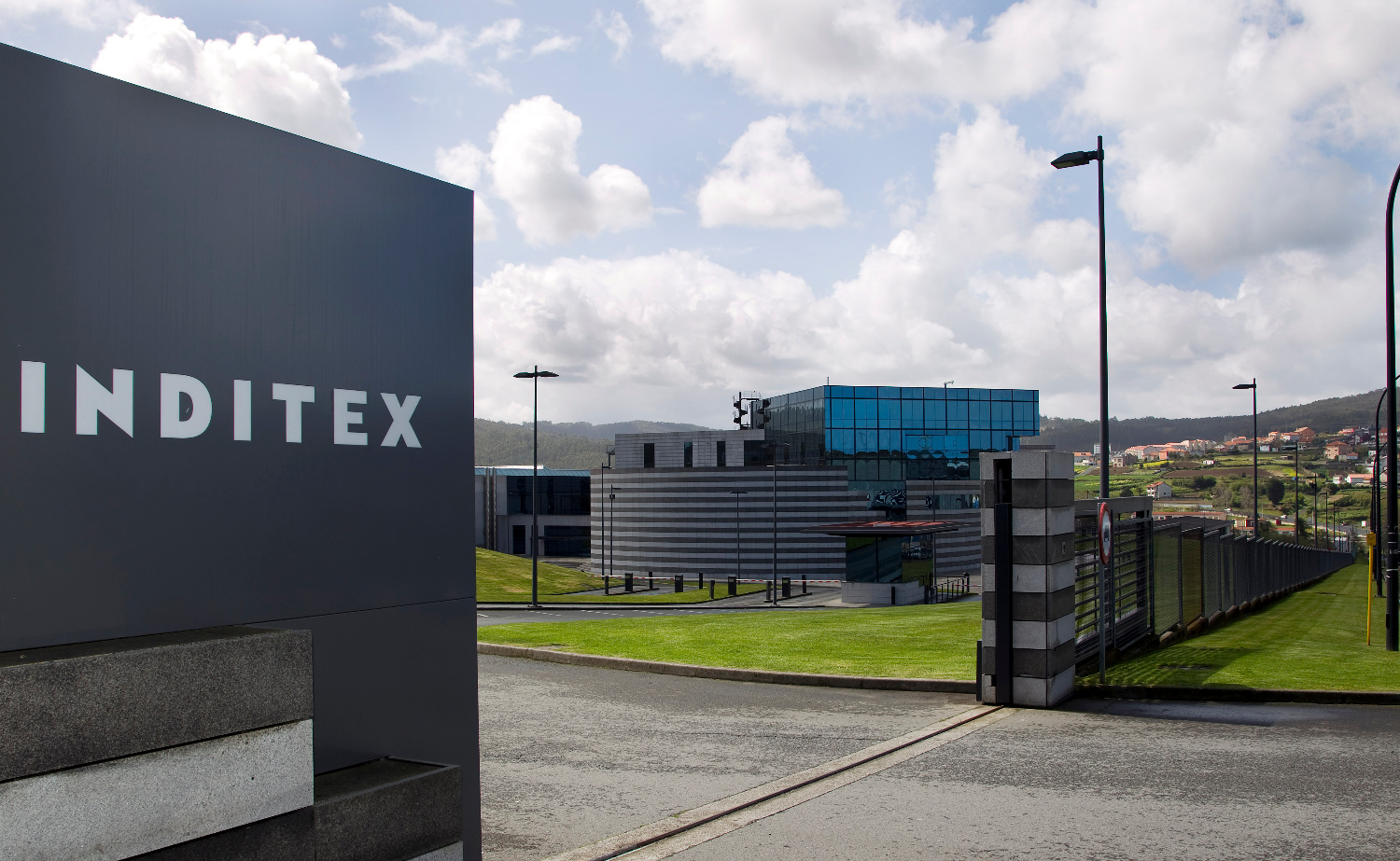
    Intidex, the parent company of fast fashion chain Zara, has revealed a sales increase of 16% year-on-year to 14.74bn (£10.6bn) over the first nine months of its financial year. Despite a dip in the economy, the Spanish group has said that it remains optimistic about its China prospects.

    The group’s profits, which include a 20% increase to £2.02bn, come not long after founder Armanocio Ortega surpassed Bill Gates as the world’s wealthiest man.

    Though luxury fashion retailers such as Burberry and Hugo Boss have experienced difficulties in the Chinese market, Inditex is positive about its expansion overseas.

    “We have no doubt that the fashion appetite in China is large, our brands are better and better known. We are still feeling very optimistic,” said Chief Executive Pablo Isla.

    During its first three fiscal quarters, the group added 136 new stores to its estate making a total of 230, the same amount as the same time last year.

    Zara had the most openings with 60 new stores, as well as 44 Zara home sites and 26 new branches for lingerie brand Oysho.

    In addition, Zara’s e-commerce platform is being extended to all of the European Union, Taiwan and Hong Kong, while a website for Zara Home has debuted in Australia.

  • Price Of Illegally Poached Ivory Halves In China

    Price Of Illegally Poached Ivory Halves In China

    The price of elephant ivory in China has fallen by almost 50 percent over the past 18 months, likely due to a shrunken demand in the country for illegally poached tusks, the Wildlife Conservation Network wrote this week in a blog post.

    Raw ivory in Beijing went from costing an average of $2,100 per kilo (about $955 per pound) in 2014 to $1,100 (or about $500) by November, ivory researchers Lucy Vigne and Esmond Martin revealed in a study scheduled to be released by Save the Elephants in early 2016. The price drop reflects China’s significant decrease in demand for the commodity, believed to be a result of the government’s explicit commitments to cut down on ivory trade and prevent illegal elephant poaching.

    Elephant poaching typically involves killing the animal, hacking off its tusk and discarding its carcass, The New York Times wrote in a gruesome report.

    Historically, China has considered ivory ornaments and carvings to be status symbols, and the country is still widely believed to be the world’s largest ivory consumer. But activists have long urged China to impose strict legislation on the ivory trade.

    Chinese authorities announced in May a commitment to phase out the country’s domestic ivory industry. In September, the United States and China also announced a deal to carry out “nearly complete bans” on ivory imports and exports. To show its dedication, mainland China destroyed almost 7 tons of ivory to show the country’s dedication to ban the wildlife crime, according to the World Wide Fund.

    Demand for ivory within the country also seems to have diminished. Vigne and Martin, who traveled across eight Chinese cities to conduct their research, said they “didn’t see a single person buying an ivory item during weeks spent surveying the ivory retail outlets.” The researchers also noted that many ivory retail outlets had cut back on floor space for displays of ivory items.

    Other countries have also ramped up their efforts to prevent illegal elephant poaching. Last year, the Obama administration announced that it would prohibit all commercial trade of elephant ivory. And in October, Tanzania arrested a number of high-level ivory traffickers accused of smuggling at least 4,200 pounds of elephant tusks from East Africa to East Asia.

    But despite the fallen demand for ivory in China, Save the Elephants founder Iain Douglas-Hamilton said the world still had a long way to go to stop the African elephant poaching business. Indeed, the number of elephants in Africa fell from 26 million in 1800 to about 400,000 in August. At least 65 percent of the continent’s forest elephants were poached between 2002 and 2013, WildAid reported last year.

  • Alibaba Group Acquires Major Hong Kong Newspaper

    Alibaba Group Acquires Major Hong Kong Newspaper

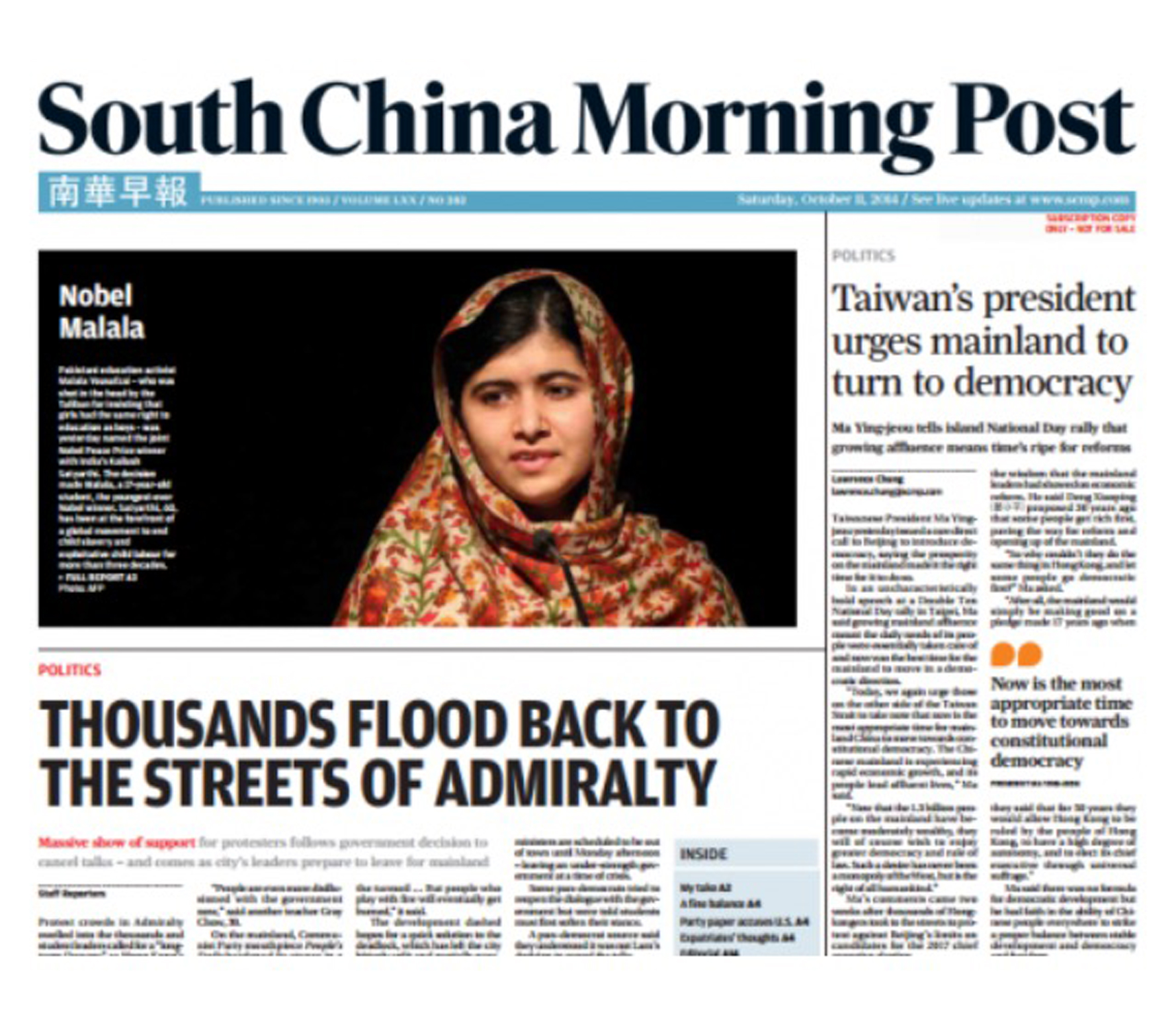
    The Alibaba Group has announced that will acquire the South China Morning Post, one of Hong Kong’s most influential English language newspapers, and other media assets of SCMP Group Limited.

    The move is reportedly part of an effort to improve China’s image in the West and combat what company executives call the “negative” portrayal of China in the Western media.

    “The South China Morning Post is unique because it focuses on coverage of China in the English language. This is a proposition that is in high demand by readers around the world who care to understand the world’s second largest economy,” said Joseph Tsai, executive vice chairman of Alibaba Group.

    The South China Morning Post has long reported on subjects that state-run publications have been forbidden to cover, such as political scandals and human-rights violations. The paper has a relatively small circulation (at about 100,000). Despite the paper’s size, it has significant influence in the West because of its proximity to China and English language format. However, critics have recently taken aim at the paper, claiming that it has become increasingly pro-Beijing.

    The acquisition is an ambitious move that sees Alibaba taking a significant stake in print journalism, with an eye to developing its digital potential.

    “Like many print media the SCMP faces challenges amid the dramatic changes in the way news is reported and distributed. But these changes play to Alibaba’s strengths, which is why we believe the two companies complement each other well,” said Tsai in an open letter to the readers of the South China Morning Post.

    As part of the changes, Alibaba will remove the pay wall on SCMP.com, allowing readers to access content for free on the internet and mobile.

    Other assets included in the acquisition are SCMP’s magazine, recruitment, outdoor media, events and conferences, education and digital media businesses. Besides the flagship South China Morning Post, other titles include SCMP.com and related apps, and Nanzao.com and Nanzaohinan.com, as well as the Hong Kong editions of Esquire, Elle, Cosmopolitan, The PEAK and Harper’s Bazaar.

    The acquisition represents a relatively minor investment on the part of Alibaba, with SCMP valued at an estimated US$100 million, a drop in the ocean compared with Alibaba’s multi-billion yearly revenue.

    It’s unclear at this point what degree of editorial control Alibaba will exercise over the controversial publication. While Hong Kong operates with a relatively free press, at least compared with mainland China, some are concerned that Alibaba will seek to water down the paper’s political stance to curry favour with Chinese leadership and advance its (Alibaba’s) own agenda, which is reportedly closely aligned with the Communist Party.

    Willy Lam, a political commentator and former editor at the South China Morning Post, said an Alibaba takeover would most likely exacerbate a trend at the paper toward self-censorship on sensitive political issues, reported the New York Times.

    The company has been quick to address this. “Some have suggested that ownership by Alibaba will compromise the SCMP’s editorial independence,” said Tsai. “This criticism reflects a bias of its own, as if to say newspaper owners must espouse certain views, while those that hold opposing views are ‘unfit’.

    “In fact, that is exactly why we think the world needs a plurality of views when it comes to China coverage. China’s rise as an economic power and its importance to world stability is too important for there to be a singular thesis.

    “In reporting the news, the SCMP will be objective, accurate and fair. This means having the courage to go against conventional wisdom, and taking care to verify stories, check sources and seek all viewpoints. These day-to-day editorial decisions will be driven by editors in the newsroom, not in the corporate boardroom,” said Tsai.

    “Alibaba and Jack Ma have done a good job maintaining good relations with the power structure and not getting involved in politics,” Orville Schell, a director at the Asia Society, told the New York Times.

    “But buying a newspaper, particularly in Hong Kong, could be hazardous,” he said, adding, “China is always tempted when things go wrong to take control.”