Author: Mei Ling Tan

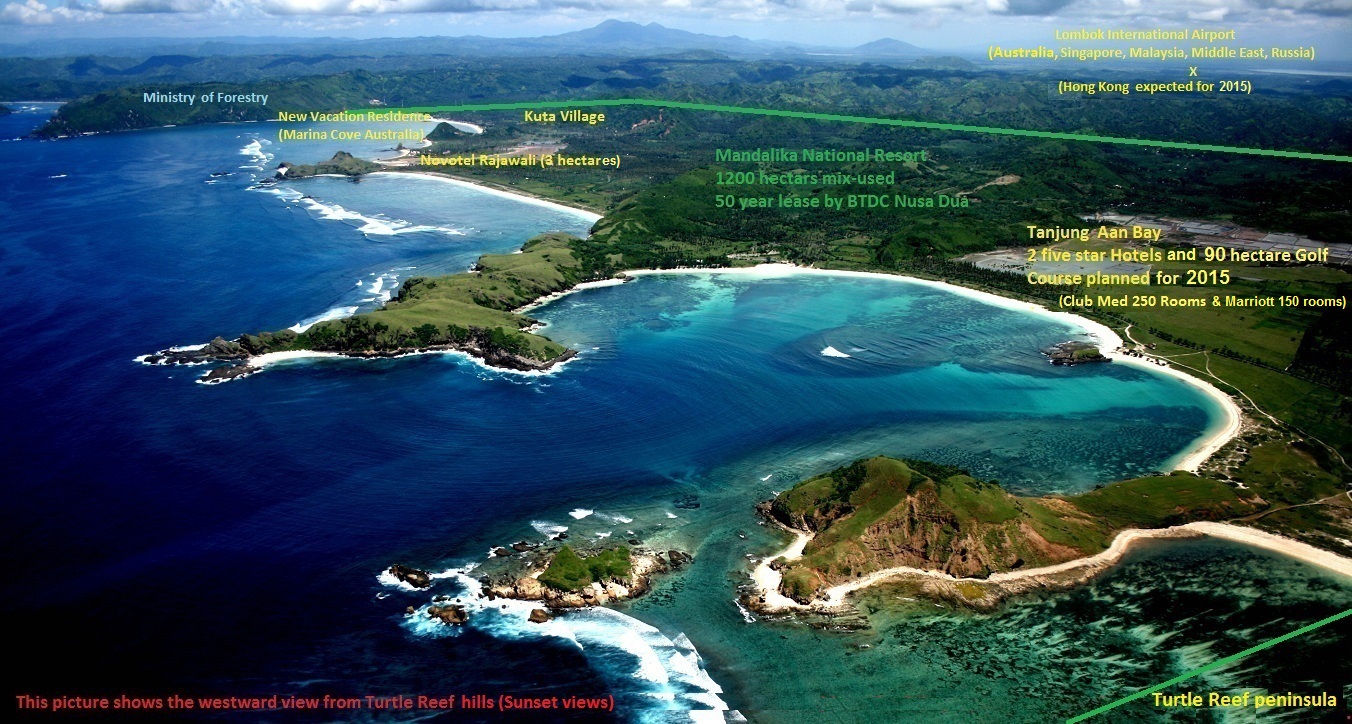
  • VP Kalla reviews preparation to build hotels in Mandalika

    VP Kalla reviews preparation to build hotels in Mandalika

    Vice President M. Jusuf Kalla had the opportunity to review the preparations for the construction of four five-star hotels at Mandalika Special Economic Zones in Central Lombok, West Nusa Tenggara, Saturday.

    The Vice President reviewed the area together with Peoples Consultative Assembly (MPR) Chairman Zulkifli Hasan and Tourism Minister Arif Yahya.

    Arriving on the scene, the Vice President and the group immediately got the exposure of a number of investors who will build the four five-star hotels at the Mandalika Special Economic Zone (SEZ) in Central Lombok.

    Four hotels to begin construction in 2016, are Pullman Hotel of the investment fund PT Indonesia Tourism Development Corporation (ITDC), which is a state-owned enterprise (SOEs) in the field of tourism.

    Other hotels are Intercontinental Hotel, Club Med Hotel and Lees Hotel, and the construction of the entire capacity of the 850-room hotels was targeted to be completed within a period of two and a half years.

    “Everything has been completed, and there no reason not to accelerate the construction of these four hotels,” the vice president noted.

    After hearing the exposure of investors, the vice president then listened to the explanation of President Director of PT ITDC, Abdulbar M. Mansoer, related to the development of Mandalika SEZ within the next 10 years.

    In addition to building hotels, ITDC will also build the basic infrastructure needed by the hotels to support their operation, such as the need for clean water that will utilize seawater through the refining process.

    This work is done by establishing a partnership with EBD Bauer, one of the American companies engaged in the purification of seawater into fresh water.

    Other infrastructure that is in the process of being set up is a solar power plant (SPP) and gas power plants for hotels in Mandalika SEZ, which will not use electrical energy from the State Electricity Company (PLN).

    ITDC is also getting constructed the Tourism College (STP), which will create the human resources needed by the hotels.

    “Thus, some 20 star-rated hotels will be built in the Mandalika Special Economic Zone within 20 years. For the first stage, we will build four five-star hotels, and we have prepared the basic infrastructure,” said Abdulbar.

  • SME recognition awards to expand to Indonesia in 2016

    SME recognition awards to expand to Indonesia in 2016

    Kossan Rubber Industries Bhd group managing director and chief executive officer Datuk Lim Kuang Sia (second from right) receiving the Platinum Entrepreneur 2015 Award from Ahmad Husni. Kang (left) and working committee chairman Chey Onn Wah (right).

    THE SME Recognition Award will be “going Asean” next year, by first tapping Indonesia and later, eight other countries in the region.

    SME Association of Malaysia national president Michael Kang announced this during the SME Recognition Award 2015 Presentation and Gala Dinner held last Friday at the Sunway Pyramid Convention Centre.

    The award, in its 14th year, honours Malaysia’s top SMEs for their excellence.

    There were 101 award recipients from 17 categories such as SME Achievers Award, SME Green Excellence Award, SME Export Excellence Award, SME Women Entrepreneur Award and SME Service Excellence Award.

    The Platinum Entrepreneur 2015 Award was awarded to Kossan Rubber Industries Bhd group managing director and chief executive officer Datuk Lim Kuang Sia.

    Besides showcasing the achievements of Malaysia’s top SMEs, this award provides a premium platform to benchmark the service standards and quality of SMEs as well as enhance their intellectual properties and brand image in the global marketplace.

    The award theme this year was “Shaping up to the New Economic Landscape”.

    Kang said it represented a critical call for Malaysian SMEs to re-invent, harpen their skills, and brace themselves to match the global competition associated with a borderless business environment.

    “In terms of productivity, Malaysia ranks low with a ratio of 4:1 and 7:1 compared with Singapore and the US respectively.

    “This means that one Singaporean can do the job of four Malaysians, and one American can do the job of seven Malaysian,” said Kang.

    “As the National President of the SME Association of Malaysia, I wish to share my perspective on issues affecting SMEs in the country,” he added.

    If we continued to be contented instead of improving ourselves, Kang projected that at least 30% of SMEs would disappear when the Trans-Pacific Partnership Agreement (TPPA) comes into full force, two years after signing, because with companies from the TPPA country partners offering products and services of better quality here, SMEs would die off if they are not ready to advance.

    Second Finance Minister Datuk Seri Ahmad Husni Hanadzlah was the guest of honour for the event.

    In his speech, he saidSMEs were one of the drivers of our economic growth, contributing 335 to our Gross Domestic Product.

    “We expect it to reach 41percent by 2020. On the part of the government, we will provide endless support in order for SMEs to achieve your aim.”

    Kang also said the association has signed a Memorandum of Understanding with Next Generation Movement to promote growth of young entrepreneurs with effect from Jan 1, 2016.

    “The MOU intends to help young entrepreneurs penetrate the ASEAN market of 630 million population through business matching, investment cooperation, and the exchange of information with regard to trade, supply chain, innovation and technology,” he said.

    He added the association looked forward to work hand-in-hand with the Next Generation Movement to enhance the capabilities of young entrepreneurs by leveraging on these regional opportunities.

  • Several German companies interested to invest in automotive component industry

    Several German companies interested to invest in automotive component industry

    Several German companies have expressed interest to invest in automotive component manufacturing industry using aluminum as its raw materials, state enterprises minister Rini Soemarno said.

    “One of the companies is Rheinmetall Land System. We will discuss it further with them when I visit Germany later,” she said when asked for her confirmation about the news here on Sunday.

    She said Rheinmetall Land is currently building cooperation with PT Pindad to produce defense and security equipment.

    PT Pindad is cooperating with Rheinmetall Land System in overhauling, upgrading, servicing, maintenance and modification of a number of military combat vehicles.

    The cooperation covers several products such as MBT Leopard 2 RI, Leopard 2 A4, AIFV Marder aA3 RI, Gunnery/Driving Simulator and others.

    “But the big business that the company carries out also includes car components and many of them are exported across the world,” she said.

    She said she would follow up Rheinmetalls plan to invest in Indonesia especially in aluminum car components.

    “If they do decide to invest supply chain from upstream to downstream will be done by Indonesia,” she added.

  • Balinese farmers insure 4,000 hectares of rice fields

    Balinese farmers insure 4,000 hectares of rice fields

    As many as 4,000 hectares of rice fields belonging to Balinese farmers are included in the rice farming insurance program for the planting period of October 2015-March 2016, an official has said.

    “Our previous target this year is 11 thousand hectares of rice fields, but only 4,000 hectares can be insured due to limited time,” Head of Bali Provincial Agriculture and Foodstuffs affairs office Ida Bagus Wisnuardhana said here on Sunday.

    Thus, if the crop failure occurs due to floods or pest attacks after the rice fields have been insured, the farmer can get the claim of Rp6 million per hectare, he stated.

    In addition, the farmers should not pay the entire premium because 80 percent of it is subsidized through the state budget. The amount of the premium per hectare is Rp 180 thousand, but 80 percent (Rp144 thousand per hectare) is covered through the state budget.

    “Thus, the farmer concerned only has to pay Rp36 thousand per hectare in every planting season,” Wisnuardhana pointed out.

  • Online Sellers Tout Successful ‘Harbolnas’ Campaign

    Online Sellers Tout Successful ‘Harbolnas’ Campaign

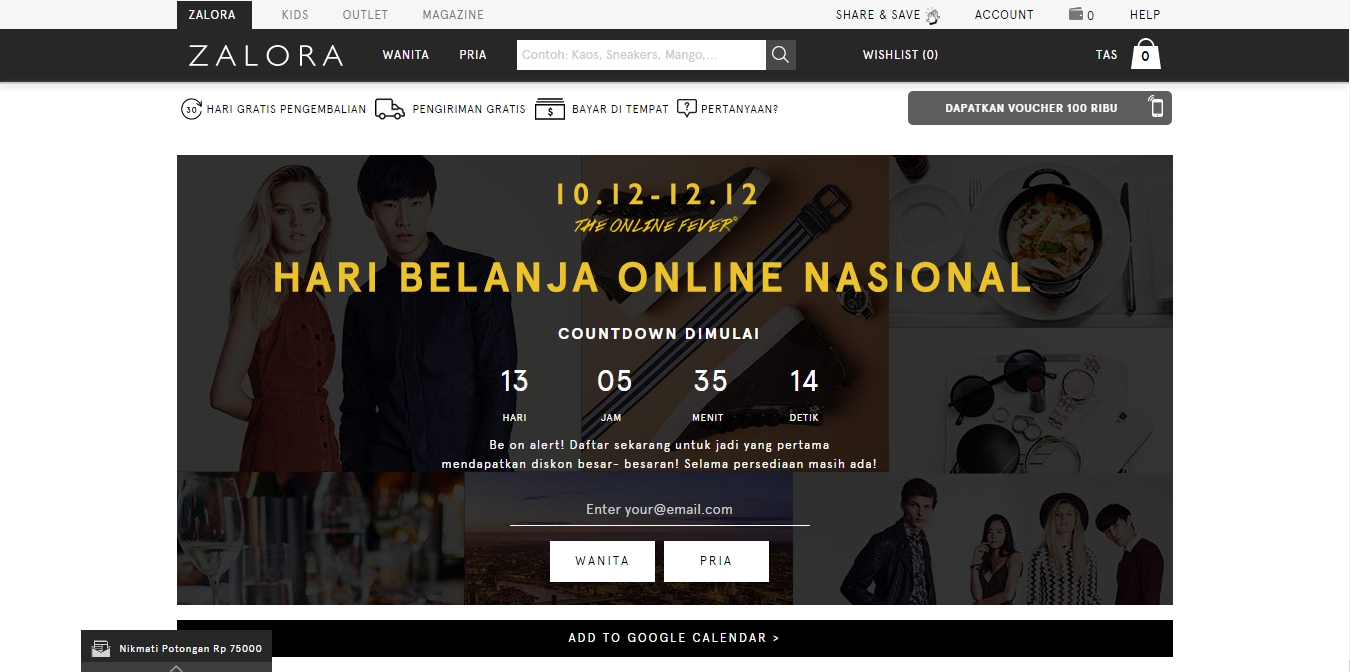
    Anthony Fung, managing director of online fashion retailer Zalora Indonesia said in a statement on Monday that the company saw sales surge thirty-fold during the three-day shopping event, but did not give a figure.

    “Everything is going so well that we decided to extend this campaign one more day, until December 13, so that we can give consumers more opportunities to get their favorite fashion brands at Zalora,” Anthony added.

    MatahariMall.com, the e-commerce arm of the Lippo Group, with which the Jakarta Globe is affiliated, claimed that sales went up 10 times the daily average during Harbolnas, with electronic goods and smartphones leading sales, according to chief executive Hadi Wenas.

    Fair game

    The hefty discounts promised, including up to 99 percent from MatahariMall, have prompted concern from consumers and industry lobby groups.

    The Association of E-commerce in Indonesia, or idEA, issued a statement over the weekend urging Harbolnas participants to divulge the actual value of sales derived from the event. This is in order to “assert the potential of Indonesia’s e-commerce market from local and international perspectives,” citing similar practices by online retailers in the United States and China.

    “There is concern over the hype in huge discounts offered during Harbolnas,” said Tulus Abadi, chairman of the Indonesian Consumer Protection Foundation (YLKI), as quoted by Merdeka.com.

    He urged consumers to be cautious about wild-sounding deals online, noting that consumer protection was still largely unregulated by the government.

    Lazada Indonesia was among the companies under scrutiny for manipulating prices, after a customer spotted a seller on the online marketplace listing infant diapers at a pre-Harbolnas price of Rp 130 million ($9,210), before a discount of nearly 100 percent dropped the price to Rp 93,482.

    Lazada said in a subsequent statement that it was not the company’s policy to deceive customers and that the seller in question had been banned from the marketplace.

    Similarly, MatahariMall listed a PlayStation 4 game console at an initial Rp 10.8 million before discounting it to Rp 4.599 million. Other sellers list the price of the same item outside the Harbolnas at Rp 4.7 million.

    Faced with the rapid growth in online retail in Indonesia, the government is in the process of laying the groundwork for regulating the e-commerce industry, from foreign ownership and taxes to consumer protection and business models. A regulatory road map devised by the Communications and Information Technology Ministry is expected before the end of the year.

    At the same time, idEA said it was also currently devising an ethical code of conduct when offering promotions and discounts, which it aims to unveil in the first half of next year in a bid to boost consumer trust and satisfaction when shopping online.

  • Indonesia retail Japanese convenience stores think small to survive

    Indonesia retail Japanese convenience stores think small to survive

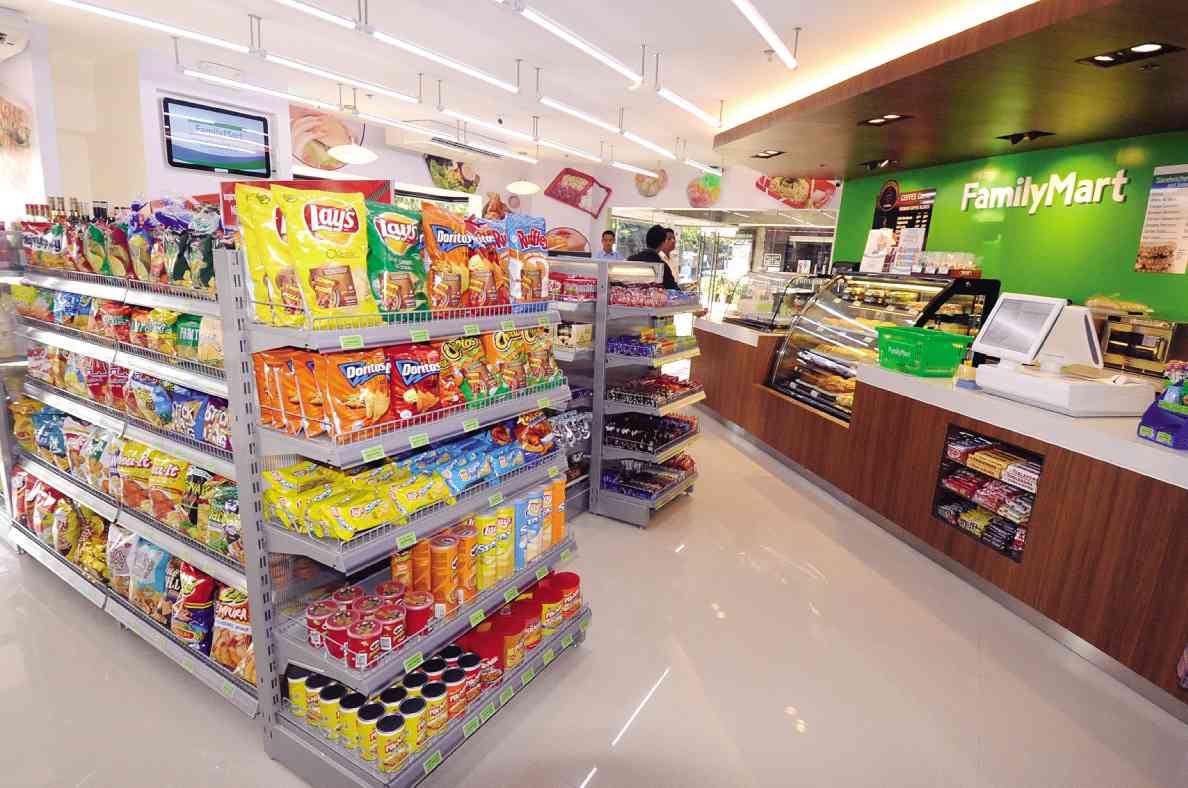
    Japanese convenience store operators are shrinking the size of their outlets in Indonesia amid growing competition from local rivals. But the strategy of pursuing profitability over scale runs the risk of downsizing the companies out of the market.

    In Jakarta, the two leading local operators — Indomaret and Alfamart — have over 10,000 outlets each. Japanese rivals are finding it difficult to stay competitive with their traditional focus on larger shops, which often include cafes. To fight back, Lawson and Seven-Eleven Japan plan to increase the number of smaller stores in office and commercial buildings.

    During lunchtime in an office building in Jakarta, people form long lines to buy bento box lunches, bread products and other items at a Lawson outlet. A karaage, or deep-fried chicken, bento sells for 45,000 rupiah ($3.20). “It’s my turn to pick up lunch today,” said a female office worker as she carried a shopping bag full of food from the store.

    The outlet, which opened in August, is Lawson’s first small store in an office building. It is less than half the size of a typical Lawson shop in Indonesia and has only one row of shelves. Midi Utama Indonesia, the local retailer that runs the stores, has been considering such new locations as shopping malls and train stations, one official said.

    Lawson entered Indonesia in 2011 after granting Midi a license to operate its stores. The Japanese company was ambitious, with plans to open 10,000 outlets in the first 10 years. But in mid-2013, after having opened just 80 shops in the country, sluggish profits forced it to withdraw from Bali. Lawson cut the number from 60 to 50 in 2014. Today, there are only some 40 Lawsons in Indonesia.

    In the meantime, Indomaret and Alfamart have been steadily increasing their store networks. They have adopted some of the techniques brought in by Japanese rivals, such as in-store cooking and in-store cafes. Duskin, a Japanese housekeeping equipment company, chose Indomaret over Japanese players as its local partner to run Mister Donut when it entered the market this year.

    Following the money  

    With their limited number of stores, Japanese operators are finding it hard to continue offering the level of product and service quality associated with Japan while still turning a profit. As a result, they are betting on small outlets in commercial buildings to drive earnings. In explaining the shift, a FamilyMart official cited “the high income level of customers and the easy-to-predict demand structure.”

    FamilyMart plans to start opening stores in office buildings and upscale condominiums in 2016. Its existing 25 outlets are in stand-alone buildings or buildings shared with Japan’s Yoshinoya chain of gyudon beef bowl restaurants.

    Seven-Eleven Japan, the largest Japanese convenience store operator in Indonesia, is considering opening more small stores in train stations, commercial buildings and other busy locations, according to Modern Internasional, the operator of 7-Eleven stores there.

    Ministop, which has six Indonesian outlets, the fewest among Japanese companies, plans to cut costs by operating smaller stores and revamping its product lineup. For example, the matcha green tea-flavored soft ice cream it is promoting is selling three times as well as the chocolate flavor, the company said.

    According to Alfamart, Indonesia’s convenience store market grew about 13% by sales in the first nine months of this year. Though that is down from 19% in the same period last year, the growth is still significant compared with midsize retailers such as supermarkets, which saw 3.6% growth.

    Japanese players are not alone in their “go small” approach. Local operators are also increasing the number of smaller outlets in train stations and other facilities amid a shortage of space to build stand-alone stores, and also because of the difficulty in obtaining approval from authorities in the metropolitan area.

    With local rivals not only adding more stores to their already-large networks but also adopting strategies similar to those used by their foreign counterparts, the pressure on Japanese operators to find new ways to remain competitive will likely increase.

  • Autos drive solid China retail sales report

    Autos drive solid China retail sales report

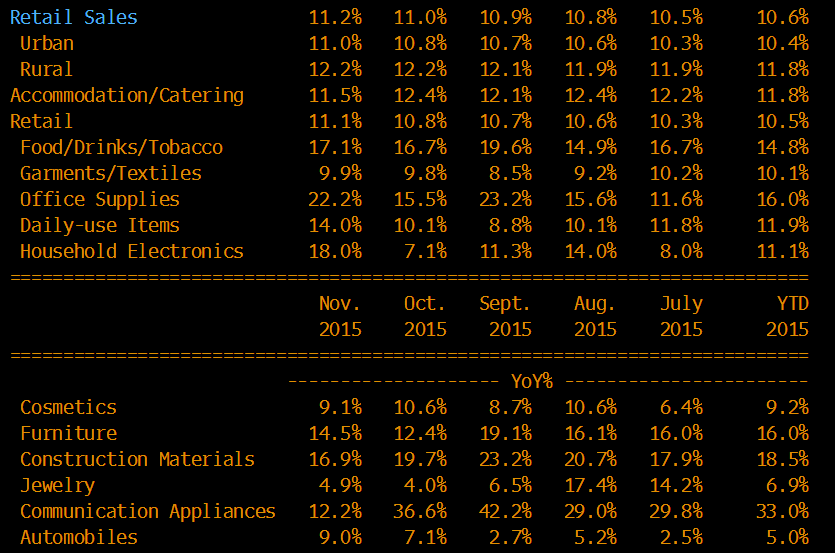
    Retail sales rise 11.2% y/y in November vs 11.1% expected

    Chinese retail sales were slightly stronger than estimates as auto sales picked up. Vehicle sales climbed 9% y/y in November compared to 7.1% in October.

    A strong automotive sector also boosted industrial production.

    The strength in auto sales and manufacturing was likely due to a sales cut tax in September for small and medium-sized cars.

  • March 2016 solar eclipse to attract tourists to Indonesia

    March 2016 solar eclipse to attract tourists to Indonesia

    The rare and beautiful phenomenon of the total solar eclipse, forecast to occur on March 9, 2016, is expected to attract foreign tourists to Indonesia.

    Both domestic and foreign tourists are keen to visit Palembang, Belitung, Bangka, Balikpapan, Sampit, Palangkaraya, Luwuk, Palu, Poso, and Halmahera to witness the total solar eclipse.

    Head of the North Maluku Culture and Tourism Office Samin Marsaoly remarked in Ternate on Monday that dozens of scientists and several tourists from France will visit Halmahera to observe the total solar eclipse and simultaneously conduct research on the natural event that will occur in March 2016.

    “Boarding a special aircraft, the scientists, with a variety of advanced equipment, will arrive in Maba in East Halmahera to conduct a study on the total solar eclipse,” Marsaoly stated.

    He said hundreds of tourists from several countries had also informed the local culture and tourism office of their interest to witness the total solar eclipse in March next year.

    He noted that the culture and tourism office in East Halmahera had made various preparations related to the visit of the scientists and tourists from several countries, such as accommodation, transportation, and the location where they will watch the rare phenomenon.

    Marsaoly said other areas, such as Ternate and Tidore Islands in North Maluku have also attracted many scientists and tourists from various countries to watch the total solar eclipse on March 9, 2016.

    He remarked that some two thousand tourists had already booked hotel rooms in Ternate, and the number is expected to grow to four thousand.

    “The number of foreign tourists visiting Halmahera in North Maluku to watch the total solar eclipse is definitely a blessing for this region as in addition to increasing the number of foreign tourist arrivals, it will also offer the necessary momentum to promote the local tourism potential,” he added.

    In the meantime, Head of the Culture and Tourism Office in Tidore Islands Asrul Sani Soleman stated that several scientists from the United States National Aeronautics and Space Administration (NASA) will also observe the total solar eclipse from the Tidore Islands, North Maluku province.

    Soleman noted that the scientists will observe the total solar eclipse from the Sultanate of Tidore Palace through a special binocular brought from NASA in the United States.

    The scientists have chosen Tidore Islands as the place to observe the total solar eclipse as it will be the ideal location, and they will be able to see the sun for a longer time period compared to other areas in North Maluku.

    He noted that along with the NASA scientists, hundreds of tourists from various countries will also arrive to witness the total solar eclipse at several locations, including Maitara Island, one of the tourist islands of Tidore.

    The tourists, who will come to watch the total eclipse in this area, are using the services of a travel agent from Bali and Jakarta or will arrive by yacht.

    “So far, there are four cruise ships, including from France, the United States, and Switzerland that have confirmed to make a stopover in Tidore,” Soleman revealed.

    The city administration of Tidore Islands has made preparations to welcome the scientists and tourists.

    The administration will also utilize their visit to promote the tourism potential of the area, including attracting investment.

    Siti Norma Mardjanu, the head of the tourism office in Central Sulawesi province, recently remarked in the provincial city of Palu that the local administration will conduct promotional activities regarding the total solar eclipse at numerous international airports in Indonesia.

    She remarked that the promotional activities highlighting the total solar eclipse will be carried out at the international airports in Medan, Jakarta, Surabaya, and Makassar.

    According to Siti, the promotion will not only spread awareness about the total solar eclipse but will also promote the tourism potential of Central Sulawesi.

    Siti said the activities to promote the total solar eclipse will be conducted by the Central Sulawesi provincial administration in December this year.

    Currently, approximately three thousand hotel rooms have been booked by foreign tourists, who want to witness the rare phenomenon in Palu, Luwuk, Ampana, and Poso.

    The total solar eclipse is expected to attract thousands of tourists, and therefore, it will motivate the local administration to develop its local tourism potential.

    A solar eclipse occurs when the moon passes between the earth and Sun. A total solar eclipse occurs when the moons apparent diameter is larger than the suns, blocking all direct sunlight, turning day into darkness.

    The total eclipse in March 2016 will occur in the narrow path across the earths surface, with the partial solar eclipse visible over a surrounding region that is thousands of kilometers wide, beginning in Indonesia, and ending in the northern Pacific Ocean.

  • Scientific Games renews lottery supply deal in Philippines

    Scientific Games renews lottery supply deal in Philippines

    The three-year extension ends in July 2018, and will see Scientific Games supply POSC with 1,500 new WAVE lottery terminals by the end of the year.

    “Scientific Games has demonstrated a strong commitment to our systems technology over the last decade, and we are pleased to continue working together to grow lottery sales in the Philippines,” POSC president Willy Ocier said.

    “The new terminals installed through this contract extension will allow us to retire some of our older terminals and provide our retailers with advanced technology that drives efficiencies and makes it easy and convenient for retailers to sell lottery games,” Ocier has explained.

    Scientific Games has provided POSC with products and services since 2005, supplying instant games and an instant ticket validation system in addition to the systems and retail technology.

    Founded in 1993, POSC sources and leases gaming technology to the Philippine Charity Sweepstakes Office (PCSO) and supplies the Visayas and Mindanao regions with lottery technology since 1995. It also leases keno terminals and an online operating system to PCSO across the country, having signed an agreement in 2004.

    “We appreciate the professionalism and creativity exhibited by POSC and its leadership team, and we look forward to supporting their numerous growth initiatives over the next several years,” Scientific Games president of corporate development and global strategic accounts Michael Conforti said.

  • Vietnam seen among Asia’s top 5 retail markets

    Vietnam seen among Asia’s top 5 retail markets

    Final consumption expenditure (percent of GDP) in Vietnam was estimated at 70 percent last year by the World Bank with household consumption accounting for 90 percent, making the country among Asia’s top 5 retail markets. The country’s middle class, the most promising consumers of retailers, is forecast to triple by 2020.

    Speaking at the forum, Duong Duy Hung, deputy head of the Department of Domestic Market under the Ministry of Industry and Trade, said Vietnam has opened its door to dozens of multinational retail groups since the country joined the World Trade Organisation (WTO) five years ago.

    Domestic retailers, despite previous concern over their passive acts amid fierce competition, has tailored themselves to the new context and gradually improved their competitiveness, he noted.

    He warned that huge investment waves from foreign firms are posing numerous challenges to the local ones, which was urged to foster innovation to survive.

    President of the Vietnam Retailers Association DinhThi My Loan agreed, stressing that domestic retailers still lag behind foreign peers as they lacklong-term strategies and financial resources.

    She called on the local firms to learn from international practices, especially in Japan, the Republic of Korea, Singapore and Thailand, while restructuring themselves and set up chains of shops, small- and medium-sized supermarkets, and convenient stores to regain market share in the home playground.

    Echoing these opinions, Chau Ngoc Hanh, head of Retailer Service at Nielsen Vietnam said big fish eating little fish is only a has-been, it’s time for the fast fish to eat the slow one.

    More and more consumers in Vietnam prefer online shopping and getting their orders brought to the door thanks to its convenience, she explained, saying that today any firm which can serve it faster will have competitive edges.

    About 22 percent of responded consumers in the country said they would rather go shopping in convenient stores than shopping malls.

  • Singtel taps third-party developers for new apps

    Singtel taps third-party developers for new apps

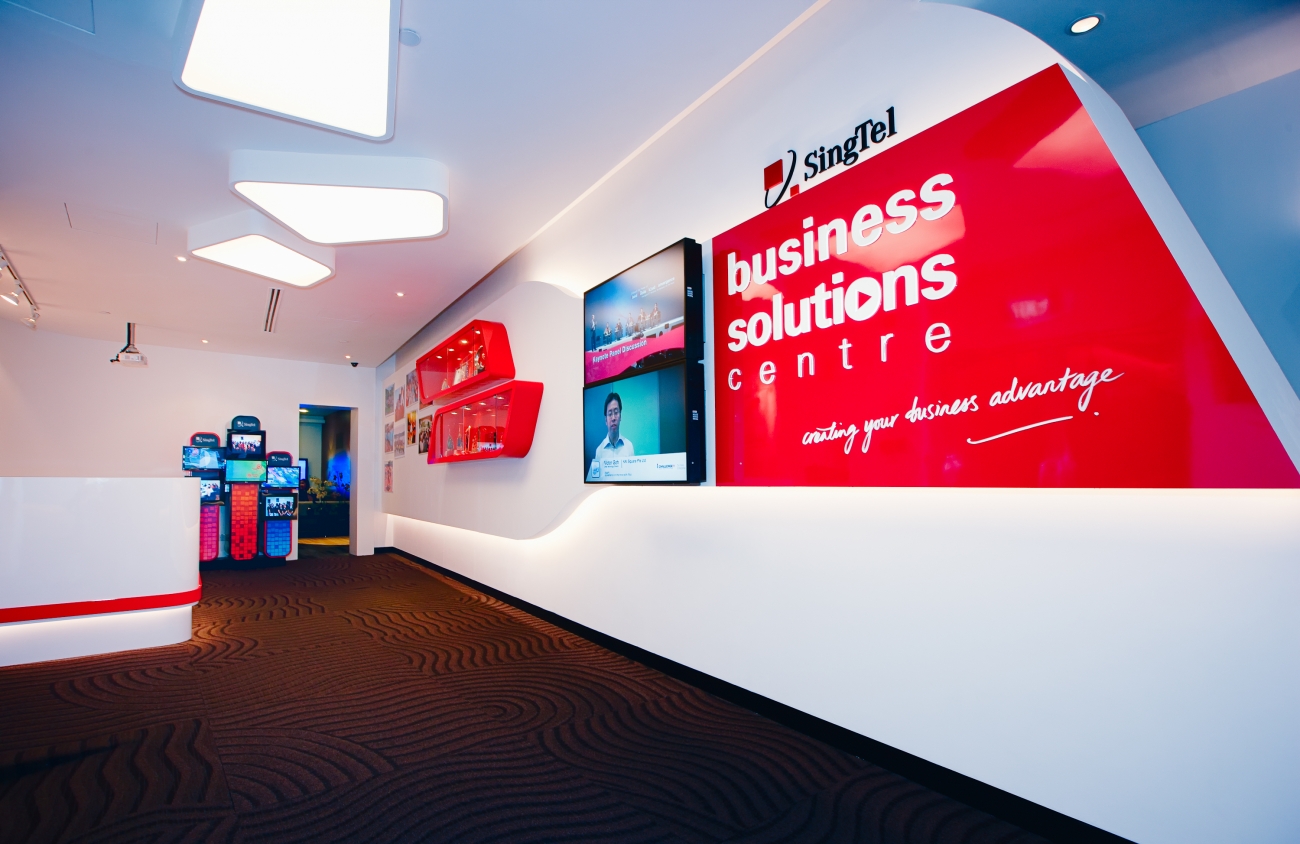
    A Singtel strategy to pick up ideas from independent developers across the region has resulted in affiliates of the telco adopting new revenue-boosting apps and technologies.

    The initiative seems to have helped boost revenue at some of these affiliates while also bolstering Singtel’s role as an incubator of new technology.

    Globe in the Philippines and Telkomsel in Indonesia have lifted turnover in their mobile segments, thanks, in part, to new apps devised by third-party software developers. This came about after Filippino customers downloaded an app called Epic Life, a mobile adventure game, while the photo app Jepret Story proved popular in Indonesia.

    Both apps were developed by outside software firms, which then worked with the telcos to fine-tune the final products.

    Mr Mark Chong, Singtel’s chief executive international, said the telco’s different business units share product ideas among themselves.

    “Our thinking was to shorten the product development cycle. So we decided to combine our own products with apps from external sources to present a more holistic suite of products and services.”

    Singtel’s challenge was to select new content that its customers would find useful, so it held app competitions in different countries for local software developers. This resulted in fresh apps customers in those countries could relate to.

    Take Jepret Story, which won the app challenge in Indonesia. It struck a chord with mobile customers because Indonesians are big social media users. An eMarketer report this year said 63 million people in Indonesia will access Facebook via mobile phones.

    A new round in the process is under way.

    Singtel affiliates will have a chance to work with the 14 apps featured in the Singtel-Samsung mobile app challenge held last Tuesday in Jakarta. The apps cover sectors such as lifestyle, on-demand economy, smart living and health .

    Chief judge Edgar Hardless from Singtel said the affiliates can check out the apps to see if they are suitable for their own markets.

    Among other things, the affiliates must ensure that the apps work seamlessly on their mobile networks and that they would be able to scale up so that millions of customers can use the service.

    Mr Hardless, who is also chief executive of Innov8, Singtel’s venture unit, said investing in start-ups has allowed the telco to innovate as well.

    Since it began in 2010, Innov8 has invested in nearly 40 start-ups here and around the world, giving it an insight into the latest emerging technologies and business solutions.

    “Through these activities, there’re start-ups that we can refer to our business units, leading to commercial arrangements,” he added.

    One of Innov8’s portfolio companies is Jasper Wireless, which has been used by Singtel here and by Optus, its Australian subsidiary.

    Jasper helps companies rapidly and cost-effectively manage and monetise Internet of Things services such as security and analytics.

  • Massive loss puts J Crew on the brink

    Massive loss puts J Crew on the brink

    As its latest set of results attest, J Crew is a mess.

    Not only have sales fallen across the board, but the drops are significant and come off the back of declines in the prior year.

    Even the relatively small Madewell division, which has traditionally performed well in sales terms had a poor quarter, with comparable numbers rising by a slim one per cent.

    Profitability, which was already lacking, has deteriorated further with a net loss of just shy of $760 million racked up over the quarter; this now brings the company’s total losses so far this fiscal year to an eye watering $1.2 billion. This performance comes on top of a balance sheet that is already weak and weighed down by $1.5 billion of long term debt.

    There is now a very serious question mark over the firm’s survival and it is likely that lenders may seek to take control if performance does not improve in the vital fourth quarter and beyond.

    Rebuilding the sales line after a series of fashion missteps is now looking like an insurmountable task. Many customers once loyal to J Crew defected elsewhere following the company’s move away from the classic, preppy basics that were once its heritage, and it is now proving extremely difficult to win them back.

    This is not helped by the still fairly premium price J Crew expects its customers to pay; given the brand has lost so much of its equity, and given that today’s more democratic fashion marketplace abounds with retailers selling on-trend, low-priced basics, this position is simply not tenable.

    In a sense, J Crew and its management are not sufficiently humble about the brand’s current status and are rather divorced from the realities of the retail marketplace. Nowhere is this truer than in the international expansion efforts where, for example, products in its UK stores often cost more in pounds sterling than they do in dollars in the US – a significant uplift over and above that accounted for by the UK’s higher sales tax rate.

    In today’s interconnected, digital world where prices can easily be checked on smartphones while standing on the shop floor, such a policy does nothing but alienate and annoy customers. And even without this comparison, by UK standards prices are highly uncompetitive for the type of product J Crew sells.

    To be fair some efforts have been made to respond to price sensitivity with the launch, for example, of the factory outlet Mercantile stores which the company has put into mainstream malls. However, as sensible as this may be, it does little to address the problem with the core J Crew brand.

    J Crew is now pinning its hopes on a better holiday season; however, this will not mark a turnaround in the company’s fortunes. The earliest possible date for a change is spring of next year when the first collection designed by Creative Director Somsack Sikhmounmuong will hit stores.

    Even if this is a hit, J Crew will still only be in the foothills of the mountain it has to climb to restore the company to financial stability.

  • Singapore’s FairPrice opens store designed for disabled customers

    Singapore’s FairPrice opens store designed for disabled customers

    Singapore’s largest supermarket chain NTUC FairPrice has opened a supermarket designed to make it easier for shoppers with disabilities or ageing.

    Dubbed an ‘Enabled Store’, its staff undergo special training to better serve customers.

    The Enabled Store is located within the new Enabling Village, an integrated community space for people with disabilities at 20 Lengkok Bahru, #01-13. Trading hours are daily from 8am to 9pm.

    Among other features, the store has lower checkout counters and shelves to make it easier for people shopping in wheelchairs.

    At Wednesday’s official opening ceremony of both the village and the supermarket, FairPrice CEO Seah Kian Peng, said the initiative was an example of the company constantly evolving to meet the changing needs of Singapore’s population.

    Enable store NTUC Fairprice ceremony

    “We support seniors and persons with disabilities in living high-quality and independent lives, and recognise their needs amidst a backdrop of a rapidly ageing population. This is part of our efforts in striving to be a retailer with a heart and staying true to our social mission of serving various segments of the community through innovative retail formats and offerings.”

    Enable-store-NTUC-Fairprice 5


    With the number of seniors in Singapore expected to grow to more than 900,000 in 2030, and with more than 77,200 with disabilities above the age of 18, the store seeks to make shopping more seamless for these segments of society. It incorporates the principles of universal design with special features and products to enhance in-store experience.

    Physical characteristics of the store include call buttons located at the entrance and along store aisles to offer assistance, magnifying glasses at every aisle to help customers read product labels, and merchandise shelves customised to ideal heights for easy reach. The store also offers a more extensive range of supplements, products with the Healthier Choice Symbol (HCS) and assistive products such as walking aids.

    Enable store NTUC Fairprice 3

    Staff at the store have undergone a specially developed training program, jointly developed by NTUC LearningHub, Centre for Seniors and the Dr Oon Chiew Seng Trust, to equip them with the necessary skills and knowledge to serve senior customers better. The training programme aims to help service staff understand and anticipate the needs of senior customers, recognise senior related ailments such as dementia, as well as empathise with the difficulties that seniors may encounter so they can communicate and respond better to their needs.

    FairPrice is the first organisation to send employees for the course, training 100 frontline staff to date. Over 500 FairPrice frontline staff will also undergo this training programme in the next two years.

    Existing initiatives to help FairPrice customers stretch their dollar will also be available at this store including the Big Value Bag program which offers a 10 per cent discount on over 1000 FairPrice housebrand products, which are already priced 10-15 per cent lower than other popular brands.

    Elsewhere in the $25 million government-funded Enabling Village, there are food outlets which hire people with disabilities, and a retail art gallery where people can buy artworks and merchandise such as mugs and notebooks designed by people with autism.

  • Animate Japan to open in Bangkok

    Animate Japan to open in Bangkok

    Japanese retail initiative Animate Co will open a store in Bangkok’s MBK shopping centre in the second quarter of next year, part of a program to help spread anime and manga culture throughout Southeast Asia.

    According to Japanese news media, the store will be run by Animate JMA, a Japan Manga Alliance subsidiary formed in September to promote manga and anime businesses outside Japan. It provides officially released products and aims to eradicate copyright thieves, pinpointing Thailand as a market with increasing copyright issues.

    Animate was joined in the JMA’s creation by publishers Kadokawa Corp, Kodansha, Shueisha and Shogakukan.

    The JMA Animate store at MBK will take up a massive 561 sqm space in the 89,000 sqm, eight storey mall.

    The store will stock manga and anime titles, character goods, video software, figurines and other products. It will also provide spaces for live concerts featuring anime singers and concept shops.

    JMA says if the initiative proves a success in Thailand it will open stores in other Southeast Asian markets.

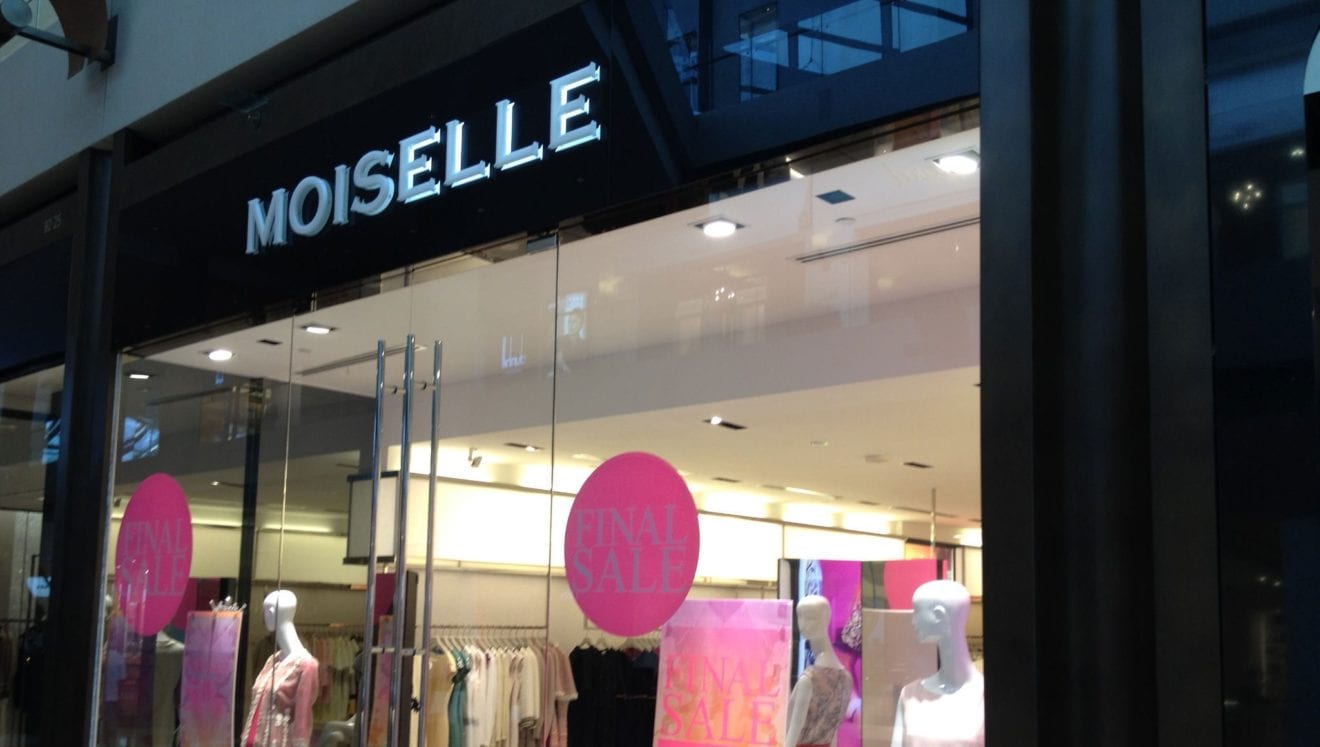
  • Moiselle flies in customers as sales slide

    Moiselle flies in customers as sales slide

    Hong Kong luxury fashion retailer Moiselle has revealed a raft of innovative strategies to restore flagging sales.

    Hit by a $31.9 million loss for the first half of the trading year due to declining spending by Mainland Chinese tourists, Moiselle is introducing new ranges and even flying in loyal customers for exclusive product displays.

    The company has reigned in its store openings and is putting the squeeze on landlords to reduce rents.

    Last week Moiselle revealed its sales had fallen by 21 per cent to $161.2 million mainly due to weak consumer sentiment and sluggish retail sales in its Hong Kong home market, which accounts for 55 per cent of its turnover. Gross margin fell from 82 per cent in the first half of last year to 76 per cent in the latest period.

    The group operated 92 retail stores and counters in Hong Kong; first- and second-tier cities of China; Macau, Taiwan and Singapore as at September 30 – three fewer than at the end of March. It closed five stores in hong Kong during the six month trading period.

    Moiselle – which sells under the Moiselle, Mademoiselle, Coccinelle and French-influenced Germain brands – has shifted focus to a more tailor-made sales model in Hong Kong, targeting members of its VIP customer club, and has formed partnerships with several Mainland Chinese online shopping websites.

    The organised shopping visits by customers from Mainland China, Taiwan and Singapore to its product showrooms in Hong Kong target its most loyal customers with high spending power. The tours began in May and started generating income in July.

    Meanwhile, Moiselle forged ahead with a strategy of diversifying its product offer to target different segments of the high-end and upper middle markets for women’s fashion apparel and accessories. It expanded its Moiselle and Germain ranges into menswear. It launched European accessories labels Sequoia and Coccinelle into the apparel market through exclusive distribution agreements to add impetus to its business development.

    In its stock exchange filing, Moiselle said it did not expect Hong Kong’s retail market to turn around “any time soon”.

    “China’s economy has shifted to a lower gear and the growing trend towards a higher proportion of the Mainland Chinese visitors with weaker spending power in Hong Kong seems irreversible. Moreover, the Hong Kong dollar, which is pegged to the greenback, is poised to enter a phase of appreciation against many other currencies as the US Federal Reserve Bureau looks set to raise the benchmark interest rate in the foreseeable future. These developments are likely to weigh on both the shopping tourism and average purchase value in Hong Kong, where the group derives most of its revenue.”