Author: Mei Ling Tan

  • SM Seaside City opens in Cebu

    SM Seaside City opens in Cebu

    The newly opened SM Seaside City Cebu is SM’s third largest mall in the country measuring 430,000 sqm in gross floor area.

    And the property developer SM Prime describes the mall as one of the Philippines’ most picturesque, showcasing not just architectural excellence but also resilience in design.

    Due to its proximity to the Mactan Channel, the mall draws marine inspiration from the “nautilus”. The sea creature’s unique shape and logarithmic pattern guided the building’s architectural shape and design. The nautilus, a spiral shell with pale, pearly chambers, is

    one of the finest examples of natural beauty and elegance.

    Arquitectonica’s Peter Brannan, MD for Asia says translating this design into mall features meant not only providing the usual retail, service and transport facilities.

    “It also has to act as the social hub, much like the marketplaces or town squares in the old, traditional communities,” Brannan said.

    This prompted Arquitectonica to propose “community” features such as a landscaped roof deck that can act like a “Central Park” called the Sky Park.

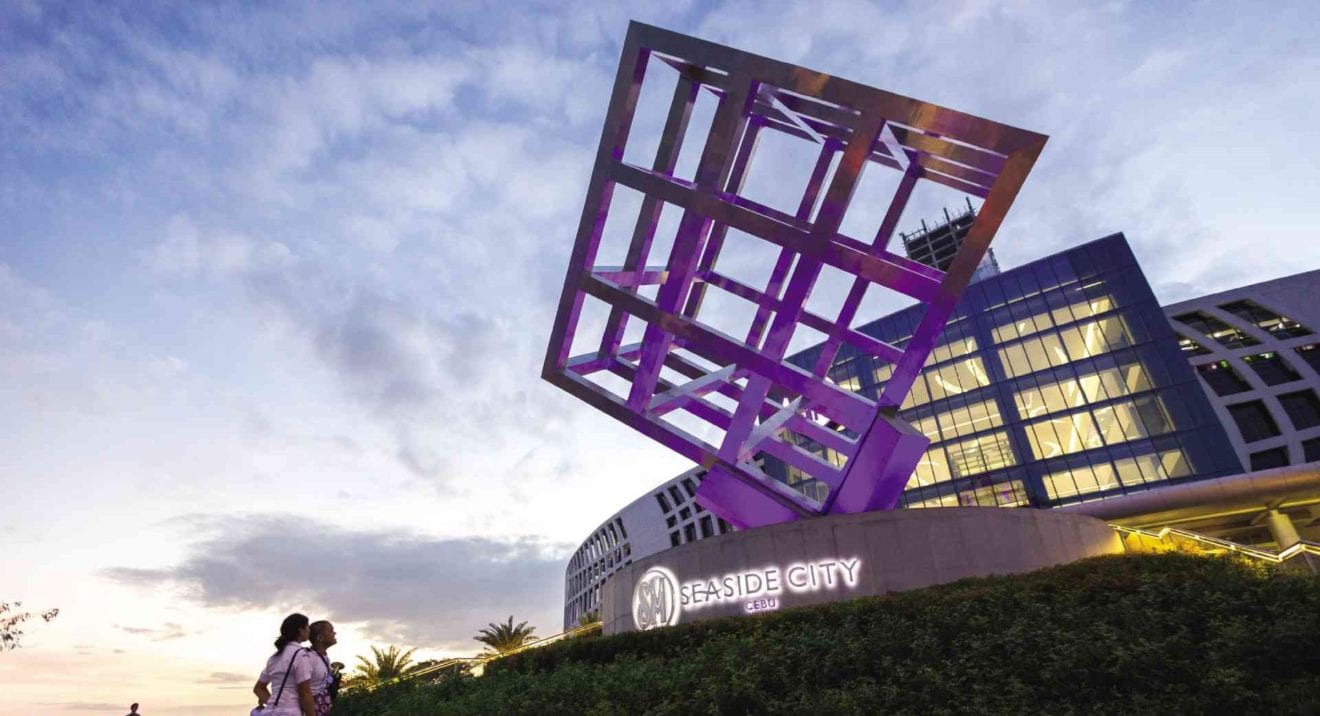
    The design also includes a central courtyard with a 150 meter modern bell tower which can be the centerpiece of community events like fiestas or New Year Event countdowns. Add to this the “Cube” sculpture at the facade of the mall which is an anagram for “Cebu”, serving

    currently as one of the more popular “selfie” spots for shoppers and tourists. Nearby at the complex is the Chapel of San Pedro Calungsod with a hundred walls, which has emerged as one of the City’s favorite wedding destinations.

    Now in operation, the mall makes this communal spirit much more apparent.

    “We understand that Cebuanos have a very strong sense of community, so we wanted to make sure we gave them a venue in which they could celebrate this communal spirit,” Brannan said.

    The Sy family envisioned the 30 -hectare SM Seaside City complex as a regional destination, bringing together local and foreign tourists from all walks of life mainly from the Visayas and Mindanao regions.

    Beyond beauty is sustainability

    Beyond the mall’s aesthetics, SM believes that investing in sustainability safeguards the welfare of the customers, the tenants, and the mall’s host communities.

    SM Prime Holdings president Hans T Sy said during his speech at the UNISDR General Meeting in London in November that depending on the location and assessment of SM’s projects, around 10 per cent of capital expenditure is allocated to disaster resilience which requires making the mall structure resistant to risk from potential disasters.

    “My experience has proven that investing in resilience of our company’s assets makes good business sense,” Sy said.

    For its seaside mall, Architect Fides Hsu, VP of SM Engineering, Design and Development Corp, said SM Prime hired design experts who gave extra attention to the challenges of weather, especially typhoon and flooding given its location by the sea. SM Prime backfilled soil onto the reclaimed property specifically on the roads so that the whole complex where the mall sits is elevated by approximately 4.5 meters from the city roads. Due to its elevation, a lower carpark level was created to accommodate 1700 vehicles.

    Furthermore, all necessary electrical and mechanical equipment are located on the roof deck.

    In terms of seismic design or provisions for earthquakes, the building structure of SM Seaside was designed in compliance with Philippine building regulations such as the 2010 National Structural Code of the Philippines (NSCP), the Uniform Building Code (UBC 97), and the International Building Code (IBC 2010).

    The mall also uses water treatment facilities that recycle used water by 90 per cent and re-use this for the cooling tower, toilet flushing and irrigation.

    To reduce energy consumption, the mall’s air conditioning uses a Building Management System (BMS) and high efficiency chillers. In addition, all storefront windows and skylights of the mall use double glazed low e-glass which prevent heat from penetrating by as much as 78 per cent. Furthermore, the whole mall is equipped with LED lights, while mall escalators have an “auto start and stop” feature that is activated when in use or otherwise. Elevators are inverter type systems that save power of up to 30 per cent.

    “Even way back in the mid 80s when SM started building its malls, Hans T Sy has been responding to issues of sustainability and disaster risk resilience. The older malls of SM, for example, have long been using the BMS and variable frequency drives for air conditioning that control mechanical motors to maximise usage of power,” Hsu said.
  • Indonesia to Have 151,000 Millionaires by 2020

    Indonesia to Have 151,000 Millionaires by 2020

    Research institute Credit Suisse released its 2015 Global Wealth Report, in which it projects that Indonesia would have 151,000 millionaires by 2020. This projected number is an increase of 54 percent from today’s 98,000 people.

    The increase, the report says, will happen simultaneously with the increase of Indonesians’ average wealth by more than three times in US dollars and five times in rupiah.

    Credit Suisse categorized millionaires as people with a net worth of over US$1 million. If we use the rupiah, these people would be considered billionaires as a million UD dollar is roughly worth Rp14 billion.

    For this year, Credit Suisse said that there are 987 Indonesian individuals with net worth exceeding US$50 million (Rp. 700 trillion), an 8.9 percent increase from last year. This places Indonesia at the 19th spot of the world’s top 20 countries with the most number of wealthy individuals.

    Credit Suisse claimed that the number of Indonesia’s dollar millionaires has increased by five times since the year 2000, which reflects rising inequality, seeing how the country’s rich and middle class is only 4.4 percent of the 250-million population.

    Meanwhile, Forbes placed Budi and Michael Hartono as Indonesia’s richest individuals. The Djarum Group bosses have a combined asset worth of US$15.4 billion or around Rp212.8 trillion. Coming at number two is Susilo Wonowidjojo—also a tobacco tycoon; owner of PT Gudang Garam Tbk—with US$5.5 billion (Rp. 76 trillion). The third spot is currently secured by Salim Group owner Anthoni Salim with a net worth of US$5.4 billion (Rp74.6 trillion).

  • Veeko International flourishes despite downturn

    Veeko International flourishes despite downturn

    While its peers suffer from Hong Kong’s lacklustre market, one retailer has achieved a stunning sales boost.

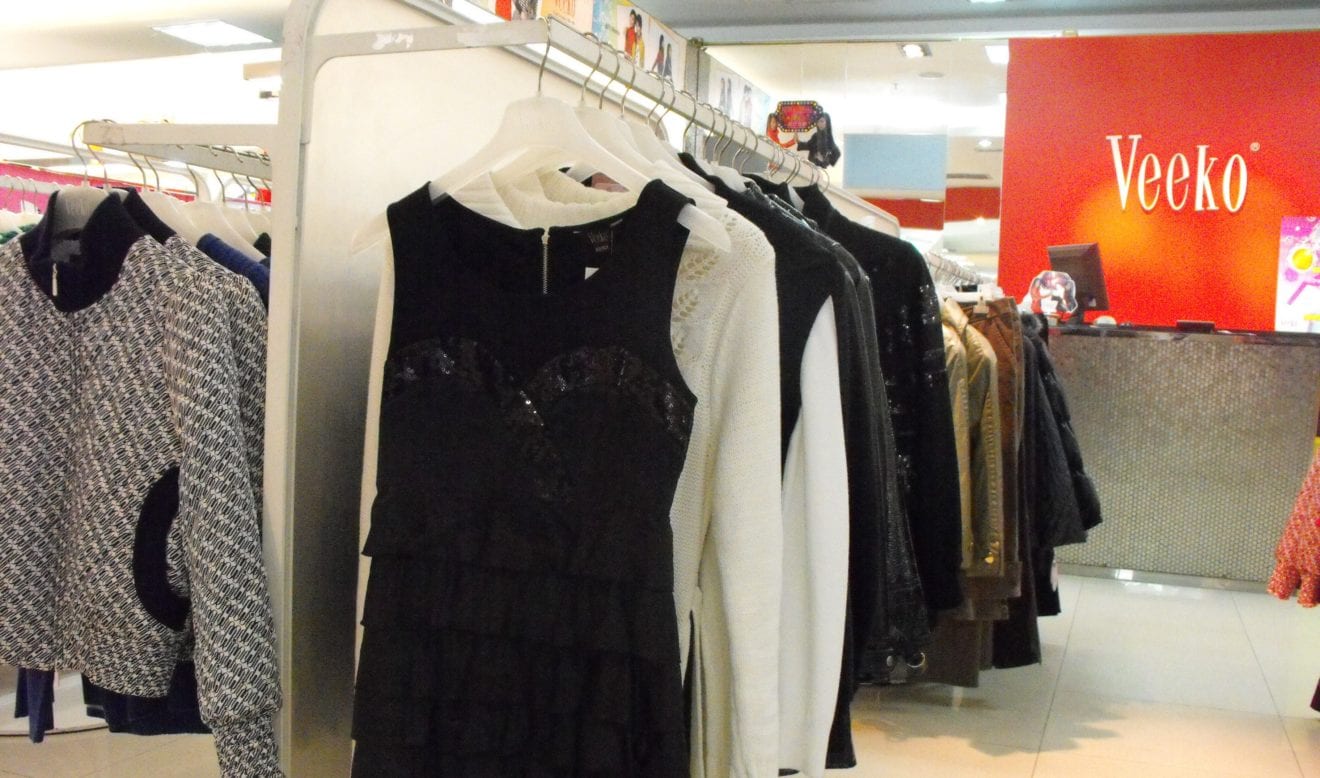
    Veeko International operates 82 Colourmix and one Morimor cosmetics stores and 155 fashion stores in Hong Kong, Macau, Taiwan, Singapore and Mainland China under the Veeko and Wanko brands.

    For the six months to September 30, Veeko International recorded a turnover of HK$1.066 billion – an increase of 23.6 per cent on the corresponding period of last year. Its cosmetics business increased sales by 33.7 per cent over the same period last year, accounting for 77.6 per cent of Veeko’s turnover. Sales in the fashion business slipped two per cent.

    Profit attributable to shareholders reached HK$41.488 million – up 14.9 per cent on last year, driven by a 56.2 per cent increase in profit from the cosmetics business. The fashion business, meanwhile, recorded a $2.68 million loss, a 133.6 per cent downturn on the profit of $7.97 million for the same period last year, largely due to exchange rate losses from overseas markets including Taiwan, Singapore and Mainland China. At constant exchange rates the division would have recorded a profit.

    Veeko says it will continue to expand its Colourmix store network, having added six in the first half.

    A large part of the success of its cosmetics operations is an increase in the average sale from $358 per transaction for the same period last year to $377 per transaction for the current period, – a year-on-year increase of 5.3 per cent. The gross profit margin of cosmetics business for the

    period was relatively unchanged at 35.7 per cent.

    Veeko’s fashion store network was down by a net 19 stores due to a revision of its store networks in Singapore, China and Taiwan.

    Veeko says Hong Kong and Macau accounted for 78.8 per cent of the group’s total fashion retail turnover. Sales in the two territories rose 6.2 per cent year on year, but gross profit margin decreased by 1.7 percentage points to 71.8 per cent.

    Taiwan fashion sales fell 24.9 per cent, due to the closure of eight stores, leaving it with 25 in the market. But same store sales grew by 6.4 per cent.

    In Singapore, sales slumped 26.6 per cent, largely due to the closure of four stores, leaving it with just nine there. Same store sales in local currency slipped 2.6 per cent.

    And in China, turnover fell 19.4 per cent, due to a net reduction of 10 stores, leaving it with 41.

    Veeko says it expects the challenges faced by the retail business will continue during the next half year, with cautious consumption sentiments.

    “The group… believes that opportunities exist alongside with challenges. In an environment which is full of challenges, the best policy is to uplift our competitiveness and lay a good foundation for sustainable growth in the future by maintaining healthy growth of the core business in the long run.”

  • Inside expanded Future Park Rangsit

    Inside expanded Future Park Rangsit

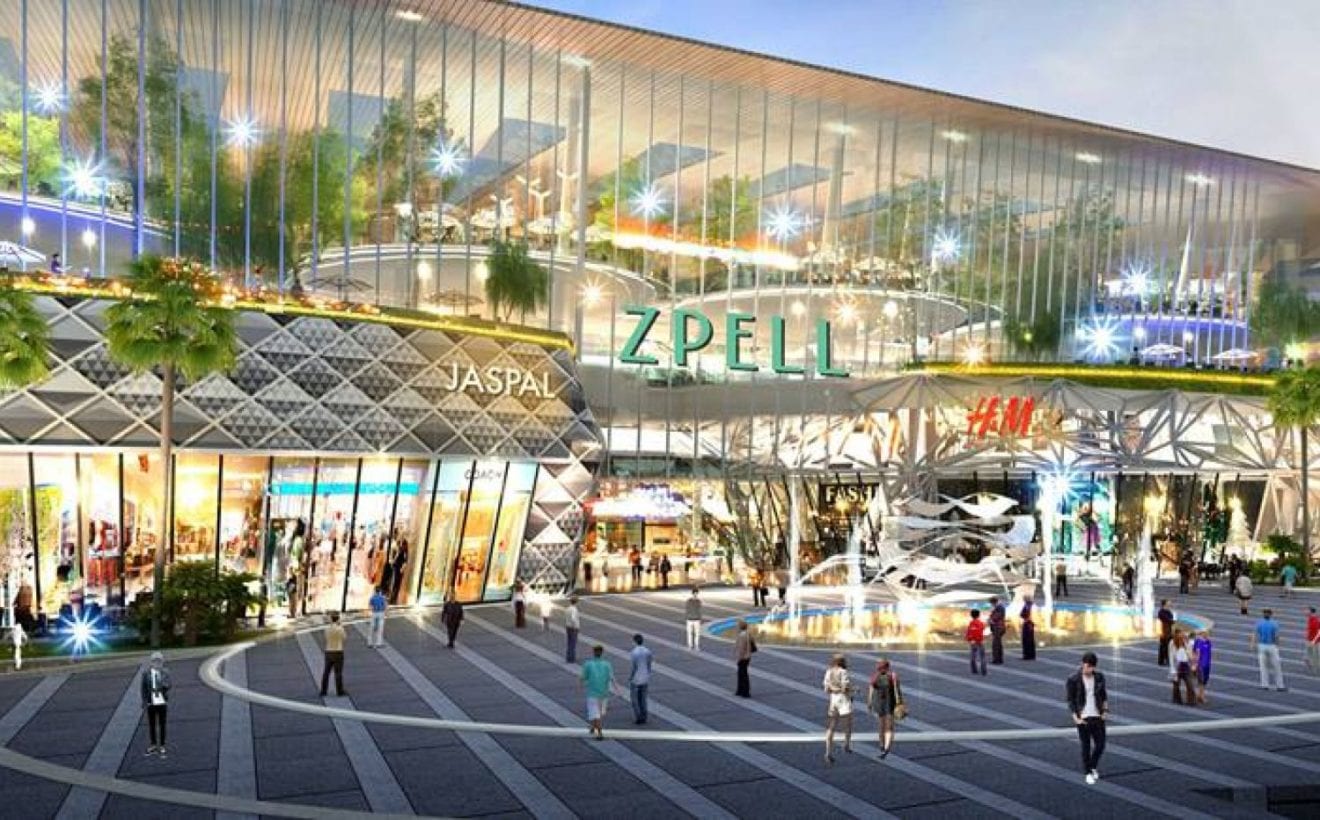
    Bangkok’s Future Park Rangsit mall opened its much-anticipated extension Zpell on Friday.

    But disappointingly, despite its opening a large number of tenancies are still incomplete.

    zpell-indoor2

    zpell-indoor

    zpell-indoor3

    Mall management told Inside Retail Asia a more formal opening is planned when the project is finished – most likely in January.

    At 600,000 sqm the expanded Future Park Rangsit is a full 20 per cent larger than the Siam Paragon in downtown Bangkok, which checks in at 500,000 sqm, and 50,000 sqm larger than CentralWorld.

    zpell-central

    At this stage, only about 60 per cent of the new food and beverage tenancies are trading.

    zpell-indoor4

    The expanded Future Park Rangsit mall is expected to host 200,000 shoppers daily – almost entirely locals as Rangsit is a long way from any area of Bangkok frequented by tourists and has only a limited number of expatriates in its catchment area. It currently attracts about 157,000 a day.

    Future Park Rangsit Mall was built 20 years ago. Besides offering shopping, eating and entertaining, the expanded destination will now feature futsal courts, an ice-skating rink, indoor ski park and art installations.

    zpell-ski

    We’ll publish a full review of the centre when it is complete. In the meantime, our photos show some of the tenancies complete and the common areas to give a taste of what shoppers can expect now – and in January.

    zpell-indoor5

    When complete, the new building will feature 200 tenants including lifestyle fashion brands such as Cath Kidston, H&M, MNG and Top Shop along with food offers from Coffee Bean by Dao, Akiyoshi, After you and Muteki By Mugendai.

    zpell

  • Vietnam’s First Ever Integrated Destination Resort to be Managed by Mövenpick

    Vietnam’s First Ever Integrated Destination Resort to be Managed by Mövenpick

    Vietnam’s first ever integrated destination resort will be operated by Mövenpick Hotels & Resorts. In a strategic move that cements its presence in the fast-growing Asian hotel market, the Swiss hospitality firm has signed a management deal with Ngoi Sao Cua Duong Joint Stock Company for the high-profile Mövenpick Resort Phu Quoc, which will be developed by MIK Land covering some 51.62 hectares on an island that’s tipped to become the region’s next big tourism hotspot.

    The fully-integrated beach-front destination resort, which faces the stunning Gulf of Thailand, will encompass a wide range of outstanding facilities including 250 hotel rooms, 100 residences and 50 luxury pool villas, when it opens in 2017.

    A themed retail village, water park and lagoon-style pool, destination spa, beachside wedding and special events ‘sala’, 1,000-square-metre convention area, amphitheatre, cooking school, beach club, kids club, water sports centre, fitness centre and an adventure and teambuilding activity course will also be part of the extensive offering at the one-of-a-kind Mövenpick Resort Phu Quoc.

    A hotel school complete with staff accommodation is another ground-breaking feature of this unique development.

    “Being selected to manage the first integrated destination resort in Vietnam on a stunning island earmarked for ambitious tourism developments confirms our status as one of Asia’s leading hotel operators,” said Mövenpick Hotels & Resorts President & CEO, Jean Gabriel Pérès.

    “This exciting project will take our Vietnam portfolio to three properties strong by 2018 and paves the way for Mövenpick Hotels & Resorts to manage similar large-scale destination resort developments across Asia where our strategy is to gain a strong foothold in sought-after locations.”

    Phu Quoc Island is a hotbed of tourism-related development with more than US$6.8 billion currently being ploughed into projects designed to create a destination to rival Asia’s perennial favourites.

    Mövenpick Resort Phu Quoc will be developed on Ong Lang Beach, close to the island’s largest town, Duong Dong, and to Phu Quoc International Airport, which is well connected by air to Rachgia (30 minutes); Ho Chi Minh City (one hour); Siem Reap (1.5 hours); Hanoi (two hours) and Singapore (1 hour 45 minutes). New direct flights from China, Russia, Taiwan and Scandinavia will be launched in 2016.

    “The world-class Mövenpick Resort Phu Quoc will set new hospitality standards in Vietnam and put the island on the international tourism map,” said Ms. Lê Thị Hải Châu, Chairman and CEO of Ngoi Sao Cua Duong Joint Stock Company.

    “We have partnered with Mövenpick Hotels & Resorts to manage this landmark development based on the firm’s excellent reputation, hospitality know-how and proven track record in Asia’s rapidly expanding hotel market.”

    Mövenpick Hotels & Resorts already operates the 154-room Mövenpick Hotel Hanoi and plans to open its second property in Vietnam, the 229-key Mövenpick Resort & Spa Quy Nhon, in 2018.


  • Stimulus Does the Trick as Detroit Autos Surge in China

    Stimulus Does the Trick as Detroit Autos Surge in China

    Investors understand that General Motors generates the majority of its profit right here in the United States. However, GM sells more cars in China than in any other market, and it was worrisome for investors when new-vehicle sales slowed in China over the summer. Sales slowed to the point that it forced China’s government to dish out an incentive program that cut the purchase tax in half for consumers.

    How has that incentive program turned out? Looking at GM’s sales figures coming out of China for November, the program is working like a charm.

    By the numbers
    General Motors’ retail sales moved 14% higher to 346,671 units in November. If you’re keeping track, that’s good enough to pencil last month in as the automaker’s best November sales in China ever.

    “The market has been improving in the past two months,” said GM Executive Vice President and GM China President Matt Tsien, in a press release. “We are well positioned to achieve a strong finish to the year backed by newly launched models, including the Chevrolet LOVA RV, Buick Verano Hatchback and Buick Verano GS.”

    The vehicles responsible for driving General Motors’ sales in China higher last month weren’t a surprise. GM’s SUV sales soared 231% on an annual basis, powered by the Buick Envision and Baojun 560. Furthermore, the SUV segment accounted for 19% of GM’s sales in China last month, which was much higher than the 6.5% the segment represented a year ago.

    Looking at GM’s brands in China, Buick remains the automaker’s bright spot. Buick recorded its best-ever monthly sales in November as it exceeded 100,000 units for the second consecutive month. More specifically, Buick sales soared 45% year over year to nearly 108,000 units.

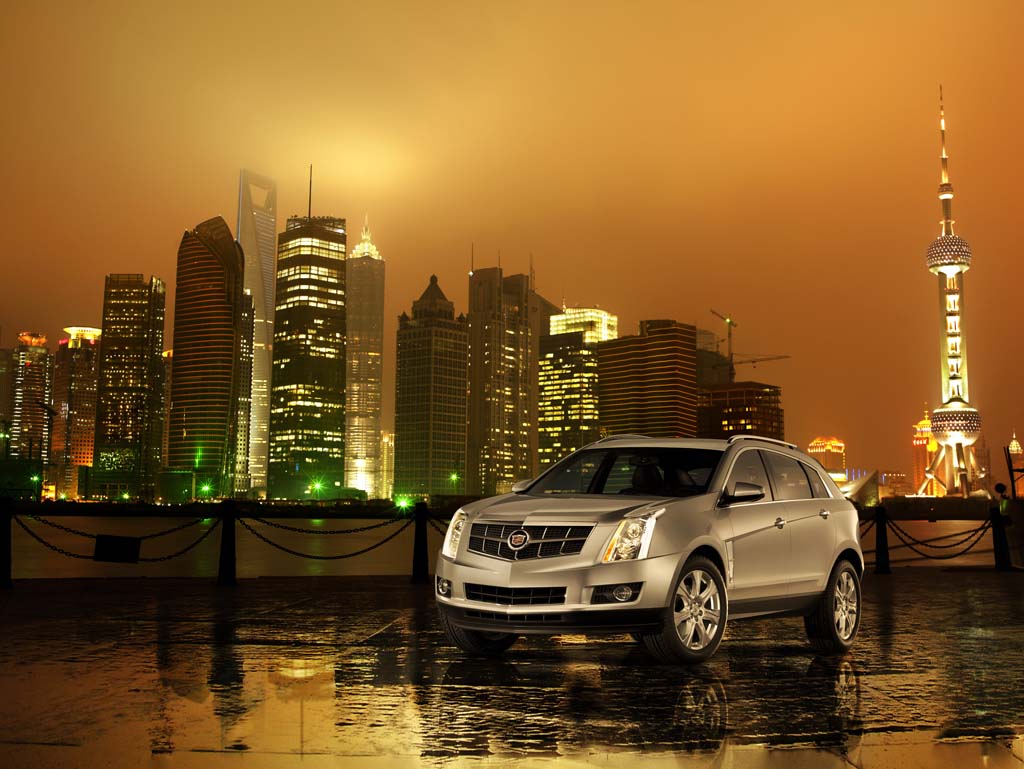
    GM’s luxury Cadillac lineup also posted healthy year-over-year sales gains of 57%, but with a far lower unit total of just under 8,000 units. Baojun sales jumped 100% on an annual basis to more than 58,000 units, and Chevrolet sales took an 11% dip year over year to 51,192 units in November.

    Through the first 11 months of 2015, retail sales from GM and its joint ventures increased 4.1% compared to the same time frame last year, to a total of 3.16 million units.

    GM isn’t the only success story
    While crosstown rival Ford Motor Company (NYSE: F) trails GM in vehicle sales by a long shot in China, it’s still making progress in a market it was late to enter. Ford’s sales totaled 106,283 during November, which was a 9% increase over last year’s November. Better yet, Ford’s sales in China are quickly approaching the 1 million mark for the year, totaling 990,356 sales through November.

    Ford’s gains were led by its Mondeo (Fusion), which posted a sales increase of 13% to 12,431 units compared to last year, as well as its Kuga (Escape) and Edge, which both sold more than 10,000 units last month in China.

    Here today, gone tomorrow?
    The major question facing investors in the automakers that operate in China is: Are these sales gains here to stay? It’s clear that after a slow summer of new-vehicle sales in China, the government’s stimulus program, which cuts the purchase tax from 10% to 5%, is definitely igniting sales. The good news is that this stimulus is slated to continue for the entirety of 2016.

    This is a development worth watching, because if sales remain accelerated, rather than only a temporary boost, it’ll be very positive news for investors of General Motors and other automakers hoping to fuel top- and bottom-line growth from its operations in China.

    The next billion-dollar iSecret
    The world’s biggest tech company forgot to show you something at its recent event, but a few Wall Street analysts and the Fool didn’t miss a beat: There’s a small company that’s powering their brand-new gadgets and the coming revolution in technology. And we think its stock price has nearly unlimited room to run for early, in-the-know investors!

  • Bangkok retail market to increase more than 1 million sq.m.

    Bangkok retail market to increase more than 1 million sq.m.

    The entry of new local and international retailers, combined with a challenging economic outlook and weak consumer sentiment is all adding up to the mix.
    Despite a slowdown in retail sales, there is currently 1.1 million sq.m. of retail space under construction in Bangkok, which will bring the total completed supply in 2017 close to 8 million sq.m.
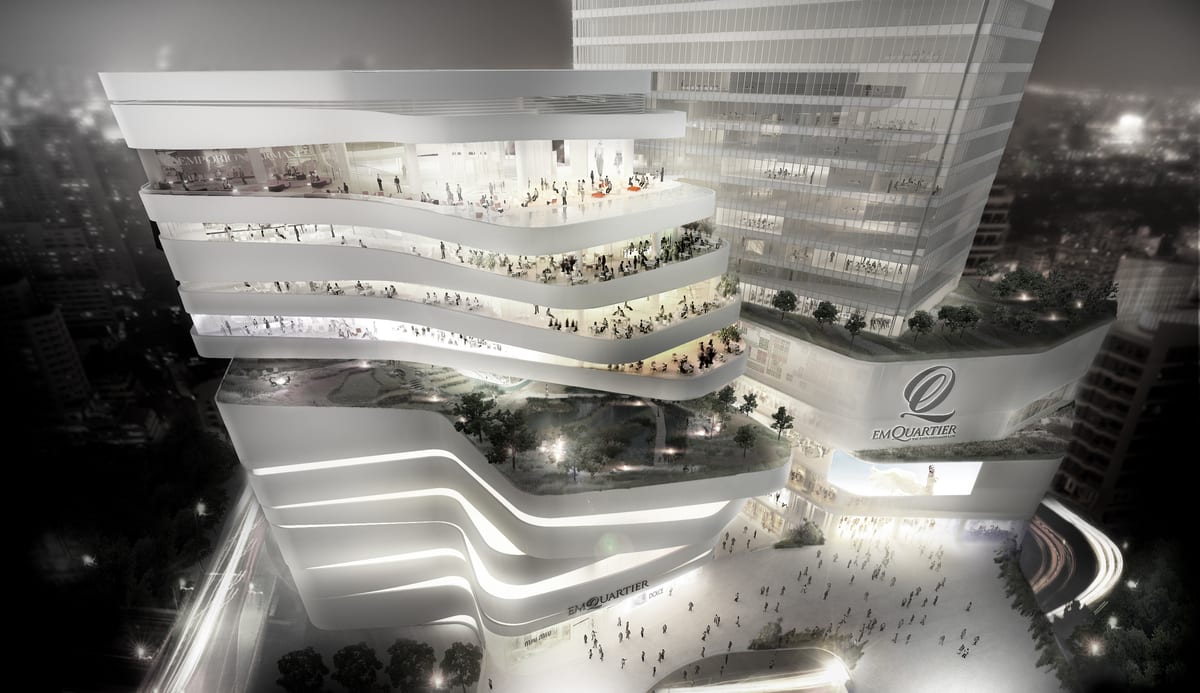
    Within the CBD, the latest major retail developments to open are EmQuartier and Central Embassy, intensifying competition for existing malls such as Siam Paragon, Gaysorn and CentralWorld.

    In addition, big developers continue to renovate their downtown retail centres such as Siam Discovery and MBK.

    Bangkok retail market, EmQuatier
    As the major retail centres are chasing after the same group of consumers, retail events and promotions have become ubiquitous

    As the major retail centres are chasing after the same group of consumers, retail events and promotions have  become ubiquitous leading to a cut-throat competition and heighted promotion campaigns, particularly gearing up to the festive season where consumer spending typically peaks.

    The expansion by major retail developers to suburban areas may also in part draw consumers away from CBD malls, although the impact may be limited.

    Bangkok’s suburban areas today are well served by quality retail centres, reducing the need for consumers to travel into the CBD.

    To the North, Zpell@Future Park has just opened on 27th November. Opened on the same day in Eastern Bangkok on Ekamai-Ram Intra is Central EastVille, adding competition to existing malls in the area such as Crystal Park and Crystal Design Centre.

    The Mall Group is also currently planning The Bangkok Mall on Bangna-Trad which is expected to be completed in 2017. To the West, CentralPlaza WestGate recently opened in August in the Bang Yai area, adding a major retail centre to an area where there have been limited retail developments.

    The Riverside will also get its own luxury shopping complex in 2017 with the opening of IconSiam which will comprise a 500,000 sq.m. retail and entertainment complex, part of which includes a 36,000 sq.m. 7-floor Takashimaya department store from Japan which will be Thailand’s first.Amidst this competition, the segment that will find most challenging is community malls.

    Community malls will be forced to adjust their strategies and have clear unique selling points and propositions to draw in consumers; otherwise they are likely to be overshadowed by major retail developments that have a bigger events and promotions budget.

    It is essential for community mall developers to understand their target consumers’ needs and retain anchor tenants in order to compete in the long-term.

    The plus side of the retail expansion is that it will create room for both domestic and international retailers to expand to suburban areas.

    International fashion brands such as H&M, Uniqlo, Aldo and Charles & Keith have already expanded to CentralPlaza WestGate.

  • Tokyo-based affiliate eyes major stake in Lotte Confectionery

    Tokyo-based affiliate eyes major stake in Lotte Confectionery

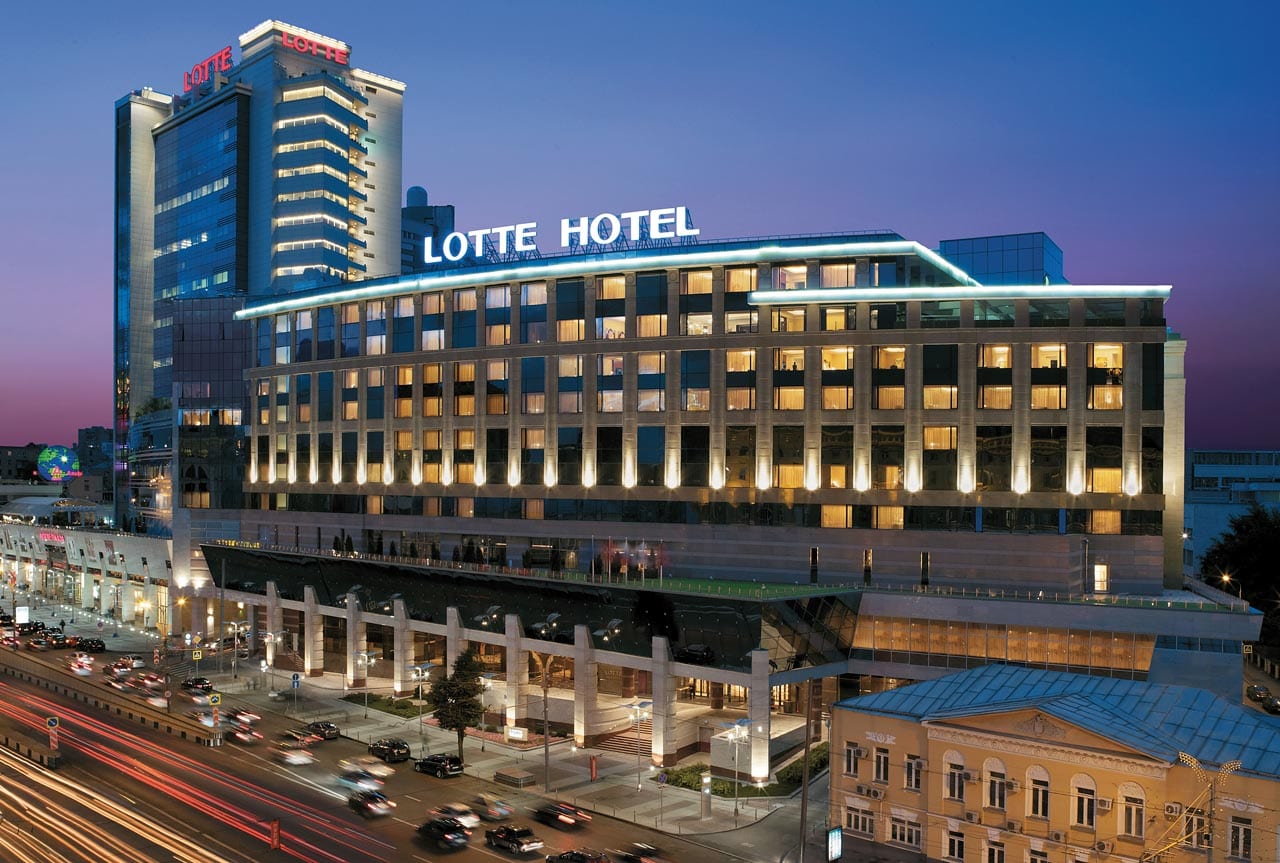
    Korean retail giant Lotte Group’s confectionary affiliate said Wednesday that Japan-based Lotte Holdings has offered to buy 259 billion won ($219.6 million) worth of shares in the firm, a move that will help the group chairman strengthen his control amid a prolonged succession dispute with his brother.

    The Japanese firm will buy 7.9 percent shares of Lotte Confectionary at 2.3 million won per share from the market during trading hours by Dec. 28, the company said in a regulatory filing.

    “By boosting stakes in Lotte Confectionery, Lotte Holdings will be able to improve efficiency based on the potential synergies between the two firms,” it said in a press release.

    Once the purchase is completed, Japan’s leading confectioner will emerge as the second-largest shareholder of the Korean firm with a 10 percent stake. It bought a 2.1 percent stake in the firm on Nov. 4.

    Tightening its grip on Lotte Confectionery means having the group’s key affiliate under control as it holds stakes in Lotte Shopping and Lotte Chilsung.

    Industry insiders said Lotte Holding’s recent decisions to increase its stake in the Korean confectionery unit is to show its support for Shin Dong-bin — the Lotte Group chairman and Lotte Holdings vice chairman — who has been at war with his brother Shin Dong-joo over control of the group since July.

    With Lotte Holdings’ backing, the incumbent chairman who holds an 8.78 percent stake in the Korean unit can cement his leadership over the group, whose portfolio ranges from food to retail mostly in South Korea and Japan.

    Dong-joo, the former Lotte Holdings vice chairman who led the Japanese operations until January, owns a 3.96 percent stake while his father and Lotte founder Shin Kyuk-ho holds a 6.83 percent stake in Lotte Confectionery.

    Meanwhile, the chairman said he would consider listing Lotte Holdings on the Japanese stock market to build a management structure free of the founding family’s feuding.

    During an interview with Japanese media outlet the Nikkei, he said the market debut will be discussed after the Korean initial public offering of Hotel Lotte, slated for the first half of 2016.

    “Coming under tighter scrutiny in the market will enhance the company’s structure and establish transparent corporate governance,” Shin said.

  • Lotte seeks more female managers

    Lotte seeks more female managers

    Lotte Group, a leading South Korean retail giant, vowed Thursday to nurture its female leaders to provide equal opportunities in its workforce.

    Group chairman Shin Dong-bin said in a forum that his conglomerate would increase female leaders to 30 percent of managers by 2020 from the current rate of 11 percent.

    “The group expects to have the first female CEO by 2020,” the chairman said, adding the group would continue to invest in building a family-friendly working environment.

    “More female talents are necessary for Lotte’s affirmative action plan to provide equal opportunities for members of minority groups,’’ Shin said during the fourth Way of Women, an internal annual event for female employees.

    About 500 female staff and executives in the group and its affiliated firms joined the event and shared their experiences and views for the development of female leaders.

    The conglomerate has adopted women-friendly policies, such as flexible working hours and support for career building.

    In its efforts to increase female talents, the company has continued to allocate 40 percent of annual job openings to women for the past few years, which has so far raised the rate of female managers to 11 percent from 1 percent in 2005.

    Lotte announced the new policy amid no signs of easing feuds among owner family members, including chairman Shin, over control of the conglomerate.

    Lotte said its Japanese shareholders support the current leadership despite the ongoing succession feud, in an effort to clear up uncertainties surrounding the preparation for listing its hotel unit.

    The listing of Hotel Lotte is one of the reform pledges that chairman Shin has made to assuage public disgust over a bitter family feud over control of the retail-focused conglomerate, which has sprawling business interests both in South Korea and Japan.

    The Korea Exchange, South Korea’s main bourse in charge of reviewing its initial public offering application, has demanded Lotte prove whether its corporate governance structure is stable enough to proceed with the current process.

    In response, Lotte said it has submitted a document showing that 60 percent of Lotte Holdings’ shareholders support the current leadership. Japan-based Lotte Holdings is the largest shareholder of Hotel Lotte with a 19.1 percent stake.

    “The Hotel Lotte IPO is expected to proceed without delay as major concerns have been cleared up,” a senior Lotte official said.

    “We will make efforts to complete its listing by the first half of next year.”

    The latest move came as Lotte has been mired in a leadership dispute between the group founder’s two sons ― Shin Dong-joo and Shin Dong-bin ― since last summer.

    The two sons had respectively controlled the company’s operations in Japan and Korea until earlier this year.


  • Carrefour has opened its biggest store in Asia

    Carrefour has opened its biggest store in Asia

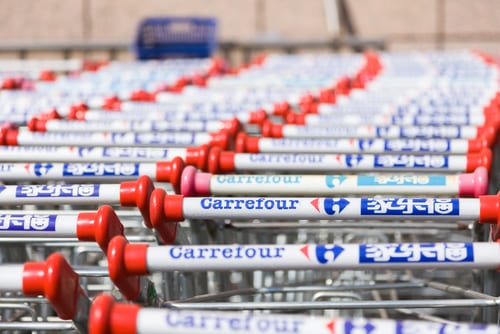
    Carrefour SA, a French retailer, as of late opened its biggest store in Asia in the Chinese capital, Beijing. The divulging comes as the firm plans to capitalize on the expanding interest for imported sustenance from medium-and top of the line customers.

    The two-story hypermarket is situated on the North Fourth Ring Road, adjoining the sprawling office of Swedish outfitting retailer Ikea. It houses more than 80 stores, including Uniqlo, Decathlon and the first-ever Baidu Concept Store.

    The Carrefour Beijing outlet, which is spread over a territory of 71,380 square meters, offers more than 40,000 items, 15 percent of which are foreign things.

    Serving as the French retailer’s twentieth store in the city, the hypermarket likewise has 800 free parking spots, 15 electric charging stations for transport transports, and five underground charging stations for electric autos.

    “We are concentrating on imported nourishment items as there has been an ocean change in the sustenance inclinations of Chinese purchaser,” Laurent Olszewski, local chief for the North-West China district at Carrefour, said. “It is very unique in relation to what I saw when I first came to China in 1995.”

    “Chinese buyers need to take a stab at everything,” he included, refering to imported French salt and Australian meat as samples. Olszewski additionally shared that Carrefour is growing its e-trade business in 2016. The firm will concentrate on its Web-based administrations by January one year from now in the wake of completing their work on their Tianjin-based logistics focus.

    As per specialists, this move of Carrefour is an approach to acquire shoppers fitting in with the high-pay class.

  • High-end retailers in China no longer have the luxury of time

    High-end retailers in China no longer have the luxury of time

    In the heart of Guangzhou’s Yuexiu district, the shopping centre La Perle is a symbol of luxury living in the southern mainland city.

    The high-end shopping mall, which opened in January 2004, has long been the first stop for many international brands seeking to conquer China market.

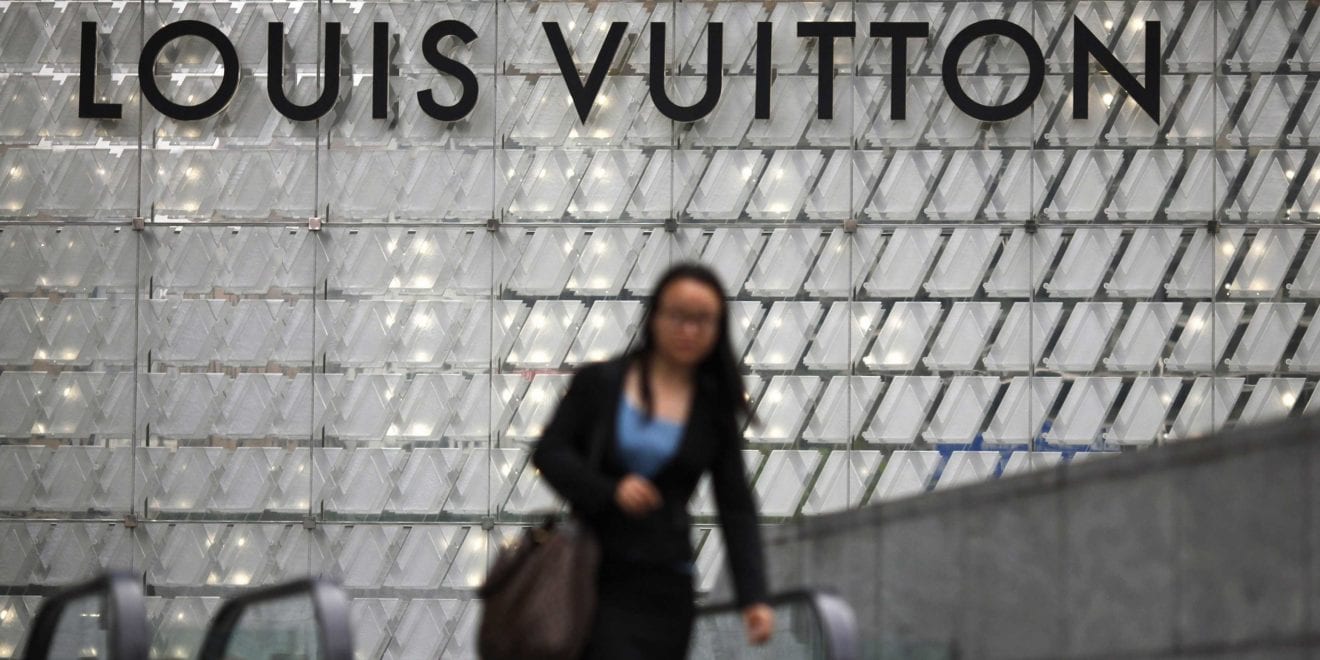
    But times are changing. A few weeks ago, La Perle lost one of its biggest tenants. Louis Vuitton. The French luxury retailer closed its store on the ground floor saying it would not renew its expired lease.

    This followed the shutting down of the two other LV stores – in the northeastern city of Harbin and the western city of Urumqi.

    The brand said the closures were part of a marketing strategy adjustment by headquarters.

    It’s a strategy that appears to have been taken on by many other international luxury brands.

    Following ten years’ aggressive expansion in China, they have been shrinking their physical presence in the nation to adapt to a cooling market plagued by a slowing economy, an ongoing anti-corruption campaign and Chinese buyers’ increasing overseas purchases.

    The Fortune Character Institute, a Shanghai-based market research unit, forecasts mainland luxury sales to grow 3 per cent to US$25.8 billion this year, much slower than the 11 per cent in the recovering global market.

    A study by the institute found that although Chinese shoppers consumed 46 per cent of luxury goods around the world, their purchases in their home market accounted for only 10 per cent of global sales, falling from 11 per cent in 2012 and 13 per cent in 2013.

    The sluggish growth is reflected in the expansion plans of luxury brands. They are opening fewer new stores and closing more.

    During the past two years, Burberry closed four stores on the mainland, Coach shut two, Hermes one, Armani five, and Prada went from 49 to 33.

    Regina Yang, of real estate consultancy Knight Frank Shanghai, said store consolidation would continue, especially in smaller cities.

    “Now the luxury brands do not need two or three outlets in one city. Those having three outlets will be cut to one,” said Yang.

    The situation is no better in Hong Kong, which relies heavily on mainland shoppers’ spending.

    In August, TAG Heuer, the expensive watch brand under LVMH, closed its Causeway Bay store while Coach closed its flagship store in Central due to high rent pressure and a falling number of mainland tourists.

    Store openings are no longer a major way for international luxury brands to expand in the China market

    Zhou Ting, Fortune Character Institute

    “Store openings are no longer a major way for international luxury brands to expand in the China market. Over the next two years we expect these brands to close even more stores than before,” said Zhou Ting, director of the Fortune Character Institute.

    “But if you think luxury brands are taking a totally defensive strategy in China, you would be wrong. The closures are only a small part of a thorough strategy adjustment they are undertaking in China.”

    While closing smaller and underperforming outlets, the top brands are investing more resources to upgrade and expand other stores and are even venturing into different industries to attract local shoppers. Considering Chinese buyers’ preference to shop online, they are also building e-commerce channels and closing price gaps between China and foreign markets to retain their consumption locally.

    “In the past, foreign luxury retailers had treated the China market like a money printer. They were busy opening stores to cover more cities. But their customer services and shopping experience were far from good compared to their stores in Europe. Now they have to pay a big cost for it,” said Zhou.

    The first batch of luxury brands entered into China in the 1990s. Most of them set up stores in five-star hotels and high-end department stores in big cities, targeting foreign businessmen, overseas Chinese and government officials.

    In 2004, as the Chinese government loosened restrictions on foreign retailers, luxury brands that had previously relied on local distributors started to engage in direct sales and expand into shopping malls.

    In the past, foreign luxury retailers had treated the China market like a money printer

    Zhou Ting, Fortune Character Institute

    The golden era came around 2009 and 2010 as a rising number of affluent Chinese consumers started to spend on high-end leather goods and jewellery, making the country the fastest-growing luxury market in the world.

    Encouraged by the fast growth and huge potential in the China market, luxury retailers rushed to open stores. Global consultancy Bain & Co estimated that the 15 top luxury brands it surveyed had opened more than 80 new shops during the first eight months of 2010.

    Meanwhile, the big brands’ aggressive expansion was also partly promoted by the increase in shopping mall construction.

    “Developers in second and third tier cities lured big brands as anchor tenants by offering them very flexible leasing terms,” said Kenith Kong, director and head of retail service at real estate agency DTZ/Cushman Wakefield China.

    A watershed for China’s luxury market came in 2013. Late that year, Beijing embarked on a long-term anti-corruption campaign and banned government officials from giving or receiving gifts. Such expenditure had previously been a major driver of domestic luxury consumption.

    More recently, the rapid growth of overseas purchases has also been worrying top-end retailers.

    Chinese consumers, who are travelling overseas more often, now spend more than 70 per cent of their luxury budgets in Europe, North America, Japan and other countries where the prices are lower, options are greater, and services better.

    The demand has even created a booming “daigou” or personal shopper industry, in which the daigou makes a living by purchasing products from overseas and selling them to buyers at home at a profit.

    All such developments are forcing luxury retailers to reappraise their business models.

    “We have noticed an upward trend on the portion of large stores opened by luxury brands in recent years,” said Frank Chen, research head of global real estate agency CBRE.

    The company observed that three quarters of renovations by luxury stores that took place between January 2013 and July 2015 in eight major cities were expansions.

    It also said the proportion of luxury stores with floor areas of more than 800 square metres climbed to 22 per cent in 2014 from 18 per cent a year earlier.

    “Larger sizes means luxury retailers can display more products and add more functions in their physical stores. Increasingly, they are displaying categories which were previously given little emphasis, such as shoes, household items, cosmetics and children’s apparel,” said Chen.

    In February, Louis Vuitton unveiled its newly upgraded store in the China World Mall in Beijing. The 3,000-square-metre shop not only offers various tailor-made services, it hosts a bookstore, an arts exhibition room and a Chinese tea zone.

    On July 31, the French luxury brand opened a new store on the bank of the West Lake scenic area in Hangzhou City, Zhejiang province, to tap the growing tourism market.

    Also taking an innovative approach in reaching out to local customers is Italian label Gucci. The brand opened a restaurant, 1921 Gucci, in Shanghai’s iAPM shopping mall.

    French fashion house Versace opened a cafe in one of Shanghai’s most expensive malls, Grand Gateway 66, which also hosts Burberry’s first beauty salon.

    Meanwhile, Hermes, Armani, and Dolce & Gabbana are expected to introduce their restaurants and cafes to China, providing a new engine for revenue growth.

    Such strategies create new forms of profitability based on experience-oriented consumption

    Frank Chen, CBRE

    “Such strategies create new forms of profitability based on experience-oriented consumption, as well as an additional sales opportunities for physical goods by attracting more shoppers to spend more time in their places,” Chen said.

    While reducing their physical presences, luxury retailers are embracing e-commerce despite their concerns that online channels cannot emulate the physical shopping experience.

    However, Chinese consumers’ increasing reliance on online shopping, especially on their mobile phones, has convinced brands to launch shopping sites or form partnerships with e-commerce firms.

    In October, Cartier launched its China shopping site. One month earlier, high-end brand Coach reopened its online store on T-mall.com three years after closing it.

    Other brands such as Burberry and Tag Heuer are working with local e-commerce giants like T-mall of Alibaba and JD.com to provide online selling services in addition to their own official shopping sites.

    “Many luxury brands have begun to close the retailing price gaps between China and other markets. One of their purposes is also to establish a comprehensive global pricing system and prepare for their future online expansion,” Zhou Ting said.

  • Lazada sees opportunities in upcountry expansion

    Lazada sees opportunities in upcountry expansion

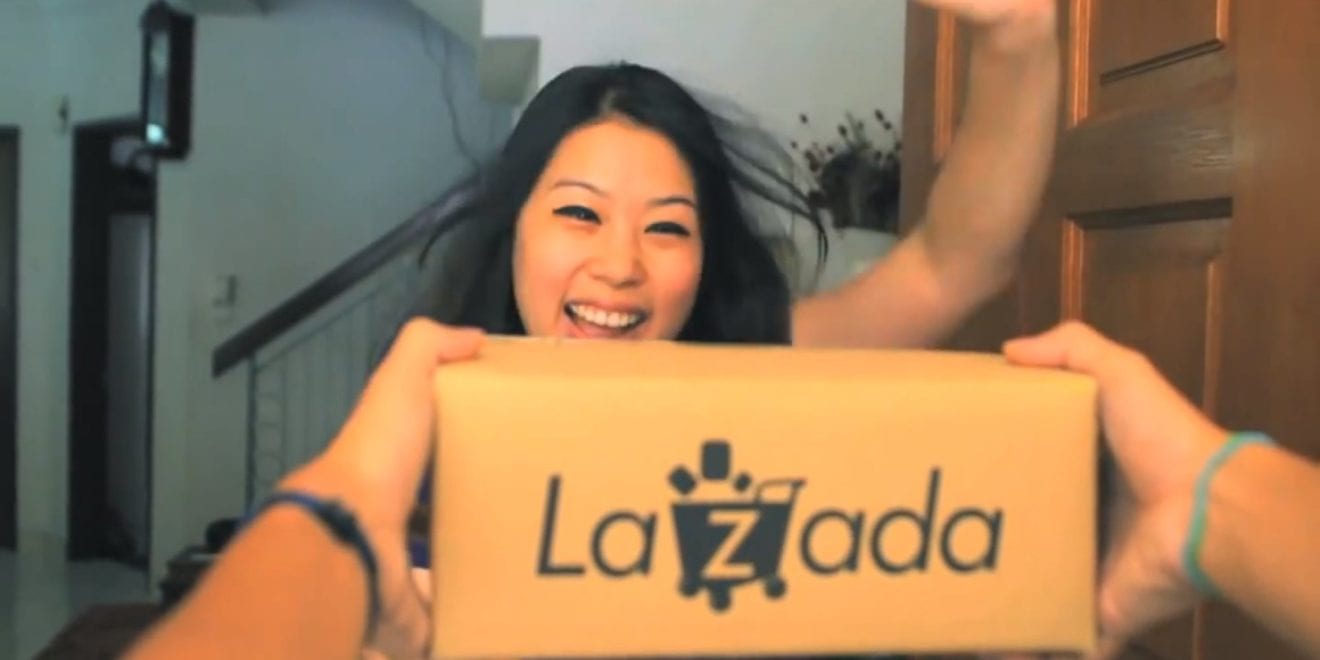
    Lazada, Southeast Asia’s largest online shopping website, is pushing its business development in Thailand in a drive to capitalise on the lucrative and rapidly growing e-commerce market.

    The company has set up two subsidiaries: Lazada Express, the logistics arm; and helloPay, the mobile payment arm.

    Having logistics and mobile payment services will help Lazada facilitate its customers and boost sales.

    In June, Lazada relocated its local representative office to a new facility to support its existing 800 employees here. The company has 6,000 employees located in Southeast Asia.

    “Thailand and Indonesia are the two largest e-commerce markets in terms of sales for Lazada in Southeast Asia,” said Alessandro Piscini, chief executive of Lazada Thailand.

    Lazada has an online footprint in six countries in the region.

    However, Mr Piscini said Thailand’s online retail industry remains tiny, accounting for less than 1% of the total retail market, compared with 10% each in China, Japan, South Korea and France.

    “We believe Thailand will soon grow at the same pace as other developed markets, helped by an expected surge in mobile data users because of the arrival of 4G commercial service nationwide,” he said.

    Lazada sees a strong opportunity for online shopping upcountry because the number of retail stores there remains small, Mr Piscini said.

    As of Nov 30, Lazada’s sales from the provinces accounted for 60% of its annual gross merchandise value (GMV), worth 10 billion baht.

    “Thailand’s sales represented 25% of Lazada’s total sales in Southeast Asia,” he said.

    Lazada recorded GMV of US$1.1 billion from the six Southeast Asian countries, with a combined 8 million buyers.

    Lazada Thailand provides more than 2 million product items from 7,000 online merchants on its website. The top three best-selling categories are health, beauty, and home and living.

    Mr Piscini said Lazada had expanded its warehouse operation by 60% to support the business growth.

    Lazada and a group of partners announced the Online Festival yesterday, to be held from Dec 10-12. The company will offer discounts of up to 90% across 14 product categories.

  • Microsoft Lumia 950 and 950 XL makes its way to Philippines

    Microsoft Lumia 950 and 950 XL makes its way to Philippines

    After India, the next market to get Microsoft’s latest offerings, the Lumia 950 and the Lumia 950 XL, is the Philippines. Both handsets are set to hit retail in the region starting December 14th (via Windows Central). The Lumia 950 carries a ₱28,990 (about $615 US) price tag, while it’s bigger sibling costs slightly higher, that is, ₱32,990 ($699). The Display Dock is available as well, but it’s not bundled with the device. Customers interested in the Display Dock can pay ₱3,390 ($72).

    The Lumia 950 comes with a 5.2-inch QHD display with the processing handled by the Snapdragon 808 processor and a 3000 mAh battery. On the other hand, the bigger Lumia 950 XL features a 5.7-inch QHD display with Snapdragon 810 under the hood and a massive 3,340 mAh battery.

    Both devices feature 3GB of RAM, 32GB of internal storage, a microSD card slot for expansion, a 20MP camera for photos and videos, a 5MP front-facing camera and ships with Windows 10 Mobile as its operating system.

    If you’re confused, check out our first impressions with the Lumia 950 and  the Lumia 950 XL to help you make up your mind.

  • New York-Style Jazz Venue ‘STUDIO’ Launches in Central

    New York-Style Jazz Venue ‘STUDIO’ Launches in Central

    New York-style jazz club STUDIO is opening its doors for the very first time in December 2015 in Central, Hong Kong.

    STUDIO has been styled for a discerning late-night crowd of aficionados of premium whisky, champagne, cocktails and all that jazz.The exclusive club is headlining live jazz and late-night DJs at a hidden-away 2,000 square foot venue in On Hing Building at 1 On Hing Terrace, neighbouring Lan Kwai Fong.

    STUDIO’s ‘LOUNGE’, ‘LIVE’ and ‘LATE’ format will see each evening kick-off with a chilled-out ‘lounge’ vibe  from 5pm to 9pm ideal for after-work drinks. The ‘LIVE’ sessions will start each evening at 9pm and will include sets by the resident jazz band, showcasing the best of funk, soul and Latin jazz. Each night will then crescendo into a ‘LATE’ set at 11:30pm, featuring local and international DJs spinning the very best of old and new hip hop and RnB on weeknights and funk, soulful and disco-infused House on Fridays and Saturdays.

    The ideal venue for intimate gatherings and events, STUDIO will hold bespoke industry nights for professionals working in the property, law, finance and fashion sectors in Hong Kong during the ‘LOUNGE’ session on Wednesday evenings.

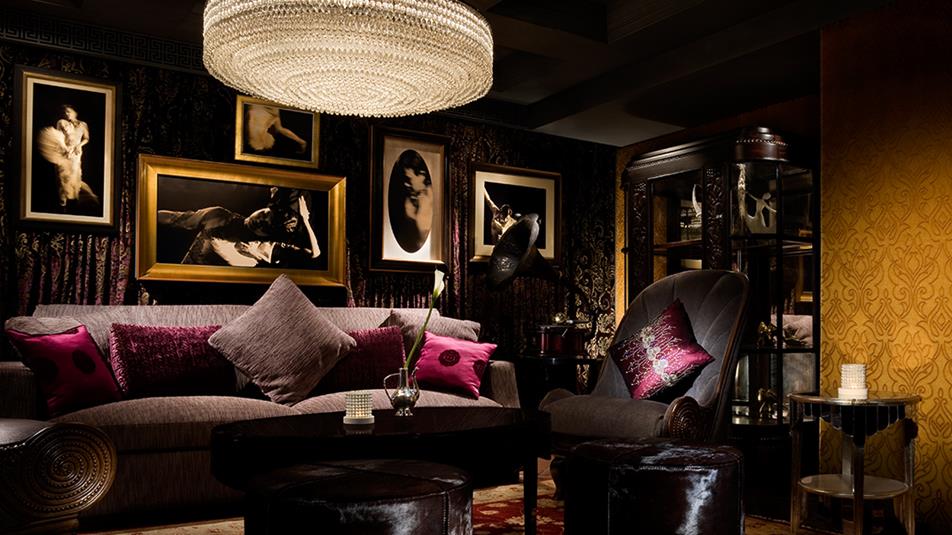
    A nondescript door gives way to glamorous interior design featuring comfortable leather seating, warm walnut textures and copper tones inspired by sultry 1950s New York jazz lounges. Guests will be personally greeted and escorted to their tables, with the assurance of attentive personalised service and the knowledge that what happens in STUDIO, stays in STUDIO.

    Highlighting the drinks menu is an extensive, carefully curated whisky selection from the world’s finest distilleries along with premium champagne’s including Krug. A mix of classic and creative cocktails will also be available.

    Xuan Mu, STUDIO founder, says, “Our guests have seen everything Hong Kong has to offer. We are bringing them something totally new – a tucked away gem focused on live music and an intimate vibe.”

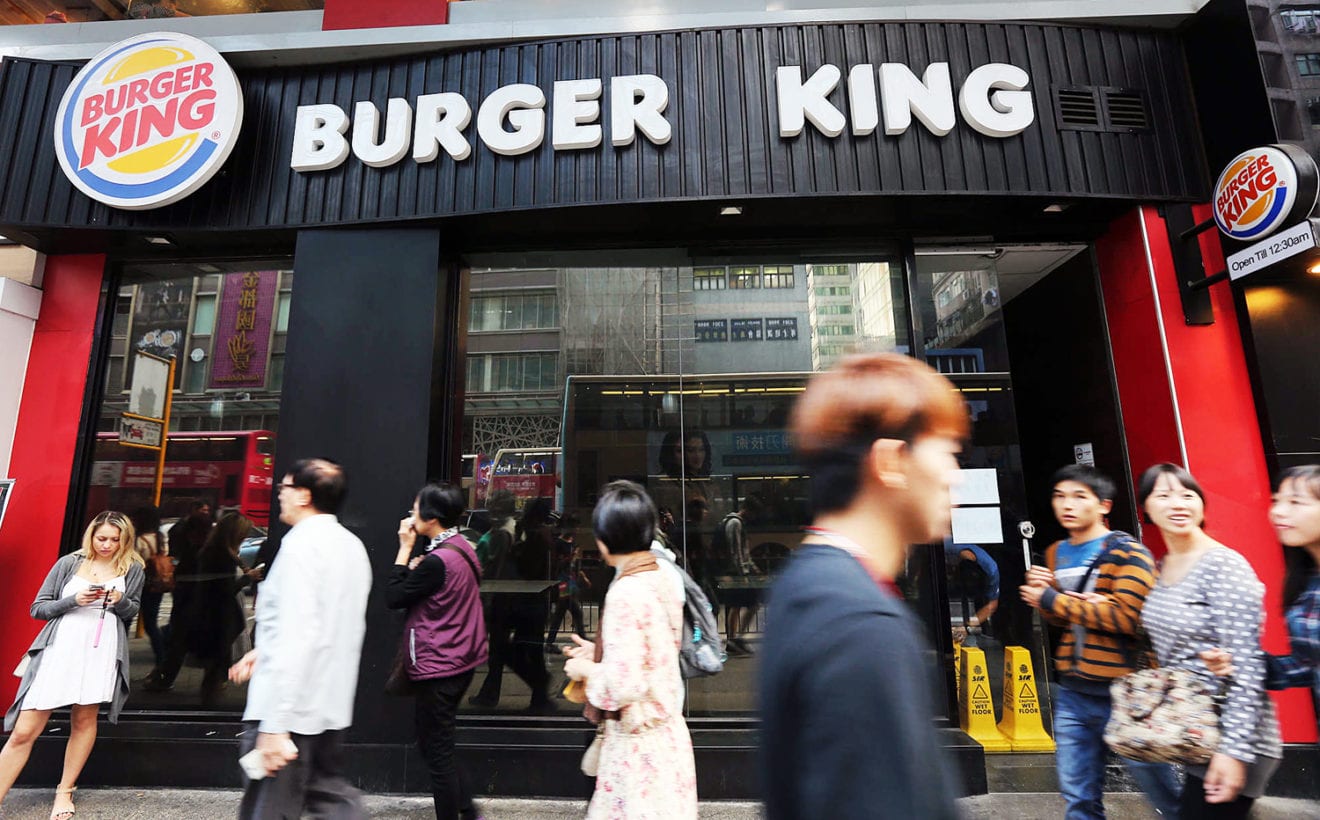
  • More Hong Kong shop closures likely, say retailers after Burger King outlets shut doors

    More Hong Kong shop closures likely, say retailers after Burger King outlets shut doors

    The franchisee of the five restaurants, Perfect Combo, was taken to court several times this year over unpaid rental payments and other fees involving several outlets. Two of them – in Tsim Sha Tsui and Yau Ma Tei – were located in tourist hot spots.

    “Conducting business in Hong Kong is not easy these days” said a manager of a medicine shop on Nathan Road, just 10 metres from the shuttered Yau Ma Tei Burger King outlet.

    Nathan Road, known for its numerous jewellery and medicine shops, has been one of the favourite shopping spots for mainland tourists.

    However, eight shops on a 500-metre stretch from Yau Ma Tei to Mong Kok are currently closed or vacant. The shops used to sell jewellery, watches, handbags, medicine and beef jerky, according to staff of nearby shops, and three closed just last month.

    Mr Hui, the manager of a medicine shop on Nathan Road, said his boss might close the shop next year if his rent is not cut enough.

    “This shop hasn’t made a cent in profit since it opened two years ago”, he said, “ Mainland tourists used to buy more health care products. Now they go for ordinary milk powder.” The shop makes more money from health care products.

    “Custom has dropped one-third after the protests against parallel trading earlier this year” Hui said.

    With Hong Kong’s GDP growth expected to slow to about 2.4 per cent this year, local consumers also tend to be more conservative in spending their hard-earned money.

    “It’s not just mainland tourists. Local consumers have also been buying less this year,” said Mr Ng, a salesman in a sports shoe shop on Nathan Road. Ng said the shop had been offering heavier discounts this year – with prices 10 to 15 per cent lower than in the same period last year.

    Other than shutting down stores completely, some retailers chose to cut the size of their shops to save rental costs. Zhongxing Watch, a Hong Kong luxury watch chain, cut the size of its Nathan Road store by one-third this year, said an employee of a nearby jewellery store. No one rents the vacant area.

    Hong Kong retail sales dropped 3 per cent in October year on year despite the National Day Golden Week holiday. In the first 10 months of this year, retail sales shrank 2.7 per cent from the same period last year.